


Likes
Comments
Share


Likes
5
Share


@Brickleberry
Follow
July 17 - another topping session! ✂️✂️✂️
July 19 - Little defoliation 💚

Likes
35
Share


@forgettenseedling
Follow
Pflanzen sehen ok aus
Eine zeigt leichte Wachstumsstörung bzw. defizite, die anderen wachsen recht gut
Gab in den ersten Tagen ein Bewässerungsproblem mit überwässerung deshalb musste die Erde für ein paar tage erst wieder trocknen bis ich erneut gießen konnte.

Likes
15
Share

@Chubbs
Follow
These ladies have grown amazing this past week. I took of a few of the bigger fan leafs of but other then that just feed this week. The flower sites are starting to form. Definitely starting to smell stronger.
All in all Happy Growing.

Likes
9
Share


@M3_Growing
Follow
Drying it outisde iwth up to 80% humidity, i am Just praying for mold not to apear.

Likes
2
Share

@hassehujasse
Follow
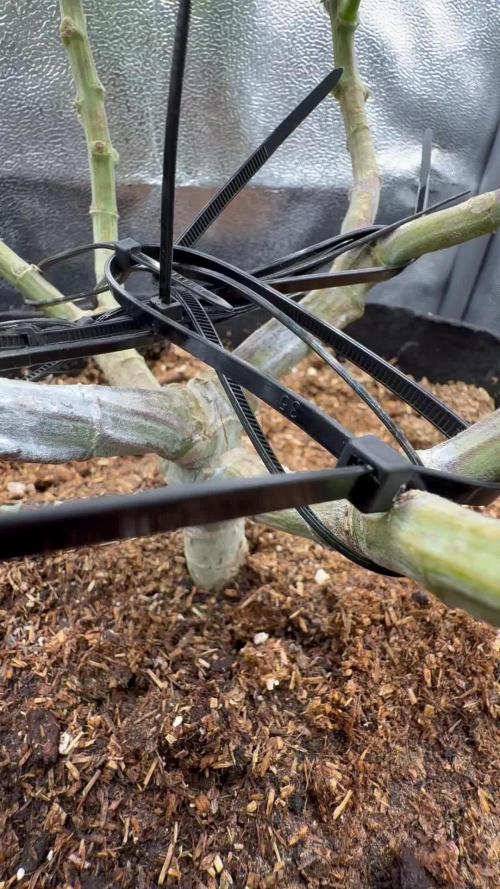
Irrai es lo mismo que tienes TuSe fui a dormir con LST bien hechoNo Os perdeis que sandra de esta mujercita !!!
Transformation de la chica a la mujer. Disfruta lo conmigo
Strong begining of the week, looking forward to give her all my love
Likes
6
Share


@pzwags420
Follow
On week 7 she is still putting out a lot of new pistils. Colas are fattening up but still have a few more weeks to go. The smell is sweet and fruity so far but its still early as trichs are still developing. Her top colas got a little too close to the lights and may be fox tailing or shes just more sativa of a pheno either way shes making some long colas and Im happy about that :)

Likes
10
Share


@Guerillafarm
Follow
Die buds werden dicker und fester
Die pflanze verliert weiter ihre Blätter
Likes
6
Share


@Aleks555
Follow
42Fast Buds - Gorilla Cookies Auto - Day 60
At 65 cm tall and 60 days in, our Gorilla Cookies Auto from 42Fast Buds is deep into the flowering phase, and we couldn’t be happier with the progress! The buds are developing an irresistible aroma—sweet and earthy, with a rich complexity that fills the room. What’s even more exciting is that, day by day, we’re seeing the cones swell and get coated in a thick layer of sugary trichomes, giving that frosty look we all love.
We’ve been feeding her with Xpert Nutrients throughout the entire cycle, ensuring she has all the right elements for powerful growth and healthy bud development. The results are incredible, and the anticipation for harvest is building!
Climate: 25°C, humidity 60%
CO2 Boost: Enhancing the size and resin production of these stunning buds!
Stay tuned for more updates as I document this beautiful grow and get closer to harvest. Excited to share the final results soon!
#42FastBuds #GorillaCookiesAuto #CannabisCommunity #GrowDiaries #FloweringPhase #XpertNutrients #MarsHydro #CO2Boost #CannabisCultivation #420Grow #GrowLife #FrostyBuds #SugaryTrichomes


Likes
21
Share


@Bluemels
Follow
Tag 74: Die letzte Stufe beim Dünger gezündet 😁
Tag 80: Die Runst hat seit ein paar Tagen eine rötliche Färbung an den Blattspitzen.

Likes
Comments
Share

@BushDoctor740
Follow
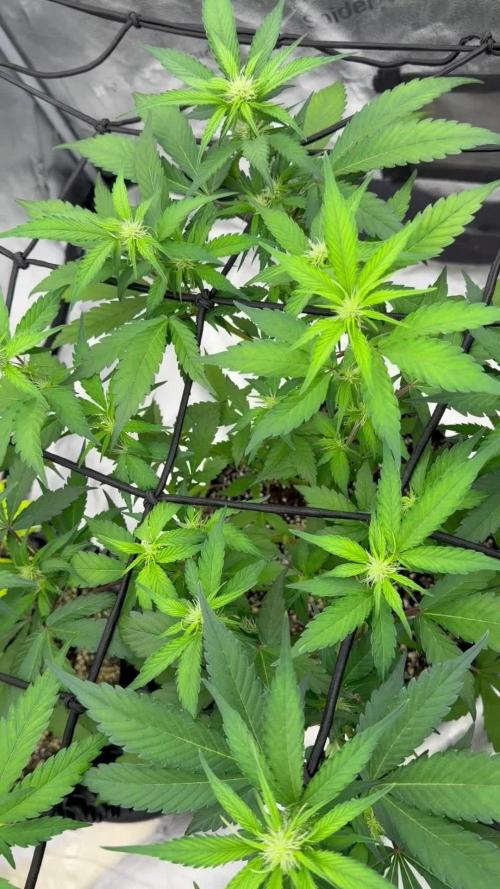
I ended up adding a scrog net just to open them up some more and get that light penetration.Two of these ladies have took on a really good stretch on the main cola and have a Christmas tree appearance.The other two are short and bushy as I did break off the top cola on the one and trained her nice and even.These photos were taken on Christmas Day :)
Likes
87
Share


@Mrs_Larimar
Follow
2021-11-26
The Pudding is a real Growmonster!
Shes supersturdy and has big thick Branches, and leaves like Sandpaper.
She reminds me in a Superskunk Plant
She is barely to tame, and weare shortening the planned 12 Weeks of Vegetation to 10 Weeks Vegetation
So only looking to get 16 Colas .
I managed it to break 2 Tops, 😰, but she looks as if she dont Care
2021-11-28
I made some more Training on the Puddin- to reach the 16 Colas
I managed it , without hurting her Iam proud to myself
Her stems are so strong and sturdy
@Silky_smooth told me to let her dry out a little, then shes easier to tame
But i prefer it that way, as always Iam learning by doing
so we are coming closer, 3 more Weeks for her in vegetation
Big Shout- Out to @urban_chili
For sending this wonderful complete Growbox named „urban Chili 3.0“ for our CHARITY GROWOFF
@mrs.larimar and me, are using the same Equipment for this entire Grow.
We are having space 45x60 cm and 130 cm in Hight.
The lights are supereffective 85 Watt Quantum LED, made in Austria.
We are using the same Strain, the same Growbox.
So it will really just come down to Skill and Mastery of the Grower....
With this Event, we want to be there for Woman in Need of Help.
And Support those ,who are less Fortunate than us.
We feel like, we are so Blessed for what we have, that we feel Obliged to give a bit back to the Community that we so dearly Love...
During the „GROW OFF FOR CHARITY“, @Weedseedsexpress will Donate 100 Euro per Month to our Charity Goal and an additional 500 euro's by the End of he Contest, if we reach at least 2000 Likes on our weekly Posts
on Instagram.
The other Companies who are Sponsoring our „ GROWOFF FOR CHARITY“
are giving us Products and Merchandise from their Companies. And they help Promote our „ Growoff“
There are coming some AUCTIONS and GIVEAWAYS fort Horticultists
The „GROW OFF FOR CHARITY“ is Sponsored by:
( Named in Order of Appearance)
@weedseedsexpress
@urban_chili
@greenbuzzliquids
@Herbiesheadshop_com
@genoneeleven_nutrients
@zamnesiaxseeds
@spilffseeds
@Inseediousseeds
@sgreenlab
@viparspectraled
@cannabonsai_¬manny
·
PLS FOLLOW OUR SPONSORS!
·
LIKE AND SHARE This Posting!
·
To Reach the 2000 Likes per Week!
Processing
Likes
17
Share


@greennug
Follow
shortest plant is 50cm tallest being 95cm. They are all doing wonderfully, most of autos are budding nicely and all of the photoperiods are ready to flower. looking very promising. i am changing my light schedule to 14-10 to kick these girls into flower.. this will give the plants an extra 17% (or so) a day under the lights.rather than 12-12. i cant be fussy as i only have one grow space but if my research is correct these should grow beautifully! the autos are well ahead so shouldnt affect my harvest weight too much. like i say i cant be fussy! thanks for looking


Likes
11
Share


@AGrowerNotAShower
Follow
Week 16 - Day 103
08/16: Harvested Aaliyah on 08/15, Day 102 from soil and Day of flowering. After one week of pure water for Aaliyah, some of the trichomes have turned amber. I decided to harvest about 3/4 of the plant. Some of the lower buds didn’t receive enough light during the grow, so I’m hoping they can grow a little more before I bring the whole plant down. I also removed some of the dead and very young growth that was coming up. I didn’t have another spot to hang the buds because of the smell, so I tied them over the other plants. Now that she is mostly harvested, the smell has increased. I now have Annie on the side so she is getting less direct light. She already took some bleaching on her main colas. Alexis still has about a week left. I’ll check her trichomes before the next watering to see if I should start flushing.
08/18: Aaliyah’s harvested buds were getting close to being dry, so I decided to start cleaning up some of the sugar leaves. The smaller, less developed buds got chopped up and set aside for some dry ice hash. Since she was on the left side of the tent, a lot of her colas did not receive enough direct light. I hung up a few of the nicer looking ones that I’m keeping as flower to finish drying.
[General notes: I still don’t have a scale to take note of the exact wet weight, but I’ll make sure to have one for the dry weight. And since all three plants are of the same strain, I’m going to wait till the last one is chopped up before posting the full harvesting results.]

Likes
24
Share


@Newbiegrower420
Follow
UPDATE: Day 1 of week 14- Thursday 19th Nov!!!!
Woop woop! We’re getting close, my magnifying lense arrived and I’ve got my first real good look at the trichomes.. All looking fairly cloudy with about 10-15% ambers coming through.
So as we’re super close now I’ve now started flushing. Not doing a run off as have been using Biobizz soil & Nutes. First flush is done and girls are looking happy. One lady seems to have really heavy colas as she’s struggling to stand up straight. So I’ve staked her to keep her more upright. Think she may bring the best yield of all four girls as it stands so far.
Final couple of weeks now, I can’t believe I’ve made it this far and really can’t wait to try my first home grown bud🍃
UPDATE: Day 2 of week 14 - Friday 20th Nov:
Had to water them early as the girls were very dry after their first flush.. I on average water them every 48 hrs, but they were ready after 36. Already noticing some slight discolouration on the leaves 🍁... Glad I didn’t jump the gun and chop them this week after seeing some amber trichomes..
A bit more LST as they had stretched a little. I’m short on lamp to plant distance but noticed what looked like a little leaf burn on one of the tallest nugs. So did what I could to bring the height of them down just a little 👌
UPDATE: Day 4 of week 14 - Sun 22nd Nov:
As soon as the lights went on today, more water seemed required at around 36hrs since the last flush. The girls seem to be loving it!
Buds do seem to be fattening up a little more each day and I think one girl is slight more ahead than the others as she has mostly orange pistils compared to the other three..
Still need to see more amber trichomes on all four ladies before they’re ready!
UPDATE: Day 5 of week 14 - Monday 23rd Nov:
Small amount of LST to keep the girls as even as poss.. Defo seeing some discolouration in the fan leaves now.. All but one of the four girls have nearly completely orange pistils now which are folding back in to the buds. But Trichomes need to be a little more amber before they’re ready.. The fourth lady however is slightly behind with less orange pistils, some white ones still to turn orange and trichomes are still a mix of milky and clear on the lower buds. When I topped this one it didn’t work as well as the others so she has one really massive cola and all the others are much smaller in comparison to the other three plants..
I think we’ve got a week to 10 days left roughly till harvest.
UPDATE: Day 6 of week 14 - Tuesday 24th Nov:
Another water flush again today.. All seems well, lower small buds still need a few more amber trichomes I think.. But gonna post a question on here to make sure.. Don’t wanna get this wrong.
Sooooooo close now and I’ll be seeing 🤩🤩🤩

Likes
20
Share


@L8bloomr1008
Follow
Last week….
Day 64- it’s looking like fall 🍃🍁 🍂 in the tent
Did a stem split and hit her with about 36 hours of light before I chopped. She’s loud, she’s sticky, and beautiful

Likes
5
Share


@Scrublord
Follow
Just letting the girl do her thing. she starting to give off grape notes when smelling fan leaves that have been cut. Night time temps and humidity were lower than normal. 65/45 at night with almost no humidity spikes.


Likes
29
Share


@JeyGanesha
Follow
Anche lei è l'ultima settimana di lavaggio radici.......oggi 29/09/2024 taglio questa Ayahuasca purple...ha un profumo fortissimo....
Oggi probabilmente inizierò a pulire tt le cime e poi.via un taglio netto 😂🤣😜👍💪


