


Likes
Comments
Share


@CanadianFillmore
Follow
Harvest time for Divine storm. Not much to say about this strain, except this is my last time growing it.
July 11 update, 84 grams dry weight. Same taste and smell as before, a wine taste with a bit of fruit.


Likes
60
Share


@Drgreenthumb627
Follow
half way through the first week of flower and the stretch is in full effect. canopy is going to be completely full in a few days, scared for my dwarf white runtz in the middle of the group, itll get swallowed

Likes
58
Share


@MadeInGermany
Follow
Info:
Unfortunately, I had to find out that my account is used for fake pages in social media.
I am only active here on growdiaries.
I am not on facebook instagram twitter etc All accounts except this one are fake.
Flowering day 65
since time change
to 12/12 h.
Hey guys :-)
We arrived in the last days before the harvest 😊.
The buds have swollen again the last few days.
The trichomes are 90% milky and 10% amber 👍.
This week it was poured twice with 1.2 l each time (for nutrients, see table above).
As always, it is put in the darkroom for 48 hours before it is harvested.
There is still a harvest update and a final update after fermentation 👍.
Until then, I wish you all a lot of fun with the update and stay healthy 🙏🏻
You can buy this Nutrients at :
https://greenbuzzliquids.com/en/shop/
With the discount code: Made_in_Germany you get a discount of 15% on all products from an order value of 100 euros.
You can buy this Strain at :
www.Zamnesia.com
Type:
Banana
☝️🏼
Genetics:
OG Kush x unkown
👍
Vega lamp:
2 x Todogrow Led
Quantum Board 100 W
💡
Bloom Lamp :
2 x Todogrow Led
Cxb 3590 COB 3500 K 205W
💡💡☝️🏼
Soil :
Canna Coco Professional +
☝️🏼
Nutrients :
Green Buzz Liquids :
Organic Grow Liquid
Organic Bloom Liquid
Organic more PK
More Roots
Fast Buds
Humic Acid Plus
Growzyme Big Fruits
Clean Fruits
Cal / Mag
Organic Ph - Pulver
☝️🏼🌱
Water:
Osmosis water mixed with normal water (24 hours stale that the chlorine evaporates) to 0.2 EC. Add Cal / Mag to 0.4 Ec Ph with Organic Ph - to 5.8 - 6.4

Likes
14
Share


@ThatoneAKguy
Follow
She was widely hidden from me behind the neighboring plant and I was surprised when I put the microscope to her and saw that it was ready after a mere 6 weeks of flower. I took a small middle flower to double check and all sides were cloudy with Amber trichomes. I’d really like to try this strain again and complete the tent with it. Because of its great density and trichomes she’ll be a great one to try out in the press.
The rotate and text type box are still NOT working on iOS.


Likes
13
Share


@Brickleberry
Follow
In this first cycle published on the site, I did the ScrOG technique for the first time, and honestly I am quite happy with the final result😊 The plants performed very well both in vegetation and in the flowering phase.👌
The only "anomaly" was a beautiful flower affected by fasciation (called "Stewie" by me😄)
I hope you enjoyed this diary and that it will be useful for you in the future!😎

Likes
10
Share


Likes
4
Share


@The_Projexx
Follow
Welcome to week 3 of flower for these fine ladies! As the stretching period comes to and end in about a week or so I'm excited to see the plant's develop their flowers. Some of the plants have already developed quited the frost for their age and as the cycle continues its just going to get more pronounced. Some of the plants are giving off a faint smell now mostly the Banana Smoothie smelling of cream and bananas so far. Overall I'm really pleased with what's going on so far and can't wait for further development of the flowers!
Huge shout out to both Hidden Vault Genetics as well as @MarsHydroLED for all the work they put in to make growing a breeze
Extra special shout out goes to all my followers and people who stop into the diary alike. Keep inspiring to grow!
-The Projexx
Day#15F Ladies continue their stretching, will be looking to remove some leaves to open the plants up soon.
Day#16F Watered ladies 4L each at 550PPM. Things are moving along as the plants keep stretching like crazy
Day#17F Ladies are producing more and more size on their cotton balls while stretching up and stacking hard.
Day#18F Ladies are producing quite the frost levels for their age. Watered 4L each at 550PPM.
Day#19F Pictures N/A. Plants continue to stretch and stack.
Day#20F Ladies look like their slowing down on their stretch hopefully haha. Watered ladies 4L each at 550PPM.
Day#21F The plants are still stretching abit while putting mass on their flowers slowly. Wont be long till we see some giant flowers covered in trichomes!
Recap: Things went very well this week, some of the plants are starting to put out a smell and everyone's pumping trichomes like crazy! With about a week or so left on the stretching period I will be looking to place my secondary nets very very soon. I'm looking forward to seeing
what the plants smell like and how they continue to develop their flowers!
Likes
103
Share


@PEAKYPLANTERS
Follow
Hi everyone, brothers and sisters of Weed!
The beautiful glazed wedding cakes are strengthening quite well, their sprouts are beginning to escape from the net and their leaves do not show any kind of growth problem .... we continue like this!

Likes
47
Share


@Ultraviolet
Follow
What's in the soil? What's not in the soil would be an easier question to answer. 16-18 DLI @ the minute. +++ as she grows.
Probably not recommended, but to get to where it needs to be, I need to start now.
Vegetative @1400ppm 0.8–1.2 kPa 80–86°F (26.7–30°C) 65–75%, LST Day 10, Fim'd Day 11
CEC (Cation Exchange Capacity):
This is a measure of a soil's ability to hold and exchange positively charged nutrients, like calcium, magnesium, and potassium. Soils with high CEC (more clay and organic matter) have more negative charges that attract and hold these essential nutrients, preventing them from leaching away.
Biochar is highly efficient at increasing cation exchange capacity (CEC) compared to many other amendments. Biochar's high CEC potential stems from its negatively charged functional groups, and studies show it can increase CEC by over 90%. Amendments like compost also increase CEC but are often more prone to rapid biodegradation, which can make biochar's effect more long-lasting. biochar acts as a long-lasting Cation Exchange Capacity (CEC) enhancer because its porous, carbon-rich structure provides sites for nutrients to bind to, effectively improving nutrient retention in soil without relying on the short-term benefits of fresh organic matter like compost or manure. Biochar's stability means these benefits last much longer than those from traditional organic amendments, making it a sustainable way to improve soil fertility, water retention, and structure over time. Needs to be charged first, similar to Coco, or it will immobilize cations, but at a much higher ratio.
a high cation exchange capacity (CEC) results in a high buffer protection, meaning the soil can better resist changes in pH and nutrient availability. This is because a high CEC soil has more negatively charged sites to hold onto essential positively charged nutrients, like calcium and magnesium, and to buffer against acid ions, such as hydrogen.
EC (Electrical Conductivity):
This measures the amount of soluble salts in the soil. High EC levels indicate a high concentration of dissolved salts and can be a sign of potential salinity issues that can harm plants.
The stored cations associated with a medium's cation exchange capacity (CEC) do not directly contribute to a real-time electrical conductivity (EC) reading. A real-time EC measurement reflects only the concentration of free, dissolved salt ions in the water solution within the medium.
98% of a plants nutrients comes directly from the water solution.
2% come directly from soil particles.
CEC is a mediums storage capacity for cations. These stored cations do not contribute to a mediums EC directly.
Electrical Conductivity (EC) does not measure salt ions adsorbed (stored) onto a Cation Exchange Capacity (CEC) site, as EC measures the conductivity of ions in solution within a soil or water sample, not those held on soil particles.
A medium releases stored cations to water by ion exchange, where a new, more desirable ion from the water solution temporarily displaces the stored cation from the medium's surface, a process also seen in plants absorbing nutrients via mass flow. For example, in water softeners, sodium ions are released from resin beads to bond with the medium's surface, displacing calcium and magnesium ions which then enter the water. This same principle applies when plants take up nutrients from the soil solution: the cations are released from the soil particles into the water in response to a concentration equilibrium, and then moved to the root surface via mass flow.
An example of ion exchange within the context of Cation Exchange Capacity (CEC) is a soil particle with a negative charge attracting and holding positively charged nutrient ions, like potassium (K+) or calcium (Ca2+), and then exchanging them for other positive ions present in the soil solution. For instance, a negatively charged clay particle in soil can hold a K+ ion and later release it to a plant's roots when a different cation, such as calcium (Ca2+), is abundant and replaces the potassium. This process of holding and swapping positively charged ions is fundamental to soil fertility, as it provides plants with essential nutrients.
Negative charges on soil particles: Soil particles, particularly clay and organic matter, have negatively charged surfaces due to their chemical structure.
Attraction of cations: These negative charges attract and hold positively charged ions, or cations, such as:
Potassium (K+)
Calcium (Ca2+)
Magnesium (Mg2+)
Sodium (Na+)
Ammonium (NH4+)
Plant roots excrete hydrogen ions (H+) through the action of proton pumps embedded in the root cell membranes, which use ATP (energy) to actively transport H+ ions from inside the root cell into the surrounding soil. This process lowers the pH of the soil, which helps to make certain mineral nutrients, such as iron, more available for uptake by the plant.
Mechanism of H+ Excretion
Proton Pumps: Root cells contain specialized proteins called proton pumps (H+-ATPases) in their cell membranes.
Active Transport: These proton pumps use energy from ATP to actively move H+ ions from the cytoplasm of the root cell into the soil, against their concentration gradient.
Role in pH Regulation: This active excretion of H+ is a major way plants regulate their internal cytoplasmic pH.
Nutrient Availability: The resulting decrease in soil pH makes certain essential mineral nutrients, like iron, more soluble and available for the root cells to absorb.
Ion Exchange: The H+ ions also displace positively charged mineral cations from the soil particles, making them available for uptake.
Iron Uptake: In response to iron deficiency stress, plants enhance H+ excretion and reductant release to lower the pH and convert Fe3+ to the more available form Fe2+. The altered pH can influence the activity and composition of beneficial microbes in the soil. The H+ gradient created by the proton pumps can also be used for other vital cell functions, such as ATP synthesis and the transport of other solutes. The hydrogen ions (H+) excreted during photosynthesis come from the splitting of water molecules. This splitting, called photolysis, occurs in Photosystem II to replace the electrons used in the light-dependent reactions. The released hydrogen ions are then pumped into the thylakoid lumen, creating a proton gradient that drives ATP synthesis.
Plants release hydrogen ions (H+) from their roots into the soil, a process that occurs in conjunction with nutrient uptake and photosynthesis. These H+ ions compete with mineral cations for the negatively charged sites on soil particles, a phenomenon known as cation exchange. By displacing beneficial mineral cations, the excreted H+ ions make these nutrients available for the plant to absorb, which can also lower the soil pH and indirectly affect its Cation Exchange Capacity (CEC) by altering the pool of exchangeable cations in the soil solution.
Plants use proton (H+) exudation, driven by the H+-ATPase enzyme, to release H+ ions into the soil, creating a more acidic rhizosphere, which enhances nutrient availability and influences nutrient cycling processes. This acidification mobilizes insoluble nutrients like iron (Fe) by breaking them down, while also facilitating the activity of beneficial microbes involved in the nutrient cycle. Therefore, H+ exudation is a critical plant strategy for nutrient acquisition and management, allowing plants to improve their access to essential elements from the soil.
A lack of water splitting during photosynthesis can affect iron uptake because the resulting energy imbalance disrupts the plant's ability to produce ATP and NADPH, which are crucial for overall photosynthetic energy conversion and can trigger a deficiency in iron homeostasis pathways. While photosynthesis uses hydrogen ions produced from water splitting for the Calvin cycle, not to create a hydrogen gas deficiency, the overall process is sensitive to nutrient availability, and iron is essential for chloroplast function.
In photosynthesis, water is split to provide electrons to replace those lost in Photosystem II, which is triggered by light absorption. These electrons then travel along a transport chain to generate ATP (energy currency) and NADPH (reducing power). Carbon Fixation: The generated ATP and NADPH are then used to convert carbon dioxide into carbohydrates in the Calvin cycle. Impaired water splitting (via water in or out) breaks the chain reaction of photosynthesis. This leads to an imbalance in ATP and NADPH levels, which disrupts the Calvin cycle and overall energy production in the plant. Plants require a sufficient supply of essential mineral elements like iron for photosynthesis. Iron is vital for chlorophyll formation and plays a crucial role in electron transport within the chloroplasts. The complex relationship between nutrient status and photosynthesis is evident when iron deficiency can be reverted by depleting other micronutrients like manganese. This highlights how nutrient homeostasis influences photosynthetic function. A lack of adequate energy and reducing power from photosynthesis, which is directly linked to water splitting, can trigger complex adaptive responses in the plant's iron uptake and distribution systems.
Plants possess receptors called transceptors that can directly detect specific nutrient concentrations in the soil or within the plant's tissues. These receptors trigger signaling pathways, sometimes involving calcium influx or changes in protein complex activity, that then influence nutrient uptake by the roots. Plants use this information to make long-term adjustments, such as Increasing root biomass to explore more soil for nutrients. Modifying metabolic pathways to make better use of available resources. Adjusting the rate of nutrient transport into the roots. That's why I keep a high EC. Abundance resonates Abundance.
Likes
248
Share


@Ju_Bps
Follow
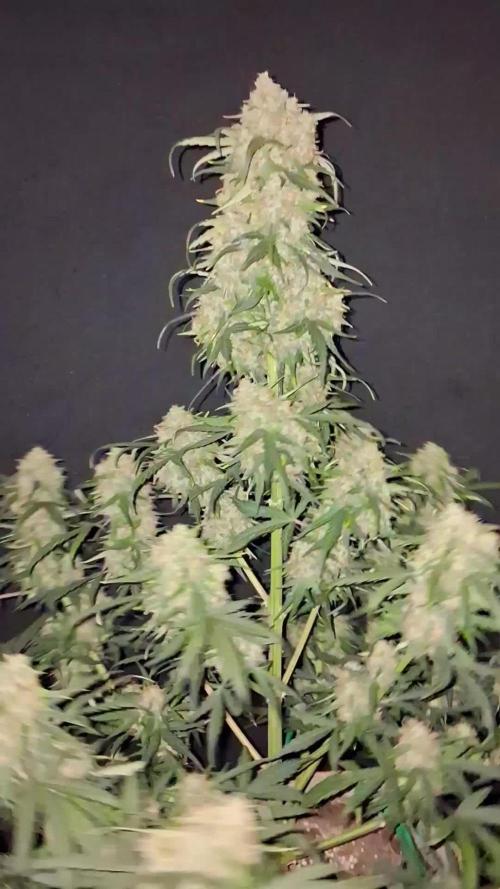
For this grow I've used,
For the growth
1 Mars Hydro TS1000 (150 W)
2 fan 15w
1 extractor 150mm 350m3/h
1 carbon filter 150mm
1 Hydro Shoot 60x60x140
1 timer
11l geotextile pot
20 Hours On, 4 hours off light
For the soil I've used plagron light mix + batmix in the down
For the blooming
1 Mars Hydro FC300 (300W)@75%
2 fan 15w
Extractor + Filter 150mm
1 Mammoth lite 60 box
1 timer
11l pot
20/04
After harvest,
I've put the stuff in a room with 1 fan 15w
Thanks for all my friends!
And again thanks @Fast_Buds , and Mars Hydro, @Coco_Pan2022 ❤️❤️❤️


Likes
88
Share


@Roberts
Follow
Gorilla Jealousy F1 is doing her thing. She is shifting into a bulking stage. She did show a major ph drop yesterday to today. She is likely due for a solution change. I will try to redo her solution this next week when I get a chance. Her smell has not really started up strong yet. I feel that will change over the next few weeks. Thank you Spider Farmer, and Seedsman. 🤜🏻🤛🏻🌱🌱🌱
Thank you grow diaries community for the 👇likes👇, follows, comments, and subscriptions on my YouTube channel👇.
❄️🌱🍻 https://www.seedsman.com/?a_aid=Mrsour420. This is my affiliate link to seedsman.
Thank you Happy Growing 🌱🌱🌱
https://youtube.com/channel/UCAhN7yRzWLpcaRHhMIQ7X4g


Likes
Comments
Share


@Liberty420blaz
Follow
Day 42
pistils showing up here and there,
tucked a few leaves away from bud sites
looking healthy, i expect her to enter bloom in a few days.
recieved her nutes today
4L dechlorinated water
12ml bloom A-B
rhinoskin,bud candy 8ML

Likes
Comments
Share

@CHEF-KOCH
Follow
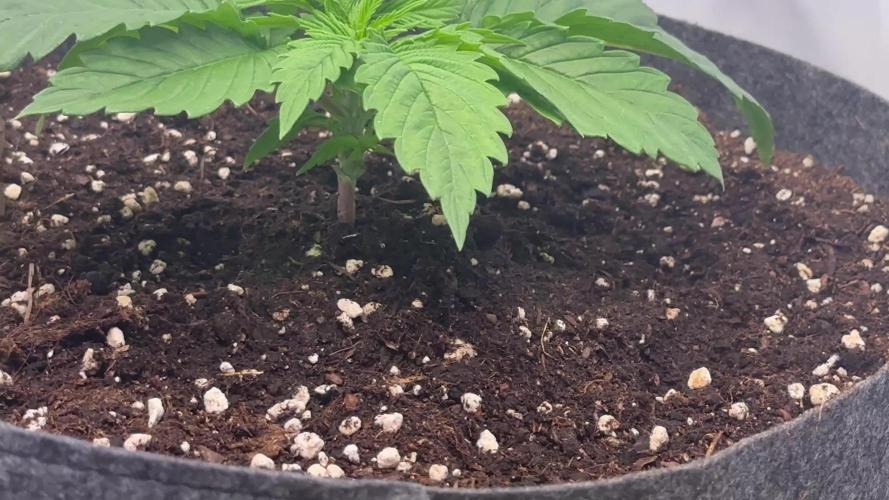
Danach habe ich leider vergessen Fotos zu machen beziehungsweise auch Videos deswegen folgt nach Woche zwei Woche vier

Likes
11
Share


@btcywtsitw
Follow
Very happy with this weeks growth. So much sugar. I did lots of trimming after last weeks pictures. These girls were flushed yesterday and the smell is really starting to show. Will get some good trichome shots uploaded later today, starting to see lots of milk soon :)

Likes
39
Share


@MrSpooky882
Follow
Wie man sieht hatte ich viel zum wegschneiden, das erste mal wurde gedüngt die Woche, ansonsten läuft alles ganz gut denke ich, bin sehr zufrieden bisher 😊
As you can see, I had a lot to cut away, fertilized for the first time this week, otherwise everything is going quite well I think, I'm very satisfied so far 😊


Likes
3
Share


@russrahl
Follow
Been a minute since I uploaded anything, got busy with summer projects. Lol plants have made tremendous growth and in there final stages of flowering. I already chopped down 1 Critical Killer Fast because it stayed true to its name and was fast, started flower 2-3weeks before the other CKF. The second CKF still up seemed to have forgotten it was a fast strain, its seems to be inline with my normal photoperiod plants transitioning into flowering a few more weeks after her sister. Im still feeding them Remo lineup at slightly higher then half strength. Watering 5gals each roughly every 4-5days when needed. Got a 2 nute/1 strait water cycle going as well. The three left have already withstood a couple light Frost's and still have a couple weeks to go but weather should warm up soon. Got a leaf blower I use every morning to blow.off the condensation on them in the morning and after rainstorms. I ended up with 6oz dried from my first CKF, but I pulled it a bit early do to finding a bit of bud rot starting, but I could it in time and only lost a few grams. Been inspecting the other 3 daily for rot but so far so good! Sex bud is a monster though, 7 ft tall and decent size buds all over it. Pure kush is also big and bushy with a ton of medium size buds everywhere. Been monitoring the tricombs and seeing mostly cloudy but no amber really yet.


