Likes
Comments
Share
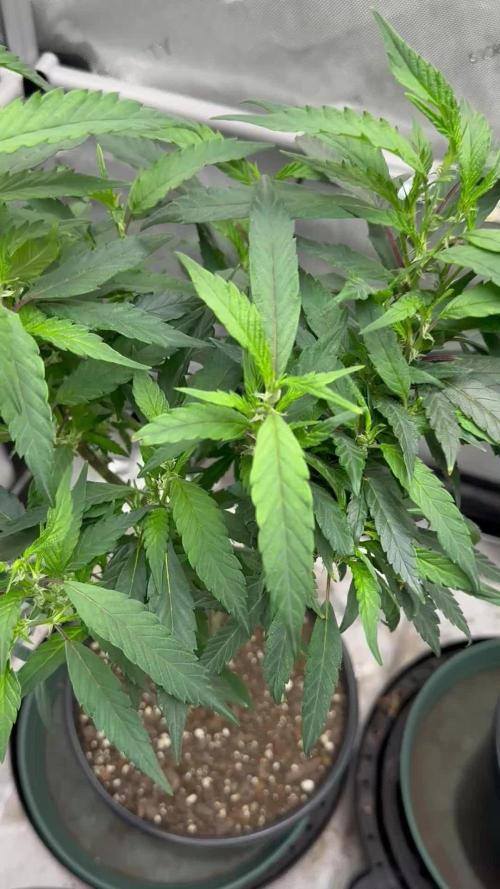
Just created an Youtube channel: Cannabeast40 Go hit a brother up with a view and subscribe. Thanks and happy growing. ------------------------------------------------------------------------------------------------ 1/7 Nothing new for now, they are just happy girls😅🙌 3/7 Added a little more Bloom, so now we are on 1.4ml pr L Water💪 soon it will be only ripen they get🔥 5/7 I now only use Ripen from now on, lets see how fast they will be done 😁🙏🌱💚 ------------------------------------------------------------------------------------------------------------ Tent: Mars Hydro 4x4. Light: Mars Hydro FC 4800. Nutes: GHE Tripart. Soil: Biobizz LightMix.
Processing
Likes
12
Share
@Buurman
Follow
ALRIGHT! I think i had a successful first week of the first grow :D The bitches are showing steady growth, started giving m a mix of Terra Grow, Pure Zyme & Power Roots. they seem to like it but hey what do i know? Don't know why the other half of my lights is taking so long to get here but we'll survive. temperature is still a little on the high side during the day, around 29 degrees, i will be installing 2 fans tonight which should fix that problem. (bought some fancy ass controller to automatically adjust the fan speed when temperatures rise, hope it works as good as it souds) This week will also be moving week, filled 6.5L 20x20cm pots with those brown balls and Plagron Grow Mix. started watering them in with a mix of Rain & Tapwater + Pure Roots & Power Zym. WHY?? again idk, there are so many tips online i'll just follow all of m. Doing the same again tomorrow morning and transplant them 2 hours before the lights go on. *day 12 edit. Moved the plants into the new pots, within 12 hours i could see them grow again so that must mean they like it, the rest of my lights arrived so we're growing under 10x 23w philips tornado CFL now because they are cheap as fuck and it works amazing. the whole temperature activated fan cooling system is out for now since the temperature is at a stable 26 degrees, and i didnt know that fans make so much noise turning off and on the whole time damnnnnn Let me know what i'm doing wrong & happy growing 😘
Likes
Comments
Share
💙 Project Blue Tent – Week 4 Blue Waffle F1 – Pheno B (Folder 13B) Hello everyone, and welcome back to another update from Project Blue Tent! For anyone joining us for the first time, this project follows four individual Blue Waffle F1 plants from Zamnesia, each documented in its own diary from seed to harvest. Although they all live inside the exact same environment, receive the same nutrition, grow under the same lights and experience the same conditions every single day, every plant is allowed to tell her own story. That's one of the things I love most about growing from seed. We're not simply growing four plants. We're discovering four different personalities. Everything inside this tent is built around the Zamnesia ecosystem, while the ladies are growing in Plagron Premium Coco Growbags and being fed exclusively with the Plagron Hydro nutrient line. Today it's time to spend some quality time with Blue Waffle F1 – Plant B. ⸻ 🌱 Week Four – Small Plant, Big Potential This week felt like another important milestone for Plant B. While she remains slightly more compact than her sister, she's developing exactly the way I hoped she would. Her internodal spacing stays beautifully tight, the side branches continue to stack evenly around the main stem, and the overall structure is incredibly symmetrical. Rather than stretching upwards, she's investing her energy into building a strong foundation first. Personally, I love seeing this type of growth. Plants like these often become a dream to train later on because they're naturally dense, balanced and eager to fill every available space once they're encouraged to branch out. The stem continues to thicken nicely, while subtle purple pigmentation is becoming more noticeable on the petioles and main branches, adding another little touch of personality to this phenotype. ⸻ 🌡️ The Blue Tent Environment One of the biggest goals with Project Blue Tent is maintaining consistency. By keeping every environmental factor as stable as possible, the differences we observe come primarily from the plants themselves rather than changing conditions. This week's average environmental conditions were: • 🌡️ Day Temperature: 27°C • 🌙 Night Temperature: 25°C • 💧 Relative Humidity: 67% • ⚗️ pH: 5.8 • ⚡ EC: 1.88 mS/cm • 💨 CO₂: approximately 450 ppm • 💡 Light Schedule: 18/6 • ☀️ PPFD: approximately 350 The Zamnesia Phytonaut LED continues providing a beautiful, even light distribution across the entire canopy while the Grow Environment Controller keeps everything running smoothly throughout the day. Stable conditions allow the plants to focus on one thing... Growing. ⸻ 🥥 Feeding Update – Learning Coco One Week at a Time One thing that really caught my attention this week was the overall leaf colour. Just like her sister, Plant B remains incredibly healthy, but she's showing a lighter shade of green than I personally like to see. Fortunately, plants are excellent communicators. Before deficiencies become serious, they often give subtle hints that they're ready for a little more nutrition, and I believe that's exactly what these ladies were telling me. Rather than waiting for problems to develop, I decided to make a gradual adjustment. The feeding schedule is now: • Plagron Hydro A — 1.8 ml/L • Plagron Hydro B — 1.8 ml/L • Plagron Hydro Roots — 1 ml/L I also introduced a small amount of Plagron pH Min to help keep the reservoir perfectly stable over longer periods. One thing that has genuinely impressed me throughout this grow is just how stable the Plagron Hydro line has been. Once the reservoir is mixed and dialled in, the pH barely moves throughout the entire week. Occasionally it may require the smallest correction, but compared to what I expected when starting coco, the stability has honestly been outstanding. Coming from years of growing in living soil, I'm really enjoying learning how responsive and predictable coco can be when small adjustments are made instead of large corrections. Growing really is one continuous learning experience. ⸻ ✂️ Topping Day – Building Tomorrow's Canopy This week also marked Plant B's first High Stress Training session. She received her very first topping. Unlike Low Stress Training, where branches are gently bent into position, topping intentionally removes the plant's main growing tip to interrupt apical dominance. By doing this, the plant redirects energy into the side branches instead of focusing almost exclusively on one central leader. Many growers choose to top much earlier, sometimes above the second or third node. Personally, I prefer allowing the plant to develop a little longer before making that first cut. Waiting gives me a stronger stem, additional secondary branches and, most importantly, many more growing tips to work with later. My goal isn't simply to create two tops. My goal is to build the framework that will eventually fill an entire SCROG net. Everything we're doing today is preparing these plants for the weeks ahead. Because topping is considered High Stress Training, timing is important. I only perform it on vigorous, actively growing plants that are showing strong health. Although the foliage is still a lighter green than I'd ideally like, Plant B's posture, growth rate and overall vigour clearly showed she was more than ready for the procedure. The cut itself was made using my Zamnesia Pruning Scissors, giving a clean, precise cut with minimal tissue damage. Sometimes the smallest tools make the biggest difference. ⸻ 🌿 Blue Waffle F1 – Plant B The more time I spend watching this phenotype, the more I appreciate her personality. She's compact. She's balanced. She's methodical. Rather than racing upwards, she seems determined to build a solid foundation first. Every branch appears evenly spaced, the stem continues gaining strength, and even after topping she looks completely unfazed. It's always fascinating how two sister plants can respond so similarly while still expressing their own unique character. Plant B feels like the quiet achiever. She's simply getting on with the job. ⸻ 👀 Looking Ahead Next week should be a very exciting one. With the feeding now increased and the topping behind her, I'll be watching closely to see how quickly the two new leaders begin taking over. I'm expecting the canopy to start opening naturally as the side branches accelerate and the overall structure becomes wider. Over the coming weeks we'll continue shaping these ladies, preparing them for the SCROG while allowing each phenotype to reveal more of its own personality. The adventure is only just beginning. ⸻ 💙 Thank You A huge thank you goes to Zamnesia for making Project Blue Tent possible, from these fantastic Blue Waffle F1 genetics to the complete ecosystem surrounding this grow. A heartfelt thank you as well to Plagron for providing the Premium Coco Growbags together with the Hydro nutrient line that continues teaching me something new every single week. Thank you to GrowDiaries for giving growers from around the world a place to document their journeys, learn from one another and build such an incredible community. And finally... Thank you to every single person following along. Whether you've been here since day one, recently discovered these diaries, leave comments every week, quietly observe from the background or simply enjoy watching these plants develop, your support truly means a lot. I hope you're all having an amazing week, and I can't wait to show you how these beautiful ladies continue evolving in the next update. Until then... Growers Love, happy growing, and I'll see you all next week. 🌱💙 P.S. One thing I love about documenting every single step is that these diaries become more than simple grow logs. Hopefully someone who has never topped a plant before can look at this week's photos, understand the process, see exactly where the cut was made, and feel a little more confident when the time comes to do it themselves. If these updates help even one grower become more confident with their own garden, then they've already achieved something special. 💙🌱
Likes
31
Share
Likes
12
Share
Boosting the bloom on this girl for this week going hard into it trying to really push them flowers to fill up. She is definitely starting to get thicc tho definitely excited for the coming weeks when I feed her heavy and fatten her up I’m sorry I’m a cannabis feeder lol
Likes
8
Share
Apricot Auto has really started to throw the trikes and frost up! She’s gonna start putting on the chunk really soon. She’s smelling absolutely amazing and when you squeeze her your fingers will stick together🔥🔥.
Likes
11
Share
@Bluemels
Follow
Tag 88: Das was ich von der Chocolate Haze übrig gelassen habe, entwickelt sich prächtig 😁
Likes
19
Share
Just a phenomenal plant from start to finish. For a first grow yielding 160g is just mind blowing. Very easy to grow long veg period so windows of LST are large enough to have room for error. Lots of Defoliation needed and at its peak was drinking 6 Litres of water a day.
Likes
Comments
Share
@Pyrogrows
Follow
Just a little night shoot of my babies. They're still going like hell. The white gorilla haze has been cut and is drying now. Sadly had to cut that one early due to rot. The critical whites have about a week or 2 left and i'm super exited how they'll look by then.
Likes
25
Share
Sunday Another week starts. The trichomes are still clear and they will get nutes today. Watering is not needed because we had rein the last 2 days. They are smelling strong and they are sticky. Monday and Tuesday only water. its very hot the plants are every day dry Wednesday I started to flush them. they get 10 liters of pure water(Rainwater). this i will do every second day Thursday Very hot Day34 degree.. they got nothing Friday Flushing in the vening , another hot day is over Saturday The last days are breaking for Stress KIller. Today i stripped her. picking away nearly all bigger leaves
Likes
2
Share
Topped once, turned off IR @ nights, slowed vertical growth back down, and took off both of the very lowest internodes on each plant. Eisenia fetida Stratiolaelaps scimitus Armadillidium vulgare Red wigglers (Eisenia fetida) are highly beneficial. They are considered an ideal choice for "no-till" or container-based organic growing because they live in the upper layers of soil, feeding on organic mulch rather than the plant's root system. Red wigglers accelerate the breakdown of organic amendments and produce high-quality, nutrient-dense worm castings directly in the root zone. Clover is another exceptional component of an organic rhizosphere, offering a sustainable, self-sustaining alternative to synthetic nitrogen fertilizers produced via the energy-intensive Haber-Bosch process. By forming a symbiotic relationship with Rhizobia bacteria, clover converts atmospheric nitrogen N2 into ammonium NH4, providing a steady, slow-release nutrient source that enhances soil health and reduces environmental impacts. Red clover offers superior nitrogen fixation and biomass production compared to white or yellow clover, making it the premier choice for maximum soil vitality, particularly for improving soil structure and providing a high-volume nitrogen credit for subsequent crops. If it is fully functional and efficient soil, the rhizophagy cycle is superior long-term than any synthetic delivery when it comes to preventing deficiencies, not because it's "better," per se. The medium will require a very high CEC to make it to harvest without re-fertilization. The rhizosphere acts as a dynamic, interactive exchange where plants and soil microbes trade resources based on immediate needs. When a plant lacks a specific nutrient, it changes its physiology and releases specialized chemical cocktails—root exudates—into the surrounding soil. These exudates, which include sugars, amino acids, and organic acids, serve as a "shopping list" to attract specific microorganisms, which in turn return higher levels of desired nutrients. There is nothing in comparison when using synthetic delivery, which can cause plants to stop producing exudates, effectively "starving" the beneficial soil life, over time turning the soil barren and void of microbial life. Responsible use, applying the right amount at the right time, can minimize these negative effects. Relying solely on synthetic fertilizers without replenishing organic matter is what typically leads to exhausted soil. The use of synthetic fertilizers can utilize the Cation Exchange Capacity (CEC) of the soil, but without a robust rhizosphere and active microorganisms, the efficiency of this process is significantly reduced. This makes synthetic growing more difficult to prevent deficiencies overall compared to an efficient organic living soil with a robust rhizophagy cycle, as there is no "one size, fits all" when it comes to different nutrient profiles of strains/genetics, making it trickier to "guess" and prevent creeping deficiencies. CEC does not contribute towards EC. Add more CEC using biochar, problem solved. If you keep pH between 6.3 and 6.7, hydrogen is exudated to cycle the medium's CEC for its needs. Keeping the pH between 6.3 and 6.7 creates an environment where plants release H+ to displace positively charged nutrients (like Ca2+, Mg2+, K+ held on soil particles or within artificial media this cycle through nutrients via the medium's Cation Exchange Capacity (CEC) Microorganisms generate a stable potential of approximately 0.5 V EC. The rhizosphere creates its own food, similarly to chelation, using 1000's of varying combinations to create its own food. Start to finish, just add water. Eventually, more materials will need to be added at the beginning of each new grow, but very attainable to go from seed to harvest without ever fertilizing. ATP is important when it comes to biomass accumulation. Cellular root respiration and cellular respiration are essentially the same biological process, the breakdown of glucose to create usable energy (ATP) in the presence of oxygen, just taking place in different parts of the plant. Synthetic (salt-based) grows have significantly lower levels of total rhizosphere respiration, often referred to as root-zone activity, compared to organic living soil grows. While the plant roots themselves may respire in both systems, the surrounding soil ecosystem in a living soil setup is vastly more active, teeming with bacteria, fungi, and beneficial microorganisms. 2 pools of ATP, it won't double in growth buuuut, but improving root respiration by ensuring high oxygen in the soil is crucial. Good aeration ensures roots can fully utilize glucose to generate the ATP necessary for nutrient uptake, leading to healthier and more productive plants, even if growth isn't exactly doubled. The ATP created using root respiration is dedicated to rootzone growth; the ATP created using regular cellular respiration in a synthetic system would have to dedicate a lot of ATP to the roots when there is little or no root respiration. It's true that there is less of an initial ATP cost in breakdown when nutrients are already in their final form (synthetic), but you lose a solid chunk of ATP when the entire plant is reliant on cellular respiration alone; a large portion of ATP is dedicated to root zones for "forced" nutrient uptake rather than traded. Making it overall less efficient, even if the initial cost of breakdown is higher. Not sure if I butchered that but one can hope It makes sense. Oxygen is of critical importance when growing in living soil compared to synthetic soil because it supports the metabolic needs of the microbial, fungal, and insect ecosystem, rather than just the root respiration required by the plant itself. While synthetic grows can survive in lower-oxygen environments with precise mineral feeding, living soil systems rely on aerobic microbes to decompose organic matter (microbial mineralization) to create plant-available nutrients, which is an oxygen-intensive process. While a specific fair percentage is difficult to guess, my experience points to a massive, compound difference between the two methods and the amount of oxygen required. All the ATP spared is used on more biomass, not only that, but the extra root respiration can achieve a much higher CO2 compensation point naturally than you could with synthetic and atmospheric CO2 alone. As a plant grows faster and increases in size, its demand for nutrients to support that growth increases, requiring a higher rate of nutrient uptake. As plants enter phases of rapid vegetative/floral growth, their metabolic demand for nutrients increases exponentially. Without a robust buffer zone—whether in the soil (cation exchange capacity) or in a hydroponic reservoir—deficiencies will occur rapidly because the instantaneous demand for specific nutrients can quickly exceed the rate of supply. A growing body of evidence suggests that organic living soil provides superior long-term soil health and environmental benefits compared to synthetic fertilizers, which are often criticized for promoting a cycle of dependency and degradation. While synthetic fertilizers offer short-term convenience and high yields, they often come at the expense of long-term soil health, sustainability, and increased corporate control over growers/ farmers. Organic living soil, while slower and requiring more care to establish, creates a sustainable, resilient, and, ultimately, more fertile environment. We don't really grow; we facilitate energy conversions, and energy is just numbers. Because the universe works the same way today as it did yesterday, there is a single, fundamental mathematical quantity that remains constant. We call this quantity energy. You cannot put "energy" under a microscope. You observe matter and forces (like heat, motion, or light), but energy is just a scalar number calculated to help predict how these things will change and interact. When an object falls, or when a battery powers your phone, matter shifts and changes form. Through it all, the universe ensures the "total score" of the numbers remains exactly the same. Once all water is removed, approximately 95% to 97% of a plant’s dry matter consists of carbon, oxygen, and hydrogen. These three elements form the structural backbone of all plants. NPK & all the rest 3-5%. Indigenous Amazonians created, or at least significantly enhanced, the fertile, dark soil known as Terra Preta de Índio (Portuguese for "Indian Black Earth") by incorporating biochar and other organic materials into the soil. This anthropogenic (human-made) soil technique, which dates back roughly 2,500 to 8,000 years, allowed ancient civilizations to flourish in regions with naturally poor, acidic, and nutrient-poor tropical soils.
Likes
11
Share
The ice dream cake plant takes the cake. Pun intended. This plant has such a crazy smell to it and I love it. I cant stop cracking the jar to get a wiff lol love growing different strains and comparing them. This plant grew much differently than the jealousy plan. Definitely stretched more during the stretching phase but didn't bulk up as much as the jealousy plant. The buds are coated in trichomes and the resin is oozing out of them. I will post a Pic of after I press both plants with the nug smasher. Should get some high quality resin. Overall great grow and looking forward to the next one. Thanks for following!
Likes
67
Share
@Sider79
Follow
Things are good on the home front 😌 xl girl is flowering in full.. she also seems to be enjoying the lst. Hope everyone had a great Christmas 🎄 😊. This Red Strawberry banana looks like she is ripening.
Likes
48
Share
@AsNoriu
Follow
Day 43. Girl is running nice. Now when 90% of side shoots are secured, just readjusting ties and leaf tucking left. Doubt ill make it in time for event, but somehow i feel that harvest will be way bigger reward ;)) she already smell strong and nice ;))) TS1000 is on max output. I rotate two smallest plants under her daily and see no issues with this light at the moment. Bud development will finalise my feeling about her ;) Happy Growing !!!
Likes
7
Share
@NSABND
Follow
Day 50 😍welcome to week 7 😃👌 Day 51 i like the colorchange 😍🙏👍 Day 52 everything seems to ok 😃🙏👍 Day 53 and a long weekend 😎🙏👍 after 3 weeks a new SF SE3000 has to build in 💪😃👌 Day 54 after 4 weeks with SE1500 LED i upgrade today to SE3000 from Spider Farmer 💪😃👌 Day 55 massive leave cuttings in the morning and after that nutrients 😵 we will see whats happens next 🙏
Likes
Comments
Share
Hola a todos!!! A esta laughing buda no la he atendido muy bien esta semana, noto cuando llega la noche que se engarran las hojas, para mi necesita una maceta más grande., esta semana la pasare a otra maceta. He regado con agua y shanty 1ml x litro de agua.
Likes
435
Share
@Ju_Bps
Follow
Hello my friends 👨‍🌾👩‍🌾🔥🔥, I'm still in GD Jail, since more than a month, so can't reply you my friends, hope will be solved asap.... 7th week of blooming 🌲🌲, pistil are more and more orange/brown 😍😍❄️❄️ Smel look sweet/candy, strong smeel when I open the box 😍 Harvest start to be close, I check the trichromes each 3 days, the video was taken today. Harvest probably in around 1 weeks. 💦I've given 2 l/plant 2 times. 1x water + cannazym + sugar royal 1x Water + cannazym PH@6 I've principaly given cannazym and up to 4ml/l this week to the end. Thanks community for follow, likes, comments, always a pleasure 👩‍🌾👨‍🌾❤️🌲 Also to @marshydrococo2 , @News_SweetSeeds for sponsoring 💕💕. Mars Hydro TS 1000 https://www.mars-hydro.com/ts-1000-led-grow-light If you want a litle discount on your Mars Hydro order, you can use the coupon Ju_Bps Gorilla Girl F1 fast version https://sweetseeds.es/en/photoperiod-dependent-seeds/3065-gorilla-girl-f1-fast-version.html See you next week my friends Have a good week end 😁💕
Processing
Likes
4
Share
After what felt like a month of waiting for my seeds to arrive- I got them and got to work. I’m Only doing two plants at a time to start. Both toof decay seeds popped little tails in 24 hours using toilet paper and dechlorinated tap water and a DVD case of mothman prophecies- blockbuster copy. I planted one directly into my fox farms happy frog soil- now shall be called- the runt.The other I planted in a germ pellet and into ocean forest. My cat got into my closet somehow and destroyed the cloth pot with ocean forest in it. Destroyed. Luckily my little lady survived and I put her in a root rocket? Root riot? Anyway- that’s why she is in The corner of this 5 gallon pot with my runt. I am waiting for them both to get bigger before I move either one of them. My cat is fine btw- gave her a bath as payback- muhahahah. Anyway. As I type this it is day 5? I don’t know- I can’t tell time at the moment. It’s def I’m their first week. How do they look?
Likes
9
Share
@Headies
Follow
So I had a few issue. I over watered early on, took them out the seed tray early, started feeding them a week or two late, no humidifier yet but they recovered well.