


Likes
Comments
Share


@Blangk
Follow
I have added 2 videos of the girls in addition to the photos!
I used LST and defoliation for the Cream caramel!
I am really excited :)

Likes
11
Share


@Mo_Powers
Follow
summer is slowly coming to germany. this beautiful plant is growing tall and bushy. unfortunately, it is not yet showing any signs of flowering. harvest is planned for the end of october or mid november. so there is still plenty of time for her to grow. she is vigorous and healthy.💪😋

Likes
11
Share


@m0use
Follow
Memes for the fastbuds meme contest
Memes for the fastbuds meme contest
Memes for the fastbuds meme contest
Memes for the fastbuds meme contest

Likes
2
Share

@JeyGanesha
Follow
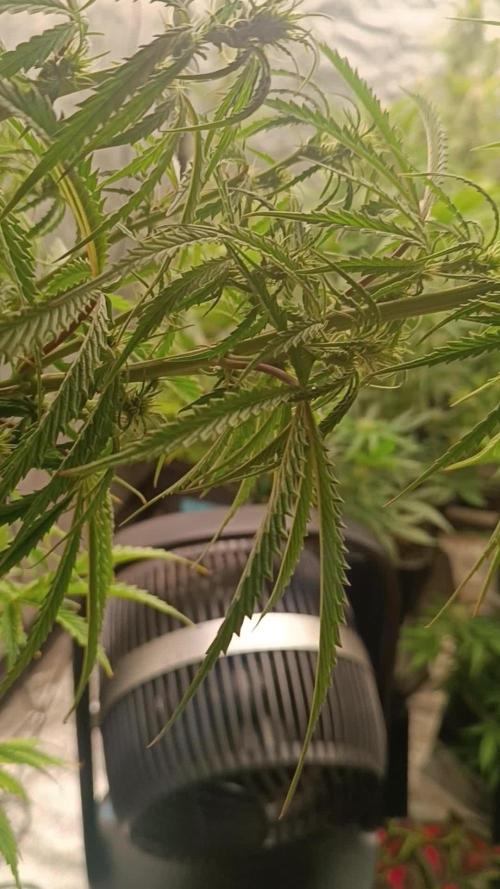
Questa runtz continua a crescere in altezza,. Oggi lunedì 22 dic. L'ho dovuta ripiegare ancora.. gli ho fatto un altro HST sennò passa i 2 metri di altezza 😉🤣😂😘
Likes
126
Share


@WhiteWidow
Follow
You can find tbe first week of all girls on my profile, second week is missing coz its just boring and now i start week 3 so its day 15 today from placing seeds to germination.
Uploaded a video of their habitat, i still wont name each one indifidually coz i still didnt choose winners / keepers.
Unfortunatelly i have a bit low RH for this stage of growth but they obviously dont mind, i spray them twice a day, no burns from spraying with lights on, no electroshocks caused by spraying so all good now.
I tried it all enough to be able to say i cant be assed anymore :D
Since @growdiaries are not keen on resolving a problem with uploading each pic individually on androids, i will keep one diary for all girls, dont even mind not being able to compete in dom.
Stay tuned these girls will rock.


Likes
23
Share


@HideAndFly420
Follow
Great réaction to stress.
Flow exactly started thé 28th day.
Let’s see.
Started bio bloom too.
Likes
33
Share

@Smoke_Jabat
Follow
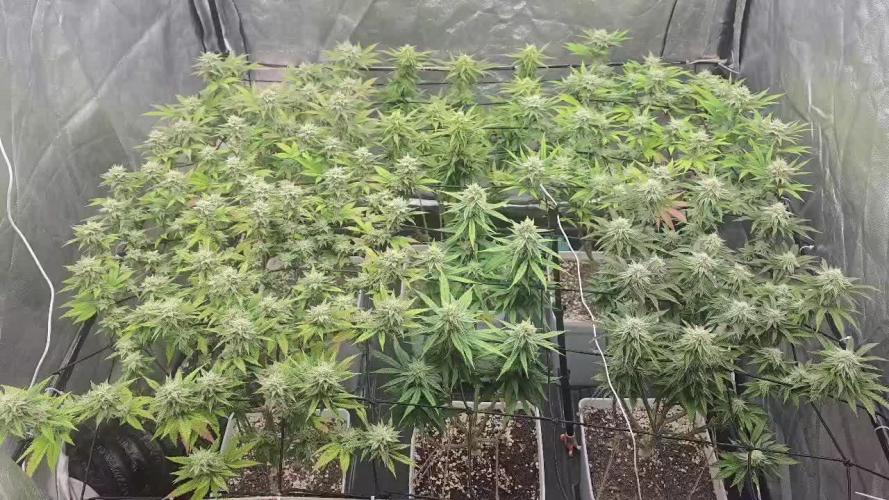
🌸 Entramos en la 4ª semana de floración de nuestras chicas.
Las plantas están geniales, con muy buen aspecto general, estructura bonita y flores que siguen avanzando a buen ritmo. 🌱✨ El cultivo se mantiene estable y las chicas presentan un buen color, buen vigor y un olor floral/frutal todavía leve, pero que empieza a hacerse notar poco a poco.
Por ahora, todo marcha como esperábamos. Seguimos observando su evolución y disfrutando de esta etapa, que cada semana se pone más interesante. 🍓?🌸
🐗🌰


Likes
19
Share


@MaxGrowCanada
Follow
First time grower, criticism will be well recieved😀
Two plant ebb and flow setup in a 3x3 as a test run
Top feeding until I can afford the rest of my setup🙄
Started seed in water balanced to 6.0
Sat. Feb. 29th
Tap roots within 12 hours, directly into pre soaked rockwool cubes.
Broke the surface march 3rd.
Began 1/4 strength micro, grow, bloom and stress relief
Using very hard water for the next couple days, roughly 450 PM out of the tap.
Ro system to be installed march 6th
Ro system now installed.
Start of week 1 will be Saturday the 7th of March.
Day 2:
Turned the light down to roughly 50%, instead of raising it, due to the fear of light burn. Will look into it soon.
Plants seem to have recovered after I decreased the light intensity.
Fan and filter purchased.
Alternating flush and feed cycles 12 hours apart to keep salt sats down.
Day 3:
Bumped light intensity back up to roughly 75% of the ts1000's capability or 700 "light units" from a cheapy 3way meter.
Adding as much co2 as I can through baking soda and dilute phosphoric acid.
Day 4:
Exhaust fan with climate control installed March 10th
Day 5:
Girls exploded now that I have my salt build up figured out .
Day 6:
Light back up to 100%
Day 7:little droopy on the one plant, gonna let them dry out a day
Setup should be complete for start of week 2.(actually sick right now and having trouble getting supplies)
Still need a flood table setup.


Likes
4
Share


Likes
91
Share


@420Highlifecouple
Follow
Well it was definatly another tough week.From battling temps of 34 degrees celcius to too much humidity levels over 70 percent,not to add to the trouble,my light blew.Im lucky a retailer had a MARS FC3000.
In Full flush with mollases and ph adjusted water and ready to pick these guys this week or next.As for the other girl she wasn't thr greatest after all that so she was pulled,hopefully enough for a few spliffs after dry n cure.
Thanks to all y'all guys help on my message list.you know who you are.bloody legends!
https://growdiaries.com/grower/420highlifecouple
https://youtube.com/channel/UCKvjJ_S8nRI2wTc4cx_O1KQ
https://myfastbuds.com/?a_aid=616a33e294e50
With every order you will get a free seed
Join the community on GROWDIARIES
It’s a awesome place to meet cool people, document your grow and learn a lot from fellow growers, happy growing 😊🌱

Likes
26
Share


@Wicked_Stix
Follow
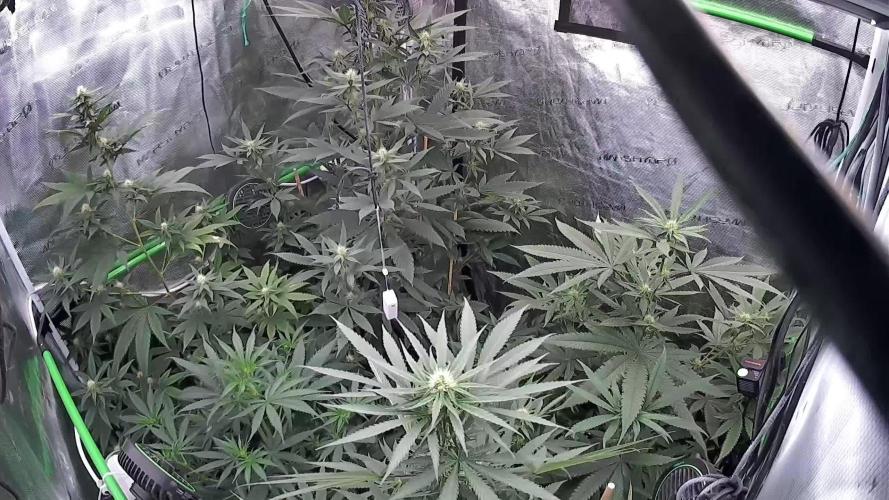
Day 35 is here. We are a week into flower and most the plants are just starting to hit that flowering stretch. I have been bending them down a little every couple days, but I need to focus on cleaning up some of the bottom branches so we can keep good air flow through the plants. Will work on that through this next week. I haven't done a water change, just been topping off the reservoir with fresh nutrients as they drink it up. Feeding half and half maxigro and maxibloom. Will cut out the maxigro in a couple weeks when I notice their stretch slowing down. I had a plant overflow this week because the drain line is getting full of roots. I noticed a couple roots have made their way into the reservoir already. I set a pump timer to 1 minute on and 20 minutes off so they can drain properly. I would like to make it through the grow without having to mess with the drains, but we will see what happens. I will make some modifications if needed. Other than that everything is running smooth and I hope we have some little pistils to show by next week. Thanks for stopping by ✌️



Likes
24
Share


@Jays_Not_Here_Man
Follow
The Apple Betty babies have gone through a lot this week 😬After a couple of days of LST, I let them recover for a few days. Once they were looking perky again, I decided to top all three.
Day 31 - topped the girls after some deliberation. I had been undecided, ultimately figured that it was best for my situation, whether or not I decide to use my DIY scrog screen.
For those unsure of when to top, 5 nodes or true leaf sets seems to work for me. Find the shoot at the very top, make sure it’s got some small shoots on either side started, and snip! It’s that easy. Topping will disrupt the hormones being distributed through the plant instead of the top, and force your plants energy and growth to the lower branches. Not to mention you will now have two main tops growing instead of one 😎 Give the plants some time to recover before doing anything major again, and you should he able to see your plants get bushier instead of taller.
Once they were topped I bent and worked all the stems and branches between my fingers making sure to get all of them. As you can tell from the main stalk, the twisting and bending works, she thicc already!
I also put their wire ties back on and bent all three over as far as I could get them to go comfortably before feeling like they would snap. This was a lot of stress for these girls, but they have shown they have a great stress response, and recover quickly.
Can’t wait till the weekend, my big tent will be cleaned and ready to go for these girls, they are growing so fast! Happy Gardening 🇨🇦❤️🌱😎💨


Likes
6
Share

@Oldwied
Follow
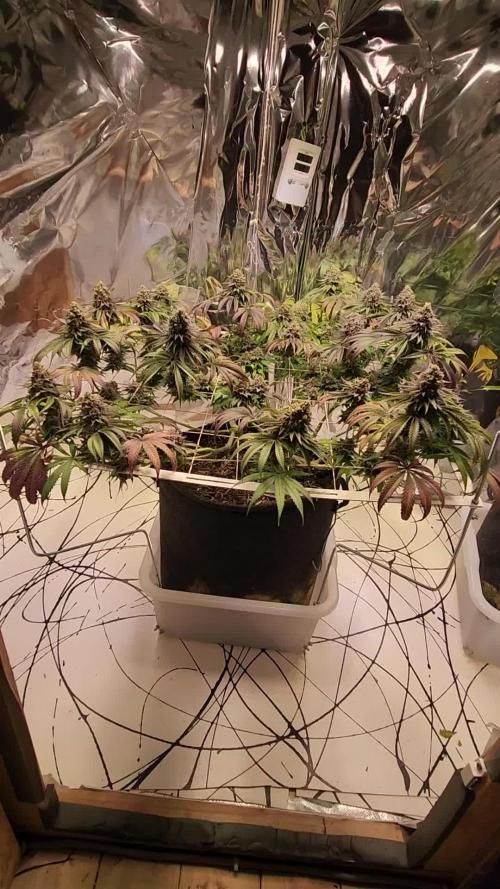
Mhmmm yummy
Light Power: 100%
Day 106
Flower day 59
Defoliation
Day 109
Flower day 63
Last Photosession in Sanlight
Likes
6
Share


@organicman
Follow
- lock outs
- dimmed light and nutes again drastically
____________________________________________
light- and watering schedule: see photos
now:
12 plants
2 x Auto Orange Bud > Dutch Passion (early80's)
2 x Haze Berry Automatic > Royal Queen Seeds (2018)
2 x Auto Bubblegum > TH Seeds (late 80's)
2 x Original Auto BubbleGum > Fast Buds Company (late 80's)
1 x Strawberry Pie Auto > Fast Buds Company
1 x Gorilla Cookies Auto Seed Stockers (2015)
2 x Auto White Widow x Big Bud > Female Seeds
setup + strategy:
18 seeds
3 x Auto Orange Bud (early80's)
3 x Haze Berry Automatic (2018)
3 x Auto Euforia (late 90's)
2 x Auto Bubblegum > TH Seeds (late 80's)
2 x Auto Bubblegum > Fast Butts (late 80's)
2 x Strawberry Pie Auto
1 x Gorilla-Cookies Auto (2015)
2 x Auto White Widow x Big Bud
setup:
18 x gronest 2 liter
60 cm x 120 cm x 180 cm (2 x 4) growtent
4 l humidifier
25 watt axial fan
15 watt clip fan
ro-filter
bath room with a 50 watts room fan (-> carbon filter not necessary)
...and a lot of odds and ends.
grow strategy:
max yield by stressing with:
1. tiny shoes (2 l fabric pots standing on 3 plastic rings (4 cm) for max oxygen)
2. tiny growspace (18plants on 0.72 sqm)
3. many strains (8 strains)
4. annoying neighbourhood (mixing old - i.e. bubblegum (late 80's) - with young- i.e. hazeberry (2018) - genetics)
5. no stress by light or food or water
6. unintentionally too much food
plus:
- no lst - no hst - just leaf tucking
- positioning bigger strains (euphoria, orange bud, haze berry) or just bigger phenos on less intense light spots (end of tent + edges)
- music-rotation: 24 hrs reggae (for sativas) - 24 hrs classicals (because it's scientifically proofed) - 24 hrs traditionals from the hindukush region (for the indicas)
max efficiency (min electricity - max yield):
- light: 23 h on - 1 h off
- keeping the distance of 18" (45 cm) and dimming to the right par (lux) - value depending on growing stages (see sheet: beginning 185 par ( 10000 lux/100 watt )/end 340 par ( 18000 lux/175 watt )) => ends up in approx. 170 watts in average over max 15 weeks
temperatur management:
- using approx. max. half of what the lamp can do keeps temperature low:
my tsl 2000 is pulling max. 360 watts of the wall - i need only 175 watts, results in less temperature than using a 175 watts lamp
- adjusting the temperature by using a humidifier outside of tent:
blown in humidity is soaking degrees and is transported out by fan, works much better than doing the same with pure air
summer extreme: no humidifier: 36°C / 35 rh - with humidifier: 29°C / 65 rh
works for 1-2 weeks of real hot summer days, no mould, no signs of stress in two summers
germination:
seeding in waterglass
spraying "basic"-water: ro-water (22 ppm) + calmag to 180 ppm every 4 - 8 hours until sprouted
man versus fungus gnat:
5 days before seeding i'm running the tent with "basic"-watered pots as if there were plants inside - led on, fans on, humidifier on. Fungus gnats coming with the soil might take the chance to come out now for breeding. i'm waiting with a 9 mm rifle. in the past i found 6 gnats in 2 of 8 x 50 l biobizz lightmix bags coming out of the soil. i could eliminate every single gnat successfully ;)
rotating harvest:
the little ones will be harvested completely when ready. at this point only the top branches of the big ones will be cut...and the new (basic-watered) pots of the new grow will move into the tent. 2-3 weeks later the secod half of the big ones will be cut and the second half of the new grow will move in...
nutes:
biobizz / soil: biobizz lightmix
bloom,grow,topmax,activera,algamic
+ aminopower instead of bio heaven (too expensive)
individual feeding schedule/once a week:
veg: 200 - 600 ppm
bloom: 600 - 900 ppm
water:
ro-water with:
veg: 100-150 ppm calmag
bloom: 150 ppm calmag


