


Likes
Comments
Share


@JamMAKEcan
Follow
6wk into flowering..3wk more according to statistics.. But i will be checking the hairs an Crystal...the smell is strong smells like fruity peebles the alien candy from beever seeds and the white widow smells like fruity pine both are UNBELIEVABLY STICKY now they were outside for 2wk into flowering ..fat. Azz budz


Likes
31
Share


@The_Doctor_Green
Follow
Esta semana estuve ausente unos dias, por esa razón no he subido antes las fotos.
Ha crecido unos 20 cm de una semana a otra.
La que está en el suelo llego a los 70 cms ya.
Buen 2024 para todos!!!🤞🤞🤞🎊🎊🎊🎊🚀🚀🚀🚀😅😅😅🤞🤞🤞
Likes
Comments
Share

@Ribemarti
Follow
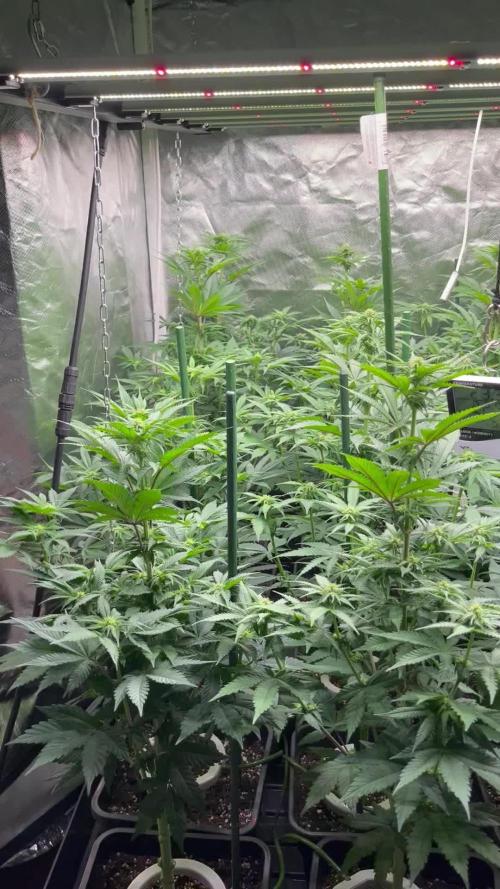
Estamos a dia 19’de floracion, ahora estan estirandose, creo que veremos unas buenas plantas y parece que hay muchas que seran de tono purpura o morado, en un par de semanas estaran definidas las estructuras finales de cada planta

Likes
48
Share


@pifflestikkz
Follow
Day 72
10/09/24 Tuesday
Feed today using De-chlorinated tap water pH 6 today only.
Day 74
12/09/24 Thursday
De-chlorinated tap water pH 6 today with Plagron products.
Picture and video update 💚
Day 76
14/09/24 Saturday
De-chlorinated tap water pH 6 with Plagron products.

Likes
2
Share


@Hydrokomahfarms
Follow
Very easy first grow very happy with results best weed I ever smoked and I can only get better from here so I'm excited to keep seeing more and more progress


Likes
11
Share

@420DeepGrow
Follow
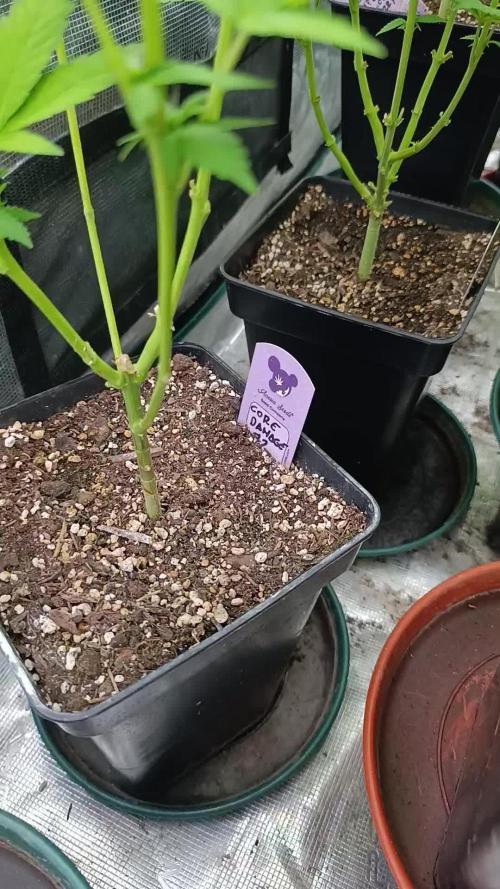
📆 Semana 3
La floración avanza con fuerza y el estiramiento alcanza una de sus fases más intensas. Ambas plantas muestran un crecimiento vigoroso, incrementando notablemente su altura y expandiendo las ramas secundarias hasta formar una canopia cada vez más uniforme y eficiente para la captación de luz.
La planta que perdió la punta principal continúa demostrando una excelente capacidad de recuperación. Las ramas que asumieron la dominancia han desarrollado una estructura equilibrada, reduciendo progresivamente las diferencias con respecto a la planta que mantuvo su crecimiento apical original.
Los puntos de floración se multiplican por toda la estructura y los grupos de pistilos comienzan a hacerse más densos y visibles. El consumo de agua y nutrientes aumenta de forma significativa, acompañado por una intensa actividad metabólica y una rápida producción de nueva biomasa.
⚡ EC: 1.6 – 1.7
💧 pH: 6.2 – 6.5
🌡️ Agua: 21°C
🌫️ Humedad: 45–50%
💡 Intensidad: 900–1000 PPFD
🔥 Nota de cultivo: La tercera semana suele representar el tramo final del gran estiramiento. Una estructura bien distribuida y una canopia uniforme permiten maximizar la penetración lumínica y sentar las bases para una floración abundante, favoreciendo el desarrollo homogéneo de todos los sitios florales.
Seguimos creciendo fuerte 💪!

Likes
15
Share


@DreamIT
Follow
Sponsored by:
🦎THE HIGH CHAMELEON🦎-💡VIPARSPECTRA💡-💐GREEN BUZZ LIQUIDS💐-🛠️WEDRYER🛠️
🏁 10/8 New sponsor at DreamIT. I am delighted to warmly welcome The High Chameleon to my journals and growboxes. The shipping was fast and the package was nimble. Instead of the usual plastic to keep the seeds in place, I found a nice bag of chopped hemp, a smart and ecological choice. In addition, a very practical grass holder with attached grinder, really practical and comfortable. I will open a diary for each seed that I will try to grow with different types of training techniques, I will decide which ones along the way. So off you go !!
12/8 She was born, ready to become huge and very fragrant!
18/8 everything is going great
__________________________________________
Personal advertising (contains affiliate links)
__________________________________________
🦄 Check out The High Chamaleon website, their first selection criterion is the strong signature of terpenes by taking rare strains while being 100% organic and respecting nature. Safe anonymous shipping!
✅ https://bit.ly/TheHighChameleon
__________________________________________
Did you know that Green Buzz Liquids fertilizers are 100% vegan? A complete line of products ready to give the best to each of your plants! Visit the site and see my journals to see how they work 🦄
🤯 And with the code "dreamit" you will immediately receive a 15% discount on your purchases
✅https: //bit.ly/GreenBuzzLiquidsPro
__________________________________________
👀 Are you looking for a good lamp to start with? 👀
🌞Viparspectra has something more than the others, take a look at their site.
⏩ Use "GDVIP" for an extra discount or "DREAMIT3" for an extra 5 %% discount
👀 Search for it on Amazon
✅Amazon USA: https://amzn.to/30xSTVq
✅Amazon Canada: https://amzn.to/38udUVe
✅Viparspectra UE: bit.ly/ViparspectraUE
✅Viparspectra USA: bit.ly/ViparspectraUS
______________________________________________
🌈 Tired of blowing on your weed hoping it dries quickly? Check out the Wedryer website! You will find a well-made accessory that will help your weed dry in just 8-10 days without the annoying risk of finding mold or other annoyances! (no affiliate links)
✅https: //bit.ly/Wedryer_
______________________________________________
📷🥇Follow the best photos on Instagram 🥇📷
https://www.instagram.com/dreamit420/
Backup
https://www.instagram.com/dreamit4200/
🔻🔻Leave a comment with your opinion if you pass by here🔻🔻
🤟🦄💚 Thank you and good growth 💚🦄🤟

Likes
5
Share


@mangodalat
Follow
She has stopped stretching.
-Buds: getting bigger
-Color buds: dark purple
-Smell: normal( berry, citrus)
This week, i didn't add any nutrition.
She had her first video.
THANK YOU. SEE YOU NEXTWEEK.

Likes
81
Share


@Hou_Stone
Follow
- Water: tap water at 300 PPM, I add 0.6g of Hybrid powder and 0.4g of booster PK+ per liter to reach 950PPM and I adjust the PH to 5.8. I water every 2 days because it is too wet, I water until the water runs out of the pot (to release the nutrients from previous waterings)
-Daytime temperature: 21-26°C
-Night temperature: 21-23°C
-Humidity: 55-80% :/ too high
-Lamp: Mars Hydro FC3000. intensity 90% at 35cm from the top leaves
-Room: Mars Hydro 100x100x180cm
-Extractor: Mars hydro 402 CFM Max. power 3/10
-Substrate : 70% coco, 25% perlite, 5% vermiculite.
My instagram : https://www.instagram.com/p/CuMhQ_BsjRP/?utm_source=ig_web_copy_link&igshid=MzRlODBiNWFlZA==
Looking for MarsHydro equipment for your crop? 🔥
You can use my promo codes! 🙏😻
3% off with "houstone3" for: TS LED Grow Light, Tent, Ventilation
5% off with "houstone5" for: FC&FC-E&SP LED Grow Lights; Grow Tent Kits
https://www.mars-hydro.com/?acc=hou-stone

Likes
9
Share


@BB_UK
Follow
She was the second to pop up (and purple punch earlier that day) I won’t be topping any autos this run! I will be only low stress training until scrog and then I’ll high stress train if necessary! I’ve given the first feed today of biobizz (doing fastbuds organic the other 3 synthetic) my aim is to keep the veg period vigorous! As a great veg equals great bloom! All other
Likes
Comments
Share

@billybadass
Follow
QUICK GROW STATS/NOTES THROUGHOUT EACH WEEK:
—————————————————————————
5/15:
Seed germinated on 5/13 via Cannakan.
Planted in Earthbox with BAS 3.0 soil.
Sprouted 5/15.
————
5/18:
She's grown. A little stretch, I'd say.
I lowered the light closer and checked PPFD using Photone.
Right now, she is on a 20-on/4-off light schedule (will change soon).
With the Evoframe on 3 or 30%, her light condition is as follows:
Light Distance: 2 FT above the seedling
PPFD: 252
DLI: 17.8
Pretty soon, as she develops her first set of seedling leaves (a one-finger pair), I'll take out the infrared thermometer to set the VPD offset.
————
5/19:
She's getting bigger! Not much to see here. Check photos!
—————————————————————————————
CONTEXT ABOUT THE GROW, SETUP, & ANY OTHER INFO I WANT TO SHARE:
I have a 2x4 for veg and a 4x4 for flowering.
I plan to scrog train her in the 4x4, hopefully around 1-2ft above the top of the Earthbox.
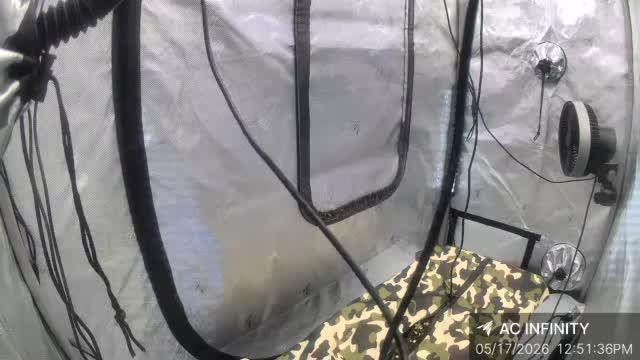
I am also using the new Spectrum AI Camera from AC Infinity! See short clips and photos above.
The AI is pretty sweet. It lets you know when it sees stress, if the tent was left open, and more.
It also provides daily growth estimates based on historical data.
I also use the AC Infinity to get leaf temperature to properly set the VPD offset.
At this stage, she's a bit too small to worry about that.
I focus on keeping temps around 80F during the day and 72F at night.
Also, I keep the humidity around 70-80%.
—————————————————————————————
SOIL PREP, TREATMENT, AND PLAN:
I use Build A Soil 3.0.
For a seedling, this needs NOTHING to begin with.
I used Quillaja during prep for the 10-gallon soil bed in the Earthbox.
Quillaja is a Saponin wetting agent.
I also used WDG3000.
This is used to kill fungus gnats or their larvae, if any exist.
The microbiology in 3.0 soil can carry this seedling weeks into veg without any feeding.
I pre-soaked the soil with 1/2 gallon (5% of the soil's volume) of RO water. No PH.
Around 2 weeks into veg, I'll start organically feeding her based on the BAS Supplemental Feeding chart.
Top dressing and watering (top, not reservoir) will happen once a week from then on.
Shortly after, I'll add 1/2 gal of water to the reservoir and measure how long she takes to drink it.
Over time (a few weeks after veg, week 2), I'll ramp her up to 2 gal of water in the reservoir, refilling only when she goes dry.
Any additional details are covered in the attached images of the feeding and environmental protocol!

Processing
Likes
7
Share


@420keef
Follow
Weather is fucked up again, i hope i don’t run into any issues with mold once they gain some weight :(

Likes
6
Share


@flitflitz
Follow
Semana buena. Clima perfecto. Crecimiento excelente, se ha notado el transplante.
Defoliación de las tres mas viejas y entutorado de las demás.
Tnt complex 2 veces/semana a razón de 2.5 ml/l
Powerzyme 1 vez a la semana, 2 ml/l
Supervit 1 vez/semana, a razón de una gota cada 4 litros
Lo estipulado por hesi
RLC - ✅
PM - ✅
AP - ✅
AF - ✅
Seguimos!


Likes
105
Share


@StarLorr
Follow
Welcome to my autø Møøn Røck 2 Diary.
In this Diary:
Seeds: Sponsored by Ðivine Seeðs
Media: Pro~Mix HP *•ns
Nutrients: Remo Supercharged Kit *•ns
*•not sponsored
___________________________
Feeding:
Wed 13Nov: 2L Remo/Recharge pH'd 6.3
Sat 16Nov: 2L Remo/Recharge pH'd 6.5
___________________________
Buds are still puffing up and they look so yummy and that pinkish purple hue just turn me on😳😂
___________________________
Thanks for stopping by, likes and comments are appreciated!👊🏻😎
Keep on growin!
Keep on tokin!!!
😙💨💨💨💨💨


Likes
5
Share


@Opulent_Amber_69
Follow
Never have I ever seen this happen! I topped it, and there is 4 different tops! I've got no clue what happened but I ain't mad! 😅

Likes
34
Share


@Ultraviolet
Follow
Yellow butterfly came to see me the other day; that was nice.
Starting to show signs of stress on the odd leaf, localized isolated blips, blemishes, who said growing up was going to be easy!
Smaller leaves have less surface area for stomata to occupy, so the stomata are packed more densely to maintain adequate gas exchange. Smaller leaves might have higher stomatal density to compensate for their smaller size, potentially maximizing carbon uptake and minimizing water loss. Environmental conditions like light intensity and water availability can influence stomatal density, and these factors can affect leaf size as well. Leaf development involves cell division and expansion, and stomatal differentiation is sensitive to these processes. In essence, the smaller leaf size can lead to a higher stomatal density due to the constraints of available space and the need to optimize gas exchange for photosynthesis and transpiration. In the long term, UV-B radiation can lead to more complex changes in stomatal morphology, including effects on both stomatal density and size, potentially impacting carbon sequestration and water use. In essence, UV-B can be a double-edged sword for stomata: It can induce stomatal closure and potentially reduce stomatal size, but it may also trigger an increase in stomatal density as a compensatory mechanism. It is generally more efficient for gas exchange to have smaller leaves with a higher stomatal density, rather than large leaves with lower stomatal density. This is because smaller stomata can facilitate faster gas exchange due to shorter diffusion pathways, even though they may have the same total pore area as fewer, larger stomata. Leaf size tends to decrease in colder climates to reduce heat loss, while larger leaves are more common in warmer, humid environments. Plants in arid regions often develop smaller leaves with a thicker cuticle and/or hairs to minimize water loss through transpiration. Conversely, plants in wet environments may have larger leaves and drip tips to facilitate water runoff. Leaf size and shape can vary based on light availability. For example, leaves in shaded areas may be larger and thinner to maximize light absorption. Leaf mass per area (LMA) can be higher in stressful environments with limited nutrients, indicating a greater investment in structural components for protection and critical resource conservation. Wind speed, humidity, and soil conditions can also influence leaf morphology, leading to variations in leaf shape, size, and surface characteristics. Small leaves: Reduce water loss in arid or cold climates.
Environmental conditions significantly affect gene expression in plants. Plants are sessile organisms, meaning they cannot move to escape unfavorable conditions, so they rely on gene expression to adapt to their surroundings. Environmental factors like light, temperature, water, and nutrient availability can trigger changes in gene expression, allowing plants to respond to and survive in diverse environments.
Depending on the environment a young seedling encounters, the developmental program following seed germination could be skotomorphogenesis in the dark or photomorphogenesis in the light. Light signals are interpreted by a repertoire of photoreceptors followed by sophisticated gene expression networks, eventually resulting in developmental changes. The expression and functions of photoreceptors and key signaling molecules are highly coordinated and regulated at multiple levels of the central dogma in molecular biology. Light activates gene expression through the actions of positive transcriptional regulators and the relaxation of chromatin by histone acetylation. Small regulatory RNAs help attenuate the expression of light-responsive genes. Alternative splicing, protein phosphorylation/dephosphorylation, the formation of diverse transcriptional complexes, and selective protein degradation all contribute to proteome diversity and change the functions of individual proteins.
Photomorphogenesis, the light-driven developmental changes in plants, significantly impacts gene expression. It involves a cascade of events where light signals, perceived by photoreceptors, trigger changes in gene expression patterns, ultimately leading to the development of a plant in response to its light environment.
Genes are expressed, not dictated! While having the potential to encode proteins, genes are not automatically and constantly active. Instead, their expression (the process of turning them into proteins) is carefully regulated by the cell, responding to internal and external signals. This means that genes can be "turned on" or "turned off," and the level of expression can be adjusted, depending on the cell's needs and the surrounding environment. In plants, genes are not simply "on" or "off" but rather their expression is carefully regulated based on various factors, including the cell type, developmental stage, and environmental conditions. This means that while all cells in a plant contain the same genetic information (the same genes), different cells will express different subsets of those genes at different times. This regulation is crucial for the proper functioning and development of the plant.
When a green plant is exposed to red light, much of the red light is absorbed, but some is also reflected back. The reflected red light, along with any blue light reflected from other parts of the plant, can be perceived by our eyes as purple.
Carotenoids absorb light in blue-green region of the visible spectrum, complementing chlorophyll's absorption in the red region. They safeguard the photosynthetic machinery from excessive light by activating singlet oxygen, an oxidant formed during photosynthesis. Carotenoids also quench triplet chlorophyll, which can negatively affect photosynthesis, and scavenge reactive oxygen species (ROS) that can damage cellular proteins. Additionally, carotenoid derivatives signal plant development and responses to environmental cues. They serve as precursors for the biosynthesis of phytohormones such as abscisic acid () and strigolactones (SLs). These pigments are responsible for the orange, red, and yellow hues of fruits and vegetables, while acting as free scavengers to protect plants during photosynthesis.
Singlet oxygen (¹O₂) is an electronically excited state of molecular oxygen (O₂). Singlet oxygen is produced as a byproduct during photosynthesis, primarily within the photosystem II (PSII) reaction center and light-harvesting antenna complex. This occurs when excess energy from excited chlorophyll molecules is transferred to molecular oxygen. While singlet oxygen can cause oxidative damage, plants have mechanisms to manage its production and mitigate its harmful effects.
Singlet oxygen (¹O₂) is considered a reactive oxygen species (ROS). It's a form of oxygen with higher energy and reactivity compared to the more common triplet oxygen found in its ground state. Singlet oxygen is generated both in biological systems, such as during photosynthesis in plants, and in cellular processes, and through chemical and photochemical reactions. While singlet oxygen is a ROS, it's important to note that it differs from other ROS like superoxide (O₂⁻), hydrogen peroxide (H₂O₂), and hydroxyl radicals (OH) in its formation, reactivity, and specific biological roles. Non-photochemical quenching (NPQ) protects plants from damage caused by reactive oxygen species (ROS) by dissipating excess light energy as heat. This process reduces the overexcitation of photosynthetic pigments, which can lead to the production of ROS, thus mitigating the potential for photodamage. Zeaxanthin, a carotenoid pigment, plays a crucial role in photoprotection in plants by both enhancing non-photochemical quenching (NPQ) and scavenging reactive oxygen species (ROS). In high-light conditions, zeaxanthin is synthesized from violaxanthin through the xanthophyll cycle, and this zeaxanthin then facilitates heat dissipation of excess light energy (NPQ) and quenches harmful ROS.
The Issue of Singlet Oxygen!!
ROS Formation: Blue light, with its higher energy photons, can promote the formation of reactive oxygen species (ROS), including singlet oxygen, within the plant.
Potential Damage: High levels of ROS can damage cellular components, including proteins, lipids, and DNA, potentially impacting plant health and productivity.
Balancing Act: A balanced spectrum of light, including both blue and red light, is crucial for mitigating the harmful effects of excessive blue light and promoting optimal plant growth and stress tolerance.
The Importance of Red Light:
Red light (especially far-red) can help to mitigate the negative effects of excessive blue light by:
Balancing the Photoreceptor Response: Red light can influence the activity of photoreceptors like phytochrome, which are involved in regulating plant responses to different light wavelengths.
Enhancing Antioxidant Production: Red and blue light can stimulate the production of antioxidants, which help to neutralize ROS and protect the plant from oxidative damage.
Optimizing Photosynthesis: Red light is efficiently used in photosynthesis, and its combination with blue light can lead to increased photosynthetic efficiency and biomass production.
In controlled environments like greenhouses and vertical farms, optimizing the ratio of blue and red light is a key strategy for promoting healthy plant growth and yield.
Understanding the interplay between blue light signaling, ROS production, and antioxidant defense mechanisms can inform breeding programs and biotechnological interventions aimed at improving plant stress resistance. In summary, while blue light is essential for plant development and photosynthesis, it's crucial to balance it with other light wavelengths, particularly red light, to prevent excessive ROS formation and promote overall plant health. Oxidative damage in plants occurs when there's an imbalance between the production of reactive oxygen species (ROS) and the plant's ability to neutralize them, leading to cellular damage. This imbalance, known as oxidative stress, can result from various environmental stressors, affecting plant growth, development, and overall productivity.
Causes of Oxidative Damage: Abiotic stresses: These include extreme temperatures (heat and cold), drought, salinity, heavy metal toxicity, and excessive light. Biotic stresses: Pathogen attacks and insect infestations can also trigger oxidative stress. Metabolic processes: Normal cellular activities, particularly in chloroplasts, mitochondria, and peroxisomes, can generate ROS as byproducts. Certain chlorophyll biosynthesis intermediates can produce singlet oxygen (1O2), a potent ROS, leading to oxidative damage. ROS can damage lipids (lipid peroxidation), proteins, carbohydrates, and nucleic acids (DNA). Oxidative stress can compromise the integrity of cell membranes, affecting their function and permeability. Oxidative damage can interfere with essential cellular functions, including photosynthesis, respiration, and signal transduction. In severe cases, oxidative stress can trigger programmed cell death (apoptosis). Oxidative damage can lead to stunted growth, reduced biomass, and lower crop yields.
Plants have evolved intricate antioxidant defense systems to counteract oxidative stress. These include: Enzymes like superoxide dismutase (SOD), catalase (CAT), and various peroxidases scavenge ROS and neutralize their damaging effects. Antioxidant molecules like glutathione, ascorbic acid (vitamin C), C60 fullerene, and carotenoids directly neutralize ROS. Developing plant varieties with gene expression focused on enhanced antioxidant capacity and stress tolerance is crucial. Optimizing irrigation, fertilization, and other management practices can help minimize stress and oxidative damage. Applying antioxidant compounds or elicitors can help plants cope with oxidative stress. Introducing genes for enhanced antioxidant enzymes or stress-related proteins over generations.
Phytohormones, also known as plant hormones, are a group of naturally occurring organic compounds that regulate plant growth, development, and various physiological processes. The five major classes of phytohormones are: auxins, gibberellins, cytokinins, ethylene, and abscisic acid. In addition to these, other phytohormones like brassinosteroids, jasmonates, and salicylates also play significant roles.
Here's a breakdown of the key phytohormones:
Auxins: Primarily involved in cell elongation, root initiation, and apical dominance.
Gibberellins: Promote stem elongation, seed germination, and flowering.
Cytokinins: Stimulate cell division and differentiation, and delay leaf senescence.
Ethylene: Regulates fruit ripening, leaf abscission, and senescence.
Abscisic acid (ABA): Plays a role in seed dormancy, stomatal closure, and stress responses.
Brassinosteroids: Involved in cell elongation, division, and stress responses.
Jasmonates: Regulate plant defense against pathogens and herbivores, as well as other processes.
Salicylic acid: Plays a role in plant defense against pathogens.
1. Red and Far-Red Light (Phytochromes):
Red light:
Primarily activates the phytochrome system, converting it to its active form (Pfr), which promotes processes like stem elongation and flowering.
Far-red light:
Inhibits the phytochrome system by converting the active Pfr form back to the inactive Pr form. This can trigger shade avoidance responses and inhibit germination.
Phytohormones:
Red and far-red light regulate phytohormones like auxin and gibberellins, which are involved in stem elongation and other growth processes.
2. Blue Light (Cryptochromes and Phototropins):
Blue light:
Activates cryptochromes and phototropins, which are involved in various processes like stomatal opening, seedling de-etiolation, and phototropism (growth towards light).
Phytohormones:
Blue light affects auxin levels, influencing stem growth, and also impacts other phytohormones involved in these processes.
Example:
Blue light can promote vegetative growth and can interact with red light to promote flowering.
3. UV-B Light (UV-B Receptors):
UV-B light:
Perceived by UVR8 receptors, it can affect plant growth and development and has roles in stress responses, like UV protection.
Phytohormones:
UV-B light can influence phytohormones involved in stress responses, potentially affecting growth and development.
4. Other Colors:
Green light:
Plants are generally less sensitive to green light, as chlorophyll reflects it.
Other wavelengths:
While less studied, other wavelengths can also influence plant growth and development through interactions with different photoreceptors and phytohormones.
Key Points:
Cross-Signaling:
Plants often experience a mix of light wavelengths, leading to complex interactions between different photoreceptors and phytohormones.
Species Variability:
The precise effects of light color on phytohormones can vary between different plant species.
Hormonal Interactions:
Phytohormones don't act in isolation; their interactions and interplay with other phytohormones and environmental signals are critical for plant responses.
The spectral ratio of light (the composition of different colors of light) significantly influences a plant's hormonal balance. Different wavelengths of light are perceived by specific photoreceptors in plants, which in turn regulate the production and activity of various plant hormones (phytohormones). These hormones then control a wide range of developmental processes.


Likes
5
Share


@HegauHillsFarmers_D23
Follow
In dieser Woche hat sich sehr viel getan , die Blüten sind herangereift und haben nochmal etwas an Volumen dazu gewonnen.😍
Der Geruch ist sehr stark und die Terpene intensiver geworden.
Es sind vorallem, Benzin und süße Düfte wahr zunehmen 🍬⛽️ Der Runtz Teil überwiegt leicht .
Die Skywalker OG Runtz Auto brauch nicht sehr lange um die Blüten auszureifen.
Deshalb habe ich hab dieser Woche, begonnen die Pflanze mit Flawless Finisch zu spülen und so auf die Ernte vorzubereiten 🍁🙌🏻
