


Likes
Comments
Share


@SonomaSungrown
Follow
The girls just keep on cooking...and things are starting to get really bushy.
I'm hoping that we're close to finished on the vertical growth front.
Chem Brûlée just keeps getting bigger and bigger, but she seems to be spreading OUT faster than she is growing UP at this point (she's already 56" call).
Pineapple Meatball is just a straight up bush.
French Macaron is 62" tall and VERY thick on the vegetation front, but not as WIDE as the chem brûlée.
7/13
Sprayed with light neem/castille spray


Processing
Likes
14
Share


@kevgrow
Follow
Hey Growers, end of week 7 from seed :)
This is plant #2
Its a female
Took a while for me to reveal its gender. She is looking healthy and is growing fast.
Did some trimming
Slowing increasing nutrients, I am Currently feeding every three days 1 gallon of water with 1/2 of the recommended feeding schedule given from the manufacturer.
Will keep you guys posted with more, see you next week 😊
Likes
20
Share


@DreamIT
Follow
Sponsored by:
🎆ANESIA SEEDS🎆-💡VIPARSPECTRA💡-💐GREEN BUZZ LIQUIDS💐-🛠️WEDRYER🛠️
28/7 they grow monstrously well, next week they come into bloom
2/8 it took a few days of absence to discolor the leaves and dry out the soil. Today I will be watering properly with Green buzz nutrients fertilizers before sending them into bloom
__________________________________________
Personal advertising (contains affiliate links)
__________________________________________
🦄 The varieties of Anesia seeds all have an extremely high content of THC and cannabinoids. They were bred specifically for the effect and therefore find wide applications for medical purposes as well.
✅https://bit.ly/Anesiaseeds_
__________________________________________
Did you know that Green Buzz Liquids fertilizers are 100% vegan? A complete line of products ready to give the best to each of your plants! Visit the site and see my journals to see how they work 🦄
🤯 And with the code "dreami t" you will immediately receive a 15% discount on your purchases
✅https: //bit.ly/GreenBuzzLiquidsPro
__________________________________________
👀 Are you looking for a good lamp to start with? 👀
🌞Viparspectra has something more than the others, take a look at their site.
⏩ Use "GDVIP" for an extra discount on amazon or "DREAMIT3" for an extra 5 %% discount
👀 Search for it on Amazon
✅Amazon USA: https://amzn.to/30xSTVq
✅Amazon Canada: https://amzn.to/38udUVe
✅Viparspectra UE: bit.ly/ViparspectraUE
✅Viparspectra USA: bit.ly/ViparspectraUS
______________________________________________
🌈 Tired of blowing on your weed hoping it dries quickly? Check out the Wedryer website! You will find a well-made accessory that will help your weed dry in just 8-10 days without the annoying risk of finding mold or other annoyances! (no affiliate links)
✅https: //bit.ly/Wedryer_
______________________________________________
📷🥇Follow the best photos on Instagram 🥇📷
https://www.instagram.com/dreamit420/
Backup
https://www.instagram.com/dreamit4200/
🔻🔻Leave a comment with your opinion if you pass by here🔻🔻
🤟🦄💚 Thank you and good growth 💚🦄🤟

Likes
9
Share


@SeseGrows
Follow
Home Interior 90x90//
Do Si Dos 33 - Barneys Farm + Sour Diesel + Roadawg
//Semana 8 // FLORACIÓN
- Grotek Nutrients.
- Lumatek LEC 315w+ 💎 .

Likes
8
Share

@Smoking_Joe_Frazier
Follow
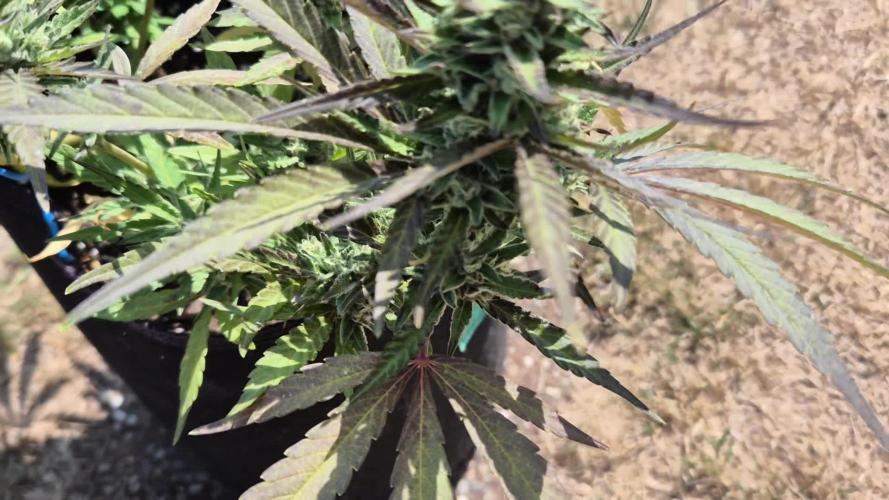
24.07.2026
Welcome to week number 7 of my Fast Buds Auto Grow, so let's go, Growmies!
This week I was on vacation in Austria, so I had to leave the girls in my son's hands. Unfortunately, he forgot to water them on time 😅
Weather and Conditions
Fortunately, the weather was on my side. Temperatures stayed between 23°C and 26°C, so the lack of watering didn't cause as much damage as it could have.
Once again, we didn't get a single drop of rain.
Growth
The stretch has completely stopped, and the girls are now putting all their energy into building flowers.
Because they missed a feeding while I was away, quite a few fan leaves have turned yellow. It isn't pretty, but that's life. Luckily, the buds themselves still look healthy and continue to fatten up.
Papaya Cookies
Papaya Cookies is still my favorite. Her colors are getting more beautiful every day, and the aroma is becoming incredibly sweet and intense. If she keeps developing like this, I think she could be ready in about two weeks.
If the weather remains stable, though, I'll let her ripen for as long as possible to maximize quality.
Tangie
Tangie is still taking her time, just like I expected.
Interestingly, her leaves stayed much greener than the other two, which tells me she's probably not as hungry for nutrients. Bud development isn't as explosive either, but that's most likely due to her sativa genetics.
The fruity Tangie aroma is already unmistakable and absolutely mouth-watering.
Apricot
Apricot has started showing beautiful purple fan leaves. I'm not entirely sure whether that's simply her genetics or a reaction to the nutrient deficiency, but either way she looks stunning.
She's easily the frostiest plant of the three, and every time I touch her my fingers become incredibly sticky. I have a feeling she's going to be something special.
Feeding
As soon as I got back from vacation, the girls received a good feeding of T.A. TriPart nutrients.
Hopefully they'll recover quickly and finish strong during the remaining weeks.
Pests
Still no pests on the cannabis plants.
The ants and aphids are still busy attacking my cucumbers, and as long as they stay there, I'm perfectly happy to let them.
Final Thoughts
My vacation definitely caused a small setback, and I'm sure it'll cost me a little yield in the end.
But honestly, I'd rather harvest slightly less if the quality stays high.
That's what really matters.
That's it for this week, my friends.
Catch ya next week!
Smoking_Joe_Frazier

Likes
19
Share


@adam_pawloski87
Follow
Another fun strain to run from Fastbuds, Bruce banner was amazing at a total of 83 days , came out with some thick dense resiny coated buds , an very sweet smell! Has very tight buds with tight stems so it would def be better to tie her down an open her up for some LST ! I highly recommend y’all trying Bruce Banner out , you won’t be disappointed!!

Likes
Comments
Share


@Weedwithwes
Follow
Week 9 day 65 autoflowers
Royal Queen seeds organic living soil.
Tropicana cookies was top dressed 4 tbs of Gia green 284 power boom and 1 tbs of glacier rock.
Watered with recharge ph 6.00
Granddaddy purple not top dressed late into flower already
North thunderfuck not top dressed. Do not like the slow growth, structure, amount of leaf in veg. Hoping m for big stretcher or bud packer

Likes
40
Share


@BudXs
Follow
These beautiful beasts are taking off. Heavily defoliated on F1, a complete bounce back and rigorous growth on F4. Will defo again on day 21 as is my preference. Seeing guys like AstroBoy grow this strain out is inspiring. OSS really knocked it out of the park with these beans, thank you once again for sending them across oceans to land in the Scroggernaut
60 day count down to chop is on. Girls are healthy, and happy. Mothers are being flowered out in the same room, see the diaries, they will be fkn beasts

Likes
12
Share

@Shivashamboom1
Follow
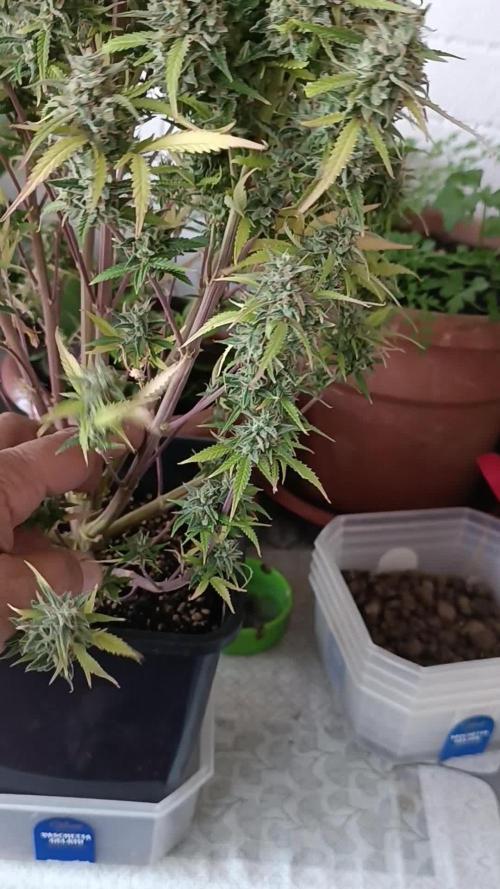
prime 2 piante tagliare......hanno un profumo speziato dolce, buonissima 🤤


Likes
4
Share


@Another_song
Follow
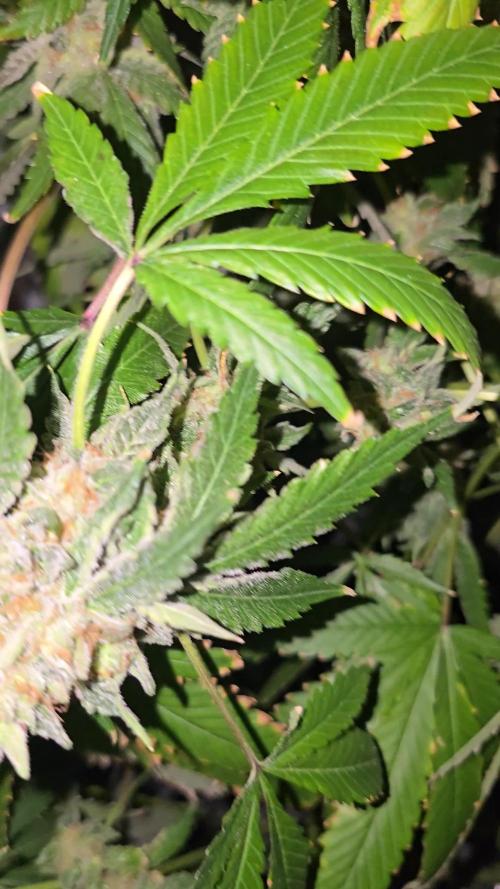
Heat just Heat after 1 month full of rains come days full of heat day temperature between 25-30 degrees celsium.Girls glad😎)
Likes
325
Share


@Metatronix
Follow
Hi, everyone 👋The Blue Cheese seedling is growing better than i expected in the cheese grater, pretty awesome looking little plant 😍
The TS1000 is really quiet and powerful the girls seem to love it 😍 as for now i run it at 60 Watts 33 cm. from the plants.
That is all for this week friends and growers & my grower friends...hopefully will see each other diaries next week... Bless, bless, bless 🙌🙌🙌


Likes
13
Share


@Skinnytalls420
Follow
Day 36-13/05/22 damn they looking good i think I’m going to raise the light today I will have to check!!!
Day 38-15/05/22 gave them a nice bit of water today they needed it!!!!
.
Day 40-17/05/22 all looking good so yellowing of lower leaves but think it’s because I watered them a bit to late the other day!!!
Processing
Likes
24
Share


@Newbiegrower420
Follow
Day 2 of week 8 - Sunday 11th October
Nutes in today, all looking good and pistils still coming through nicely.. Girls will need a bit of lower defoliation again but will wait till later this week..
UPDATE: Day 4 of week 8 Tuesday 13th October:
More LST and defoliation today, pistils looking so lovely 😊! Nutes in as usual. Defo beginning to stretch so LST is proving a little tougher to do as the stems are getting much stronger now.. May have to abandon metal spikes and start tying down to the sides of the fabric pots. Things are moving much faster now and water intake in increasing too. Happy days!
UPDATE: Day 6 of week 8 Thursday 15th Oct
Nutes in and a little more LST. Really peeved as I bent the main stem a little too hard on one of the girls and she had a slight crease in the stem now 🤬... I hope this doesn’t affect her growth or that I loose the main cola.. But it’s too late to change it now so keeping my fingers crossed that she’s as hardy as a I think she is.. Only time will tell. 🙏🏼🙏🏼🙏🏼
Enjoying this project immensely 😍❤️

Likes
93
Share


@Hou_Stone
Follow
👨🚀👋My 4 seedlings have grown well since the beginning and will soon have their flowers appear. 😊
First time that I have grown so many plants in my 1M², first time that I have not cut the main apex of the plants. I try a lot of things in this culture and it is certain that there is a lot to improve.😉
My goal is still 300g of dry buds at the end of this cultivation with my 16 plants👌
This week I continue to defoliate the lower branches. from the beginning I have been making different cuts on each plant
And with supports I start trying to balance the height of all my plants so that they are approximately the same distance from the lamp
------------------------------------------------------------
💧Watering
I water all my pots the same day but with more or less water.
Simply by lifting them;
A light pot is a dry pot and will need more water,
A heavy pot is a wet pot and will need less water.
On average I water each pot with:
Day 36 : 0.75 Liters
Day 40 : 0.75 L
I use tap water, adjust the ph to around 6 and water
💧Spraying
I mix a little black soap and neem oil in 1L of water and spray everything in the tent just before my lights go out, keeping any electrical appliances away while I spray. I try to soak all the plants. and I repeat this 2 times this week and the next before the buds appear.
I do this to keep pests away and reduce the risk of mold.
------------------------------------------------------------
🔥❄️Temperature of the week :
Day : 19-23°C (Humidity : 60-75%)
Night : 15-18°C
Outside the tent it is around 17°C with 70% humidity
------------------------------------------------------------
🚀Equipment of the week ⭐️ :
It's starting to smell a little too green in my house, I'm adding my carbon filter this week
Light FC3000 Mars hydro. power 95% at 45cm
Extractor 6 inch Mars Hydro + carbon filter . power 3/10. ON 24/24h
1 oscillating fan, on 45 minutes / off 15 minutes in loop (I reduce its use at night)
------------------------------------------------------------
📜Links :
USA x Landrace LE Seeds : 👇 (Seeds of this Limited Edition is in restocking)
https://shop.greenhouseseeds.nl/feminised-cannabis-seeds/usa-and-landrace-limited-edition/
Mars Hydro : 5% off with my discount code "houstone5" 💪
https://www.mars-hydro.com/?acc=hou-stone
👨🚀My Instagram 🌱❤️️:
https://www.instagram.com/hou_stone420/
------------------------------------------------------------
☮️Peace and love💚👋
Likes
300
Share


@Ju_Bps
Follow
Hello growmies 👩🌾👨🌾🌲🌲,
👋 End is arrived, let's go for harvest 💜✂️✂️🏁
💧 No Water
💡Mars Hydro - FC 3000
50% 26 cm
Mars Hydro Fan kit
Setting 9
Have a good week and see you next week for the harvest ✂️👋
Thanks community for follow, likes, comments, always a pleasure 👩🌾👨🌾❤️🌲
Mars Hydro - Smart FC3000 300W Samsung LM301B LED Grow Light💡💡
https://www.mars-hydro.com/fc-3000-samsung-lm301b-led-grow-light
Mars Hydro - 6 Inch Inline Fan And Carbon Filter Combo With Thermostat Controller 💨💨
https://www.mars-hydro.com/6-inch-inline-duct-fan-and-carbon-filter-combo-with-thermostat-controller
Fast Buds - Tropicana Cookies FF🌲🌲
https://2fast4buds.com/us/seeds/tropicana-cookies-fast-flowering
Likes
5
Share


@Hydroponicfarm7
Follow
Se me descalabro el medidor de ec, otro dwc que estaba a más de 3 de ec . Calibre el medidor y solucione el problema.


Likes
7
Share

@TrickzGrowz
Follow
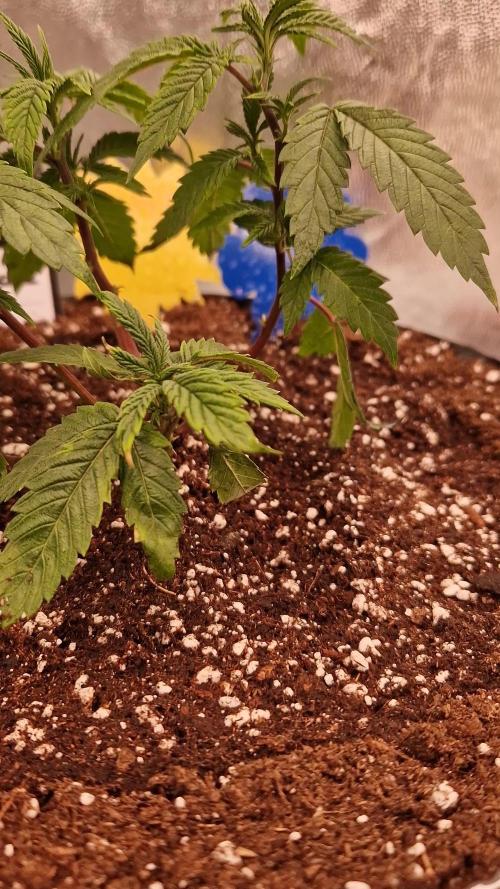
Die Pink Poochie hat sich super erholt vom Mainlining Stress. Ein Trieb hängt noch ein wenig nach, aber der wird sicher noch aufholen. Ansonsten wurde umgetopft in große 20l Airpots.


