Likes
Comments
Share
@RadDad
Follow
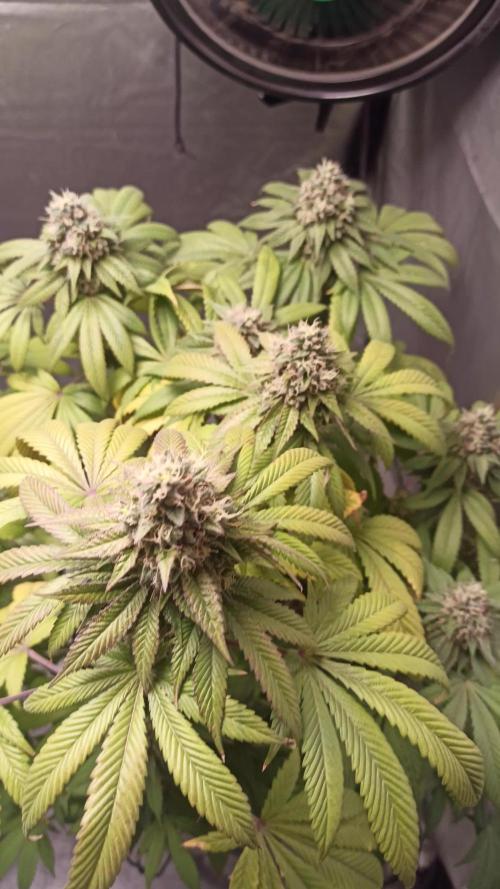
Overall this was my second autoflower grow and it turned out a lot better than my first. The plant yielded about 258 g wet so hopefully about half that in dry weight I'll update once I'm done drying. I have more of these on the go outside and have one more seed will definitely Grow again. Thanks for following, stay cool keep growing.
Likes
18
Share
Seedsman Seeds Germination Report - Run 01: The White OG Journey Kickoff to Germination: The Start of Something Great! Welcome to the beginning of this adventure with The White OG feminized seeds from Seedsman Seeds. Excitement is in the air as we’re searching for strong, resilient plants, and this journey has all the best tools and tips. Starting with five seeds, we’re aiming for a solid beginning and maximum potential. Let’s explore every step in detail to make this grow as robust as it can be! Germination Process: Tools of the Trade TheCannaKan: The Ultimate Germination Gadget I’m thrilled to share my love for TheCannaKan, a little germination wonder! This tool is essential for any grower who wants to start their seeds with precision and care. I noticed rapid results in just 24 hours, with the seeds showing signs of life. At about 32 hours, I transferred them to the Root Riots, which brings us to the next exciting stage. Why I Love TheCannaKan: • Quick Results: Seeds sprouted rapidly, minimizing wait time. • Consistency: Keeps moisture levels optimal for uniform germination. • User-Friendly: Simple yet effective for both new and experienced growers. Root Riots and Their Role in Root Development After sprouting, I placed the seedlings into Root Riot cubes under a dome. Root Riots are fantastic for stabilizing young plants, providing an airy and nutrient-friendly environment that promotes robust root growth from the start. Benefits of Root Riots: • Root Aeration: Soft yet structured, these cubes support root expansion. • Moisture Retention: Holds just the right amount of water for growing seedlings. • Enhanced Root Health: The cubes are ideal for preventing damping-off and ensuring healthy, white roots. Nutrients to Kickstart Growth: Aptus Holland Regulator and Startbooster To give the seedlings a perfect start, I added Aptus Holland’s Regulator and Startbooster (1ml/L each). This mix promotes early root and stem strength, giving seedlings the ability to absorb light and nutrients more efficiently. • Aptus Regulator: Enhances plant resilience, aids in nutrient absorption, and promotes early vitality. • Aptus Startbooster: Adds a balanced mix of growth hormones and nutrients that are ideal for the early stages, encouraging healthy roots and faster seedling growth. Light and Environment: Future of Grow FOG LED with TrolMaster Tent X Controller I’m using a Future of Grow (FOG) LED at 600W, but keeping it dimmed down to around 200 PPFD. This setting is controlled by the TrolMaster Tent X Controller to give the plants the perfect start without overwhelming them with intense light. Controlled lighting helps seedlings to develop without stress, encouraging healthy growth and internode spacing. Shoutouts: • Future of Grow LED: High-quality, efficient LED light that adapts well to seedling and veg stages. • TrolMaster Tent X Controller: Reliable and intuitive control over light, humidity, and more. Perfect for a hands-off, efficient environment setup. Observations: One Seedling Takes the Lead At the end of this germination stage, it looks like one seedling has emerged as the strongest, while the others may need a few more days. Patience and observation are key; some seeds naturally take a bit more time to sprout. I’ll keep monitoring these with hope, allowing each seedling its own rhythm. Grower’s Notes and Tips • Consistency Matters: Germination is all about steady conditions—consistent moisture, gentle nutrients, and stable lighting make all the difference. • Document Everything: Keeping a log of each step (like this one!) helps track growth patterns and provides valuable insights for future grows. • Stay Positive and Patient: Not every seed will sprout at the same rate. Trust the process and remember each plant is unique. Community Shoutouts Thank you to everyone who makes this process smoother and inspiring—TrolMaster, Aptus Holland, Future of Grow, and Seedsman Seeds for amazing genetics and tools, as well as the growers’ community who share insights, tips, and encouragement along the way. Next Steps Now that we’re through germination, we’ll move into the early growth phase. I’ll keep documenting the lighting adjustments, nutrient changes, and growth patterns of each plant, especially that eager seedling leading the way! Growers Love, and here’s to a strong start for the future of this grow! 🌱 DISCOUNT CODE - SeedsmanSeeds - DOGDOCTOR 10% off As always thank you all for stopping by, for the love and for it all , this journey of mine wold just not be the same without you guys, the love and support is very much appreciated and i fell honored and so joyful with you all in my life 🙏
 With true love comes happiness 💚🙏 Always believe in your self and always do things expecting nothing and with an open heart , be a giver and the universe will give back to you in ways you could not even imagine so 💚

 Friendly reminder all you see here is pure research and for educational purposes only 💚Growers Love To you All and remember to keep that smile big and alive 💚
Likes
78
Share
@Nebula420
Follow
I love how Blackberry grow, so vigorously and beautiful plant. Very easy strain, suitable for beginners, you just need to water and give fertilizer, its all u need. Plants look happy and healthy, all is well. Blackberry loves fertilizer so much xD=) always asks more))) Blackberry already flowering,now I can see amazing colors. The smell is weak. It’s hard to describe this amazing smell of berries, so sweet!😍 Thanks Fast Buds, nice genetics, and thank to everyone who follow my grow report, Peace!😘
Likes
2
Share
@BigGGrows
Follow
she is pushing through the initial HST fimming very well. Nothing seems to slow her down. I am starting 1/4 strength nutes now to help her push through the stress. I also initiated some LST and tied her up, pulling down the branching. The fim job has produced a tripple top crown cola, top new side tops, and 2 new internodal branches, that will be tops down the line. Things are getting interesting folks! Stay tuned!
Likes
8
Share
@Farmer1
Follow
Very good smell mix of gaz and exotic fruits,the buds are Soo compact!hope the weather will not be too humid 🙏
Likes
25
Share
ANTHOCYANIN production is primarily controlled by the Cryptochrome (CR1) Photoreceptor ( !! UV and Blue Spectrums are primary drivers in the production of the pigment that replaces chlorophyll, isn't that awesome! 1. Diverse photoreceptors in plants Many civilizations, including the sun god of ancient Egypt, thought that the blessings of sunlight were the source of life. In fact, the survival of all life, including humans, is supported by the photosynthesis of plants that capture solar energy. Plants that perform photosynthesis have no means of transportation except for some algae. Therefore, it is necessary to monitor various changes in the external environment and respond appropriately to the place to survive. Among various environmental information, light is especially important information for plants that perform photosynthesis. In the process of evolution, plants acquired phytochrome, which mainly receives light in the red light region, and multiple blue light receptors, including his hytropin and phototropin, in order to sense the light environment. .. In addition to these, an ultraviolet light receptor named UVR8 was recently discovered. The latest image of the molecular structure and function of these various plant photoreceptors (Fig. 1), focusing on phytochrome and phototropin. Figure 1 Ultraviolet-visible absorption spectra of phytochrome, cryptochrome, phototropin, and UVR8. The dashed line represents each bioactive absorption spectrum. 2. Phytochrome; red-far red photoreversible molecular switch What is phytochrome? Phytochrome is a photochromic photoreceptor, and has two absorption types, a red light absorption type Pr (absorption maximum wavelength of about 665 nm) and a far-red light absorption type Pfr (730 nm). Reversible light conversion between the two by red light and far-red light, respectively(Fig. 1A, solid line and broken line). In general, Pfr is the active form that causes a physiological response. With some exceptions, phytochrome can be said to function as a photoreversible molecular switch. The background of the discovery is as follows. There are some types of plants that require light for germination (light seed germination). From that study, it was found that germination was induced by red light, the effect was inhibited by subsequent far-red light irradiation, and this could be repeated, and the existence of photoreceptors that reversibly photoconvert was predicted. In 1959, its existence was confirmed by the absorption spectrum measurement of the yellow sprout tissue, and it was named phytochrome. Why does the plant have a sensor to distinguish between such red light and far-red light? There is no big difference between the red and far-red light regions in the open-field spectrum of sunlight, but the proportion of red light is greatly reduced due to the absorption of chloroplasts in the shade of plants. Similar changes in light quality occur in the evening sunlight. Plants perceive this difference in light quality as the ratio of Pr and Pfr, recognize the light environment, and respond to it. Subsequent studies have revealed that it is responsible for various photomorphogenic reactions such as photoperiodic flowering induction, shade repellent, and deyellowing (greening). Furthermore, with the introduction of the model plant Arabidopsis thaliana (At) and the development of molecular biological analysis methods, research has progressed dramatically, and his five types of phytochromes (phyA-E) are present in Arabidopsis thaliana. all right. With the progress of the genome project, Fi’s tochrome-like photoreceptors were found in cyanobacteria, a photosynthetic prokaryotes other than plants. Furthermore, in non-photosynthetic bacteria, a homologue molecule called bacteriophytochrome photoreceptor (BphP) was found in Pseudomonas aeruginosa (Pa) and radiation-resistant bacteria (Deinococcus radiodurans, Dr). Domain structure of phytochrome molecule Phytochrome molecule can be roughly divided into N-terminal side and C-terminal side region. PAS (Per / Arndt / Sim: blue), GAF (cGMP phosphodiesterase / adenylyl cyclase / FhlA: green), PHY (phyto-chrome: purple) 3 in the N-terminal region of plant phytochrome (Fig. 2A) There are two domains and an N-terminal extension region (NTE: dark blue), and phytochromobilin (PΦB), which is one of the ring-opening tetrapyrroles, is thioether-bonded to the system stored in GAF as a chromophore. ing. PAS is a domain involved in the interaction between signal transduction-related proteins, and PHY is a phytochrome-specific domain. There are two PASs and her histidine kinase-related (HKR) domain (red) in the C-terminal region, but the histidine essential for kinase activity is not conserved. 3. Phototropin; photosynthetic efficiency optimized blue light receptor What is phototropin? Charles Darwin, who is famous for his theory of evolution, wrote in his book “The power of move-ment in plants” published in 1882 that plants bend toward blue light. Approximately 100 years later, the protein nph1 (nonphoto-tropic hypocotyl 1) encoded by one of the causative genes of Arabidopsis mutants causing phototropic abnormalities was identified as a blue photoreceptor. Later, another isotype npl1 was found and renamed phototropin 1 (phot1) and 2 (phot2), respectively. In addition to phototropism, phototropin is damaged by chloroplast photolocalization (chloroplasts move through the epidermal cells of the leaves and gather on the cell surface under appropriate light intensity for photosynthesis. As a photoreceptor for reactions such as escaping to the side of cells under dangerous strong light) and stomata (reactions that open stomata to optimize the uptake of carbon dioxide, which is the rate-determining process of photosynthetic reactions). It became clear that it worked. In this way, phototropin can be said to be a blue light receptor responsible for optimizing photosynthetic efficiency. Domain structure and LOV photoreaction of phototropin molecule Phototropin molecule has two photoreceptive domains (LOV1 and LOV2) called LOV (Light-Oxygen-Voltage sensing) on the N-terminal side, and serine / on the C-terminal side. It is a protein kinase that forms threonine kinase (STK) (Fig. 4Aa) and whose activity is regulated by light. LOV is one molecule as a chromophore, he binds FMN (flavin mononucleotide) non-covalently. The LOV forms an α/βfold, and the FMN is located on a β-sheet consisting of five antiparallel β-strands (Fig. 4B). The FMN in the ground state LOV shows the absorption spectrum of a typical oxidized flavin protein with a triplet oscillation structure and an absorption maximum wavelength of 450 nm, and is called D450 (Fig. 1C and Fig. 4E). After being excited to the singlet excited state by blue light, the FMN shifts to the triplet excited state (L660t *) due to intersystem crossing, and then the C4 (Fig. 4C) of the isoaroxazine ring of the FMN is conserved in the vicinity. It forms a transient accretionary prism with the tain (red part in Fig. 4B Eα) (S390I). When this cysteine is replaced with alanine (C / A substitution), the addition reaction does not occur. The effect of adduct formation propagates to the protein moiety, causing kinase activation (S390II). After that, the formed cysteine-flavin adduct spontaneously dissociates and returns to the original D450 (Fig. 4E, dark regression reaction). Phototropin kinase activity control mechanism by LOV2 Why does phototropin have two LOVs? Atphot1 was found as a protein that is rapidly autophosphorylated when irradiated with blue light. The effect of the above C / A substitution on this self-phosphorylation reaction and phototropism was investigated, and LOV2 is the main photomolecular switch in both self-phosphorylation and phototropism. It turns out that it functions as. After that, from experiments using artificial substrates, STK has a constitutive activity, LOV2 functions as an inhibitory domain of this activity, and the inhibition is eliminated by photoreaction, while LOV1 is kinase light. It was shown to modify the photosensitivity of the activation reaction. In addition to this, LOV1 was found to act as a dimerization site from the crystal structure and his SAXS. What kind of molecular mechanism does LOV2 use to photoregulate kinase activity? The following two modules play important roles in this intramolecular signal transduction. Figure 4 (A) Domain structure of LOV photoreceptors. a: Phototropin b: Neochrome c: FKF1 family protein d: Aureochrome (B) Crystal structure of auto barley phot1 LOV2. (C) Structure of FMN isoaroxazine ring. (D) Schematic diagram of the functional domain and module of Arabidopsis thaliana phot1. L, A’α, and Jα represent linker, A’α helix, and Jα helix, respectively. (E) LOV photoreaction. (F) Molecular structure model (mesh) of the LOV2-STK sample (black line) containing A’α of phot2 obtained based on SAXS under dark (top) and under bright (bottom). The yellow, red, and green space-filled models represent the crystal structures of LOV2-Jα, protein kinase A N-lobe, and C-robe, respectively, and black represents FMN. See the text for details. 1) Jα. LOV2 C of oat phot1-to α immediately after the terminus Rix (Jα) is present (Fig. 4D), which interacts with the β-sheet (Fig. 4B) that forms the FMN-bound scaffold of LOV2 in the dark, but unfolds and dissociates from the β-sheet with photoreaction. It was shown by NMR that it does. According to the crystal structure of LOV2-Jα, this Jα is located on the back surface of the β sheet and mainly has a hydrophobic interaction. The formation of S390II causes twisting of the isoaroxazine ring and protonation of N5 (Fig. 4C). As a result, the glutamine side chain present on his Iβ strand (Fig. 4B) in the β-sheet rotates to form a hydrogen bond with this protonated N5. Jα interacts with this his Iβ strand, and these changes are thought to cause the unfold-ing of Jα and dissociation from the β-sheet described above. Experiments such as amino acid substitution of Iβ strands revealed that kinases exhibit constitutive activity when this interaction is eliminated, and that Jα plays an important role in photoactivation of kinases. 2) A’α / Aβ gap. Recently, several results have been reported showing the involvement of amino acids near the A’α helix (Fig. 4D) located upstream of the N-terminal of LOV2 in kinase photoactivation. Therefore, he investigated the role of this A’α and its neighboring amino acids in kinase photoactivation, photoreaction, and Jα structural change for Atphot1. The LOV2-STK polypeptide (Fig. 4D, underlined in black) was used as a photocontrollable kinase for kinase activity analysis. As a result, it was found that the photoactivation of the kinase was abolished when amino acid substitution was introduced into the A’α / Aβ gap between A’α and Aβ of the LOV2 core. Interestingly, he had no effect on the structural changes in Jα examined on the peptide map due to the photoreaction of LOV2 or trypsin degradation. Therefore, the A’α / Aβ gap is considered to play an important role in intramolecular signal transduction after Jα. Structural changes detected by SAXS Structural changes of Jα have been detected by various biophysical methods other than NMR, but structural information on samples including up to STK is reported only by his results to his SAXS. Not. The SAXS measurement of the Atphot2 LOV2-STK polypeptide showed that the radius of inertia increased from 32.4 Å to 34.8 Å, and the molecular model (Fig. 4F) obtained by the ab initio modeling software GASBOR is that of LOV2 and STK. It was shown that the N lobes and C lobes lined up in tandem, and the relative position of LOV2 with respect to STK shifted by about 13 Å under light irradiation. The difference in the molecular model between the two is considered to reflect the structural changes that occur in the Jα and A’α / Aβ gaps mentioned above. Two phototropins with different photosensitivity In the phototropic reaction of Arabidopsis Arabidopsis, Arabidopsis responds to a very wide range of light intensities from 10–4 to 102 μmol photon / sec / m2. At that time, phot1 functions as an optical sensor in a wide range from low light to strong light, while phot2 reacts with light stronger than 1 μmol photon / sec / m2. What is the origin of these differences? As is well known, animal photoreceptors have a high photosensitivity due to the abundance of rhodopsin and the presence of biochemical amplification mechanisms. The exact abundance of phot1 and phot2 in vivo is unknown, but interesting results have been obtained in terms of amplification. The light intensity dependence of the photoactivation of the LOV2-STK polypeptide used in the above kinase analysis was investigated. It was found that phot1 was about 10 times more photosensitive than phot2. On the other hand, when the photochemical reactions of both were examined, it was found that the rate of the dark return reaction of phot1 was about 10 times slower than that of phot2. This result indicates that the longer the lifetime of S390II, which is in the kinase-activated state, the higher the photosensitivity of kinase activation. This correlation was further confirmed by extending the lifespan of her S390II with amino acid substitutions. This alone cannot explain the widespread differences in photosensitivity between phot1 and phot2, but it may explain some of them. Furthermore, it is necessary to investigate in detail protein modifications such as phosphorylation and the effects of phot interacting factors on photosensitivity. Other LOV photoreceptors Among fern plants and green algae, phytochrome ɾphotosensory module (PSM) on the N-terminal side and chimera photoreceptor with full-length phototropin on the C-terminal side, neochrome (Fig. There are types with 4Ab). It has been reported that some neochromes play a role in chloroplast photolocalization as a red light receiver. It is considered that fern plants have such a chimera photoreceptor in order to survive in a habitat such as undergrowth in a jungle where only red light reaches. In addition to this, plants have only one LOV domain, and three proteins involved in the degradation of photomorphogenesis-related proteins, FKF1 (Flavin-binding, Kelch repeat, F-box 1, ZTL (ZEITLUPE)), LKP2 ( There are LOV Kelch Protein2) (Fig. 4Ac) and aureochrome (Fig. 4Ad), which has a bZip domain on the N-terminal side of LOV and functions as a gene transcription factor. 4. Cryptochrome and UVR8 Cryptochrome is one of the blue photoreceptors and forms a superfamily with the DNA photoreceptor photolyase. It has FAD (flavin adenine dinucle-otide) as a chromophore and tetrahydrofolic acid, which is a condensing pigment. The ground state of FAD is considered to be the oxidized type, and the radical type (broken line in Fig. 1B) generated by blue light irradiation is considered to be the signaling state. The radical type also absorbs in the green to orange light region, and may widen the wavelength region of the plant morphogenesis reaction spectrum. Cryptochrome uses blue light to control physiological functions similar to phytochrome. It was identified as a photoreceptor from one of the causative genes of UVR8 Arabidopsis thaliana, and the chromophore is absorbed in the UVB region by a Trp triad consisting of three tryptophans (Fig. 1D). It is involved in the biosynthesis of flavonoids and anthocyanins that function as UV scavengers in plants. Conclusion It is thought that plants have acquired various photoreceptors necessary for their survival during a long evolutionary process. The photoreceptors that cover the existing far-red light to UVB mentioned here are considered to be some of them. More and more diverse photoreceptor genes are conserved in cyanobacteria and marine plankton. By examining these, it is thought that the understanding of plant photoreceptors will be further deepened.
Likes
4
Share
Sorry for the lack of updates guys but we all can agree that the Veg stage is the boring part 😅 But the ladies are doing & looking great, I am going to be flipping them to flower tonight. 👍🏾
Likes
23
Share
@SkunkyDog
Follow
Hallo zusammen 🤙. Sie wächst sehr schön und macht keine Probleme
Likes
11
Share
Nu prøver jeg lige at lave topping. Så hvor let det er på cannacrips på yt. Håber virkelig hun vil være med til dette hun er en MEGET GOD STABIL DAME allerede, tyk stamme smukke blade med rødlig stængler:) . Jeg er meget STOLT OVER kannabia vil lade mig prøve kræfter med deres nye strains min hydro er også blevet en Amnisia lemon auto fra kannabia!;-) . Udover det hele er blevet flyttet pga varmen fra politiet! Så går det rigtig fint!! Det bliver spændende og følge med så der kommer styr på tingene igen! Kom nu bare med en legalisering i danmark vi burde være ens i eu lande ! Hvorfor skal jeg flytte til tyskland for ikke være kriminel pga en UKRUDT PLANTE! Jeg skal i retten for et telt 3 lamper , blæsere i ogsv, ca150gram skunk , og 5gram hash! Det så latterligt! Forsættes i næste uge:
Likes
57
Share
Day 6 since the time change to 12/12 hrs Hey all together 😋. in the last six days since the changeover, it has already made a nice boost 👌. She looks beautiful and it is fun to watch her grow 😉. In the next few days, as soon as the flowers start to appear, I will add GHSC Powder Feeding Bio Bloom to the coconut substrate 😃. I wish you a lot of fun with the update 👍 You can buy this Strain at : https://sweetseeds.es/de/red-mandarine-f1-fast-version/ Type: Red Mandarine F1 Fast Version ☝️🏼 Genetics: Red Poison Auto®️ (SWS39) X Tangie (California Orange x Hybrid Skunk) 👍 Vega lamp: 2 x Todogrow Led Quantum Board 100 W 💡 Bloom Lamp : 2 x Todogrow Led Cxb 3590 COB 3500 K 205W 💡💡☝️🏼 Soil : Canna Coco Professional + ☝️🏼 Fertilizer: Green House Powder Feeding ☝️🏼🌱 Water: Osmosis water mixed with normal water (24 hours stale that the chlorine evaporates) to 0.2 EC. Add Cal / Mag to 0.4 Ec Ph with Organic Ph - to 5.5 - 5.8 .
Likes
11
Share
It's time. The trichomes have clouded over, a milky haze obscuring the clear heads. The smell is faint. Very herby of thyme and salvia. The buds are small and round.
Likes
20
Share
Dia 126, 5a semana de floración se ven muy sanas y estan empezando a formarse los cogollos, la floración va un poco lenta, se puede ver la 1051 y la Chocolate Wafflez ya estan llenas de resina , la Glow Starz y la White Noise siguen generando cogollo, hemos visto algunas orugas que nos han sorprendido ya que no han habido lluvias todavia y las plantas estaban protegidas, pero supongo que las bajas temperaturas generan las orugas
Likes
61
Share
@Dunk_Junk
Follow
This week She grew 13cm. Flowering stretch slowing down. Her flower sites look absolutely lovely!!! No sign of any purple as of yet though 😭
Likes
14
Share
Very easy plant to harvest, didn't have too much leaves, so very easy to take out fan leaves and prepare to dry.
Likes
3
Share
End of week 2, veg. This little lady is finally catching up to the others in the tent. She has a typical sativa look to her for being so young, which is cool. After doing this for so long you kinda get a feel for seedlings. We watered with alfalfa Ferment as usual and these girls are in love lol. Seriously though, this stuff cuts my veg time in almost half! Highly recommend. Not much else to report on, just taking it day by day. Thanks for stopping by and we'll see ya next week.
Likes
26
Share
Welcome to my Lemon Oasis Twin Auto Diary. 1 Seed 2 fully growing phenos. Thanks to Original Sensible Seeds, Spider-Farmer & Xpert Nutrients. Week 6 Days 36-43 (a lil over a week) Both phenos are strong. The right one is bigger but the left has more shoots but smaller. I actually think I'm gonna get 2 different phenos. If that's even possible with 1 seed. They should be the same or its either 1 is bigger cause its taken up more, but, its hard to tell at this stage. They're acting very similar. But different in ways. The smell on one is my zingy, and the other is real deep candy lemon. Plant(s) smell amazing. Happy they went well be uppoted to a 20L pot. (I actually cut the pot away like you would a dixy cup placing it into new pot already back filled with soil. So no stress. Ruined a pot. But, hey. Wtfc right. Look forward to seen what happens next wk? Then be sure to drop by and let's hope we get two fat twins. Nutrients for this girl is the same. I just give it double the amount and that actually is working fine. 450-550ppm core NPK master bloom 6.6-7ph'ed to. 1x of all that's up above. Over 1200ppm per week. 2x 550ppm core feeds and everything else has little to no NPK value. And are given in-between feeds, every 3-4 days. Much love to my sponsors, whom without, I'd have a lot less gear. Mars, Spider, Terra P, Xpert, ORIGINAL SS and all my breeders i truly appreciate yall over the years. And look forward to starting new relationships come September. !!!!!DISCOUNT CODE FOR XPERT NUTRIENTS!!!!! CODE:GGST 20% OFF Xpertnutrients.com Appreciate all views and look forward to seen your diaries. Either way, thanks for stopping by.
Likes
1
Share
@PotCasso
Follow
Week10: 500-400ml 18hrs Light! (RastaJeff) Loud loud loud
Likes
16
Share
Day 44 repotting into a 5 gallon ( I think in the future I'll do 3 gallons in a 2x2x5 tent unless I'm only doing one or two strains then I might do two 5 gallons ) a nice amount of trimming also added the trellis net Day 46 switched it to 12/12 lights Day 48 taking a whole gallon to feed also added the bloom
Likes
11
Share
@Slickback
Follow
I'm on week 4 I've been keeping it light on nutes. I've noticed slow growth it seems compared to others in week 4. Also I think my plants are stretching they are skinny but the stem is beginning to get thick. I wanted to LST but I don't think they are strong enough yet. Any insight as to why they may be growing this way would be appreciated!
Processing
Likes
7
Share
Beautiful pair of phenos of Badaz og cheese very excited about what strain is gonna offer me in terms of quality buds, so excited to see what is every of this 2 phenos gonna be like, I really hope that both of them have the exact terpenes profile and the same potency! Let's keep on working! We'll the ladies have been Transplanted on February 2nd after 17 days since planted, they were very big and the pot was completely conquered by strong roots as you can see, now both of them are in their new 11l pot home let's see how they keep developing! 💛❤️💚🔝💎