


@fromseedtobecoming
Follow
What a journey it has been from seed!
I made a lot of mistakes in the first few weeks of this growing journey. I feel like I had a mini-crash after finishing the first year of grad school, and although I am growing cannabis as part of my research project, I haven't been the greatest at paying attention to it. This is not an excuse. It has actually been a learning opportunity. I realized that my body needs proper schedules to function and grow, just like a plant.
The problems with the plant have really been my own problems. Let's just say that a plant may be the reflection of the grower. First, the light cycles were wrong and inconsistent. I thought that I could manually control the light schedule for the plants and be alright. However, I was wrong. My sleep schedule has been very inconsistent for the past few months. Mainly because we are living through a pandemic, and secondly because I am a graduate student 😂. How naive was it of me to think that a plant could follow my own rhythms? I guess it highlights my 'plant blindness.'
Second, the light intensity was low and PH levels high.
In the last five days, I have learned that plants are living organisms (I knew this, but my plant blindness is quick to dismiss it, I need to stop fighting these "plant voices" (signals)) that require a proper environment to grow, similar to humans. Of course, a plant is not human, but it is alive and living. It needs water, a regular schedule (light (active) /darkness (rest), oxygen, nutrients, and an overall good environment to grow.
Concern about the size of my plant at five weeks, I decided to conduct a few experiments at home.
Here are my notes:
Friday, July 23, 2021, I took the plant out of the tent at 6:00 AM and placed it in front of my backyard window that faces the Eastside, perfect for sunrise. On that day, I had a few errands to run, and when I arrived home, it was 2:30 PM. The sun was now hitting the West side of my house, and I had to move the plant in front of my bedroom window.
At around 7:00 PM, I went to look at the plant and noticed that its leaves were looking plumpy. So, I decided to take a timelapse to see what I would be able to record.
During "magic hour" (sunset), I recorded and witnessed the plant moving with the rhythms of the sun. Plant, like humans, function at their best when they are synchronized with their circadian rhythm. The pandemic has definitely disoriented us to the point that it has disrupted all of our schedules. To this day, I feel tired from everything we have all been through; how could I possibly think that a plant would thrive with such a messed-up schedule?
The time lapse made me realize that the plant needs some structure to thrive, and so do I. So, as much as I like to think that I can be disciplined and follow a plant's schedule, I cannot. So, I went to the store and bought the Globe Suite smart plug to automate and schedule the light cycle to 12hrs of light and 6 hours of darkness.
Saturday, July 24, 2021, the plant woke up to the set schedule of the lights.
I checked on the plant first thing in the morning, around 9:30 AM. The leaves look much greener and thicker than they did the day before.
Sunday, July 25, 2021.
I was away overnight and did not arrive home until 2 PM. The plant looks twice the size it was on Friday! Today, I will water the plant. I got a PH test kit and realized that the way that I measured the PH level, the first few weeks was wrong 🤦♀️🏽. I measured the PH correctly, to 5.9, and added some Reefertilizer grow nutrients to the water. I watered from the top, distributing the water evenly around the stem.
My partner pointed to me that the lights seemed dim for the stage of the plant's life. So I had my lights set at 100 watts running at 20 % 😅. I realized that I had not increased the light intensity since the first few weeks of vegetation 🤦♀️🏽. So I increased the intensity to 100 watts running at 60%.
Monday, July 26, 2021.
First check-in 7:00 AM: The plant looks like it loves all of the new changes that I have made! It is finally growing 🤗
The sun is out, but it is not as intense as it should be because tiny particles of smoke are present in our air due to the wildfires, and they create a filter that makes the human eye see the sun blood red. It is quite apocalyptic.
Regardless, I decided to take the plant out from the tent and record a time-lapse. It is fascinating how much movement plants have despite showing no noticeable signs of movement (to the human eye).
Tuesday, July 27, 2021.
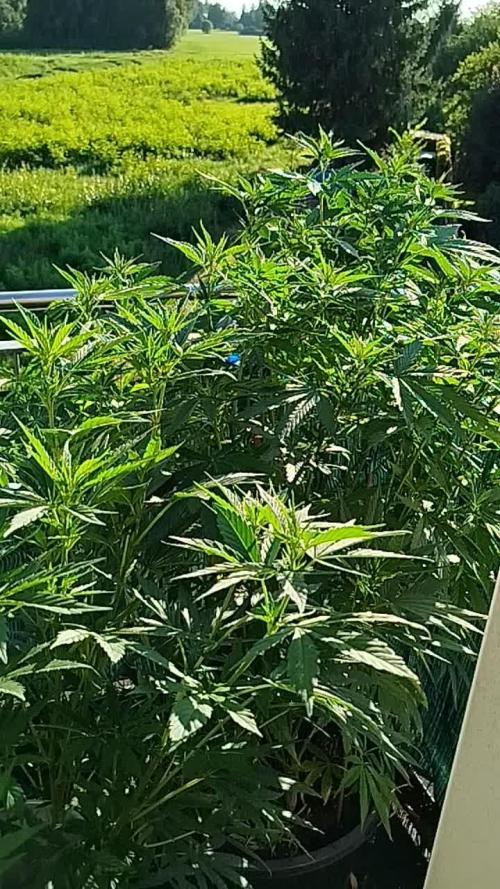
It has been five days since I have made big changes to the plant's schedule and environment. The plant is finally showing good signs of growth, and its leaves colours have changed to a deep green. I am not watering the plant today, but I am spritzing it with water.
I decided to take another time-lapse of the plant, but this time inside the tent. As I was setting up the tripod for my camera, I accidentally increased the humidifier 🤦♀️🏽. Luckily, I noticed within a reasonable timeframe and reduced the humidity and made the environment better.
I increased the light intensity to 100 watts at 100%.
The plant will stay in the tent all day today because it is raining ☔️.



@GoodTimesOrganics
Follow
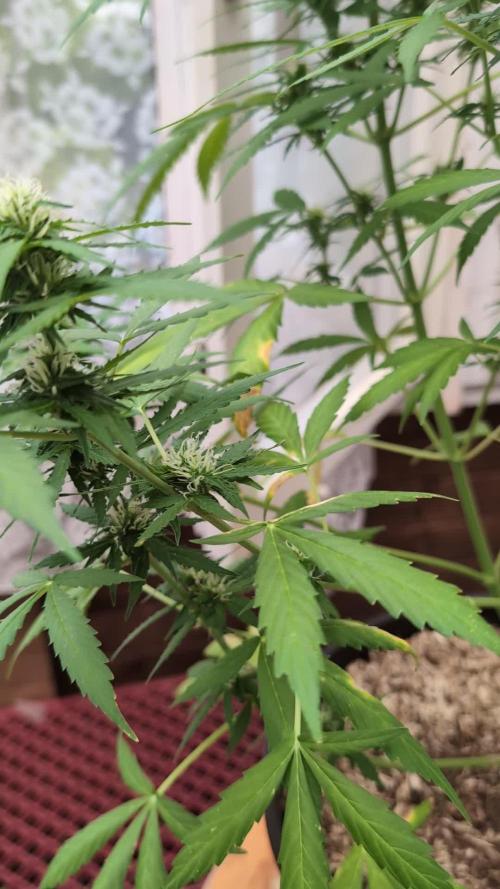
Die Pandora geht nun in die Haupblüte über und der Stretch scheint abgeschlossen zu sein.
Man sieht ihr den Rudersliste Einschlag deutlich an, doch die Blütenbildung wirkt sehr harmonisch und sie entwickelt dicke Stigmen. 💚


@DogDoctorOfficial
Follow
Man Let me tell you, I am over the moon excited about my amazing haze right now. We're currently in week 2 of flowering and let me tell you, it's looking absolutely stunning in my 4x4 tent.
I decided to use a scrog net, it has been a game-changer. The technique involves weaving the branches through the netting as they grow, which helps to create an even canopy and maximizes light exposure for all the buds. And let me tell you, the end result is just beautiful. I mean, have you ever seen a canopy so full and lush? It's like a little piece of heaven in my tent.
And don't even get me started on the fruit formation. I can already see those buds starting to form and it's making my heart skip a beat. The end of the stretch is near and I couldn't be more excited to see what kind of harvest I'll end up with.
Every time I look at my scrog net and full canopy, I can't help but feel a sense of pride and joy. It's like my Girls are always praying and thanking me for taking such good care of them. And let me tell you, I love it.
So, if you're thinking about trying out the scrog technique, I highly recommend it. And who knows, maybe you'll end up with a full canopy that will make you feel like a proud parent. Just be prepared for all the praying that comes along with it. ;)
As always thank you all for stopping by, for the love and for it all , this journey of mine wold just not be the same without you guys, the love and support is very much appreciated and i fell honored and blessed with you all in my life <3<3<3
#aptus #aptusplanttech #aptusgang #aptusfamily #aptustrueplantscience #inbalancewithnature #trueplantscience #dogdoctorofficial #growerslove
With true love comes happiness <3<3<3 Always believe in your self and always do things expecting nothing and with an open heart , be a giver and the universe will give back to you in ways you could not even imagine so <3<3<3
<3 Friendly reminder all you see here is pure research and for educational purposes only <3
<3<3<3 Growers Love To you All <3<3<3



@all_about_420
Follow
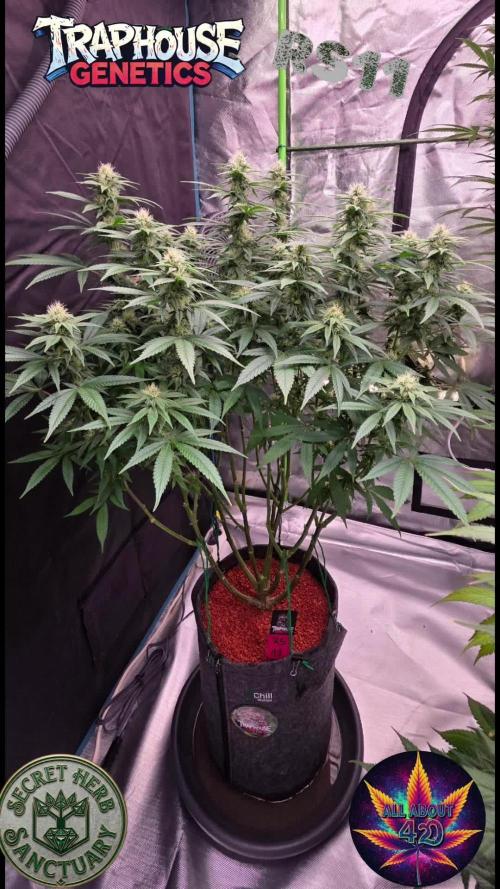
Auch wenn das Bildmaterial für diese sechste Blütewoche überschaubar bleibt, spricht der Blick ins Zelt Bände. Das auf GrowDiaries hochgeladene Video fängt die Dynamik im Raum ohnehin am besten ein, doch auch auf diesem Schnappschuss ist die fesselnde Entwicklung der RS11 von Traphouse Genetics nicht zu übersehen. Die strukturierte Vorarbeit zahlt sich jetzt voll aus: Über den komplett nackten, stabilen Beinen der Pflanze thront eine perfekt ausbalancierte Krone aus massiven Blütenkerzen. Jede einzelne Cola gewinnt drastisch an Volumen und Dichte, während die Energie dank Advanced Nutrients ohne Umwege in die oberen Etagen fließt. Das tiefgrüne Blattwerk strotzt vor Gesundheit, und die dicker werdende Harzschicht verströmt bereits ein intensives Aroma. Es herrscht eine wunderbare Konstanz im Run, die zeigt, dass die Genetik nun ihr volles Potenzial entfaltet.


@Dedon
Follow
Hi everyone !
Everything is OK !
Roots are stronger day after day. i think i'll switch to 12/12 tomorrow and change the water at the same time 👌


@Kirsten
Follow
☆♡ Purple Punch: I'm just watering with flower nutes, when dry.
I installed a small monkey fan to keep the air moving at the back of the tent, where they are.
Waiting on the harvest, but may still be a little while yet. I DID NOT TOP DRESS THESE! ☆♡
16.2.25:
I decided to check out the lower canopies of all plants to see if I need to get rid of any foliage.
I did get rid of a few small branches and leaves.
However, whilst I was doing this, I saw more garden pegs from my LST remaining.
There were about 6 or more in Pink Mist alone. Additionally, on Watermelon, there were some left in, too.
I'm so annoyed to see that because the plants are really stretching, and I could've potentially disrupted this by leaving the pegs in for all this time without realising it.
🤞 that I haven't compromised things too much. We'll see.
I watered today with 2ltrs of dechlorinated water PH'd to 6.3 containing the following nutrients;
♡ .8g Green Leaf Nutrients PK booster
♡ .5g Ecothrive Biosys
I ordered quite a few things for the garden. I got Greenleaf Nutrients Sea K(elp) and Mega Crop Parts A+B. To go with their PK Booster I got last month. I'm excited to try it all together. Next run, maybe just using these. We'll see how it goes.
18.2.25:
The plants are going crazy for water! Everything is getting used right up so fast!
Today, I decided to add some more Black Strap Molasses to add some carbs and other micronutrients. I'll add the jar with the label in the photos section above.
I watered a very small amount to each plant.
What I put in:
♡ Black strap molasses 150g
♡ 2g Sea K(elp) Greenleaf nutrients.
I dissolved everything in 4ltrs of dechlorinated water PH'd to 6.4.
19.2.25:
I received the majority of the garden purchases that I made. I'm still waiting for the Ecothrive Life Cycle. I wanted to top dress, but it's been delayed unfortunately.
I am using my Greenleaf nutrients products which I bought on Amazon. I got the Mega Crop 2 part system Part A and Part B. I have the Sea K(elp), and the bud explosion PK booster.
I really wanted to get some of their sweet candy asking read many positive reviews. Unfortunately, for me, this is unavailable to buy currently. So that's a little disappointing.
I needed to do a good watering so when my nutes were delivered today, I got excited 🤗
I watered 2ltrs of dechlorinated water per plant, PH'd to 6.4, containing the following nutrients:
♡ 1g Mega Crop Part A
♡ 1g Mega Crop Part B
♡ .5g Sea K(elp).
The plants drank this up within a few hours.
I'm going to try and hold off on watering in hopes that my Ecothrive Life Cycle will arrive so I can top dress and water it in then.
20.2.25:
My Ecothrive Life Cycle arrived yesterday, and the plants are ready for their top dress and a good watering in.
I have some Biobizz Light Mix, Canna Coco,and perlite. I'm going to use this as a base to mix my amendments in.
I'm going to fill my 5 gallon bucket with about 4.5 gallons of my top dress mix. I will distribute this across 6, 4-5 gallon pots. Then I will water in well with Greenleaf nutrients Mega Crop Parts A+B and Sea K(elp).
I've made a crude attempt to video mixing my top dress. Don't listen to the audio. lol, my YouTube didn't stop playing whilst I recorded this 😂
So anyway, I added the following amendments to the above base mix of 4.5 gallons;
♡ 3 TBSP Ecothrive Life Cycle
♡ 3 TBSP Vitalink Bat Guano
♡ 3 TBSP Ecothrive Charge
♡ 1 TBSP RHS Mycorrhizal Fungi granules
♡ 6 TBSP Ground Cinnamon.


@kansasscott725
Follow
In a beginner grower pickle... they may look good, and though it seems I may have done everything right through veg, I am almost near sure I messed something up between flower weeks 2-5. They're maturing, but not nearly as much as I thought they would. By now, I imagined they'd have thick bushy white pistils covering at least 6-8 inches of the top of each Cola.
So many mysteries. Is it the node spacing? If so, should have flipped earlier. Is it due to nutrient issues (too many nutes? didn't feed as much base as H&G suggested? Too big of a swing while trying to lower medium EC and PH in medium? Too much pruning on the top?
The only real variable is the Banana Kush. BK is in the far back left and obviously the most difficult to reach and maintain. Initially last week when I flushed, I wasn't able to flush as adequately as other plants nor have I been able to trim, maintain, or LST as much as other two plants. This is the only plant as of right now that does not give off a chemical/nutrient/ammonia smell when I touch the buds, but rather a nice sweet, Banana smell, and it's bushier than the Trainwrexk and G13
Is it because I didn't trim.as much and the buds are feeding off leaf and stem nutrients? Is it because there are fewer bud sites for the light to concentrate on, and thus yield bigger colas? Or is it because I continued to feed this plant has continued to have a high intake of nutrient despite my best efforts of flushing and maintaing?
In any event, I could just be the most impatient person ever, and I hope to be pleasantly surprised in the next week or so, or it's puffy popcorn tops for me.
Day 85 Update: G13 has a ton of fan leaves turning fast. Pretty sure it's a PH issue. Should I wait until they're dead to trim them off or get rid of every fan leaf that is affected more than 50 percent of the leaf?
Something definitely is going on. Could be nutes, could be lights, could be the strains.. who the hell knows but I thought they'd be much bigger and gurthy by now.
They still look good but man I wish they produced more...




@Ultraviolet
Follow
Removed autoflower and put her in her own pot outside the tent.
Foliars applied in strong blue 430nm with 4000Hz tone. 20-minute dose prior to application.
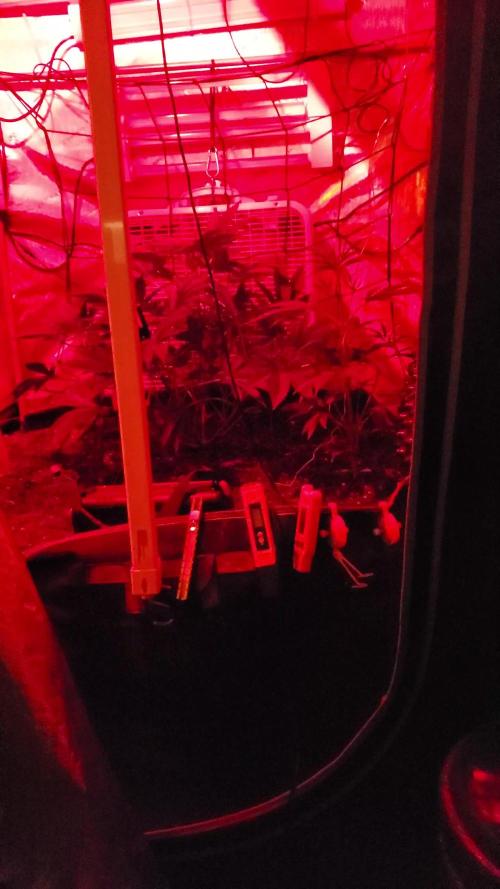
In essence, you're seeing a combination of the infrared light reflected by the plant, which the camera perceives as red, and any residual visible blue light the plant reflects, which results in a purple hue.
I was doing more stretching of the stems, adjusting weights, just a little too much, and it snapped almost clean. I got a little lucky in that it was still connected, wrapped her almost instantly while holding her in place with yoyo's. The core framework is now in place.
If your soil has a high pH, it's not ideal; you want a pH of 6.4, 6.5, or 6.6, which is ideal. If you are over a pH of 7, you have no hydrogen on the clay colloid. If you want your pH down, add Carbon. If you keep the pH below 7, you will unlock hydrogen, a whole host of new microbes become active and begin working, the plant will now be able to make more sugar because she has microbes giving off carbon dioxide, and the carbon you added hangs onto water. Everything has electricity in it. When you get the microbes eating carbon, breathing oxygen, giving off CO2, those aerobic soil microbes will carry about 0.5V of electricity that makes up the EC. The microorganisms will take a metal-based mineral and a non-metal-based mineral with about 1000 different combinations, and they will create an organic salt! That doesn't kill them, that the plant loves, that the plant enjoys. This creates an environment that is conducive to growing its own food.
Metal-based: Could include elements like iron, manganese, copper, or zinc, which are essential nutrients for plants but can exist in forms not readily accessible.
Non-metal-based: Examples like calcium carbonate, phosphate, or sulfur are also important for plant growth and potentially serve as building blocks for the organic salt.
Chelation in a plant medium is a chemical process where a chelating agent, a negatively charged organic compound, binds to positively charged metal ions, like iron, zinc, and manganese. This forms a stable, soluble complex that protects the micronutrient from becoming unavailable to the plant in the soil or solution. The chelate complex is then more easily absorbed by the plant's roots, preventing nutrient deficiency, improving nutrient uptake, and enhancing plant growth. Chelation is similar to how microorganisms create organic salts, as both involve using organic molecules to bind with metal ions, but chelation specifically forms ring-like structures, or chelates, while the "organic salts" of microorganisms primarily refer to metal-complexed low molecular weight organic acids like gluconic acid. Microorganisms use this process to solubilize soil phosphates by chelating cations such as iron (Fe) and calcium (Ca), increasing their availability.
Added sugars stimulate soil microbial activity, but directly applying sugar, especially in viscous form, can be tricky to dilute. Adding to the soil is generally not a beneficial practice for the plant itself and is not a substitute for fertilizer. While beneficial microbes can be encouraged by the sugar, harmful ones may also be stimulated, and the added sugar is a poor source of essential plant nutrients. Sugar in soil acts as a food source for microbes, but its effects on plants vary significantly with the sugar's form and concentration: simple sugars like glucose can quickly boost microbial activity and nutrient release. But scavenge A LOT of oxygen in the process, precious oxygen. Overly high concentrations of any sugar can attract pests, cause root rot by disrupting osmotic balance, and lead to detrimental fungal growth. If you are one who likes warm tropical high rh, dead already. Beneficial, absolutely, but only to those who don't run out of oxygen. Blackstrap is mostly glucose, iirc regular molasses is mostly sucrose. Sugars, especially sucrose, act as signaling molecules that interact with plant hormones and regulate gene expression, which are critical for triggering the floral transition. When sucrose is added to the growth medium significantly influences its effect on floral transition.
Probably wouldn't bother with blackstrap given its higher glucose content. Microbes in the soil consume the sugar and, in the process, draw nitrogen from the soil, which is the same nutrient the plant needs. Glucose is not an oxygen scavenger itself, but it acts as a substrate for the glucose oxidase (GOx) enzyme, effectively removing oxygen from a system. Regular molasses (powdered if you can), as soon as she flips to flower or a week before, the wrong form of sugar can delay flower, or worse. Wrong quantity, not great either. The timing of sucrose application is crucial. It was more complicated than I gave it credit for, that's for sure. When a medium's carbon-to-nitrogen (C:N) ratio reaches 24:1, it signifies an optimal balance for soil microbes to thrive, leading to efficient decomposition and nutrient cycling. At this ratio, soil microorganisms have enough nitrogen for their metabolic needs, allowing them to break down organic matter and release vital nutrients like phosphorus and zinc for plants. Exceeding this ratio results in slower decomposition and nitrogen immobilization, while a ratio below 24:1 leads to faster breakdown and excess nitrogen availability.
Carbon and nitrogen are two elements in soils and are required by most biology for energy. Carbon and nitrogen occur in the soil as both organic and inorganic forms. The inorganic carbon in the soil has minimal effect on soil biochemical activity, whereas the organic forms of carbon are essential for biological activity. Inorganic carbon in the soil is primarily present as carbonates, whereas organic carbon is present in many forms, including live and dead plant materials and microorganisms; some are more labile and therefore can be easily decomposed, such as sugars, amino acids, and root exudates, while others are more recalcitrant, such as lignin, humin, and humic acids. Soil nitrogen is mostly present in organic forms (usually more than 95 % of the total soil nitrogen), but also in inorganic forms, such as nitrate and ammonium. Soil biology prefers a certain ratio of carbon to nitrogen (C:N). Amino acids make up proteins and are one of the nitrogen-containing compounds in the soil that are essential for biological energy. The C:N ratio of soil microbes is about 10:1, whereas the preferred C:N ratio of their food is 24:1 (USDA Natural Resource Conservation Service 2011). Soil bacteria (3-10:1 C:N ratio) generally have a lower C:N ratio than soil fungi (4-18:1 C:N ratio) (Hoorman & Islam 2010; Zhang and Elser 2017). It is also important to mention that the ratio of carbon to other nutrients, such as sulfur (S) and phosphorous (P) also are relevant to determine net mineralization/immobilization. For example, plant material with C:S ratio smaller than 200:1 will promote mineralization of sulfate, while C:S ratio higher than 400:1 will promote immobilization (Scherer 2001).
In soil science and microbiology, the C:S ratio helps determine whether sulfur will be released (mineralized) or tied up (immobilized) by microorganisms.
A carbon-to-sulfur (C:S) ratio smaller than 200:1 promotes the mineralization of sulfate, when the C:S ratio is low, it indicates that the organic matter decomposing in the soil is rich in sulfur relative to carbon. Microorganisms require both carbon and sulfur for their metabolic processes. With an excess of sulfur, microbes take what they need and release the surplus sulfur into the soil as plant-available sulfate
A carbon-to-sulfur (C:S) ratio higher than 400:1 will promote the immobilization of sulfur from the soil. This occurs because when high-carbon, low-sulfur materials (like sawdust) are added to soil, microbes consume the carbon and pull sulfur from the soil to meet their nutritional needs, temporarily making it unavailable to plants.
200:1 C:S 400:1: In this range, both mineralization and immobilization can occur simultaneously, making the net availability of sulfur less predictable.
This dynamic is similar to how the carbon-to-nitrogen (C:N) ratio regulates the availability of nitrogen in soil. Just as microbes need a certain amount of nitrogen to process carbon, they also require a balanced amount of sulfur. Both mineralization and immobilization are driven by the metabolic needs of the soil's microbial population.
Sulfur is crucial for protein synthesis. A balanced ratio is particularly important in relation to nitrogen (N), as plants need adequate sulfur to efficiently use nitrogen. A severely imbalanced C:S ratio can hinder the efficient use of nitrogen, as seen in trials where adding nitrogen without balancing sulfur levels actually lowered crop yields.
Maintaining a balanced carbon-to-sulfur (C:S) ratio is highly beneficial for plant growth, but this happens indirectly by regulating soil microbial activity. Unlike the C:N ratio, which is widely discussed for its direct effect on nutrient availability, the C:S ratio determines whether sulfur in the soil's organic matter is released (mineralized) or temporarily locked up (immobilized).
Applied 3-day drought stress.
Glucose will hinder oxygenation more than sucrose in a solution because glucose is consumed faster and has a higher oxygen demand, leading to a more rapid decrease in oxygen levels. When cells respire, they use oxygen to break down glucose, and this process requires more oxygen for glucose than for sucrose because sucrose must first be broken down into glucose and fructose before it can be metabolized.
In a growth medium, glucose is a more immediate and universal signaling molecule for unicellular and multicellular organisms because it is directly used for energy and triggers a rapid gene expression response. In contrast, sucrose primarily acts as a signaling molecule in plants to regulate specific developmental processes by being transported or broken down, which can be a more complex and slower signaling process.
Critical stuff.
During wakefulness (DC electric current) life can not entangle electrons and protons. During the daytime, the light is sensed as multiple color frequencies in sunlight. Coherence requires monochromatic light. Therefore, at night, IR light dominates cell biology. This is another reason why the DC electric current disappears during the night. The coherence of water is maintained by using its density changes imparted by infrared light released from mitochondria in the absence of light. This density change can be examined by NMR analysis, and water is found to be in its icosahedral molecular form. This is the state that water should be in at night. This is when a light frequency is lowest and when the wave part of the photoelectric effect is in maximum use.
3600


@Zonnetje
Follow
101 days after starting germination
Seems it's preparing a bit for flowering not totally sure though.
It grew a little from 150cm to 155cm.
It seems the side branches are growing the most at the moment.
Weather:
MON
8/26
33°/ 17°
actual temperatures
TUE
8/27
33°/ 19°
A thunderstorm in spots
WED
8/28
28°/ 17°
A strong thunderstorm
THU
8/29
24°/ 12°
Partly sunny; not as warm
FRI
8/30
23°/ 12°
Clouds and sun; pleasant
SAT
8/31
28°/ 14°
Clouds and sun; very warm
SUN
9/1
20°/ 10°
Clouds and sun; cooler



@k0nz1
Follow
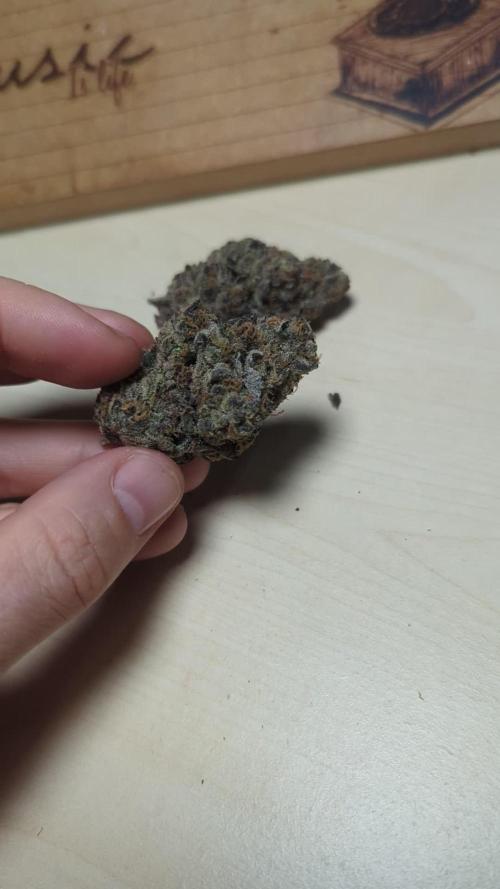
Hang dry 12 days by 60/60
Then cured with the new vivi cure Packs. They did a great Job. Final product is super smooth and tasty.


@Cindylee
Follow
Xhale is a great plant,,a keeper for me she finishes quick and full of tricomes it's sick,,she has a great buzz and the flavor turpines in a vape is very pleasant..I will keep her as a mother for sure



@GermanGrow182
Follow
Sehr gute Woche 👍 viel Sonne, warm, und für Hochsommer relativ geringe Luftfeuchtigkeit (30%)
Muss nun viel gießen. Über 1,5l pro Pflanze und Tag.. nun bekommen alle biobloom. Alle zeigen vorblüten.
Bald geht es los. Mit dem topping habe ich aufgehört. Nur noch ein kleines bisschen supercropping sonst nur entlaubung und LST.
Es läuft ziemlich gut ☺️👍 bis nächste Woche ✌️


shorts_status_processing


@Manic
Follow
Easiest week so far, no problems just growing. I did spray some neem oil on my soil a few days a go to keep pests out of the fox farm soil. Week 4 will bring in topping after the next node grows in, should be 2 or 3 days. Also towards the end of the week after she recovers from topping I will begin LST. Will provide pics throughout the week
Posted first vid in real light not my 600 watt LED. Mainly for health purposes. This will be so interesting to see how blueberry will develop after an accidental FIMing lol.
Personal Note: Wait to top when there is a full mainstem and not barely new growth. Meaning wait til the new growth has 2 fan leafs spread out, and not when they are just leafs barley sprouted from the main stem. Rookie mistake number 1 so far at the end of week 3. Or maybe time will tell if blueberry will be gracious enough to be a beautiful big buded tree. I read where FIMing can develop up to 4 extra colas and still grow beautifully. Fingers crossed.


@CBDezz
Follow
The plants are ready to be chopped and hung for 3-5 days. I removed all the fans leaves and left them all branches on the main stem. The ladies smell so strong I can wait to see how they turn out when they are dried and cured.
1) I plan to hang them for 3-5 days @ 71 f and 50-55 RH,
2) Do a final tight trim
3) Than I will move them to jars and cure for 2-3 weeks
I will update the diary with harvest pictures & weight before I move them to the jars for curing.
I think the seeds might have got mixed up when packing because these three plants were all supposed to be the same and you can clearly tell from the pictures that they are not.




@Bread_n_Buds
Follow
Our White Truffle by Zamnesia is a very interesting plant,
it has a fantastic heritage and promises phenomenal autumn blooms, let's see what happens.
Remember that we are growing a plant worked with the techniques indicated and one left to grow without pruning to preserve its speed, in the previous/next diary you will find the other plant of the same strain.
In this diary we find the plant left to grow straight. It is a little smaller than the others because it was planted a little later, I had messed up with a main lining and had to start again. It seems to us to be in great shape, perhaps a little too much alga grow and so we slowed down the nitrogen leaving room only for additives, since it started to grow it goes very fast.
Comparison is the salt of experience, so the plant in the other diary will be worked very differently, go and see it to compare them.
We have started the Plagron fertilization program, we are in 100% organic configuration, the soil is recycled Promix + 1/3 fresh soil + 10% Perlite + RQS Mycorrhizae Mix (4 g in the mix, 1 g under the small fiber pot).
We are feeding // 1 ml/l Power Roots - 1 ml/l Pure Zym - 1 ml/l Sugar Royal
We sprayed 3 ml/l Vita Race Foliare once a week.
https://plagron.com/it
We always have the excellent Mycorrhizae from RQS running in the soil
https://www.zamnesia.io/it/5778-mix-micorrize-easy-roots.html
Try this strain, it's an autumnal delicacy ---- // https://www.zamnesia.io/it/11184-zamnesia-white-truffle-semi.html
Zamnesia Brief Description // The result of crossing GG and Peanut Butter Breath, White Truffle boasts a first-class lineage, taking the best of some of the best American cultivars. And as you would expect, she has a lot to offer: a high THC content, an irresistible flavour and a relaxing, carefree effect. Oh, and let's not forget that she's incredibly easy to grow too! Buy your seeds today and enjoy easy harvests of delicious, USA-grown bud.
And as you would expect, she has a lot to offer: a high THC content, an irresistible flavour and a relaxing, carefree effect. Oh, and let's not forget that she's incredibly easy to grow too! Buy your seeds today and enjoy easy harvests of delicious, USA-grown bud.
The whole world of growing and more is here at Zamnesia - just take a look around the site and you'll find "the best that nature has to offer" in all shapes and colours.
The new strains are amazing and the old ones are no exception...
-- // www.zamnesia.com


@Thcintled
Follow
Estamos a mitad de la semana 5 de Flora, cada 2 o 3 riegos, descansamos de abonos y solo metemos cleanse de Athena, puré zym de Plagron, calcio y magnesio de TerraAquatica


@Robin87
Follow
So, like i said the 🍋🍒🍪 all ready for ✂️, it’s been a pleasure to grow these, will deffo be growing these again, maybe just after Xmas!🤔, now to dry them and cure them with the attention they deserve… gorilla cookies looking💥 won’t be long at all untill there ready, maybe 2 weeks max.. untill next time!👊🏻


@Ryno1990
Follow
Snow Panda fast flowering photo starting veg from seedling stage she grew weird as she is missing one side of her cotyledon leafs as they did not grow
The Snow Panda is starting t9 come along good at the ending days of week 1 of veg now in a 1 gallon pot



@TrickzCutz
Follow
Servus Moin!
Die MDC #3 Farn macht sich richtig breit im Zelt! Sie macht dafür aber auch echt viele und dicke Buds. Bin echt gespannt Wie lang sie noch brauchen.


