Likes
Comments
Share


@AreDeeDubbleyouSee
Follow
Day 1
All five Gelato seeds floated on the top of the cup of spring water. Seeds set in room temperature spring water at 4:00pm.
Day 3
5 of 5 seeds have a 3/4" tail and have been transfered to the RDWC in rockwool with a top feed sitting just under the cube.
PH 5.8
50PPM
RO Water, 1/8th dose of week 1 Future Harvest nutes - Micro, Grow, Bloom, Calnesium, Plantacillin, Prop-O-Gator, Super B+.
Day 4
PH 6.2
50PPM
Day 6
PH 6.3
PPM 150
Fed 1/8th strength of Holland Secret 3 part, Micro, Grow and Bloom, calnesium, Plantacillin, SuperB+. Future Harvest
Ph'ed down to 5.8 to give full range of nute intake
Day 7
PH 6.0
150ppm

Likes
5
Share


@LeedsCityFarmz
Follow
Not much to report this week so far. Slightly defoliated above the Scrog to allow more light penetration for the lower branches. Plants starting to stretch abit now but nothing to bad.


Processing
Likes
4
Share


@CarpediemOK
Follow
From 3 leads i cut due to yellow spots, grows better and trying to reach up

Likes
17
Share


@Todzilla
Follow
Outdoor coco 15g pots
Progress:
Lava cake is about week 6.5. Starting to ripen and get heavy. Buds are getting fat. Strong sweet cookie/ ice cream smell. Buds are getting more frosty. Buds are getting so heavy I installed a net on 3 of 4 and doing #4 soon. On my most mature plant - About 25-30% of pistils have turned color. Some trichomes are milky, none amber. Looks like plants are a few days apart.
Marathon OG week 5 1/2. Still stacking and getting fat. Smells dank. Trichomes are showing up. The 20 gallon OG is growing into a monster. I’m still waiting for the heavy bud stacks….
Nutes:
Bumping up ppm, the dry koolbloom and molasses, stopping regular koolbloom and grow. Looking to starting flushing the lava cake in a week or so. Feeding 2x a day; 3x on hot days.
Weather:
Had a good week of cooler temps until yesterday, when it was 97. Looking at hugs in the 80s this week, perfect.
Pests:
The moths and caterpillars are in full swing so I’m applying BT every morning. I’m working hard to reduce caterpillar 🐛 losses. We lost all of the top colas on a plant in another location 💔 . I’m only losing one bud at a time and not the entire colas so far.
Wishing fat buds and monster harvests to all.
Likes
2
Share


Likes
24
Share


@Richard_Harrow
Follow
Hello everyone. The Red Mandarine🍊🍎counts the days of flowering and becomes very beautiful. As you can see my tent is very green and dense)))🚀💚There are 6 different phenotype plants. 2 auto and 4 feminized. A tiring but enjoyable process🔥💚🔥

Likes
142
Share


@MadeInGermany
Follow
Hi everyone :-)
This week the buds developed super ;-) All are beautiful 😍.
Super genetics 👍.
Blue Cheese pheno 1 is slowly coming to an end :-)
This week I will start to use up the remaining nutrients and harvest in 10-14 days ;-)
Everyone else needs something else :-) have fun with the videos, stay healthy 🙏🏻 and let it grow 🌱


Likes
7
Share


@Annakonda
Follow
Toutes les 5 ont germées, 2 moyennes banana+ 1 grosse .(racine)
1 moyenne purple bud +1 grosse et une très petite (racine)
Elles ont germées toutes en 3 jours.
Puis je l'ai ai mise dans des pastilles de coco et chaque tourbe dans des petits pots en plastique, sur un plateau métallique devant ma fenêtre (je n'avais pas encore de box) du 2 mars au 7 mars.

Likes
244
Share


@DogDoctorOfficial
Follow
Man i am so happy that i decided to enter this Supafreak journey, i am more and more in love with these one , she is just perfect and amazing.
For now i keep bending leafs here and there and tryng to fill up the 3x3 canopy before i take some clones and flip her in to fruit mode.
with the week coming to and end i fell like she is moving great with means that provably i will veg her for 2 mb 3 more week max lets see
added a video of just me and my plants hope you guys enjoy the ride i fell humble that you all stop here to see my Freaky Freak <3<3<3 thank you <3 <3 <3
As always thank you all for stopping by , for the love and for it all, i fell blessed to have you all with me for one more love journey, and a different one form the rest i did so far <3 <3 <3 Thank you Thank you Thank you , you guys are great and have been amazing , thank you for everything <3<3<3
#aptus #aptusplanttech #aptusgang #aptusfamily #aptustrueplantscience #inbalancewithnature #trueplantscience #dogdoctorofficial #growerslove
With true love comes happiness , Always believe in your self and always do things expecting nothing and with an open heart , be a giver and the universe will give back to you in ways you could not even imagine so <3 <3 <3
<3 <3 <3 Growers love to you all <3 <3 <3

Processing
Likes
7
Share


Likes
Comments
Share


Likes
23
Share


@nonick123
Follow
Día 13 (06/05) Nos acercamos al final de la fase plántula. A ver si ahora empiezan a crecer de forma explosiva!
He sido muy estricto con los riegos, dejando que el top hasta el nudillo se seque completamente!
Día 14 (07/05) Hago una mejora en la tienda. Hasta ahora tenia intracción pasiva, pero ahora he instalado una turbina para que impulse aire fresco dentro de la tienda
Día 15 (08/05) Con el calor que hace me sorprende que las macetas sigan aguantando la humedad, pero al hundir el nudillo sigue húmeda. Mañana haré un riego de nuevo
Día 16 (09/05) Relleno el top con sustrato para compensar la compactación y dar mas soporte a las plantas
Riego con 300 ml solo H20 - pH 6,2
Día 17 (10/05) Baño de sol de dos horas.
Día 18 (11/05) Baño de sol de dos horas
Día 19 (12/05) Riego 750 ml H2O + Regulator 0,15 ml/l + CaMg-Boost 0,25 ml/l + Startbooster 0,25 ml/l - pH 6.2
💦Nutrients by Aptus Holland - www.aptus-holland.com
🌱Substrate PRO-MIX HP BACILLUS + MYCORRHIZAE - www.pthorticulture.com/en/products/pro-mix-hp-biostimulant-plus-mycorrhizae

Likes
11
Share


@GREENPHOENIX6262
Follow
Week 3 Veg Update, (Please see the following)
Both Plants ( Seedsman -Critical +2.0 - Blimburn (Applefritter)
Thus far both plants are coming along nicely
WIll be using Bud clip bender this week to utilize PPF light usage.
*Mid-Week Update*
Introduced CaliMagic this week
LST and Bud clipped
Light Defoliation
Introduced Element Nutrient (Flower Fuel)
1 week until early Flower.
*End of week recap* 08/21
Light Defoliation
Bud Clip tie down
Thus far all is running smoothly, No changes from above.


Likes
62
Share


@masterofsmeagol
Follow
9/12 Sprayed 1 tbsp K Bicarb with 1/4tsp dawn. Only had time to use a half gallon. I've used more but with all the defoliation this seemed to work and I was in a hurry. I can't ask those watching my plants to do actual labor when I'm not home. I wouldn't want anyone working on my plants but me anyway. I defoliated dead stuff. Still have this rusty looking leaves dieing on my ice cream cake. I need to finish a little defoliating. Broke out my 100x scope and checked a few buds. Things are exploding. Another nice sunny day today. Beastie bloom had no negative effects. I'll use it again and I'll probably use cha ching as well. Went back down to defoliate a little more. I'm getting excited. Still a lot of work left but it's nice to see the progression. Had to cut out a small nug last night that looked like it might start to rot. It was probably fine but I wasn't taking chances. It's so dank and crystally. One of my mystery seeds in the 5 gallon will be done soon. Milky trichs and hard as a rock. Im hoping they will beef up a bit. Little to no amber but things are progressing so fast. I mean nights are in the 40°'s.
9/13 No need to water as it had rained so much the bags need to dry out. Sunny day today. Plants are doing great. Buds increase in bulk on the daily. Took a few pictures and defoliated what needed it. A dog was added to the grow for security. It hasn't gotten used to me yet but it's extremely loud and annoying. Nothing will get past it though. I tried to last night. I shut down the motion sensors informed the other growers (except the person who's shift it was to watch) and I couldn't make it down there on foot let alone a vehicle. Hope the dog liked me but it's certainly useful. It APPEARS we will be having some good weather so I'm excited. I think my plants will be able to finish properly. At least I hope. Either way if I have to harvest early do to the weather so he it but I'll cross that bridge when it comes. Plan to do a preventative BT spray this week.
9/14 FED TODAY. LOWERED GROW BIG TO HALF TBSP. AND AGAIN used 1/4 TBSP Beastie Bloom. Buds are swelling with the sunshine that we've had. I defoliated what needed it and found more dead foliage. It's so weird this damage. I'm pretty sure it's earwigs but the only bother new shoots so that's a good thing. Things are getting close and looking good. I need to do another app of BT. I heard a storm may be coming I'll need to check the weather.
9/15 After a few good days of weather we are in for some rain. Supposably a big storm but it looks like I won't get the worst of it. No water obviously. Something (probably earwigs or jpn beetles) eating or lollipopping lower things. They seem to leave flowers alone. It's just low shoots. Everything is flowering incredibly. I checked trichs on one of my mystery seeds and it looks done. I'm considering taking it. It's in my garage for 24 hrs of darkness and to avoid rain until I make my decision. I also took the two lowest branches off on DJ Short blueberry to taste test and see where I'm at. I probably shouldn't but o do this every year. It will be good to try the mystery bud before I harvest it all. It's just a little guy but the buds are rock hard and with the weather and pm and stuff I'm not sure what I'm going to do yet. UPDATE: APPARENTLY WE HAVE SEVERE THUNDERSTORMS WARNINGS WITH GOLF BALL SIZED HAIL. I can move the other little ones in the garage but everything else is firmly rooted and have taken a beating already. I pray things will be ok.
9/16 No damage from the ridiculous storm last night. I need to spray ASAP. I have a fungal infection with just a few weeks to go. Looks like PM but I know some is a different fungal issue. I'll probably use the k bicarb or citric acid. So far no bud damage or damage up top. The things the earwigs ate were low like the lollipoped lower limbs. It's getting so close. I've been checking trichs and they look great but the buds have some filling out to do.
9/17 DID K BICARBONATE TREATMENT THIS AM. I didn't even look to see if I needed to water. Fuck. buds were soaking wet though so it must've rained. I have to go back down anyway to add a couple strings and do a little more defoliating. Did a treatment with k bicarb this morning.. 1 tbsp with dawn in a half gallon sprayer. I also need to address this earwig problem. They are ravaging some secondary lower branches and Im sure they are spreading disease. I only have a few weeks left and I want the best quality I can possibly get. I plan to put gorilla tape on the outside of the grow bag (double width) and petroleum jelly on the stems. That way they can't climb the bag. If they are in the soil of the bag hopefully the jelly will stop them. I'll also try beer as I've heard that works. I really don't want to resort to borax. Oh and I may have had a visitor last night. I'll have to check the cams. Nothing on the ones I checked but I have some game cams at different angles I haven't checked yet. It was probably just a nocturnal animal. Great to know that the dog announces though. This was at like 12:30 and I was out quick. I only have a few more weeks. I hope the cannabis gods are with me.
9/18 Whatever is eating my plants (earwigs I assume) are progressing from lower secondary or tertiary branches and new shoots to small buds. Looking at trichs some plants look ready. One seedling and the blueberries. I'd like the blueberries to go longer but I'd risk losing them. Fungal and mold issues aren't the greatest either. I was hoping for a big swell but if the weather stays raining and foggy like this it might be better to harvest a little early. I got a second opinion this morning and I'm leaning on taking the seedling and at least the one blueberry with the worst damage that dropped most of its leaves. I'll see how the bottom branch smokes this afternoon and make my decision then. Didn't feed for fear of lockout or if decide to cut. UPDATE: After the second consult with a different local grower I decided to harvest the blueberry that was furthest along and dropping it's leaves. It was done. Luckily it had been flushed with all this sheet rain we've gotten. It rains hard as I speak. Last year I think I had two strings the length of the huge garage and that lasted me all year. This one plant took an entire string to itself. If the weather cooperates this will be a good day. I also flushed the mystery seed I was going to take hoping it might fill out but trichs are very Amber and the bud is DENSE. Not risking mold or insect damage or theft. This took hours to harvest this ONE Blueberry plant. I had to harvest limbs. This was when I could see damage best. I also am curing the buds from the lower branch I took earlier and the other bud that is done. I plan on testing it out tomorrow. I could smoke now but Im already burnt and tired and want to try this with a clear head. I can't believe how long this took. One Big and one little down 10 more to go. Phone died so I couldn't take any pictures.


Likes
2
Share


@High_Grade_Dadli
Follow
So far so good... removed most of the lower branches at the very end of the week...let's see the improvement in the week to come...also with the stronger branches that where removed tried my hand at cloning again( y not see if I can get more trees) just have to wait n see
Likes
9
Share

@The_Doctor_Green
Follow
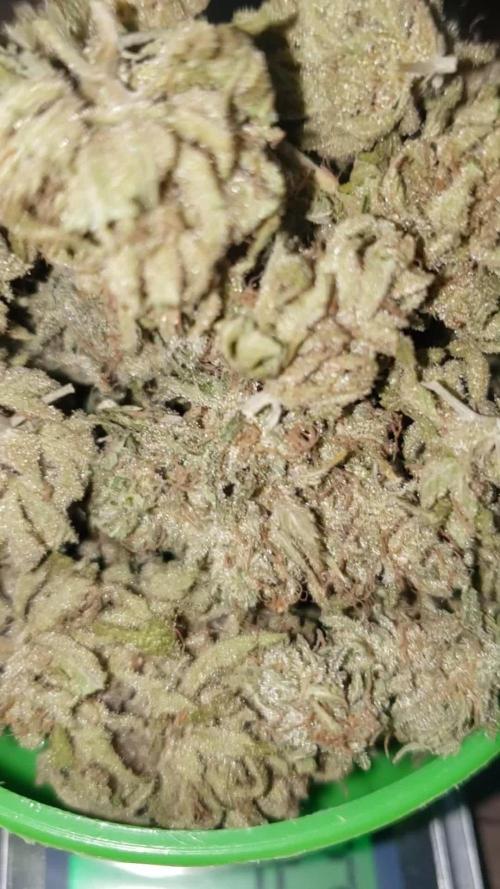
Después de 2 semanas de secado logre enfrascarse 26 gramos de Big bang, el aroma y sabor, no se como describirlos.
El efecto es lindo, al menos en mi caso lo sentí cerebral al principio y luego me agarro un sueño😣😣🤣🤣🤣💪💪💪 .
Los cogollos quedan bien compactos , tan compactos que si hay humedad por condiciones q te cuestan controlar, se pueden arruinar, ya en el final del proceso.
Asique presten atención al final.


Likes
7
Share


@MrSpunk
Follow
This week we start with some LST... The second Runtz didn't make it, so I've thrown it away now.

Likes
11
Share

@BushDoctor740
Follow
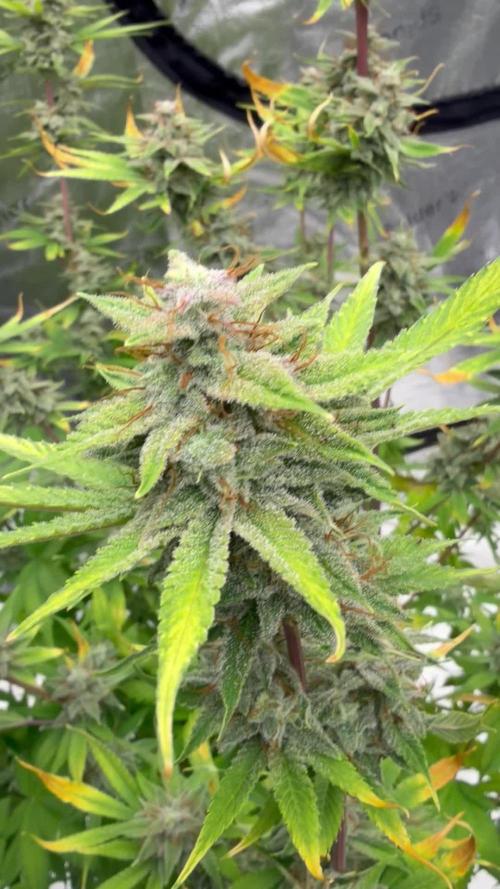
Well as the days go on she is looking fabulous with a strong aroma.Such a pretty plant her flowers are just loaded with trichomes.Light intensity is still set at 80 percent on the se 7000 and just giving water for this last week.Her trichomes are cloudy still with some clear so let her go a bit longer.