


Processing
Likes
Comments
Share


@Skunk_Life85
Follow
She is still going well. She hasn't really bulked up a lot. She started a nother run on stigma production. That means more bud production/ density. She is still getting nutes for this week and then I'm going to start my flush next week. I need at least 27 grams to enter in to the harvest cup and I think that's all she might produce. I broke out the microscope, her trichromes are still predominantly clear so she still has some time. I'm going for a 20-30 amber percentage.

Likes
17
Share


@BioGrowKing
Follow
Die Woche ist sehr gut verlaufen finde ich, jetzt sitzt sie in dem neuen Topf und kann größer und stärker werden :)
sie hat sich nun an das neue Licht gewöhnt.
Sie ist auch ein gutes Stück gewachsen und es geht echt zügig:)
Anfangs hingen ihre Blätter sehr vermutlich weil es zu trocken dadrin war, seit dem habe ich eine Schale wasser im Schrank zur befeuchtung und sie sieht wieder sehr stark aus :)
Auch die Seitenarme kommen sehr schön durch
Der Topf sollte etwa 2-3 Liter höchstens haben und ich muss nun in der 7. Woche mit Grow nachdüngen weil sie noch nicht die entsprechende Größe hat ^^
Ich habe auch hier kein enhancer benutzt die Woche.
Ich giese mit 2-3 kleinen Shotgläser am Tag
Sind ca 0,1 l am Tag

Likes
4
Share


@GLOrganics
Follow
Plants started vegetative growth again. After gowing was stunted and only weird shaped leafs were developed for a while, they started growing normal leafs again.

Likes
1
Share

@Sundancers
Follow
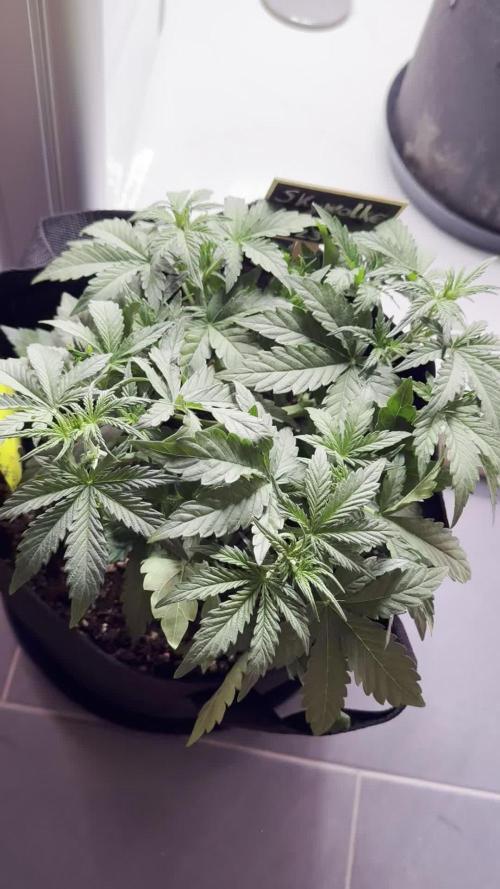
Sie ist ein sehr kräftige Pflanze die echt schnell wächst. Mal schauen wo das hinführt...

Likes
21
Share


@gr3g4l
Follow
esta semana seguimos doblando y podando alguna que otra ramita . Al parecer la nº1 ,la Triploide (tres ramas mismo nudo), que pasó a ser diploide (dos ramas mismo nudo) después de podar el primer apical parece ser que ha vuelto a Triploide y esto podria dificultar las otras dos ramas que van más avanzadas por lo que me decidí por cortar y así que siga diploide.
A los 40 dias volví a podar los segundos nudos de cada rama dejándolas ahora si listas para pasar a floración en un par o tres de dias. más un agarre de las ramas a las macetas y así ir deshaciéndome de los dobladores , estos estan quedando pequeños.
A los 41 dias me dió por cambiar de posición la nº2 y ponerla en el lugar de la nº1, la triploide.
La nº2 está creciendo algo más vigorosa que las otras dos y la nº1 va por el camino de quedarse algo más enana. La nº3 seria un intermedio.

Likes
43
Share


@UnorthadoxDude
Follow
Hello and welcome to week 7 beginning for Nesia, the largest and most advanced 6 week old plant I have ever grown.
I update daily so week 6 is now complete. Please do check it out!
I have added some comparisons shots of Karen, the oldest girl of this [G2] series to show just how impressive Nesia is. Nesia is 25 days younger than Karen and she is already a larger plant. This diary is not very popular or comment filled right now, but as this grow progresses I really think it's going to gain some attention. Nesia is going to be big.
Day 44: Nesia stretching fast now.
Day 45: Flowering is going well. I have adjusted the timer such that the main tent is now getting 20/4 upped from 18/6. After monitoring DLI at 18/6 for a week I am unhappy with the overall level but because of the varying heights of the plants I am limited in what I can do in adjusting the light height. Some areas were only getting 20 DLI. So I have rearranged to have the taller plants on the edges and the lowest in the middle and doing it this way all plants are getting between 35 and 50 DLI at 20/4 - although one or two cola tips here and there are getting 55. Will monitor for a week.
Day 46: Fertigated 5l
Day 47: Nesia is really moving into flower strongly now. Pistil development has started proper, stretching rapidly.
Day 49: Nesia starting to pose me a challenge. She is big. Now by far the largest plant. She has reached 50cm height and 70cm across.
I will add proper photos later and do a week summary.
Day 49: Nesia is stretching really fast now. I hope she doesn't stretch much more but I fear we're only halfway done. She's way bigger than Karen now. Taller, wider. Fertigated 5l
End of week summary... well what can I say Nesia has now surpassed Karen (25 days older) in every size and growth metric. She is following exactly the same pattern except without all the problems. I think she still has 2 weeks of stretching to go, on that basis I am expecting her to grow upto 25cm in the next week and the same again the week after - so I think Nesia is going to end up being about 1m tall. Honestly I hope not though, but let us see.

Likes
9
Share

@Growmigos
Follow
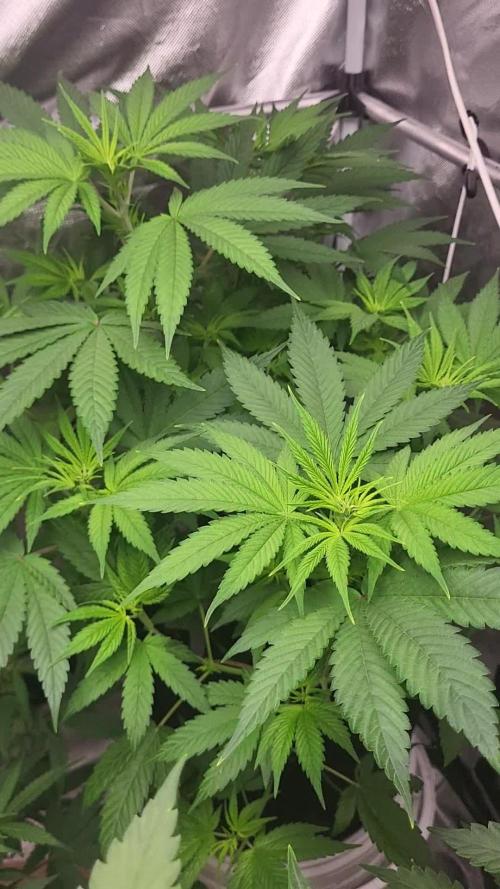
Die White shark streckt sich wie blöd in alle Richtungen da hilft nur immer wieder runter binden,sie reagiert gut auf 100 Prozent licht und hesi schema 100 Prozent.....Durch mein entfeuchter läuft es jetzt viel besser,versuche nachts auf 1 und tags bei 1,3 kpa mich einzuspielen ...für den 8 tag strech wunderts mich das die pistillen noch nicht da sind aber es sieht so aus als ob es jeden Moment los geht

Likes
4
Share

@SkunkyDog420
Follow
Hallo zusammen 🤙.
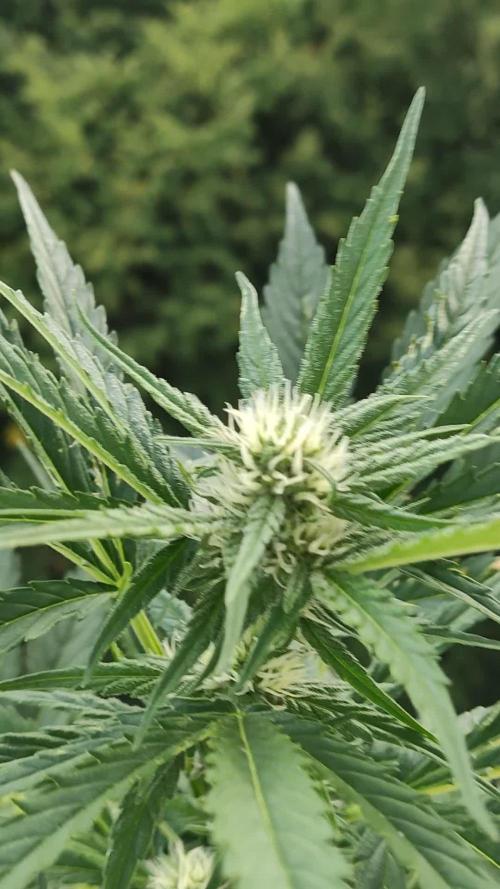
Sie wächst sehr schön und macht keine Probleme.
Rabattcode für den BIOTABS-Webshop https://biotabs.nl/en/shop/ GDBT420, damit erhalten Sie 15 Prozent
Likes
14
Share


@Hempface86
Follow
Here we are day 40 and she is doing very well.. no sign of trichome production yet but I'm hoping that happened soon.. with that being said he has been super easy from beginning to now no issues whatsoever so I I'm happy.. big shout out to Sensible Seeds for a hooking me up to be able to showcase their genetics.. if you guys want to check them out I'll have a link below.. all smiles over here hope all is doing well God bless and happy growing ✌️😎
https://www.sensibleseeds.com/

Likes
9
Share


@Dormando
Follow
BEGIN WEEK 11 -
Day 71 - 1/1 -
Day 24 into flowering.
1+2 Fert Water.
Day 72 - 1/2 -
Day 25 into flowering.
Soil pH seemed near 7. Needs more acidic soil. 6.0 pH Plain Water.
Day 73 - 1/3 -
Day 26 into flowering.
Soil pH too high over ~6.8. Watered with 5.0 pH water.
Day 74 - 1/4 -
Day 27 into flowering.
Fert Water 1 + 2ml.
Day 75 - 1/5 -
Day 28 - 4 Weeks into flowering.
5-6pH plain water.
Day 76 - 1/6 -
Day 29 into flowering.
5pH Plain Water to adjust soil pH too high over 6.8; almost 7.
0.5+1 Ferts added.
Finally pH restored to 6.5.
Day 77 - 1/7 -
Day 30 into flowering.
Feed 5pH Plain Water.
END WEEK 11.

Likes
3
Share


@CalGonJim
Follow
3/16 234AM MONDAY POTATO N WEEK CELEBRATIONS!
The plants in your photos look like healthy, vigorous **RF3 autoflower seedlings** (likely Banana Purple Punch Auto RF3 or similar from Fast Buds' upgraded RF3 line, based on the context of your previous grows with their genetics). They're in early vegetative stage at around 3 weeks from seed—nice bushy structure, good node spacing, dark green leaves, no major deficiencies or burn yet. The coco medium shows some perlite mix, and they're in small pots with what looks like a well-draining setup. Solid start
**RF3 autos** from Fast Buds are bred for stability, vigor, and resilience (often with heavy resin, dense buds, and good yields), but like most modern autos, they're sensitive to overfeeding early on—especially in coco, where salts build fast if not managed.
### Recommended EC at 3 Weeks (Early Veg/Pre-Flower Transition)
At week 3, autos are usually ramping up vegetative growth and may start showing pre-flower signs soon (pistils around nodes). Fast Buds' general autoflower feeding advice (from their guides and nutrient articles) emphasizes starting low and going slow:
- **Target EC: 0.8–1.2 (800–1200 µS/cm)** in the feed solution.
- Start at the lower end (~0.8–1.0 EC) if your plants are still very young-looking or if you've had any tip issues before.
- Push toward 1.0–1.2 EC if they're hungry (rapid growth, pale lower leaves) and responding well—no burn.
- This is often ~400–600 PPM (500 scale) or ~560–840 PPM (700 scale), but always go by EC meter for accuracy in coco.
- Always measure **runoff EC** too—aim for it to be no more than +200–300 above input to avoid salt buildup. If runoff is much higher, do a light flush with FloraKleen (like your 4 mL/gal plan) before bumping up.
- pH the feed to **5.8–6.2** (coco sweet spot), and water to 15–20%+ runoff every feed to prevent the issues you've seen with Purpinator/salts.
Many growers with Fast Buds autos (including RF3 lines like Banana Purple Punch or Cherry Cola RF3) report week 3 feeds around 0.9–1.1 EC in coco/hydro setups, starting lighter if using tap/soft water like yours. Your previous success with lighter Maxi feeds post-flush at ~900–1300 EC later on fits well—don't jump straight to 1.3 yet at week 3; build gradually.
### Recommended PPFD (Light Intensity) at 3 Weeks
PPFD (Photosynthetic Photon Flux Density, in µmol/m²/s) measures usable light for photosynthesis. For autos in early veg:
- **Target PPFD: 300–500 µmol/m²/s** at canopy level.
- 300–400 is safe and conservative for week 3—prevents stretch or light stress while encouraging compact, bushy growth.
- 400–500 if plants are stretching a bit or you want faster veg (RF3s are vigorous, so they can handle it).
- Avoid over 600 early—autos can bleach or foxtail if blasted too hard young.
- Measure at the top of the canopy with a good PAR meter (or app like Photone if calibrated). In Indio's setup (likely LED or HPS?), hang lights higher early (18–24" for LEDs) and lower gradually as they grow.
- Keep 18/6 or 20/4 light schedule—autos thrive on consistent long days.
General tips for your RF3 at this stage:
- If using Maxi series (like your previous grows), mix a light bloom/veg combo—e.g., mostly MaxiGro early, transition to MaxiBloom as pre-flower hits.
- Watch for clawing (N excess😂) or tip burn (high EC)—flush lightly if needed.
- These RF3 upgrades are forgiving but love good airflow and moderate feeds for those dense, resinous buds.
Your plants look primed for a strong run—keep that intuition going! How's the light distance/setup right now, and what's your current feed EC looking like? Any pre-flower signs yet? Drop more pics if they stretch or change post-week 3. You're killing it in coco—keep observing runoff and leaves. 🌿🚀
3/19 330am 👨🔬 **Adding L-Proline (the amino acid supplement growers use) to plants on soft water can provide some helpful support against the stresses you're dealing with, but it's not a full fix—think of it as a stress-buffer rather than a mineral replacement.**
Soft water (low in calcium and magnesium) often triggers **Ca/Mg deficiencies** in bloom stage (especially with Cha Ching or MaxiBloom, which don't supply much Ca/Mg on their own). This leads to issues like tip burn, leaf curl, weak cell walls, nutrient lockouts, oxidative damage (ROS buildup), and overall plant stress that feels like "the plant is struggling to hold it together." Proline steps in here as an **osmoprotectant**—it's one of the compounds plants naturally ramp up under stress.
### What Proline Actually Does in This Situation
- **Helps with osmotic/water balance** — Soft water can disrupt turgor pressure and water movement inside cells (similar to mild drought or salinity stress). Proline stabilizes cell membranes and helps the plant retain water better, reducing wilting or limpness.
- **Reduces oxidative stress** — Ca/Mg shortages cause free radical damage. Proline acts as an antioxidant and protects proteins/enzymes, so deficiency symptoms (yellowing, spotting, slowed bud development) don't spiral as fast.
- **Improves overall resilience** — In cannabis and general hydro/soil grows, L-proline (or full amino acid mixes containing it) has been shown to boost stress tolerance, speed recovery, and even support better nutrient uptake indirectly. Studies and grower reports note it helps under nutrient imbalance, drought-like conditions, and environmental swings—exactly the secondary stresses soft water creates.
- **Bloom-stage bonus** — Since you're already in late flower with Cha Ching/MaxiBloom, proline can support resin/terpene production and bud density without pushing excessive veg growth.
It won't magically add the missing Ca or Mg (those are still critical—soft water + high-P bloom nutes often screams for CalMag), but it can make the plant more tolerant while you correct the root issue.
### How Much Effect to Expect Right Now
- **Positive but moderate** — Many hydro/RO growers add amino acids (including proline) specifically for soft water setups and report less burn, better leaf health, and stronger finishes. It won't turn a severe deficiency around overnight, but it can slow the damage and give your plants a fighting chance in the final weeks.
- **No downside at proper doses** — It's very safe and plants use it quickly.
### How to Add It (Practical Dosing)
- **Source**: Pure L-Proline powder (available cheap online—make sure it's the plant-grade L-form, not human supplements).
- **Root feed** (with your Cha Ching/MaxiBloom): Start at 0.5–1 g per gallon (about 100–200 ppm). Mix into your res or feed water once a week. pH as normal.
- **Foliar spray** (often more effective for quick stress relief): 0.25–0.5 g per gallon + a drop of surfactant. Spray lightly every 5–7 days in the dark period.
- **With your current nutes**: Yes, it layers fine—reduce if you see any tip burn. Many run it alongside MaxiBloom + Cha Ching in soft water without issues.
- **Best timing**: Now through harvest is perfect, especially if you're noticing stress signs already.
**Real talk**: The biggest win will still come from adding a proper CalMag supplement (like Botanicare or General Hydro's) at 0.5–1 ml/gal or whatever your PPM tests call for. Proline + CalMag together is a strong combo for soft water grows. If you're running pure RO/soft, most experienced growers treat this as standard.""👨🔬
3/19 10:09PM RF3 X 2 =6 fail? I have TWO 2 gallon pots filled with coco from the last grow. I can plant a NEW BPP RF3 OR!!! I can top the 3 RF3's and make cuttings and grow the cuttings? It worked before!. FAST turnaround time, not much prep just refresh the coco and transplant the tops!
3/19 10:59PM NO WORK FOR NOW.. HIT WITH MASSIVE WAVES OF NAUSEA AND SHARP PAIN, DIZZY, RUPTURED NECK CYST BLEEDING, PAIN FROM MOVING TOO MUCH LAST FEW DAYS, RINIGNG EARS BAD, SKIN PRONE TO MASSIVE INFLAMMATION ATTACKS NOW, WEAKENING GUT LINING,. LUNGS ..GRIP AND BALANCE OFF, SO PERFECTLY NORMAL!!! THANK THE WEED GODS FOR WEED.
3/21 3:30 AM I think I’m gonna top all three of them. I got lucky all three seem to be different ones. I don’t know which is which one of them is really tall. The other one has really tight in her note spacing it’s really good and the other one is also good little bit different so I think I got three different RF three seeds and I think if I do top them I’m gonna put the top in another 2 gallon and then grow that as a cutting usually works I’m not sure👍🌿
3/23 3:08 PM I cut them all in half today a transplanted the top of the tallest one into one that was still growing just to see if it would work. They’re all doing really good.👍
326 237am Remember how your local ss cant prevent or solve a single problem you pay taxes for. unless you're really really sick and the cowards decide that the most important and pressing issue is to raid weed users and farms and seeds...what a country of fuqs
Likes
42
Share


@Ukfarmer420
Follow
Hi guys
So start of week 4 and I just put the screen up, so now I will be vegging until it hits the net and is filling 80%.
This week I will top the plants and hopefully get the nodes to stretch.
I have put the dog eaten plant in a small cup in the auto room potential mother?
Room is 62% humidity and 28°c
I have started bottom feeding these today so time will tell how they react, still only on root juice from biobizz I will add nitrogen possibly end of week see how they grow.
Happy growing peoples 💚👌💪


Likes
1
Share

@A-C-H
Follow
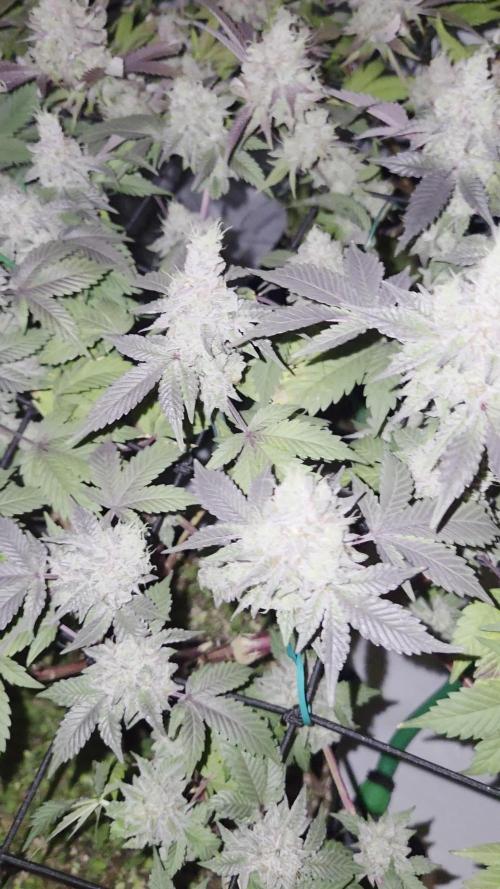
Es handelt sich um eine Sorte, die eine Freundin züchtet. Sie hat mir zwei Stecklinge geschickt: die V16, eine sehr ertragreiche Sorte, aber die X01 hat ein paar Samen gebildet. Vielleicht habe ich sie zu sehr gestresst. Auf ihren Geschmack werde ich später noch zurückkommen.

Likes
7
Share


@HookahCli
Follow
La Kosher Kush de la derecha abajo, tiene las hojas más finas y es más alta, las otras 3 Kosher Kush tienen las hojas más gruesas, la del medio abajo tiene un poco de color morado en el apical.
Las Kandy Kush se parecen bastante, un poco más altas la de los laterales, pero se las ve bastante bien.
Las Lemon Krystal son pequeñas y no se nota mucho, pero la del centro izquierda, tiene las hojas un poco más anchas. Si os fijáis en la de abajo izquierda, tiene una planta pequeñita al lado que es la anterior 1024 que se quedo una ahí en la tierra y la otra la saqué y la puse en una maceta de cactus, que también ha germinado, pero les ha costado, por eso están fuera y tenemos las Lemon Krystal, en el próximo trasplante, la sacare y la pondré en alguna maceta por el patio.
Se han trasplantado a maceta de 6L.
Likes
55
Share


@Ganjagrandaddy
Follow
Day 14 Flowering: Good afternoon Growmies. I hope we are all getting some sunshine and have enjoyed Easter. Munchies and Easter are made for us guys!. lol
The 3 Fast girls have been racing to get the tallest during their stretch period so far. It is clear to see the Mexican Airline has the lead there , even with my supercropping her 5th node to try to hold her back a little. She really is a lanky lady and without some l.s.t or tying , she would be very tall.. Bud sites are looking good so far and only time is needed now to see how she plans to fill those stems.
Strawberry Pie is similar in height and stretch to the Mexican. Nice airflow underneath and her general size is good. Nice and healthy green with no signs of any issues.
Six-shooter is the small girl who doesn't want to be messed with it seems. She is ambling along at a steady pace untouched and is a slightly lighter shade of green to the others by genetics I think now but I will keep my eye on this a little more in case a def hits.
They are still stretching slightly but slowing down now. all good and as it should be
be safe growmies. until next week
Likes
9
Share


@SeseGrows
Follow
Home Interior 90x90//
Do Si Dos 33 - Barneys Farm + Sour Diesel + Roadawg
//Semana 8 // FLORACIÓN
- Grotek Nutrients.
- Lumatek LEC 315w+ 💎 .
Likes
Comments
Share


Likes
15
Share


@NorCalCloset
Follow
At 112 days from seed, 70 days from when the lights were switched to 12-12, 57 days from when the first flowers were observed, I was seeing a few more amber trichomes everyday so I chopped her down. I was thrilled with the harvest. We'll see what the dry weight is but wet weight is 19.5oz ~ 554grams. Not a huge mistake but I wish I would have either used a scrog screen or done manifolding or vegged a little shorter and given more attention to guiding and managing the stretch. I think manifolding would have been best as she is a tall, stretchy plant. I didn't have the support I wish I did. The breeder says that she'll probably need some support and I think my consistency would have been better with a more uniform canopy height. Zero issues with mold, bud rot, root rot, pests, etc. Great plant!0
After letting her dry for 5 days, I weighed the harvest again and put it in jars. Buds are still sparkly and sticky and resiny. Not super compact, but my growing conditions were a little warm so I can't fault the genes. Dried weight is only 19% of wet weight which is less than I expected. She had a little more water weight than I thought when I chopped her down. I had my first sample of her. One good hit is all you'd want. I'd call the affect balanced. Great, strong hybrid. Somewhat in your head and up, but also a relaxed feeling in your body. I wouldn't want to over do it but a little is very nice! I'm glad I have almost 4 oz of it. :-)000

Likes
2
Share

@MaltaHerbman
Follow
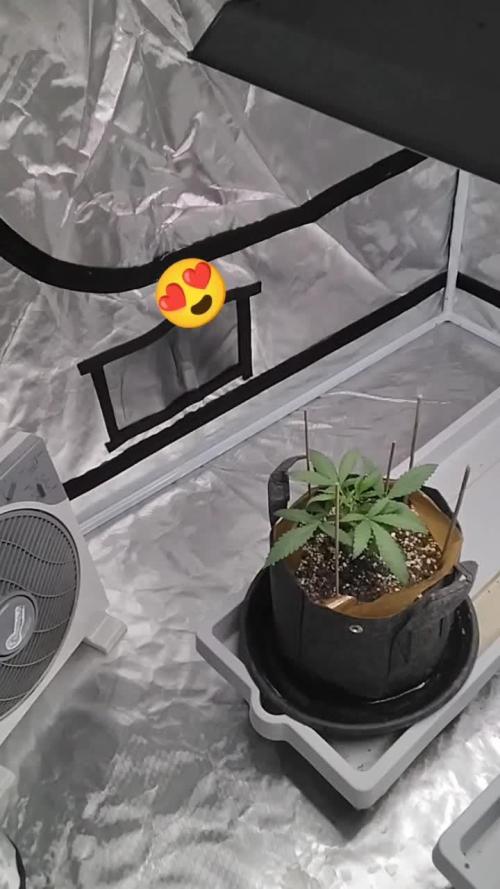
Start of week 3 feeding
Plagron:
Alga grow 1ml per liter
Fish force 1 ml per liter
Power roots 0.50ml per liter
Calmag Pro 0.50 ml per liter
Siilic rock 0.50 ml per liter
450 to 550 ppm
Day 18 had keep same feeding but changed light to 18/6 as soon need to do first topping so plant need to rest.

Likes
120
Share


@Themythicalchristine
Follow
What can a say; it’s been a ride!
Seven months of love, hard work and just being a good shepherd to these ladies.
These giants were an incredible experience, they taught me a lot!
What separates the good from the great is the ability to persevere, to be dedicated to a vocation morning noon and night, on top of the work we do for money.
There were days that I was dead beat from working in the hot sun, it was a very hot summer here where I live; still I dug deep and loved these plants each and every day, and at the end it showed, and payed off completely for my efforts.
It’s a bittersweet moment to harvest these illustrious and incredible plants; I sought so much therapy, purpose and love in these beautiful beings that I nurtured, they are a physical representation of my love and care, and they are beautiful beyond words; I see the product of my love manifest itself physically in these beauties.
They couldn’t have made me more proud; this was a monumental grow, the kind of grow that shows you what your made of, and then blows that precedent away.
I am honoured to call this crop my own 🔮💜

Likes
4
Share


@Englandshigh
Follow
very good strain to grow , very resiant, loves being trained , beautiful smell much better than I expected everyone should defo try it