


Likes
Comments
Share


@JonDin
Follow
it was outdoor growing in soil. used flora trio, koolblum, rippen and floraKleen. I had to harvest 1 weeks early, but it was awesome tree :D I've got about 100g dry. about 300-320 wet.

Likes
46
Share


@DogDoctorOfficial
Follow
Week 2 & 3 Veg Report: Runtz Battle 🌿🔥
Hey, green enthusiasts and fellow growers! 🌱✨ We’re diving into weeks 2 and 3 of our Runtz Battle, and it’s been a thrilling ride! From transplanting to new pots to experimenting with nutrient setups, there’s a lot to cover. Let’s dive into the details and celebrate the progress of our green champions!
Week 2 Progress 🌟
In the second week, our Runtz plants showed tremendous growth and resilience. Here’s a snapshot of what’s been happening:
• Growth Surge 🚀:
• Both Runtz strains exhibited rapid growth with robust stems and lush foliage. Their healthy, vibrant green leaves are a testament to their thriving condition.
• Leaf Development 🌿:
• New leaves are expanding, and the plants are absorbing nutrients efficiently, laying a solid foundation for future development.
Transplant to Final Pots 🌱✨
We’ve made a significant upgrade by transplanting our Runtz plants into their final 15L Autopots. Here’s the scoop on the transplant:
• New Home 🌟:
• The Runtz plants have been moved to spacious 15L Autopots, providing ample room for their roots to expand. This upgrade ensures they have the space to thrive and reach their full potential.
• Soil and Nutrients 💧:
• We’re using Pro Mix Mycorrhizae soil, which is rich in beneficial microbes and nutrients. To boost the soil’s fertility, we added 75 grams of Aptus All-in-One pellets, a touch of MycoMix, and a touch of MicroMix. This mix ensures a strong, healthy start with balanced nutrition and enhanced root development.
Week 3 Progress 🌿💚
In week 3, the plants have absolutely loved their new environment and are showing remarkable growth:
• Transplant Success 🚀:
• The Runtz plants have adjusted beautifully to their new pots. They’re thriving, with enhanced growth and vitality, ready to take on the next phase.
• Autopots Activation 🌟:
• We’re now plugging in the Autopots and letting gravity do its thing. This efficient watering system ensures our plants receive consistent hydration with minimal effort.
• Nutrient Strategy 🌿:
• With the soil rich in biolife and nutrients, we’ll be focusing on using only Regulator and CaMg Boost in the reservoir from now on. The plan is to test if these organic inputs, combined with the soil’s inherent nutrients, can sustain our plants through their growth cycle.
LED Lighting & Climate Control 🌟🌡️
To support our Runtz plants, we’re using top-of-the-line equipment:
• Lumatek Zeus 465 Compact Pro 💡:
• This powerful LED light provides full-spectrum illumination, ensuring our plants get the optimal light they need for vigorous growth. The compact design and high efficiency make it perfect for our setup, promoting healthy and even canopy development.
• TrolMaster Hydro-X Controller 🌡️:
• The TrolMaster Hydro-X is our go-to for precise climate control. With its 3-in-1 sensor, it monitors temperature, humidity, and light intensity, allowing us to maintain the perfect growing environment. This advanced controller ensures our plants stay in their ideal conditions, enhancing growth and overall health.
The Excitement Ahead 🌱💚
As we move forward, we’re excited to see how our Runtz plants respond to their new environment and nutrient strategy. This experiment with organic soil and minimal added nutrients is sure to provide valuable insights and showcase the resilience and adaptability of our plants.
Stay tuned for more updates as we continue this green adventure! Here’s to a week of growth, discovery, and green magic. 🌟🌿
#RuntzBattle #Week2And3Veg #CannabisCommunity #Autopots #ProMixMycorrhizae #LumatekZeus #TrolMasterHydroX #GreenMagic #GrowStrong #StayPositive
Genetics Runtz F1 @zam.nesia Runtz auto @kannabiaglobal
Nutrition
@aptusholland 🌿
@aptus_world 🌎
@aptus_es 🌍
@aptusbrasil 🌱
@aptus_thailand 🌿
@aptus_portugal 🌳
@aptususa_officiala 🍀
@aptusplanttechnz 🌺
@aptusplanttechaus 🍃
Ambient controls🎮
@trolmaster.eu @trolmaster.eu.support @trolmaster.support @trolmaster.agro
Soil @promix_growers_eur @promix_cannabis
LED - @lumatekeu
Watering- @autopot_usa @autopot_global
Love and attention- @dogdoctorofficial
#aptus #aptusplanttech #aptusgang #aptusfamily #aptustrueplantscience #inbalancewithnature #trolmaster #trolmastereurope #trolmastersecrets #Autopots
#GreenJoy
As always thank you all for stopping by, for the love and for it all , this journey of mine wold just not be the same without you guys, the love and support is very much appreciated and i fell honored and so joyful with you all in my life 🙏
With true love comes happiness 💚🙏 Always believe in your self and always do things expecting nothing and with an open heart , be a giver and the universe will give back to you in ways you could not even imagine so 💚
More info and complete updates from all my adventures can be found ⬆️link in the profile description ⬆️
Friendly reminder all you see here is pure research and for educational purposes only
💚Growers Love To you All 💚


Processing
Likes
21
Share


@GRow_M8s
Follow
- We had a flying start until 7-10 days ago when we noticed some toxicity early signs,
* Dark green leaves,
* Slow bud progress
* Burning tips,
* Crispy leaves.
⚠️ PH testing at mediums(soil) run off and the confirmation was there.
Too low PH (<4) & the roots started to lock down = (slowing nut - water uptake) -> slowing transpiration -> showing ☝️ toxicity-deficiencies.
- We stopped feeding and started to flush with tap water at 7 PH (3 waterings -7l/plant), at first run off was really low (under 4 PH) and after the flush we were at 5 PH.
- From now on we will adjust our waterings at 6.5 PH and start microdosing atami PK and snacks.
- The plants responed quickly after the first flushings and we will be back on track fast.
- Room smells like sparkling lemonade 🍋 only when teasing the buds, the humidifier/ionist keep the smells low and fastening the transpiration.
* Update at half week 6.👇
- After flush we start feeding with the atami duo and some snacks, the PH steady at 6.5.
- Buds fattening faster the last days.

Likes
8
Share

@Muravushka
Follow
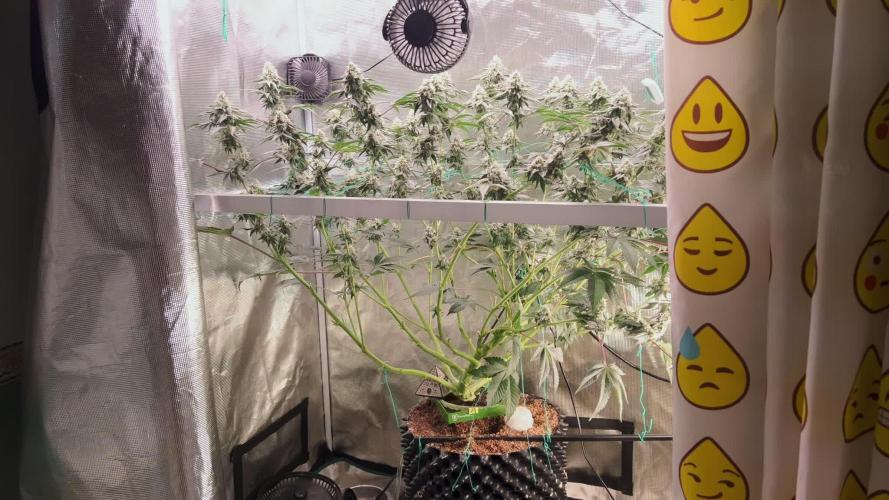
It starts to smell creamy tropic fruits, very smooth, i can smell the notes of Gelato im so excited even over fertilised she has terps ?

Likes
7
Share


@Adkguerrilla44
Follow
I lost all my pictures of my candy kush harvest but the bud was pretty uninspiring, not much for terps or smell and just makes me sleepy so been using it when I get home from my 12 hour shifts at 7am so I can get to sleep quick as possible, will be the last plants EVER from royal queen seeds ,defended them for the last year but since growing real breeders seeds I see that rqs is most definitely a white label seed company that sells us all fake genetics that are not what they say they are,I gave them every chance but when I grow 5 different strains and they all end up looking,smelling and tasting exactly the same theres something fishy going on ,sucks too because now I don't want to give those strains a chance because rqs's version left such a bad taste in my mouth(literally and figuratively)
Likes
9
Share


@BeanCrop420
Follow
This girl really is coming along beautifully her buds are bulking and she producing more of a smell every day! This week I have been diluting/flushing the reservoir by just adding water at ph 6.2 before I do a full reservoir change for the full flush. Im hoping to see her really bulk up during these last few weeks.
Happy growing 🌱

Likes
18
Share


@ZouzouCanna
Follow
Replantées en pot de 25 gallons, nos vers vivent dans le substrat depuis une semaine, les nutriments organiques de greenhouse ont été ajoutés à raison de 100gr par pots, le paillis recouvre le tout. Le sol vivant est prêt !
Repotted in 25gal fabric pots, the worms are in the substrate for a week, GreenHouse’s organic dry amendments are mixed into the soil, 100g into each pots, nice layer of mulch on top of it all. The living soil is ready !

Likes
41
Share


@Fatnastyz
Follow
11-29
She is growing great and seems to love the EM 1.
Watered yesterday. Gave silica, cal/mag, drop of balance, yucca, recharge 1/2 tsp and 1 ounce or 29.5 ml of em1 per gallon.
Her weird leaf is still weird, just bigger now. 😂
Showed hairs last week, starting to stretch 💪🤘
12-2
2k ml Silica 3mg, cal/mag 3ml, drops 1ml, yucca sprinkle 😂
Fun video


Likes
18
Share


@PEAKYPLANTERS
Follow
hi friends farm, did you have a good Easter? we made a decent harvest that left me quite satisfied even if I had to collect a little earlier because of my absence at home but this did not ruin the work 🤪🤪🤪🤪😎😎
Likes
10
Share


@nonick123
Follow
Bienvenidos al diario de Gorilla Cookies Auto por FastBuds
Día -4 (02/05): Se coloca la semilla en tubo de ensayo con 15 ml de agua (EC 0,5) + 3 gotas agua oxigenada (H2O2) en un lugar oscuro a 25 ºC durante 48 horas
Día -2 (04/05): Se prepara una maceta (11L) con 8,8 Litros (80%) de sustrato PRO-MIX HP BACILLUS+MYCORRHIZAE + 2,2 Litros de Insect Frass (20%) + 110 gramos de Earth Vibes Super Soil (10 g/L substrato)
Se mezcla con el agua del 1er riego (EC 0,4) la parte proporcional de la probeta de microorganismos y se riega muy lentamente hasta percolación profunda
Se hace un agujero de 1 cm de profundidad, se coloca la semilla al azar en el agujero, se tapa con un poco de sustrato y se humedece ligeramente con agua en spray
Se coloca parte superior botella en la zona de germinación para mantener humedad relativa alta
Se introduce en el armario con la lampara ENCENDIDA para mantener la temperatura 20-21 ºC en las horas nocturnas
Día -1 (05/05): Se intuye que la semilla empieza a romper el top del sustrato! NO LA TOQUES! 😡🤣
💦Nutrients by Lurpe Solutions - www.lurpenaturalsolutions.com
🌱Substrate PRO-MIX HP BACILLUS + MYCORRHIZAE - www.pthorticulture.com/en/products/pro-mix-hp-biostimulant-plus-mycorrhizae

Likes
15
Share


@Herbz_Unkraut
Follow
awesome strain, fat resinous buds with an awesome scent and great yield! both plants grew very evenly and almost looked the same, would grow again any time!
Likes
9
Share


@NanoLeaf
Follow
End of Week 6
Added CO2 with regulator and controller!
Added the trellis net to spread out the canopy and get more even light to bud sites.
The ladies have lost some momentum and they're drinking less because of the pest issue. Although they should be growing faster because of the CO2 supplementation I'm sure when the thrips are gone they will explode.
I also performed some HST by removing fan leaves and softly pinching and bending some of the stems to open up the canopy whilst keeping the stress at a minimal.
Pest Report:
Still fighting the thrips...
Every time I spray Bio-Insek and Xterminator (Agro-Organics) it deals with the problem for a few days until the eggs and larvae that the thrips left behind hatch and start munching on the plants again. The ladies are strong and healthy and get a slight wilt when I haven't sprayed IPM for a few days this tells me that its not a major issue but I need to get rid of them especially because I want to flip to flower soon.
It seems that the problem is under control. Now I will apply it weekly to make sure those buggers are ELIMINATED.

Likes
12
Share


@MarryJuan
Follow
Time to buy new lights using old fish tank lights, out with old in with new
Xs2000 x2
Likes
32
Share


@Scandinavia
Follow
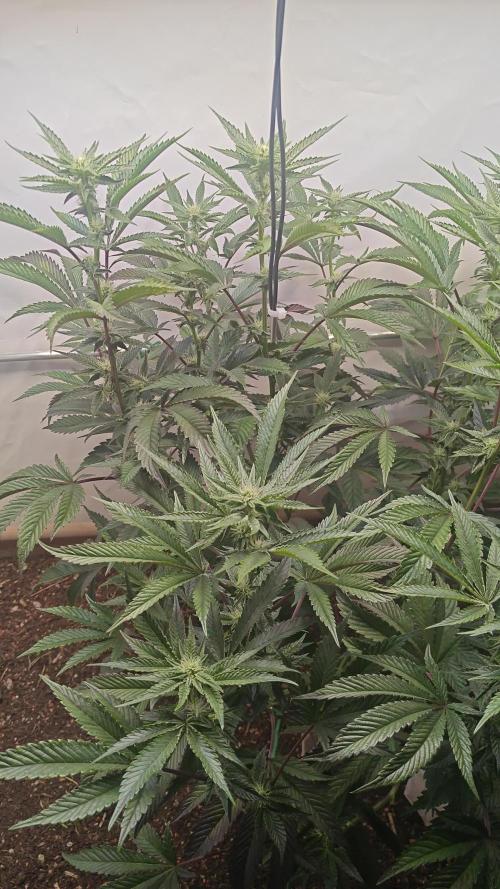
8/10 - Got around 50g per plant, very frosty and compact too for an autoflower. Wanted to share the final product and the whole journey in once. Hope you like it.
BTW:
why can i only make one harvest when i dont harvest all the same time? And ive seen others be able to harvest week after week.
Peace & Love


Likes
16
Share


@420DeepGrow
Follow
Gracias al equipo de Sweet Seeds, Marshydro, XpertNutrients y Trolmaster, sin ellos esto no sería posible.
💐🍁: Big Devil Fast Version:
Atendiendo a las peticiones de nuestros amigos y clientes, presentamos la versión feminizada y fotodependiente de nuestra apreciada variedad Big Devil Auto (SWS15).
Para el desarrollo de esta variedad utilizamos nuestras mejores cepas seleccionadas de Big Devil Auto. Hemos eliminado el carácter autofloreciente de la Big Devil Auto hibridando estas cepas seleccionadas con un clon élite de características muy semejantes a la Big Devil Auto original.
El resultado es una planta muy vigorosa, de gran porte y de muy alta producción, con cogollos muy densos y repletos de resina. Desarrolla un fuerte tallo principal y largas ramas laterales. Conserva el aroma y sabor de nuestra Big Devil Auto original, muy dulce e inciensado.
💡TS-3000 + TS-1000: se usaran dos de las lámparas de la serie TS de Marshydro, para cubrir todas las necesidades de las plantas durante el ciclo de cultivo, uso las dos lámparas en floracion para llegar a toda la carpa de 1.50 x 1.50 x 1.80.
https://marshydro.eu/products/mars-hydro-ts-3000-led-grow-light/
🏠 : Marshydro 1.50 x 1.50 x 1.80, carpa 100% estanca con ventanas laterales para llegar a todos los lugares durante el grow
https://marshydro.eu/products/diy-150x150x200cm-grow-tent-kit
🌬️💨 Marshydro 6inch + filtro carbon para evitar olores indeseables.
https://marshydro.eu/products/ifresh-smart-6inch-filter-kits/
💻 Trolmaster Tent-X TCS-1 como controlador de luz, optimiza tu cultivo con la última tecnología del mercado, desde donde puedes controlar todos los parametros.
https://www.trolmaster.com/Products/Details/TCS-1
🍣🍦🌴 Xpert Nutrients es una empresa especializada en la producción y comercialización de fertilizantes líquidos y tierras, que garantizan excelentes cosechas y un crecimiento activo para sus plantas durante todas las fases de cultivo.
Consigue aqui tus Nutrientes:
https://xpertnutrients.com/es/shop/
📆 Semana 4:
Aparecieron un monton de erizos esta semana, el temporal ha hecho algo de mella en la carpa al bajar las temperaturas aunque todo sigue correcto.
Continuamos con las dosis de nutrientes recomendadas por el fabricante.

Likes
4
Share


@mojo1985
Follow
wächst nich so krass schnell wie die banana blaze im direkten vergleich und auch noch nicht in der vorblüte...aber vom wuchs her eine schöne genetik... anfangs waren beide ja bisschen krüppelig...aber haben sich tiptop gefangen... seien wir gespannt... aer ich bin guter dinge 🙏😇
Likes
8
Share


@4leksz
Follow
This Update came a little bit late cuz time issues but here is it :)
Last week i had solution issues and the plants go very fast in bad leaf color. The Solution got too warm in the tanks and the water got a bad smell too. I changed the water and made again the 3rd week nutrition and turned up the fan to get a few degrees colder it worked very well. Roots are so far doing nice and have no burns or rotten parts on nice and white.
Then i installed the second light in. The week before i give them 400 W MH and 100 W LED.
Now we have 2x 600W and 100 W LED
each one turned down to 250 W and the going good. But i had only 1 bulb m
MH and so im now have a mixed light end of this week i give them 1 tsp Mineral Magic over the stem to get them stronger
Mostly of them are Topped and have not bad mooding on the growing stage of the plants.
I hope on get a few Tips on what we can do better on the System
Best Regards :)
and Good Groow @all


