




@MrWolfe
Follow
Day 56 starting flush then another round. No washing machine in the next round.:(
Rotten cookies 8 had 2 stamen that came out of a bract so possible hermaphrodite there. That's why we hunt, number 6 is frosty as heck and 1 and 4 have the craziest bud structure I've seen so far


@DaGrowQueen
Follow
This past week I've been removing a couple of leaves here and there from each of the plants to expose some of the buds to more light, never more than two or three at a time. I upped the amount of Tiger Bloom once again and in another week or so I'm going to add my other LED light to the tent so I can really take these girls to the limit and get a nice yield. The smell as well as the trichome production continues to get stronger.


@MadeInGermany
Follow
Info:
Unfortunately, I had to find out that my account is used for fake pages in social media.
I am only active here on growdiaries.
I am not on facebook instagram twitter etc All accounts except this one are fake.
Have fun with the update.
Hey everyone 😀.
A week with a wonderful development is over again 😃.
I decided to stay in the vegi for another 10-14 days and to top it off a few more times.
Then it is put into bloom.
Until then, I wish you all the best 🙏🏻.
You can buy this Strain at :
https://www.zamnesia.com/de/3271-zamnesia-seeds-blue-dream-feminisiert.html
Type:
Blue Dream
☝️🏼
Genetics:
Blueberry x Haze
20% Indica / 80% Sativa
👍
Vega lamp:
2 x Todogrow Led
Quantum Board 100 W
💡
Bloom Lamp :
2 x Todogrow Led
Cxb 3590 COB 3500 K 205W
💡💡☝️🏼
Soil :
Canna Coco Professional +
☝️🏼
Fertilizer:
Green House Powder Feeding
☝️🏼🌱
Water:
Osmosis water mixed with normal water (24 hours stale that the chlorine evaporates) to 0.2 EC. Add Cal / Mag to 0.4 Ec Ph with Organic Ph - to 5.5 - 5.8 .


@Roope
Follow
This week has been intresting when defoll, ladys that was up at one has now 3 🤙
Salute fot tip and i raise led a litlebit like 5cm up so tops aint take damaga and i ingrease the watering at 1h 15min and its now 3h30min on and litle pause and had posibility upgraide if want closer to end of cykle.
That one rotating fan was Major change now air is movin inside und upside if there wasent so tiny space left i still get one more ore still may?
Photo sektion see defolling and there was paper bag full of leaf and still need to operate one corner for good.
Still next week.
ReggeyOkkey


@Mazgoth
Follow
Too much stress,really cold environment,some times with the grow light off the temperature is around 13/15C and the air goes direct to this plant because the fan is close enough,the
Plant doesn’t give up and has some over feed too,idk why but I’m using nutrients after 15/20 days and half of dosage that BioBizz says and I still have over feed a little bit and nutrient lockout maybe because I’m using some Bio Molasses Blackstrap but if I’m using molasses I’m not using bio grow and I’m using like 3/4ml per L.The LST is because the plant got really tall that the grow lamp couldn’t go higher because of my grow tent size and I needed to break the top cola.


@eldruida_lamota
Follow
Vamos familia, actualizamos la octava semana de floración de estas Black Rainbow de Seedstockers, salieron las 3 de 3, 100% ratio éxito.
Aplicamos varios productos de Agrobeta, que son increíbles para aportar una buena alimentación a las plantas.
Temperatura y humedad dentro de los rangos correctos dentro de la etapa de floración.
La tierra utilizada es al mix top crop, por cambiar.
De 3 ejemplares seleccioné los 2 mejores para completar el indoor y trasplanté directamente a macetas de 7 litros, cambien el fotoperiodo a 12/12 y aplique una buena poda de ramas bajas, se ven bien sanas las plantas, tienen un buen color y progresan a muy buen ritmo por el momento, cogieron una tricomada seria.
Agrobeta:
https://www.agrobeta.com/agrobetatiendaonline/36-abonos-canamo
Hasta aquí todo, Buenos humos 💨💨💨


@Ashbash
Follow
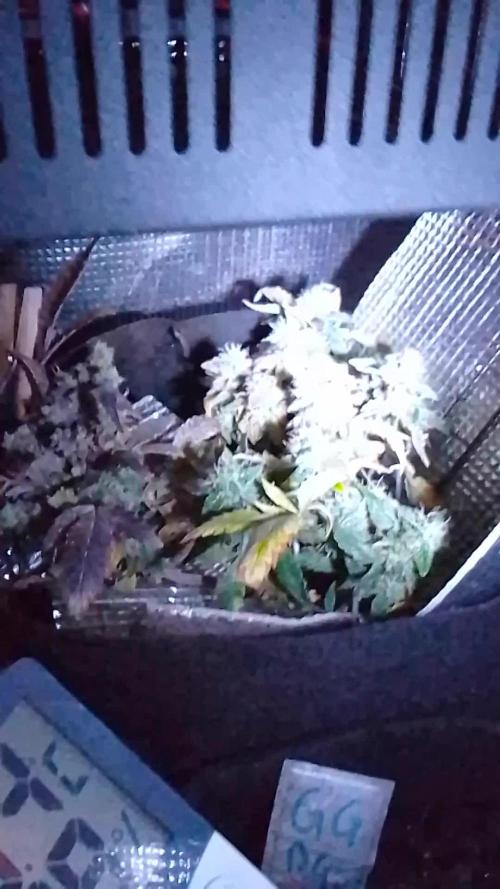
60x60x120cm tent. Basic cheap one not sure what brand, if any. 200w CFL for veg, and a 250w HPS for bloom. Gonna continue with biobizz and maybe a couple of other supplements later down the road. Soil is biobizz allmix. Says pH ready so no need to adjust. Hopefully that's right!




@Broffel
Follow
Day 18 and transplanting the Girls to a 15l airpot, and yes girl nr3 is still there but far behind nr 1&2 see video.
The end of the week and the girls are doing great


@HIAZ_urbanbudfarmer
Follow
Week 5 of flowering all is going well buds continue to develop.very frosty, sticky, smelly dense nuggets have managed to get her up 20cm closer to the light. Have also changed to Green planet nutrients


@Ultraviolet
Follow
Green light is radiation with wavelengths between 520 and 560 nm and it affects photosynthesis, plant height, and flowering. Plants reflect green light and this is why they appear green to our eyes. As a result, some growers think that plants don’t use green wavelengths, but they actually do!
In fact, only around 5 – 10% of green light is reflected from leaves and the rest (90 – 95 %) is absorbed or transmitted to lower leaves [1].
Green wavelengths get used in photosynthesis. Chlorophyll pigments absorb small amounts of green wavelengths. Light that doesn’t get absorbed is transmitted to leaves that are shaded out from direct light. This means that leaves at the bottom of the canopy get more green light than leaves at the top. A high proportion of green wavelengths compared to other colors tells lower leaves that they are being shaded out, so they are able to react accordingly. Lower leaves may react by opening or closing their stomata or growing longer stems that help the leaves reach brighter light [1, 2, 3].
When it comes to growing cannabis, many cultivators are interested in the quality of light used for the flowering stage. In many plants, flowering is regulated by two main photoreceptors: cryptochrome and phytochrome. Both photoreceptors primarily respond to blue light but can also respond to green, although to a lesser extent. Green can accelerate the start of flowering in several species (although cannabis has yet to be tested) [1, 4, 5]. However, once flowering has begun, it’s important to provide plants with a “full spectrum” light that has high amounts of blue and red light, and moderate amounts of green, in order for photosynthesis to be optimized.
Green light mediates seed germination in some species. Seeds use green wavelengths to decide whether the environment is good for germination. Shade environments are enriched in green relative to red and blue light, so a plant can tell if it is shady or sunny. A seed that senses a shaded environment may stay dormant to avoid poor growing conditions [1]. Some examples of plant species where researchers have documented this response are: ryegrass (a grass that grows in tufts) and Chondrilla (a plant related to dandelion) [1, 6].
Although green wavelengths generally tell plants NOT to germinate, there are some exceptions! Surprisingly, green wavelengths can stimulate seed germination in some species like Aeschynomene, Tephrosia, Solidago, Cyrtopodium, and Atriplex [1, 6, 7].
Of course, light is not the only factor affecting seed germination – it’s a combination of many factors, such as soil moisture, soil type, temperature, photoperiod, and light quality.
When combined with red and blue light, green can really enhance plant growth [1, 8]. However, too much green light (more than 50% of the total light) can actually reduce plant growth [8]. Based on the most current research, the ideal ratio of green, red, and blue light is thought to be around 1:2:1 for green:blue:red [9]. When choosing a horticultural light, choose one that has high amounts of blue and red light and moderate amounts of green and other colors of light.
Not many studies can be found about the effect of green light on cannabis growth or metabolism. However, if one reads carefully, there are clues and data available even from the very early papers.
Mahlberg and Hemphill (1983) used colored filters in their study to alter the sunlight spectrum and study green light among others. They concluded that the green filter, which makes the environment green by cutting other wavelengths out, reduced the THC concentration significantly compared to the daylight control treatment. It has been demonstrated that green color can reduce secondary metabolite activity with other species as well. For example, the addition of green to a light spectrum decreases anthocyanin concentration in lettuce (Zhang and Folta 2012).
If green light only reverses the biosynthesis of some secondary metabolites, then why put green light into a growth spectrum at all? Well, there are a couple of good reasons. One is that green penetrates leaf layers effectively. Conversely red and blue light is almost completely absorbed by the first leaf layer.
Green travels through the first, second, and even third layers effectively (Figure 2). Lower leaf layers can utilize green light in photosynthesis and therefore produce yields as well.
Even though a green light-specific photoreceptor has not yet been found, it is known that green light has effects independent from the cryptochrome but then again, also cryptochrome-dependent ones, just like blue light. It is known that green light in low light intensity conditions can enhance far red stimulating secondary metabolite production in microgreens and then again, counteracts the production of these compounds in high-intensity light conditions (Kim et al. 2004). In many cases, green light promoted physiological changes in plants that are opposite to the actions of blue light. In the study by Kim et al. blue light-induced anthocyanin accumulation was inhibited by green light. In another study it has been found that blue light promotes stomatal opening whereas green light promotes stomatal closure (Frechilla et al. 2000). Blue light inhibits the early stem elongation in the seedling stage whereas green light promotes it (Folta 2004). Also, blue light results in flowering induction, and green light inhibits it (Banerjee et al., 2007). As you can see, green light works very closely with blue light, and therefore not only the amount of these two wavelengths separately is important but also the ratio (Blue: Green) between these two in the designed spectrum. Furthermore, green light has been found to affect the elongation of petioles and upward leaf reorientation with the model plant Arabidopsis thaliana both of which are a sign of shade avoidance symptoms (Zhang et al. 2011) and also gene expression in the same plant (Dhingra et al. 2006).
As mentioned before, green light produces shade avoidance symptoms which are quite intuitive if you consider the natural conditions where the plants grow. Not all the green light is reflected from the highest canopy leaves in nature but a lot of it (50-90%) has been estimated to penetrate the upper leaves at the plant level ((Terashima et al., 2009; Nishio, 2000). For the plant growing in the understory of the forest green light is a signal for the plant of being in the shade of a bigger plant. Then again, the plants growing under unobstructed sunlight can take advantage of the green photons that can more easily penetrate the upper leaves than the red and blue photons. From the photosynthetic pigments in higher plants, chlorophyll is crucial for plant growth. Dissolved chlorophyll and absorb maximally in the red (λ600–700 nm) and blue (λ400–500 nm) regions of the spectrum and not as easily in the green (λ500–600 nm) regions. Up to 80% of all green light is thought to be transmitted through the chloroplast (Terashima et al., 2009) and this allows more green photons to pass deeper into the leaf mesophyll layer than red and blue photons. When the green light is scattered in the vertical leaf profile its journey is lengthened and therefore photons have a higher chance of hitting and being absorbed by chloroplasts on their passage through the leaf to the lower leaves of the plant.
Photons of PPFD (photosynthetic photon flux density) are captured by chlorophyll causing an excitation of an electron to enter a higher energy state in which the energy is immediately passed on to the neighboring chlorophyll molecule by resonance transfer or released to the electron transport chain (PSII and PSI). Despite the low extinction coefficient of chlorophyll in the green 500–600 nm region it needs to be noted that the absorbance can be significant if the pigment (chlorophyll) concentration in the leaf is high enough.
The research available clearly shows that plants use green wavelengths to promote higher biomass and yield (photosynthetic activity), and that it is a crucial signal for long-term developmental and short-term dynamic acclimation (Blue:Green ratio) to the environment. It should not be dismissed but studied more because it brings more opportunities to control plant gene expression and physiology in plant production.
REFERENCES
Banerjee R., Schleicher E., Meier S. Viana R. M., Pokorny R., Ahmad M., Bittl R., Batschauer. 2007. The signaling state of Arabidopsis cryptochrome 2 contains flavin semiquinone. The Journal of Biological Chemistry 282, 14916–14922.
Dhingra, A., Bies, D. H., Lehner, K. R., and Folta, K. M. 2006. Green light adjusts the plastic transcriptome during early photomorphogenic development. Plant Physiol. 142, 1256-1266.
Folta, K. M. 2004. Green light stimulates early stem elongation, antagonizing light-mediated growth inhibition. Plant Physiol. 135, 1407-1416.
Frechilla, S., Talbott, L. D., Bogomolmi, R. A., and Zeiger, E. 2000. Reversal of blue light -stimulated stomatal opening by green light. Plant Cell Physiol. 41, 171-176.
Kim, H.H., Goins, G. D., Wheeler, R. M., and Sager, J. C. 2004.Green-light supplementation for enhanced lettuce growth under red- and blue-light emitting diodes. HortScience 39, 1617-1622.
Nishio, J.N. 2000. Why are higher plants green? Evolution of the higher plant photosynthetic pigment complement. Plant Cell and Environment 23, 539–548.
Terashima I., Fujita T., Inoue T., Chow W.S., Oguchi R. 2009. Green light drives leaf photosynthesis more efficiently than red light in strong white light: revisiting the enigmatic question of why leaves are green. Plant & Cell Physiology 50, 684–697.
Zhang, T., Maruhnich, S. A., and Folta, K. M. 2011. Green light induces shade avoidance symptoms. Plant Physiol. 157, 1528-156.
Wang, Y. & Folta, K. M. Contributions of green light to plant growth and development. Am. J. Bot. 100, 70–78 (2013).
Zhang, T. & Folta, K. M. Green light signaling and adaptive response. Plant Signal. Behav. 7, 75–78 (2012).
Johkan, M. et al. Blue light-emitting diode light irradiation of seedlings improves seedling quality and growth after transplanting in red leaf lettuce. HortScience 45, 1809–1814 (2010).
Kasajima, S., et al. Effect of Light Quality on Developmental Rate of Wheat under Continuous Light at a Constant Temperature. Plant Prod. Sci. 10, 286–291 (2007).
Banerjee, R. et al. The signaling state of Arabidopsis cryptochrome 2 contains flavin semiquinone. J. Biol. Chem. 282, 14916–14922 (2007).
Goggin, D. E. & Steadman, K. J. Blue and green are frequently seen: responses of seeds to short- and mid-wavelength light. Seed Sci. Res. 22, 27–35 (2012).
Mandák, B. & Pyšek, P. The effects of light quality, nitrate concentration and presence of bracteoles on germination of different fruit types in the heterocarpous Atriplex sagittata. J. Ecol. 89, 149–158 (2001).
Darko, E. et al. Photosynthesis under artificial light: the shift in primary and secondary metabolism. Philos. Trans. R. Soc. B Biol. Sci. 369 (2014).
Lu, N. et al. Effects of Supplemental Lighting with Light-Emitting Diodes (LEDs) on Tomato Yield and Quality of Single-Truss Tomato Plants Grown at High Planting Density. Environ. Control Biol. 50, 63–74 (2012).



@adam_pawloski87
Follow
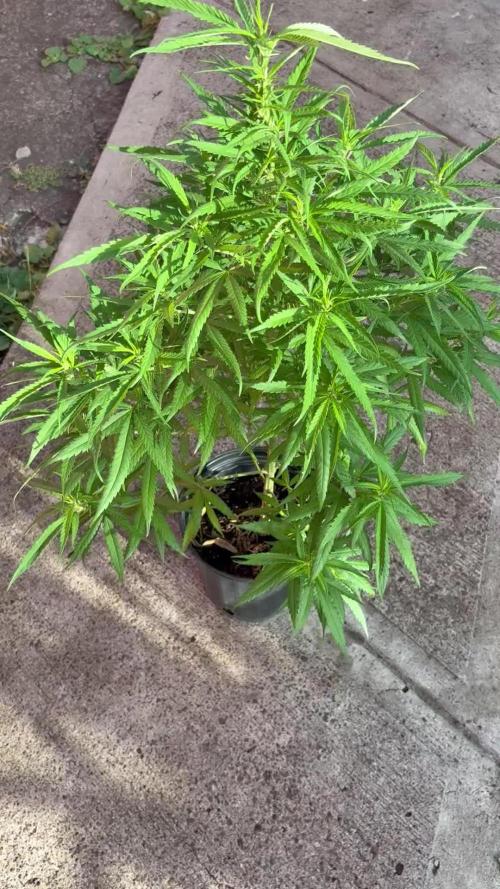
Let’s Go day 29!! This week went real nice ! Girls are staying very healthy and building up nicely and even started showing signs of female sex which is super great ! We started doing a little bit of leaf tuck training method on em , nothing to big as like I said I want these girls just to do there thang an grow more on naturally side! My Air temp and Humidity have been on point all week, staying from 70-75 degrees throughout the day and humidity staying around 58-61% humidity , my girls are loving that summer an 75 feeling !! Can’t wait to see what we do this week ! Hopefully you all enjoy, and are ready for another great productive week ! Peace love an positive vibes to y’all Cheers 😶🌫️💨💨💨💨🤙🏻Happy Grows✌️🏻Week 4 let’s get it !

shorts_status_processing


@GoldenWeedGrower
Follow
Legend
Timestamp: 📅
EC - pH: ⚗️
Temp - Hum: 🌡️
Water: 🌊
Food: 🍗
pH Correction: 💧
Actions: 💼
Thoughts: 🧠
Events: 🚀
Media: 🎬
D: DAY, G: GERMINATION, V: VEGETATIVE, B: BLOOMING, R: RIPENING, D: DRYING, C: CURING
________________________________
📅 D08/V01 - 23/11/23
⚗️ EC: 0.5 pH: 6
🌡️ T: 24 °C H: 80%
🍗 Grow A-B
💧
💼
🧠 I'm still hoping, but I'm pessimistic now
🚀
🎬
________________________________
📅 D09/V02 - 24/11/23
⚗️ EC: 1 pH: 6
🌡️ T: 21 °C H: 76%
🌊
🍗
💧
💼 I put a support to hold the big one
🧠
🚀 I talked with Marina from Pure Instinto, she's very kindly and she has already sent to me the seeds not sprouted. Many thanks to Marina for the perfect customer care. 5 stars to Pure Instinto.
🎬
________________________________
📅 D10/V03 - 25/11/23
⚗️ EC: 1 pH: 5.8
🌡️ T: 21 °C H: 76%
🌊
🍗
💧
💼 Humidifier out. Collar on the big one.
🧠 Little weird the leafes of the little one
🚀 With the support the big one is going better
🎬
________________________________
📅 D11/V04 - 26/11/23
⚗️ EC: 1 pH: 5.8
🌡️ T: 21 °C H: 55%
🌊
🍗
💧
💼 I left the support, now she can grow free. Collar on the little one: I named her "Nicole"
🧠 Little weird the little one leafes
🚀
🎬 6 pics of Nicole and the other girl that will be used to produce clones. Added Timelapse video
_______________________________
📅 D12/V05 - 27/11/23
⚗️ EC: 0.9 pH: 5.5
🌡️ T: 21 °C H: 50%
🌊 Added 1L
🍗
💧
💼 Lowered EC
🧠
🚀
🎬
________________________________
📅 D13/V06 - 28/11/23
⚗️ EC: 1 pH: 5.5
🌡️ T: 21 °C H: 50%v
🌊 Added 2L
🍗
💧
💼
🧠 Lowered EC until 0.8
🚀
🎬 Added Timelapse video
________________________________
📅 D14/V07 - 29/11/23
⚗️ EC: 0.8 pH: 5.4
🌡️ T: 23 °C H: 40%
🌊 Added 4L
🍗 CalMag -Grow A-B
💧
💼
🧠
🚀
🎬


@DaddyPrime
Follow
3/26 swelling up nicely
3/29 the swell has been quite swell lol starting to show first orange Pistils on lower buds. The main cola still has a few weeks I believe


@4_Pro2Bono_0
Follow
Everything after germination has been pretty smooth. The plants in veg had a couple small brown spots due to under watering but no extreme signs or any abnormalities.
shorts_status_processing


@Reno_BE
Follow
Hello everyone! I have been off the platform for a while since the plants were just loving their life. I went on a small trip and came back seeing that the plants seem to have entered the flowering phase.
For now I can count 7 buds starting to form on my main plant, the second one seems to be a little bit behind.
So I am kind of uncertain on what to do next, should I trim? Should I change to a bigger plant container because they are still in their original?
Hopefully someone could give me some advice on what to do next? I will include a video showing the healthiest plant.
Thanks in advance, cheers!


@Fatbudz
Follow
I'm sorry, but at the time I stopped updating the diaries because I moved to a new house and changed my routines. I'll leave a photo of the final product here, but don't worry, I'll be back at full speed. 🚀🚀
new diaries coming 🔜🔜