


Processing
Likes
Comments
Share


@UnkleSkunk
Follow
all together: welcome small plant😂😂
it's a bit hot but the temperatures will drop
soil :
plagron light mix
fertilizer:
advanced nutrient
PH:
5,8- 6,5
I added a small timelapse of the birth

Likes
1
Share


@kauilmayel1996
Follow
La plata se ve muy locochona !!!!!
Creo que está funcionando el lst
Que tanto veo en los otros diarios aún que el mío es bastante improvisado....
😅
Buena genética y una planta que está creciendo muy bonito...
Feliz con esta nena

Processing
Likes
9
Share


@Winged_Grower
Follow
Everything going great. Just switched to bloom nutes and gonna ride out the rest of the time. No issues from what I see, all the plants thriving and smelling potent!

Likes
14
Share


@AndrewC
Follow
This week was huge. They drank down like 40L of water this week. They have been upping PH all week, I am at the point where I need to check it daily to keep it in range. I also began significant LST training on these plants this week. I used an entire pack of LST clips, which work awesome, but i need more than 5 per plant (Pack of 30). I hurt a few of them when bending them this week, but they recovered so fast, I had a hard time tell the next day which branch i had broken. I upped the Silicate they were getting, and it made a difference. They were soft and bendy..to the point just bending a stem was enough to keep it in place, now they are firm enough to require clips. I removed about 30% of foliage per plant, it was more than I wanted to, but it was legit necessary. These guys are 💥💥boomin,💥💥 I can't believe they are only 5 weeks old. I had grown a batch of 4 seeds (of the same strain) in a soil configuration, and they grew for about 16 weeks and were about this size at week 10. I have nothing but good things to say about the 🥦 AutoPot
Likes
13
Share


@Herbz_Unkraut
Follow
what a resin monster! such beautiful plants! one of the 2 phenos had straight peanutbutter flavor!


Likes
5
Share


@MaltaHerbman
Follow
Germination in Royal Queen seeds soil plugs.
Soli is ready in pot going to give a try a 5 liter pot its ready with first watering 1 ml/ liter carboload liquid

Likes
43
Share


@Legendaryseedthumb
Follow
Amazing!. The big plant smells so good
Drying day 6: they are still moist! A very good drying session is going on over here. The longer the better!
Trimmed today after 10 days. Ended up with 80grams pure buds! Super nice chunky buds smells amazing and 8grams of sift from the leaves.
I’ll filter the leaves again with my bubble bags

Likes
10
Share

@Hempface86
Follow
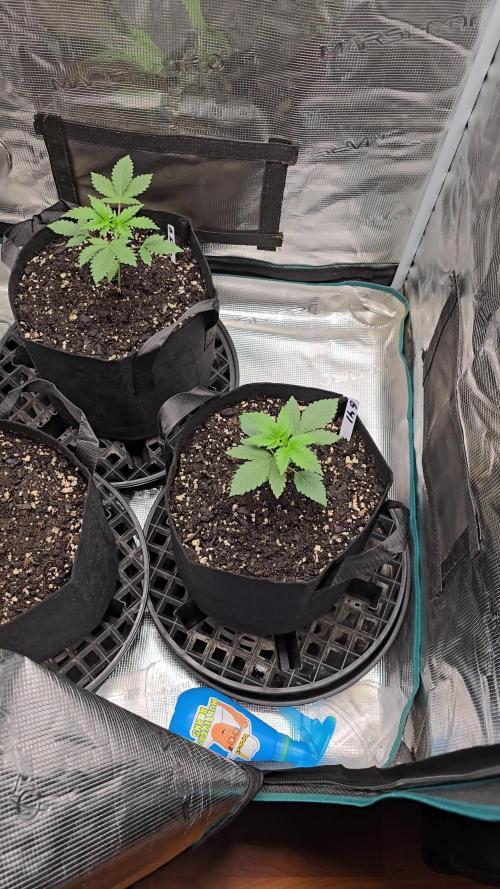
So far so good.. Plug it on, hoping she gets a growth spurt. Soon, the temperatures have been a little low, so I think they've just had a slow start all of them... But that is okay.We can stay in veg an extra week or 2... thank you everybody for checking it out.God bless and happy growing 🙏

Likes
Comments
Share


Likes
5
Share


@BasementGrowers
Follow
So flower has seemed very slow. We are on day 60 of flower, and they are NOT ready. The past two weeks the pH has been dropping tremendously every day. I couldn’t imagine it would be a root issue since I use hydroguard and we have a chiller set at 67 degrees, plus the plants look healthy! So I did my research and tried everything. Finally I decided to go ahead and treat with hydrogen peroxide because nothing else was helping, and Bam! Stable pH! Lesson learned. I hope the plants now start putting on weight over the next week and maturing. I was hoping to flush in a week, but I will just base it off what they are telling me.


Likes
12
Share


@DeepWaterCulture
Follow
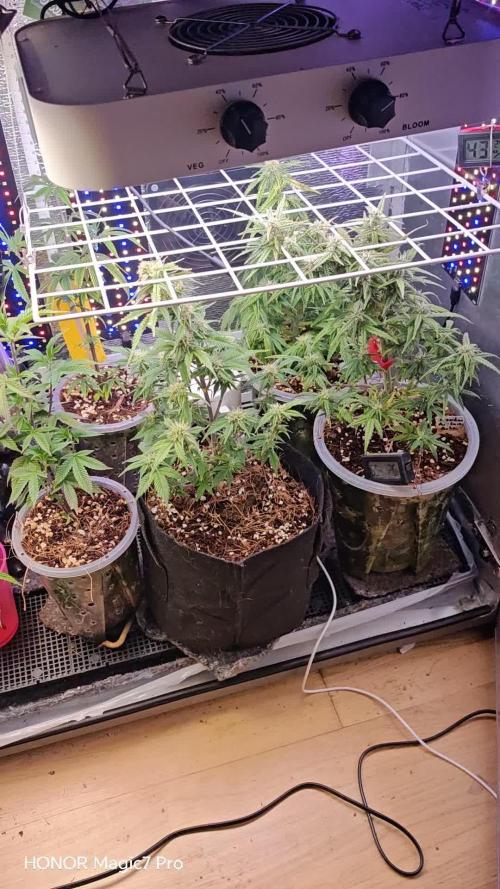
Happy with the last few weeks not much eventful happened and forgot to take photos… but yeah apart from mixed the res nutes for the wrong amount of water due to just changing a different size res just before this one, causing plant to droop the next morning but corrected with a complete res change and bounced back in two days as i clocked what I had done quite early
on :) slogan of the week ‘if in doubt swap
It out’ 😂
Likes
Comments
Share

@HOME_GROWBOOK
Follow
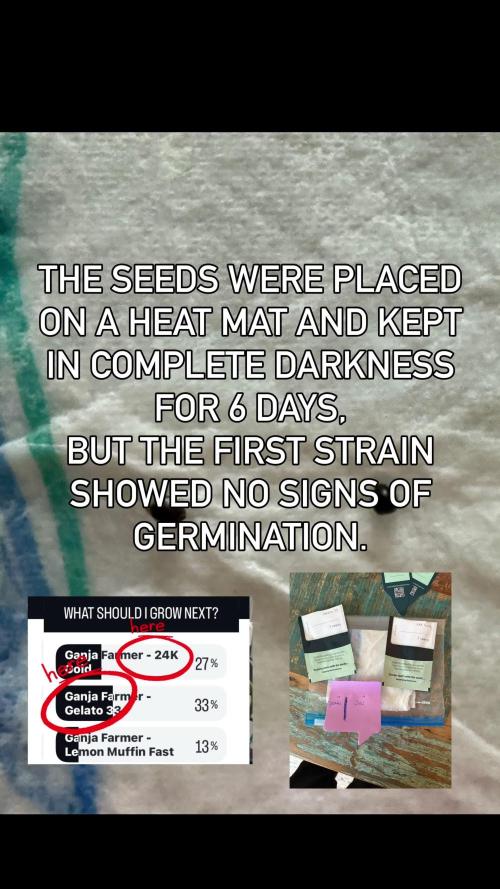
Nachdem der erste Versuch der Keimung leider nicht funktioniert hat greifen wir auf die alt bewehrten quelltabs zurück.


Likes
45
Share


@HinduGod
Follow
THE SUN GOD HAS BEEN VERY VERY BAD!!!😡 ONLY 2 DAYS OF SUN DURING DIS WEEK LONG STRETCH. TOOK A COUPLE OF THE BIG FAN LEAVES OFF ON DAY 46. DID SOME LST ON A COUPLE OF LOWER BRANCHES ON DAY 48.
PLEASE COME AGAIN!!!!!!

Processing
Likes
5
Share


@Dr_Sampson
Follow
Veg day 36.- Happy girls seeing the sun for the first time. Additional soil mix is same as before. BX promix and perlite 2:1. Additional volcanic ash and worm castings. First watering was generic AB 1/4 strength, Rhizotomic and Mammoth P microbes. PH adjusted to 6.3 300ppm.
Veg day 42 - after a week of wind and weather for the first time both seem to be acclimatizing well enough. A squirrel seems to like digging. Any suggestions for critter deterent?
Likes
39
Share


@GreenBloodGrower
Follow
Saludos de nuevo compañeros! Siento el retraso en actualizar, vamos a ponernos al día!!
Entrando en la semana 3 comienzan a verse algunas necesidades, las plantas necesitan un trasplante y mas intensidad lumínica. pronto se efectuara el cambio y comienzo a prepararlas. ✊
16-10-2018 Riego con pulverizador en tierra, uso 1mlxL de Voodoo, 1mlxL de B-52 1mlxL de Sensi Grow A+B a EC 0.9
19-10-2018 Riego con pulverizador y Sensizym de Advanced Nutrient 2mlxL, con abundante agua. 350ml por planta.
21-10-2018 riego solo agua a PH 6.
Observaciones: el día 19 aprecio que algunas plantas muestran carencias y algunas algún posible bloqueo, por miedo a no haber echo las cosas bien desde el principio, decido dar un lavado de encimas a las raíces con Sensizym y dar descanso de nutrientes hasta finalizar la semana 3.
Vamos a por la 4ª semana familia!
Muchas gracias por el apoyo, espero poder dar el máximo de información posible para todos! 👊👽
---
Greetings again, comrades! I feel the delay in updating, let's get up to date!
Entering week 3 begin to see some needs, plants need a transplant and more light intensity. The change will be made soon and I begin to prepare them. ✊
10-16-2018 Irrigation with soil sprayer, use 1mlxL of Voodoo, 1mlxL of B-52 1mlxL of Sensi Grow A + B to EC 0.9
10-19-2018 Irrigation with spray and Sensizym of Advanced Nutrient 2mlxL, with plenty of water. 350ml per plant.
10-21-2018 irrigation only water at PH 6.
Observations: the 19th day I appreciate that some plants show deficiencies and some possible blockage, for fear of not having done well from the beginning, I decided to wash the roots with Sensizym and give rest of nutrients until the end of the week 3.
Let's go for the 4th week family!
Thank you very much for the support, I hope to give as much information as possible to all! 👊👽


Likes
20
Share


@420DeepGrow
Follow
Gracias al equipo de Divine Seeds, Marshydro y XpertNutrients sin ellos esto no seria posible.
💐🍁Fractal:
La semilla de marihuana Fractal es una cepa especialmente psicodélica que Semillas Divinas desarrolló para experiencias esotéricas y místicas, meditación y creatividad. La potente y vívida Skunk#1 fue cruzada con una pegajosa Afghani Indica, y el resultado es ahora conocido como Fractal. Este exótico híbrido es resinoso, picante y productivo. La mejor opción para el cultivo comercial: un compromiso entre mayores rendimientos y maduración rápida.
En interiores se espera una altura de 1,70 m, en exteriores las plantas crecen hasta 2 m. Fractal se adapta a todo tipo de entorno de cultivo: cajas de cultivo, instalaciones hidropónicas o aeropónicas, plantaciones exteriores, balcones, terrazas e invernaderos. Para un mejor rendimiento se recomienda entrenar a las plantas de Fractal para ampliar su estructura y limitar su crecimiento vertical. Usar ScroG o SoG, LST, FIM o topping.
Fractal tiene una inmunidad inherente al moho y a las plagas de insectos, pero como sus colas son gruesas, proteja sus plantas del aire viciado. También durante las semanas de lluvia su plantación puede necesitar ser cubierta. Listo para la cosecha al aire libre en octubre. Grandes y densos cogollos.
Los cogollos de marihuana de la variedad Fractral huelen a hachís y algo a tierra, desprenden cedro y notas afrutadas al romperse. Mida su porción con cuidado: su potencia está por encima de la media. Con Fractal experimentas un apedreamiento general que te hace sentarte o frena tu movimiento. Perfecto para pasar una noche junto a una hoguera. Es mejor consumirlo por la noche.
🚀🌻 Consigue aquí tus semillas:
https://divineseeds.net/es/fractal-fem/
💡FC6500: Eficiencia líder en el mercado: la lámpara de cultivo LED FC-E6500, que ostenta un estatus líder en el mercado, es una solución rentable con un PPE de 2,8 µmol/J y un rendimiento máximo de 2,5 g/vatio. Ofrece un PPF alto de 2026 umol/S y es adecuada para una cobertura de vegetación de 1,50 m x 1,50 m y una cobertura de flores de 1,20 m x 1,20 m.
Iluminación versátil y uniforme.
https://marshydro.eu/products/mars-hydro-fc-e-6500-730w-commercial-led-grow-light/?gad_source=1&gclid=Cj0KCQjw1qO0BhDwARIsANfnkv9IIrYSbmJqz8PqpJOIyWwJfp5bc3SGJgUV68USLQ4tjmXDYwoBuAsaAue3EALw_wcB
🚥 MarsHydro ADLITE UV/IR/RED:
Para lograr un crecimiento óptimo de las plantas y maximizar los rendimientos es un arte simple que depende en gran medida de las condiciones ambientales adecuadas. Reconociendo las limitaciones de la iluminación natural y las soluciones de iluminación tradicionales para satisfacer estas necesidades únicas, lanzamos ADLITE. Estas luces especiales UV, IR y roja están diseñadas para llenar áreas del espectro, proporcionando las altas longitudes de onda que las plantas necesitan para un crecimiento y desarrollo óptimos.
Consigue aqui tu Adlite:
https://marshydro.eu/collections/adlite-supplemental-lights/
🏠 : Marshydro 1.50 x 1.50 x 1.80, carpa 100% estanca con ventanas laterales para llegar a todos los lugares durante el grow
https://marshydro.eu/products/diy-150x150x200cm-grow-tent-kit
🌬️💨 Marshydro 6inch + filtro carbon para evitar olores indeseables.
https://marshydro.eu/products/ifresh-smart-6inch-filter-kits/
🍣🍦🌴 Xpert Nutrients es una empresa especializada en la producción y comercialización de fertilizantes líquidos y tierras, que garantizan excelentes cosechas y un crecimiento activo para sus plantas durante todas las fases de cultivo.
Consigue aqui tus Nutrientes:
https://xpertnutrients.com/es/shop/
📆 Semana 6:
Debido a unos cortes en el suministro de luz, ellas han ralentizado algo su desarrollo.
Se siguen formando los cogollos aunque algo mas espigados de lo que me gustaría, algunas variedades han aguantado bastante bien este estres, lo que indica una buena genetica, entre ellas está esta variedad.
Continuo con las dosis de nutrientes recomendadas por el fabricante.
Potencia del foco: 100
Adlite: máximas horas.

Likes
43
Share

@DE_BW
Follow
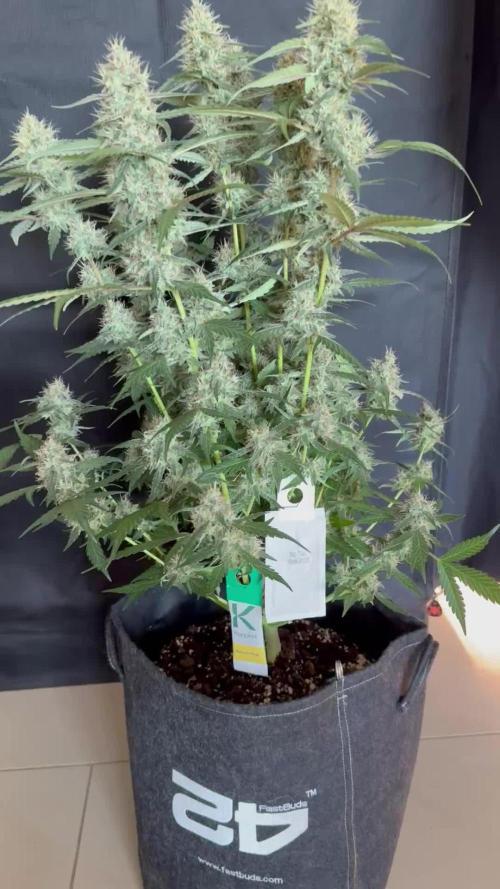
The Guava Runtz has become exceptionally frosty this week, with thick trichome coverage spreading across both the buds and sugar leaves. The top colas are still in a strange transition phase, seemingly caught between bulking up and ripening, while the lower and mid-level buds appear further along. Overall the plant remains very healthy, I have now switched to Overdrive, and based on her current development I expect she will need at least another two weeks before reaching maturity.