Likes
14
Share
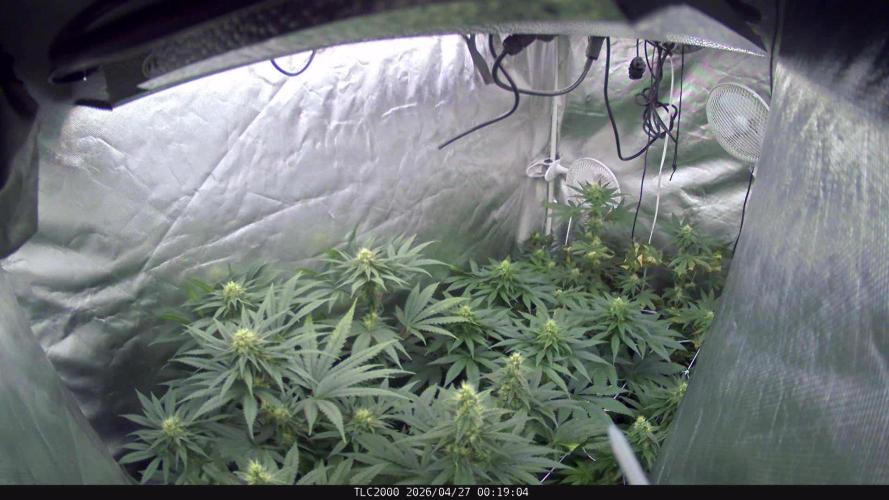
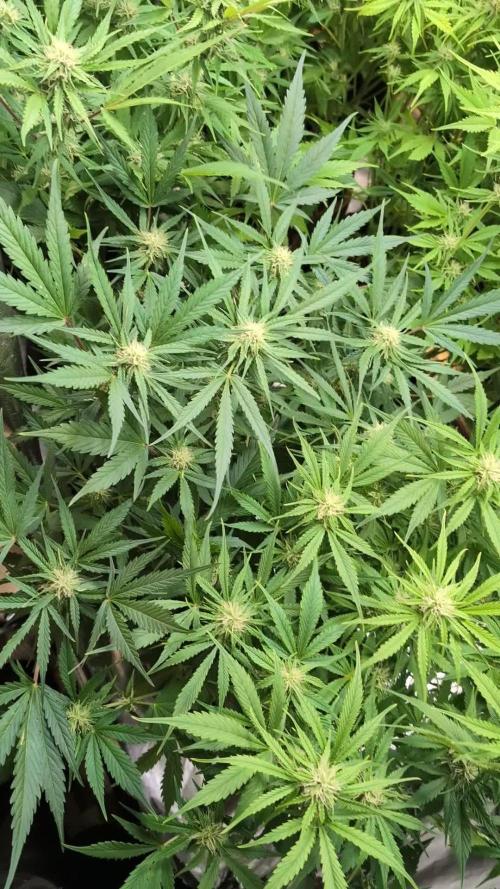
This week the Bruce Banner autos really started to show what they’re made of. All three phenos are moving deeper into mid–late flower now, and the differences between them are getting more obvious. Bruce Banner #2 Still the most advanced girl in the tent. She’s building the thickest buds out of the three, stacking really well and showing the strongest early frost ❄️ No issues at all, super stable and consistent. Bruce Banner #3 This one really took off this week. She made a huge jump in growth and the buds are getting heavy enough that one of the branches is starting to lean a little 🍃🔥 The smell coming from her is amazing: sweet, citrusy and a bit chemical, very “Banner-like”. Bruce Banner #1 She’s finally stabilizing again after her earlier issues. Her leaves turned yellowish/red due to a previous deficiency, but honestly it gives her a cool, colorful look now. I gave her extra nitrogen (CalMag/N) + did a light flush, and she seems to be responding well. She’s back to focusing on bud development. All three plants got a quick follow-up defoliation just removing some missed fan leaves to open the canopy more and improve airflow 🍃💨. Watering: #1 → RO + CalMag + extra N + one flush #2 + #3 → RO + CalMag only Environment: Temp: ~24–25°C RH: ~55% PPFD: ~1000–1200 under the SE5000 Smell getting stronger every day: sweet lemon + chem 🍋⚗️ Overall, a solid week with good bud swelling, increasing frost, stronger terp profile, and the first signs of buds getting heavy enough to need support soon. These Banner girls are definitely heading toward late flower now 🌸❄️💪
Likes
11
Share
@wiz4rd
Follow
The plants look really happy, with a rich and vibrant color. They are now growing taller more slowly, but the side branches are getting thicker. The buds are becoming really fat and are completely iced out with trichomes. The calyxes continue to swell, and more trichomes are visible, starting to turn slightly milky. Some of the white hairs are slowly turning brown. I estimate about 2-4 weeks until harvest. The scent is simply delicious, with a pleasant creamy berry aroma. The buds are also incredibly resinous, making your fingers sticky as soon as you touch them. The plants are only lightly defoliated, with dead leaves selectively removed and small shoots trimmed only at the bottom of the plant. The ladies are also extremely thirsty. Besides the regular fertilized watering, they also receive tap water from the bottom, which they usually absorb within a few minutes. I also made an extra video to better show the size of the buds, and using the flash at night highlights the trichomes even more.
Processing
Likes
13
Share
About a day into week 3 . Growing very strong and fast. Transplanted into the 5gal bags at night . Over week 3 they exploded. They wanted the room .. the 5gal bags made that happen. Amazing results with just foxfarm ocean forest soil.
Likes
14
Share
For LIQUIDS & Nutes ******GREEN BUZZ NUTRIENTS***** organic. Also i’m using their LIVING SOIL CULTURE in powder form! MARSHYDRO ⛺️ has large openings on the sides which is useful for mid section groom room work. 🤩 ☀️ MARSHYDRO FC 3000 LED 300W 💨MARSHYDRO 6” in-line EXTRACTOR with speed-variation knob, comes complete with ducting and carbon filter.
Likes
21
Share
@Itashish
Follow
George se porte bien, j’ai vu des pistils apparaître je sais pas si c’est un début de Flo du à mon ensoleillement printanier ou si une déclaration sexuelle. Je verrais ce qu’annonce les prochains jours😏 si ça fleurie c’est pas grave, je le ferais reveg en fin de Flo après le cut. Du coup j’ai pas pu cut les apex comme je le voulais, on verra par la suite si ça progresse ou pas! J’ai refait un léger palissage pour continuer la progression de la formation Bush. Les données météo sont mise à la fin des photos. Let’s grooow l’ekip 🌱
Likes
4
Share
@QixxGrows
Follow
Day15 - Day17: I had some difficulties to get the humidity right. It was either too high or fluctuating too much. I ended up getting a timer for the plug and running the humidifier 15mins every hour. To help with air flow, I have the main duct fan running 4 times a day for an hour. To ensure that there's airflow around the plant, I have a fan in the light as well as a smaller clip-on fan that runs during light hours. I'm not sure how the camera moved on day17... I only watered it mid-day. Day18: The timer on the humidifier and Duct Fan is now keeping the humidity in a good space. VPD now under control Day19: The Vivosun controller perfectly adapted the lighting schedule to an hour earlier, to ensure 6hrs of darkness. UInfortunately the RPi kept it's 04:00 schedule (makes sense). So I captured an hour of darkness. Adapted everything. Will have 18hrs again from Day20 onwards. Day20: In the next days I'll lift the camera higher for a better view of what's happening up top. My mesh-netting-dingsbums will arrive and I'll use this as a platform for the pi+camera. Day21: I'm not sure if I like this angle. I'll only keep it like this until she goes into veg-mode. It at least shows the new nodes growing from different perspective
Likes
1
Share
She is growing amazingly and now stretching in the first week of flower. This one is gonna be big as AN Auto flowers, I love them like this. If I had more space I would scrog her or do some more LST to promote the lower brwnches, but this is not my goal in this grow. Next week I'm gonna do some heavy defoliation.
Likes
15
Share
@Wilstang
Follow
The grow was a lil unique was able to give it very low strength neits the whole veg. Stayed overall short during vegetation, but boomed once it went into flower. Turning out to be a tall pheno. Flower cycle was a total of 67 days, including a flush of 14 days and lights off for 2 days. Finished product was very long fluffy nugs stretching down the plant. Does not do well in heat at all, ideal temperature is between 60°-70°. Towards the end of flower cycle best to get humidity and temperature as low as possible to bring out the purple hues and bulked nugs. A perfect strain for cold climents or LED lights. Recommended for the connoisseur seeking a sweet change 👏💯
Likes
41
Share
***Week 5 Flower - October 17 to 23, 2020, Days 29 to 35********* New tent arrived this week. Finally getting into a 4 x 4......room for the girls. They were moved on day 33 to the new tent. Pulled the girls out and their stems are pretty strong so I am not going to stake these girls. Cut them out of the SCROG and will finish without the netting. The girls look really good overall. Hoping for a swelling week and keeping them happy. The end is getting close and not many feedings left so will be working on getting the last nutrients in to them. 5 watering days this week, 3 were feed days. Microbes and enzymes again this week. They are really frosty Sweet Seeds......hash making strain👍💪😃 Little more detail......... Oct 17/20, Day 29 - 4L with Terpinator, Massive @ 3ml, Rezin, Sensi Bloom @ 2ml, B52 @ 1.5ml, CalMag, Liq. Wt @ 1ml - 1165 ppm and 5.9pH. - gave them a little Massive this feed to see if they will stretch a little more these last days. Oct 18/20, Day 30 - 3L watering with Vitathrive and Rezin @ 2ml - 65ppm and 6.0pH - feeling like the girls are bit bigger today......could be phycological though as well.😀 - been battling pH issues so I am ignoring the runoff numbers and just giving them lots of water going in. Oct 19/20, Day 31 - 3L with Enzymes Komplete and Microbial Mass both at 1ml/L - 100ppm and 5.9pH going in. - not going to flush them at this point so I am continuing to hit them with microbes. Oct 20/20, Day 32 - 3L - Terpinator, Rezin, Sensi Bloom, Bid Bud @ 2ml, B52, Cal Mag, Liquid Wt. @ 1.5ml = - 1000ppm and 5.7pH on this feed. - full week 5 feed......base nutes upped to 2ml/l Oct 22/20 - - 3L - Sensi Bloom, Big Bud @ 2ml/L - 445ppm and 5.4pH - wanted to flush them today with a heavy amount of 4.5pH water but life didn't work that way. Finished off the week at that. Will be watering again first day next week so didn't water that last day this week. They are looking very good.....darker but very good.
Likes
9
Share
@YD_59
Follow
one of the plants is flowering and the buds on it look nice so far but like said last week, it also has some seeds/pollen sacs, so I'm hoping there'll still be some buds on it by harvest, the other two haven't started flowering much yet, I've only taken videos because I don't have a light and I couldn't see what I was taking a photo of
Likes
16
Share
@Jazzvet
Follow
Entering in probably the last week of vegetation, the girl has grown well but with same yellow tips in the new growth. This week I gave 0.5 ml of bio grow per 3L of water and I've increased the fresh air supply on the bottom since the plant is getting the bloom phase. See you next week. Happy growing
Likes
44
Share
24 Oct 2021 Week 16 began yesterday, but the first watering of the week was today. I’m keeping up with the flush, starting the 2nd week today. Hopefully I’ll be able to harvest in a few days. My Trio is looking really lovely. Their buds are covered in trichomes that glisten under the lights. They are starting to darken in color in some areas like their mother did. They may take on some pinkish/purple hues before it’s all done. Some of their leaves are turning purple as well. The sugar leaves are somewhat dark, but still green. All three of them are very nice to look at, and their smell is super strong! It’s really nice in my grow room! Yesterday I went out and got some more of those support sticks from the local home store and provided support for all of the branches that needed it. Which was a lot! I got 7 new support sticks and used them all. All of the branches are now supported and flourishing! Today each of my girls received a gallon of properly pH’ed water, and each had a sufficient amount of runoff from which to gather measurements. The process went as follows: C1 & C2 had an initial pH of 6.9, and C3’s initial pH was 6.8. I added .2ml of pH DOWN to each gallon which adjusted the pH to 6.4 for C1, and 6.3 for C2 and C3. TDS going in was 88 ppm for C1, 86 ppm for C2, and 84 ppm for C3. Runoff measurements were a little weird. The runoff pH for C1 was 5.9. The TDS was (at first) 600 ppm. I thought that was an incredible drop from the other day, so I did it again. It was 603 ppm the second time. Ok, moving along nicely! The runoff for C2 was pH - 5.8, and TDS was 1101 ppm. 😳 That’s a lot more than C1. C3 had a pH of 5.6, and TDS of 1212 ppm. Which is even more; so I measured a little more from C1 again, and the 3rd time it measured 736 ppm. 🤔 That seems weird to me, but I’ll keep an eye on it. If it continues to be that low then I will end up harvesting it before the others which won’t be so terrible. I’ll just have to wait and see. The temperature in the tent was 81F, and humidity was 47%. My ladies are looking lovely and growing better than I could have hoped for. This grow has been awesome, but I can’t wait to be done. Happy growing everyone! 27 Oct 2021 Feeding/flushing time again! I was somewhat perplexed the other day when I got the runoff reading for the TDS in C1. It was 500-600 ppm less than C2 & C3 respectively. Since I was having some issues with the TDS meter I thought that IT may be the cause. I made a note to check on it today, and there seems to be no problem with the TDS meter at all. Keep reading for details. My plants are still looking as lovely as I could ever have hoped for! C1 has started showing more color changes than the other 2, and the only thing I can say the difference is, is that I defoliated some of C1’s larger fan leaves last week, and wasn’t able to do the same for the other 2. That is the ONLY thing I can think of that has been different between all 3 plants this entire grow. Regardless, all 3 plants are looking wonderful! Today each of my lovely ladies received a gallon of property pH’ed water with an expected amount of runoff for testing. The preparation went as follows: C1 & C2 had an initial pH of 6.9, and C3 was at 7.0. I added 0.2ml’s of pH DOWN to each gallon which adjusted the pH of all 3 gallons to 6.3. TDS going in for C1 & C2 was 85 ppm, and C3 was 84 ppm. Runoff levels were different for all three plants. C2’s runoff pH was 5.7, and TDS was 1041 ppm. C3’s pH was 5.6, and TDS was 1059 ppm. Last time C1 was significantly lower than the others, and I thought that maybe it was a TDS meter issue. Evidently it wasn’t. C1’s TDS today was 526 ppm! 😳 still much lower than the others, and pretty much ready for harvest. The temperature in the tent was 81F, and humidity was 43%. Although harvest time is much closer, I don’t believe it will be done in time for this month’s grow diary of the month contest. So sad, but that’s life. Happy growing everyone! See you again soon. 29 Oct 2021 Today is the last day of week 16. I was planning on continuing the flush today, but remembered something that I had forgotten about…. I remembered the branch that had broken off of C1 back on October 10th in week 14. She had held on for well over a week in a can of water, but finally her leaves started to droop. I hung it up all by itself in my small tent to dry. Until today that is! I took it outside and trimmed it on my deck. Even outside, in a pleasant breeze, the amazing smell of this branch was easily detected. It’s kind of windy, rainy, and chilly here today, but still …. That sweet blueberry muffin smell was there. Her buds; still covered in the dried, crystallized trichomes were super sticky! I must admit that they are the stickiest buds I have grown to date. I weighed the dry bud to add to the grand total of C1’s harvest later. Then I ground it up and smoked it. All I am going to say is that from my reaction to smoking it; I have decided that no additional flushing is needed. After all, what I smoked today broke right before I started flushing, and I could taste nothing other than what I would hope to taste. So my fellow Growmies; I am ending this week right here. The next report you will see will be the harvest report!! Stay tuned!
Likes
124
Share
Last few days now, i gave them one feed with canna flush. I’ll just give them ph balanced water for now. Then put them in 48hr darkness with no water. I moved them to my other tent in preparation for harvest.
Likes
2
Share
@Bandit600
Follow
Wachstum ist gut 👍. Wie immer bei zamnesia bin noch nicht enttäuscht worden. Danke
Likes
45
Share
2nd net is up. Early bud formations are promising. holding up to the extremes pretty well, some leaves taking minor damage, but overall, she is holding up, gave her 1 night at 50F see how she would react, stressful. Not advised as it messes with her metabolism, but I want to see if it triggers any anthocyanin response. Love to see her purp up but no signs yet. Remember, For every molecule of glucose produced during photosynthesis, a plant needs to split six molecules of water. This process provides the hydrogen needed for synthesizing glucose and other organic compounds, while oxygen is released as a byproduct. Homework. If Rubisco activity is impaired and it cannot properly function or regenerate its substrate, the plant's leaves are likely to turn a pale green or lime green, a condition known as chlorosis. Essentially, Rubisco activity is highly regulated and susceptible to various environmental and metabolic factors that can cause it to become inhibited, leading to an apparent failure in RuBP regeneration due to a lack of consumption. Rubisco regeneration is intrinsically linked to nitrogen supply because Rubisco is a major sink for nitrogen in plants, typically accounting for 15% to over 25% of total leaf nitrogen. The regeneration phase itself consumes nitrogen through the synthesis of the Rubisco enzyme and associated proteins (like Rubisco activase), and overall nitrogen status heavily influences the efficiency of RuBP regeneration. RuBisCO is a very large enzyme that constitutes a significant proportion (up to 50%) of leaf soluble protein and requires large investments in nitrogen. Insufficient nitrogen supply limits the plant's ability to produce adequate amounts of RuBisCO, thereby limiting the overall capacity for photosynthesis and carbon fixation. Maintaining the optimal, slightly alkaline pH is crucial for the proper function and regeneration of Rubisco. Deviations in either direction (too high or too low) disrupt the enzyme's structure, activation state, and interaction with its substrates, leading to decreased activity and impaired RuBP regeneration. (Lime/yellowing) Structural Component: Nitrogen is an essential building block for all proteins, and the sheer abundance of the Rubisco protein makes it the single largest storage of nitrogen in the leaf. Synthesis and Activity: Adequate nitrogen supply is crucial for the synthesis and maintenance of sufficient Rubisco enzyme and Rubisco activase (Rca), the regulatory protein responsible for maintaining Rubisco's active state. Nitrogen deficiency leads to a decrease in the content and activity of both Rubisco and Rca, which in turn limits the maximum carboxylation rate, Vmax, and the rate of RuBP regeneration Jmax, thus reducing overall photosynthetic capacity. Nitrogen Storage and Remobilization: Rubisco can act as a temporary nitrogen storage protein, which is degraded to remobilize nitrogen to other growing parts of the plant, especially under conditions of nitrogen deficiency or senescence. Nitrogen Use Efficiency (NUE): The allocation of nitrogen to Rubisco is a key determinant of a plant's photosynthetic nitrogen use efficiency (PNUE). In high-nitrogen conditions, plants may accumulate a surplus of Rubisco, which may not be fully activated, leading to a lower PNUE. Optimizing the amount and activity of Rubisco relative to nitrogen availability is a target for improving crop NUE. Photorespiration and Nitrogen Metabolism: Nitrogen metabolism is also linked to the photorespiration pathway (which competes with carboxylation at the Rubisco active site), particularly in the reassimilation of ammonia released during the process. To increase RuBisCO regeneration, which refers to the process of forming the CO2 acceptor molecule Ribulose-1,5-bisphosphate (RuBP) during photosynthesis, the primary methods involve optimizing the levels and activity of Rubisco activase (Rca) and enhancing the performance of other Calvin-Benson-Bassham (CBB) cycle enzymes. Biochemical and Environmental Approaches: Optimize Rubisco Activase (Rca) activity: Rca is a crucial chaperone protein that removes inhibitory sugar phosphates, such as CA1P (2-carboxy-D-arabinitol 1-phosphate), from the Rubisco active site, thus maintaining its catalytic competence. •Ensure optimal light conditions: Rca is light-activated via the chloroplast's redox status. Adequate light intensity ensures Rca can effectively maintain Rubisco in its active, carbamylated state. •Maintain optimal temperature: Rca is highly temperature-sensitive and can become unstable at moderately high temperatures (e.g., above 35°C/95F° in many C3 plants), which decreases its ability to activate Rubisco. Maintaining temperatures within the optimal range for a specific plant species is important. •Optimize Mg2+ concentration: Mg2+ is a key cofactor for both Rubisco carbamylation and Rca activity. In the light, Mg2+ concentration in the chloroplast stroma increases, promoting activation. •Manage ATP/ADP ratio: Rca activity depends on ATP hydrolysis and is inhibited by ADP. Conditions that maintain a high ATP/ADP ratio in the chloroplast stroma favor Rca activity. Enhance Calvin-Benson-Bassham (CBB) cycle enzyme activity: The overall rate of RuBP regeneration can be limited by other enzymes in the cycle. •Increase SBPase activity: Sedoheptulose-1,7-bisphosphatase (SBPase) is a key regulatory enzyme in the regeneration pathway, and increasing its activity can enhance RuBP regeneration and overall photosynthesis. •Optimize other enzymes: Overexpression of other CBB cycle enzymes such as fructose-1,6-bisphosphate aldolase (FBA) and triose phosphate isomerase (TPI) can also help to balance the metabolic flux and improve RuBP regeneration capacity. Magnesium ions, Mg2+, are specifically required for Rubisco activation because the cation plays a critical structural and chemical role in forming the active site: A specific lysine residue in the active site must be carbamylated by a CO2 molecule to activate the enzyme. The resulting negatively charged carbamyl group then facilitates the binding of the positively charged Mg2+ion. While other divalent metal ions like Mn2+ can bind to Rubisco, they alter the enzyme's substrate specificity and lead to dramatically lower activity or a higher rate of the non-productive oxygenation reaction compared to Mg2+, making them biologically unfavorable in the context of efficient carbon fixation. The concentration of Mg2+ in the chloroplast stroma naturally increases in the light due to ion potential balancing during ATP synthesis, providing a physiological mechanism to ensure the enzyme is activated when photosynthesis is possible. At the center of the porphyrin ring, nestled within its nitrogen atoms, is a Magnesium ion (Mg2+). This magnesium ion is crucial for the function of chlorophyll, and without it, the pigment cannot effectively capture and transfer light energy. Mg acts as a cofactor: Mg2+ binds to Rubisco after an activator CO2 molecule, forming a catalytically competent complex (Enzyme-CO2-Mg2+). High light + CO2) increases demand: Under high light (60 DLI is a very high intensity, potentially saturating) and high CO2, the plant's capacity for photosynthesis is high, and thus the demand for activated Rubisco and the necessary Mg2+ cofactor increases. Mg deficiency becomes limiting: If Mg2+ is deficient under these conditions, the higher levels of Rubisco and Rubisco activase produced cannot be fully activated, leading to lower photosynthetic rates and potential photo-oxidative damage. Optimal range: Studies show that adequate Mg2+ application can enhance Rubisco activation and stabilize net photosynthetic rates under stress conditions, but the required concentration is specific to the experimental setup. Monitoring is key: The most effective approach in a controlled environment is to monitor the plant's physiological responses e.g., leaf Mg2+ concentration, photosynthetic rate, Rubisco activation state, and adjust the nutrient solution/fertilizer to maintain adequate levels, rather than supplementing a fixed "extra" amount. In practice, this means ensuring that Mg2+ is not a limiting factor in the plant's standard nutrient solution when pushing the limits with high light and CO2. Applying Mg2+ through foliar spray is beneficial to Rubisco regeneration, particularly in alleviating the negative effects of magnesium (Mg) deficiency and high-temperature stress (HTS). While Mg can be leached from soil, within the plant it is considered a mobile nutrient, particularly in the phloem. Foliar-applied Mg is quickly absorbed by the leaves and can be translocate to other plant parts, including new growth and sink organs. Foliar application of: NATURES VERY OWN MgSO4 @ 15.0g L-1 in a spray bottle. For those high-intensity workouts when 1 meal a day is just not enough! Foliar sprays are often recommended as a rapid rescue measure for existing deficiencies or as a supplement during critical growth stages, when demand for Mg is high. Application in the early morning or late evening can improve absorption and prevent leaf burn. The plant was getting a little limey yellow in the centre. Shortly thereafter, she was back in business, green mostly regenerated. The starting point [of creativity] is curiosity: pondering why the default exists in the first place. We’re driven to question defaults when we experience vuja de, the opposite of déjà vu. Déjà vu occurs when we encounter something new, but it feels as if we’ve seen it before. Vuja de is the reverse—we face something familiar, but we see it with a fresh perspective that enables us to gain new insights into old problems. Confidence is evidence... nothing more. You are confident because you have driven 10,000 times, you are confident because you have spoken 10,000 times. People think confidence is a feeling, but it's not. If you want more confidence, then you need to create evidence, take more shots, collect more data, build more experiences, take more risks; fail, confidence doesn't come first; it is the reward you get for doing the work. no one else wants to do.
Likes
7
Share
@420_Timon
Follow
The Smoke of the little bit that I tried was hard to grind and still too wet, I will see how it'll be after the cure. The Bubble Hash Rosin that i made is very delicious and has a pretty chill high.
Processing
Likes
11
Share
@Yukagrls
Follow
She looks very healthy and beautiful. It was raining two days ago, so I decided to pour her some of that rain. As I said above, all I use is water and I give her light 24/7.