


Likes
Comments
Share


@CanadianFillmore
Follow
Welcome to week 4 of flower for the outdoors grow. Green Crack and LSD are continuing to pack on buds, the plants are still hungry and I've stepped up the total amount of feed I'm giving them, #gaiagreen power bloom.
Thanks for stopping by growfessors 👽🌳💚


Likes
69
Share

@wolfvb
Follow
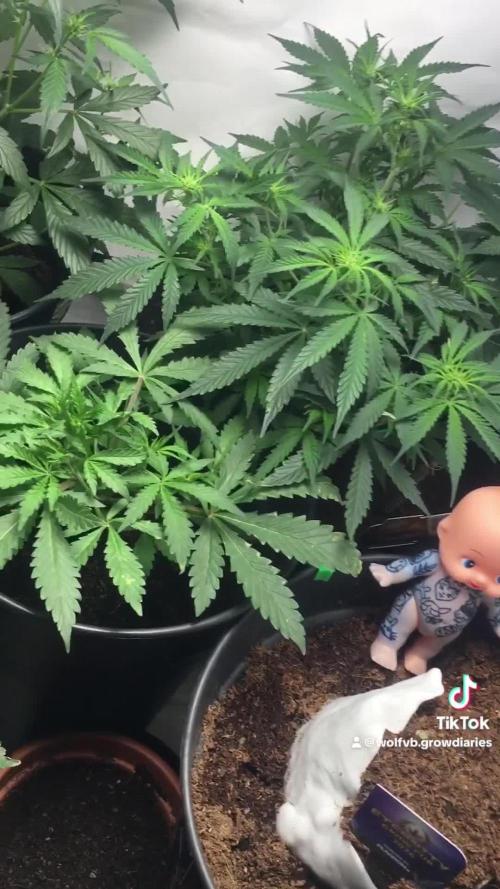
Week 5 baby! What a smooth ride this has been - these ladies are absolutely flying through veg. Gave them some cooler water today and they're vibing with it 💚 Still keeping nutrients minimal, just 1-2x weekly when they ask for it. Less is more with these girls!


Likes
6
Share


@MG2009
Follow
11/20/2020
An early harvest! Will update next week after dry is done
Currently wet weight is 110 grams.
(final weight) and smell report then cure and final report after curing. 4-5 weeks?
11/24/2020
2nd Day of drying she dropped to 60.9 grams, day 4 I de bud the stems and jar her up total weight dry (bud only) 21.6 grams, under taste I'm going by smelling will test a popcorn bud and update but not expecting much this early in dry/cure.
Ps.
I looked under my scope and still got about 20-30% clear trichomes. So not sure how strong she will be but smells really good!.
Three noses used for smells
Nose#1
Fruity candy
Nose#2
Sweet fruity mint
Nose#3
Candy catpiss old school.
12/18/2020
I am very pleased with the results she is sweet smooth slightly citrus and evergreen
No cough on this girl, high last a good..............................................
4 hours long, no extreme thirst or reddining of eyes overall quite happy with her and looking forward to hunt the rest of these seeds!
Taste, Smell, effect. Seeking a sweet vanilla cherry tastes in next run.
Likes
1
Share


Processing
Likes
9
Share


@Aero_Sativo
Follow
2da semana en el que el indoor a tenido que estar apagado por motivo de fuerza mayor
estando un total de 11 dias apagado solo con un ventilador funcionando al minimo.
El día de ayer se volvio a prender y espero nunca mas volver a apagar el indoor en mi vida...
Al volver a prener el foco me di cuenta que un esque de Warlock tenia las hojas muy quemadas y con un aspecto que deja bastante que decear.
ojala en el trascurso de los dias se vulva a recuperar.


Likes
8
Share


@Elpicor
Follow
Cosa dire di questo strain ...... una pianta di colore rosa mai visto 😇 vedi il mio ultimo diario... tutto bene fin'ora...


Processing
Likes
43
Share


@Jack_Greenstalk
Follow
added trellis netting this week to start SCROG. two layers close to eachother so I don't have to wait for entire square of growth to tuck under higher growth to keep flat even canopy. also minimizes my need for zip tie and garden ties needinf adjustment. I'm happy with veg growth thus far, and once the screen fills up with more green in a week or two these two ladies will both be ready to flip to flower. waiting on lower nodes to develop a bit more and get best use I can from a big(ish) 315 w LEC light.
the girls are getting foliar every 3 or 4 days. using heavy 16 foliar only at the moment but will follow their foliar mix as grow progresses.
smell has gotten much heavier, especially in nemo, the more blueberry pheno of the two, looking at the fan leafs I think V is more haze pheno with super thin sativa leaf structure.

Likes
49
Share


@masterofsmeagol
Follow
6/15. Glad I listened to my intuition and held off watering. IT Rained andctheb again last night. Plants seem to be doingvreal well. Slight burn on lower leaves where it was before from being in the garage and I found on spot that LOOKED like it could've been caused by a pillar but it's right on a burn. I sefoliated one leaf. This is minor stuff. Next watering I'll be adding silica. I'm not giving nutes until the plants tell the need them. The 3 gallon ones may receive nutes first as they'll run out. I'll update as I progress.
Went back over at 8:30. It's just overcast with showers. Plants seemed to like it. They all look good. Noticed a chunk out of a leaf and a POSSIBLE pillar spot. I'm going to have to get the BT out and and give the girls an application. I'm waiting until they settle in a bit more though. I need to start LST as well AND the light dep. Unfortunately "life" has made things difficult. I'll get back over there today though and I'll start the light dep. Kinda makes me wonder though. The 1pth planet I wanted to light deo is tge same size as the others in the much bigger containers. The thought came that maybe I should just hold on to them as extras in case something happens. I also am going to start silica next watering but it will be a few weeks before any nutes are given.
UPDATE: WENT BACK OVER AT FIVE AND TOOK ACSHOT TON OF PICTURES. IM TRYING TO UOLOAD NOW. THINGS ARE POPPING OFF AND IM GETTING A NICE SWEET SKUNKY ODOR. WHILE I WASCTHERE WE GOT A QUICK SHOWER. DIDNT LAST MORE THAN TEN MINUTES BUT IT RAINED HARD. I FOUND A TEMPORARY SPOT TO LIGHT DEP THE TWO PURPLE PUNCH AND THE ONE TENTH PLANET. I DONT SEE ANY LIGHT LEALS AND ITS SURE AS HELL DARKER THAN IT IS AT NIGHT. I'LL SEE HOW IT GOES LEQVING THE COVER ON ALL NIGHT. IF IT DOESNT WORK I MAY JEED TO ADD A FAN OR CHANCECTHE SPACE. I ALMOST DIDNT WANT TO DO THIS AS THE 10TH PLANET IS KEEPING PACE WITH ITS SISTERS, DESPITE THE SMALLER POT. OH WELL I WANT TO GIVE IT A SHOT AND I DONT WANT MY CAGE OVER CROWDED. I'M LOOKONG TO DO A 6:30 TO 6:30 SCHEDULE.
6/16 First night of light dep for the three little ones. I won't be able to call them that soon. I'm currently trying to upload a video. My grow buddy mentioned the droopiness of a couple of my plants in this video and how I hadn't been watering. This kinda scared me so I ran over and checked the too few inches on the two that had a little droop and came out dry. I had some water already phed ready to go (I'm hoping that the ph doesn't change if it's stored a day or two) and used the gallon to moisten the dry topsoil. Looking back over my diary we have had nothing but rain. I then tried the "lift the pot method" and came to the conclusion that these bags were indeed still holding moisture. I assumed they would be considering the thunderstorms we've had. I held off on fullt watering because the weather said the next dry day is going to be Monday. Today is Friday so thats two solid days of rain. Three if you count today through the night. I concentrated my watering of the one gallon on the couple plants that appeared to droop. If it doesn't rain like they say it will I will need to water. I need to set up a decent watering schedule but I need it to hold off raining long enough to do so.
UPDATE: I WENT BACK OVER AND PUT THE 3 GALS IN FOR BED AND CHECKED OUT THE REST OF THE GARDEN. I WATERED THE 3 GAL GIRLS A LITTLE MORE SINCE THEY WONT BE OUTSIDE. THE BIT OF WATER I GAVE SEEMED TO HELP LIFT SOME OF THE GIRLS. AT LEAST I THINK IT DID. THE RAIN SHOULDVE COME ALREADY. I WOULDVE WATERED MORE HAD THE BAGS NOT BEEN SO HEAVY.
6/17 Rained all night which is good. Brought the three transplants out but left them under the overhang so they. Dont get soaked. So far light depoing is going good. Well its only been two nights but we'll see. I'll update as I go. Not feeling well today. Went back over and checked on the plants and did a video. Probably won't get uploaded until tomorrow. I'm giving it a shot. It's raining in good shape. Plants looked fine when I was there. I need to get my supports and my trellis in place. Video won't upload. No suprise. I'll get it tomorrow.
6/18 Uploaded videos if they fuck up from me editing I'm gonna be pissed. Anyway it's still pouring with high winds. I added a couple supports where it looked like it needed it. I need to put my trellis up. I've been able to keep up with the light dep and those plants haven't been used and abused. They stay in the building facing the sun when the weather is this bad. I think they're looking great. I may start a new diary just for them. Sun came out around four. Trying to upload a couple videos but doesn't look like it's going to happen. Tucked the three little ones in at six. It had stopped raining and the wind died down some. If adverse conditions create good plants then I'm on the way to a great harvest. Minor bleaching and burns on a few lower fan leaves and some wrinkling on some from wind burn other than that plants seem to be acclimated. Did a video but will have to wait until tomorrow to upload
6/19 It's not raining! We got four inches this past storm lol. Having the bags raised on pollens I believe has greatly helped. As did the high winds that help dry the soil in the bag. Had to add a few temporary supports. Light dep is going good. Adjusted amd found a better spot. I'm considering getting "pool noodles" or some other thing like a Hulu hoops or pvc pipe and making either a frame on the roof for the entire cage or on top of each individual plants posts so I could roll clear plastic over it when it rains. I'm thinking about later on in the fall when this could really help. I found a roll of plastic. Also thought about putting that up on the back wall but I didn't. What I'm doing right now is working. I just need to keep up with it. I also need a solid watering schedule to stick too. It's hard when each plants needs are different. Oh well. I'm just happy to be growing again. I pray to the cannabis gods and the Lord above himself that I'm not plagued with the problems of last year.
6/20. I'm sick as fuck but I got the little girls out in the sun. Light dep is going good. Plants look great. I'll update when I feel better and if I do anything. Still feel like shit. Luckily I looked up just in time to get to the grow and put the little ones to bed. They were thirsty (especially the bushy 10th planet so I gave them about 3/4 of a gallon of water. Got lots of run off from 10th planet. Didn't notice as much from the others but I was hurrying. I'll upload later. Still sick.
6/21 Plants seem to be doing great. I removed some lower growth on a few just to see how they respond. I'm going to do some defoliation down low and I want to see how the plants respond. I'm planning my first full watering Thursday as we have a real good stretch of weather after that. Grow bags are still heavy as hell so they have sufficient water. I'll be adding silica nextcl watering. Not time for nutes but I think it would be okay to start the silica and in another week I might start small doses of nutes. The light dep on the little girls is go8ng great! It's cool I'll get to sample some of these strains before fall. I'll update after I do something. Tucked the girls in at 6. I might need to think about transplanting that 10th planet in the 3 gallon. I watered until runoff yesterday and it's light as hell today. Plus I fimked it and it's bushy as hell. I've Bern turning it si it gets all angles of the sun. I have a bag of 707 left and a 5 gallon bucket with holes drilled all over it like an air pot and a ten gallon grow bag. This will take some thought. Hot af today. I wad able to lift the grow bags so I decided tomorrow will be the girls first real watering. I think I'll be adding silica and possibly kelp me kelp you due to the heat stress I've been noticing. Nothing bad just a few tacoed leaves. I've had several people that have seen my grow in person tell me that this is by far the healthiest (not biggest I've had bigger) but by farcthe healthies5 crop I've grown. They believe I'll have my best year ever this year. I hope they are right. Vid won't be uploaded until tomorrow.
6/22 WATERED TODAY. I'm still a little gun shy with watering. That fusarium last year pretty much traumatized me. I left the container plants alone. I gave them a little water but not enough to do much. I used a pump sprayer on a mist setting and went one by one and back around gently watering the entire medium. This took forever and I'll be finding a different way to water. I hope this was enough water. I'll check later on and if they look like they want more I give it to them. I started LST on the light dep 10th planet and tucked some branches of a another under the tomato cage. I had missed that earlier. I also went around and cleaned up the bottoms on most. Getting rid of things that will amount to nothing. I noticed what looked like thrip damage on ONE leaf on ONE plant. I also saw a chunk missing from a grasshopper bite and a finger of a fan leaf petiol was broken so I'm going to need to get my ipm up and running. I'm unsure whether I'll be using chemicals or predators. Probably BT and spinosad. That's what I've had the best luck with. I also noticed bottom leaves dying off on the bottom of a couple plants. It was where the burns were though so I'm almost 100% its just related to the light burns they got when i first put them up. I'll be updating the diary as I do more stuff.


Likes
37
Share

@masterofsmeagol
Follow
5/25 watered with pH about six. I finished trellising everything. One end left tacked so I can slide the girls in. Wife had medical emergency or they would be in the ground right now. Oh well I imagine a day more won't hurt but I'm getting excited. Spot treated WPM on a GDP. I have a feeling I'm going to need to be on point with my IPM this year.
5/26 I finally got the girls in their homes! It's a tight fit. Only seven right now. I'm considering using axium to help with any transplant shock. They were already severely rootbound in 2 gal when I got them and some were VERY rootbound in the 3 gal. They were transplanted using mykos and info a 50 gal pot and grow bags 30 and 20 gals. I may use kangaroos or something tomorrow. A few were rough transplants since they were so big and rootbound. I'm hoping everything works out. I'll try to keep this updated. I also put most of them in backwards lol. I'm sure it doesn't matter but I turned the few I was able too.
5/27 Plants look great. I was a little worried about transplant shock but damn they seem fine. Rained lightly last night.
5/31 I see pH fluctuation on some leaves. Soil wasn't mixed enough on a couple plants. pH jumped to 8 on one
I hope the rain lowered it. They survived a couple stops and still doing good. No nutes yet.


Likes
Comments
Share


@MrStarOn3
Follow
At the end of week 3 I topped one of the strawberry cough they are all looking good and starting to veg I’m all caught up with the grow diary’s and will add at the end of every week. I’m in Australia and did start a little late into the season but hope to get a decent grow in they will be at my brothers once transplanted and he has a few aswel that I will add into the grow log nothing but sun and water only use a little thrive that’s from Bunnings that I get from my pops shed. They will be in a nicer cleaner soil when transplanted into veggie beds and will have chicken poo as a nutrient source first time ever using chicken poo so see how it goes. Will keep the grow log updated and hopefully everything goes all well for the travel and transplant for the plants in the next few days
Likes
9
Share

@RatmanJR
Follow
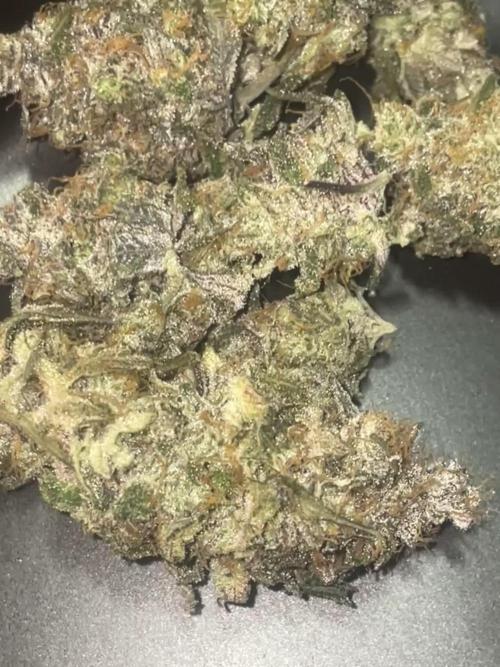
January second. These were harvested December 7th and began curing December 14th. They have been curing for around 2 and a half weeks now. I couldn’t be happier with the yield and with the grow.
Im currently keep both clones but I know number two is my winner, insane high. Will talk about it more in smoke report(coming in a week, not letting me add one now) I don’t remember the exact gram breakdown but both of them came out to just under 200 grams. Really happy with the results
I did overdue slightly so fore the first 4 days in grove bags I also included integra boost packets to help things out
Thank you everyone for following along and god bless!

Processing
Likes
13
Share


@kevgrow
Follow
Hey Friends, end of week 8 from seed :)
Many new things have occurred this week
Plant 1 is beginning to mature, its not growing in height as much as before but now its getting thicker and looking stronger.
I am slowing increasing the amount of nutrition, I don't want to burn them at this stage.
I noticed some of the leaf stems were turning red, so I decreased the light and its turning back to green.
Did some defoliation this week to give more room to the smaller leaves.
Plant was getting taller and was too close to the grow Light so I installed some netting inside the tent and it helped control the height for now, if it gets taller ill purchase a bigger grow tent 😩
Looking forward in seeing some bud formation in week 9, will keep you guys posted.
Thanks for all the support, see you guys next week!
#FirstGrow #Plant#1 #MysteryStrain
Likes
15
Share


@MaxMo8
Follow
Today the plant was given ice for shock because I will harvest in 48 hours.

Likes
9
Share


@newenglandgrowers
Follow
Watered for the last time on Thursday going to have them dry out in their pots for 3 days and them chop them down I'm thinking probably on Sunday. Also have been using ice and cold water to flush pretty happy with the colors and trichome production. After completing week 14 successfully the plants are going to be harvested tomorrow Sunday the 23rd, the first day of Week 15/Week 10 of flower. This grow has been really awesome and a great first experience at growing, I'm so far pleased with how the buds have turned out, they are very dense and the smell is a strong berry vanilla fragrance that smells delicious. Buds have a decent amount of trichomes on them they foxtailed a little bit due to higher temps in flower but so far so good onto drying and curing now cross your fingers that goes well I do wish I was able to bring out a bit more color in the buds though.

Likes
15
Share


@SouthernOnions
Follow
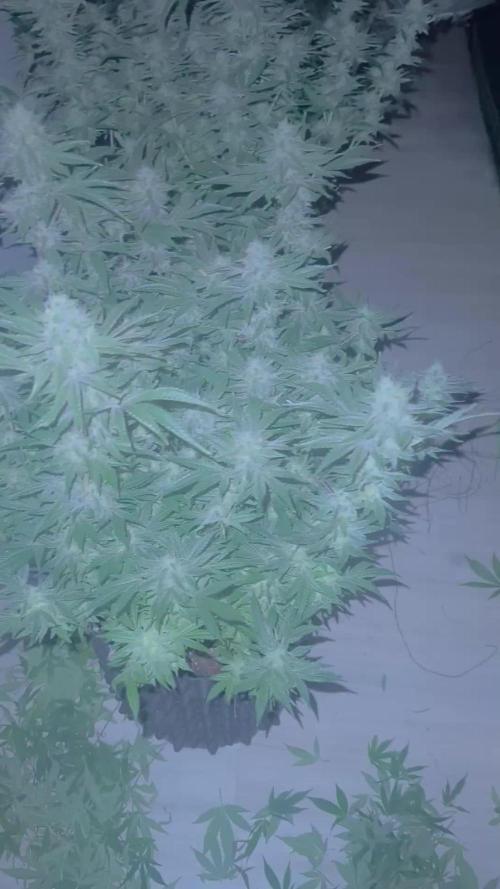
Chopped all plants down on October 18th. Will report back soon with final harvest pics and dry weight for each plant. I have multiple grows coming down around the same time and I'm still backed up with the outdoor harvest but will update with final numbers asap!



Likes
Comments
Share

@Slap22
Follow
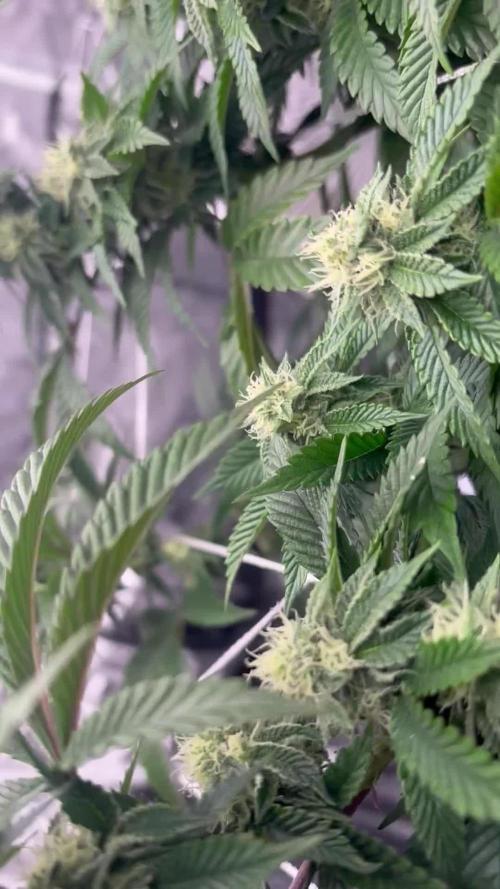
My A/C has been not really working and it’s getting in the 90s outside not sure if it’s stunting it but have been trying to keep as much airflow as possible I have a fan below and above the canopy and the inline on 6-7 with no carbon filter or ducting right on top of the tent hoping it will be enough o keep the mold away