


Likes
Comments
Share


@riddumloki
Follow
so we feed one feed and then we flushed on sept 9 and 10 cal mag to gallon
will do one more flush before sept13 dont want salt build up


Likes
34
Share


@modmyplants
Follow
Here I shortly document the making of Cannabis-infused-butter for what ever you want to cook with it.
1. Decarboxylate your weed: Grind the amount you want to use (pref 8-15 grams) spread it on a bakingsheet and bake it at 110 degrees for 40 minutes.
2. Infuse it into butter: Use 250grams butter+ 200ml water and heat it up to 70-90degrees (preferably keep it at 80degrees) add the weed and let it "simmer" for 3-4hours. Stir every 5-20minutes and keep the temperatue inbetween 70-90degrees or you destroy THC.
3. Seperate the weed from the butter: Use a kitchentowel or teafilter to seperate the butter. After let it cool down in a fridge.
4. Enjoy the cooking/baking. Use it inbetween 5days or freeze it.
Enjoy the high! its banging👌
Bubblehash-Process coming soon!


Likes
30
Share

@DogDoctorOfficial
Follow
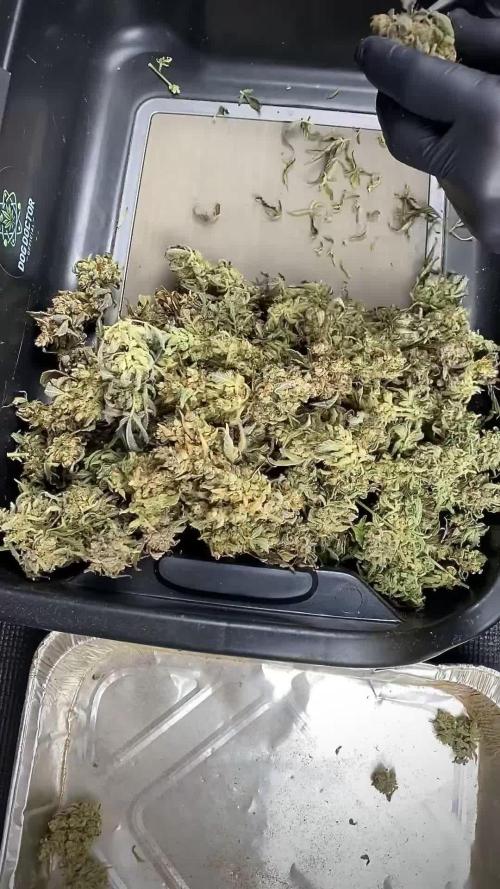
✂️🍯 Tical x Zamnesia — Nectar Drip | Drying & Trimming Report 🍯✂️
And… we are back again 😄
Yes — we are dividing the reports once more.
At this point it is probably becoming part of the diary itself, but honestly, there is simply too much happening during these runs to compress everything into one giant update without losing important moments along the way.
So thank you for the patience.
And welcome back to the next chapter of our Nectar Drip journey:
the drying,
the trimming,
the resin collecting,
the temple balls,
and the beginning of the cure.
🌱 Quick Recap
For anyone arriving only now:
This run was grown from seed under 12/12 lighting from the beginning.
No long vegetative phase.
No giant training sessions.
No massive shaping.
Just letting the genetics express themselves naturally while observing:
- structure,
- morphology,
- resin production,
- flower behavior,
- and overall cultivar personality.
Last week reflected the harvest itself:
- trichome maturity,
- fading colors,
- hanging branches,
- macro photography,
- stem structure,
- and final harvest observations.
One of the smaller plants was frozen immediately after harvest for future washing and extraction work, which we will still cover in a dedicated future update once we complete the washing process properly.
But this week?
This week belongs to the dry flowers.
And honestly…
these girls became something beautiful.
Drying Process
The flowers dried for roughly 10 days under controlled conditions:
- approximately 18–20°C
- around 60% RH
- with the first couple of days closer to 45% RH to help release initial surface moisture safely
This part matters far more than many people realize.
Drying is not simply:
“waiting until the plant becomes dry.”
It is controlled moisture migration.
The outside of the flower always dries first.
The inside stays wetter longer.
And the goal is slowing that process down enough for:
- chlorophyll breakdown,
- smoother smoke,
- terpene preservation,
- proper moisture redistribution,
- and stable curing afterward.
Dry too fast?
The outside crisps while the inside traps moisture.
Dry too slowly?
Risk increases:
- mold,
- anaerobic conditions,
- terpene degradation,
- unstable cure.
These Nectar Drip girls dried beautifully.
Dense flowers.
Excellent structure.
No rushed drying.
No hay smell.
No collapse.
Just slow clean progression.
And when the branches finally gave that satisfying “click” instead of bending…
we knew it was time 😄
✂️ Trimming Time
So:
gloves on,
trim bin ready,
studio lights running,
music playing quietly in the background,
Mr. Baggy supervising operations as always 😄
…and branch by branch, the process began.
We trimmed entirely by hand using Zamnesia curved-point scissors.
And honestly, these scissors became one of our favorite trimming tools.
The pointed curved tip allows:
- deeper precision,
- cleaner access between calyxes,
- easier sugar leaf removal,
- less accidental flower damage,
- and better control overall on dense compact flowers.
Especially important on cultivars like this one.
Because Nectar Drip became DENSE.
Not airy.
Not fluffy.
Proper compact greasy flowers.
The kind that fight back while trimming 😄
Every branch had to be broken down carefully:
- separating buds individually,
- removing excess leaf material,
- preserving flower shape,
- protecting trichome coverage,
- and trying not to spend half the trimming session glued to the scissors.
And yes…
the resin production here was honestly ridiculous.
🖤 Resin Everywhere
This cultivar is oily.
Not just frosty visually.
Oily physically.
The gloves became coated quickly.
The scissors accumulated thick dark resin constantly.
The trim bin slowly filled with golden material underneath.
And every few minutes we found ourselves scraping resin from:
- gloves,
- scissors,
- fingers,
- and tools.
That sticky dark material eventually became beautiful little temple balls.
And honestly?
The way this resin behaved says a lot about the quality of the cultivar.
Some resin stays dry and crumbly.
This one softened almost instantly with minimal heat.
Just body temperature alone was enough to:
- soften,
- bind,
- darken,
- and become workable.
Extremely greasy resin.
Extremely rich trichome expression.
The little temple balls became:
dark,
soft,
sticky,
shiny,
and incredibly aromatic.
Beautiful medicine already before even curing properly.
🏆 Final Dry Numbers
And now the final flower numbers for the dried plants:
🌱 337.3 grams dry flower
Plus:
the frozen material resting in the freezer for future washing and extraction work.
And honestly?
Very happy with these numbers.
Especially considering:
- the quality,
- density,
- resin production,
- flower structure,
- and the overall level of expression these girls delivered.
This was not “big yield but average flower.”
This was genuinely high-quality medicine.
📦 Storage & Beginning The Cure
After trimming:
the flowers were placed into glass jars for curing.
The temple balls also rest curing slowly inside glass.
And now another important phase begins:
time.
Because curing changes everything.
Terpenes settle.
Moisture equalizes.
Harshness fades.
Aromas deepen.
Smoke smooths out.
The cultivar slowly reveals its final personality.
And honestly?
This Nectar Drip already smells incredible.
Sweet.
Creamy.
Fruity.
Almonds.Dark.
Warm.
Slightly candy-like.
With this deep resinous backend that keeps evolving every day.
The room smelled unbelievable during trimming.
At some moments it genuinely felt like opening:
fruit candy,
fuel,
cream,
and warm resin all at once.
Very unique profile.
Very memorable.
📸 Documentation & Studio Sessions
Of course, we documented almost everything:
- trimming time-lapses,
- resin collection,
- temple ball formation,
- close-up flower shots,
- drying branches,
- sticky gloves,
- macro details,
- cinematic studio moments,
- and behind-the-scenes chaos 😄
Because honestly…
these moments matter too.
A grow diary becomes more than just showing finished buds after enough weeks.
It becomes documentation:
- of process,
- mistakes,
- lessons,
- atmosphere,
- obsession,
- patience,
- and passion.
And this run definitely carried all of that.
⏳ What Comes Next?
Next update will probably become the final chapter:
- curing review,
- smoke report,
- terpene evolution,
- effect profile,
- overall strain impressions,
- and our honest final thoughts about this Tical x Zamnesia collaboration after living with the medicine properly.
And honestly…
we are extremely excited for that one.
Because this cultivar already feels very special.
🙏 Final Thanks
And as always…
thank you.
To Zamnesia.
To Tical.
To Plagron.
To F.O.G.
To Lumiflora.
To the gear.
To the platform.
To the supporters.
To the silent followers.
To the OGs still here since day one.
To the curious new visitors.
To the people learning quietly in the background.
To the skeptics.
To the lovers.
To the haters too 😄
And to everybody who stopped scrolling long enough to spend even a few moments here with us.
That alone deserves gratitude.
This collaboration genuinely feels special.
And honestly…
I still feel like Nectar Drip has one more beautiful chapter left before this journey fully ends.
📡 DELETED @ 1K Please stay tuned.we never quit https://www.youtube.com/@TheDogDoctorOfficial NEW 🙏 Thank you for your patience and continued support.
FOR DISCOUNT CODES AND MORE JUST FOLLOW THE LINK https://website.beacons.ai/dogdoctorofficial
📲 Don’t forget to Subscribe and follow me on Instagram and YouTube @DogDoctorOfficial for exclusive content, real-time updates, and behind-the-scenes magic. We’ve got so much more coming, including transplanting and all the amazing techniques that go along with it. You won’t want to miss it.
GrowDiaries Journal: https://growdiaries.com/grower/dogdoctorofficial
Instagram: https://www.instagram.com/dogdoctorofficial/
YouTube: https://www.youtube.com/@dogdoctorofficial Deleted by Youtube - https://www.youtube.com/@TheDogDoctorOfficial NEW
Vimeo : https://vimeo.com/dogdoctorofficial Under construction stay tuned ⸻
Explore the Gear that Powers My Grow
If you’re curious about the tech I’m using, check out these links:
🔆 Lighting & Environmental Control
• Future of Grow — Advanced LED lighting technology
https://www.futureofgrow.com/
DISCOUNT CODE: DOG20
• Lumiflora — Under-canopy LED lighting
https://lumiflorade.com/
• TrollMaster — Environmental controllers and automation gear (past collaboration)
⸻
Genetics
• Zamnesia Seeds — Genetics used in this project
https://www.zamnesia.com/
⸻
🌱 Soil, Substrates, Boosters & Root Support
• Plagron — Substrates, bio mixes, and supportive products
https://plagron.com/en/
⸻
🎒 Storage, Curing & Preservation
• Grove Bags — Curing and storage solutions
https://grovebags.com/
⸻
📸 Photography Equipment & Tools
(Not sponsors, but part of my creative toolkit)
• Sony A6700
• Sony full-frame macro lens + few more
• Stacking photography workflow - learning
• iPhone (for behind-the-scenes shots)
We’ve got much more coming as we move through the grow cycles. Trust me, you won’t want to miss the next steps, let’s push the boundaries of indoor horticulture together!
As always, this is shared for educational purposes, aiming to spread understanding and appreciation for this plant. Let’s celebrate it responsibly and continue to learn and grow together.
With true love comes happiness. Always believe in yourself, and always do things expecting nothing and with an open heart. Be a giver, and the universe will give back in ways you could never imagine.
💚 Growers love to all 💚
📸 P.S. – The Eye Behind the Lens
All photos in this diary (for now — except for the ones showing the camera, which I took with an iPhone) are taken with a Sony A6700 paired with a Sony full-frame macro lens and a few more.
Photography is part of the story — it’s how we share the fine textures, the glow, and the quiet details that words can’t always capture.
I’ve also started experimenting with photo stacking — a technique where multiple images, each taken at a slightly different focus point, are layered together to create one perfectly sharp image from front to back.
It’s not digital enhancement or AI; it’s pure photography — a way to reveal the plant’s beauty in microscopic depth, from trichome to petal.
You’ll even see a few shots of "ghost me" capturing the shots — camera, lens, setup — because every grow deserves not just to be cultivated, but documented like art.
FOR DISCOUNT CODES AND MORE JUST FOLLOW THE LINK https://website.beacons.ai/dogdoctorofficial
NEW DISCORD - Official Server Invite Link : https://discord.gg/ksjAkA5T74
Likes
Comments
Share

@smoking_hills9
Follow
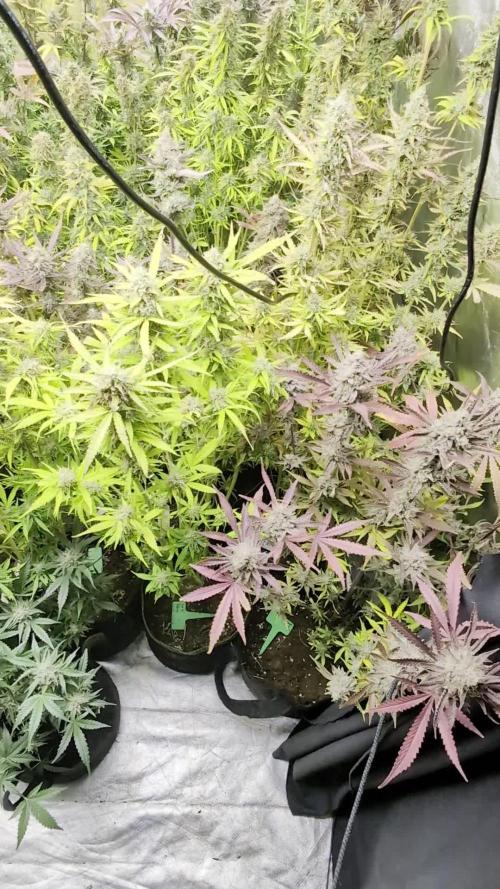
Very happy with this strain and final results. Tones of fat frosty stinky sticky buds. What else could you wish 4.

Likes
100
Share


@AsNoriu
Follow
Day 36. Still no feed....
Again, difference in size growing many autos is HUGE pain. One Northern Lights is smallest plant I ever grew, I doubt I would I achieved it with loads of LST ;))) Will try to lift that midget a bit ...
Some flower, some not, Diesels are still the only strain I would grew, but most probably not once ;)))
they look amazing !!! 10 out of 10 !
Green Crack still the obvious looser at the moment and is still mostly in veg ...
Next watering will be full of goodies for them !!!
Couple leaves off here and there, couple branches cropped or repositioned, still waiting for stretch to be over before installing some support.
Day 37. One more girl took SuperCroping like champ and at the moment has very even canopy.
All garden looks fine, hope feed won't spoil that joy ;)))
Day 40. Girls still on water, but during every two days, so it's again pain ... Whatever pot size I take - girls start to go faster, than my laziness wants :)))
Cleared bottoms of first row, next watering will clear other 5, just want to see are they ok. Some strains hates any job done to them and stops developing.... Would be stupid to slow them down in final stretch ...
Happy Growing !!!


Likes
13
Share


@Canadian
Follow
The plant seems to be doing great growing an incredible rate and speed it's in full flowering and it is showing a lot of sativa train on the Leafs. smell is incredibly powerful definitely looking forward to see this flower grow .
thank you for reading I will continue to update have a happy grow

Likes
2
Share


@fabialien
Follow
Semana sel 9 al 14 de septiembre 2024.
Vemos un desarollo bastante vigoroso en todas, esto también se puede adjudicar el hecho de la nutrición que han estádo llevando esta tanda se fem y regulares, la mandarine qué nació con apical va bastante bien.


Likes
1
Share

@PatriciaGant
Follow
Dane, We all should help one another.
Human beings are like that.
We should live by each other’s happiness - not by each other’s misery.
We don’t want to hate and despise one another, share the Joint.
And mother earth is rich and can provide for everyone.
We can Grow enough Happiness, In this paradise, there is room for everyone.
We only exist to bring joy into the world and The way of life can be free and beautiful,
but we have lost the way.
Grow High and Give the world A smile.
At the end we own nothing more then all our memories, lets make them amazing for everyone,
nothing to lose only everything to win.
for those who come after, right.
A last kiss goodby, a second one, softer and long as a sign, that you are woth it.
That Everyone worth, who loved and given.
Enought Hippie Talk, now have a nice day and an even better grow, thx for watching by.
((From Clone 🌿
week report:


Likes
7
Share


@Stickygreens420
Follow
Starting week 2, all of the plants are healthy. Added the barley straw, which is helping to keep the top of the soil moist. Also, threw a few worms into each bag and planted some white dutch clover cover crop. The Orange Bubblegum is still growing the slowest, but I'm going to ride it out. This is an auto, so it's a little concerning, but I've heard good things about Twisted Tree genetics, so I'm rolling the dice.
Watered 1 liter per pot of filtered water at 6.7 ph on 10/12/2022. Also have been slowly increasing the light intensity. Started the week at 300 PPFD and plan to be at 400 by the end of the week. The two bigger plants are just reaching their 5th node, so I started some LST on 10/16/2022. Also watered another liter per plant using ThremX-70 and Rootwise Mycrobe complete.
Avg. VPD: .75
PPFD: 400
DLI: 26

Likes
12
Share


@Siriuz
Follow
We started week. 10
Hey there guys I've been super busy
Day 64
Check video
Fed them 1670ppm
Followed by water with lil runoff
Day 65
Check video
Day 66
Outdoors for 3hrs
Rested for 6hrs no lights
Because of blackout
I know it sucks
Humidity 60%
Day 67
Humidity 45%
Got some vids and pics for you guys
She's all good
Buds fattening up
Day 68
Water them a lil bit
0.5l each
Temp 24C
RH 45%
Day 69
Outdoors for a day since we didn't have electricity from 10am til 7pm
Good thing we have sun light right?
And it's very bright but very hot as well
Temp reached 33 Celsius but we had her on sprayed mist until it dried out completely than refresh her again and so
She didn't stress at all shes good
After thar electricity came back and we turn on the setup grow lights ac and all stuff
Back to normal again
Day 70
Same stuff than 69
Nothing wrong all is good
Temp reached 33 then dropped to 24 at night time
Coming up next week last meal nutes
Likes
1
Share


@Ultraviolet_
Follow
Turned off IR @ nights
Red wigglers (Eisenia fetida) are highly beneficial. They are considered an ideal choice for "no-till" or container-based organic growing because they live in the upper layers of soil, feeding on organic mulch rather than the plant's root system. Red wigglers accelerate the breakdown of organic amendments and produce high-quality, nutrient-dense worm castings directly in the root zone. Clover is another exceptional component of an organic rhizosphere, offering a sustainable, self-sustaining alternative to synthetic nitrogen fertilizers produced via the energy-intensive Haber-Bosch process. By forming a symbiotic relationship with Rhizobia bacteria, clover converts atmospheric nitrogen N2 into ammonium NH4, providing a steady, slow-release nutrient source that enhances soil health and reduces environmental impacts. Red clover offers superior nitrogen fixation and biomass production compared to white or yellow clover, making it the premier choice for maximum soil vitality, particularly for improving soil structure and providing a high-volume nitrogen credit for subsequent crops.
If it is fully functional and efficient soil, the rhizophagy cycle is far superior long-term than any synthetic delivery when it comes to preventing deficiencies, not because it's "better," per se. The medium will require a very high CEC to make it to harvest without re-fertilization. The rhizosphere acts as a dynamic, interactive exchange where plants and soil microbes trade resources based on immediate needs. When a plant lacks a specific nutrient, it changes its physiology and releases specialized chemical cocktails—root exudates—into the surrounding soil. These exudates, which include sugars, amino acids, and organic acids, serve as a "shopping list" to attract specific microorganisms, which in turn return higher levels of desired nutrients. There is nothing in comparison to synthetic delivery, which causes plants to stop producing exudates, effectively "starving" the beneficial soil life, over time turning the soil barren and void of microbial life. Responsible use, applying the right amount at the right time, can minimize these negative effects. Relying solely on synthetic fertilizers without replenishing organic matter is what typically leads to exhausted soil. The use of synthetic fertilizers can utilize the Cation Exchange Capacity (CEC) of the soil, but without a robust rhizosphere and active microorganisms, the efficiency of this process is significantly reduced. This makes synthetic growing more difficult to prevent deficiencies overall compared to an efficient organic living soil with a robust rhizophagy cycle, as there is no "one size, fits all" when it comes to different nutrient profiles of strains/genetics, making it trickier to "guess" and prevent creeping deficiencies.
CEC does not contribute towards EC. Add more CEC using biochar, problem solved. If you keep pH between 6.3 and 6.7, hydrogen is exudated to cycle the medium's CEC for its needs. Keeping the pH between 6.3 and 6.7 creates an environment where plants release H+ to displace positively charged nutrients (like Ca2+, Mg2+, K+ held on soil particles or within artificial media this cycle through nutrients via the medium's Cation Exchange Capacity (CEC)
Microorganisms generate a stable potential of approximately 0.5 V EC. The rhizosphere creates its own food, similarly to chelation, using 1000's of varying combinations to create its own food.
Start to finish, just add water. Eventually, more materials will need to be added at the beginning of each new grow, but very attainable to go from seed to harvest without ever fertilizing, regenerative cultivation.
ATP is king above all else when it comes to biomass accumulation. Cellular root respiration and cellular respiration are essentially the same biological process, the breakdown of glucose to create usable energy (ATP) in the presence of oxygen, just taking place in different parts of the plant. Synthetic (salt-based) grows have significantly lower levels of total rhizosphere respiration, often referred to as root-zone activity, compared to organic living soil grows. While the plant roots themselves may respire in both systems, the surrounding soil ecosystem in a living soil setup is vastly more active, teeming with bacteria, fungi, and beneficial microorganisms.
2 pools of ATP, it won't double in growth buuuut, but improving root respiration by ensuring high oxygen in the soil is crucial. Good aeration ensures roots can fully utilize glucose to generate the ATP necessary for nutrient uptake, leading to healthier and more productive plants, even if growth isn't exactly doubled. The ATP created using root respiration is dedicated to rootzone growth; the ATP created using regular cellular respiration in a synthetic system would have to dedicate a lot of ATP to the roots when there is little or no root respiration. It's true that there is less of an initial ATP cost in breakdown when nutrients are already in their final form (synthetic), but you lose a solid chunk of ATP when the entire plant is reliant on cellular respiration alone; a large portion of ATP is dedicated to root zones for "forced" (active) nutrient uptake. Making it overall less efficient, even if the initial cost of breakdown is higher. If that makes sense. Oxygen is of critical importance when growing in living soil compared to synthetic methods because it supports the metabolic needs of the microbial, fungal, and insect ecosystem, rather than just the root respiration required by the plant itself. While synthetic grows can survive in lower-oxygen environments with precise mineral feeding, living soil systems rely on aerobic microbes to decompose organic matter (microbial mineralization) to create plant-available nutrients, which is an oxygen-intensive process. While a specific fair percentage is difficult to guess, my experience points to a massive, compound difference between the two methods and the amount of oxygen required. All the ATP spared is used on more biomass, not only that, but the extra root respiration can achieve a much higher CO2 compensation point naturally than you could with synthetic and atmospheric CO2 alone.
As a plant grows faster and increases in size, its demand for nutrients to support that growth increases, requiring a higher rate of nutrient uptake. As plants enter phases of rapid vegetative/floral growth, their metabolic demand for nutrients increases exponentially. Without a robust buffer zone—whether in the soil (cation exchange capacity) or in a hydroponic reservoir—deficiencies will occur rapidly because the instantaneous demand for specific nutrients can quickly exceed the rate of supply.
A growing body of evidence suggests that organic living soil provides superior long-term soil health and environmental benefits compared to synthetic fertilizers, which are often criticized for promoting a cycle of dependency and degradation. While synthetic fertilizers offer short-term convenience and high yields, they often come at the expense of long-term soil health, sustainability, and increased corporate control over growers/ farmers. Organic living soil, while slower and requiring more care to establish, creates a sustainable, resilient, and, ultimately, more fertile environment.
We don't grow; we facilitate energy conversions.
Once all water is removed, approximately 95% to 97% of a plant’s dry matter consists of carbon, oxygen, and hydrogen. These three elements form the structural backbone of all plants. Corporate interest sells you the other 3-5% NPK & all the rest in RATIOS! Why not throw the 3-5% in a pot, and focus your energy on the other 95-97%?
Indigenous Amazonians created, or at least significantly enhanced, the fertile, dark soil known as Terra Preta de Índio (Portuguese for "Indian Black Earth") by incorporating biochar and other organic materials into the soil. This anthropogenic (human-made) soil technique, which dates back roughly 2,500 to 8,000 years, allowed ancient civilizations to flourish in regions with naturally poor, acidic, and nutrient-poor tropical soils.

Likes
2
Share


@PressurexGarden
Follow
Pretty easy grow so far. Yes I water a lot but I'm also in my garden a lot so it keeps me busy. Purple stems only panic I had. I switched to ro water
Likes
33
Share


@DutchFarmer
Follow
Very nice this is my 4th run with triple and seems i have now mastered her!
With extra supplements and additives i was able to acheive this beauty!
She has very nice structure and potencty is up there!
I recommend this to anybody!!!
She smokes like 30% strain
The Teprs are out of this world 😍
The buds looks 10/10

Likes
5
Share


@Deli_Weed
Follow
Esta semana fue solamente de flush 🚿 en esta ocasión decidí usar florakleen para ver con cual obtengo mejor resultado si con este o con flawless finish, lo hice así, primero hice un lavado con pura agua con ph de 6.2 lo hice desde el ultimo día de la semana anterior, fue lavado doble, uno en cuanto se encendio la luz y otro justo antes de apagarse, luego empezando esta semana regué dos dias usando el florakleen y ph de 6.2, el tercer día no regué y al final de ese día le di corte ✂️ y la colgué, actualmente ya la tengo curando, la tuve 10 días secándose con una humedad de entre 50 y 60% para un secado lento.


