The Grow Awards 2026 🏆
Likes
Comments
Share
@DniceWJ
Follow
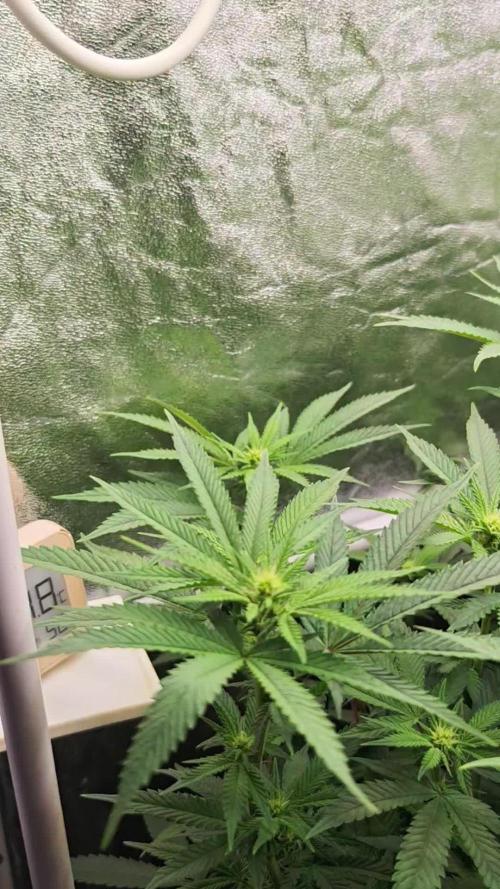
Day10 I started my first large feeding today I’m using the basic general Hydro growth chart my LSD seems to be growing very well I have no complaints today we transfer from the small pot into a 3 gallon Hydroponics tank Day 11 after the large feeding on yesterday She looks great.
Likes
9
Share
another resin monster from seedstockers, with a very special scent, full of flavors! grinded it smelled like peppermint, and vaped it has a great sweet creamy taste!
Likes
81
Share
@MrJones
Follow
MrJones Girl Scout Cookies ╰⊰🍪╰⊰´🍪⊱╮🍪╰⊰WEEKLY GOALS╰⊰🍪╰⊰´🍪⊱╮🍪╰⊰ 🌞Environment - 75/80℉ and 55% Humidity 💧 Feeding - Using "Super Coco" amended soil. compost teas, Dechlorinated H20 PH/6.5 Fish Fertilizer, about 4 ounces of water per day. 🍃Training / Finished the LST yesterday, keeping side branches pulled down, also working on the single plant that was topped to produce 8 colas. 🕷️ IPM - Will be using Green Cleaner" 1 OZ per Gallon, and CannControl from Mammoth alternating between product each month for Integrated Pest Management. 💡240W QB288 V3 LM301H 4000k 660nm Red ╰⊰🍪╰⊰´🍪⊱╮🍪╰⊰🍪╰⊰🍪╰⊰´🍪⊱╮🍪╰⊰🍪╰⊰🍪╰⊰🍪⊱╮ Rambling - Week 10 and these girls are still putting on weight, very slowly, suppose I need to learn patience and allow them mature at their own speed. ╰⊰🍪╰⊰´🍪⊱╮🍪╰⊰🍪╰⊰🍪╰⊰´🍪⊱╮🍪╰⊰🍪╰⊰🍪╰⊰🍪⊱╮ 🔶Saturday 01.23.20 / Watering Dechlorinated H20 PH to 5.8 / 6.2 🔶Sunday 01.24.21 / Watering Dechlorinated H20 PH to 5.8 / 6.2 🔶Monday 01.25.21 / Watering Dechlorinated H20 PH to 5.8 / 6.2 🔶Tuesday 01.26.21 / Watering Dechlorinated H20 PH to 5.8 / 6.2 🔶Wednesday 01.27.21 / Watering Dechlorinated H20 PH to 5.8 / 6.2 🔶Thursday 01.28.21 /Watering Dechlorinated H20 PH to 5.8 / 6.2, girls are still packing on bud weight, these will go a few more weeks. 🔶Friday 01.29.21 / Watering Dechlorinated H20 PH to 5.8 / 6.2 ╰⊰🍪╰⊰´🍪⊱╮🍪╰⊰🍪╰⊰🍪╰⊰´🍪⊱╮🍪╰⊰🍪╰⊰🍪╰⊰🍪⊱╮ SOIL MIX COCO - 70/30% Tupur Royal Gold 30 GALLON WORM CASTINGS 5 GALLON LOBSTER COMPOST 5 GALLON PERLITE 6 GALLON INSECT FRASS 2 CUP ORGANICALLY DONE GROW 5 CUPS BUILD A SOIL COCO MINERAL MIX 6 CUPS
Likes
11
Share
Week 5 - 08/27 Seedsman - Critical + 2.0 Blimburn - Apple Fritter All running smoothly, Introduced the exhale C02 bag last week thus far no issues or signs of deficiencies. Light defo - Heavy feed to start the week (Nutes) *Mid-Week Update* Week 1 -Early Flower* 08/30 Both have grown significantly since last update, Flowering has begun. Introduced Raw NPK (Potash/Phosphorus) *End of week recap* 09/02 39-40 inches in height Week 1 of flower went smoothly Introduced Raw NPK Phosphorus and Potassium
Likes
13
Share
These week we see a big bud evolution, they're strong and healthy, i can not wait to tryout more strains from SweetseedS. The p.p.m is also a little more higher than the last week because we add 2 ml. Of biobizz biobloom on our weekly feeding and all ready for the 3 week of flowers
Likes
13
Share
@NSABND
Follow
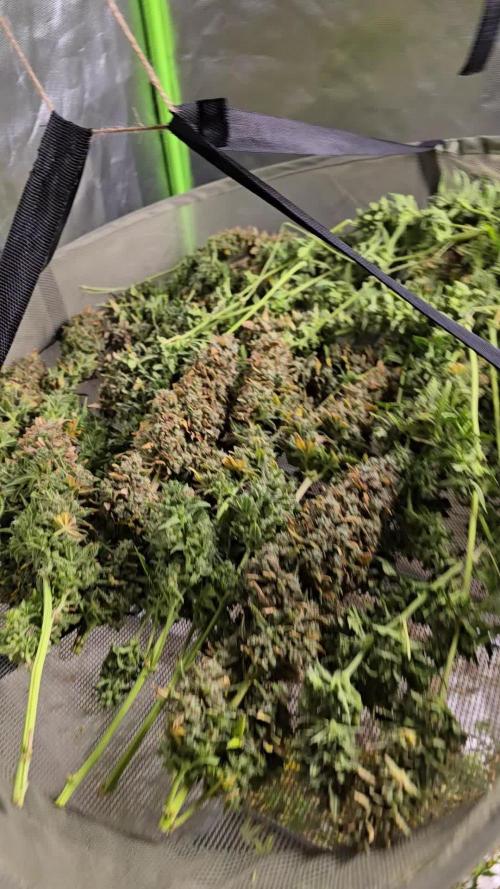
Day 66 ... the weather get´s more worst too cloudy and cold at night 😱😫😵... so i decide to harvest today 😃👍 Now "Hilde 2.0" is hanging in the dark in the basement and can dry... I'm curious to see how the harvest turns out 😃🙌🙏 Day 2 drying in the dark 😃👍
Likes
73
Share
@Andres
Follow
I mean this genetics it's excellent ... if I would grow zombie kush again ... good job ripper seed ... she fought and was very strong against the plagues after a beginning outdoors ... she fought against the white fly. worms .. red spider and other insects ... and deserves your recognition ... it will not be the most beautiful plant with its leaves impeccable ... but she is a champion ... thank you ripper seed .. .
Likes
4
Share
Likes
6
Share
@johnbut
Follow
Easy plants everything going nice, micro grow dwc, box was found on aliexpress. Small & simple, 18/6 lights, lucas formula 50% dosage going gr8! see ya next week! Gonna try some contests when it stats to bloom! Ps. 3 plants were rescued from fatal condition, 1 of em started pulling new roots. The rest 2 of bastards still fighting with hydro conditions :D we will se if they live or die
Likes
13
Share
Recette du tco pour 20 litres. (Grammes : gr) 50gr biochar 250gr zéolite 3gr granulé Micro-Organisme IT45 10gr pollen d’abeilles 10gr levure de bière 3gr endomychorize 10gr consoude 20gr vers de farine 10gr cendre coque de ricin 12gr ortie microniser 15gr Kelp 10gr spiruline 10gr de cbd living soil 20ml de miel liquide 30ml de mélasse 20ml d’acide humiques et fluvic Mettre tous les ingrédients (sauf la mélasse ,l’acide h/f et le miel) dans un filtre 400micron, le placer dans un seau avec de l’eau (10litres). Rajoutez le miel et 10ml de mélasse Y mettre un micro bulleur alimenter sur une pompe à air et faire oxygéné le mélange pendant 24h. Rajout de 10ml de mélasse après 12h le début de la mise en route de la pompe. A la fin des 24h rajoutez le restant de mélasse et d’acide h/f, mettez y en plus 10litres d’eau au mélange. Reste plus qu’à arroser! j’y ai incorporé 7litre de mélange La veille j’ai préparé le pot à l’arrosage avec 500ml d’eau et 2gr de Bacillus IT35 Amyloliquefaciens X5 Bacillus Amyloliquefaciens : rhyzosphère, probiotiques. Aspersion et arrosage. Utilisable pour toutes cultures. La bactérie Bacillus Amyloliquefaciens se fixe dans la rhizosphère en se nourrissant des exsudats racinaires. En contrepartie, elle stimule la croissance racinaire en sécrétant des métabolites de croissance et solubilise le phosphore en sécrétant des phytases (enzymes). Effet probiotique consistant en l’utilisation de micro-organismes bénéfiques pour la nutrition et la santé des plantes. La spiruline, le plus riche et le plus complet des amendements organiques La Spiruline est une algue aquatique connue comme complément alimentaire, la Spiruline est aussi un amendement organique et écologique très complet. D'une grande qualité nutritive, elle apporte à vos plantes une quantité de nutriments, dont l'azote, phosphore, potassium, minéraux, acides aminés, vitamines, chlorophylle et protéine. Le charbon végétal actif est capable d’absorber jusqu’à cinq fois son poids propre en eau ainsi que les éléments nutritifs qui s’y trouvent. Il joue ainsi le rôle de catalyseur et d'amplificateur pour les fertilisants traditionnels, qu'ils soient d'origine organique ou minérale. Ce pourquoi il est idéal pour activer un sol et pour les thés de compost oxygénés. Le charbon végétal améliore la diffusion et la disponibilité des éléments nutritifs dans le sol et offre des conditions propices au développement des micro-organismes. Le Biochar peut être introduit dans une grande variété de sols. Il est particulièrement efficace dans les sols pauvres, difficiles et acides. Pour faire agir rapidement et efficacement sa capacité d’amendement, le charbon végétal est enrichi et biologiquement activé avec des micro-organismes. Le Biochar se comporte ainsi comme un structurateur et un activateur dans le but de valoriser les sols. Composition : • Charbon végétal actif 31%
• Matière organique 33%
• Matière sèche 75%
• C/N : 17
• PH : 7,2
• Azote (N) : 2,1 % dont 1,2 % azote organique
• Phosphore (P205) : 0,74%
• Potassium (K20) : 1,18%
• Calcium (Ca) : 6,8%
• Magnésium (MgO) : 0,65% Le pollen est l'ingrédient de base de la fabrication du miel par les abeilles. Riche en vitamines et minéraux, il est qualifié « d'aliment parfait », y compris pour les plantes ! Les zéolithes sont des roches cristallines, présentant des capacités d'adsorption particulièrement importantes vis à vis des polluants que l'on rencontre dans l'eau et dans certains liquides, ainsi que dans l'air et les gaz. Elles sont extrêmement poreuses comme les charbons activés et elles peuvent être chargées électriquement pour opérer comme des échangeurs d'ions. La zéolithe est un produit naturel qui respecte notre environnement. Utilisé dans le milieu industriel depuis de longues années déjà, ce minerai aux propriétés filtrantes particulières commence à se vulgariser dans le domaine de la piscine privée, de l'aquariophilie, des bassins d'agrément, de la récupération des eaux de pluie, ou encore de la culture des bonsaïs et autres plantations diverses par exemple... 4 points techniques majeurs : - Grâce à leur propriété hydrophile, les zéolithes peuvent adsorber l'eau jusqu'à 30% de leur poids total et sans aucune variation de volume : pas de gonflement en présence d'eau ni de craquement en cas de déshydratation comme certaines argiles. Les zéolithes sont d'ailleurs de puissants agents anti-mottant (anti-agglomérant). Cette propriété est très appréciée dans le cas des terrains de golf et autres aires de jeux. - Les zéolithes ne captent pas l'eau de façon irréversible, elles se comportent comme une réserve au voisinage des racines. Celles-ci peuvent capter l'eau en fonction de leur besoin. Les zéolithes permettent ainsi de réduire les besoins d'arrosage jusqu'à 35 %. - Une zéolithe se comporte comme une "Zone de Stockage" qui retient l'azote et les éléments minéraux nutritifs au voisinage des racines et les relâche lentement en fonction des besoins de la plante. Cela se traduit par une croissance harmonieuse mais rapide du végétal. - La capacité d'adsorption et l'énorme rapport surface/volume des zéolithes, vont permettre à la fois la rétention de la solution du sol et une bonne oxygénation au voisinage du système racinaire. Les zéolithes favorisent donc l'organisation biologique des sols en contribuant au développement de la micropopulation. L'apport en nutriments (N, P, K) est réduit de 20 à 25 %. Ces derniers, adsorbés par la zéolithe, sont beaucoup moins sensibles au lessivage et à l'évaporation. Composition minéralogique : * Chabasite 70 % * Phillipsite 2 % * Feldspath 5 % * Augite 3 % * Illite - Mica 2% Analyse atomique: * Sio2 52 % * AL2o3 17 % * CaO 5,7 % * K2O 6,1 % * MgO 2 %, * Na2O 0,6 % * Fe2O3 3,6 % Amendement calcaire, dolomie et gypse avec préparation microbienne à base de Bacillus Amyloliquefaciens IT45 et Saccharomyces cerevisiae LYCC6420 Formulation : micro granulés (1 – 1,6 mm) à base de rhizobactéries favorisant la croissance des plantes qui se multiplient et colonisent rapidement la zone des racines, et de levures Saccharomyces cerevisiae souche LYCC ayant un effet probiotique. Les PGPR produisent des enzymes qui solubilisent le phosphore à partir de complexes inorganiques et organiques dans le sol et stimulent la croissance des racines efficaces augmentant ainsi la zone d'interception des éléments nutritifs. Les levures LYCC permettent une occupation de la rhizosphère par une flore bénéfique. Composition :
• Matière sèche : 96,8%
• Matière organique : 91,5%
• N total : 6,6% dont N soluble dans l'eau 0,17%
• P total : 2%
• K total : 1,7% Micro-granulés : 
• Oxyde de calcium (CaO) total : 30%
• Oxyde de magnesium (MgO) total : 7%
• Anhydride sulfurique (SO3) : 13% La levure de bière est une matière vivante qui permet un meilleur fermentation pour les thés de compost oxygénés notamment conseillé pour accompagner les croissances ou apporter un gros coup de pousse pendant la floraisons. La levure stimule la vie des sols également à l'arrosage direct en apportant tout aussi bien que dans le TCO sa population l'espèce micro-bactérienne positive pour votre sols ainsi que des oligo-éléments et diverse vitamines. Composition : • 2,8% (N) total dont 1% (Norg), • 2,3% (P205) • 1,6% (K20) • 35% de MO • C/N : 8. PH : 8,4. Sous forme de poudre mouillable. Il contient des spores du champignon mycorhizien Rhizophagus Irregularis MUCL57891 avec des levures inactivées spécifiques. 2000 spores/gramme d’endomycorhize Rhizophagus Irregularis MUCL57891 et Saccharomyces Cerevisiae LYC6420 inactivée. Se connecte efficacement au système racinaire et forme un vaste réseau souterrain de filaments, qui agissent comme des extensions pour atteindre les nutriments et l’eau au-delà de la rhizosphère Composition : • Poudre contenant 2000 spores/g. d’endomycorhizes Rhizophagus irregularis La Consoude (Symphytum Officinale) est une plante présentant de nombreuses propriétés. Particulièrement riche en Potassium (K) organique, la consoude est une alliée idéale pour les périodes de floraison. La consoude a tout pour plaire : riche en vitamine B12, elle agira également comme stimulateur racinaire, mais aussi comme biostimulant cellulaire, grâce aux alcaloïdes, aux allantoïnes et jusqu'à 30% de protéine ! 100% déjection de vers de ténébrions.
Très riche en microorganismes, le guano de vers de farine est une matière directement composté par les vers. En effet, c'est bien la digestion de matières végétales par des larves, insectes ou autres arthropodes qui valident le processus de compostage, que ce soit en zone de production de cultures d'insectes, pour le compost maison ou la dégradation de litière forestière. Les bactéries et autres champignons obtenus grâce au système digestif de nos vers, permettent la dégradation accélérée des éléments nutritifs dans vos supersoils, et les symbioses permettant l'assimilation des éléments nutritifs. Cette bio-activation intense mettra dans vos sols, à la disposition de vos plantes, un panel tellement varié de nutriments frais qu'il nous est aujourd'hui technologiquement impossible de pouvoir tous les nommer et de les compter. Le guano de vers de farine fournit une grande polyvalence. Très équilibré, il s'utilise en entretien ou en apport ciblé seul ou en complément de d'autres amendements ou fertilisants organiques. Il agit comme un puissant activateur de sol et/ou de substrat. Cendre coque de ricin NPK 0,1-18,6-16,5. 0,1% (N-Azote), 18,6% (P205-Phosphore), 16,5% (K2O-Potasse), 11,7%(Ca0), 9,1 (Mg0) - Origine : Inde ACTION SOL • rend rapidement accessible au sol Phosphore, Potasse, Magnésium et Calcium. ACTION PLANTE • Apport aux stades agronomiques propices. • Produit riche en éléments fertilisants : combinaison NPK 35%. • Régularité de l’apport, milieu et fin de floraison. . Favorise la sénescence. Analyse chimique : • NPK 0,1-18,6-16,5 • N-Azote 0.1% • P205-Phosphore 18,6% • K2O-Potasse 16,5% • CaO-Calcium 11,7% • MgO-Magnésium 9,1% Ortie bio micronisée Stimule la vie du sol et la végétation. Composition : • 2,8% (N) total dont 1% (Norg), • 2,3% (P205) • 1,6% (K20) • 35% de MO • C/N : 8. PH : 8,4 KELP poudre
ascophyllum nodosum
- amendement sol Croissance et floraison - Meilleure germination - Meilleur développement racinaire Meilleure assimilation - Résistance aux stress osmotiques - Augmente la production de chlorophylle = plantes plus vertes = lumière mieux captée - Lutte contre le stress osmotique - Développement des Micro-Organismes dans le sol – Riche en vitamines, fer, iode, oligo-éléments, hormones de croissance auxines et cytokinines - Idéal en épandage et pour les thés de compost oxygénés. Important : notre Kelp est un goémon noir mais il n'est pas le varech bien moins fertile de la même famille qui est l'algue qui pullule et pollue la Bretagne, notre algue pousse uniquement à plus de 50 mètres de fond dans les grands courants froids au large de la Norvège.
Likes
35
Share
Cruising right along. I bent over the stalk and had to take a couple of the massive leaves off and it’s back up to 12”. I love my new system and the easy maintenance makes it even better.
Processing
Likes
35
Share
The stretch is amazing! This plant is a real sky king! Buds are really stacking well on most of the branches. A major recovery from the massive defoliation from last week! Internodes are Sativa like. Branchy. BHB 1 is a monster! Around 19 viable bud sites. She's taaall. Lollipopped the lower quadrant for airflow and to redirect the growth where it is needed. BHB 2 is the shorter, slightly younger plant. Shorter and has about 1-12 bud sites. Five branches are taller than the rest (This is a similar trend in #1). The buds are looking healthy. I do get the occasional burnt leaf from my heater at night. Another week of stretching and another big defoliation and that problem should have sorted itself out. Just found out my res temp is at 62°F. I've started the circulation fan in my insulated box in sync with my exit fan. When it gets too warm, it'll start not only my exit fan, but also the box fan. Should raise the temp gradually back up to 65°. Where I like it. Still, no one has complained. Growth was/is still vigorous and healthy! Keeping the PPMs at around 800-900. Going to do a straight water flush for 24 hours, then start again at 500 PPMs or so. In soil I've always done periodic flushes throughout the cycle of the plant. Usually twice in veg. Once at around 6 weeks and another at transition. The third is at week four of flower and the last is the obligatory final flush. 24-48 hours after the flushes, there is a strong and vigorous spurt from the plant. three days later 'in soil' I go back to nutrients. DWC requires much less time to do the same thing, so 24 hours, it is! I've done two flushes so far and the experience in DWC is the same. Just faster. I highly recommend trying it if you haven't already. Although the root rot is essentially gone, I continue to brew my microbe tea using Advanced Nutrients Tarantula. I add a litre every forty eight hours to each plants res. This is just prevention at this point. There is so much peat moss and soil left in the root ball when transplanted from their soil, it just seems prudent. Future grows will be done 'sterile. With no organic material or biosphere (microbes)... unless we run into problems again. With the res temps so low, I don't think it'll be an issue. Blueberry Headband (2) from Humboldt Seeds. https://www.humboldtseeds.net/en/blueberry-headband/ Lighting https://www.horticulturelightinggroup.ca/products/260w-qb-v2-led-kit DWC Nutients https://generalhydroponics.com/floraseries FloraGro 5ml/gal FloraBloom 10ml/gal FloraMicro 7.5ml/gal Cal Mag 5ml/gal https://generalhydroponics.com/calimagic Epsom salts Brown Slime Root Rot Organic Microbe Tea 5 ml (1 tsp) organic sulphur free molasses 5 ml Alaskan Organic grow fertilizer (or something comparable) 5 ml Alaskan bloom fertilizer (or something comparable) 5 ml Seaweed or kelp fertilizer 2-4 ml Advanced Nutrients Tarantula
Likes
27
Share
@Pennello
Follow
Hi guys, At the end of the story, I am very happy with the whole cycle and finally the outcome, since I almost killed everything in there 😂 The Z&Z is a well balanced 60% - 40% Indica - Sativa dominan strain with a short flowering period. I did have problems throughout the cycle overfertilizing the plant. This is on of the strain that did notice more my mistake, can be clearly seen on the final product. Iinfact, a good part of the flowers, went for bubble hash. I topped them, and then practiced LST training to help them growing wider. Probably If I wouldnt have messed up with the ferilizer I would have had a much better final product, this time, talking about quantity and quality. The whole plants were dried for 18 days after which they were finished in jars for another 6 weeks, if I dont fell sooner. Really looking forward to grow this strain again Indoor, I'am amazed by the terpene profile and the amount of resin they've produced, even under my multiple attempt to screw em!! STRONG GENETIC! I would like to thank Grow Diaries for this amazingly-organized community they have created, where we all can learn a lot, and share something we really love. Thanks to everyone who stopped by and looked at the diary, squeezed the like button or comment the diary. 13/12 I'VE MADE MY FIRST RUN OF BUBBLE HASH! Very very happy with the end result, did not weight anything yet because is still wet big time, I lightly squeezed it a bit, before let it drying on parchment on a cardboard. The smell it's just absolutely crazy. I can smell strong citrus notes in the 120µm but the 90µm and 73µm explodes with crazy-sweet note. While the 25µm (did not use the 43µm) where I did collect most of the hash, smell like good and sweet hash, nothing crazy like the previous ones but a very buttery like consistency that makes me want to eat it like this...dont ask me why...even though I know you all probably felt this way too... Anyway, the paper sheet says it all about timing, washes and µm used for the extractions, but just in case I'll explain it down here. I have done 3 wash with different timing. 1º wash: 5 min only to get the most brittle trichome heads 2º wash: 10 min stardard 3º wash: 30 min to stock up a bit 😅 I could have done an extra wash for sure and get more out, but I was running out of time so...I will update with the dry weight, it was not the only wash I've done, that were just too many grades to weight up..so I chose to do it once all dry! See you really soon with on the nex run pals!
Likes
70
Share
All feeds with nutes use either a whole ratio or combination of "Veg Mix" and "Bloom Mix"concentrates DILUTED in water until a total ppm of add in is reached using a (Total Dissolved Solids)TDS Meter measured in PPM (parts per million). The "Veg Mix" concentrate will eventually be added in smaller ratios and "Bloom Mix" concentrate what will eventually replace the "Veg Mix" concentrate entirely with the ppm and ratios listed when I feed. Veg mix recipe is on week 3. Bloom Mix recipe is on week 5. Day 49 VPD is okay now - temps at 75F RH also now at 65% with ILVent at 50% = VPD of 1.04 - ppfd also same as yesterday mostly 480 to 490 around the ring with 510 and 520 in the center Took ph readings as well - 3 readings 6.43, 6.48, and 6.37 to avg 6.426 Which is good because she's starting to show signs of stress after the topping and defoliation from a couple days ago. The leaves are starting to curl at the tips and the bronze color stripping is happening again - however this time seems to be a slower progression so Im hoping that having the correct ph this time will help while she's re-routing her resources. I 'did notice also that the growth tips seem to be growing at a slower rate than before - I think she's at her limit in colas and the roots are having to find more space to spread, may even be too big for the 5 gallon pot. I have no plans to change her out just yet, but will monitor. Soil is drier today - so I will be watering tomorrow with de-chlorinated water at 6.4ph Day 50 VPD was good at 74/64 with the tent open while I feed that I left it open for a bit and took time in feeding and cleaning - after all that still good at 74F/61%RH/50%ILV ppfd was checked after water and setting back - same as yesterday as most of the newest growth is still coming from the new colas - most seem to be adjusting 1 at a time in each split but both are showing growth now on all cuts. Started feed by making new ph buffer solutions, calibrating/testing both meters. The have about a .15 variance between the two. Checked weight and made 1.5 gallons of feed. started at 228ppm added 450ppm veg and 150ppm bloom for a total of 833ppm feed/epsom salt - splashed h2o2 and ph'd to about 6.4- I fed via watering can and spray and fed the whole amount slowly since I was feeding until bottom drip and she took it all before starting to bottom drip. Afterwords I let her drain (about a quart came out) and checked ppm from runoff at 2500 (telling me she's okay but isnt eating as much as before her topping yet) ph is a mystery - I show 3 readings from top level of 6.62, 6.57, and 6.57 for an avg 6.586 but 2 separate readings from 2 meters (4 readings total) on the bottom runoff showed 5.3 and 5.6 then confirmed later. I expected a variance since the wood ash probably stuck to the top side of the soil - but I didnt expect that much of a difference. I will monitor but honestly dont know what I should do, if anything other than watch. made a video of the fan movements and runoff drip Day 51 What I am calling "stress burn" is progressing as expected. I am monitoring the ph from the top as I did before, but again, not much I can do other than over water, so I'll just watch for now and compare rate of spread until she fixes her resource pathways. It seemed to take about a week to clear up after the ash treatment last time, so I am on day 3 of 7 for now with no treatment. Looking for a spurt of new growth to show and then I'll know she's better. Adjusted the lights to accommodate a week 6 level of 500 to 600 ppfd - that means I can raise the lights to the top of the tent and increase power. So now set at 3 tick up and 37 inches from the soil or 26" from the plant top. Now her ppfd reads about 540 on both of the center colas and 500 to 510 on the surrounding ring. Adjusting lights meant I had to adjust the fans up to medium power and re-directed them to blow at the edges of the pot; made a video. VPD is steady, but still warmer than typical (only by a couple degrees nothing too much) 76F/61%RH/50%ILV for 1.15 kpa on room VPD Day 52 VPD is higher now that I have the lights to the top of my tent and the fans on the lights blowing down at the pot. I moved the IL Vent to the top sucking out with the motor and vent outside the tent now. I also opened two lower air holes with my heater set for fan on the opposite side of the tent than the vent. Currently, I am at a max of 1.2 room VPD and ranging down to 1.0 so I'll take it until it does something else. 74F/65% RH/75%ILV - I will monitor to ensure it's stable. ppfd is same as yesterday as there's little growth still. Spots are still progressing on the oldest leaves at the same rate as before - however the newest leaves are not showing signs yet, so I will continue to monitor. Day 53 ppfd was a little changed today, showing that there's growth coming back now. lowest on outer ring was 500 with most at 520 and 530 highest, center colas were tested at 540 and 560ppfd. VPD was stable as I watched it most of the day since I made changes yesterday. Temps were 74 to 76 and RH was 61% to 68%. ILV was set to 33% with the bottom heater on fan to draw in air. lockout continues on the oldest fan leaves at the last top nodes. New growth is already marked in a couple of spots. I have about 6 gallons of tap water burning off chlorine now and will use about 2 gallons to flush at 8ph. I plan to dunk this weekend with feed so this will allow time to dry out and hopefully reset the ph and lower my ppm readings at the lower part of the pot before then. Day 54 Took Control pics measured VPD and ppfd Lights are at the top of the tent and second tick from highest power level. Lights to soil is 37 inches and lights to plant is 12 inches shorter so 25 inches leaves to light. currently ranging 530 to 550 around the ring and 575/580 ppfd at center (after feed and replaced). Moving the lights (day 51) made the tent hotter so I changed my ILVent to suck out at the top and fresh air in at the bottom - I have been fighting to keep temps under 78 managed to hit 74 to 75 with the heater being set just to fan for the bottom air vents- I did also raise humidity to a setting of 65% a day before moving the lights, so Im hitting 61 to 68% between power cycles on the humidifier. Overall Tent VPD is 1.0 to 1.2 as max. Took controls for feed. Weight 16lbs 11oz. tested and calibrated 2 meters and took 4 ph readings of 6.55, 6.77, 6.53, 6.85 to avg 6.675. from top of soil (last runoff measured 5.6 and 5.3 on two meters) prepared 2 gallons of feed at 500 ppm over tap. (burned chlorine off overnight) starting ppm was 217 - added 75/25 veg/bloom ratio. ph balanced to 7.8 and 7.63 on separate meters (rinsed and retested to be sure got 7.79 and 7.63 again) I used 4 knitting needles in the soil about 3 inches from the plant center. Poured feed water over the needles until it pooled slightly on top of the soil, I then pulled the needle out a little to allow the water to drain into the holes better. I did this in 8 different spots. As soon as she started dripping water from the bottom I poured a little on the leaves and then moved the plant to another drip pan to finish pouring the rest over the top of the soil without dripping any over the sides. Took videos of the drip and waited 10 min before putting her on another clean drip pan and back in the tent. Runoff from second drip pan was measured twice at 5.8ph and 2410 ppm - and first pan 5.85 and 2670ppm (expected higher ppm since I moved perlite on the bottom with the needles) Defoliated the oldest leaves before lights out. Day 55 She mostly looks like she appreciated the clippings and ph balance from yesterday - slower progression of the lockout issue and largest new growth since topping day. So speaking of new growth, I plan to use LST in the next few days to set these colas in what will hopefully be their last bind around the ring. VPD is steady at 75F to 77F and RH is between 63 and 68%. My ILV have been set to 33% and the lower fan blowing rather than heat. top soil ph was measured with 3 readings, on a tested and calibrated meter. 6.47, 6.7, 7.12 to avg 6.763 (kinda wild in those readings so I double checked them all twice and got the same in each hole)
Likes
7
Share
Weeks 15 - It’s Ready - The 1st Gorilla Glue Is Ready To Be Havrest, I Gave It 3 Weeks Of Flushing And The Trichomes Of The Top Heads Are Most Cloudy With A Few Clear And A Little Amber Trichomes And The Bottom Buds Are Mostly Cloudy With A Few Clear And The Sceny Is Still At It’s Peak But You could Tell It Was About To Head Over The Morning And Start To Take A Downright Spiral I Will Be Hanging It To Dry For 7-9 Days At A Temperature Of 70 Degrees and 60% Humidity. The Slower It Dries The Better.
Likes
14
Share
Привет садоводы Дело приближается к концу я уже поливаю свой цветок простой водой кажется не плохой получился куст выглядит аппетитно
Likes
38
Share
She was eager to grow from the start. I didn’t think she was going to be a tall plant, she had a massive stretch. Next time I would like to grow her out in a larger pot and have her directly under the light by herself to get the most out of this strain. She’s a beauty.
Likes
45
Share
(CHOPPED AT DAY 100 ) great strain - long branching - strong lemon pledge smell - gigantic buds - pest resistant this is the only pheno i grew , but i would definatelly try Lemon-Ak again
Likes
2
Share
Wow! 303 grams dry weight off these two girls, thanks to a higher feeding each week. Absolutely blown away by how much more weight, size of the buds and the insane stickiness of the buds! Extremely happy even though this strain was the most difficult I've ever grown.