
Processing
Likes
Comments
Share
@
Follow
Likes
4
Share
La Persian est au milieu de la box , très vigoureuse, j’en attend beaucoup de elle
Likes
12
Share
Hallo zusammen 🤙. Sie wächst sehr schön und macht keine Probleme.
Likes
25
Share
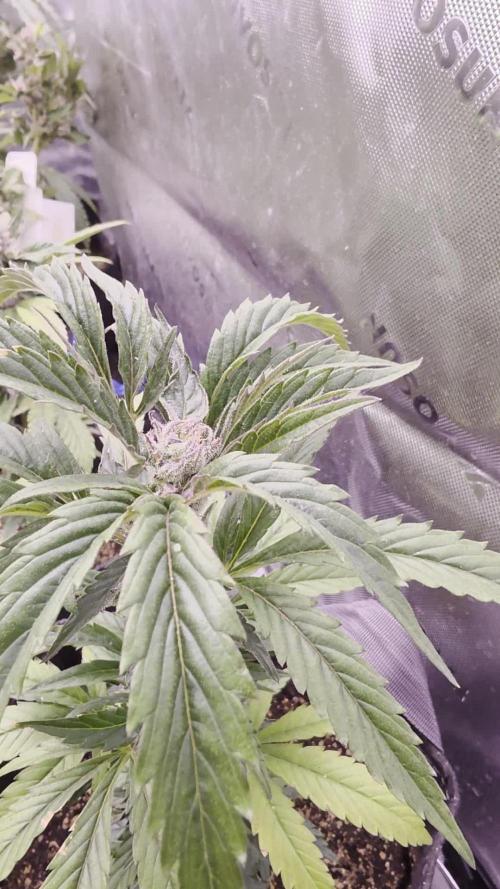
ANTHOCYANIN production is primarily controlled by the Cryptochrome (CR1) Photoreceptor ( !! UV and Blue Spectrums are primary drivers in the production of the pigment that replaces chlorophyll, isn't that awesome! 1. Diverse photoreceptors in plants Many civilizations, including the sun god of ancient Egypt, thought that the blessings of sunlight were the source of life. In fact, the survival of all life, including humans, is supported by the photosynthesis of plants that capture solar energy. Plants that perform photosynthesis have no means of transportation except for some algae. Therefore, it is necessary to monitor various changes in the external environment and respond appropriately to the place to survive. Among various environmental information, light is especially important information for plants that perform photosynthesis. In the process of evolution, plants acquired phytochrome, which mainly receives light in the red light region, and multiple blue light receptors, including his hytropin and phototropin, in order to sense the light environment. .. In addition to these, an ultraviolet light receptor named UVR8 was recently discovered. The latest image of the molecular structure and function of these various plant photoreceptors (Fig. 1), focusing on phytochrome and phototropin. Figure 1 Ultraviolet-visible absorption spectra of phytochrome, cryptochrome, phototropin, and UVR8. The dashed line represents each bioactive absorption spectrum. 2. Phytochrome; red-far red photoreversible molecular switch What is phytochrome? Phytochrome is a photochromic photoreceptor, and has two absorption types, a red light absorption type Pr (absorption maximum wavelength of about 665 nm) and a far-red light absorption type Pfr (730 nm). Reversible light conversion between the two by red light and far-red light, respectively(Fig. 1A, solid line and broken line). In general, Pfr is the active form that causes a physiological response. With some exceptions, phytochrome can be said to function as a photoreversible molecular switch. The background of the discovery is as follows. There are some types of plants that require light for germination (light seed germination). From that study, it was found that germination was induced by red light, the effect was inhibited by subsequent far-red light irradiation, and this could be repeated, and the existence of photoreceptors that reversibly photoconvert was predicted. In 1959, its existence was confirmed by the absorption spectrum measurement of the yellow sprout tissue, and it was named phytochrome. Why does the plant have a sensor to distinguish between such red light and far-red light? There is no big difference between the red and far-red light regions in the open-field spectrum of sunlight, but the proportion of red light is greatly reduced due to the absorption of chloroplasts in the shade of plants. Similar changes in light quality occur in the evening sunlight. Plants perceive this difference in light quality as the ratio of Pr and Pfr, recognize the light environment, and respond to it. Subsequent studies have revealed that it is responsible for various photomorphogenic reactions such as photoperiodic flowering induction, shade repellent, and deyellowing (greening). Furthermore, with the introduction of the model plant Arabidopsis thaliana (At) and the development of molecular biological analysis methods, research has progressed dramatically, and his five types of phytochromes (phyA-E) are present in Arabidopsis thaliana. all right. With the progress of the genome project, Fi’s tochrome-like photoreceptors were found in cyanobacteria, a photosynthetic prokaryotes other than plants. Furthermore, in non-photosynthetic bacteria, a homologue molecule called bacteriophytochrome photoreceptor (BphP) was found in Pseudomonas aeruginosa (Pa) and radiation-resistant bacteria (Deinococcus radiodurans, Dr). Domain structure of phytochrome molecule Phytochrome molecule can be roughly divided into N-terminal side and C-terminal side region. PAS (Per / Arndt / Sim: blue), GAF (cGMP phosphodiesterase / adenylyl cyclase / FhlA: green), PHY (phyto-chrome: purple) 3 in the N-terminal region of plant phytochrome (Fig. 2A) There are two domains and an N-terminal extension region (NTE: dark blue), and phytochromobilin (PΦB), which is one of the ring-opening tetrapyrroles, is thioether-bonded to the system stored in GAF as a chromophore. ing. PAS is a domain involved in the interaction between signal transduction-related proteins, and PHY is a phytochrome-specific domain. There are two PASs and her histidine kinase-related (HKR) domain (red) in the C-terminal region, but the histidine essential for kinase activity is not conserved. 3. Phototropin; photosynthetic efficiency optimized blue light receptor What is phototropin? Charles Darwin, who is famous for his theory of evolution, wrote in his book “The power of move-ment in plants” published in 1882 that plants bend toward blue light. Approximately 100 years later, the protein nph1 (nonphoto-tropic hypocotyl 1) encoded by one of the causative genes of Arabidopsis mutants causing phototropic abnormalities was identified as a blue photoreceptor. Later, another isotype npl1 was found and renamed phototropin 1 (phot1) and 2 (phot2), respectively. In addition to phototropism, phototropin is damaged by chloroplast photolocalization (chloroplasts move through the epidermal cells of the leaves and gather on the cell surface under appropriate light intensity for photosynthesis. As a photoreceptor for reactions such as escaping to the side of cells under dangerous strong light) and stomata (reactions that open stomata to optimize the uptake of carbon dioxide, which is the rate-determining process of photosynthetic reactions). It became clear that it worked. In this way, phototropin can be said to be a blue light receptor responsible for optimizing photosynthetic efficiency. Domain structure and LOV photoreaction of phototropin molecule Phototropin molecule has two photoreceptive domains (LOV1 and LOV2) called LOV (Light-Oxygen-Voltage sensing) on the N-terminal side, and serine / on the C-terminal side. It is a protein kinase that forms threonine kinase (STK) (Fig. 4Aa) and whose activity is regulated by light. LOV is one molecule as a chromophore, he binds FMN (flavin mononucleotide) non-covalently. The LOV forms an α/βfold, and the FMN is located on a β-sheet consisting of five antiparallel β-strands (Fig. 4B). The FMN in the ground state LOV shows the absorption spectrum of a typical oxidized flavin protein with a triplet oscillation structure and an absorption maximum wavelength of 450 nm, and is called D450 (Fig. 1C and Fig. 4E). After being excited to the singlet excited state by blue light, the FMN shifts to the triplet excited state (L660t *) due to intersystem crossing, and then the C4 (Fig. 4C) of the isoaroxazine ring of the FMN is conserved in the vicinity. It forms a transient accretionary prism with the tain (red part in Fig. 4B Eα) (S390I). When this cysteine is replaced with alanine (C / A substitution), the addition reaction does not occur. The effect of adduct formation propagates to the protein moiety, causing kinase activation (S390II). After that, the formed cysteine-flavin adduct spontaneously dissociates and returns to the original D450 (Fig. 4E, dark regression reaction). Phototropin kinase activity control mechanism by LOV2 Why does phototropin have two LOVs? Atphot1 was found as a protein that is rapidly autophosphorylated when irradiated with blue light. The effect of the above C / A substitution on this self-phosphorylation reaction and phototropism was investigated, and LOV2 is the main photomolecular switch in both self-phosphorylation and phototropism. It turns out that it functions as. After that, from experiments using artificial substrates, STK has a constitutive activity, LOV2 functions as an inhibitory domain of this activity, and the inhibition is eliminated by photoreaction, while LOV1 is kinase light. It was shown to modify the photosensitivity of the activation reaction. In addition to this, LOV1 was found to act as a dimerization site from the crystal structure and his SAXS. What kind of molecular mechanism does LOV2 use to photoregulate kinase activity? The following two modules play important roles in this intramolecular signal transduction. Figure 4 (A) Domain structure of LOV photoreceptors. a: Phototropin b: Neochrome c: FKF1 family protein d: Aureochrome (B) Crystal structure of auto barley phot1 LOV2. (C) Structure of FMN isoaroxazine ring. (D) Schematic diagram of the functional domain and module of Arabidopsis thaliana phot1. L, A’α, and Jα represent linker, A’α helix, and Jα helix, respectively. (E) LOV photoreaction. (F) Molecular structure model (mesh) of the LOV2-STK sample (black line) containing A’α of phot2 obtained based on SAXS under dark (top) and under bright (bottom). The yellow, red, and green space-filled models represent the crystal structures of LOV2-Jα, protein kinase A N-lobe, and C-robe, respectively, and black represents FMN. See the text for details. 1) Jα. LOV2 C of oat phot1-to α immediately after the terminus Rix (Jα) is present (Fig. 4D), which interacts with the β-sheet (Fig. 4B) that forms the FMN-bound scaffold of LOV2 in the dark, but unfolds and dissociates from the β-sheet with photoreaction. It was shown by NMR that it does. According to the crystal structure of LOV2-Jα, this Jα is located on the back surface of the β sheet and mainly has a hydrophobic interaction. The formation of S390II causes twisting of the isoaroxazine ring and protonation of N5 (Fig. 4C). As a result, the glutamine side chain present on his Iβ strand (Fig. 4B) in the β-sheet rotates to form a hydrogen bond with this protonated N5. Jα interacts with this his Iβ strand, and these changes are thought to cause the unfold-ing of Jα and dissociation from the β-sheet described above. Experiments such as amino acid substitution of Iβ strands revealed that kinases exhibit constitutive activity when this interaction is eliminated, and that Jα plays an important role in photoactivation of kinases. 2) A’α / Aβ gap. Recently, several results have been reported showing the involvement of amino acids near the A’α helix (Fig. 4D) located upstream of the N-terminal of LOV2 in kinase photoactivation. Therefore, he investigated the role of this A’α and its neighboring amino acids in kinase photoactivation, photoreaction, and Jα structural change for Atphot1. The LOV2-STK polypeptide (Fig. 4D, underlined in black) was used as a photocontrollable kinase for kinase activity analysis. As a result, it was found that the photoactivation of the kinase was abolished when amino acid substitution was introduced into the A’α / Aβ gap between A’α and Aβ of the LOV2 core. Interestingly, he had no effect on the structural changes in Jα examined on the peptide map due to the photoreaction of LOV2 or trypsin degradation. Therefore, the A’α / Aβ gap is considered to play an important role in intramolecular signal transduction after Jα. Structural changes detected by SAXS Structural changes of Jα have been detected by various biophysical methods other than NMR, but structural information on samples including up to STK is reported only by his results to his SAXS. Not. The SAXS measurement of the Atphot2 LOV2-STK polypeptide showed that the radius of inertia increased from 32.4 Å to 34.8 Å, and the molecular model (Fig. 4F) obtained by the ab initio modeling software GASBOR is that of LOV2 and STK. It was shown that the N lobes and C lobes lined up in tandem, and the relative position of LOV2 with respect to STK shifted by about 13 Å under light irradiation. The difference in the molecular model between the two is considered to reflect the structural changes that occur in the Jα and A’α / Aβ gaps mentioned above. Two phototropins with different photosensitivity In the phototropic reaction of Arabidopsis Arabidopsis, Arabidopsis responds to a very wide range of light intensities from 10–4 to 102 μmol photon / sec / m2. At that time, phot1 functions as an optical sensor in a wide range from low light to strong light, while phot2 reacts with light stronger than 1 μmol photon / sec / m2. What is the origin of these differences? As is well known, animal photoreceptors have a high photosensitivity due to the abundance of rhodopsin and the presence of biochemical amplification mechanisms. The exact abundance of phot1 and phot2 in vivo is unknown, but interesting results have been obtained in terms of amplification. The light intensity dependence of the photoactivation of the LOV2-STK polypeptide used in the above kinase analysis was investigated. It was found that phot1 was about 10 times more photosensitive than phot2. On the other hand, when the photochemical reactions of both were examined, it was found that the rate of the dark return reaction of phot1 was about 10 times slower than that of phot2. This result indicates that the longer the lifetime of S390II, which is in the kinase-activated state, the higher the photosensitivity of kinase activation. This correlation was further confirmed by extending the lifespan of her S390II with amino acid substitutions. This alone cannot explain the widespread differences in photosensitivity between phot1 and phot2, but it may explain some of them. Furthermore, it is necessary to investigate in detail protein modifications such as phosphorylation and the effects of phot interacting factors on photosensitivity. Other LOV photoreceptors Among fern plants and green algae, phytochrome ɾphotosensory module (PSM) on the N-terminal side and chimera photoreceptor with full-length phototropin on the C-terminal side, neochrome (Fig. There are types with 4Ab). It has been reported that some neochromes play a role in chloroplast photolocalization as a red light receiver. It is considered that fern plants have such a chimera photoreceptor in order to survive in a habitat such as undergrowth in a jungle where only red light reaches. In addition to this, plants have only one LOV domain, and three proteins involved in the degradation of photomorphogenesis-related proteins, FKF1 (Flavin-binding, Kelch repeat, F-box 1, ZTL (ZEITLUPE)), LKP2 ( There are LOV Kelch Protein2) (Fig. 4Ac) and aureochrome (Fig. 4Ad), which has a bZip domain on the N-terminal side of LOV and functions as a gene transcription factor. 4. Cryptochrome and UVR8 Cryptochrome is one of the blue photoreceptors and forms a superfamily with the DNA photoreceptor photolyase. It has FAD (flavin adenine dinucle-otide) as a chromophore and tetrahydrofolic acid, which is a condensing pigment. The ground state of FAD is considered to be the oxidized type, and the radical type (broken line in Fig. 1B) generated by blue light irradiation is considered to be the signaling state. The radical type also absorbs in the green to orange light region, and may widen the wavelength region of the plant morphogenesis reaction spectrum. Cryptochrome uses blue light to control physiological functions similar to phytochrome. It was identified as a photoreceptor from one of the causative genes of UVR8 Arabidopsis thaliana, and the chromophore is absorbed in the UVB region by a Trp triad consisting of three tryptophans (Fig. 1D). It is involved in the biosynthesis of flavonoids and anthocyanins that function as UV scavengers in plants. Conclusion It is thought that plants have acquired various photoreceptors necessary for their survival during a long evolutionary process. The photoreceptors that cover the existing far-red light to UVB mentioned here are considered to be some of them. More and more diverse photoreceptor genes are conserved in cyanobacteria and marine plankton. By examining these, it is thought that the understanding of plant photoreceptors will be further deepened.
Likes
15
Share
We've made it to day 28! - 17/12/20 The girls seem to be happy and healthy today. I won't be feeding/watering them as the pots are still heavy from yesterdays feed. A few of the girls have started to show sex & the smell has picked up a little bit(inside the tent), so I'm hoping to see some flowering begin this week sometime. (I've been using my iPhone as my only DSLR lens is useless for focusing on certain depths, but I hate the colour I get using the iPhone... I may be switching back to DSLR unless I can find a better camera app.) update - day 29 (18/12/20) Short update today. Fed the girls today and will probably be feeding/watering every day from here on out, we'll see though. veg growth has really taken off by now, I'm hoping to see some flowering this week. update - day 30 (19/12/20) I fed the girls today. I need to find a better way to hand water, the plants are so short and bushy its a pain getting in between all the branches. I wish i left my drip feed system up and running, I will definitely refine it and use it next run. Update - day 31 (20/12/20) Fed the girl's straight water today. I'm going to purchase the pieces I need tomorrow to reconfigure my drip feed system & hopefully have it running by mid-week! Update - day 32 I attempted to set up my drip feed system today but the plants are too thick around the base to place the halo around :( I will have to wait until next season to set it up, oh well, I guess its hand watering for the next 5-10 weeks Fingers crossed these girls start to flower ASAP. I fed the girls today, everything is looking good so far. I also moved the plants around to try to make hand watering easier, I had issues trying to water the whole pot instead of just one spot due to plants/branches being in the way. Update - Day 34 - 23/12/20 It definitely seems ill be watering the girls every day from here on out. All the girls look fairly happy and healthy, they're getting a bit big for the 5x5 they're in. It looks like flowering has begun on 2 of the girls, hoping to see some more progress on the others in the next few days. Thanks for stopping by! 🙏
Likes
14
Share
Posting the phenos when I do them
Likes
2
Share
@GorkedOut
Follow
Week 10. I am still trying to get the ladies back on track, as my Ph meter was off a bit. I re calibrated and they should be good to go from here on out. The toads are starting to pack on weight and when I open up the tent it smells very tropical. Super frosty christmas tree structure. RH is around 50-52%. Temps around 73-78 F. Lights cranked up to 70-75% (500ish true watts) They're hungry and I'll feed them good.
Likes
10
Share
This week was the beginning of my L.S.T. and some defoliating in order to open up the canopy and allowing more light to and Air flow. About two more weeks and we will be flipping into flower can't wait.
Processing
Likes
17
Share
Second week of flush and the girls are looking ready. I’m always learning though and will definitely have to be more savage with my lollipoping in the future as I’ve got a fair bit of larf on lower branches. Almost harvest time 😍😍
Likes
13
Share
Happy with the result when i started with a seed. Mother : 100gr dried Clone 1: 70gr dried Clone 2 + 3: 90gr dried
Likes
26
Share
@Hawkbo
Follow
Day 7, they didnt all pop but most of them did I think 2 didnt break the surface. Theyll get another week or so in the cup while some space opens up then go into 3 gal bags for a quick veg
Likes
85
Share
Start of day 77 ...... Dec 25 Start of week 11 ........ 51 DAYS INTO FLOWERING ( MERRY CHRISTMAS 🎅 🎄) ( SMELLING GREAT ) !!!!!!! Check out the full grow video on latest weekly update Super Exceptional Growth Daily Still adjusting LST when needed and leaf tucking....... Water Only when needed but its drinking more every otherday and adjusting lights when needed...... Rain Water Only ....... ( DAY 26 AND BOTH NL 1 & NL 2 SHOWED PREFLOWERS ) ( DAY 49 AND RESIN PRODUCTION HAS STARTED ) ( DAY 57 , EQUIPMENT FAILURE , main FAN , over heated😡 tripped breaker , reset light timers , lost a DAY, REPLACED new Main Fan 😁 back up running 👌) ( DAY 70 DID ITS FINAL FLUSHING TODAY TO GET RID OF ANY BUILDUP ) ( DAY 77 AND IT SHOWS A SLIGHT DEFICIENCIE MAYBE A CAL/MAG GETTING CLOSE TO END OF LIFE ) IM ALSO DOING VERY LITTLE, SLIGHT DEFOLIATION ( DAY 81 AND ALL IS GOOD , THERE FATTING UP ) DAY 81 .....NL 1 SHOWS CLEAR TO CLOUDY RESIN HEADS , STILL AWAY TO GO ....... DAY 81 .....NL 2 SHOWS MOSTLY CLOUDY RESIN HEADS , JUST WAITING ON SOME AMBER , GETTING CLOSE ...... I hope you enjoy my growlog...
Likes
19
Share
this plant has a tendancy to throw out lime green leaves which throws you off a bit.. its quite a sensitive plant to ph im thinking. make sure you get the soil right. given the sheer density of buds it wants to grow on the colas i would suggest that its best to use a big light on this plant and if you are going to scrog properly space the budsites otherwise it just forms one big clump of buds in small plants.. hard to get light to everywhere.. genetics wise though damn! very quick vigorous growth, chunky looking white pistils, and looooooots of leaf production. thanks california and fastbuds
Likes
27
Share
@MrJones
Follow
OSS Cheese XXL 🔹⊱╮🔹╰⊰🔹 GROW Started 03.10.24 INFORMATION 🔹╰⊰´🔹⊱╮🔹 🌞Environment - Maintaining 80F and 65%Humidity 🌾Training - These ladies are Pruned and Defoliated and ready for flower. ⚱️2-Gallon 📊6.2 PH 💧 Feeding - Using Horti Grow 8-11-21, Bloom 5-15-26, Late Bloom 0-24-26, Cal 12-0-0 🌞Medic Grow Smart 8 760 Watts 🕷️ IPM - CannControl from Mammoth and Mosquito Bits as needed 🔹⊱╮🔹╰⊰🔹 GROW Started 03.10.24 INFORMATION 🔹╰⊰´🔹⊱╮🔹 🌞Environment - Maintaining 80F and 65%Humidity 🌾Training - The girls are recovering from last week's Pruning and Defoliation, ⚱️2-Gallon 📊6.2 PH 💧 Feeding - Using Horti Bloom and Horti Cal 12-0-0 🌞Medic Grow Smart 8 760 Watts 🕷️ IPM - CannControl from Mammoth and Mosquito Bits as needed 🔹⊱╮🔹╰⊰🔹 PLANT UPDATES 🔹╰⊰´🔹⊱╮🔹 📝 Notes - On 🗓️05.11.24, This week, we are on Auto-Pilot and just Fertigating as needed; the ladies are stacking up nicely, and the leaves have grown back not sure if it is the genetics or the new nutrients; I would like to see less and will evaluate if more defoliation will be needed. 📝Fertigation injects fertilizers into an irrigation system to supply dissolved nutrients to crops. 🗓️05.11.24 Just feeding daily, sometimes twice; today, fed with Hort-Bloom @ 2.7 GRMS Per Gal and Horti-Cal @ 2.5 GRMS Per Gal. 🗓️05.12.24 Just feeding daily, sometimes twice; today, fed with Hort-Bloom @ 2.7 GRMS Per Gal and Horti-Cal @ 2.5 GRMS Per Gal. 🗓️05.13.24 Just feeding daily, sometimes twice; today, fed with Hort-Bloom @ 2.7 GRMS Per Gal and Horti-Cal @ 2.5 GRMS Per Gal. 🗓️05.14.24 Just feeding daily, sometimes twice; today, fed with Hort-Bloom @ 2.7 GRMS Per Gal and Horti-Cal @ 2.5 GRMS Per Gal. 🗓️05.15.24 Just feeding daily, sometimes twice; today, fed with Hort-Bloom @ 2.7 GRMS Per Gal and Horti-Cal @ 2.5 GRMS Per Gal. 🗓️05.16.24 Just feeding daily, sometimes twice; today, fed with Hort-Bloom @ 2.7 GRMS Per Gal and Horti-Cal @ 2.5 GRMS Per Gal. 🗓️05.17.24 Just feeding daily, sometimes twice; today, fed with Hort-Bloom @ 2.7 GRMS Per Gal and Horti-Cal @ 2.5 GRMS Per Gal. ╰⊰🔹╰⊰´🔹⊱╮🔹╰⊰🔹╰⊰🔹STRAIN INFORMATION🔹⊱╮🔹╰⊰🔹╰⊰🔹╰⊰🔹⊱╮ Cheese XXL cannabis seeds are a unique blend of Afghan Kush x Super Skunk, producing the most pungent dank weed. Cheese XXL is the third commercially available edition released by Original Sensible using and developing these Afghan and Skunk genetics. The first release of these genetics was their Skunk Afghani. The second improved version was Stinkin' Bishop, which had an enhanced and more potent THC content and was more intense in terms of smell. The third and improved release on a similar theme is this Cheese XXL, which has a similar THC content but an enhanced heavier yield. The smoke is incredible, with an outstanding flavor of pungent skunk and spicy, extra strong mature cheese created by the dominant terpene myrcene with its earthy solid scent accompanied by caryophyllene and pinene, which combine to create a peppery acrid cheesy odor. THC levels are exceptionally high in this Cheese strain, and the effect is well-balanced, developing mental and body relaxation with a remarkable alleviation of stress and depression. The intense solid aroma starts early in the flowering period; if you're growing Cheese XXL indoors, you'll need plenty of ventilation to disperse these babies' stinky "road kill" aroma! Cheese XXL is a cheese strain suited to indoor setups and thrives outdoors well. These feminized marijuana seeds are incredibly resistant to mold and disease and produce a substantial harvest that professional and amateur growers can quickly achieve. These Cheese weed seeds are outstanding. Break open the buds ready for use, and you'll see why the stench will make your eyes water! Cheese XXL from Original Sensible Seeds is a great choice to break into the commercial market of growing cannabis, so if you're looking to buy something special with extreme yield, potency, and flavor, Cheese XXL cannabis seeds are simply the best choice.
Likes
39
Share
@J_diaz420
Follow
Día 14 primer riego fertilizante vegetativo. Día 15 riego foliar con estimulador de floración delta 9. Día 18 riego con vegetación, floración y se cambia fotoperiodo a floración Total días vegetativos: 18 Comienza la floración 💪👌🍀
Likes
16
Share
📅​ 05/05/26 🗓️ D064 (B4 / D1) 🌡️ 1.1 💨 1200 💧 - 🥗 - ⚗️ 1.8 🔬​ 5.9 🛠️ Lamps raised 📋 Only BB is actually stretching, all others are a little bit late.... 📅​ 06/05/26 🗓️ D065 (B4 / D2) 🌡️ 1.1 💨 1200 💧 2L 🥗 - ⚗️ 1.8 🔬​ 5.9 🛠️ - 📋 - 📅​ 07/05/26 🗓️ D066 (B4 / D3) 🌡️ 1.1 💨 1200 💧 - 🥗 - ⚗️ 1.8 🔬​ 5.9 🛠️ - 📋 - 📅​ 08/05/26 🗓️ D067 (B4 / D4) 🌡️ 1.1 💨 1200 💧 3L 🥗 - ⚗️ 1.4 🔬​ 4.8 🛠️ - 📋 - 📅​ 09/05/26 🗓️ D068 (B4 / D5) 🌡️ 1.1 💨 1200 💧 2L 🥗 - ⚗️ 1.4 🔬​ 5.3 🛠️ Some buds adjustement 📋 - 📅​ 10/05/26 🗓️ D069 (B4 / D6) 🌡️ 1.1 💨 1400 💧 6L 🥗 Bloom A-B, calmag. bud candy,big bud , b52 ⚗️ 1.2 🔬​ 5.4 🛠️ - 📋 - 📅​ 11/05/26 🗓️ D070 (B4 / D7) 🌡️ 1.1 💨 1400 💧 - 🥗 - ⚗️ 1.5 🔬​ 5.4 🛠️ - 📋 I'm wondering why after 4 weeks of 12-12, LFG is still vegetating while BB is full blooming and the others 2 are starrted very late.. Maybe some light leak ? Anyway I haven't any other chance only go straight to the 5th week of bloom! ============================================================= Legend: 📅 DATE ​🗓️ ​DAY (StageWeek / Day) 🌡️ VPD ​​💨 CO2 💧 WATER ADDED 🥗 FOOD ADDED ⚗️ EC 🔬​PH (adjustements) 🛠️​ ACTIONS 📋 NOTES​ 📅​🗓️​🌡️​​💨💧🥗⚗️🔬​🛠️📋​
Likes
6
Share
Overall it was a great first time grow. The outcome was smaller than expected. This was caused by the heavy under watering, that stunted the growth of the plant. However the 26g of weed that I got from this harvest is amazing! Smoking is very smooth and the sativa effects are great.
Likes
4
Share
Fire 🔥 she smoked nice. Smooth and got a sexy taste. Overall a easy grown and will try again
Likes
142
Share
Hi everyone 🤗 This week the two Kosher Tangie Kush were harvested by Amsterdam Genetics 😍. extremely good phenotypes. The blue cheese pheno 2 and 3 were placed in the darkroom according to the video. These were harvested yesterday, from which the pictures will come in the next update :-). All others need 2-3 weeks. I wish you lots of fun with the diary, stay healthy 🙏🏻 and let it grow 🌱