


Likes
Comments
Share


Likes
12
Share


@Jays_Not_Here_Man
Follow
The Cookies ladies have been growing along side the Betty’s, doing their thing ❤️
The 2x4 is coming along, not quite as big and plump as my big tent, but producing some nice nugs nonetheless.
The frost is starting! These girls were not as early producers, but seem to be responding well to the wind and light stress! The second trellis was definitely needed, even though they are not quite as tall as their grow mates.
They have been keeping to the same schedule of needing to be watered every 72 hours. I will be switching from cal/Mag to Mag/Sulphur supplements later this week. I ❤️ how readily available these Advanced Nutrients are. 😎
The nutrient burn on some of the tips has not spread or gotten worse. The feed range seems to be the 700-750 range. Still keeping to the feed, water, feed schedule, with the 2nd feed being a much lighter dose of nutrients.
I’ve increased the light intensity of the SF 4000 to 90% and will probably be stopping there. The temps have been getting as high as 81 degrees, and low as 73 at night. I’ve decreased the humidity to fluctuate around 50% , giving a reasonable VPD for most of the time, thanks to the automation of the in-line exhaust fan.
Still have 4-5 weeks for these babies, I’m hoping they continue to plump up, they are showing some great promise. Happy Gardening 🤗❤️👊🇨🇦

Likes
39
Share


@PabloTheGrower
Follow
Hey growmies,
This week was about hands on the plants.
The plants are hungry since I switched last week to 12/12.
I've been feeding them every other day since it usually takes 2 days for the ppm to drop sufficiently.
On the 15th, I've defoliated all the plants and cutted some offshoots that weren't worth it on the Tropicanna.
Every day I've been adjusting the lines so they're as even as they can be at the cannopy.
Hope next week the 2 photos are alredy flowering
Good grows


Processing
Likes
1
Share


@nausicaahime
Follow
everything changed on week 4
grow tent and cob led came to show how a good light is important.
from now til last 2 weeks, only indoor growing
goodbye CFL's, you worked well.
+ LST and ferts (2ml + 0.25)
Defoliation started
Removed branches from 1st node


Likes
15
Share


@ho99o9
Follow
Got super nice stuff. As rly got eight shooters (110 gr/1plant). Easy to grow, good reaction for scrog, defoliation with big harvest.
Will grow this stuff again.

Likes
Comments
Share

@Kardo
Follow
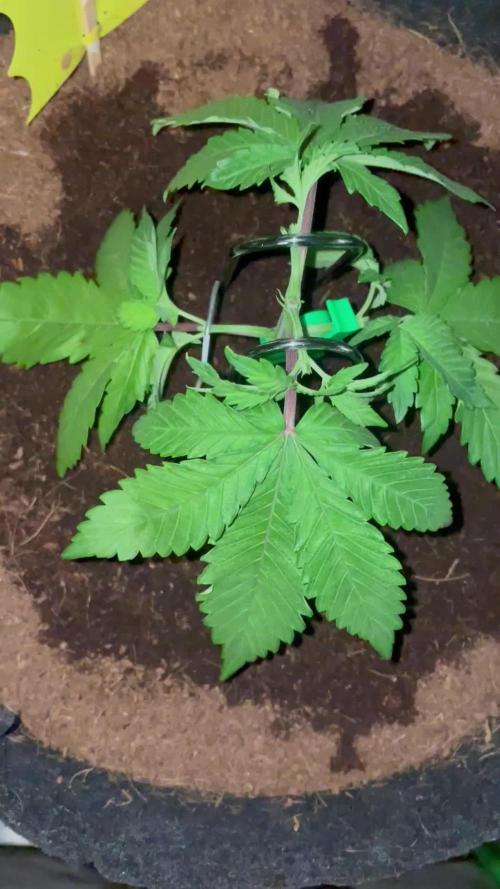
Die Purple Haze wächst sehr gut hat gesunde Triebe und die werden jetzt verdoppelt mal gucken wie sie es erträgt
Likes
93
Share


@Roberts
Follow
Auto Opium has been making progress since her rough start. She got lst early in the week and some more today. She is looking really good this week. She is due for a solution change soon. Thank you Medic Grow, and Divine Seeds. 🤜🏻🤛🏻🌱🌱🌱
Thank you grow diaries community for the 👇likes👇, follows, comments, and subscriptions on my YouTube channel👇. ❄️🌱🍻
Happy Growing 🌱🌱🌱
https://youtube.com/channel/UCAhN7yRzWLpcaRHhMIQ7X4g

Likes
14
Share

@HazeLiebhaber
Follow
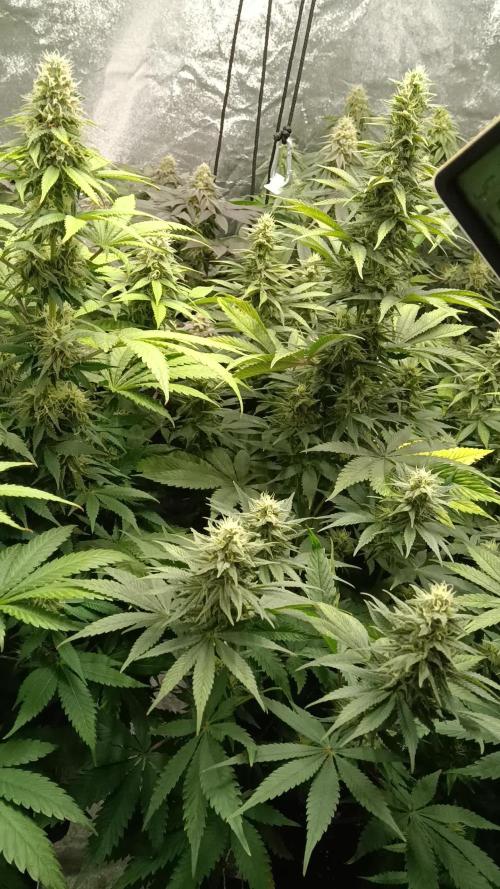
Die Lemon Orange und die Grapefuel Gelato haben bereits ordentlich an Blütenmasse zugelegt und auch so einige Orange-braune Pistillen entwickelt. Die beiden werden wohl als erstes fertig. KISS und Amnesia fangen gerade damit an, an Blütenmasse zuzulegen. Denke die beiden werden mind. eine Woche länger brauchen, um fertig zu werden, als die anderen beiden.
Die Pflanzen im Video: vorne-links Amnesia, hinten-links Lemon Orange, hinten-rechts Grapefuel Gelato, vorne-rechts KISS.



Likes
7
Share

@Skynets_Growing
Follow
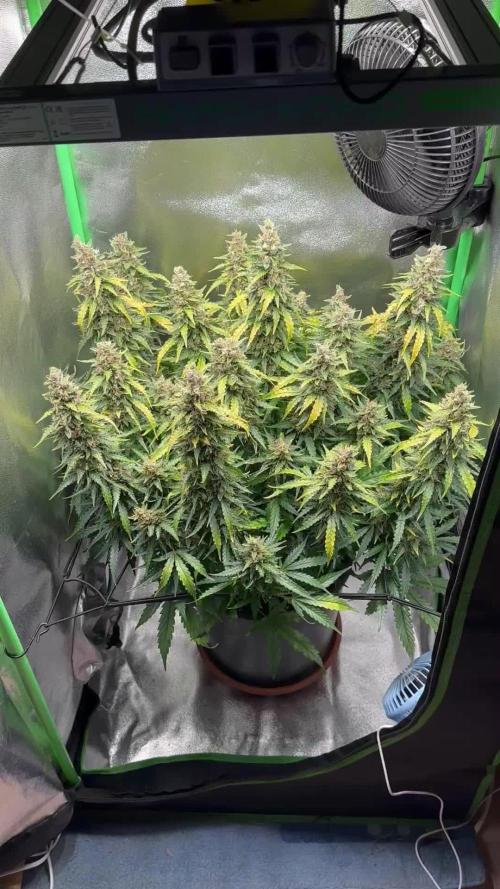
In Tamara her 13 week I prepare her for the Harvest in the next week. Only water no nutrients and lower light. Her night is 2 hours longer. And she … she start with purple her flowers… what a present. I hope the Trichome Check next week will Call Harvest 😉
Likes
40
Share


@CAMOGROWN
Follow
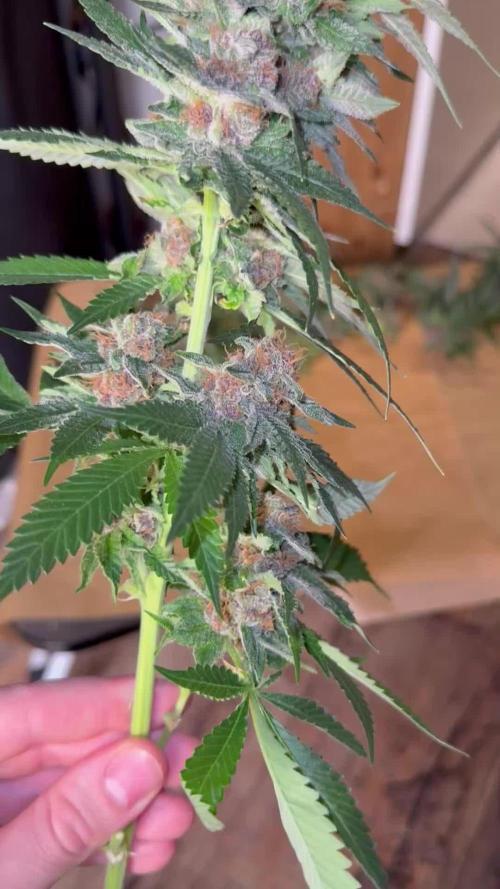
Switched over to bloom Booster tablets now the preflowers are showing
I think the roots have filled the pots as they drink it dry every day! Especially the tallest!
No LST just a few fans nipped of or the odd blade that's blocking light has been removed, and its helped!
My HPS is leeching calcium from my tops but the bloom booster has 40% more cal/mag in them so we should be good. I just rotate the plants and it seems to get the green back in the leaves.
Its technically 6 weeks from sprout BTW.
Thanks for watching, any tips feedback welcome.
Update- so the stretch hasn't stopped. 5" since Friday, I thought I was guna get small autos lol
So I decided to do some lollipoping on all the plants And some defoliation. I've supercropped the death out of my Trouble plant, I mean every branch even the top! but she's back on track and growing again! Will update Friday!




Likes
41
Share

@PersonalSmok3s
Follow
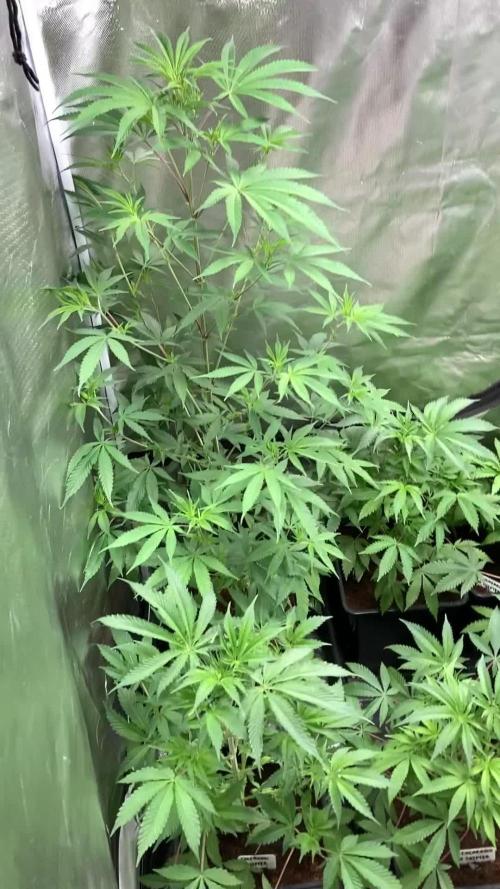
And we’re off! 😸👏
So I’ve kinda been coerced into growing this Fastbuds Frostbanger Auto 🤷♂️😸
For the last few months me and a few others on here have been chatting about all growing the same strain and comparing how we do along the way.
Sounded fun so we agreed on a date. Thankfully the one seed I bought has Germinated so that’s a relief 😅😸.
It’ll be a squeeze trying to fit her in my veg tent in her final pot at present, so I’ll probably start her in a small pot and pot her up into something bigger at a later date 🤷♂️
These are the other guys who are growing along with me, all nice lads 💁♂️ check them out.
- Fatnastyz
- Valiotoro
- Spike-GreenGrower
I plan on giving her dechlorinated tap water for the first week, then I’ll start her on a proper nutrient feed.
Happy with how everything looks, until next time 🌱
Likes
2
Share

@GERGrowDesigns
Follow
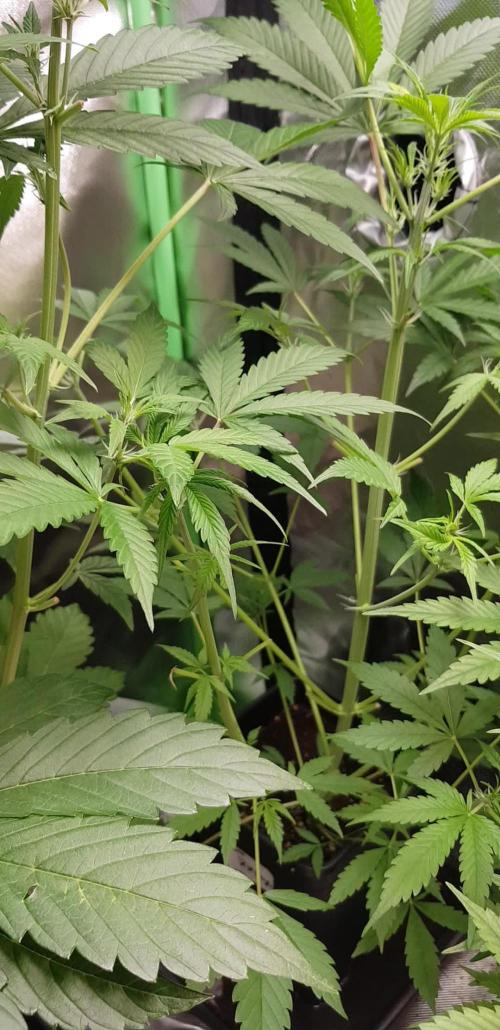
Welcome to Flower Week 1 of Divine Seeds Auto 77 Days
I'm excited to share my grow journey with you all as part of the Divine Seeds Autoflowering Competition 2025. It's going to be an incredible ride, full of learning, growing, and connecting with fellow growers from all around the world!
For this competition, I’ve chosen the Feminized Automatic strain: Auto 77 Days
Here’s what I’m working with:
• 🌱 Tent: 120x60x80
• 🧑🌾 Breeder Company: Divine Seeds
• 💧 Humidity Range: 60
• ⏳ Flowering Time: 56 Days
• Strain Info: 21%THC
• 🌡️ Temperature: 26
• 🍵 Pot Size: 0.5l
• Nutrient Brand: Narcos
• ⚡ Lights : 200W x 2
A huge thank you to Divine Seeds for allowing me to be a part of this amazing competition and Sponsoring the Strains. Big thanks for supporting the grower community worldwide! Your genetics and passion speak for themselves!
I would truly appreciate every bit of feedback, help, questions, or discussions – and of course, your likes and interactions mean the world to me as I try to stand out in this exciting competition!
Let’s grow together – and don’t forget to stop by again to see the latest updates!
Happy growing!
Stay lifted and stay curious!
Peace & Buds!
Likes
170
Share


@Green_Man_420
Follow
Evening fellow growers. Hope all is well and you’re all doing great!
This has got to be one of the hardest grows i have done. I always knew starting this early in the year was going to be hard and it’s proving that way.
And again a massive shout to James and the team at RQS for supporting me and supplying me with the seeds. 🙌
Here we are week 6 the start of the second week of flower. These ladies are moving along alright (I think) although the cold weather is back and has not been to kind over the last couple days. They are still stretching out which is good, just signs of cold which isn’t the best. The bud sites are forming slowly and the structure of these plants looks good. Let’s see what this week brings. ✌️
Day 37, watered 500mil with some nutrients. Held of on them for the last week so just adding them in slowly. Hoping they pick up a little. Took a few fan leafs off that are covering bud sites but other than that just leaving them to it. No pics as it’s very cold and don’t want them out the tent too long. ✌️
Day 38, warmer today and these girls seem to be ok. Nothing done just a couple photos and a video. ✌️
Day 39, watered tonight with 500mil and a little feed. ✌️

Likes
51
Share


@Chumpkilla
Follow
1/28/24 - Day 83 - Here we are on day 83 and the trichomes are looking good. I bet one week, if not two weeks before I start to flush with water. There are some photos of the Trichomes a couple of weeks ago and then again today.
1/31/24 - Day 86 - The buds are starting to get FAT and grow outward. Tons of new buds coming from the buds. Sounds werid but the buds are growing buds now. The smell is out of this planet strong. Im looking forward to the next couple of weeks!


Likes
52
Share


@ElPresidente
Follow
Starting these Sweet cheese F1, inside a home made SpaceBucket.
It has a Chinese UFO LED (150W - 70 W real) and a strip of white LEDs.
I plan on scrog and topping + LST.
Im aiming to get 75 g dried from one plant.
I will use TopCrop ferts along the proccess.
Lets see whats up!
I've been feeding it since day 5.
Water PH: 6.0
Top Crop Deep Underground & Top Veg.
One feed is water only, and another one is with those nutrients.
I feed her 50 ml of water every 2-3 days.