


Likes
Comments
Share


@Belverde
Follow
Welcome growers
First fourteen days of flowering ended for these two BLUEBERRY CHEESECAKE 🍰
The flowers are scattered and are more or less at the same ripeness for each 🌻🌻
Ten days ago the plants were suffering a little and now they show some difficulties..
But that's nothing too worrying !
In these cases there will be "problems" only at the level of final yield..
But I think I saved them in time 🏥
We will see in the coming weeks..
About nutrients 👇
I still giving their always organic/veganic nutrients..
A little bit of silicium (Bionova) / Activator (Biomagno) / Crescita (Biomagno) / Activera (Biobizz) / Grow vegan (Bionova) / The Missing Link (Bionova) / X-Cell (Bionova) / Bioheaven (Biobizz) , a little bit of P-K 3-5 (Bionova) {in spray solution } , Fioritura (Biomagno) and Bloom vegan (Bionova)
Like i usually do, a little bit of everything at any watering 💧
And that's all..
See you next 📆
Thanks for stopping by 😎👍👍
FC ✌️
🇮🇹


Likes
6
Share


@organicman
Follow
changed individual heights due to post seeding of 4 plants
ob1 has lock out (looks like react to little pots and/or not enough lux->lux:12000=>15000 / shows cal+mag-defi->lil xtra calmag+teaspoon of epsom salt top dressing)
ob2 is phyllotaxic
new strawberry pie 2 is phyllotaxic
bg4-th is a cripple
hb2 is tiny
____________________________________________
light- and watering schedule: see photos
now:
16 plants
3 x Auto Orange Bud > Dutch Passion (early80's)
3 x Haze Berry Automatic > Royal Queen Seeds (2018)
2 x Auto Euforia > Dutch Passion (late 90's)
2 x Auto Bubblegum > TH Seeds (late 80's)
2 x Original Auto BubbleGum > Fast Buds Company (late 80's)
1 x Strawberry Pie Auto > Fast Buds Company
1 x Gorilla Cookies Auto Seed Stockers (2015)
2 x Auto White Widow x Big Bud > Female Seeds
setup + strategy:
18 seeds
3 x Auto Orange Bud > Dutch Passion (early80's)
3 x Haze Berry Automatic > Royal Queen Seeds (2018)
3 x Auto Euforia > Dutch Passion (late 90's)
2 x Auto Bubblegum > TH Seeds (late 80's)
2 x Original Auto BubbleGum > Fast Buds Company (late 80's)
2 x Strawberry Pie Auto > Fast Buds Company
1 x Gorilla Cookies Auto Seed Stockers (2015)
2 x Auto White Widow x Big Bud > Female Seeds
setup:
18 x gronest 2 liter
60 cm x 120 cm x 180 cm (2 x 4) growtent
4 l humidifier
25 watt axial fan
15 watt clip fan
ro-filter
bath room with a 50 watts room fan (-> carbon filter not necessary)
...and a lot of odds and ends.
grow strategy:
max yield by stressing with:
1. tiny shoes (2 l fabric pots standing on 3 plastic rings (4 cm) for max oxygen)
2. tiny growspace (18plants on 0.72 sqm)
3. many strains (8 strains)
4. annoying neighbourhood (mixing old - i.e. bubblegum (late 80's) - with young- i.e. hazeberry (2018) - genetics)
5. no stress by light or food or water
6. unintentionally too much food
plus:
- no lst - no hst - just leaf tucking
- positioning bigger strains (euphoria, orange bud, haze berry) or just bigger phenos on less intense light spots (end of tent + edges)
- music-rotation: 24 hrs reggae (for sativas) - 24 hrs classicals (because it's scientifically proofed) - 24 hrs traditionals from the hindukush region (for the indicas)
max efficiency (min electricity - max yield):
- light: 23 h on - 1 h off
- keeping the distance of 18" (45 cm) and dimming to the right par (lux) - value depending on growing stages (see sheet: beginning 185 par ( 10000 lux/100 watt )/end 340 par ( 18000 lux/175 watt )) => ends up in approx. 170 watts in average over max 15 weeks
temperatur management:
- using approx. max. half of what the lamp can do keeps temperature low:
my tsl 2000 is pulling max. 360 watts of the wall - i need only 175 watts, results in less temperature than using a 175 watts lamp
- adjusting the temperature by using a humidifier outside of tent:
blown in humidity is soaking degrees and is transported out by fan, works much better than doing the same with pure air
summer extreme: no humidifier: 36°C / 35 rh - with humidifier: 29°C / 65 rh
works for 1-2 weeks of real hot summer days, no mould, no signs of stress in two summers
germination:
seeding in waterglass
spraying "basic"-water: ro-water (22 ppm) + calmag to 180 ppm every 4 - 8 hours until sprouted
man versus fungus gnat:
5 days before seeding i'm running the tent with "basic"-watered pots as if there were plants inside - led on, fans on, humidifier on. Fungus gnats coming with the soil might take the chance to come out now for breeding. i'm waiting with a 9 mm rifle. in the past i found 6 gnats in 2 of 8 x 50 l biobizz lightmix bags coming out of the soil. i could eliminate every single gnat successfully ;)
rotating harvest:
the little ones will be harvested completely when ready. at this point only the top branches of the big ones will be cut...and the new (basic-watered) pots of the new grow will move into the tent. 2-3 weeks later the secod half of the big ones will be cut and the second half of the new grow will move in...
nutes:
biobizz / soil: biobizz lightmix
bloom,grow,topmax,activera,algamic
+ aminopower instead of bio heaven (too expensive)
individual feeding schedule/once a week:
veg: 200 - 600 ppm
bloom: 600 - 900 ppm
water:
ro-water with:
veg: 100-150 ppm calmag
bloom: 150 ppm calmag


Likes
45
Share


@tresplantes
Follow
All at all really nice plant with beautydull colors at the end the smell during flower is unbeleavable Sweet im sure this is the right seed for a Pheno Hunt there are bangers hidden 100%


Likes
16
Share


@HowtoBubatz
Follow
The plant is thriving as it enters its 11th week of flowering. The buds have developed beautifully, and they’re giving off a sweet, lemony aroma that fills the grow space.
It’s a scent that’s both refreshing and promising, making me excited for the final product.
At this stage, everything looks great, and I’ve decided to start flushing the plant with clear water only. This should help remove any residual nutrients and ensure a smoother, cleaner smoke. I’m planning to continue flushing for the next one to two weeks before harvesting.
I’m really looking forward to seeing how this plant turns out. The buds are dense and sticky, and if the smell is any indication, the end result should be amazing.
Can’t wait to see how she finishes!

Likes
17
Share

@Oldwied
Follow
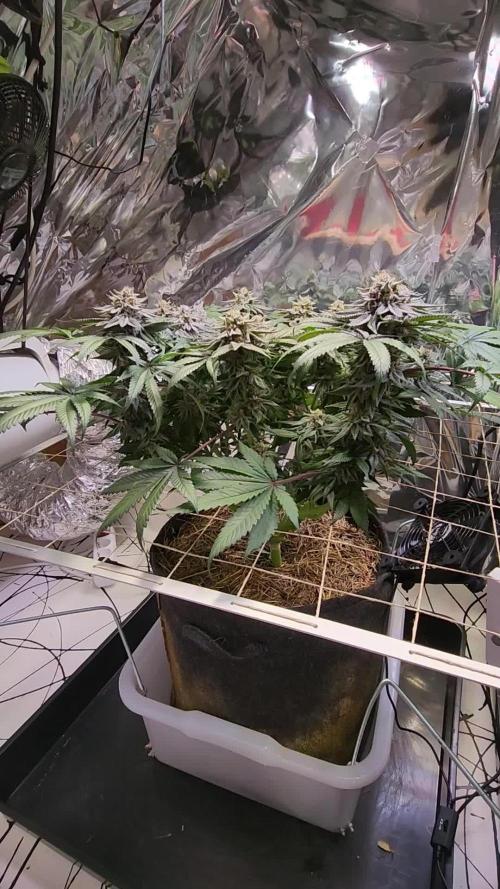
It’s already been more than 7 weeks since harvest time, but this plant still needs some time. Most of the trichome heads are milky, but the buds are still swelling. So, just wait and see.
The light intensity was reduced to keep the temperature below 26°C during the day.
Light Power: 92%
Day 101
Flower #50
Photoshooting

Likes
2
Share


@espaniabudz
Follow
one of the fastest auto on the whole planet. this baby already started forming big buds in week 5.. that’s crazy
Likes
9
Share


@Tmasm
Follow
Zamnésia, obrigado por fornecer genética para testes.
Entrega segura, dentro do prazo e muito discreta, como você pode ver nas fotos.
Experiência para possível plantio em massa, dependendo dos resolvidos.
1 BISCOTTI (SEMENTES DE ZAMNESIA) FEMINIZADO
Conforme diário já na 3 semana.
1 JEALOUSY (SEMENTES DE ZAMNESIA)
Conforme diário já na 3 semana.
1 SUNSET SHERBET AUTOMATIC (SEMENTES DE ZAMNESIA) FEMINIZADO
Já germinada, e com 1cm
Panta está linda, crescendo bem.
Gosto muito do desempenho dela, barraca com condições mínimas, mas para ela tudo bem.
Primeiras fábricas da Zamnésia, estou impressionado com a qualidade dos produtos.
Visite www.zamnesia.com, você ficará surpreso com a variedade de produtos, todos da mais alta qualidade.
O diário será atualizado toda semana, espero que gostem (eu também).

Likes
13
Share


@Eldorado_ed
Follow
Progress from last week some of the pictures/videos are 2 days apart you should see the difference in them all in all a busy week so short and sweet happy flowering
Likes
86
Share


@Tropicannibis_Todd
Follow
Alright Then
REMINDER I DO 2 UPDATES PER WEEK 👉WEEKLYROUNDUP👈👉MIDWEEKLY UPDATE👈
We just hit week 3 and all is well , have to admit she's showing great , Growth in just 21 days😃 .......
Middle of last week I have decided to start a little training by pulling her over to the side 👌 And will continue to LST this week👈 And she's looking fantastic add to the fact she's already begun next faze by preflowering 😲
Pheno #2 Is about 9-10 behind buts its playing catch up and I should be doing some LST on her later this week 😛
Very little water given ,so far and rain water to be used entire growth👍
Lights being readjusted and chart updated .........👍
I GOT MULTIPLE DIARIES ON THE GO 😱 please check them out 😎
👉I WISH GD HAD DISCORD SERVER SO GROWMIES COULD HAVE A PLACE TO HELP AND TALK THINGS RELATED TO GROWING IN REAL TIME .....👈
👉SO I CREATED ONE ALL YOU NEED IS TO JOIN THE GROWDIARIES DISCORD SERVER !!!!!!!!!!!👈
LINK IS 👉
https://discord.gg/zQmTHkbejs
AND SEE HOW IT PLAYS OUT !!!!!!!
Likes
11
Share

@Growfather1
Follow
Hello everyone,
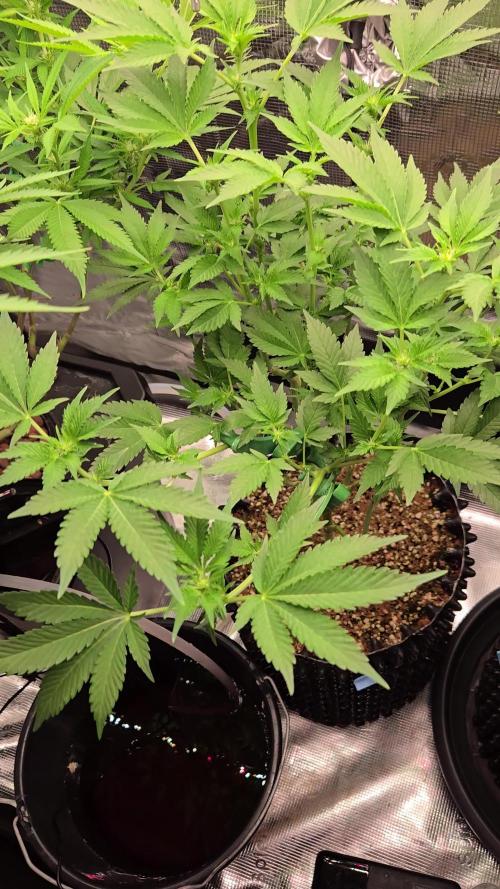
The amnesia fast is doing okay, i just finished changing the water and changed nutrients from aqua vega to aqua flores and added 3ml pk13/14 to 22 liters of water.
I also gave her a good defoliation and removed some lower growth.
Thanks for stopping by and have a nice day.
Growfather

Likes
10
Share

@420DeepGrow
Follow
📆 Semana 6
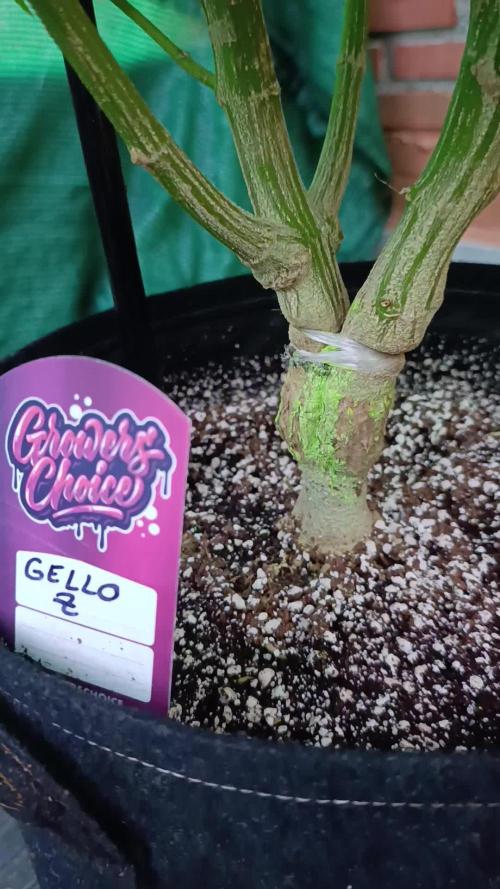
Durante esta sexta semana, la planta continúa evolucionando con buen ritmo y mantiene una estructura fuerte y bien desarrollada. La floración sigue avanzando y poco a poco comienzan a definirse más claramente los primeros signos de formación de flores.
La planta sigue respondiendo muy bien y mantiene un aspecto saludable, por lo que continuamos avanzando de forma progresiva, sin forzar la alimentación.
⚡ EC de entrada: 0.7
💧 pH: 6.2–6.3
🌡️ Agua: 18–22°C
☀️ Luz: Sol directo
🔥 Nota de cultivo: Mantengo una EC de entrada de 0.7, adaptando la alimentación al momento actual del cultivo y observando la respuesta de la planta antes de realizar nuevos ajustes.
¡Seguimos creciendo fuerte! 💪

Likes
19
Share

@KBrox
Follow
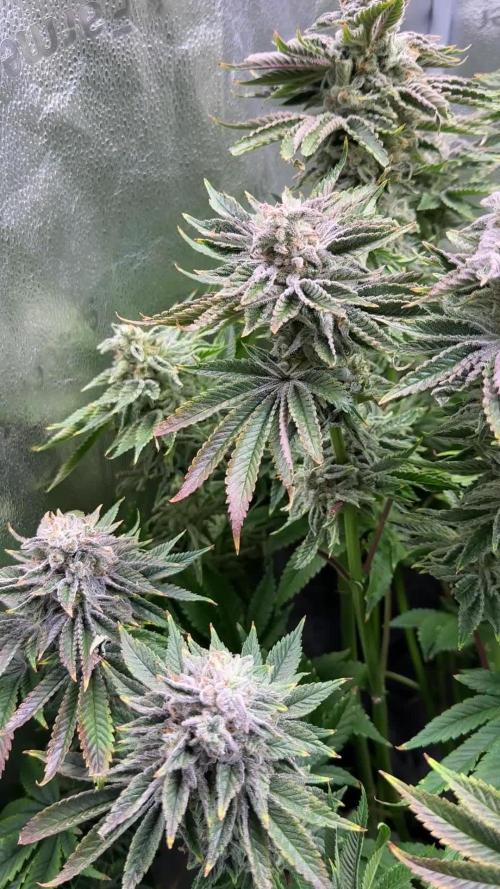
It is slowly coming to an end. Since the middle of the week, the ladies have been receiving nothing but water with Canna Boost.
I did some defoliating so that more light reaches all the buds.

Likes
8
Share


@TreeFarmerCharlie
Follow
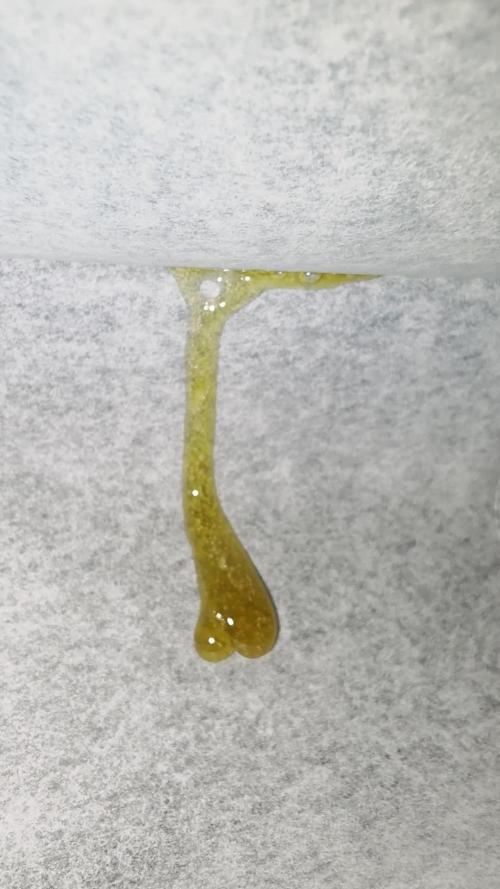
I'm very happy with how these came out. They finished right in the breeders estimated flowering time and they smell great. The back plant came out smaller, as expected, due to the watering issues I had, but it still came out very nice.
Update 6/20: Just finished trimming the plants and they are now going into a curing bucket. Total dry weight is 210g and the bud smells really nice!

Likes
16
Share
@420DeepGrow
Follow
📆 Semana 12
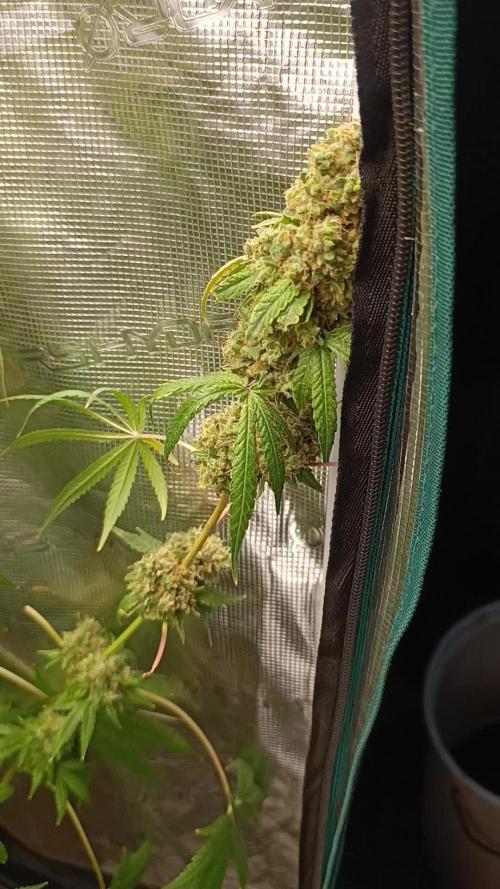
Las flores continúan en su fase final de maduración, ganando densidad y terminando de desarrollar su producción de resina. Los pistilos siguen oscureciéndose y retrayéndose progresivamente, mientras los cogollos presentan un aspecto cada vez más compacto y maduro.
Entrando ya en la recta final, cambio la nutrición habitual por Master Piece, comenzando la fase de lavado de raíces y preparando las plantas para la cosecha. Mantengo unas condiciones estables para que puedan completar tranquilamente su maduración durante estos últimos días.
💧 Master Piece: fase de lavado de raíces
💧 pH: 6.2–6.4
🌡️ Agua: 19–21°C
🌫️ Humedad: 40–45%
💡 Luz: PPFD 900–1000
🔥 Nota: Última etapa antes de la cosecha. A partir de ahora, el objetivo es acompañar la planta durante su maduración final y dejar que las flores terminen de expresar todo su potencial antes del corte.
¡Seguimos creciendo fuerte! 💪

Likes
11
Share


@GreeneRecluse86
Follow
Another great week. The Phantom and Red diesel are finally starting to mature to red and orange hairs instead of all white. I'm excited.
Gave all the ladies a compost, molasses and kelp tea this week. Some of the buds on the phantom are starting to fall over from the weight. With all the stretch I got my nets are doing very little to help.
The Gorilla zkittles has been on plain water since Wednesday. Keeping a close watch on the trichs. Maybe another 7 days, maybe not.
Happy growing buddies. Thanks for the support!


Likes
2
Share


@High_Grade_Dadli
Follow
Haven't been keeping up weeks fly by so quickly never the less girls are doing well took some cutting the day before....5 gelato, 15 mcm og, 20

Likes
31
Share


@TheHighentist
Follow
23/5* Water day 275ML with Biobizz Grow and Fish-Mix
-Temps 24-25 Day / 21-23 Night
-Humidity 70-75% RH
Correction to LST / Letting the bigger restraints go
24/5 Freed them of LST as i want to let them grow higher
-Temps 24-25 Day / 21-23 Night
-Humidity 70-75%RH
25/5 Showing good growth
-Temps 25-27 / night 22-24
-Humidity 70-75%RH
26/5* Water day 275ML with Biobizz Grow and Fish-Mix as usual
-Temps 23-25 / night 22-24
-Humidity 70-75&RH
27/5 - Got my humidity controller
-Temps 23-25 / night 22-24
-Humidity 72% (+-5)
28/5 - Did some super super cropping and a bit of light "Chiropractic" (Kyle Kushman method) and a bit of lst on the branches i wanted to get more light
-Temps 24-26day /22-24 night
-Humidity 72% (+-5)
29/5 Water day*
As a first time, i watered them before they went to bed, as i wanted to give some nutrients to get over the supercropping stress
275ML (+ 2ml/L Fish mix + 2 ml/L grow)
-Temps 24-26day/22-24night
-Humidity 72% (+-5)
***********I will put them into flowering in about a week***************
Light to plant distance:
d.28/4 53 CM to light (kept the same distance rest of the week 1)
d.2/5 50 CM to light
d.3/5 42 CM to light
d.7/5 40 CM to light
d.19/5 38 CM to light
d.22// 34 CM to light
__________
My lights distance and PAR value:
24" / 60 CM = 237 PAR (umol m2s1)
18" / 45.72 CM 412 PAR
12" / 30 cm 811 PAR
6" / 15.24 CM 1816 PAR
Likes
36
Share


@nonick123
Follow
Día 2 (03/06) A su marcha haciendo las raíces...
Día 3 (04/06) N/A
Día 4 (05/06) N/A
Día 5 (06/06) A su marcha haciendo las raíces...
Día 6 (07/06) N/A
Día 7 (08/06) Elimino la cúpula de humedad al estar en el día 7
Día 8 (09/06) Riego con 100 ml de H20 con Wholly Base 1,25 ml/l + Solid Green 0,50 ml/l + Rise Up 1 ml/l de GenOneEleven
🌱Substrate PRO-MIX HP BACILLUS + MYCORRHIZAE - www.pthorticulture.com/en/products/pro-mix-hp-biostimulant-plus-mycorrhizae