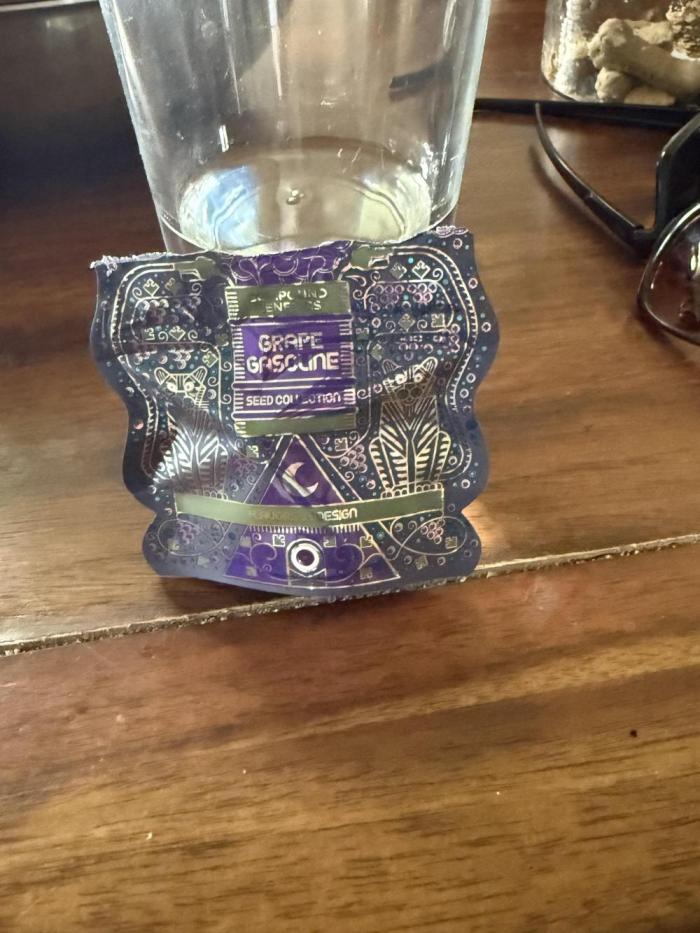
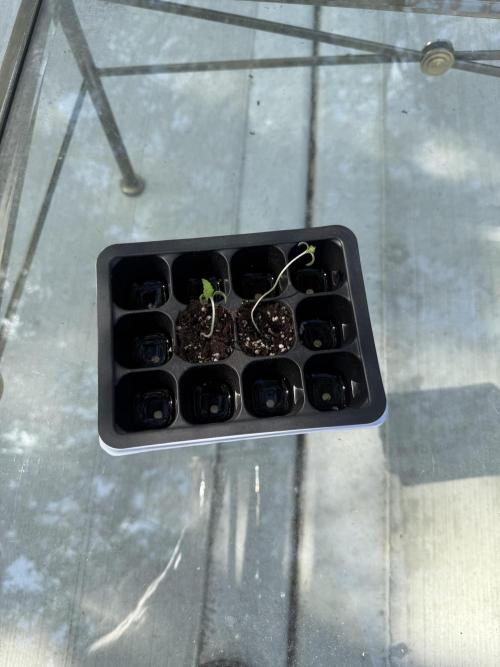
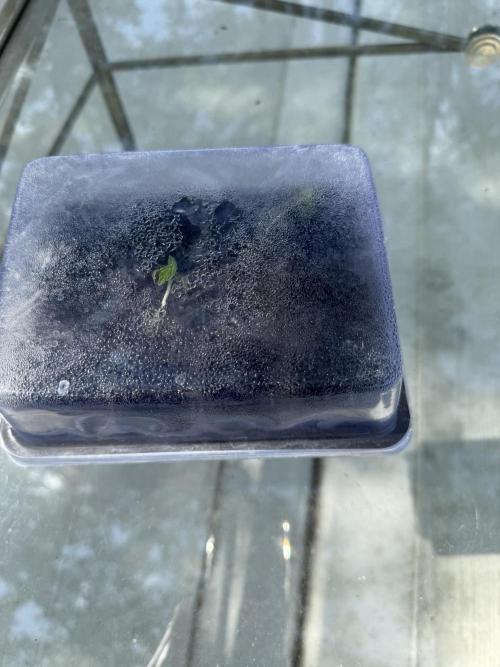
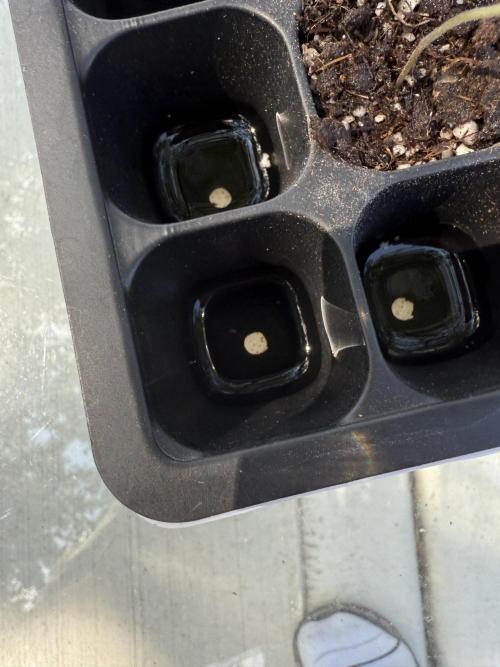
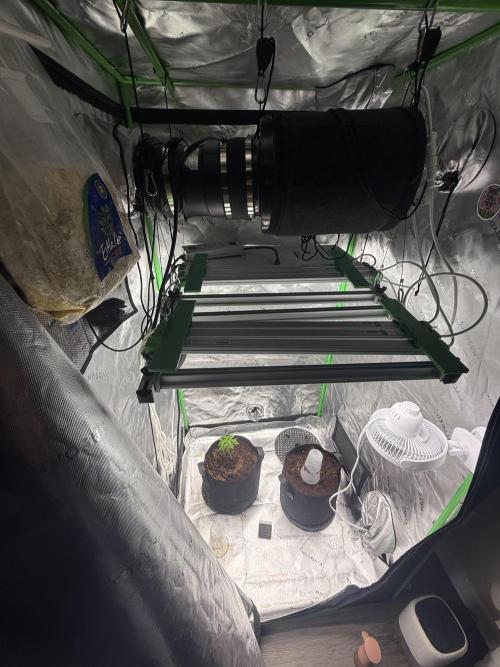
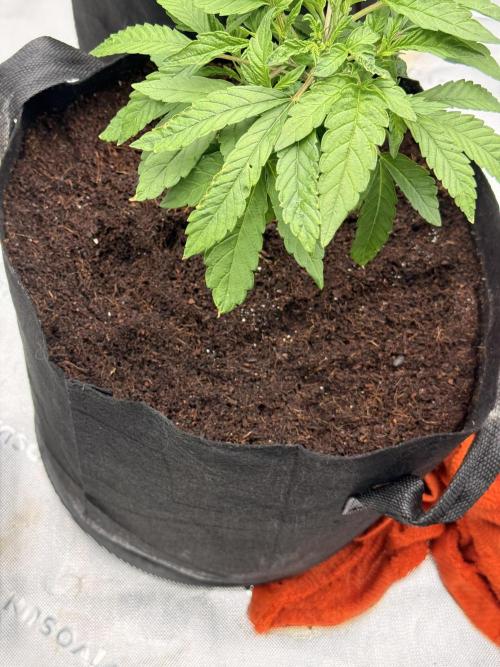
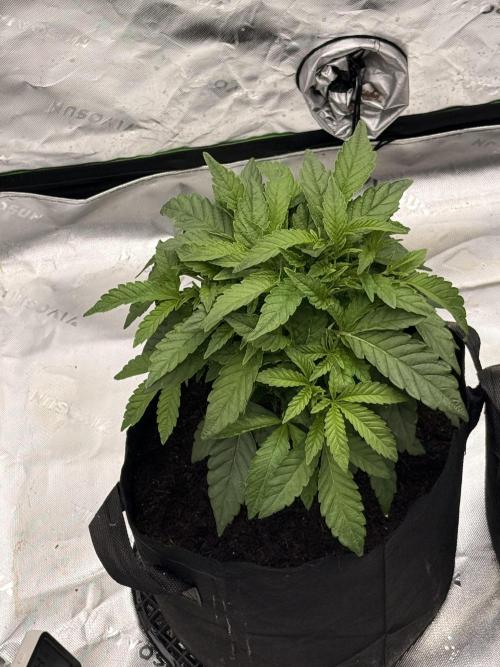
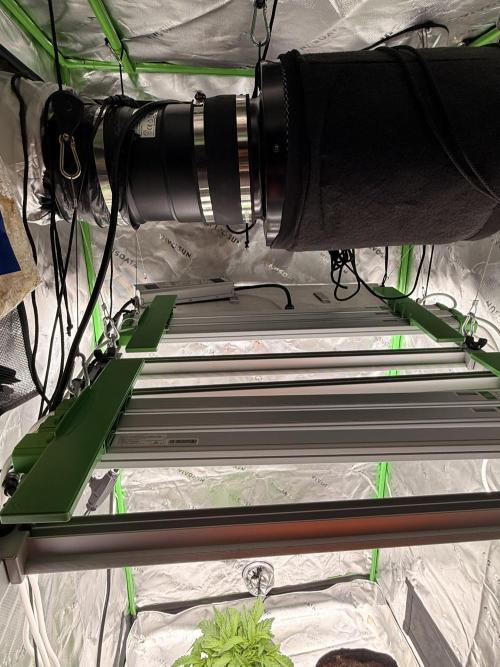
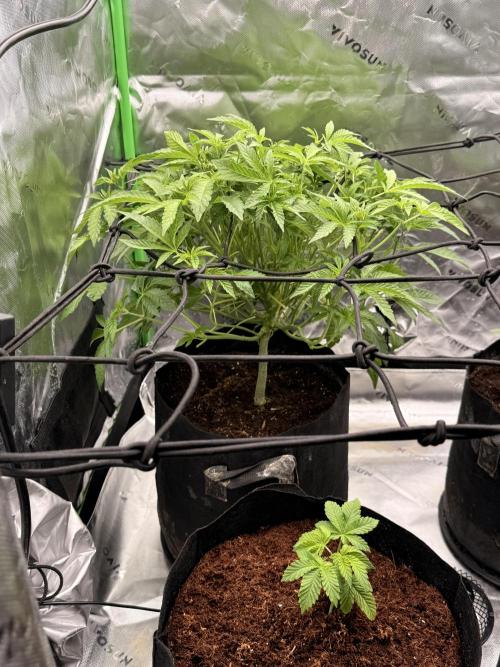
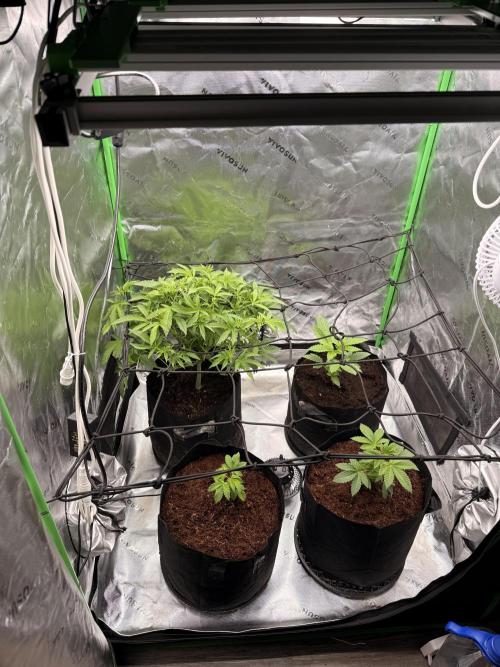
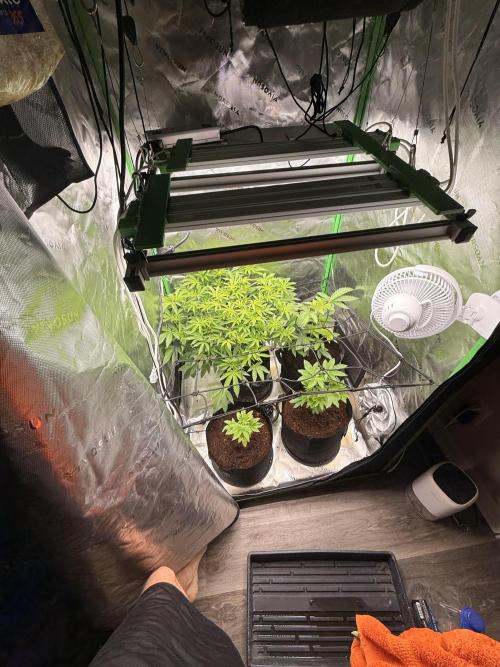
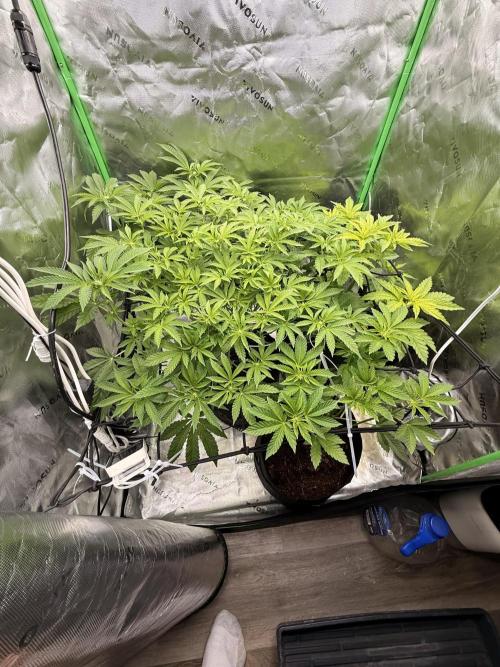
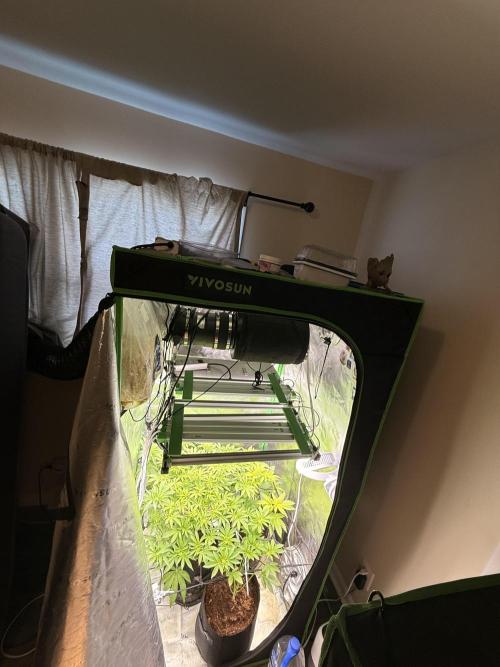
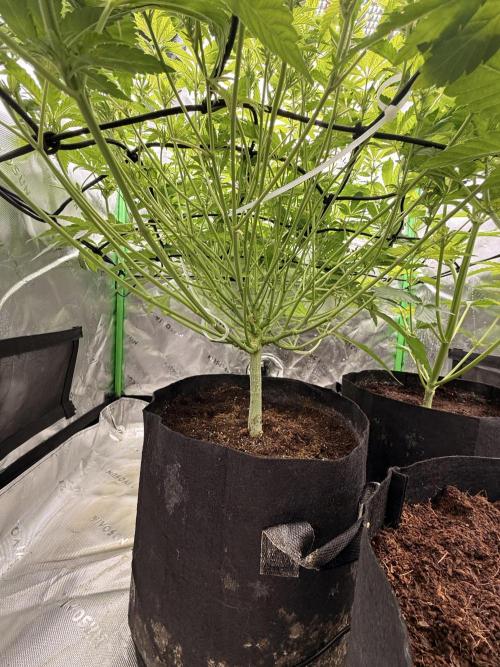
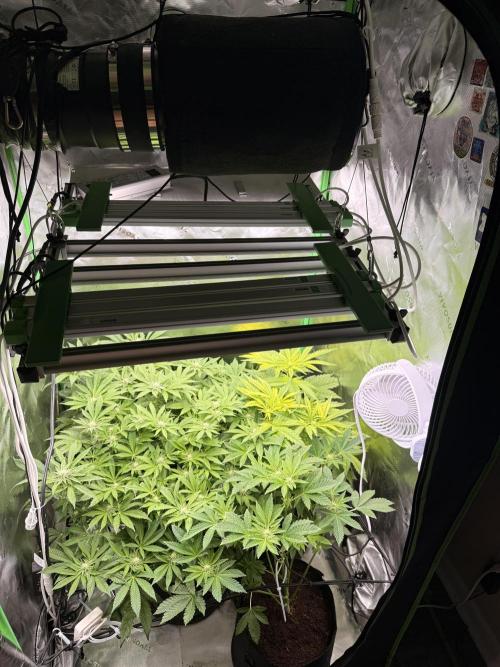
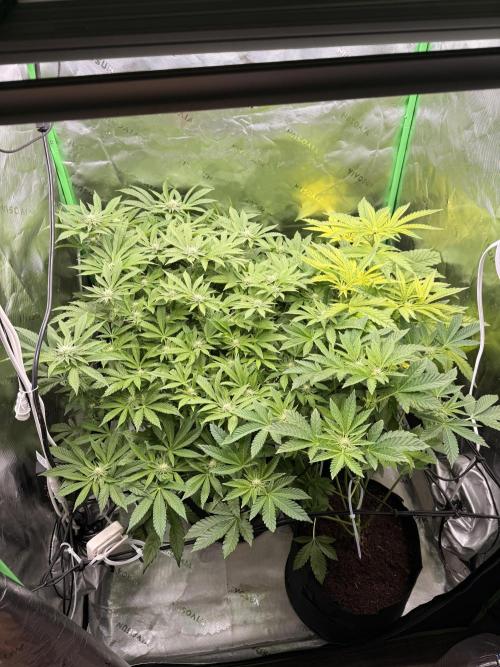
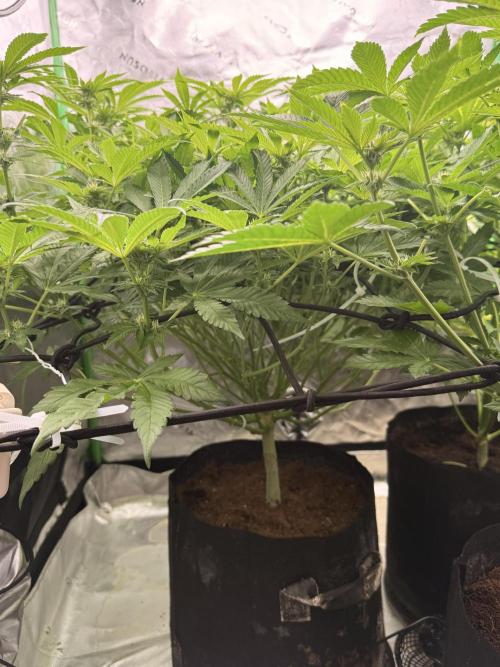
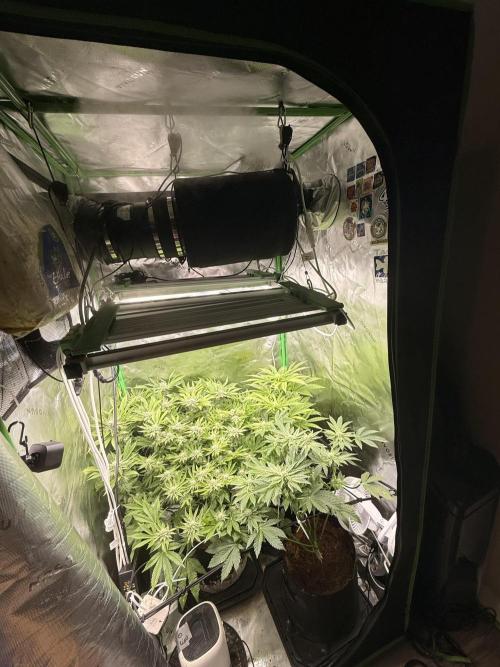
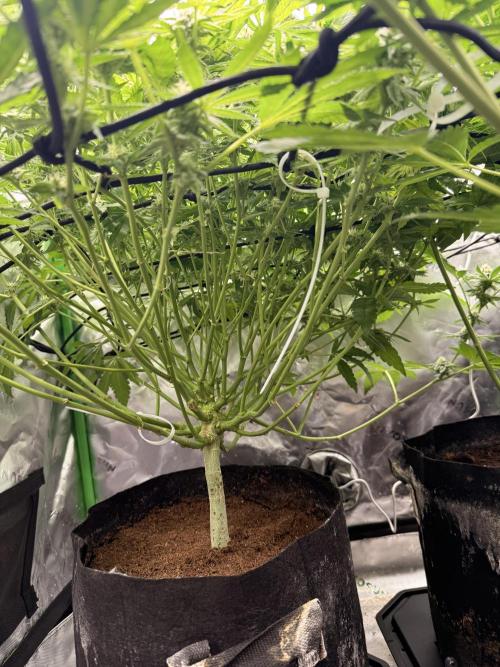
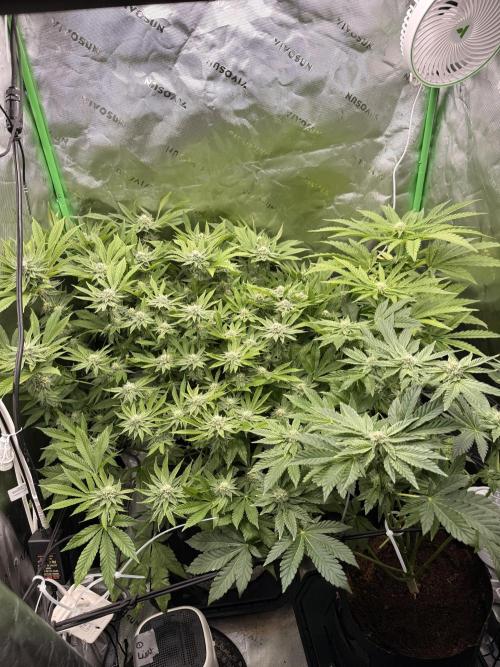
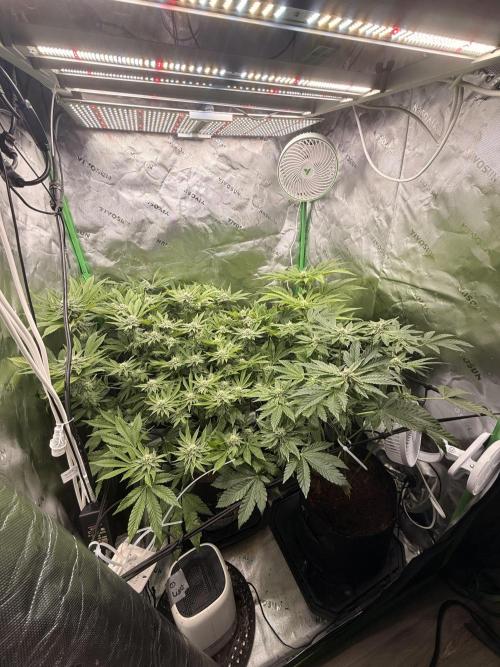
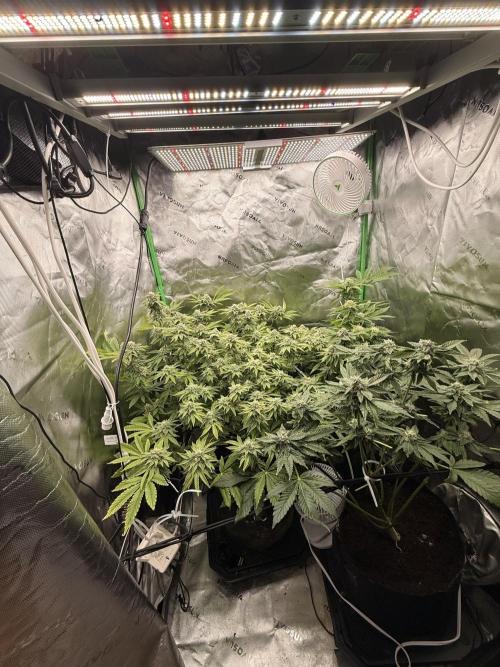
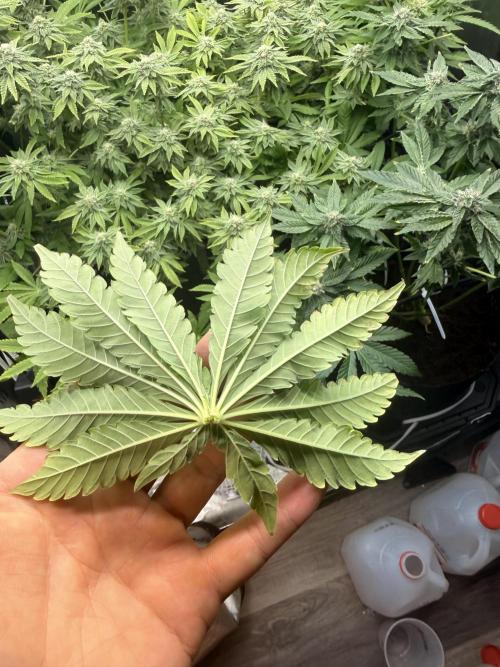
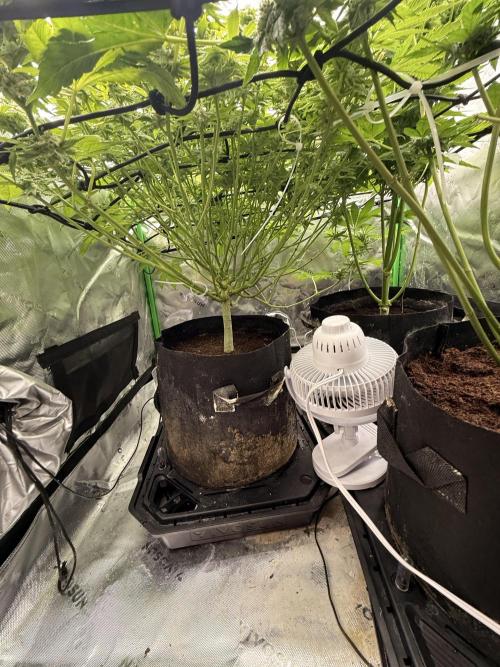
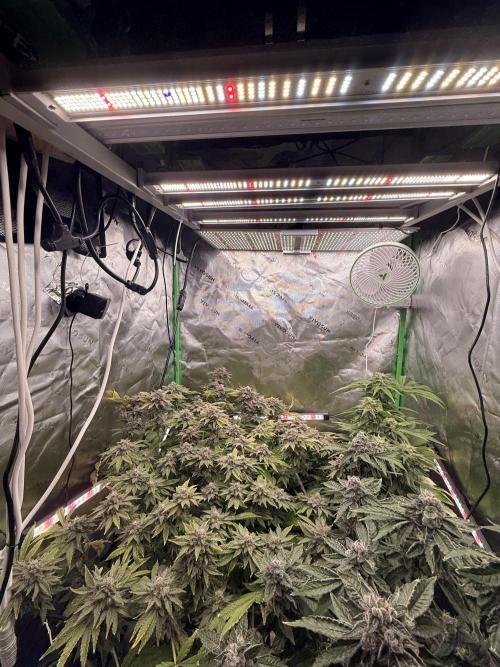
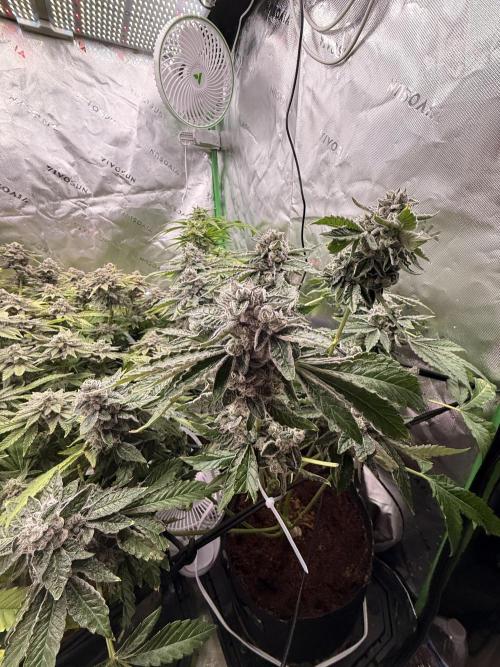
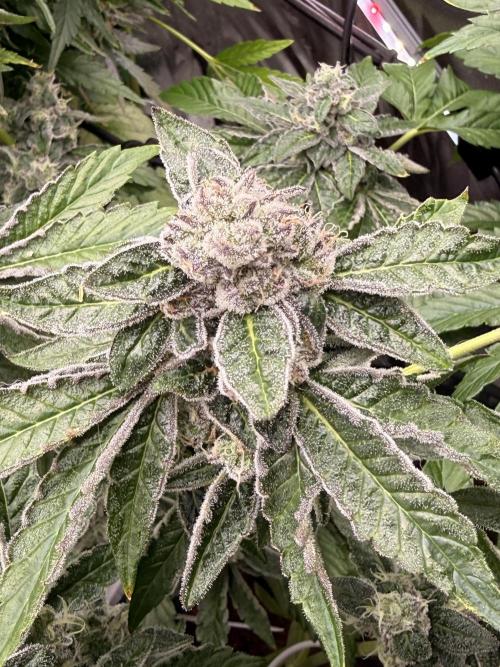
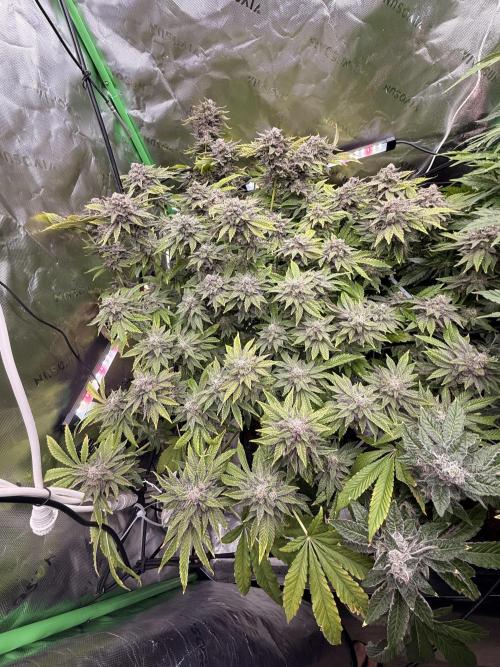
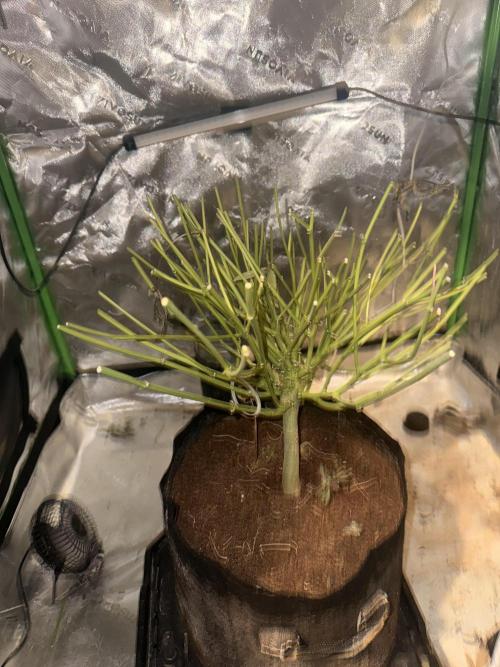
Muckman Added a light board with ir, uv, deep red. Off until plants root!
2 likes
comments
Share
5
Week 5. Vegetation
3mo ago
1/2
17.78 cm
Height
18 hrs
Light Schedule
24 °C
Day Air Temp
5.8
pH
80 %
Air Humidity
22 °C
Night Air Temp
18.93 liters
Pot Size
2.01 liters
Watering Volume
101.6 cm
Lamp Distance
800 PPM
CO₂ Level
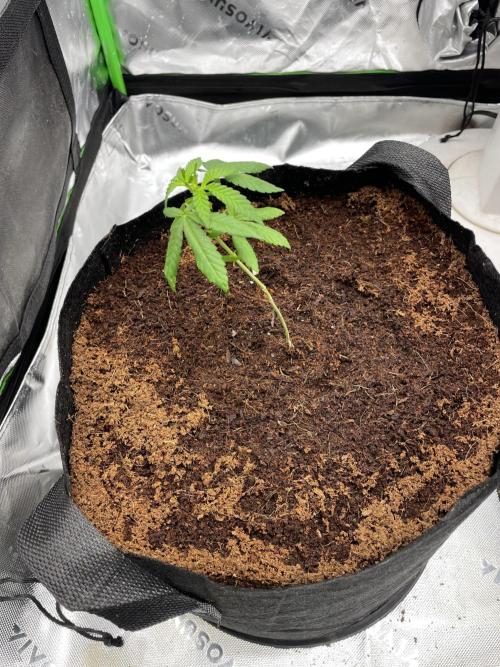
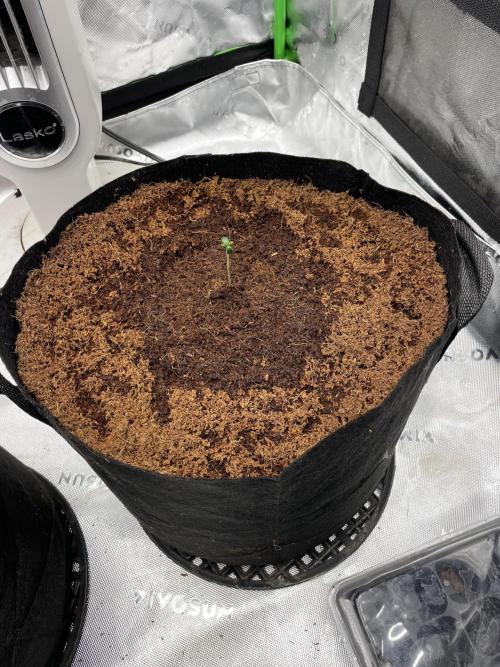
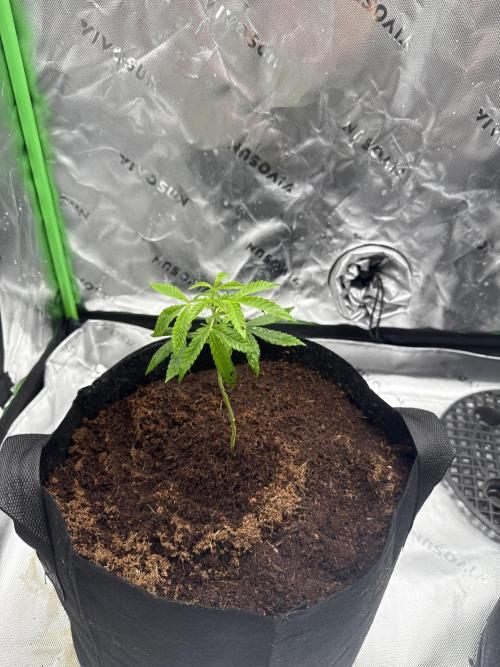
Muckman Seems the lil seedling is revived I bought I random brick of coco that had a lot of ph issues to flush out. Everything is back on track
1 like
comments
Share
6
Week 6. Vegetation
3mo ago
1/3
30.48 cm
Height
18 hrs
Light Schedule
24 °C
Day Air Temp
5.8
pH
80 %
Air Humidity
22 °C
Night Air Temp
18.93 liters
Pot Size
2.01 liters
Watering Volume
101.6 cm
Lamp Distance
800 PPM
CO₂ Level
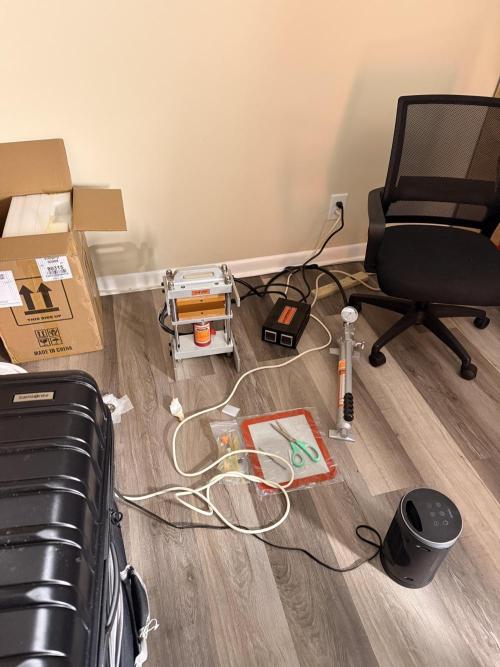
Muckman Wanted to dip into flower asap now. Crazy I’m still curing my last round lol and I’m lapping this run into flower. Stock pile szn. Christmas came early with a 12 ton press. Need to get a table in my man cave so I’m not breaking my back on the ground with this monster. Feature plants are going to be flash frozen for hash rosin.
3 likes
comments
Share
Used techniques
SoG
Technique
ScrOG
Technique
Topping
Technique
Defoliation
Technique
7
Week 7. Flowering
3mo ago
1/2
40.64 cm
Height
12 hrs
Light Schedule
23 °C
Day Air Temp
5.8
pH
1100 PPM
TDS
50 %
Air Humidity
22 °C
Solution Temp
21 °C
Substrate Temp
19 °C
Night Air Temp
18.93 liters
Pot Size
0.8 liters
Watering Volume
101.6 cm
Lamp Distance
800 PPM
CO₂ Level
Nutrients 1
lotus nutrient line
3.26 mll
Muckman So I added to more grape gas seedlings into flower to accommodate the available space and pheno hunt a lil bit. Everything has been great. Besides some imbalance cheaper coco that kinda was clumpy. Growth is really starting to advance quickly. Should be smooth sailing until harvest. Plans to flash freeze for rosin! Getting into the rosin game!
5 likes
comments
Share
Used techniques
ScrOG
Technique
Topping
Technique
Defoliation
Technique
Transplantation
Technique
8
Week 8. Flowering
2mo ago
1/2
63.5 cm
Height
12 hrs
Light Schedule
23 °C
Day Air Temp
6.0
pH
1300 PPM
TDS
50 %
Air Humidity
22 °C
Solution Temp
21 °C
Substrate Temp
19 °C
Night Air Temp
18.93 liters
Pot Size
3.03 liters
Watering Volume
88.9 cm
Lamp Distance
800 PPM
CO₂ Level
Nutrients 1
lotus nutrient line
3.26 mll
Muckman 👍 update:11/26 wtf never seen a pheno have this much tight nodes and develop side branches to colas. It a monster taking over the whole tent.
My question has 2 parts about Sustained optimal flowering tempatures to avoid evaporating terpenes and would I still benefit from use of c02 floating lower temps when trichs start developing? Thanks community
Look at why you will be evaporating terpenes, which is almost entirely due to the natural trichome head damage (and subsequent capacity to leak volatiles) cycles where damage during the day is then repaired during the night. From this perspective, and bringing in precedent with Cannatrol's multiple patents and downstream impacts, any smell that is going to be avoidable is coming from you damaging trichome heads (manually or by environment). From my understanding, this logic boils down to minimizing vapor pressure gradients that would risk rupturing the 2 molecule thick trichome cuticle...but also needing to stay out of mold range...and your other fundamentals (like the correct spectrum, PAR, day/night delta, etc.). This brings you to looking at dew point as a way to carefully approach moisture in the flower , and to staying away from compressor-driven devices like most dehueys and ACs.
Statistically speaking, hell no - you would not....
No benefit, detrimental to have high co2 without temps to alter metabolic pathways, plant will shrink stomata under high co2 levels, without the temls to match the plant s forced to perform gas exchange through much smaller stomata. Potetially hindering growth.
Hey 👋,
Temperature Range should be between 20-25 Celsius.
Additional CO2 is Not Worth it in my opinion as mostly your cost/benefit ratio is Not good at all.
Just keep it simple, it’s weed.
Have fun 🖖🏾👊
likes
Complain
9
Week 9. Flowering
2mo ago
1/3
83.82 cm
Height
12 hrs
Light Schedule
23 °C
Day Air Temp
6.0
pH
1300 PPM
TDS
50 %
Air Humidity
22 °C
Solution Temp
21 °C
Substrate Temp
19 °C
Night Air Temp
18.93 liters
Pot Size
11.46 liters
Watering Volume
88.9 cm
Lamp Distance
800 PPM
CO₂ Level
Nutrients 4
lotus nutrient line
3.26 mll
Cal/Mag
0.132 mll
Boost
0.132 mll
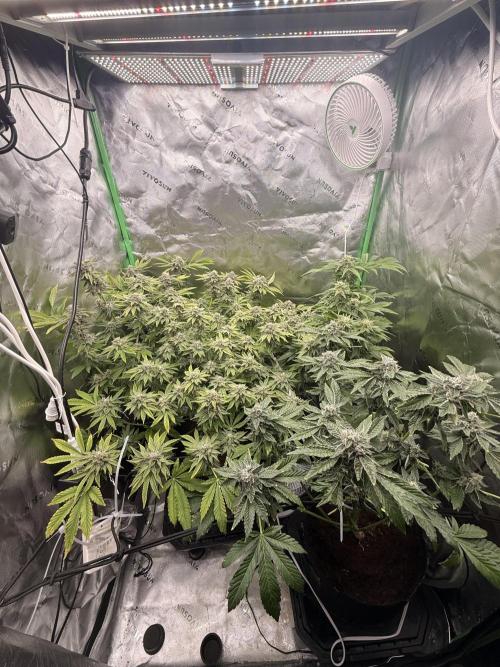
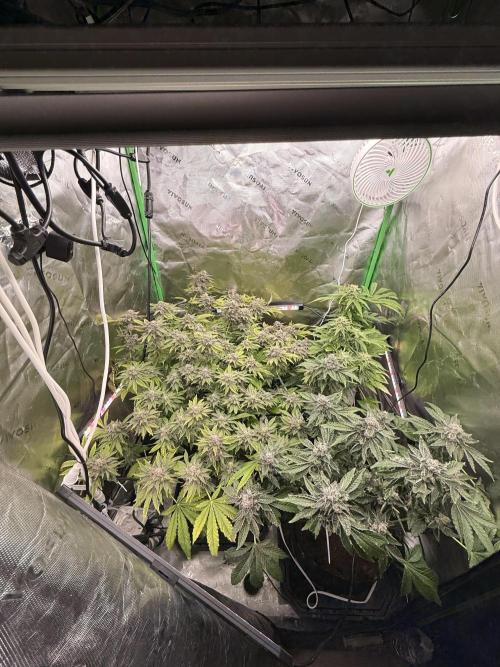
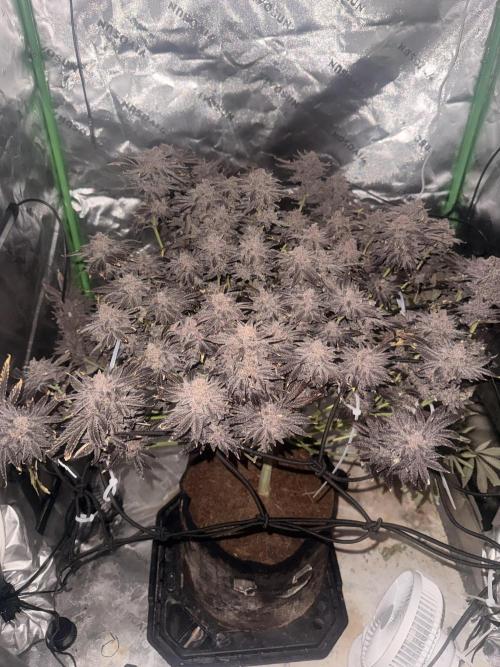
Muckman Extraordinary growth with this strain. The side branching and overall main cola have swarmed my tent. The spread through the trellis has a 2 foot radius all around. She’s going to be a pure monster. The other plants in my tent are just lucky to be there. I actually had to pull one of the flowering plants as it was way overcrowded. So sent her back to veg. Only can fit three plants and 5 gallon pots realistically and for overall health and climate in the tent. Cheers!
3 likes
comments
Share
Used techniques
ScrOG
Technique
Defoliation
Technique
Topping
Technique
10
Week 10. Flowering
2mo ago
1/4
93.98 cm
Height
12 hrs
Light Schedule
23 °C
Day Air Temp
6.0
pH
Weak
Smell
1300 PPM
TDS
50 %
Air Humidity
22 °C
Solution Temp
21 °C
Substrate Temp
19 °C
Night Air Temp
18.93 liters
Pot Size
11.46 liters
Watering Volume
88.9 cm
Lamp Distance
800 PPM
CO₂ Level
Nutrients 4
lotus nutrient line
3.26 mll
Cal/Mag
0.132 mll
Boost
0.132 mll
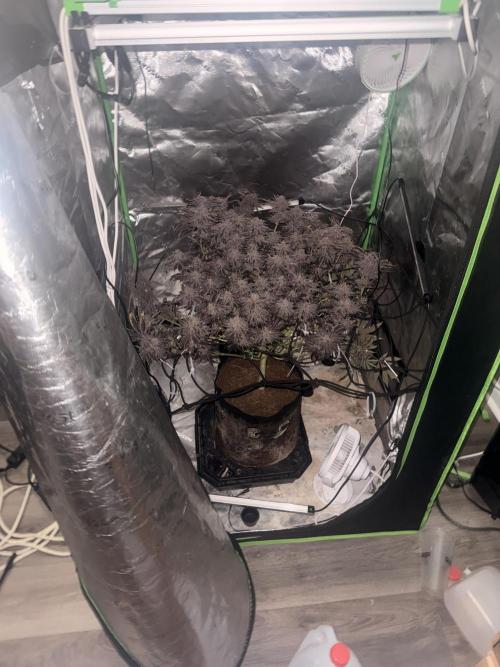
Muckman The spread of the large plant almost takes up this whole tent. Definitely in the market for larger flower tent.
6 likes
comments
Share
Used techniques
ScrOG
Technique
Defoliation
Technique
11
Week 11. Flowering
2mo ago
1/5
93.98 cm
Height
12 hrs
Light Schedule
24 °C
Day Air Temp
6.0
pH
Weak
Smell
1500 PPM
TDS
50 %
Air Humidity
22 °C
Solution Temp
21 °C
Substrate Temp
19 °C
Night Air Temp
18.93 liters
Pot Size
11.46 liters
Watering Volume
88.9 cm
Lamp Distance
800 PPM
CO₂ Level
Nutrients 5
Epsom salt
1.3 mll
lotus nutrient line
3.26 mll
Cal/Mag
0.132 mll
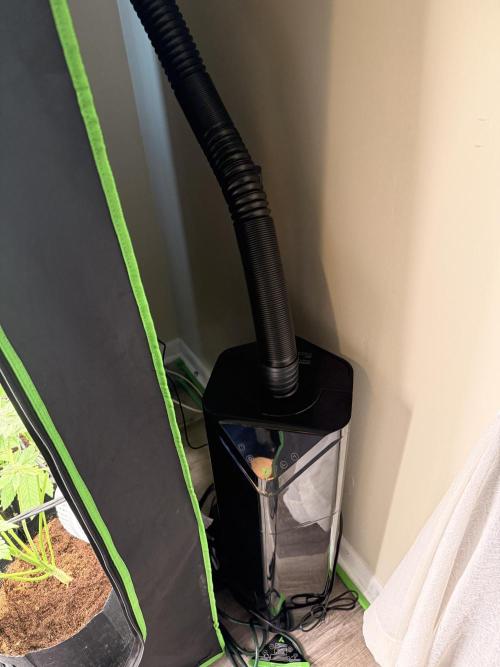
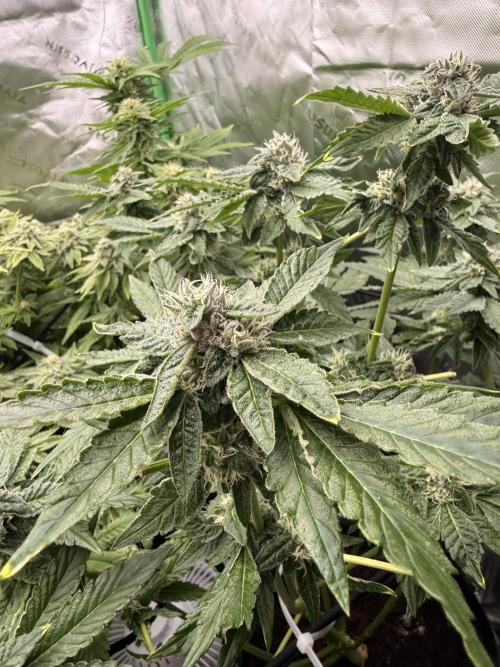
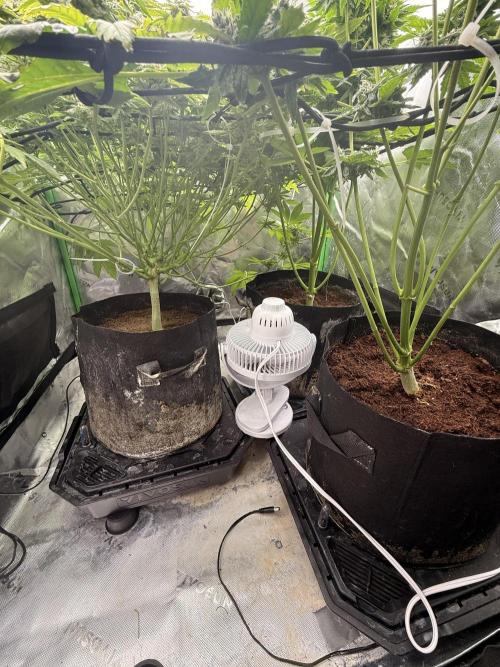
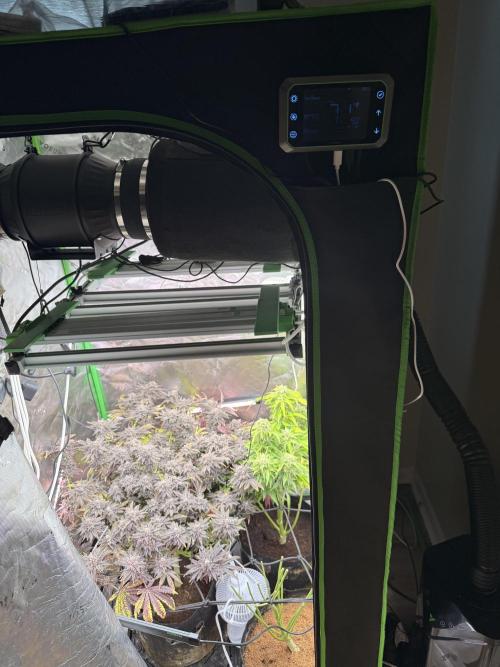
Muckman Installed bottom feeders, sick of watering. Had some other updates. New humidifier w/ probe is nice addition. Should start to see some real consistency in climate now. Everything right on track now! Everything responded well to some magnesium sulfate. Coco does not uptake that as well. So moving forward will be incorporating into my feed schedule. Auto pots should help me dial in feeding. Run off always tend to be higher so adjust my feeding lower (5.7-5.8) at every other feed to level around 6.1.
Muckman Uv light installed 15 min/ hr for middle 8 hrs of day cycle, ir light is treated before lights on and after lights off 15 min each. Still dialing in bottom feeder with drip line have some lockout not to bad ec and ph jumping using hard water sometimes. I’ve had a lot of success with hard water just adjusting ppm. But I will be trying to install RO water system soon, only need a small gallon. Looks like the final stretch has arrived!
3 likes
comments
Share
Used techniques
ScrOG
Technique
14
Week 14. Flowering
1mo ago
1/7
93.98 cm
Height
12 hrs
Light Schedule
24 °C
Day Air Temp
6.2
pH
Strong
Smell
1500 PPM
TDS
50 %
Air Humidity
22 °C
Solution Temp
21 °C
Substrate Temp
18 °C
Night Air Temp
18.93 liters
Pot Size
21.49 liters
Watering Volume
88.9 cm
Lamp Distance
800 PPM
CO₂ Level
Nutrients 3
Bloom
0.396 mll
Carboflush
0.528 mll
Cal/Mag
0.264 mll
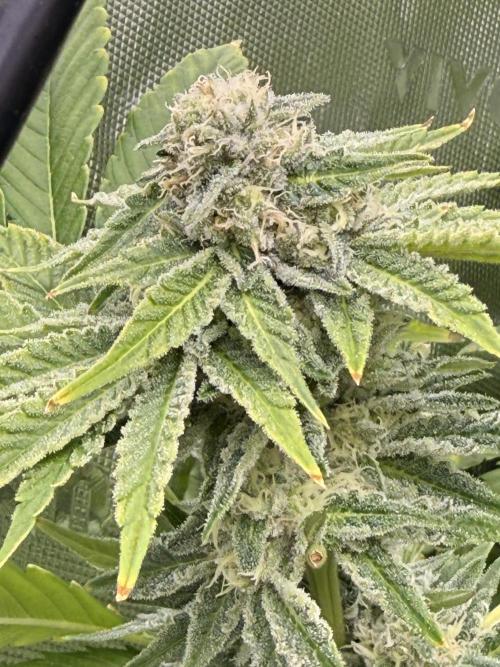
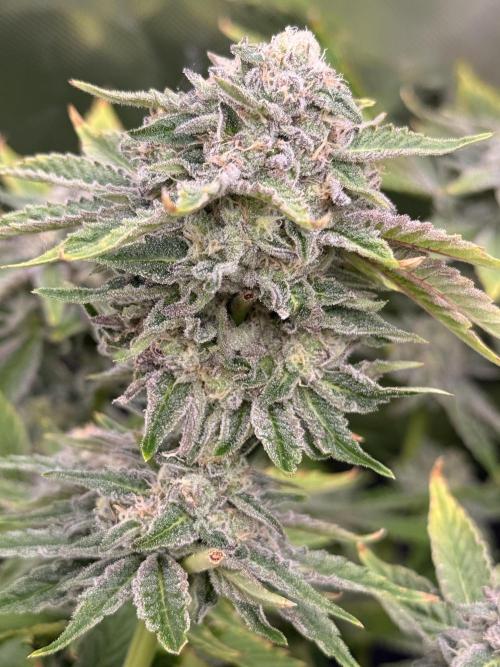
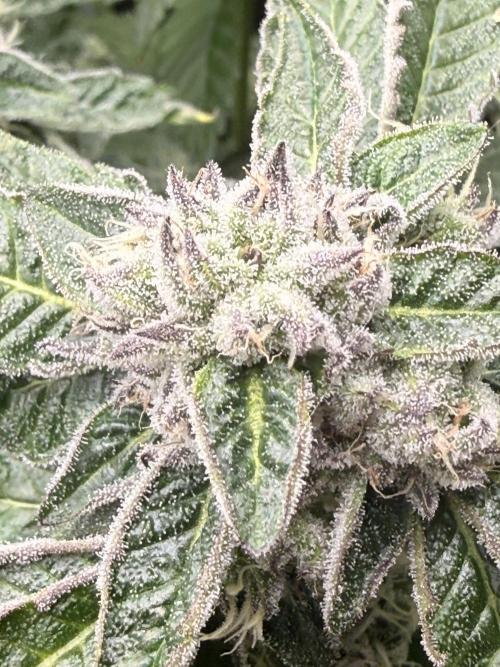
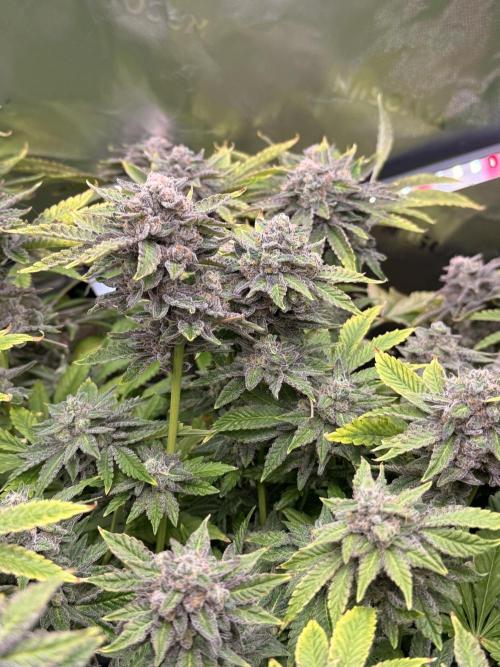
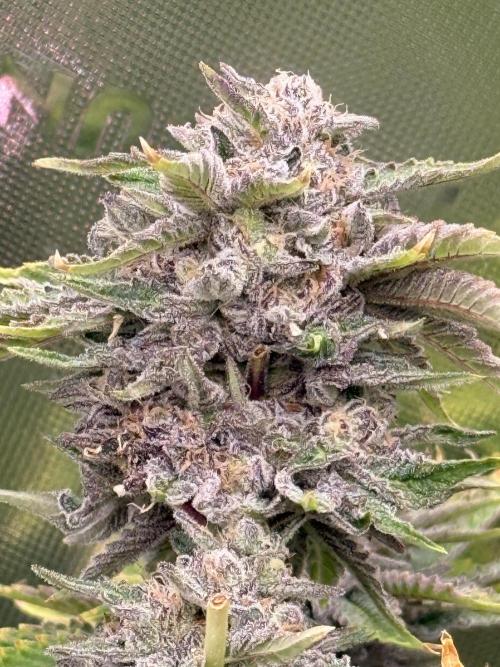
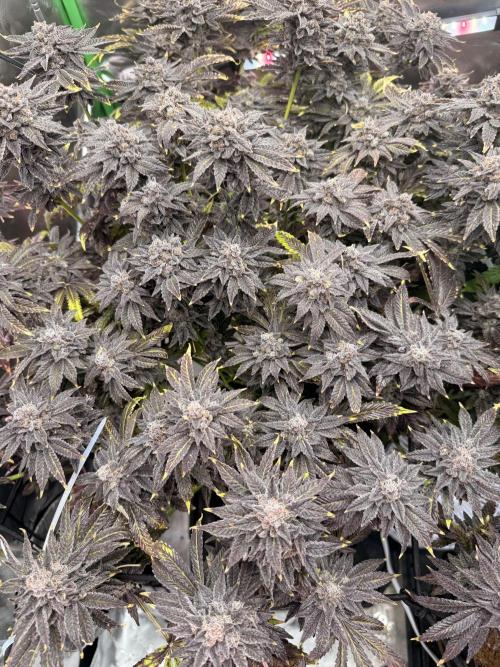
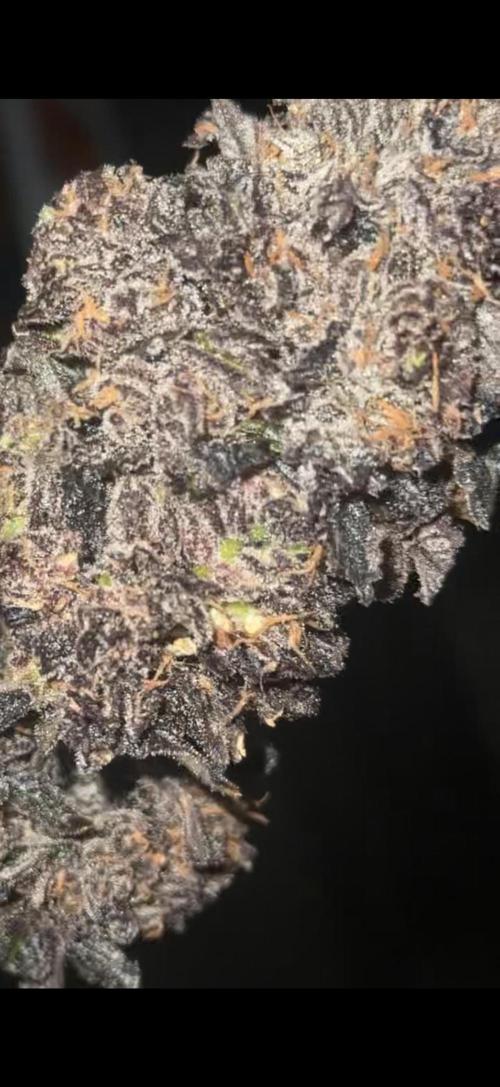
Muckman amazing colors and pungent nose just what the doctor ordered
4 likes
comments
Share
Used techniques
ScrOG
Technique
15
Week 15. Flowering
23d ago
1/11
93.98 cm
Height
12 hrs
Light Schedule
24 °C
Day Air Temp
6.2
pH
Strong
Smell
1500 PPM
TDS
50 %
Air Humidity
22 °C
Solution Temp
21 °C
Substrate Temp
18 °C
Night Air Temp
18.93 liters
Pot Size
21.49 liters
Watering Volume
88.9 cm
Lamp Distance
800 PPM
CO₂ Level
Nutrients 2
Bloom
0.396 mll
Carboflush
0.528 mll
Muckman The growth of this plants is very structurally sound, impressive density, and exceptionally loud. My carbon filter must be spent. The exhaust from my grow room is 8/10 on the “stinky scale”
2 likes
2 comments
Share
Used techniques
ScrOG
Technique
16
Week 16. Flowering
16d ago
1/10
93.98 cm
Height
12 hrs
Light Schedule
24 °C
Day Air Temp
6.2
pH
Strong
Smell
1500 PPM
TDS
50 %
Air Humidity
22 °C
Solution Temp
21 °C
Substrate Temp
18 °C
Night Air Temp
18.93 liters
Pot Size
21.49 liters
Watering Volume
88.9 cm
Lamp Distance
800 PPM
CO₂ Level
Nutrients 2
Bloom
0.396 mll
Carboflush
0.528 mll
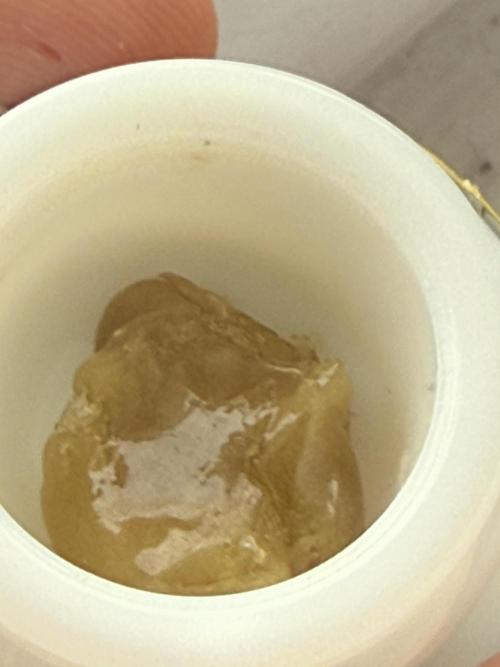
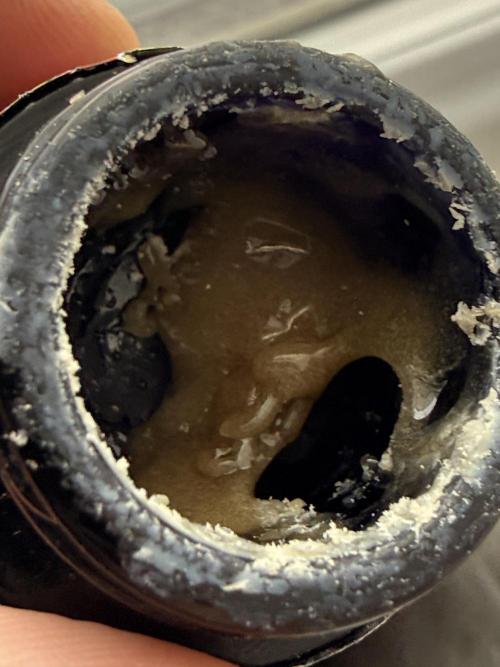
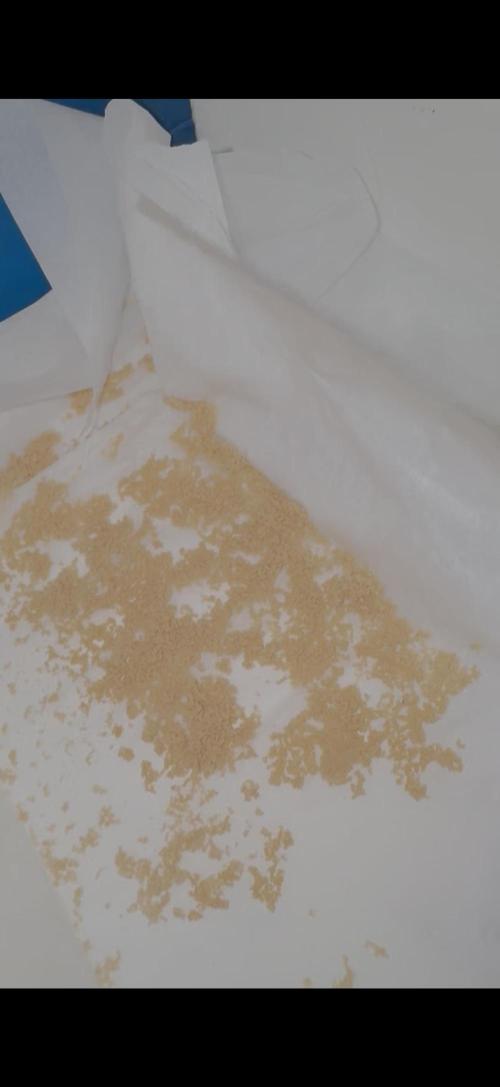
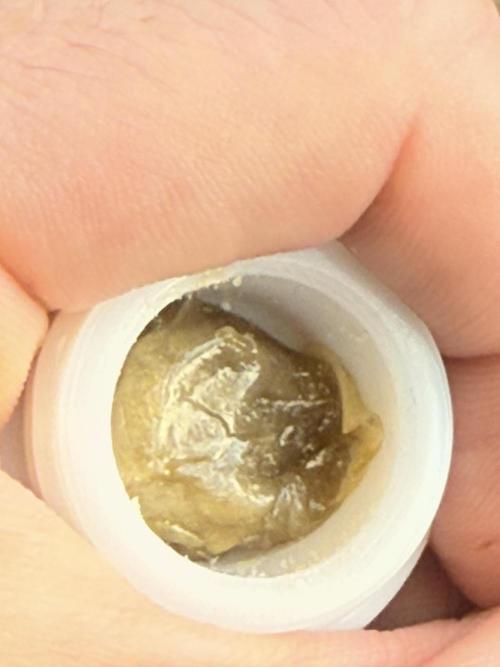
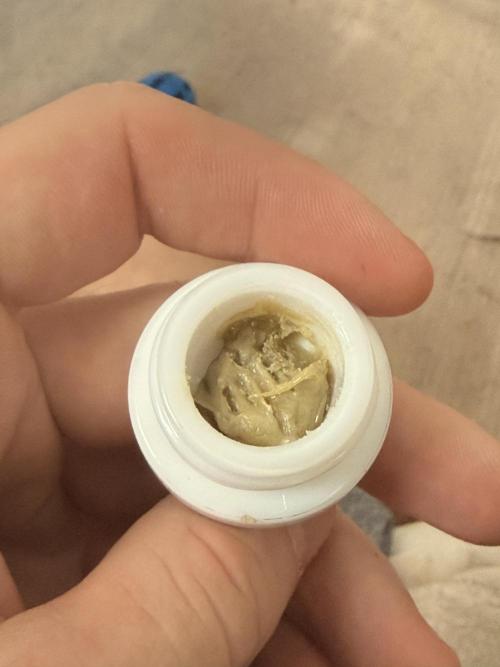
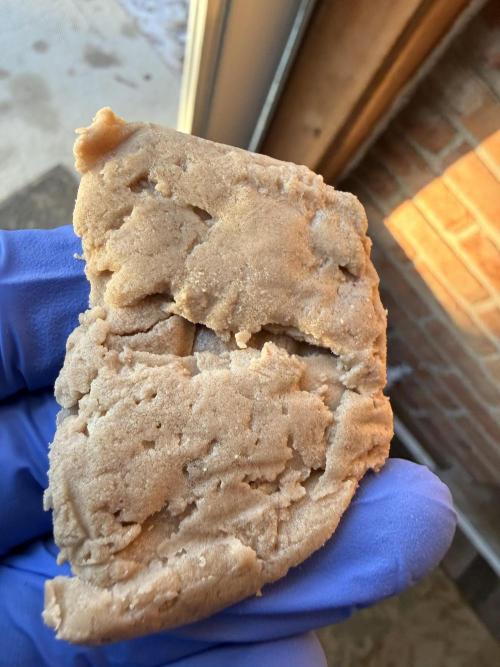
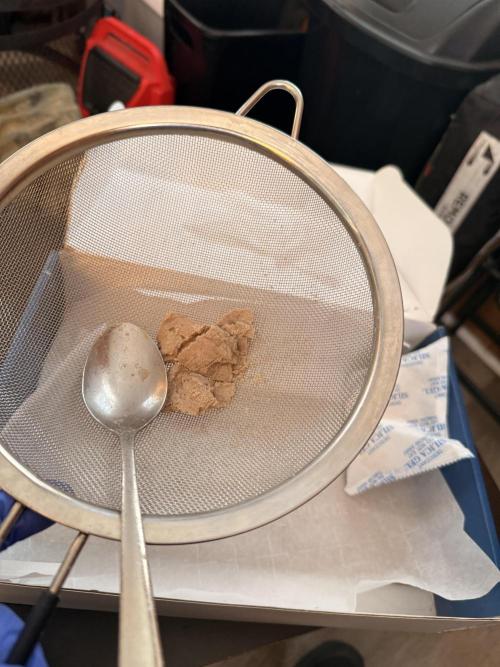
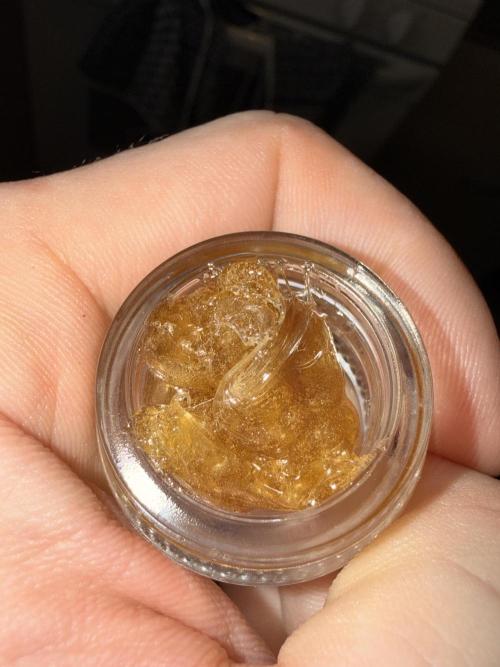
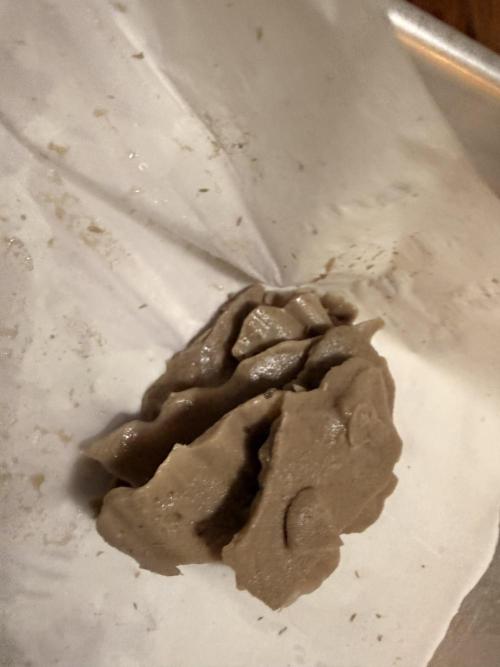
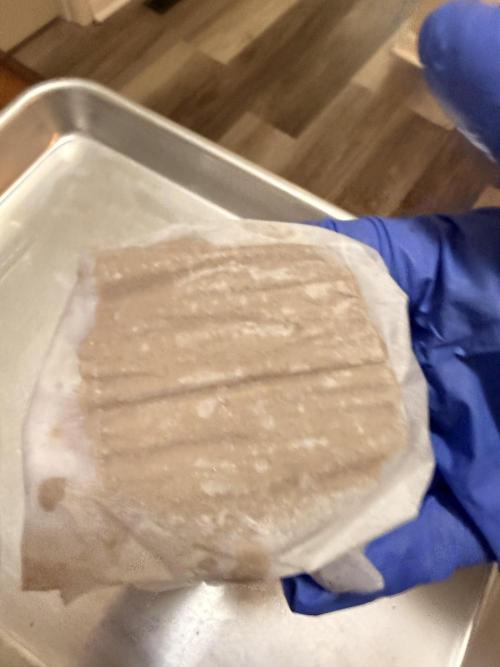
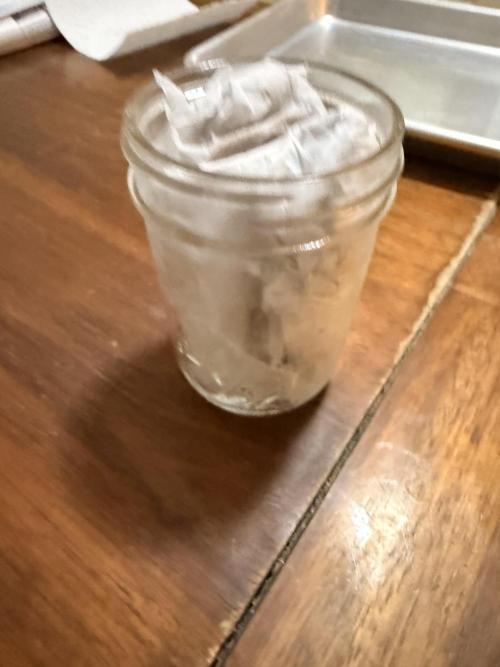
Muckman Holy smokes first time washing a full plant and it sure paid off on some unbelievable quality rosin. Pressed70-160 My some of my 160 melt pressed straight thru 25u and 37 u rolled over 2 times tightly. Great surface area maintained in my press and 90% yeild. Excited to dabble in the rosin game. That was my small dinker plant yielded 300 wet grams for the record. 13 grams return for bubble hash. Larger plants processed I’m hoping for better yield. Let the juicing begin
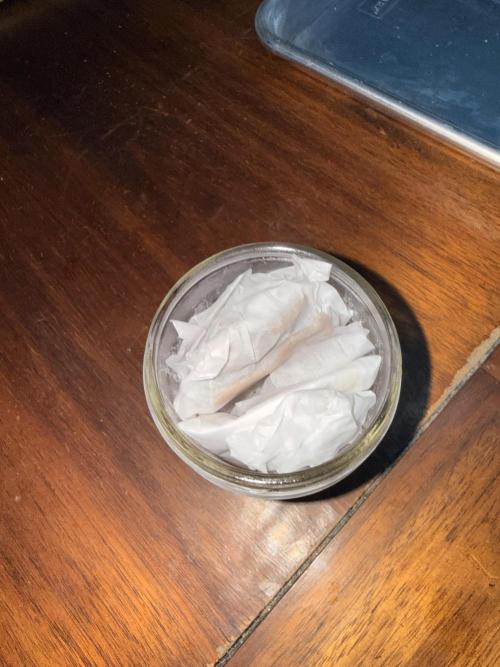
This is some top notch, 1 out of the 2 phenos is to die for. I extreme berry terps. Amazing resin production. Supreme. Bud structure. My hands were cacked with resin. As true in freezing immediate for hash rosin. Update: 1st 400 gram wash complete nice pick up hash. Update: some fresh press from 8 gram fresh frozen hash test run. Looks and smells amazing
Show more
Translate
Spent 107 days
Ger Veg Flo Har
700 g
Bud wet weight per plant
2
Plants
7.62 m²
Grow Room size
Normal
Difficulty
Height
Day air temperature
Air humidity
PPM
PH
CO2
Light schedule
Solution temperature
Night air temperature
Substrate temperature
Pot size
Lamp distance
1/19
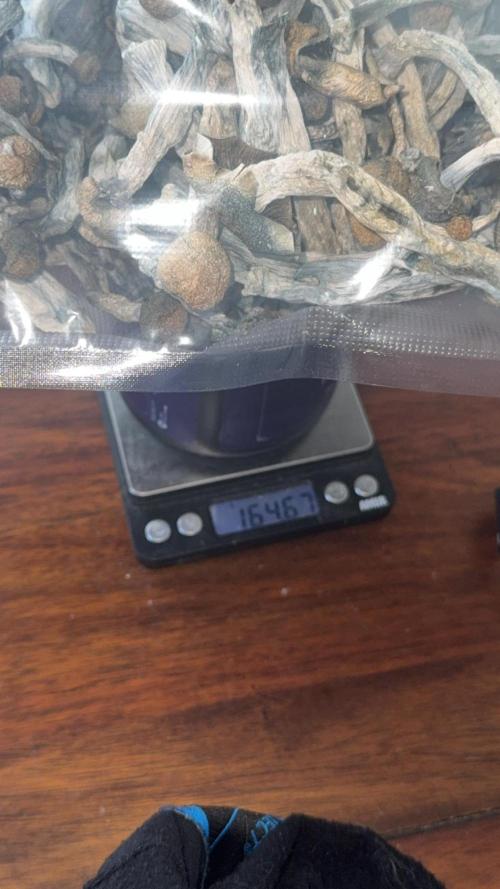
Muckman This grow is looking phenomenal. Can’t wait to wash for rosin! Freezing as of now update: test run of bubble this shit is fucing crazy gas. So pungent and full of flavor. Tried some wet Melt in the Puffco it hits like crazy. Great effects and gas flavor. Will be pressing asap update did a 2nd wash tonight of all the trim from plant 3. I’d say 600 wet grams. Yielded great and awesome color.
update: pressed 10 gram puck of rosin to test run. See results above. She’s a squirter! Update: I’m officially done wash all of this plant. Good fuckin riddance in the best way. Ugh I’m just pooped hands are killin me. Over 3 batches the yeild is insane: the coloring in the first hash batch has such an orange/ yellow tint compared to the pale merky other 2 batches. Anywho ids say 35 grams total in hash. We will have to see the total numbers but to say I yielded 10 grams with the smaller batch I’d say on par. Fuck I can prolly make some thumbprints with the 2 different hues make it fancy. Great time for it being cold!
Wow that's a chunky harvest! She looks super dense and frosty. The structure is incredible. That carbon filter definitely earned its keep! Enjoy the fruits of your labor! 🔥🌿