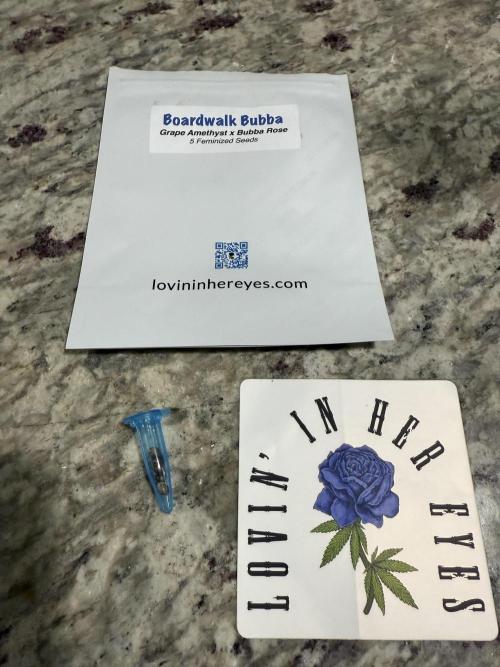
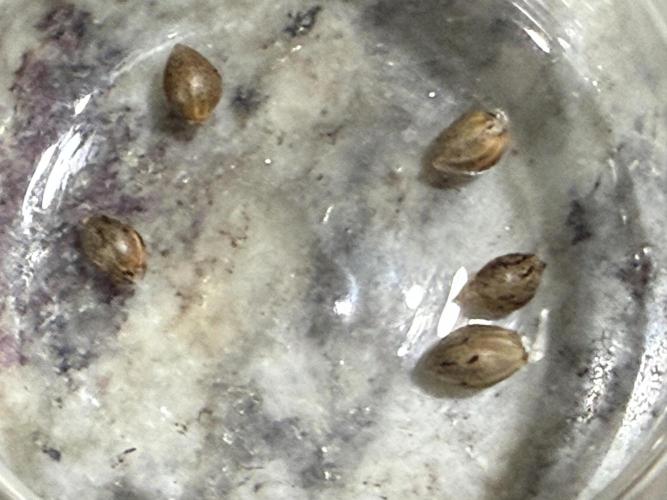
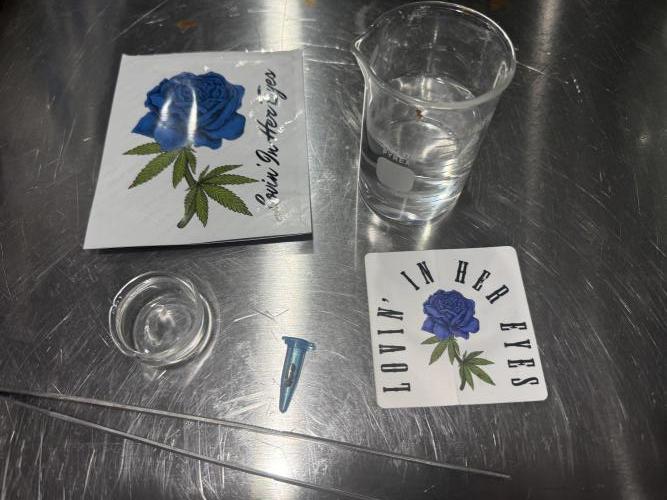
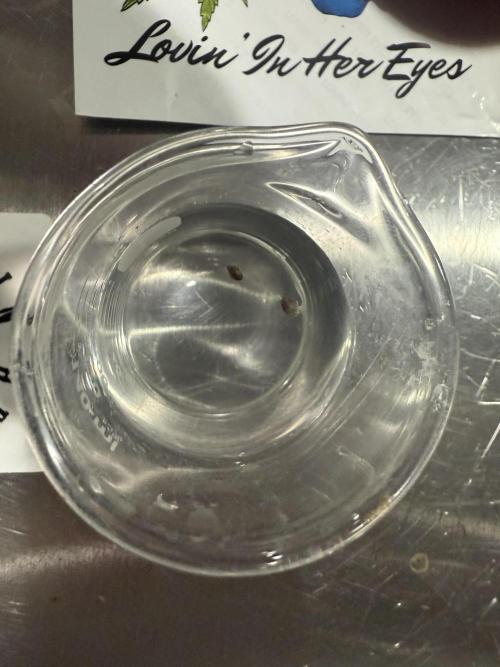
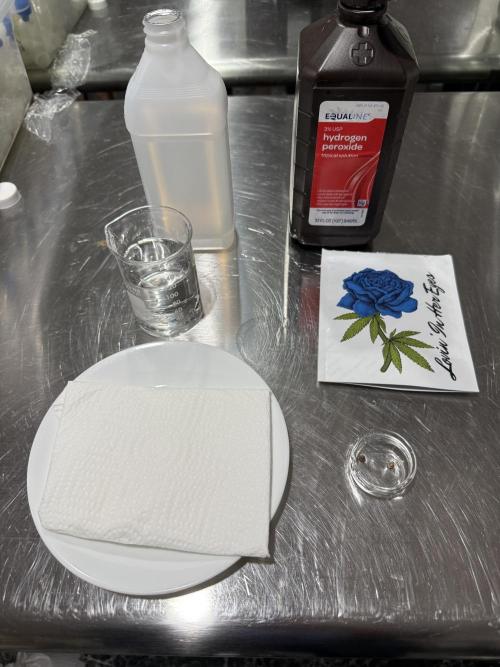
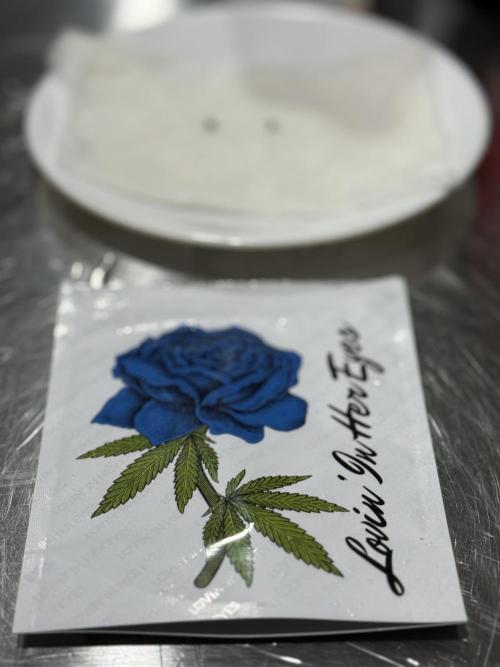
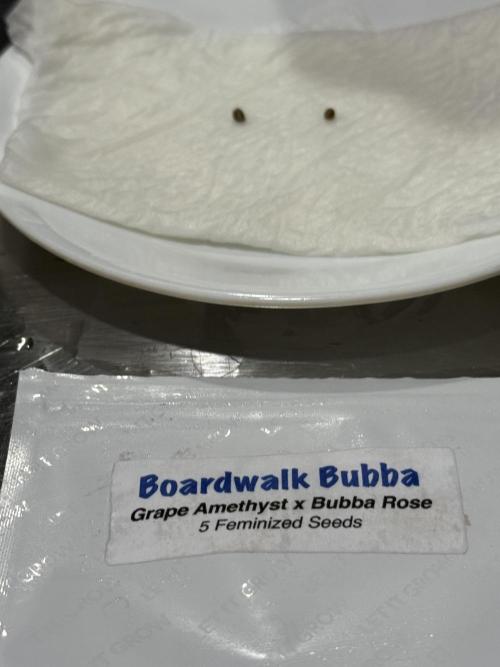
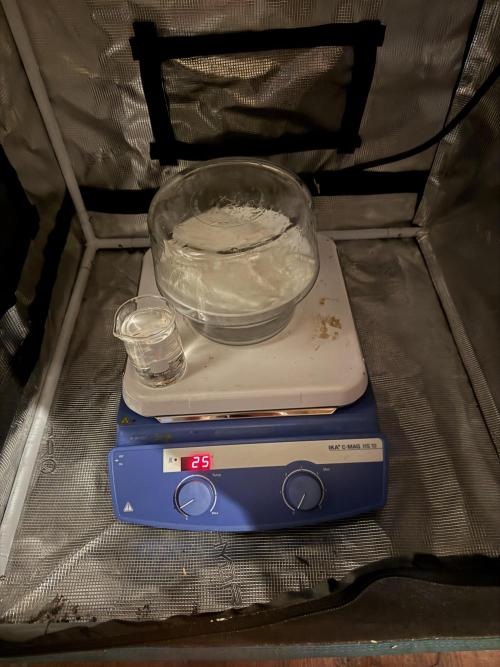
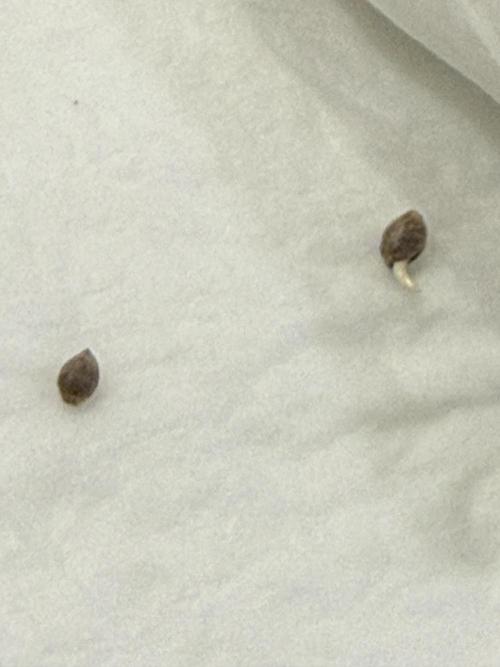
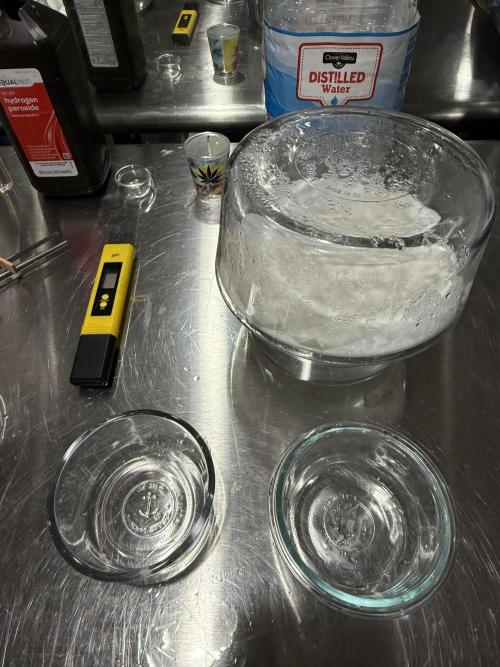
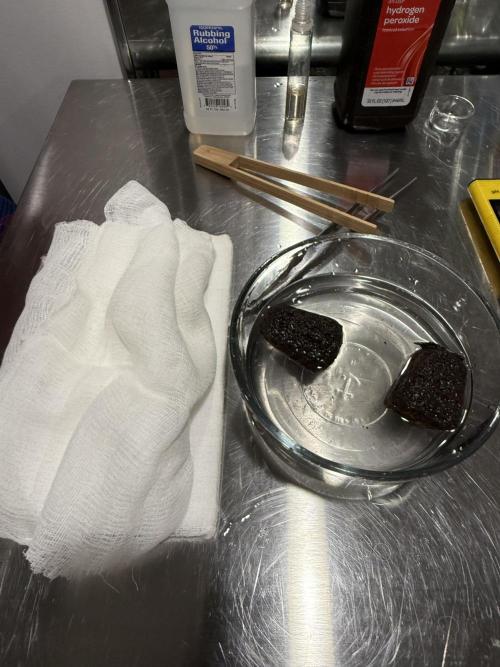
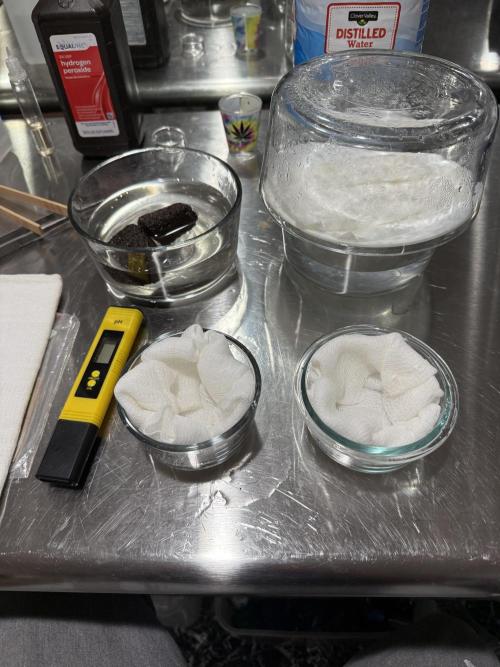
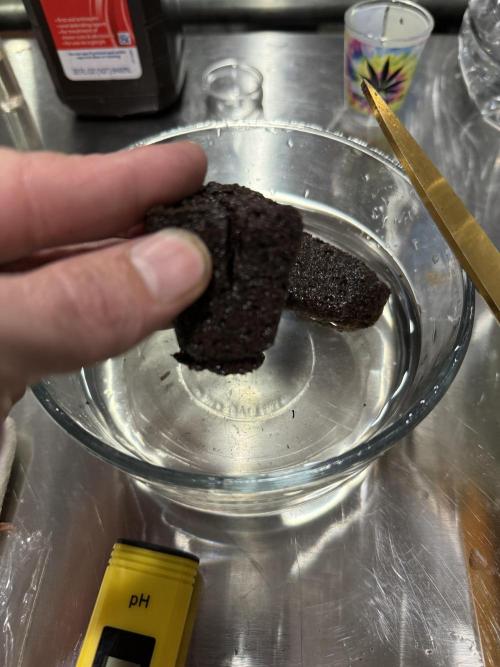
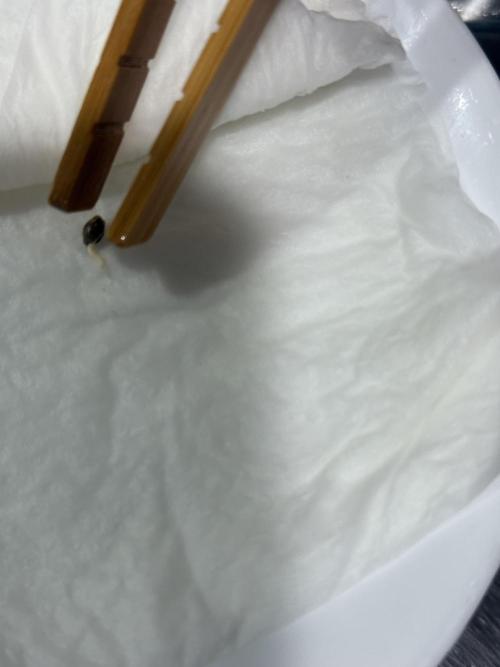
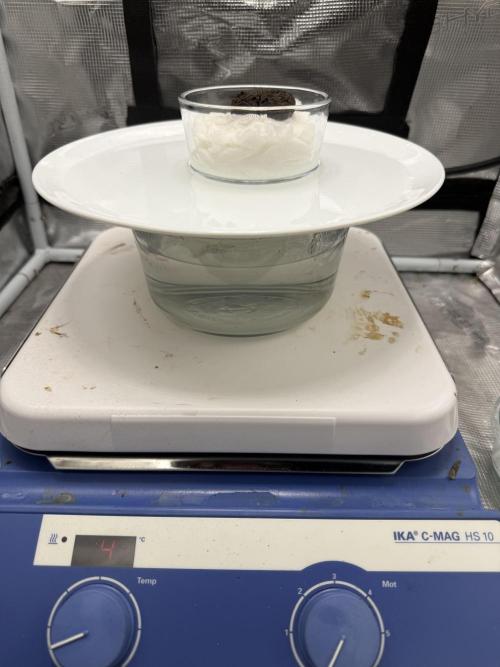
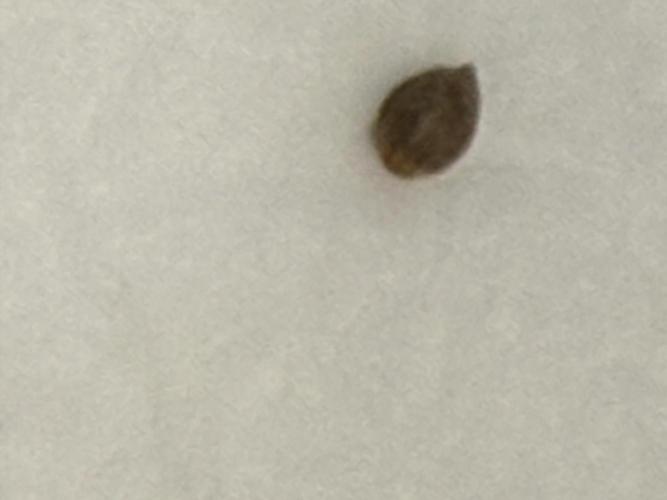
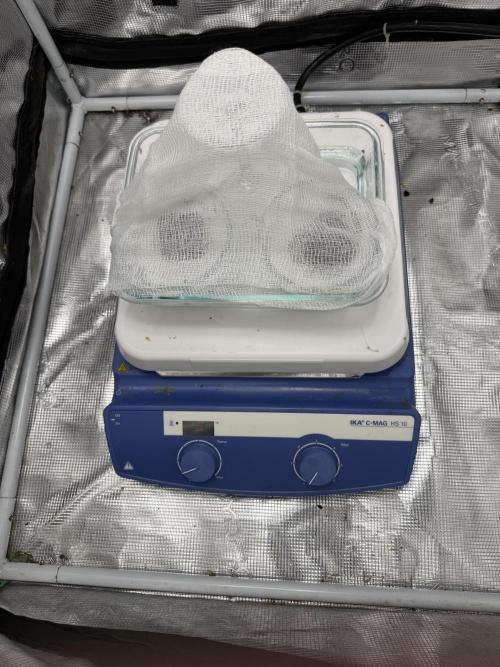
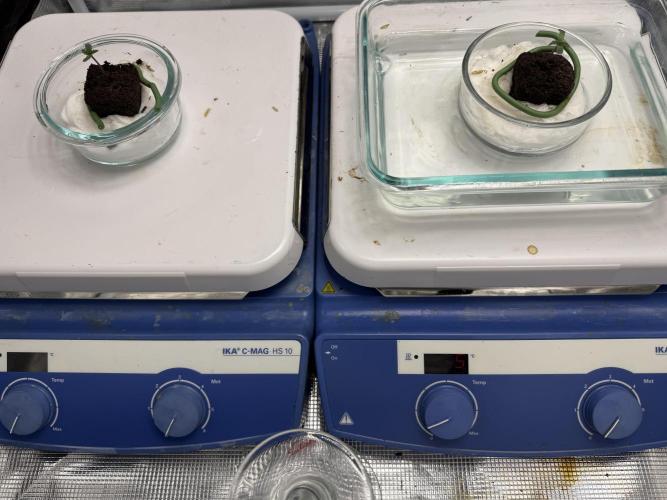
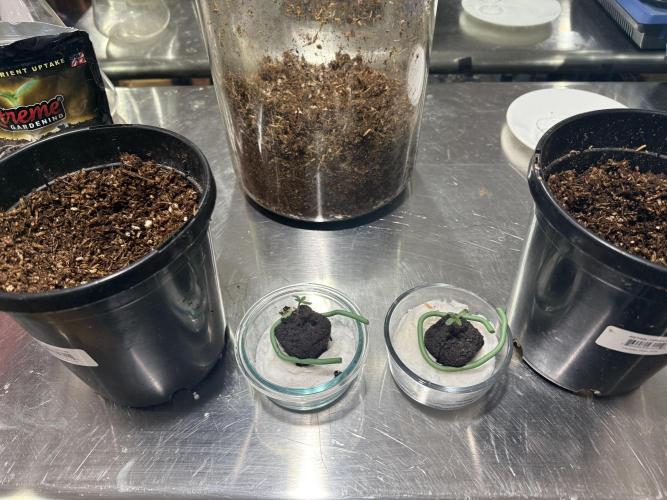
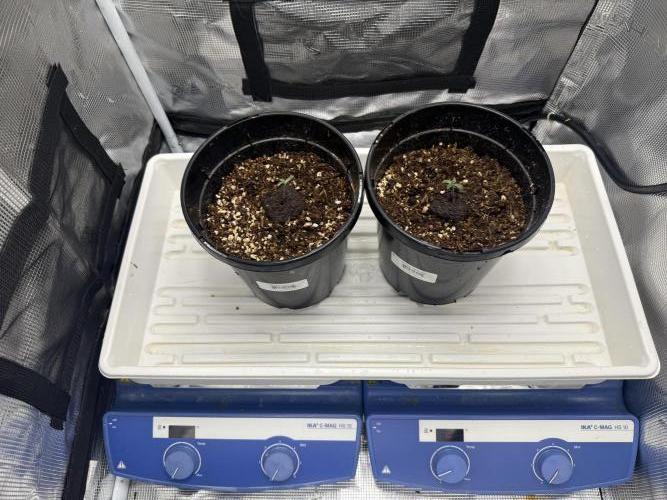
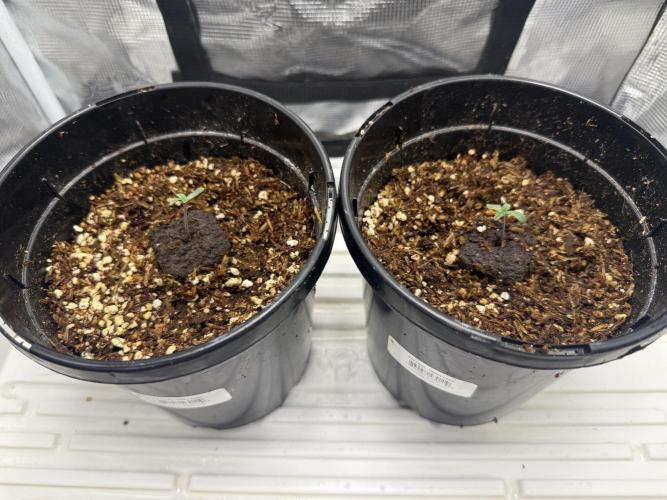
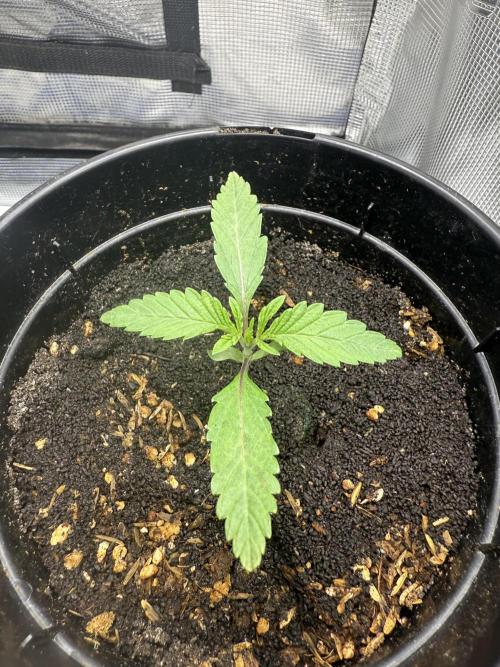
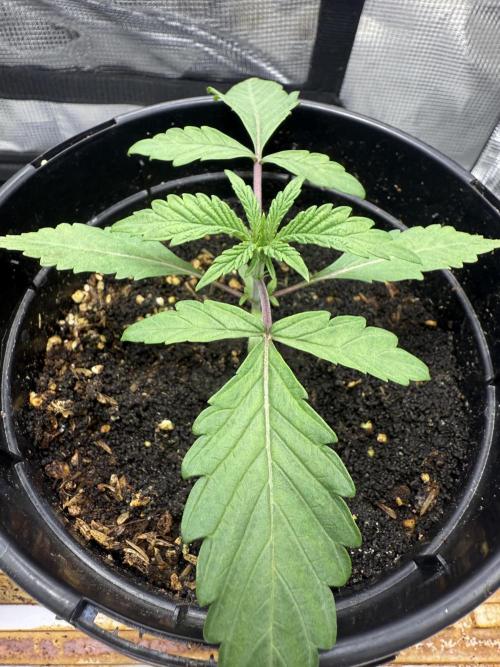
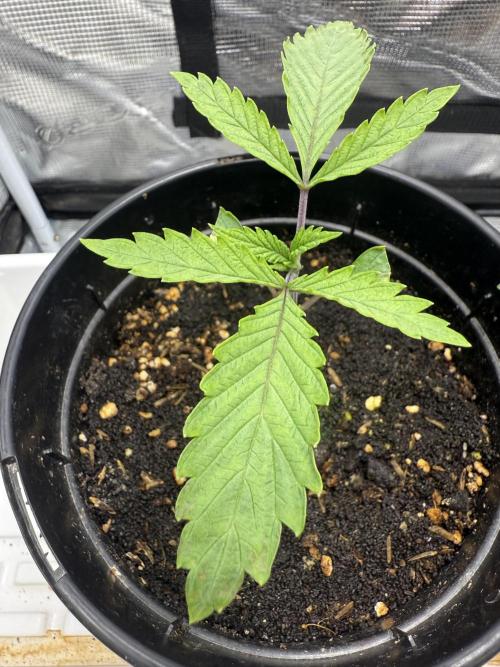
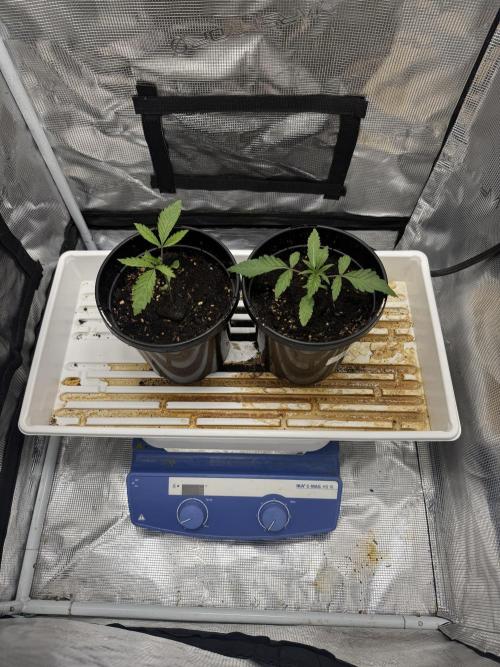
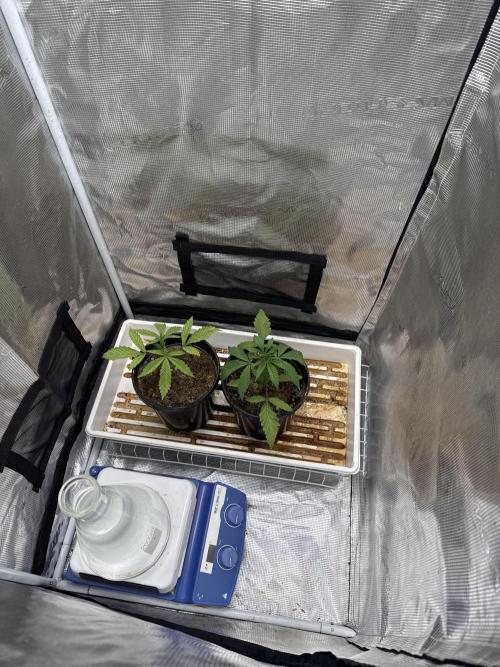
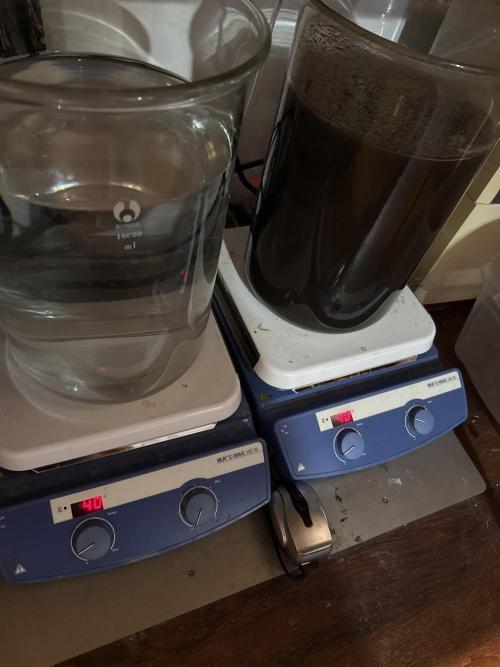
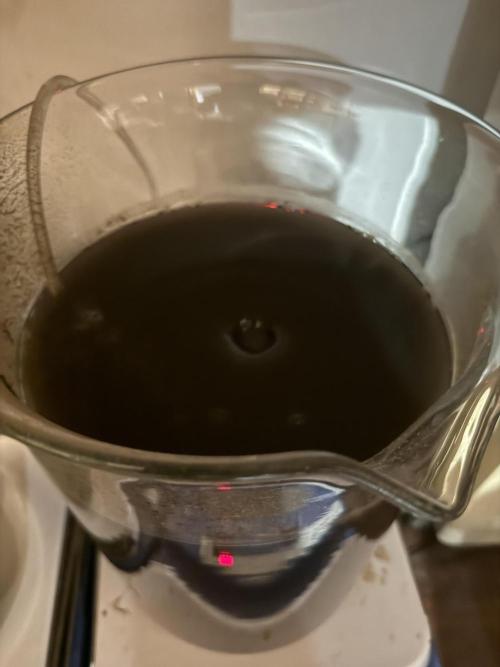
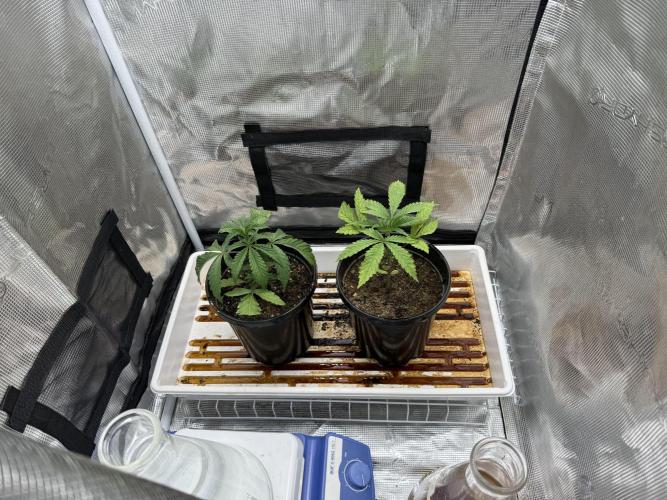
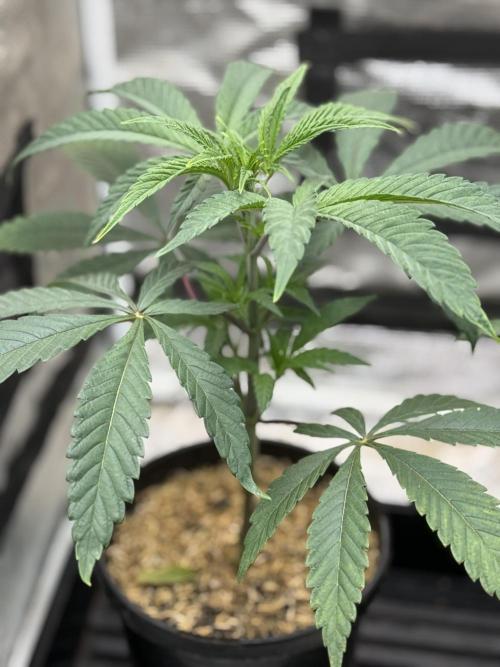
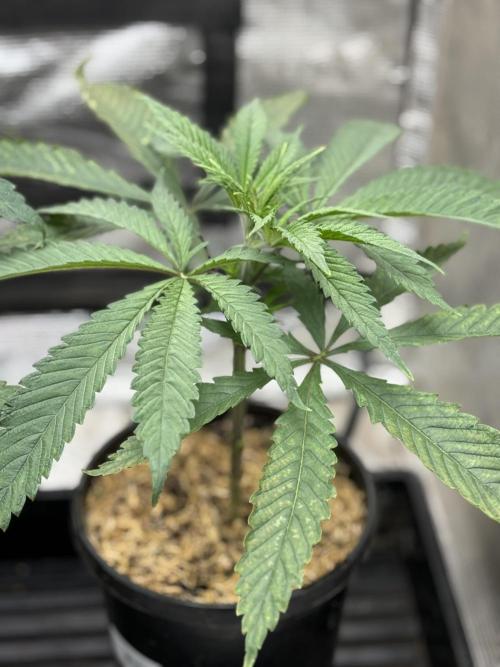
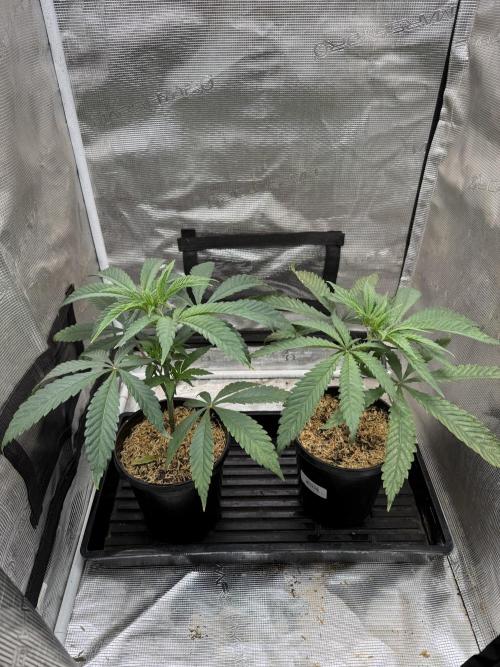
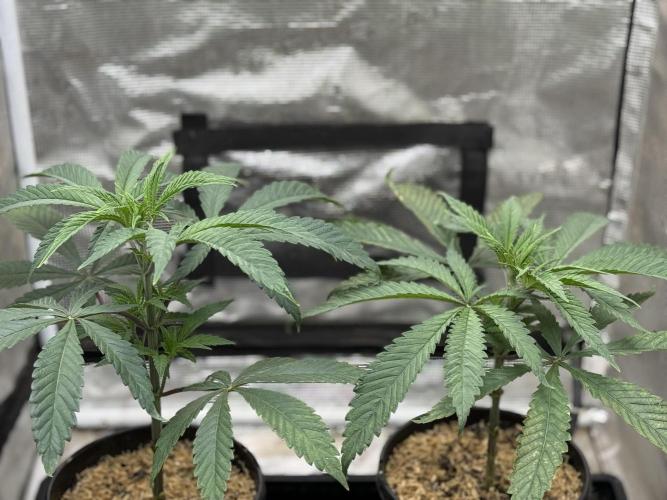
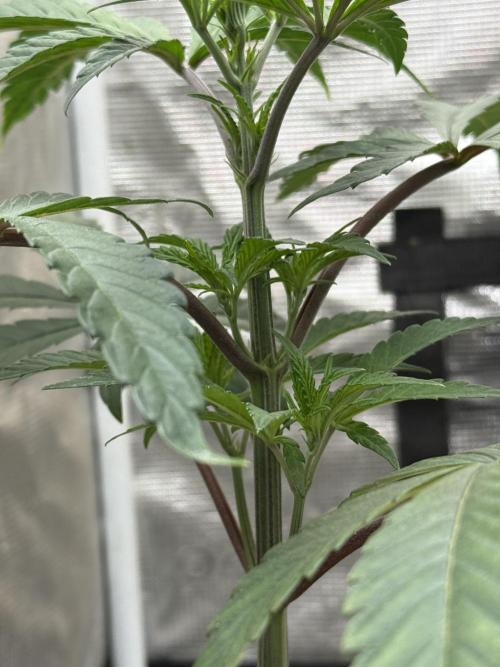
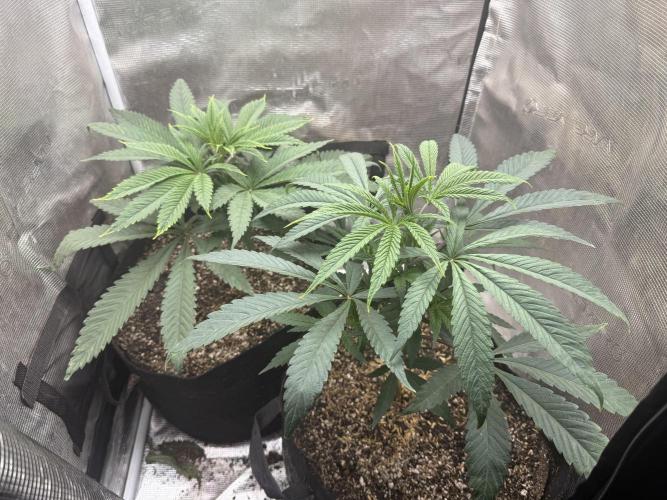
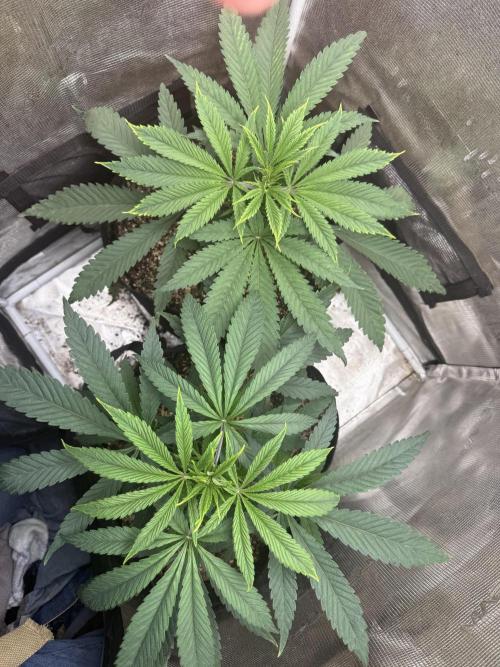
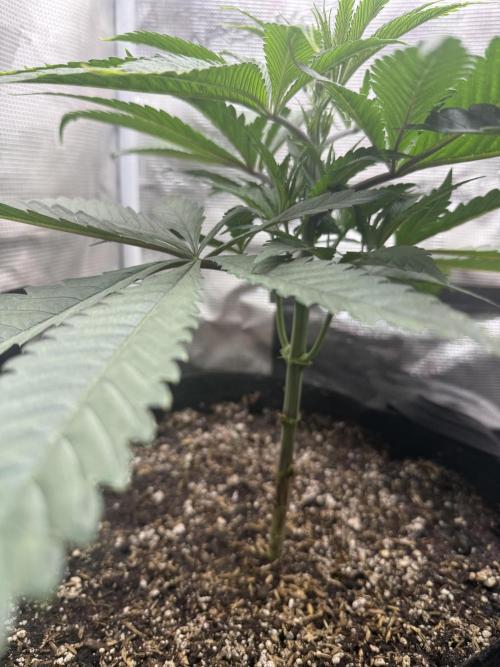
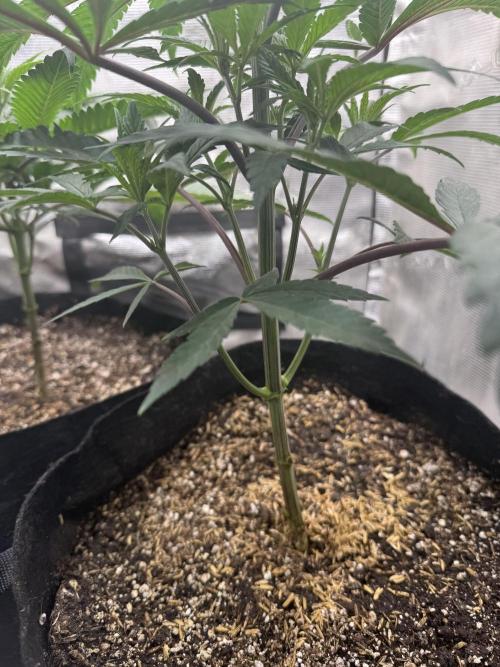
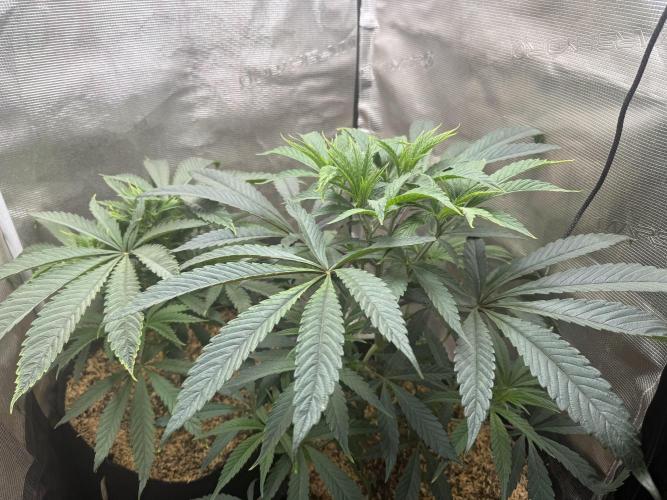
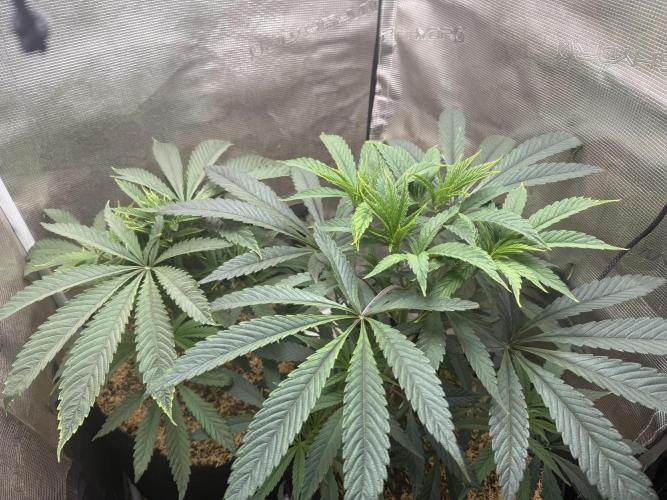
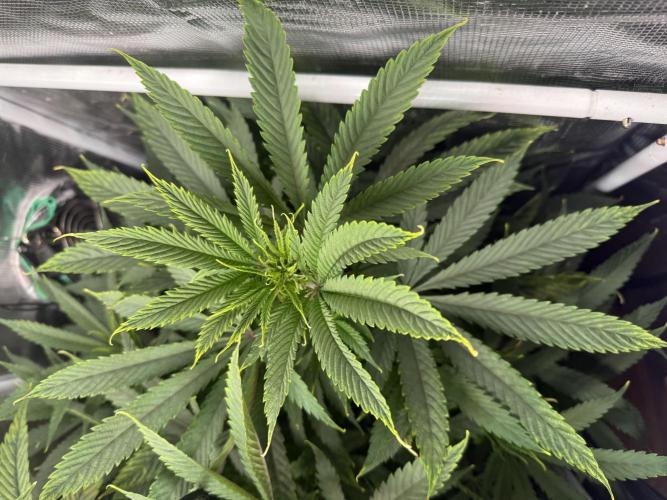
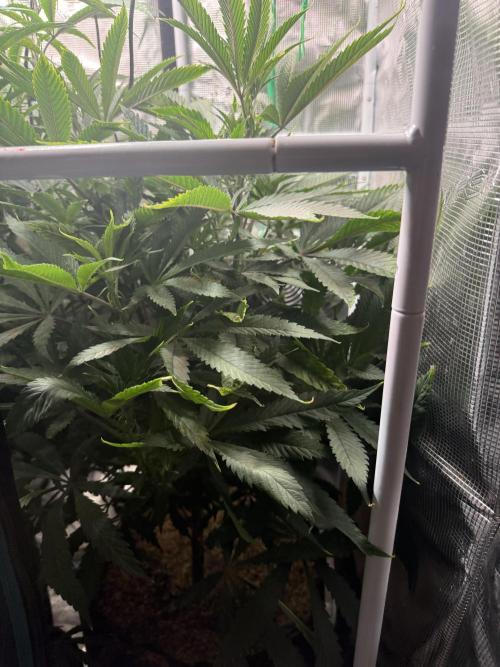
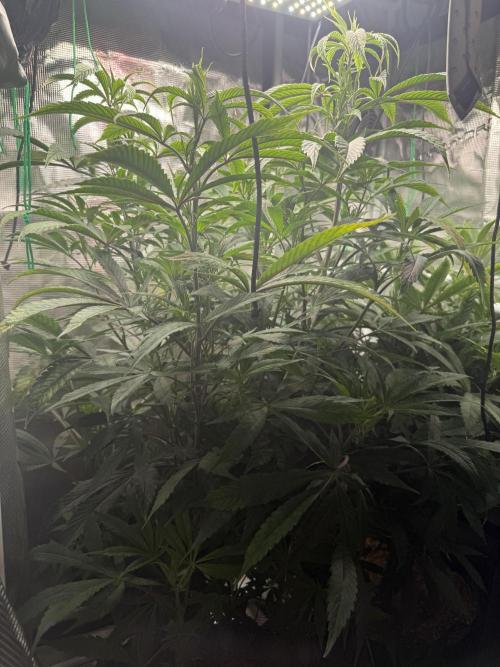
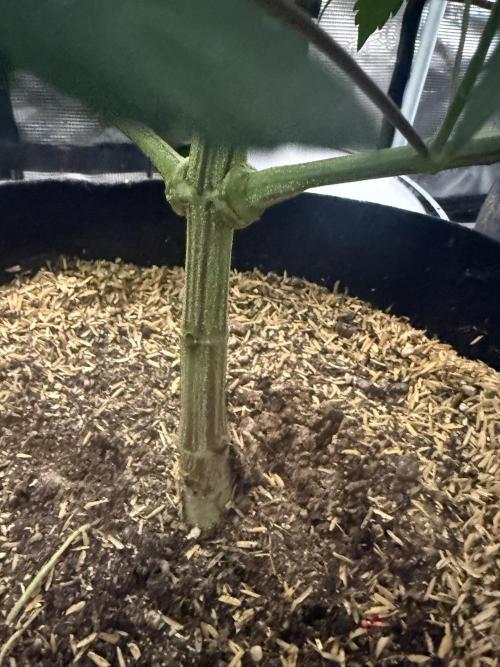
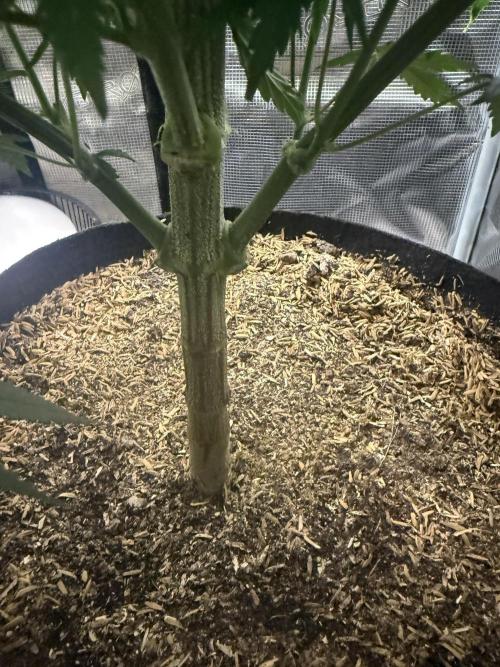
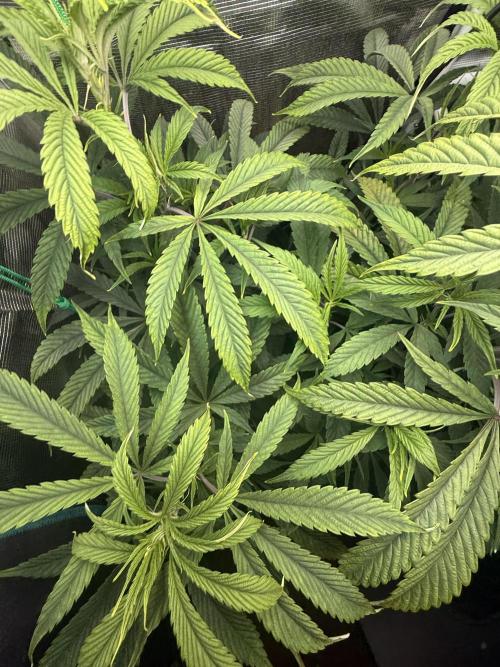
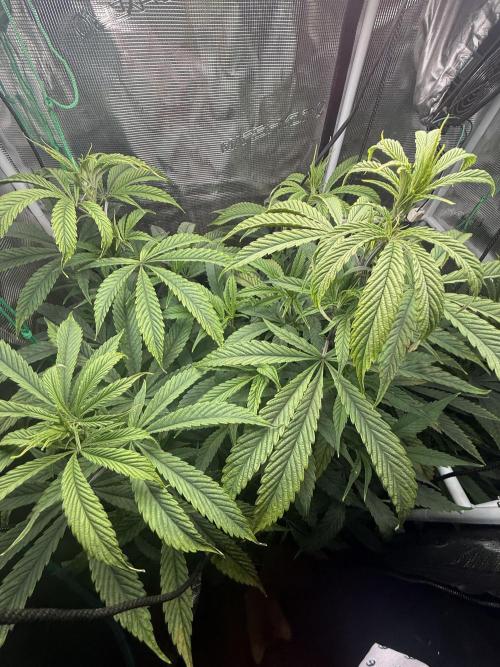
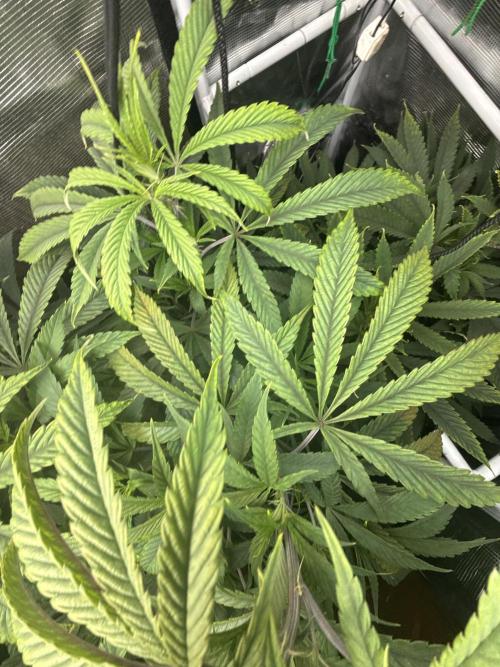
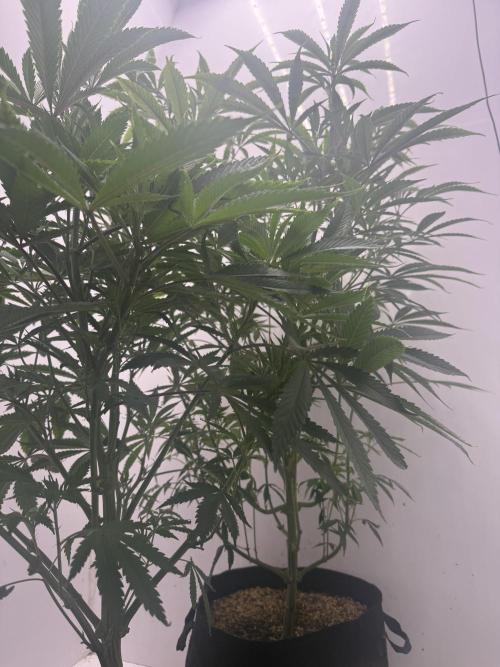
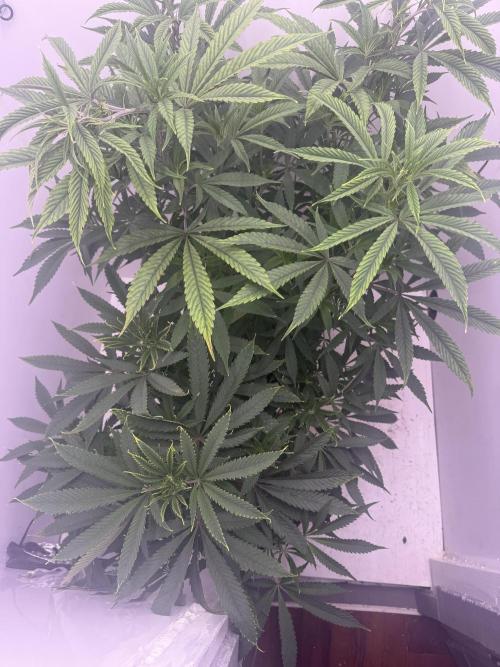
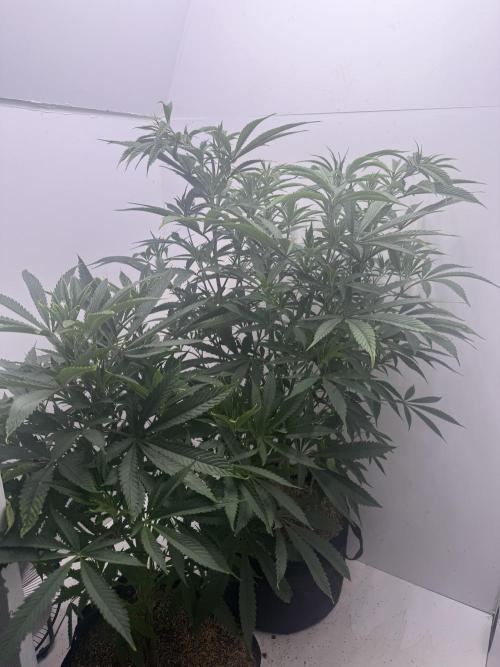
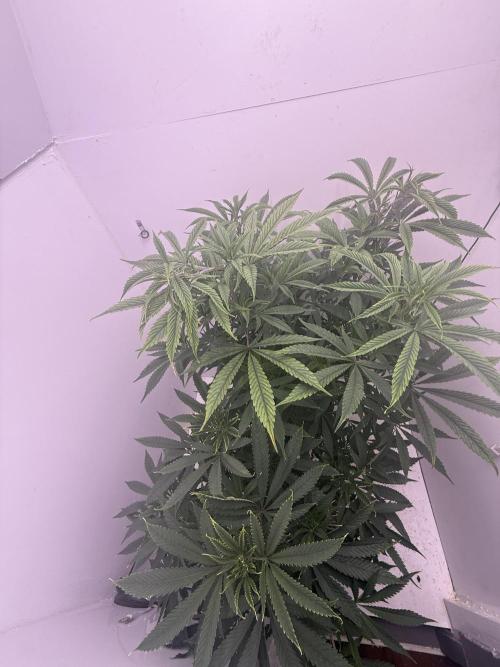
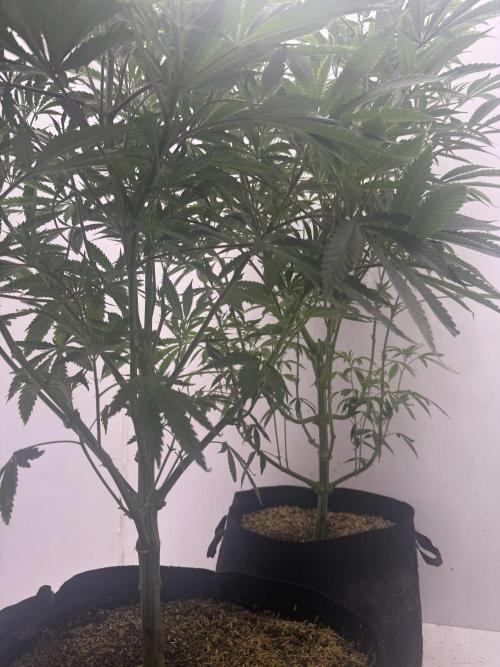
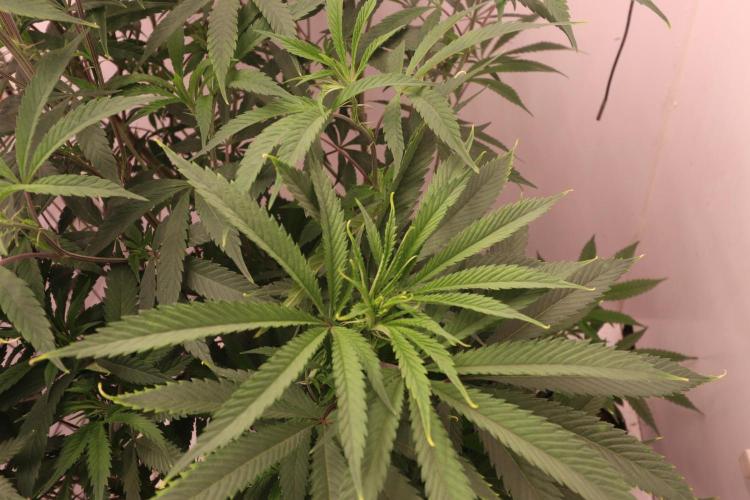
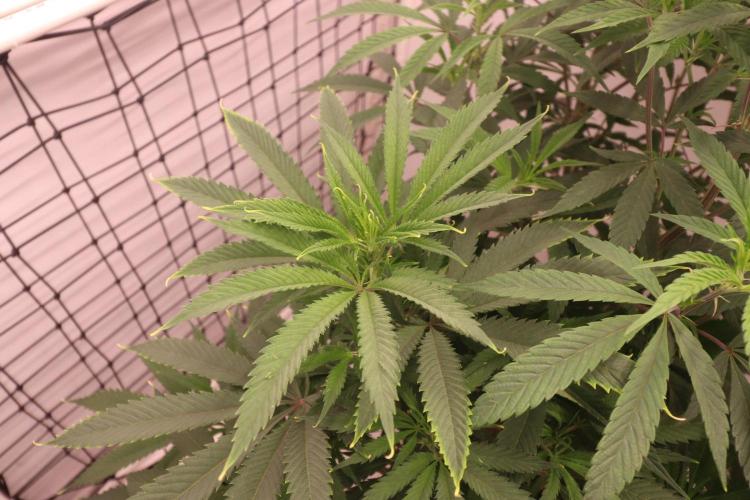
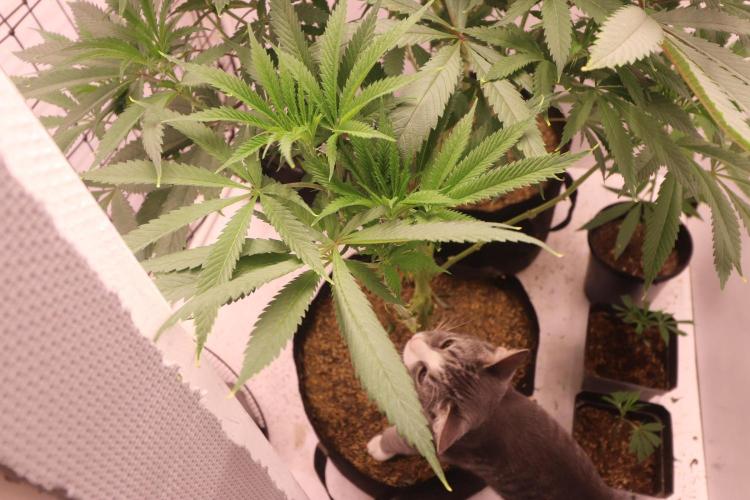
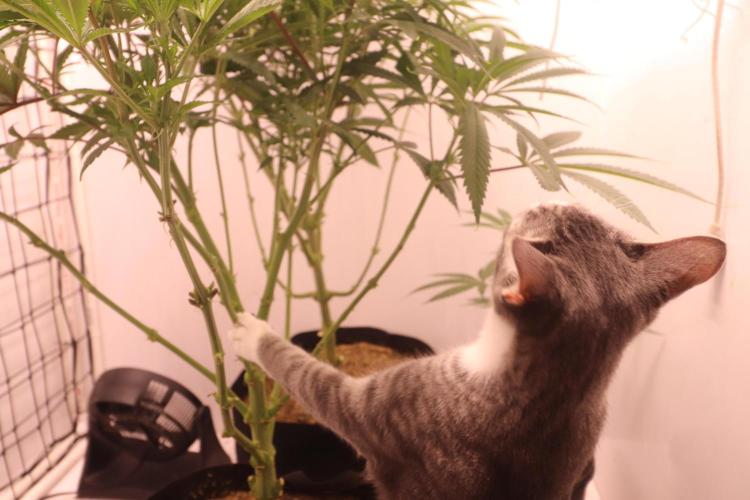
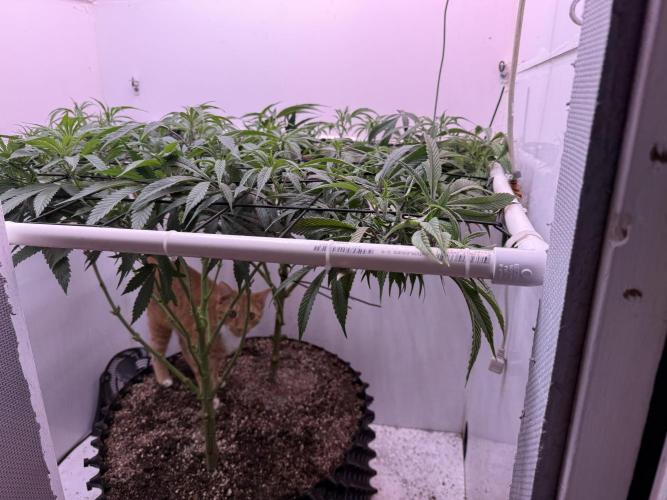
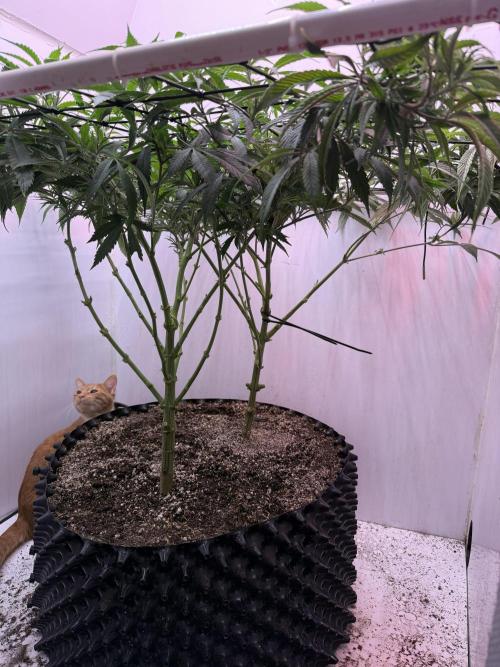
Fiz420 Here we go Boardwalk Bubba! Lovin in her eyes, been waiting to try this breeder. Starting in 1% hydrogen peroxide mix with distilled water for 24 hours on a IKA hot plate set at 25c love this method. 72hr update. I just love when I think this run is gonna go perfect then a cracked seed arrives. After 36 hours only one had popped. I took the other seed sanded the other side and placed it in a kelp, aloe vera flakes, amino acid and worm casting tea, I brew this ahead of time and add a drop of organic living matter 10 minutes before application. I soaked the seed for six hours then placed it back in a paper towel. 14 hours later she popped Woot (captain save a seed) now the fun part I’m going to have to dual chamber for these starters and going to place one at 67° and one at 77° so their metabolism is different for the next 48 hours or so and these girls should be the same size.
2 likes
comments
Share
Used method
Paper Towel
Germination Method
1
Week 1. Vegetation
2mo ago
1/3
12.7 cm
Height
24 hrs
Light Schedule
6.2
pH
No Smell
Smell
420 PPM
TDS
60 %
Air Humidity
26 °C
Solution Temp
20 °C
Substrate Temp
21 °C
Night Air Temp
2 liters
Pot Size
0.2 liters
Watering Volume
60.96 cm
Lamp Distance
670 PPM
CO₂ Level
Nutrients 6
Kelp
1.3 mll
Liquid organic matter
0.106 mll
Recharge
0.26 mll
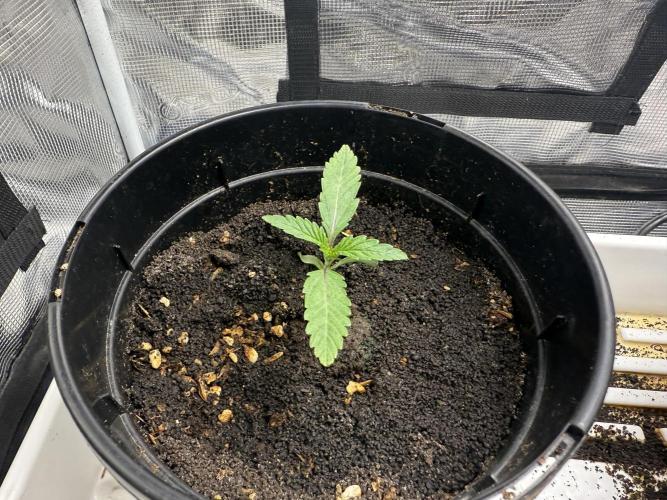
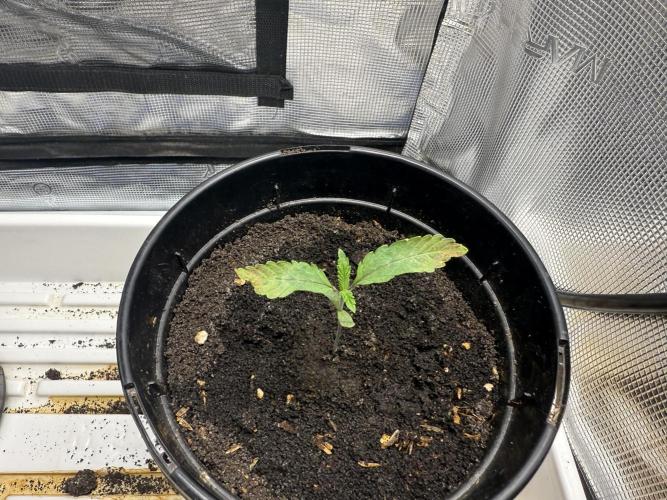
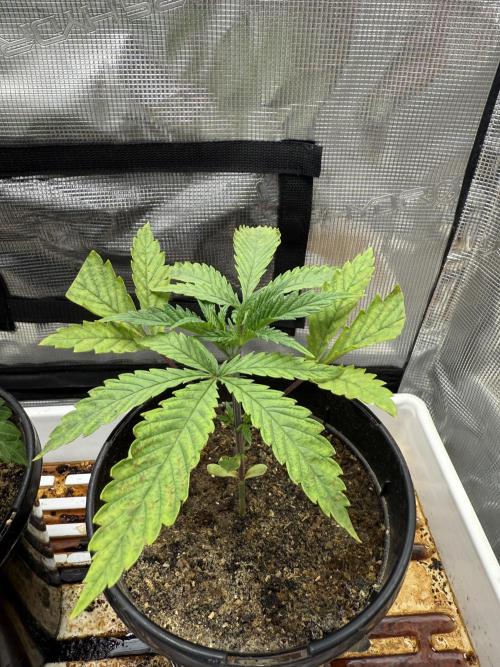
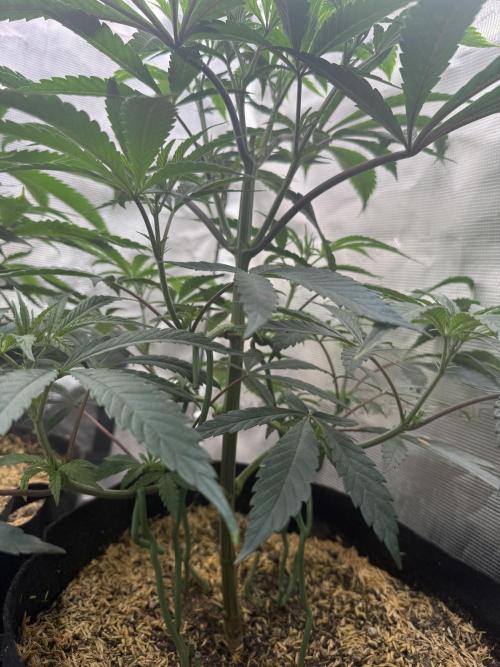
Fiz420 I started with a different seedling mix then I normally (Dikine 420) use because I’m missing a few things and I thought I had flushed it correctly. Turns out it was still cooking as my runoff was around 900. They suffered a little nutrient burn, but I flushed with recharge and star botanicals powdered kelp. Day 17 they’re recovering fine.
1 like
comments
Share
Used techniques
Transplantation
Technique
2
Week 2. Vegetation
2mo ago
1/5
12.7 cm
Height
24 hrs
Light Schedule
6.2
pH
No Smell
Smell
420 PPM
TDS
60 %
Air Humidity
26 °C
Solution Temp
20 °C
Substrate Temp
21 °C
Night Air Temp
2.01 liters
Pot Size
0.19 liters
Watering Volume
60.96 cm
Lamp Distance
670 PPM
CO₂ Level
Nutrients 7
Kelp
1.3 mll
Liquid organic matter
0.106 mll
Cold press, fish
2.113 mll
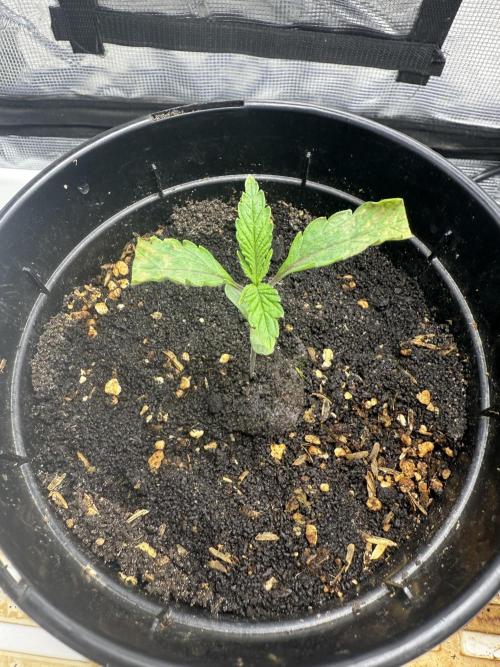
Fiz420 Two flushes and five teas later…. I truly hate Dakine soil for seedlings but they should recover fine.
1 like
comments
Share
3
Week 3. Vegetation
2mo ago
1/5
27.94 cm
Height
18 hrs
Light Schedule
26 °C
Day Air Temp
6.5
pH
No Smell
Smell
700 PPM
TDS
60 %
Air Humidity
18 °C
Solution Temp
20 °C
Substrate Temp
21 °C
Night Air Temp
0.53 liters
Pot Size
0.49 liters
Watering Volume
45.72 cm
Lamp Distance
750 PPM
CO₂ Level
Nutrients 9
Kelp
1.3 mll
Liquid organic matter
0.106 mll
Cold press, fish
8 mll
Fiz420 Rehab is going ok… I finally get to move to my super soil this week. I use a custom soil mix based off Coots.
I add 2 cubic of base the following: 50/50 coco/pete, 50/50 rice hulls/perelite, 50/50 worm castings/bat guano
2 cups Azomite
1 cup glacial rock dust
2 cups Gaia green 4-4-4
2 cups kelp meal
2 cups dolomite lime
1/2 cup each of High N and P guano
1 cup insect frass
1 cup neem or 1/2 cup neem and Karanja
1/2 cup greensand and oyster shell
1/4 cup Bokshi
1/4 cup Alfalfa meal
1/2 cup Greengro Earthshine.
I shake it up and flip it daily for a week, then add a humic acid, fermented molasses, and recharge tea for three weeks before I transplant for veg.
1 like
comments
Share
Used techniques
Defoliation
Technique
Transplantation
Technique
4
Week 4. Vegetation
2mo ago
1/9
30.48 cm
Height
18 hrs
Light Schedule
25 °C
Day Air Temp
6.5
pH
No Smell
Smell
800 PPM
TDS
60 %
Air Humidity
18 °C
Solution Temp
20 °C
Substrate Temp
21 °C
Night Air Temp
0.53 liters
Pot Size
0.49 liters
Watering Volume
40.64 cm
Lamp Distance
750 PPM
CO₂ Level
Nutrients 8
Liquid organic matter
0.106 mll
Cold press, fish
8 mll
Mono si
0.5 mll
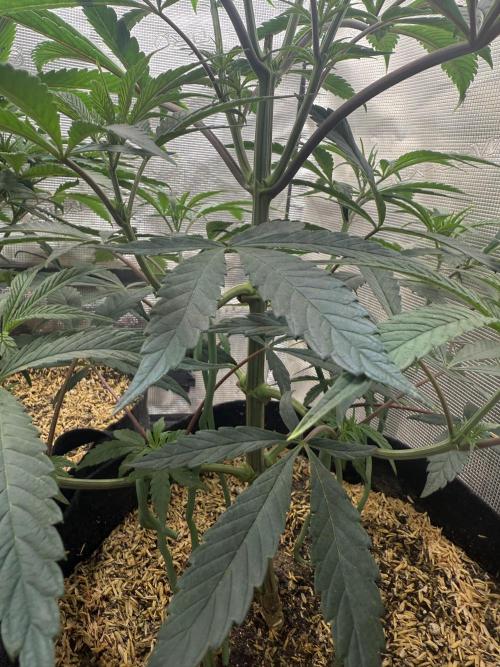
Fiz420 Now that they’re healthy enough to top time to start training them. For years I have used fresh aloe I find capping where I cut on the plant for a 15 minute period after does wonders.
I also make a spray after I top that uses a base of Willow water. I add a small amount of raw, honey, fresh aloe extracted from my plant and some raw coconut water. About a 3 x 3 square of clear aloe with the skin cut off, 1/3 cup of coconut water, 2 teaspoons of raw honey into a gallon of willow water. If I have any left I poured on the soil.
2 likes
comments
Share
Used techniques
Defoliation
Technique
Topping
Technique
LST
Technique
5
Week 5. Vegetation
1mo ago
1/3
45.72 cm
Height
18 hrs
Light Schedule
26 °C
Day Air Temp
6.5
pH
No Smell
Smell
1000 PPM
TDS
60 %
Air Humidity
18 °C
Solution Temp
20 °C
Substrate Temp
18 °C
Night Air Temp
0.53 liters
Pot Size
0.49 liters
Watering Volume
40.64 cm
Lamp Distance
750 PPM
CO₂ Level
Nutrients 13
Liquid organic matter
0.106 mll
Cold press, fish
8 mll
Mono si
0.5 mll
Fiz420 Growth accelerated a little fast this week. Looks like I might be outpacing my iron and sulfur production. I am very impressed with the look of these genetics. I can already see some blue/purples.
The size of the leaves tells me I’m juicing them a little which is shocking because I went with a very light blend because of this stain having some strange genetic background with the bubba kush. I know they stabilized it, but this was a clone only strain. my breeder says unknown Bubba in the lineage….
I am truly hoping for a fruit pheno, having blueberry and grape blend with Kush would be perfect for me.
likes
comments
Share
Used techniques
LST
Technique
Topping
Technique
Defoliation
Technique
6
Week 6. Vegetation
18d ago
1/3
45.72 cm
Height
18 hrs
Light Schedule
26 °C
Day Air Temp
6.5
pH
No Smell
Smell
1000 PPM
TDS
60 %
Air Humidity
18 °C
Solution Temp
20 °C
Substrate Temp
18 °C
Night Air Temp
0.53 liters
Pot Size
0.49 liters
Watering Volume
40.64 cm
Lamp Distance
750 PPM
CO₂ Level
Nutrients 14
Liquid organic matter
0.106 mll
Cold press, fish
8 mll
Mono si
0.5 mll
Fiz420 Did not have many photos as I had to leave for two weeks unexpectedly, so I overwatered them and took the lights down to 30%. Crossing fingers
likes
comments
Share
Used techniques
Topping
Technique
Defoliation
Technique
8
Week 8. Vegetation
18d ago
1/13
83.82 cm
Height
18 hrs
Light Schedule
26 °C
Day Air Temp
6.5
pH
No Smell
Smell
1000 PPM
TDS
60 %
Air Humidity
18 °C
Solution Temp
20 °C
Substrate Temp
18 °C
Night Air Temp
0.53 liters
Pot Size
1.89 liters
Watering Volume
40.64 cm
Lamp Distance
750 PPM
CO₂ Level
Nutrients 14
Liquid organic matter
0.106 mll
Cold press, fish
8 mll
Mono si
0.5 mll
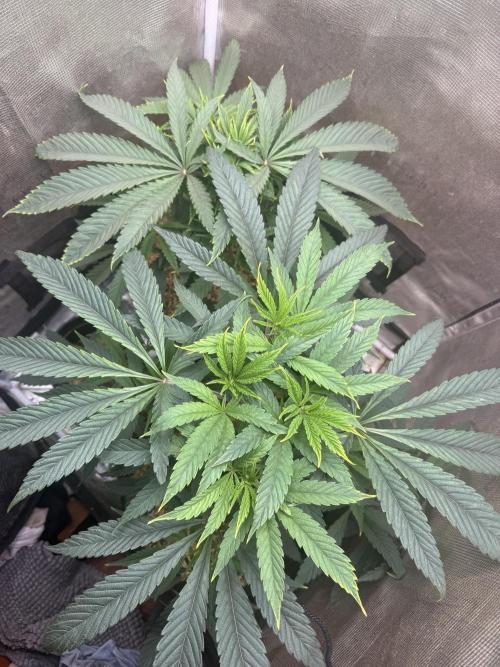
Fiz420 They lived the little ones actually thriving the big ones like help me as it’s about 6 inches away from the light…. I am starting to push more phosphorus and potassium and getting prepared for my massive calcium depletion as I move to flower.
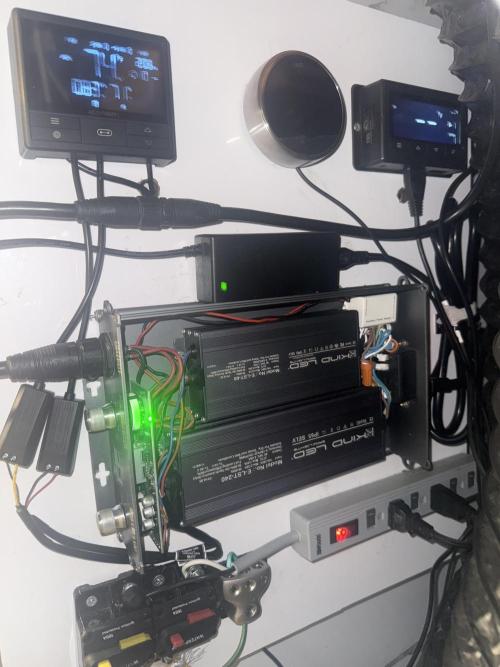
A few upgrades to the grow room I will go over next week. Turns out I had a few blowouts and did not maintain the +6psi in the room I was going for and probably landed more around +3psi. I’m gonna give it one more shot with flexible ductwork but I have a feeling I have to move everything to electronic blast gates or PVC duct work for the EVR, heat pump and closed loop dehumidifier.
likes
comments
Share
9
Week 9. Vegetation
13d ago
1/6
99.06 cm
Height
18 hrs
Light Schedule
26 °C
Day Air Temp
6.5
pH
No Smell
Smell
1200 PPM
TDS
60 %
Air Humidity
18 °C
Solution Temp
20 °C
Substrate Temp
18 °C
Night Air Temp
0.53 liters
Pot Size
2.65 liters
Watering Volume
76.2 cm
Lamp Distance
700 PPM
CO₂ Level
Nutrients 14
Liquid organic matter
0.106 mll
Cold press, fish
8 mll
Mono si
0.5 mll
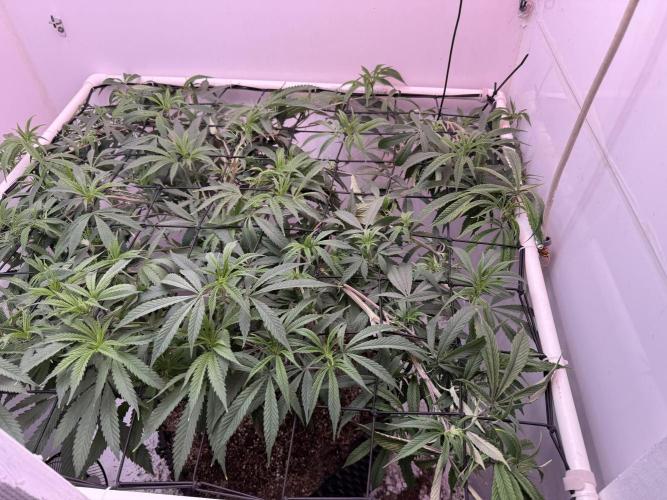
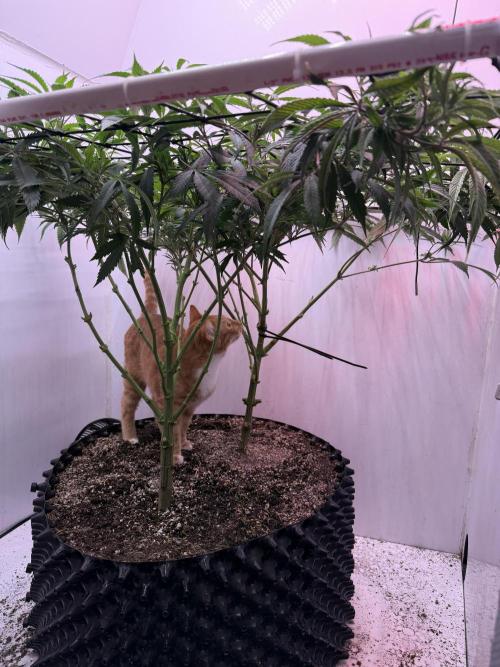
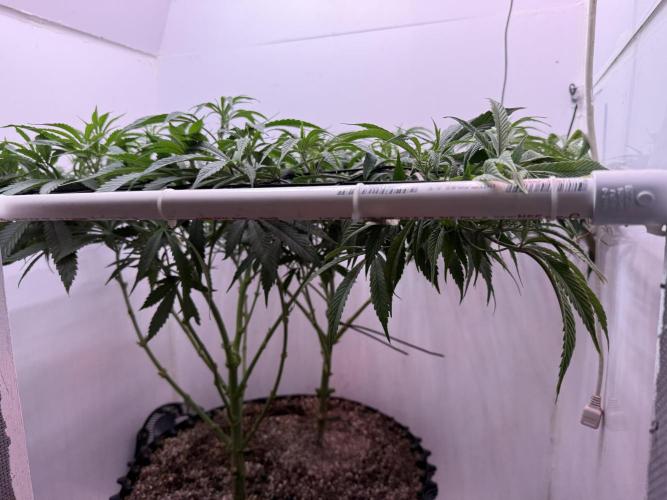
Fiz420 Move them into the flowering room, going to veg them for another two weeks before I transplant them into one living soil bed. Continued with defoliation.
likes
comments
Share
Used techniques
Defoliation
Technique
10
Week 10. Vegetation
7d ago
1/10
104.14 cm
Height
18 hrs
Light Schedule
26 °C
Day Air Temp
6.5
pH
No Smell
Smell
1200 PPM
TDS
60 %
Air Humidity
18 °C
Solution Temp
20 °C
Substrate Temp
18 °C
Night Air Temp
0.53 liters
Pot Size
2.65 liters
Watering Volume
76.2 cm
Lamp Distance
700 PPM
CO₂ Level
Nutrients 14
Liquid organic matter
0.106 mll
Mono si
0.5 mll
Alfalfa meal
1.3 mll
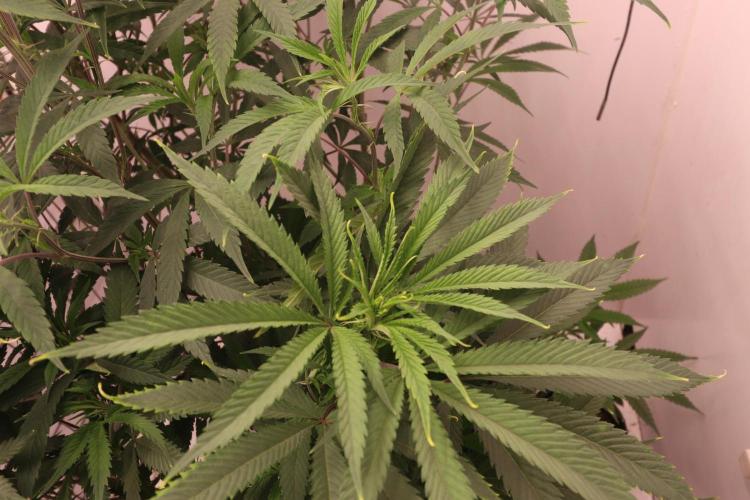
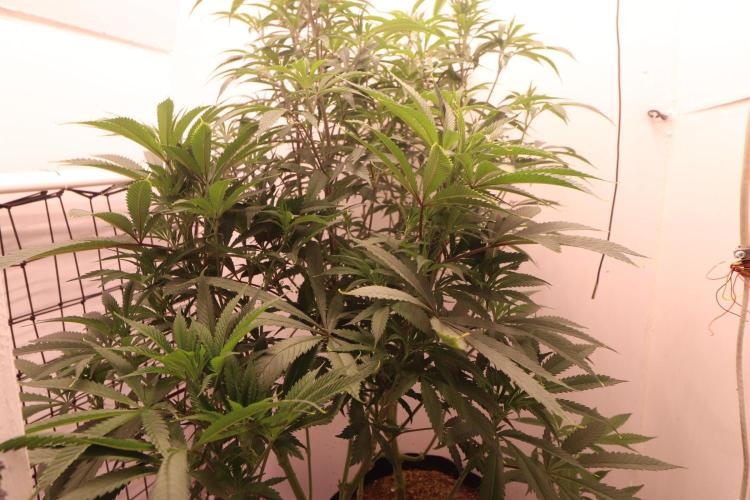
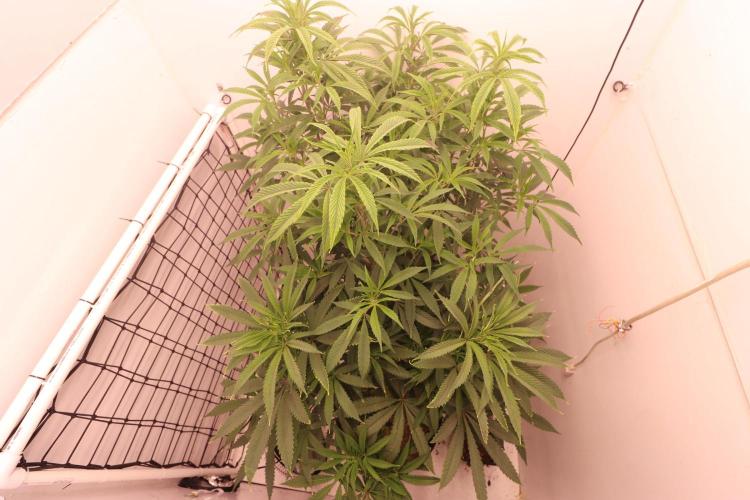
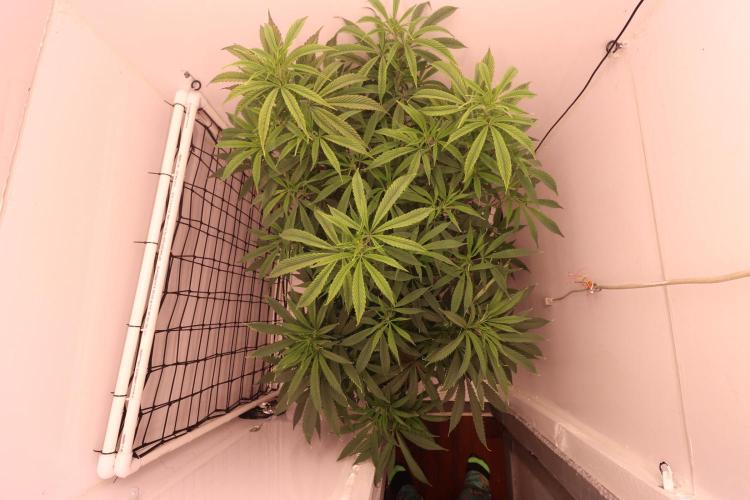
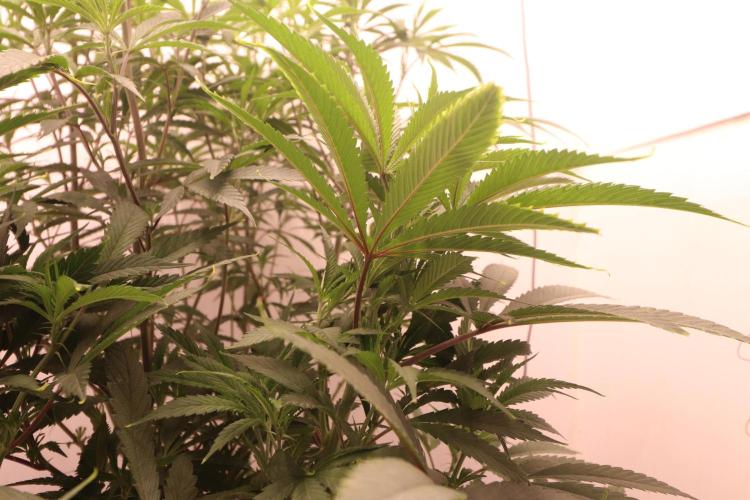
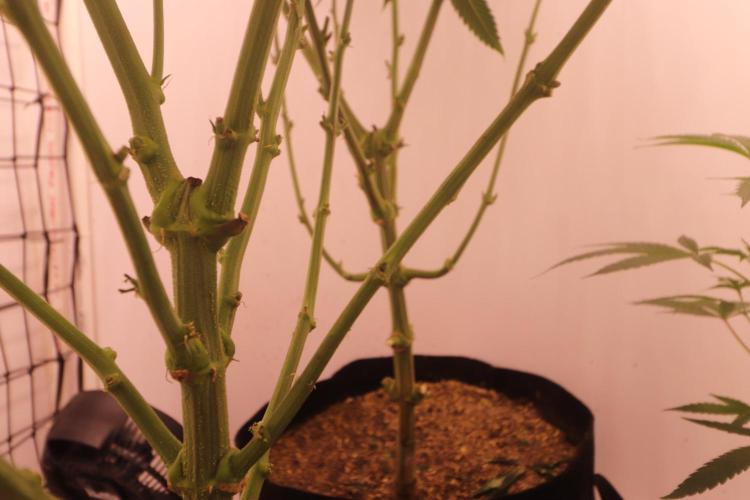
Fiz420 After a week in the Bloom Room these girls are adjusting under the primary light set at hitting that cool white she likes so much. This week I start spectral shift, a very mild Emerson effect, and a 20 min EOD signal fun. I use 3 lights in my set up to achieve this one led for a primary par driver and the other two are at a 20% angle on the sides of the primary light. I have 6 channels to dial in on this run but I might skip the UV-B on the first run, I will see how she looks the last weeks of flower. Here is where I lose my friends that grow my lighting protocol....
The following protocol governs a specialized three-day lighting rotation designed for a six-channel, three-light array. The hardware configuration utilizes a primary 4000K-5000K cool white PAR driver supplemented by two auxiliary lights mounted at twenty-degree angles. This specific orientation ensures maximum canopy penetration and allows for increased stomatal exposure on the sides of the plants. The system employs approximately fifteen hundred diodes with power ratings ranging from one-quarter watt to three watts, achieving a maximum intensity of 1300 PPFD at the center of a three-by-three foot space. A dedicated sixty-watt far-red ch5 provides the crucial end-of-day signal.
The core of this strategy is a three-day rotation logic referred to as metabolic periodicity. Day A is the metabolic peak, focused on pushing carbon and maximizing photosynthesis. During this phase, intensity reaches its peak of 1200 to 1300 PPFD with a heavy spectral bias toward 450nm blue and 660nm deep red. Day B transitions to a resin and defense signal, focusing on trichome development and UV response. The intensity is slightly lowered to 1000 to 1100 PPFD, shifting the spectrum toward high-energy UV and 730nm far-red. If the plants are in the final weeks of flower, UV-B is introduced in bursts of three to five minutes for a total of one hour per day. Day C serves as a recovery and homeostasis period, maintaining a steady state of 800 to 900 PPFD. This phase utilizes a pure cool white spectrum to allow the plants to perform cellular repair and nutrient translocation without the high-energy stress of the previous days.
The weekly scheduling for mid-flower follows a specific sequence of A, B, A, A, B, A, C. This results in the metabolic peak being utilized on Monday, Wednesday, Thursday, and Saturday, while the resin signal is applied on Tuesday and Friday. Sunday is reserved for recovery. During the early and late stages of flower, the protocol is adjusted by swapping A days for C days to lower the overall metabolic demand. Across all days, the spectral channels are dialed in precisely. Cool white stays at full power for peak and recovery days but drops to eighty percent on signal days. Deep red and blue channels are pushed hardest on Day A, while far-red and UVA reach their maximum on Day B. UV-B remains inactive except for the pulsed signal during signal days in late flower. These settings are frequently adjusted by one to six percent based on observed node spacing and strain-specific reactions.
Two critical signals define the success of this protocol. The first is the Emerson Effect, achieved by overlapping 660nm and 730nm during midday peaks on Day B to accelerate the rate of photosynthesis. The second is the end-of-day signal, which consists of twenty minutes of sixty-watt far-red immediately following the main lights-out event. This trigger initiates a rapid conversion of phytochromes from Pfr to Pr, signaling the plant to begin its night cycle immediately. Throughout the run, safety is maintained by monitoring node growth; if nodes become too large, red or far-red intensity is reduced. Additionally, UV-B is managed carefully to avoid leaf damage, starting with short bursts and adjusting based on the plant's tolerance.
I have never done side by sides but I have grown the same strain for a year strain via a mother plant and took it all the way to hurting the plant and dialed back to understand the max for my set up and I do not think I will go back to a single channel light ever. This is different by strain but not by much from 400-730nm, I maybe drop to 1100ppfd for max or take red or blue up or down 1-6% just because I see its too much light or my nodes get larger from too much red. Now UV-B is another story and I almost wish I never used it on a few runs as I killed leaves and other strains it did nothing to at higher power.... Today I just use it the last 2-3 weeks of flower and I burst it in 3-5 minute on for a total of 1hr a day
2 likes
comments
Share
Used techniques
Defoliation
Technique
11
Week 11. Flowering
2d ago
1/5
91.44 cm
Height
18 hrs
Light Schedule
27 °C
Day Air Temp
6.5
pH
No Smell
Smell
1200 PPM
TDS
60 %
Air Humidity
18 °C
Solution Temp
20 °C
Substrate Temp
18 °C
Night Air Temp
0.53 liters
Pot Size
2.65 liters
Watering Volume
76.2 cm
Lamp Distance
700 PPM
CO₂ Level
Nutrients 13
Mono si
0.5 mll
Bat guano
5.21 mll
Coconut water
20 mll
Fiz420 Time to start flowering! OK so last week I wrote a Sloppy draft of my lighting schedule and threw it into AI. What came out sounded awesome until I read it a few times.
Very simply I just moderately change the amount and type of light per day. It also left out that I over the course of six weeks I change from a blue to a more red spectrum. So a days are 100% light, b is 90%, and c is 80%. I run consistent uva very low level during flower and ir is mostly just eod signal.
The AI made it sound extremely complex. I use an AC Infinity controller that controls all six lights and I would say it took me an hour to set it up.
My whole point of this was I never understood why throwing 100% light at them the entire time. Light changes outside in every way. I just wanted some change and not do the same exact thing every day.