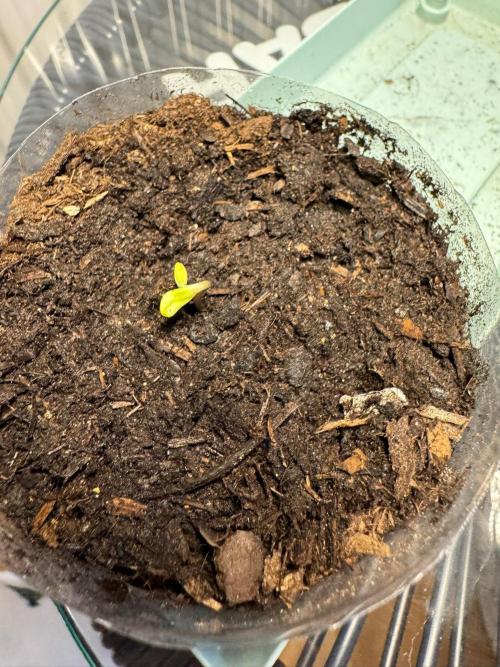
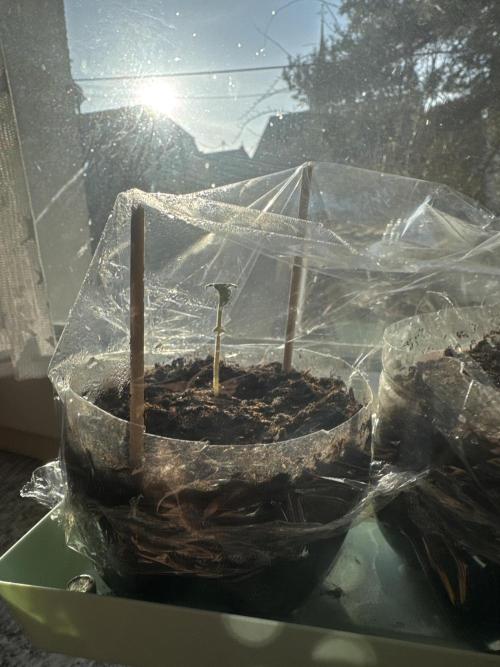
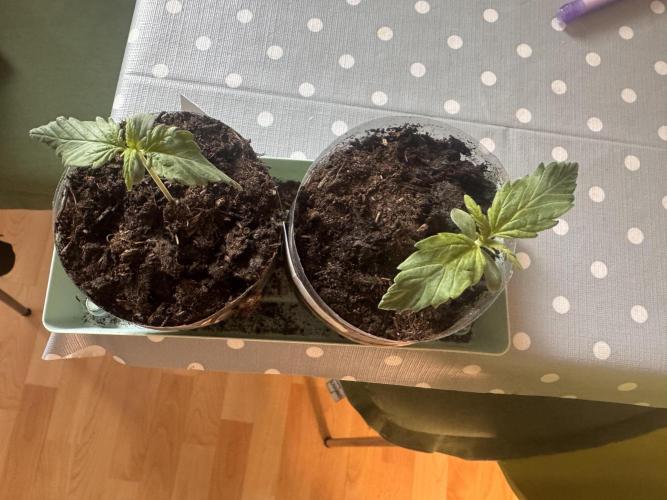
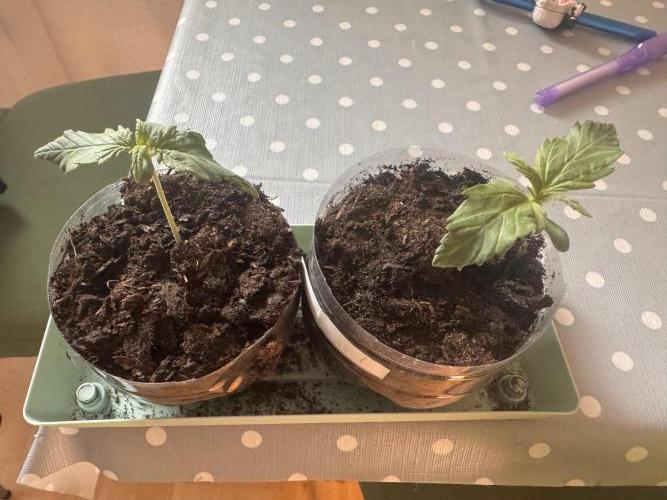
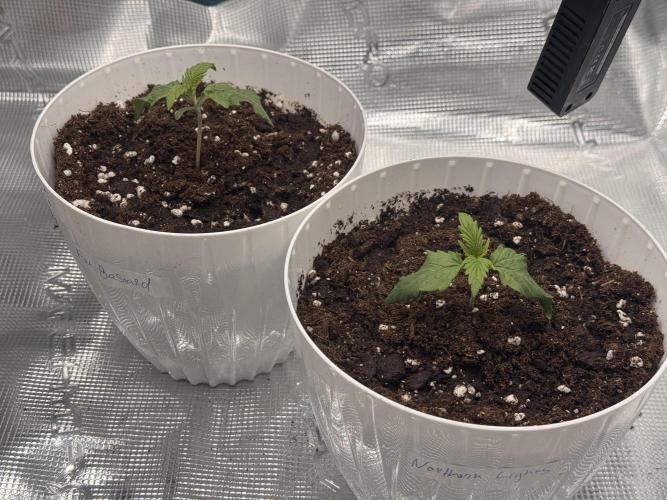
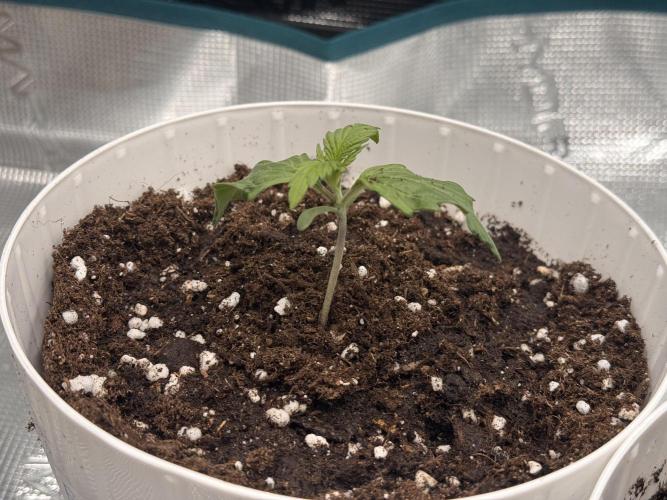
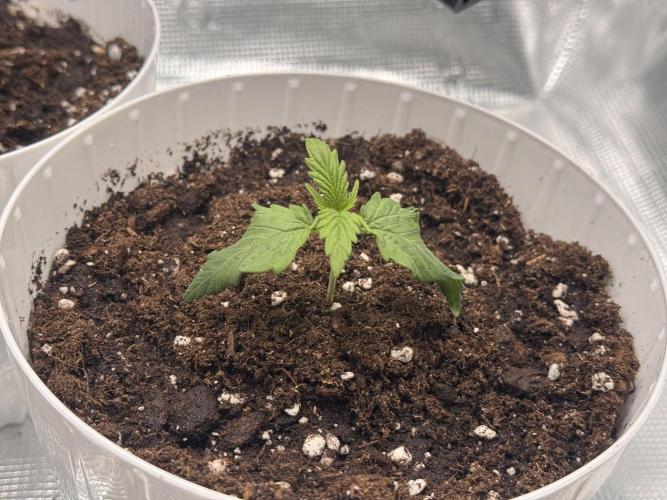
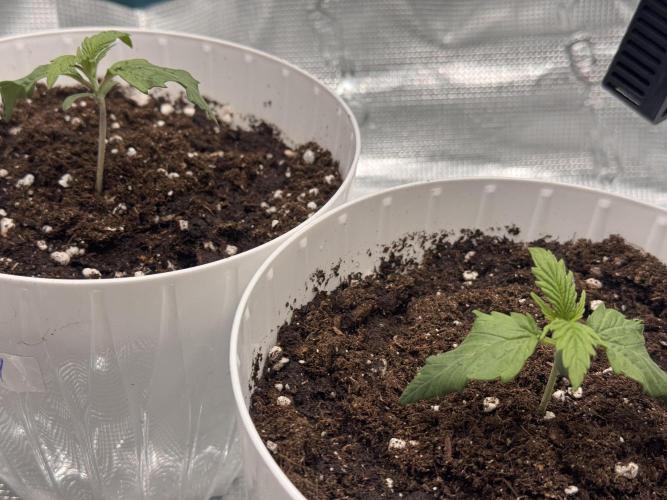
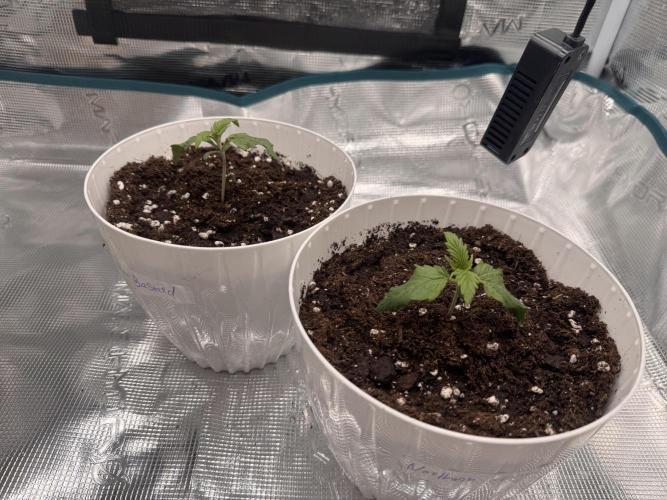
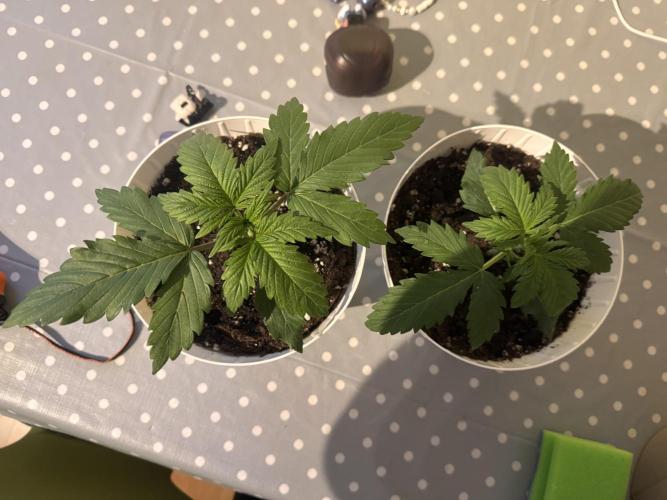
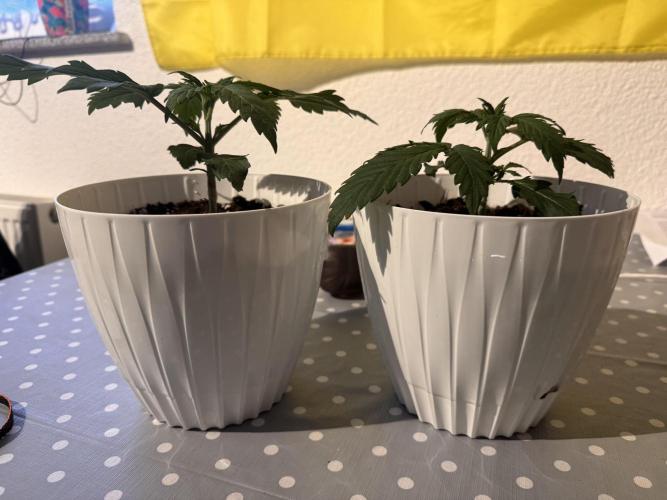
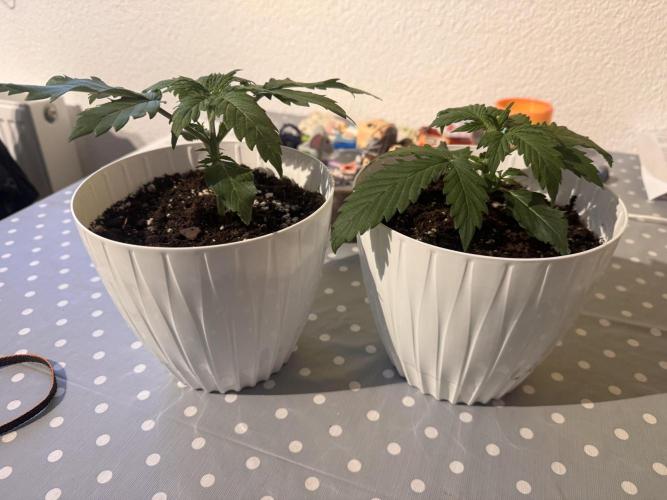
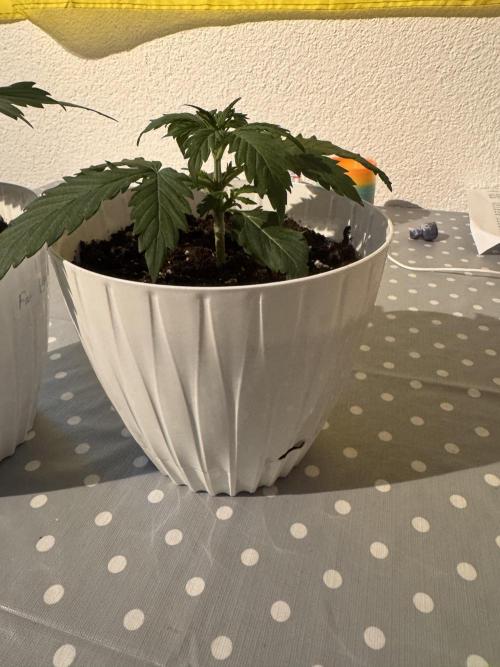
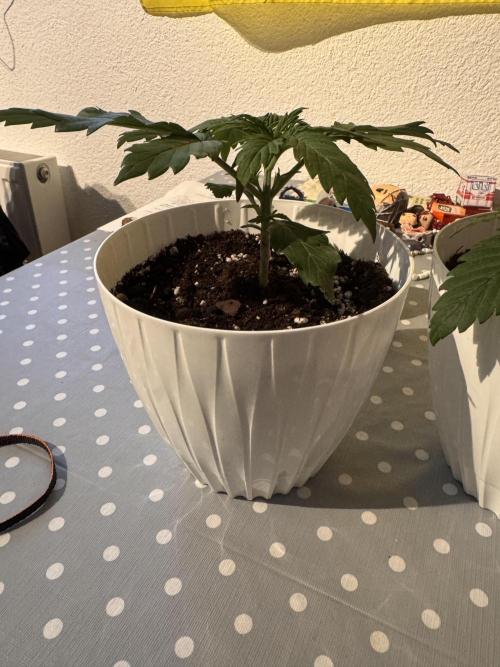
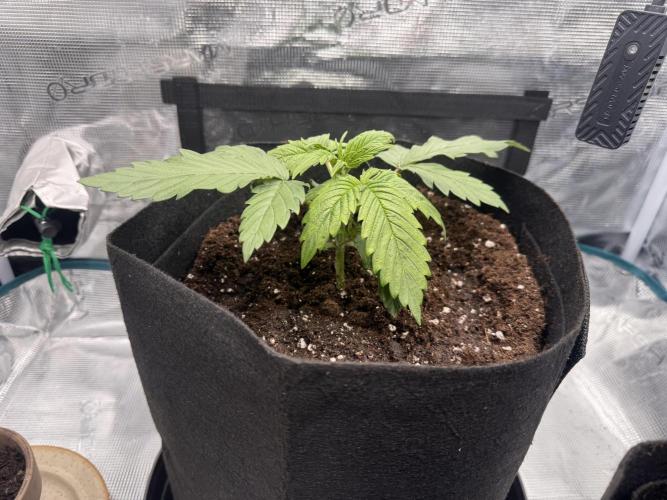
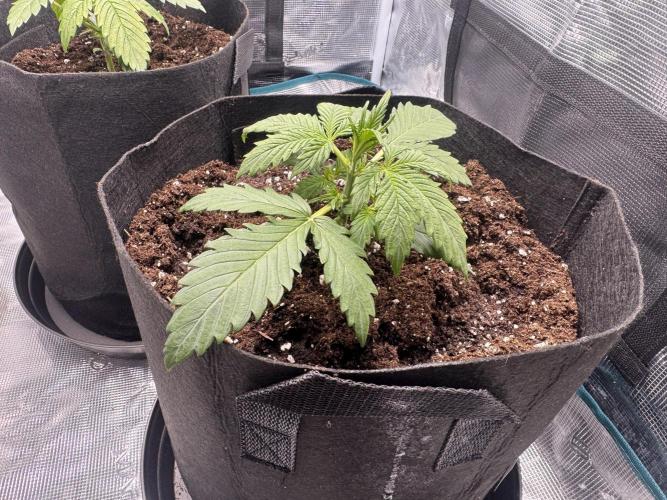
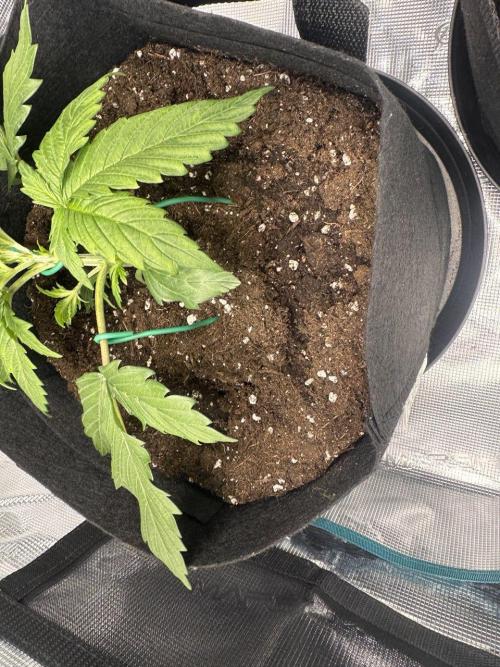
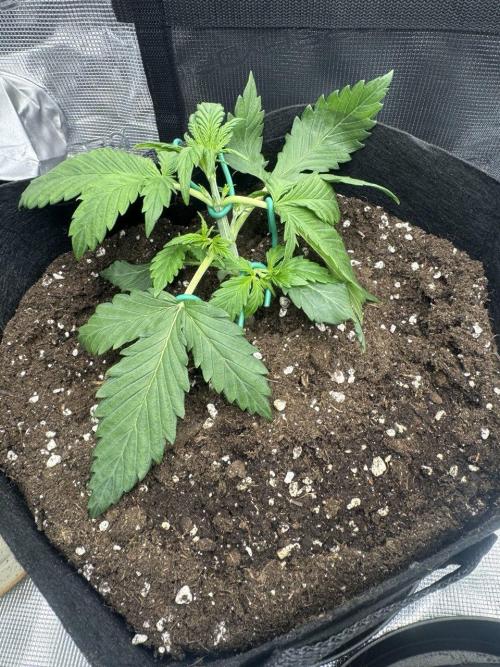
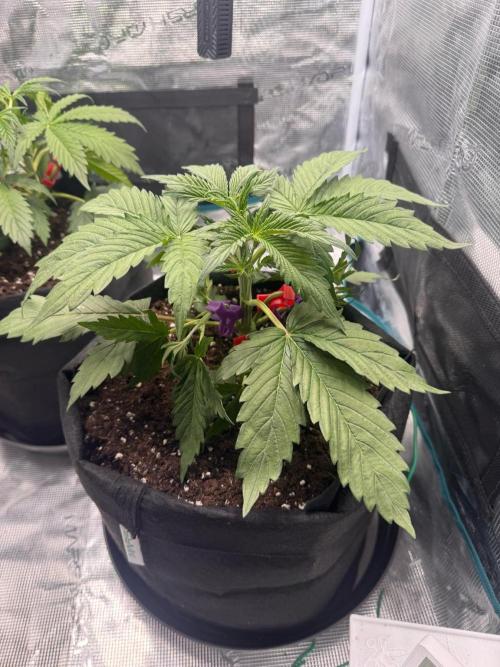
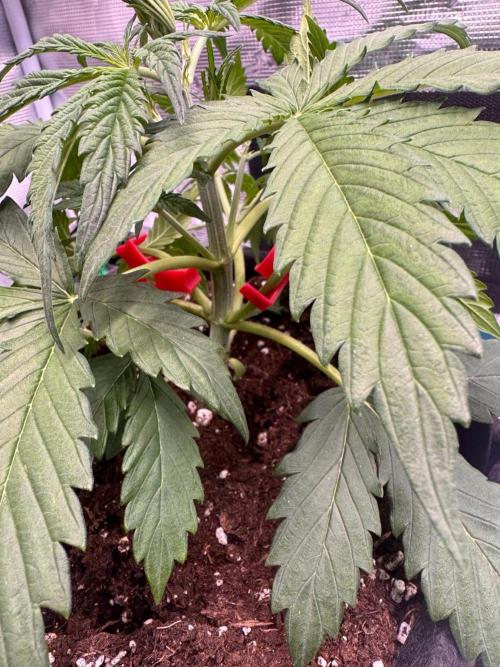
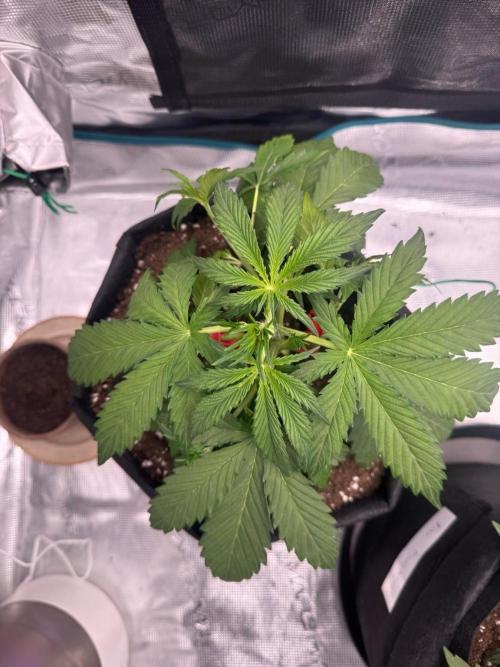
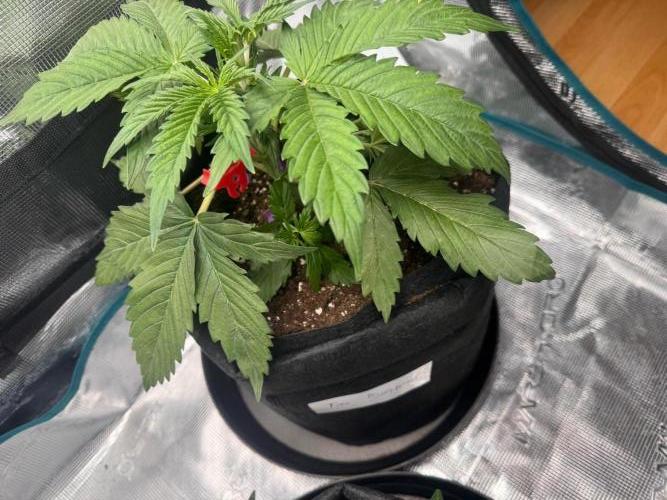
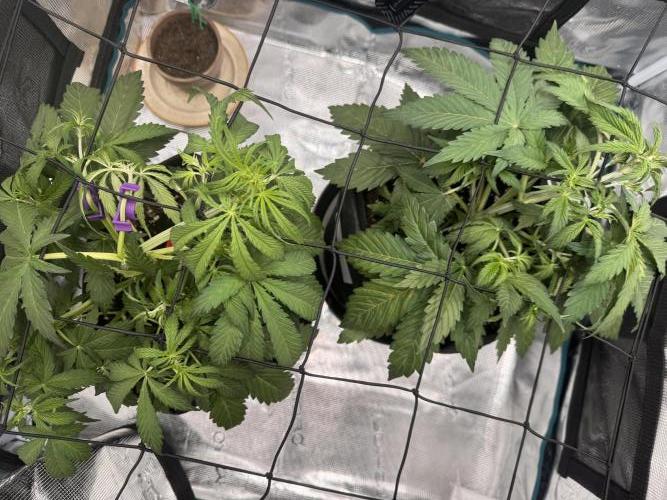
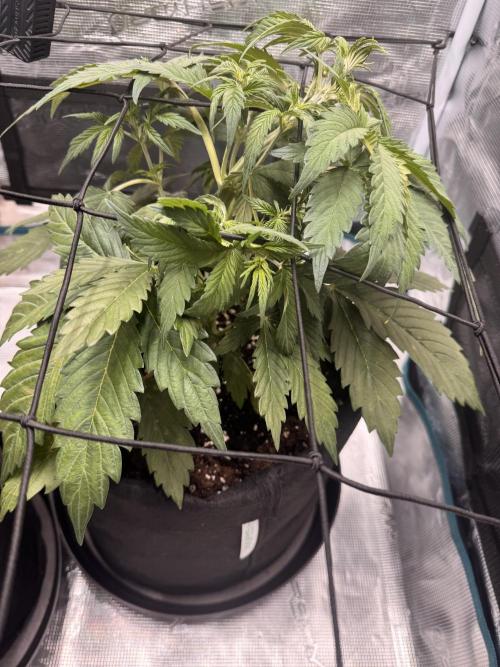
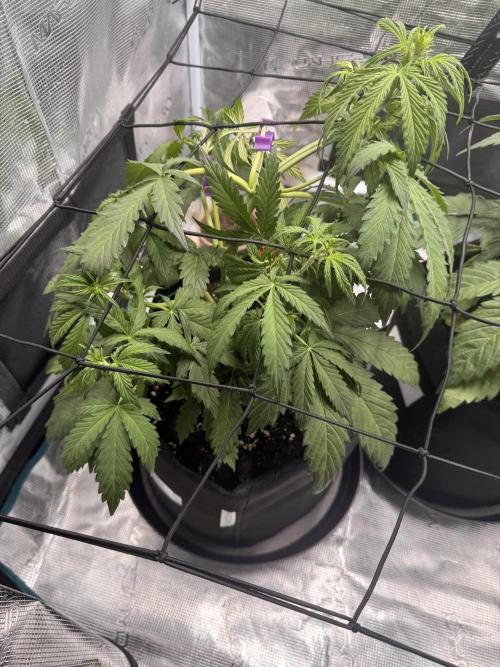
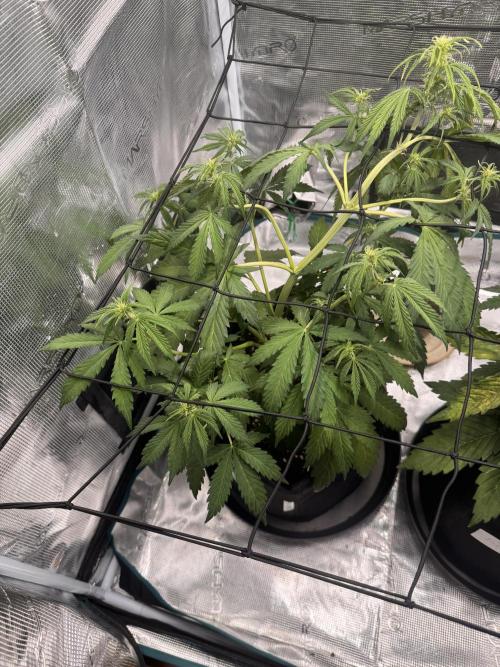
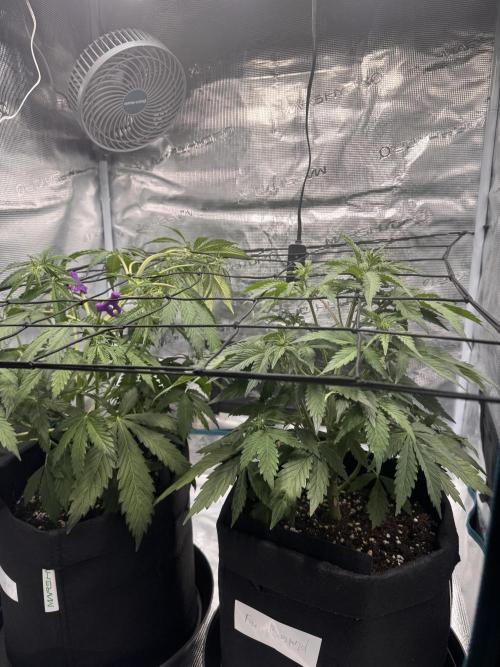
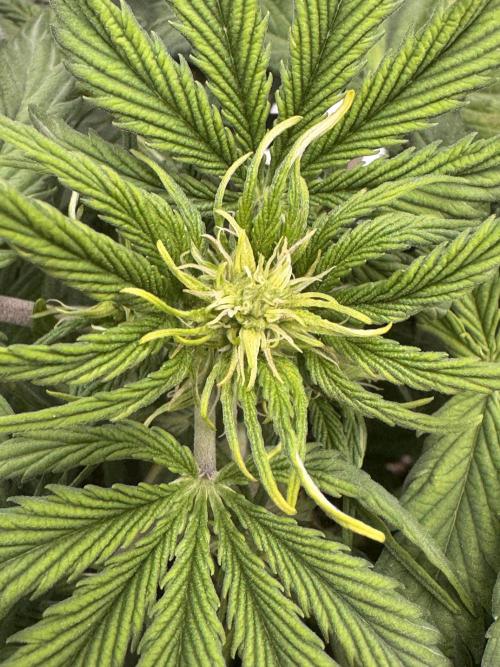
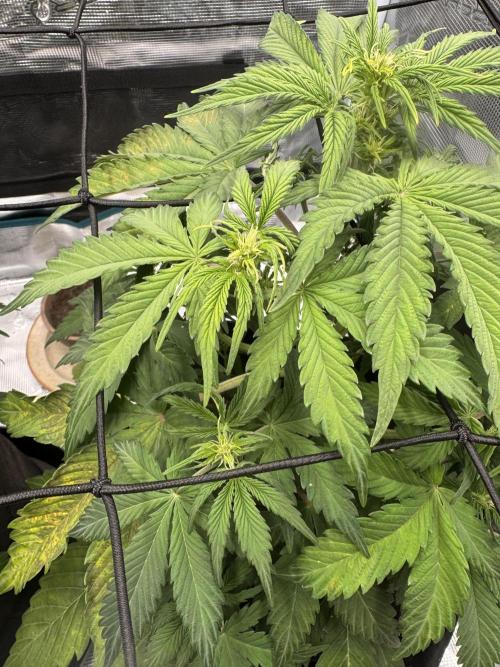
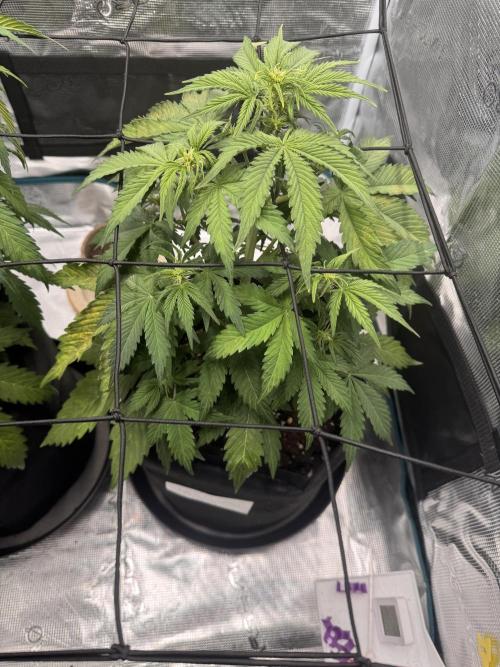
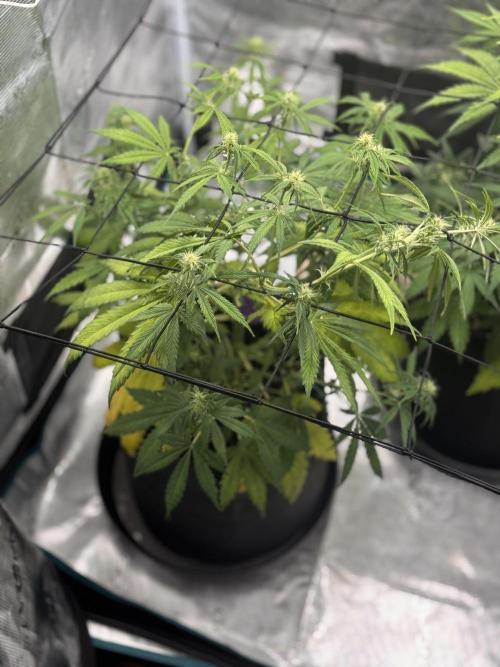
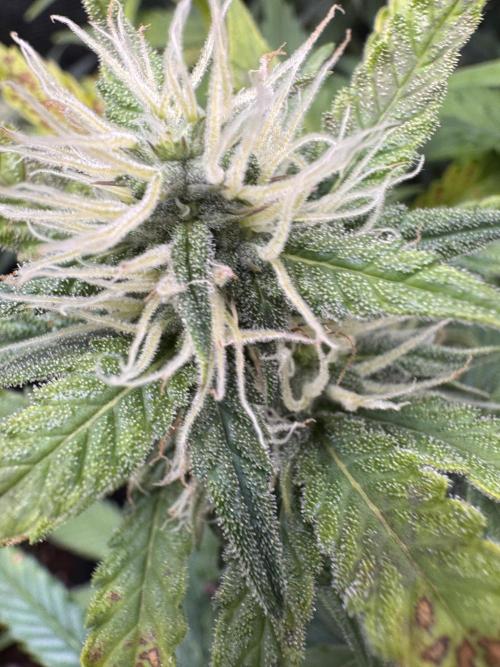
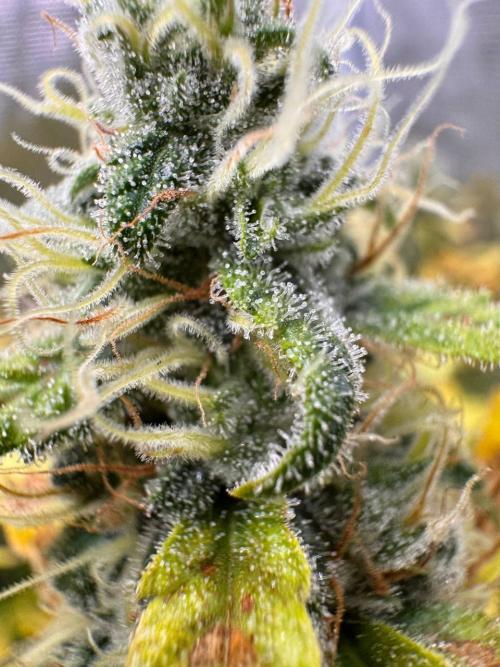
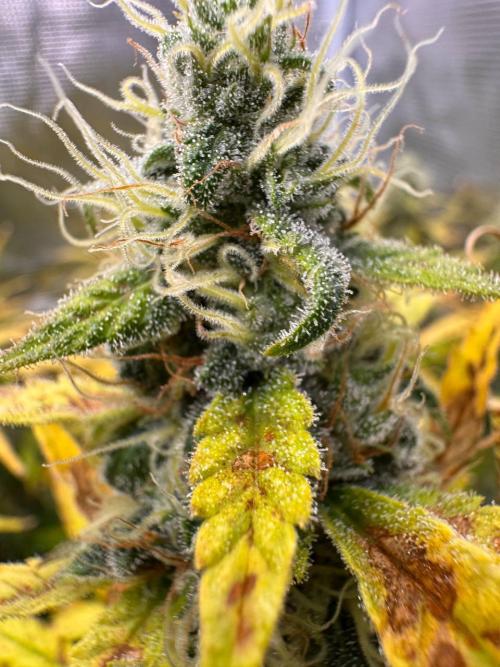
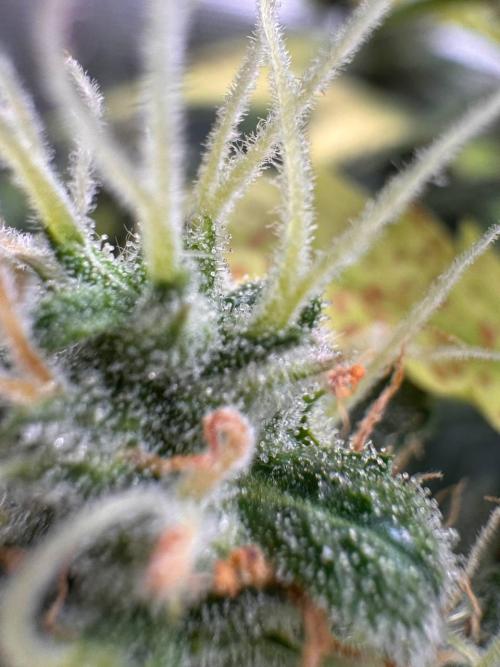
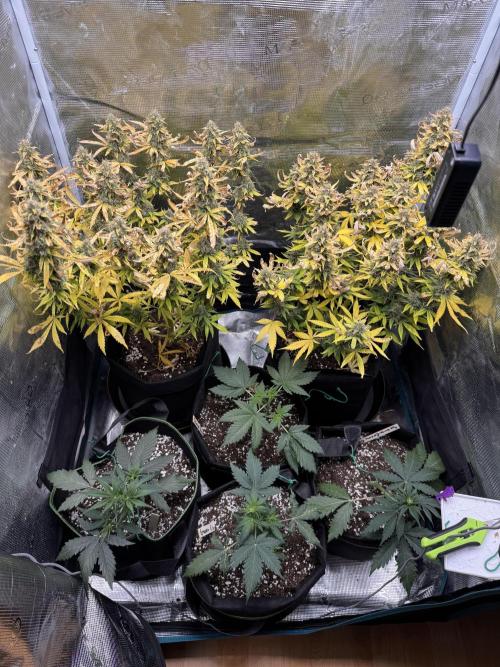
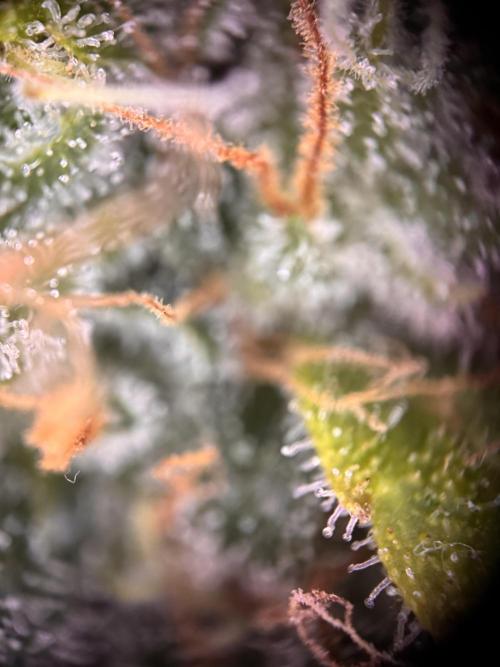
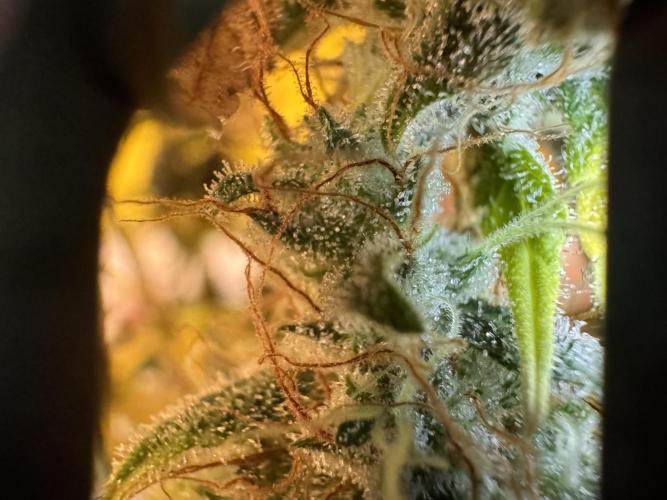
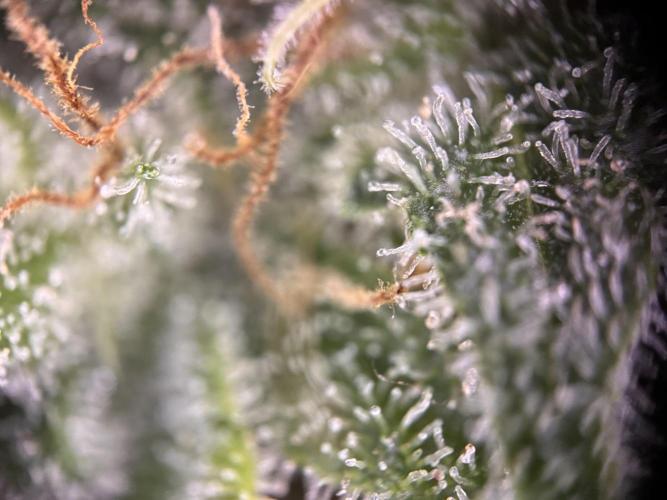
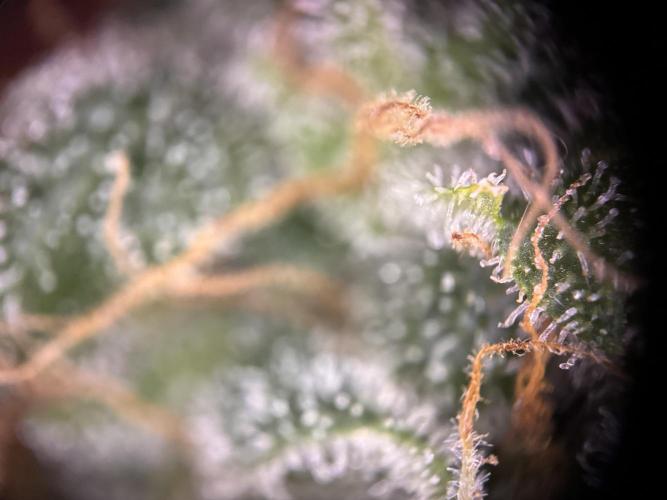
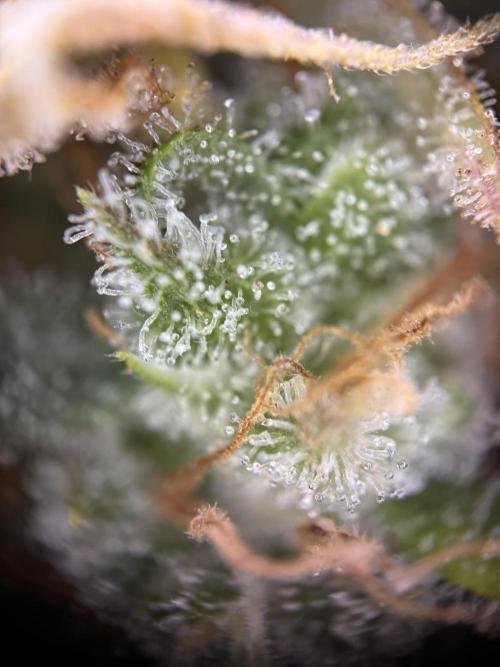
Blast The seeds were germinated in a glass of water. Both seeds sprouted roots in about 48 hours and were planted in soil. The seedlings successfully broke through the surface and shed their seed coats on their own.
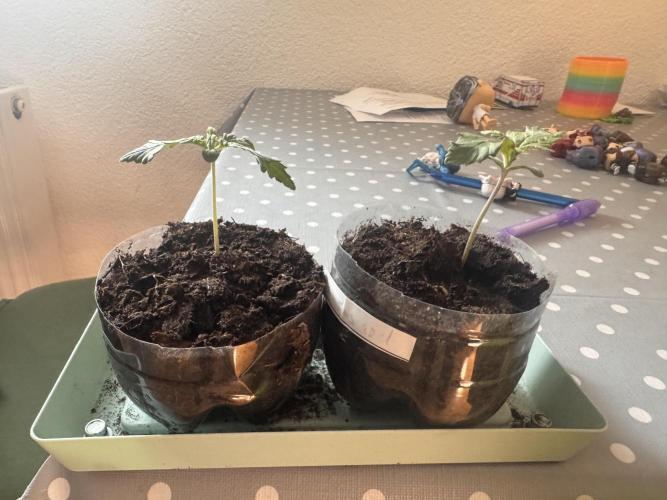
Currently, the plants are in temporary containers (cut 1.5L bottles) with a light soil substrate. No fertilizers or stimulants have been used at this stage.
The lighting is temporary — a USB LED lamp with a red-blue spectrum until the main light is set up. The lamp is placed close above the plants to avoid stretching. The light schedule is 24/0 during the germination stage.
At first, a cover was used to increase humidity, but later the film was removed to avoid overheating and excess moisture. No signs of stress or problems are observed.
Watering is minimal, with small amounts around the perimeter, only after the top layer of soil dries out.
Germination was successful, and the plants look healthy. Preparing to move into the grow box and under the main light next week.
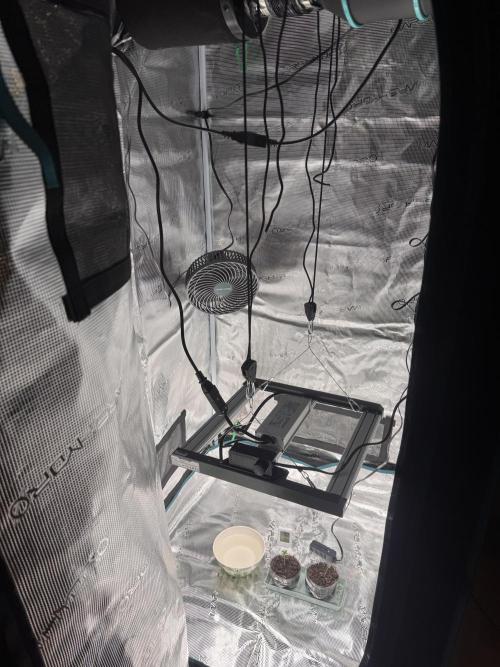
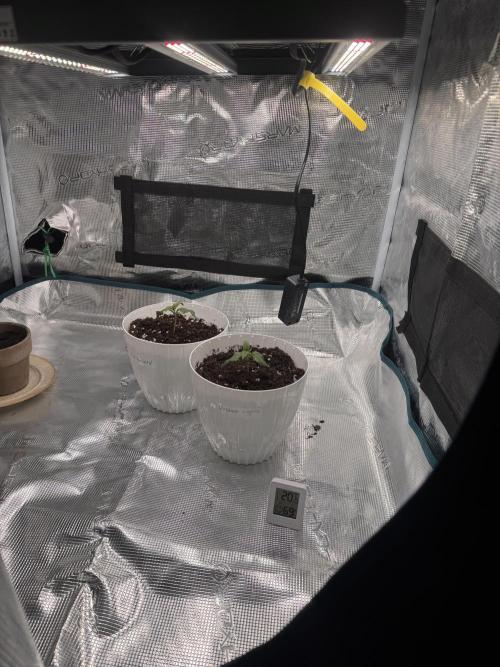
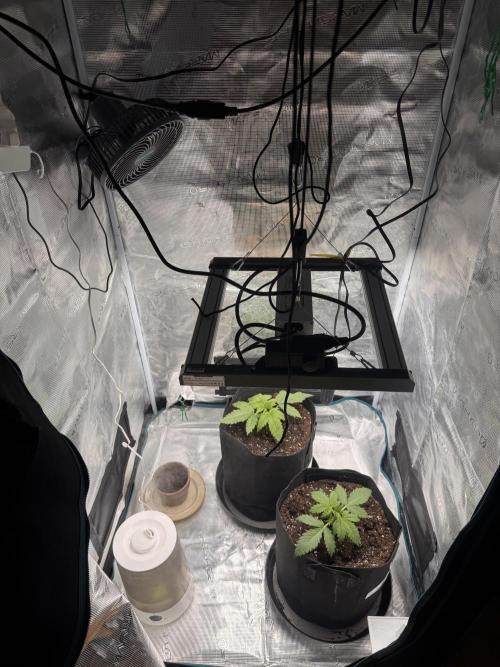
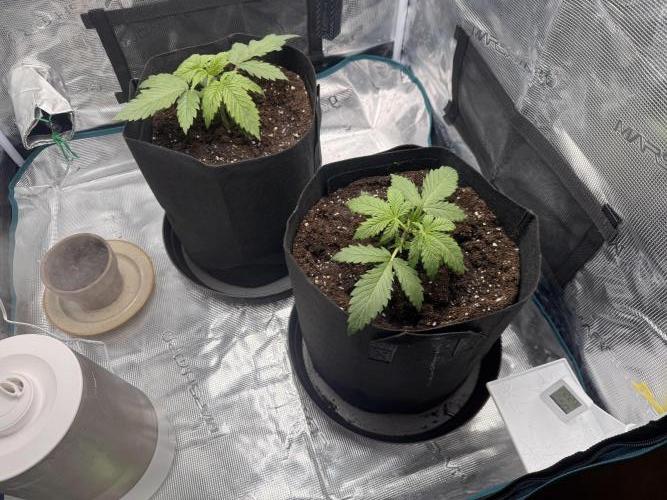
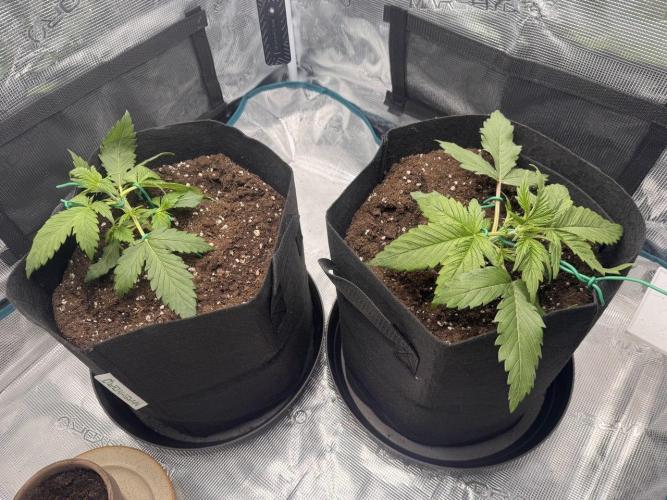
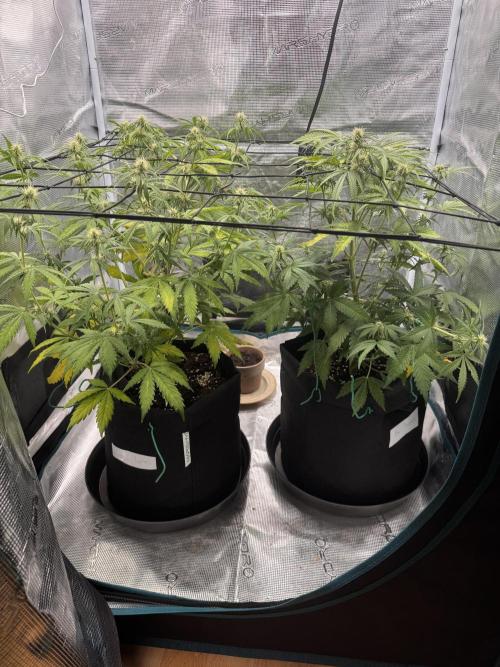
Today, January 21, the grow tent was fully assembled, and the plants moved to a permanent environment.
Grow tent: 80×80
Light: Mars Hydro FC-1500 EVO
Lighting schedule: 18/6
Light power: 40%
Height of the lamp: ~45–50 cm from the tops of the plants
Environmental parameters (average values):
Temperature: ~22.5 °C
Humidity: ~53%
VPD: ~1.28 kPa
There is currently no humidifier; passive humidity is used — a container with water inside the tent. The exhaust is operating in environmental mode at 25%, and the circulation fan is on minimum, without direct airflow on the plants.
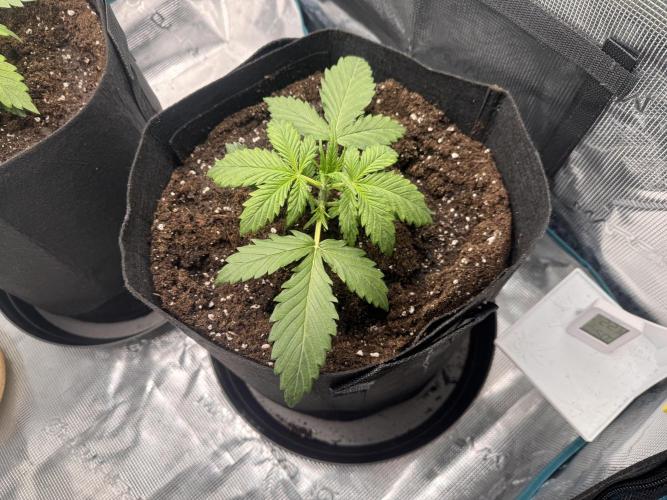
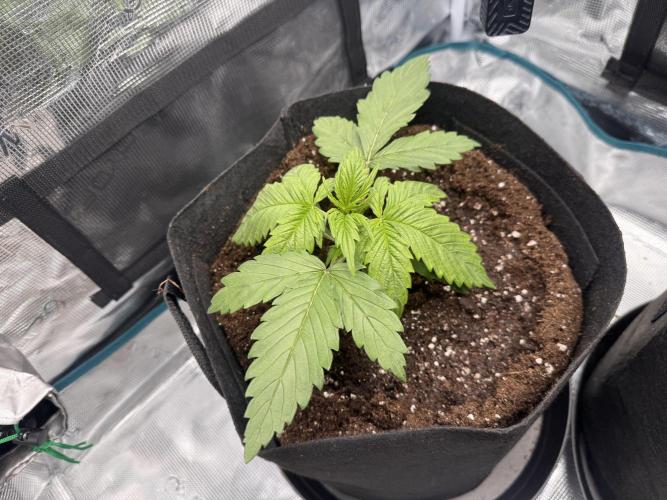
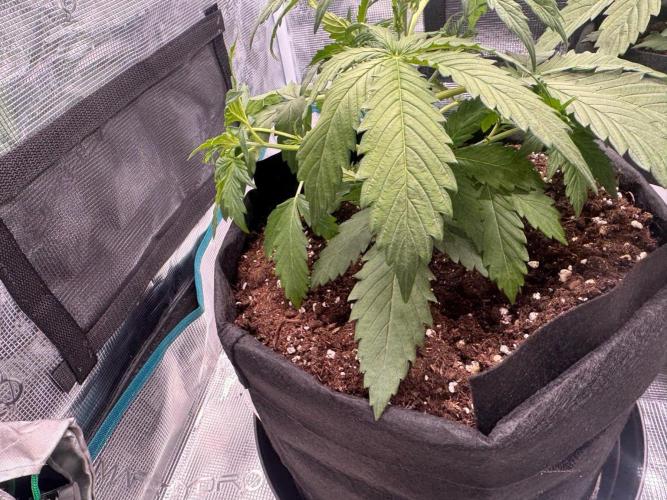
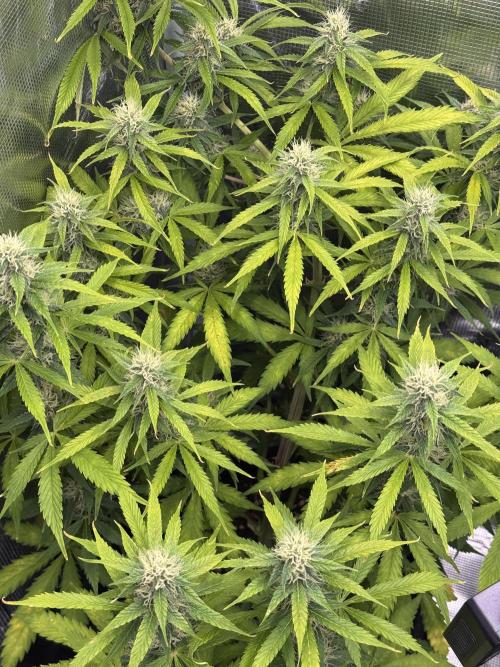
The seedlings are doing well, standing confidently. The leaves have noticeably increased in size, there is no stretching, and no signs of light or heat stress are observed. Growth is stable.
2 likes
comments
Share
Used method
Glass Of Water
Germination Method
1
Week 1. Vegetation
9mo ago
1/3
18 hrs
Light Schedule
21 °C
Day Air Temp
6.5
pH
No Smell
Smell
65 %
Air Humidity
19 °C
Night Air Temp
35 cm
Lamp Distance
Blast It seems to be going pretty well. But I'm playing around with the distance to the lamp. The leaves look a bit droopy. I'm thinking about transplanting to a larger pot.
1 like
comments
Share
2
Week 2. Vegetation
9mo ago
1/6
20 hrs
Light Schedule
21 °C
Day Air Temp
6.5
pH
No Smell
Smell
65 %
Air Humidity
19 °C
Night Air Temp
40 cm
Lamp Distance
Blast On 29.01, I transplanted them into bigger pots. I set the light cycle to 20 hours on, 4 hours off. Increased the lamp to 50%. The distance to the lamp is 40 cm. During the transplant, I found that the soil at the bottom near the roots was very wet, I probably overwatered the plants. After the transplant, I watered them again. I'm transplanting into BioBizz light mix + perlite.
2 likes
comments
Share
3
Week 3. Vegetation
8mo ago
1/11
12 cm
Height
20 hrs
Light Schedule
20 °C
Day Air Temp
6.5
pH
Weak
Smell
65 %
Air Humidity
17 °C
Night Air Temp
15 liters
Pot Size
1 liters
Watering Volume
40 cm
Lamp Distance
Nutrients 1
Bio-Grow
0.5 mll
Blast 📅 05.02 — Vega / first watering with nutrients
Today I did the first watering with nutrients after transplanting.
Conditions and parameters:
Substrate: BioBizz Light·Mix
Nutrient: Bio-Grow 0.5 ml/l
Watering volume: ~400 ml per pot
Light: 40 cm to the top, 50% power
Light schedule: 20/4
Plant condition:
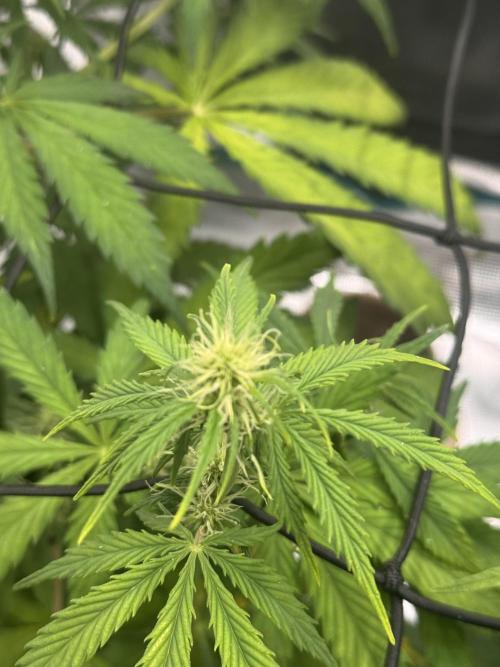
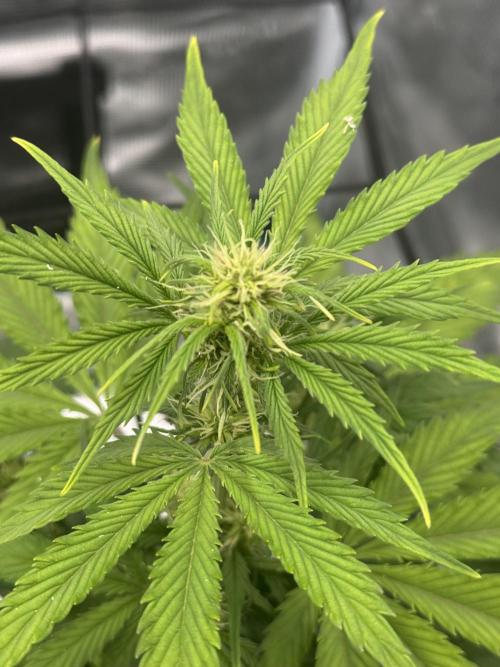
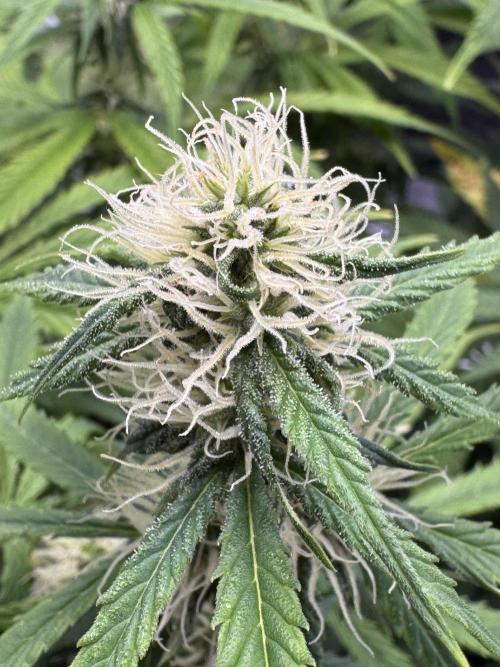
The plants look healthy and compact. The leaves are smooth, rich green, with no spots or signs of deficiencies. The internodes are short, and the tops are actively developing.
The next watering is planned with plain water, then a gradual observation of the reaction before possibly increasing the dosage.
📅 06.02 — Transplanting into final pots
Today, the plants were transplanted into final fabric pots with a volume of 15 l. Watering with regular water 1l/pot.
The reason for the transplant is that the root system has fully occupied the previous containers, and the roots have come out of the drainage holes.
1 like
comments
Share
4
Week 4. Vegetation
8mo ago
1/11
12 cm
Height
20 hrs
Light Schedule
20 °C
Day Air Temp
6.5
pH
Weak
Smell
65 %
Air Humidity
17 °C
Night Air Temp
15 liters
Pot Size
1 liters
Watering Volume
40 cm
Lamp Distance
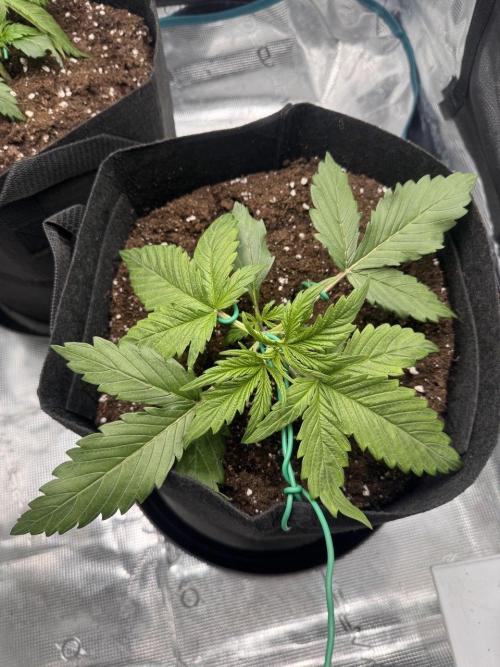
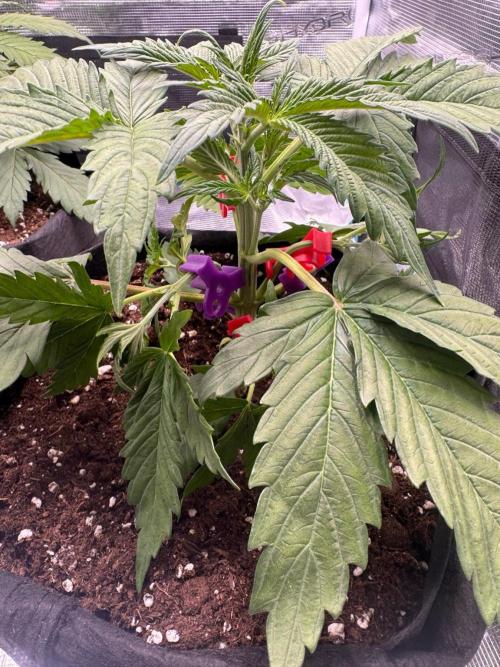
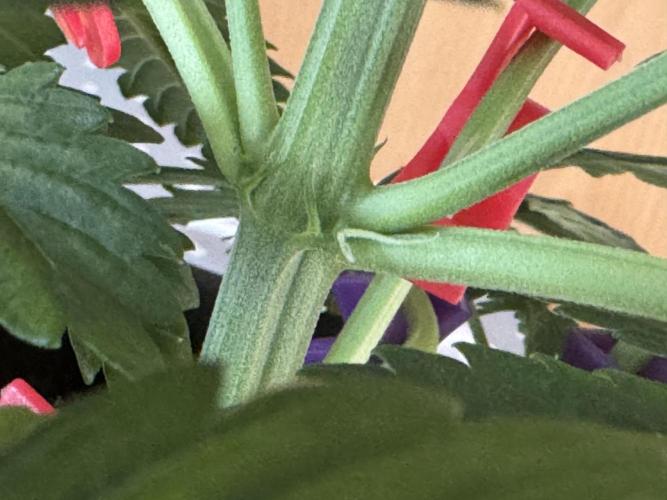
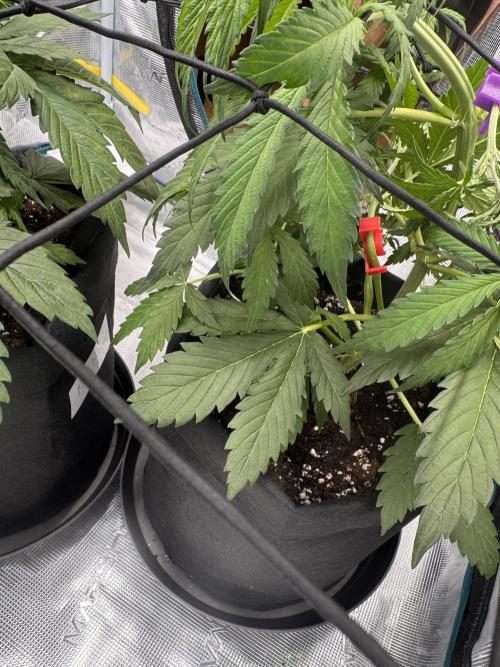
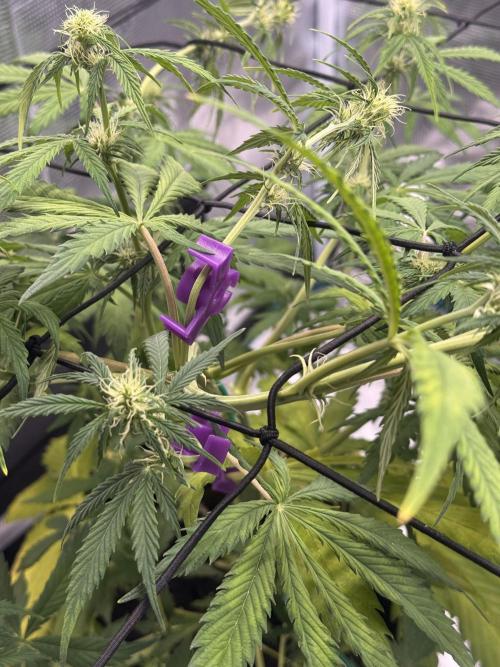
Blast 07.02 Tried to do LST. The main stem is already quite thick, didn't really bend it much. I'll see how it reacts.
12.02 — Performing LST (with clips)
1 like
comments
Share
Used techniques
LST
Technique
5
Week 5. Flowering
8mo ago
1/6
25 cm
Height
20 hrs
Light Schedule
24 °C
Day Air Temp
6.5
pH
Weak
Smell
60 %
Air Humidity
18 °C
Night Air Temp
14.99 liters
Pot Size
2.01 liters
Watering Volume
45 cm
Lamp Distance
Nutrients 3
Bio-Bloom
1.6 mll
Bio-Grow
1 mll
Top-Max
0.264 mll
Blast Date: 16.02
Solution:
Bio-Grow → 8 ml / 5 l, Bio-Bloom → 5 ml / 5 l, Top-Max → 5 ml / 5 l
Actual consumption: Fat Bastard → 2 l, Northern Lights → 2.5 l
🌸 Development phase
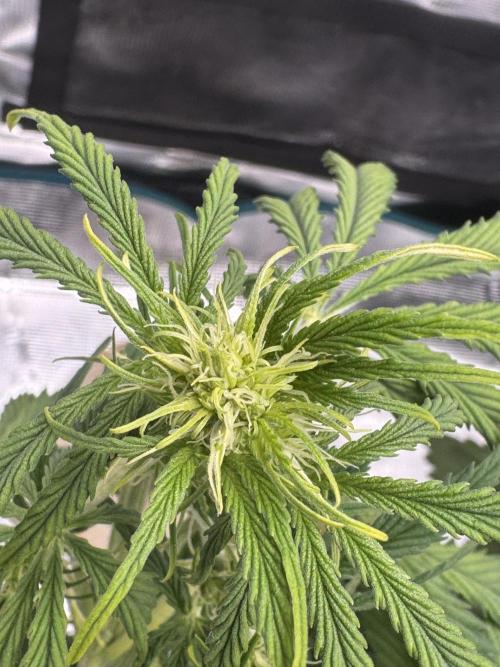
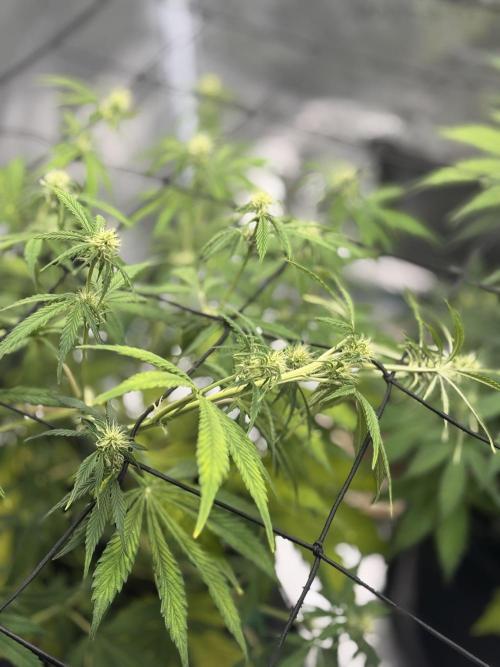
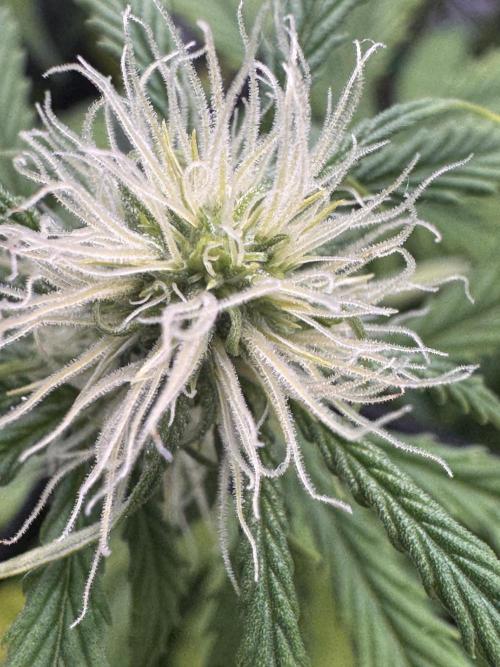
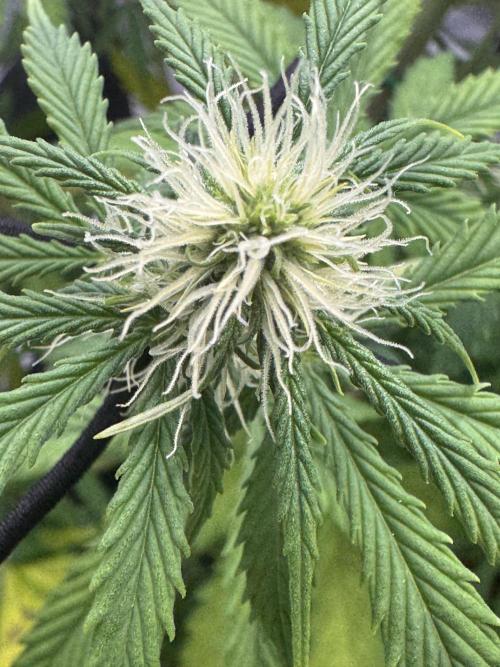
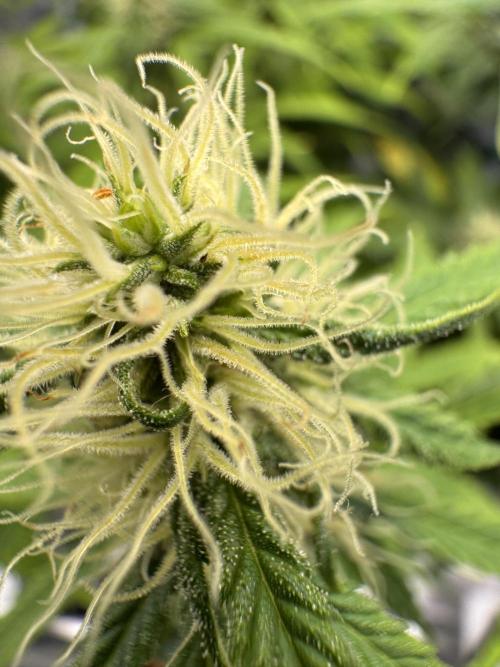
First pistils detected.
📅 Report — 19.02
Day of life: ~31
Stage: Pre-flower / active stretch
Light: FC-1500 EVO — 70%
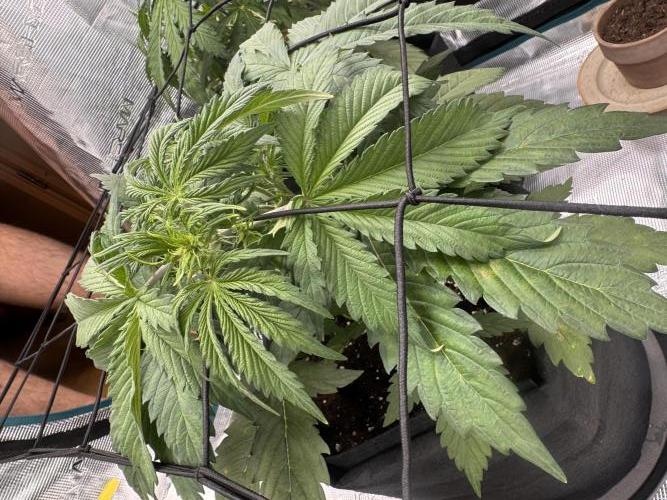
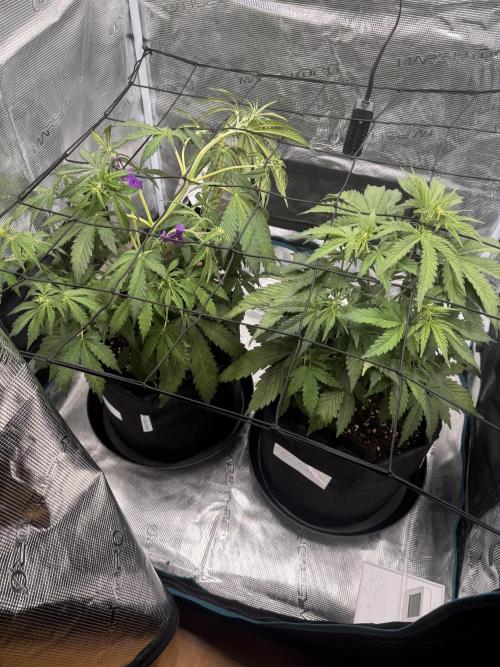
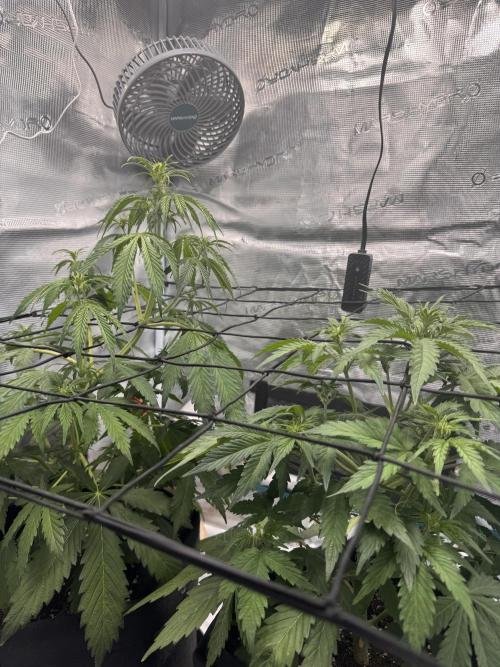
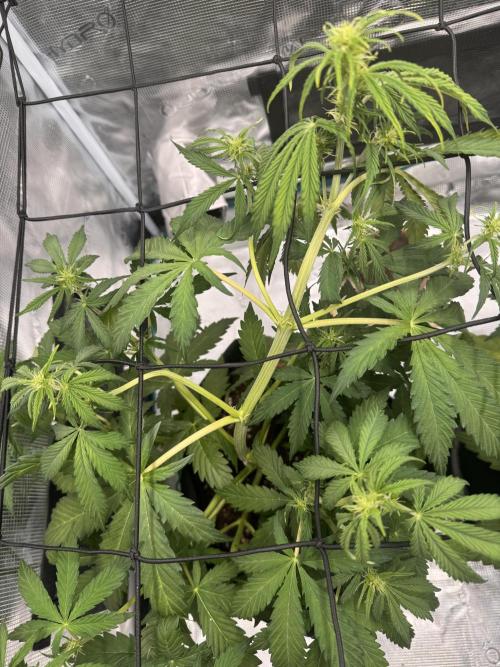
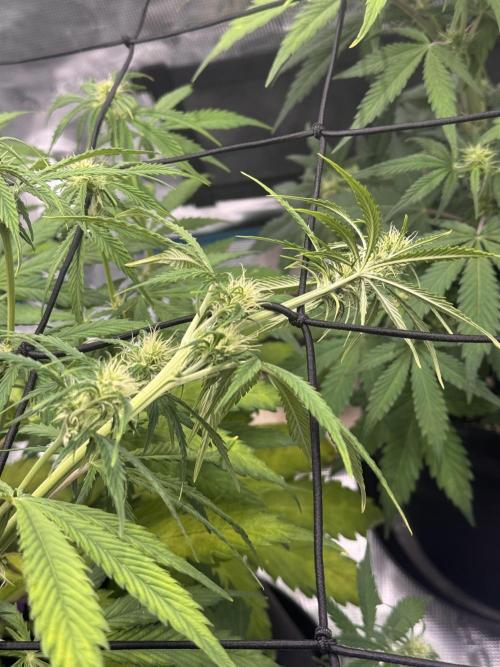
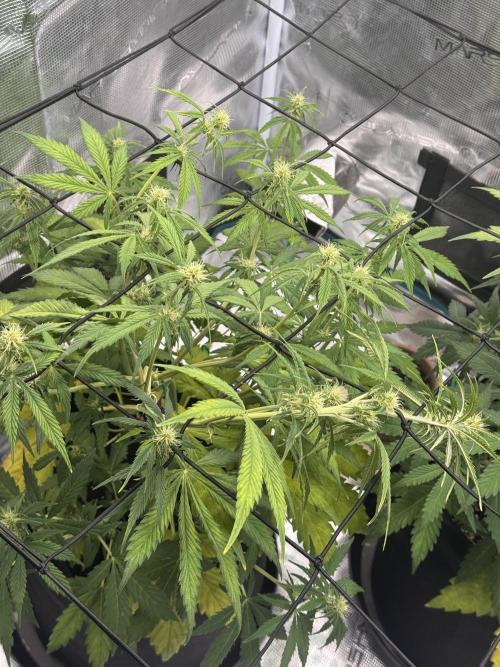
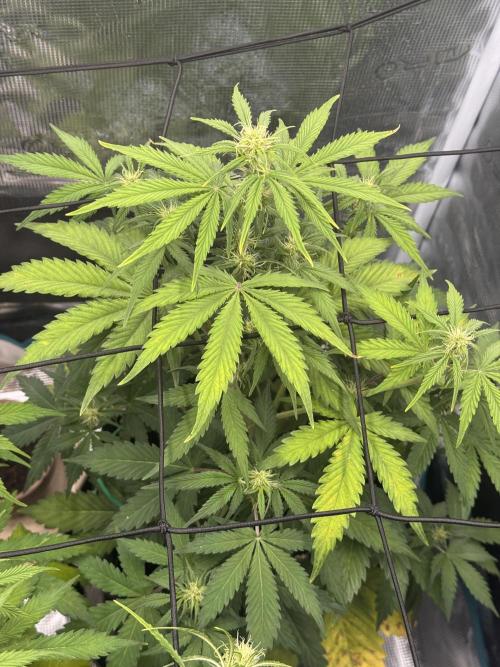
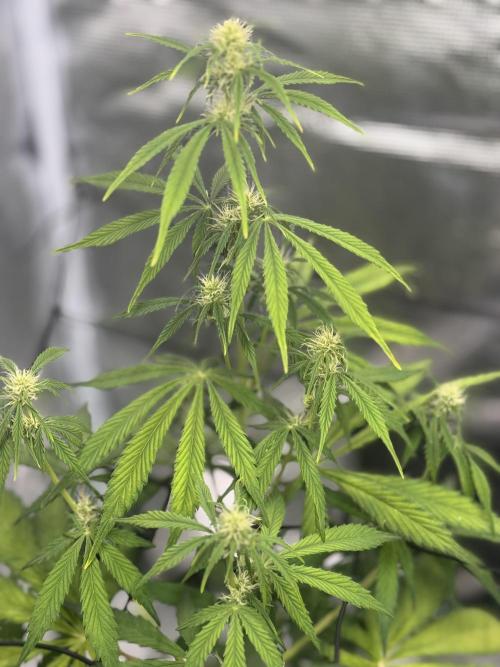
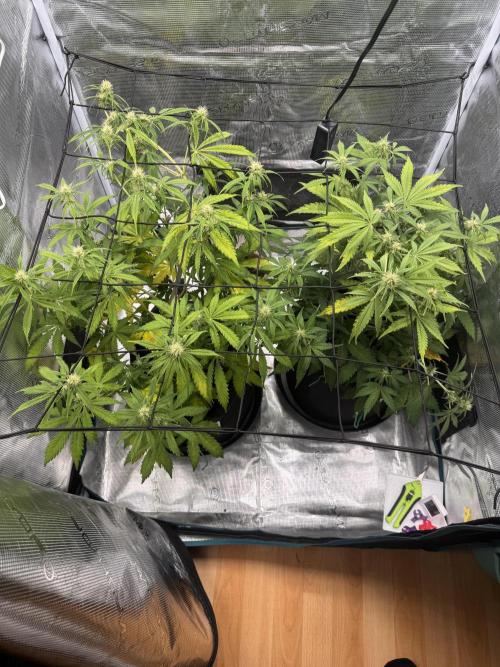
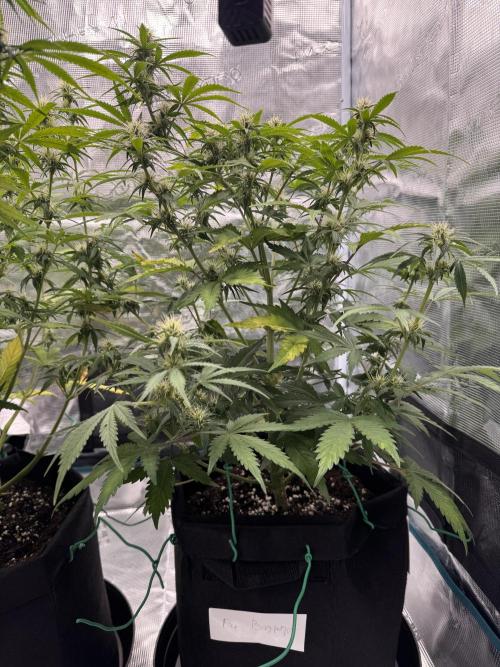
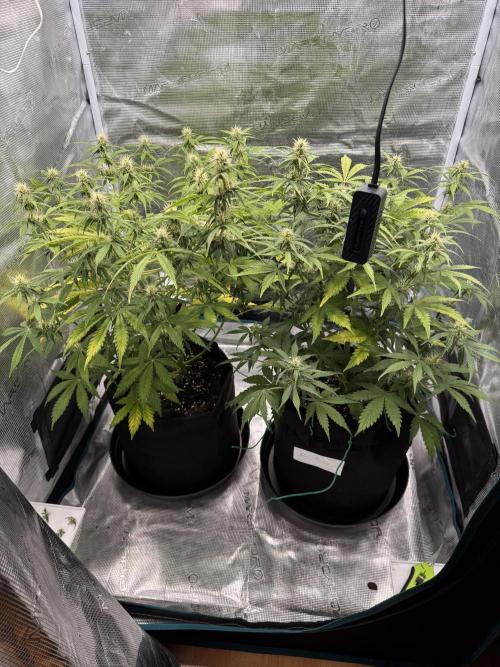
🌿 SCROG: Net installed, branches spread across the squares. The top bush is actively stretching and already forming a nice canopy; the lower one is denser and requires further distribution in the next 3–5 days. LST.
💧 Watering: 4 l of solution (Grow 8 ml / Bloom 6 ml / Top-Max 5 ml), about ~2 l per plant, without drainage.
1 like
comments
Share
Used techniques
LST
Technique
ScrOG
Technique
6
Week 6. Flowering
8mo ago
1/11
25 cm
Height
20 hrs
Light Schedule
25 °C
Day Air Temp
6.5
pH
Weak
Smell
50 %
Air Humidity
22 °C
Night Air Temp
14.99 liters
Pot Size
1.82 liters
Watering Volume
40 cm
Lamp Distance
Nutrients 4
Bio-Bloom
2 mll
Bio-Grow
1.2 mll
Top-Max
1 mll
Blast 26.02 Bought CalMag BioBizz. Watered unexpectedly, after waking up with 500ml of CaMag solution 1ml per 1l of water. No drainage.
24.02 | Day ~36 | Pre-flower (stretch) | Light 70%
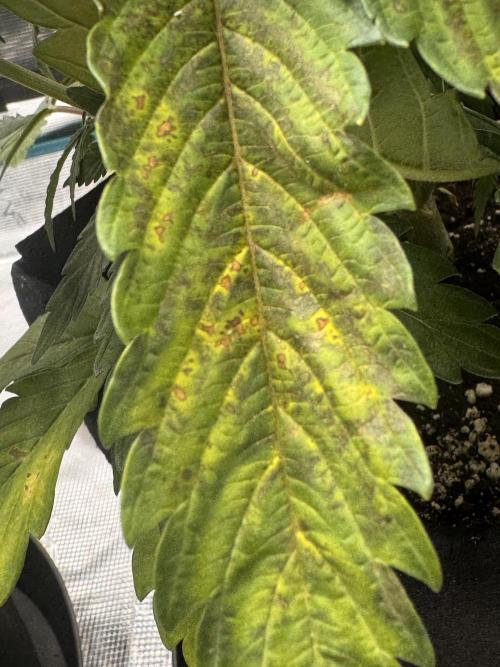
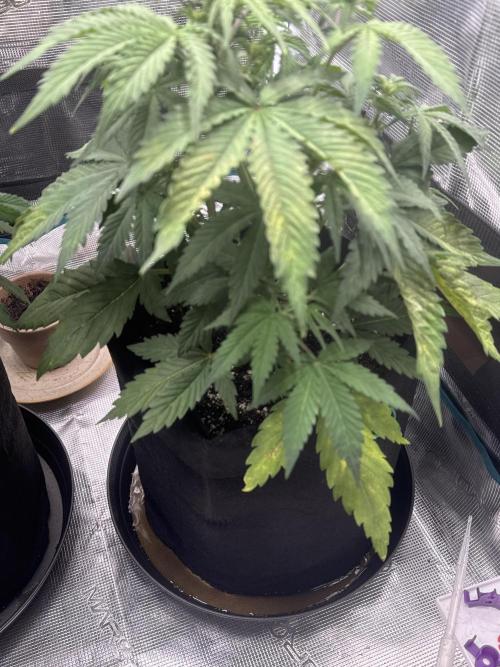
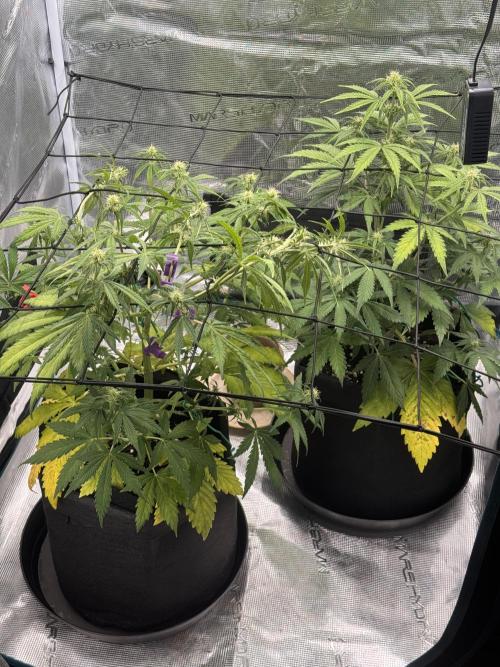
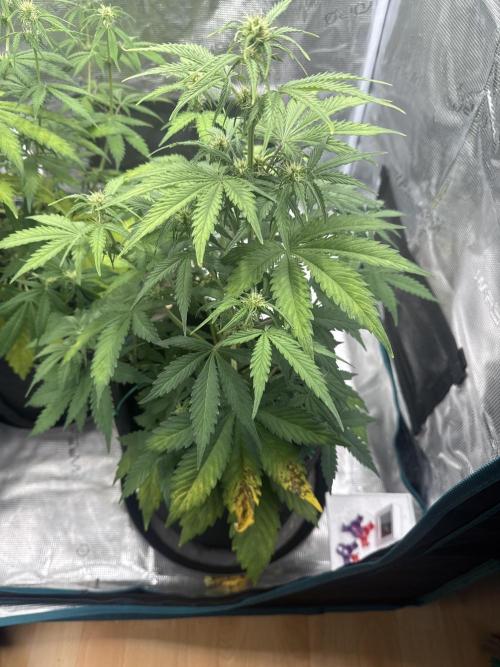
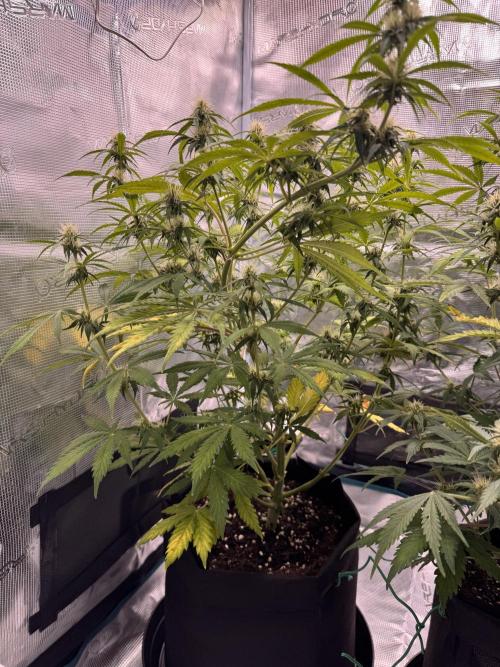
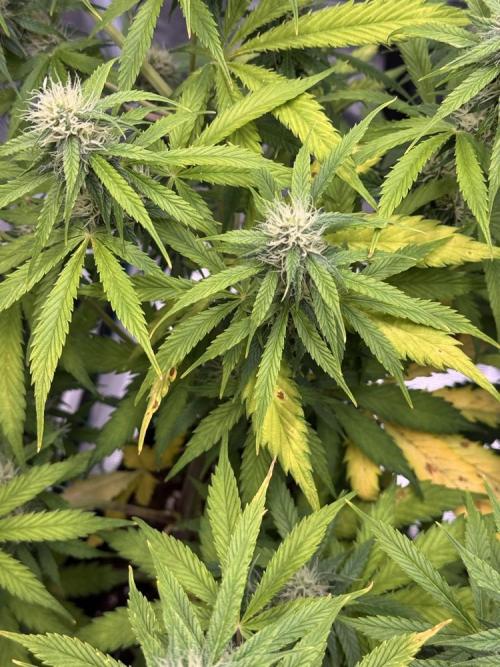
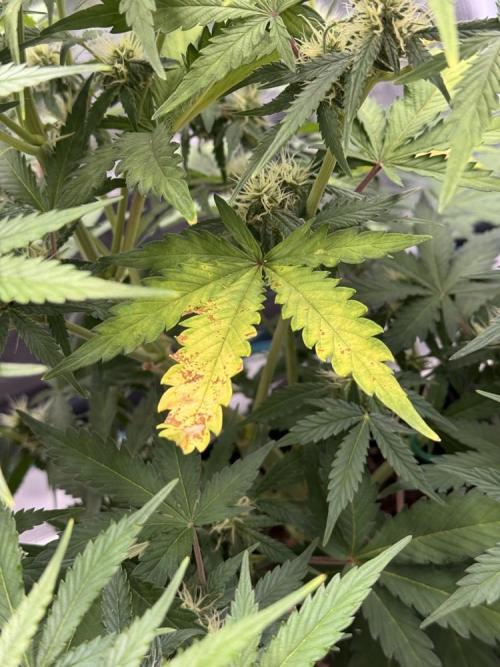
Watered 5l: Bio-Grow 7ml, Bio-Bloom 10ml, Top-Max 5ml; pH 6.5, ~600 ppm, filtered water. Fat Bastard received 1.8–1.9l (drainage ~200ml), Northern Lights — 1.75l (normal drainage), trays drained. Fat Bastard shows interveinal chlorosis on the lower leaves (Mg deficiency), Northern Lights has a clean leaf, upper part slightly lighter. Plan: add CalMag 1ml/l.
1 like
comments
Share
Used techniques
LST
Technique
ScrOG
Technique
7
Week 7. Flowering
8mo ago
1/17
40 cm
Height
20 hrs
Light Schedule
25 °C
Day Air Temp
6.5
pH
Weak
Smell
50 %
Air Humidity
22 °C
Night Air Temp
12 liters
Pot Size
2.01 liters
Watering Volume
50 cm
Lamp Distance
Nutrients 4
Bio-Bloom
3 mll
Bio-Grow
1 mll
Top-Max
3 mll
Blast Date: 01.03
Day of life: 41 (6th week, auto)
Substrate: BioBizz Light-Mix
Phase: early–mid flowering
Light: 70%
💧 Watering
Input:
Solution volume: 4.3 L
pH: 6.5
PPM: 671
Drainage:
Volume: 700 ml (~16%)
pH: 6.8
PPM: 800
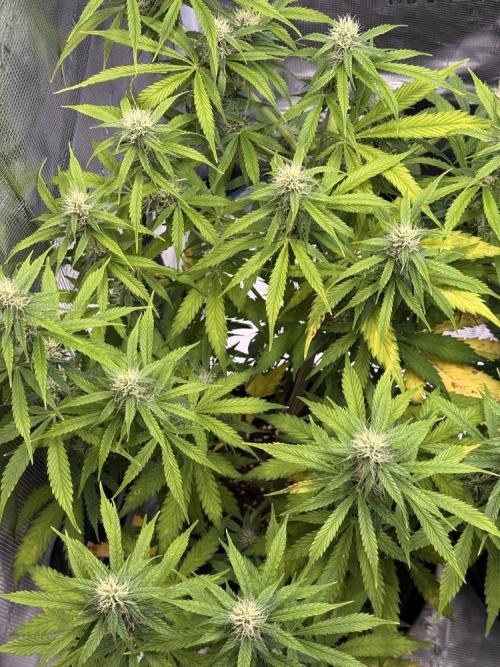
Did LST on the tops, leveled the tops by laying the Northern Lights top under the net to even them out. Removed some yellowing leaves, initially due to calcium and magnesium deficiency.
4 likes
comments
Share
Used techniques
LST
Technique
ScrOG
Technique
8
Week 8. Flowering
7mo ago
1/9
40 cm
Height
20 hrs
Light Schedule
25 °C
Day Air Temp
6.5
pH
Weak
Smell
50 %
Air Humidity
24 °C
Solution Temp
22 °C
Night Air Temp
14.99 liters
Pot Size
2.99 liters
Watering Volume
50 cm
Lamp Distance
Nutrients 4
Bio-Bloom
3 mll
Bio-Grow
1 mll
Top-Max
1 mll
Blast Week 7-8: Mid-Flowering - Managing pH & Micro-deficiencies
Description:
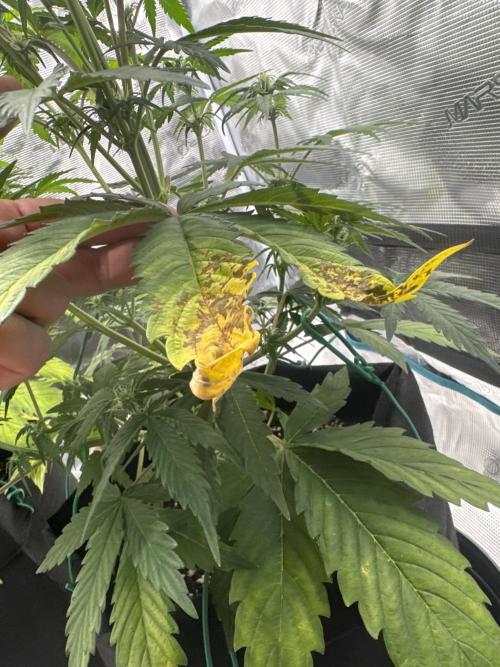
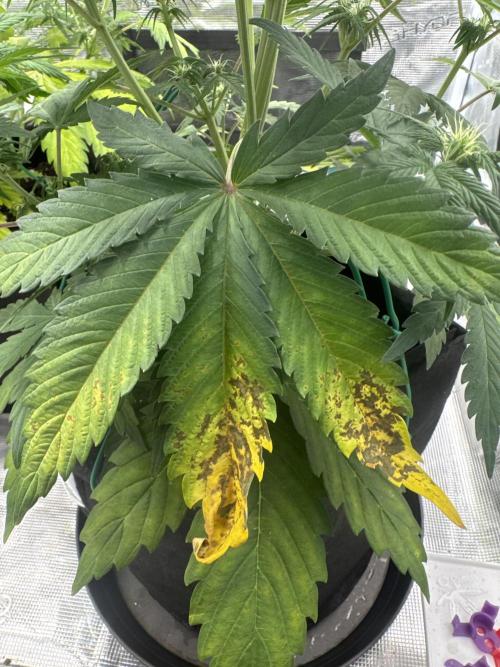
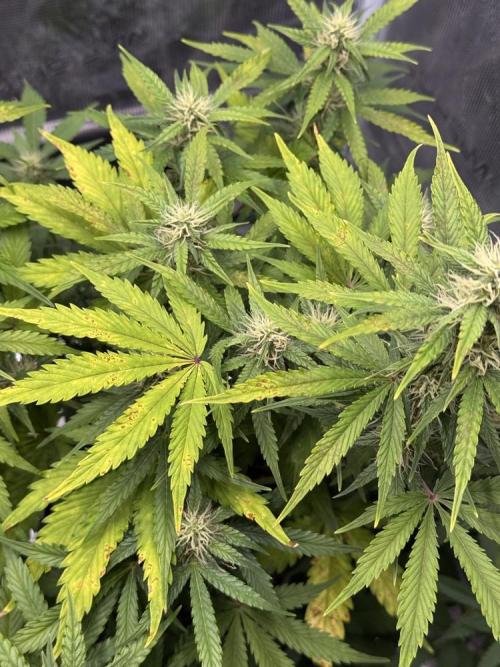
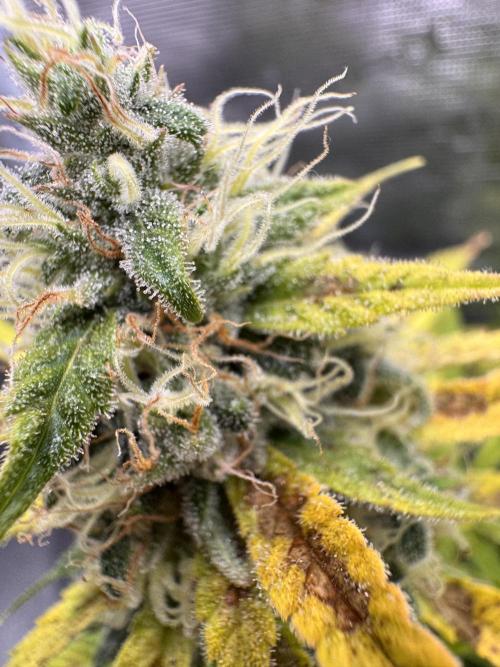
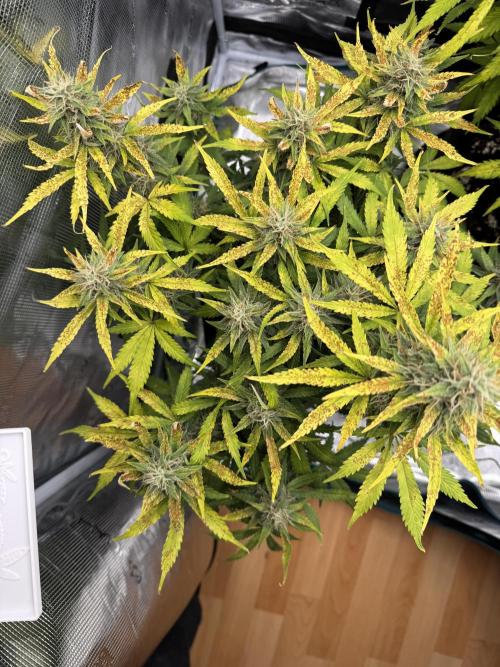
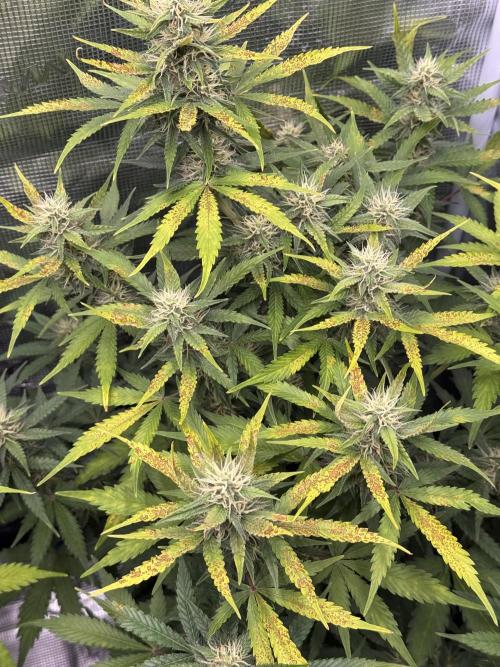
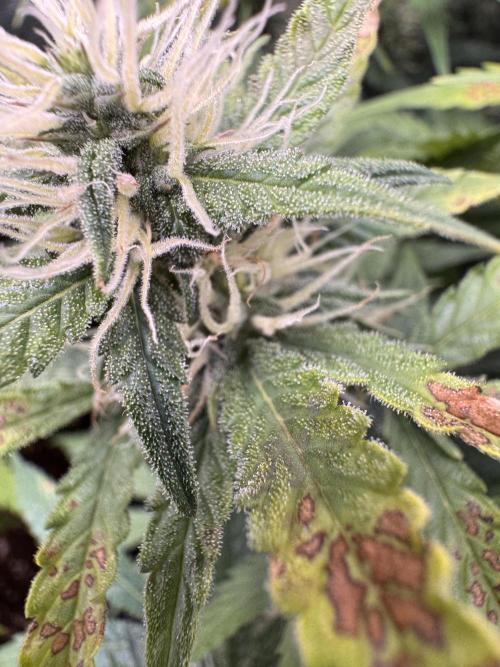
The plants have entered the active flowering phase. Northern Lights and Fat Bastard are showing excellent bud growth, but I've encountered a problem on the leaves — rusty spots and interveinal chlorosis have appeared. I took measurements: the drainage pH turned out to be high (6.8), which caused calcium and magnesium lockout.
Actions Taken:
Light: Reduced the power to 80% to decrease light stress and metabolic load.
Nutrients: Increased the Cal-Mag dosage to 1 ml/l.
Correction: Lowered the input solution pH to 6.0 to disrupt the soil's alkaline buffer and bring the pH back into the 6.3–6.5 range.
Climate: Temperature 23.8°C, humidity 59%, VPD 1.2 kPa — ideal conditions.
Watering 09.03
Fertilizer Dosage per 1L Total for 6.5 liters
BioBizz Cal-Mag 1.0 ml 6.5 ml
Bio-Bloom 3.0 ml 19.5 ml
Bio-Grow 1.0 ml 6.5 ml
Top-Max 1.0 ml 6.5 ml
pH (Input): 6.0
pH (Runoff): 6.8
EC (Input): 1250 (1.25 mS/cm)
EC (Runoff): 1350 (1.35 mS/cm)
Light Power: 80%
Distance to light: 50-60 cm
2 likes
comments
Share
Used techniques
LST
Technique
ScrOG
Technique
Defoliation
Technique
9
Week 9. Flowering
7mo ago
1/6
60 cm
Height
20 hrs
Light Schedule
25 °C
Day Air Temp
6.8
pH
Strong
Smell
55 %
Air Humidity
24 °C
Solution Temp
22 °C
Night Air Temp
15 liters
Pot Size
4 liters
Watering Volume
50 cm
Lamp Distance
Nutrients 4
Bio-Bloom
2.5 mll
Bio-Grow
0.7 mll
Top-Max
1 mll
Blast **Grow Report – 16.03 | Watering and Root Zone Adjustment**
**Stage:** Flowering (~4 weeks)
**Substrate:** BioBizz Light·Mix
**Light:** Mars Hydro FC-1500 EVO – 70% power
**Watering Goal:** Reduce accumulated EC and gradually stabilize pH in the root zone.
# Solution Preparation
**Total solution volume:** 8 liters
### Solution Composition (per 1 liter)
* BioBizz Cal-Mag — 1.1 ml
* Bio-Bloom — 2.5 ml
* Bio-Grow — 0.7 ml
* Top-Max — 1.0 ml
### Total for 8 liters
| Component
| Amount |
| --------------- | ---------- |
| BioBizz Cal-Mag | 8.8 ml
|
| Bio-Bloom
| 20 ml
|
| Bio-Grow
| 5.6 ml
|
| Top-Max
| 8 ml
|
**Solution pH:** 5.6
**Solution EC:** 1020 µS
---
# Watering
## Fat Bastard
Watering volume: **4.5 liters**
**Runoff:**
| Parameter | Value |
| -------- | -------- |
| Volume
| ~1 l
|
| pH
| 6.9
|
| EC
| 1370
|
**Analysis**
* Substrate pH is still above the optimal range.
* EC has decreased compared to previous measurements → salts are gradually being flushed out.
* Symptoms on the leaves (rust spots) correspond to **Ca/Mg lockout**, caused by elevated pH.
---
## Northern Lights
Watering volume: **3.5 liters**
**Runoff:**
| Parameter | Value |
| -------- | -------- |
| Volume
| ~0.6 l
|
| pH
| 6.9
|
| EC
| 1320
|
**Analysis**
* Readings are close to Fat Bastard.
* EC is within the normal range for mid-flowering.
* Visually, the plant has significantly recovered: leaves are bright green, and new spots are almost absent.
---
# Overall Condition Assessment
| Parameter
| Rating
|
| ------------------------- | ------------------------------------- |
| Root zone pH
| slightly elevated
|
| EC
| stabilizing
|
| Northern Lights Condition | good
|
| Fat Bastard Condition
| recovering from Mg/Ca lockout |
Light·Mix has weak buffering, so gradually lowering the solution pH to **5.6–5.8** is an effective strategy to bring the root zone back into the range of **6.3–6.6**.
1 like
comments
Share
Used techniques
Defoliation
Technique
LST
Technique
10
Week 10. Flowering
7mo ago
1/5
60 cm
Height
20 hrs
Light Schedule
25 °C
Day Air Temp
6.8
pH
Strong
Smell
55 %
Air Humidity
24 °C
Solution Temp
22 °C
Night Air Temp
15 liters
Pot Size
4 liters
Watering Volume
50 cm
Lamp Distance
Nutrients 4
Bio-Bloom
2.5 mll
Bio-Grow
1 mll
Top-Max
1 mll
Blast March 29 went by as a stage of fine-tuning after the recent flush. By this point, the substrate had already come out of the overwatering state, and the main task became not restoring the water balance, but working with the chemistry of the root zone — primarily with pH.
An 8-liter solution was prepared with parameters of pH 6.0 and EC 1100. Despite the EC being slightly higher than the initially planned range, it remained in a safe zone after flushing, so the solution was used without additional correction, but with careful reduction of the watering volume. Each plant received about 1.3–1.6 liters with a light drainage of around 10%, without excessive runoff.
After watering, the drainage readings were taken, which clearly showed the current state of the system. For Northern Lights, pH was 6.8 at EC 1100, which is close to the allowable upper limit, while Fat Bastard showed a more pronounced shift — pH 7.0 at the same EC 1100. At the same time, the EC level in both cases confirmed that there was no salt buildup, the nutrition remains balanced, and does not create overload.
The main conclusion from the results is that the substrate continues to buffer the solution towards the alkaline side. Despite supplying the solution with pH 6.0, the root zone does not drop into the target range, especially for Fat Bastard. This indicates the need for increased corrective action, but without resorting to aggressive measures.
Thus, the current stage can be characterized as stable in terms of nutrition, but requiring additional work with pH. The system is generally restored after the flush, and the final adjustment remains to be made — to lower the pH of the incoming solution to 5.8–5.9 in the next watering, to gently bring the root zone back into the optimal range of 6.3–6.5. After that, a transition to a fully stable mode is expected without the need for further corrective interventions.
2 likes
comments
Share
11
Week 11. Flowering
6mo ago
1/11
60 cm
Height
18 hrs
Light Schedule
25 °C
Day Air Temp
6.8
pH
Strong
Smell
55 %
Air Humidity
24 °C
Solution Temp
22 °C
Night Air Temp
15 liters
Pot Size
4 liters
Watering Volume
50 cm
Lamp Distance
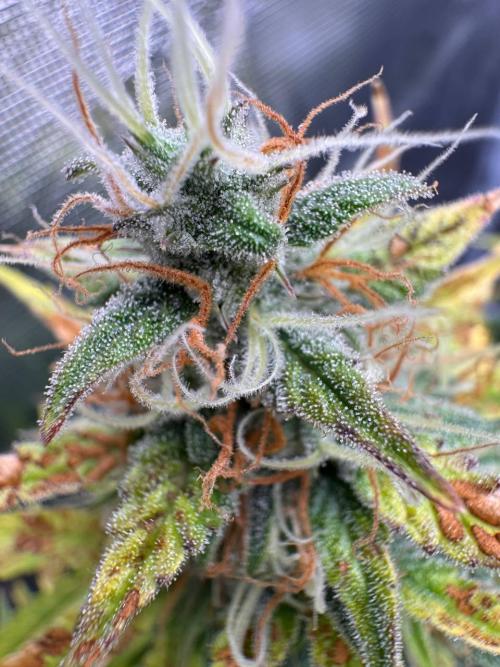
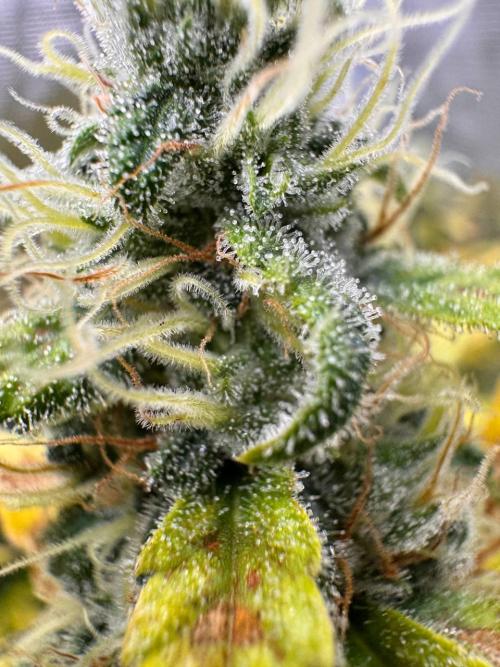
Blast The last watering was on 09.04. I think in about 4 more days it will be time to cut. For now, I don't think it's worth watering; let them dry out.