


Miss Permanenza – The First Layer



VEG
SfD-1500 Light Emitting Diodes/150W
FLO
SfD-1500 Light Emitting Diodes/150W




Contr
Controller AI+

LivingSoil NoTill Soil
Wachstumsland

Indoor
Room Type
Topping
weeks 4
LST
weeks 5
Defoliation
weeks 5
50 liters
Pot Size
Start at 5 Week
G
Germination8mo ago
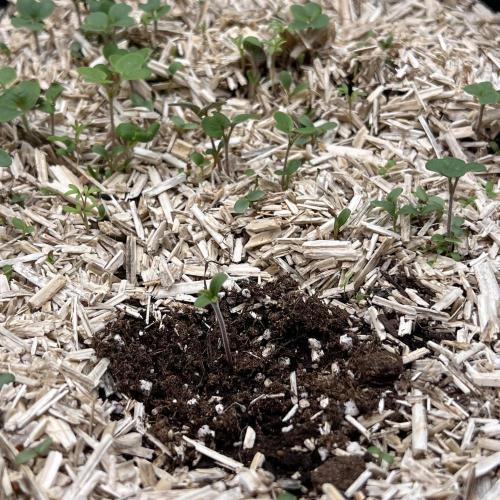
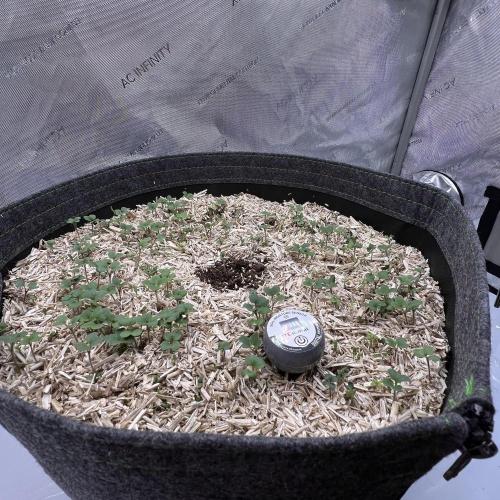
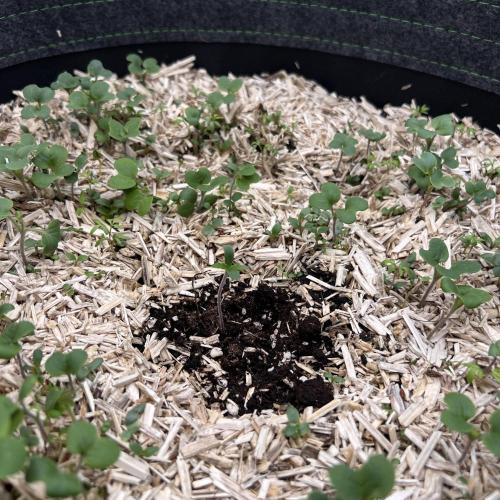
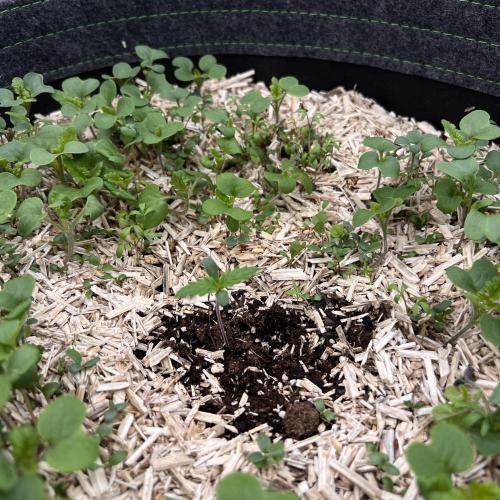
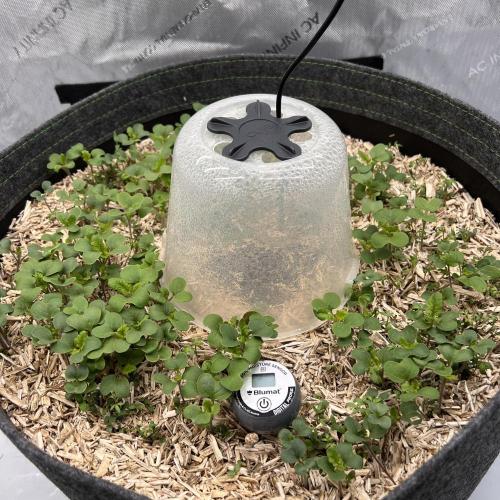
Growtendo64 Seed was planted directly into living soil and emerged smoothly. Light intensity kept around ~230 µmol, resulting in compact growth with no stretch. Mulch is kept lightly moist using rested tap water, supporting active soil life. Very solid start to this no-till run.
6 likes
comments
Share
Used method
Directly In Substrate
Germination Method
1
Week 1. Vegetation8mo ago
5 cm
Height
18 hrs
Light Schedule
23 °C
Day Air Temp
No Smell
Smell
63 %
Air Humidity
50 liters
Pot Size
30 cm
Lamp Distance
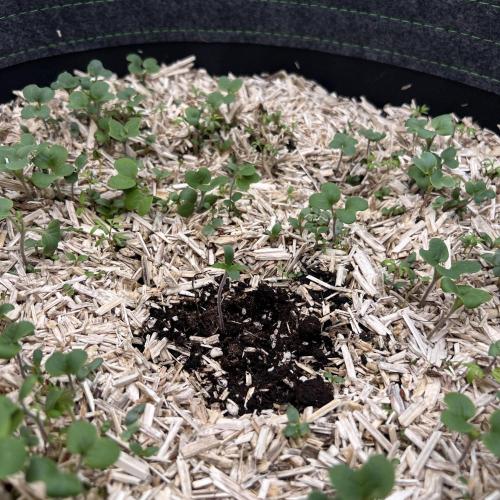
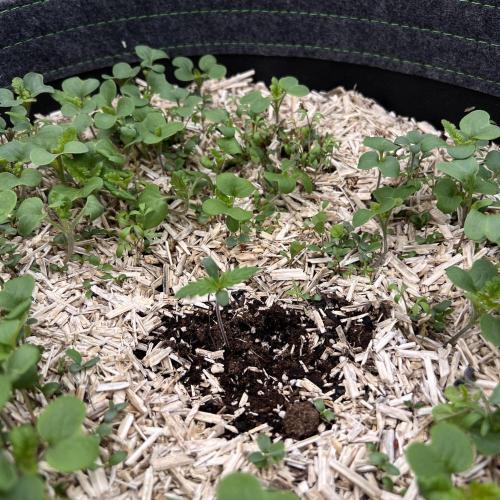
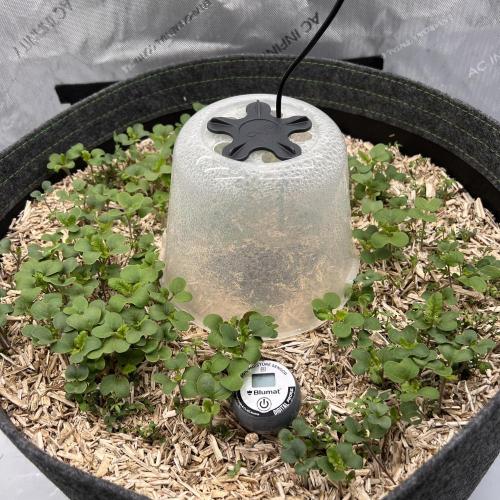
Growtendo64 The seedling broke through the soil on Day 1 (Jan 25) and showed a very stable development throughout the first week.
Light intensity was set to approximately 230 µmol/m²/s, measured with a PAR sensor. This resulted in compact growth with no stretching, indicating a healthy balance between light and early root development.
The cover crop is thriving and helps maintain a stable microclimate on the soil surface. Watering was kept very minimal during this phase: the mulch layer was lightly moistened with 1–2 day old tap water, never soaking the soil. The focus was on supporting soil biology rather than pushing vegetative growth.
The seedling is growing steadily in the center of the pot, showing healthy structure and good vigor. Overall, this was a very relaxed and controlled start to the first Living Soil / No-Till run, exactly as intended.
4 likes
comments
Share
2
Week 2. Vegetation8mo ago
8 cm
Height
18 hrs
Light Schedule
23 °C
Day Air Temp
No Smell
Smell
63 %
Air Humidity
50 liters
Pot Size
30 cm
Lamp Distance
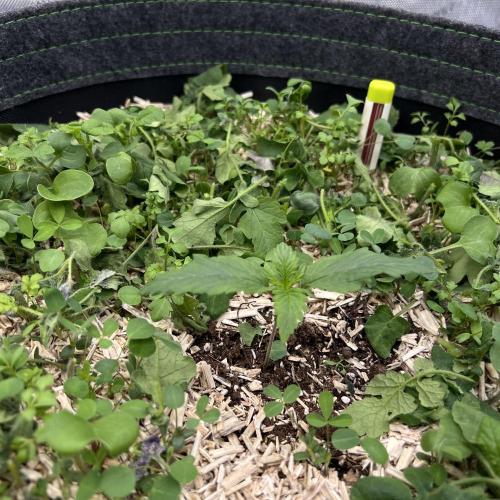
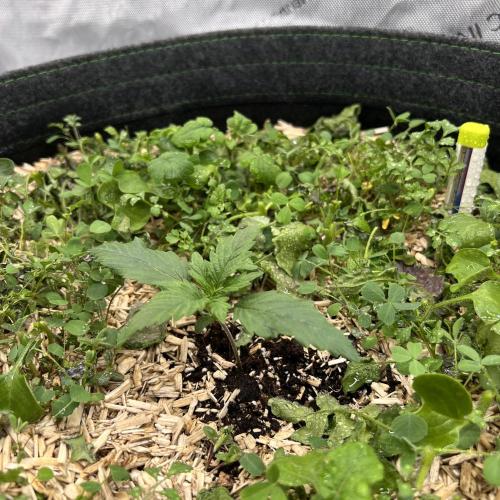
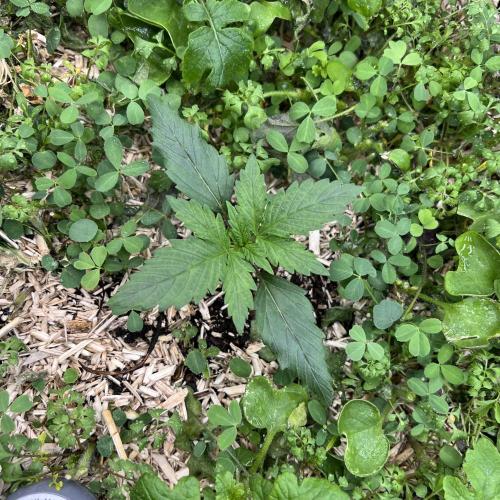
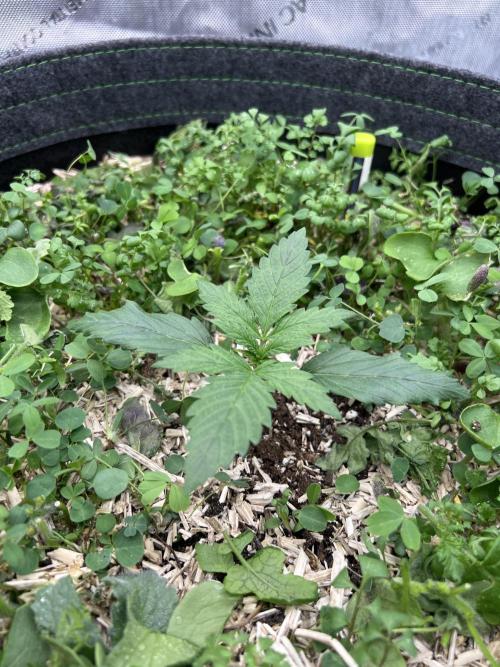
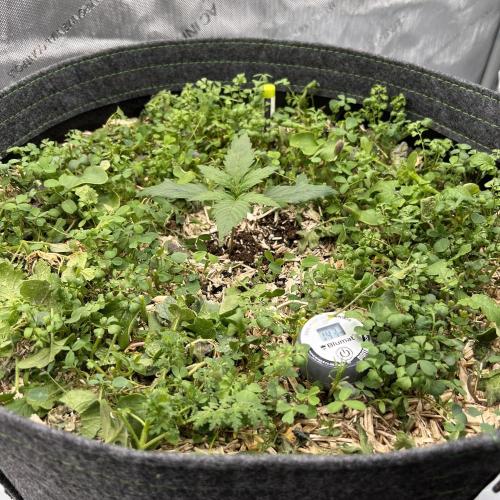
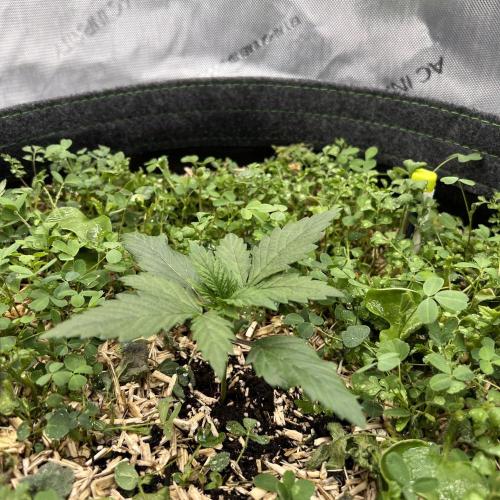
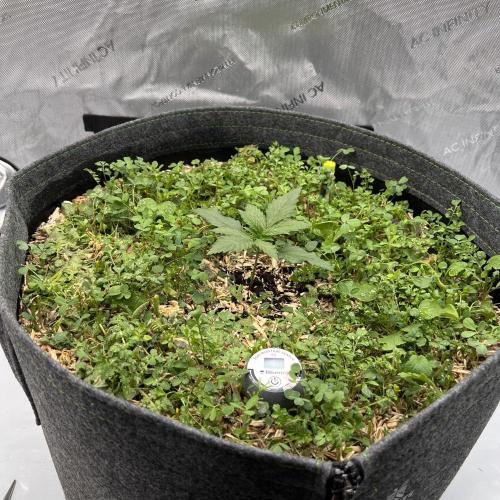
Growtendo64 During week two, Miss Permanenza shows a very stable and controlled development. The seedling grows compact with no signs of stretching, confirming that the chosen light intensity is well balanced for this stage.
The cover crop is developing evenly and was cut back by about 50% during the week. The cut material was left on the surface as mulch to reduce competition and actively feed the soil biology. Watering continues to be sensor-based and very gentle. When soil tension reached around 200 mbar, watering was done in two steps with a total of approximately 1–1.3 liters, bringing the substrate back into an optimal range of about 115 mbar. Later in the week, a light follow-up watering of around 0.5 liters was sufficient at 186 mbar.
To further activate the living soil system, 50 compost worms were introduced directly onto the soil under a small light-blocking cover. Within roughly ten minutes, all worms had fully moved into the substrate, indicating suitable moisture, temperature, and overall soil conditions.
Towards the end of the week, light intensity was increased to around 340 µmol/m²/s with a DLI of approximately 22, marking the transition into early vegetative growth. Overall, the plant appears healthy and stress-free, with a clear focus on root development and soil activity.
3 likes
comments
Share
3
Week 3. Vegetation7mo ago
12 cm
Height
18 hrs
Light Schedule
23 °C
Day Air Temp
No Smell
Smell
210 PPM
TDS
55 %
Air Humidity
50 liters
Pot Size
30 cm
Lamp Distance
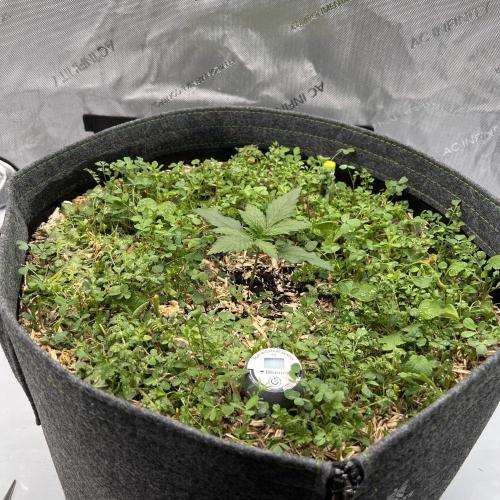
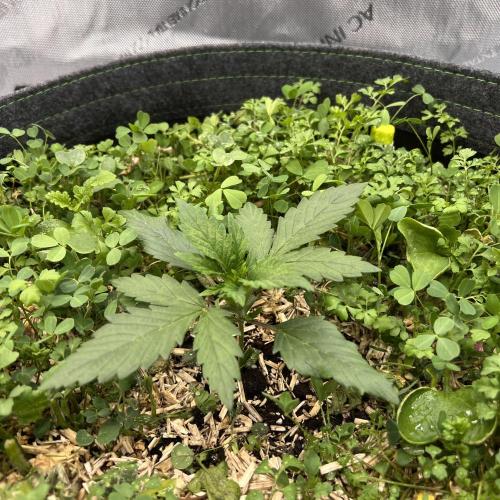
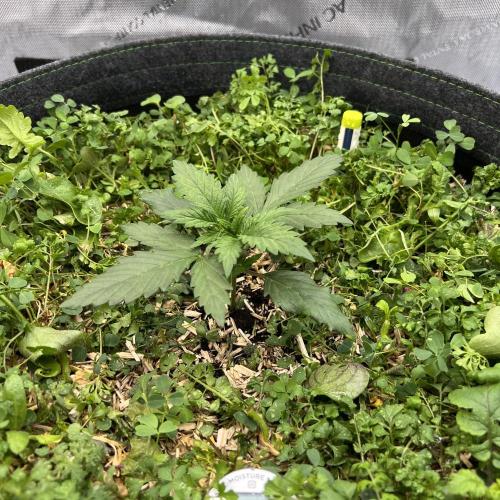
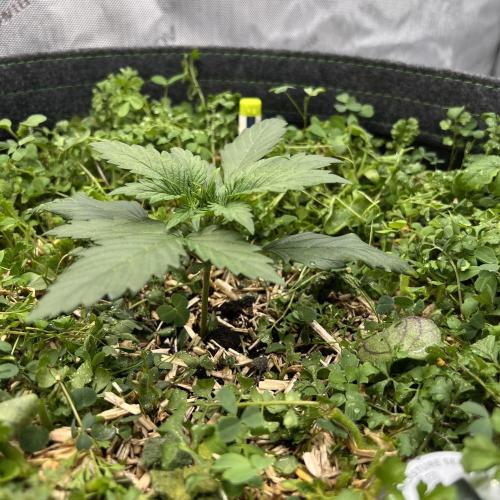
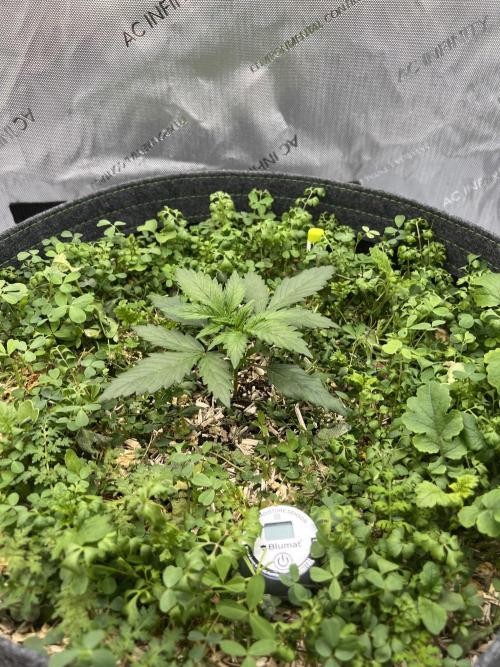
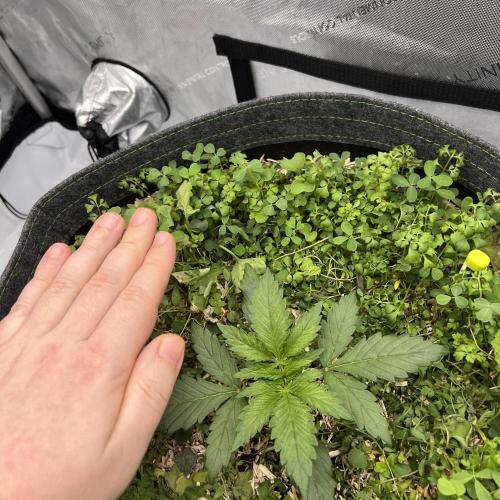
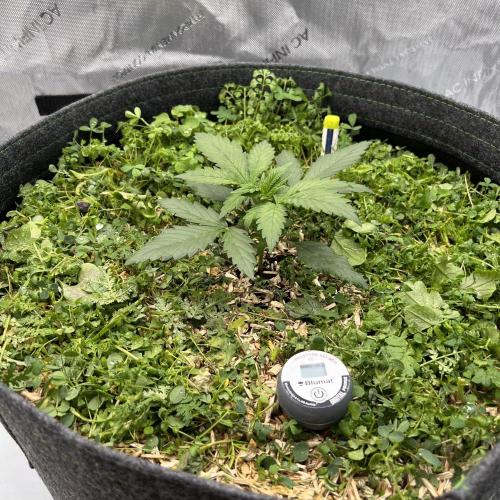
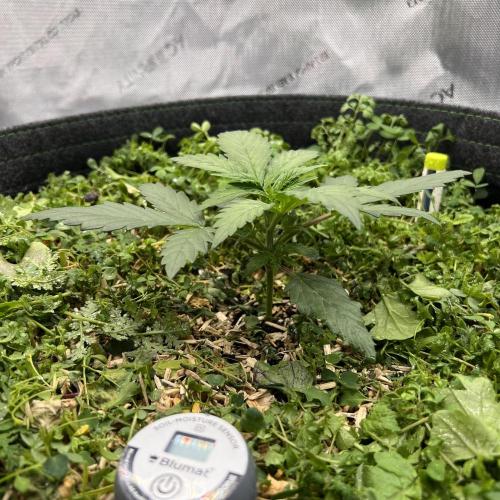
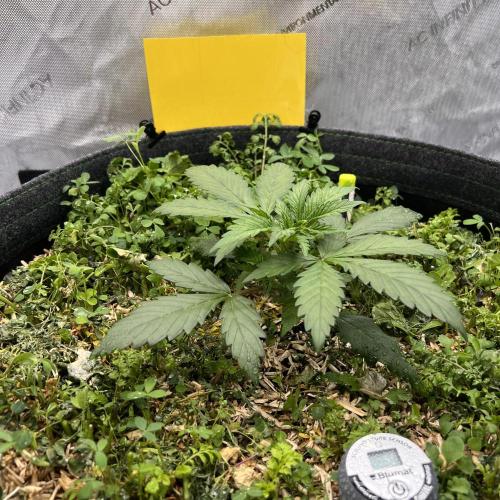
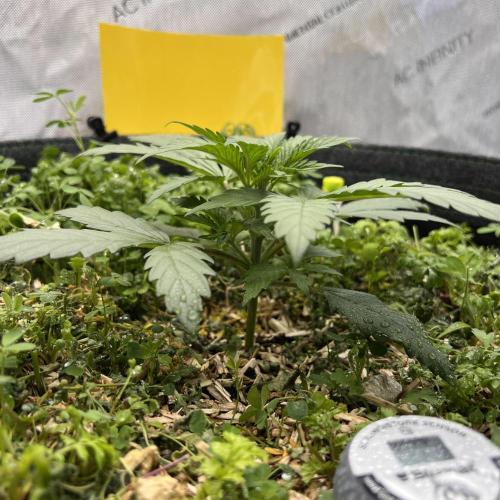
Growtendo64 Week 3 marked the clear transition into a stable vegetative phase. Transpiration increased noticeably, and overall growth became more dynamic.
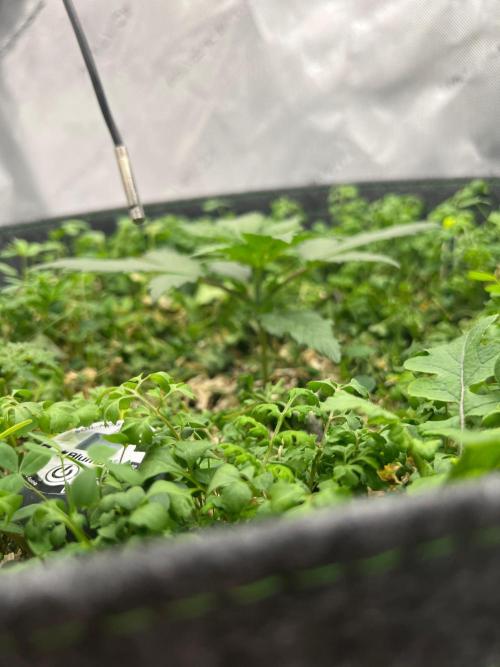
At the beginning of the week, substrate tension was 186 mbar. I applied 1.5 L of water, which resulted in a clean rehydration down to 122 mbar the following morning – an ideal moisture range for a 50 L living soil no-till setup.
Later in the week, I ran a small watering test:
At 211 mbar, I applied 1.0 L, resulting in 169 mbar. This confirmed that 1 liter acts more as a correction rather than a full reset.
On February 12th, I reduced approximately 4/5 of the cover crop to reduce competition and focus energy on the main plant. A total of 1.5 L was applied that day.
Interestingly, the mbar values remained very stable over 24 hours (165 → 163), indicating good internal moisture distribution and balanced soil structure.
Climate adjustment:
VPD was set to 1.1 ±0.1 kPa during daytime and 0.9 ±0.1 kPa at night, matching the increasing vegetative demand.
Lighting:
PPFD ranged between 340–370 µmol with a DLI of approximately 22–24. Internode spacing remained compact with no signs of stretching.
Week 3 conclusion:
Very stable phase. Roots are active, water demand is increasing moderately, and the system behaves consistently and predictably with no visible stress.
5 likes
comments
Share
4
Week 4. Vegetation7mo ago
14 cm
Height
18 hrs
Light Schedule
23 °C
Day Air Temp
No Smell
Smell
210 PPM
TDS
55 %
Air Humidity
50 liters
Pot Size
35 cm
Lamp Distance
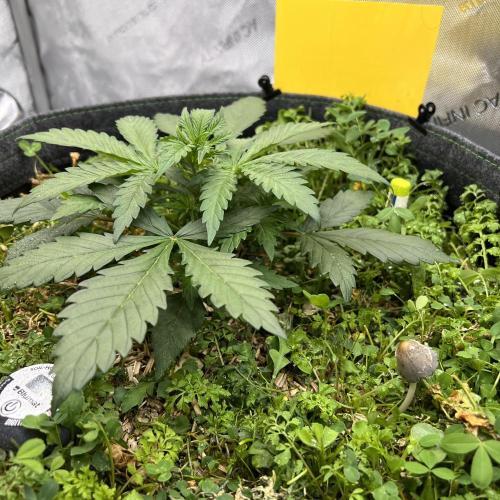
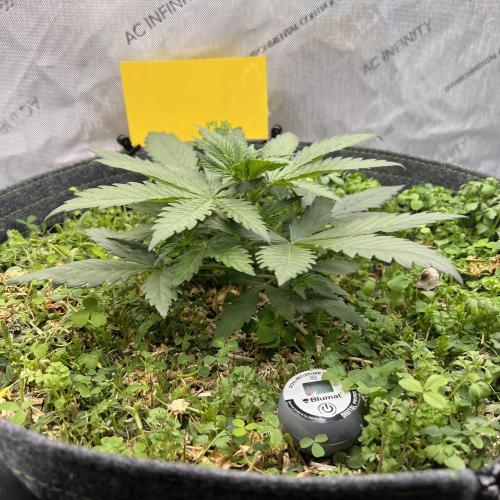
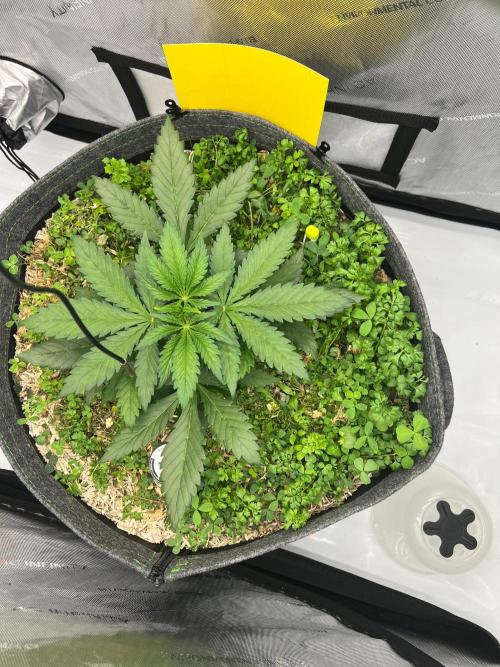
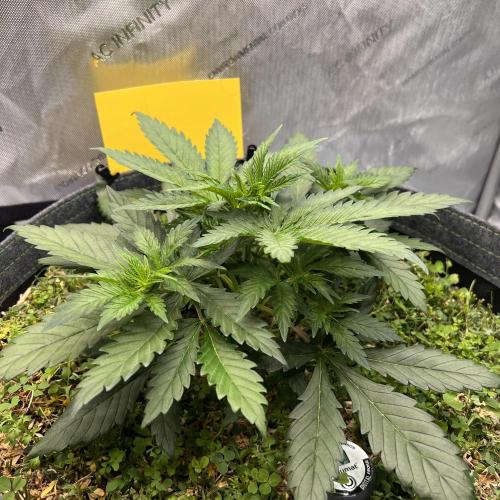
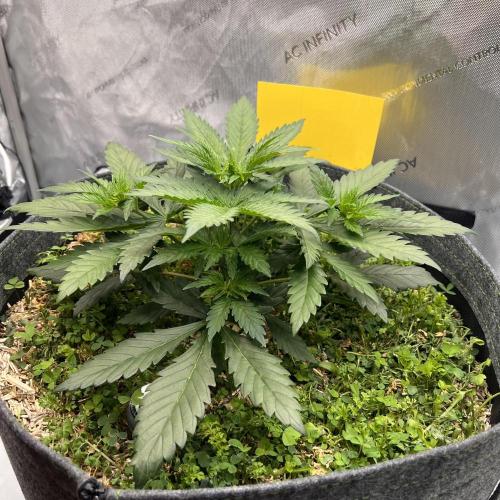
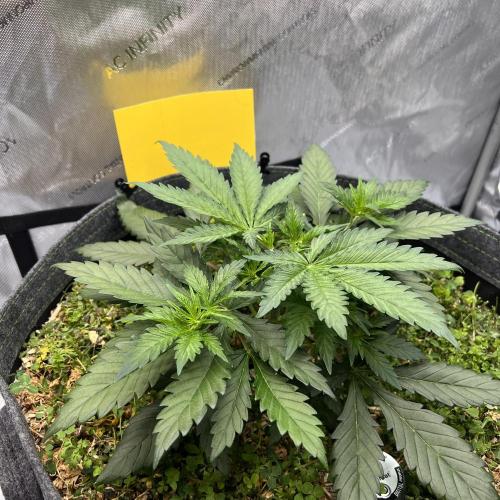
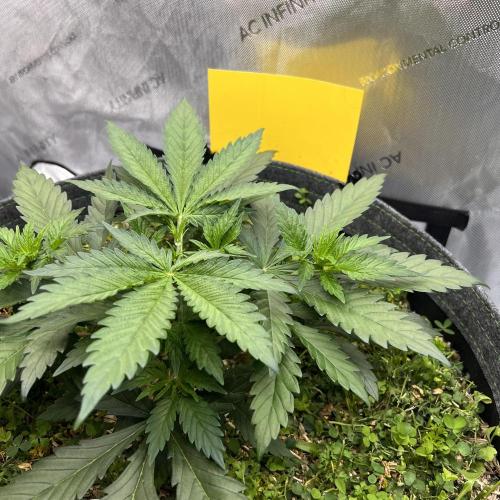
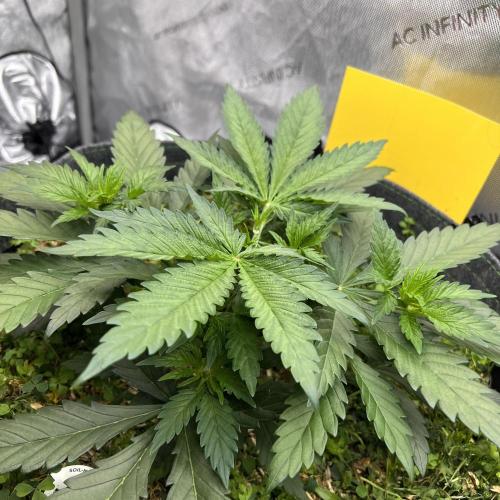
Growtendo64 Week 4 marked the transition from stable vegetative growth to real momentum. Miss Permanenza visibly increased in biomass and fully entered her active veg phase. Internodal spacing remains tight, structure is symmetrical, and the leaves show a slight upward “praying” posture – a clear sign that light intensity, VPD and root environment are in balance.
Water dynamics inside the 50L no-till container became especially interesting this week. At around 220 mbar, I applied 2.2 liters in total. Initially the sensor (positioned 16 cm deep in a 27 cm soil column) still showed elevated tension values, but throughout the day the mbar dropped significantly, indicating proper vertical moisture redistribution within the soil body. With a DLI around 25 and increasing biomass, transpiration and water consumption clearly intensified.
One highlight of the week: the first mushrooms appeared on the soil surface. For me, this is a positive signal – active mycelium, functioning mulch layer, and living soil in full motion. No unpleasant smell, no compaction, just a biologically active environment.
The cover crop was fully cut back to allow the main plant full access to nutrients and moisture. From this point forward, all energy flows into structural development.
By the end of the week, the 5th node is fully developed and the 6th is unfolding. Height sits at approximately 14 cm – compact, vigorous, and without stretch. Miss Permanenza shows strong root establishment and reacts very steadily to environmental and lighting adjustments.
Week 4 was not dramatic, but foundational:
Soil activated. Structure established. Momentum initiated.
The First Layer is alive.
2 likes
comments
Share
Used techniques
Topping
Technique
5
Week 5. Vegetation7mo ago
19 cm
Height
18 hrs
Light Schedule
23 °C
Day Air Temp
No Smell
Smell
210 PPM
TDS
55 %
Air Humidity
50 liters
Pot Size
35 cm
Lamp Distance
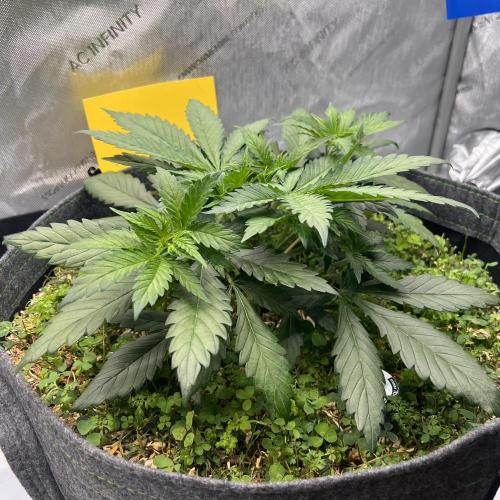
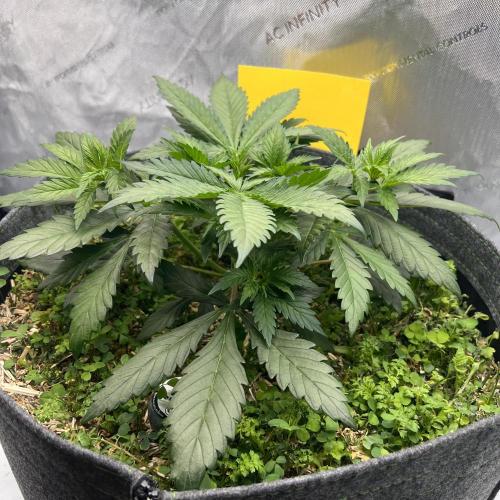
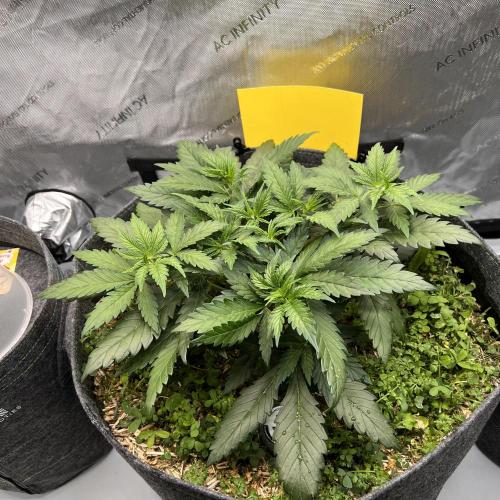
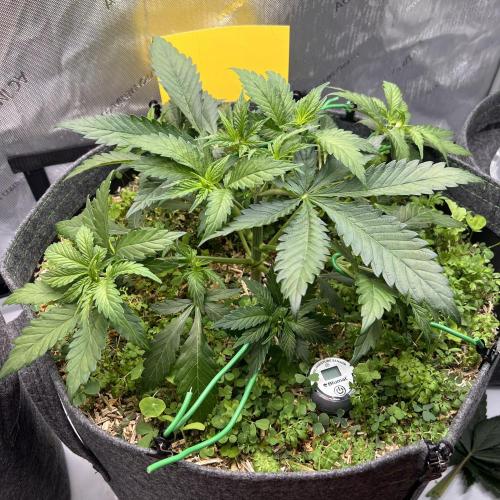
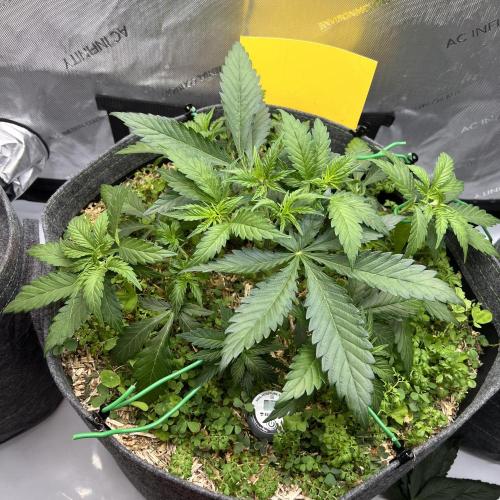
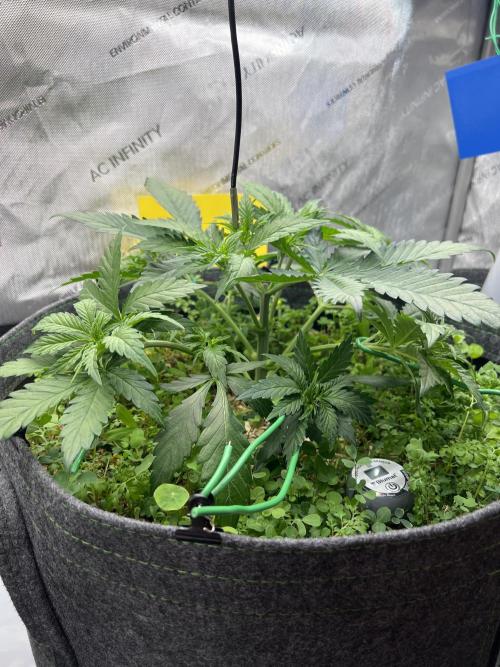
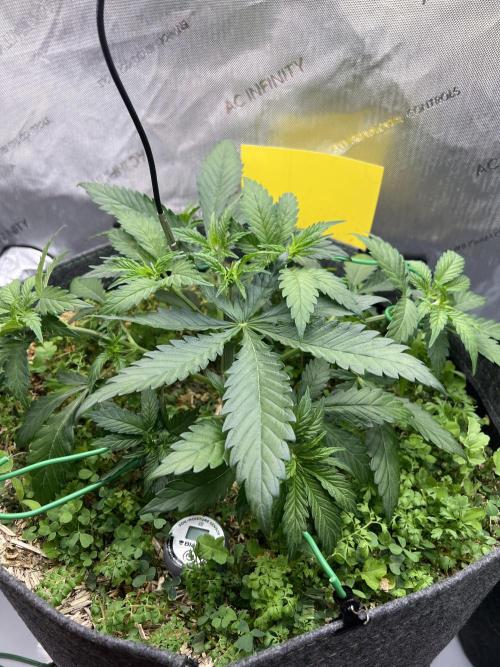
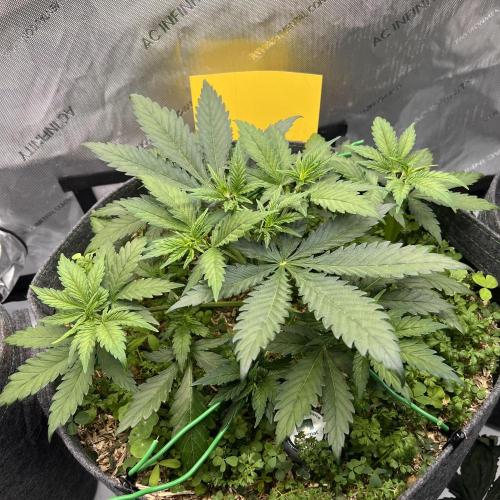
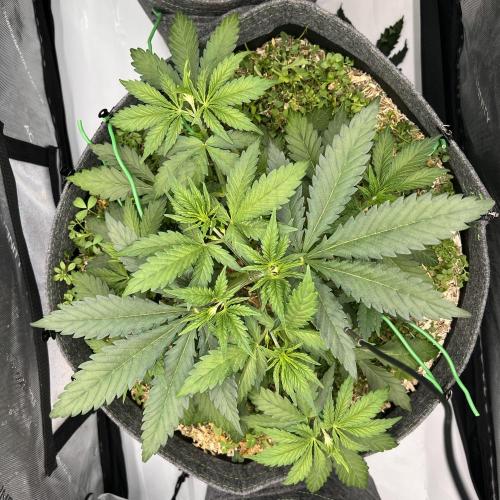
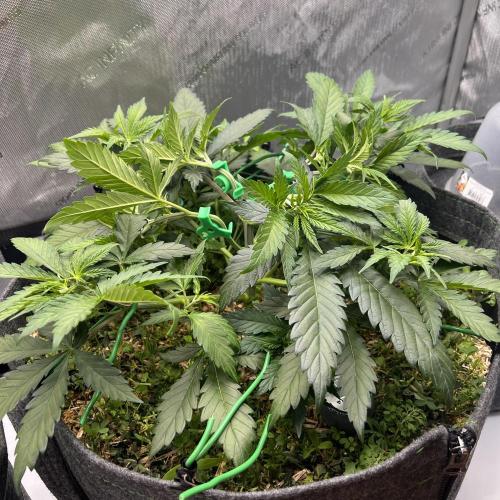
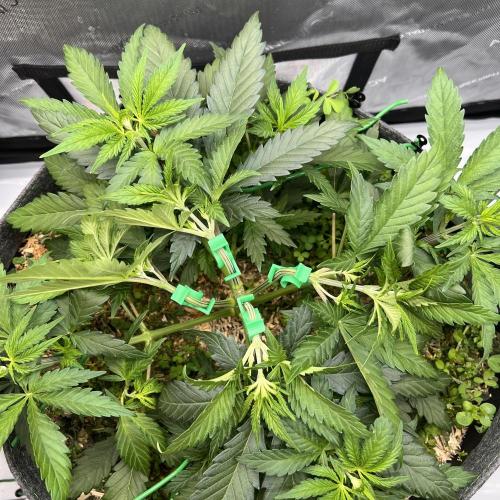
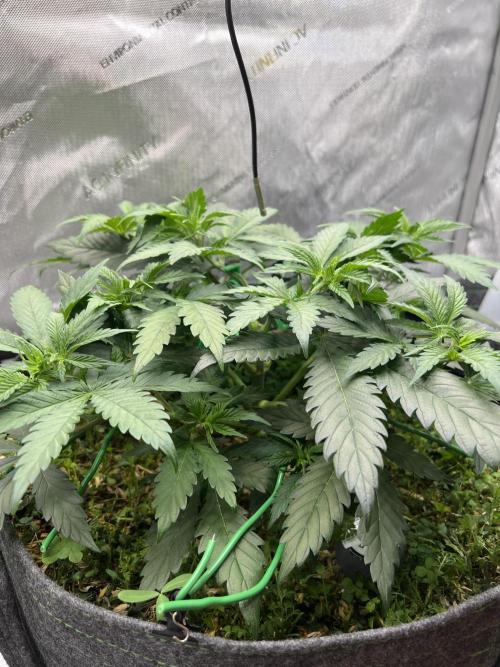
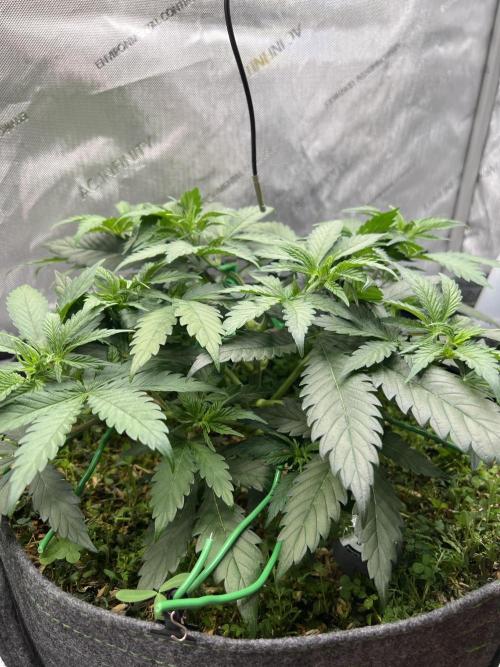
Growtendo64 Week 5 with Miss Permanenza marks a very stable and controlled phase of my first Living Soil run in a 50 liter no till setup. The plant was topped above the fifth node and handled the cut without any visible stress. The two new main tops continued to gain mass immediately and the side branches are developing evenly. The structure is compact and wide with a current height of around 19 centimeters and a very flat canopy. The low stress training is being accepted extremely well. Several lower branches were repositioned and the upper four branches were leveled using clips to create a uniform canopy.
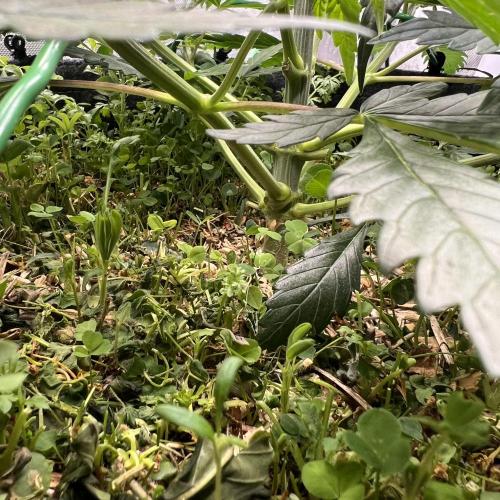
During this week I removed twelve larger fan leaves to slightly slow down growth and synchronize her timeline with two younger seedlings in the tent that are planned to be flipped together in approximately 21 days. Some lower fan leaves were also removed, dried for a day and then chopped and returned as mulch. The cover crop has been trimmed multiple times but continues to grow back vigorously and clearly supports soil biology. The appearance of mushrooms on the soil surface confirms active microbial life within the substrate.
The watering rhythm is now clearly established. I irrigate around 195 to 210 mbar with approximately 2 to 2.3 liters per event. The moisture sensor sits about 16 centimeters deep in a 27 centimeter filled container which makes the readings representative of the core root zone. The moisture curves show even distribution and stable transpiration without signs of waterlogging or drought stress. After defoliation and training the plant remained fully vital with leaves slightly praying and no stress symptoms visible.
Lighting is currently around 382 micromoles per square meter per second with a DLI between 24 and 25 at roughly 37 centimeters distance. This setting promotes compact growth without stretch. Overall week 5 was a phase of structural shaping and control. Miss Permanenza is developing a wide and even canopy and responds very positively to all interventions. The next step will be installing the net to further fill the space and prepare her strategically for the planned flip in about three weeks.
4 likes
comments
Share
Used techniques
LST
Technique
Defoliation
Technique
Enjoying this diary? Follow for more updates!

Prefer the old Diary view?
Go back to the old Diary view