


Bubba kusk








Indoor
Room Type
G
Germination4mo ago
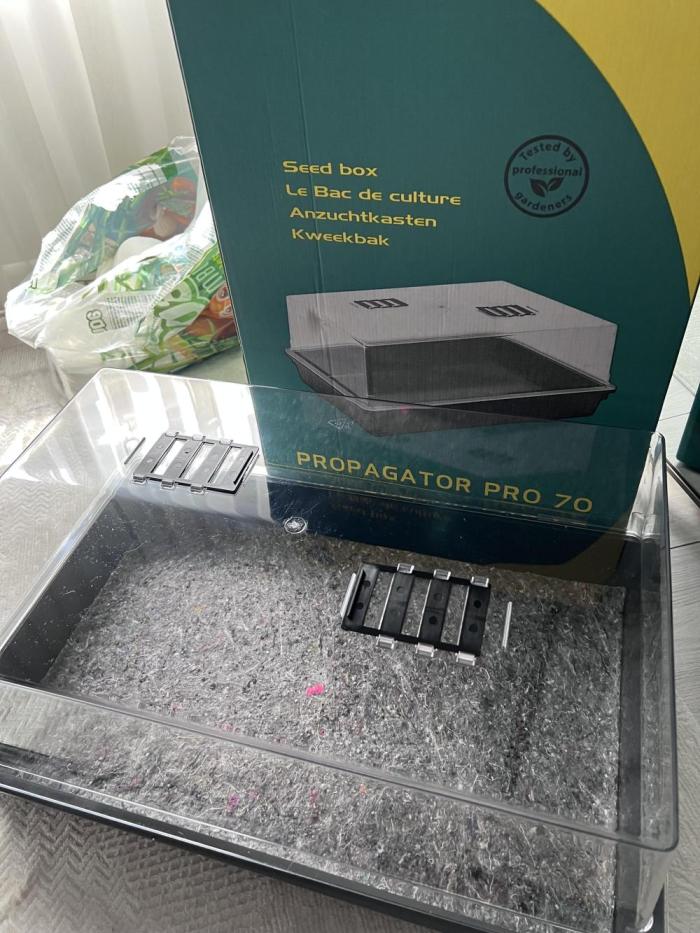
KabakciLar Hello, I've tried to sprout seeds on a napkin a few times. I succeeded 1-2 times, then planted them in a small pot, two leaves appeared, and they died after quite some time. Now I've planted them directly in a small pot, and it's been over 3 days, but they haven't sprouted. Please, I need help from those who use my lab and lighting system. What dimmer and spacing should I use?.
2 likes
2 comments
Share
Used method
Directly In Substrate
Germination Method
Grow Questions

KabakciLarstarted grow question 4mo ago
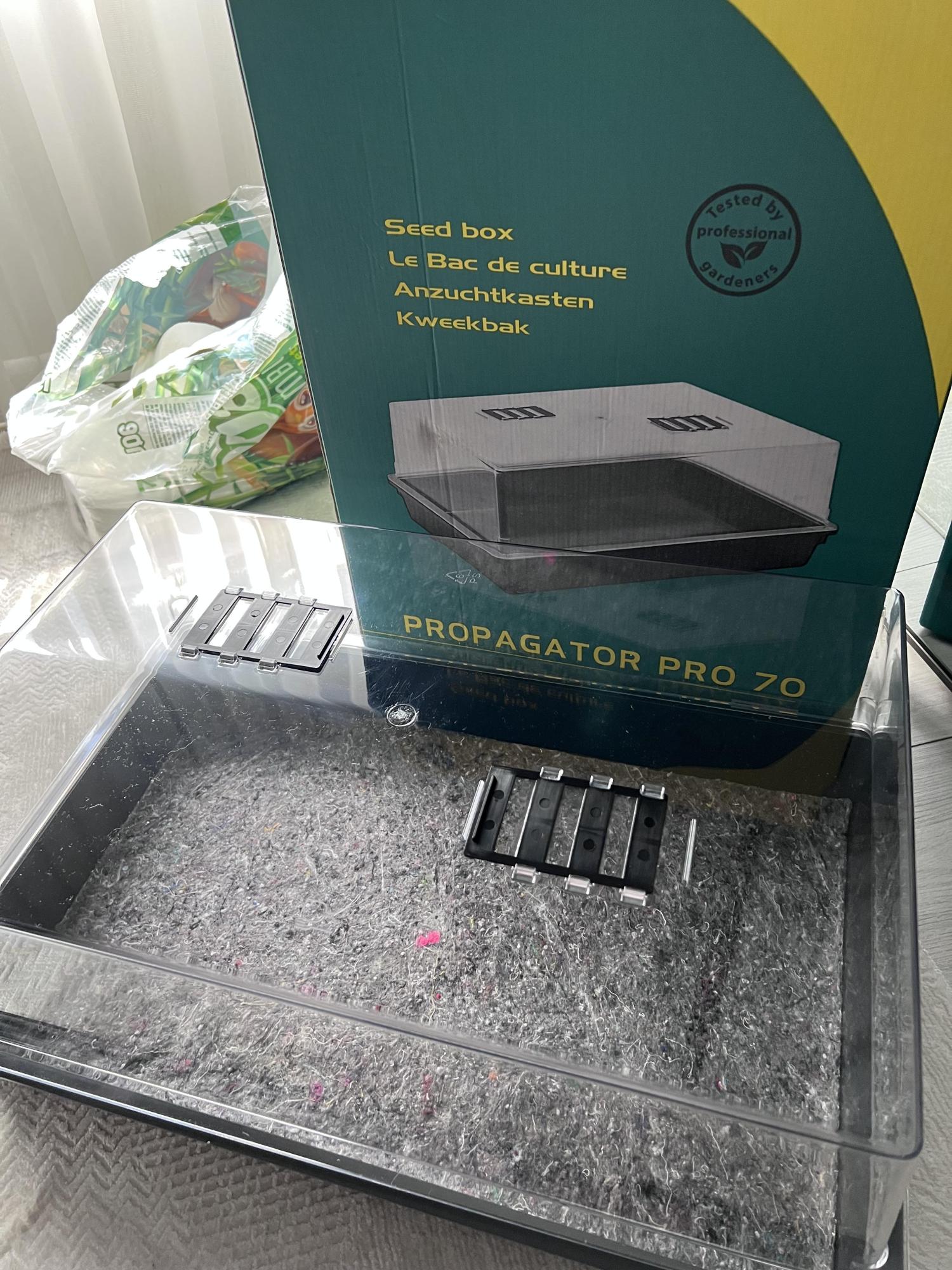
Friends who have used my lighting system and my cabinet before, please help! What should the dimmer and distance settings be??
Open
Setup. Seedling
1 like
Answer

ohcibianswered grow question 4mo ago
I have a 70x70 tent and I use 100W for seedlings and 150W from week 2 or 3. As for distance, I start at roughly 70cm, then bring it down to 60 and let the plants grow towards it. I then try to target around 40cm or a bit less and pull the light up if necessary.
The important thing is: Everything I do, I do while watching and observing the plants and their reactions, so my numbers are merely a rough guideline. Bear in mind that distance and intensity go hand in hand. I don’t bother dimming the light any more finely than my two steps and I do the rest by distance. Don’t try to juggle two numbers, reduce it to one if possible.
likes
Complain
00110001001001111Oanswered grow question 4mo ago
Hanging distance is easy when the light fits the area well, which seems to be the case. This should be about the geometry of the spread of light. A light app can help here a bit - doesn't have to be fancy as proportional intensity is the key, not the metric (lux or ppf etc). So, minimize the difference from central reading to outside corners and edges without sacrificing overall average across canopy. You can guesstimate this, too.. the concept is the key to understand. With this type of frame (bars / strips), ~18" is usually good.
if you try to cover more or less space, raise/lower it accordingly, but pay attention to not dropping DLi too far when covering a larger space. this is more of a problem to consider with photoperiods, as you go from 18h to 12h operation. All needs must be based on the 12 hour operation, unless you have more lights to plug in.
unusual context may call for different hanging distance. e.g. with seedlings, you can save watts, get it nice and close focusing the light on a much smaller area. This context takes a little more trial and error dialing in power and you won't get as good of a guesstimate for initial setting. This will take a bit more observe and adjust on your end than for mature plants and "full" power contexts..
If the light is well-sized for the tent, hanging distance should be about optimal coverage of light across canopy and nothing else. It's geometry.
------
If accurate, specs say the total PAR umol/s of that light is ~420 -- splits difference between EVO and E series... since that wasn't specified..
70x70 is roughly 0.5 m^2. Easy enough to estimate a PPFD. It's 2x whatever umol/s PAR the light is set to, which will be proportional to the power on the dimmer switch.
Over 18hours, you only need ~600 ppfd. Most likely slightly less than that. I typically aim slightly higher than necessary. Better to err in that direction in this case.
So, 65-70% is a good start if this light is properly focused (hanging distance) on a 70x70 area. (420/600). This is ~38 DLI
We can do the same math or take a shortcut for 12 h operation.. (or vice versa if for some reason you figure this out in flower). It's inversely proportional to hours of operation, ceteris paribus. facter 18/12 when dropping and 12/18 increasing hours. or 150% or 67%.. in this case it's 150%.
65-70% x 150% is ~100% ... so this light is a great fit for that tent.
Nuance... These calculations are good starting points. Local variables imapct exactly how much light your plant can handle as well as any genetic influence, so this varies by garden. You always need to observe and adjust based on growth... not stretched out and not too tight in an unhealthy way.
Also, seedlings are a distinct context. They need less light initiially. If you also hang the light much closer, you can save more electricty, too. At 18" you could easily apply certain targets like 150ppfd witht he above map, but when also moving the light closer, 2 variables are changing is it gets messier. More trian and error. Again, morphology of the plant will help you dial it in... if a seedling stretched too much, need more light next time. If it gets stunted and nodes are stacked on top of each other with no internode between, it needed less. Take notes and adjust the process next time, as well as obvioulsy adjusting to what you see currently, but once something stretches or is too tight, it pretty much stays that way after the fact. No big deal for an early node or two.
i use a much shittier 150w light... so you may need less power than my suggestion. Center the frame of your light over your seedling container with dome... Probably a few inches closer than 18" unless the frame of the light is smaller than the coverage. Set power to 25%.
The seedling will quickly want more. any hint of stretch, start increasing power of light incrementally. Don't overdo it, it's easy to give too much. Again, take notes about how you ramp up and the timing of it based on age of seedlings. This seems complicated, but it's a one-time process (maybe a couple to iron it out) ... once you have a good procedure mapped out, you don't have to pay attention to this stuff.. simply follow what you learned and adapt to any oddball plants that deviate a bit.
Last tidbit, if ever growing autoflowers you have 2 optiosn. Stick to the same .5m^2 area and 18 hour suggestion, or you can cover a proportionally larger space at 100% power. This would require increasing hanging distance slightly to properly cover a larger area. This light at 100% could probably flower autos well up to about 0.70 m^2 - 0.75 m^2, assuming the light can spread out well enough from the source.
DLI is the key. PPFD without hours of operation will not be as useful. That's asking someone how far they traveled and only giving velocity (PPF) and witholding time (hours of operation) ... PPFD is a bit more complicted.. it makes comparing differeing areas of coverage apples to apples. e.g. 600 ppfd is always 600 ppfd whether you are referencing a 100m^2 garden or a 1m^2 garden. DLI takes that a step further and makes hours of operation irrelevant. 38 DLI is 38DLI whether lights are running 10hours or 20 hours. This is why DLI is the best way to learn how to perceive this stuff. it's more translatable to the next person.
likes
Complain

hassehujasseanswered grow question 4mo ago
Bro I am used your set up. Iit all depend to PPFD - seeding needed from 150 to 350 ppfd. you can reach it with your lights around 35-40 sm and 20-25 % lights
watch out , if your plants will grow oup to fast up put it more 30-35% at same distance😎
likes
Complain
Enjoying this diary? Follow for more updates!
Prefer the old Diary view?
Go back to the old Diary view