

Interview with Biotabs

3
8
3d ago
G
Germination
3d ago
Nutrients 1
Organic Fertiliser Tablets - Bio Tabs
Organic Fertiliser Tablets
3 mll
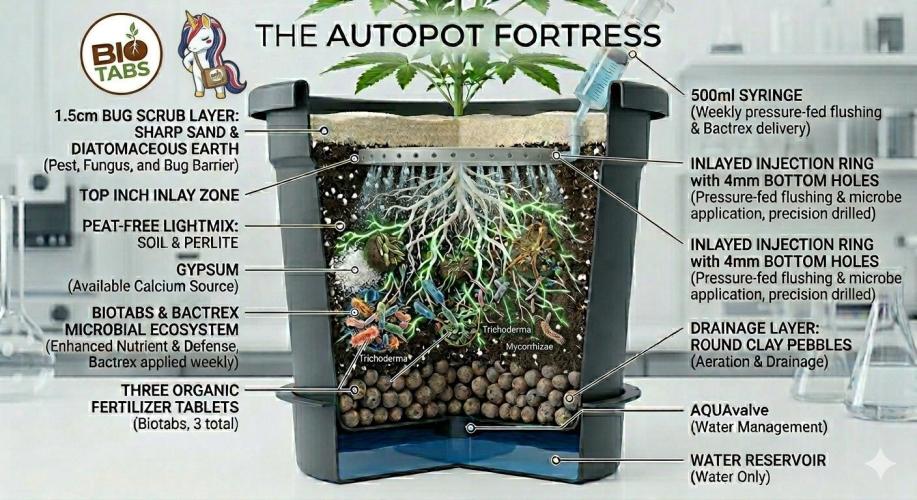
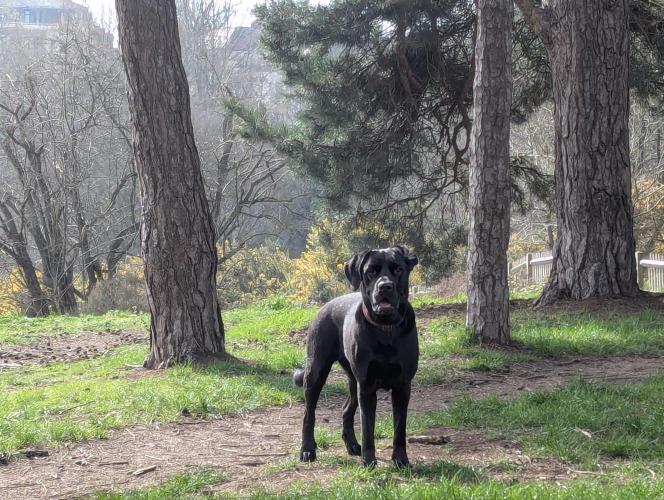
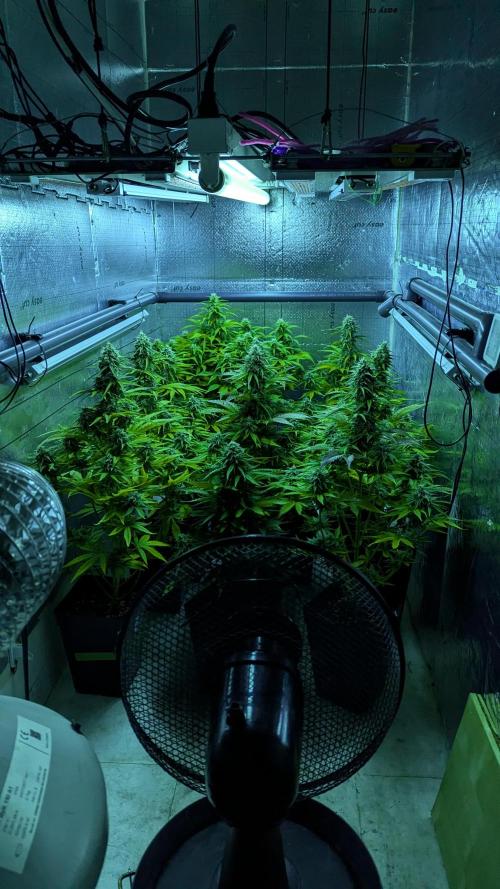
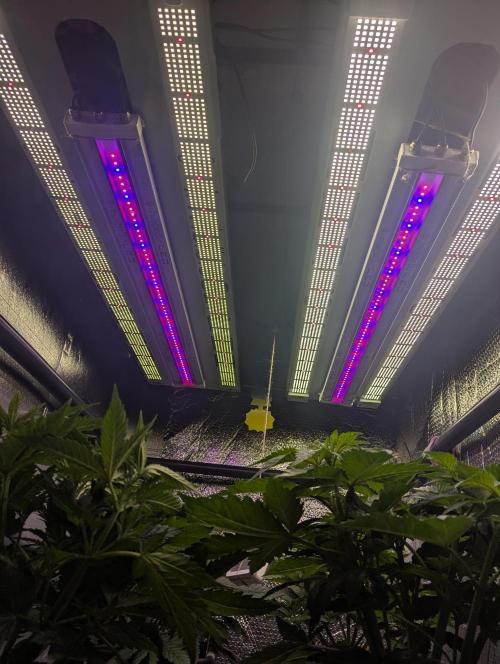
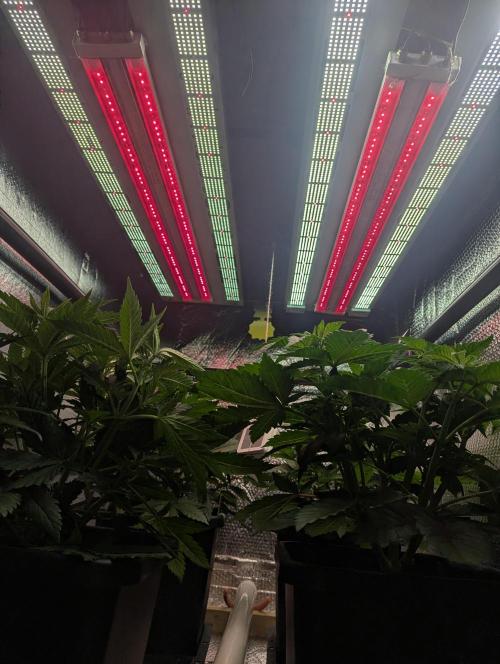
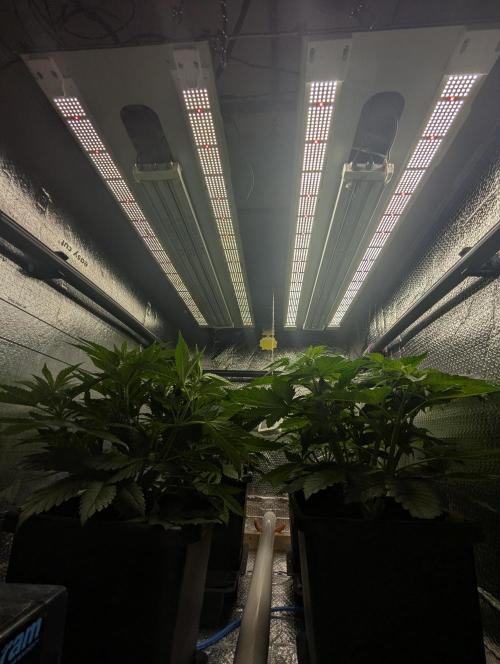
Theia Theia 1. Tell us a bit about yourself: who are you, where are you from, and what do you do outside of growing? Well, I am 49, from London, and as good as married—just without the paperwork. I have four children ranging from 13 to 26. I am autistic and have ADHD, which function like superpowers for me. My two youngest children are also autistic, so my house is always interesting, to say the least. For work, I am a live sound engineer. I travel the world setting up sound systems and mixing audio for major corporations, basically ensuring everyone can hear the rich man on stage. Outside of work and being a dad, I have a massive love for science, which I incorporate directly into my growing. I am chasing learning, not perfection; my brain is never satisfied, and I am always hunting for new information to expand my knowledge base. If I am not working, I am usually buried in a book learning a new discipline. Because of my autism, I don't really like to go out if I don't have to. I prefer my own company. I don't often meet people I have much in common with, or who can tolerate my fast-paced thinking—I tend to annoy people by interrupting them when I anticipate what they are going to say. A perfect day for me is heading out with my dog Poppy, a giant Cane Corso cross, loaded up with joints, just walking around nature and completely separating myself from the human population of London. 2. How did you get into growing? Tell us about your very first steps. This is funny, because it resonates with so many growers I’ve become friends with since: it all started around COVID-19.I’ve smoked my whole life. My very first experience was being forced to smoke a hash pipe at nine years old by my mum’s boyfriend at the time. I remember him saying, “You will do this as an adult. I’m going to make you sick, so you’ll never touch it again.” Haha, his mistake. I loved it, and that started my lifelong relationship with cannabis. Back to how I started growing (sorry, I digressed). Pre-COVID, I never really questioned the process. I made good money, I had spare cash, and I just purchased weed on demand. It was great, or so I thought, mostly because I never gave any thought to the supply chain. I never questioned where it came from, how it was grown, or worst of all, whose pockets my money was ending up in—probably organized crime. Couple that realization with suddenly going from a high income to zero income during lockdown, and the financial pressure of buying an ounce every five days became a real issue. I was online one day and saw an advert for the London Seed Centre. They had a White Widow auto seed for £5, which I thought was insanely cheap. I ordered it, along with a Mars Hydro burble lamp and a Biobizz starter kit. I took a dirty pot from the garden that had no drainage holes, filled it with garden dirt, and dropped the seed in with absolutely no clue what I was doing. You can imagine my surprise when a shoot appeared ten days later. I was horrible to that girl; the environment was wrong, the watering schedules were stupid, and EC was a concept yet to be discovered. In those first weeks, I would pH my tap water down to 6.2 before mixing the nutrients, and I’d dump Fish-Mix and Bio-Grow into the exact same feed. I was a "more is more" guy with zero knowledge. Against all odds, the plant was strong. It grew beautifully, taught me a massive amount, and yielded 123g of what I thought was amazing bud. And I grew it. My mind was blown, and the journey began. I was lucky to find Grow Diaries early on. While browsing, I discovered Mrs Larimar. She was so kind and polite, and she grew in the exact symbiotic way I wanted to. She patiently answered my questions and helped me without asking for anything in return. I also met Oim, my sensei, who guided me through that first grow with encouragement and wisdom. I still remember his comment about my White Widow looking a bit dark, like it had too much Nitrogen. That was the exact moment I realized Fish-Mix and Bio-Grow probably shouldn't be used together every single watering... 3. What role does cannabis play in your life – personally and as a grower? Personally, cannabis is like breathing or smiling; it’s not something I consciously think about needing, it is just a fundamental part of how I function. I’ve never understood the stigma or why a plant is vilified as a gateway drug. For me, it’s a necessity. I don't drink alcohol because it changes me for the worse, both mentally and physically. Cannabis does the opposite—it slows my brain down just enough for me to connect the dots of the day's ideas. It allows me to relax and focus in a way that is otherwise impossible in everyday life. As a grower, the tent has become my ultimate escape from the noise of the world. I like to just sit quietly with my plants, and that downtime is where my best ideas happen. Because cannabis allows me to tune out the background static, I can observe the minor details. For example, I recently noticed profound node differences between plants that had blue light exposure and those that didn't. Spotting that detail is what triggered my need to research and learn everything I could about spectral steering. It’s a cycle: cannabis gives me the focus to observe my plants, and the plants give my brain the scientific fuel it constantly craves. 4. What growing method do you prefer and why? (Indoor/outdoor, soil/hydro, etc.) I am 100% about organic indoor growing using a hybrid approach: gravity-fed Auto pots with the BioTabs organic method, driven by a heavy dose of total spectrum manipulation. For me, it is the absolute sweet spot between technical precision and natural simplicity. Rather than buying a standard tent, I custom-designed and built my own grow room from scratch. I took a 2.5m long, 80cm wide, and 2.5m tall architectural space and built a false wall, sealing the actual flowering footprint down to a precise 1.8m x 80cm.Here is why I prefer this engineered setup: it gives total environmental control and efficiency: Efficiency is the driving force behind my design. I extract the air from the grow space directly to the outside world, which in turn draws fresh air into my lung room. I treat the air in the lung room to hit my exact target temperature and RH before it ever enters the grow space. This airflow cycle allows me to turn the room into a fortress, dial in the exact Vapor Pressure Deficit (VPD), and maintain strict control Because of this, I can run a highly powerful system—pushing 850–900 umol/m²/s on ambient CO2 with a high VPD of 1.4–1.5 kPa with absolute predictability. Driving the plants that hard means every single resource must be meticulously worked out; there is no room for errors as I learned on the last run. Spectrum Manipulation: This is where my background as a sound engineer bleeds into my growing. I don't just blast plants with static light; I actively steer their morphology using independent spectral channels, almost like mixing audio frequencies. My main light consists of two ISH X bars loaded with LM301H Evo diodes. Because of the room’s footprint, my diode count is insane, giving me perfectly even, edge-to-edge canopy coverage with practically zero radiant heat. The real magic, though, is in the supplemental channels: The Emerson Effect: By running four ISH DRRB (Deep Red) and four ISH DRFR (Far Red) fixtures on separate, independent channels, I can trigger the Emerson effect—fully activating both Photosystem I and II receptors to supercharge photosynthetic efficiency. The Invisible Ceiling: I use 450nm Royal Blue as an invisible ceiling to squash early nodal stretching and lock down tight internodal spacing. But if a specific strain needs more height, I can instantly promote stretch by ramping up the independent Far-Red channels.UVR8 Protein Triggering: I run a Solacure Flower Power unit on its own channel to deliver tactical hits of UVB. This splits the plants' UVR8 proteins, forcing them to ramp up secondary metabolites, trichomes, and defence mechanisms. The Best of Both Worlds: This approach completely bridges the gap between hydro and soil. Auto pots give me the automated, bottom-feeding efficiency of a hydroponic system, but without the headache of synthetic liquid nutrients, EC monitoring, and constant reservoir flushes. The Power of Microbes: This is where BioTabs makes the whole system work. By charging a peat-free organic medium with BioTabs, Startrex, and weekly Bactrex top-ups, I create a living microbial network that does the heavy lifting. The biology feeds the plant completely on demand. Every time I grow, I learn something new and implement a new feature. For instance, my last grow taught me an immense amount about calcium availability under such high metabolic stress. I've adjusted my strategy this run to ensure that calcium delivery keeps up with the massive transpiration rates caused by my lighting and VPD. The organic biology keeps the roots aggressive and delivers that top-tier quality, allowing me to run a strict "water-only" reservoir method even when pushing the engine to its absolute limits. Basically, I love engineering the perfect environmental engine, using standalone wavelength channels to coach the plants exactly how to build their frames, and then letting BioTabs and nature do their thing in the root zone. 5. Which strain is closest to your heart and what fascinates you about it? This is where I differ from a lot of growers: I don't really have one single holy grail strain. Maybe I’m just lucky, but everything I’ve ever grown has turned out soaked in crystals and pokey as hell. I’ve never grown a strain where I didn’t like the taste or it didn't get me stoned. Because I am out for learning, I rarely grow the same strain more than once; I like variety. Right now, so many modern strains have Cookies in the lineage and I’m a bit bored of that profile, to be honest. I prefer older, distinct profiles. I love the high of a Haze, for example, but any Haze cross makes me cough my lungs up—the smoke just feels too thick for me. There are only a couple of exceptions I’ve grown multiple times: Purple Urkle from Weed Seeds Express, because I love hunting through their phenotypes, and Triple Cheese from Barney’s Farm, which has an incredibly moreish mouth-and-throat feel. What fascinates me the most isn't a specific strain name—it’s the sheer, vivacious resilience of the cannabis plant itself. It can take a massive amount of punishment and just keeps fighting. In my early grows, I heavily experimented with the physical limits of stress. I tested LST versus HST, ran a 16-cola mainline, and was consistently blown away by how fast the plants recovered. That curiosity led me to spend months exploring cloning without commercial hormones, eventually realising I could get great success using just raw honey. Even when I’ve been heavy-handed and snapped a main branch, I stopped using tape because it was too stubborn to get off later. Now, I use melted beeswax to seal a break. It creates a completely sterile, natural seal that holds the branch together until it fuses, and as the knuckle grows, the wax just expands and flakes off naturally. So for me, my favourite "strain" is whatever plant is currently in front of me, challenging me to learn its limits. 6. What has been your biggest learning moment as a grower – a mistake or a success that helped you grow? This might sound a bit philosophical—and maybe that's because I’ve just smoked a massive joint of Triple Cheese—but there are no mistakes if you only do it once. There are only lessons. The biggest overarching thing I have learned is that nature has been doing this on its own for a very long time. If you can let your ego go, you realize you aren’t actually growing the plant; you are just the custodian of its environment. It will grow regardless of your input, but you can help it along. Less is almost always more. Your absolute best tools are your own eyes—the ability to look, notice subtle changes, and remember them. But if you want a specific story that makes me look like a total noob, I did try something on my last grow that completely caught me off guard. The science behind it is sound, but my execution of it messed up. I wanted to use 730nm Far Red light to trigger the Emerson effect at the end of the day, forcing the plant's photosystems to change states and go to sleep much quicker. The theory is solid: if the plants enter their sleep cycle faster due to that specific Far-Red burst, you can essentially trick them and squeeze an extra hour of light into their day. While the light physics worked, I was completely unprepared for the sheer velocity of the nutrient demand it triggered. The rate at which the plants burned through available resources under that hyper-driven schedule was insane, and I ended up locking them out. It was a massive learning curve, but like I said—it’s a lesson, not a mistake. I’ll definitely try it again, but only when I've fully worked out the nutritional math to back it up. 7. What does your typical grow routine look like – how much time do you invest and what do you enjoy most? Nowadays, my goal is to have almost nothing to do except fill my reservoir with pure water. I downsized from a 100L reservoir to alternating between two 30L tanks that I swap out daily. My logic is that I don’t want standing water sitting in the lines for more than 36 hours; by doing this, I completely minimize the risk of bacterial build-up in London, so while our tap water is decent for calcium and magnesium, the chlorine is an issue. I run a 3-stage filtration system to strip out chlorine, chloramines, fluoride, and heavy metals. My only real ritual on the water side is absolute cleanliness—a fresh, clean tank goes up every time the lights turn on. But if I ever need to travel for work, I can easily redeploy the 100L tank and the whole room will run itself flawlessly for four days. Early on, I realized just how critical the environment is, so I engineered my own control system from scratch. I built a homebrew logic system using basic "If/Then" commands and Wi-Fi triggers that constantly chases a target VPD. The whole environment is automated—lights, relative humidity, temperature, and airflow are constantly calculated. I can read and adjust the parameters manually from anywhere in the world while I'm traveling, but day-to-day, it just runs on its own. Creating this automated environment was always the dream, and when BioTabs offered me a sponsorship, it was the final piece of the puzzle. Combining their water-only method with Auto pots is, as my friend Mrs Larimar says, an absolute "cheat code.“ timewise I give it whatever it needs. I don't punch a clock in the tent and I have no real sense of lost time when I'm in there, so I honestly have no idea how many hours I invest. It’s a pure pleasure, not a chore. 8. What advice would you give beginners who are just stepping into the world of growing? Slow down. Be completely honest with yourself. Ask for help and never pretend to know something you don’t. Most importantly, just enjoy the process. Oh, and rule number one: if someone looks at a single picture of your plant online, has zero background information on your environment or routine, and confidently tells you, "It needs Phosphorus and Potassium," they are completely wrong. Ignore them. 9. How did you first hear about BioTabs and what made you want to try it? I first tried BioTabs a few years ago. I purchased a starter kit, but at the time, I was growing in 100% coco and running a high-frequency fertigation method. I was feeding low-EC nutrients daily, never allowing the substrate to dry out, and measuring runoff with strict precision. Because I took that hyper-managed hydro mentality into my first BioTabs run, I was pouring water through the coco twice a day. Looking back, I’m pretty sure I literally washed the tablets right out of the medium by week five! Fast forward to later on, and I was approached by the wonderful Mia—who is honestly the support glue for the ever-growing community of BioTabs growers on Grow Diaries. She asked if I would like to officially give the system another run. Of course, I said yes. Since then, I’ve been experimenting with different substrate mixes and testing the limits and demands on the tablets under my high-VPD engine. I couldn't be happier with the results. Once you dial in the medium and trust the biology, the "just add water" method is flawless. 10. How has BioTabs influenced your grow and what do you appreciate most about the product? It is just a really well-balanced product line that does exactly what it promises to do. People online constantly told me I would have massive lockout issues in flower if I combined a "water-only" method with a bottom-feeding wicking system like Auto pots. I have found the exact opposite to be true. To optimize it, I implement a weekly top-feed of 1L of water mixed with 2.5g of Bactrex. This serves two vital purposes: it constantly recharges the microbial life needed to break down the tablets, and it acts as a gentle, targeted flush to prevent any potential salt or mineral buildup in the dry top layer of the substrate. What I appreciate most about BioTabs is that it’s organic, and it makes growing incredibly easy with the "just add water" approach. Yet, because I am driving my environment so hard, if I ever need a bit more kick, their range of supplemental products allows me to fine-tune on the fly. On top of that, the whole ethos of the company just sits perfectly within my own headspace. Honestly, if you are reading this and want to try a genuinely easy, high-performance way of growing: get a single Auto pot, get a BioTabs starter kit, and just see for yourself. You will not regret it.
3 likes
comments
Share

Login

Be the first to comment it
Enjoying this diary? Follow for more updates!
TheiaTheia
Follow Author
OR
Prefer the old Diary view?
Go back to the old Diary view