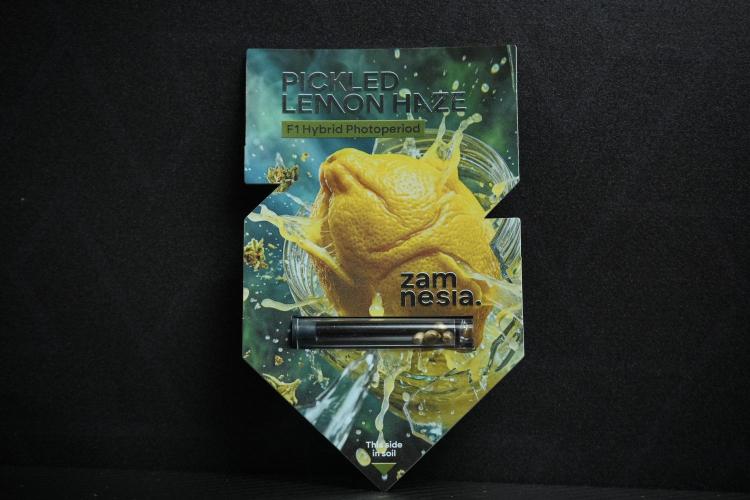
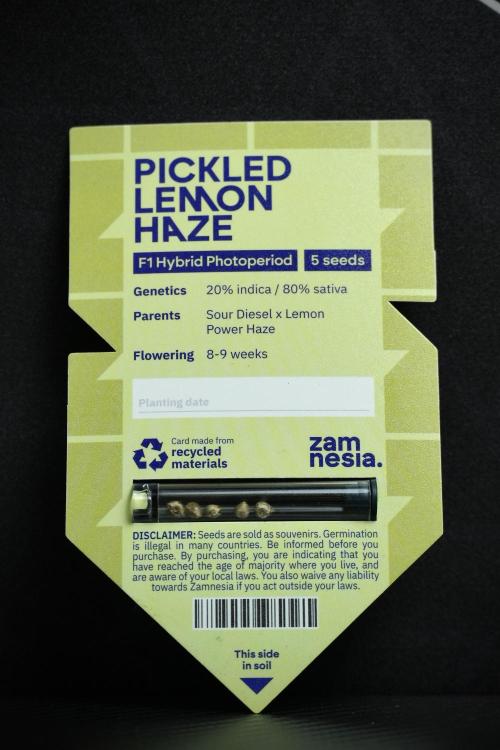
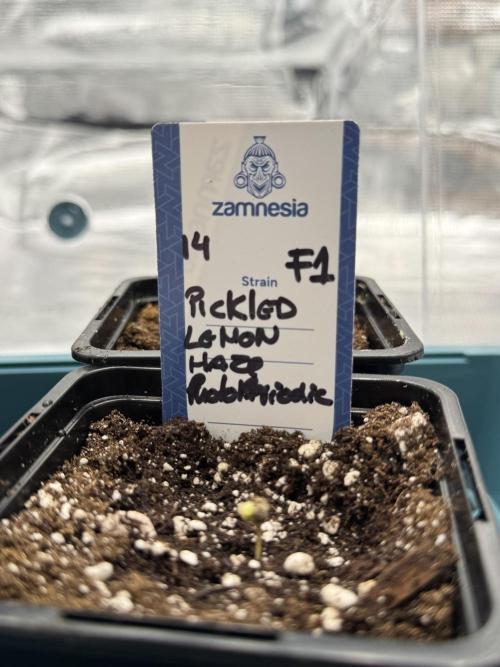
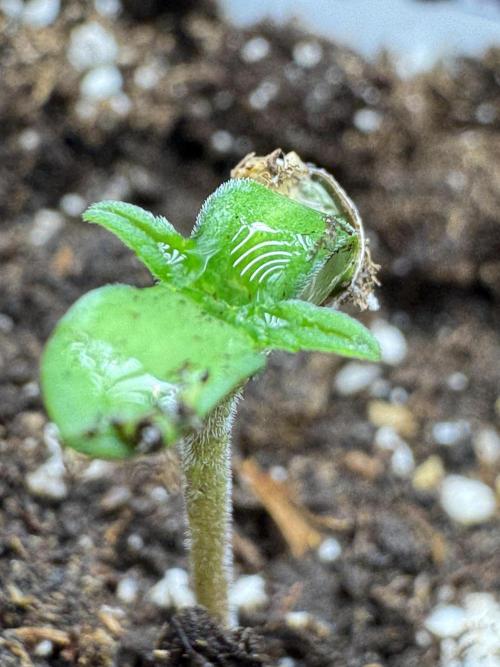
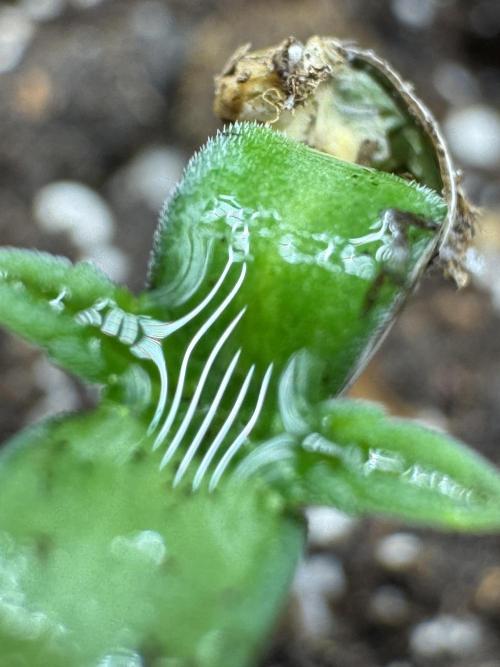
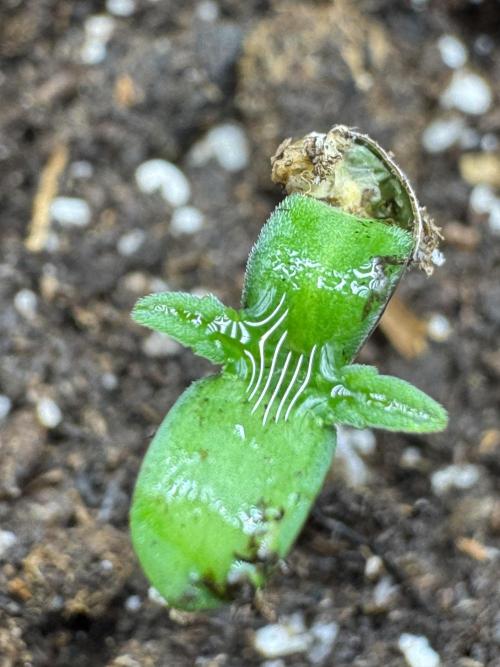
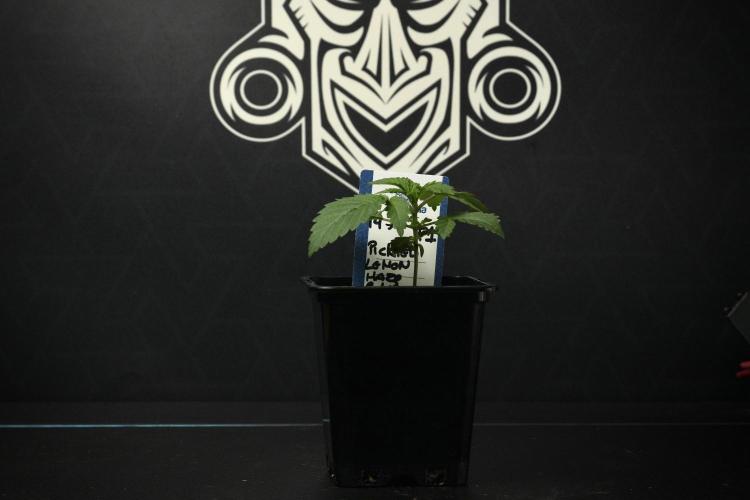
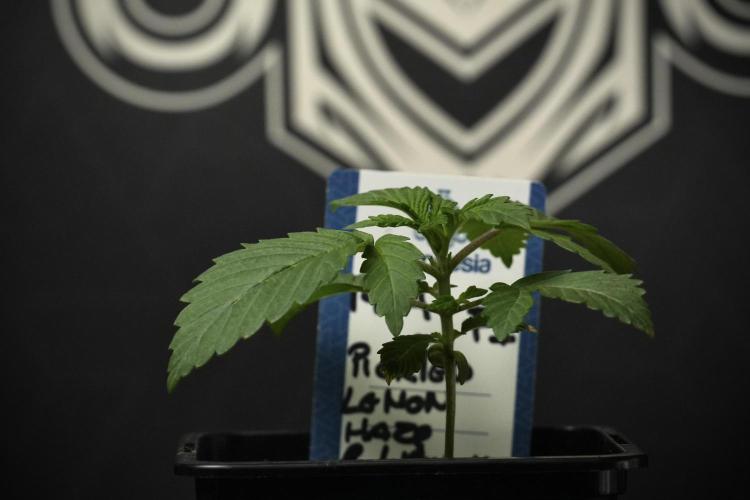
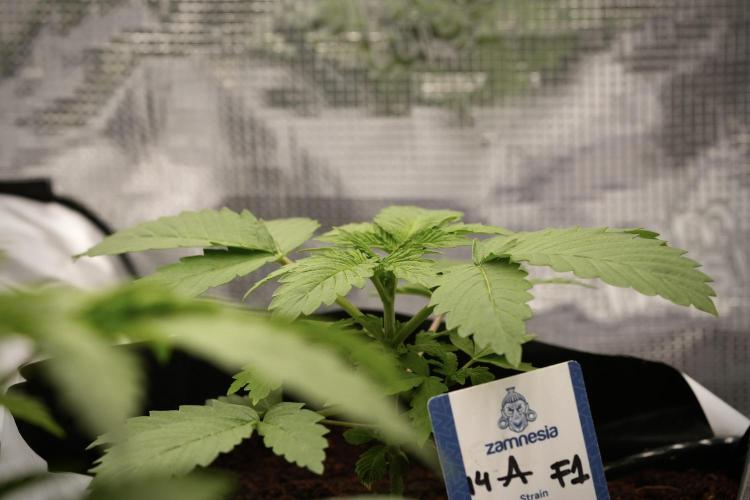
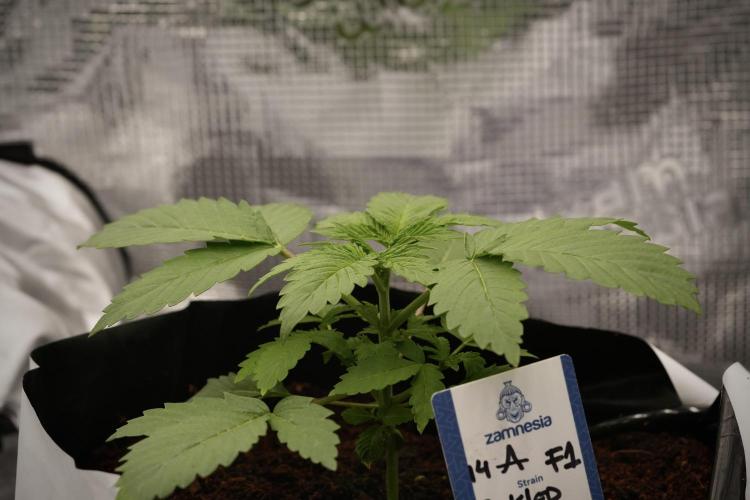
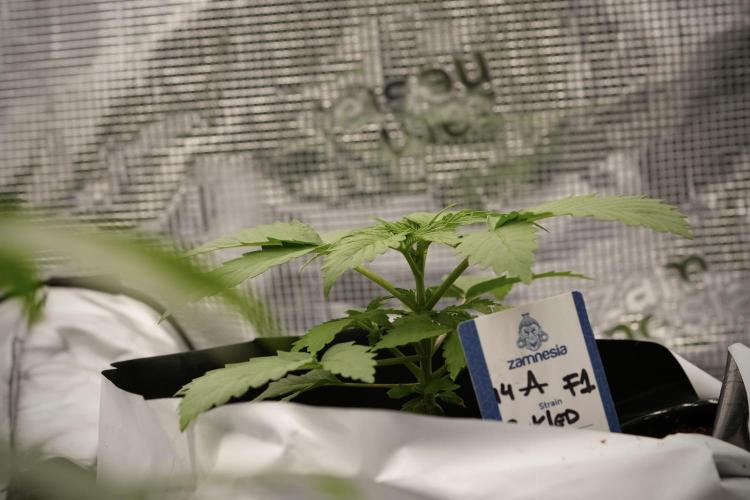
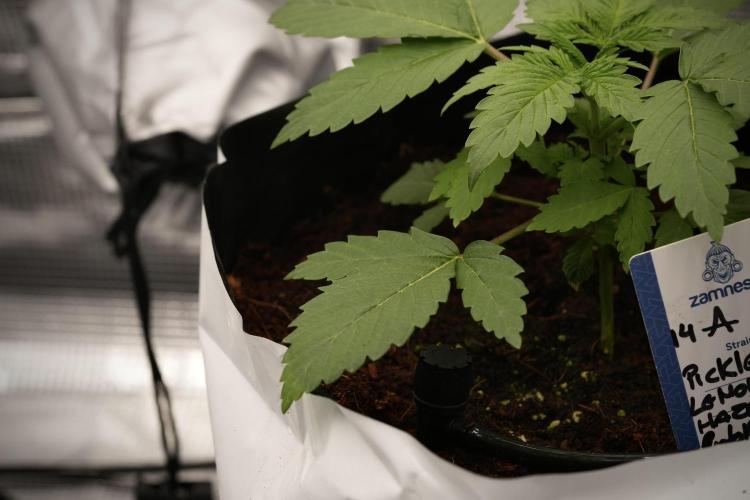
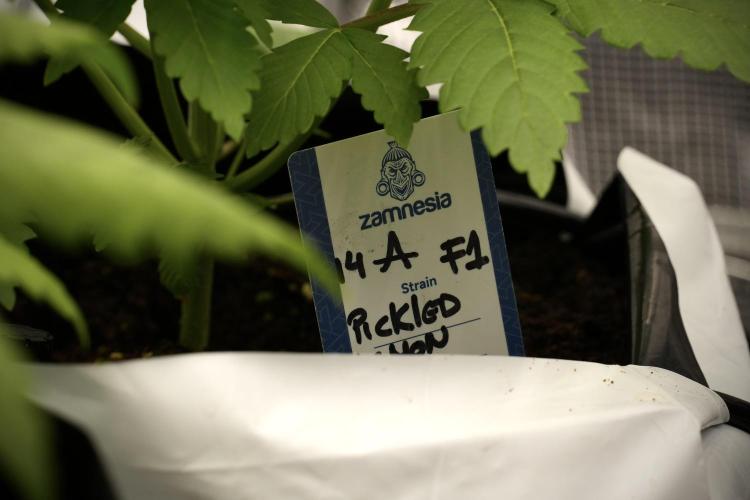
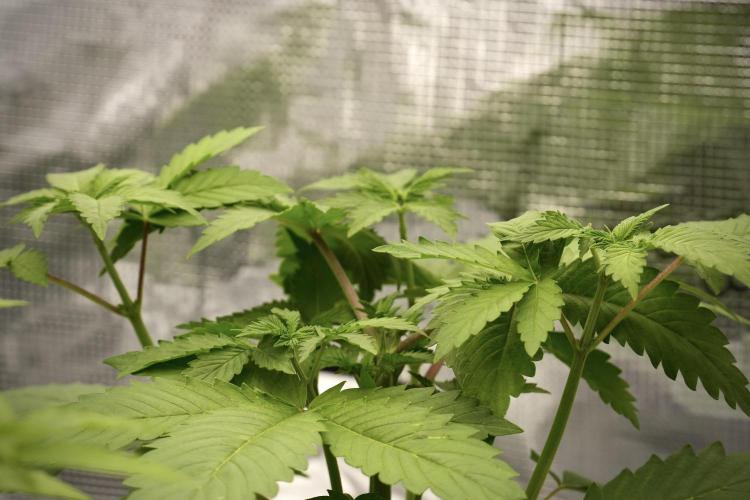
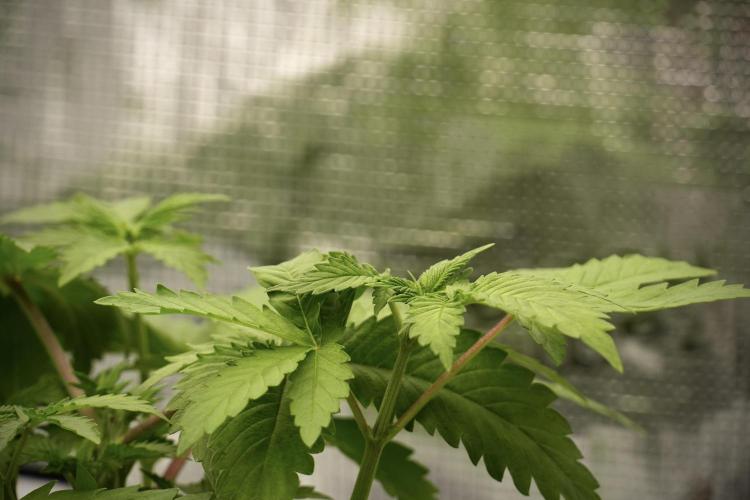
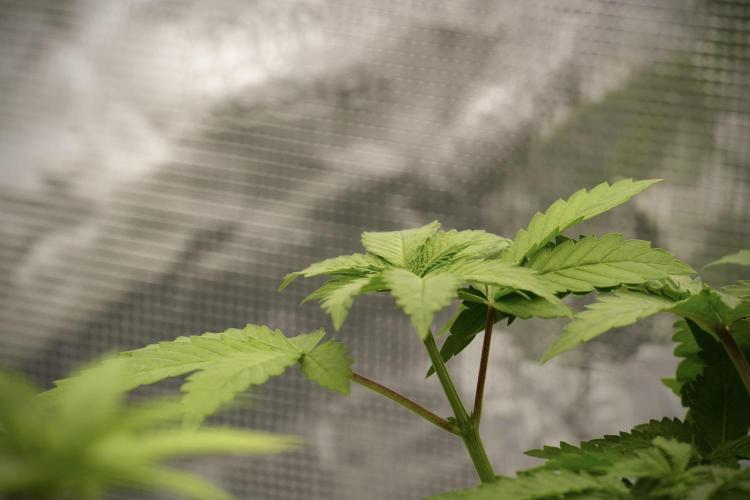
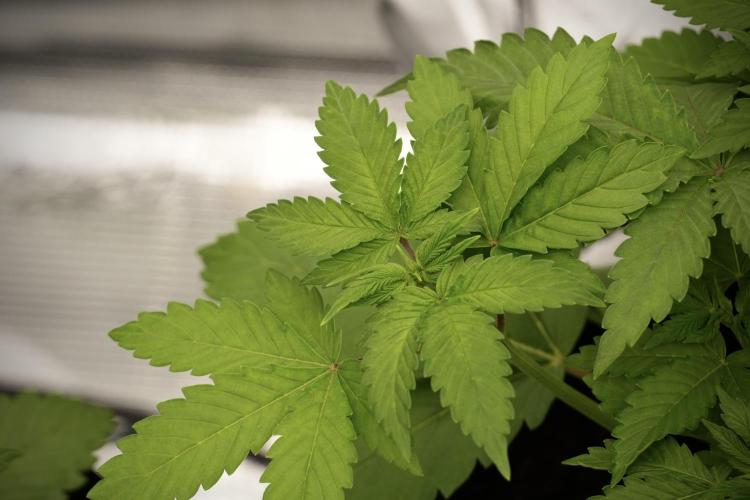
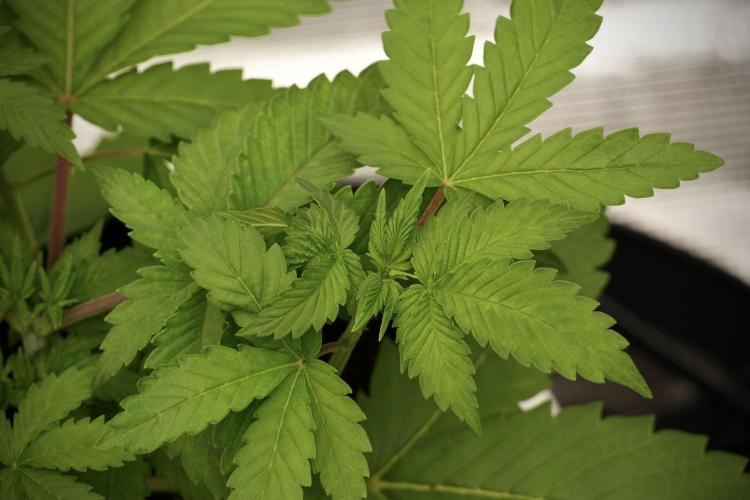
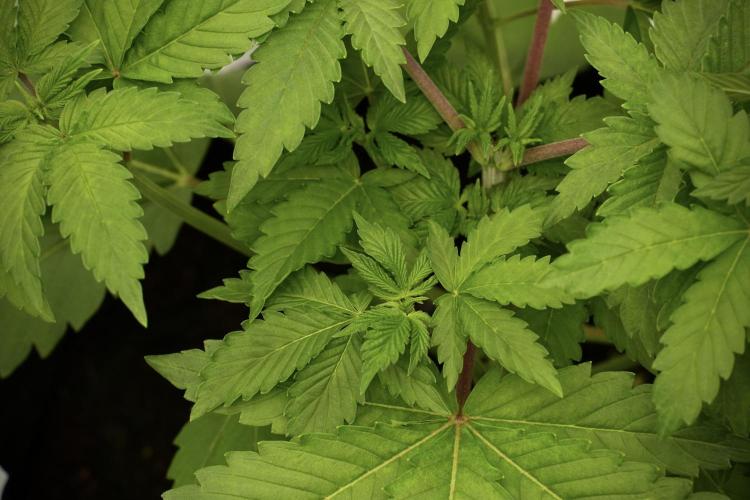
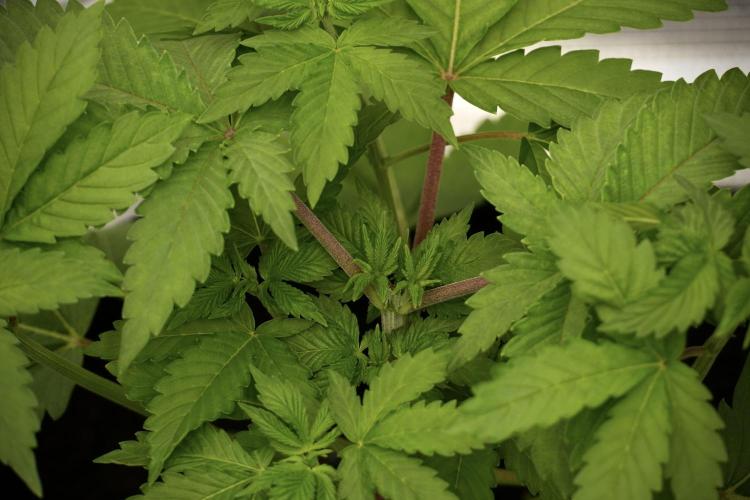
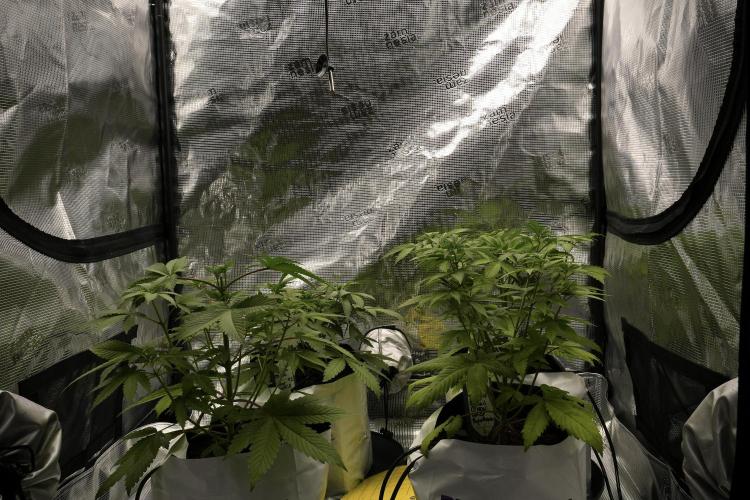
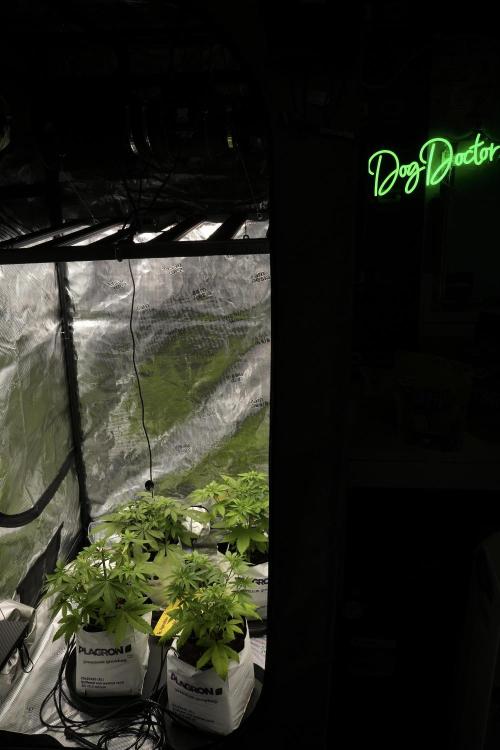
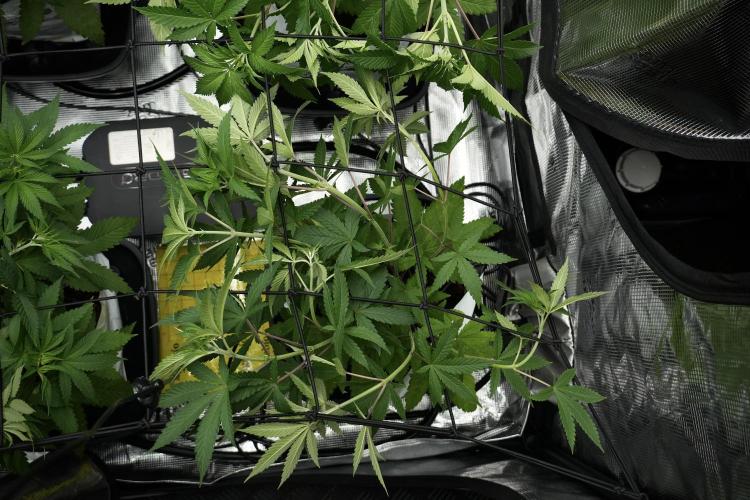
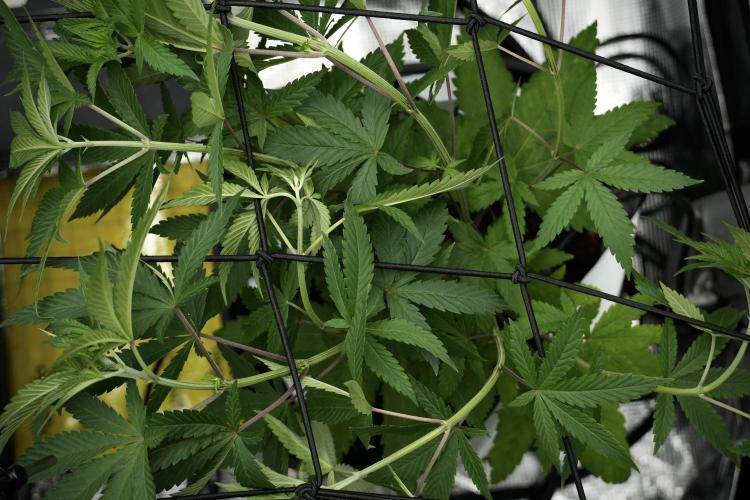
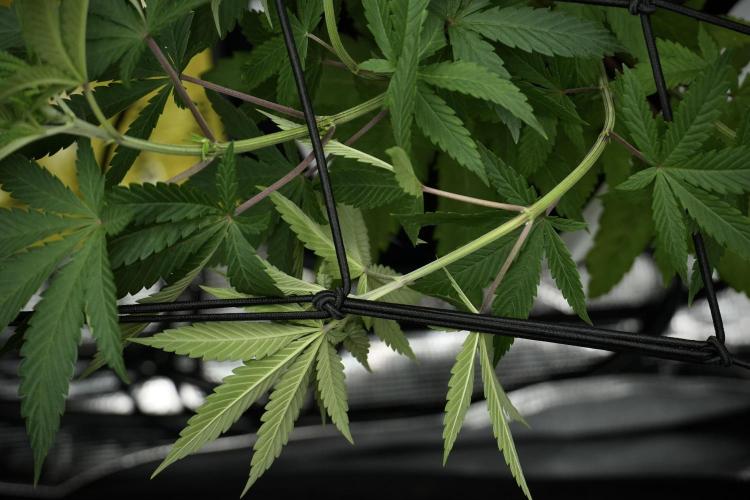
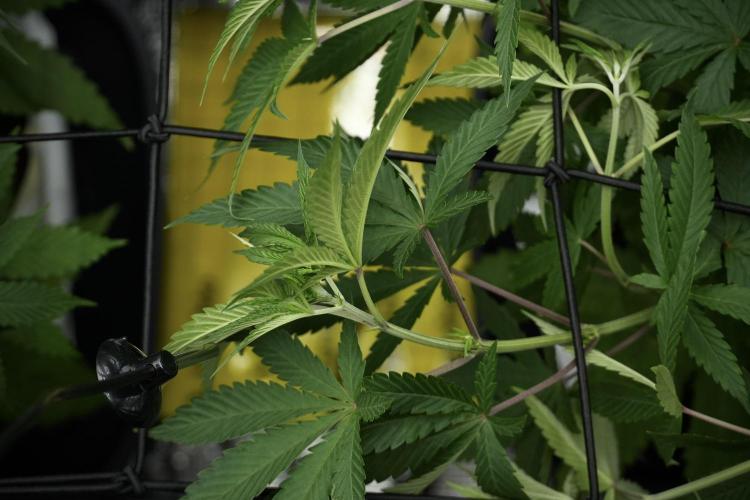
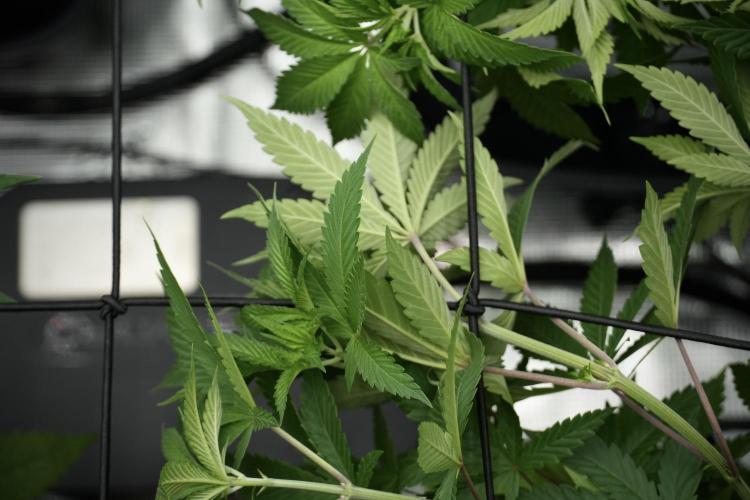
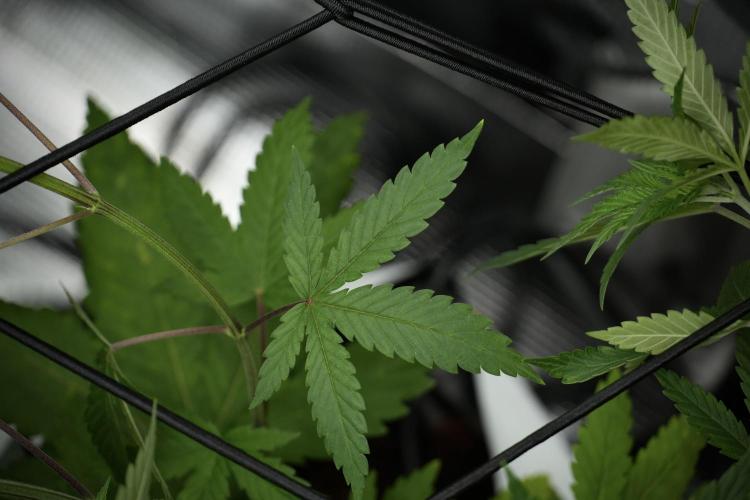
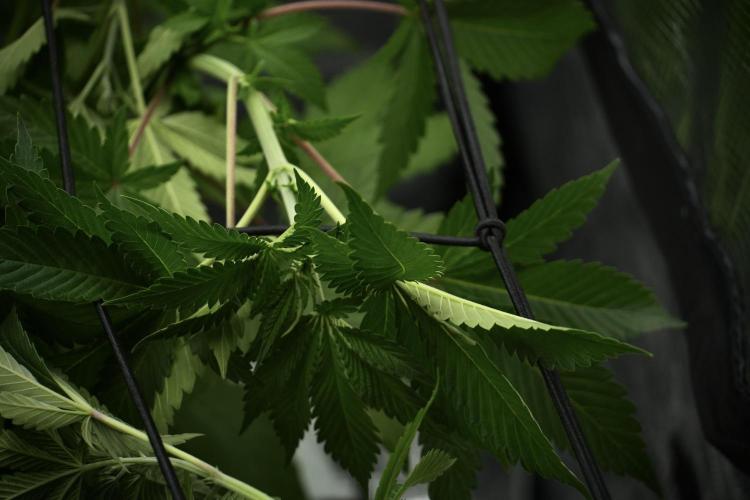
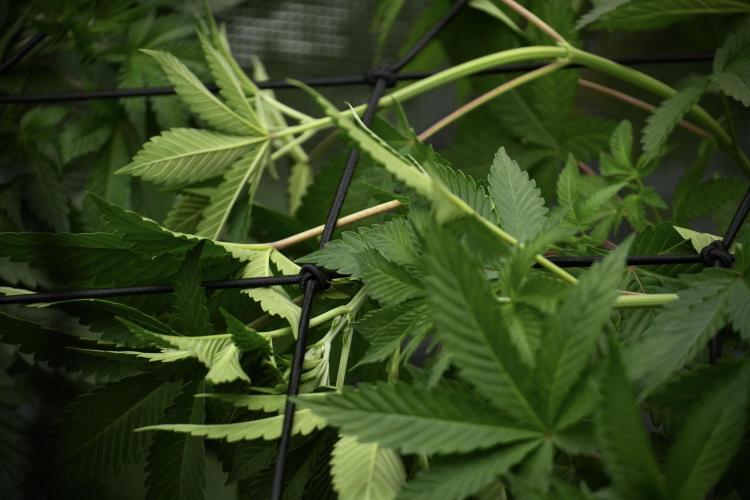
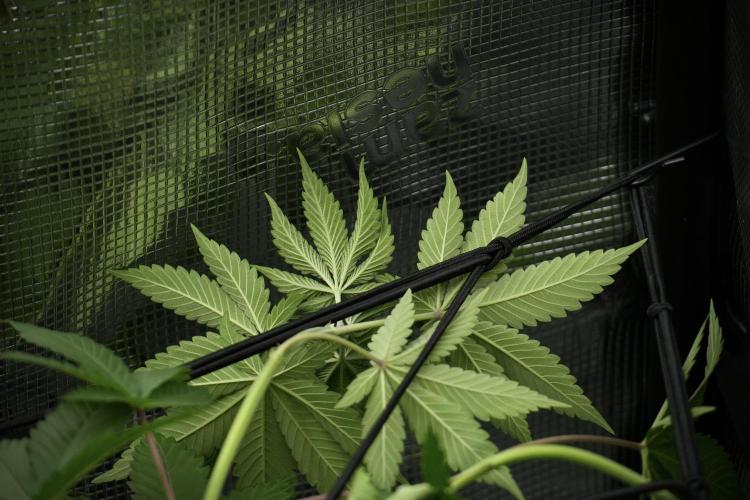
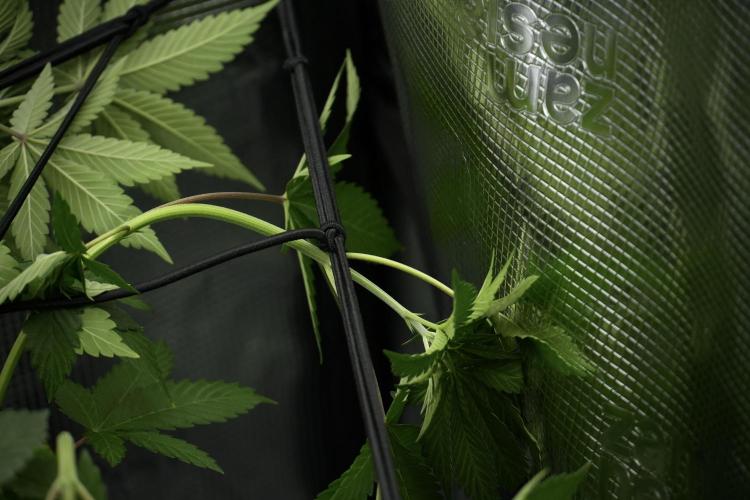
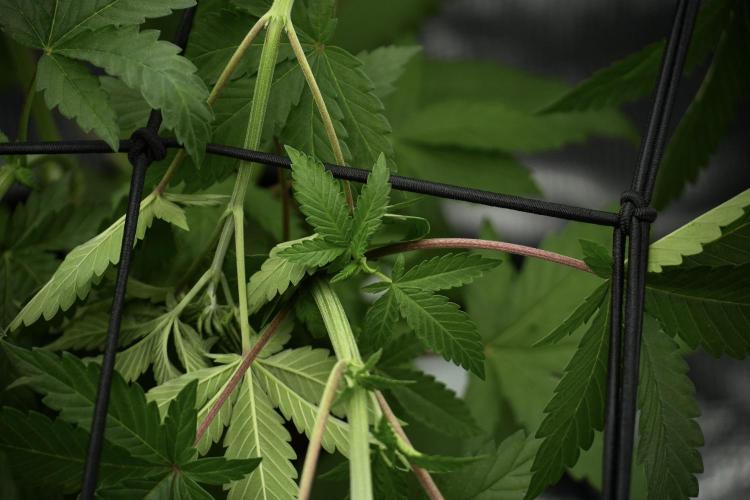
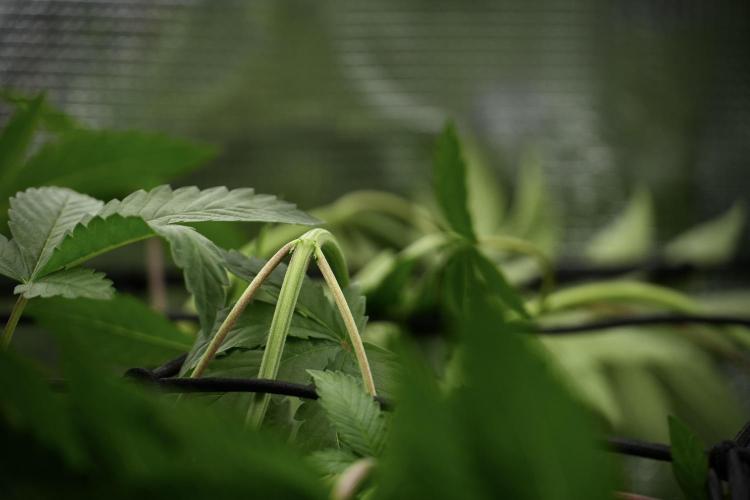
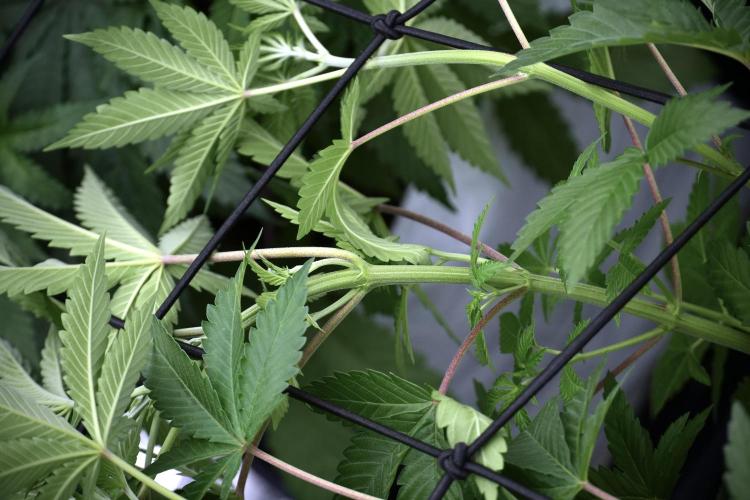
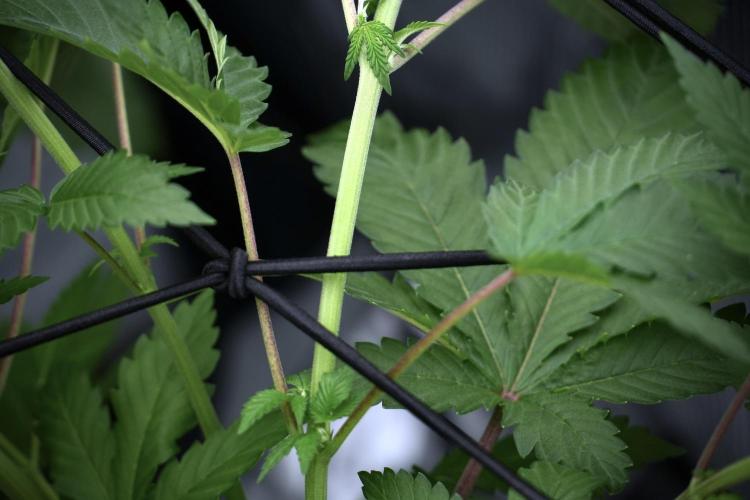
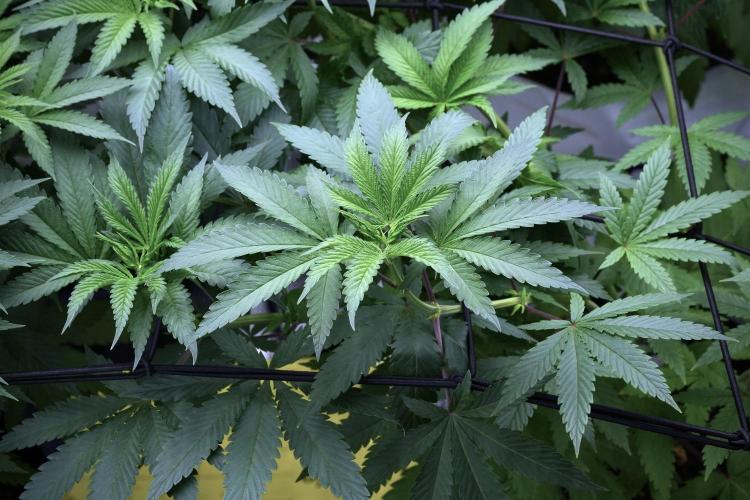
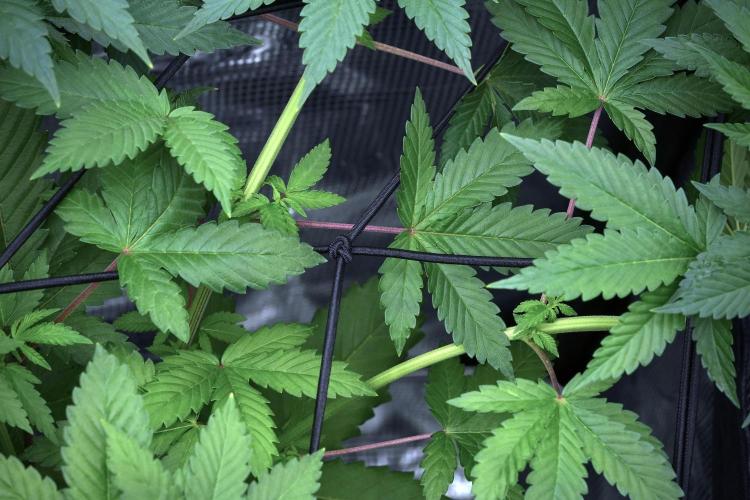
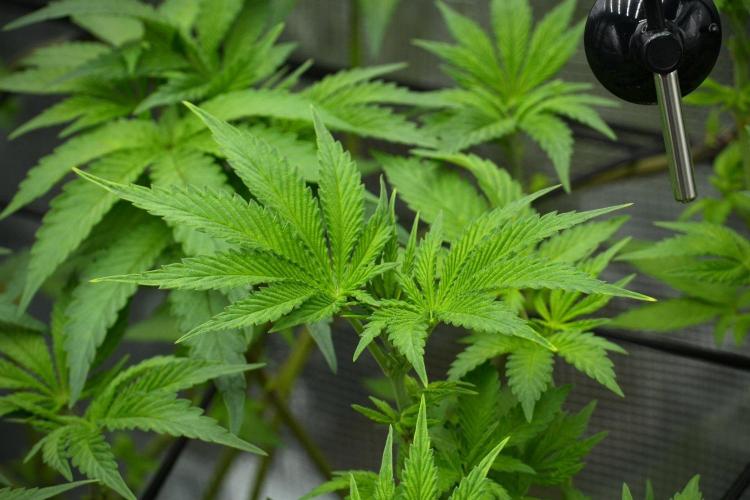
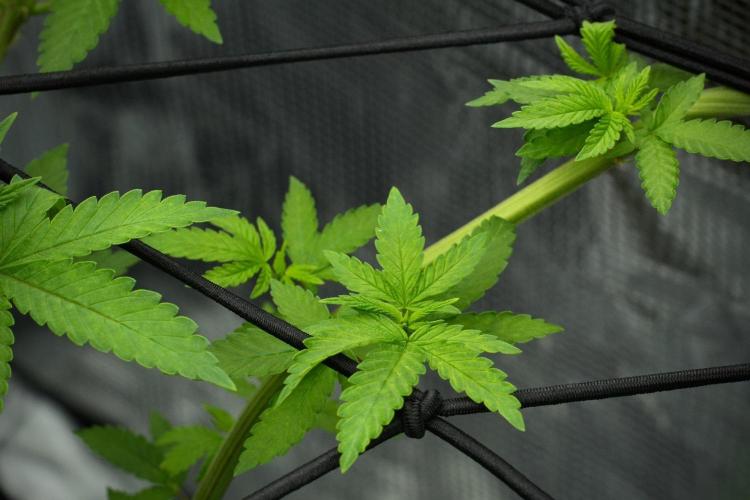
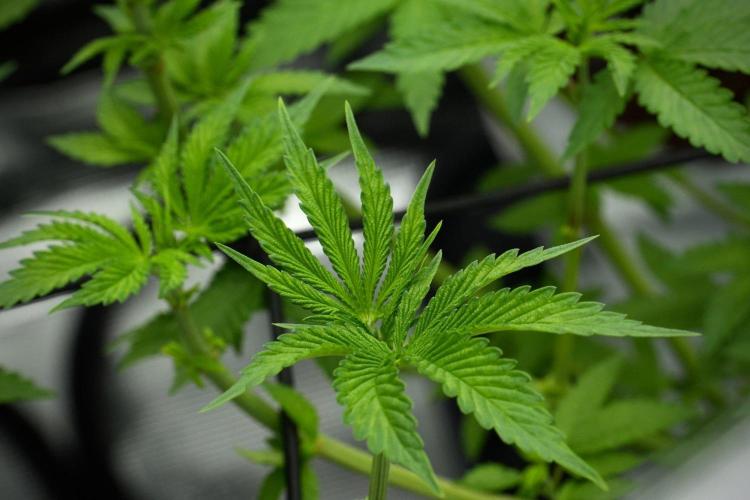
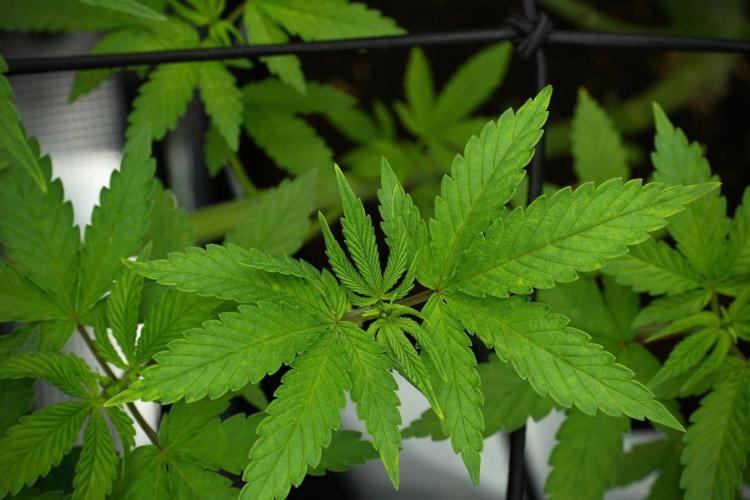
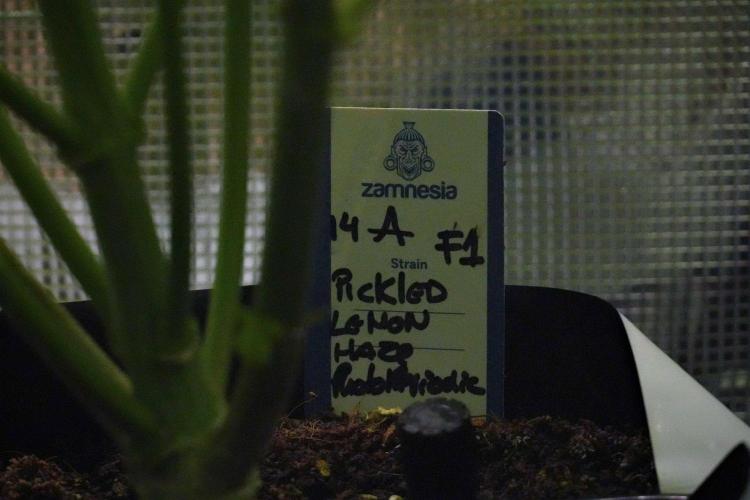
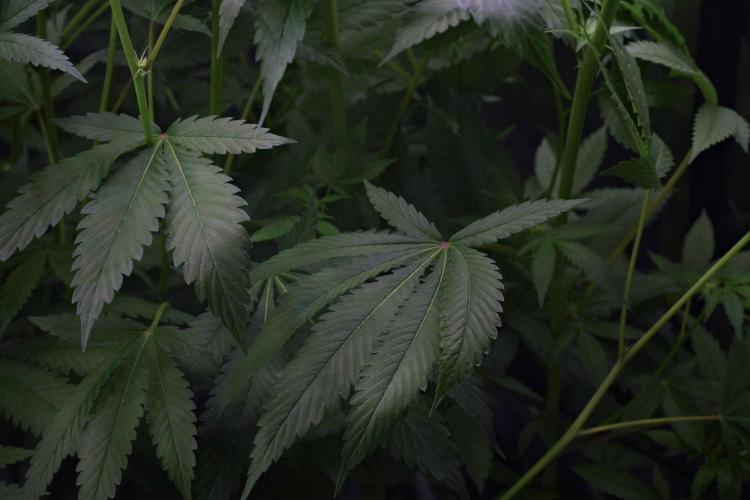
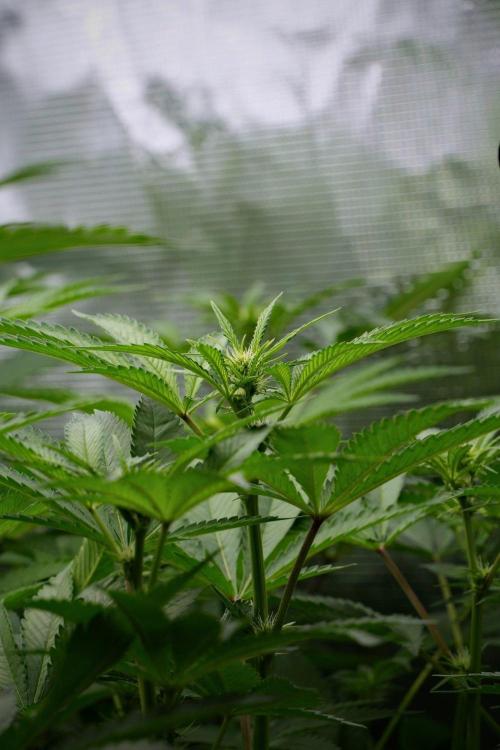
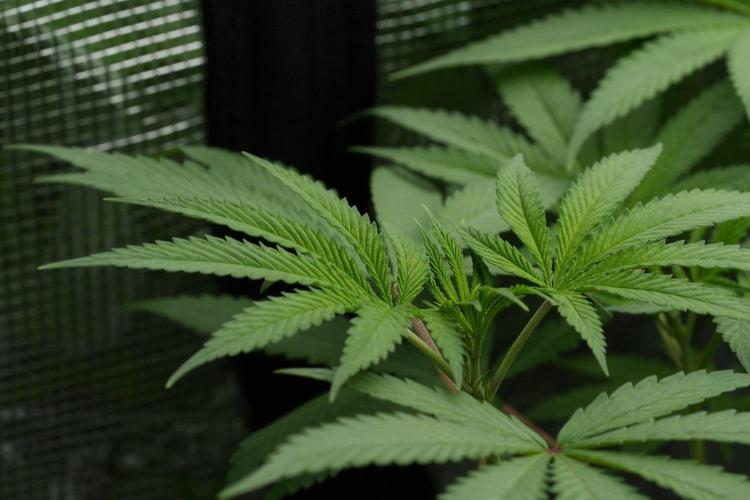
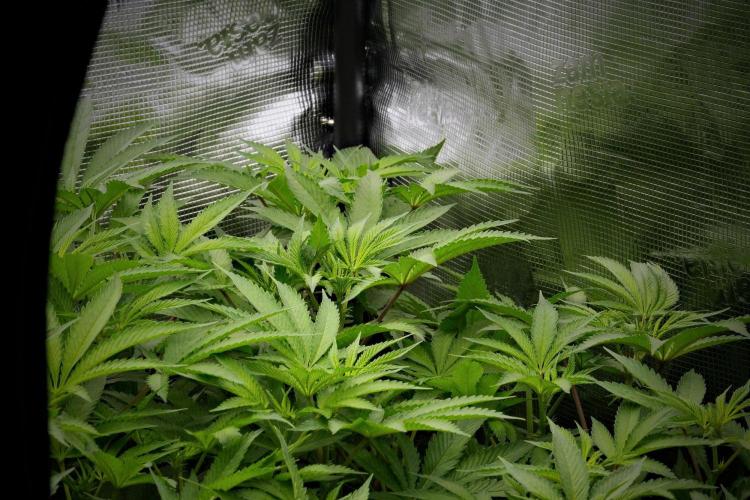
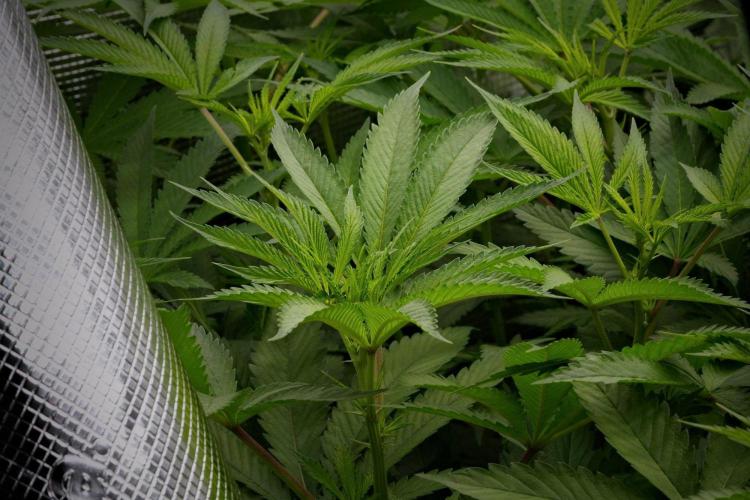
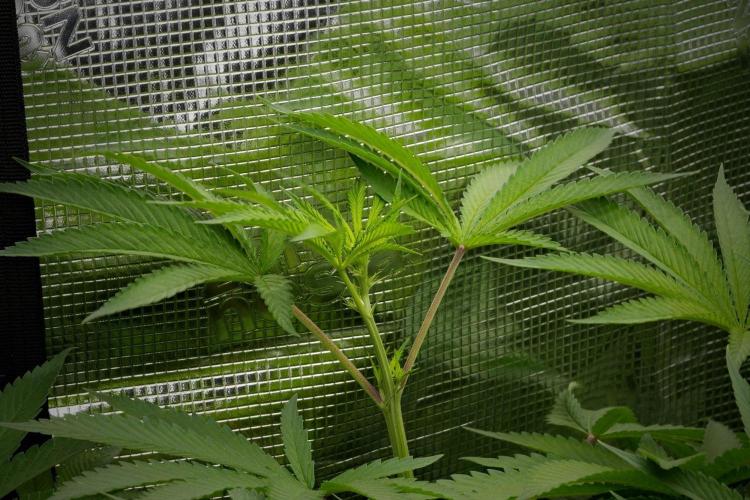
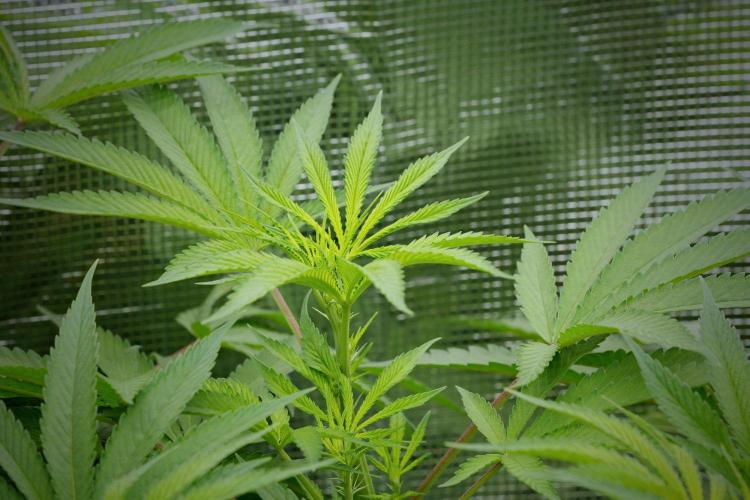
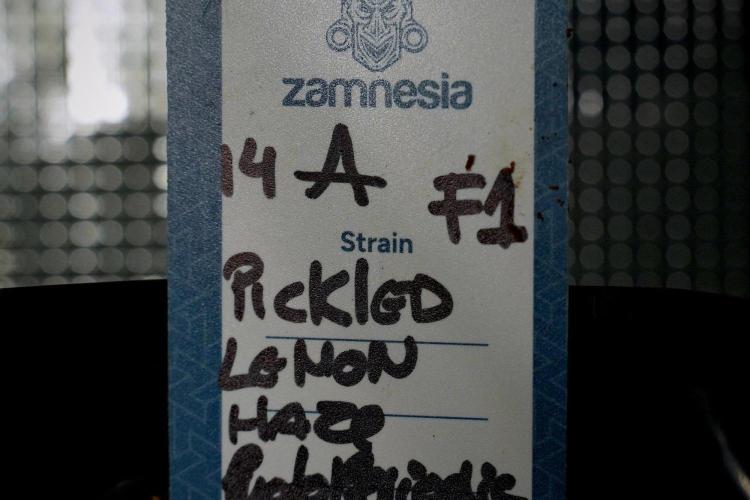
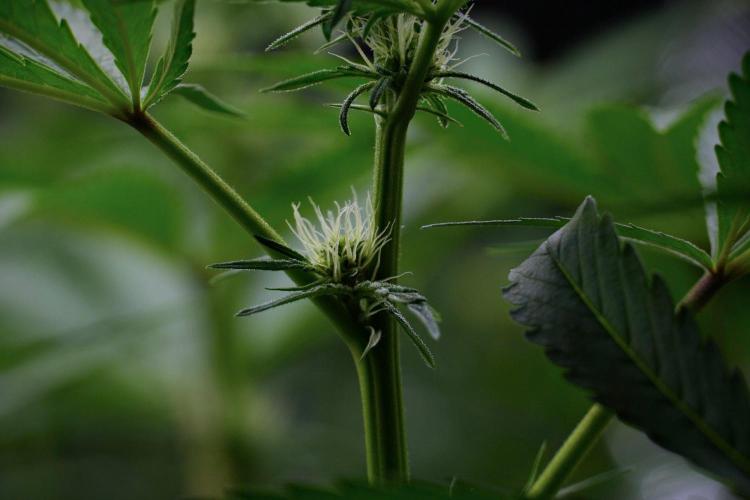
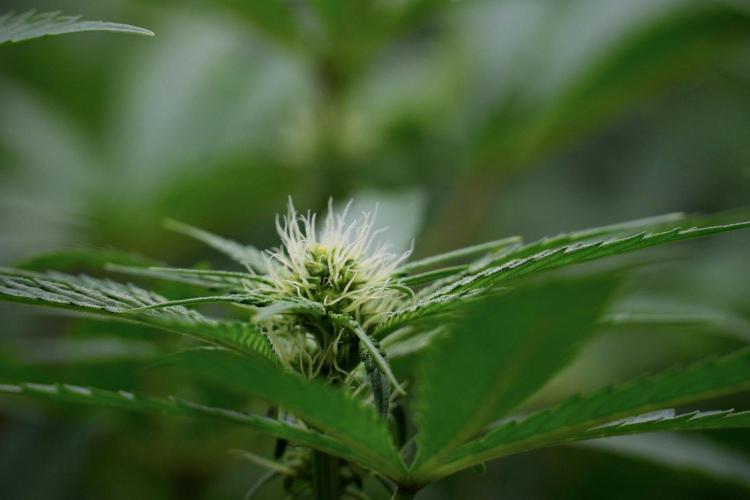
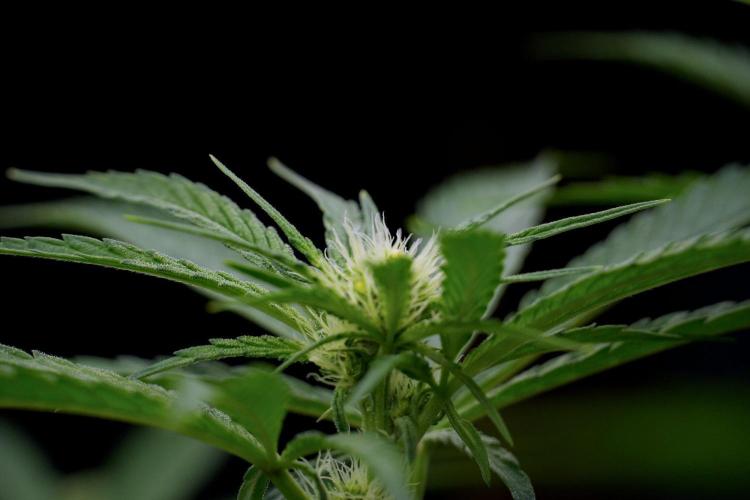
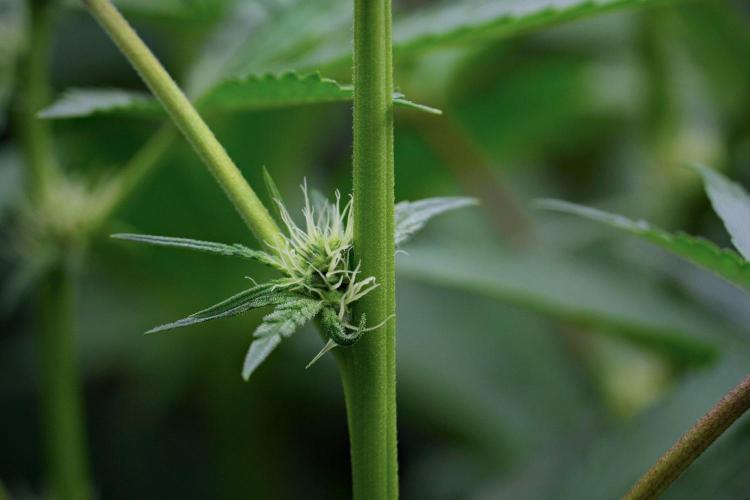
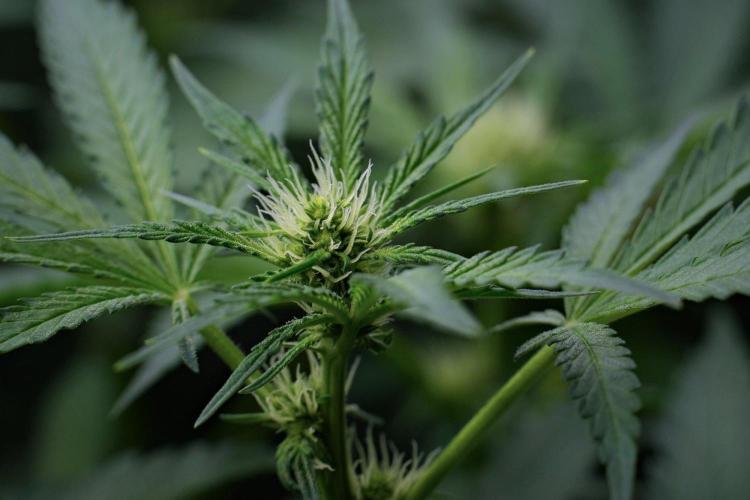
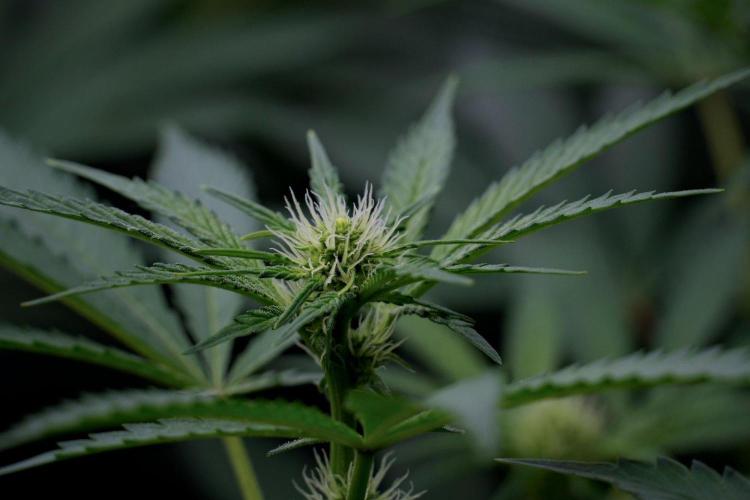
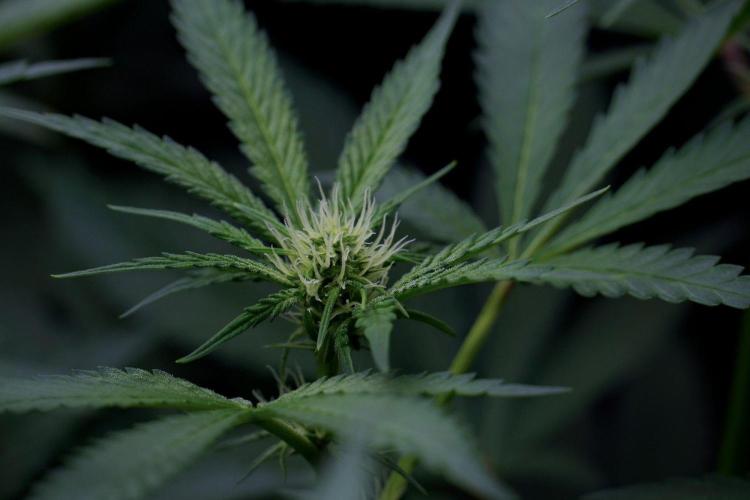
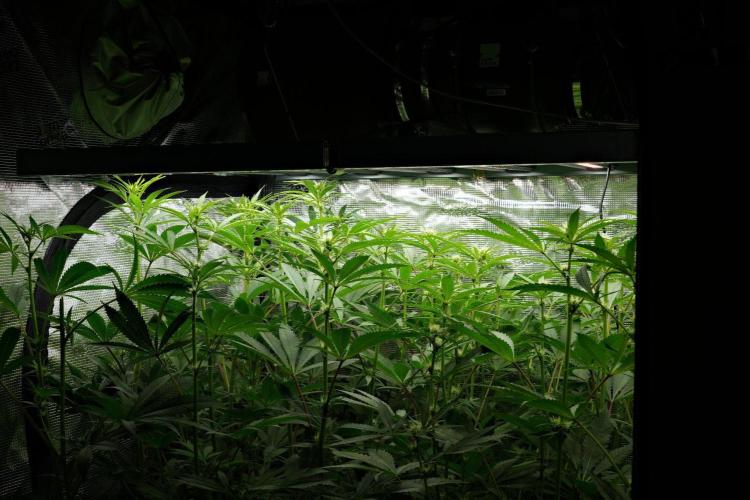
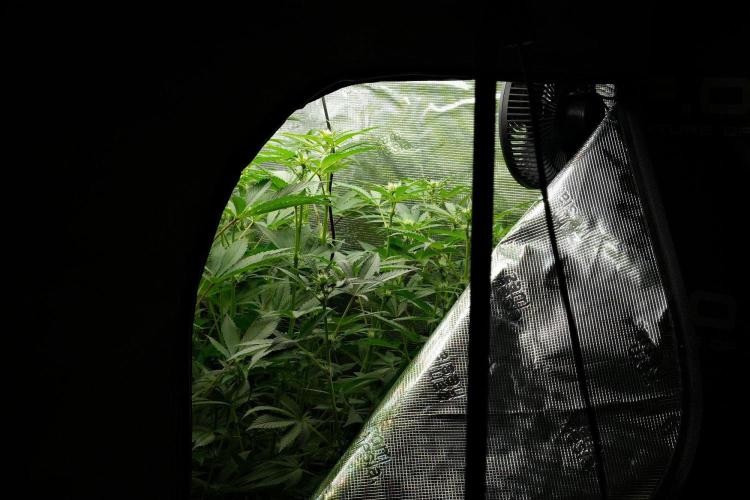
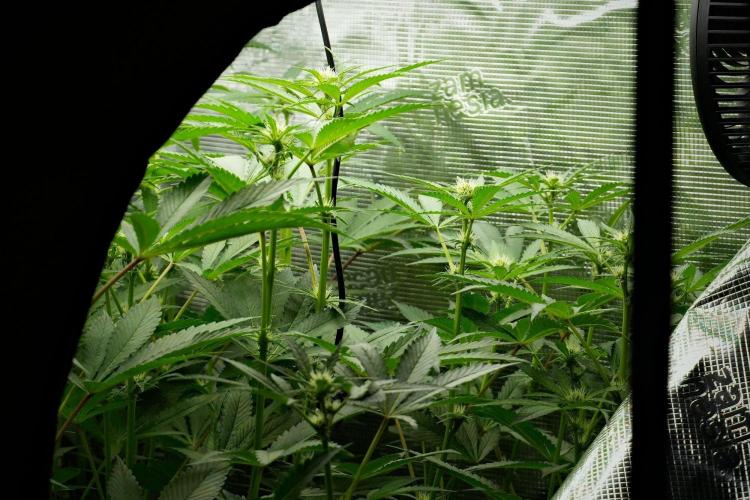
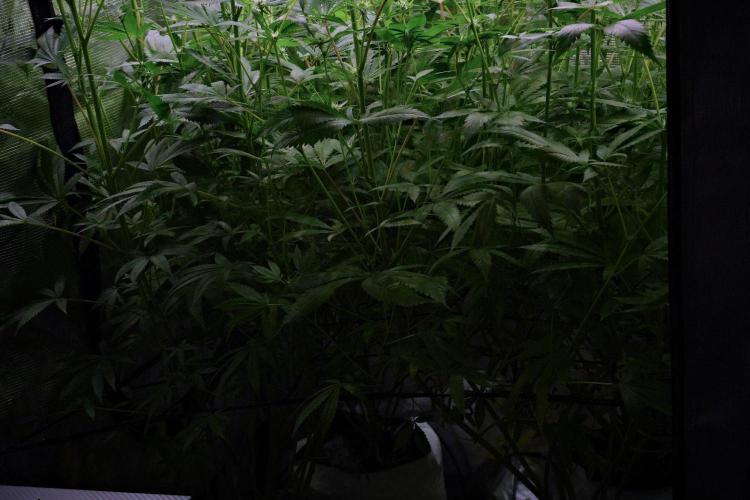
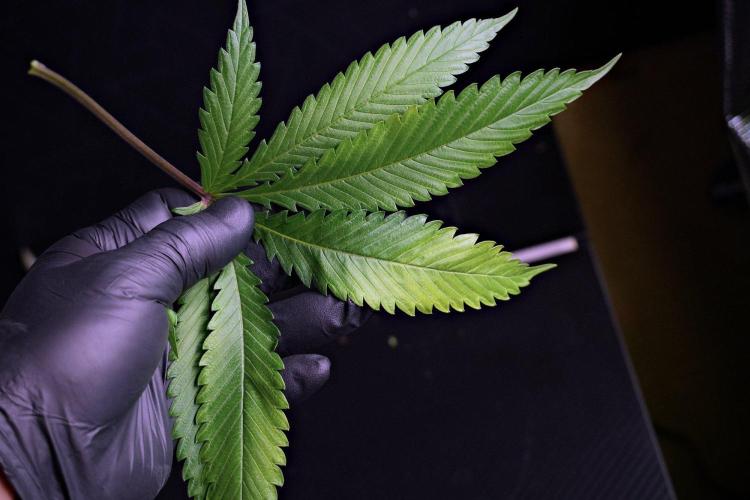
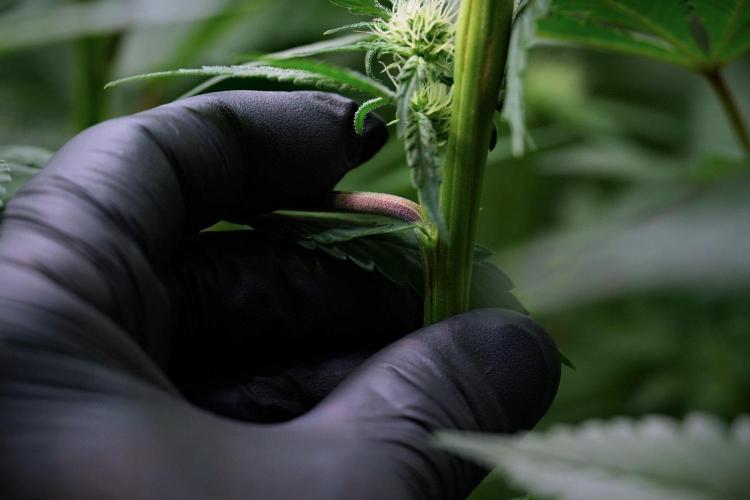
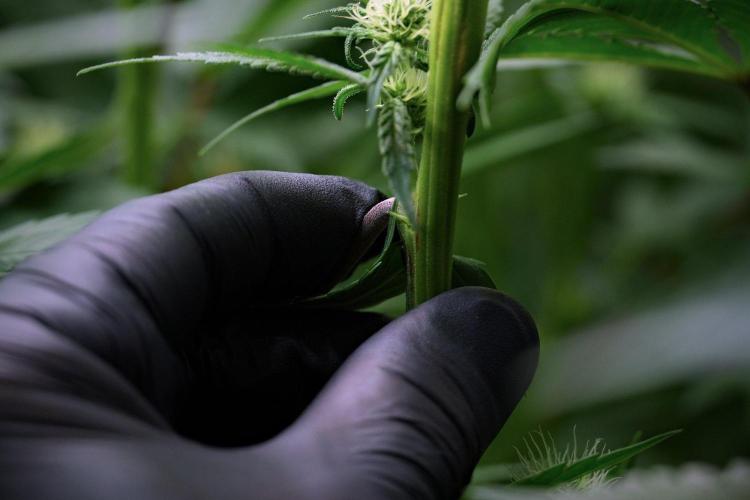
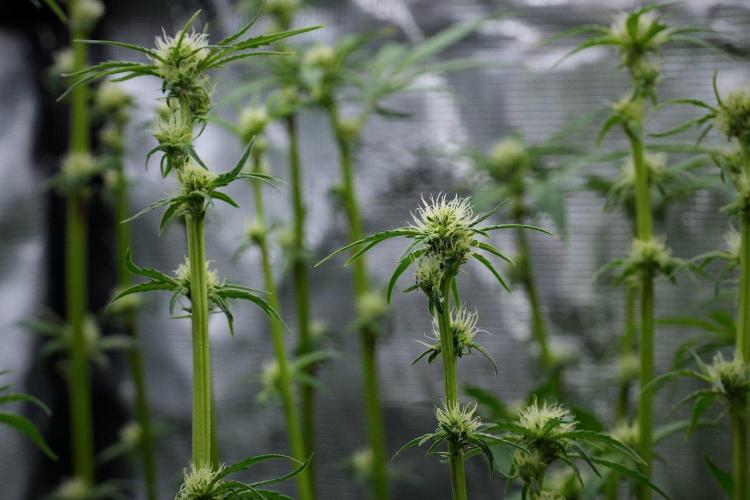
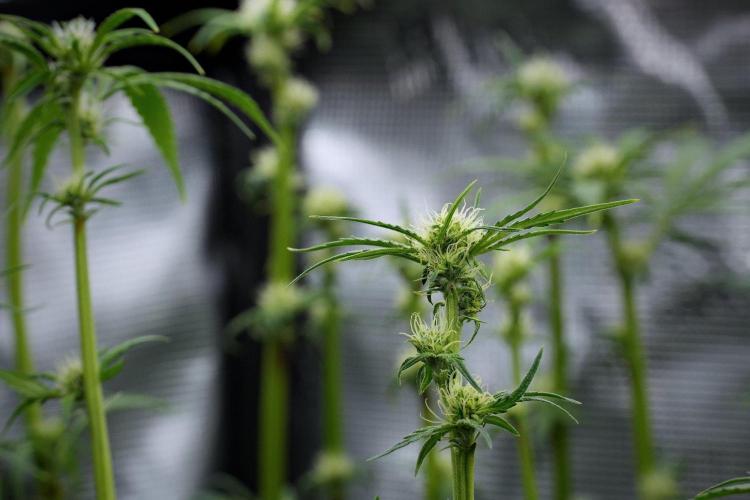
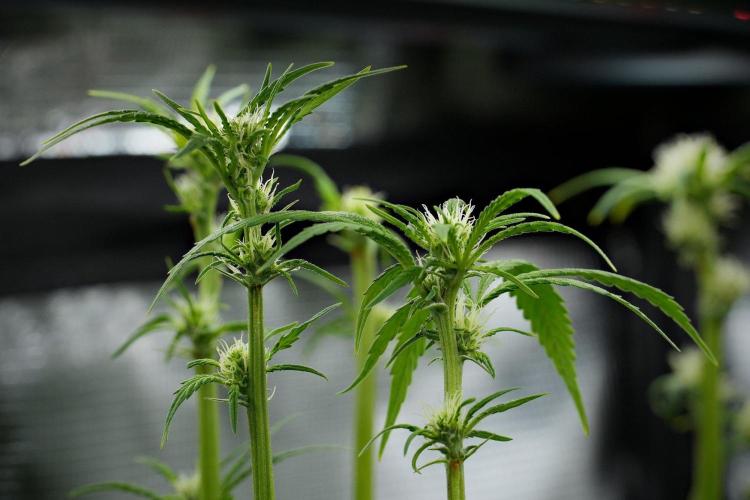
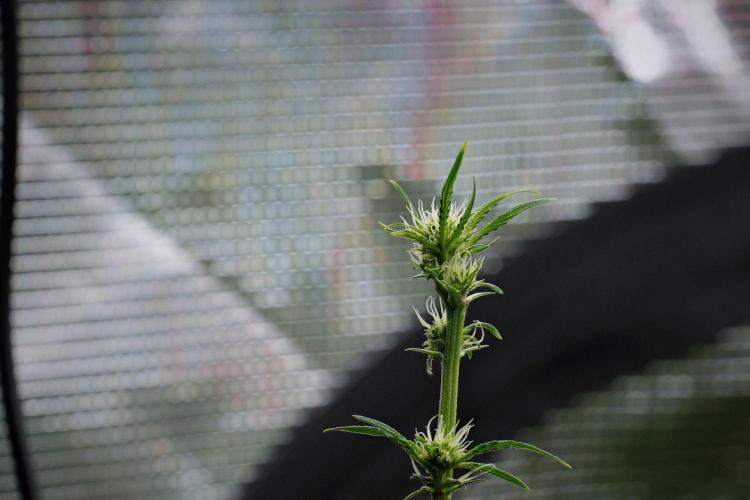
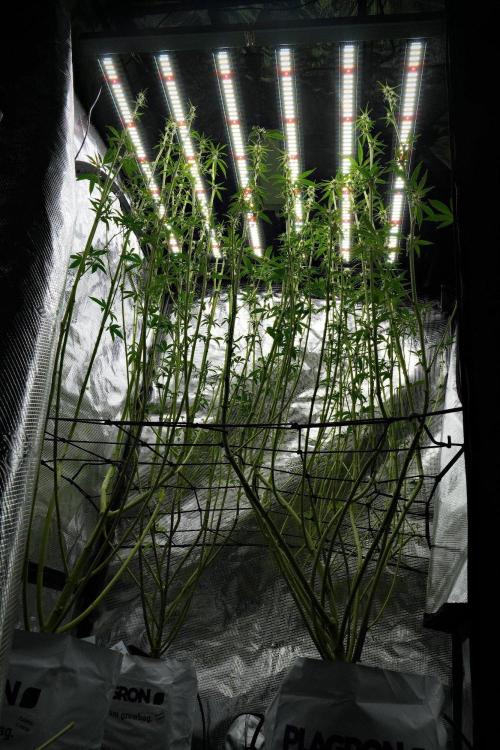
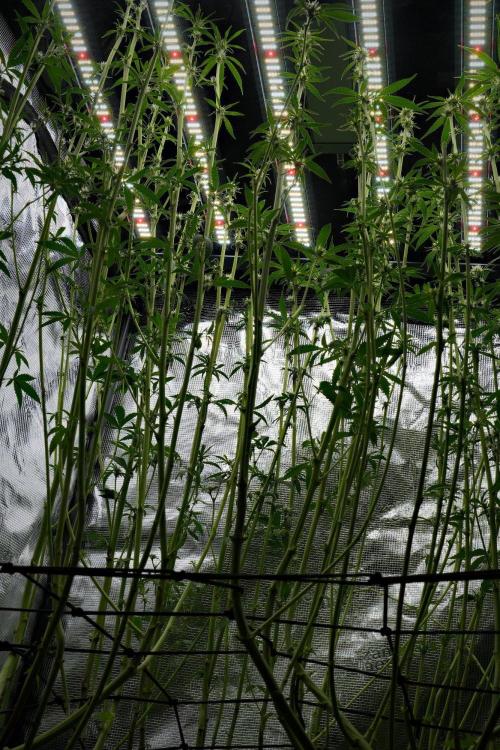
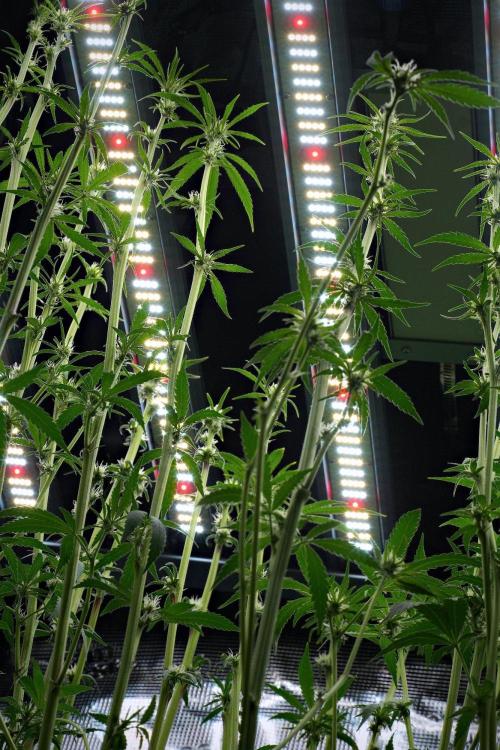
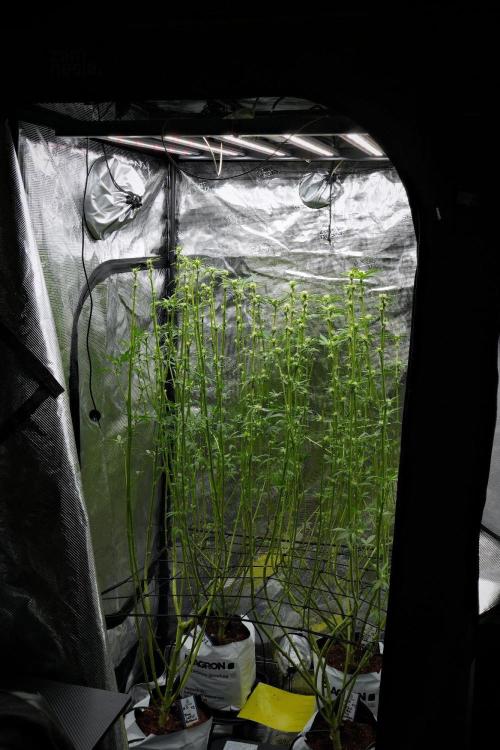
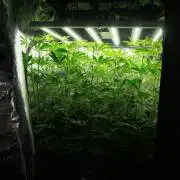
DogDoctorOfficial # 🍋 Pickle Lemon Haze F1 — Pheno A
## Germination Week | Aiming For The Moon
Hello GrowDiaries family! 👋🌱
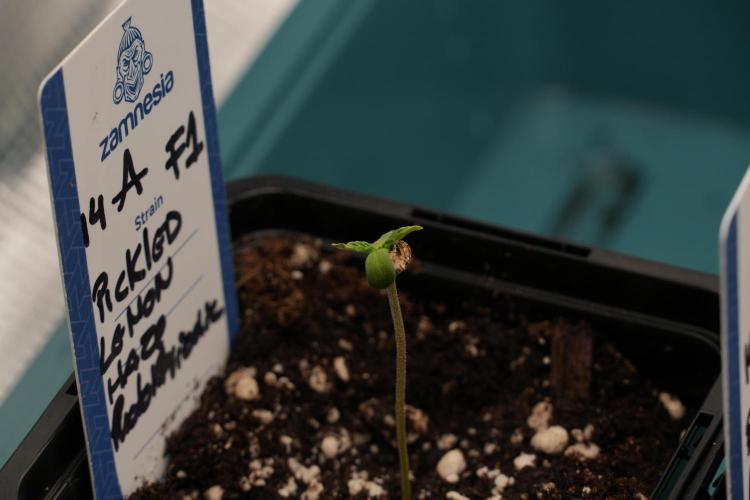
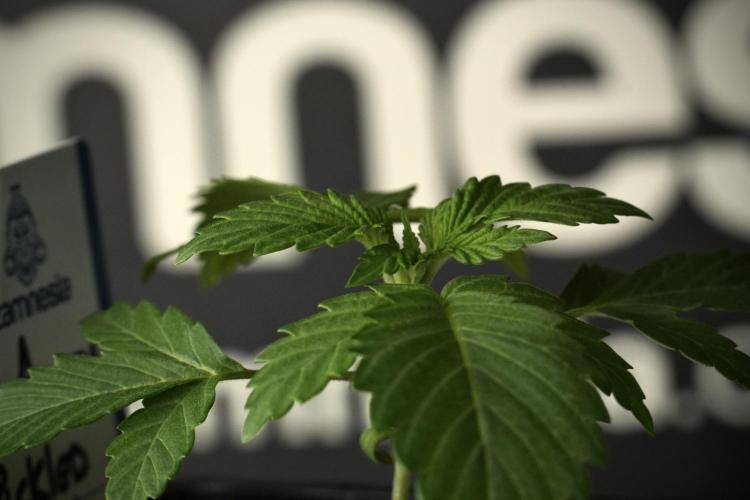
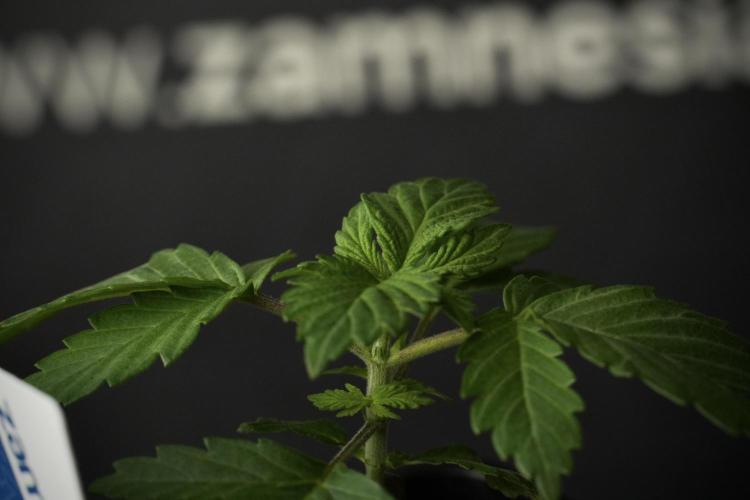
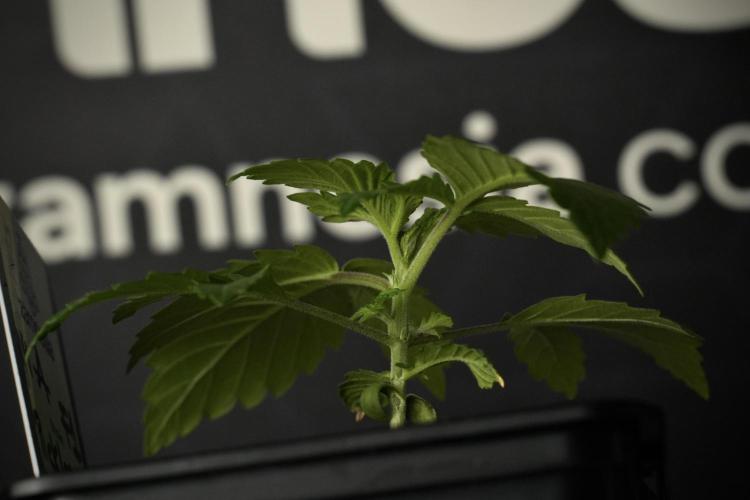
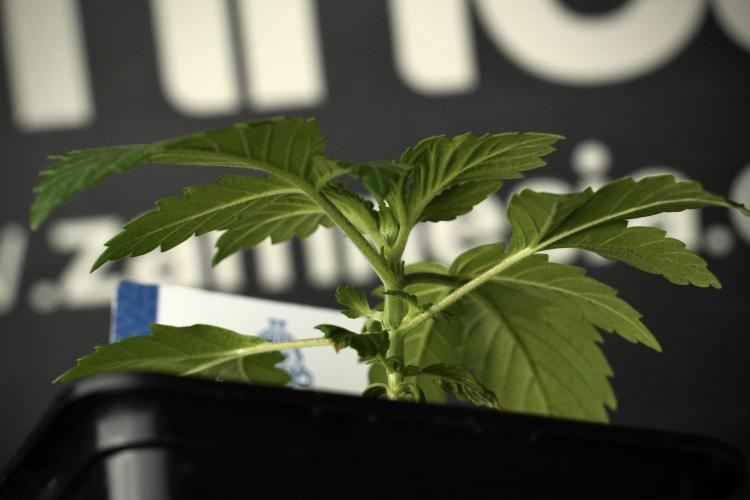
Welcome to the very first entry for Pickle Lemon Haze F1 Pheno A.
Today marks the beginning of another journey inside the new Zamnesia tent project, where we'll be following these exciting F1 genetics from seed all the way to harvest.
Just like the Blue Waffle F1 diaries, this project is being documented individually for each phenotype. Although both sisters share the same genetics, environment, and treatment, every plant develops its own personality, pace, and story.
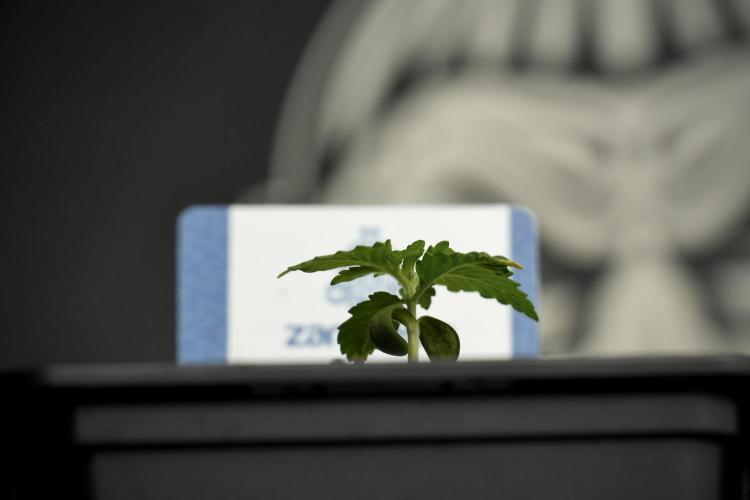
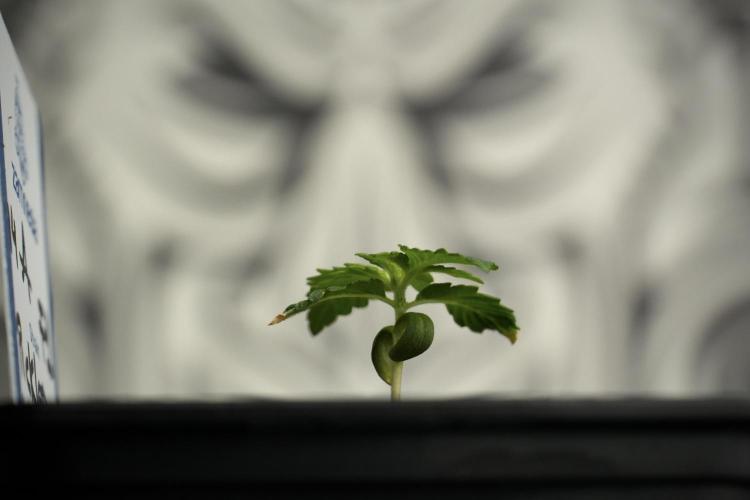
And from the very beginning, this particular girl already seemed eager to get moving.
---
## A New Project, A New Adventure
This run is completely separate from my ongoing 12/12-from-seed project.
Instead of flowering from day one, these plants are being given the opportunity to fully develop under a traditional vegetative schedule.
Current plans include:
- 18/6 light schedule
- Full vegetative development
- Potential Low Stress Training (LST)
- Potential topping
- Possible Scrog implementation
- Structural development observations
- Full seed-to-harvest documentation
At this stage, however, everything begins with a healthy germination.
---
## The Cannakan Germination Method
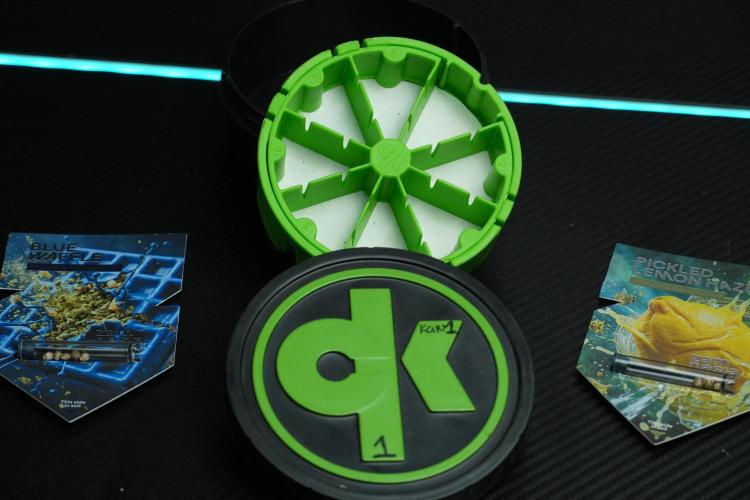
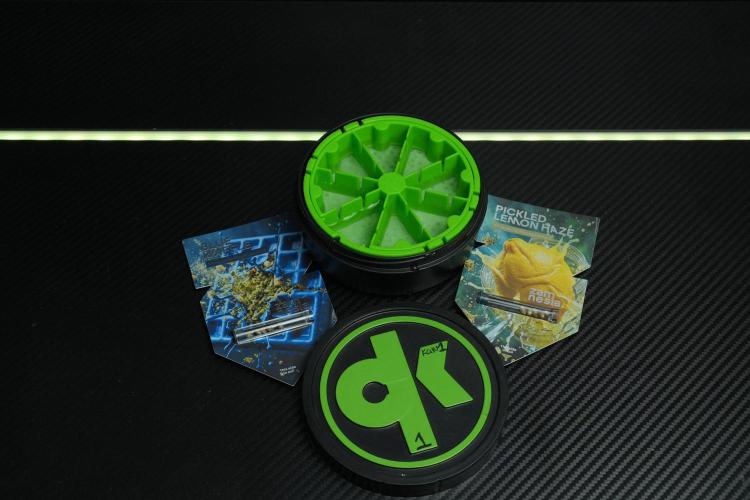
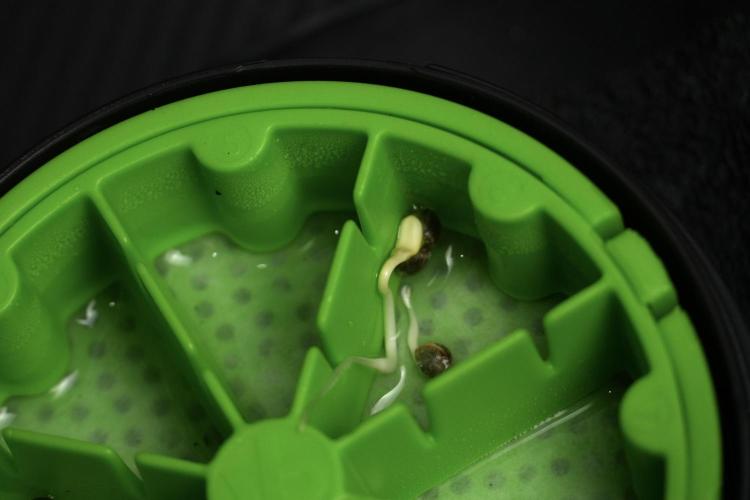
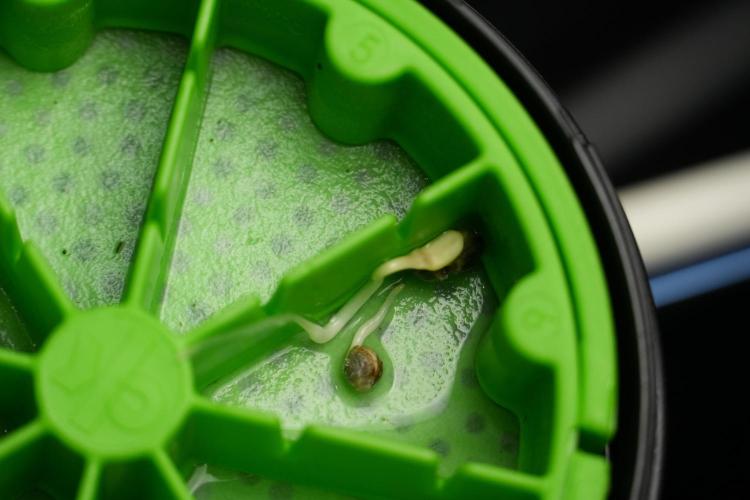
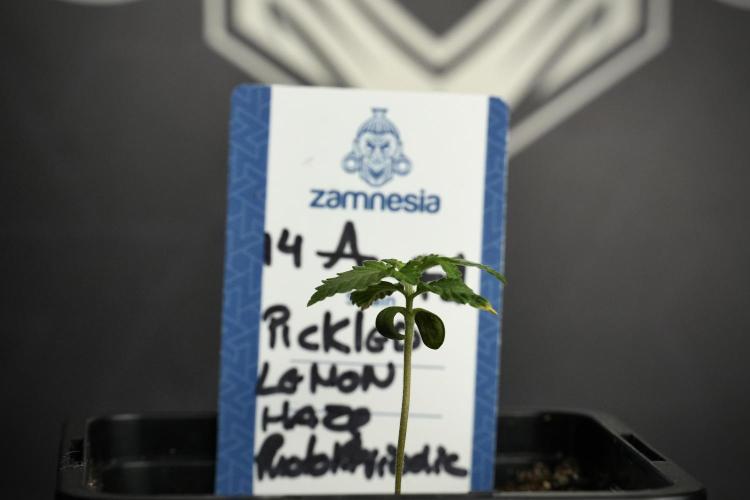
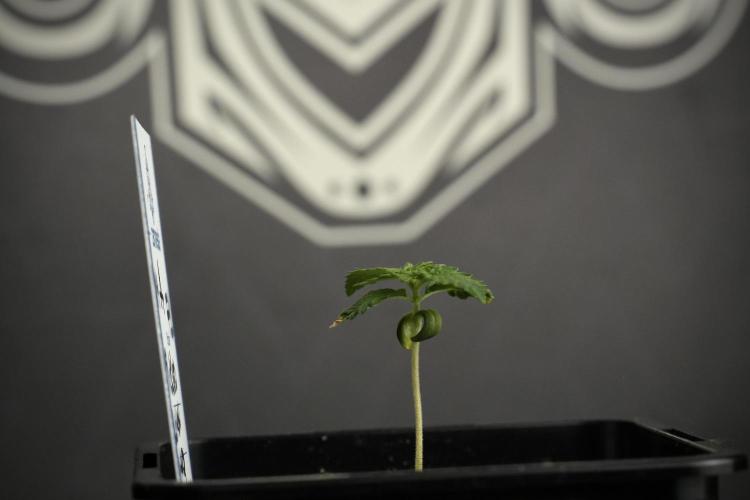
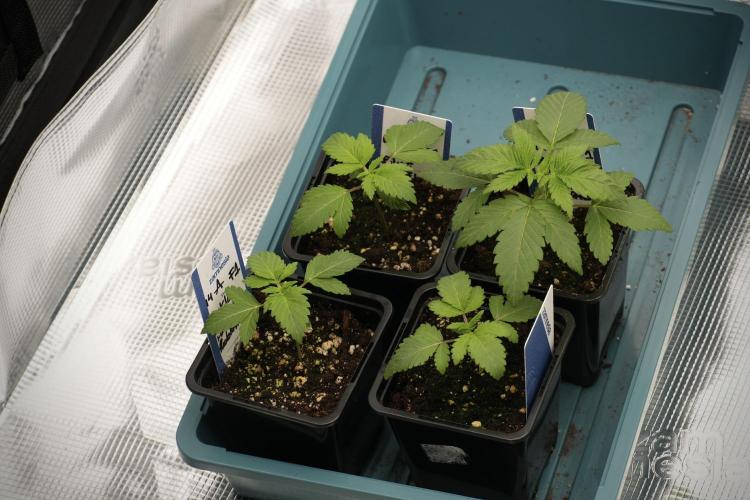
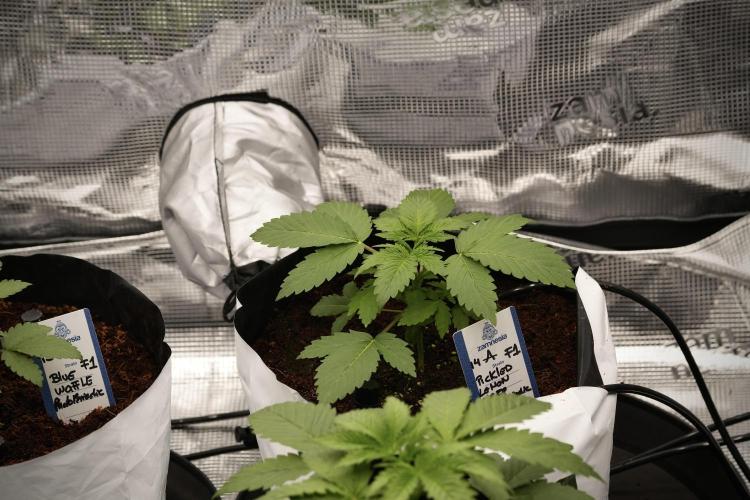
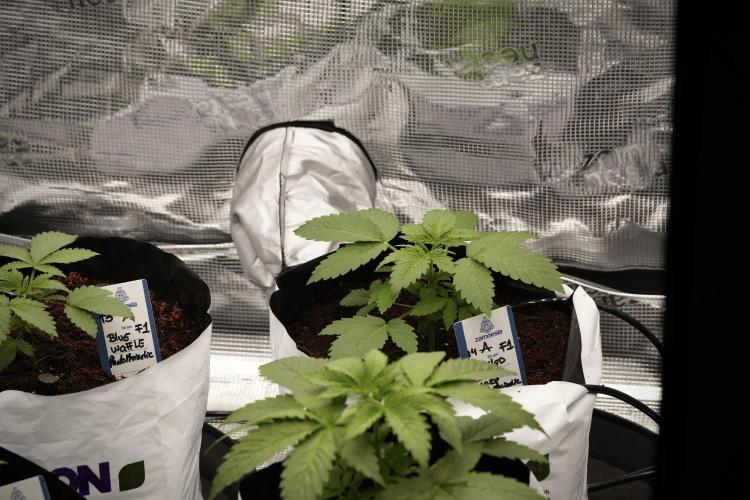
Like the rest of this project, Pickle Lemon Haze F1 Pheno A began life inside the Cannakan germination system.
The process remains intentionally simple.
The seed was placed into the system using only plain water.
No nutrients.
No additives.
No stimulants.
Just water.
After approximately 24 hours of soaking, most of the water was removed while maintaining enough moisture to create ideal germination conditions.
The seed responded quickly.
Very quickly.
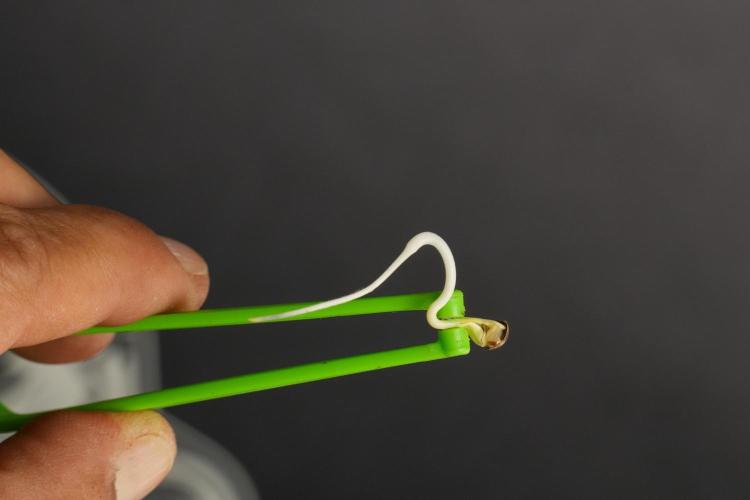
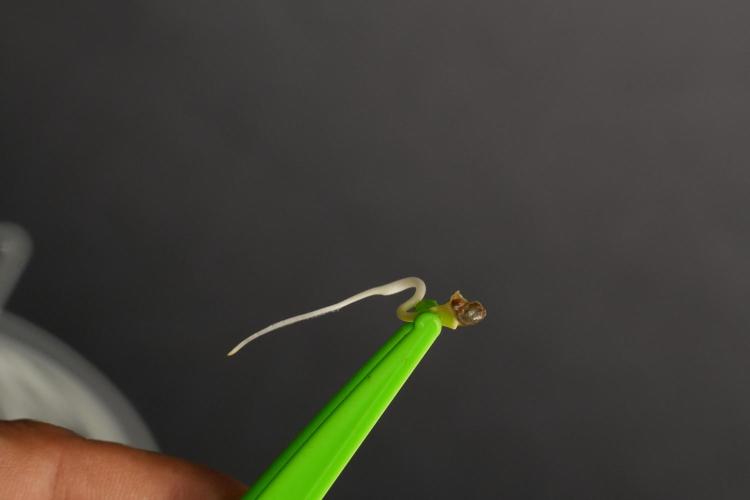
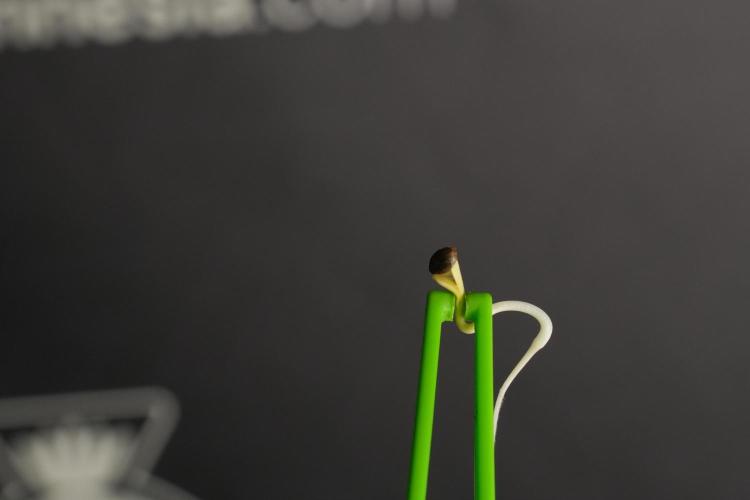
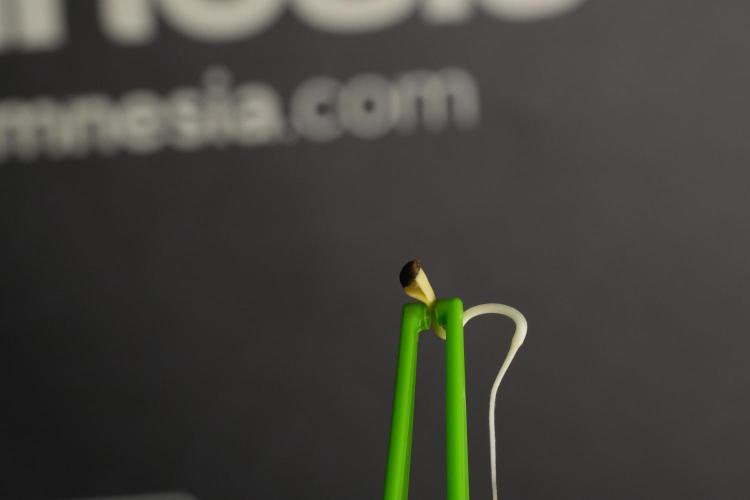
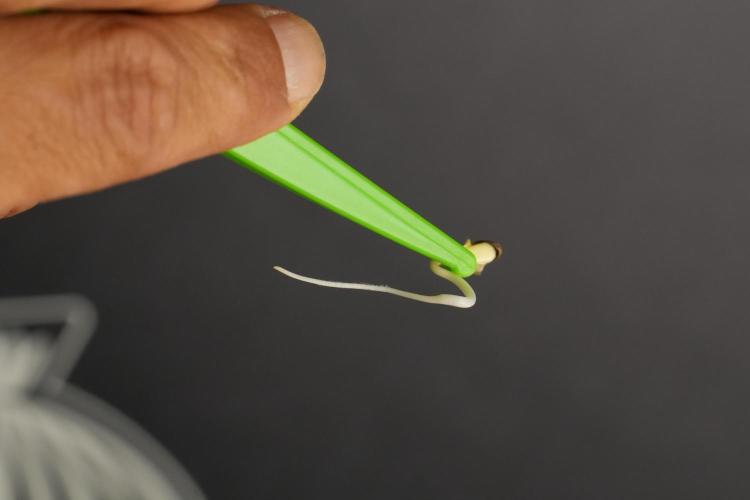
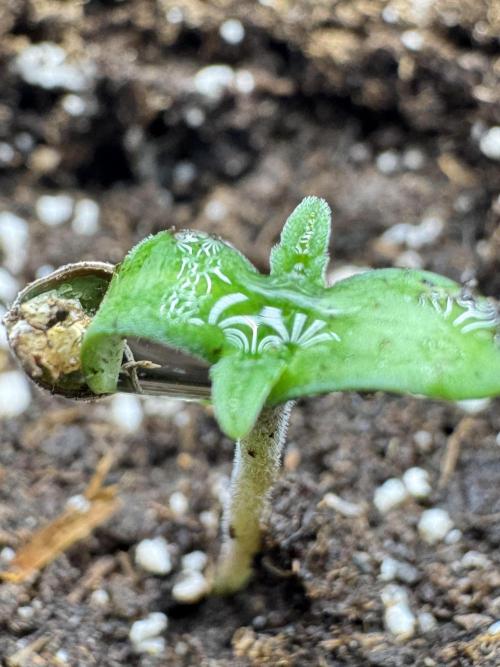
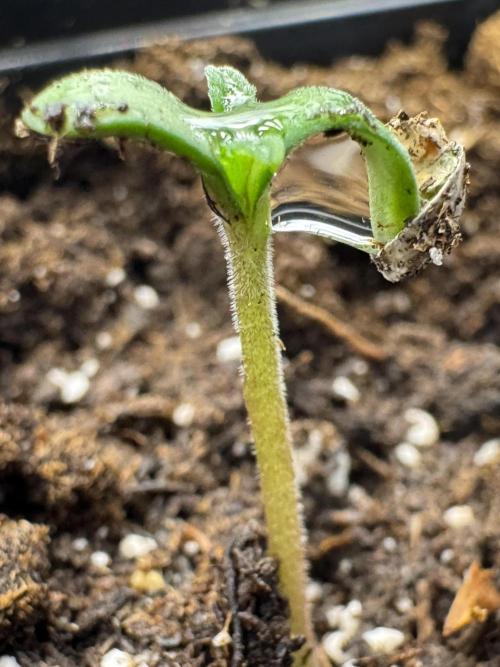
Before long, a strong healthy taproot had emerged and was ready for planting.
Sometimes seeds take their time.
This one looked like she had a schedule to keep.
---
## Why Only Water?
One question that often appears during germination is:
"Why not feed the seed immediately?"
The answer remains simple.
The seed already contains everything required for the earliest stages of life.
Inside that shell are all the energy reserves needed to establish roots and begin development.
At this stage, I prefer allowing the seed to use those natural reserves exactly as nature intended.
The objective is not to feed the plant.
The objective is simply to wake it up.
Water is enough.
Nature already prepared the rest.
---
## A Taproot With Somewhere To Go
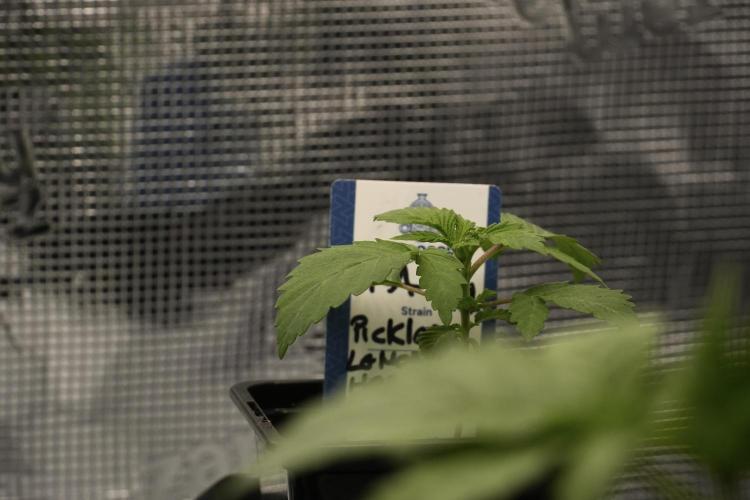
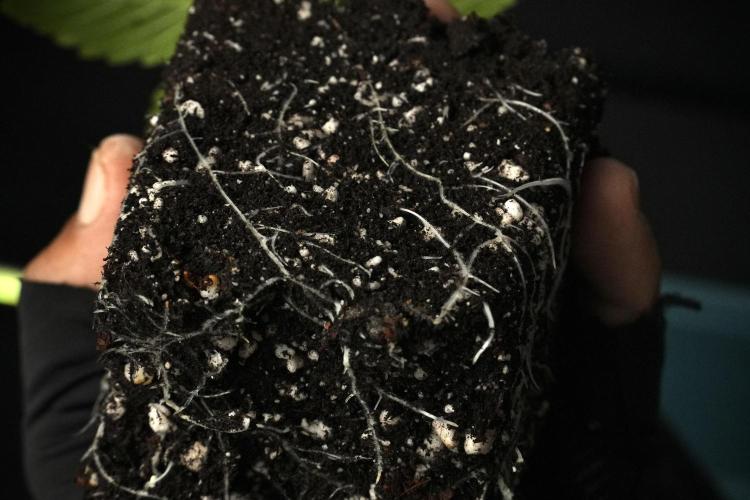
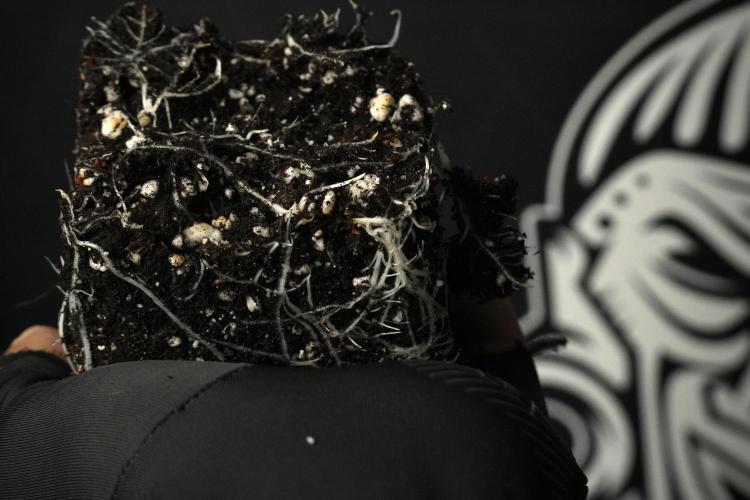
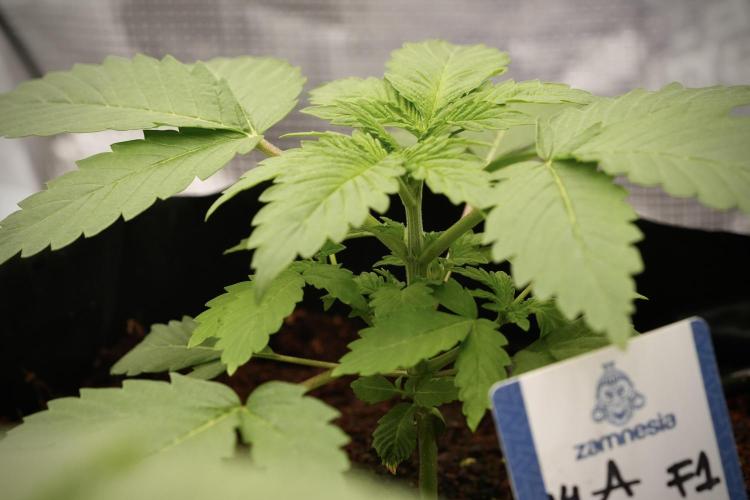
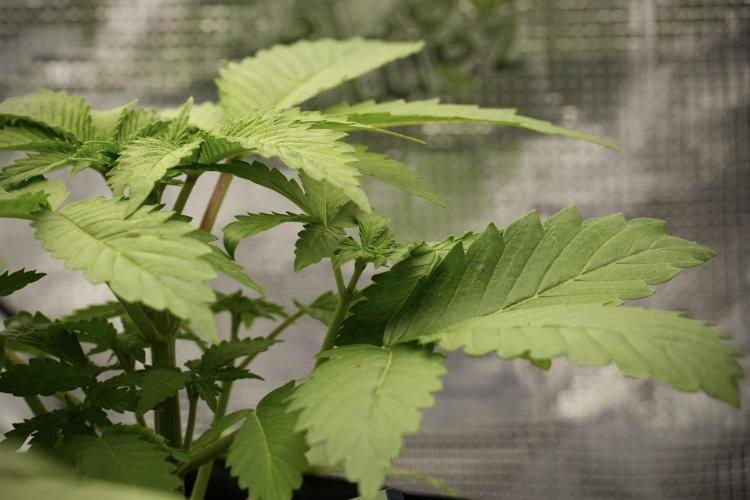
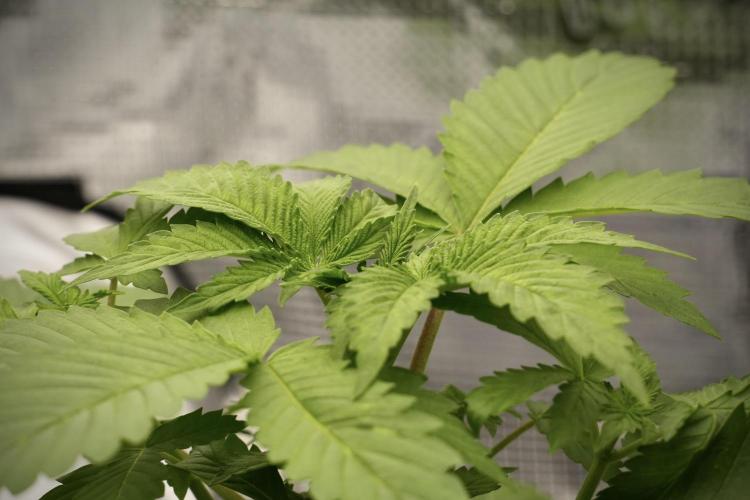
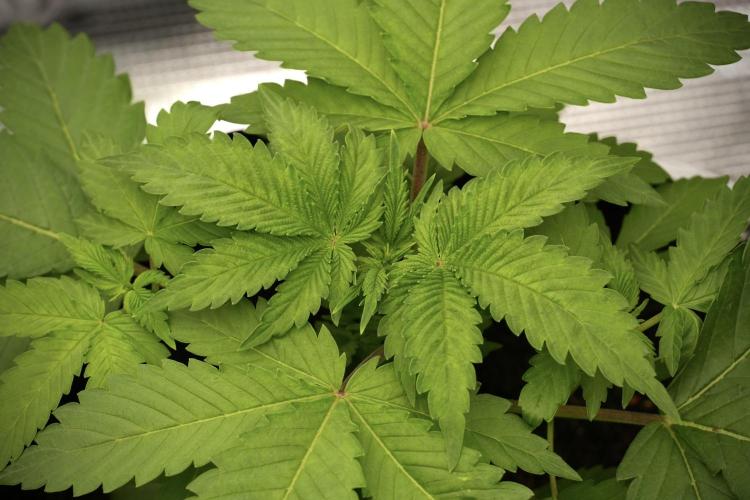
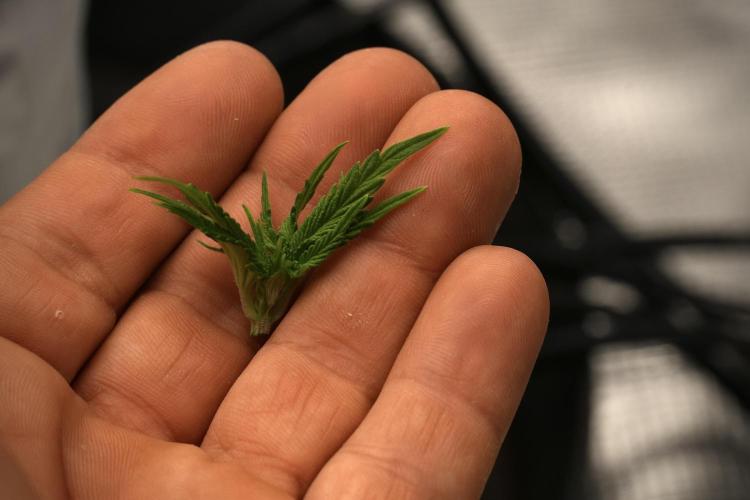
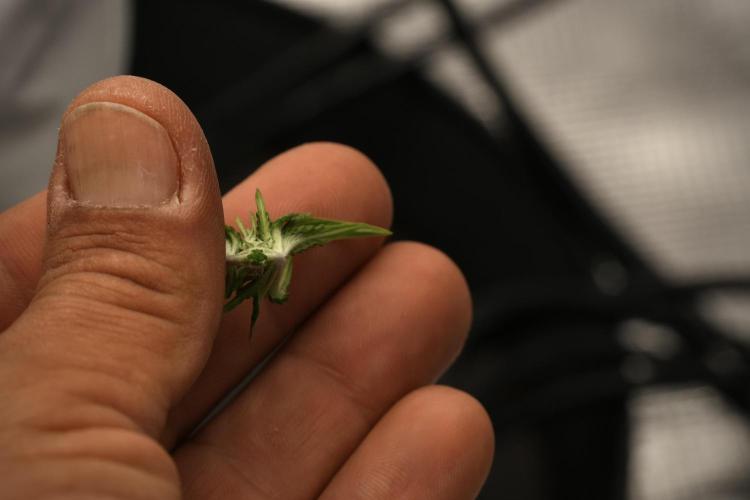
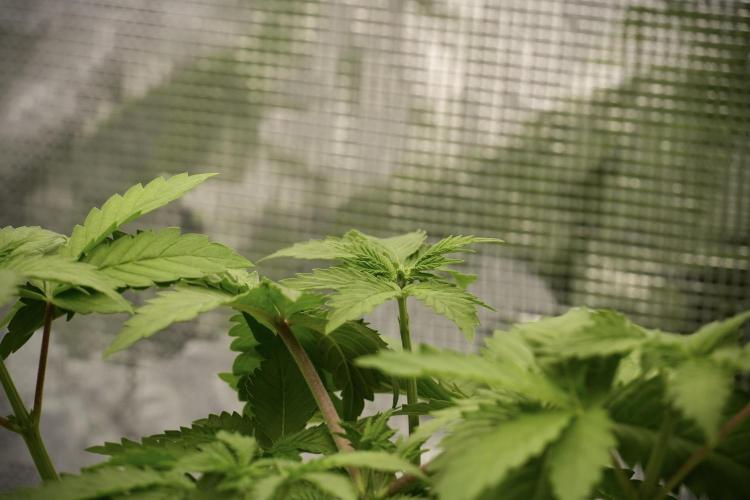
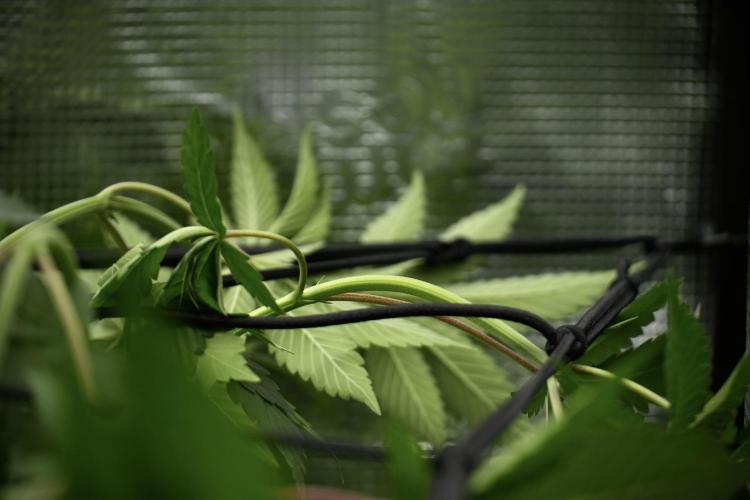
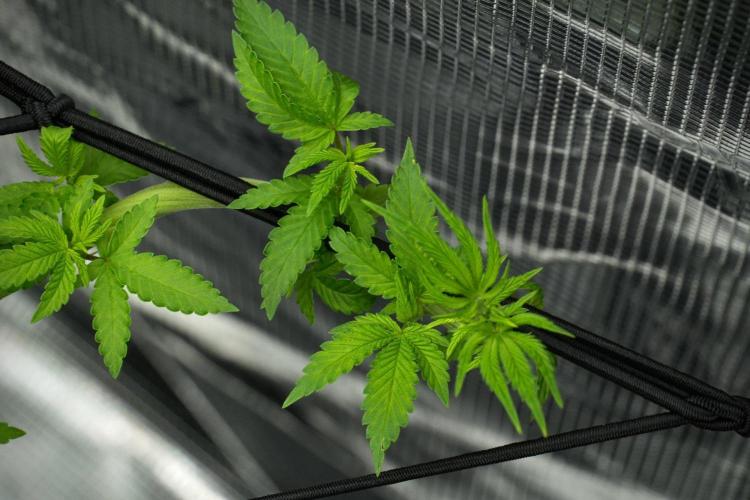
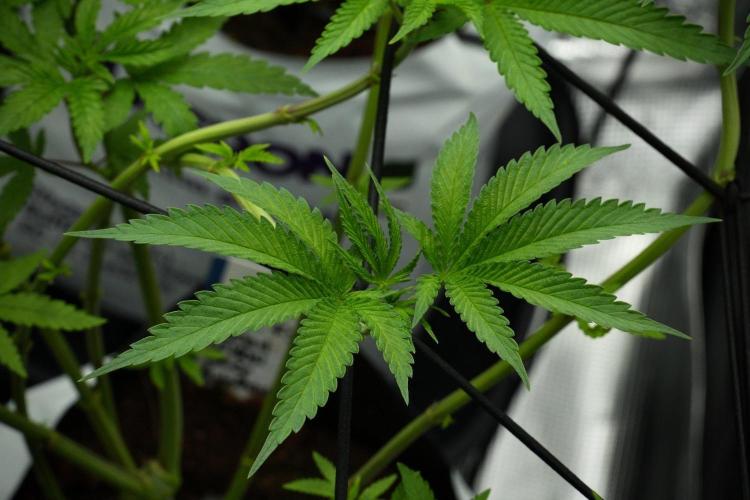
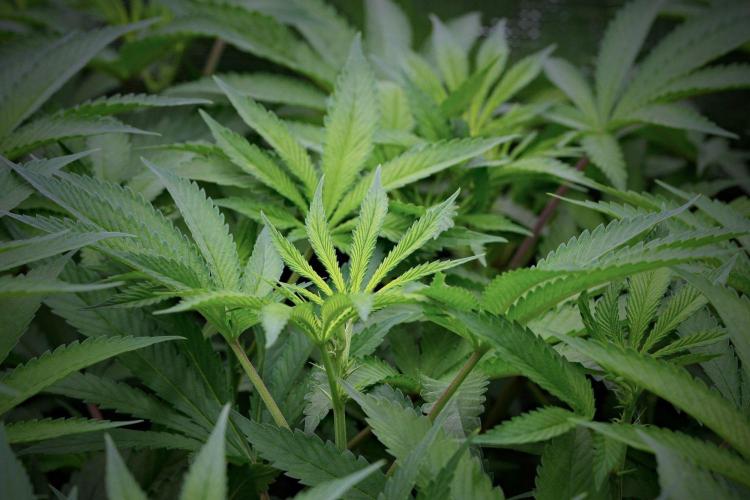
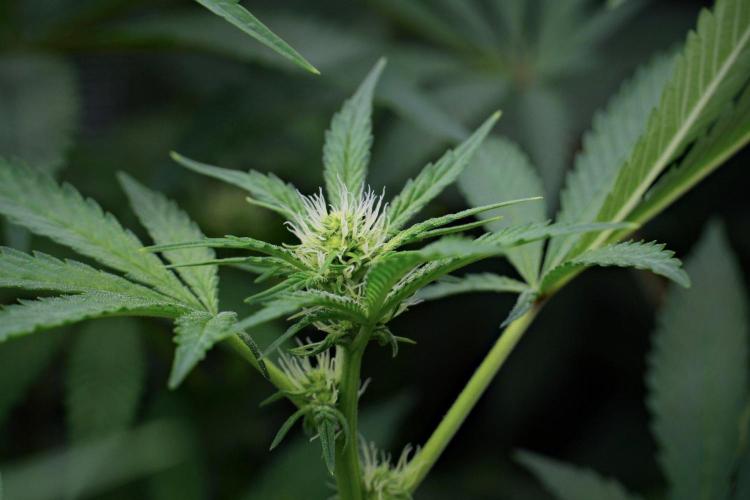
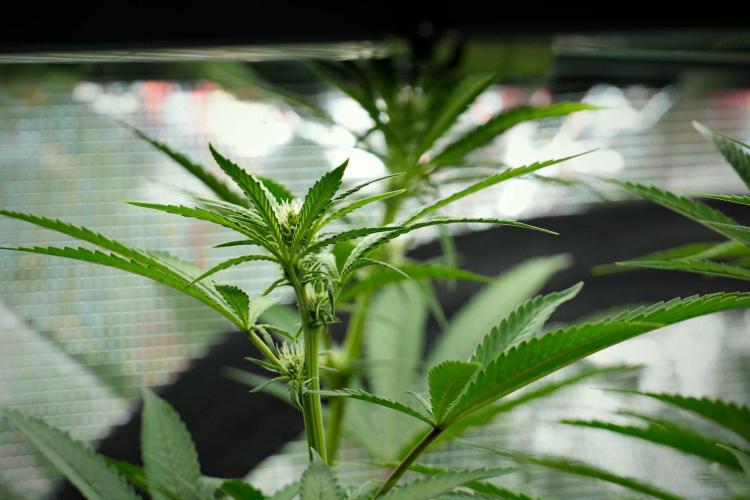
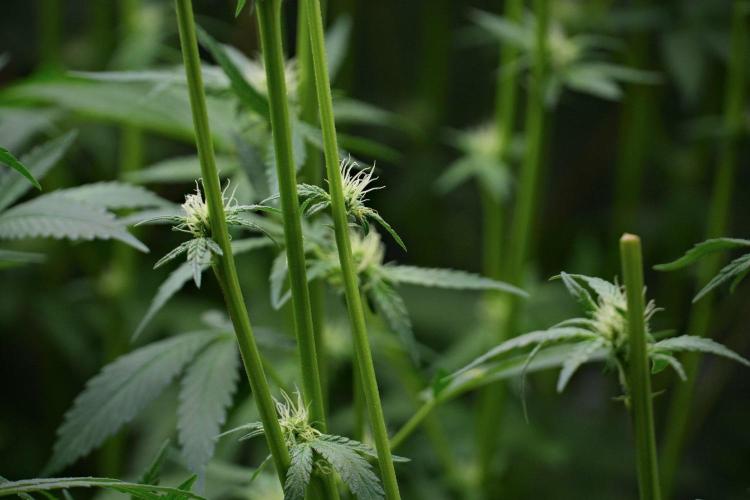
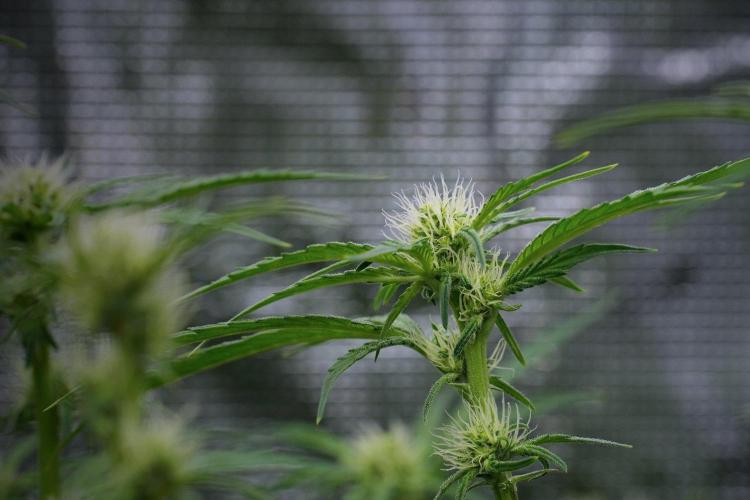
One of the highlights of this week was the impressive taproot development.
The photographs tell the story perfectly.
Healthy.
Bright white.
Strong.
Vigorous.
The kind of taproot that immediately gives a grower confidence.
Not every seed reveals its intentions so early, but this one certainly seemed determined to get moving.
After seeing that development, the decision was easy.
It was time for soil.
---
## Into Plagron Lightmix
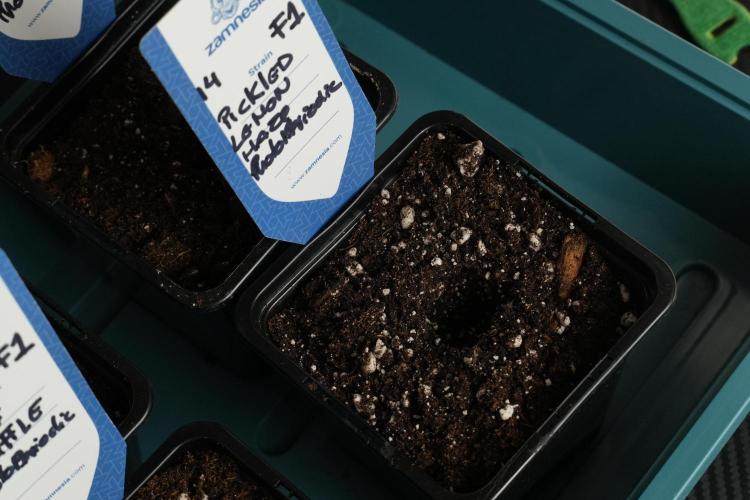
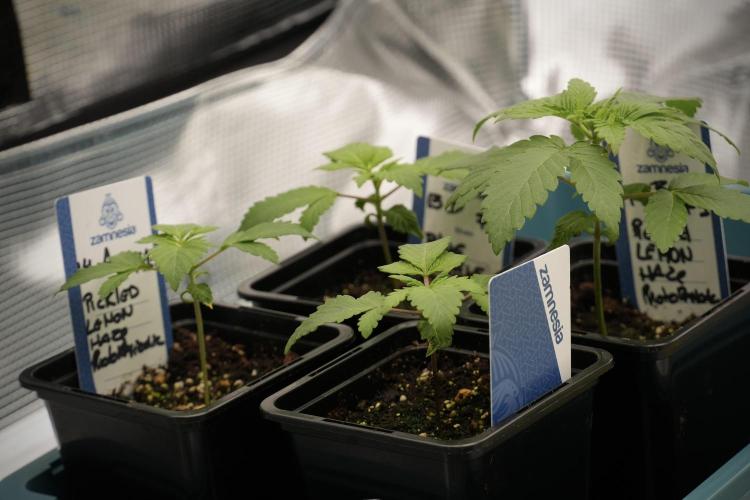
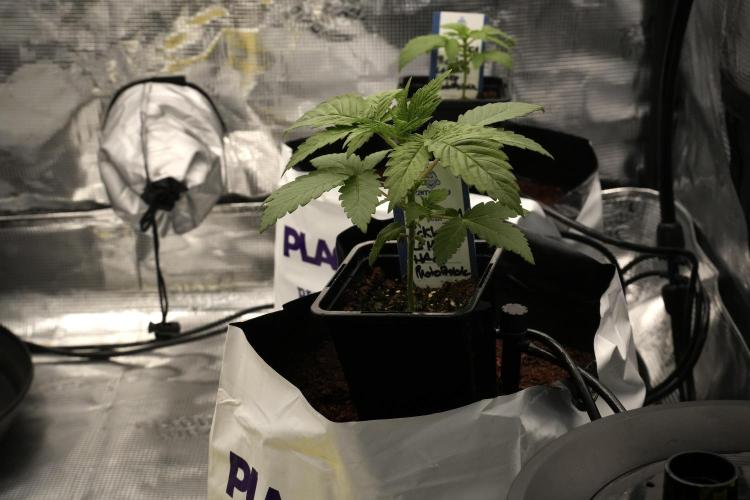
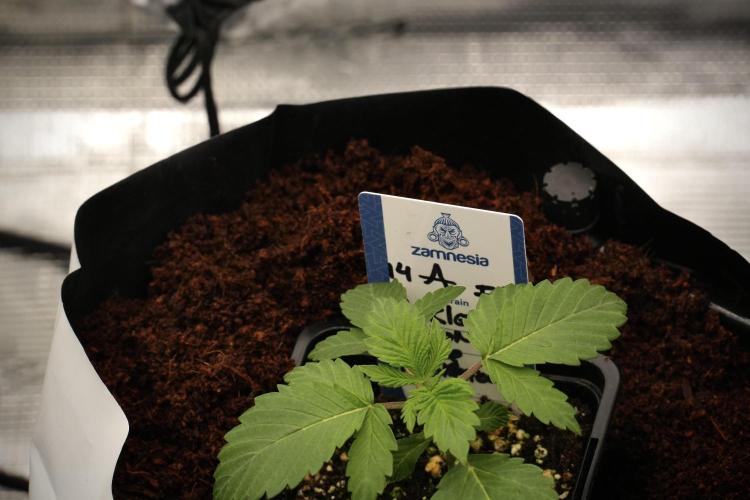
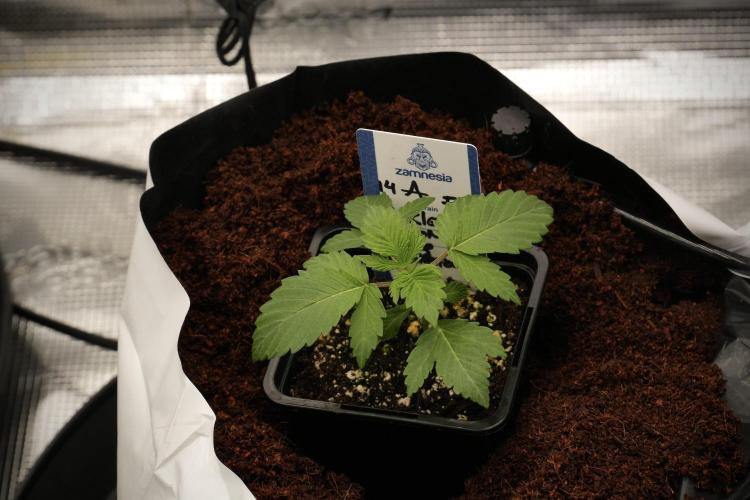
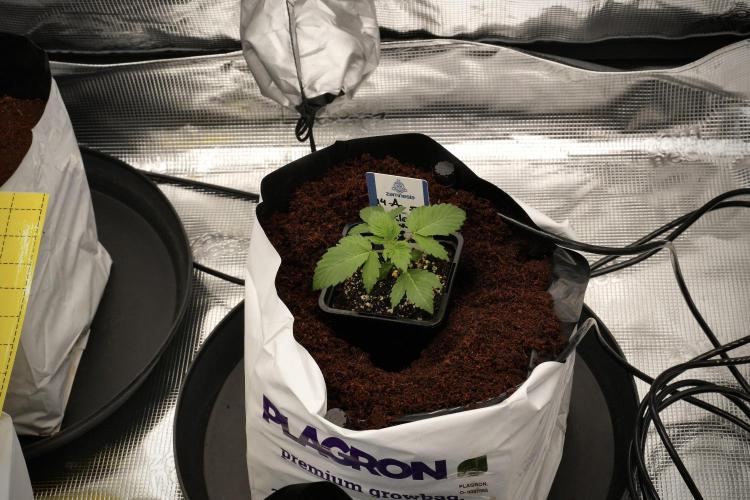
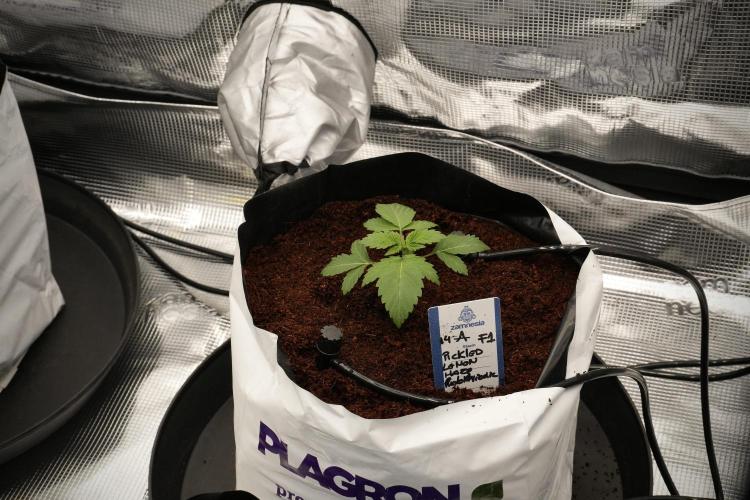
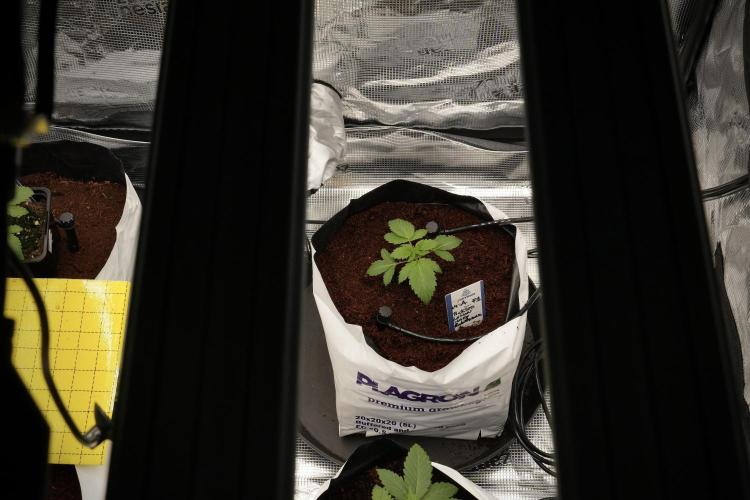
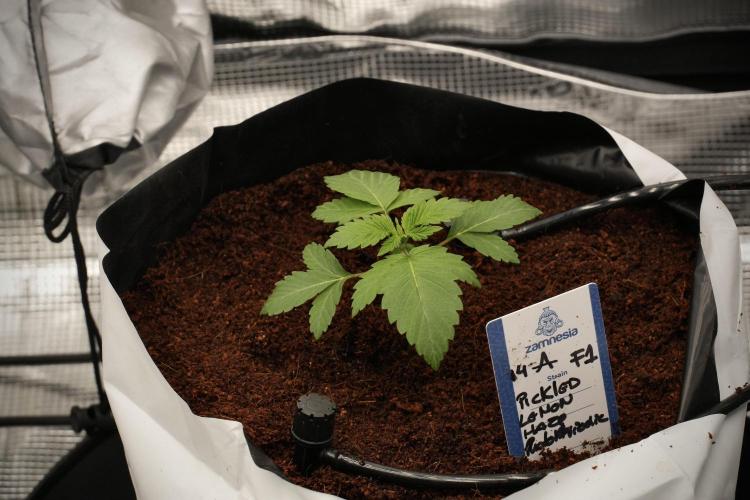
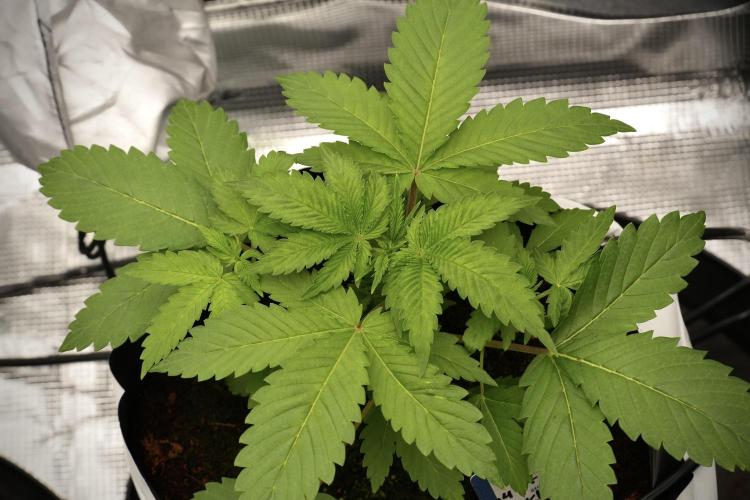
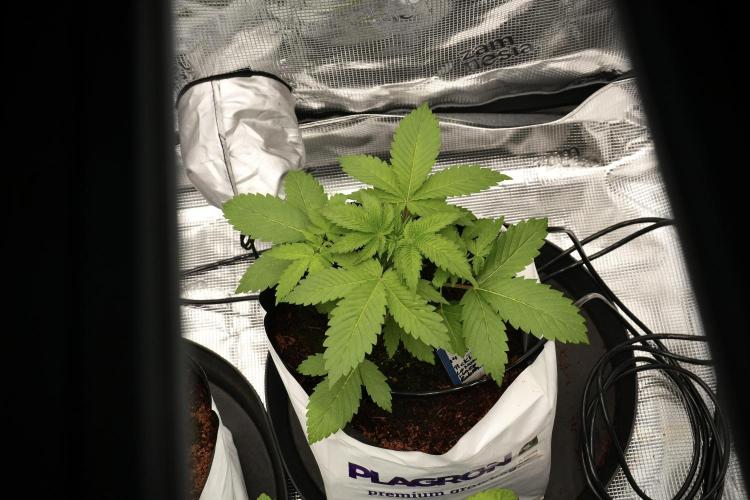
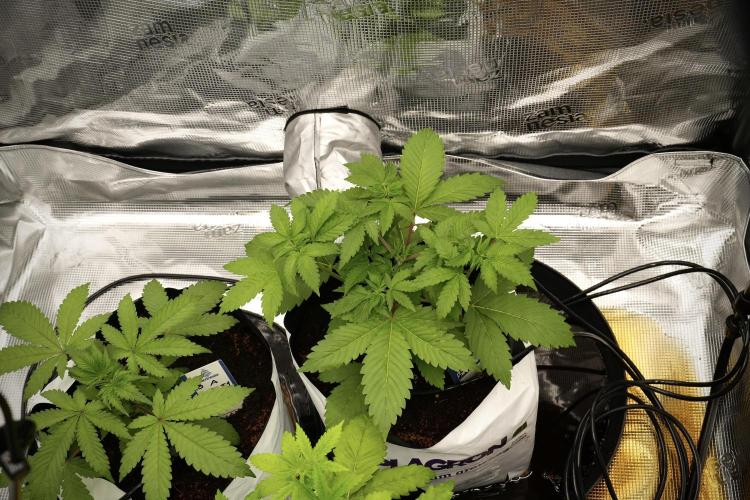
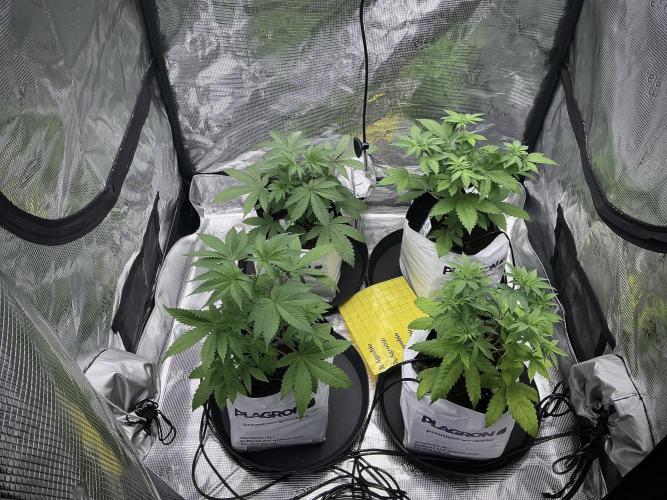
Once a healthy taproot had developed, Pheno A was transferred directly into Plagron Lightmix.
This remains one of my favorite starting substrates thanks to its excellent aeration and forgiving nature during early development.
After planting, the response was immediate.
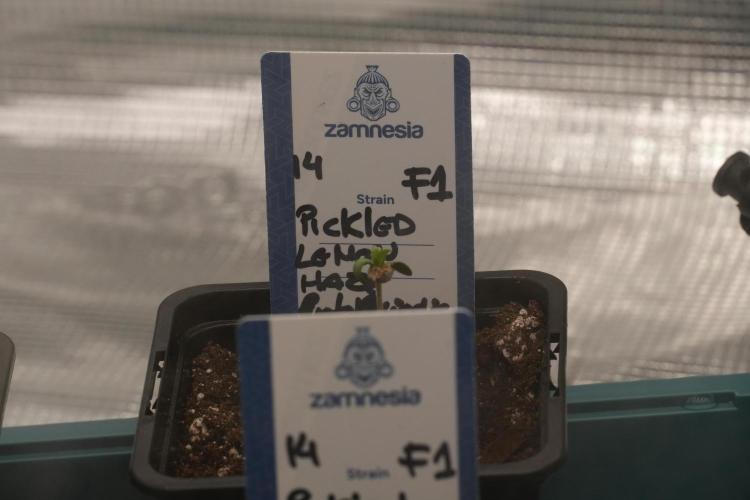
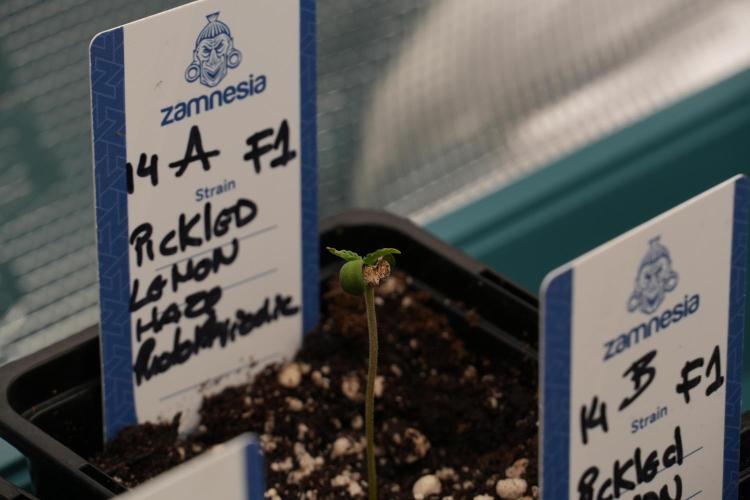
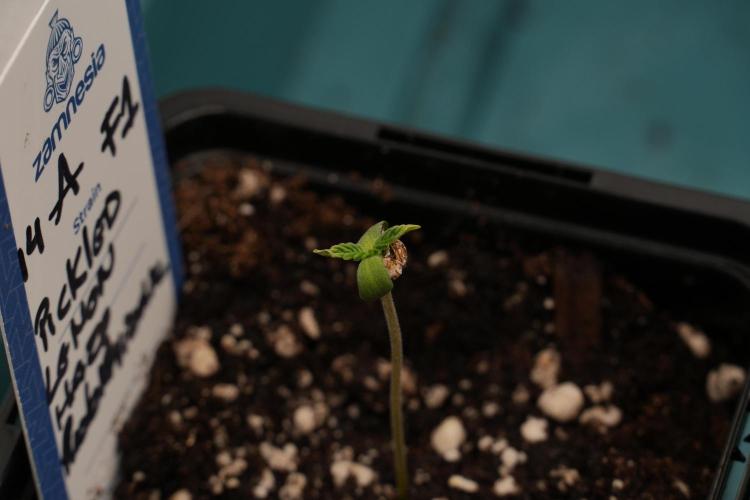
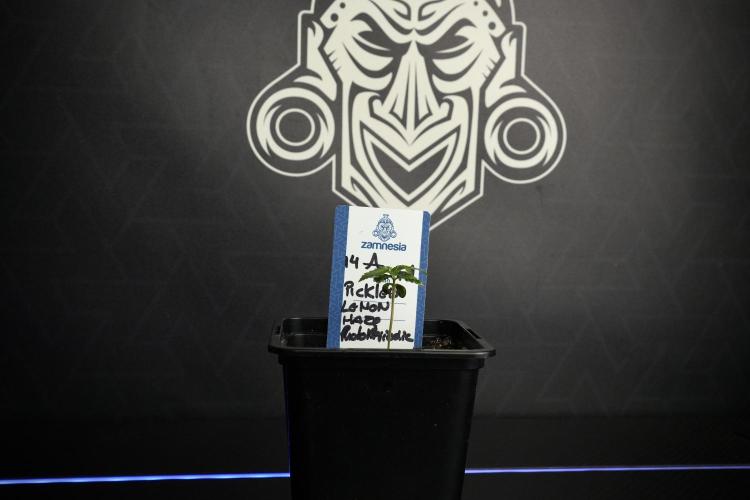
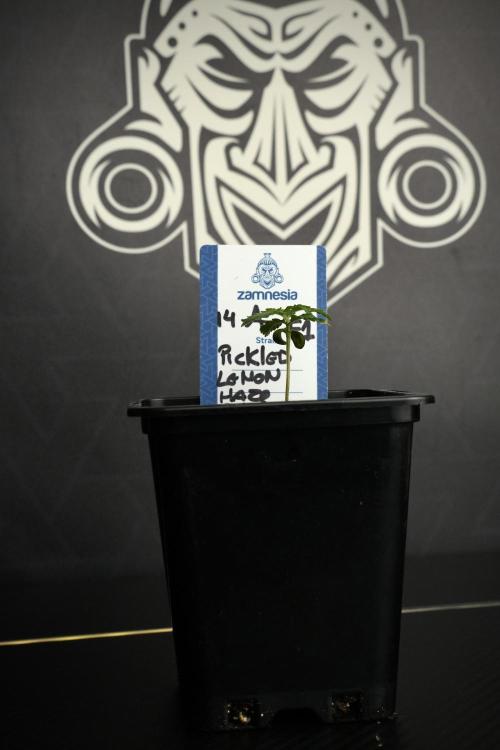
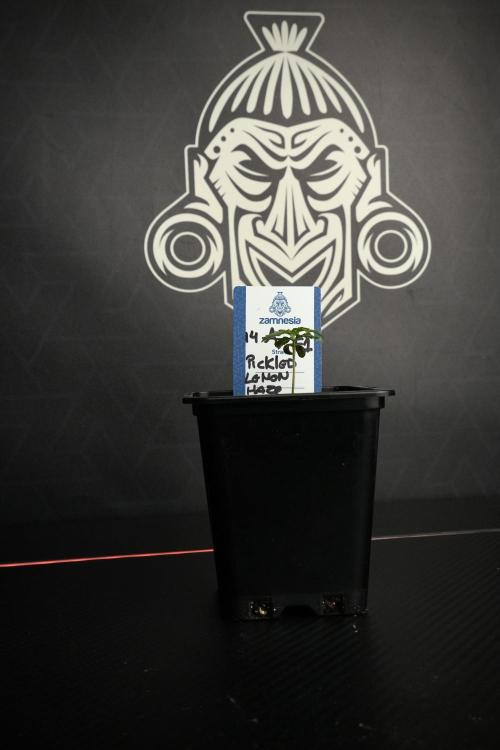
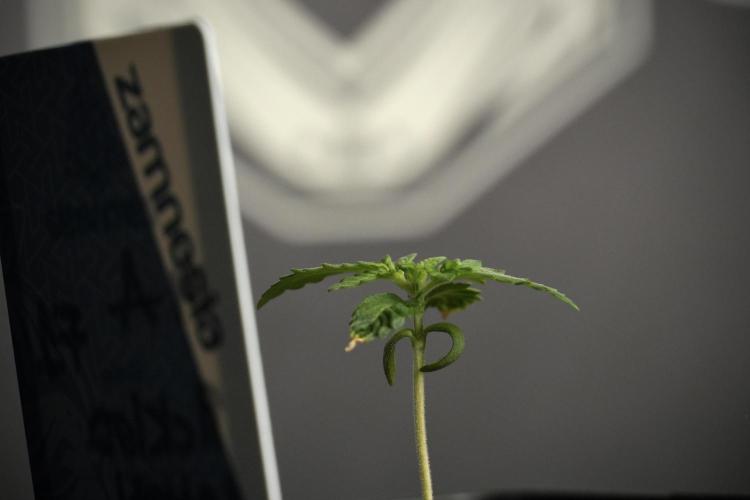
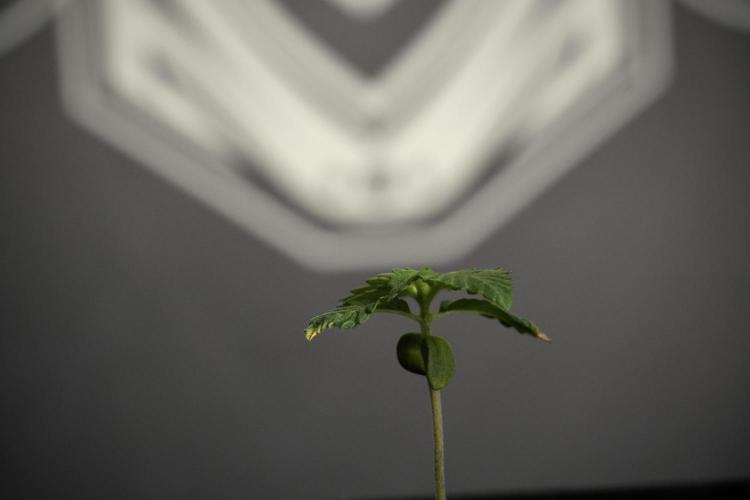
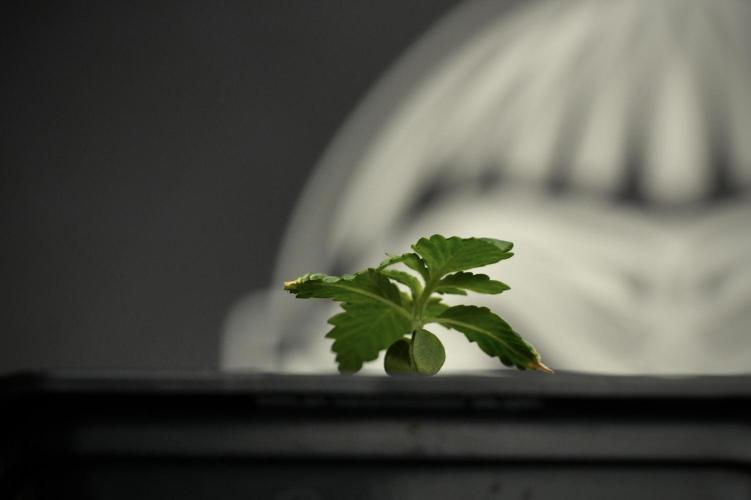
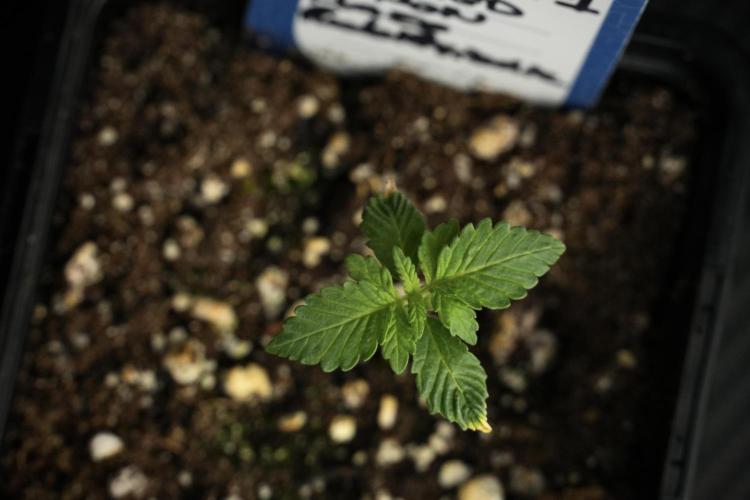
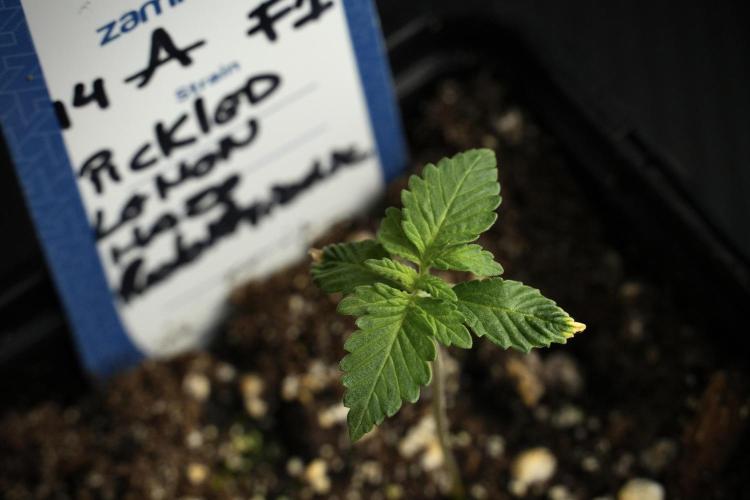
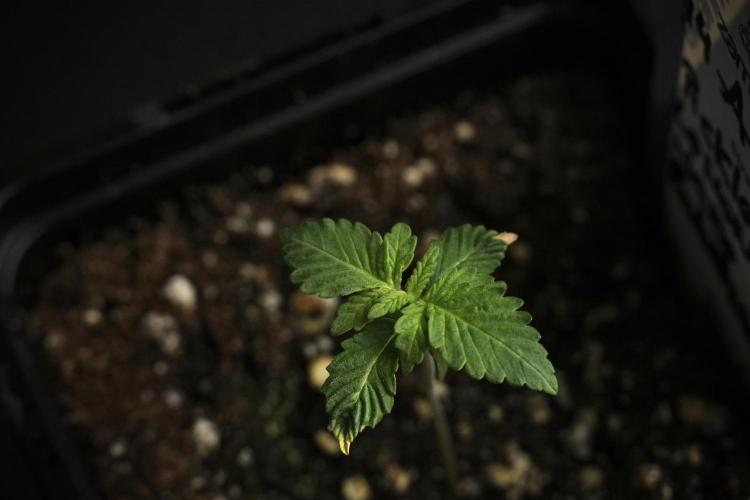
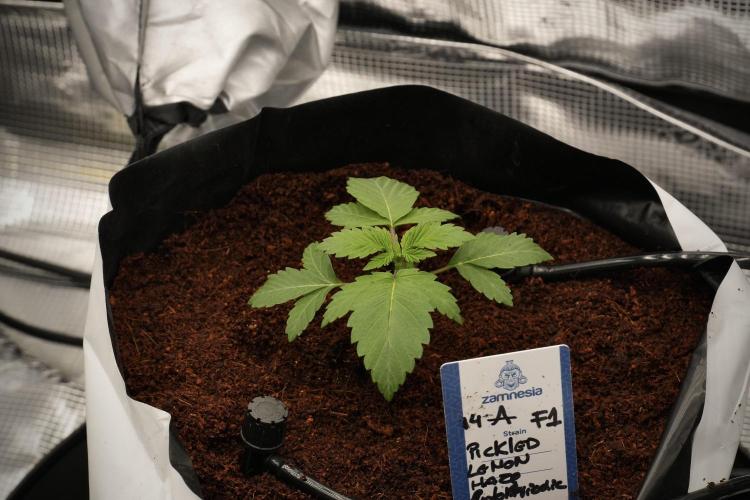
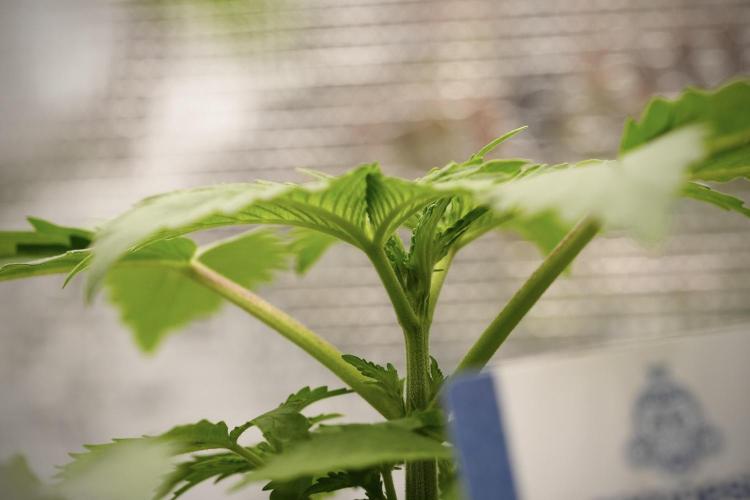
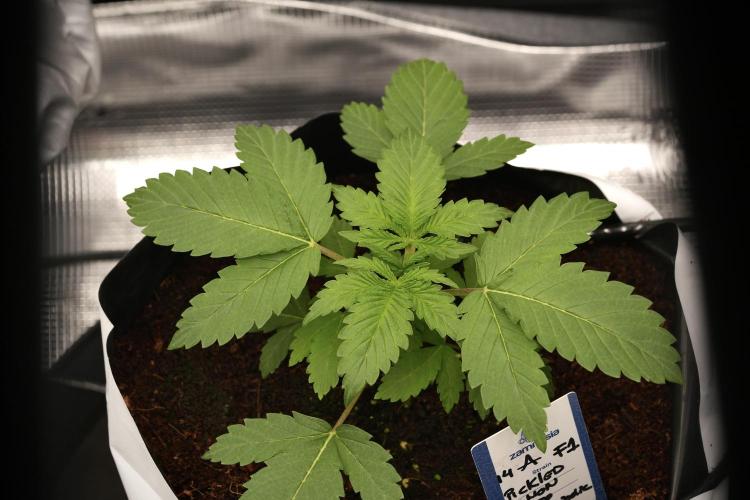
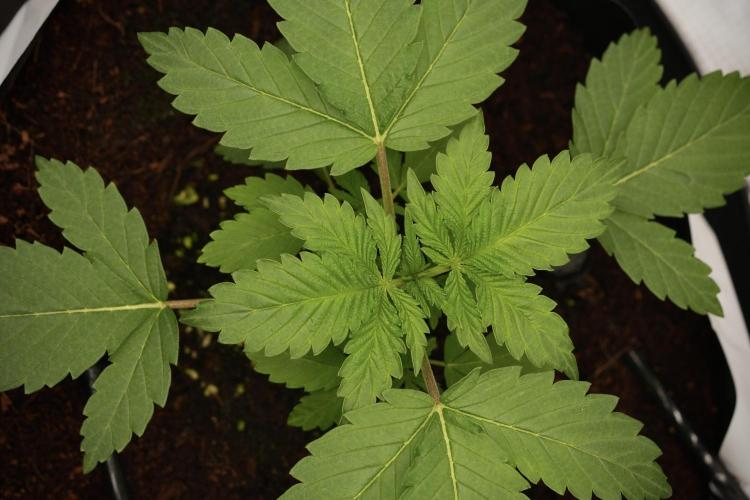
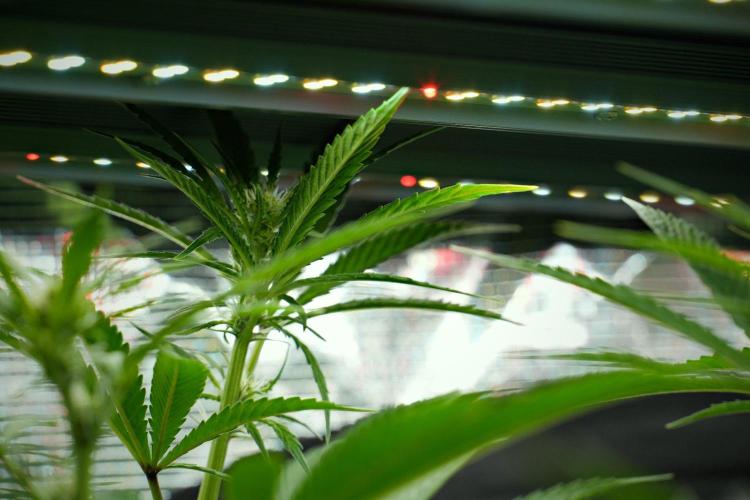
Less than 24 hours later, the seedling was already emerging above the soil and searching for light.
The transition from seed to seedling happened smoothly and without complications.
Exactly what every grower hopes to see.
---
## Why Use A Humidity Dome?
During the first few days after emergence, the seedling spent time under a humidity dome.
Young seedlings have only a very limited root system and therefore limited access to water.
Maintaining slightly elevated humidity helps reduce moisture loss while roots continue developing beneath the surface.
The humidity dome is not intended to become a permanent environment.
It is simply a temporary support tool during one of the most delicate stages of life.
As roots develop, the dome is removed and the plant begins adapting to normal growing conditions.
The goal is adaptation.
Not dependence.
---
## Building The New Zamnesia Grow Tent Kit
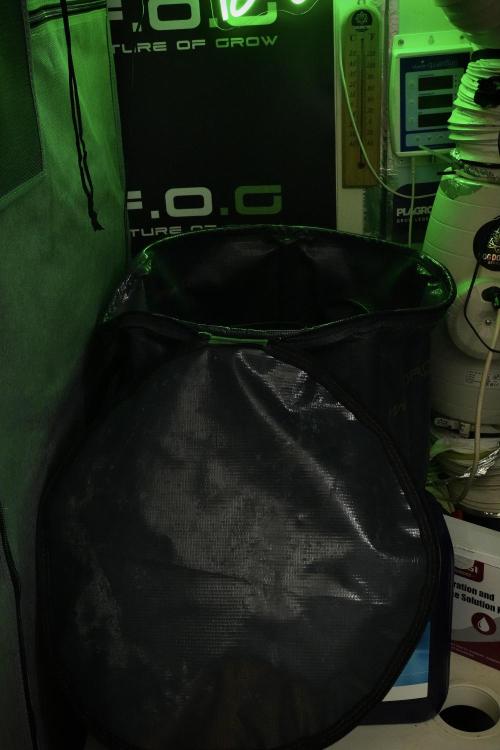
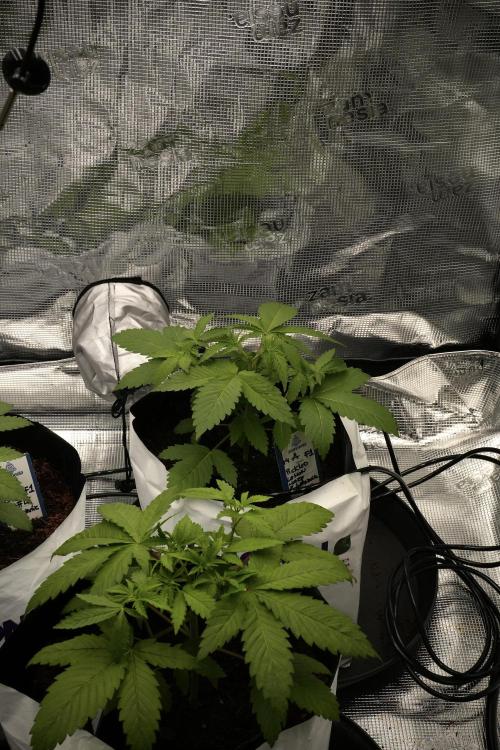
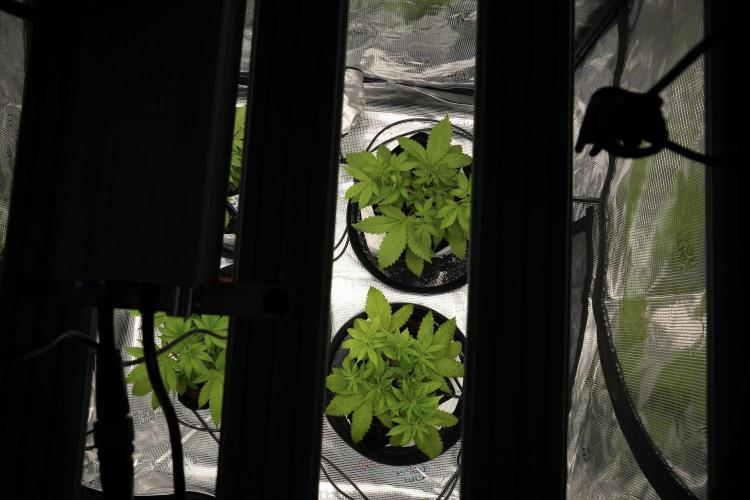
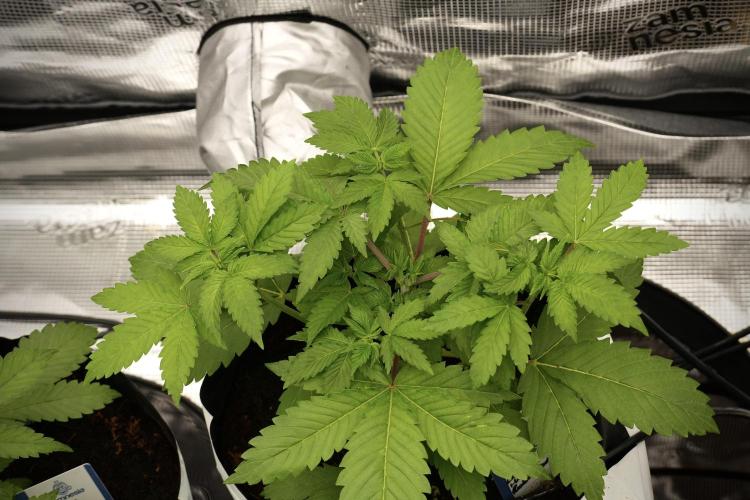
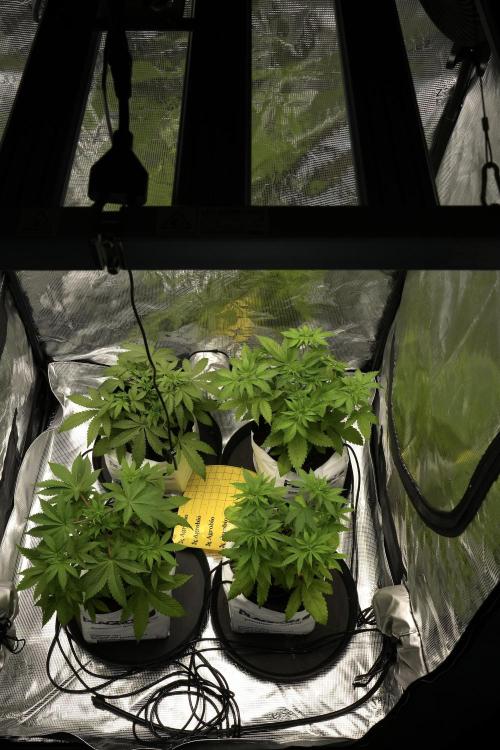
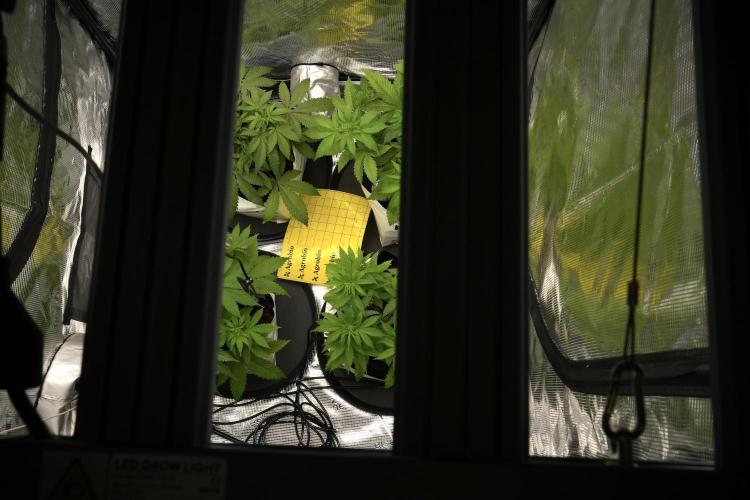
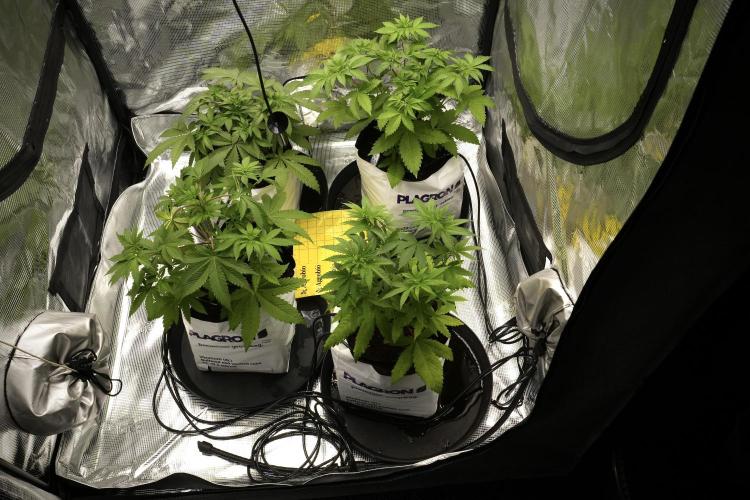
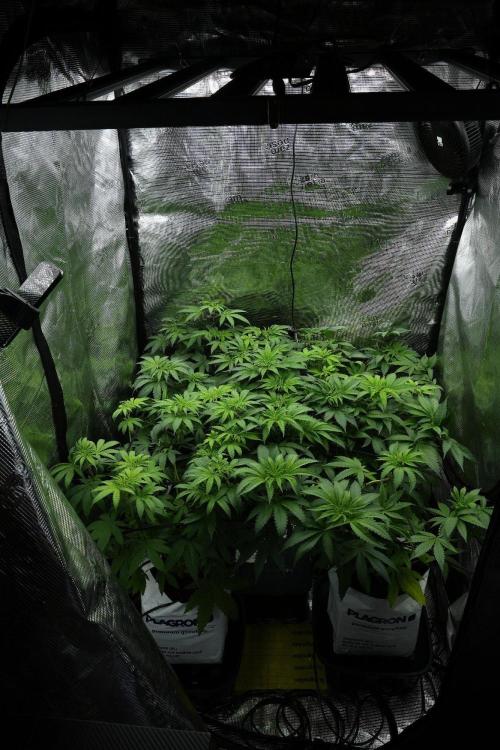
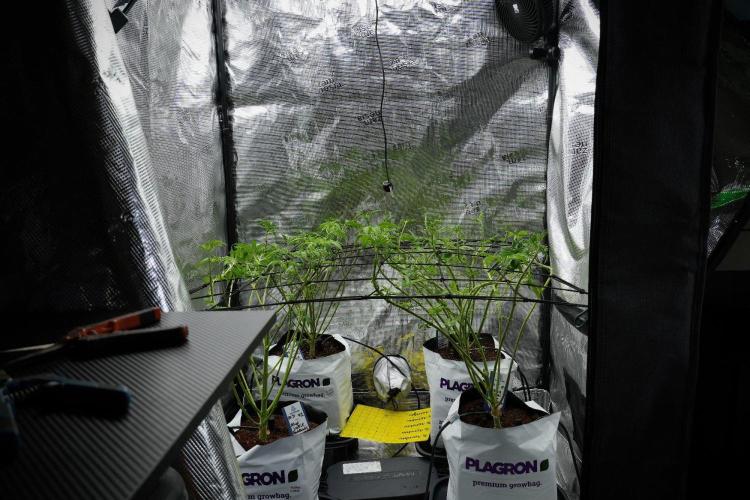
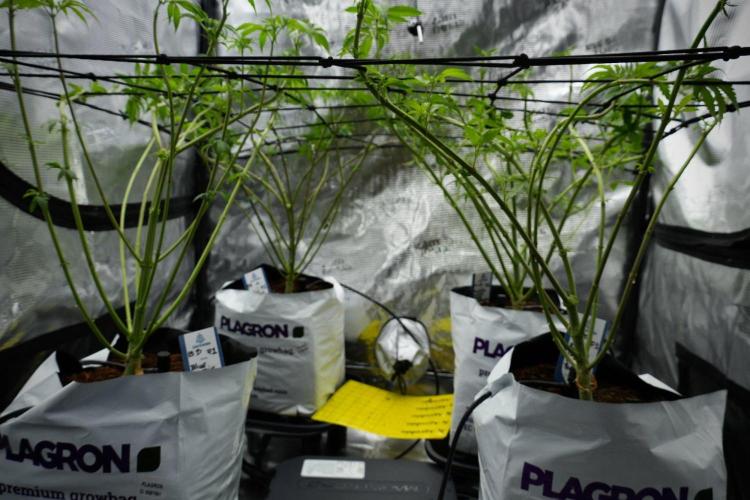
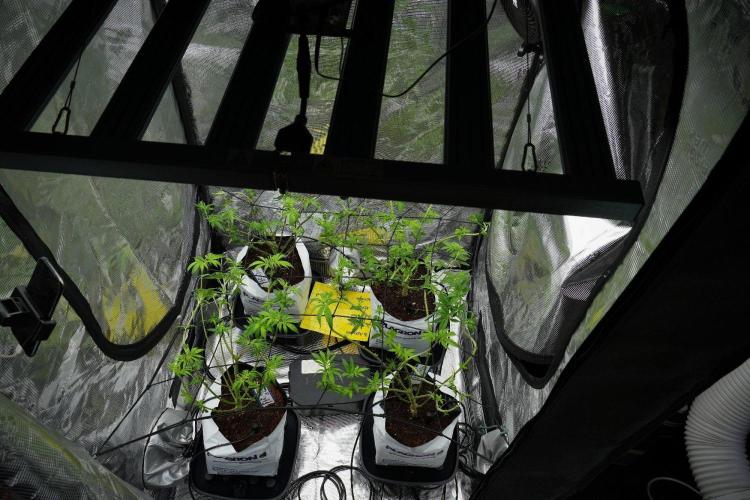
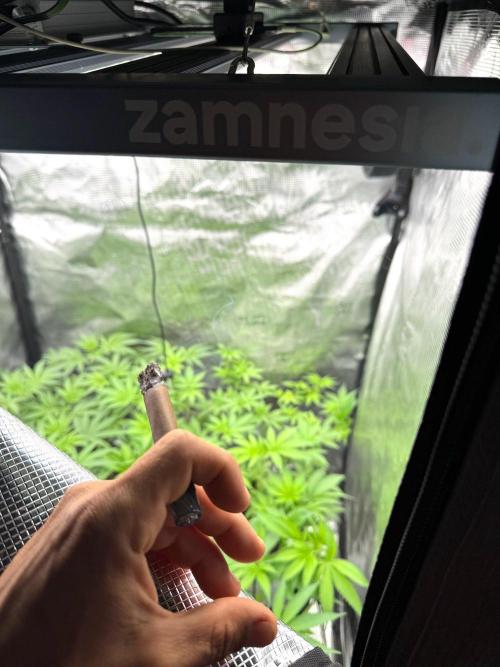
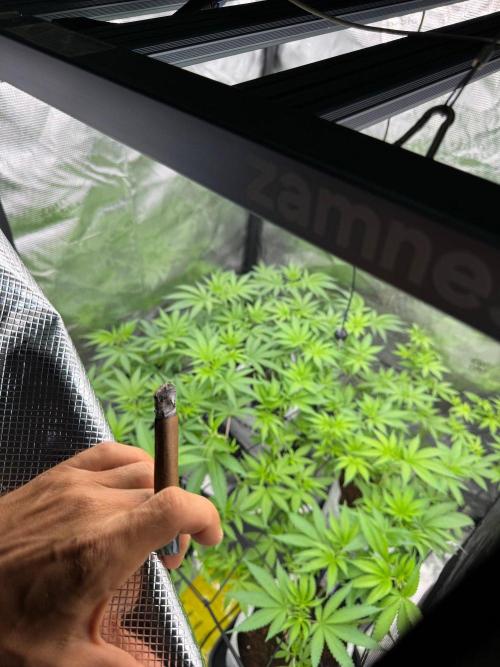
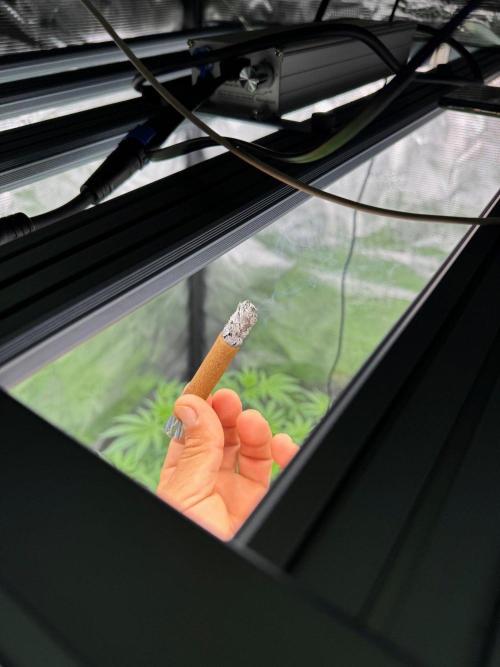
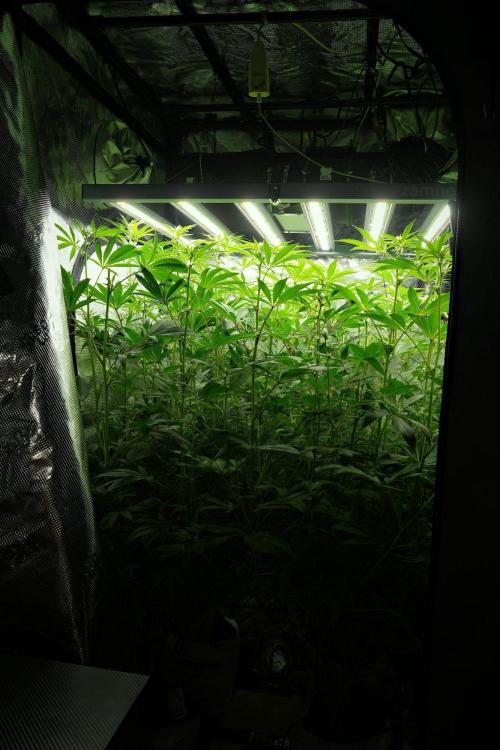
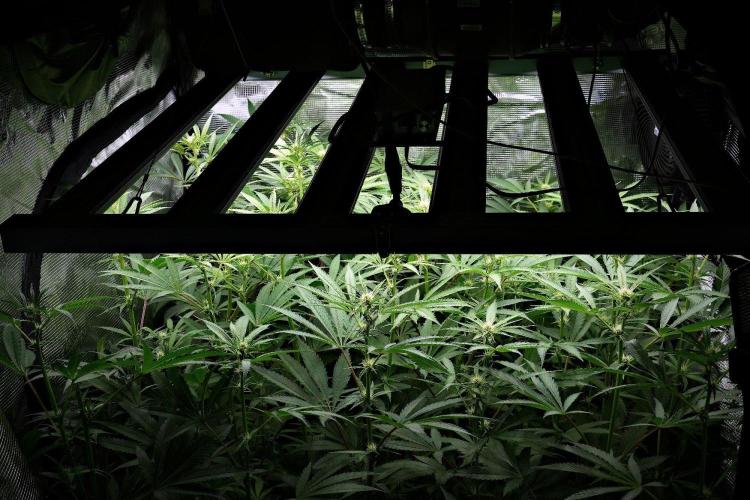
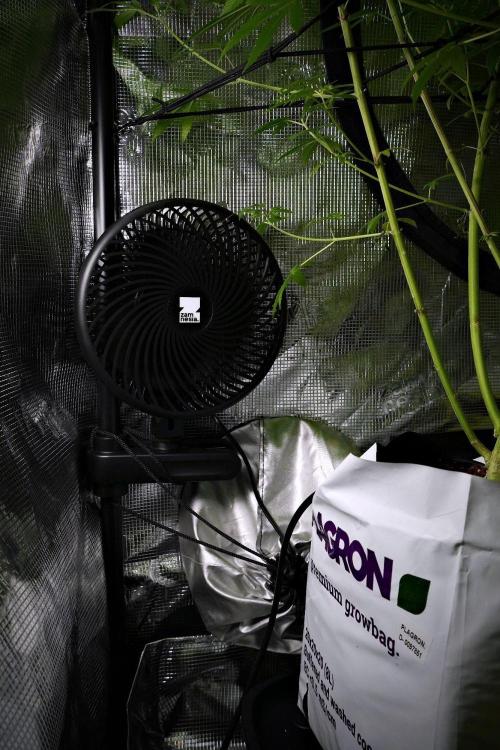
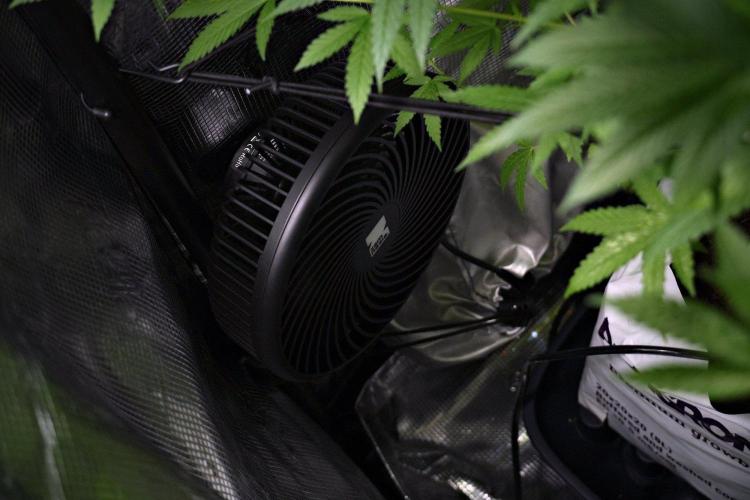
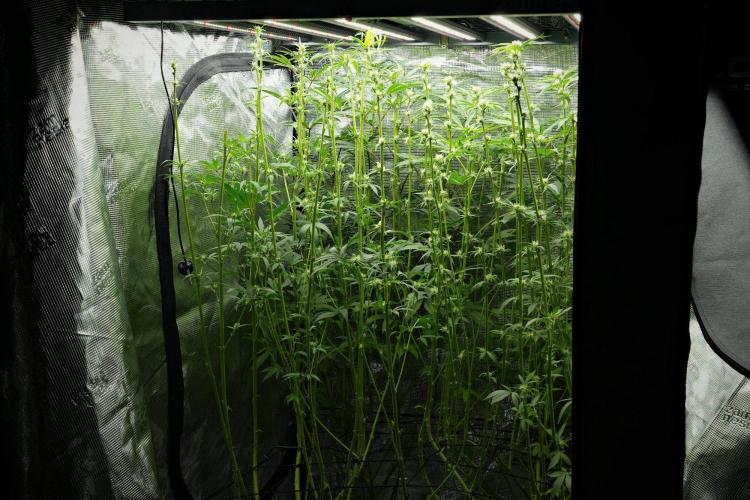
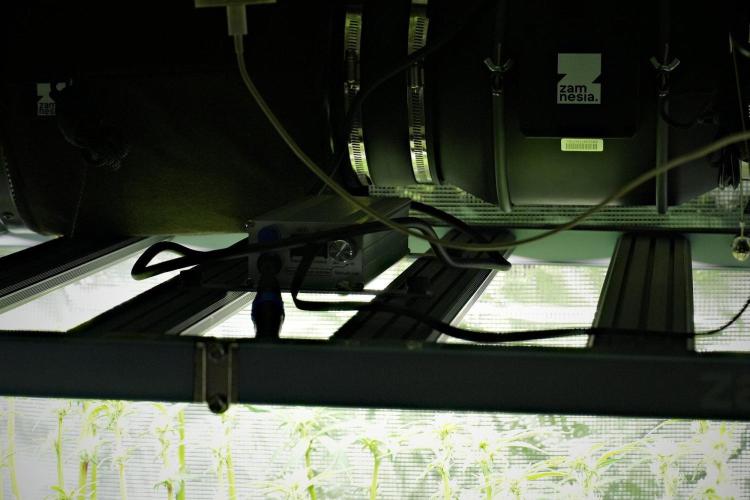
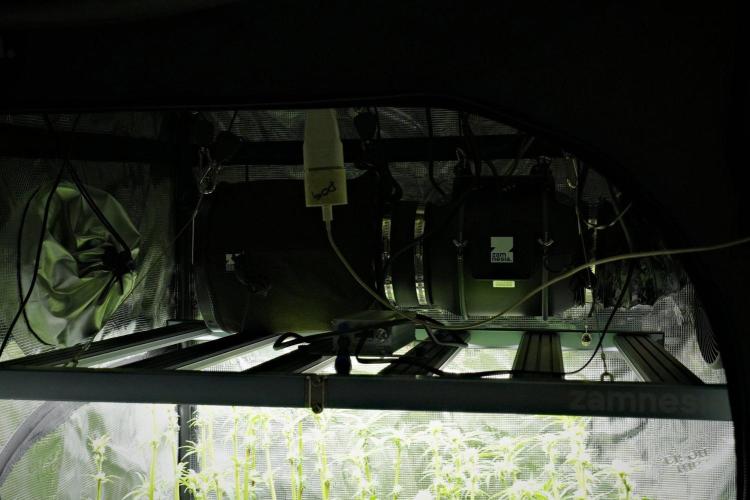
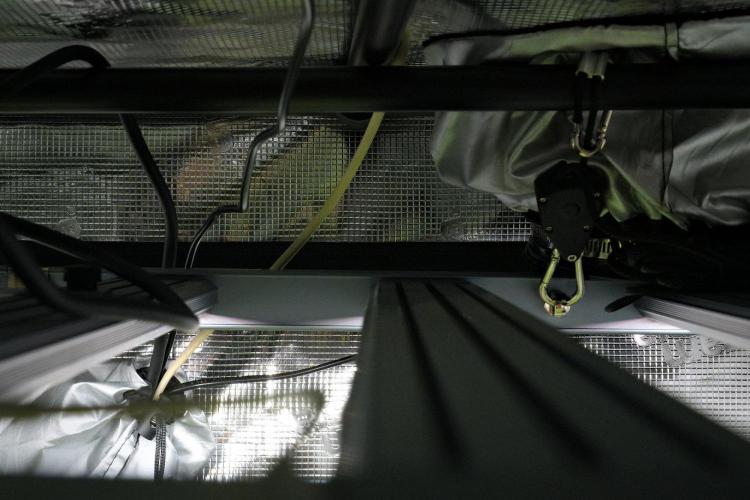
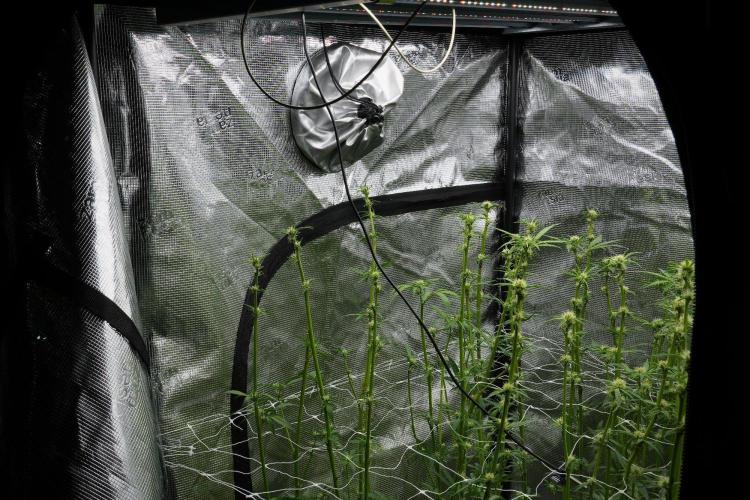
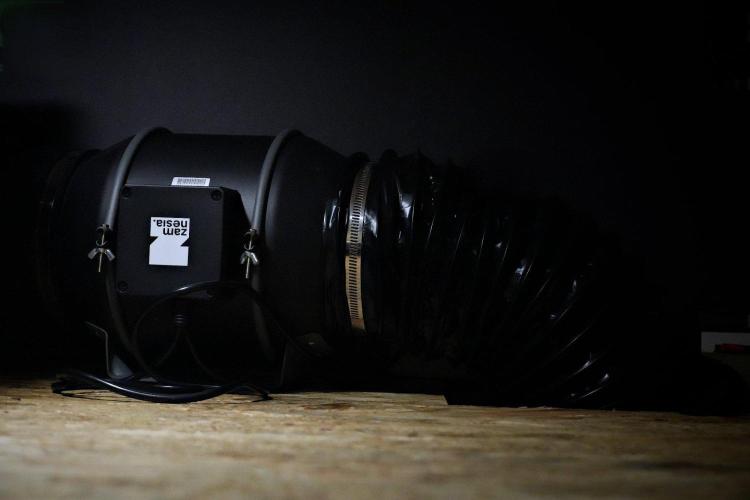
This project is being grown entirely inside the new Zamnesia Grow Tent Kit.
One of the biggest surprises during setup was just how straightforward the assembly process turned out to be.
The entire system was assembled by one person.
Tent.
LED.
Carbon filter.
Inline fan.
Ducting.
Controller.
Cable management.
Everything.
Even with a few adjustments required due to space limitations, the entire setup was operational in less than an hour.
The instructions are clear, beginner-friendly, and easy to follow.
Build quality immediately impressed me.
The frame feels extremely solid, the materials feel durable, and the overall first impression has been overwhelmingly positive.
Now it's time to see what the plants think.
---
## What's Included In The Kit?
The complete Zamnesia Grow Tent Kit includes:
- Grow Tent 100×100×200 cm
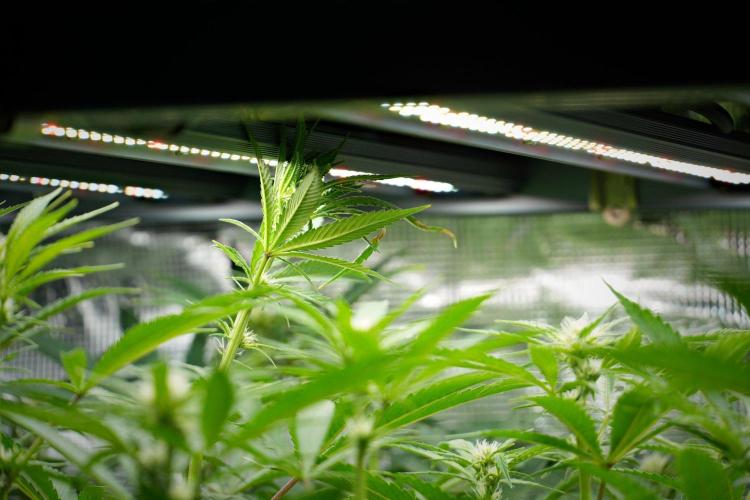
- Phytonaut LED Grow Light 320W
- Inline Duct Fan 150 mm
- Carbon Filter Air Purifier 150 mm
- Grow Environment Controller
- Grow Tent Clip Fan
- Flexible Ducting
- 24-Hour Timer
- Rope Ratchet Hangers
- Velcro Cable Management Accessories
Everything currently running inside this tent comes directly from this package.
No substitutions.
No upgrades.
No modifications.
This allows a genuine evaluation of the complete system exactly as supplied.
---
## Environmental Conditions
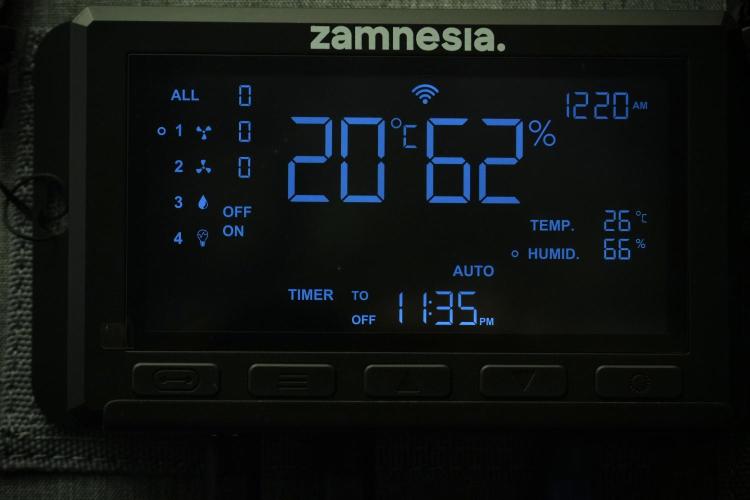
For this first week, lighting was intentionally kept gentle.
Using a PAR meter, light intensity was measured at approximately:
~200 PPFD
Young seedlings simply do not require intense lighting.
The objective at this stage is root development and healthy establishment rather than maximum growth speed.
Environmental conditions remained stable throughout the week and the seedling responded beautifully.
Healthy posture.
Healthy color.
Steady development.
No signs of stress.
Exactly what we hope to see from a successful germination.
---
## First Impressions Of Pickle Lemon Haze F1 Pheno A
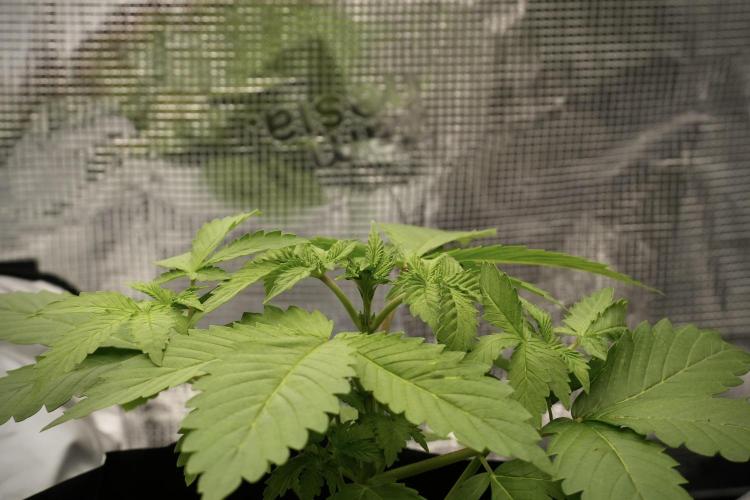
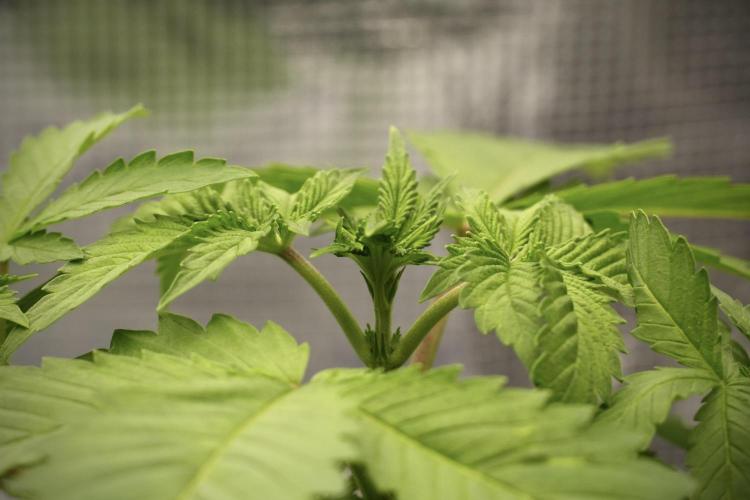
Although still only at the very beginning of her journey, Pheno A has already made an excellent first impression.
Fast germination.
Strong taproot.
Rapid emergence.
Healthy structure.
Excellent vigor.
And perhaps most importantly:
Enthusiasm.
Some seedlings emerge cautiously.
This one looked like she was already planning next week's growth.
Of course, seedlings have a habit of surprising us later, so we'll let time tell the story.
For now, however, she certainly appears eager to get started.
---
## Looking Ahead
Over the coming weeks we'll continue documenting every stage of development.
We'll follow:
- Root establishment
- Vegetative growth
- Environmental management
- Structural development
- Training decisions
- Nutrient progression
- Genetic expression
- And whatever unique characteristics this phenotype chooses to reveal
For now, Pickle Lemon Haze F1 Pheno A has completed a successful germination week and has settled comfortably into her new home.
The roots are growing.
The leaves are reaching.
And if these first few days are any indication, she may already be aiming for the moon.
Grower's Love everyone. 💚🌱🍋🚀
13 likes
3 comments
Share
Used method
Other
Germination Method
1
Week 1. Vegetation
3mo ago
1/30
6 cm
Height
18 hrs
Light Schedule
26 °C
Day Air Temp
6.0
pH
No Smell
Smell
765 PPM
TDS
71 %
Air Humidity
24 °C
Solution Temp
24 °C
Substrate Temp
25 °C
Night Air Temp
0.3 liters
Pot Size
0.3 liters
Watering Volume
450 PPM
CO₂ Level
Nutrients 4
Hydro A
1.4 mll
Hydro B
1 mll
Hydro Roots
1 mll
DogDoctorOfficial Folder 14 — Pickle Lemon Haze — Pheno A
Week 1 Vegetation — Small Plant, Big Potential
Hello growers,
Welcome back to the Zamnesia Tent project.
As with the rest of this run, each phenotype is receiving its own individual diary. Even when plants share the same genetics, environment, feeding schedule, and care, they often reveal unique characteristics as they mature. By documenting them separately from seed to harvest, we get a much clearer picture of how each phenotype develops throughout its journey.
Today we are looking at Pickle Lemon Haze Pheno A, a young seedling that has quietly put together a very promising first week of life.
At this stage, the focus remains simple: healthy roots, healthy leaves, and steady development.
Everything else comes later.
⸻
The Environment
Week 1 was all about providing consistency.
The Zamnesia ecosystem maintained stable environmental conditions designed to support strong seedling development while minimizing unnecessary stress.
Conditions throughout the tent averaged:
* Temperature: 26°C
* Relative Humidity: 71%
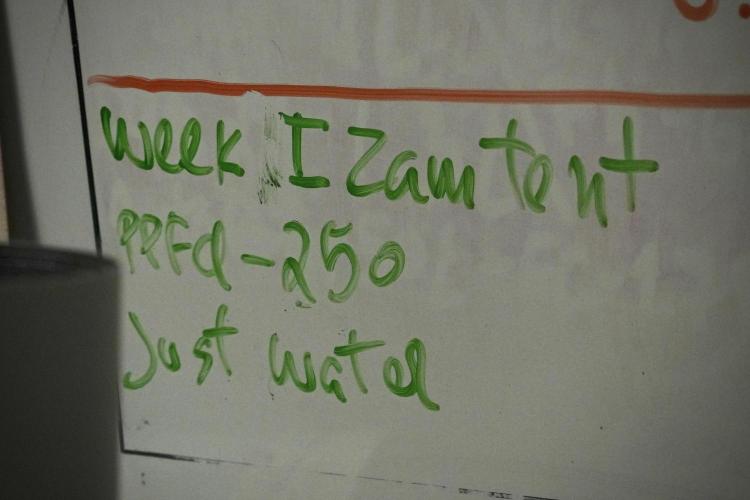
Lighting was introduced at a measured 250 PPFD, which is slightly more aggressive than many traditional seedling schedules but still well within a comfortable range for healthy development.
The fixture was operating at:
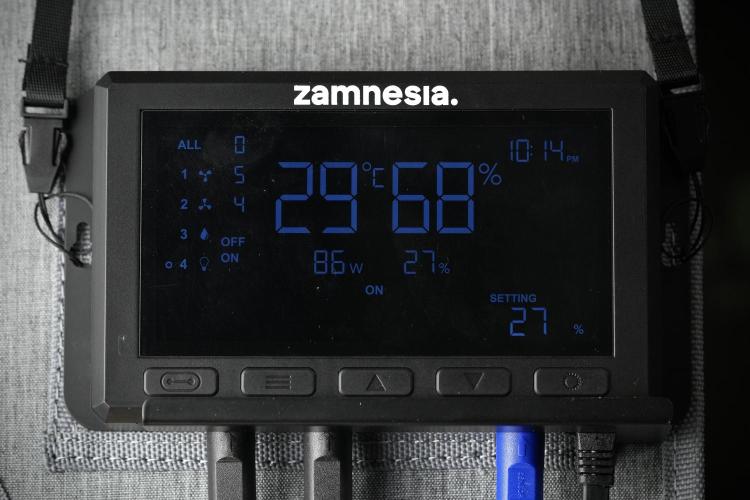
* 27% power
* Approximately 86 watts drawn from the wall
The goal is to allow the seedlings to establish themselves under meaningful light intensity from the beginning while carefully observing their response.
Air movement was provided by:
* Zamnesia extraction fan running at Level 5
* Circulation fan running at Level 4
Together they create a stable environment with gentle airflow and excellent air exchange.
⸻
Feeding Program
Although the earliest days were supported using collected rainwater, this week marked the beginning of the nutrient program.
The seedlings have now received their first feeding consisting of:
* Plagron Hydro A
* Plagron Hydro B
* Plagron Hydro Roots
Mixed to:
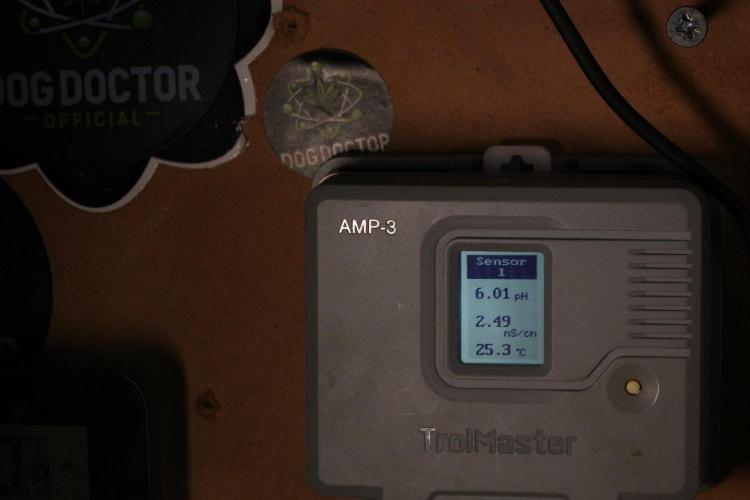
* EC: 1.53 mS/cm
* pH: 5.96
* Water temperature: 24.2°C
The objective at this stage is not maximum growth, but healthy root development and a smooth transition into the hydroponic-style coco system that awaits next week.
So far, Pickle Lemon Haze Pheno A appears completely comfortable with the program.
⸻
Preparing The Coco System
While the seedlings remain in their starter pots for now, much of this week’s work happened behind the scenes.
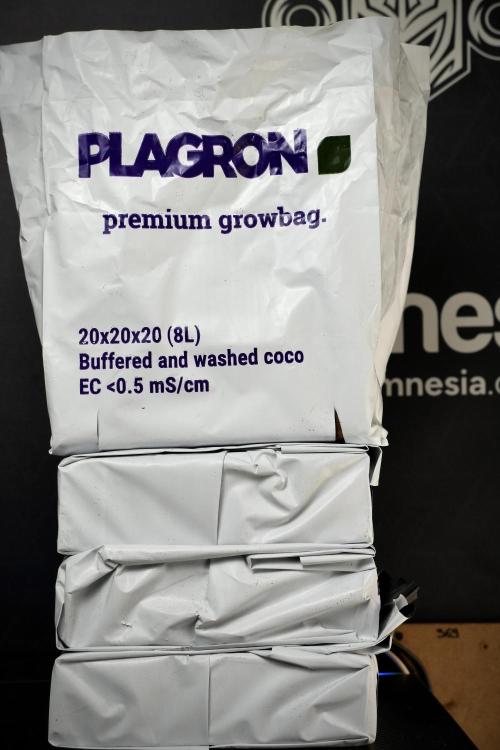
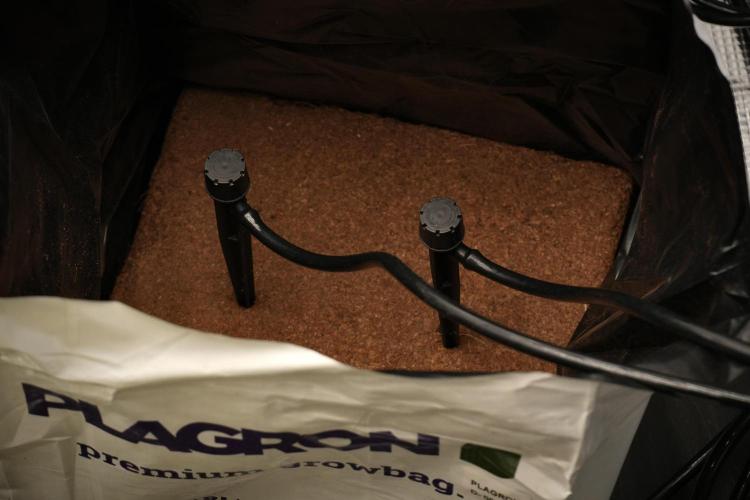
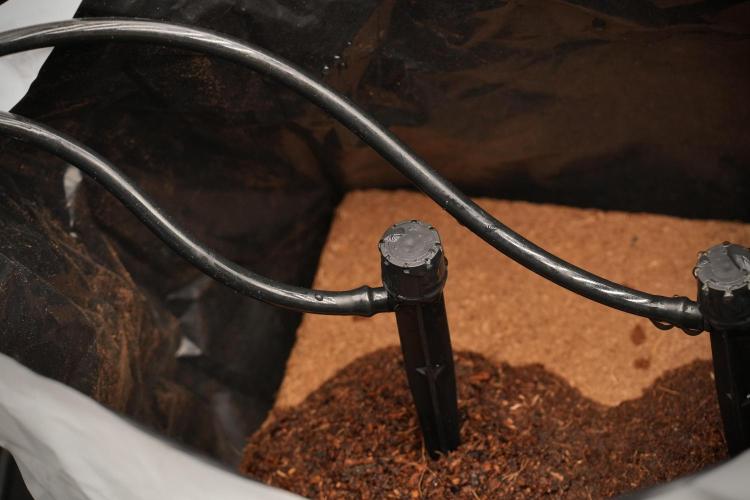
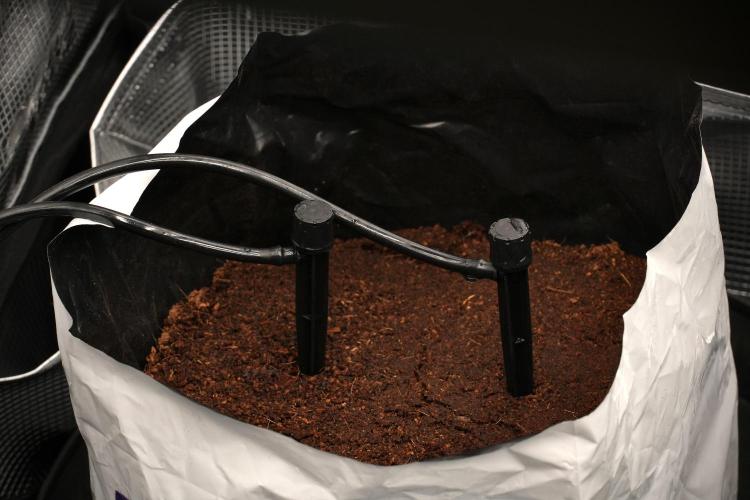
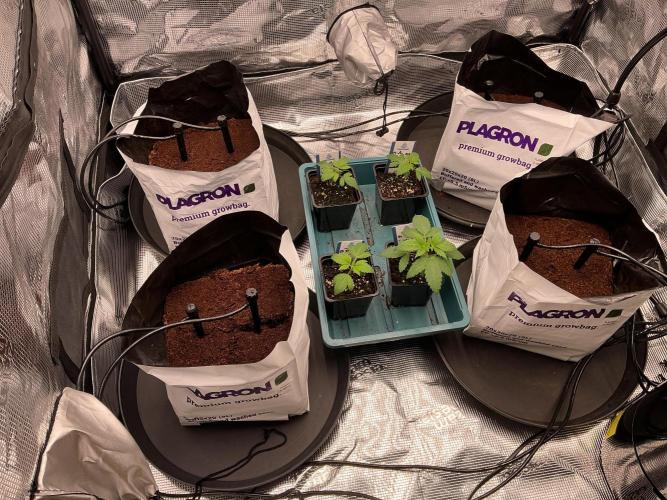
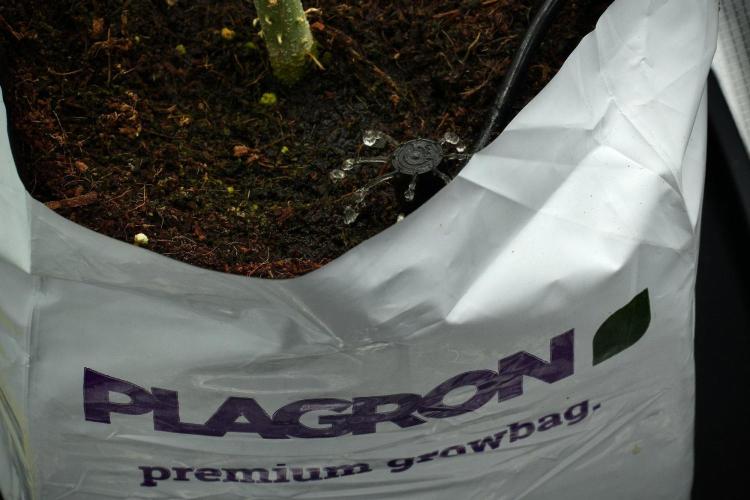
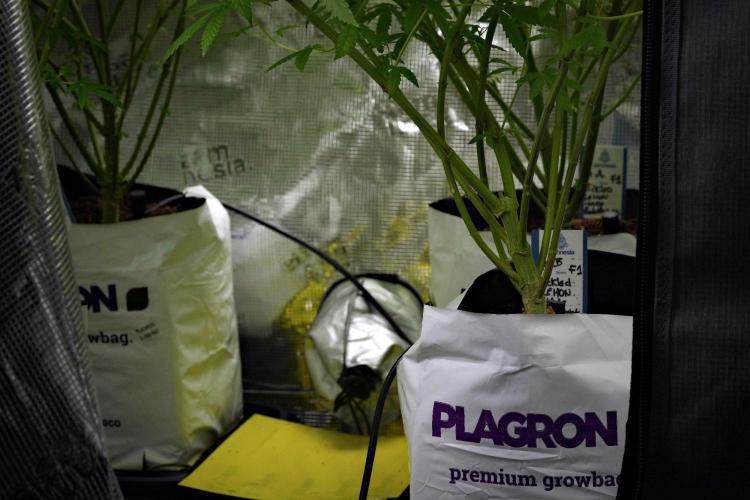
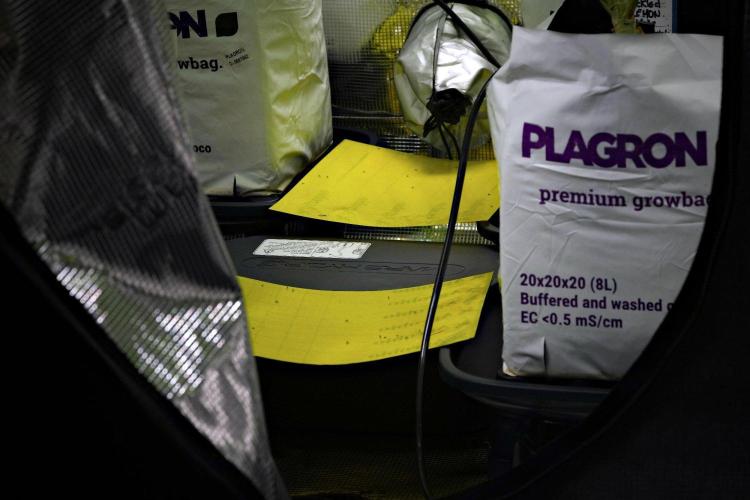
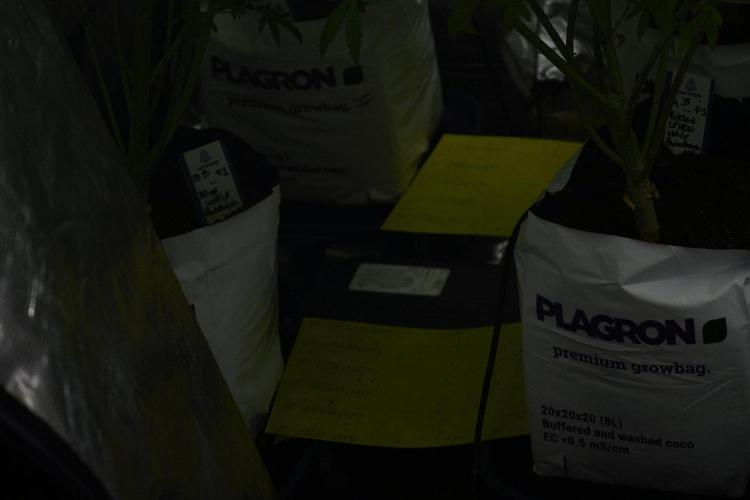
The Plagron Premium Grow Bags have been filled and hydrated in preparation for next week’s transplant.
Rather than flooding the coco all at once, hydration is being performed gradually through a reservoir-fed release system. This allows moisture to spread slowly and evenly through the medium, helping the coco expand naturally and uniformly.
Only distilled water has been used during this preparation phase.
By the time transplant day arrives, the medium should be fully hydrated and ready to welcome the developing root systems.
⸻
Pickle Lemon Haze — Pheno A
For a plant this young, there is already plenty to like.
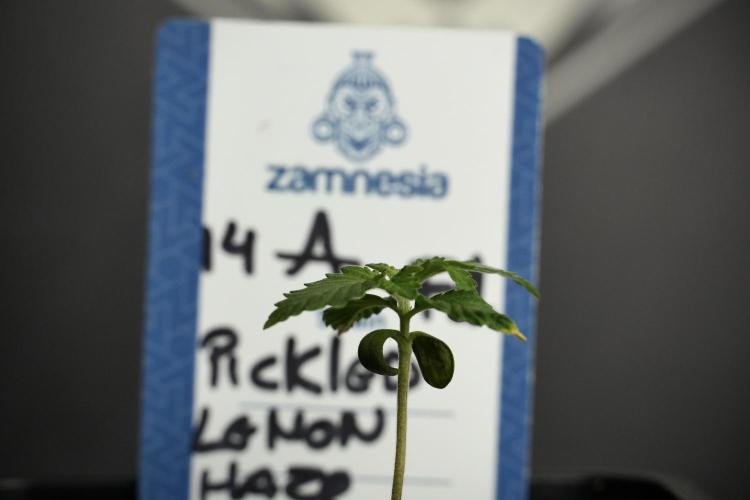
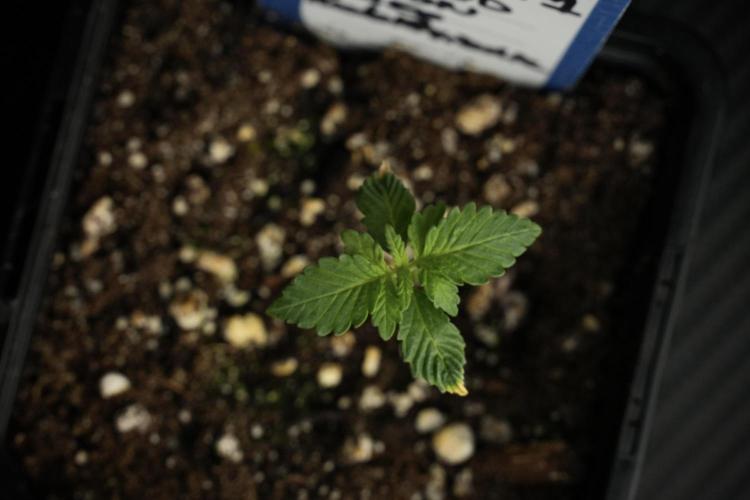
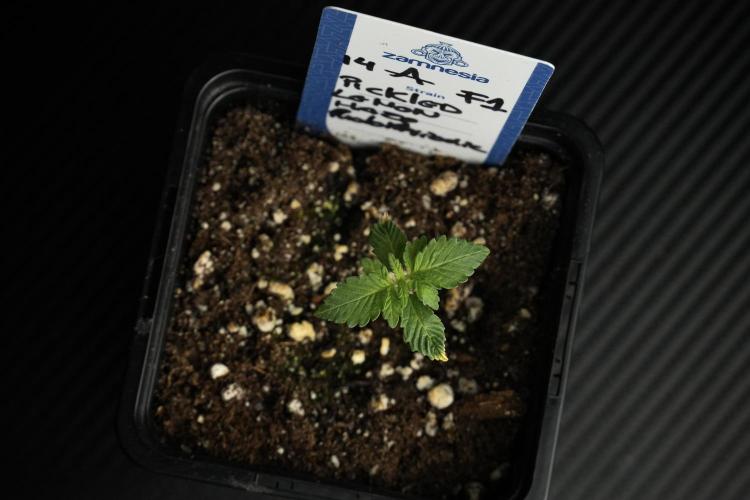
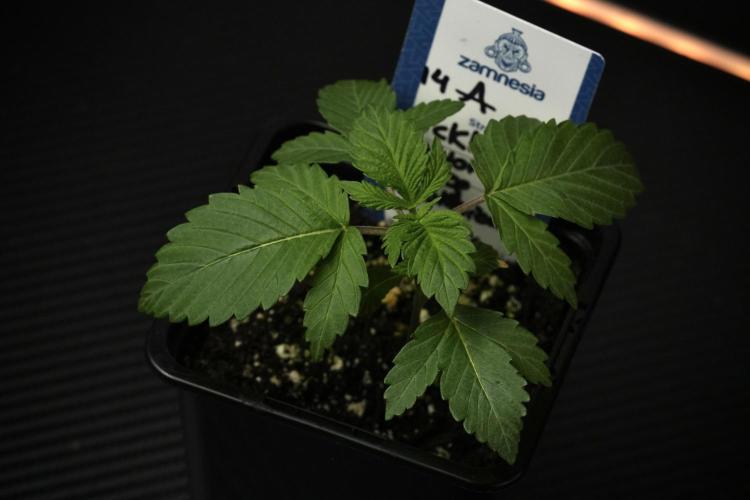
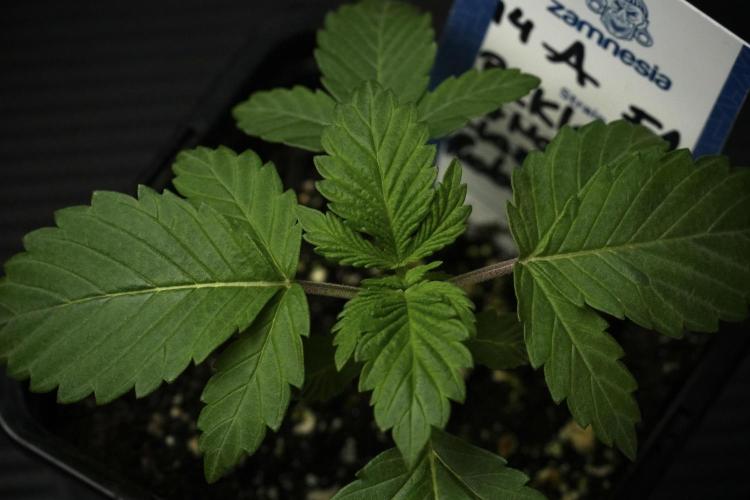
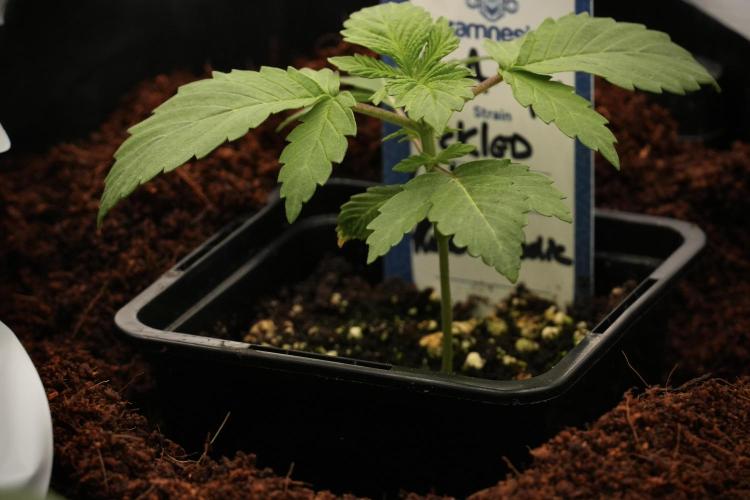
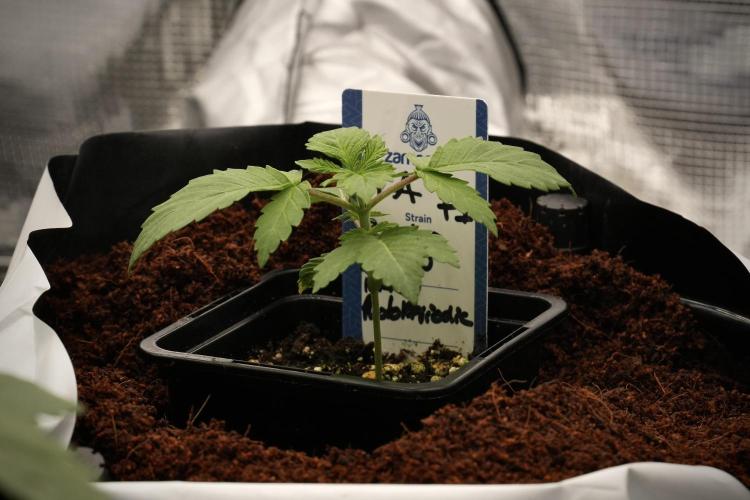
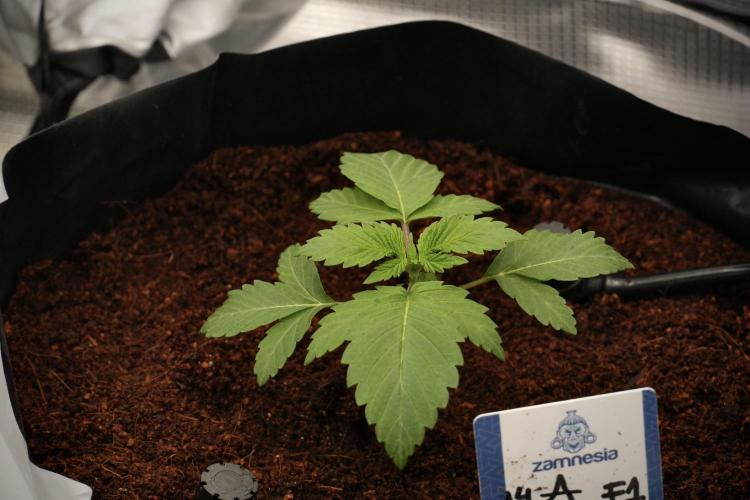
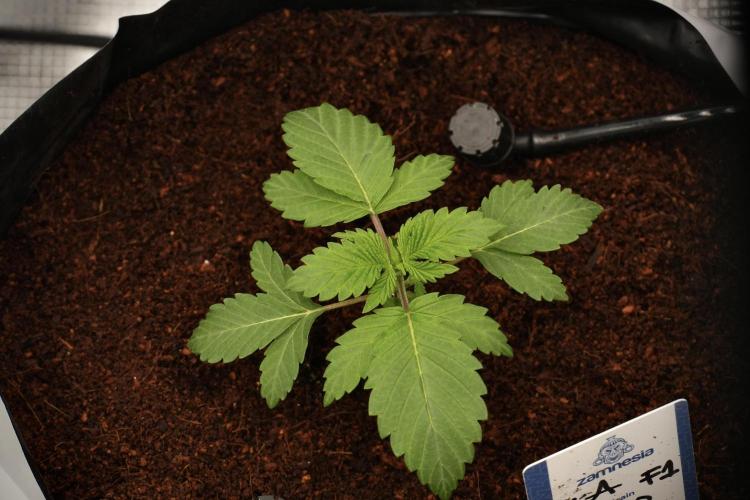
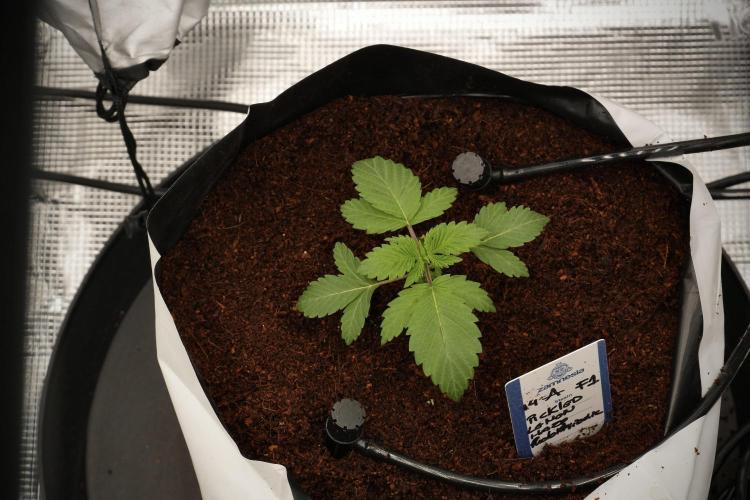
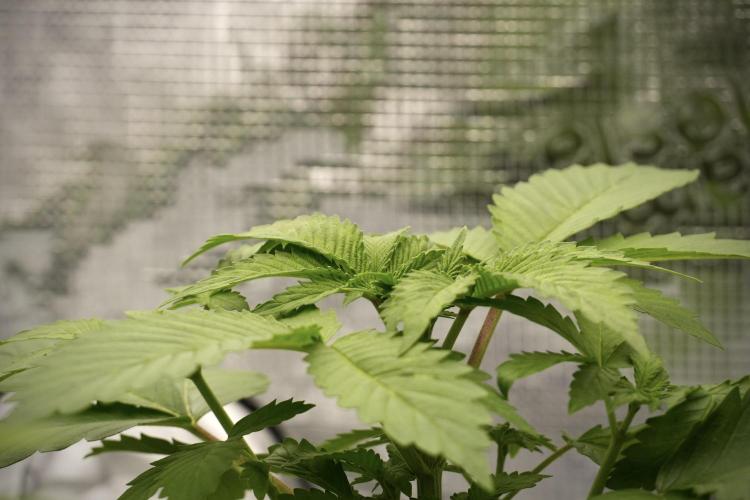
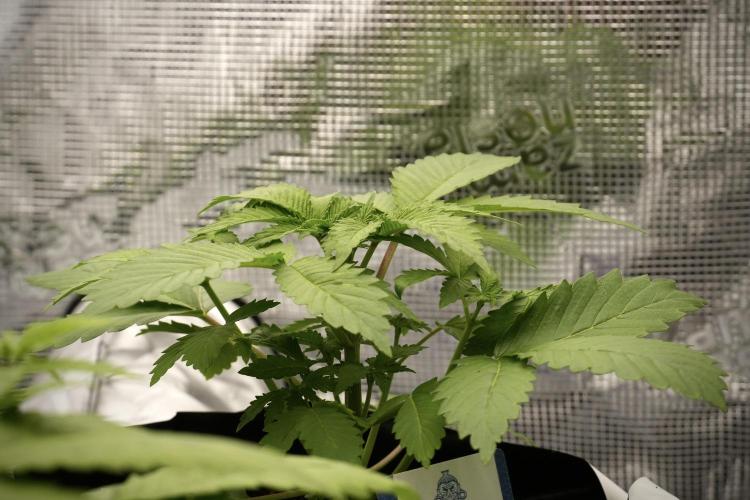
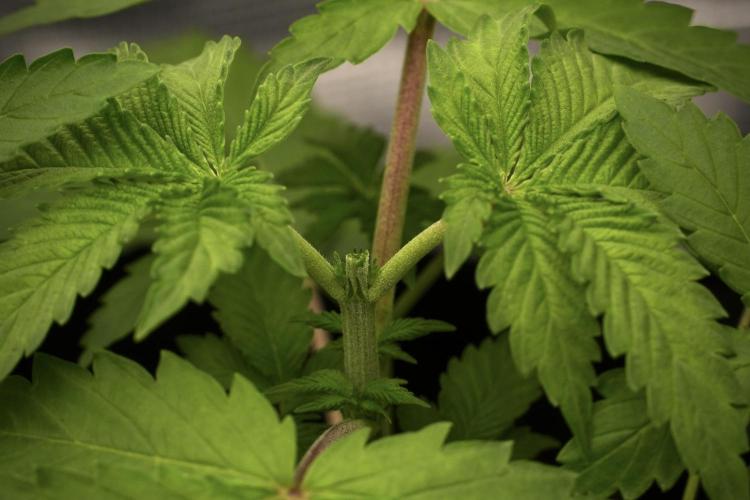
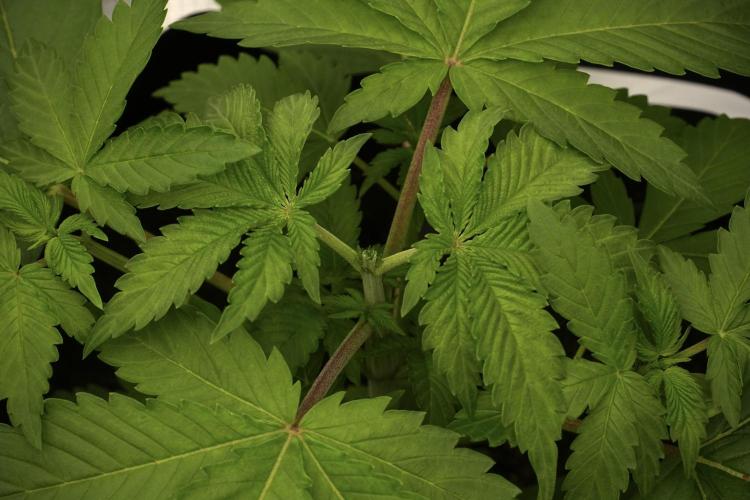
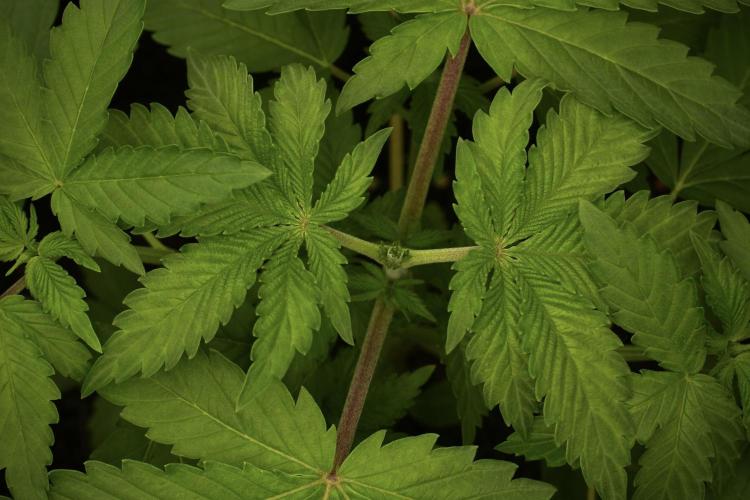
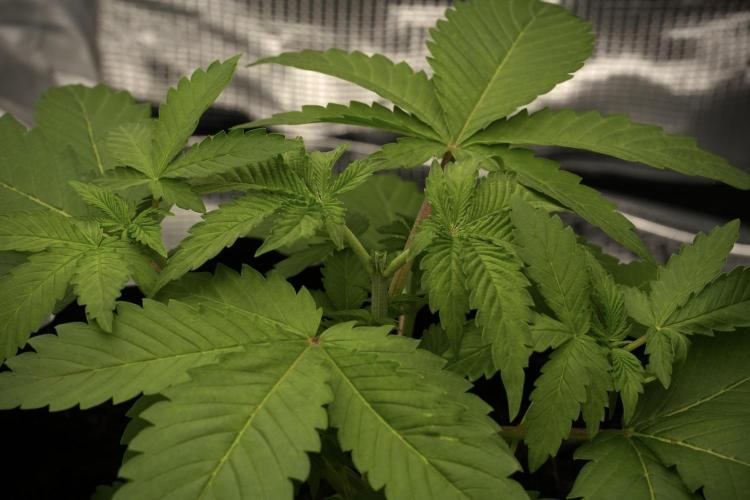
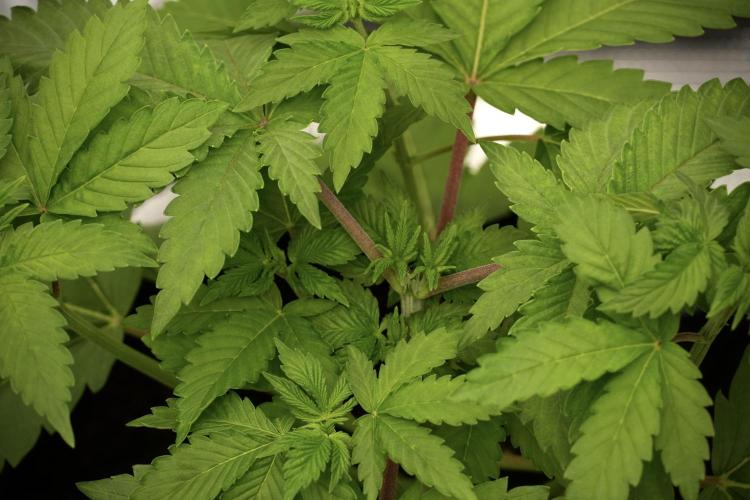
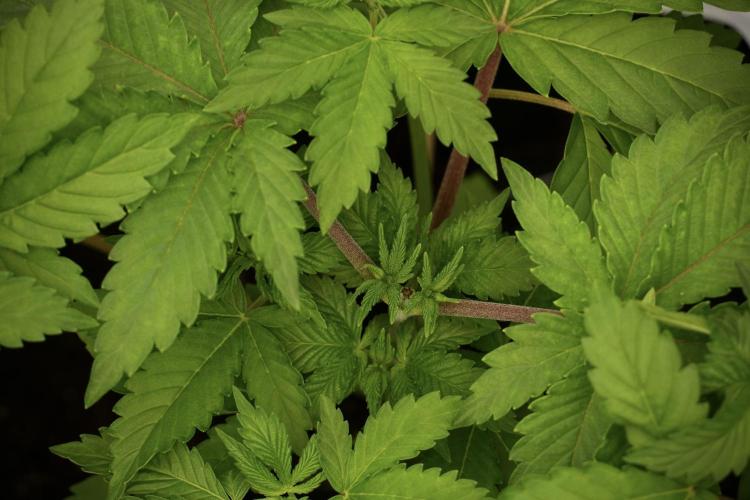
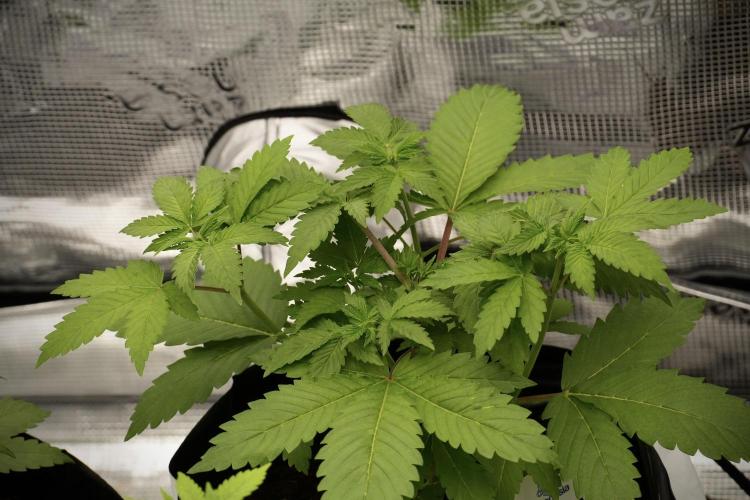
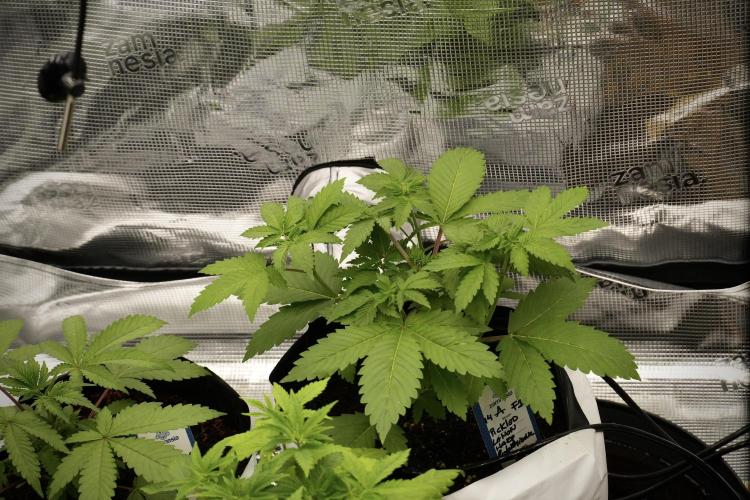
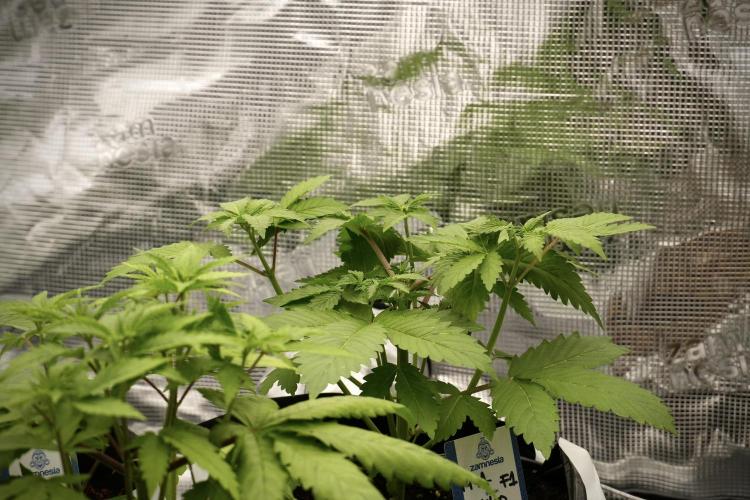
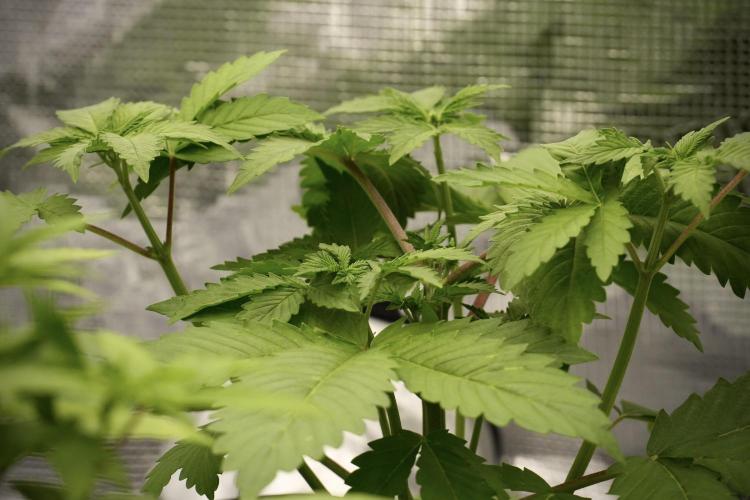
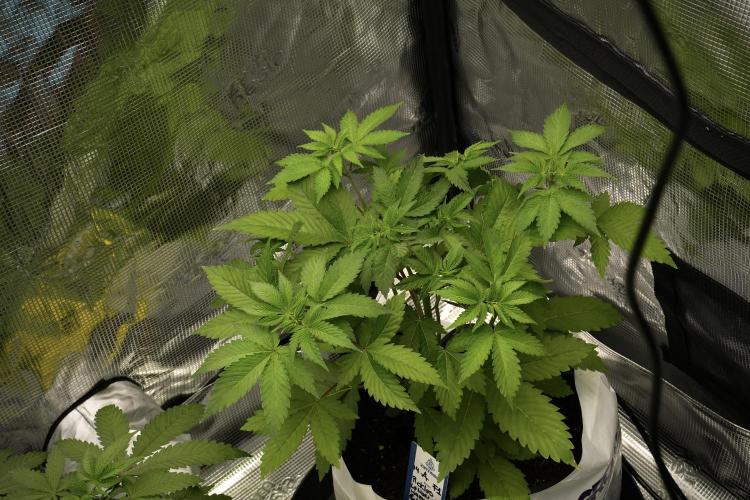
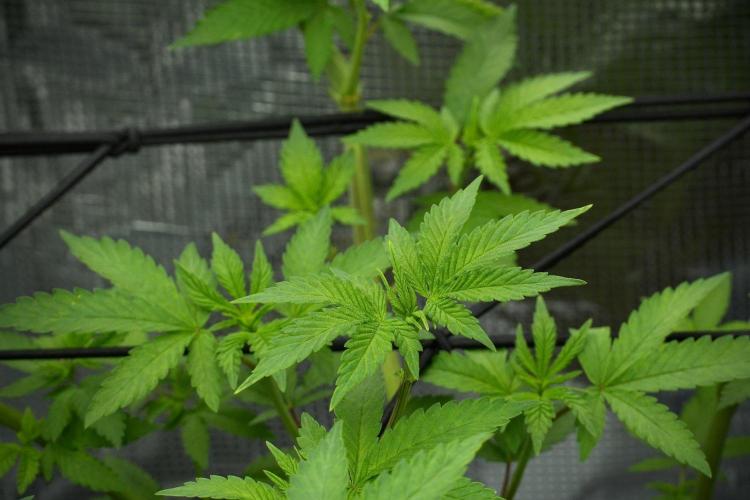
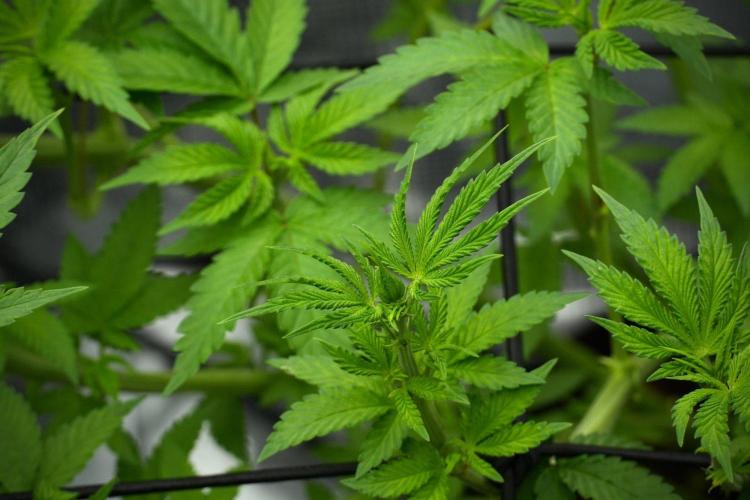
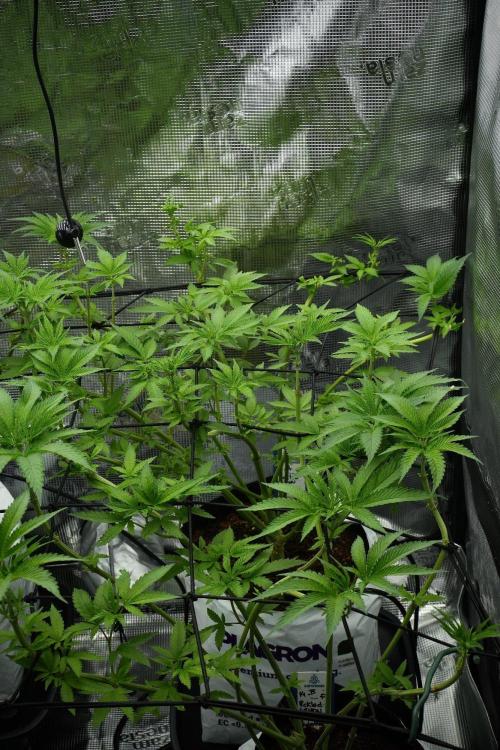
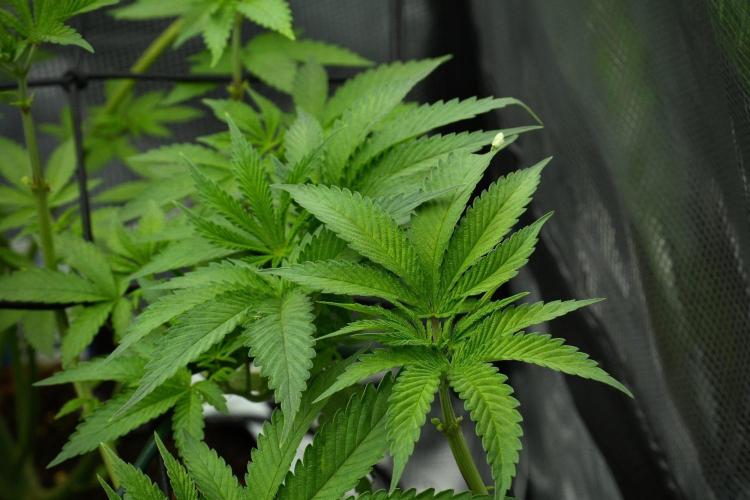
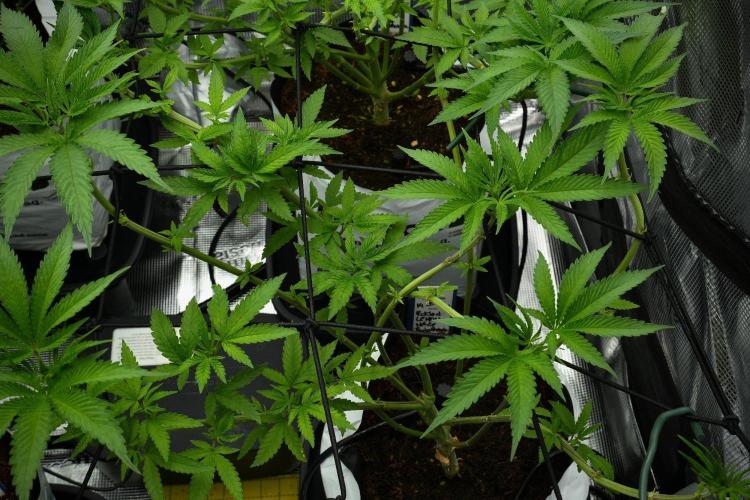
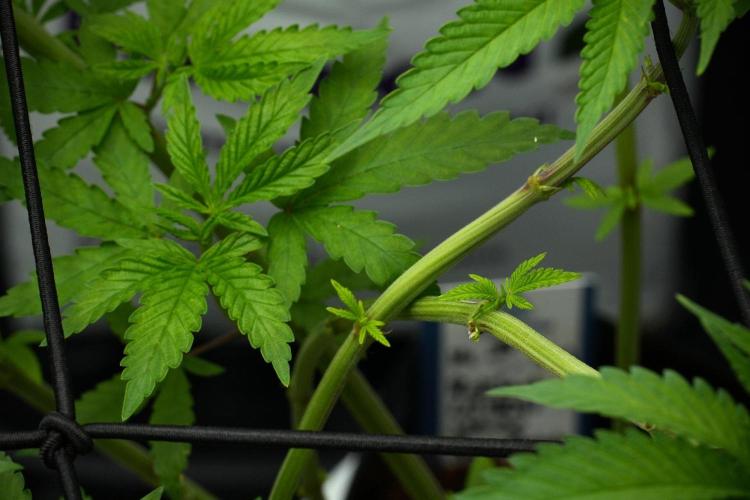
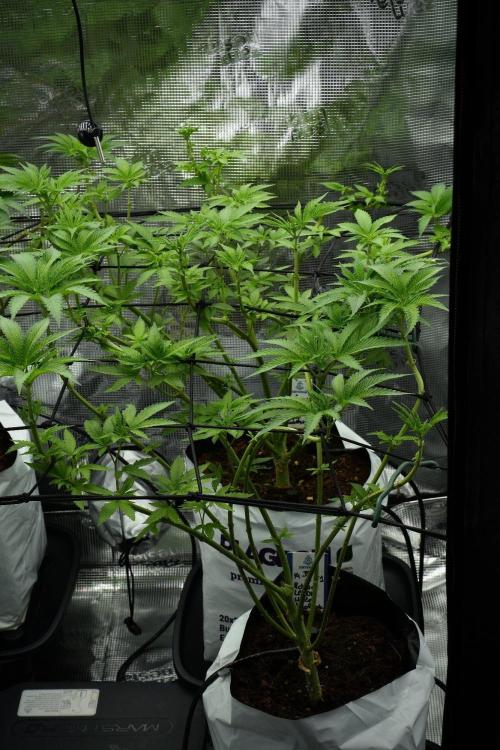
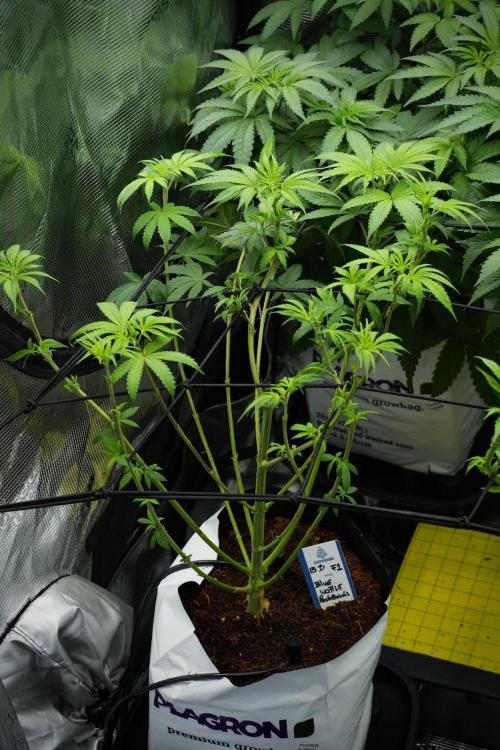
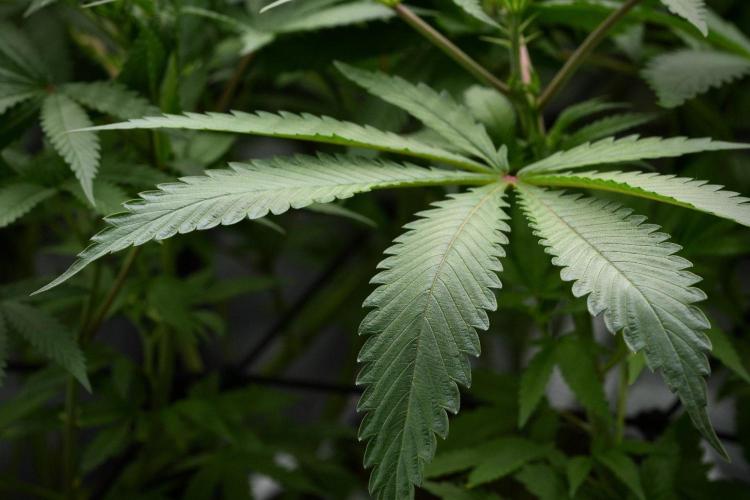
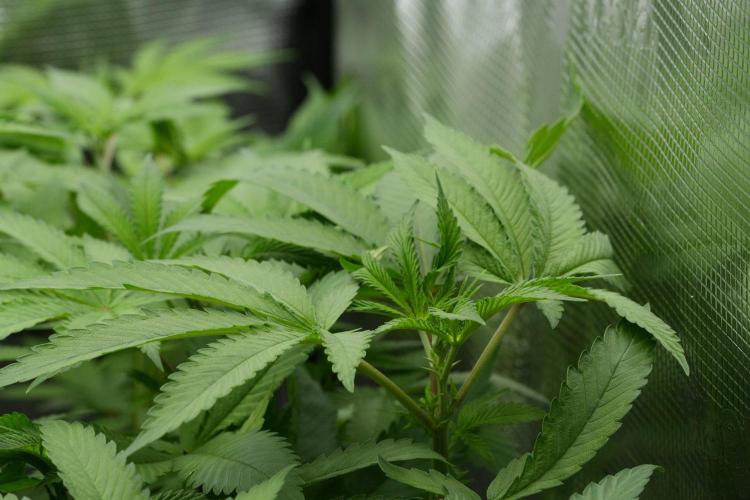
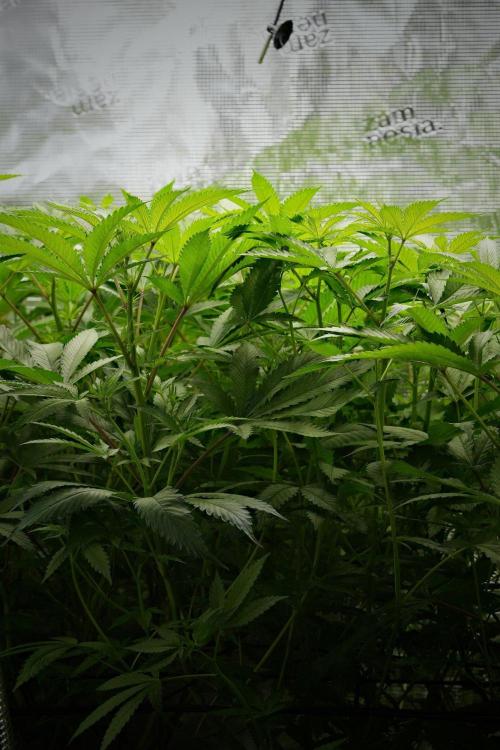
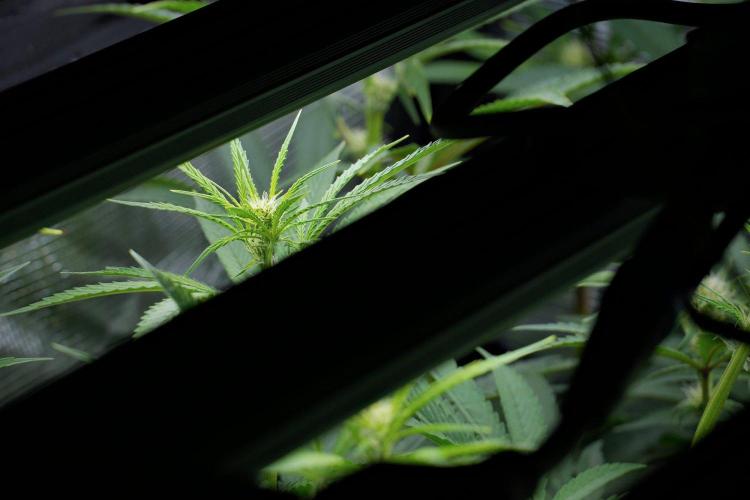
Growth has been compact and controlled throughout the week, with very tight internodal spacing and a sturdy overall structure. The plant is finishing Week 1 pushing confidently into its third set of true leaves while maintaining a balanced and symmetrical shape.
One of the first things that stands out is the leaf morphology.
Compared to some seedlings that display narrower early growth, this phenotype is producing noticeably broader and rounder leaves. The overall appearance feels dense and compact, giving the plant a strong and healthy look despite its small size.
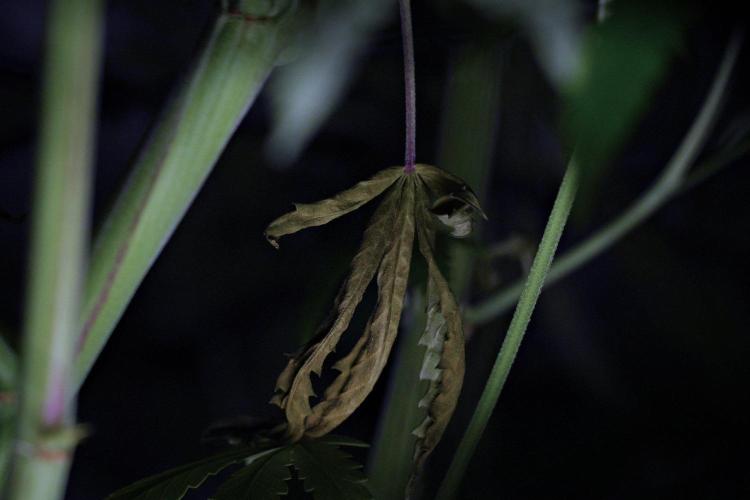
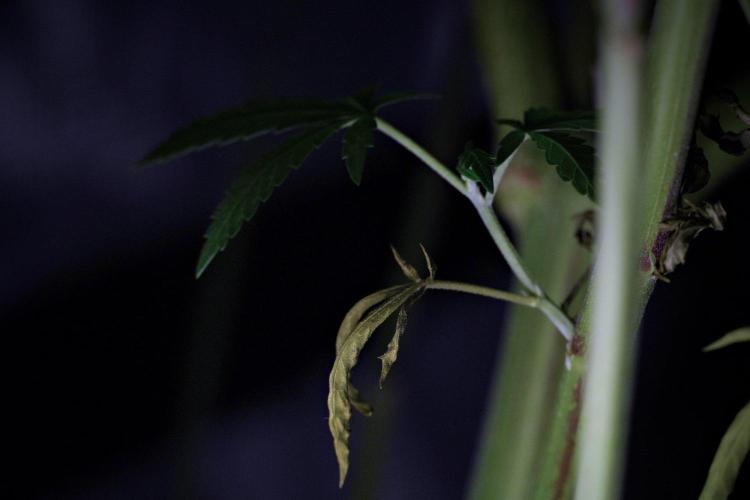
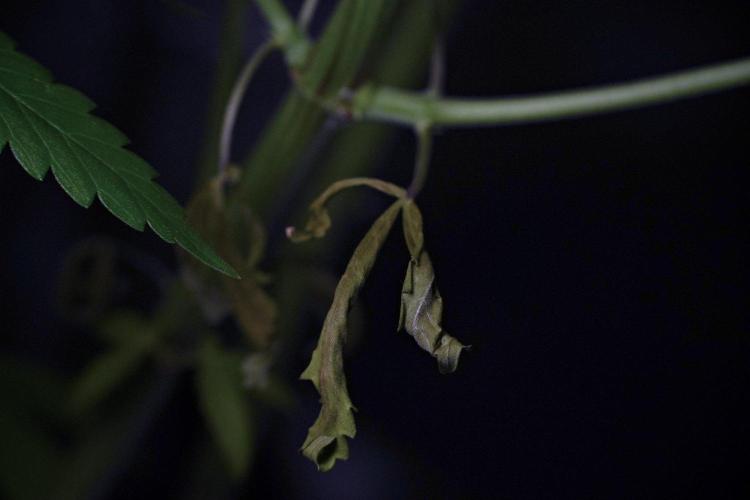
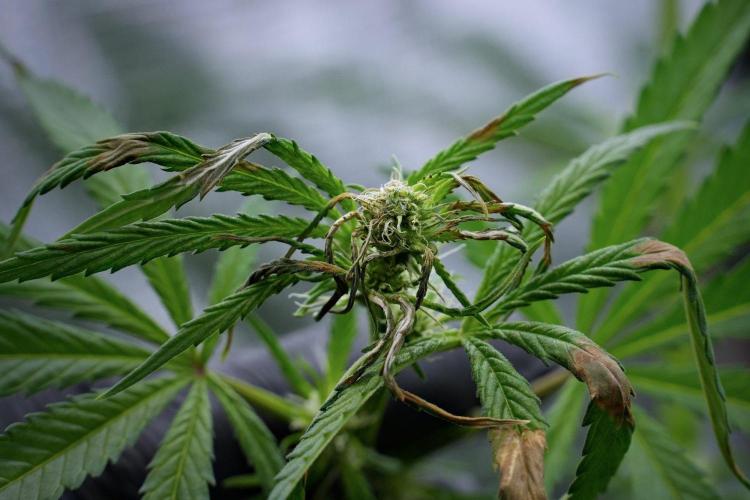
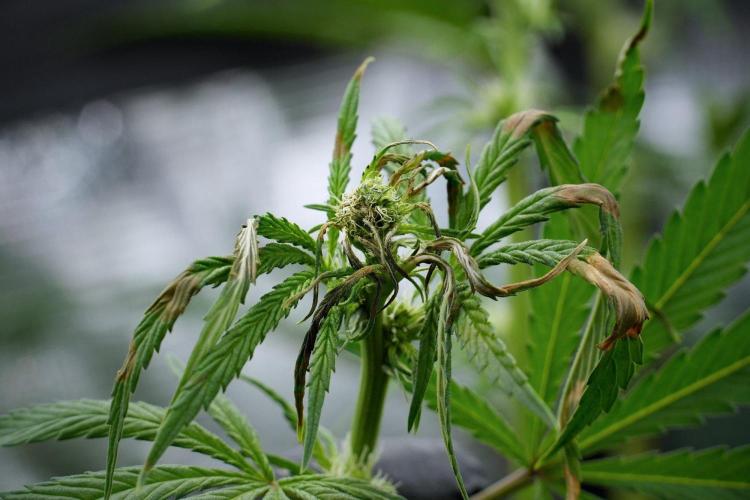
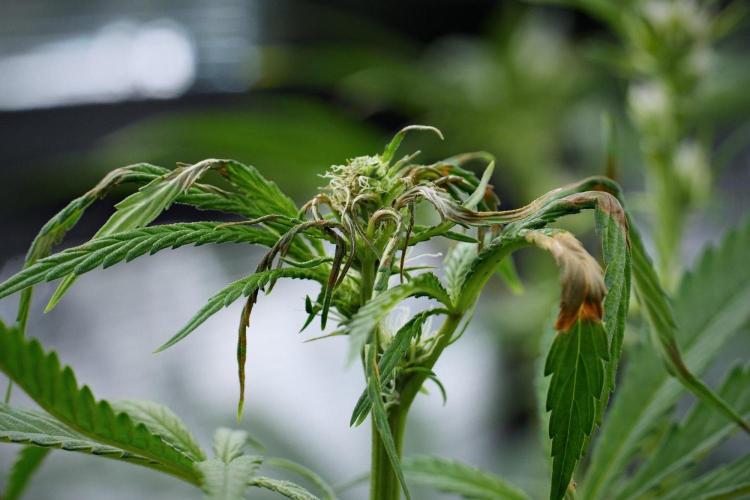
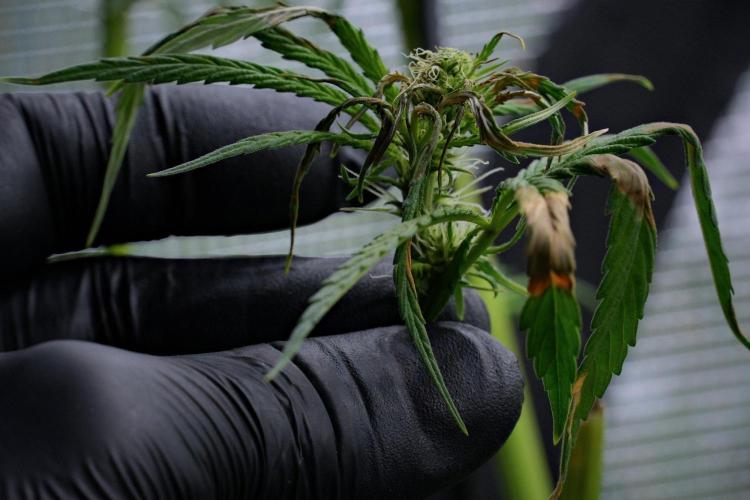
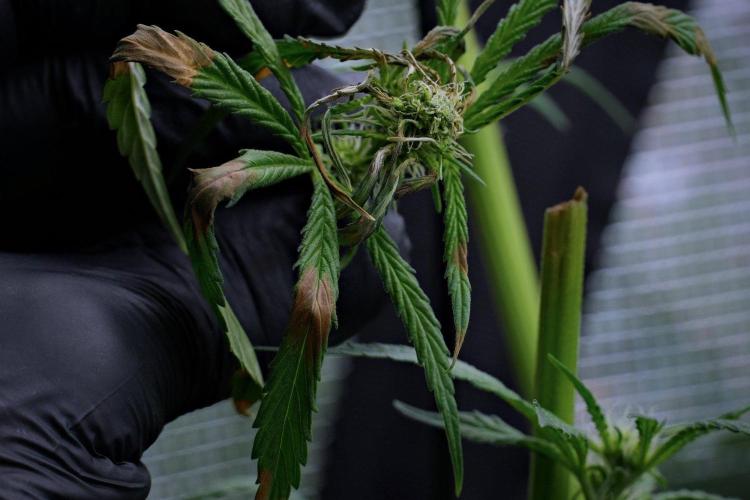
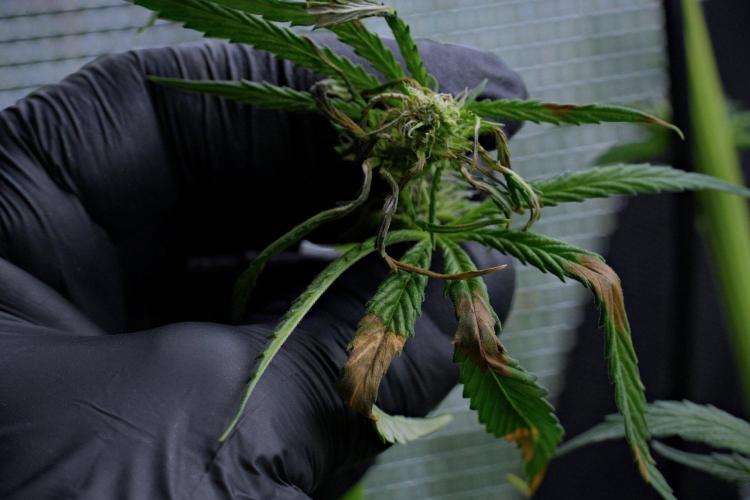
A slight tip burn can be seen on portions of the first true leaves, but this appears to be purely cosmetic and limited to the earliest growth. New development is emerging cleanly, with healthy color, good vigor, and no indication that the plant is being slowed down.
In fact, if anything, the newest growth suggests the exact opposite.
The plant appears to have shrugged off that minor imperfection and continued forward without hesitation.
The stem remains sturdy, the leaf posture is positive, and overall growth is progressing exactly where it should be for this stage.
Perhaps the most exciting part is simply how uniform these F1 plants have been so far.
While individual personality will undoubtedly emerge later, the early signs point toward strong stability and excellent breeding work.
It will be fascinating to see what traits begin separating the phenotypes as they move deeper into vegetation.
⸻
Looking Ahead
Next week should be a significant one.
The move into the hydrated coco grow bags will dramatically increase available root space and mark the beginning of a new phase in development.
With the roots no longer limited by the starter containers, growth should begin accelerating noticeably.
For now, however, the objective remains unchanged:
Healthy roots.
Healthy leaves.
Healthy growth.
And Pickle Lemon Haze Pheno A is checking every box.
⸻
Thank You
A huge thank you to everyone following this journey and supporting these diaries.
Special thanks to:
* Zamnesia for the genetics, equipment, and support that made this project possible.
* Plagron for providing the nutrients and growing media used throughout the run.
* The GrowDiaries team for providing a platform where growers can document, learn, and share their experiences.
* And, as always, the incredible growing community whose knowledge, encouragement, and passion help make this hobby so rewarding.
Week 1 is officially complete.
The foundations are set.
Now the real adventure begins.
Growers Love and see you all next week as Pickle Lemon Haze Pheno A moves into coco and starts writing the next chapter of her story.
🌱🍋💚
8 likes
comments
Share
2
Week 2. Vegetation
2mo ago
1/30
6 cm
Height
18 hrs
Light Schedule
29 °C
Day Air Temp
5.8
pH
No Smell
Smell
630 PPM
TDS
68 %
Air Humidity
23 °C
Solution Temp
24 °C
Substrate Temp
25 °C
Night Air Temp
8 liters
Pot Size
0.5 liters
Watering Volume
450 PPM
CO₂ Level
Nutrients 4
Hydro A
1.4 mll
Hydro B
1 mll
Hydro Roots
1 mll
DogDoctorOfficial 🍋 Project Blue Tent – Folder 14
Pickled Lemon Haze F1 – Pheno A
Week 2 – The Journey Begins
Welcome back to Project Blue Tent, my newest adventure focused on exploring Zamnesia Genetics while growing in Plagron Premium Coco Grow Bags using the complete Plagron Hydro feeding program.
Every phenotype has its own diary because every plant deserves to tell its own story. Although all plants share the same environment, nutrients, and care, each one develops its own structure, rhythm and personality. This diary follows Pickled Lemon Haze F1 – Pheno A from her very first days until harvest.
⸻
🌱 The Environment
This project is being grown under an 18/6 light schedule, allowing the plants to enjoy long, energetic days followed by six hours of uninterrupted darkness to recover and continue building strong root systems.
The entire grow takes place inside the Zamnesia ecosystem, creating a stable environment where every variable can be controlled consistently.
Current environmental conditions remained very stable throughout the week:
• Temperature: 29°C
• Relative Humidity: 68%
These warm, humid conditions are ideal for encouraging vigorous vegetative growth while helping the young plants establish themselves before accelerating into larger development.
⸻
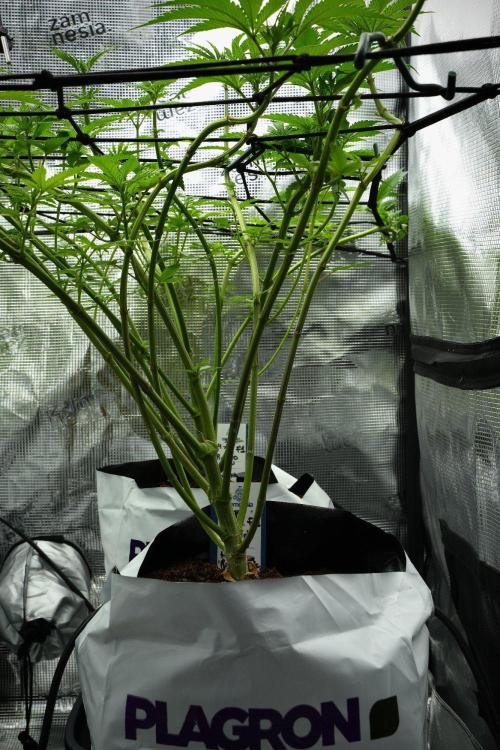
🥥 Why We Sink the Pots into the Coco
One detail that often raises questions is why the starter pots are placed directly inside the Plagron Premium Coco Grow Bags instead of remaining outside until transplant day.
There are several reasons behind this approach.
The surrounding coco acts as a natural thermal buffer, helping keep the root zone at a much more stable temperature than a pot exposed directly to the air.
It also helps maintain consistent moisture around the root ball, preventing the edges of the starter pot from drying excessively while avoiding large fluctuations between wet and dry cycles.
Another advantage is purely practical. Because the pot sits inside the grow bag from the beginning, the final transplant becomes almost effortless. The plant never needs to adapt to a completely new environment, and the root ball slides directly into the cavity already prepared for it.
Finally, shaping the cavity around the starter pot creates a perfectly fitted transplant hole. When the moment arrives, the root ball drops into place with almost no disturbance, eliminating air pockets and ensuring immediate root-to-coco contact. It’s a small detail, but one that greatly reduces transplant stress.
⸻
🌿 Feeding Program
The first irrigation after transplant introduced the plants to the Plagron Hydro line.
Current nutrient solution:
• Plagron Hydro A
• Plagron Hydro B
• Plagron Hydro Roots
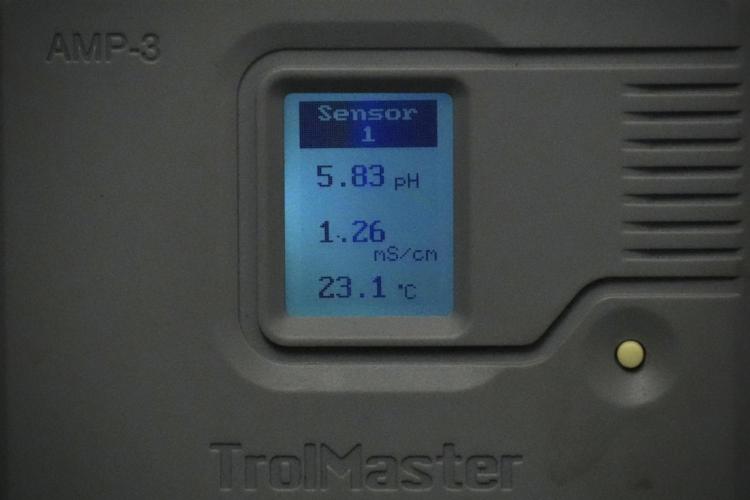
Solution parameters:
• pH: 5.83
• EC: 1.26 mS/cm
• Water temperature: 23.1°C
This mild feeding provides everything the young roots need while encouraging rapid colonization of the fresh coco substrate.
⸻
🌱 Root Development
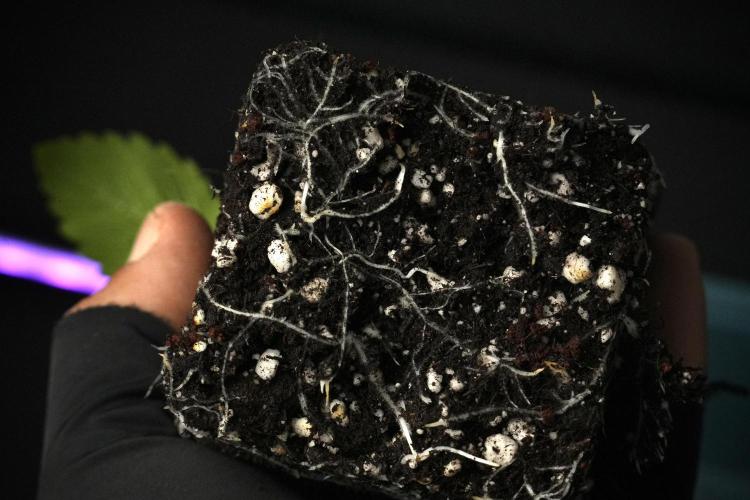
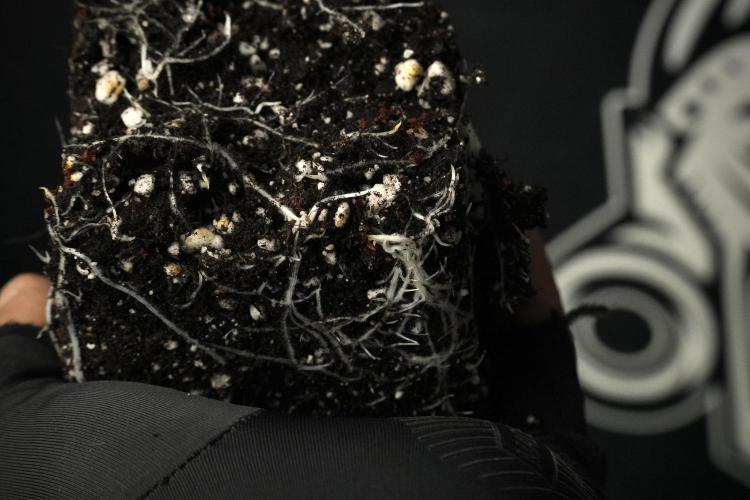
One of my favorite moments this week was checking the root system before transplant.
The entire root ball was beautifully colonized with bright white, healthy roots wrapping around every side of the substrate.
Exactly what we hope to see.
The roots had reached every corner without becoming root-bound, showing excellent vigor and confirming that the timing for transplant was absolutely perfect.
Strong roots today build strong flowers tomorrow.
⸻
🍋 Pickled Lemon Haze F1 – Pheno A
Even at this early stage, this little lady is already beginning to reveal her personality.
Her internodal spacing is compact and symmetrical, producing a balanced structure with broad, healthy leaves reaching confidently toward the light.
The stem is thick for her age, showing good structural strength, while new growth is emerging quickly with a vibrant green color that indicates she’s comfortably adapting to her new home.
Leaf posture remains open and relaxed throughout the day, another sign that both the environmental conditions and feeding program are right where they should be.
Everything about this plant suggests a smooth, stress-free start.
⸻
Looking Ahead
Now that the transplant is complete, the focus shifts entirely toward root expansion.
Over the coming days, I expect the roots to begin exploring the entire Plagron Premium Coco Grow Bag, setting the foundation for vigorous vegetative growth before training begins later in the cycle.
The stronger the underground development today, the stronger the canopy will become in the weeks ahead.
⸻
Final Thoughts
Every project starts with small plants and big dreams.
Watching a healthy seedling settle into her final home is always one of the most satisfying moments of any grow. It’s the stage where patience matters most, because the work invested now will determine everything that follows.
Pickled Lemon Haze F1 – Pheno A has made an excellent start, and I’m excited to see how her individual character develops as this journey continues.
⸻
🙏 Thank You
A huge thank you to Zamnesia for the incredible genetics and for providing the complete ecosystem that makes this project possible.
Special thanks to Plagron for supplying the Premium Coco Grow Bags and the Hydro nutrient line that will feed these ladies from start to finish.
And finally, thank you to the amazing GrowDiaries community. Your encouragement, advice, and shared passion make every grow even more rewarding. I hope you’ll enjoy following this journey as much as I enjoy documenting it.
Growers Love and see you all in the next update! 🌱💙
10 likes
1 comment
Share
Used techniques
Transplantation
Technique
3
Week 3. Vegetation
2mo ago
1/30
6 cm
Height
18 hrs
Light Schedule
27 °C
Day Air Temp
5.8
pH
No Smell
Smell
805 PPM
TDS
67 %
Air Humidity
18 °C
Solution Temp
24 °C
Substrate Temp
25 °C
Night Air Temp
8 liters
Pot Size
0.9 liters
Watering Volume
450 PPM
CO₂ Level
Nutrients 4
Hydro A
1.6 mll
Hydro B
1.6 mll
Hydro Roots
1 mll
DogDoctorOfficial 🥒 Project Blue Tent – Pickle Lemon Haze F1 – Plant A
Week 3 – A Change of Direction
Hello everyone, and welcome back to another week of Project Blue Tent! 💙🌱
This diary follows one individual Pickle Lemon Haze F1 from Zamnesia, grown completely independently from its siblings so we can appreciate each plant’s unique development from seed to harvest.
The goal of this project remains the same: growing multiple genetics side by side under identical environmental conditions while documenting how each cultivar expresses itself. Every plant shares the same home, the same feeding schedule, the same lighting, and the same care, allowing genetics to tell their own story.
This week certainly kept me busy.
Just after the reservoir refill, a small irrigation incident turned into an unexpected flood inside the tent. Thankfully, because everything is built around the Zamnesia ecosystem, the water never escaped the tent itself. The tray contained every drop, preventing what could have become a much bigger disaster. After drying everything thoroughly, checking every dripper, and making sure the substrate was still in perfect condition, it was business as usual.
The plants barely seemed to notice anything had happened.
But while nature stayed calm… I decided to interfere.
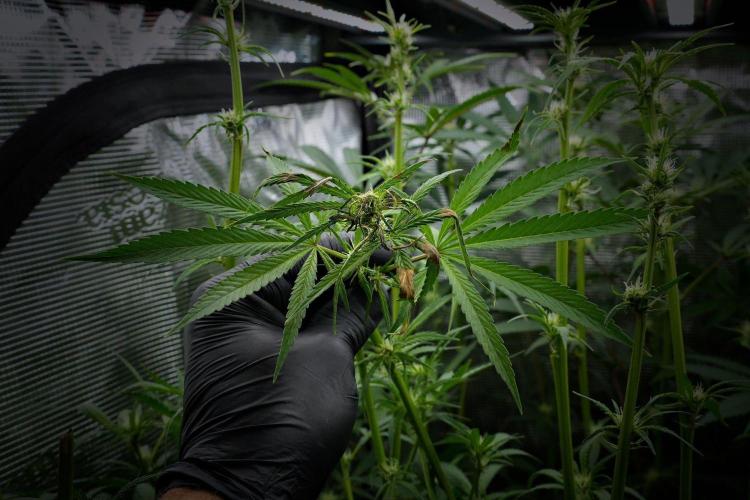
This week marked the beginning of this plant’s training journey with its very first topping.
⸻
Environment
Conditions remained extremely stable throughout the week.
• 🌡️ Day temperature: 27°C
• 🌙 Night temperature: 25°C
• 💧 Relative humidity: 67%
• 🥥 Root zone temperature: 24°C
• 💦 Nutrient solution: 18°C
• ⚡ EC: 1.61 mS/cm
• pH: 5.8
• 💨 CO₂: Ambient (~450 ppm)
• ☀️ Light schedule: 18/6
Nutrient strength was increased slightly to match the plants’ accelerating vegetative growth. The Pickle Lemon Haze accepted the stronger feed without showing any signs of stress or nutrient burn, indicating that the roots are becoming well established inside the Plagron Premium Growbag.
⸻
The Genetics Continue to Impress
One thing that immediately stands out with this phenotype is its beautiful structure.
Internodal spacing remains compact while side branches continue to develop evenly. The stem has thickened considerably over the last few days, giving the entire plant a sturdy appearance despite its relatively young age.
Like its neighbours in the tent, the foliage continues displaying that lighter shade of green I’ve been seeing across all four plants. Since every genetic is showing exactly the same coloration under identical feeding, environment and irrigation, I believe this is simply how these young plants are expressing themselves rather than indicating any nutritional issue.
Growth remains vigorous, leaves are standing proudly toward the light, and fresh growth appears every single day.
Exactly what we like to see.
⸻
Time to Top
This week I made the decision to top this plant.
Unlike low-stress training, topping intentionally removes the plant’s primary growing tip. By doing so, apical dominance is interrupted and the plant redirects its energy into the lateral branches.
Instead of producing one dominant central cola, the plant now has the opportunity to develop two equally vigorous main leaders, creating a much wider and more balanced canopy later in life.
The cut itself was clean, quick, and performed above the selected node, leaving healthy growth tips ready to take over.
Now comes the important part.
Topping isn’t about what happens immediately after making the cut.
It’s about what happens over the following week.
Over the next several days I’ll be watching carefully to see how quickly both new tops begin accelerating. If everything continues as expected, those two branches should soon become the new leaders while the lower side branches also receive increased hormonal signals, creating a much bushier structure.
For a project like this—where every plant is documented individually—it’s always fascinating to compare topped plants with untouched ones grown under identical conditions.
Sometimes the smallest decisions create the biggest differences by harvest day.
⸻
Recovery
The best part?
The plant barely reacted.
Within a short period, fresh growth had already resumed, and the remaining foliage stayed perfectly turgid without drooping or showing signs of stress.
Healthy roots, stable environmental conditions, and consistent irrigation make all the difference when performing high-stress techniques like topping.
A healthy plant recovers remarkably quickly.
⸻
Looking Ahead
Next week should be exciting.
I’ll be watching for the formation of the two new dominant tops while continuing gentle canopy management if necessary. As vegetative growth accelerates, the structure created by this topping will begin revealing itself.
This is one of my favourite moments in the grow—watching a plant completely change its architecture after a single cut.
The foundation is now in place.
Everything from here will build upon it.
⸻
Final Thoughts
Despite an unexpected flood inside the tent, this week turned into another successful chapter.
The environmental parameters remained stable, nutrient uptake continued improving, the plant accepted the stronger feeding schedule without hesitation, and the first topping was completed successfully.
Every week these genetics continue giving me more confidence, and I honestly can’t wait to see how this Pickle Lemon Haze F1 develops once both new leaders begin stretching toward the light.
The adventure is only getting started.
Thank you all so much for following along.
Your support, comments, advice, and encouragement make documenting these grows even more rewarding. I truly hope these weekly updates help other growers learn something new while enjoying the journey with me.
A huge thank you goes to Zamnesia for the incredible genetics and the complete ecosystem, Plagron for keeping these ladies perfectly fed in coco, and everyone following this diary from around the world.
Growers Love and see you all next week! 💚🌱
⸻
P.S. One final shout-out has to go to the Zamnesia ecosystem itself. As dramatic as the flood looked at first, the Zamnesia tent tray proved exactly why it’s part of the setup. Every drop of water remained safely contained inside the tent, with absolutely nothing leaking onto the floor. What could have turned into a much bigger mess ended up being nothing more than drying the tray, fixing the issue, and carrying on with the grow. Moments like these remind us that great equipment isn’t just about making life easier on the good days—it’s about saving the day when something unexpected happens. Huge thanks to Zamnesia for designing an ecosystem that’s ready for real-world growing. 💙🌱
9 likes
comments
Share
Used techniques
HST
Technique
Topping
Technique
4
Week 4. Vegetation
2mo ago
1/30
50 cm
Height
18 hrs
Light Schedule
27 °C
Day Air Temp
5.8
pH
No Smell
Smell
940 PPM
TDS
67 %
Air Humidity
18 °C
Solution Temp
24 °C
Substrate Temp
25 °C
Night Air Temp
8 liters
Pot Size
0.9 liters
Watering Volume
450 PPM
CO₂ Level
Nutrients 5
Hydro A
1.8 mll
Hydro B
1.8 mll
Hydro Roots
1 mll
DogDoctorOfficial 🥒 Project Blue Tent – Week 4
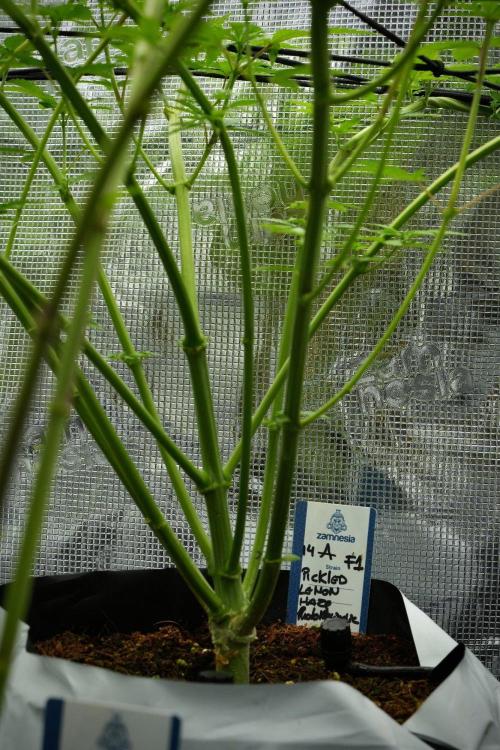
Pickle Lemon Haze F1 – Pheno A (Folder 14A)
Hello everyone, and welcome back to another update from Project Blue Tent! 💙🌱
For anyone joining this journey for the first time, this project follows four individual plants, each documented in its own diary from seed to harvest. Although every plant shares the exact same environment, nutrients, lighting, and care, each one is given the opportunity to tell its own unique story and reveal how its genetics express themselves.
Today we're catching up with Pickle Lemon Haze F1 – Plant A.
⸻
🌱 Week Four – Recovery and New Beginnings
Last week marked an important milestone when Plant A received her very first topping.
This week, however, was all about patience.
After performing a high-stress training technique, I always prefer giving the plant time to recover before asking anything more of her. Rather than continuing with additional training, I simply let nature do its job while carefully observing how she responded.
Sometimes, the best thing a grower can do is... nothing.
Looking at her now, it's safe to say she appreciated that decision.
The recovery has been outstanding.
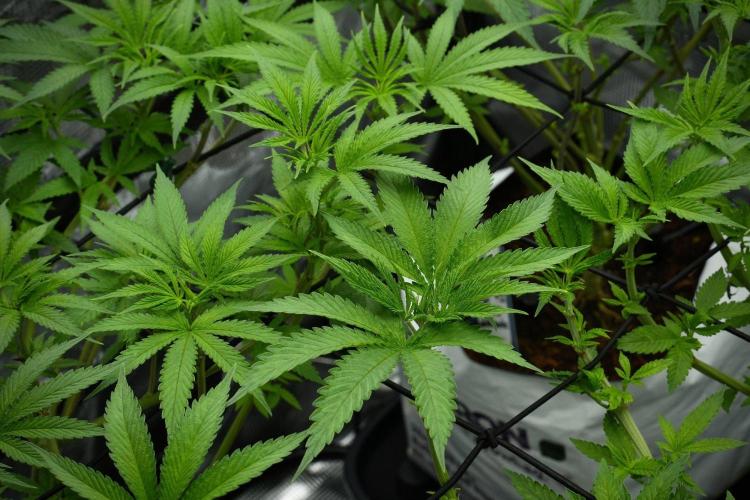
The two new leading shoots have quickly taken over, growth has remained vigorous throughout the entire plant, and the side branches are now pushing with much greater determination than before. The change in architecture is already becoming obvious, with the canopy beginning to widen naturally as the plant redirects its energy away from a single dominant tip.
It's always rewarding to watch such a dramatic transformation from one small cut.
⸻
🌡️ Environmental Conditions
Consistency continues to be one of the biggest priorities inside Project Blue Tent.
Stable environmental conditions allow the plants to recover quickly from training while encouraging continuous vegetative growth.
Average conditions this week were:
• 🌡️ Day temperature: 27°C
• 🌙 Night temperature: 25°C
• 💧 Relative humidity: 67%
• 🥥 Root zone temperature: 24°C
• 💦 Nutrient solution: 18°C
• ⚗️ pH: 5.8
• ⚡ EC: 1.88 mS/cm
• 💨 CO₂: approximately 450 ppm
• 💡 Light schedule: 18/6
With the Phytonaut LED providing an even spread across the canopy, the plants continue receiving all the energy they need while maintaining compact internodal spacing and healthy vegetative growth.
⸻
🥥 Feeding Adjustments
As mentioned in the previous updates, all four plants developed a slightly lighter shade of green during the last couple of weeks.
Although their posture remained excellent and growth never slowed down, I felt they were asking for just a little more nutrition.
Rather than waiting for deficiencies to appear, I increased the base feeding slightly.
Current nutrition now consists of:
• Plagron Hydro A — 1.8 ml/L
• Plagron Hydro B — 1.8 ml/L
• Plagron Hydro Roots — 1 ml/L
By the end of this week I was already beginning to notice a richer, healthier green returning to the newest foliage across the entire tent, suggesting the adjustment was exactly what the plants were asking for.
One of the things I'm really enjoying about growing in coco is how quickly the plants respond to small, measured changes.
⸻
🌿 Pickle Lemon Haze F1 – Plant A
This phenotype continues to impress me every single week.
The recovery after topping has been remarkably smooth, and it's already clear that the plant has shifted into a completely different growth pattern.
The two new main leaders are developing beautifully, while the lower branches are accelerating as they receive more energy than they would have under normal apical dominance.
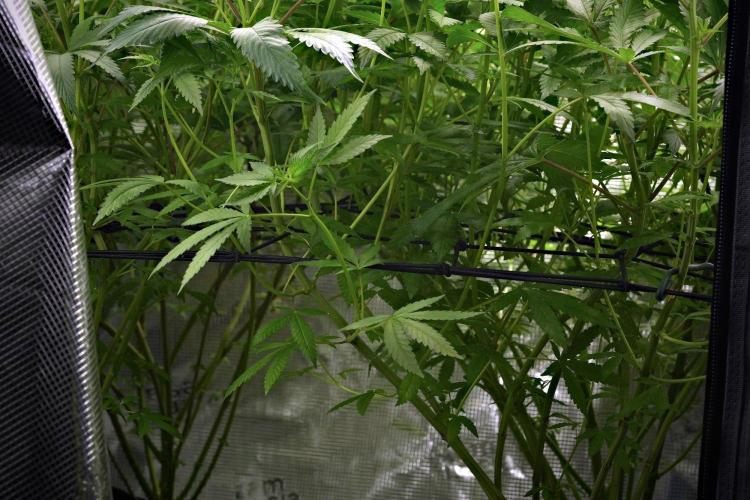
Instead of growing upward through one dominant stem, the plant is now beginning to spread outward, creating the broad, balanced framework I'm hoping to build before introducing the SCROG later in the grow.
The stems continue to thicken nicely, the internodal spacing remains tight, and the foliage has maintained excellent posture throughout the week.
Although she's still carrying that slightly lighter shade of green, the improvement in colour over the last few days is already noticeable, and her overall posture tells the real story.
Leaves are praying toward the light.
Growth is continuous.
The plant simply looks happy.
⸻
🔍 Looking Ahead
Next week should be another exciting step forward.
With the topping now fully recovered, I expect both new leaders to begin stretching more aggressively while the side branches continue filling out the canopy.
For now, I'll continue allowing the plant to develop naturally, avoiding unnecessary stress and simply monitoring her structure as she prepares for the next stage of vegetative growth.
Every week these genetics reveal a little more of their personality, and Plant A is becoming exactly the kind of bushy, well-balanced plant I was hoping to create.
⸻
💙 Thank You
A huge thank you goes to Zamnesia for making Project Blue Tent possible, from these fantastic Pickle Lemon Haze F1 genetics to the complete ecosystem surrounding this grow.
A sincere thank you as well to Plagron for providing the Premium Coco Growbags together with the Hydro nutrient line that continues supporting healthy growth every step of the way.
Thank you to GrowDiaries for providing a place where growers from around the world can document their journeys, share experiences, and continue learning from one another.
And finally, thank you to everyone following along.
Whether you've been here since germination, recently discovered these diaries, leave comments every week, quietly follow in the background, or simply enjoy watching these ladies grow, your support genuinely means a lot.
Project Blue Tent is about sharing the complete journey—the successes, the lessons, the experiments, and everything in between.
I hope you're all having an amazing week, and I look forward to seeing you again in the next update as these beautiful ladies continue their adventure.
Until next time...
Growers Love, happy growing, and take care everyone! 🌱💙
9 likes
2 comments
Share
5
Week 5. Vegetation
2mo ago
1/30
69 cm
Height
18 hrs
Light Schedule
30 °C
Day Air Temp
5.8
pH
No Smell
Smell
960 PPM
TDS
58 %
Air Humidity
18 °C
Solution Temp
24 °C
Substrate Temp
25 °C
Night Air Temp
8 liters
Pot Size
1.2 liters
Watering Volume
450 PPM
CO₂ Level
Nutrients 5
Hydro A
1.9 mll
Hydro B
1.9 mll
Hydro Roots
1 mll
DogDoctorOfficial 🥒 Project Blue Tent – Week 5
Pickle Lemon Haze F1 – Pheno A (Folder 14A)
Hello everyone, and welcome back to another update from Project Blue Tent! 💙🌱
If this is your first time stopping by, welcome!
Project Blue Tent follows four individual plants, each documented in its own dedicated diary from seed all the way to harvest. Every plant receives the exact same environment, nutrients, lighting, irrigation and care, allowing us to observe how each phenotype expresses its own unique personality despite sharing identical conditions.
This week marks another exciting milestone for Pickle Lemon Haze F1 – Plant A.
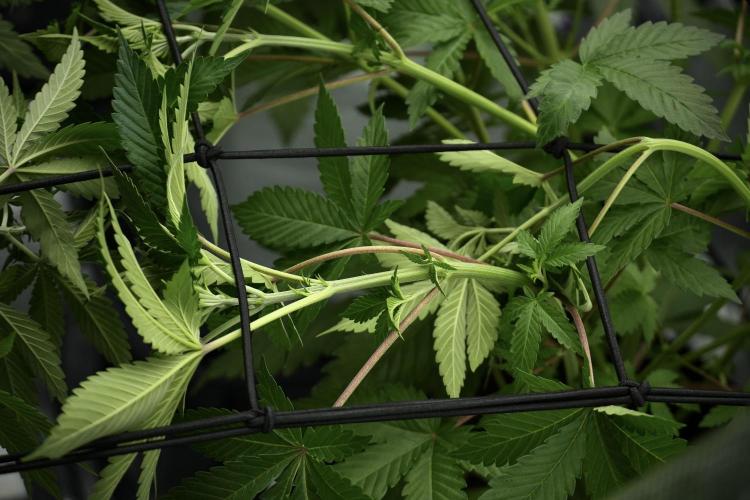
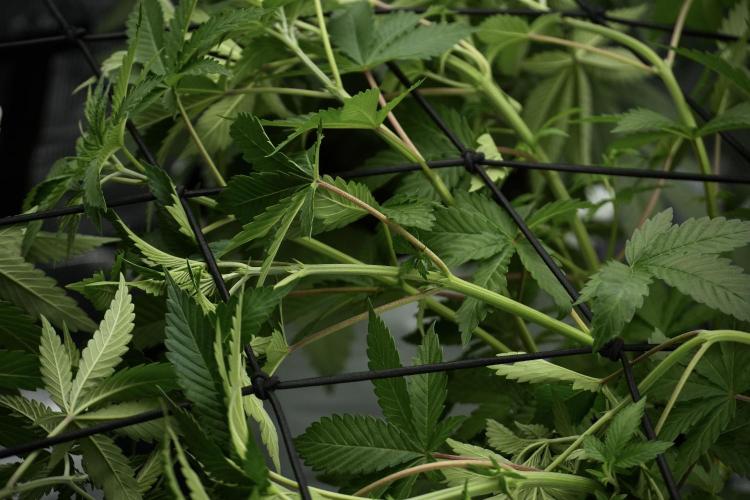
After recovering beautifully from topping, it was finally time to install one of my favourite training techniques...
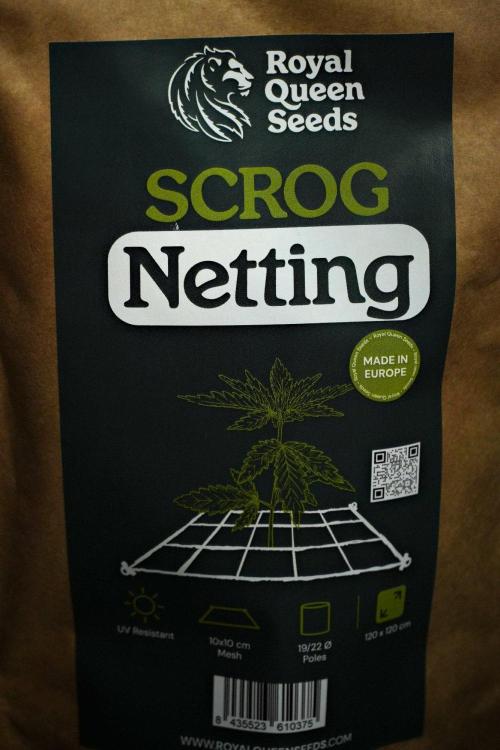
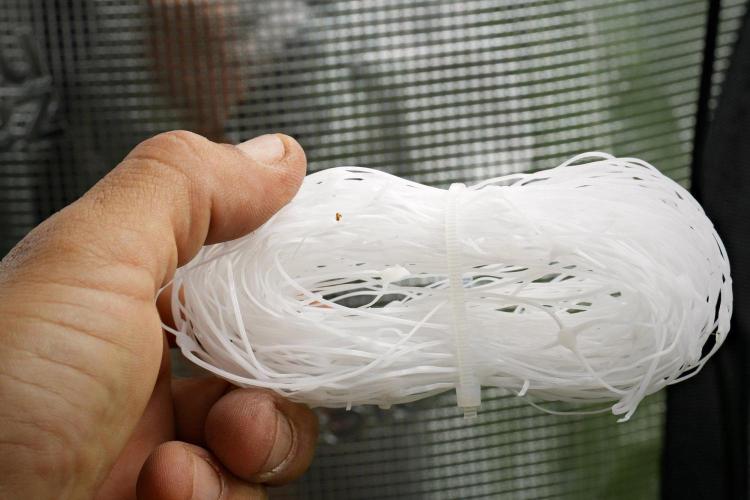
The SCROG net.
🌿 Week Five – The Canopy Begins
This week was less about vertical growth and more about shaping the future.
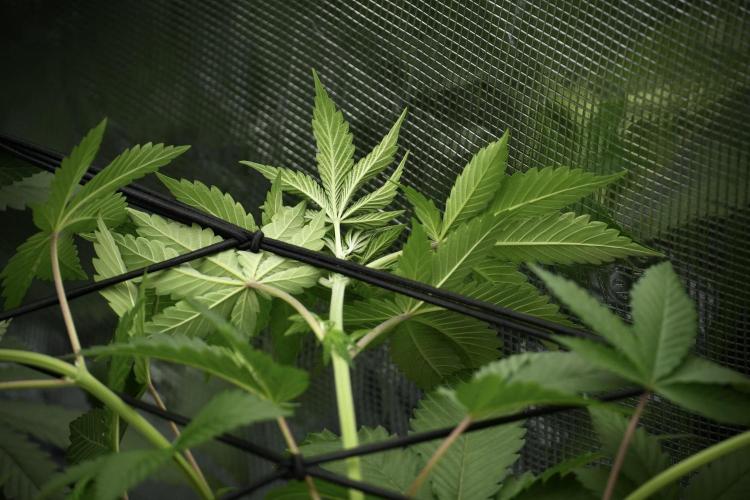
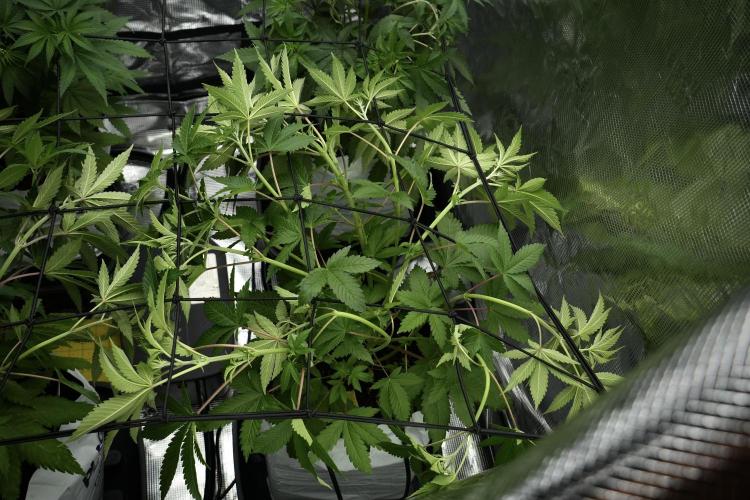
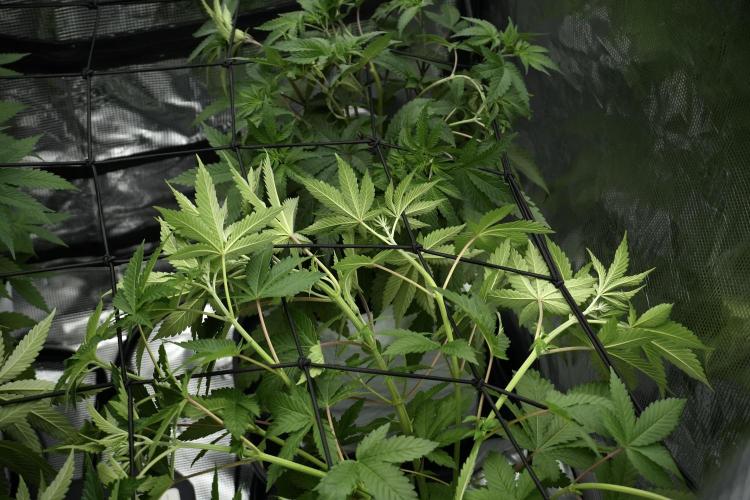
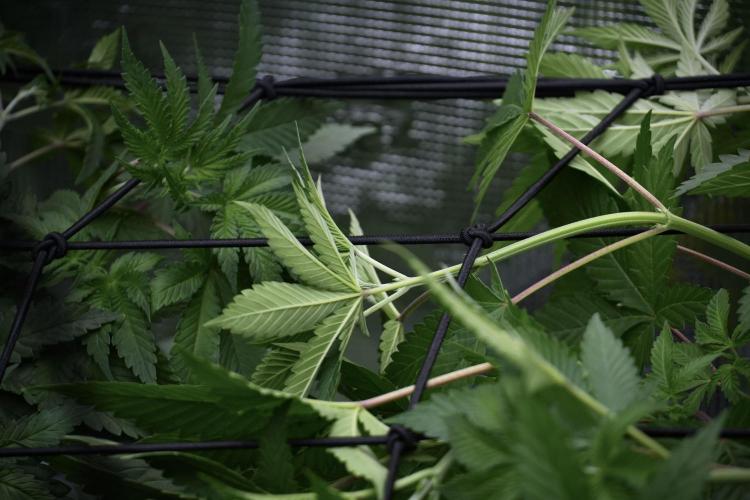
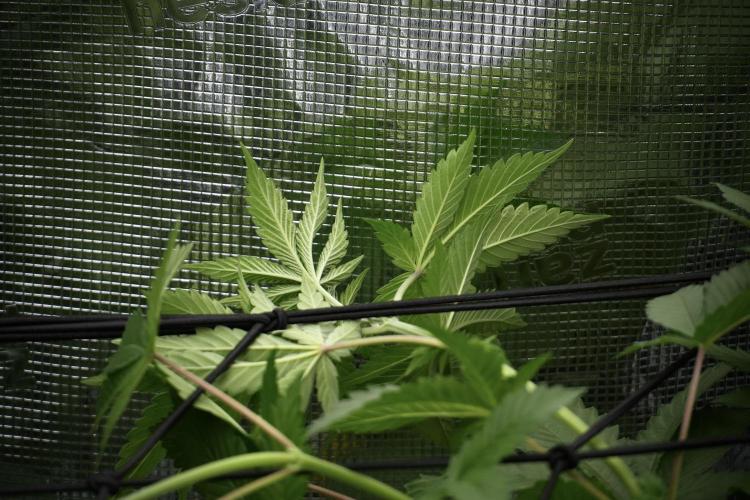
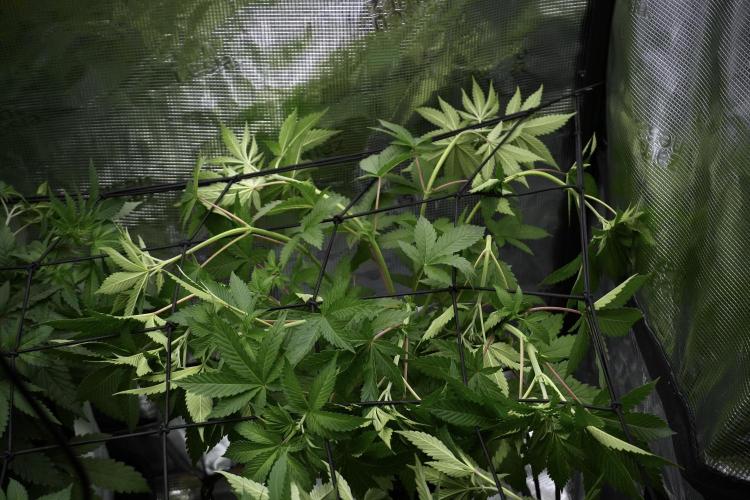
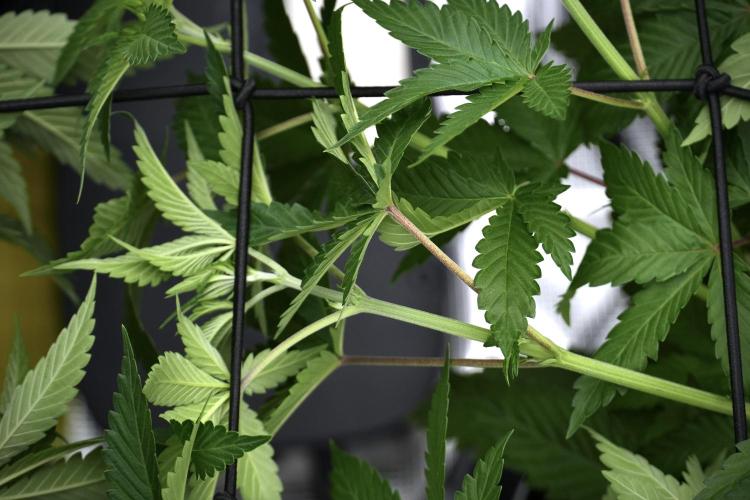
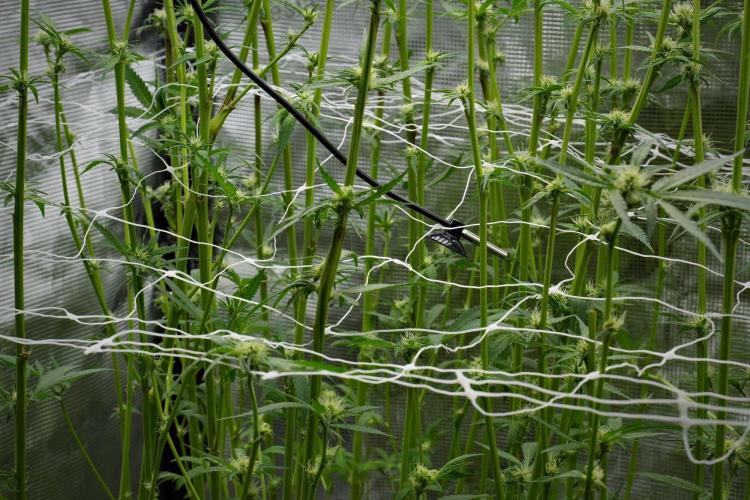
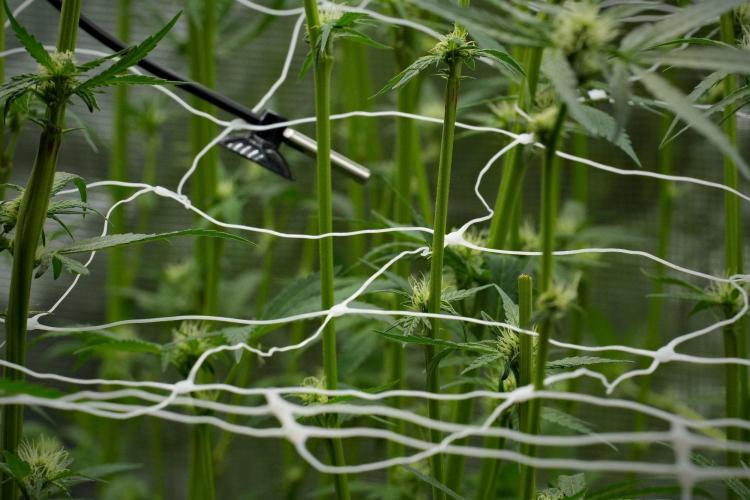
With the plant fully recovered from topping and growing faster than any of the others inside the tent, I decided the timing was perfect to install the SCROG net and begin spreading the canopy.
Plant A immediately confirmed my suspicion.
She has become the most vigorous plant in the room.While the other ladies settled comfortably beneath the screen, this phenotype almost seemed eager to escape it. Every branch wanted to continue growing upward, so the goal this week became gently guiding that energy sideways instead.
One branch at a time.One square at a time.
Nothing forced.
Nothing rushed.
SCROG is very much a daily conversation with the plant rather than a one-time training session.
Looking at her today, I already have the feeling she may end up occupying the largest portion of the canopy.
Only time will tell, but she's certainly making a strong case for herself.
🕸️ What is a SCROG?
SCROG stands for Screen of Green, and despite the name, the net itself doesn't actually support the buds.
Its primary purpose is to control the plant's shape.
Instead of allowing one dominant top to grow taller than everything else, the branches are gently guided horizontally beneath the screen. As each branch reaches a new opening, it's carefully tucked into the next square, encouraging the plant to spread across the available space rather than simply reaching toward the light.
The result is a flatter, more even canopy where many growing tips receive similar light intensity.
Instead of producing one large cola and many smaller ones hidden underneath, the plant is encouraged to create dozens of equally productive flowering sites.
It's one of the most effective ways to maximize light efficiency inside smaller tents.
🤔 Is SCROG for everyone?
Not necessarily.
One important thing many new growers don't realize is that once the plant is woven into the screen, moving it becomes extremely difficult.
Need to remove the pot?
Almost impossible.
Want to rotate the plant?
Not anymore.
Need to carry it somewhere else?
Forget about it.
The plant essentially becomes part of the tent.
For growers who frequently move their plants for maintenance, watering or photography, SCROG can quickly become frustrating.
Personally, I don't use it on every grow.
But in compact setups like this Project Blue Tent, where every square centimetre matters, I absolutely love working with it.
There's something incredibly satisfying about visiting the tent every day, gently guiding a few branches, watching empty spaces slowly disappear, and seeing the canopy become flatter and more uniform with each passing day.
It isn't a technique everyone will fall in love with...
But it's definitely one I encourage every grower to try at least once.
Only by experiencing it can you decide whether it's the right style for your own garden.
🌡️ Environmental Conditions
This week the environment remained stable, allowing the plants to focus entirely on recovering from training and continuing vigorous vegetative growth.Average conditions were:
• 🌡️ Day temperature: 30°C• 🌙 Night temperature: 25°C
• 💧 Relative humidity: 58%
• 🥥 Root zone temperature: 24°C
• 💦 Nutrient solution: 18°C
• ⚗️ pH: 5.8
• ⚡ EC: 1.92 mS/cm
• 💨 CO₂: approximately 450 ppm
• 💡 Light schedule: 18/6
Even with slightly warmer daytime temperatures this week, the plants have continued to show excellent vigor thanks to stable root temperatures, consistent irrigation and healthy airflow throughout the tent.
🥥 Feeding Update
One observation from the previous couple of weeks was the slightly lighter shade of green across all four plants.
Although they remained healthy and continued growing without slowing down, I felt they were asking for just a little more food.
Rather than waiting for deficiencies to develop, I made a small adjustment to the nutrient solution.
Current feeding now consists of:• Plagron Hydro A — 1.9 ml/L
• Plagron Hydro B — 1.9 ml/L
• Plagron Hydro Roots — 1 ml/L
This small increase has already made a noticeable difference.
The fresh growth is returning to a richer shade of green while maintaining the vigorous posture I've been seeing throughout the project.
One of the things I continue to appreciate about growing in coco is how quickly plants communicate with you. Small adjustments often produce visible improvements within just a few days, making it much easier to fine-tune nutrition before small issues become bigger ones.
🌿 Pickle Lemon Haze F1 – Plant A
This phenotype keeps reinforcing the impression she's given me since the beginning.
She's vigorous.
Responsive.
And full of energy.
Even after being bent beneath the SCROG net, every branch seems determined to keep pushing upward, which is exactly the kind of behaviour I was hoping to see before entering the next stage of vegetative growth.
The stems continue thickening beautifully, making the training process much easier than it would have been with weaker growth.
The internodal spacing remains compact, the foliage is healthy, and the plant has handled every bit of stress I've introduced so far without missing a beat.
At this stage she already feels like a plant that's going to demand plenty of room.
Whether she ultimately becomes the dominant lady inside Project Blue Tent remains to be seen, but she's certainly making her intentions known.
🔍 Looking Ahead
Over the coming week the focus will remain exactly where it should be.
No rushing.No unnecessary stress.
Simply continuing to tuck new growth beneath the SCROG screen while allowing the canopy to expand naturally across every available square.
I'm excited to see how each phenotype responds to this new training style.
Some plants naturally embrace SCROG.
Others fight it every step of the way.
That's one of the reasons I love documenting projects like this.
Every week the plants teach us something new.
And I have a feeling Pickle Lemon Haze F1 – Plant A still has plenty more to reveal.
💙 Thank You
A huge thank you to Zamnesia for making Project Blue Tent possible, from these fantastic Pickle Lemon Haze F1 genetics to the complete ecosystem surrounding this grow.
A heartfelt thank you to Plagron for providing the Premium Growbags together with the Hydro nutrient line, delivering consistent nutrition and allowing these plants to thrive week after week.
A sincere thank you as well to Phytonaut for the outstanding LED lighting that continues producing compact growth, excellent structure and an incredibly even canopy across the tent.
Thank you to GrowDiaries for giving growers around the world a place to document their journeys, exchange knowledge and inspire one another every single day.
And finally...
Thank you for following along.
Whether you've been here since germination, recently joined the adventure, leave comments every week, or quietly follow these updates from the background, your support genuinely means the world to me.
Project Blue Tent isn't just about growing great plants.
It's about sharing the entire experience—the experiments, the lessons, the successes, the mistakes, and everything we learn together along the way.
I hope you're all having an amazing week, and I can't wait to show you how this canopy develops over the next few days.
Until next time...
Growers Love, happy growing, and take care everyone! 🌱💙
12 likes
comments
Share
Used techniques
ScrOG
Technique
6
Week 6. Vegetation
1mo ago
1/30
60 cm
Height
18 hrs
Light Schedule
30 °C
Day Air Temp
5.8
pH
No Smell
Smell
960 PPM
TDS
58 %
Air Humidity
18 °C
Solution Temp
24 °C
Substrate Temp
25 °C
Night Air Temp
8 liters
Pot Size
1.2 liters
Watering Volume
450 PPM
CO₂ Level
Nutrients 5
Hydro A
1.9 mll
Hydro B
1.9 mll
Hydro Roots
1 mll
DogDoctorOfficial 🥒 Project Blue Tent – Week 6
Pickle Lemon Haze F1 – Pheno A (Folder 14A)
Hello everyone, and welcome back to another chapter of Project Blue Tent! 💙🌱
If this is your first time joining the adventure, welcome!
Project Blue Tent follows four individual plants, each documented in its own dedicated diary from seed to harvest. Every plant shares the exact same environment, lighting, irrigation schedule, nutrition and care. By keeping every environmental variable as consistent as possible, we can truly appreciate how each phenotype expresses its own unique personality while also showcasing the remarkable stability of modern F1 genetics.
Today we're checking in with Pickle Lemon Haze F1 – Plant A.
────────────────────────
🌱 Week Six – A Canopy Coming Together
This week has been all about refinement.
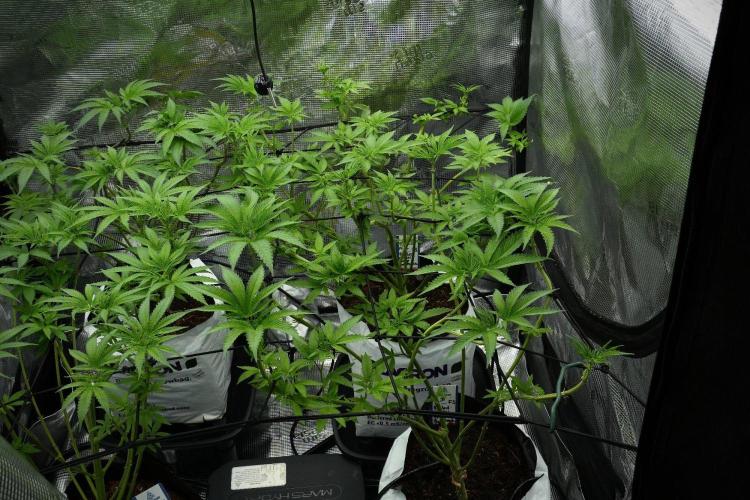
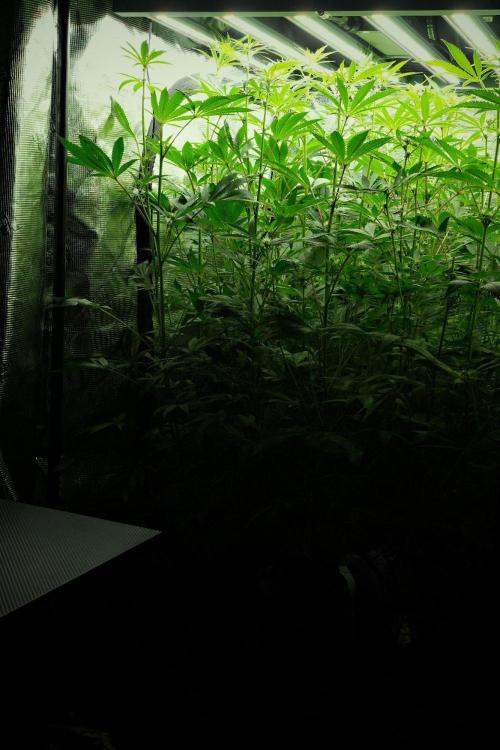
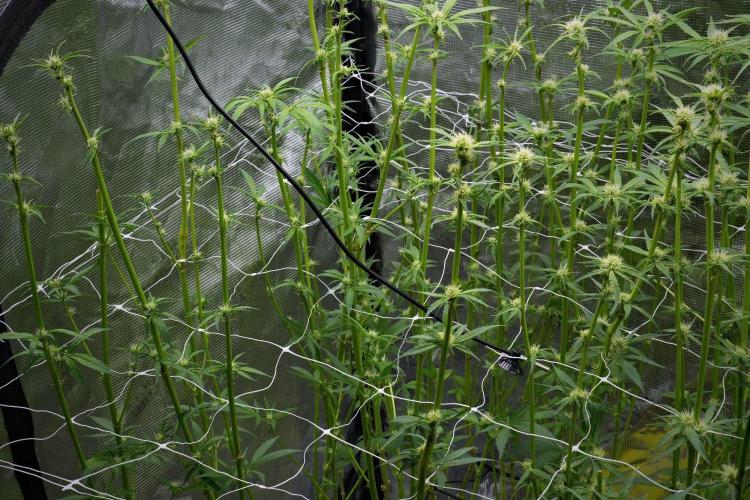
Rather than chasing vertical growth, the focus has shifted entirely toward building the widest and most even canopy possible. Every day brings a little more progress as branches continue filling the SCROG net, gradually transforming four individual plants into one uniform sea of green.
One small change compared to last week's report is the official canopy height.
Although Plant A measured around 66 cm previously, I lowered and tightened the SCROG net across the entire tent. As a result, all four plants are now sitting at approximately 60 cm, with every centimetre of new growth being directed horizontally through the screen instead of upwards.
That's exactly the objective at this stage.
We're no longer trying to grow taller plants.
We're growing a larger canopy.
Every branch guided sideways today will become another well-positioned flowering site tomorrow.
────────────────────────
🌿 Pickle Lemon Haze F1 – Plant A
Plant A continues to impress me every single day.
She remains the most vigorous plant inside the Blue Tent, responding to every bit of training with explosive new growth.
Even after being topped and now spending her days tucked beneath the SCROG net, she simply refuses to slow down. Every branch seems eager to reach for the next opening, making the daily training routine both enjoyable and incredibly rewarding.
The internodal spacing remains nice and tight, the stems continue thickening, and her foliage has developed a rich, healthy green colour that tells me she's enjoying everything the environment is providing.
One thing I particularly appreciate is how well she's balancing strength with flexibility.
The branches are becoming sturdy enough to support future flowers while remaining pliable enough to guide gently beneath the screen without complaint.
She's proving herself to be an absolute pleasure to train.
────────────────────────
🕸️ Working with the SCROG
As the canopy develops, the SCROG net is becoming more than just a training tool.
It's now helping shape the entire structure of the grow.
Every day I spend a few minutes gently guiding branches into empty spaces, allowing the plant to expand naturally instead of allowing individual tops to dominate the canopy.
It's a surprisingly relaxing process.
No aggressive bending.
No rushing.
Just small adjustments made consistently over time.
Watching those empty squares slowly disappear is one of my favourite parts of vegetative growth, and this week the Blue Tent has really started looking like one unified canopy instead of four separate plants.
────────────────────────
🌡️ Blue Tent Environment
Consistency continues to be one of the biggest advantages inside the Blue Tent.
Average conditions throughout the week remained:
• 🌡️ Day Temperature: 30°C
• 🌙 Night Temperature: 25°C
• 💧 Relative Humidity: 58%
• 🥥 Root Zone Temperature: 24°C
• 💦 Nutrient Solution Temperature: 18°C
• ⚗️ pH: 5.8
• ⚡ EC: 1.92 mS/cm
• 💨 CO₂: Approximately 450 ppm
• 💡 Light Schedule: 18/6
• 💧 Irrigation: 1.2 litres per plant per day
These stable conditions continue allowing the plants to focus entirely on vigorous vegetative growth while recovering effortlessly from training.
────────────────────────
🥥 Feeding & Irrigation
The feeding schedule remains unchanged this week.
Sometimes, when everything is working exactly as planned, the best decision is simply to stay consistent.
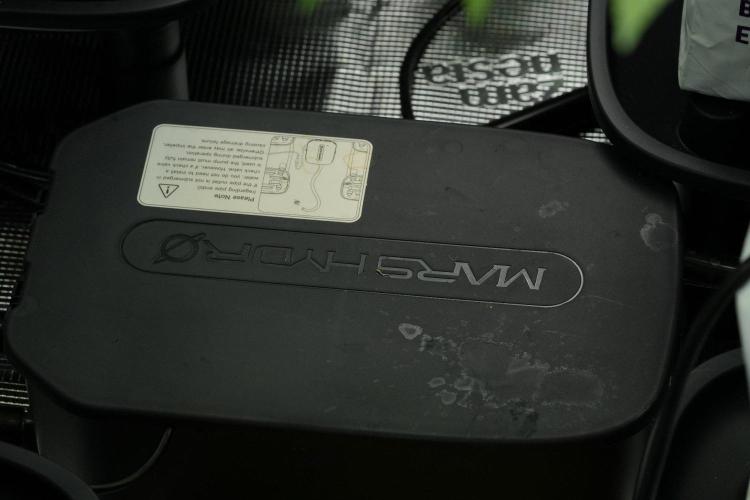
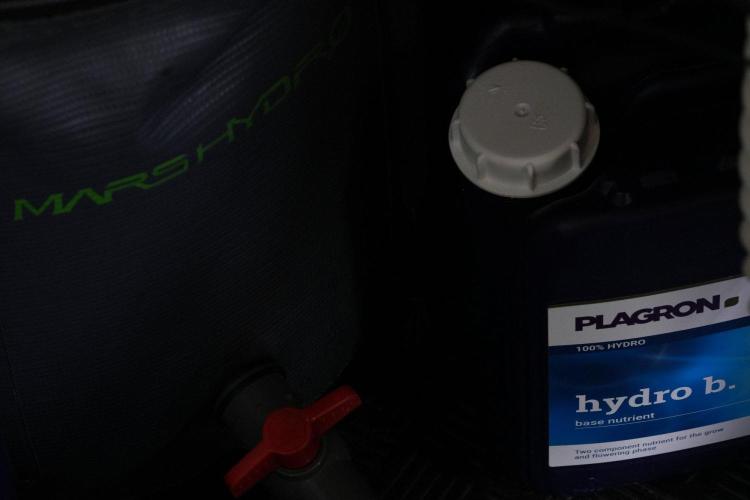
Each plant continues receiving approximately 1.2 litres of nutrient solution every day through the Mars Hydro automatic drip irrigation system.
The slow and consistent delivery keeps the coco evenly moist while ensuring the roots always have access to fresh nutrients.
Once the solution passes through the substrate, the automatic drainage system removes the runoff beneath the grow bags, preventing old nutrient solution from accumulating around the root zone and helping maintain a clean, stable growing environment.
Current feeding schedule:
• Plagron Hydro A — 1.9 ml/L
• Plagron Hydro B — 1.9 ml/L
• Plagron Hydro Roots — 1 ml/L
The rich green colour across the canopy tells me the plants are extremely happy with this feeding regime, and for now I see no reason to make any adjustments.
────────────────────────
🌿 Pickle Lemon Haze F1 – Plant A
Every week this phenotype reinforces the same first impression she gave me shortly after germination.
She's energetic.
Confident.
And incredibly responsive.
She doesn't simply recover from training.
She seems to thrive because of it.
The combination of vigorous branching, compact internodal spacing and healthy foliage is creating exactly the kind of plant I hoped for when starting this project.
It's becoming easier every week to imagine how productive she'll be once flowering begins.
────────────────────────
👀 Looking Ahead
The objective for next week remains beautifully simple.
Continue filling the SCROG.
Maintain the stable environment.
Keep guiding each branch into its own space.
Patience is the key at this stage.
Every small adjustment made now will help create a flatter canopy, better light distribution and, hopefully, an even more productive flowering cycle in the weeks ahead.
The Blue Tent continues moving exactly in the direction I was hoping for, and I can't wait to watch these ladies take the next step together.
────────────────────────
💙 Thank You
A huge thank you to Zamnesia for making Project Blue Tent possible, from these incredible Pickle Lemon Haze F1 genetics to the complete ecosystem surrounding this grow.
A heartfelt thank you to Plagron for providing the Premium Growbags together with the Hydro nutrient line that continues delivering healthy, vigorous growth week after week.
A special thank you to Phytonaut for the outstanding LED lighting, producing compact growth, beautiful structure and an incredibly even canopy throughout the Blue Tent.
A sincere thank you to Mars Hydro for the automatic drip irrigation and drainage system that has brought consistency, cleanliness and peace of mind to this entire project.
Thank you to GrowDiaries for providing growers around the world with a place to document their journeys, exchange knowledge and inspire one another every single day.
And finally...
Thank you to every one of you following Project Blue Tent.
Whether you've been here since the first seed cracked, recently joined the adventure, leave comments every week or quietly follow along in the background, your support genuinely means more than you know.
The canopy is getting fuller, the plants are thriving, and the adventure is only becoming more exciting.
Until next week...
Growers Love, happy growing, and I'll see you all soon. 🌱💙
12 likes
comments
Share
Used techniques
ScrOG
Technique
7
Week 7. Vegetation
15d ago
1/30
60 cm
Height
18 hrs
Light Schedule
28 °C
Day Air Temp
5.8
pH
No Smell
Smell
960 PPM
TDS
65 %
Air Humidity
18 °C
Solution Temp
24 °C
Substrate Temp
25 °C
Night Air Temp
8 liters
Pot Size
1.2 liters
Watering Volume
450 PPM
CO₂ Level
Nutrients 5
Hydro A
1.9 mll
Hydro B
1.9 mll
Hydro Roots
1 mll
DogDoctorOfficial 🥒 Project Blue Tent – Week 7
Pickle Lemon Haze F1 – Pheno A (Folder 14A)
Hello everyone, and welcome back to another chapter of Project Blue Tent! 💙🌱
If you're discovering this diary for the first time, welcome aboard!
Project Blue Tent follows four individual plants, each documented in its own dedicated diary from seed to harvest.
All four plants share the same environment, lighting, irrigation system, nutrition and training strategy. By keeping as many variables identical as possible, we can observe something particularly interesting:
How much personality can an individual phenotype still show when everything around it remains the same?
Every plant has the same opportunity.
Every plant receives the same care.
Yet somehow...
They still manage to tell their own story.
Today we're checking in with Pickle Lemon Haze F1 – Plant A.
And this week marks a pretty important moment in her story.
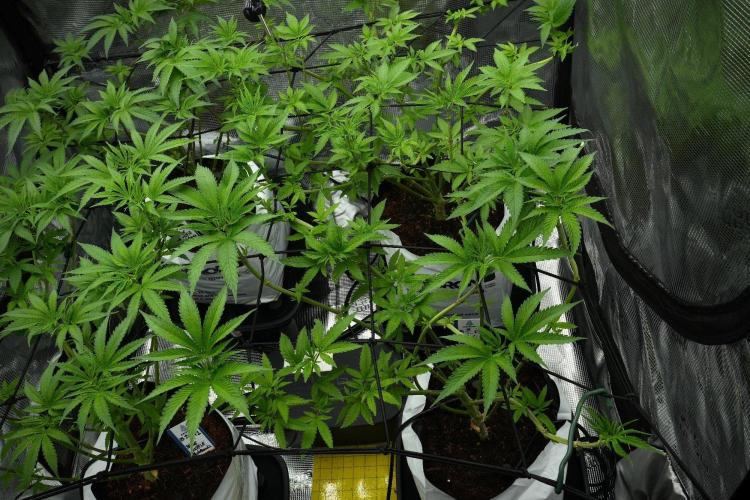
The canopy is full.
The structure is ready.
And we're preparing for the final step before flowering.
────────────────────────
🌱 Week Seven – From Building to Preparing
For the last several weeks, the entire focus has been on building the canopy.
We topped.
We trained.
We installed the SCROG.
We guided branches through the screen.
And slowly, square by square, the empty spaces disappeared.
Now the Blue Tent has reached the point where the plants have essentially done their job.
Looking from above, the canopy is remarkably even.
All four sisters are sitting at approximately 60 cm, and because the SCROG net was lowered and tightened earlier in the grow, the majority of the new growth has been directed horizontally rather than vertically.
That was the objective.
Not taller plants.
More usable canopy.
And Plant A has done an exceptional job filling her allocated space.
Her foliage is rich green, her branches are strong, and the amount of healthy growth packed into that screen is impressive.
But there comes a point where adding more foliage isn't necessarily the goal anymore.
Now we need to prepare what we've built.
────────────────────────
🕸️ The SCROG – Mission Accomplished
The SCROG has been one of the most important techniques we've used during this vegetative cycle.
For anyone unfamiliar with it, SCROG means Screen of Green.
Instead of allowing the plant to develop a few dominant vertical branches, we repeatedly guide the growing shoots underneath a horizontal screen.
As each branch moves through the screen, we can distribute the future flowering sites across a much larger area.
The result we're looking for is a relatively even canopy rather than several tall branches competing with one another.
And this isn't something that happens in one afternoon.
It's a process.
A little tuck here.
Another branch redirected there.
A few minutes of observation every day.
Eventually, the plant does most of the work itself.
This week, looking across the Blue Tent, that process has reached its goal.
The screen is effectively filled.
And that means it's time for the next stage.
────────────────────────
✂️ Defoliation – Cleaning the Canopy Before Flower
This week's main event is defoliation.
And because this technique is sometimes misunderstood, I want to explain exactly what we're doing and, perhaps more importantly, what we're not doing.
Defoliation is not simply removing leaves because we don't like seeing them.
Leaves are essential to the plant.
They're responsible for capturing light and supporting photosynthesis, so removing them unnecessarily doesn't automatically make a plant healthier.
The objective here is different.
After weeks of vigorous vegetative growth and SCROG training, the interior of the canopy has become extremely dense.
Leaves overlap.
Branches cross through one another.
Lower sections become increasingly shaded.
Air movement through the middle of the plant becomes more difficult.
And some foliage is simply contributing less to the productive upper canopy.
So we're performing a deliberate cleanup.
Removing selected leaves.
Opening congested areas.
Improving visibility.
Creating more space between branches.
And preparing the structure for the very different demands of flowering.
The goal isn't:
"Remove as many leaves as possible."
The goal is:
"Remove what isn't helping the structure we're trying to build."
────────────────────────
🌬️ Why Defoliate Now?
The timing is just as important as the technique.
A significant defoliation is a form of stress.
Even a perfectly healthy plant needs time to respond after losing a meaningful amount of foliage.
That's why we're doing this while the plants are still in vegetative growth rather than waiting until we're well into flowering.
Right now they're running 18/6.
They're actively growing.
They're not yet trying to produce flowers.
So if the plants need a little time to rebuild their balance after the cleanup, we have that time.
The sequence we're following is very intentional:
Build the plant.
Fill the screen.
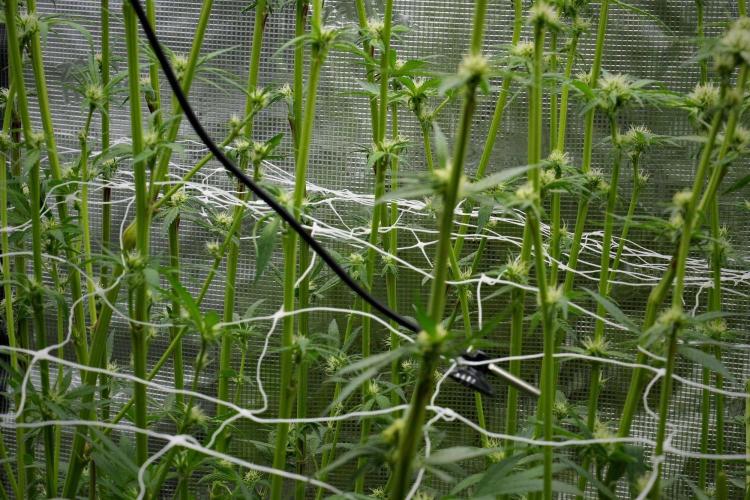
Clean the canopy.
Allow recovery.
Then flip.
I would much rather have the plants enter flowering already recovered from this work than perform a major cleanup while they're simultaneously dealing with the transition into flower.
Once the lights are flipped, the priorities change.
The plant will begin redirecting its energy toward reproductive growth, and I want that transition to happen with a clean, well-organised canopy rather than asking her to recover from major training at the same time.
────────────────────────
🧠 Defoliation Isn't a Magic Trick
Another thing worth mentioning is that defoliation isn't some magical technique that automatically produces bigger flowers.
It's a canopy-management tool.
We're trying to improve the relationship between:
🌱 Growing sites
💡 Light distribution
🌬️ Air movement
🍃 Leaf density
? Plant structure
The upper canopy is already receiving strong light.
The problem we're addressing is congestion.
When four vigorous plants share a 100 × 100 × 200 cm space, the interior can become incredibly dense.
By selectively removing some unnecessary foliage, we're opening pathways through that structure.
Better airflow.
Better visibility.
Less congestion.
And a cleaner starting point for flowering.
It's about managing the environment that exists inside the canopy, not simply making the plants look prettier.
Although...
I have to admit...
They do look pretty spectacular after the cleanup. 😂💙
────────────────────────
🌿 Pickle Lemon Haze F1 – Plant A
And now, back to our girl.
Plant A continues to be exactly the phenotype I thought she might become when she first started showing her personality.
Vigorous.
Responsive.
Confident.
She has consistently been one of the most energetic plants in the Blue Tent.
Every time we've given her something to work with, she's responded with more growth.
Topping?
She recovered beautifully.
SCROG?
She filled it.
Daily training?
She simply kept producing new shoots.
Her internodal spacing remains nicely compact, her stems have thickened substantially, and the foliage has developed that rich green colour we've been looking for.
The most impressive part is probably how much growth she's managed to produce while still maintaining a very manageable structure.
She's not simply growing wildly.
She's growing usefully.
And that's exactly what we want at this stage.
────────────────────────
🥥 Feeding – No Changes Yet
The nutrition remains completely unchanged.
And honestly...
Why change something that is working?
Current feeding:
• Plagron Hydro A — 1.9 ml/L
• Plagron Hydro B — 1.9 ml/L
• Plagron Hydro Roots — 1 ml/L
Current EC:
1.92 mS/cm
pH:
5.8
The plants are showing excellent colour and vigorous growth, so I'm not interested in increasing the nutrient strength simply because we're approaching flowering.
Instead, we'll watch their response to this week's defoliation.
If they continue consuming aggressively and maintaining that healthy green colour, we may increase the nutrition next week as flowering begins.
But for now...
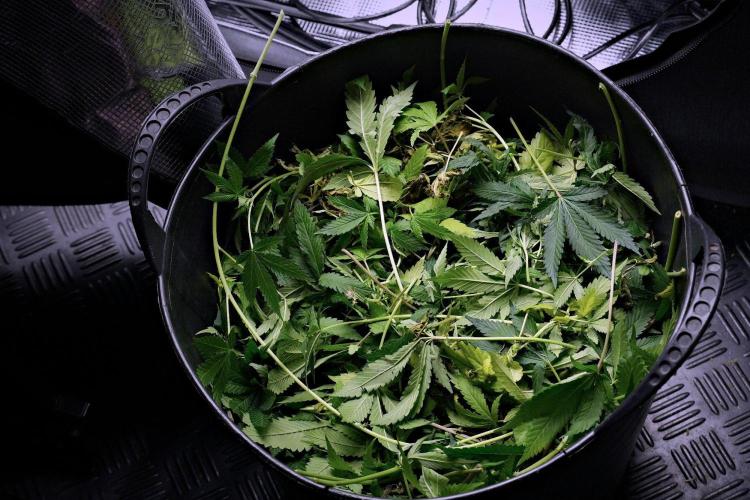
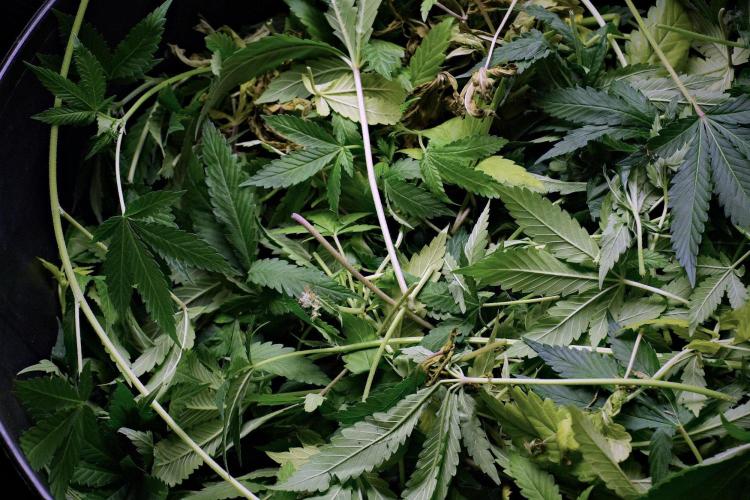
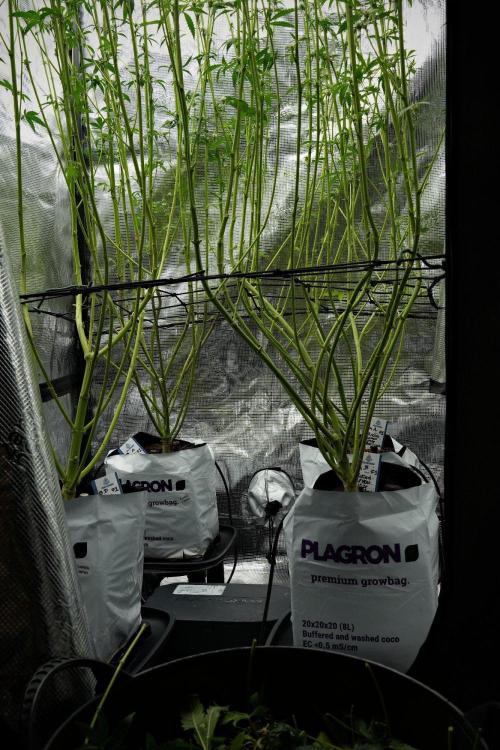
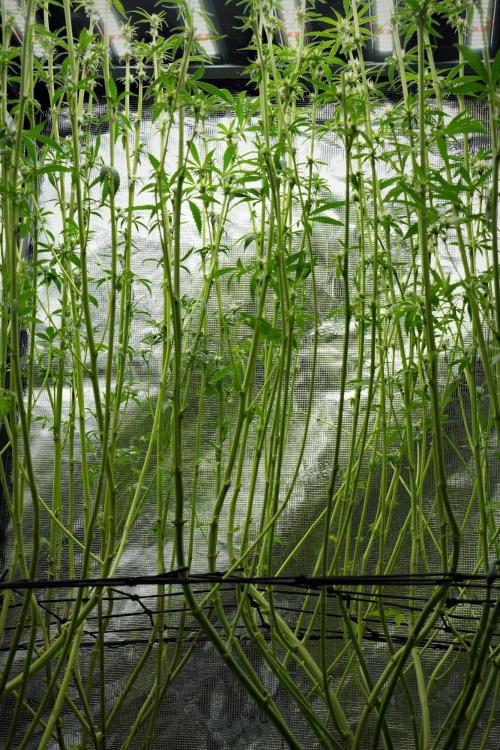
The plants are happy.
And happy plants don't need unnecessary changes.
────────────────────────
💧 The Drip Irrigation Continues to Impress
The Mars Hydro automatic drip irrigation and drainage system has also become one of those pieces of equipment that quietly proves its value every day.
Each plant is receiving approximately 1.2 litres of nutrient solution per 24 hours, delivered through the individual drip system.
The solution passes through the coco and the resulting runoff is automatically collected and removed.
That consistency is particularly useful in a project like this.
We're trying to keep four plants under almost identical conditions.
Manual watering can certainly work, but maintaining exactly the same routine every day becomes increasingly difficult as plants get larger and more demanding.
The automated system removes much of that variation.
The roots receive a consistent supply.
The plants receive the same routine.
And I get to spend less time carrying water...
And more time observing the plants.
That's a pretty good exchange in my book. 😄
────────────────────────
🌡️ Blue Tent Environment
The environment has remained very stable as we approach the transition into flowering.
This week's average conditions were:
• 🌡️ Day Temperature: 28°C
• 🌙 Night Temperature: 25°C
• 💧 Relative Humidity: 65%
• 🥥 Substrate Temperature: 24°C
• 💦 Nutrient Solution: 18°C
• ⚗️ pH: 5.8
• ⚡ EC: 1.92 mS/cm
• 💨 CO₂: approximately 450 ppm
• 💡 Light Schedule: 18/6
• 💧 Irrigation: approximately 1.2 L/plant/24h
• ? Pot Size: 8 L
• 📏 Plant Height: approximately 60 cm
At this point, maintaining consistency is more important than constantly chasing numbers.
The plants are growing beautifully.
The canopy is healthy.
The irrigation is performing reliably.
And the nutrition is producing exactly the response we're looking for.
So for now...
We observe.
────────────────────────
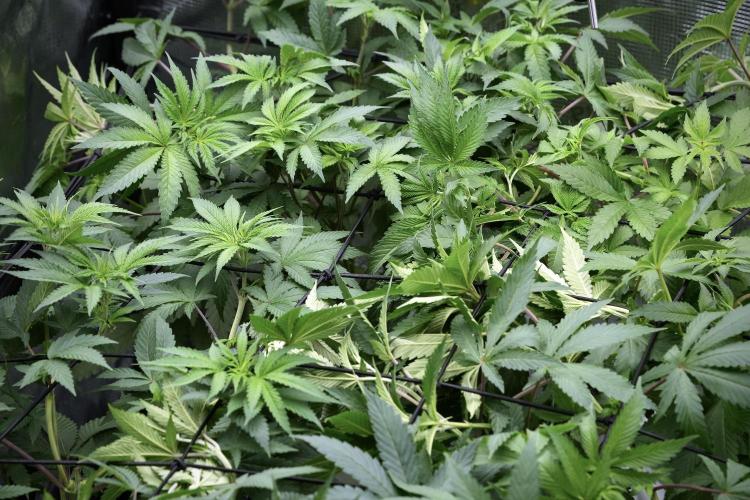
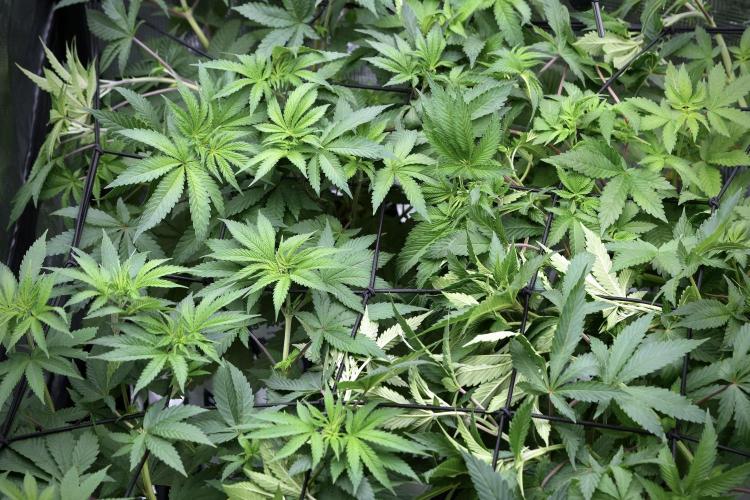
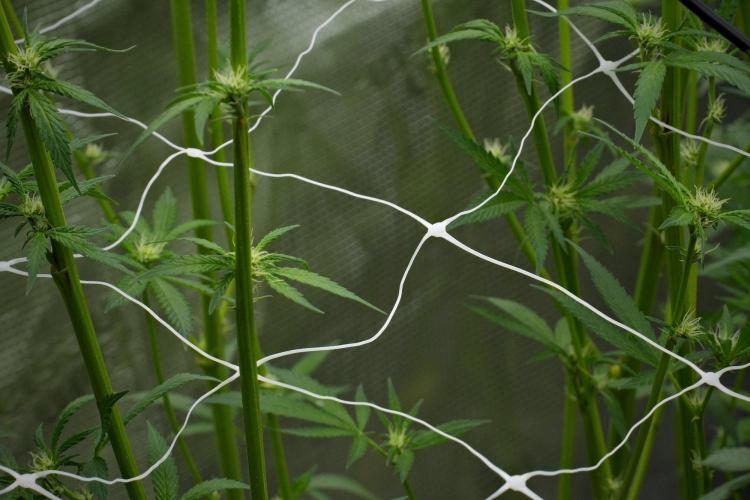
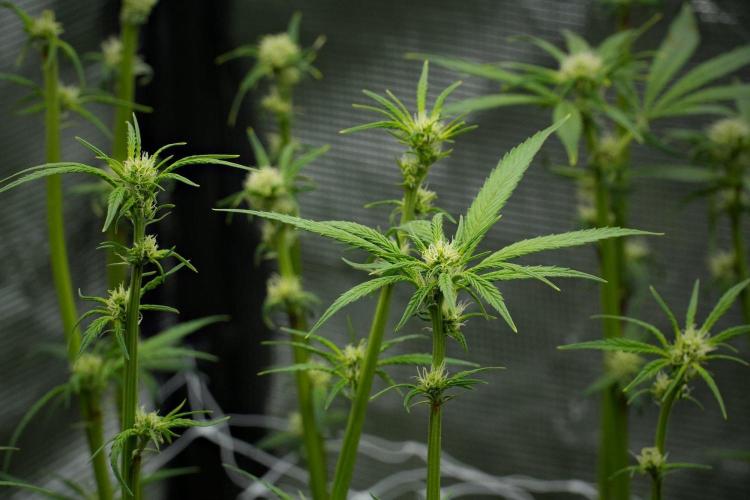
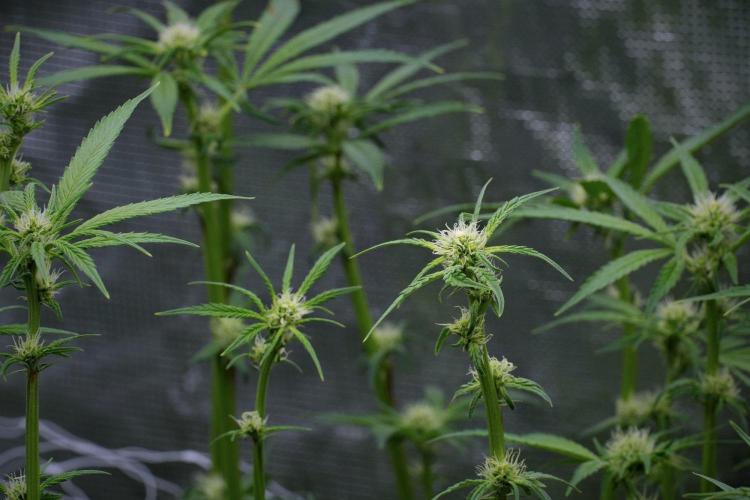
🌿 Four Plants Starting to Look Like One
One of my favourite things about this stage of Project Blue Tent is looking at the tent from above.
It's becoming genuinely difficult to tell the four plants apart.
The canopy is so even that the individual plants almost disappear into one continuous sea of green.
And that's actually a fantastic result from the SCROG.
We started with four individual plants.
Different branches.
Different growth patterns.
Different personalities.
Now we've shaped them into one remarkably uniform canopy.
But underneath that uniformity, the individual characteristics are still there.
And that's what makes documenting them separately so interesting.
Plant A still has her particular way of growing.
She's still one of the most vigorous.
She's still incredibly responsive to training.
And she's still quietly trying to occupy every available centimetre of space.
────────────────────────
🌬️ Cleaning for the Next Chapter
Once the defoliation is complete, the room should immediately feel different.
More open.
More breathable.
Less congested.
And that is exactly what we're looking for before the flip.
We're not trying to make the plants small.
We're not trying to weaken them.
We're simply creating a cleaner structure from which the flowering cycle can begin.
The canopy has been built.
Now we're refining it.
Then comes recovery.
And after that...
Flower. 🌸
────────────────────────
👀 Looking Ahead
This is one of those weeks where the best thing we can do after the work is simply give the plants some peace.
We've spent weeks manipulating their structure.
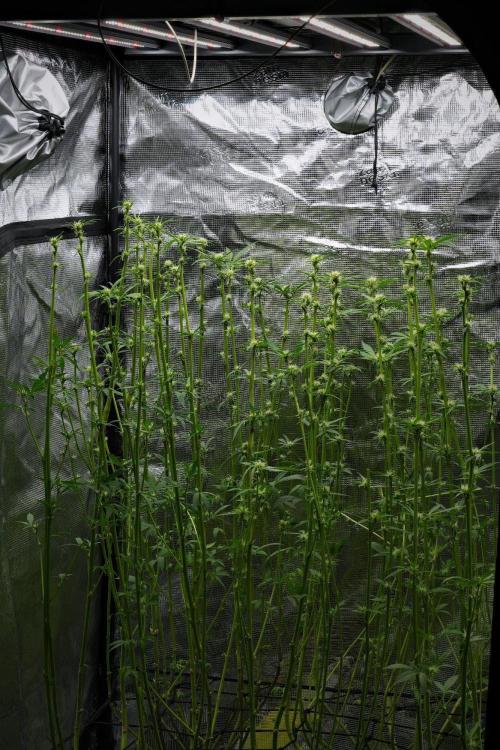
Now they need time to respond.
I'll be watching the new growth closely, keeping the environment stable and monitoring how quickly they recover.
The nutrient recipe may increase next week depending on what the plants tell us.
The irrigation will continue doing its job.
And if everything looks as good as it does now...
We'll be ready to flip the Blue Tent into flowering.
The SCROG is full.
The canopy is organised.
The plants are healthy.
The cleanup is done.
Now we let them recover.
Then...
we turn the page.
────────────────────────
💙 Thank You
A huge thank you to Zamnesia for making Project Blue Tent possible and for providing these fantastic Pickle Lemon Haze F1 genetics.
A heartfelt thank you to Plagron for the Premium Growbags and Hydro nutrient line that continue supporting this beautiful vegetative growth.
A special thank you to Phytonaut for the LED lighting helping us maintain such a consistent and beautifully structured canopy throughout the tent.
And a massive thank you to Mars Hydro for the automatic drip irrigation and drainage system, which continues making consistent irrigation so much easier.
Thank you to GrowDiaries for providing a place where growers from all over the world can document their journeys, share knowledge and learn from one another.
And finally...
Thank you to everyone following Project Blue Tent.
Whether you've been here since the beginning, just discovered this diary, leave comments every week or simply enjoy watching these plants develop...
I genuinely appreciate you being here. 💙
Four sisters.
One environment.
One experiment.
And four very different little personalities hiding underneath an increasingly uniform canopy.
For Plant A, this week is about finishing what we started.
The canopy is built.
The cleanup is complete.
Now she gets to recover.
And very soon...
🌸 Flowering begins.
Until next time...
Growers Love, happy growing, and take care everyone! 🌱💙
14 likes
2 comments
Share
Used techniques
Defoliation
Technique
ScrOG
Technique
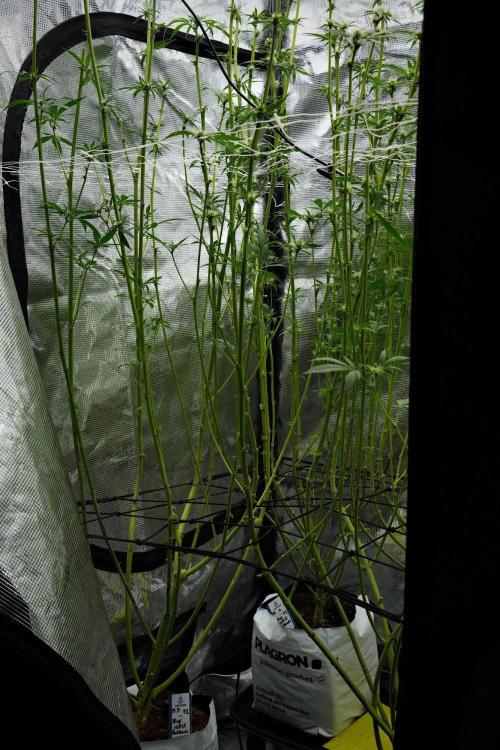
8
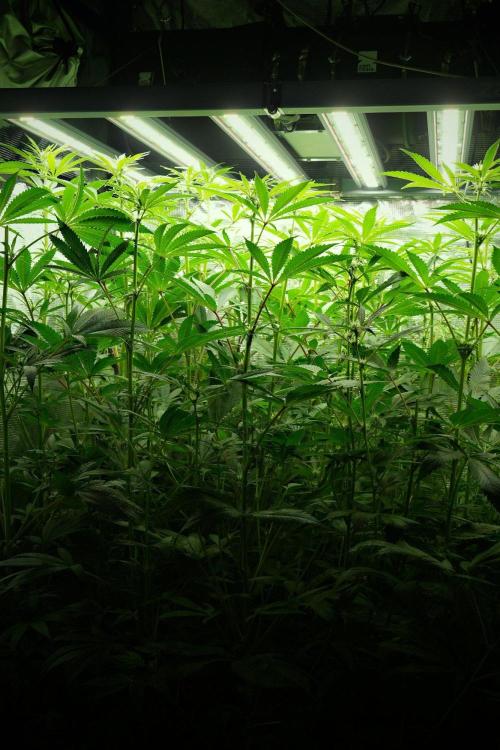
Week 8. Flowering
11d ago
1/60
81 cm
Height
12 hrs
Light Schedule
27 °C
Day Air Temp
5.8
pH
Normal
Smell
1045 PPM
TDS
67 %
Air Humidity
19 °C
Solution Temp
24 °C
Substrate Temp
27 °C
Night Air Temp
8 liters
Pot Size
1.4 liters
Watering Volume
666 PPM
CO₂ Level
Nutrients 6
Hydro A
2 mll
Hydro B
2 mll
Hydro Roots
1 mll
DogDoctorOfficial 💙 Project Blue Tent – Week 8
Pickle Lemon Haze F1 – Pheno A (Folder 14A)
Hello everyone, and welcome back to another chapter of Project Blue Tent! 💙🌱
If you're discovering this diary for the first time, welcome aboard.
Project Blue Tent follows four individual plants from seed to harvest, with each phenotype receiving her own dedicated diary.
All four sisters share the same tent, lighting, irrigation, nutrition, environmental conditions and training strategy.
The purpose is simple:
Keep the variables as consistent as possible... and let the plants tell their own story.
And this week, that story is getting very exciting.
Because the Blue Tent has officially entered flowering. 🌸
Today we're checking in with Pickle Lemon Haze F1 – Plant A.
And just like her sisters...
She's growing fast.
Very fast.
────────────────────────
🌸 Week Eight – And Suddenly Everything Accelerates
There are moments in a grow where you can almost feel the plants changing from one day to the next.
This is one of those moments.
After seven weeks of vegetative growth, the Blue Tent has finally moved to 12/12.
And the girls seem to have taken that as a personal invitation to accelerate.
Plant A is now approximately 81 cm tall, compared with roughly 60 cm when we finished vegetation.
That's around 20 cm of growth already, and the whole room is behaving similarly.
But what's fascinating isn't simply the vertical growth.
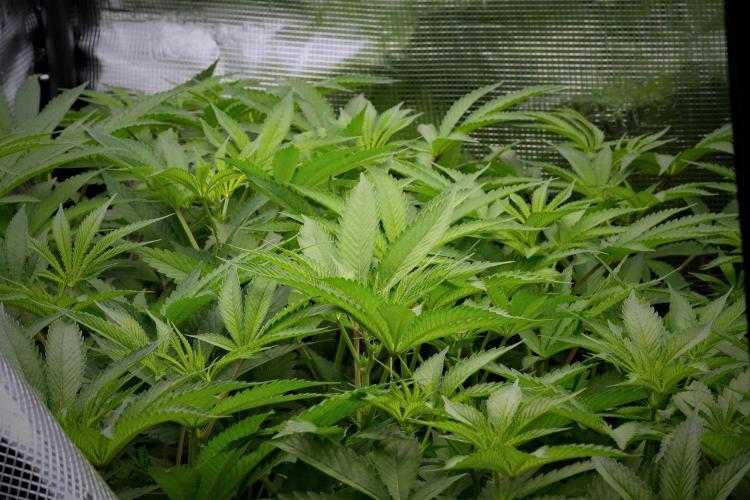
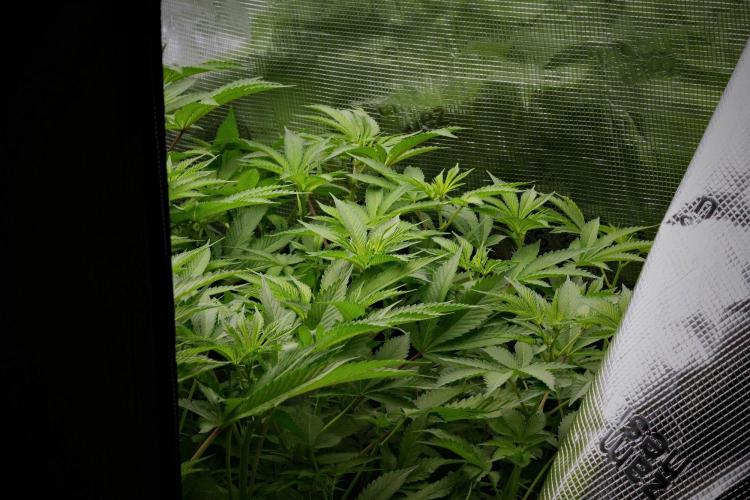
They're developing everywhere.
New flowering sites are becoming increasingly obvious.
Branches are extending.
Nodes are developing.
The plants are changing shape almost by the hour.
They're not simply stretching...
They're building.
And Plant A is right there with them.
────────────────────────
🌿 Pickle Lemon Haze F1 – Plant A
Plant A has always been one of the girls that catches my attention.
She's vigorous.
She's responsive.
She's incredibly determined.
And now that flowering has started, that personality is becoming even more obvious.
The canopy remains remarkably even despite the amount of growth happening above it.
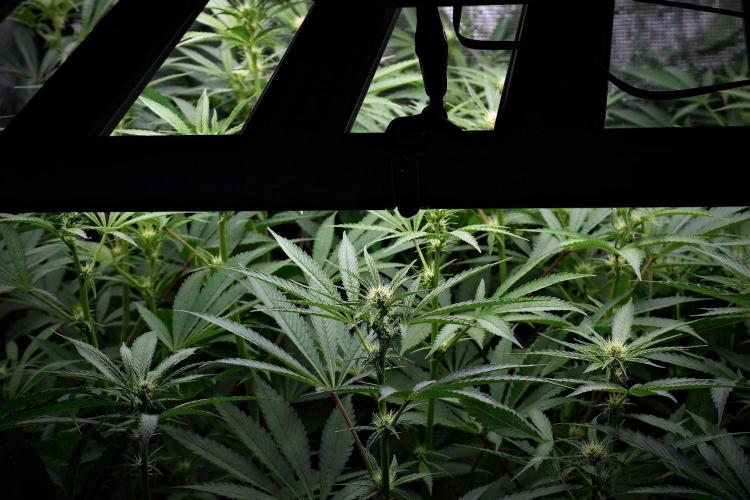
Her branches are strong, her foliage remains healthy and the developing flowering sites are appearing rapidly throughout the structure we spent weeks building.
This is exactly why we documented these plants individually.
From a distance, all four sisters can look remarkably similar.
But when you spend time with each one...
You start noticing the little differences.
Plant A has that particular combination of speed, structure and enthusiasm that has been present since the beginning.
And right now...
She's absolutely flying.
────────────────────────
💥 Super Cropping – Trying to Keep Up With Her
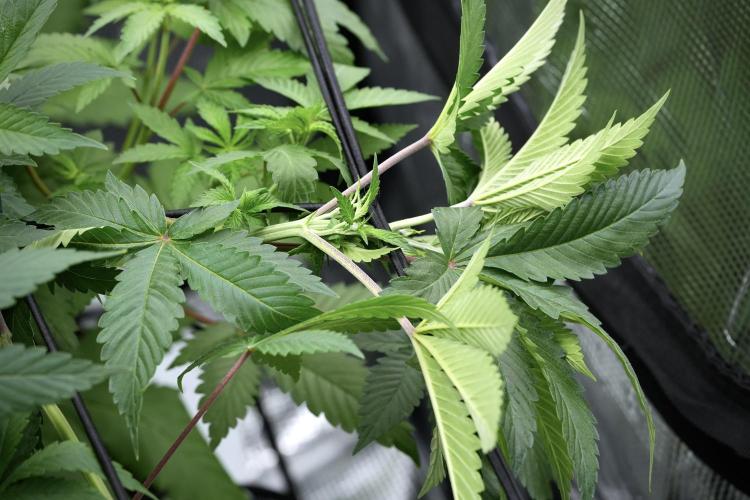
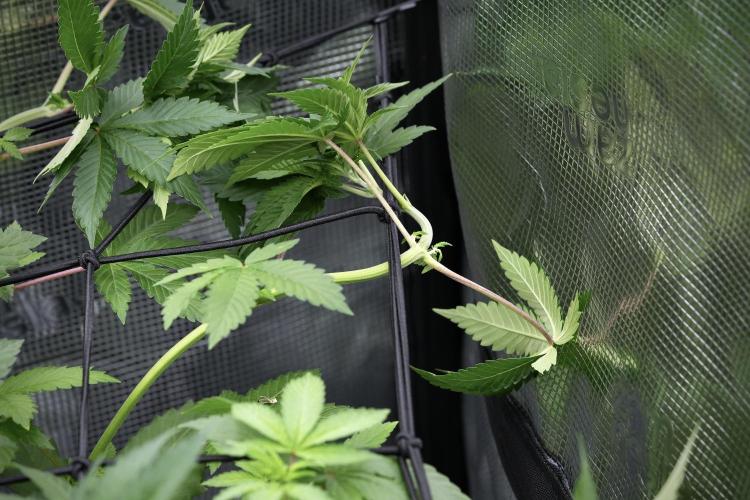
With this amount of growth happening so quickly, we're continuing with super cropping as another way of managing the most vigorous vertical shoots.
The objective isn't to stop the plants from growing.
At this point, I'm not sure anything could stop them. 😂
It's about trying to influence the structure while they're stretching aggressively.
Some of the taller branches are being carefully worked to reduce their dominance and hopefully encourage stronger branching points as the plant continues developing.
And the funny part?
These girls simply refuse to stay down.
I'll work a branch...
Give it some time...
And she'll be standing back up again like nothing happened.
Plant A is particularly impressive in that regard.
She seems to have one answer to everything:
Grow.
😂🌱
Whether this will ultimately be enough to keep the stretch under control remains to be seen.
The temperatures, the seven-week vegetative period and the sheer vigour of these plants are all factors.
But for now, the canopy remains beautifully manageable.
So we continue observing and adapting.
────────────────────────
😳 Well... I May Have Broken a Branch
And then there's the part of growing that nobody wants to talk about...
Sometimes you make a mistake.
This week, while working with Plant A, I managed to break a branch.
Yep.
It happened.
I'm not going to pretend it didn't.
I'm also not going to turn it into some dramatic disaster.
Plants are resilient.
Training doesn't always go perfectly.
Sometimes a branch moves differently than expected, sometimes there's a little too much pressure, and suddenly you're standing there looking at the plant thinking:
"I'm so sorry, my dear." 😂🌱
I immediately tried to support and repair the damaged section, and now we'll simply give her some time and see how she responds.
At the moment, there's nothing here that makes me alarmed.
It's one branch.
The rest of the plant is growing beautifully.
And honestly...
This is also part of documenting a real grow.
Not every training session is perfect.
Not every decision goes exactly according to plan.
Sometimes you make a mistake.
You learn from it.
You carry on.
And Plant A certainly isn't letting one damaged branch stop her.
────────────────────────
🌱 A Fast-Developing Flowering Plant
What really stands out this week is just how quickly these plants are evolving.
The flowering sites aren't sitting there waiting patiently.
They're developing rapidly.
The structure we created during vegetation is now being populated with new growth, and the difference between the beginning of the week and the end is already noticeable.
This is also why I'm glad we spent the time building the canopy properly.
The SCROG gave us a much more even starting structure.
The defoliation opened up the interior.
And now the plants have room to develop into that structure.
We're going to see exactly how much they use it.
────────────────────────
💡 Starting Flower Under Strong Light
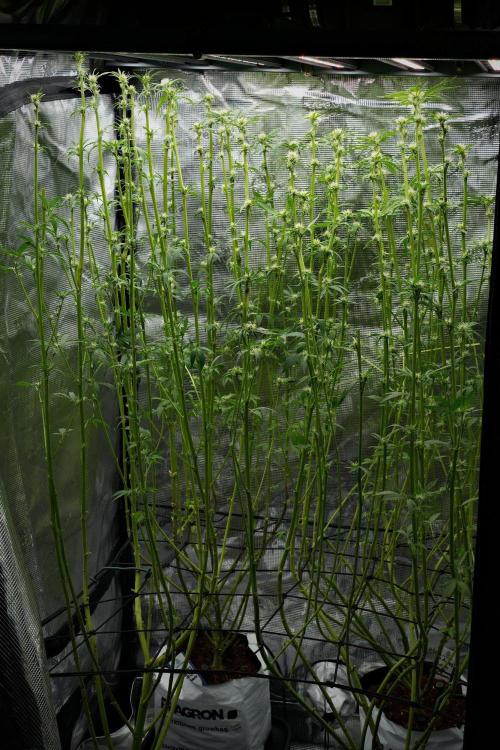
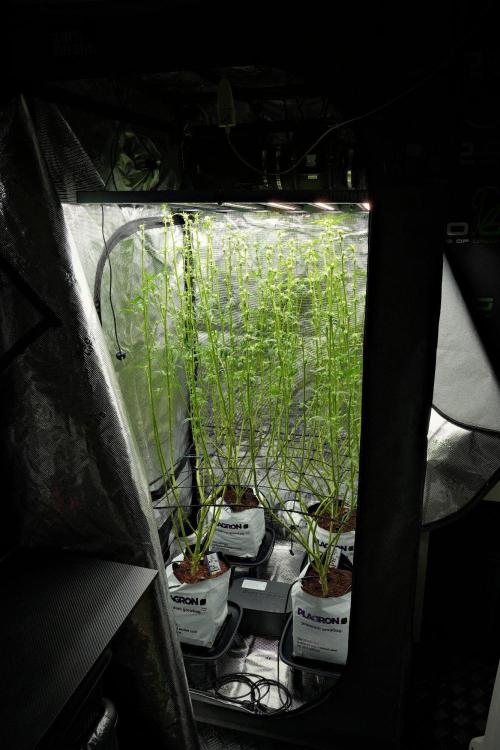
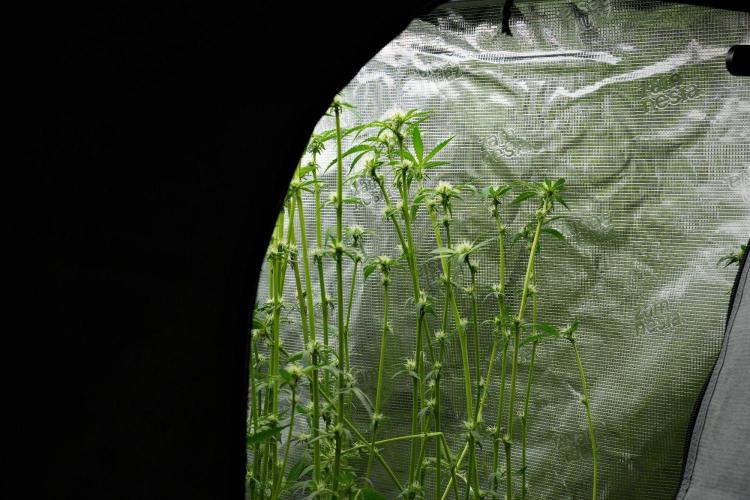
The Blue Tent is now running 12/12, and we're starting flowering at approximately 800 PPFD.
That's a deliberate decision.
After seven weeks of vegetation, these plants have a substantial canopy and are showing very high levels of growth activity.
Rather than gradually creeping toward flowering intensity, I'm giving them strong light from the beginning and watching their response.
The goal is to provide enough usable light to support this rapidly developing canopy while continuing to monitor the environmental side of the equation.
And because the girls are already stretching aggressively...
The next couple of weeks should be very interesting.
I'm curious to see whether the strong light helps keep the canopy relatively compact...
Or whether these ladies simply decide:
"Thank you for the extra photons. We'll use all of them to grow another 30 centimetres." 😂
We'll see.
────────────────────────
🌡️ Blue Tent Environment
The environment remains remarkably consistent throughout the room.
This week's recorded conditions were:
• 🌡️ Day Temperature: 27°C
• 🌙 Night Temperature: 27°C
• 💧 Relative Humidity: 67%
• 🥥 Substrate Temperature: 24°C
• 💦 Nutrient Solution Temperature: 19.2°C
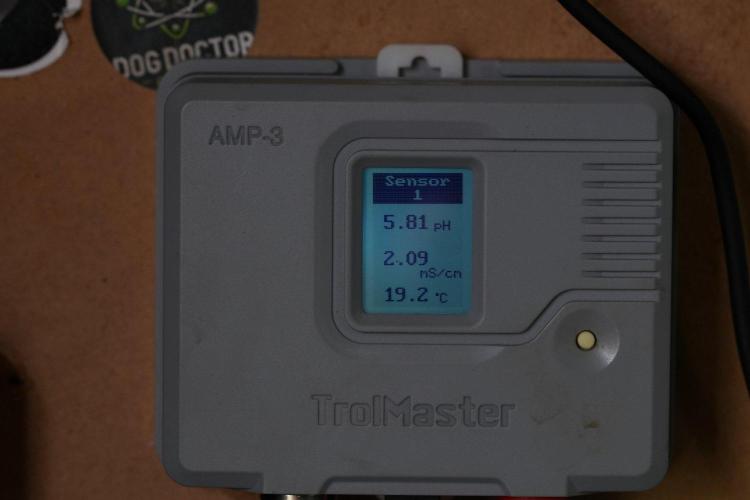
• ⚗️ pH: 5.81
• ⚡ EC: 2.09 mS/cm
• 💨 CO₂: approximately 666 ppm
• 💡 Light Schedule: 12/12
• 💧 Irrigation: approximately 1.4 L/plant/24h
• ? Pot Size: 8 L
• 📏 Plant Height: approximately 81 cm
One thing I'm watching particularly closely is the temperature difference between day and night...
Or rather, the lack of one.
We're currently sitting around 27°C during both periods.
Warmer nights can encourage additional stretch, and these plants certainly don't need much encouragement.
😂
So I'm keeping that in mind while watching how the canopy develops.
For now, however, the plants are showing no signs that they're unhappy with the environment.
────────────────────────
🥥 Feeding – Now in Flowering Mode
The nutrition has also moved into the flowering program.
Current feeding:
• Plagron Hydro A — 2 ml/L
• Plagron Hydro B — 2 ml/L
• Plagron Hydro Roots — 1 ml/L
• Plagron Power Buds — 1 ml/L
• pH Plus — 0.03 ml/L
• pH Min — 0.03 ml/L
Current EC:
2.09 mS/cm
pH:
5.81
The change in nutrition is relatively measured.
I'm not interested in throwing everything at the plants simply because the calendar says "flower."
They're already consuming aggressively and developing incredibly quickly.
So for now, the objective is to support that development while continuing to observe how Plant A responds.
Her colour remains healthy.
Growth remains vigorous.
And the flowering sites are developing exactly as we'd hope.
That's enough reason to stay consistent.
────────────────────────
💧 The Drip & Drainage System – Working Together
The automatic irrigation and drainage system has become a very important part of this project.
Plant A is now receiving approximately 1.4 litres per 24 hours through the drip irrigation system.
The process is beautifully straightforward.
The drippers deliver the nutrient solution to the coco.
The solution passes through the substrate and feeds the root zone.
The runoff then enters the collection trays underneath the grow bags.
From there, the drainage pipe carries the collected water toward the pump.
The pump pulls that water away and returns it toward the reservoir.
So the irrigation and drainage systems are working together as one continuous, recirculating setup.
Water in.
Coco.
Roots.
Runoff.
Collection.
Pump.
Reservoir.
And around we go again.
It's almost like having a little circulatory system underneath the plants.
And it's working wonderfully.
As the plants become larger and their water demand increases, having that consistency becomes even more valuable.
I don't have to manually reproduce the same watering and drainage routine every day.
The system does it.
The plants get their consistent irrigation.
The runoff is handled.
And I get to spend more time actually looking at the plants.
That's exactly what I wanted.
────────────────────────
🌿 Seven Weeks of Vegetation – Maybe We Overdid It?
I'm going to admit something here.
Looking at these girls now...
I may have kept them in vegetation a little too long.
😂
Seven weeks isn't something I normally do.
Usually, I'd be much more inclined to flip earlier.
But the extra vegetative time gave us a fantastic canopy.
Strong branches.
Established roots.
A full SCROG.
A beautifully even structure.
The downside?
We now have four incredibly energetic plants with a huge amount of growth potential entering flowering at the same time.
And they're showing us exactly what that means.
Approximately 20+ cm of growth already.
Flowering sites developing rapidly.
Branches continuing to extend.
Everything accelerating.
So...
Let's have faith.
😂💙
We've prepared them as well as we can.
Now we get to see what happens.
────────────────────────
🌸 Plant A – Ready for the Show
Plant A's flowering transition has been particularly satisfying to watch.
The framework we created during vegetation is clearly visible underneath the new growth.
Her branches are well distributed.
Her canopy remains relatively even.
And the developing flowers are appearing throughout the structure rather than being concentrated into just a few dominant tops.
That's the advantage of all those weeks of preparation.
The plant isn't starting flower from scratch.
She's entering it with a structure already designed to support what comes next.
Now we just need to manage the incredible amount of growth she's producing.
And hopefully...
Keep her somewhat compact.
No promises. 😂
────────────────────────
🧠 Managing Growth Without Fighting the Plant
One of the lessons these girls are already teaching me is that there's a difference between managing growth and trying to completely control it.
The plants have their own momentum.
We can influence structure.
We can redistribute growth.
We can work with the branches.
But ultimately...
They're going to grow.
And I think that's especially important to remember in a project like this.
The goal isn't to force Plant A into exactly the shape I imagined.
It's to create the best environment and structure possible, then observe how she expresses herself.
Super cropping is one of the tools I'm using to help manage the most vigorous shoots.
The strong lighting gives the canopy plenty of energy.
The irrigation provides consistency.
The nutrition supports the transition into flower.
And the environment gives us the foundation.
After that...
Nature gets the final word.
────────────────────────
💙 Plant A – Still One of the Stars
There is something particularly satisfying about watching Plant A now.
She's been through everything this project has thrown at her.
Topping.
Training.
SCROG.
Defoliation.
The transition into flowering.
And now a little accidental branch damage.
And through all of it...
She keeps growing.
That says a lot about her.
She's not delicate.
She's not hesitant.
She's vigorous and remarkably resilient.
And although the four sisters continue to look impressively similar, Plant A still has that unmistakable personality we've been watching since the beginning.
She wants to grow.
So we'll let her grow...
Just perhaps with a little guidance along the way. 😂🌱
────────────────────────
👀 Looking Ahead
The next few weeks are going to be fascinating.
The plants are already moving incredibly quickly, and we're only at the beginning of flowering.
I'll continue watching the stretch closely.
We'll keep using super cropping where necessary to manage particularly vigorous branches.
We'll monitor the damaged branch and see how Plant A responds.
The irrigation system will continue running its cycle.
The flowering nutrition will continue supporting development.
And the environment will remain under close observation, especially with those warm nights.
For now, however...
The canopy is still remarkably even.
The flowering sites are developing rapidly.
Plant A is healthy.
And the whole room is absolutely full of energy.
We may have vegged these girls a little longer than usual.
We may have created more growth than we intended.
But there's no point worrying about that now.
The plants are ready.
The lights are on 12/12.
The flowers are coming.
And we're going to enjoy the ride.
────────────────────────
💙 Thank You
A huge thank you to Zamnesia for making Project Blue Tent possible and for giving us the opportunity to explore these beautiful Pickle Lemon Haze F1 genetics individually.
A heartfelt thank you to Plagron for the Premium Growbags and Hydro nutrient line supporting these girls throughout the project and now helping them enter flowering.
A special thank you Zamnesia for the Phytonaut LED lighting helping us build such a strong and even canopy and now providing the intensity we're using as flowering begins.
And a massive thank you to Mars Hydro for the automatic drip irrigation and drainage system.
The way the drippers, coco, collection trays, drainage lines, pump and reservoir work together has made keeping four rapidly growing plants consistently irrigated considerably easier.
Thank you as well to GrowDiaries for giving growers around the world a place to document these journeys, share experiences and learn together.
And finally...
Thank you to everyone following Project Blue Tent.
Plant A has officially entered her next chapter.
She's stretched.
She's developing flowers.
She's surviving my attempts to keep her under control.
And yes...
I owe her an apology for that broken branch. 😂💙
But she's still standing.
Still growing.
Still beautiful.
And still showing us exactly why following four individual phenotypes under the same conditions is so much fun.
The Blue Tent is officially flowering.
The stretch is here.
The flowers are developing.
And Plant A is ready to put on a show. 🌸💙
Until next week...
Growers Love, happy growing, and take care everyone! 🌱💙
6 likes
comments
Share
9
Week 9. Flowering
4d ago
1/136
145 cm
Height
12 hrs
Light Schedule
27 °C
Day Air Temp
6.0
pH
Normal
Smell
1245 PPM
TDS
67 %
Air Humidity
24 °C
Solution Temp
24 °C
Substrate Temp
27 °C
Night Air Temp
8 liters
Pot Size
1.6 liters
Watering Volume
666 PPM
CO₂ Level
Nutrients 6
Hydro A
2.2 mll
Hydro B
2.2 mll
Hydro Roots
1 mll
DogDoctorOfficial 💙 Project Blue Tent – Week 9
Pickle Lemon Haze F1 – Pheno A
🌿 When The Plants Make You Rearrange The Room
Hello everyone, and welcome back to another chapter of Project Blue Tent! 💙🌱
And...
what a week this has been.
If you've been following this project from the beginning, you already know that these four Blue Waffle F1 and Pickle Lemon Haze F1 plants have been growing with an incredible amount of energy.
This week, however, they finally made one thing very clear:
We were running out of room.
😂
The plants had stretched much more than I wanted.
The LEDs were getting too close.
The combination of the drainage system, pots, substrate and overall height of the plants was eating into our available vertical space.
So...
we adapted.
And Pickle Lemon Haze Pheno A was right there in the middle of it all.
Growing.
Stretching.
Flowering.
And apparently completely unconcerned about the fact that she was becoming too tall for her own room.
😂💙
So this week wasn't about sitting back and watching.
This week was about reorganizing the environment around these girls and giving them the space they need to continue the journey.
🌸 Week Nine – The Stretch Was Real
Pickle Lemon Haze Pheno A is now approximately 145 cm tall.
And that's the plant itself.
Add the pot.
Add the substrate.
Add the drainage system underneath everything.
Then look at where the LEDs were sitting...
Suddenly those 145 centimetres become a very serious number inside a tent.
😂
I knew we could see significant stretching after seven weeks of vegetation.
We discussed it last week.
The plants had already gained a considerable amount of height almost immediately after the flip.
But honestly?
They still managed to surprise me.
They didn't just stretch a little.
They stretched enough that we had to rethink the physical arrangement of the room.
And I think that's one of the most important lessons from this week.
Sometimes you don't solve a plant problem by changing the plant.
You solve it by changing the room.
💡 Making Room For The Canopy
The first major change was moving the carbon filter and extractor outside the tent and onto the top.
Previously, that equipment was taking up valuable vertical space inside the grow area.
By relocating it, we gained those precious centimetres back.
The airflow system now pulls air from inside the tent, through the carbon filter and extractor positioned above, and then exhausts it outside.
And that gave us something we desperately needed:
room above the plants.
Once the equipment was out of the way, we were able to raise the LEDs toward the top of the tent.
That immediately gave the canopy more breathing room.
And considering some of the tops had already started showing signs of getting too close to the lights...
this was very welcome.
🔥 A Few Tops Got Too Close
Before we made the changes, we did have a few leaves and tops showing some LED stress.
Nothing catastrophic.
Nothing that has changed the overall health of the plants.
But there were some burned areas where the canopy had simply gotten too close to the light.
The important thing is that we caught it.
We raised the LEDs.
We opened the canopy.
We created more space.
And now we're watching how the affected areas recover.
That's part of running a real grow.
You can calculate distances.
You can watch environmental numbers.
You can plan your canopy.
But eventually the plant gives you the final report.
And in this case, the report was:
"Doctor... the sun is a little too close."
😂☀️
Message received.
✂️ The Big Defoliation
Once we had created the additional vertical space, the next job was opening the plants.
And we went deep.
There was a significant amount of foliage removed from the room.
The plants had become incredibly dense, and at this stage that density needed to be managed.
The purpose wasn't to remove leaves simply because we had scissors in our hands.
The purpose was to reduce unnecessary congestion and expose the flowering structure we've spent so much time building.
More visibility.
More airflow.
More room around the flowering sites.
A cleaner canopy.
And a better-organized flowering room.
Pickle Lemon Haze Pheno A came through the process beautifully.
And when you look at her now...
you can actually see the architecture again.
The branches.
The flowering sites.
The SCROG.
The spacing.
Everything is much easier to read.
🌿 What Defoliation Is — And What It Isn't
I think this is worth explaining because we're showing quite a significant defoliation in the photographs.
Defoliation isn't about removing healthy leaves because healthy leaves are somehow undesirable.
They're not.
The leaves are doing important work.
What we're managing here is excessive foliage and congestion inside a very dense flowering room.
The plants had built an enormous amount of vegetative material.
Now we're transitioning toward a flowering structure.
So we're selectively reducing what we don't need in order to make the remaining architecture more functional.
And I'm not expecting the defoliation to magically create flowers.
That's not the point.
The point is simply to give the flowers and remaining canopy a better environment in which to develop.
Now we've done the work.
And now...
we leave the plants to respond.
🕸️ The Second SCROG Is In
The other major addition this week is the second SCROG net.
The first SCROG helped us build and distribute the canopy during vegetation.
It did its job beautifully.
But these girls have become much taller than originally anticipated.
And now we're thinking about the future weight of those flowering branches.
So the second net is primarily about support.
We're not trying to turn these plants back into a vegetative canopy.
We're preparing the structure to carry what is coming.
Because looking at these plants now...
I have a feeling some of those branches are going to appreciate having something underneath them later.
😂
It's always better to have support ready before you need it.
🌬️ Two Fans – Creating The Vortex
We also added another Zamnesia clip fan, this time underneath the canopy.
We now have one fan working higher in the room and another operating lower down.
The goal is to create more complete circulation through the growing space.
The lower fan pushes air through the lower portion of the plants while the upper airflow continues moving air through the canopy.
Together, this creates a kind of vortex-style circulation rather than having air movement concentrated in only one area.
That's particularly valuable now.
We've opened the canopy.
We've created more space.
Now we want air moving through that space.
Not just across the top.
Not just underneath.
Through the room.
And looking at the tent now...
I really like what we've created.
The room feels much more organized.
✂️ Clean Tools – Always
Another little detail I want to mention is the Zamnesia curved scissors.
I really like these.
For most of the larger defoliation work, I actually use my fingers.
If a leaf can be gently removed without cutting anything else, that's often my preferred method.
But there are always those little leaves, delicate areas and awkward positions where scissors are simply the better tool.
And whenever we're using scissors around the plants:
Clean.
Always.
Even if they're brand new, I still like to clean them.
It's such a small part of the process, but it's one of those habits that makes sense.
Clean hands.
Clean tools.
Gentle work.
And only remove what needs removing.
🌸 And Then There's That Broken Branch...
Now we need to talk about last week's little accident.
😂
Unfortunately...
the branch we broke while training last week did not survive.
We tried.
We supported it.
We gave it time.
But sometimes...
a branch is simply done.
And that's okay.
It happens.
I'm certainly not going to pretend otherwise.
The important thing is what happened to the rest of the plant.
And the answer is:
Absolutely nothing.
She carried on.
The plant didn't suddenly collapse.
She didn't stop developing.
She didn't lose her momentum.
She didn't let one branch decide the story of the entire plant.
She simply continued flowering.
And honestly?
That's one of the most reassuring things about growing.
Sometimes you make a mistake.
Sometimes the plant doesn't recover from that particular injury.
But that doesn't mean the whole plant is affected.
One branch didn't define Plant A.
The rest of her is doing beautifully.
💙 Pickle Lemon Haze A – Still Standing Strong
That's actually something I really like about this girl.
She's resilient.
She has been through topping.
Training.
SCROG.
Defoliation.
The flowering transition.
A broken branch.
And now another deep defoliation.
And she's still there looking healthy and vigorous.
If anything, the whole plant seems to have taken the attitude of:
"Fine. That branch is gone. I'll grow the rest."
😂🌱
And that's exactly what she's doing.
The canopy remains strong.
The flowering sites continue developing.
The remaining branches are healthy.
And the loss of that one branch hasn't changed the overall performance we're seeing.
So...
lesson learned.
We move on.
🌿 The Blue Tent Had To Grow Up
There's something funny about this week.
Last week, I was talking about managing the stretch.
This week, the plants basically said:
"You'd better manage it."
😂
So we did.
The room has changed considerably.
The carbon filter and extractor are now outside the tent.
The LEDs have been raised.
The canopy has been opened deeply.
The second SCROG has been installed.
The second fan is circulating air below the canopy.
And suddenly...
we have room again.
The plants are still tall.
They aren't magically becoming shorter.
But they now have somewhere to continue growing and flowering without immediately running into the ceiling.
That's a much better situation.
🌸 From Vegetative Structure To Flowering Structure
And this is the really exciting part.
All that vegetative growth wasn't wasted.
The seven weeks of vegetation gave us:
Strong branches.
A large root system.
A filled SCROG.
A broad canopy.
A lot of flowering sites.
Now we're transitioning from building the plant to watching that structure turn into flowers.
That's the part I really want to watch now.
We've done the major structural work.
We've made the room fit the plants.
We've made the canopy more manageable.
Now...
let them flower.
💧 Nutrition – They're Hungry Girls
The plants are also telling us something very clearly through their appetite.
They're hungry.
So the flowering recipe has moved slightly upward.
We're now running:
Plagron Hydro A — 2.2 ml/L
Plagron Hydro B — 2.2 ml/L
Plagron Hydro Roots — 1 ml/L
Plagron Power Buds — 1 ml/L
pH adjustment as required
This has brought the EC up to approximately 2.49 mS/cm.
It's still a measured change.
We're not suddenly throwing everything at the plants.
We're responding to what they're showing us.
They're growing rapidly.
They're flowering.
They're drinking.
And the foliage continues looking healthy.
So we move forward carefully and watch the response.
🌡️ Blue Tent – Current Conditions
The room remains stable despite all the physical changes we've made.
Current recorded conditions are approximately:
🌸 Flowering: Week 9
📏 Height: approximately 145 cm
💡 Light schedule: 12/12
☀️ Day temperature: 27°C
🌙 Night temperature: 27°C
💧 Relative humidity: 67%
⚗️ pH: 6.01
⚡ EC: approximately 2.49 mS/cm
🌡️ Solution temperature: 25.3°C
🌱 Substrate temperature: 24°C
💨 CO₂: approximately 666 ppm
? Pot size: 8 L
💦 Watering: approximately 1.6 L per plant / 24h
And I think the consistency is important.
We've changed the physical arrangement of the room quite significantly.
But we're keeping the growing environment as stable as possible.
The plants already have enough to adapt to.
They don't need us changing everything at once.
🌬️ Airflow Is Now A Major Part Of The Equation
With the plants this large and the flowering structure developing, airflow becomes increasingly important.
The deep defoliation has opened the plants.
The second fan gives us additional movement below the canopy.
The upper fan continues moving air higher in the room.
And moving the extraction equipment outside the tent gave us more usable space.
Everything is now working together.
That's what I want.
Not one single "magic" piece of equipment.
A room where the different systems complement each other.
Light.
Air.
Irrigation.
Nutrition.
Structure.
And observation.
🕸️ Supporting The Future Flowers
The second SCROG is probably going to become more important with every passing week.
Right now, it might look like another piece of equipment in the tent.
Later...
it could be the thing keeping those branches where we want them.
The plants have already developed a substantial framework.
Now the flowers are going to start adding weight.
So I'm very happy we installed the second net now rather than waiting until the branches were already carrying heavy flowers.
We're preparing the room for the next stage.
And that's really what this week has been about.
Preparation.
🔬 Same Room – Different Strain – Same Incredible Response
There's something fascinating about Pickle Lemon Haze Pheno A growing alongside the Blue Waffle F1 girls.
They're different genetics.
Different strains.
Different individual diaries.
And yet this week...
they look remarkably similar.
Same incredible stretch.
Same environmental conditions.
Same physical limitations.
Same need to reorganize the room.
Same deep defoliation.
Same second SCROG.
Same additional airflow.
Same nutrition increase.
And this is actually another beautiful part of the experiment.
We're watching genetics express themselves under a shared environment.
Sometimes the differences are obvious.
Sometimes...
the plants simply agree with each other.
😂💙
This week was one of those moments.
🌿 The Canopy After Everything
Looking at the room now, I have to say...
I love it.
The plants are tall.
Yes.
They are probably taller than I originally wanted.
😂
But they're healthy.
They're vigorous.
They're flowering.
And after the cleanup, the architecture is much easier to see.
There is something very satisfying about looking at the room after a major intervention and realizing:
Okay.
This works.
We made the space.
We created the support.
We improved the circulation.
We raised the lights.
And now the plants have somewhere to finish.
That's a good feeling.
🔭 Looking Ahead – Now We Let Them Work
This is where the next phase becomes much simpler.
We've done enough.
Now I want to watch.
I want to see the stretch finally slow down.
I want to watch the flowering sites develop.
I want to see how the plants respond to the deep defoliation.
I want to see how the remaining branches use the space.
I want to see how the second SCROG supports them.
And of course...
I want to see what Pickle Lemon Haze Pheno A ultimately becomes.
The broken branch is gone.
That's part of the story now.
But the plant is absolutely fine.
And that's the important part.
She's still here.
Still flowering.
Still growing.
Still shining.
💙 Final Thoughts – One Branch Less, Not One Bit Less Determined
What a week.
😂💙
Pickle Lemon Haze Pheno A has officially joined the "we need to rearrange the entire room because the plants got too tall" club.
At approximately 145 cm, she's certainly not small.
And once you add the pot, substrate and drainage system underneath her, we were getting dangerously close to our vertical limits.
So we adapted.
The carbon filter and extractor moved outside the tent.
The LEDs went higher.
The canopy received a deep cleanup.
A second SCROG was installed.
A second fan was added underneath the canopy.
The airflow was improved.
The room was reorganized.
And those few LED-stressed areas were addressed before they could become something more serious.
And then...
there's that branch.
Unfortunately, the broken branch from last week didn't make it.
It happens.
I'm disappointed, of course.
But I'm not worried.
Because look at her.
She's still growing.
Still flowering.
Still healthy.
Still vigorous.
And the rest of the plant hasn't missed a beat.
Sometimes growing teaches you humility.
You can train carefully.
You can plan.
You can prepare.
And occasionally...
snap.
😂
You learn.
You move forward.
And you keep growing.
That's exactly what Plant A has done.
And honestly, that's what I love about documenting a real grow.
Not everything is perfect.
Not every branch survives.
Not every plant stays the height you planned.
Not every week goes exactly according to the original design.
But that's the reality of cultivation.
You observe.
You adapt.
You make the room work for the plants.
And then you let them do what they know how to do.
Grow.
Flower.
Finish.
Pickle Lemon Haze Pheno A is still doing all three beautifully.
And now that we've finally given these girls a little more breathing room...
I'm very curious to see what happens next.
The room is ready.
The lights are higher.
The airflow is moving.
The second SCROG is in place.
The nutrition is supporting them.
And the flowering journey is really getting started now.
So let's forget about that one lost branch.
It had its chapter.
The rest of the plant has plenty more story left to tell.
💙🌸🌿
🙏 A Huge Thank You
A huge thank you once again to Zamnesia for making Project Blue Tent possible and for giving us the opportunity to explore these beautiful Pickle Lemon Haze F1 genetics individually.
Thank you to Plagron for the Hydro nutrient line supporting these incredibly hungry and vigorous plants as they move deeper into flowering.
A massive thank you to Zamnesia for the Phytonaut LED lighting, the curved scissors and the clip fans that continue playing such important roles inside this project.
Thank you to Mars Hydro for the automatic drip irrigation and drainage system that continues keeping these plants consistently supplied despite how quickly they're growing.
And thank you to GrowDiaries for giving growers a place to document these journeys, share the successes, share the mistakes, and hopefully learn something from both.
And finally...
thank you to everyone following Project Blue Tent.
This week was definitely one for the books.
The plants stretched.
We ran out of vertical space.
We moved equipment.
We raised the lights.
We opened the canopy.
We installed another SCROG.
We added another fan.
We lost one branch.
And somehow...
we ended the week looking at a room that I think looks absolutely beautiful.
😂💙
That's growing.
You don't always get the week you planned.
Sometimes you get the week the plants give you.
And this week, these girls gave us plenty.
Pickle Lemon Haze Pheno A is still standing.
Still healthy.
Still flowering.
Still vigorous.
And now...
she has a little more room to finish the journey.
Let's see what this beautiful girl does with it.
Until next week...
One branch may be gone, but Plant A is still here, still shining, and still ready to finish strong. 💙🌸🌿
Growers Love, happy growing, and take care everyone! 🌱💙
@bkickstand, 💚💚💚 thank you so much y friend, this week they are moving way to fast , lets ere they are going 😅 i may have veg a day to far lol lets see 😇 Growers love my friend 💚 Thank you for everything 💚💚💚