1
Week 1. Vegetation
16d ago
20 hrs
Light Schedule
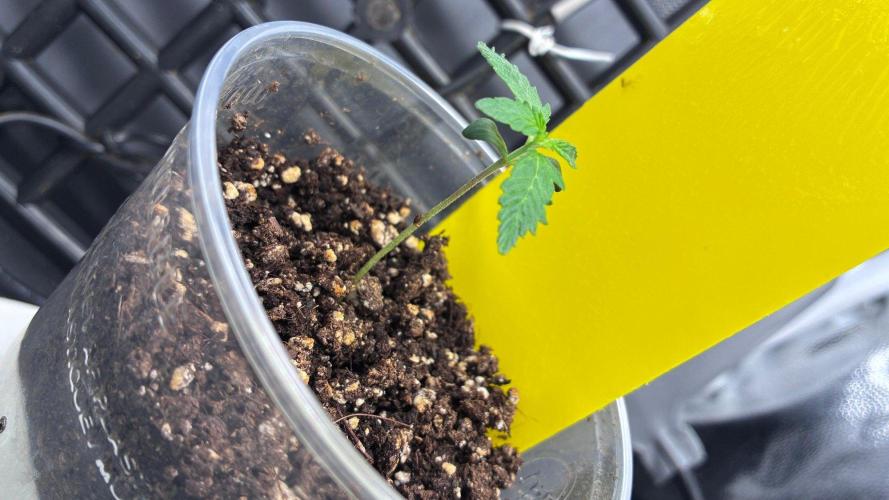
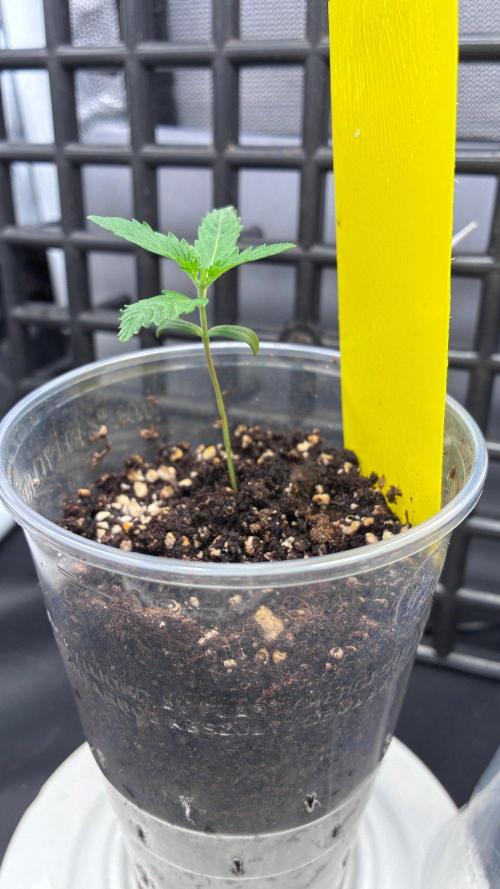
majklsoft Week 1 | Days 1–7: June 28 – July 4 First week above soil. Started in a ~0.5 L solo cup filled with BioBizz Light-Mix. * SANlight STIXx 54 W running at ~40%, initially ~50 cm above the seedling * 20/4 light cycle * No pH adjustment * Cup dry weight: ~170 g * Fully watered cup: ~295 g * Watering threshold established around 215–220 g * Water consumption gradually increased to roughly 30 ml/day by the end of the week * Kept the root zone gently moist and avoided strong drybacks * Seedling stayed compact and healthy; initial stretch stopped around Day 5–6 * First visible roots started reaching the sides/bottom of the cup toward the end of the week Main goal for this grow is to keep the autoflower growing without unnecessary stress or root-zone drybacks and see whether this helps maintain a longer, more vigorous vegetative phase.
3 likes
comments
Share
2
Week 2. Vegetation
16d ago
20 hrs
Light Schedule
Nutrients 2
Root-Juice - BioBizzWWO
Root-Juice
1 mll
Fish-Mix - BioBizzWWO
Fish-Mix
0.25 mll
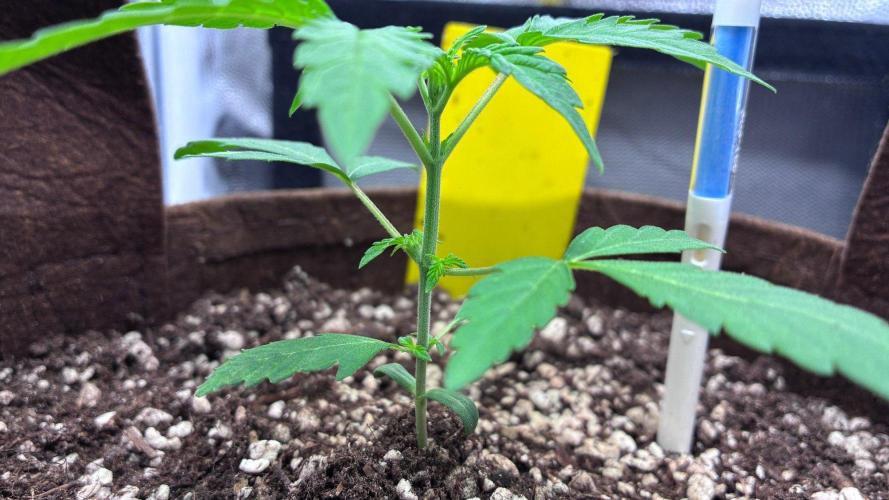
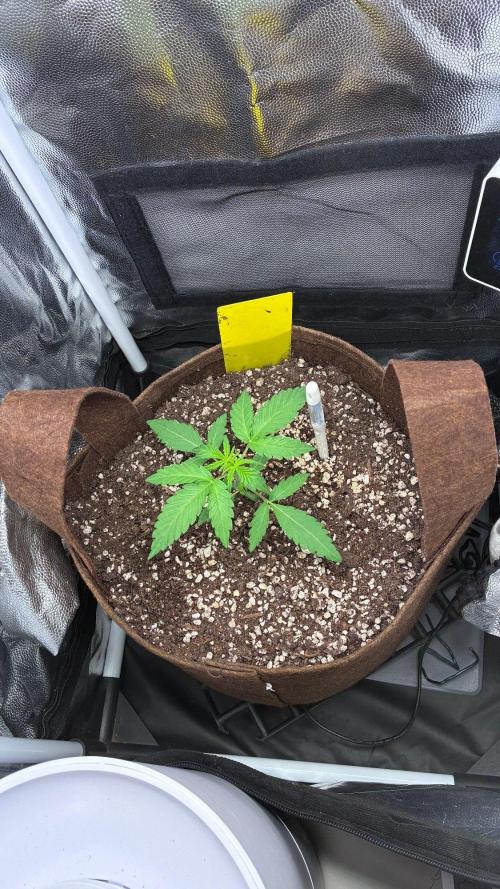
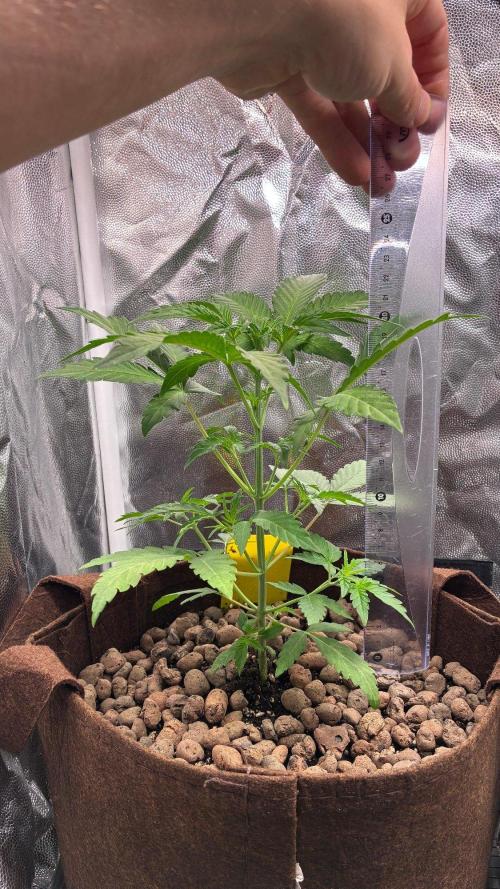
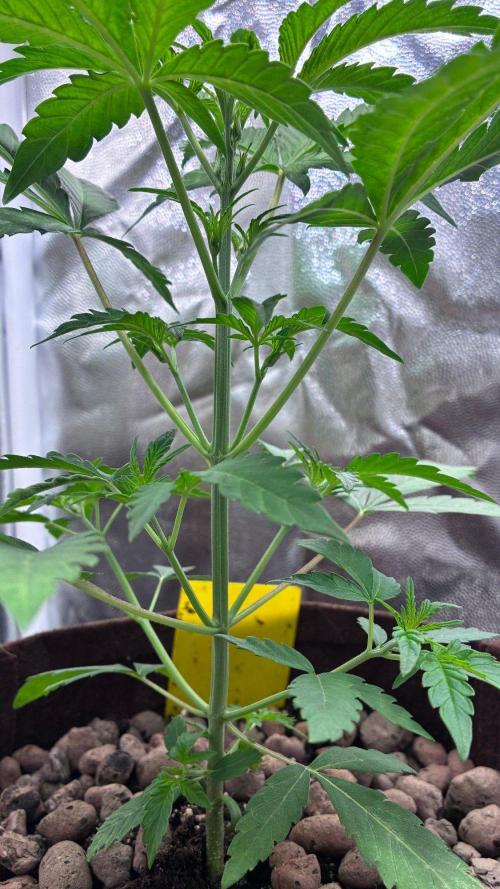
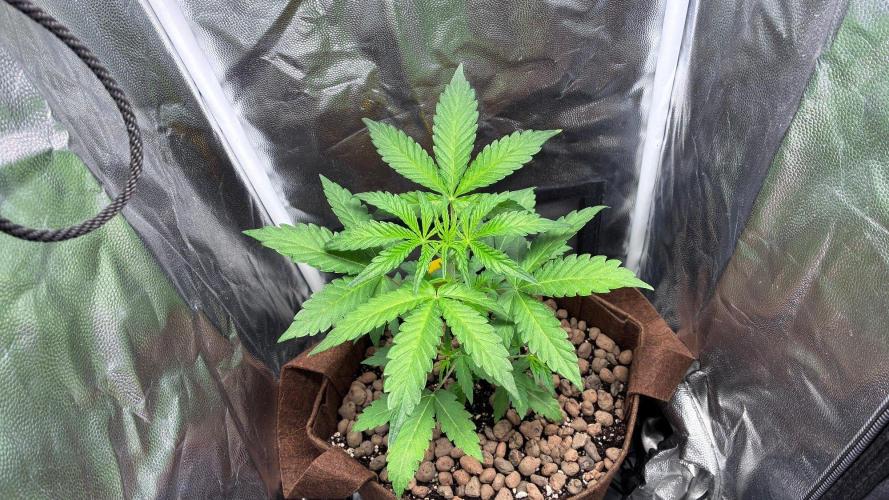
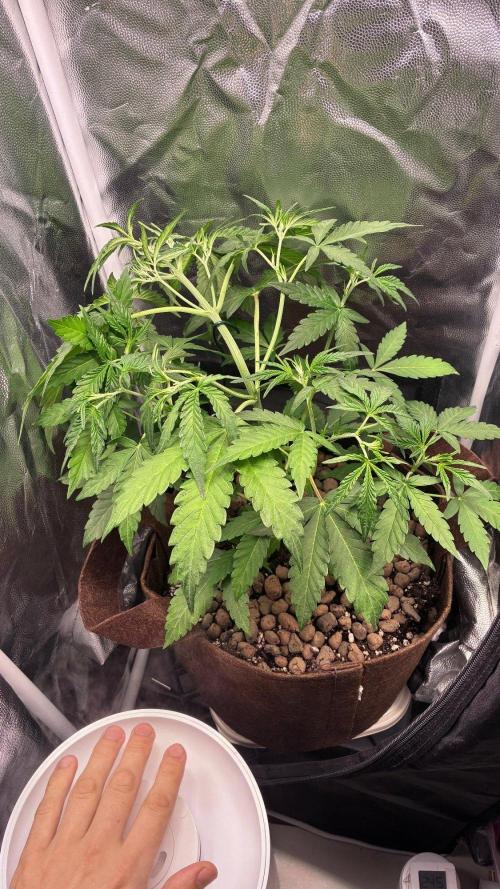
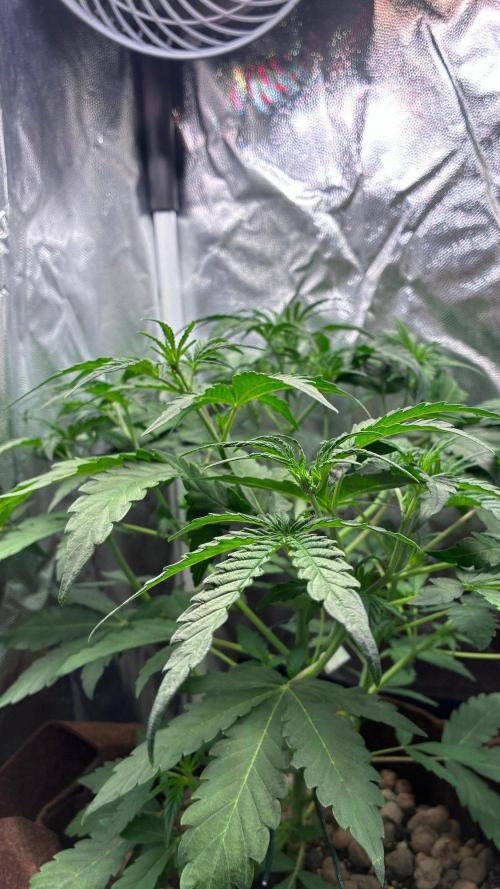
majklsoft Week 2 | Days 8–14: July 5 – July 11 Transplanted from the solo cup into the final ~10 L fabric pot with BioBizz Light-Mix + perlite. Roots already visible around the solo cup before transplant Final pot was pre-moistened before transplant Watering still conservative while the new root zone was establishing No pH adjustment Light gradually increased while keeping the plant compact By Day 14: canopy ~15 cm wide, 4 node pairs open and the 5th developing Healthy color and steady growth with no transplant shock Main focus was establishing the root system without letting the young autoflower experience a major dryback.
3 likes
comments
Share
3
Week 3. Vegetation
16d ago
20 hrs
Light Schedule
Nutrients 3
Fish-Mix - BioBizzWWO
Fish-Mix
0.5 mll
Calmag - BioBizzWWO
Calmag
0.2 mll
Root-Juice - BioBizzWWO
Root-Juice
1 mll
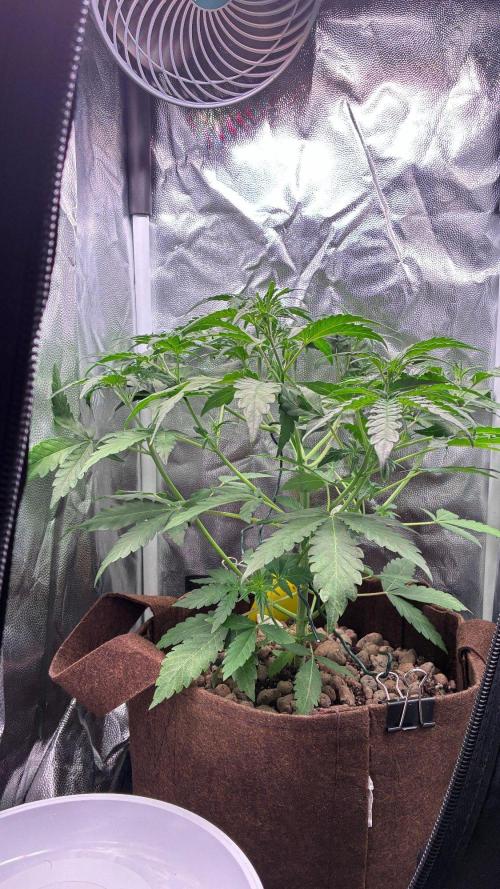
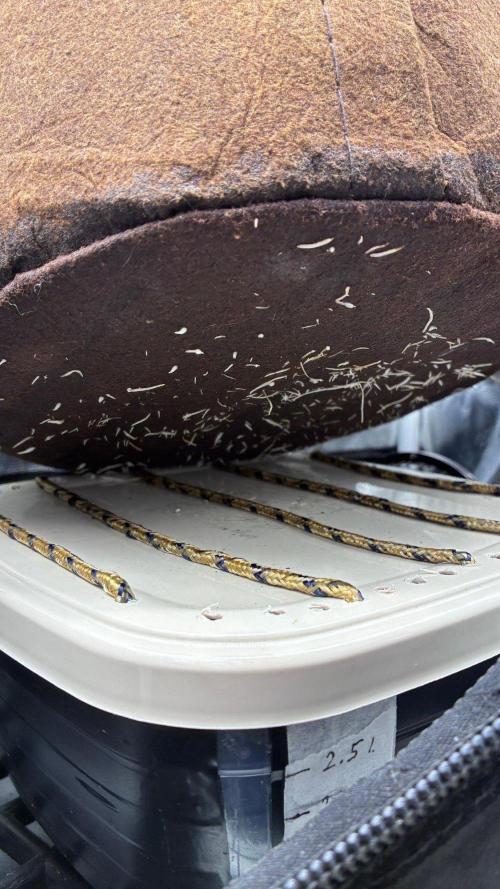
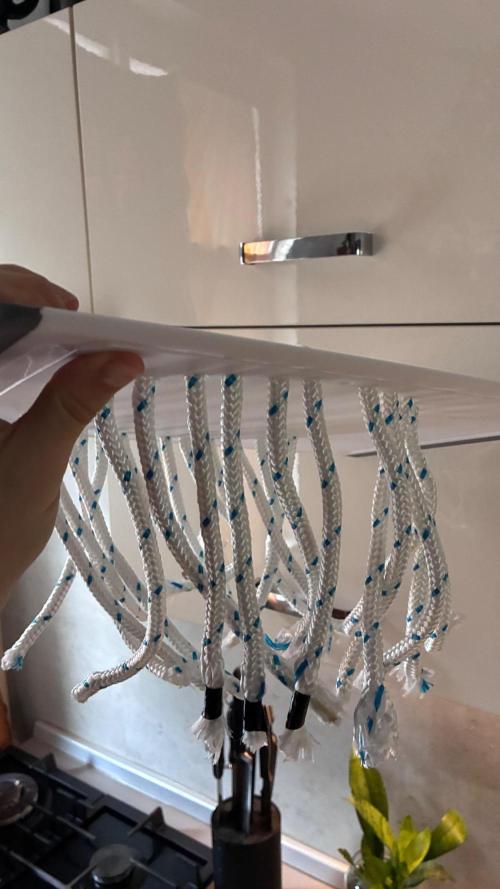
majklsoft Week 3 | Days 15–21: July 12 – July 18 Very strong vegetative acceleration this week. Plant moved onto my DIY bottom-wick irrigation system Polyester wicks continuously draw water from a reservoir below the fabric pot Root zone kept consistently moist rather than following traditional wet/dry cycles Canopy expanded from ~18 cm to 23+ cm within a few days Side branches started developing rapidly DLI gradually increased into the mid-30s Some slight upward leaf-edge curling appeared as light intensity increased No major deficiencies or toxicity symptoms The wick system was now supplying most of the plant's water automatically.
4 likes
comments
Share
4
Week 4. Vegetation
16d ago
20 hrs
Light Schedule
Nutrients 2
pH Perfect Sensi Coco Grow A - Advanced Nutrients
pH Perfect Sensi Coco Grow A
2 mll
pH Perfect Sensi Coco Grow B - Advanced Nutrients
pH Perfect Sensi Coco Grow B
2 mll
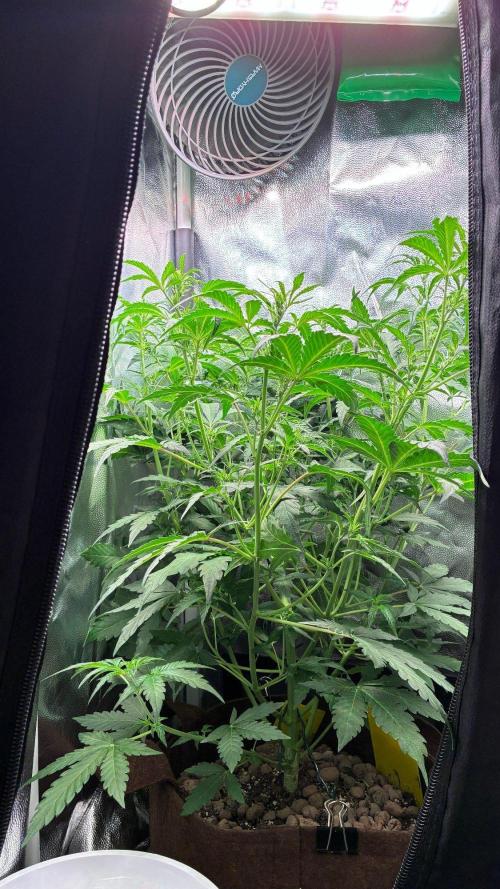
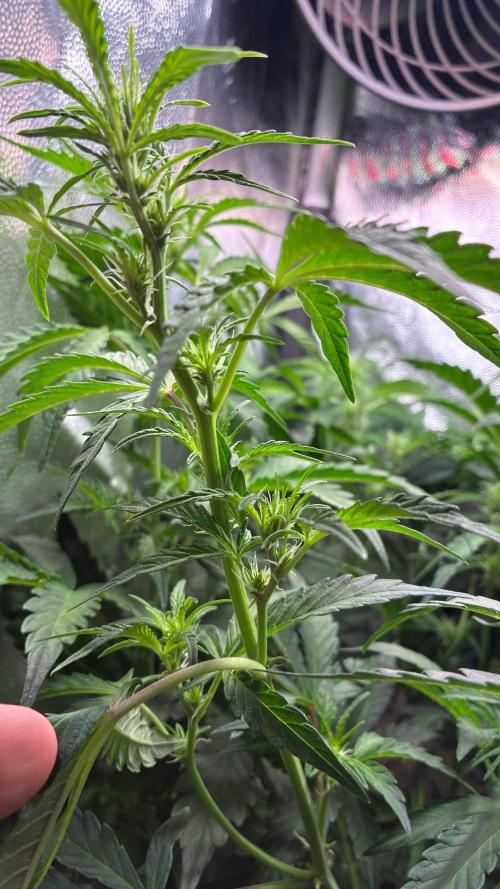
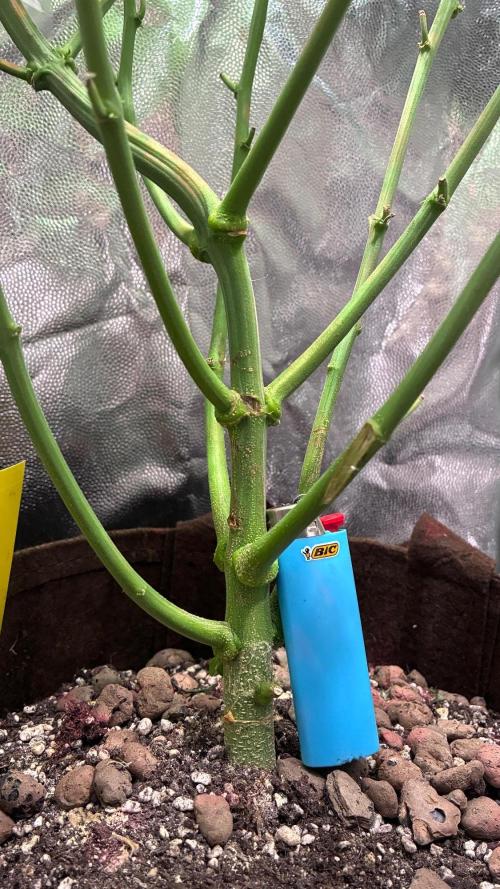
majklsoft Week 4 | Days 22–28: July 19 – July 25 Big transition week — first preflowers appeared around Day 23. Plant entered the stretch with strong apical dominance and increasingly vigorous side branches Water uptake increased dramatically Around Day 27 the plant was already drinking roughly 1.0 L/day DLI around the upper 30s Continued running 20/4 No pH adjustment Root growth at the bottom of the fabric pot became increasingly visible Main stem was bent once to bring it closer to the height of the secondary branches After that, very little training was needed The plant was noticeably larger and more vigorous than my previous autos at the same age.
4 likes
comments
Share
Used techniques
LST
Technique
5
Week 5. Flowering
16d ago
20 hrs
Light Schedule
Nutrients 4
pH Perfect Sensi Coco Grow A - Advanced Nutrients
pH Perfect Sensi Coco Grow A
2 mll
pH Perfect Sensi Coco Grow B - Advanced Nutrients
pH Perfect Sensi Coco Grow B
2 mll
pH Perfect Sensi Coco Bloom A - Advanced Nutrients
pH Perfect Sensi Coco Bloom A
2 mll
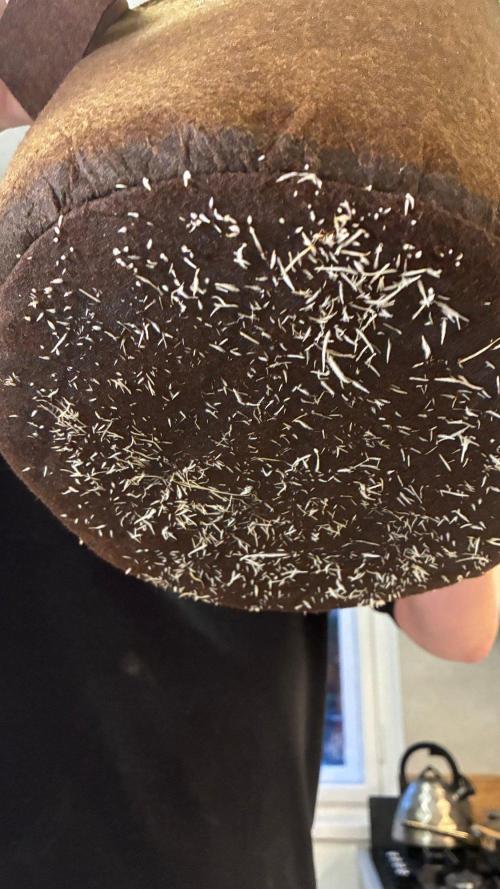
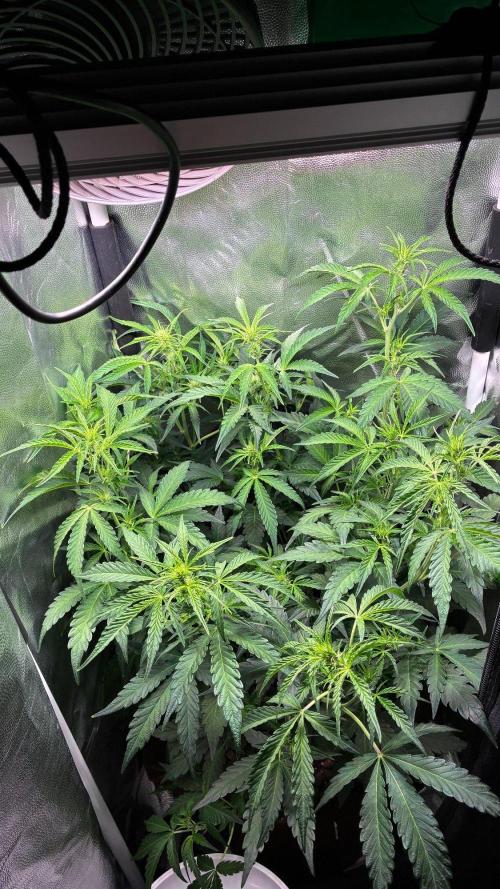
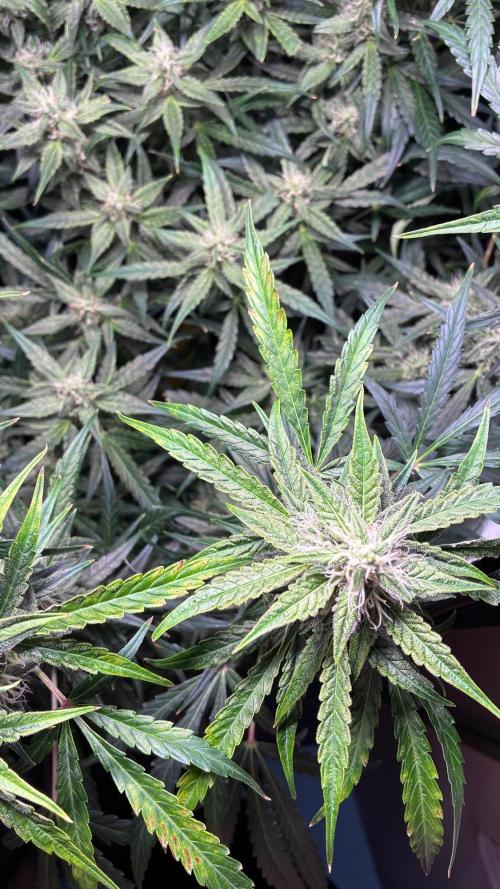
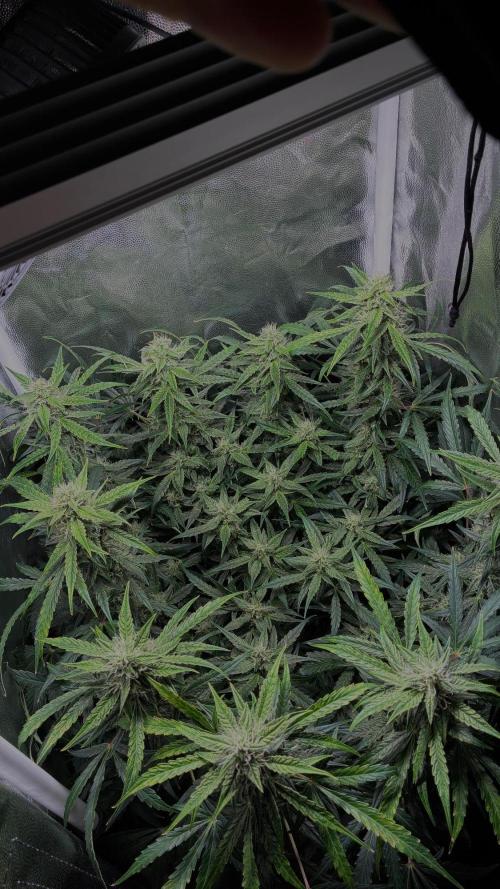
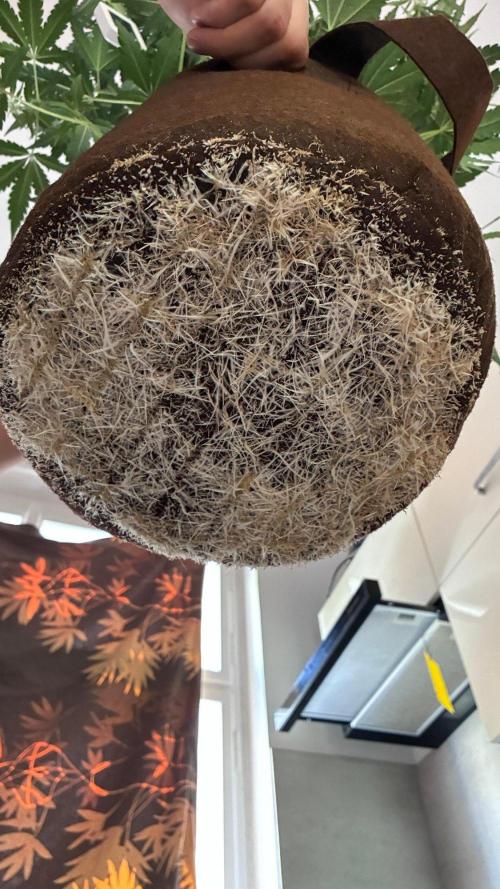
majklsoft Week 5 | Days 29–35: July 26 – August 1 Stretch really took off this week. Water use increased from roughly 1.0 to 1.6+ L/day Root network underneath the fabric pot became extremely dense and white Increased wick count from 5 to 7 as plant demand started exceeding the previous setup Added a small amount of silica Switched from Sensi Coco Grow to Sensi Coco Bloom A+B on Day 34 No pH adjustment throughout Canopy filled essentially the entire 40 × 40 cm tent Several tops required LST because the stretch remained very strong Flower sites were clearly established by the end of the week The plant was now consuming water faster than anything I had grown before.
4 likes
comments
Share
6
Week 6. Flowering
16d ago
80 cm
Height
20 hrs
Light Schedule
26 °C
Day Air Temp
60 %
Air Humidity
9 liters
Pot Size
1.7 liters
Watering Volume
Nutrients 3
pH Perfect Sensi Coco Bloom A - Advanced Nutrients
pH Perfect Sensi Coco Bloom A
2 mll
pH Perfect Sensi Coco Bloom B - Advanced Nutrients
pH Perfect Sensi Coco Bloom B
2 mll
Big Bud Powder - Advanced Nutrients
Big Bud Powder
1 mll
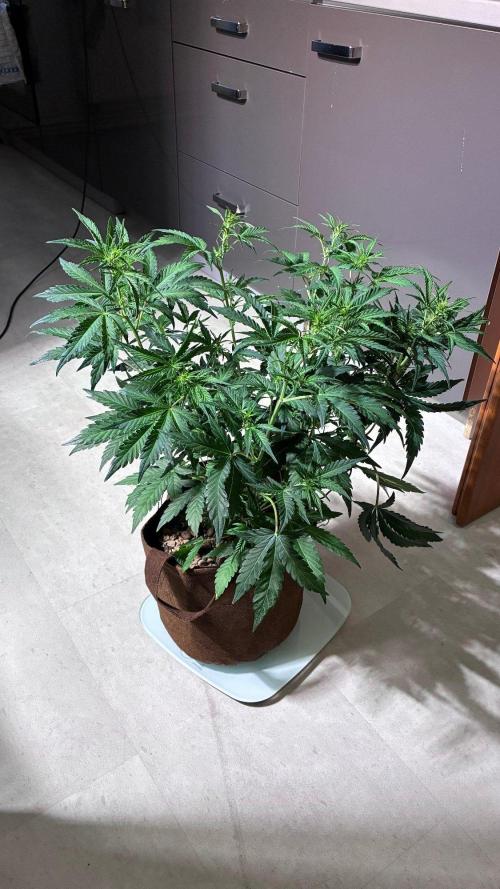
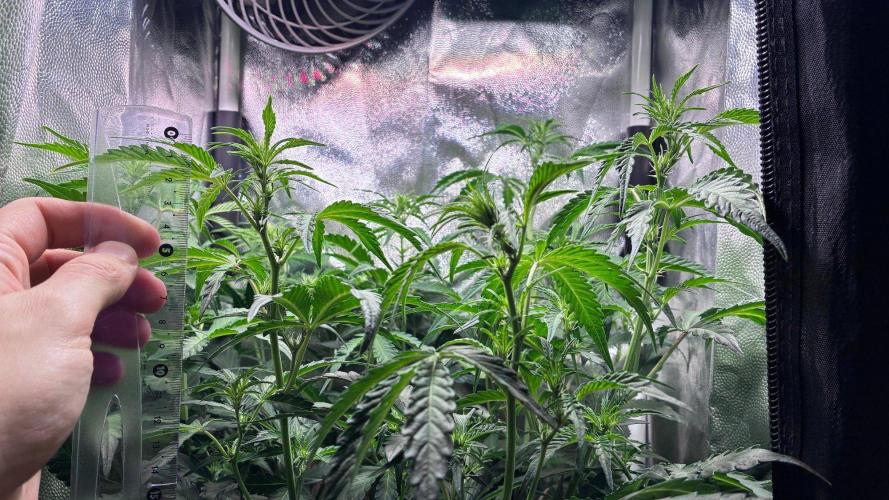
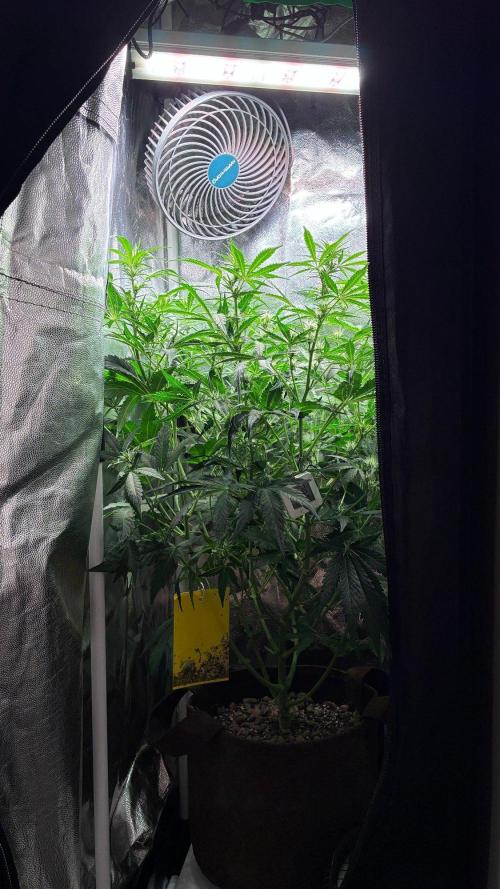
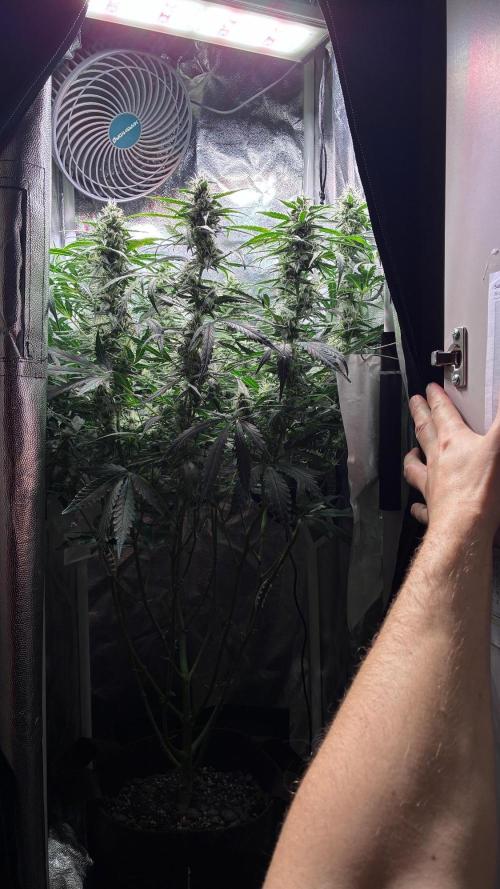
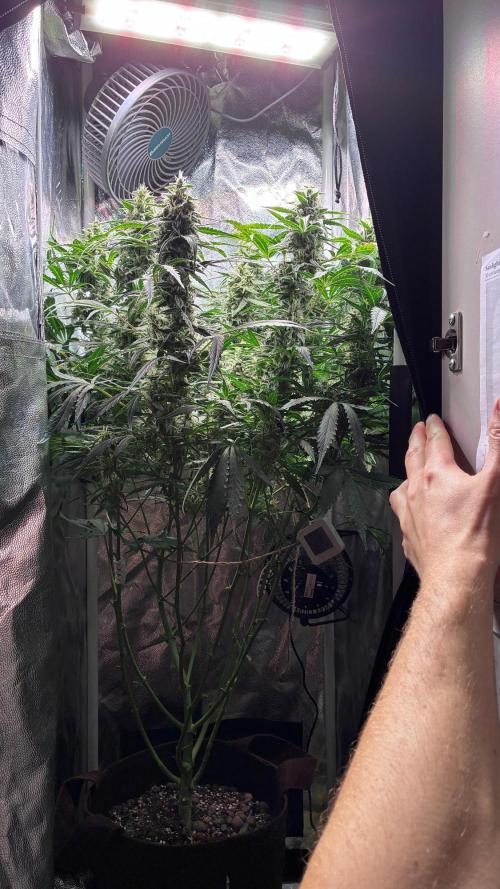
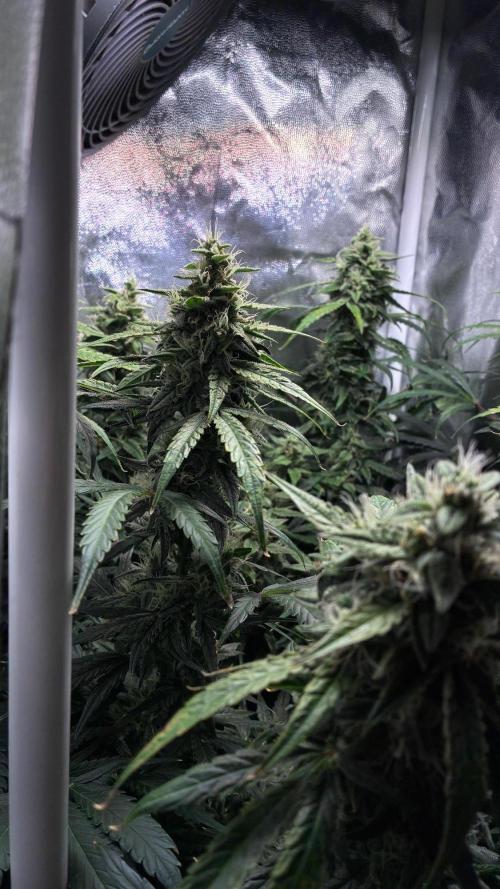
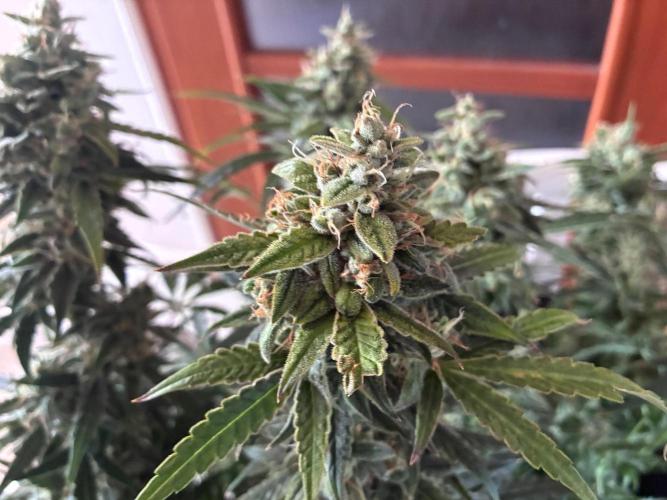
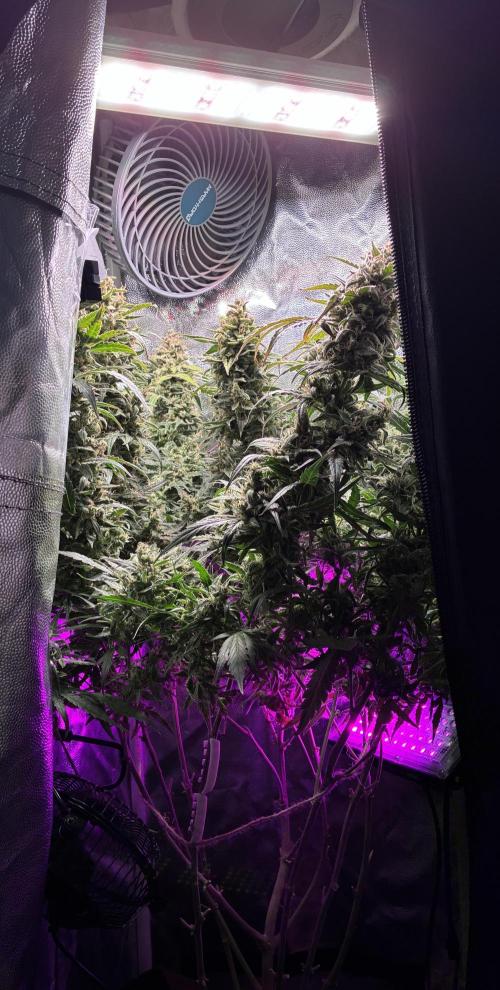
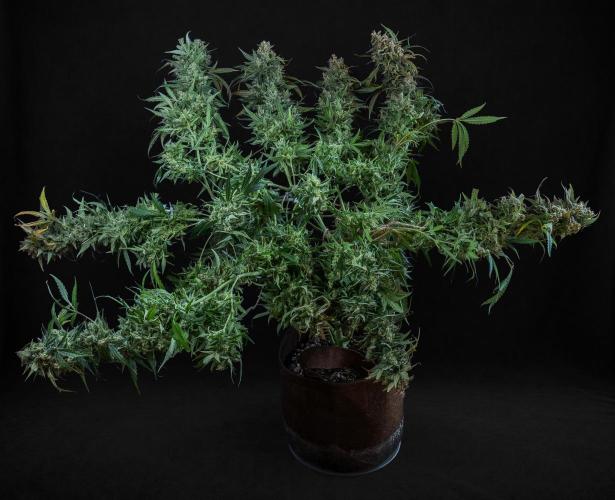
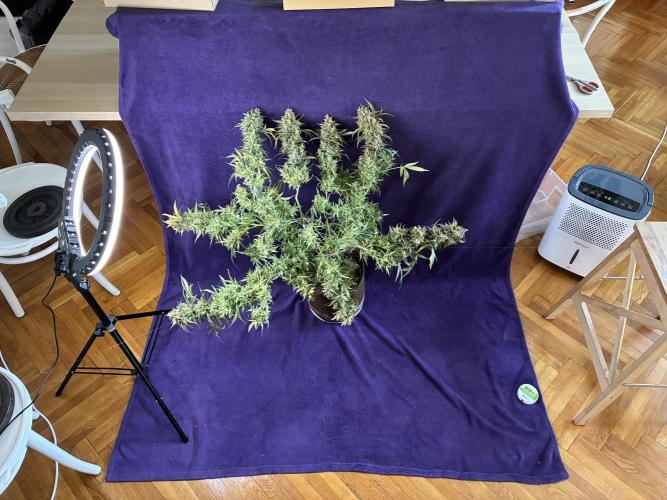
majklsoft Week 6 | Days 36–42: August 2 – August 8 Early flower and stacking phase. Water consumption stabilized around 1.6–1.7 L/day Root mat under the pot became almost completely covered in fine white roots Continued Sensi Coco Bloom A+B at 2 + 2 ml/L Started Advanced Nutrients Big Bud Powder around Day 39 at 0.25 g/L (comparable with Big Bud Liquid dose cca 1 ml / l ) EC after adding Big Bud initially around 1.4–1.6 No pH adjustment Strong stretch continued longer than expected Several main tops gained another ~7–10 cm around Days 41–44 Began selectively lollipopping weak lower branches High-light symptoms appeared on the tallest tops when they got too close to the LED, so the fixture was raised By this point the plant had developed a very large frame for a 54 W / 40 × 40 cm setup. Also, the reservoir was small already so took some time to put together larger one with 10l capacity.
4 likes
comments
Share
7
Week 7. Flowering
16d ago
85 cm
Height
20 hrs
Light Schedule
26 °C
Day Air Temp
6.5
pH
Weak
Smell
60 %
Air Humidity
9 liters
Pot Size
1.7 liters
Watering Volume
Nutrients 3
pH Perfect Sensi Coco Bloom A - Advanced Nutrients
pH Perfect Sensi Coco Bloom A
2 mll
pH Perfect Sensi Coco Bloom B - Advanced Nutrients
pH Perfect Sensi Coco Bloom B
2 mll
Big Bud Powder - Advanced Nutrients
Big Bud Powder
1 mll
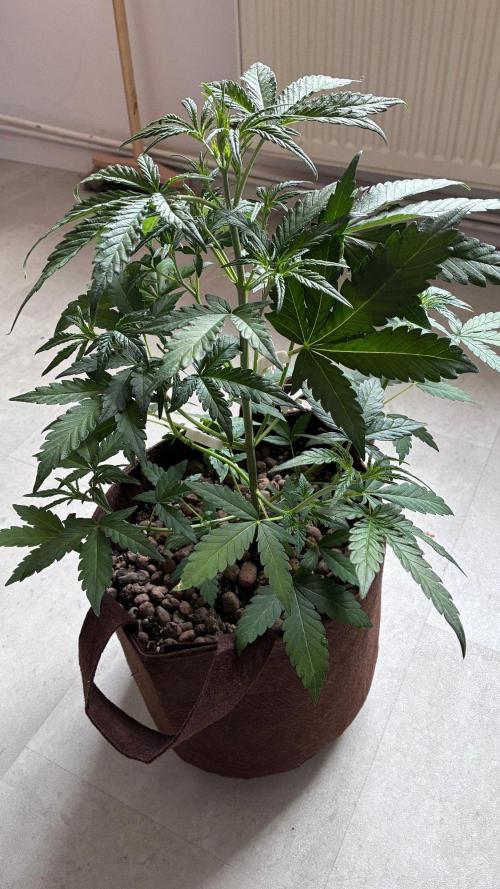
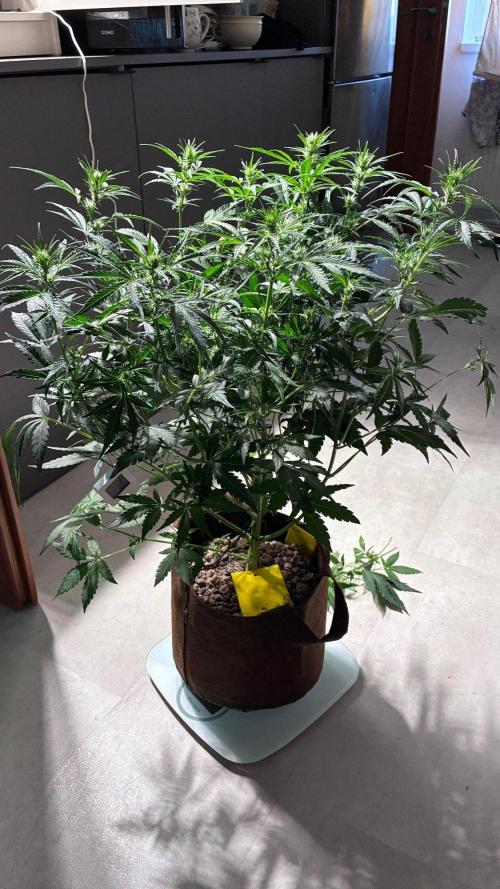
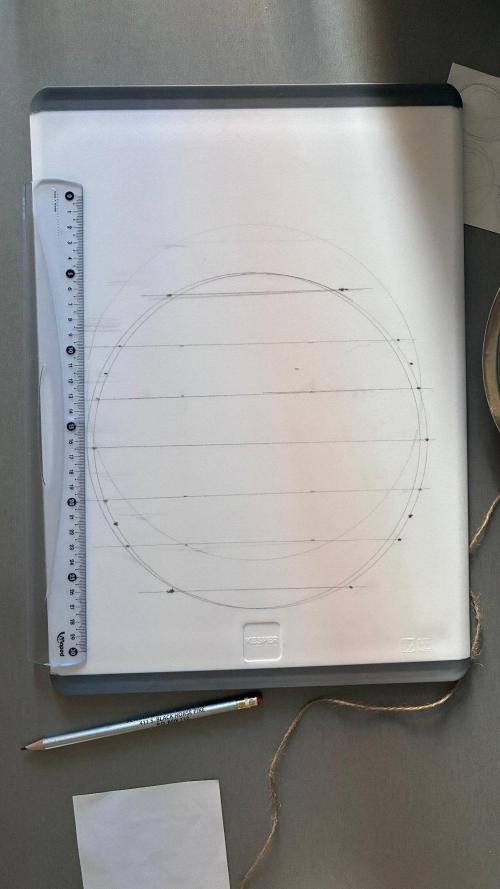
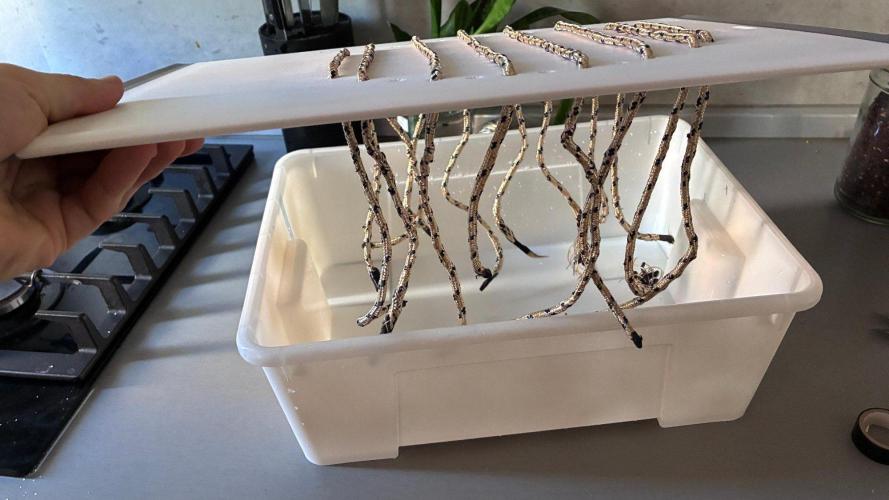
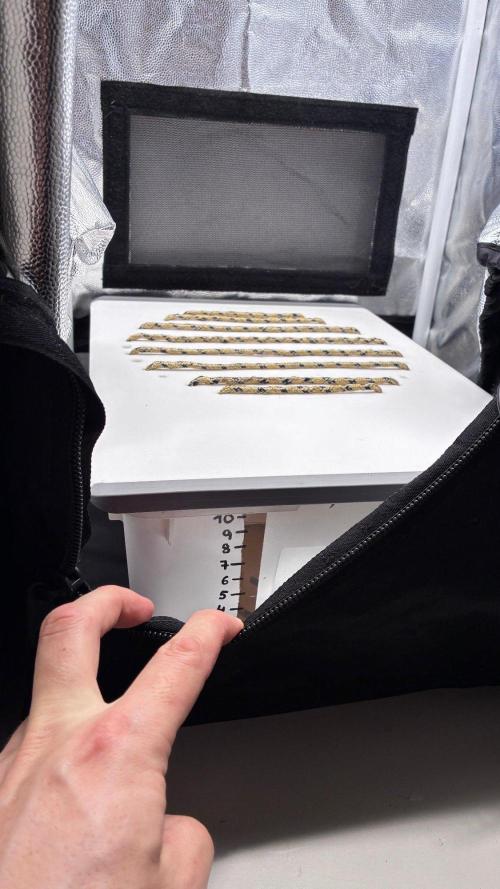
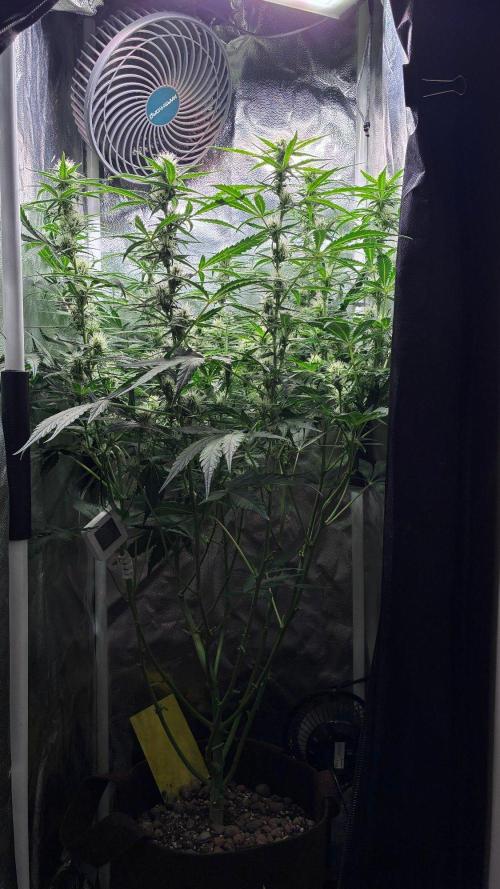
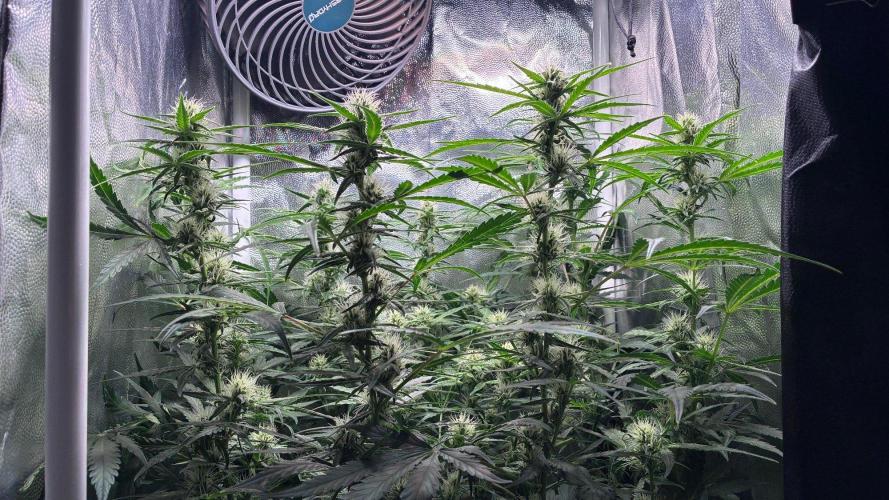
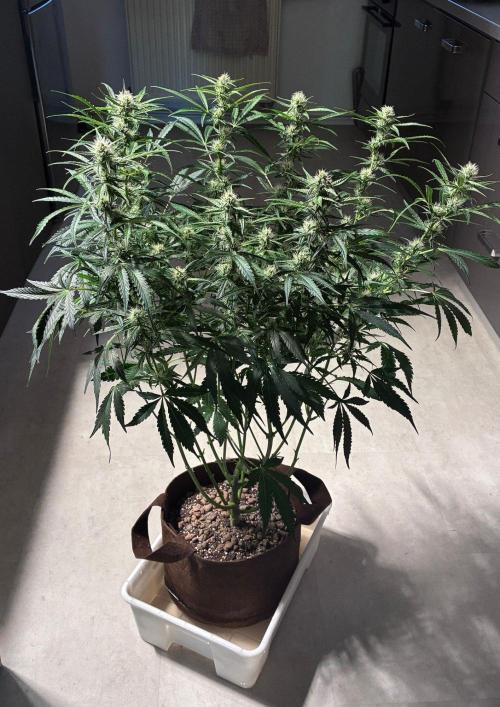
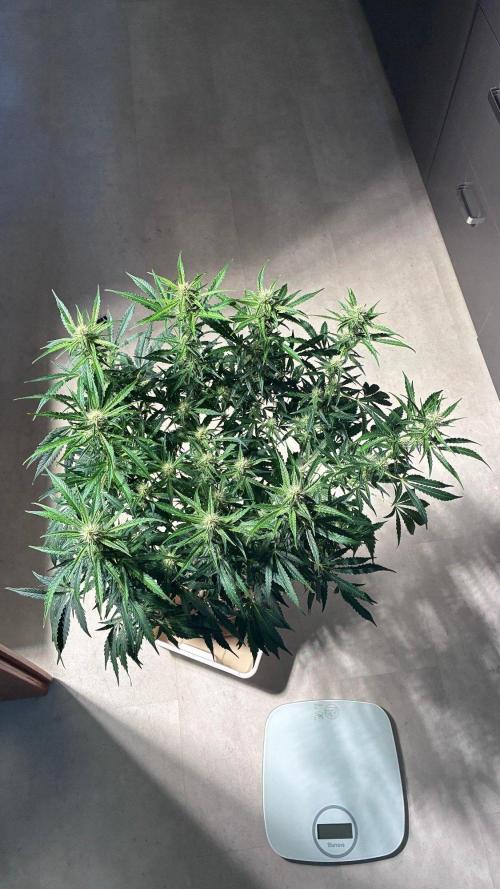
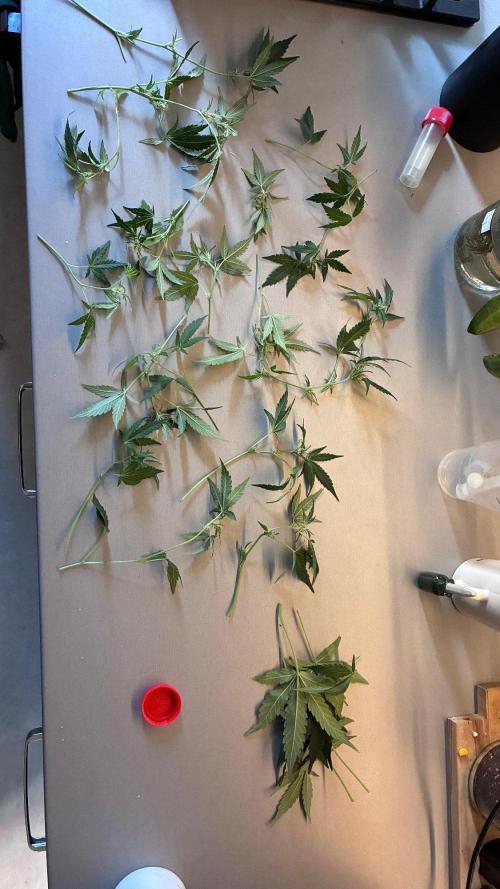
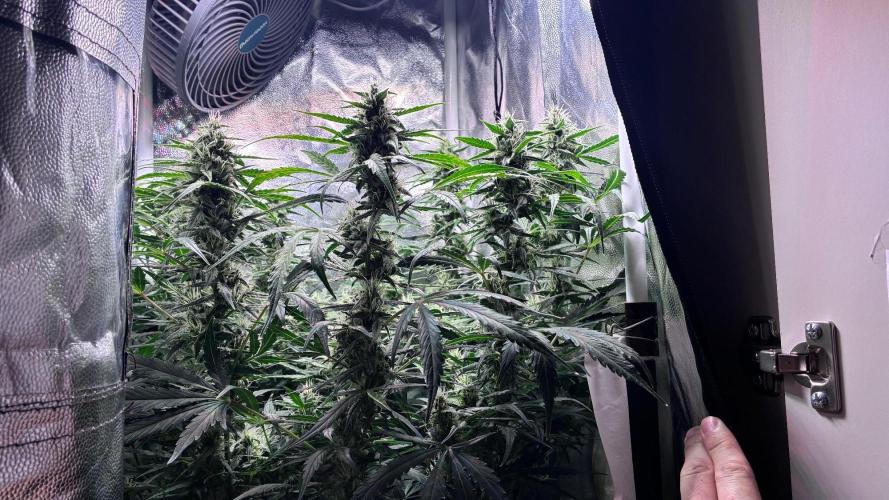
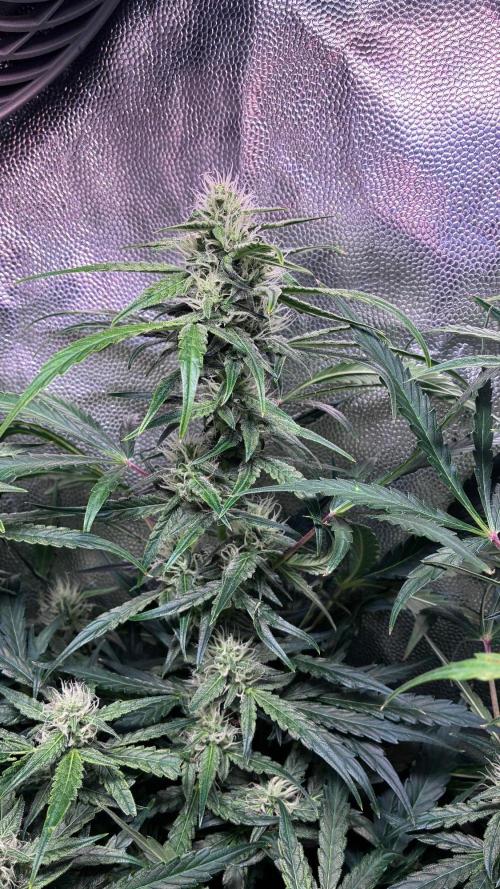
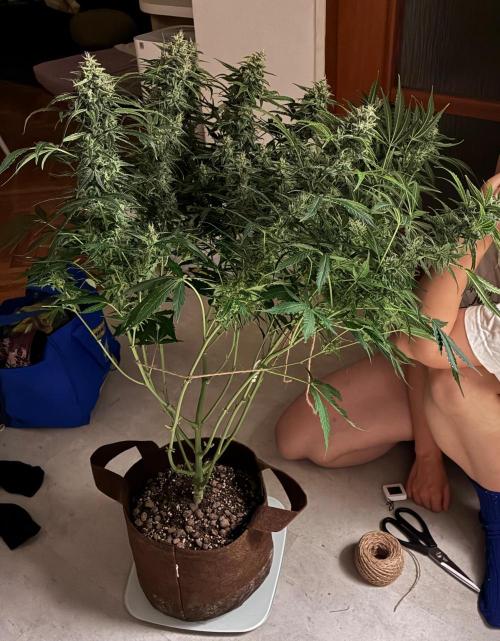
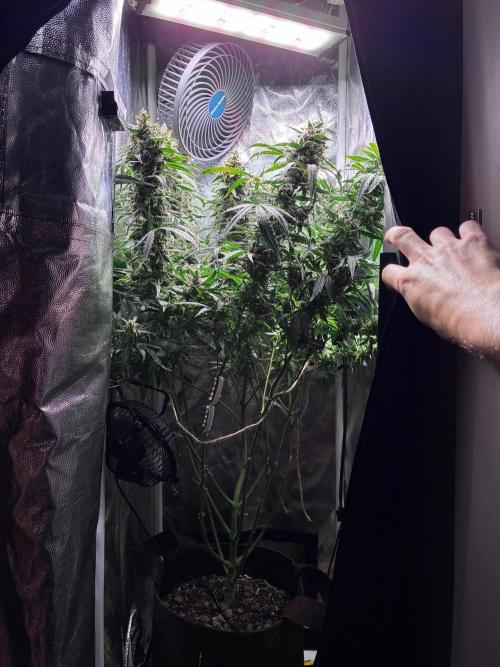
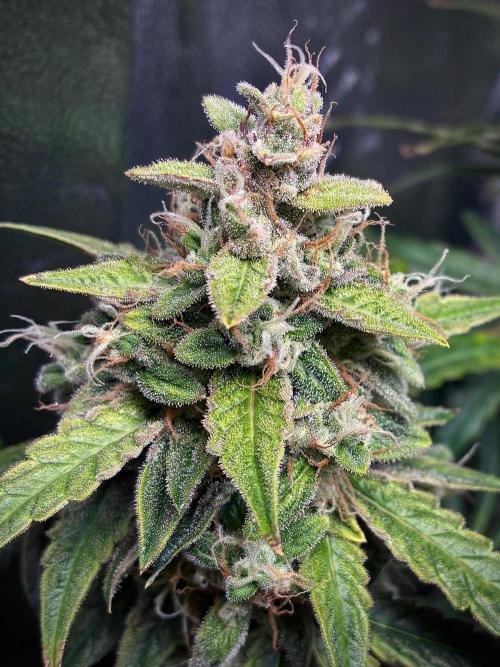
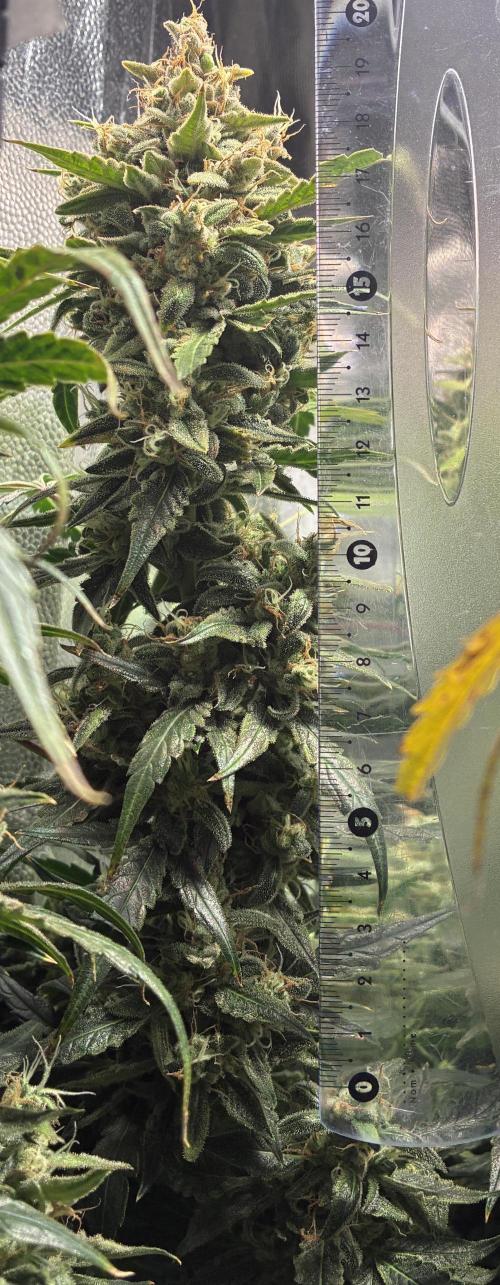
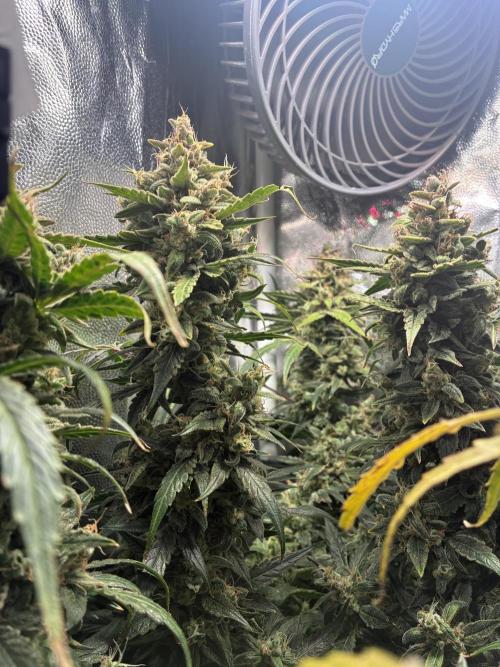
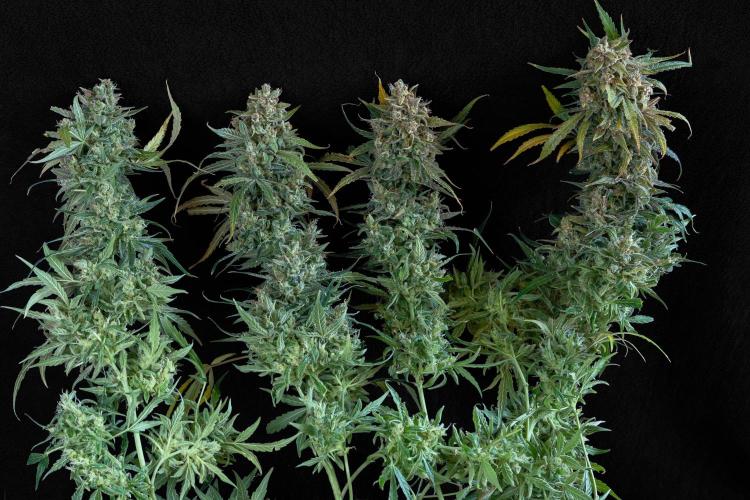
majklsoft Week 7 | Days 43–49: August 9 – August 15 Major canopy cleanup and an important irrigation-system lesson. Heavy lollipopping and selective defoliation to open the lower half of the plant Roughly 80+ leaves removed over about 8 days, plus many weak lower branches Productive structure after cleanup: 9 long main colas with ~20–25 cm flowering sections 6 secondary colas ~10 cm below canopy additional developed lower colas around 20 cm below canopy Flower stacking looks very good and the long main branches are filling with regularly spaced bud sites Plant height reached roughly 80–90 cm from the substrate Light was briefly only ~15 cm from the tallest tops, estimated around DLI 70 Raised the fixture: highest outer tops ~DLI 50 lower/central tops ~DLI 38 Water uptake remained around 1.5–1.7 L/day Wick-system failure test The pot unexpectedly dried down to roughly 3.3 kg despite water still remaining in the reservoir and the wicks still feeling wet. I increased the wick count to 13 and re-saturated the bottom of the pot. A second dry-down later showed the same pattern: when reservoir level became low, water transfer dropped dramatically even though the wicks remained damp. This suggested that the limiting factor was not simply whether the wicks contained water, but their flow rate at greater vertical lift.
6 likes
2 comments
Share
Used techniques
Lollipopping
Technique
Defoliation
Technique
Grow Questions
majklsoft
majklsoftstarted grow question 11d ago
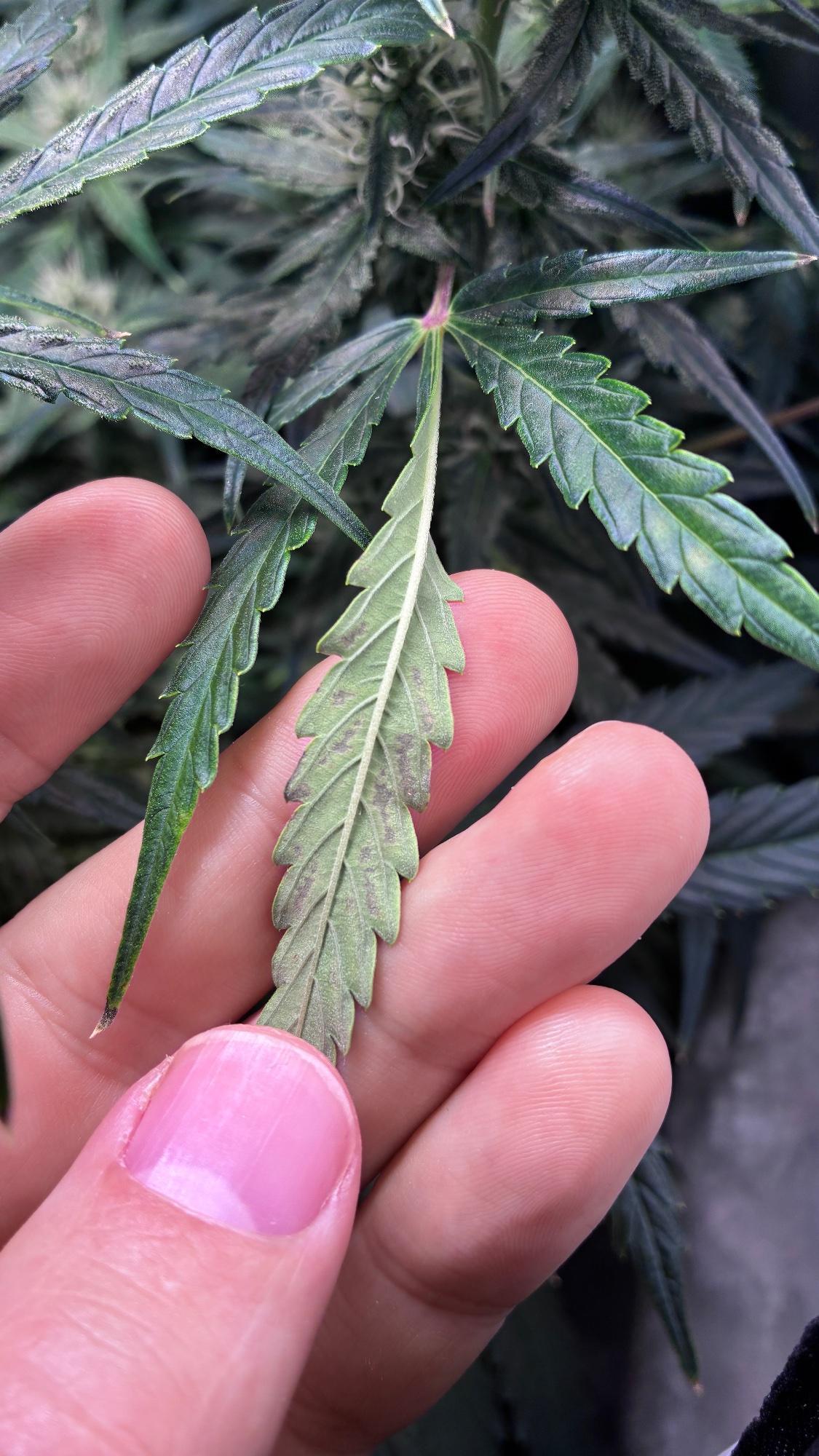
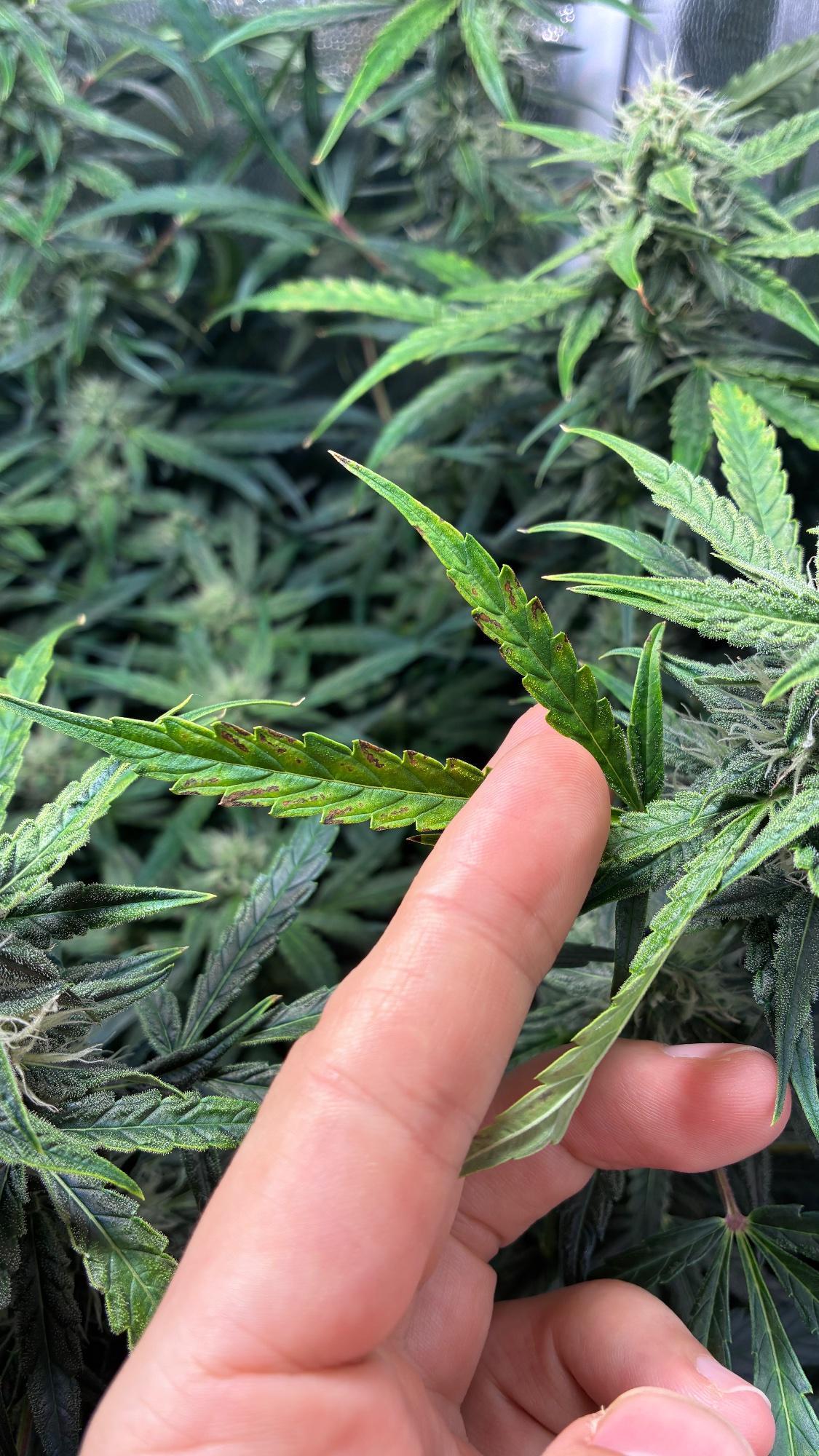
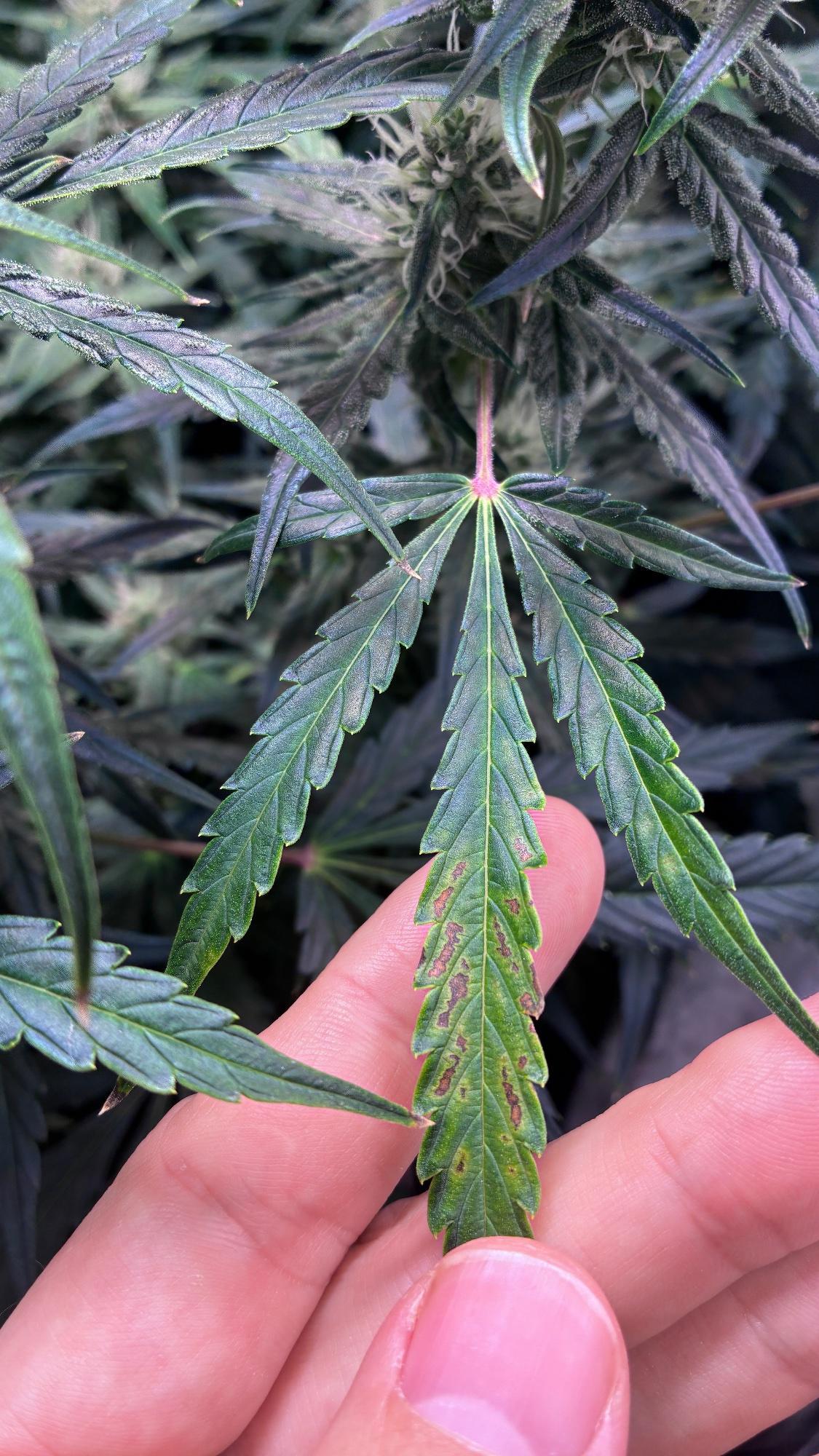
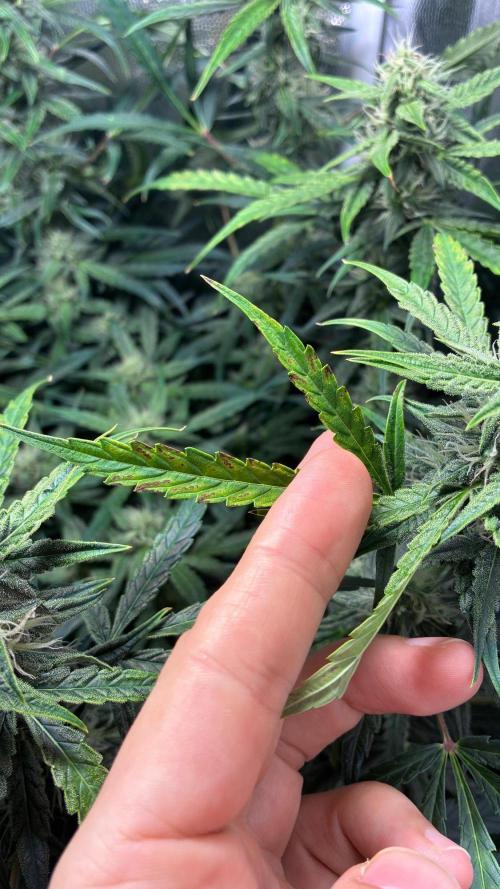
noticing brown splotches on upper leaves. around week 4 of flower. is that potassium or calcium deficiency/lockout or something else?
Solved
likes
Altitonans_Fulmen
Altitonans_Fulmenanswered grow question 12d ago
Lemme seee Walter..... #1 While many growers run autoflowers on a 18/6 or 24/0 light cycle because they do not need darkness to flower, blasting them with continuous light ignores their metabolic rhythms. Daytime photosynthesis (light reactions) must balance with carbon fixation and tissue building (the Calvin cycle) to prevent growth bottlenecks. Plants undergo cellular respiration 24/7, but they require oxidative capacity to do so. A leaf fully engaged in active photosynthesis cannot efficiently manage cellular respiration at the same time. The viral trend of stripping away every leaf that isn't getting "perfect light" actually does more harm than good. A common misconception is that respiration only happens in the dark, but plants breathe 24/7. When you over-prune, you force the remaining leaves to carry the entire metabolic workload. While photosynthesis captures light energy and stores it as carbon, cellular respiration is what actually unlocks that stored energy into usable ATP. However, respiration is only about 30% to 40% efficient, yielding roughly 30 to 32 ATP molecules per glucose molecule. The remaining 60% to 70% of that energy isn't wasted; it escapes into the environment as heat. This metabolic heat plays a critical role in regulating the plant's internal temperature and driving transpiration. Stripping lower leaves disrupts this delicate balance, especially under sub-optimal growing conditions for oxidative phosphorylation to occur. (Final stage of conversion responsible for 90% ATP release). Stripping lower leaves directly reduces a plant's capacity for oxidative phosphorylation by cutting off the source of sugars needed to fuel cellular respiration. Lower leaves act as vital energy reserves; removing them starves the plant of glucose, drops ATP production, and reduces the metabolic heat required to survive environmental stress. Stop it. Most likely from your rapid wet/dry cycle, causing EC to spike dramatically; this causes a lot of problems with electrical bulk flow, which stops most calcium flow. Also looks to be a little too much nitrogen; tip edges show symptomatic damage from osmotic shock (EC). No point hitting 50DLI unless you are in your 86F ambient; metabolic temps must match, otherwise plant spends ALOt of its energy protecting itself rather than growing. Reduce to 40- 45; pushing too hard, not enough capacity to make it through the day; remember 90% of plant water use is cooling. When you water more than once a day, it makes it difficult to achieve efficient soil composition/saturation for respiration; EC spikes dramatically near end of day. Also, bottom-watering, which means you can't top water/dress unless you have been doing both regularly, makes flushing a pain in the richard, also using organic nutrients, which will make autophagic responses a lot more difficult to initiate using industry-standard methods. Make sure your soil is not above 72F; organic sounds lovely, but more breakdown =more reactions = more heat. The concept requires you to add so much buffer using CEC that the rhizosphere can deal with and store excess salt ions that raise immediate EC and cause the shock. Your buffer reached its limit. You don't want to be actively breaking down more than 5% organic matter at a time; the idea is more to store it in the medium prior to growing. The rate of release/organic breakdown is determined by pH and temperature. Unless you are in full control of the pH, things go sideways super fast for a number of reasons; ultimately, it comes down to oxygen at its core: once pH skews from ratio aerobic rapidly shifts to anerobic. She ran out of buffering capacity to deal with the excess release that "organic breakdown" incurred. The problem with bottom wicking as a watering method is its reliance on ambient atmospheric RH to drive the rate of water uptake, which is not ideal if you are pushing a plant hard photosynthetically it can easily use more water (cooling) than can be drawn up. Depending on many factors, the wicks themselves are the limiting factor. Transpiration(water movement) is 5x6x that at 86F than 68F. When you do organic, you feed the rhizosphere as well as the plant. The microorganisms use nitrogen to convert carbon; you can add some sugars to your medium that will "eat up" the excess nitrogen. This is one way how you control the flow of nitrogen and taper it back to prevent skewing the pH balance without "flushing" in an organic medium. If you try and flush, you will mostly disturb the rhizosphere. Organic nitrogen holds on to soil particles way more than nitrate and requires 5-6 times more water to separate. A big problem growers do is flush, but the medium rapidly locks up again as the stored sticky "ammoniacal nitrogen" rapidly converts once pH returns to normal and fucks it all up again right away. Organic delivery/growing requires a lot more oxygen for the "processing". This creates competition between plants and micros, soon as soil temps deviates its game over, soon as oxygen becomes scarsse its game over. Sugar is a massive oxygen scavenger also. I can't recommend adding sugars for that reason if there is still soil compaction; it can't wick water fast enough to keep up with the demands of the environment. Hope that helped. Best of luck

8
Week 8. Flowering
8d ago
85 cm
Height
20 hrs
Light Schedule
26 °C
Day Air Temp
6.3
pH
Weak
Smell
60 %
Air Humidity
9 liters
Pot Size
2 liters
Watering Volume
Nutrients 3
pH Perfect Sensi Coco Bloom A - Advanced Nutrients
pH Perfect Sensi Coco Bloom A
2 mll
pH Perfect Sensi Coco Bloom B - Advanced Nutrients
pH Perfect Sensi Coco Bloom B
2 mll
Big Bud Powder - Advanced Nutrients
Big Bud Powder
1 mll
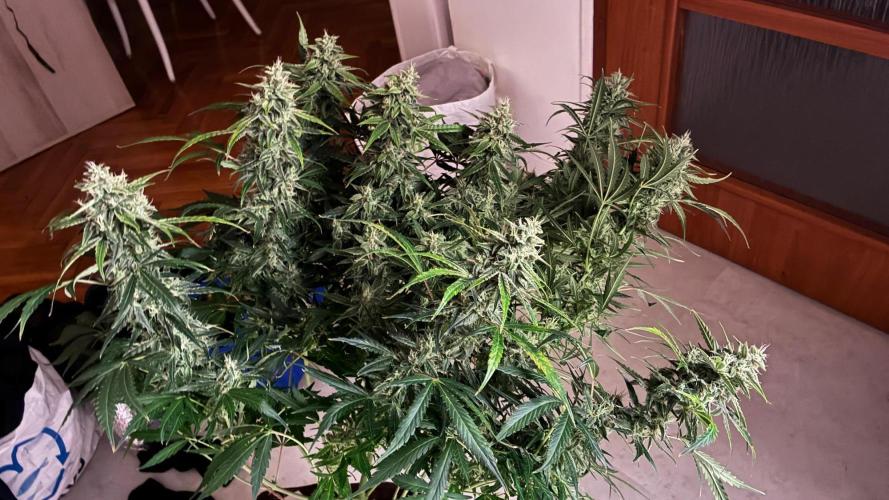
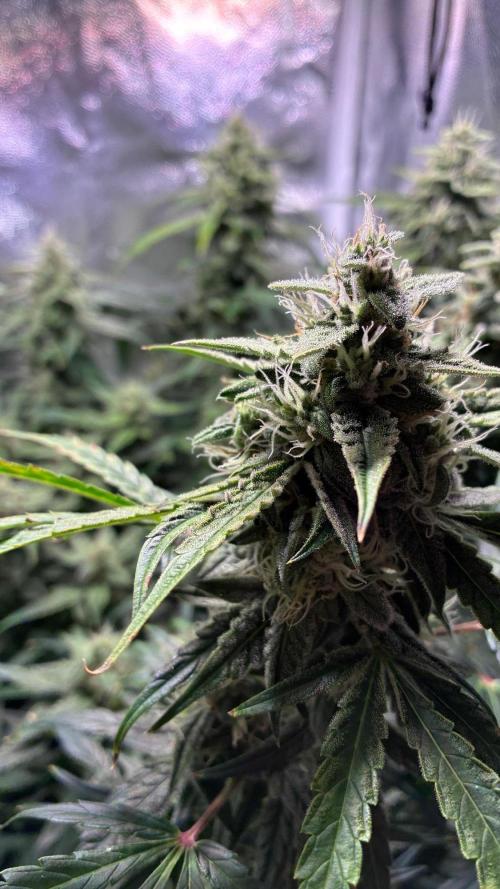
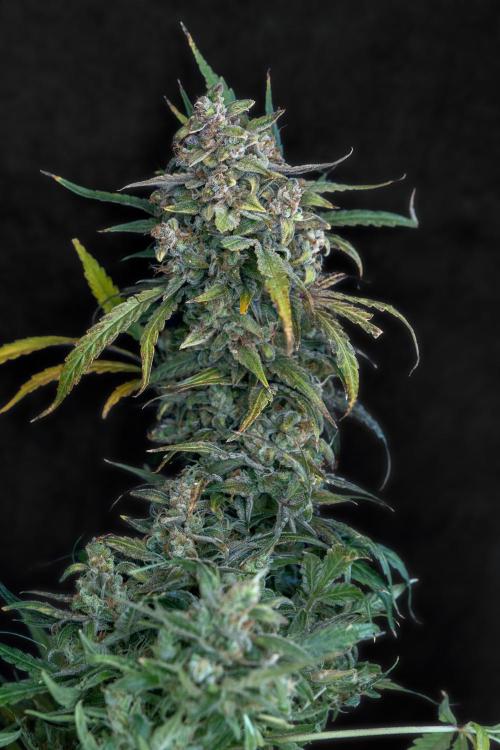
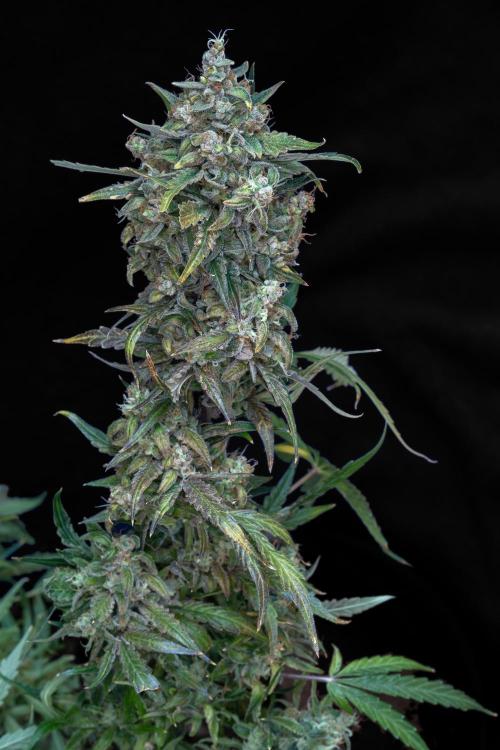
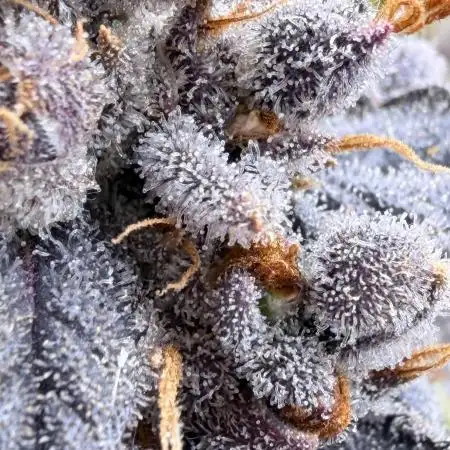
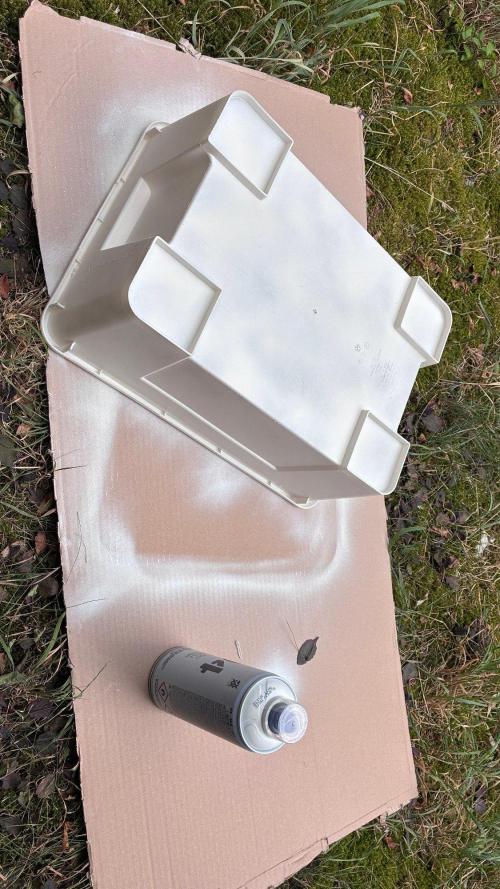
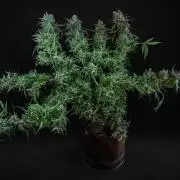
majklsoft Week 8 | Days 50–56: August 16 – August 22 Main focus this week was stabilizing the DIY wick irrigation system and monitoring early flower bulking. * Flower development continued well; stacking gradually shifted from building longer flower sections toward filling and thickening existing bud sites * Main colas continued developing into long, more continuous spears * No obvious stall in flower development compared with the previous week * Water demand settled around ~2.0 L/day * Light distribution kept around: * highest outer tops ~DLI 50 * lower/central tops ~DLI 38 * Plant remained very vigorous despite the previous irrigation drybacks Wick-system development The previous setup continued losing transfer capacity as the reservoir level dropped. * At low reservoir levels, the wicks remained visibly damp but could no longer transfer water fast enough to match plant demand * Refilling the reservoir immediately restored strong water transfer, strongly supporting the theory that vertical lift / reservoir water level was limiting wick flow * Tested a PES cloth between the wicks and fabric pot to improve water distribution, but it appeared to restrict flow rather than improve it * Switched from thinner wicks to 12 × 8 mm polyester wicks * A direct bottom soak was used to fully rehydrate the pot before testing the new wicks * After soaking, some water briefly travelled back down through the wicks into the reservoir, confirming good hydraulic contact in both directions * Replaced the reservoir with a lower and wider design to reduce the change in vertical lift as the water level drops The new combination of 12 × 8 mm wicks + lower/wider reservoir performed much better: * 9.0 → 7.0 L: 2.0 L / 24 h * 7.0 → 5.0 L: 2.0 L / 24 h * Bottom of the fabric pot remained consistently moist This was a major improvement over the previous reservoir, where flow dropped sharply as the water level approached ~2–3 L. Nutrient / leaf observations A small number of upper leaves developed brown/rust-colored spots between the veins and partly along the edges. Possible causes considered: * temporary Ca/K uptake problem caused by the previous severe drybacks * potassium deficiency / temporary K lockout * high-light interaction * root-zone imbalance The symptoms remained limited to only a few leaves and showed no clear progression for ~60 hours, making a temporary uptake issue caused by unstable watering increasingly likely. * Sensi Coco Bloom A+B increased temporarily to 2.5 + 2.5 ml/L * Big Bud Powder remained at 0.25 g/L * EC around 1.8 * pH still not adjusted Slight tip burn also became more noticeable toward the end of the week, so further nutrient increases were ruled out. Overall, Week 8 was mainly about solving the irrigation bottleneck. Flower development remained healthy while the new wick/reservoir setup showed much more stable water delivery.
6 likes
comments
Share
9
Week 9. Flowering
4d ago
85 cm
Height
20 hrs
Light Schedule
26 °C
Day Air Temp
6.3
pH
Weak
Smell
67 %
Air Humidity
9 liters
Pot Size
2 liters
Watering Volume
Nutrients 3
pH Perfect Sensi Coco Bloom A - Advanced Nutrients
pH Perfect Sensi Coco Bloom A
2 mll
pH Perfect Sensi Coco Bloom B - Advanced Nutrients
pH Perfect Sensi Coco Bloom B
2 mll
Big Bud Powder - Advanced Nutrients
Big Bud Powder
1 mll
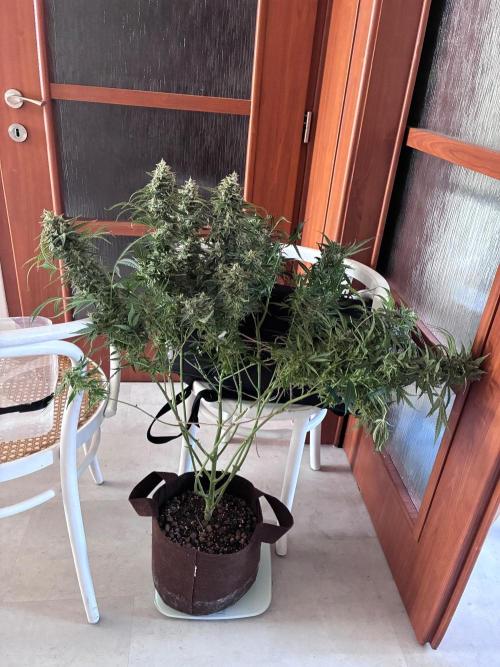
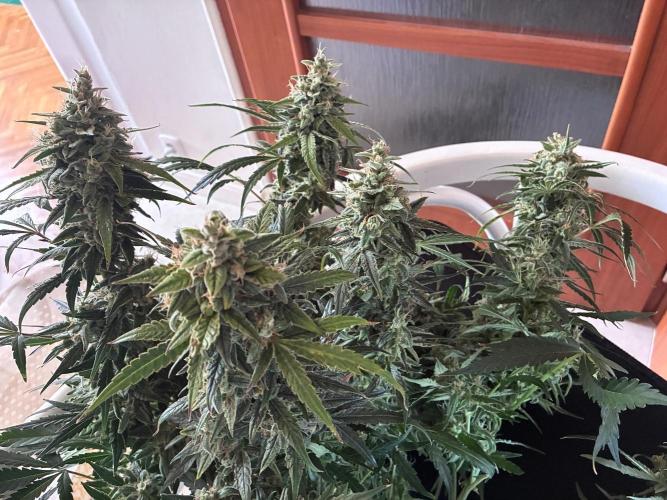
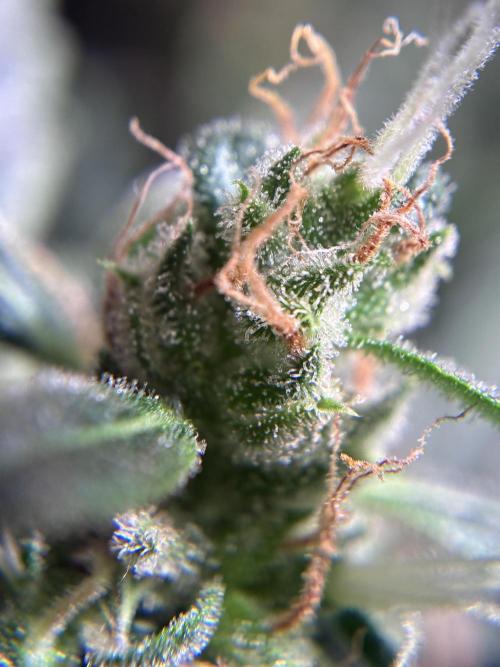
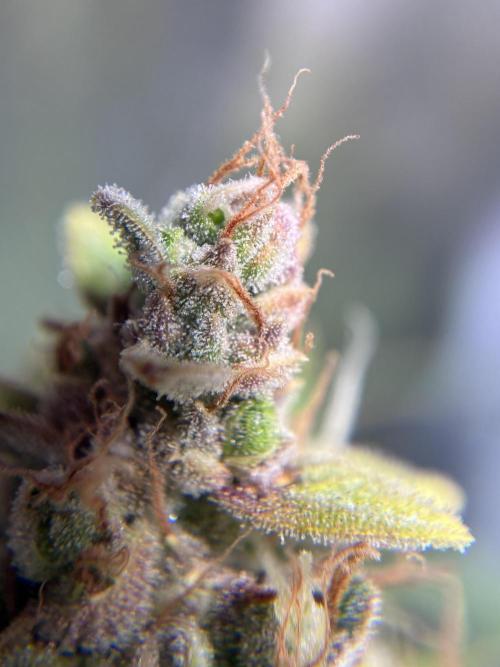
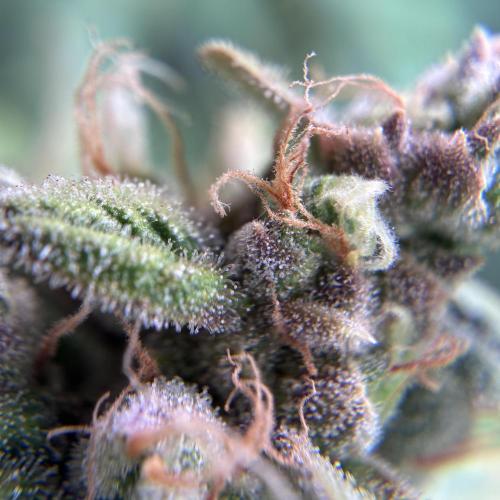
majklsoft Week 9 | Days 57–63: August 23 – August 29 Main focus this week was stabilizing irrigation and watching the transition from stacking into bulking. * Bud development continued without any obvious stall * Main colas became noticeably heavier and several branches started needing support * Long flower sections continued filling in and becoming more continuous * Water demand stayed very stable at around 2.0 L/day * Plant remained around 80–90 cm tall Irrigation The new setup worked much better: * 12 × 8 mm polyester wicks * new lower and wider reservoir * fabric-pot bottom stayed consistently moist * reservoir dropped from 9.0 L on Day 59 (08:00) to 1.5 L on Day 62 (22:00) — roughly 7.5 L over 86 hours (~2.1 L/day) Water transfer remained stable even as the reservoir level dropped, strongly suggesting the previous low-reservoir wick-flow problem has largely been solved. Nutrients Returned to a slightly lighter feed after mild tip burn: * Sensi Coco Bloom A+B: 2 + 2 ml/L * Big Bud Powder: 0.25 g/L * EC: ~1.6 * pH not adjusted (trusting the Ph perfect technology) The earlier brown/rust spots showed no meaningful progression, suggesting a temporary uptake issue after the previous drybacks rather than an active deficiency. Environment Main concern this week was humidity: * RH around 65–73% (!!!) * VPD around 0.8–1.0 Airflow to be increased as the buds became denser. Overall, a good bulking week: irrigation is much more stable, water uptake remains high, and flower development continues well.
6 likes
11 comments
Share
Used techniques
Defoliation
Technique

Login

13 comments
Sort by
popularity
popularity
newest
oldest
ChillSpace
ChillSpace commentedweek 94d ago
Dude that’s excellent!
ChillSpace
ChillSpace commented2d ago
@majklsoft, yes even 1200 honestly, it can be height dependent and according to placement. I only run 20/4 at this time. In my experience it’s better than optimizing 800 for the tips and leaving the rest of the canopy around 600. I usually run my lights under 80% power and adjust accordingly as they grow, but I do have 2 bar style lights so I can customize it even further. My only complaint at this time is the Evo6 and Evo3 get hot spots in comparison to the edges. I can be over 1100 in the center and 500 at the edge of the tent. Not my favorite. My goal at this time is to get the 4x4 ultimate v2 from Grand master Led’s
majklsoft
majklsoft commented2d ago
@ChillSpace, if everything is dialed in, I indeed believe 1200 ppfd could work! not sure how much exactly i have as I found out that Photone app is not thay accurate as I thought it is..
ChillSpace
ChillSpace commented2d ago
@majklsoft, I’m working on the dialing in part as well it exposes your weak points if you are running like that, which has helped me further dial things in so there are tradeoffs. Photone is great but using a little piece of paper and having your phone as the meter sucks haha. I bought this meter and it’s excellent. I can set my phone somewhere I can view it and bring the sensor all over, I actually used duct tape and a back scratcher to use as a makeshift holder and it works great haha
Comment by ChillSpace photo #1
Show More (5)
thehirv
thehirv commentedweek 92d ago
just starting my walter white auto,doing dwc
majklsoft
majklsoft commented2d ago
@thehirv, fingers crossed, growmie!
THcHunteR23
THcHunteR23 commentedweek 716d ago
Nice 🔥
majklsoft
majklsoft commented16d ago
@THcHunteR23, thanks, bud! 🌽
Enjoying this diary? Follow for more updates!
majklsoftmajklsoft
Follow Author
OR
05 | WALTER WHITE05 | WALTER WHITE
Follow Diary
Prefer the old Diary view?
Go back to the old Diary view