


3M • Sweet Zkittlez ΘЯGΛИIϾ



VEG
CFL 6400K Fluorescent/100W
CFL 6400K
VEG
LED 7700K Light Emitting Diodes/35W
LED 7700K
VEG
Panel Led 6500K Light Emitting Diodes/30W
Panel Led 6500K
FLO
2700K, 3000K, 660nm, FS Light Emitting Diodes/90W
2700K, 3000K, 660nm, FS


Soil
Custom


Indoor
Room Type
Defoliation
weeks 15
FIMing
weeks 6
LST
weeks 9
10 liters
Pot Size
Start at Harvest
1
Week 1. Vegetation6y ago






3 cm
Height
19 hrs
Light Schedule
28 °C
Day Air Temp
5.5
pH
500 PPM
TDS
70 %
Air Humidity
23 °C
Solution Temp
23 °C
Substrate Temp
24 °C
Night Air Temp
0 liters
Watering Volume
30 cm
Lamp Distance
Nutrients 5
Azomite
2 mll
Vinagre de Manzana
5 mll
Auxinas caseras
3 mll
deFharo 3M: Organic matter, Microorganisms, and Minerals.
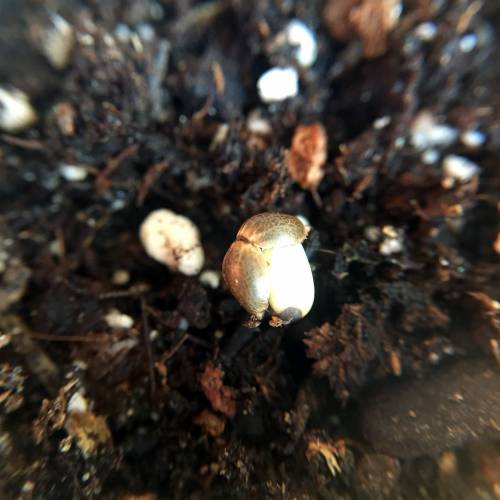
New grow of a variety from Sweet Seeds resulting from a cross between Zkittlez x Grape Ape, a genotype 75% Indica and 25% Sativa.
I prepared an aqueous solution with 25% rainwater and alkaline spring water (EC: 0.2), added homemade auxins (rooting hormone), Humate (Humic acids), Azomite (mineral), and Ormus (Calcium, magnesium, and 90 minerals in monoatomic form), and corrected the pH of the solution with Apple Cider Vinegar (rooting hormone). I soaked the seed for 30 minutes at 30°C, then placed the seed between damp paper towels with the same aqueous solution, keeping it in the dark at 28°C. It germinated in 24 hours with vigor. I waited 48 hours to transplant to substrate.
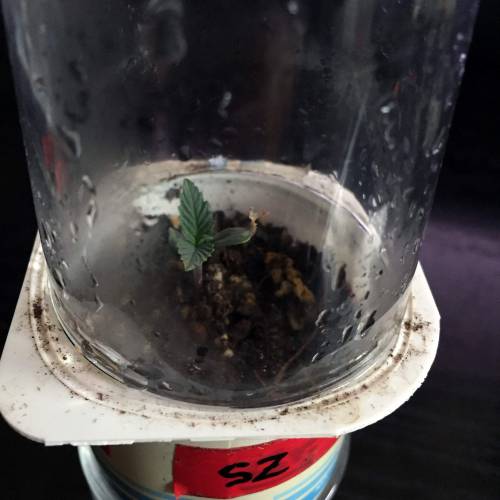
The substrate I used to house the seed consists of a balanced mix of: blonde peat, black soil, perlite, homemade solid microorganisms, biochar, homemade auxins in powder form, Bokashi, and mycorrhizae. I moistened the substrate with the initial aqueous solution. I maintain the encapsulation technique: upper (keep moisture) and lower (promotes vertical root growth).
The transplant suited the seed very well; by the 4th day, the microorganisms were already visible on the surface. I will wait until the 3rd week to do a transplant to an intermediate pot and thus continue building a strong root system.
Currently, I keep this seedling under very white lights to promote growth and compactness. Due to the small size of my flowering cabinets (40x40cm), I will grow this plant without apical pruning so it doesn't exceed the width of my cabinets, trying to promote the central apex and lateral branches. The combination of very intense white lights allows me to reduce internodes and encourage the growth of lateral branches, always aided by my homemade auxins.
I will keep the plant under this light spectrum for at least 5 weeks before transplanting to the final pot, which will be 7 liters.
Until next time. Cheers!!
8 likes
2 comments
Share
2
Week 2. Vegetation6y ago






4 cm
Height
18 hrs
Light Schedule
27 °C
Day Air Temp
5.9
pH
375 PPM
TDS
60 %
Air Humidity
22 °C
Solution Temp
23 °C
Substrate Temp
24 °C
Night Air Temp
0.1 liters
Pot Size
0.01 liters
Watering Volume
30 cm
Lamp Distance
Nutrients 5
Vinagre de Manzana
2 mll
Ormus casero
4 mll
MMA
8 mll
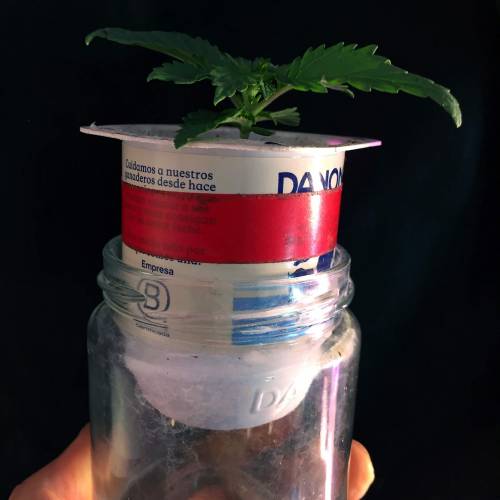
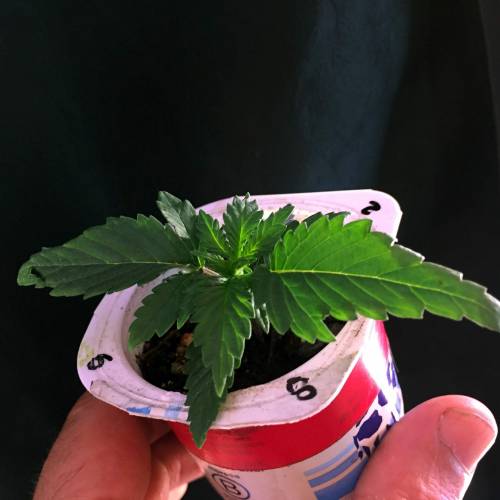
deFharo Two weeks of life for this seedling, so far it has normal growth, the roots are already sticking out from the base looking for substrate. Next week I’ll transplant it to an intermediate pot to continue developing a strong root system that ensures vigorous growth throughout the cultivation. The substrate in the container is specially prepared to enhance root development, due to components like: Solid microorganisms (MMS), Biochar activated with MM, auxins, mycorrhizae, and the bottom encapsulation technique to promote vertical root growth.
Since I detected some pests on another plant, I applied diatomaceous earth, hence some white spots on the leaves, and Neem as a foliar treatment, the pest is dead!!
I keep the substrate moist with small additions of nutrients like: humic acids, MMA, honey, molasses, or ormus, I control the pH with apple cider vinegar which also helps with rooting, the average EC this week is EC: 0.75.
GROWING TIP: Water!! Mineralized, alive, and structured.
The importance of water quality for cultivation is vital for me, I have traveled the springs, rivers, and streams in my area with the EC and pH meter to know the waters around me, I always collect rainwater from a neighbor's terrace whenever there’s an opportunity, I never run out of pure water, I avoid watering with tap water. For me, and currently, the best water mix I can offer my plants is 75% rainwater with another from a mountain spring with alkaline water (Calcium carbonate pH: 9.2) and highly mineralized (EC: 0.85), I regularly consume this water myself, I achieve a mix of pure water with an EC around 0.19, thus ensuring the supply of calcium and other minerals. In times when it doesn’t rain, I use pure water from springs and streams with an EC of 0.3.
I filter and store this water in the dark at my home, the thing is that standing water loses oxygen and also disrupts its molecular structure making it chaotic. To recover this structure and oxygenation, the water must be in motion like in nature, I use a magnetic stirrer to bring the water back to life, the stirrer creates an implosive vortex that in 10 minutes puts things in order and oxygenates our water, once this process is done, I add the nutrients one by one and keep stirring until the end.
Water treated with this technique improves nutrient assimilation, cation exchange, and floods our substrate and roots with oxygen, also with this technique, normal EC concentrations can be lowered by 30% while achieving the same results, try it and you’ll see!!
Cheers!! Until next time.
8 likes
comments
Share
3
Week 3. Vegetation6y ago







6 cm
Height
18 hrs
Light Schedule
28 °C
Day Air Temp
6.1
pH
500 PPM
TDS
55 %
Air Humidity
22 °C
Solution Temp
23 °C
Substrate Temp
24 °C
Night Air Temp
0.4 liters
Pot Size
0.07 liters
Watering Volume
30 cm
Lamp Distance
Nutrients 10
Vinagre de Manzana
1 mll
Ormus casero
10 mll
MMA
8 mll
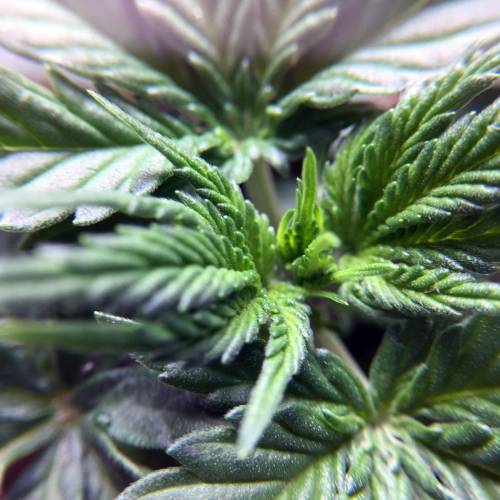
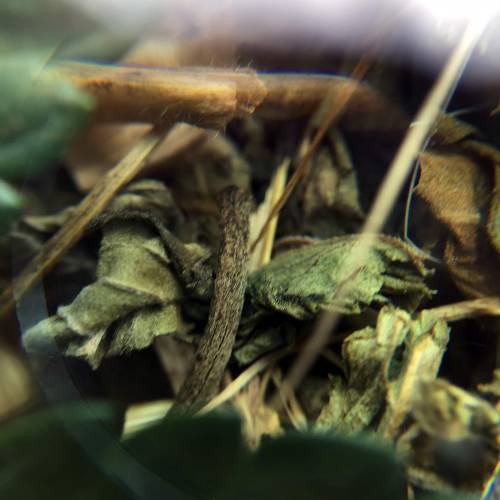
deFharo Life continues its course in this third week. Daily water consumption was already high in the yogurt container, a sign of many roots.
On day 19 of cultivation, I decided to transplant the seedling to a slightly larger pot with large holes at the bottom, to continue promoting the growth of the root system before the final transplant to the definitive pot. The roots of the seedling looked healthy, vigorous, and abundant; this is reflected in the healthy growth of the plant, thanks to high water consumption from the start through root absorption. I prepared a very airy organic substrate enriched with homemade bokashi, solid microorganisms, biochar, auxins, and mycorrhizae. Finally, I encapsulate the bottom of the pot to maintain high humidity at the base to promote the growth of vertical roots seeking substrate.
- Currently, I keep the seedling in a yogurt container for the first 3 weeks and then transplant it to an intermediate pot for 2 weeks before the final transplant. Starting from the next cultivation, I will only do one transplant; I will discard the yogurt container and place the seed directly in an intermediate pot. The goal is to gain at least a week in the cultivation; I would keep the seedling in this container for 3-4 weeks, depending on the vigor of the rooting, and then move it to the definitive pot.
• 1st watering after transplant: Ormus 1%, MMA 2%, Auxins 3%, Honey, BAL 5%. PH: 6.1 EC: 1.2. 195ml, of which 60ml I put at the base of the pot.
The first watering after transplant is designed to:
a) Activate microbial life and rapid degradation of organic matter (MMA, Honey, and BAL)
b) Provide magnesium and minerals (Ormus, MMA, Honey)
c) Promote rooting (Auxins, honey, and apple cider vinegar)
This week I watered the plant just enough to recover the water consumed daily and maintain constant humidity in the substrate.
😋 WEEKLY DIET:
Day 16. Ormus 1%, Bio fruits NPK 3%, Molasses, and vinegar. 10ml.
Day 17. Ormus 1%, Bio fruits NPK 2%, Hydro Humus 2%, Honey, and Apple cider vinegar.
Day 19. Transplant. Ormus 1%, MMA 2%, Auxins 3%, Honey, BAL 5%. PH: 6.1 EC: 1.2. 195ml.
Day 20. Ormus 1%, molasses, Hydro blood 0.5%, MMA 1%, and Apple cider vinegar. PH: 6.15 EC: 1. 100ml.
Day 21. Ormus 1%, Bio fruits NPK 2%, Hydro Humus 2%, Honey, and Apple cider vinegar. PH: 6.15 EC: 0.85. 100ml.
😵 GROWING TIPS: Ormus and Coconut Water
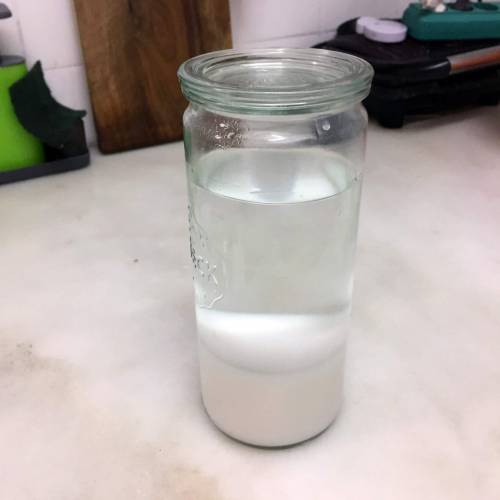
• Homemade Ormus from Cantabrian sea water.
a) Source of Magnesium for the entire cultivation. Ormus contains 30 to 60% magnesium. I use it systematically in all my waterings, with doses ranging from 1% to 2%.
b) More than 70 minerals in monoatomic form that improve cation exchange and nutrient assimilation.
c) Being an alkaline product, it can be used to raise the PH of the watering when needed. It increases the EC load very little.
d) It is part of my components in the aqueous solution I prepare for germination and establishment of seeds.
e) Stored in the dark, the product has no known expiration.
• Coconut Water.
Natural product rich in sugars, vitamins, proteins, amino acids, cytokinins (Cell division, growth), gibberellic acid (Root stimulation), and minerals (Ca, Fe, P, Mg).
- The key moments of higher demand for cytokinins begin in the middle of the first stage of germination and establishment of the seedling, and at the beginning of the flowering/reproduction stage. In the last stage of the crops, it is unnecessary.
- The key moments for gibberellic acid also begin in the first half of the first stage of cultivation and the last weeks of vegetative growth; after these stages, the need for the acid declines until it becomes unnecessary in the last weeks of cultivation.
- I use coconut water, alternating it with other nutrients, only in the early stages of the plant and up to pre-flowering.
- The doses depend on the preferred EC load. As a minimum, I recommend a load in solution of EC 0.4 or PPM 200.
- Natural coconut water should be stored in the refrigerator for a maximum of 4 days, as it ferments very easily. I haven't tried commercial coconut water.
Cheers and see you next week!! 😋
10 likes
4 comments
Share
4
Week 4. Vegetation6y ago




9 cm
Height
18 hrs
Light Schedule
28 °C
Day Air Temp
6.2
pH
350 PPM
TDS
55 %
Air Humidity
22 °C
Solution Temp
24 °C
Substrate Temp
24 °C
Night Air Temp
10 liters
Pot Size
0.15 liters
Watering Volume
30 cm
Lamp Distance
Nutrients 4
Vinagre de Manzana
1 mll
MMA
25 mll
Melaza
2 mll
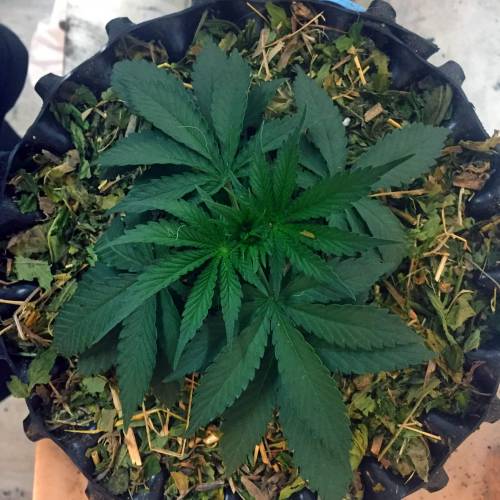
deFharo Fourth week of life for this little one, very happy with the evolution of the grow. The management of compaction using high-intensity cold lights is paying off, with only 9cm in height the plant shows great foliage and undeniable vigor.
- Normally, I wait two weeks after the last transplant to do the next one, but in this case, I moved the transplant to the final pot up by a week; the roots started to peek out from the base on day 23, so the establishment in this small pot was assured.
- Finally, on day 27 of the grow, I transplanted into a 10L Air-pot, which is the largest pot I will be using so far. The first goal is to promote root growth throughout the container. For this purpose, I prepared a substrate enriched with minerals and organic matter with very good drainage. I also did the first watering of this container in two stages: first, I moistened the root ball before the transplant, then I left it for 12 hours without watering after the transplant so that the moisture from the original root ball would spread to the surrounding substrate by capillarity. After 12 hours, I applied an initial watering of 800ml with activated microorganisms and molasses, which will help proliferate the microorganisms added to the substrate in the form of MMS and Bio Char. I applied 300ml at the base of the pot using a kitchen syringe, and the rest, 500ml, I applied on the surface. From now on, and for at least 10 days, I will be recovering the lost moisture and increasing the watering according to the evolution of water consumption.
- I plan to wait this week to be sure of the establishment in the new pot, and next week I will apply a FIM pruning. I will keep the grow under the current light spectrum until week 6/7, depending on the evolution of the apical pruning and/or the availability of space in my flowering cabinets. After this, and gradually, over a week, I will be reducing the light hours until reaching 12/12.
Until next week. Cheers!! 😍
11 likes
comments
Share
5
Week 5. Vegetation6y ago




12 cm
Height
18 hrs
Light Schedule
31 °C
Day Air Temp
6.4
pH
400 PPM
TDS
55 %
Air Humidity
20 °C
Solution Temp
26 °C
Substrate Temp
28 °C
Night Air Temp
10 liters
Pot Size
0.35 liters
Watering Volume
30 cm
Lamp Distance
Nutrients 6
MMA
10 mll
Melaza
3 mll
Bio Frutas NP
10 mll
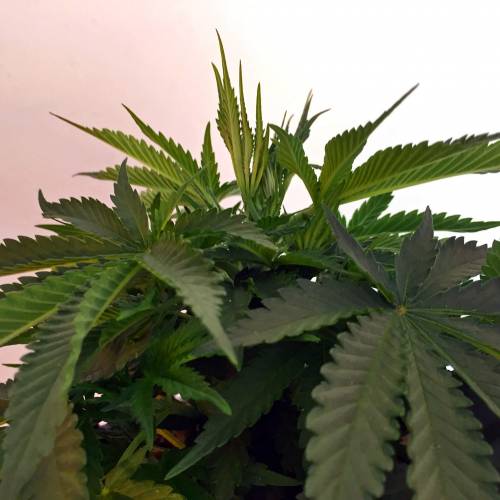
deFharo 35 days from seed, the plant has settled perfectly in its new pot. Water consumption is high, I suppose a lot of it is due to the type of pot; this consumption and the appearance of the plant assure me that the roots are spreading without issues.
The watering solutions this week have all been very mild; I continue inoculating MM to take care of the organic components of the substrate. I also did a watering with Worm Humus Hydrolysate and NP Fruit Biol. It was really hot this week, and the leaves curled a bit. Yesterday, I applied a watering with Molasses, MMA, and Seaweed Hydrolysate, which helps overcome heat stress. Today, everything has returned to normal.
Next week, I'm going to try to give growth a boost with a specific watering that includes a good dose of Nitrogen. I have several formulations for this purpose, and I'm going to try to test the response of each of these soluble nutrients for growth, applying different formulas in two other crops that are roughly the same age.
I continue to maintain very compact growth, with very short internodes. This week, I changed one of the 6500K LED panels for another blue one of the same power with a wavelength of 450nm, which will help even more with compact growth and the development of lateral branches and the trunk. Probably this week, coinciding with the waxing moon, I will apply a FIM apical pruning, and if all goes well, I will switch to flowering by the 7th week at the latest.
😋 GROWING TIP
Compact and branch the plants with light.
- Due to my need to grow plants with many space limitations, both horizontal and vertical, I have been experimenting with compacting, very short internodes, with good results through lights with very white spectra and high light intensity. For this, I have a 50x50x100cm cabinet where I grow all my plants during the entire vegetative growth stage. By growing plants this way, I achieve a vigorous response from the lateral branches when applying FIM prunings, reducing height and width, improving light efficiency, and ultimately obtaining huge buds that expand from top to bottom across all branches.
- Also, to encourage uniform shaping across the plant, I rotate all the pots 90° daily.
- This lighting technique does not stress the plant like other height, width, and canopy control techniques.
😎 Grow cabinet setup:
Light hours: 18/6
Size: 50x50x100cm
Top lights: CFL 6400K 100w and Fuors 3x20w 6400K
Side lights: 35w 7700K LED Panel and 450nm Blue LED Panel
Consumption kWh/Day: 4.34
Until next week. Greetings to everyone!!
9 likes
1 comment
Share
6
Week 6. Vegetation6y ago




19 cm
Height
18 hrs
Light Schedule
31 °C
Day Air Temp
6.4
pH
400 PPM
TDS
55 %
Air Humidity
20 °C
Solution Temp
28 °C
Substrate Temp
28 °C
Night Air Temp
10 liters
Pot Size
0.4 liters
Watering Volume
30 cm
Lamp Distance
Nutrients 5
MMA
7 mll
Melaza
3 mll
Miel
4 mll
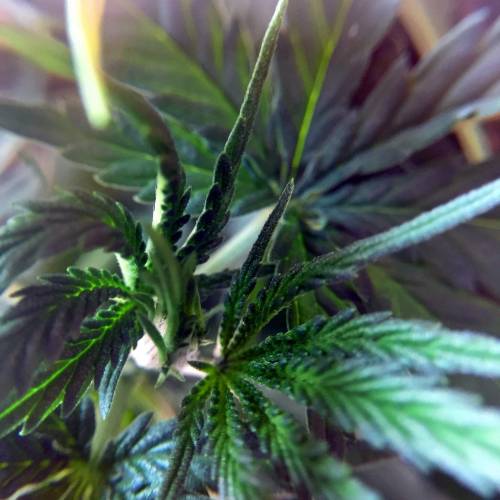
deFharo Six weeks of life from seed, the plant is showing vigorous and compact growth, very happy with the cultivation and the performance of the Air-Pot.
On day 40, I did a FIM pruning to limit the height and try to even out the canopy of tops.
Water consumption is high and it's noticeable in the growth; this week, on day 38, I applied a deep watering with a solution high in organic nitrogen: dried blood hydrolysate, and the results are clearly visible after 24 hours. I continue to add carbohydrates to the waterings and inoculating Activated Mountain Microorganisms (AMM) enriched with minerals.
This week, I will declare the resulting apex after the FIM pruning; I will continue to enhance vegetative and root growth with auxins that will also help redirect energy to the lateral branches after the FIM pruning. I will switch this plant to flowering at the beginning of the eighth week of cultivation.
😇 GROWING TIP
Protect the cut from the apical pruning from pathogens, fungi, or bugs in general with wood ash.
- An apical pruning leaves a cut exposed on the plant that can be an entry point for pathogens, fungi, and other nasties.
- To protect the cut, I use ash; it helps heal the cut by absorbing moisture and providing minerals, and it also acts as a physical barrier against pathogens due to its alkaline pH.
Cheers. Until next week!! 😆
15 likes
comments
Share
Used techniques
FIMing
Technique
7
Week 7. Flowering6y ago




25 cm
Height
13 hrs
Light Schedule
30 °C
Day Air Temp
6.3
pH
650 PPM
TDS
55 %
Air Humidity
20 °C
Solution Temp
28 °C
Substrate Temp
28 °C
Night Air Temp
10 liters
Pot Size
0.4 liters
Watering Volume
25 cm
Lamp Distance
Nutrients 9
MMA
10 mll
Melaza
3 mll
Miel
4 mll
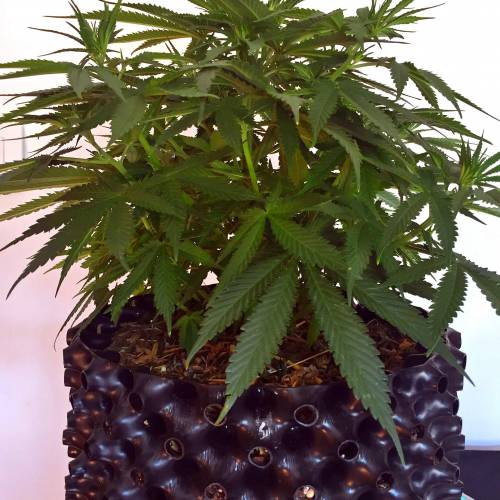
deFharo Seventh week of life, first of flowering, the plant is settled, the FIM pruning from last week is causing the side branches to emerge vigorously to take their place in the canopy, I’m happy with the compact and round structure that the crop is developing, also with the pot's performance related to water consumption and I hope for good root development as well.
The waterings I do are deep, as I expect the pot to be quite dry, I water when the initial watering level, 10% of the volume, total= 1L, is below 85%.
In this week’s diet, I have focused on 3 main aspects: Inoculation and maintenance of the substrate's MM, providing N, amino acids, and vitamins, and hormonal restructuring with auxins (rooting and energy distribution to the lateral tips after apical pruning) and cytokinins (promote cell division and control leaf and flower senescence), I have applied the hormones in foliar mode as the transition to the flowering period demands a lot of these hormones.
So far, I haven’t done defoliation, just 4 leaves, I’m going to wait a few days to keep pushing vegetative growth until the end.
😉 WEEKLY DIET
1) Day 43. Spring water, Honey, Auxins 0.5%, Enzymatic algae with minerals 1%. PH: 6.3 EC: 1.5. 900ml.
2) Day 46. Spring water, Honey, MMA 1%, Bio Fruits NPK 3% and Ormus 1%. PH: 6.2 EC: 1.6. 900ml.
3) Day 48. Foliar watering: Auxin hormones 0.2% and cytokinins 0.1%. 150ml.
4) Day 49. Spring water, Honey, Molasses, Animal hydrolysate 1% (Ca, N, P...), Pumpkin with MM 2% (MMA, B, Ca, Mg, vitamins, minerals...) PH: 6.3 EC: 1.2. 1200ml.
Greetings to everyone and thanks for being there. Until next week!! 😳
11 likes
3 comments
Share
8
Week 8. Flowering6y ago


36 cm
Height
13 hrs
Light Schedule
29 °C
Day Air Temp
6.2
pH
650 PPM
TDS
55 %
Air Humidity
20 °C
Solution Temp
26 °C
Substrate Temp
26 °C
Night Air Temp
10 liters
Pot Size
0.6 liters
Watering Volume
25 cm
Lamp Distance
Nutrients 8
MMA
10 mll
Melaza
3 mll
Miel
4 mll
deFharo Week of vigorous growth, the side branches are pushing to stand out, the division of the apex into two after the apical pruning is noticeable, surely this week I will apply LST to these upper branches to control the horizontal level of the canopy. Massive flower formation has already begun, the plant currently looks very healthy, I am very happy with this grow!! 😋
The grow is responding very well to all the waterings, on day 51, coinciding with the waning moon and pre-flowering, I made a surface application of solid nutrients and minerals, I will do this for all my grows monthly, always coinciding with the waning moon phase. During this coming week I will lower the nutrient concentration in the waterings and continue with the MM inoculation to help digest the solid fertilizer, then, at the beginning of the waxing moon, I will continue with the normal diet.
This week I am experimenting with two new soluble fertilizers:
1) Enzymatic hydrolysate of Quinoa, Chia, Sesame, and hemp seeds enriched with 4 minerals. These seeds are high in protein, with enzymatic hydrolysis I convert this protein into highly soluble essential amino acids. The plant's response to this preparation was immediate.
2) Lacto-ferment of 3 seaweeds (Kelp, Spirulina, and Chorella) with Effective Microorganisms (EM: BAL, MMA) and minerals. This preparation is designed as a crop stimulator in the vegetative stage thanks to the vitamins and components of the seaweeds, also acting as a probiotic due to the inclusion of the effective microorganisms. It can be applied to soil and foliage. The fermentation of the preparation lasted 45 days.
😉 WEEKLY DIET
1) Day 51. Water M, Molasses, Hydro seeds 3% (Essential amino acids), MMA 1%, Ormus 1%. PH: 6.1 EC: 1.45 - 800ml.
2) Day 53. Water M, Honey, EM Algae 1%. PH: 6.06 EC: 0.7 - 1000ml.
3) Day 55. Water M, Molasses, Lacto EM Algae 1.5%, Humate PK 0.5% (Humic, Fulvic), Wool hydrolysate 0.5% (NK). PH: 6.5 EC: 1.55. 1200ml.
Greetings to all. Until next week!! 😆
10 likes
2 comments
Share
9
Week 9. Flowering6y ago




40 cm
Height
12 hrs
Light Schedule
30 °C
Day Air Temp
6.4
pH
500 PPM
TDS
60 %
Air Humidity
20 °C
Solution Temp
27 °C
Substrate Temp
27 °C
Night Air Temp
10 liters
Pot Size
0.6 liters
Watering Volume
25 cm
Lamp Distance
Nutrients 8
Melaza
3 mll
Miel
4 mll
Ormus
3 mll
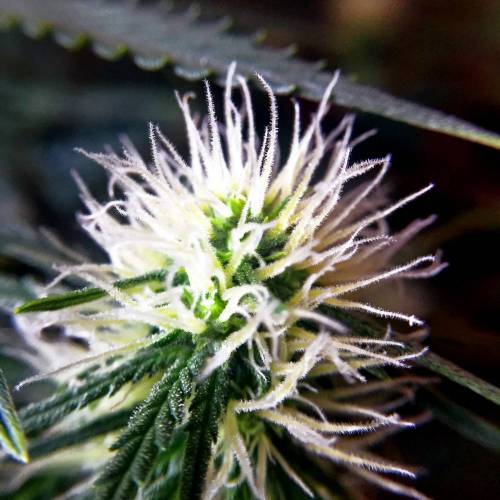
deFharo Ninth week from seed, third of flowering, very happy with the evolution of the grow. The plant continues to develop vigorously, there are multiple colas with fat inflorescences, this plant promises a lot!!
Water consumption is high, forcing me to water every 48h, which allows me to create a very varied diet. So far, I'm only getting positive signs with each nutritional watering, the plant is very strong and hungry.
I've done several ties on the upper tips to control the height and enhance the formation of vertical colas. I've opened a good gap in the center to let in a lot of light and thus boost the growth of the lateral tips until achieving a horizontal canopy with all of them, and also, a very rounded overall shape.
During the week, I've done several gentle waterings (Max EC: 1) with varied components. Yesterday, I started a more potent diet focused on P/K and minerals.
😂 WEEKLY MENU
1) Day 57. Water M, Honey (Carbohydrates, enzymes, minerals, vitamins...), Worm Humus Hydrolyzed 2% (Humic and Fulvic) and chickpea water (Ca, Fe, P, K, Mg...). PH: 6.2 EC: 0.9. 900ml.
2) Day 59. Water M, Molasses (K, minerals, yeasts, enzymes, carbohydrates...), Animal Lacto Meals EM 1% (NP, Ca, MM...), Lacto Guanos EM 1% (NP, Ca, Mg, MM...) and Ormus 0.35% (Ca, Mg...). PH: 6.25 EC: 1. 900ml.
3) Day 61. Water M, Honey (Carbohydrates, enzymes, minerals, vitamins...), Lacto Algae EM 2% (Vitamins, minerals, MM...). PH: 7 EC: 0.6. 1100ml.
4) Day 63. Water M, Molasses (K, minerals, yeasts, enzymes, carbohydrates...), Humate PK 1.5% (Humic, Fulvic, P, K, and minerals), Ormus 1% (Ca, Mg...). PH: 6.6 EC: 1.6. 800ml.
Greetings to everyone. Until next week!! 😵
10 likes
3 comments
Share
Used techniques
LST
Technique
10
Week 10. Flowering6y ago



40 cm
Height
12 hrs
Light Schedule
28 °C
Day Air Temp
6.5
pH
Weak
Smell
500 PPM
TDS
60 %
Air Humidity
18 °C
Solution Temp
26 °C
Substrate Temp
26 °C
Night Air Temp
10 liters
Pot Size
0.5 liters
Watering Volume
35 cm
Lamp Distance
Nutrients 7
Melaza
3 mll
Ormus
10 mll
Bio frutas EM
20 mll
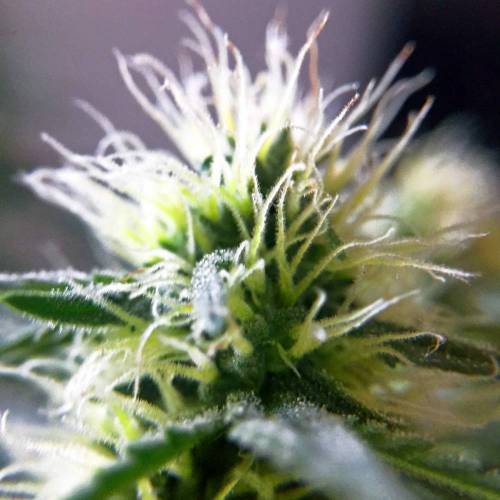
deFharo The queen of my joy garden!!, she is 70 days old, three weeks since the transition to flowering and 4 since the FIM pruning.
The development of the white colas continues to thrive, aided by the large leaves at the bottom that capture a lot of energy to give to the growth of the tips.
Without a doubt, this is a plant with great genetics and strength; while her two closet companions have suffered a lot from the excessive initial intensity of my lights and two consecutive heat waves, this plant has not noticed these setbacks at all, continuing to grow steadily. I am also convinced that the type of air-pot helps a lot, as it maintains a high level of water consumption and oxygenation of the substrate, which has allowed:
- Keeping the plant hydrated and cool; I have lowered the irrigation water temperature to 18°C
- A more varied nutrient supply. To avoid saturating the substrate with the organic matter from my preparations, I alternate nutrient waterings with pure waterings with a bit of carbohydrates that help to overcome the heat shocks.
This week, on day 66, I added solid nutrients to the substrate using the hole technique.
I made 4 holes on opposite sides of the pot and put 5g of nutrients in each one, then watered.
Components: Banana peel powder (Vitamins and K), Azomite (Ca, Mg, K...), PK Humate (Humic, fulvic, P and K), Bat Guano (Ca, NP...), Wood ash (Minerals and K), Eggshell powder (Ca) and Algae Bokashi (Vitamins and MM)
I will water in the coming days only with water and a little more to give the substrate time to digest these solid nutrients.
😅 WEEKLY WATERINGS
1) Day 64. Mineral water. PH: 7 EC: 0.33. 500ml.
2) Day 65. Mineral water with molasses. PH: 6.8 EC: 0.5. 250ml.
3) Day 66. Water M, molasses, Bio fruits with minerals and EM 4% and Ormus 1%. PH: 6.5 EC: 1.45. 1000ml.
4) Day 68. Water M, Molasses, Potassium humate with minerals 0.5%, Bio fruits with minerals and EM 1% - Auxin+cytokinins+gibberellic hormones=EC 0.5 (last contribution of this type of components) PH: 6.5 EC: 1.2. 1200ml.
5) Day 70. Water M, Algae acid (Vitamins, amino acids and BAL) 1% and honey. PH: 6.2 EC: 0.8. 250ml.
Cheers and health to everyone. Until next time and thanks for being here!! 😊
10 likes
comments
Share
11
Week 11. Flowering6y ago




40 cm
Height
12 hrs
Light Schedule
28 °C
Day Air Temp
6.5
pH
Weak
Smell
500 PPM
TDS
60 %
Air Humidity
18 °C
Solution Temp
26 °C
Substrate Temp
26 °C
Night Air Temp
10 liters
Pot Size
0.5 liters
Watering Volume
40 cm
Lamp Distance
Nutrients 5
Melaza
3 mll
Miel
3 mll
Humato K
10 mll
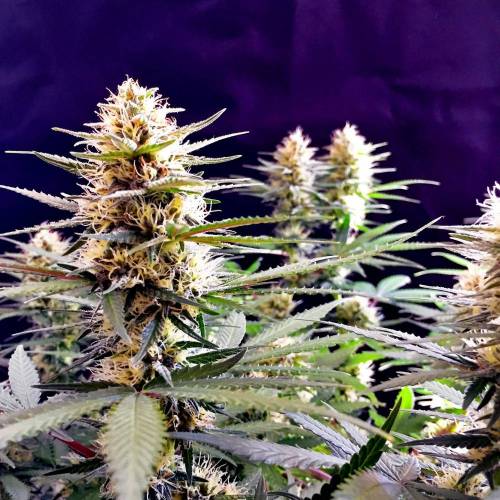
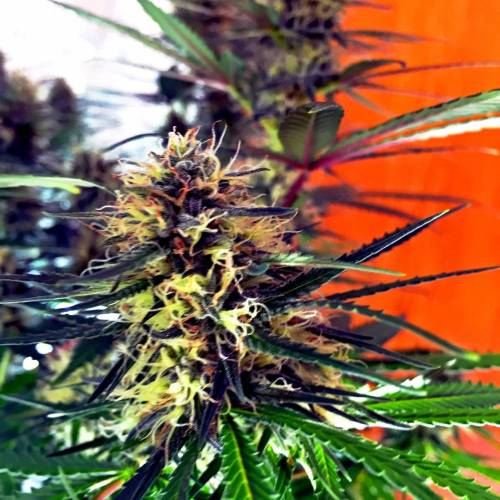
deFharo The cultivation is still impressive in the eleventh week from seed and the fifth week into flowering, the numerous buds continue to grow at a good pace, according to the grower the harvest may be ready in 4 more weeks.
The plant emits a fresh but intense smell, like vanilla, overall the plant has not shown any signs of deficiency or excess so far.
The waterings this week have been very gentle, mostly just with rainwater (God's water), which I collected last week, mixed with honey or molasses to give energy to the microorganisms, these waterings have aimed at the dissolution and absorption by the plant of the solid nutrients I provided on day 66 of cultivation.
The nutritional waterings I have planned for this week will mainly focus on a greater supply of Phosphorus and Potassium from different organic sources.
😋 WEEKLY DIET
1) Day 71. Water M, Molasses, Humate K 1% and Lacto Guanos EM 1%. PH: 6.5 EC: 1.4. 1200ml.
2) Day 74. Rainwater and mineral at 25% with honey. PH: 6.5 EC: 1.4. 1200ml. PH: 6.5 EC: 1.4. 1200ml. PH: 6.8 EC: 0.13. 1300ml.
3) Day 77. Rainwater and mineral at 25%, Lacto algae EM 1.5% and molasses. PH: 5.82 EC: 0.55. 900ml.
Cheers and anarchy!! 😜 Until next week!! 😉😏
12 likes
comments
Share
12
Week 12. Flowering6y ago


40 cm
Height
12 hrs
Light Schedule
26 °C
Day Air Temp
6.4
pH
Weak
Smell
500 PPM
TDS
60 %
Air Humidity
20 °C
Solution Temp
24 °C
Substrate Temp
24 °C
Night Air Temp
10 liters
Pot Size
0.5 liters
Watering Volume
40 cm
Lamp Distance
Nutrients 5
Melaza
3 mll
Lacto algas EM
10 mll
Humato PK
10 mll
deFharo The sixth week of flowering concludes, twelfth since seed, the plant continues its vigorous evolution, so far I have hardly done any defoliation, I want to achieve maximum photosynthesis until the end. The plant has stopped its growth and only the buds are developing, now it's time to fatten them up to the max.
The plant continues with a high and constant water consumption, I water it every two days, alternating nutritional waterings with pure water. This week I applied a seaweed bokashi tea in the watering and my lacto fermentation of 3 seaweeds with Effective Microorganisms (EM) to strengthen the crop before the final stretch, according to the producer this strain will be ready for harvest after 9 weeks of flowering, so I have at least 3 weeks of cultivation left, I already started yesterday with a specific watering for bud growth, I’m using my Potassium Hydrolysate from Leonardite, enriched with minerals, organic nutrients, and free sugars. Yesterday I also added solid nutrients on the surface, under the mulch and coinciding with the start of the waning moon. This week the alternating pure water waterings will include a bit of molasses and MMA to help dissolve these solid elements in the next 15 days.
😂 WEEKLY DIET
1) Day 79. Rainwater and Spring at 25%, Potassium Humate from Leonardite PK 1%, Lacto guanos EM 1%. PH: 6.6 EC: 1.2
2) Day 81. Rainwater and Spring at 25% and Seaweed bokashi tea at 20%. PH: 6.5 EC: 0.9.
3) Day 82. Rainwater and Spring at 20%, Seaweed bokashi tea at 15%, Lacto seaweed with EM 0.5%
4) Day 84. Rainwater and Spring at 25%, Potassium Humate from Leonardite PK 1%, Lacto guanos EM 1%
5) Day 84. Solids on the surface 25g. Wood ash, Bird and bat guanos, Seaweed bokashi, Banana powder, Rock powder, Phosphorite, Bone meal...
Until next time. Cheers and Health!! 😋
11 likes
3 comments
Share
13
Week 13. Flowering6y ago




41 cm
Height
12 hrs
Light Schedule
26 °C
Day Air Temp
6.4
pH
Weak
Smell
500 PPM
TDS
60 %
Air Humidity
20 °C
Solution Temp
24 °C
Substrate Temp
24 °C
Night Air Temp
10 liters
Pot Size
0.5 liters
Watering Volume
40 cm
Lamp Distance
Nutrients 7
Melaza
3 mll
Humato PK
10 mll
Lacto guanos EM
12 mll
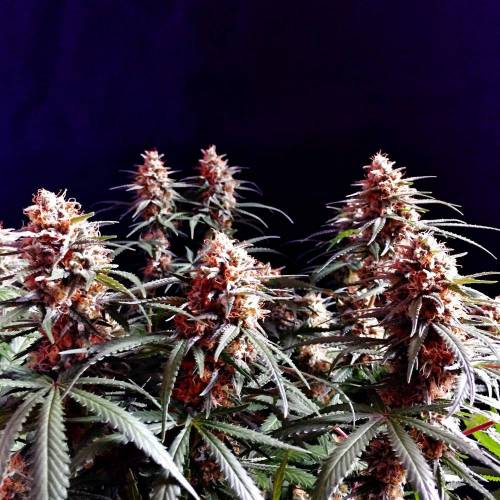
deFharo Week 13, fattening week!! Very satisfied with this grow. The buds are in full fattening process, the pistils have turned brown, the smell is very intense, with fragrances of forest, vanilla, and mushrooms. The branches are going to support all the weight of the buds, which is mainly favored by the short stature and the feeding, highlighting the contribution of silicon that gives strength and elasticity to the cells; I always include this immobile nutrient in all my ferments and hydrolysates.
The grow has not shown any signs of deficiencies yet, although a couple of old leaves have started to yellow, the leaf structure remains abundant, doing its photosynthesis job. I think there’s still a lot of energy in the plant; according to the producer, the harvest should be ready in two weeks from today, and I believe the plant will take advantage of every last minute.
With my organic grows, I don’t need to do a root flush, so I’ll keep feeding the plant until the very end to get all its potential out; in the last two waterings, I only used molasses.
The plant continues to have a good water intake, allowing me to water every 72 hours. This strain is very greedy; it consumes all my preparations without complaint. During this grow, the EC concentration in watering has always been mild, never above 1.3, and always alternating with other waterings of lower concentrations to avoid saturating my soil. It will be now, in the final stage, where I will increase the EC concentrations. It’s true that using structured water for my watering solutions can result in a lower nutrient concentration than usual, as living or structured water favors nutrient assimilation and cation exchange, which is already enhanced by the composition of my soils, enriched with clays and organic matter.
😋 WEEKLY DIET
1) Day 87. Rainwater and spring water at 50%, molasses, potassium humate from leonardite + minerals 1.5%, Lacto ferment of guanos with EM 1.5%, Ormus 0.5%. PH: 6.45 EC: 1.36. 1000ml.
2) Day 89. Spring water, molasses, Bio fruits PK 1.5%. PH: 6.6 EC: 0.75. 1000ml.
3) Day 91. Spring water, molasses, potassium humate from leonardite 1%, Lacto ferment of guanos with EM 1%. PH: 6.6 EC: 1.24. 900ml.
Until next week!! Cheers and health!! 😜
13 likes
2 comments
Share
14
Week 14. Flowering6y ago


41 cm
Height
12 hrs
Light Schedule
26 °C
Day Air Temp
6.4
pH
Strong
Smell
500 PPM
TDS
60 %
Air Humidity
18 °C
Solution Temp
24 °C
Substrate Temp
24 °C
Night Air Temp
10 liters
Pot Size
0.4 liters
Watering Volume
35 cm
Lamp Distance
Nutrients 6
Melaza
3 mll
Humato PK
10 mll
Lacto guanos EM
12 mll
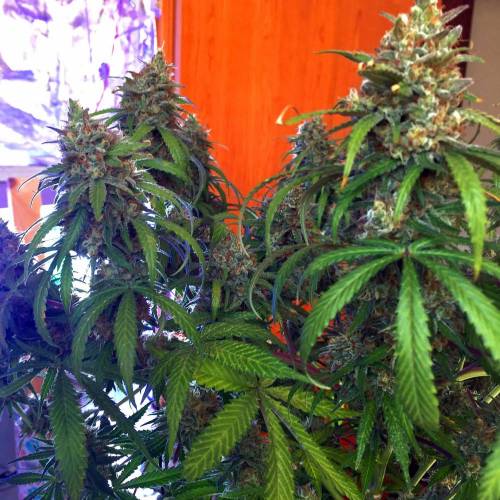
deFharo Week 14 and the grow is still going strong, under the microscope the milky trichomes, very numerous, are clustering together, creating a very dense layer of trichomes.
I'm 10 days away from the producer's recommendation for harvest, and I see the plant very eager to make that journey and keep filling the tips with many fat trichomes!!
This week I've been watering focusing on the addition of humic and fulvic acids with potassium and phosphorus, I've alternated my three potassium humates and the worm humus hydrolysate with guano lacto ferment with EM (P and micronutrients), and one day I prepared a watering with my pumpkin and carrot fertilizer with MMA to provide boron, carotenoids, vitamins, and microorganisms.
Next week I'm going to do very light waterings only with molasses (Free sugars, K, enzymes, and yeasts) and Activated Mountain Microorganisms to promote the dissolution of the solid and mineral nutrients that are still available in the substrate.
Let's keep going... Greetings to everyone. 😉
12 likes
2 comments
Share
15
Week 15. Flowering6y ago




41 cm
Height
12 hrs
Light Schedule
25 °C
Day Air Temp
6.8
pH
Strong
Smell
500 PPM
TDS
55 %
Air Humidity
18 °C
Solution Temp
22 °C
Substrate Temp
22 °C
Night Air Temp
10 liters
Pot Size
0.35 liters
Watering Volume
35 cm
Lamp Distance
Nutrients 6
Melaza
5 mll
Lacto guanos EM
15 mll
Humato KM
15 mll
deFharo 15 weeks of life and 3 days away from the harvest time suggested by the producer (9 weeks of flowering), the crop still has energy to keep fattening the buds, barely showing signs of deficiencies and the smell is very strong and sweet. 💪
I've started this week with pure water irrigations and inoculation of microorganisms (MMA) to dissolve the remaining nutrients and minerals in the substrate and strengthening ormus (Ca, Mg...), at this point all the irrigations include molasses which contributes to the proliferation of the MM because it gives them energy and helps fatten the buds thanks to the free sugars and potassium present in the molasses.
Next week I'm going to do a deep irrigation with rainwater to wash away the last traces of Nitrogen, as N is the component that washes away the easiest through runoff.
Yesterday I gave a nutritional irrigation with my Potassium Humate from leonardite with Minerals, molasses, ormus, and guano lacto ferment with Efficient Microorganisms (EM, P, Micronutrients). I'm going to alternate, until the end, irrigations with pure water with other nutritional ones focused on Phosphorus and Potassium.
Until next time, that's all!! Cheers and thanks for being there!!
12 likes
comments
Share
Used techniques
Defoliation
Technique
16
Week 16. Flowering6y ago


42 cm
Height
12 hrs
Light Schedule
25 °C
Day Air Temp
6.6
pH
Strong
Smell
350 PPM
TDS
55 %
Air Humidity
20 °C
Solution Temp
21 °C
Substrate Temp
20 °C
Night Air Temp
10 liters
Pot Size
0.45 liters
Watering Volume
45 cm
Lamp Distance
Nutrients 4
Melaza
5 mll
Agua de lluvia
750 mll
Agua de montaña
250 mll
deFharo Day 112 from seed and nine weeks of flowering, the plant is reaching the peak of its glory!! 😛
This week I've noticed considerable fattening of the buds, at the same time the leaves show fatigue and general aging, the plant is consuming its own resources to finish forming flowers and trichomes. To try to mitigate the aging at the beginning of the week, I did a watering with my Lacto fermented seaweed with EM and molasses.
The tallest buds have shown leaves with symptoms of having received too much light, so I raised the light canopy; this decrease in intensity will also send a message of the end of the stage to the plant.
The trichomes continue to be produced, there are no amber trichomes at the moment, and the concentration of trichomes in the buds is very high. I think that with this coming week it will be enough to harvest; I expect a high yield, which is my best reward, and if I relate it to the intense and varied smells (sweet and spicy, fruity and citrus) that it gives off depending on the time of day, at night it’s all much more intense, I think this strain is going to produce a top-notch product.
At the beginning of the week, I did the last two waterings with nutrients and a third yesterday only with pure water, which I will continue until the harvest; the plant is still consuming a lot of water. These pure water waterings will finish dragging the organic nitrogen still present in the substrate, giving the crop more opportunities to take advantage of the Phosphorus and Potassium still present.
Honestly, growing this strain has been very satisfying at all times; it has responded positively to everything: transplants, flowering, waterings, lights, etc. Without waiting any longer, I will add this strain to the list of varieties to repeat.
😜 WEEKLY DIET
Day 107. Rain and mountain water at 33%, molasses (Free sugars), Lacto fermented seaweed with EM 1.5% (Vitamins with Efficient Microorganisms), Ormus 1% (Ca, Mg... pH correction). Solid input: Palm ash (K). pH: 6.4 EC: 0.8. 1000ml.
Day 110. Rain and mountain water at 25%, molasses, Humate K (Humic and fulvic acids, K), Ormus 1%. pH: 6.7 EC: 1.28. 1200ml.
Day 112. Rain and mountain water at 40%. pH: 6.6 EC: 0.22. 1000ml.
That's all. Greetings to everyone!! Until next week!! 😍
11 likes
comments
Share
17
Week 17. Flowering6y ago





42 cm
Height
12 hrs
Light Schedule
24 °C
Day Air Temp
6.5
pH
Strong
Smell
100 PPM
TDS
55 %
Air Humidity
18 °C
Solution Temp
21 °C
Substrate Temp
20 °C
Night Air Temp
10 liters
Pot Size
0.38 liters
Watering Volume
45 cm
Lamp Distance
Nutrients 3
Melaza
5 mll
Agua de lluvia
750 mll
Agua de montaña
250 mll
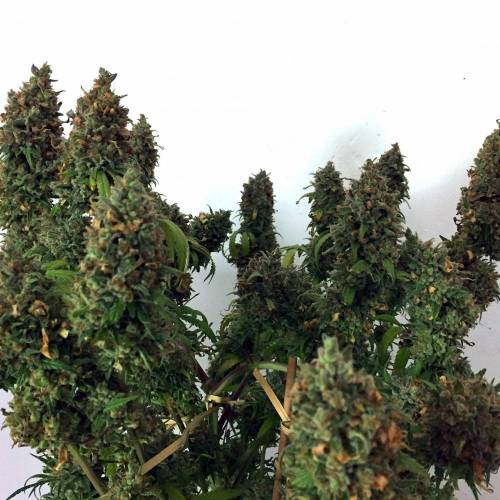
deFharo Week 17 of life, and 10 since flowering, the plant keeps pushing hard in the creation of trichomes, it's giving it its all!! 😋
There are still many clear trichomes and none amber, so I'm going to extend the grow for a few days to allow for maturation and also to coincide the harvest with the start of the waxing moon.
The smell that this little one gives off fills my whole house, it's very pleasant and intense with a clear pine and forest aroma, I love it!!
This week and until the end of the grow, I'm watering with pure water and molasses to give energy to the microorganisms and provide the free sugars for the maturation of the buds, plus, the molasses gives a special flavor to the product.
Water consumption remains high and steady, a clear sign that the growth of the crop continues.
Next week I'll harvest this plant and I'll wait at least another week to start smoking it... I would like to wait longer but lately I've been a bit short on good weed!!
Cheers to everyone!! Until the harvest!! 😍
13 likes
6 comments
Share
17
Week 17. Harvest6y ago
Happy Harvest Day!


9/10
Rated
Planta muy vigorosa desde semilla, ha respondido bien a todos los riegos y condiciones. Cultivarla ha sido en todo momento satisfactorio, pues la planta ha mantenido un porte espléndido durante todo el cultivo, las colas crecieron gruesas y bellas, la estructura compacta con entrenudos cortos favoreció el crecimiento de densos cogollos a lo largo de todas las ramas.
Los aromas que la planta me a regalado, y con los que he convivido sin trauma en las últimas semanas, son sin duda variados, la predominancia es un aroma a vainilla con mezcla de pino y roble, realmente exquisitos.
Con una semana de secado ya he probado el humo de esta planta y es realmente potente, muy fuerte el efecto, te invade todo el cuerpo, es una variedad para fumar en ratos de mucho ocio.
El humo es muy suave y sabroso, para nada me ha hecho toser, para mi es muy importante este punto pues mis pulmones no están para excesos.
Sin duda, la volveré a cultivar!!
Show more
Translate
Spent 120 days
Ger Veg Flo Har
360 g
Bud wet weight per plant
87 g
Bud dry weight per plant
1
Plants
0.16 m²
Grow Room size
Easy
Difficulty

Happy, Relaxed, Uplifted
Positive effects

Pine, Sweet, Woody
Taste
Height
Day air temperature
Air humidity
PPM
PH
Light schedule
Solution temperature
Night air temperature
Substrate temperature
Pot size
Lamp distance


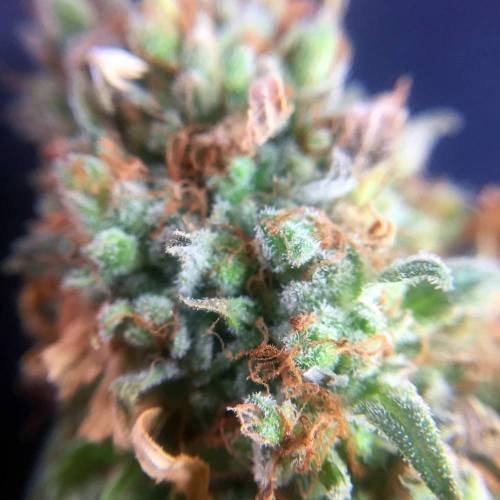


deFharo 19 weeks, 126 days from seed this grow has lasted. Twelve weeks of flowering, a bit more than what the producer announces, but this is normal in my organic grows; the flowering stage extends which means delaying the maturity period and thus achieving bigger buds.
I’ve felt very comfortable with this grow, I’ve admired its evolution many times, there have been truly beautiful moments during flowering. I’ve applied nutritional waterings and solid inputs with absolutely all my preparations, nothing has harmed it, it has been a very greedy and grateful plant.
I decided to harvest it today since the trichomes were almost 100% milky, plus the senile appearance was just asking for a break!! 😘, I waited until the substrate was completely dry. I’ve also been lucky to coincide this harvest time with the waxing moon.
During the last week, all the waterings have been done with pure water and molasses.
I’ve classified the buds into 3 classes and they are now drying in the shade; in a week I’ll know the dry weight and I’ll smoke the first joints, then I’ll write a more precise review.
The intention is to cure the best buds for at least two months.
This grow frees up an important space in my cabinet, and I will immediately cover this space with another grow and keep enjoying!!
See you in a month, where I’ll give a final rating to this strain after the curing. Greetings to everyone who has followed this diary!! 👌😉👉
08/11/20 I’ve been smoking this herb for two weeks and I’m satisfied with its potency, flavor, and the smooth smoke it produces. I found some seeds in the lower buds of the plant, probably it self-pollinated; I have to confess I haven’t been attentive to this circumstance, I’m going to treasure these S1 seeds.
Watering statistics:
Average EC: 0.87
Average pH: 6.43
PRODUCTION DATA:
Per watt: 0.97g/w
Per height (42cm): 2.07 g/cm.
Per pot volume (10l): 8.7g/L
Cheers 😋 and until another diary, thanks for being there!! 😌
24 likes
8 comments
Share
Equipment Reviews


36 comments
Sort by
popularity
popularity
newest
oldest

Organic_LarF commentedweek 176y ago
High, damn man!
Really nice buds.
How do you get those long colas?
👌
🙏 🍀 🍀 🍀 🙏
likes 2

deFharo commented6y ago
@Organic_LarF, :) Yes, the big prize is long quality colas!!
I think the long colas are the result of several factors mainly related to light and nutrition. With bright and intense white light during the vegetative growth, it helps me have compact or short plants, which then allows the light to reach everywhere. Additionally, I have side lights in all the cabinets and I turn the pots 90° daily to shape the plant evenly. In the end, the "big colas" are the branches where the small buds have grown and come together to look like one. Observe from where the cultivation starts, practically from the base of the soil; I don’t waste any space. In reality, I get depressed by very tall crops where half of the plant is bare.
likes 7
Organic_LarF commented6y ago
@deFharo,
I never turn my plants, maybe ill give that a try
like 1

DoDrugs420 commentedweek 175y ago
Pretty nice job on Sweet Zenzation!!
likes 2
deFharo commented5y ago
@DoDrugs420, gracias mate! 👨🌾🌞💧
likes 5

Sweet_Seeds  commentedweek 176y ago
Congratulations on finishing your diary
Thank you so much for trusting our strains and for leaving us such a positive review. Thanks for that 9/10!
Enjoy the harvest 😊
Sweet smokes!
- Apolo
likes 2
deFharo commented6y ago
@Sweet_Seeds, congratulations to you for this strain. It's currently drying, I'll finish the harvest notes when I try it. 😀
likes 7
Sweet_Seeds commentedweek 176y ago
I can't wait to see your review! 😋
A great job, Thank you very much for sharing!
Sweet smokes!
- Apolo
likes 2
deFharo commented6y ago
Rplsweet_seeds, thank you. I thought I'd speed up the harvest but I decided to wait because the buds continue to get fat and make trichomes, the prize for me is a great harvest of quality. Greetings Tsunglassesp
likes 7
Sweet_Seeds commentedweek 36y ago
Everything is very well explained and shown, great job!
The plant seems to be developing well.
Sweet smokes,
-Apolo
likes 2
deFharo commented6y ago
@Sweet_Seeds, Thank you, I really enjoy my grows. Right now I'm looking for a very compact plant using my high-intensity cool white lights that I use during most of the vegetative growth. I hope with this and after the topping, to get a short plant with very strong lateral branches that I could continue to top. I have to do it this way because of the small size of my cabinets. Next, I'll switch it to flowering. The chicken is in the oven!!
likes 7

GYOweed commentedweek 144y ago
You gave it 53 tsp gal nutes?
like 1
deFharo commented4y ago
@GYOweed, Hi, I didn't understand your question. 🤷♂️🙋♂️
likes

occultgreen420 commentedweek 136y ago
wonderful plant man! well done with the grow!
like 1
deFharo commented6y ago
@@occultgreen420, thank you! ✊
likes 6

OrganicRepresent commentedweek 96y ago
Thanks for Your advice in my question. You doing really good job i can see with good results. Hope mayone will be similar to Yours. Good luck budy.
like 1
deFharo commented6y ago
@OrganicRepresent, thank you, I'm always willing to share knowledge. Good luck with your organic grows.
likes 7

Beangineer commentedweek 76y ago
Solid progress, love the Organic approach and the quality of your grow documentation. Keep up the good work, looking forward to seeing what yield and quality of flower you get out of this one. I have heard lots of good stuff about the zkittlez strain.
like 1
deFharo commented6y ago
@Beangineer, thanks, I'm going to try to get the best out of this strain.
likes 6

HazeyBobby commentedweek 36y ago
Awesome stuff! lots to digest from your diary 👍
like 1
deFharo commented6y ago
@HazeyBobby, thank you!!
likes 5
Sweet_Seeds commentedweek 16y ago
Thank you very much for sharing a new diary with one of our strains. 😊
We hope you enjoy it. 😋
Sweet smokes,
- Apolo
like 1
deFharo commented6y ago
@Sweet_Seeds, thanks for the welcome. Cheers!!
likes 7

GrowintheSpace commentedweek 176y ago
wonderful plant and buds !!
congratulations
like 1
OrganicRepresent commentedweek 176y ago
Great job mate!
like 1

JinksyGrows commentedweek 176y ago
Love it, looks great ✊ . Wonderful bud color too 👌
like 1
Sweet_Seeds commentedweek 96y ago
Great work!!!
Keep us updated!
like 1
Sweet_Seeds commentedweek 76y ago
Looking very healthy!
Keep it up, you are doing great.
Sweet smokes,
-Apolo
like 1
JinksyGrows commentedweek 56y ago
Great tip 👍 . Looking to shorten my plant heights and will be doing this next grow. Only successful in keeping 2 of 4 short this round, but hoping I can do what you've accomplished in grow four! Cheers and happy trails 👍 🙂
like 1

DaSofaSurfer commentedweek 126y ago
hey man, I feel like there isn't much left for me to learn using salt based synthetics. I want to start growing organic. I have bokashi bran that I inoculate how are u making algae and bokashi tea? what algae are u using? is it dry or wet ? bought or harvested yourself?
how to you make the tea? is it aerated? could u describe in as much detail as possible? that would be great. cheers
awesome job on the grow btw
likes
deFharo commented6y ago
@DaSofaSurfer, Hello and welcome. I make bocashi, using dry materials as a base, which I find in my area. For example, I have made bocashi from wood chips and right now I have fermented dry grass bocashi with Microorganisms for a week, next week I will publish the complete process of creating dry grass bocashi. I normally use my 20% bocashi to compose the new substrates for my pots.
The seaweed bocashi I buy and I think it is made from Kelp seaweed, although I also have yet to make a bocashi with freshwater algae that I have located after cleaning a nearby river.
Besides the tea I make other preparations with algae, Lacto ferment of algae with EM and Enzymatic hydrolyzate of algae, I use three types of algae that I have in powder: Kelp (Ascophyllum Nodosum), Spirulina (Arthrospira platensis) and Chlorella de hainan (algae of protein-rich fresh water).
To make the bocashi tea or worm cast tea, I use the alkaline hydrolysis method, it does not need aeration and it can be started to use from 12 hours.
Formula for a liter of water:
100g of aged bocashi or worm hummus.
1g of potassium hydroxide (KOH)
1l of pure water
You mix the bocashi with the potassium hydroxide and a little water, mix it well and wait a few minutes ... you add the rest of the water, keep it in the shade, it doesn't close ... you stir it several times during the first 12 hours.
You can keep the preparation for a maximum of a week.
After 12 hours, you can strain it and use it in irrigation diluted 10-15% with clean water. 😅
likes 7
DaSofaSurfer commented6y ago
@deFharo, thanx for taking the time. u laid everything out nicely. good looking out Growmie.
I believe I know how to make bokashi grass clippings. the same way I made bokashi bran but I'll follow u none the less to see for myself. cheers
likes
JinksyGrows commentedweek 176y ago
Great finish man 💪
likes
deFharo commented6y ago
@JinksyGrows, thanks 👍
likes 5
JinksyGrows commentedweek 86y ago
Pretty girl. Well done 👍
likes
deFharo commented6y ago
@JinksyGrows, thank you 😃
likes 6

the end.
Enjoying this diary? Follow for more updates!

Prefer the old Diary view?
Go back to the old Diary view