


Do these roots look like I should water more?

LandraceLarrystarted grow question 10mo ago
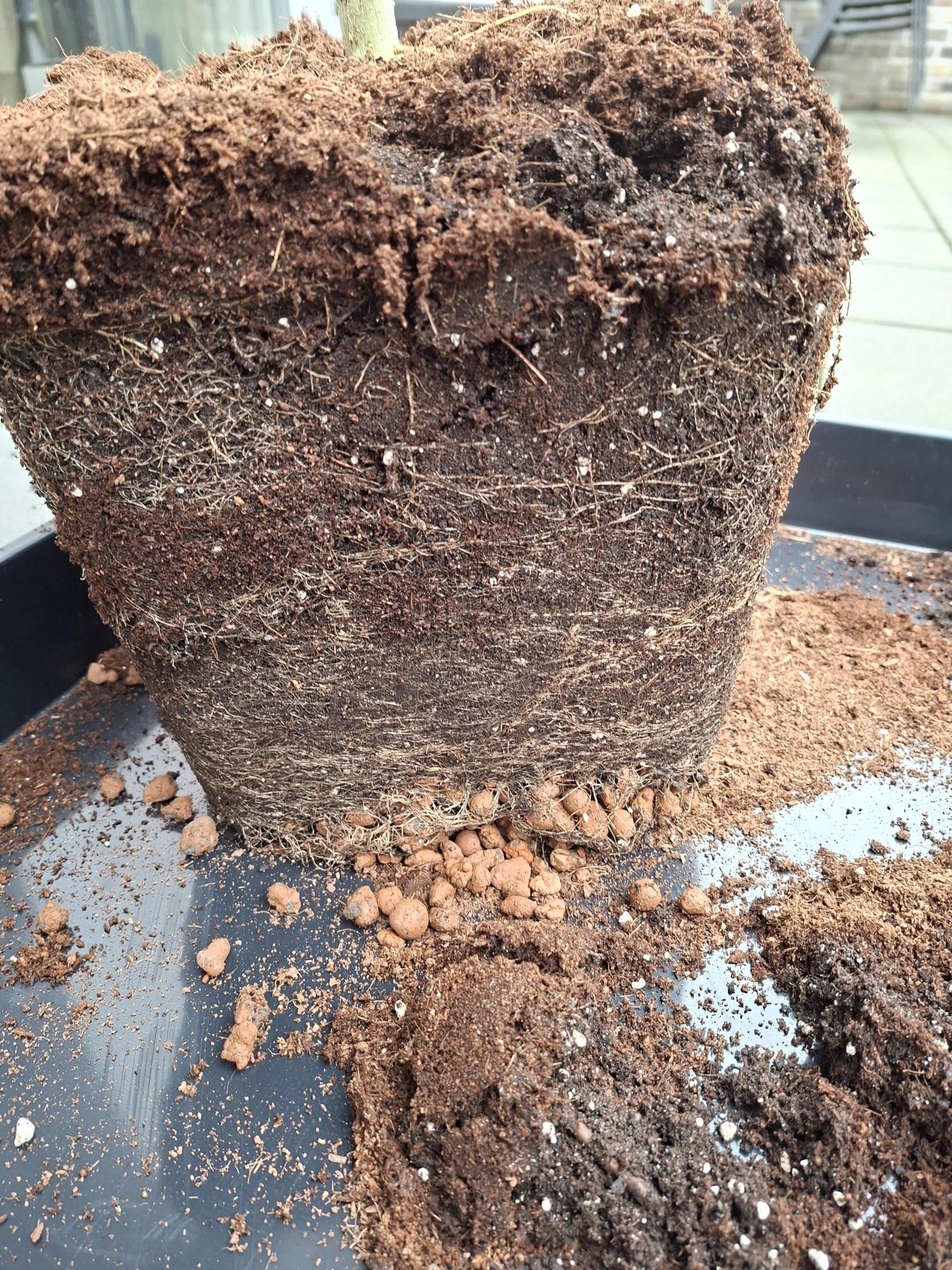
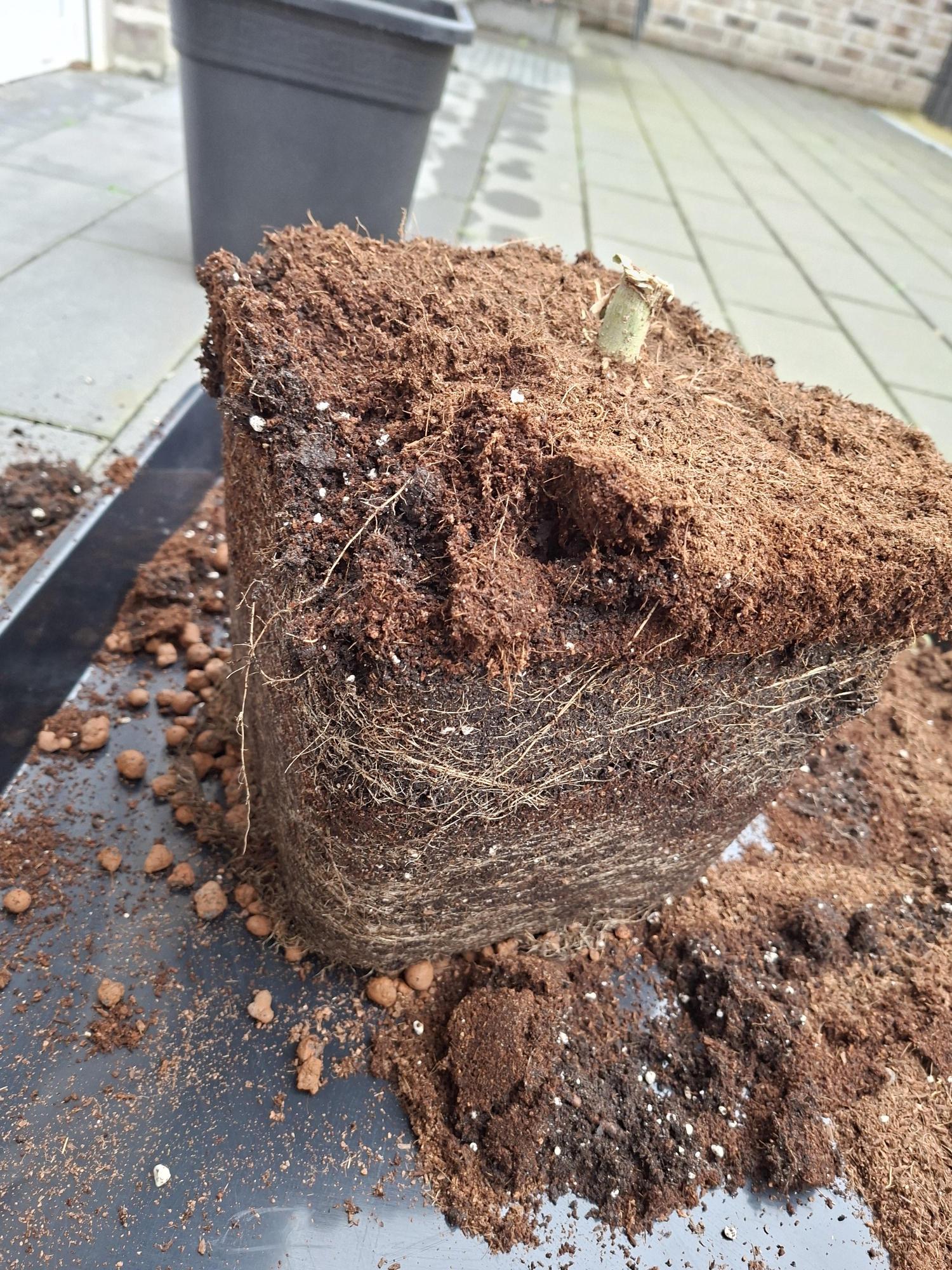
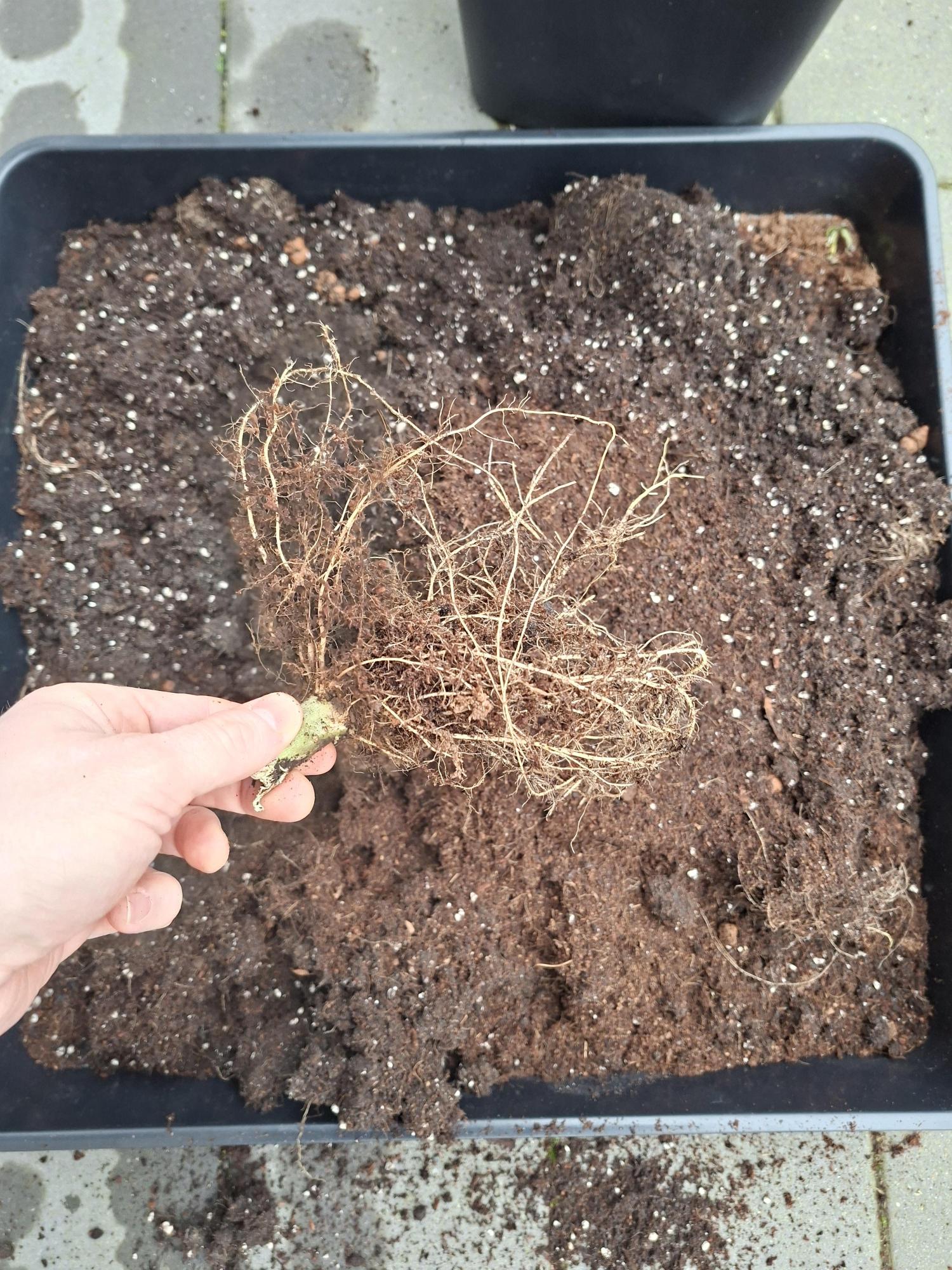
I was expecting more roots in my pot after cutting my think fast. Are these roots trying to tell me I should give my plants more water?

Solved
likes
00110001001001111Oanswered grow question 10mo ago
I see the results of proper watering habits. You don't water too soon because you don't have superficial roots. That top 2" or so is mostly empty and it should be. Superficial roots are a sign of bad watering habits.
You may or may not be able to use less medium. it's not densely populated, but I'd also consider how long between irrigations at end. If you get enough dryback for daily irrigations by the end, it's obviously not too large of volume. If oyu still have 3-4 days between irrigations at end, you can probably save a bit of money and use smaller pots.
All of that assumes consistent vege length and consistent plant size. You extend or shorten vege phase and it's a new equation.
You actually can get thicker roots with a more pronounced wet-dry cycle. I'm not saying that is ideal, but it stimulates more root growth if it is harder to find. i usually stick to a slightly more pronounced wet-dry cycle early on, but as i approach flower or first week into flower, i don't wait quite as much dryback (loss of weight) before triggering an irrigation.
You probably want at least 33% loss of water-weight before re-irrigation, and even so, early on i would wait longer to develop a thicker root zone so it can take advantage of more frequent fertigations later on. proper constitution is important too. coco should be 33% perlite or similar drainage element and something like sphagnum peat moss base or typical soils should be 50%, because that medium holds more water per volume -- they all end up with a similar gas:water mixture per volume if you adhere to these ratios. They all should be nearly impossible to overwater with basic common sense and properly constituted.
one last thing -- don't rely on the looks of "1" pot. make sure what you see is consistent before using it as a primary reason to tweak anything. If you ever have gnats, for example, you'll probably notice fewer roots in those pots even if you got it under control. Or, mybe it was just a mutated plant in some way you couldn't see above ground etc etc... make sure what you see is consistent and predictable before reacting to it.

ATLien415answered grow question 10mo ago
@00110001001001111O , having varying degrees of aggregate in your soil or soil-adjacent medium is pretty standard stuff, including a bottom layer with either a heavier aggregate or a larger aggregate or one with distinct water storing potential. this is from botany and horticulture, not bro science or the microscopic subset of botany and horticulture that this single plant represents. when you have a 900 usd bush or set of rare ornamental trees in planters or something out of zone because youre rich or showing off your skills, you fairly quickly lean back on these old tricks. whether stopping wind from knocking over a planter, simulating the preferred environment, or in an attempt to force root growth south....folks do this with 0% bro science involved.
Just because something isnt optimal for our plant doesnt mean it is nonsense when discussing plants in general.
likes
Complain
00110001001001111Oanswered grow question 10mo ago
The layer of pebbles or rocks at the bottom of the pot are defintely a bro-science figment. It can actually have negative effects. I agree with the others that noted this fact.
As long as it doesn't sit in its own piss (runoff) after irrigation, shouldn't need it. Pot 'elevators' are all you need if concerned or a proper ddrain table to handle runoff better. As long as standing water doesn't just sit there resting directly against the pot fabric or drain holes, it's fine in that respect... no layer of rocks at bottom needed. One less step filling a pot saves time and effort... keep it simple. you'll appreciate it while you do it in future, lol. (or not have to do it in this case)
likes
Complain

Organomananswered grow question 10mo ago
No.
The layer of pebbles at the bottom is not a great idea though, it should be soil or coco all the way.
If you insist on using pebbles, it would be better to mix them through the entire volume thoroughly, as others have said.
If anything, the roots are telling me they are exactly what I would expect them to look like, however, bigger pots may be an upgrade for future grows, the roots have certainly filled that sized pot to the maximum.
1 like
Complain
The_Wandereranswered grow question 10mo ago
"Dry back" creates roots. Searching for water inspires growth.
likes
Complain

Green_Clawsanswered grow question 10mo ago
Would of been better to mix those clay pebbles in, the bottom of the coco is still the bottom of the coco, mix those in for better results
1 like
Complain

Ultravioletanswered grow question 10mo ago
Roots below are indicative of growth above. Aboveground growth is a general indicator of the extent and health of the root system below ground, and vice versa, because the two systems are interdependent.
Fact you got it out a plastic pot in one piece is indication the roots are fine.
Turgor pressure is the essential hydrostatic pressure within plant cells that pushes the cell membrane against the cell wall. This pressure is the driving force for cell expansion and elongation, enabling the root to generate the necessary force to push through the soil. Root tips can generate pressures up to approximately 0.5 to 0.6 MPa.
Osmosis is the direct mechanism that generates positive turgor pressure within individual plant cells.
Transpiration creates the pulling force that moves water through the plant's vascular system (xylem) and affects the level of turgor pressure by regulating water balance, but it is not the source of the pressure itself.
Soil composition is vital to preventing soil compaction because the right balance of organic matter, mineral particles (sand, silt, and clay), and adequate pore space determines the soil's structural integrity and its ability to resist pressure. Healthy soil is about 50% solids and 50% pore space.
Air pots are not inherently better. But the oxygenation they supply to root zones. numerous studies have shown that increasing oxygen in the root zone leads to enhanced root development and overall plant growth. Oxygen is vital for root respiration, nutrient uptake, and the support of beneficial soil microorganisms.
Noticed difference when growing side by side with fabrics or plastics.
Mycorrhizal inoculants significantly increase rootzone vitality by forming a symbiotic relationship with plant roots.
A vigorous root system thrives in an optimal underground environment (good air, water, nutrients), which is created by healthy, stable soil conditions that mirror the plant's needs above ground, meaning consistent moisture, aeration, and minimal stress (like compaction or extreme drying) encourage robust roots to support a strong top growth. You need to match the "vigor" in the roots by ensuring the soil provides what they need for happy growth, rather than fighting harsh conditions.
Goodluck.
likes
Complain