


What should I do with a plant that got damaged in germination phase + is my better plant okay? It has got saggy leaves

michalekjefrajerstarted grow question 7mo ago
Hello, I have two plants one is doing just great, however the other seems to have many problems and it does not seem like it is getting better. I chipped the root when transfering from germination to soil so that should be the reason but should I maybe put it away go with one?
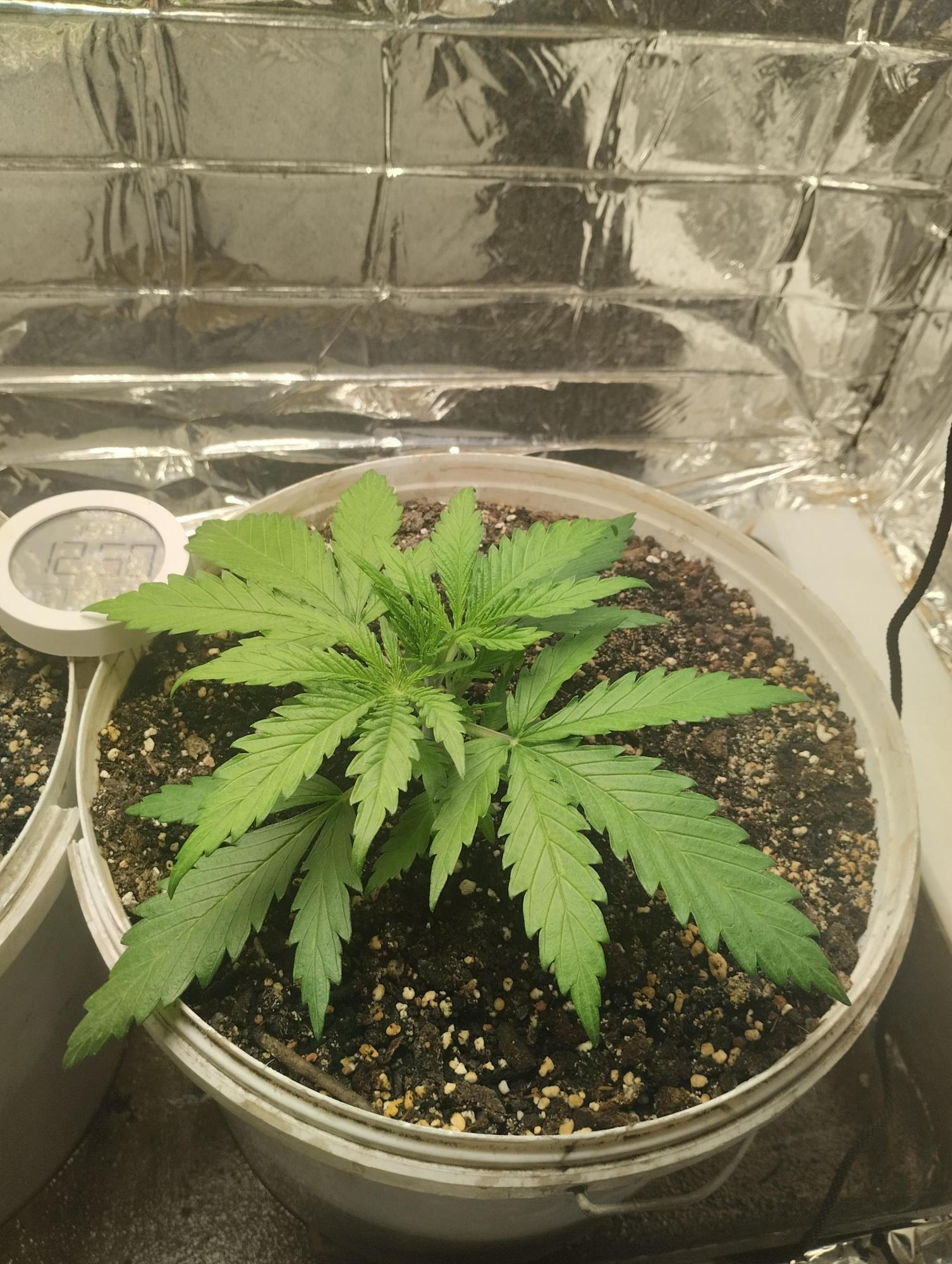
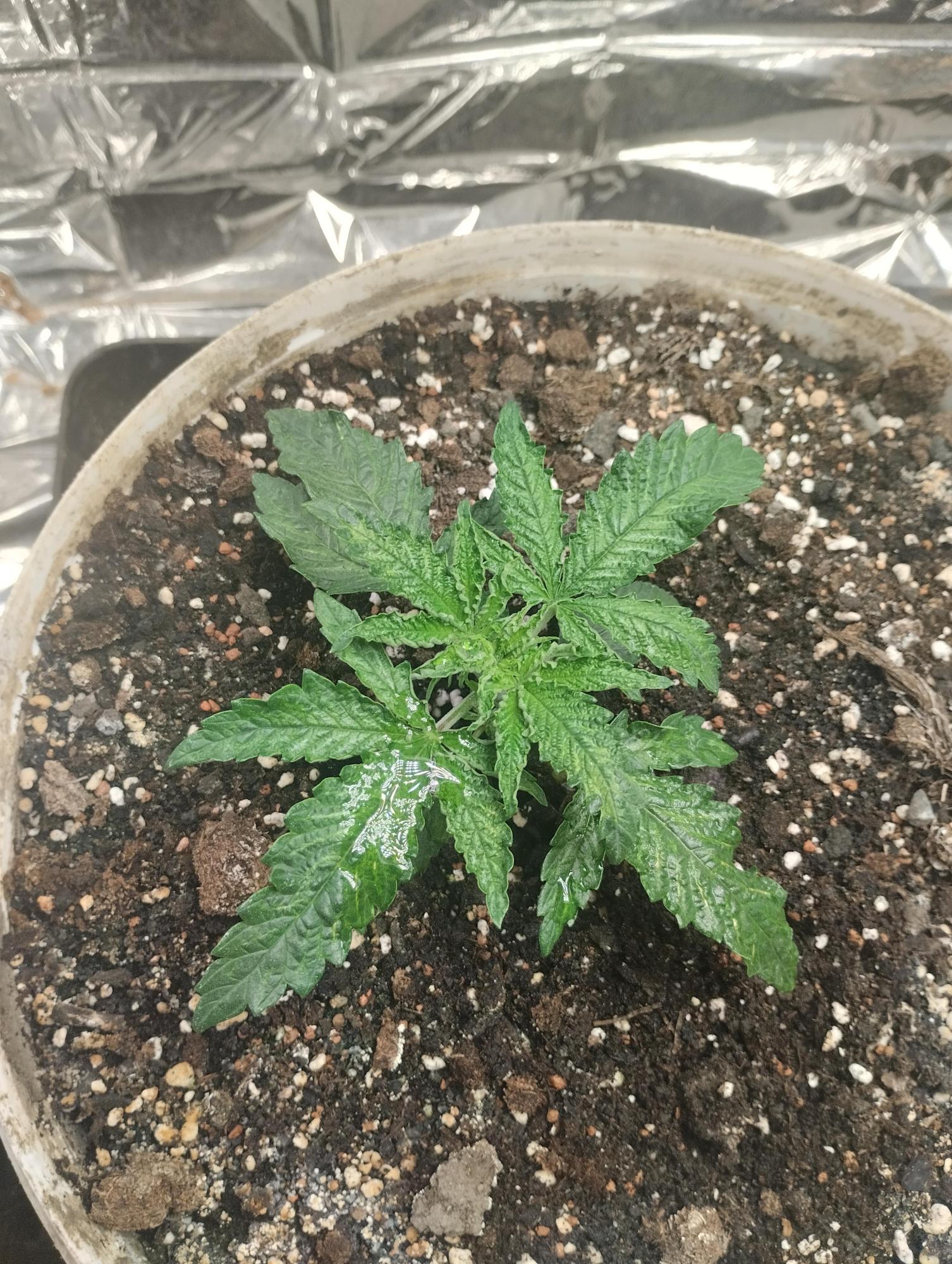
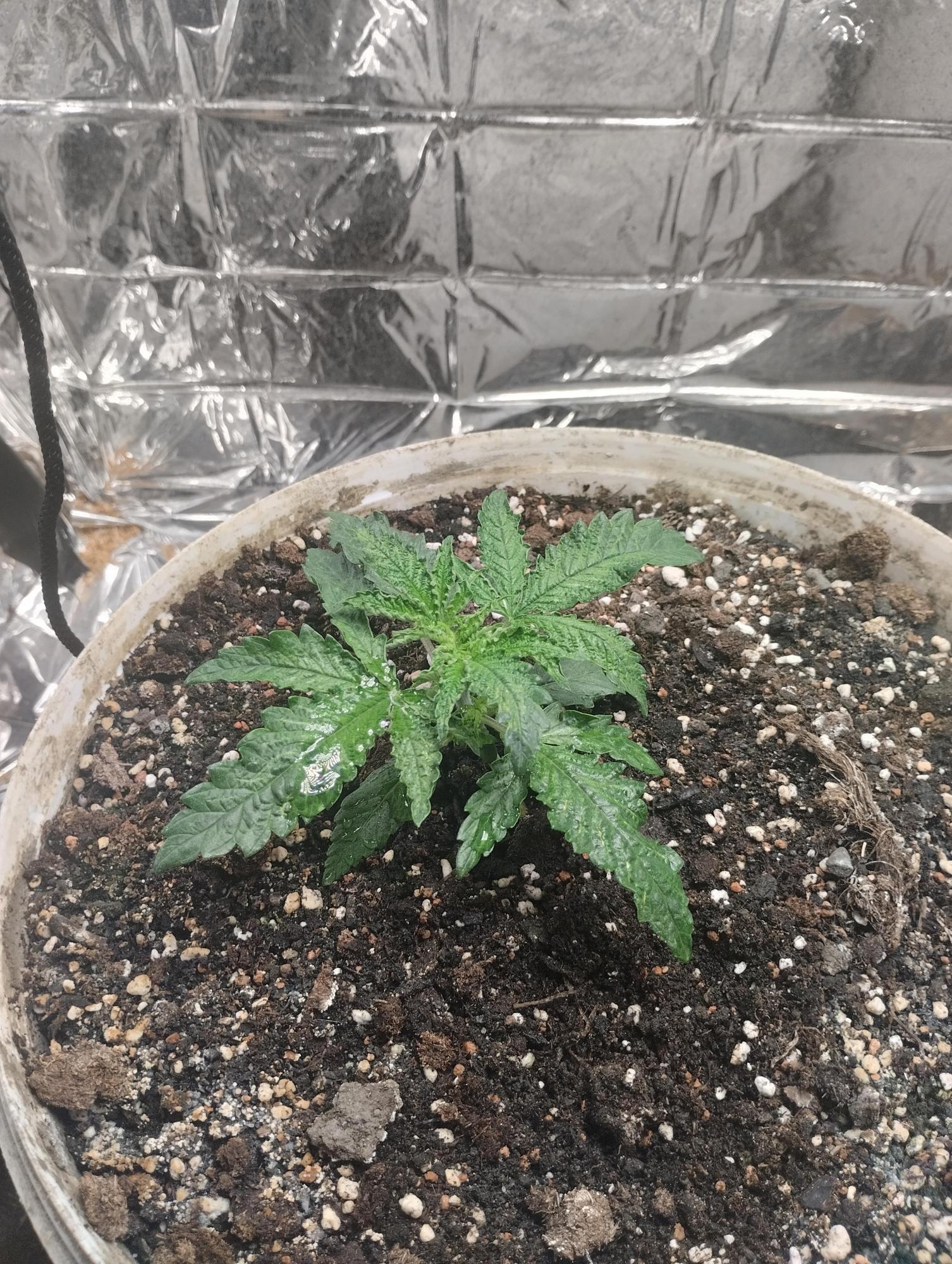
Open
Leaves. Curl up
Leaves. Dropping off
likes
Answer

JimmyWhiteanswered grow question 6mo ago
Hello,
How much and often do you water the plant? Could this be an overwatering issue? Also is this a photo or auto genetics?
likes
Complain

Cooky_420Lanswered grow question 7mo ago
Hey there, no don’t throw it away yet..
Have you checked if your pH is good, from the soil or runoff from the pots, around 6.5 or so?
And yes, weigh your pots before watering them.
likes
Complain

oldskoolkoolanswered grow question 7mo ago
Be very careful taking anyones advice on here,mine included.Iv seen a number of people making a number of mistakes in one day so tripple check everything before going ahead.The worst of it is they ignore me and carry on giving the same bad advice when Iv sited the info.All my info comes from trusted industry experts,the majority of which Iv used myself for decades but don't take my word for it.Everyone will tell you a similar story,haha.
likes
Complain
oldskoolkoolanswered grow question 7mo ago
Don't leave liquid on the leaves under hot lights as it burns them which could be the issue.Make sure you let that soil dry before watering.Soil wants to stay more moist than coco.A lot of people fail to acknowledge one size does not fit all.Your roots will be fine.Seeds fromthe same plant will produce different plants.One may lean towards the father and one the mother.One maybe more sensitive than the other.I bet its the foliar spray.
1 like
Complain

Trichomaanswered grow question 7mo ago
Avoid watering directly onto the plan! This leaves have water sitting on them, which can act like a magnifying glass in the sun and cause damage to the plant as it evaporates. Otherwise, your plant looks quite healthy!
Also do prevent overwatering! Lift your pots regularly before watering to gauge their weight and check how much moisture they’re retaining. If the pots feel heavy, hold off on watering. Otherwise, just continue with a little extra care to water around the plant not on it 👍
1 like
Complain
00110001001001111Oanswered grow question 7mo ago
that wasn't caused by 'damage in germination.' The fucked up leaves is a mutation or worse. Maybe it grows out of it, but the new growth looks shitty, too. It still might produce fine, and if you don't have another plant to replace, might as well forge ahead. A little root damage does not cause what is seen here in my experience. i just don't see how you could do anything so severe while potting up... It'sclearly growing at nearly the same rate as the other plant, so the roots are working fine.
Starting a new plant will just cause logistic issues and tie up your tent being half-filled for an extended period of time. if they are photoperiods, you could start some new ones an dgive a shorter vege.. plant enough to fill in the gap with smaller plants and keep it all on the same schedule. If they are autoflowers, it's just going to push the inefficiency down the road.. either take those lumps now or later, doesn't matter.
side note, stop whimsical foliar sprays. It's fine in response to a problem, but constantly wetting the leaves is a bad idea. Anything you think you are providing through foliar sprays should be properly provided to the roots in the first place. Stomata are for transpiration not delivering nutes. it's fine in short term for a local problem, but avoiding the problem is better and not clogging stomata with habitual foliar sprays is also better.
1 like
Complain

Green_Clawsanswered grow question 7mo ago
The Bright Side ☀️
First off, major props for successfully managing two plants through the delicate germination phase. Getting one of them to "do just great" is a testament to your environment and care routine. You’ve clearly got the lighting and moisture levels dialed in for that lucky one, so don't sell your skills short!
The Root of the Issue 🔍
That "chip" you mentioned during the transplant is definitely the primary suspect. In the seedling stage, the taproot is essentially the plant's brain and digestive system combined. Damage to it causes transplant shock, which halts nutrient uptake and leaves the plant vulnerable to pathogens.
How to Fix & Avoid This:
The "Wait and See" Approach: If the plant isn't mushy or completely brown, give it 48 hours in a low-stress environment (slightly dimmed lights) to see if it can develop lateral roots to compensate.
Handle with Care: In the future, try germinating in peat pellets or "easy-out" plugs. This allows you to move the entire plug into the soil without ever actually touching the naked root system. 🛑
Pre-moisten the Soil: Ensure the receiving soil is moist but not soaking. This allows the delicate root hairs to adhere immediately to their new home.
The Microbe Magic (Your Secret Weapon)
If you want to save this struggling plant—or ensure the healthy one becomes a monster—you need to look at the rhizosphere (the root zone).
Mycorrhizal Fungi: Dusting your roots with Glomus intraradices during transplanting creates a symbiotic bridge. These fungi act as an extension of the root system, reaching into tiny soil pores the plant can't access on its own. It’s like giving your plant a supercharged straw.
Beneficial Bacteria: Look for Bacillus amyloliquefaciens. These microbes act like a biological security team, patrolling the roots and "eating" harmful pathogens that try to enter through the wound you created.
The Fix: Watering in a light compost tea or a specialized microbial inoculant can help "cauterize" that root damage biologically, stimulating new growth hormones like auxins.
Should it stay or should it go? 🏃♂️
If the plant hasn't shown a new leaf or vertical growth in 5–7 days, it's likely "stunted." In a small-scale grow, it’s often better to cull the weak one so the healthy plant can have all the light, root space, and airflow to itself. Quality over quantity!
Wishing you nothing but massive yields and vibrant greens. You've got this! ✌️💚 Grow on
1 like
Complain

wolfvbanswered grow question 7mo ago
Salam michalekjefrajer! 👋 Welcome to the ICU ward of growing. Let's get these babies sorted out with some "Modern Engineering" logic! 🛠️
1. The Damaged Seedling (Chipped Root):
When you damage the taproot, you are breaking the main water pipe. The plant instantly hits the "pause" button on leaf growth and puts 100% of its energy into repairing the root underground.
The Plan: Treat her like she is in the hospital. Do not overwater her! A broken root cannot drink much water. If she sits in wet soil, that wound will rot and she will die. Keep the soil just slightly moist and give her 7-10 days. If she pushes out a new set of leaves, she survived! If she stays frozen after a week, it's better to pull her and focus your energy on the strong one. ✂️
2. The "Better" Plant (Saggy Leaves):
Saggy leaves mean the hydraulic pressure inside the plant is off.
Overwatered: If the leaves feel thick, heavy, and droop like a wet towel (but the stem is standing up), the roots are suffocating from too much water. 🌊
Underwatered: If the leaves feel thin/papery and the stems are also drooping, she is thirsty. 🏜️
The Fix: Do the "Pot Lift Test." Lift the pot with your hands. If it feels heavy, step away and let it dry out! If it feels light as a feather, give her a drink.
You are learning the hard lessons early, Habibi. Roots need oxygen just as much as they need water. Let those pots breathe! 🌬️
Happy Growing! 💚
1 like
Complain

Grow_for_Happinessanswered grow question 7mo ago
I wouldn't get rid of it yet, give it a week or so to recover from the root damage and make sure to let it dry out properly between waterings since the roots will be a bit more fragile right now and water uptake will be slower
1 like
Complain

JUNGLE_B4RNSanswered grow question 7mo ago
You can try to save it, it will be a good experience.
At first check the soil EC to make sure the conditions are good. Then fix the roots with mycorrhizae, trichoderma, humic fulvic and roots enhancers. It will recover in 2 weeks.
3 likes
Complain
Similar Grow Questions
Solved

Schlurpypurpey
First time growing/Need help in late flowerOver the last 9 days my plant has gone from happy and healthy to sugar leaves pointing straight up near the top of plant and drying and curling up on the lower levels. Is this from too much light or did I over feed late in flower? First grow/ no diary. Can I save or do I chop?
Leaves. Curl up
Leaves. Dropping off
Leaves. Color · Dark-brown
2y ago
8
2


Solved

Gleneagle_87
Leaves turning pale/crispy hours after watering/feeding!Hello all,
Leaves turning pale hours after watering and feeding. Water is Volvic ph’d to 6.5 ppm 500 is 120, Ec 0.2. Put 0.05ml ph down for 4.5l. Dosnt seem as bad with Calmag at 1/4 dose. With feed connoisseur an n additives ph 6.1/6.5 ppm ~450 ec 0.8. Started 1w back.
Thank you
Leaves. Curl up
Leaves. Dropping off
Leaves. Color · Pale
1y ago
3
3
Solved

psamu
Struggling with deficiencies (nutrient lockout?)Hello everyone, I need your help. I've been growing 2 Green Gelato Auto from RQS but I've had some deficiencies for a while now. It's my second grow and it's the first time that I adjust the pH. They are in soil and I'm feeding them with Biobizz liquid nutes at a pH between 6-7.
Leaves. Curl up
Leaves. Dropping off
Leaves. Color · Yellow
5y ago
6
7


Solved

Nitrous
Leaves dying week 6 flowerHey growers,
I'm at the week 6 of flower, and leaves are dying in some specific spots.
Runoff ph was checked, 6.4.
Feeding 4ml/L bb top-max & bloom.
Bio-Grow was cut off after dark leaves, clawing & burned tips. … Show more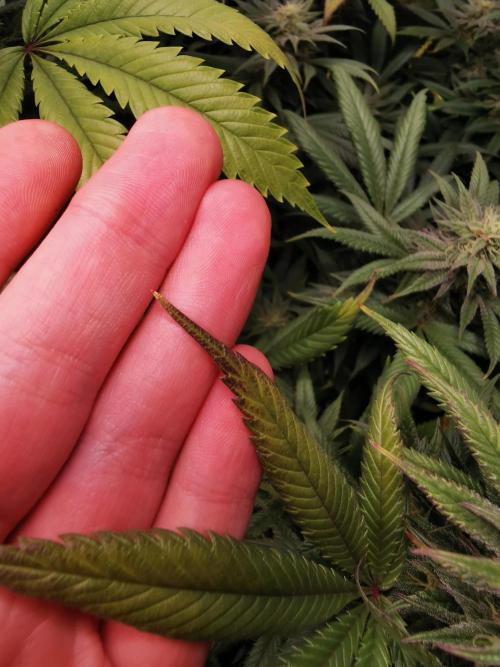
Leaves. Curl up
Leaves. Dropping off
Leaves. Color · Dark-purple
1y ago
3
4
Solved

Blubbiblubb
Unhappy leavesA few leaves aren’t looking too happy. What’s that? Deficiency’s, too much light, too many nutrients? It’s only a few leaves with that problems. What should I do, what would you do? Thank you!
Leaves. Edges burnt
Leaves. Curl up
Leaves. Dropping off
2y ago
1
2
Solved

Little_Pot
Droopy leaves, some leaves yellow with brown spotsShe has droopy leaves. There are leaves with brown places, and some leaves in the middle of canopy turned yellow. At last she started preflower in week 8(auto) but compared to another girls she is very slow with pistils. Some leaves are curling up.Maybe too much light?
4y ago
3
5
Solved

slixmeister
Hanging/Folding LeafesHi all, Im still worried about the Hanging and folding leafes from one of my plants. The other one is completly fine but this one doesnt look to happy.
I have stopped watering them for some days and let the soil dry out almost completly. Since i was worried about overwatering.
Leaves. Curl up
Leaves. Dropping off
2y ago
1
3
Solved

Mikewithgreenthumbs420
What’s going on have 3 weeks left but this clone matures really quick almost no more white hairsHave 3 weeks left or so till harvest but the bottom leaves keep dying more every other day any taughts about harvesting soon Here are some pictures of what’s happening to this or is this normal since it’s almost done
Leaves. Curl up
Leaves. Dropping off
Other. General questions
5y ago
2