


In a semi organic grow, would you use Advanced Nutrients Flawless finish when the plants are ready, i have been using Bat Guano and GHE Ripen -
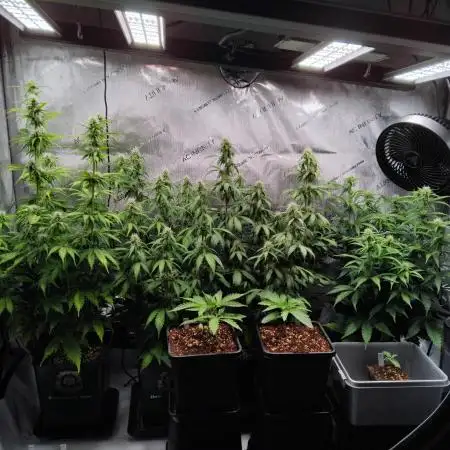
Rollerboystarted grow question 3mo ago
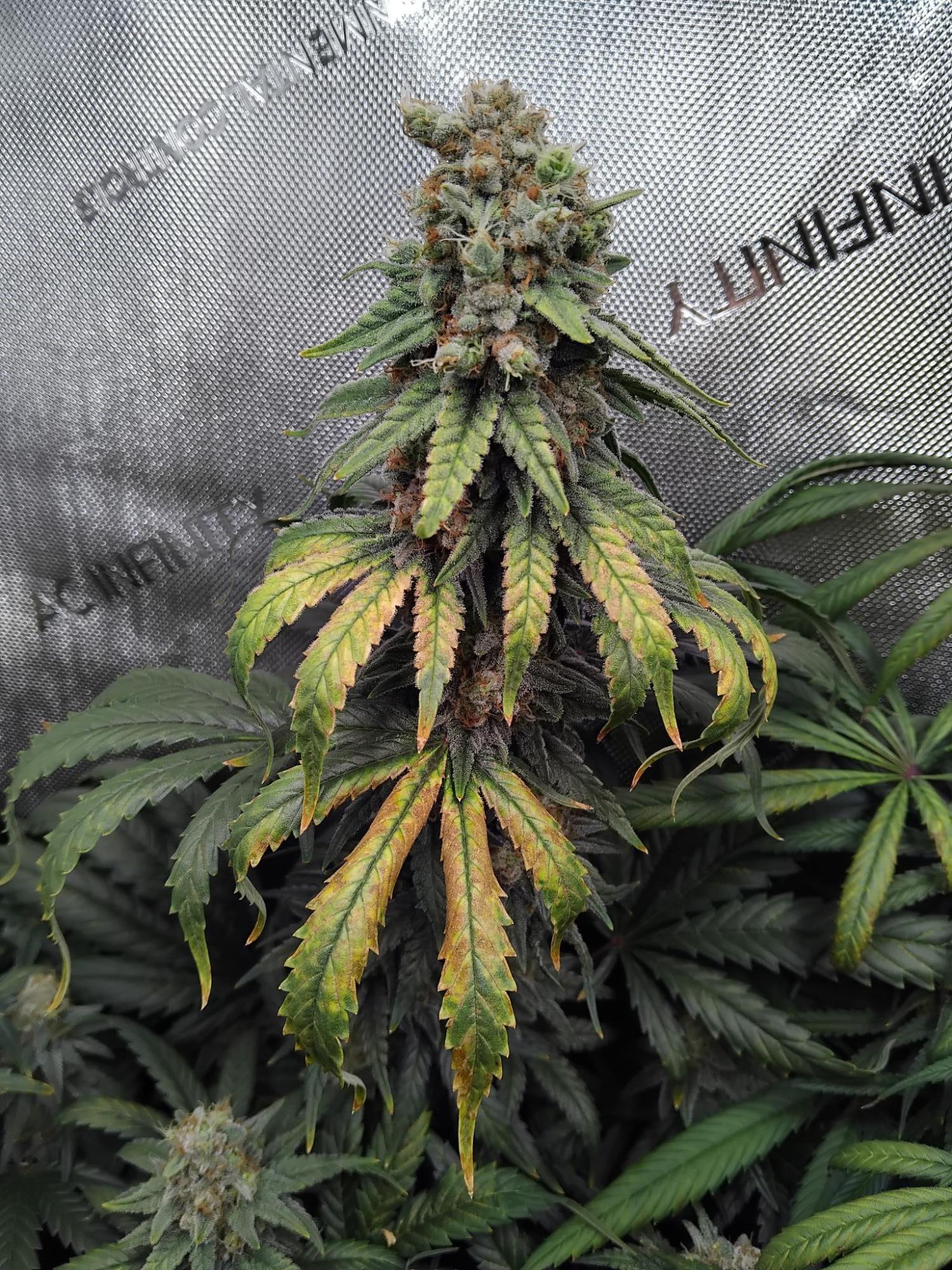
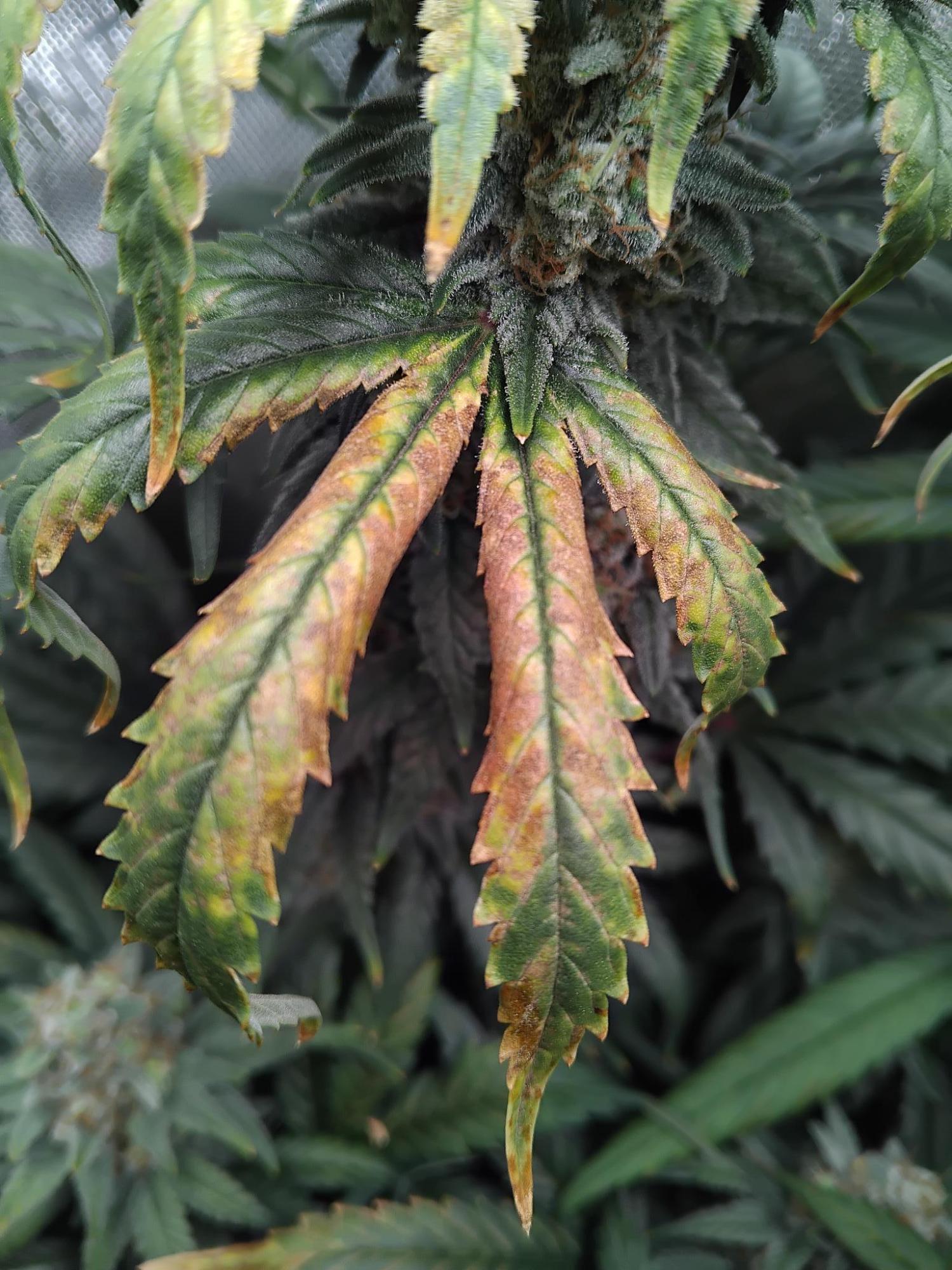
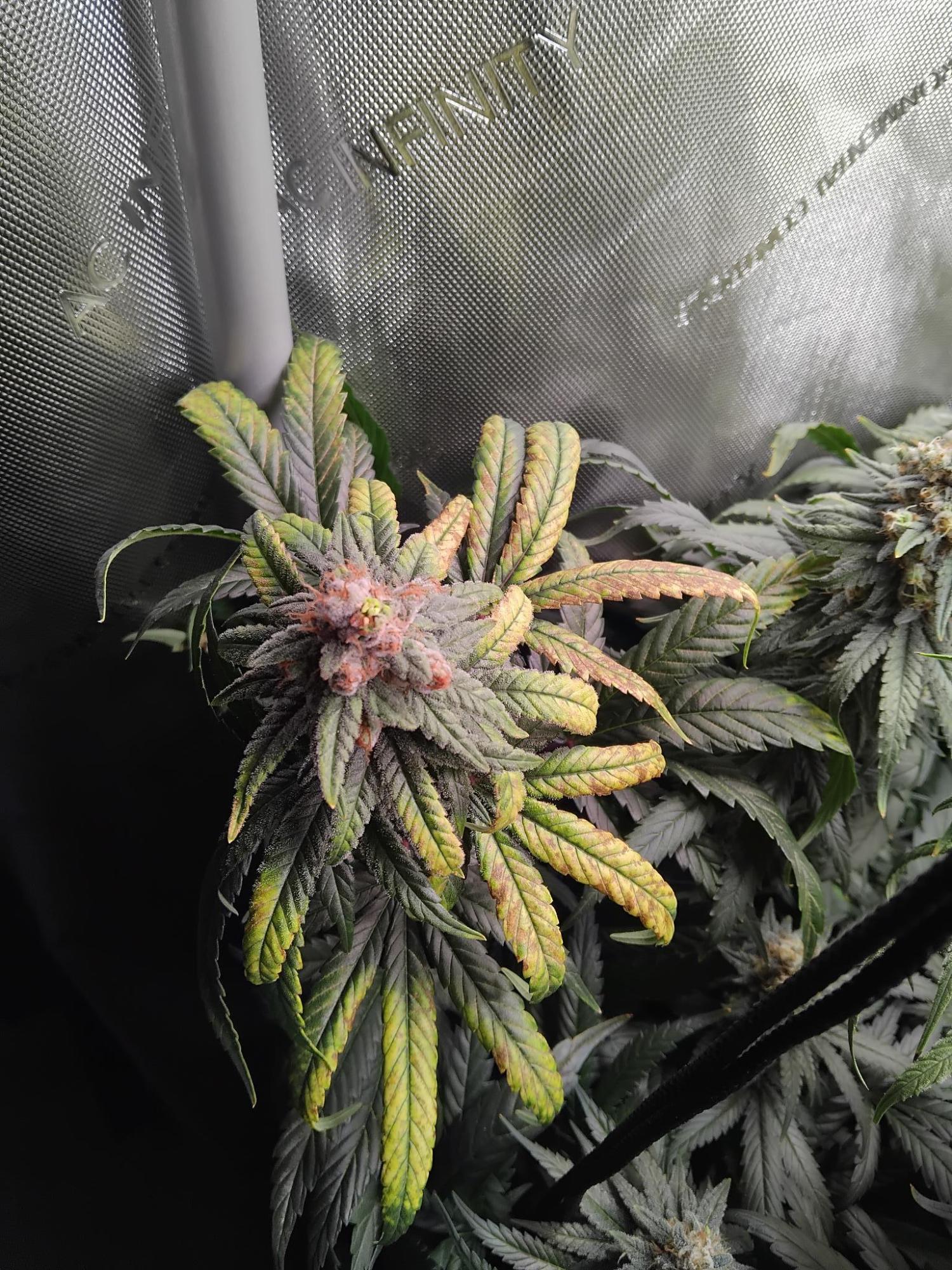
- (now T.A. Final part), for the past week i only used Ripen on every 3 watering, there are some deficiencies showing already. Flawless finish kills the Microbes in the medium, should i just keep flushing with Bud candy & Cal/mag ? What would you guy´s do ?
Open
likes
Answer

JUNGLE_B4RNSanswered grow question 3mo ago
@ATLien415 can you reformulate your question with an easier English to understand ?
I won’t use bat guano, but just using k2O,MgO,SO3 in small amounts for finishing.
likes
Complain

Space_kydebtanswered grow question 3mo ago
Cut there food to about 60 percent some time half the plant no longer needs high feed in late flower .. but yeah looks like a little to much .. but good job
likes
Complain

verdeleanswered grow question 3mo ago
they are at the end of the life. what you expect. let them finish and only water dont use anythinh else. its normal. one more week and cut
1 like
Complain

ATLien415answered grow question 3mo ago
fixing this site and putting it back on par with OG or THCF is def gonna require turning these Q&A sections into forum-sections
@JUNGLE_B4RNS , Just curious, why would you add any K/Mag/S? is that not abundant in bat guano? like he has those for his next 10-100 grows in his soil or on deck in his web already? or do you have some other information about the chemical composition of bat guano and how that relates to soil science?
@00110001001001111O , So, what about a finishing product is eluding you? The science is pretty basic. Your old osmotic pressure gradients, how that relates to ions in solution, and add in a little bit of understanding of site competition. Like you have CB1 and CB2 receptors, the plant doesnt have a nutrient X receptor, Y receptor, and on and on and on...... So using epsom salt in organic grows is big thinking huh? but using it in mixed organic grows is "the vocabulary of con artists" and "none of their claims are substaintiated by evidence". I like you as a grower, but you know why I press you on the inconsistency on here. He 100% should be killing his microbiome off before harvesting. Bat guano is arguably the nastiest and worst amendment a homegrower can touch... An avian mammal that enjoys blood or blood eating insects, which is and has been a zoonotic disease nightmare globally for over a century at this point. AND he has an extreme abundance of anything that plant wants, there is no lacking there. lockout maybe, lacking not possible. So, he has a deadly microbiome just from the bat guano...he has an extreme abundance of inputs in his soil...and he is clearly harvesting in the coming days.
likes
Complain
JUNGLE_B4RNSanswered grow question 3mo ago
@Ultraviolet_ has said everything you need to understand… I would suggest you to finish them with a pinch of K , a drop of Mag , and a tear of Sulfur.
likes
Complain

Organomananswered grow question 3mo ago
How much riper do you want them?...............harvest soon, it is all downhill from here for THC quality.
1 like
Complain

00110001001001111Oanswered grow question 3mo ago
https://www.advancednutrients.com/products/flawless-finish/
Sounds like snake oil to me...
Terms like, "cleanse," are the vocabulary of con artists. Bet none of their claims are substaintiated by evidence.
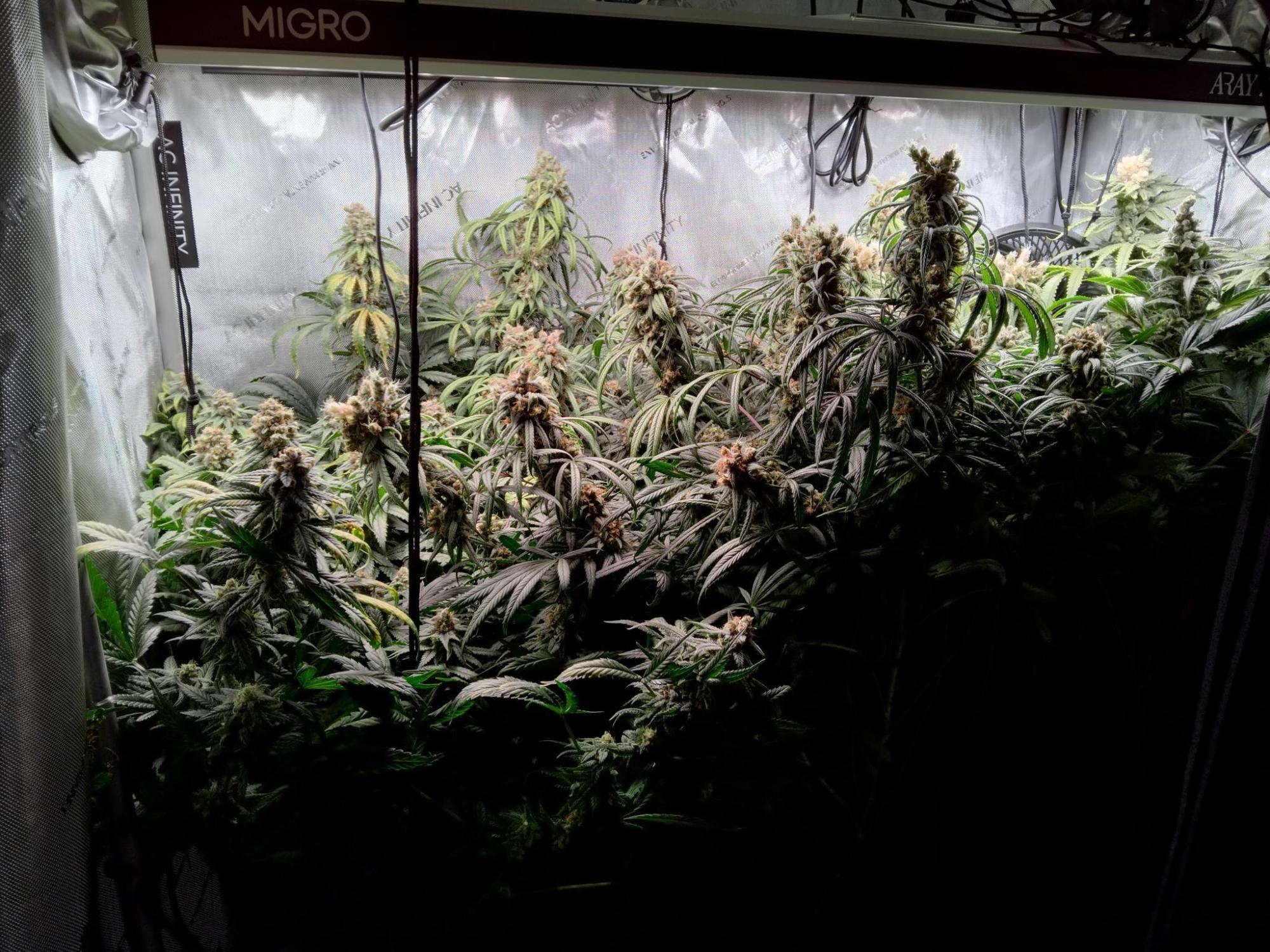
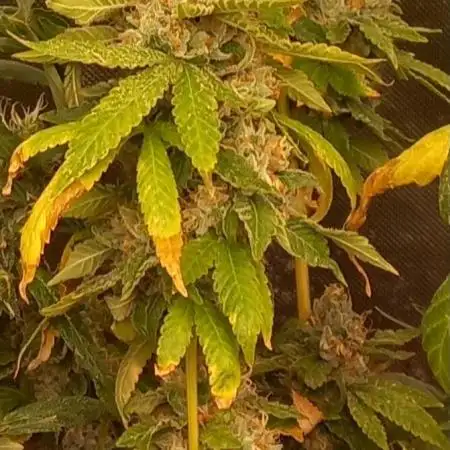
you plants look pretty lush despite the damage at the top in a few spots. Certainly can dial back the feed. These plants don't have long to go.
That damge seems to be mostly correlated to theh highest poitns of canopy, so it could just be a little extra light causing it based on how lush the plant is below. Keep an eye on those buds for any light damage... a wee bit too much light can take weeks to cause symptoms even if it looks fine before.
likes
Complain


Altitonans_Fulmenanswered grow question 3mo ago
Adding too much sugar without the extra oxygen that's required with it can very rapidly create anaerobic conditions, which is what I'm seeing, as the nitrogen is not being sunk but looks more like N toxicity, burning and pH skew. Adding sugars to a medium in temperatures above 77F ambient is a death trap for bacteria and disease vectors. There is a lot to understand that contributes. The sugar conversion fills the medium with CO2 over time, slowly increasing moisture retention as the thicker canopy develops. This can often drastically shift the SPAC dynamics between evaporation and transpiration, depending on your grow tent/space. Oxygen moves 10000 times slower in soil; it moves 500000000 times slower in soil saturated past a point. Akin to an oxygen lockout, aerobic becomes anaerobic very, very quickly. The medium is choking from too much sugar and not enough oxygen to process the amount of sugar you are throwing in, making it unable to sink or do much of anything.
"In a semi-organic grow"? What part is organic, bat guano is one of the most potent natural sources of ammoniacal nitrogen in that mediums its going to make initiating the autophagic response through N starvation almost impossible. Ammoniacal nitrogen sticks to soil particles like glue and will make regular flushing techniques useless. Never mix delivery systems unless you know roughly how it affects the process. TA Final Part is a forcing solution (or ripening stimulator). Instead of cleaning out the plant, it pushes the plant to finish its life cycle faster. It tells the plant to mature all its buds simultaneously while pushing it to produce more active compounds, like essential oils and active terpenes. high phosphorus and potassium combined with higher than normal % ammoniacal nitrogen 10% to 50%), the solution tricks the plant into sensing the end of its life. In nature, this prompts the plant to throw all its remaining energy into reproducing and maturing its buds.
Nature's signal to accelerate maturation.
Right now, your Guano is releasing too much ammoniacal, working directly against and in conjunction with the TA final part, which is already delivering a high level of ammoniacal.
Normally, a medium only holds 10-30% of its nitrogen as ammoniacal ta part boosts this to 50% as it triggers the "ripen" signal, but you don't want to keep ammoniacal above 30% for more than 7-10 days if you can help it. Its a trigger mechanism no more.
Your medium is like C:N 32:32 and not enough oxygen.
PK BOOST with 50% ammoniacal N signals floral maturation.
PK BOOST with N starvation signals nutrient recycling/sinking.
Very difficult to initiate a response when organic nutes are doing their thing. It takes 4x5x more water significantly to leach or wash ammonia out than it does nitrates. This can prevent triggering N starvation from having its normal impact. (bat guano)
Apply Final Part: Use it for the first 7–10 days of the late-bloom window to finish off ripening.
Flush: Following the Final Part phase, flush with plain water or a clearing agent like Terra Aquatica FlashClean for the final 2–3 days. If you prefer Advanced Nutrients, you would use Flawless Finish in this final week instead.
Flawless finish is a chelate made for synthetic grows with low CEC
In a fully organic grow you would use 32:1 to trigger N dump instead of flawless finish.(flush N starvation)
The way in which ammoniacal nitrogen reacts to carbon sugars is critical in how it acts during oxidation and is responsible for oxidizing leftover sugars that can make the buds smoke harshly. Limited ammoniacal equals limited oxidation of excess carbons held within tissues. Just so you know, it's not an anecdotal rule that's unresolved and unsubstantiated. It's called the Maillard reaction.
Normally, you can only use 10-30% ammoniacal nitrogen, but as harvest closes, it is beneficial to increase this ratio 50% of ammoniacal as it assists in steering the plant towards maturation. Rather than running 50% ammoniacal nitrogen continuously until harvest, use it in short, targeted flushes/additions (e.g., 7 days) to slow internode elongation and hasten maturity. Use alongside forced larger "dry backs" (allowing the root zone to dry out significantly between watering events). Raising the Electrical Conductivity EC of the medium to create mild osmotic stress. Widening the day-to-night temperature difference and increasing the vapour pressure deficit VPD.
2 likes
Complain
ATLien415answered grow question 3mo ago
when i am growing this style, my calendar is of the microbiome and the flower both connected. like id be stopping feeding/innoculating/amending ~3 weeks out, and yes absolutely using a top shelf finishing product starting around the same time too. flawless finish is pretty barebones/bare minimum for a flushing/finishing product. that may mean you could push flushing out to the last week.
likes
Complain
Schafe1001answered grow question 3mo ago
Looks good to me, those problems go away if you go hydro
likes
Complain

DudeGrowsWeedanswered grow question 3mo ago
I’m not familiar with the products you mentioned. But those discolored leaves from the center of a fat bud, like yours, makes me worry about mold/bud rot. Early signs of bud rot are discolored leaves coming from the buds. I would gently open up the bud at the location where those leaves are coming from and take a look to make sure they are still healthy. I hope so🤞
2 likes
Complain