


Likes
Comments
Share


@eaglestarled
Follow
Eagle Star LED USA Large Stock LED Grow Lights
Top Manufacturer Since 2010
Full Spectrum Best Led Grow Lights
ESF8800 880W UV+IR Spectrum Tunable Timer Dimmable LCD Display Full Spectrum Foldable LED Grow Light
Web: https://eaglestarled.com/


Likes
30
Share


@DrewbieDoobieNoobie
Follow
2/21/19 Top of the morning to you. It is the start of week 4 and off with their heads the Feeding is yet to come as I have seen a little tip burn from the double dip I gave last week. waiting for 2 days to water with Cal Mag and Sturdy Stalk and then in 2 days give them the feeding listed above less the Cal Mag and Silica. per the Emerald Harvest feeding program for Late Veg. More pics and video at the end of week 4 on 2/28/19 thanks for the comments and likes.
Drewbie

Likes
37
Share


@Vegetoo420
Follow
Hey hey growmieezzz !
It’s time to burry this RS11 🌈 🍦 into a bigger pot : this 7gallon (28L) smartpot will be her last home!
I’m back to an old mix a did few times and it was best results of my runs :
- Pachamama soil
- Batmix @plagron_official 🦇
- worms Humus @biobizzwwo
Last dayyyy!
I replace spiderfarmer sf1000 by 2x mars hydro sp150 !
I’ll wait a little bit the root get stronger and I’ll turn it into flower next week!
If the height explode, I’ll turn her sooner, but for the moment, I control the size !


Processing
Likes
11
Share


@OrganicAlphapak420
Follow
This week was a battle...lost power for 3 days in the beginning of the week. N the humidity was a 96% with cold temps in 67°...once the power came on made some adjustments. Didn't water them for5 days . Removed all clovers n alfalfa. Removed all fan leaves affected by the high humidity. And cleaned up the area abit...the temp n humidity are now at a steady 74° n humidity at 47%..they healed up nice . And watered them and they began to bloom some more...I harvested the super skunks autos as they wer just about done. N good timing too. Helped reduce humidity in the tent....they are currently drying n will update on how well the harvest went.. n for these blueberry 420 they still need more time. Will update on how they finish up
Likes
45
Share


@masterofsmeagol
Follow
8/1 This wad the most fucked up morning ever. Didn't get much time with the girls. I was able to take a few pics when I got back amd a video this morning. Pillars are still around. I killed a couple but I probably should spray BT. I think we got rain last night. Bags are heavy. I defoliated a little bit more on the interior and found some small yellow leaves. Event horizon is still on point to flower first. I NEED to lst and add supports for flower bit I've got a lot of other things going on too. I'm going to TRY to spray BT tonight if weather permits and I should have the supports up this weekend. At least that's what I'm hoping.
8/2 Quickly watered as I had to fix a flat tire to get my wife to the doctor. Gave most a gallon but closer to 3/4 on one event horizon and the sherb pie. Half g for the 10 and I gave the 5 and the 50 a little water. I didn't give the 50 much. That holds water far longer. I'm glad I got it done. It was 90°+ and sunny all day. Earlier everything looked great. I think I'm gonna go check them and maybe add a few pictures.
WENT OVER AND FOUND THE EVENT HORIZON I GAVE A LUTTLE LESS WATER TO, IN THE BACK COMPLETELY DEOOPED OVER AND DRY. I QUICKLY WATERED A GALLON. I CHECKED THE OTHER PLANTS AND SAW A COUPLE THAT "MIGHT'VE STARTED DROOPING BUT WERE LIGHT SO I GAVE ALL THE GMO'S HALF A GALLON. I WATERED THE CONTAINER PLANTS AND THE ONE IN THE 50. BETTER SAFE THAN SORRY. THEY WERE SUPER LIGHT. SOME ARE SHOWING SOME HEAT STRESS BUT I DONT BLAME THEM WHEN ITS PUSHING 100° OUT. I HOPE THIS PLANT WILL PICK UP BUT ILL HAVE TO WAIT UNTIL MORNING TO SEE. I GOTTA GO EAT DINNER AND IT WAS IN ROUGH SHAPE. CANT BELIEVE THIS. ITS THE FURYHEST IN FLOWER TOO. INTERNET TOO SLOW TO UPLOAD
8/3 This morning it was "maineing" out. Basically like raining but more of an alternating mist. The event horizon that looked DEAD is completely recovered! I'm so stoked. I've had a really rough few days but at least I've still got my girls. After this little bit of rain I'll do the supports and a spray of BT for the pillars. I'm noticing more damage and I don't want them arpund when they can burrow into buds.
WENT BACK AT LIKE FIVE. THE 5 GAL WAS DROOPING AND THE 10 WAS DRY AF. OTHERS WERE ALSO LIGHT. I USED 5 GALLONS ON THE GARDEN AS SOME STILL "LOOKED GOOD" BUT WERE DUSTY AND DRY. I ONLY GAVE THE GMO IN THE 30 A HALF GALLON. DIDNT WATER THE ECENT HORIZON IN THE BACK AND THE GMO IN THE FRONT BY THE DOOR ASXTHE LOOKED GOOD AND STILL HAD SOME WEIGHT TO THEM. THIS WAS ANOTHER DAY IN THE 90s THAT WAS SUPPOSED TO HAVE RAINED. LUCKILY IVE GOT THAT INTUITION AND I CAN CHECK. CAMS HELP WITH THAT BUT ITS BEST TO CHECK A FEW TIMES A DAY IN WEATHER LIKE THIS. FAR TO HOT TO SPRAY ANYTHING.
8/4 Chose not to water as we were supposed to get an inch of rain, then a half in and now it says .1in. I'm going to go over and check on the garden and see what they look like. I took pictures but I'll have to wait to upload them.
WENT BACK OVER IN THE AFTERNOON AROUND 2ISH. GMO IN THE FRONT WAS DROOPY. WATERED THAT A GALLON AND IT WAS UP BY THE TIME I LEFT. THE GMO ON THE END (MY CANARY) WAS SUPER LIGHT SO SHE GOT A GALLON. THE EVENT HORIZON I DIDNT WATER YESTERDAY GOT ABOUT 3/4 OF A GALLON AND I WATERED THE ONE IN THE 10 1/2 GALLON. SHOWERS ARE IN THE FORECAST AND EVERYTHING ELSE LOOKED PRETTY GOOD AND WASNT DEAD LIGHT. AS OF 3 EVERYTHING IS GOOD. I IMAGINE ILL PROBABLY NEED TO WATER SOMETHING TOMORROW. IT SUCKS HAVING TO DO THIS SEPERATELY BUT SOMETIMES THATS HOW IT GOES. I DONT EXPECT THESE 90 TEMPS WILL CONTINUE. ALSO NOTICING SOME FADING AS THEY TURN TO FLOWER. DEF NEED NUTES. AND ONCE THE TEMPS GO DOWN I NEED TO SPRAY EITHER BT OR SPINOSID.
8/5 It Rained last night so I didn't need to water. Everything was nice and heavy. Beautiful day today. Hopfully I can do an app of bt tonight. Weather man needs to get things right. It says we got .005in last night but I heard it and it was way more than that. This is a tiny town.
WENT BACK OVER AND FED. EVERYTHING GOT 1.75 PINTS. THE 10 GOT HALF THAT. THE FIVE A LITTLE LESS. I DEFINATELY NEED TO SPRAY FOR PILLARS. I ALSO HAVE A BIT OF DEFOLIATING ON A COUPLE PLANTS THAT I NEED TO DO. USUALLY I'VE LOST TONS OF LEAVES BY NOW. I JUST NEED TO IMPROVE AIRFLOW. THE TRELLIS WILL HELP WITH THAT PLUS SUPPORT. I THINK I MAY BE ABLE TO SPRAY PISSIBLY TONIGHT (DEPENDING ON WEATHER) AND SUPPORTS AND DEFOLIATION THE NEXT FEW DAYS.

Processing
Likes
Comments
Share


Likes
21
Share


@DeeDeeKushner
Follow
This strain is very forgiving to say the least and would definitely grow it again. Only 10.5 grams away from 2 oz. I could’ve definitely gotten more out of these girls if I didn’t have two other plants jammed in a 2x4 grow space. I’m happy with my results. This strain is very loud with hints of lemons and gas. Highly recommended!


Likes
4
Share

@Jcoutdoor
Follow
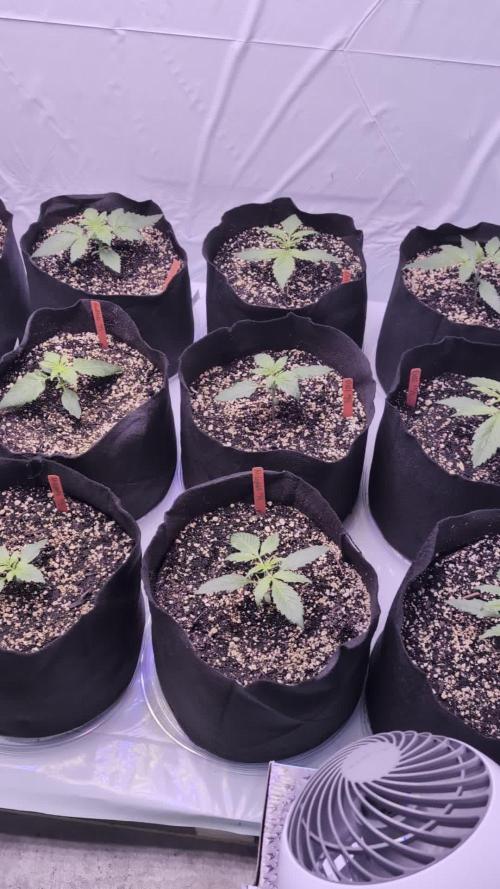
Plants are starting to take off finally, they have some of the thickest stems I have seen on seeds. I'm not sure if this is just what autos do or if they really like my soil blend.
I started light LST on a few of them just bending the main top down and tucking some leaf's. I don't think I'm going to top these autos and rather am going to try a natural grow with them to get a feel of there life cycles. the next batch I have started I might try more things on.
coming from growing photos for the last 10 years to autos is a bit different and I'm trying to take the extreme less is more approach until I fully understand what exactly is happening with these type of plants.
Every couple days these plants seem to really increase in girth and overall size curious to see what happens with the strech phase
Dates Range 11/1 - 11/8

Likes
12
Share


@Roberts
Follow
FBA2505 is doing okay. She has had a good growth spurt after beating the root rot she has started to show pistils. Everything is looking a lot better then it was. Thank you Medic Grow, Athena, Xpert Nutrients, and Fast Buds. 🤜🏻🤛🏻🌱🌱🌱
Thank you grow diaries community for the 👇likes👇, follows, comments, and subscriptions on my YouTube channel👇.
❄️🌱🍻 Happy Growing 🌱🌱🌱
https://youtube.com/channel/UCAhN7yRzWLpcaRHhMIQ7X4g.
Likes
1
Share

@birdmountain
Follow
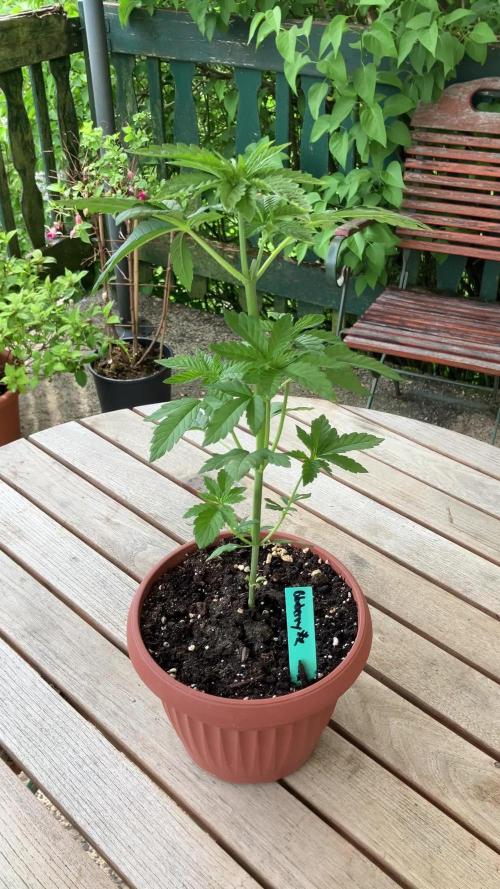
Sie wird von Woche zu Woche kräftiger und hat keine Probleme mit den doch recht niedrigen Temperaturen nachts. Das Topping hat sie gut vertragen und trotzdem noch 10 cm in dieser Woche zugelegt. Nächste Woche nach den Eisheiligen erfolgt das Umtopfen in den Endtopf. So weit sieht es bisher gut aus.

Likes
Comments
Share


@Santaclaus
Follow
Última semana ,he hecho lavado de raíces y he añadido agua limpia, bueno en resumen a sido una locura, cada una va a su ritmo en floración unas ya han acabado la floración otras están en mitad de floración y otras apenas han empezado a engordar el cogollo... Estoy haciendo lavado pero es una lastima, tener variedades tan diferentes, incluso de la misma raza como las Lili y unas han florecido bastante antes que otras... Total que en lavado de raíces, unas habrán echas bien en la floración, otras a mitad de floración y otras como las amnesia que son de 70 días ... La próxima vez intentaré al menos hacerlas, todas o sativas o todas índicas mezclar variedades tan diferentes a sido una locura , sobretodo en crecimiento, he sufrido de todo incluso con el hidroponico, se me taponaron los desagües por tubo pequeño, tendré que inventar otro mecanismo para el desagüe... Está última semana he echo lavado raíces con final flush, y he regulado el pH a 6.2 con agua de grifo y lluvia, también he metido encimas de limpieza así estarán una semana y si veo que se ponen bien amarillas , afilo tijeras...quiero que estén hiper limpias para que queden bien limpias de sabor...

Likes
9
Share


@Northstar_cannabis
Follow
11/17 started flushing medium until harvest, roughly a week. Watering with plain well water which has a ph range 7.3 to 7.6
The growth of this plant was slightly slower than some other strains in the tent which I believe led to a smaller overall size of the plant due to space. Despite the smaller size of the plant, the buds seem unaffected by it. The buds are just as large as the larger plants.

Likes
24
Share


@3lementa1
Follow
March 08 I left the air purifier on by accident again last night so there was a blue light overnight. The buds look good though. I taped the window up so I'm no longer having a humidity issue at night. I alternate between having the light on at 100% and 75% and recently 50% as well.
March 10 I just fed them Ph'd water with molasses. Runoff pH 6.2-6.5, ppm 200-600. I'm having trouble getting good shots of the trichromes but I'm starting to see more amber ones. Less than 5%.

Processing
Likes
6
Share


@russrahl
Follow
Beginning of week 4 in flowering and everything is coming along quite nicely. plants are loving there Remo nutes! just switched this tent over to a self watering drip system cause it was getting to be a real pain watering these girls by hand. Their siting in 7 gallon fabric pots and boy do they drink a mad amount of water/nutes! the pots are just packed with roots! really loving the Remo lineup of nutes so far! go Remo! Go Sports! Buds are starting to form nicely! Started to open up the bud sites a bit by tucking what i could but had to snip a few leaves up top to open a few lower sites up trying to get through.

Likes
57
Share

@Momentum
Follow
Voll im Stretch. Ansonsten geht es ihnen gut, die Blüten sind deutlich zu sehen und sie haben ein sattes Grün.
Die Co2 Bottle, die ich besorgt habe, kommt nicht zum Einsatz. Ich habe einen viel einfacheren Weg gefunden. Einfach bei geschossenem Fenster atmen 😄 Im Home Office komme ich bis 10Uhr auf meine 1500ppm und halte sie den ganzen Tag. Der Sensor war auf jeden Fall kein Fehlkauf.

Likes
57
Share

@Roberts
Follow
Pablo Escobar has been doing good. She was neem oil treated about 4 days ago. Then I treated her again today. Making sure I have eliminated the ghost pest I have not seem to found yet. I have seen it white sacs on the leaves. So something is about. So hopefully it is now exterminated. She was trained a little today and is ready for another week. Thank you Divine Seeds, and Spider Farmer. 🤜🏻🤛🏻🌱🌱🌱
Thank you grow diaries community for the 👇likes👇, follows, comments, and subscriptions on my YouTube channel👇.
❄️🌱🍻 Happy Growing 🌱🌱🌱
https://youtube.com/channel/UCAhN7yRzWLpcaRHhMIQ7X4g

Likes
7
Share


@I_Identify_As_A_Dan
Follow
Week 6 for Lemon OG by SSSC,
Lemon OG...my runtz of this year😂 Just seem to be a struggle train with this girl, really slow growth never seems happy but i will not give up on her😂 She was topped again half way through last week. Really hoping when shes a little older & her roots are striving that she will start pulling her own in the garden.

Likes
14
Share


@kevgrow
Follow
Hey Friends, end of week 13 from seed
Buds are getting thicker
Smell is getting stronger
Bud structure is looking amazing, so far its been an amazing experience seeing this plant grow.
I am watering every 3-4 days 1 full gallon of water mixed with nutrients.
Leaves are green, looking healthy
Trichomes are 98% cloudy 2% amber
This week I had a tough time trying to maintain a steady humidity level, its been raining outside lately so humidity level goes up.
QUESTIONS
When should I begin flushing?