


Likes
Comments
Share


@Appoldro420
Follow
14-10-2021: Actually I have to start a next week by tomorrow but I have changed so much today I decided to start a new week today.It is still not easy to maintain a VPD of 0.7..... Well it is only an indication in my case because unfortunately I still do not measure the leaf temperature. Temperature was a bit on the high side last night because the temperature sensor of the PK125 has now ended up under the foliage. Of course it is a lot cooler there so it kept running at 10%
I have adjusted that, so tomorrow I expect a completely different temperature trend. Also completely emptied the system today and replaced the Hy-Pro with Ata Awa MAX. I have exchanged the Calmag with the Green Sensation, so this will also be dosed (1 ml/L) from now on. I will add Calmag from now on with a pipette. Let's see how the PH is going, as the packaging of the ATA states that it is self-regulating. If that is the case I will put CALMAG in the reservoir of the PH- and reprogram the system.
I have chosen not to scrog today. I drilled a hole in the middle and the container to the right of it and killed quite a few roots (unfortunately the drill went through) and that seems, in combination with other nutrition, a suddenly somewhat lower temperature and the torture between the leaves to to get the sensor in place is enough stress for 1 day to me. So they can now go to sleep and tonight we'll see if there is damage. I'm guessing it's not that bad because previous experiences have told me that they can take quite a bit.
17-10-2021: Flowers are starting to form.
18-10-2021: 2 hours of bondage ;) 139 tie-wraps. Damn.. this is a lot of work on a daily basis
20-10-2021: Finally some white hairs on them.. Damn... never took this long. Will it be because of the high temperature?


Likes
14
Share


@Kakui
Follow
28 Noviembre: Se realizó una defoliacion agresiva y Lollipop. Desde ahora en adelante, además de pasar a nutrientes de floración, se regará generativamente, con muy poco o nada de runoff, para tener un dryback más largo, de unas 22-23 horas, de está manera subir la EC del sustrato(pwec) tratando de llegar de a poco a 10EC, es un stress controlado para que queden plantas más compactas y espacio internodal menor, básicamente más puntos de floración más cerca unos de otros.

Likes
40
Share


@valiotoro
Follow
easy trim✂️
The buds are Absolutely perfect,exactly what i was looking for🤩
Green pheno : cookie,diesel & gelato🍪⛽️🍦
Purple pheno : flower,sweet & honey🌸🍯
After 7 days on the dry rack she was ready for the jar to start the curing process.😋


Likes
15
Share


@TheGreenThumb
Follow
First day under led lights after receiving the fresh cuttings.
All of them are healthy but unfortunately is the night temperature at the moment a bit to low.
All lights are dimmed; the sunlight leds on the lowest setting and the Cree cobs around 20%.
Output watts for all leds is at the moment 280W.
PAR readings coming up in the next days 💡
Now the PAR readings: 3x3 measurements at plant tip. Front row to the back. Measurements in mmol/m2s with the quantumsensor from apogee.
400,570,400,550,620,610,410,470,410.
Around 500 in average.
Likes
17
Share


@Drtomb
Follow
Well. I started a 3 week flush yesterday. Ill be changing the water weekly. Ive always been a 2 week kind of flusher. But after i tried a 3 week on suggestion from another grower... I won't be going back now. Which means we have 20 days left of growth and purification.

Likes
Comments
Share


@marcian
Follow
Semana #2
La catástrofe.
Al llegar a mi casa, encuentro este triste escenario.No cerré bien una de las entradas del indoor y una de mis gatas entraron.
Murieron tres plantas.Dos Auto Brooklyn Sunrise y una Xtrem Haze.
Sentía que este cultivo tenia que ser desechado por todos los problemas iniciales, pero decidí continuar para ver que tanto pueden aguantar las plantas y por la inversion en estas semillas.
Las sovrevivientes se veian un poco torcidas, pero veremos que tal siguen.
Por todo esto, a las sobrevivientes (3 Auto Mazar y 2 Xtrem) no les haré ningún tipo de técnica y trataré de abonar con lo mínimo un par de semanas.


Likes
8
Share


@Downunder90
Follow
Yooo growers 🌱,
We’re 8 weeks in and let me tell you — this grow is going absolutely wild. Everything’s blowing up like weeds (the good kind, of course 😎). From the jump, the girls were full of energy, and now the tent’s starting to look like a mini jungle.
I’ve been running a 300W HID in a 60x60 tent, keeping temps and humidity dialed in just right. Feeding with Green House nutrients and sticking to a solid 16-hour light schedule through veg — and man, the plants are loving it. Week by week, they just kept stacking height and packing on that lush green.
Now here in week 8, things are looking prime. The structure’s solid, leaves are healthy, and I can already feel the pre-flower tension in the air. A few more days and the real show begins — flower time, baby!
Couldn’t be happier with how it’s all tracking so far. Stay tuned, 'cause if veg looked like this, the bloom is gonna be straight fire 🔥
Catch ya in the next update. ✌️

Likes
16
Share


@TerpDaddy
Follow
Things are looking real good now. Blueberry is in full stretch and she’s gonna be a big girl. Grapefruit coming along real nice after early struggles. I am having some issues with light burn on my blueberry, but I think it’ll be alright.
Absolute explosive growth from the blueberry monster this week. She’s up to 43 inch and I’m loving the spacing she has. As you can see, not very much lst going on here, but that’s how I like it.
Grapefruit has been chugging along real nice. Just starting to flower now and she’s a bushy gal. I’m really looking forward to the flowering weeks ahead. I think these two are gonna be pretty.
Likes
7
Share

@MrGrowDiarie
Follow
Day 14
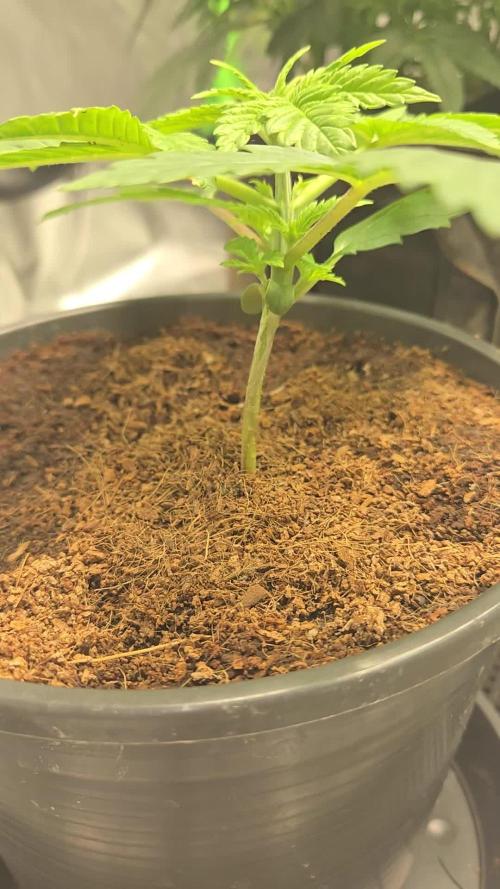
The Plant Growing fast and showing big leafs, il dont train them i want them to grow natural
💦💦💦🌱🌱💦💦💦💦
21.09.2025 – Watering 0 ml
22.09.2025 – Watering 500ml Ph 5.6
23.09.2025 – Watering 0 ml
24.09.2025 – Watering 0 ml
25.09.2025 – Watering 500ml Ph 5.8
26.09.2025 – Watering 0 ml
Processing
Likes
7
Share


@A1420
Follow
Really bulking out now and look like a lot of these colas will be filled out completely by finish looking at the rate they are growing and the fact they have 4-5 weeks left estimate.
Cheesy smell is getting stronger but only within the tent when working in there and disturbing and moving the buds, once zipped up the filter handles everything fine.
Crazy trichome production going on so early in flower , these are going to be some very frosty nugs.

Likes
22
Share


@drgreentips
Follow
One has turned black in coulor while the other is still green both letting off nice berry flavours there building up thc nicely there the biggest in the tent
Likes
46
Share


@LittleBigTrees
Follow
This is a must grow strain for anyone that likes a good balanced strong sativa , it grew well despite dripper and timer issues and had a really good medicinal side for crohns disease whilst leaving me energised and uplifted .
This plant continues to stretch right until harvest even with heavy defoliating it ended up 150cm tall. The smell is really strong and differs between pheno types.
One grew with almost no pistils/stigmas and was very frosty, this one could have continued Even after 9 weeks flowering .
Overall this has taken over as my favourite sativa ! I WILL grow this again for sure and would recommend it to anyone who likes sativa or citrus smelling/tasting flower 💚
NB: I didn't weigh the bud wet so ignore the guess in the grow report.

Likes
16
Share


@BudXs
Follow
Autos are doing alright this week. Very low RH has kept them from being their best selves. No worries, early season growing suck, and this years faults will be next years improvements. Next year will move from an electric heater to an oil filled radiant so that I dont suck so much moisture out of the air
First week of flower, I expect them all to stretch this week

Likes
48
Share


@DudeGrowsWeed
Follow
Tangie'Matic coming along nicely. Nice size buds, smells really good, and good color overall. She's quite a bit smaller than my first Tangie'Matic. But I have a feeling this girl is going to taste better (fingers crossed).
Likes
2
Share


@Altitonans_Fulmen
Follow
For most crops, a slightly acidic soil pH between 6.0 and 6.8 is ideal because it optimizes nutrient availability. When soil pH rises above 7.0 (alkaline), the concentration of hydrogen ions H+ drops significantly, and they are replaced by calcium, magnesium, or sodium ions on the clay colloid exchange sites. To naturally lower alkaline soil pH, you can add organic matter (carbon-rich materials), which produces weak organic acids as it decomposes. Maintaining this slightly acidic range stimulates a highly active, diverse microbial community; these microbes decompose organic matter and release carbon dioxide CO2, which plants absorb through their roots and leaves to boost photosynthesis and sugar production. Furthermore, the added organic carbon acts like a sponge, drastically improving the soil's water-holding capacity.
While soil biological activity does involve cellular electron transport, electrical conductivity (EC) in soil is actually a measure of dissolved mineral salts, not a voltage carried by individual microbes. Soil microorganisms secrete organic acids and chelate metallic and non-metallic minerals, transforming locked-up inorganic compounds into bioavailable organic complexes. Unlike harsh synthetic fertilizers that can dehydrate soil life in high concentrations, these naturally chelated nutrients safely nourish the plant, creating a thriving, self-sustaining ecosystem where plants can efficiently synthesize their own food.
Metal-based: Could include elements like iron, manganese, copper, or zinc, which are essential nutrients for plants but can exist in forms not readily accessible.
Non-metal-based: Examples like calcium carbonate, phosphate, or sulfur are also important for plant growth and potentially serve as building blocks for the organic salt.
Chelation in a plant medium is a chemical process where a chelating agent, a negatively charged organic compound, binds to positively charged metal ions, like iron, zinc, and manganese. This forms a stable, soluble complex that protects the micronutrient from becoming unavailable to the plant in the soil or solution. The chelate complex is then more easily absorbed by the plant's roots, preventing nutrient deficiency, improving nutrient uptake, and enhancing plant growth. Chelation is similar to how microorganisms create organic salts, as both involve using organic molecules to bind with metal ions, but chelation specifically forms ring-like structures, or chelates, while the "organic salts" of microorganisms primarily refer to metal-complexed low molecular weight organic acids like gluconic acid. Microorganisms use this process to solubilize soil phosphates by chelating cations such as iron (Fe) and calcium (Ca), increasing their availability.
Added sugars stimulate soil microbial activity, but directly applying sugar, especially in viscous form, can be tricky to dilute. Adding to the soil is generally not a beneficial practice for the plant itself and is not a substitute for fertilizer. While beneficial microbes can be encouraged by the sugar, harmful ones may also be stimulated, and the added sugar is a poor source of essential plant nutrients. Sugar in soil acts as a food source for microbes, but its effects on plants vary significantly with the sugar's form and concentration: simple sugars like glucose can quickly boost microbial activity and nutrient release. But scavenge A LOT of oxygen in the process, precious oxygen. Overly high concentrations of any sugar can attract pests, cause root rot by disrupting osmotic balance, and lead to detrimental fungal growth. If you are one who likes warm tropical high rh, dead already. Beneficial, absolutely, but only to those who don't run out of oxygen. Blackstrap is mostly glucose, iirc regular molasses is mostly sucrose. Sugars, especially sucrose, act as signaling molecules that interact with plant hormones and regulate gene expression, which are critical for triggering the floral transition. When sucrose is added to the growth medium significantly influences its effect on floral transition.
Probably wouldn't bother with blackstrap given its higher glucose content. Microbes in the soil consume the sugar and, in the process, draw nitrogen from the soil, which is the same nutrient the plant needs. Glucose is not an oxygen scavenger itself, but it acts as a substrate for the glucose oxidase (GOx) enzyme, effectively removing oxygen from a system. Regular molasses (powdered if you can), as soon as she flips to flower or a week before, the wrong form of sugar can delay flower, or worse. Wrong quantity, not great either. The timing of sucrose application is crucial. It was more complicated than I gave it credit for, that's for sure. When a medium's carbon-to-nitrogen (C:N) ratio reaches 24:1, it signifies an optimal balance for soil microbes to thrive, leading to efficient decomposition and nutrient cycling. At this ratio, soil microorganisms have enough nitrogen for their metabolic needs, allowing them to break down organic matter and release vital nutrients like phosphorus and zinc for plants. Exceeding this ratio results in slower decomposition and nitrogen immobilization, while a ratio below 24:1 leads to faster breakdown and excess nitrogen availability.
Carbon and nitrogen are two elements in soils and are required by most biology for energy. Carbon and nitrogen occur in the soil as both organic and inorganic forms. The inorganic carbon in the soil has minimal effect on soil biochemical activity, whereas the organic forms of carbon are essential for biological activity. Inorganic carbon in the soil is primarily present as carbonates, whereas organic carbon is present in many forms, including live and dead plant materials and microorganisms; some are more labile and therefore can be easily decomposed, such as sugars, amino acids, and root exudates, while others are more recalcitrant, such as lignin, humin, and humic acids. Soil nitrogen is mostly present in organic forms (usually more than 95 % of the total soil nitrogen), but also in inorganic forms, such as nitrate and ammonium. Soil biology prefers a certain ratio of carbon to nitrogen (C:N). Amino acids make up proteins and are one of the nitrogen-containing compounds in the soil that are essential for biological energy. The C:N ratio of soil microbes is about 10:1, whereas the preferred C:N ratio of their food is 24:1 (USDA Natural Resource Conservation Service 2011). Soil bacteria (3-10:1 C:N ratio) generally have a lower C:N ratio than soil fungi (4-18:1 C:N ratio) (Hoorman & Islam 2010; Zhang and Elser 2017). It is also important to mention that the ratio of carbon to other nutrients, such as sulfur (S) and phosphorous (P) also are relevant to determine net mineralization/immobilization. For example, plant material with C:S ratio smaller than 200:1 will promote mineralization of sulfate, while C:S ratio higher than 400:1 will promote immobilization (Scherer 2001).
In soil science and microbiology, the C:S ratio helps determine whether sulfur will be released (mineralized) or tied up (immobilized) by microorganisms.
A carbon-to-sulfur (C:S) ratio smaller than 200:1 promotes the mineralization of sulfate, when the C:S ratio is low, it indicates that the organic matter decomposing in the soil is rich in sulfur relative to carbon. Microorganisms require both carbon and sulfur for their metabolic processes. With an excess of sulfur, microbes take what they need and release the surplus sulfur into the soil as plant-available sulfate
A carbon-to-sulfur (C:S) ratio higher than 400:1 will promote the immobilization of sulfur from the soil. This occurs because when high-carbon, low-sulfur materials (like sawdust) are added to soil, microbes consume the carbon and pull sulfur from the soil to meet their nutritional needs, temporarily making it unavailable to plants.
200:1 C:S 400:1: In this range, both mineralization and immobilization can occur simultaneously, making the net availability of sulfur less predictable.
This dynamic is similar to how the carbon-to-nitrogen (C:N) ratio regulates the availability of nitrogen in soil. Just as microbes need a certain amount of nitrogen to process carbon, they also require a balanced amount of sulfur. Both mineralization and immobilization are driven by the metabolic needs of the soil's microbial population.
Sulfur is crucial for protein synthesis. A balanced ratio is particularly important in relation to nitrogen (N), as plants need adequate sulfur to efficiently use nitrogen. A severely imbalanced C:S ratio can hinder the efficient use of nitrogen, as seen in trials where adding nitrogen without balancing sulfur levels actually lowered crop yields.
Maintaining a balanced carbon-to-sulfur (C:S) ratio is highly beneficial for plant growth, but this happens indirectly by regulating soil microbial activity. Unlike the C:N ratio, which is widely discussed for its direct effect on nutrient availability, the C:S ratio determines whether sulfur in the soil's organic matter is released (mineralized) or temporarily locked up (immobilized).
Glucose will hinder oxygenation more than sucrose in a solution because glucose is consumed faster and has a higher oxygen demand, leading to a more rapid decrease in oxygen levels. When cells respire, they use oxygen to break down glucose, and this process requires more oxygen for glucose than for sucrose because sucrose must first be broken down into glucose and fructose before it can be metabolized.
In a growth medium, glucose is a more immediate and universal signaling molecule for unicellular and multicellular organisms because it is directly used for energy and triggers a rapid gene expression response. In contrast, sucrose primarily acts as a signaling molecule in plants to regulate specific developmental processes by being transported or broken down, which can be a more complex and slower signaling process.
Critical stuff.
Likes
10
Share


@TheMedicatedFarmer
Follow
Day 36 flower. The tent is on auto, just need another watering in the morning. Patient 2 is developing yellowing leaves in the lower canopy. Patient 3 is right behind them.
Day 37. Good smell the tent the buds have a clear to cloudy Trichome.
Day 41 flower. And still not ready. So I added 2000ml of bloom and some Gaia to help get through the last few weeks. I trimmed the plants up. Overall just looking at organic the Gaia is great to get to flower but I feel maybe I fed the others a lil to early bloom when they weren’t ready. Another lesson of following the plants not a chart.
Likes
8
Share


@phobic94
Follow
At the beginning of this week I put the plants on 12-12 in terms of feeding I only watered with PH 6 because they have some burnt leaf tips next week I will start flowering feeding.This morning when I opened my tent my fan fell on a plant and it broke a main stem. Hopefully they will survive 😭

Likes
30
Share

@valiotoro
Follow
Hello everyone week 2 has passed for this Skywalker haze auto by Dutch Passion 😎
this plant is doing very well growing at fast pace and with a beautiful green colour on the leaves.
Topping & LST for my girl 😎
wish you all happy growing!
Likes
Comments
Share


@Brocolis_Grow_Br
Follow
Chegando ao final desta colheita como comentei na última semana, por conta das pragas. Elas já estão em um nível quase incontrolável e eu já sabia que perderia alguma parte para mofo, já que tomou muita chuva e os buds estão densos.
Colhi 71g, descartei talvez uns 2g logo de cara. Ficou secando em condições um pouco ruins, pois os dias muito quentes e úmidos continuaram. No final, a planta ficou bonita e densa, mesmo que pequena. Acabei ficando com 13g secos, sendo que 4g foram para o lixo com mofo. A quantidade foi super baixa, mas fiz um teste no vape e gostei muito. Mesmo com todas as desgraças que ela passou, o produto final ainda ficou bem legal, o que já me motiva para fazer novamente mas agora com um cuidado diferente e no indoor.

Likes
7
Share


@UrbanBoer
Follow
Greenhouse growing is strange and exciting, well from what I have observed and experiencing, I see extremes, next week I will post readings from my thermometers, yes I have two, a coil, and a red mercury one, placed in a shaded area and the other in direct sunlight where the ladies are tanning. It’s getting hotter as the days go by, I need a humidity reader. It will help me better catalogue.