Likes
Comments
Share


@Organic_LarF
Follow
High GD community,
Week 29,
All i harvested was much to early, and had some mold in there while drying, so yield is very low.
These popcorns i let go an other week, so i get i tiny taste of the real taste. The tiny buds got much more fat these last 2 weeks, and aroma is getting intenser but not stinky.
Little video of my 2 friends playing in the warm greenhouse. Both 9 years old and inseparable.
Thats it for this week boys and girls,
Thanks for reading and passing by and 💚💚💚👏👏👏👍👍👍 for Marshydro leds. Quality/price top!
Grow safe buds and feel free to check out my other ladies doing fine thanks!
🌈viparspectra🌈
🎟️Organic_LarF♡viparspectra 🎟️
for your discount!!!!
https://www.viparspectra.com/?aff=nbemz68cxril&utm_source=affiliate
🌈Join us now🌈
🙏🌿🌿🌿🙏
Special thanks to
🏅🌿greenbuzzliquids🌿🏅
Use organic_larF for 15% discount
👏👏👏Weedseedsexpress!!!! 👏👏👏
LarfxWSE for discount at
weedseedsexpress!!! 15% off!!!
👽👽👽Zamnesia!!! 👽👽👽
Add OrganicLarF as a code when buying your own MarsHydro LED light and get a nice reduction!!!👽🚀🛸

Likes
18
Share


@Hashy
Follow
This was a good harvest for 9L pots, good root structure. The plant pulled out some real nice colours at the end of its life, if I could have lowered temps a bit I bet she would have looked stunning with the fade.
Smoke report coming up in a few mins.

Likes
Comments
Share

@Kardo
Follow
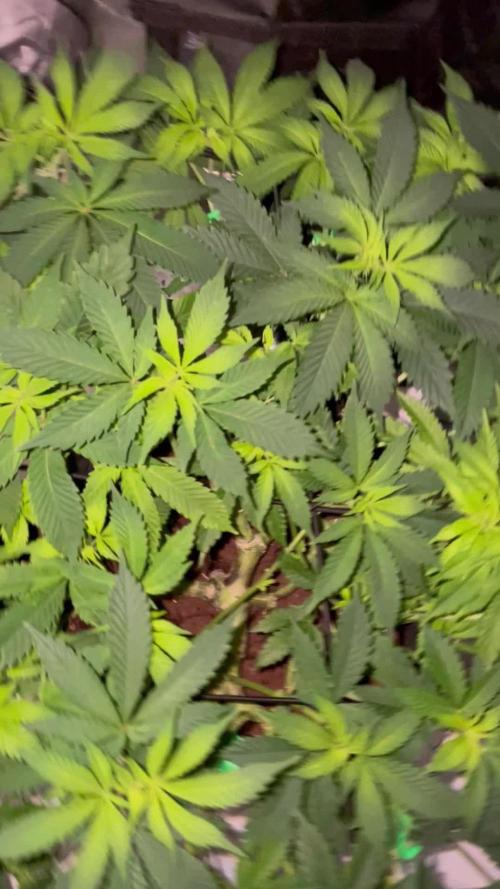
Sie hat sich den Platz genommen den sie braucht jetzt ist Zeit für die Blüte mal schauen wie sie in 5 Wochen aussieht.
Bis jetzt bin ich super zufrieden sie ist buschig und hat eine schöne Farbe ich bin gespannt wie die buds aussehen werden 😁
Likes
7
Share


@Fat_Olsh_Farms
Follow
Day 29. Taking very well to training.
Day 33. Growing at a nice pace. Taking well to anything I throw at her.

Processing
Likes
8
Share


@eldruida_lamota
Follow
Buenos días familia, de nuevo os traigo esta esta 5 semana de floración de nuestras green ak xL de zambezaseeds.
Una está algo bloqueada y no quiere comer nutrientes la otra ya va mejor y si come.
Ph controlado temperatura y humedad dentro de los parámetros establecidos.
Una cepa bastante difícil de dominar muy sensible a los cambios, pero que seguro bien cultivada dará todo de sí, xL su nombre lo dice.


Processing
Likes
8
Share


@TheFairyBudMother
Follow
Watered and fed 6-9
6-11 foliar spray
6-15 watered and fed with enzymes. Sorry for blurry photos. Color and texture of leaves is improving as I allow her to dry more between watering. Topdressed with gnatnix
Likes
1
Share

@Growfather1
Follow
Hello everyone, thank you for visiting!
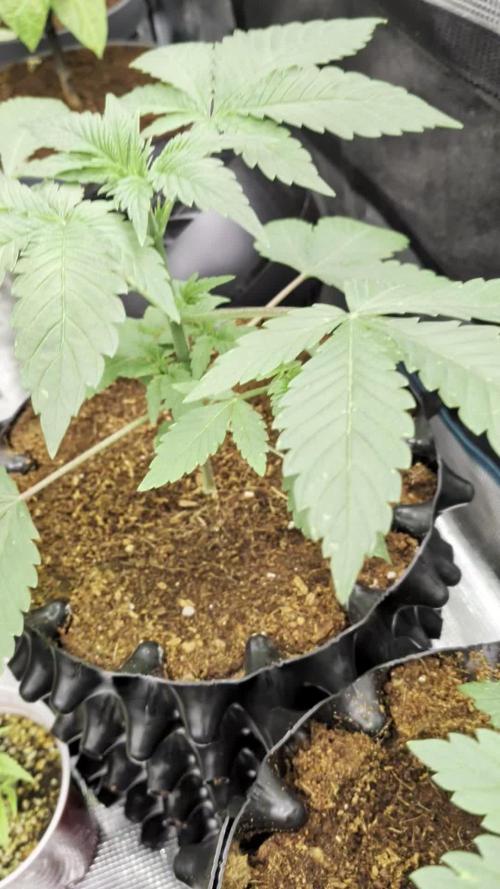
My Banana Runtz F1 Hybrid from Barney's Farm has officially entered week 3 of vegetation and she's absolutely loving life.
The environment is staying nice and stable, with temperatures holding between 19 and 24 degrees Celsius and humidity hovering between 57 and 68 percent.
We had a little visitor drama with a few thrips, so I gave her a neem oil treatment yesterday to get them under control. She's handling the stress like a champ.
Thank you for stopping by and have a nice day.
Best regards,
Growfather

Likes
10
Share


@xXBorn2BreedXx
Follow
2nd week of veg.
Will be using Cal/Mag and Grow With Grease for watering when needed until I begin to see nute issues.
2/16 D2 adjusted LST and turned the pot for better light penetration.
2/19 D5 mid day @ 1430 3 potential main colas were topped.
2/20 D6 The girls received a lite feeding as we transition to another beautiful week of veg growth.


Likes
Comments
Share


@guitarrasrockeras
Follow
Bueno Gente..! aquí llevo dos semanas de vegeta. como pueden ver algunas plantas se tomaron en algunos lados de color café de la cual no podría decir a que corresponde tal efecto . Durante los procimos días quiero cambiar de macetas a una de 5L para ya ir agarrando forma en el crecimiento.

Likes
11
Share

@Bud_vista
Follow
Welcome to week 8!
My little apple fritter doing great! The buds getting bigger from day to day and she’s handling the small distance to the light fantastic.
I think I have another 1,5weeks to go and I’m Herz curious about the harvest!


Likes
21
Share


@Staffedition
Follow
Привет друзья. Моей растихе сегодня 28 дней.
Начал применять LST технику на 19 дне и продалжаю применять её через день, а 18 августа добавил ДЕФОЛИЗАЦИЮ
С 20.08 ДЕФОЛИЗАЦИЮ делаю каждые 3,4 дня
С 20.08 применяю технику LST каждые 3,4 дня
На сегодняшний день влажность 63%
Растение растёт хорошо. генетика радует.
Всем мира и добра!
#Smail_Seeds

Likes
3
Share


@Barcelona_Farmers710
Follow
Booommm! Llegó la hora tan esperada Farmers nuestras flores llenas de resina acabandose de formar, la verdad que estas genéticas ayudan mucho al desarollo del cultivo espero que os guste!! Un banco seguro y confiable para una locura de olores y terpenos!!💚
Likes
36
Share


@BonkEyesCZ
Follow
Just first Plant harvested
5.10- second big sister harvested And two Lil Sisters too..Now theyr already drying in room ....next update in few days cause our weather Is not going to be so good ...
8.10 some of dried buds already cuted.. And puted to glass jars

Likes
4
Share


@LittleBigTrees
Follow
This week I've been pulling the top fan leaves to stop the plant growing taller and to allow the side branches to catch up. I also started feeding them.
I will probably repot and switch to flower next week now they've all outgrown their mutations.

Likes
149
Share


@CBD_Sweden
Follow
Hi all the happy people here in GrowDiaries.
This is my second cultivation ever and it will be fun to try a bigger space than my closet grow.
First, I'm just going to say I'm done with the construction of my new growroom.
I put some pictures on the construction here in week one.
The room is 2.14 meters by 1.7 meters and has a ceiling height of 2 meters.
It provides a floor area of 3.6 square meters.
I use a 54 Watt Lightwawe T5 for germination and 2 Pcs 400 Watt HPS lamps.
I have a channel fan that replaces the room air about 40 times an hour to get a comfortable theme in the room, the air enters a fresh air intake from the outside.
The air is purified through a carbon filter to then leave the room to the rest of the basement.
Then I use that heat to heat the rest of the basement.
I will use 8 pcs 15 liter Autopots to grow with and a 100 liter water tank that supplies the pots of water and nutrition.
I will grow completely organically in soil and will watercure my buds to get the best possible medicine for me.
But there are no cultivation rooms to be displayed here, so I continue with what is most important.
Today I have put my seeds in my moisture dome and hope the seeds have germinated within a few days.
I am very excited to see how the new growroom will work and how this Blue cheese Auto from Royal queen seeds will turn out.
Blue Cheese automatic cannabis seeds are a cross of Blueberry Automatic and Cheese Automatic that has been perfected over five years of breeding and careful selection. The result is a feminized, autoflowering strain with superior yield, flavor, and effects to either of its distinguished parent strains.
THC: 16%
CBD: Low
Yield Indoor : 325 - 375 gr/m2
Yield Outdoor: 60 - 110 gr/plant
Height Indoor: 40 - 70 cm
Height Outdoor: 60 - 110 cm
Flowering: 7 - 8 weeks
Harvest month: 9-10 weeks after planting
Genetic Background: Blueberry x Cheese x Ruderalis
Type: Sa 35% In 40% Ru 25%
Effect: Cerebral and uplifting
Climate: Mild
..............................................................................................................................................................................................................................................................................................................................................
Update 2017-08-15. All 4 seeds have germinated and planted in small pots inside the humidity dome.
I'm so glad it worked so well and now it's just hoping they'll start growing and become 4 big healthy girls :)
...............................................................................................................................................................................................................................................................................................................................................
Update 2017-08-16. I have mixed my own soil today. Its 40% sieved peat harrow H2-H4 0-30 mm, 45% sieved peat harrow H4-H6 0-30 mm. 5% sand and 10% of compost soil. And i use 15% of perilite and mix it all together.
................................................................................................................................................................................................................................................................................................................................................
Update 2017-08.20. Nr1 and 2 grow and thrive.
Number 3 just got rid of the seedpod and is folding out the sheets.
Number 4 is a bit shy and can only be seen if you look carefully into the soil.
.........................................................................................................................................................................................................................................................................................................................................
Update 2017-08-21. Nr 1 and 2 is doing well. Nr3 is trying to catch up and Nr4 is still shy.
Likes
23
Share


@Chubbs
Follow
What up grow fam. Week 3 up on these girls. At the moment they're a little upset with me. I went away for a few days so I over watered hoping they'd be alive when I return. They're still alive but sure upset and showing it. I did a defoliation taking the bigger fan leafs off to allow some more light to the lower branches. Also I don't usually put them under full power of my light until about week 5 but I did to see how they'd do and though they're stacking super tight, I think I probably did more harm then good. I'll baby them and see if they'll bounce back. All in all Happy Growing
Likes
8
Share


@Aleks555
Follow
Dutch Passion - Melonads Runtz Harvest
We’ve completed this amazing grow, and I must say, we truly enjoyed it! The plant grew easily and initially had a bush-like shape, but later, it transformed into a Christmas tree look. The aroma is incredibly delicious, and the yield is impressive. The buds are dense and covered in resin; while trimming, our fingers were coated in such a thick layer of sticky resin that the scissors wouldn’t cut the leaves anymore.
We want to extend our gratitude to Dutch Passion for such an amazing strain—we absolutely loved growing it. We also want to give a huge thanks to Xpert Nutrients for the outstanding fertilizer that has helped us grow such beautiful and powerful plants year after year. Without your products, it would have been much harder to achieve these results. The nutrients are easy to use and of exceptional quality!
Why I Choose Xpert Nutrients:
When it comes to growing strong, healthy plants, choosing the right fertilizer is key. After several years of experience in indoor cultivation, I can confidently say that Xpert Nutrients stands out from the rest, and here’s why:
1. Unmatched Quality: From the very first use, it’s clear that Xpert Nutrients is made from premium, high-quality ingredients. Every bottle is consistent, and the nutrients are perfectly balanced for each stage of the plant’s growth cycle. This attention to detail has allowed me to grow incredibly healthy plants with powerful roots, lush foliage, and dense, resin-packed buds.
2. Easy to Use: No complicated mixing instructions or guessing games. Xpert Nutrients provides clear guidelines, and I never have to worry about whether I’m giving too much or too little. The nutrients dissolve perfectly in water, leaving no residue or sediment in my system, making feeding a breeze.
3. Consistent Results Every Time: I’ve used Xpert Nutrients across multiple grows, and the results are consistently impressive. My plants grow faster, are more robust, and yield more, whether I’m growing autoflowers or photoperiod plants. Each time, the buds come out dense, sticky, and packed with potency.
4. Boosts Potency and Flavor: One thing I’ve noticed is that Xpert Nutrients doesn’t just help with growth; it also boosts the aroma and flavor of the final product. My plants consistently produce some of the most aromatic and flavorful buds I’ve ever grown, making each harvest a true sensory experience.
5. Optimal Performance with Every Strain: Whether I’m growing strains from Dutch Passion, Anesia Seeds, or Humboldt, Xpert Nutrients works wonders with all of them. I can rely on it to provide the essential nutrients my plants need to thrive, no matter the strain or growing conditions.
6. Support and Trust: The customer service and support from the Xpert Nutrients team have been incredible. They genuinely care about their customers' success and are always ready to provide advice and guidance. Knowing I have such a supportive company behind me is invaluable.
After years of growing, I’ve tried a lot of different fertilizers, but Xpert Nutrients has consistently delivered the best results. It’s a product I trust, and it never lets me down. If you’re serious about growing the best plants possible, Xpert Nutrients is a game-changer you can’t afford to miss.