




Likes
3
Share


@Green_Dream
Follow
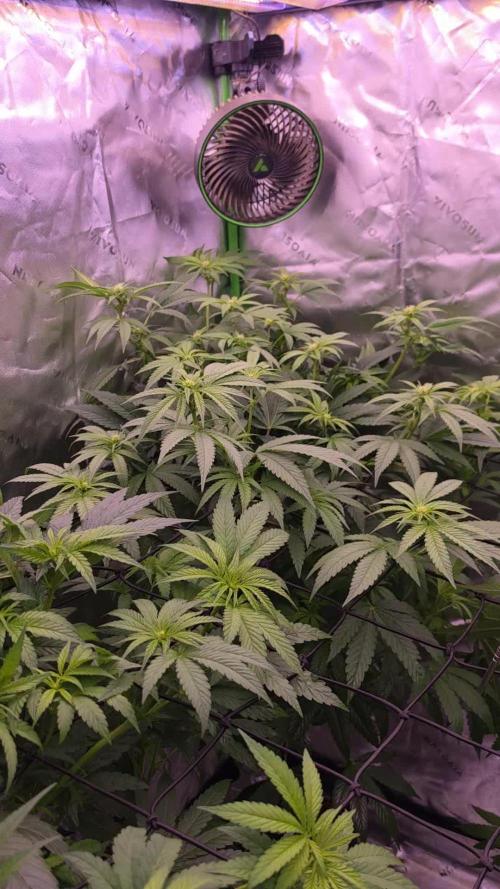
It's been a pretty good week. I did quite a big defoliation, as things were getting crowded. She has a nice flowery smell!
I switched to a more flowering dominant feeding, I decreased the Nitrogen and pumped up the phosphorus and potassium.
I will soon do a flush, as it looks like the nuts are starting to accumulate at the roots.



Likes
3
Share

@Badbreath
Follow
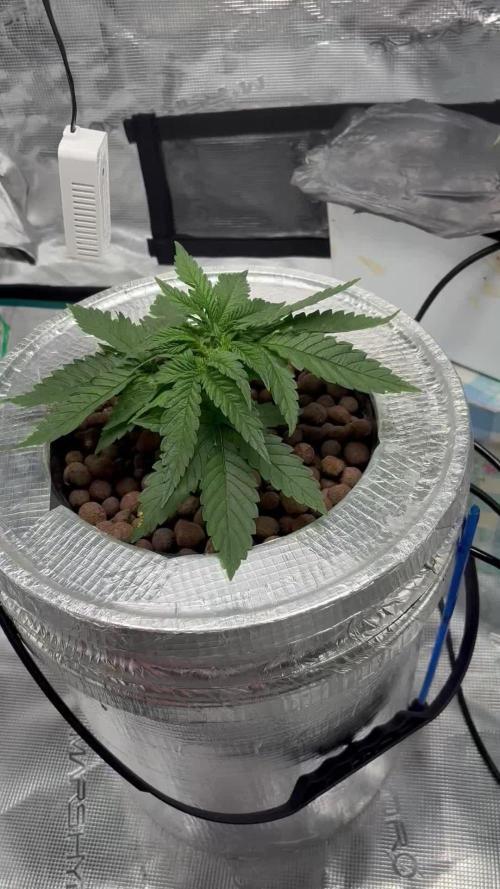
13/9 hon har vuxit en hel del men hennes blad som växer ut är skadade, varför är det så? Jag har henne på 5.8/6.2 i pH,
1.55 EC, 550 ppfd.
Vattenbyte var 7e dag.
Inför hennes förra vattenbyte från 1.2 i EC till 1.6 EC det gillade hon inte. Hon intog bara vatten vid det tillfället men jag märkte det snabbt enig för att spä ut EC ner till 1.55 som hon trivs perfekt i.
Likes
107
Share


@Afterglow
Follow
Неделя прошла как и планировалось.
Вовремя в начале недели понизил яркость ламп, это остановило разрушение старых листьев от переизбытка магния и нехватки кальция. Ко всему прочему снизило быстрый стретч и позволило гнуть ветки, так как они снизили скорость утолщения.
Одна из веток на 4-ом этаже лопнула от основного ствола, пришлось делать целу систему из растяжек, чтобы и гнуть можно было, и чтобы транспортная мозоль могла образоваться.
В высоту прибавии только 2 см, это из-за того что основной ствол еще больше получил утолщение и немного вытянулся в длинну, остальные 8 веток несчастно гнутся и разводятся по сторонам.
PPM также 700 как на влив, так и в дренаже, то есть питается отлично, проблем нет вообще никаких, старые листья не стали прогрессировать в образовании ржавчины и продолжают жить и пахнуть. Новые листья правильной формы и без эффекта "преднизалона".
Утром запах как в хвойном лесу. Не смотря на свои 30 дней от роду, пахнет довольно сильно, и это не смотря на то что даже не цветет.
Склоняюсь к тому, чтобы начать переводить на цветение, как раз за неделю ветки подрастут, вытянутся и будем иметь красиво сформировавшийся куст.
Спасибо что заглянули. Без вас вести дневник не имеет смысла. Всем удачи!


Likes
73
Share


@Roberts
Follow
Deep Forest Auto is growing great. She has been growing very well. I did some more lst and defoliation on her today. She is making excellent progress. Nothing more to report this last week. Thank you Gen1:11, Medic Grow, and Doctor's Choice. 🤜🏻🤛🏻🌱🌱🌱
Thank you grow diaries community for the 👇likes👇, follows, comments, and subscriptions on my YouTube channel👇.
❄️🌱🍻 Happy Growing 🌱🌱🌱
https://youtube.com/channel/UCAhN7yRzWLpcaRHhMIQ7X4g




Likes
4
Share


@Adam22
Follow
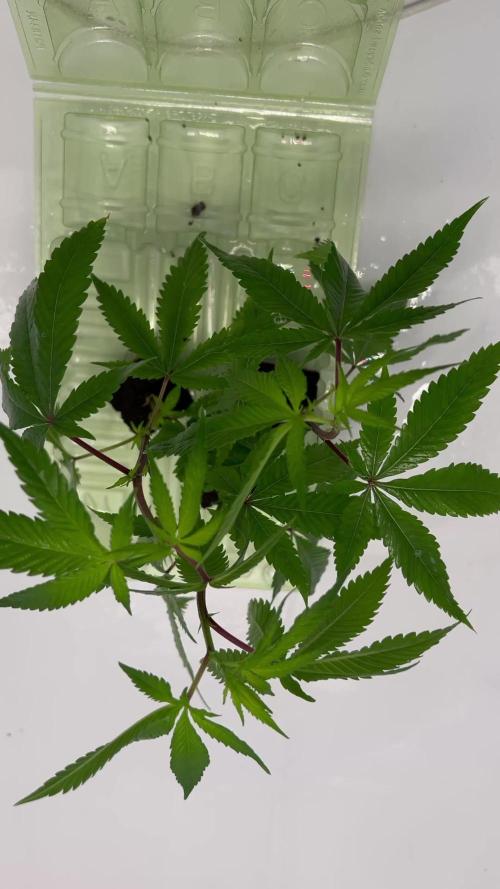
Smell is amazing like fizzy pineapples it overpowers the cookie dawg smell but the combo of the strains is also amazing the slight cookie and chem smell inside the tent. Will re pot these all and hope they all females due to the seeds being regular and not feminised. All looks good will keep eye on pistils to appear or not. I am always using the same feed:
Coco A
Coco B
Canna Rhizotonic
Cannazym
Canna cal mag
Canna boost
Ph up
Likes
38
Share


@Snakeking
Follow
chopped
I will update about the weight
Sweet like candy and awesome taste
For the first real growth i think i did good.
Our building smells like skittles:)
Gz#2 520g dried bud
Gz # 1 470 g
Gz # 6 425 g
Gz # 3 350 g
Gz # 5 460 g


Likes
7
Share


@nectarinepasta
Follow
This week the plant continued to stretch reaching 55 cm. The tent is really feeling small both in height and width, the lamp is almost as high as it can get. I might have had done better with more pruning earlier, now I don't I don't want to stress too much this far into flowering. This week just removed some leaves and some branches without significant flowering from the bottom.
Right after switching to a HID light for flowering, the leaves started drooping badly. The plant has mostly recovered from that. Flowers are getting bigger, slowly growing trichomes on the leaves too.

Likes
43
Share


@TheBulldozerSicily
Follow
Venerdì 22/03/2024
Inizio controllo ec 3999+ ph 4.9
Cambiamo acqua
Aggiungiamo 75 litri acqua osmotica
Ottenendo ec 530 ph 7.8
Aggiungiani Dosaggio per 80 lt
64 grow 128 micro 192 bloom
Ottenendo ec 1550 ph 6.5
80 cal mag 80 sensizym 80 rhino skin 80 bud candy 80g mega bud
Ottenendo ec 2466 ph 6
Likes
2
Share


@Chi_K24
Follow
Hey folks. Into week 12. Just watering plants when needed and also did some preventive maint and sprayed neem oil at 2tbps per 2L of water. Other than that we still on cruise control for now.
Likes
36
Share


@TerpTurtle
Follow
Introducing some carbs this week (Bud candy & molasses) 🍬
some additional mycorrhizae (great white) with the Liquid Karma every water 🍵
will end the week with a final defoliation 🍅
Likes
19
Share


@Comfrey
Follow
Day 64
🌤️🌥️☁️☁️ 11-19 degrees and the humidity is around 65%. I started into the tenth week with an intense check of the main buds. Some of the trichomes are milky but the most are still clear. Maybe I‘m wrong. Some days ago I could spot some amber trichomes but the flowers expanded and it‘s not possible to find anymore amber ones. Watered 500ml pure rainwater.
Day 65
🌤️☁️🌥️☁️ Today Tropicana needs a rest. She just want to sit and do nothing except waiting for sunshine warming her heart. In the evening she asked for water, potting soil lost enough weight. 600ml with 60ml light fermented flower and herb tee. ~100 ml drainage with PH 6,2. In the main flower it was possible to find a small amount of amber trichomes.
Day 66
🌤️⛅️🌤️🌤️ 10-21 degrees, humidity 45-65%. This morning I understood, that Tropicana was not thirsty yesterday, she need to breath oxygen with her roots to feel happy. The beautiful smell is way not so intense since last night. I missed the strong smell when I opened the door to our balcony in the early morning. So no watering yesterday would be better. And my banana peel tee is not free of nitrogen, same with the herb and flower tee. Less is more will be written in my diary in the next days (weeks). Watching Trichome TV: I see more amber and I see that she needs more time after all this stress which I made for her. She told me that she is not only sick of water, she told me, that she hate to be moved all the time, too. Every move from A to B she would loose tiny roots and this would stress her a lot. When I checked the moisture I spotted too many of this root fly castings. Their mamas and papas had their orgie about a week ago and now they are eating the mulch layer roots as if there will be no morning. This is not Tropicanas day. But the sun is shining and tomorrow will be another day. Hopefully with a nose full of this tasty fruity and woody citrus smell.
Day 67
🌧️☁️☁️☁️ 13-19 degrees, humidity 42-80%. This morning the smell was more intensive like yesterday but still not like before. The leafs show the first signs of fading and I‘m very nervous. This night will fall a lot of rain for several hours. But a part of our balcony is canopied, so Tropicana will be a little bit protected by me this night. I don‘t want to make another mistake, so I use this possibility. Anyway the plants are always wet after a strong rain, it‘s just a little canopy, but not soaked with water.
Day 68
🌧️☁️⛅️🌤️ 15-21 degrees and the humidity is 74-85%. Tropicana feels better. The smell this morning was much more intensive then the days before.
Day 69
⛅️🌤️🌥️☁️ 15-22 degrees, humidity 46-89%. Tropicanas flowers are swelling and while she is maturing her smell is getting more intense and complex. Right now mandarin and an earthy woody smell, sometimes even a bit sour like a mixture of pineapple and lime juice. It‘s possible to find new colors in the flowers. There’s purple and pink, orange and ocher brown appeared. Tropicanas main flower looks like the harvest time is near, but the trichomes are still clear and just started to get milky. Anyway she is incredible fast, especially if to remember the extrem conditions with minimal temperature around ten degrees in the early mornings.
Day 70
🌧️☁️☁️🌧️ 17-23 degrees, humidity 63-94%. In the next days we will have humid thunderstorm weather. There is even a warning for huge hailstones for tomorrow. So there is a risk of damage and mold because of high humidity. I will have an eye on this. Tropicana looks healthy, so I‘m not worrying too much anymore.
Likes
5
Share


@PapaTerps
Follow
Girl Scout Cookies - Kannabia
Week 3 of Bloom
🌸 She's one of the smallest girl in the tent, so I've had to prop her up towards the light, but she looks beautiful and is working hard on developing her flower 💪🏻 From today, all the girls have been moved into a 8x4 tent, because the 5x5 has been hard to manage.
✂️ No work on her this week, I'm just letting her grow.
💧 Watered every three days with 2L of RO water, with nutrients mixed individually, in order and then finally, I pH'd the solution to 6.3. I've increased all of her nutrients, now that she is focusing on developing her flower, she'll need it.
💡 PPFD: ~850
♒ VPD: 1.32kPa
🌱 Days from seed: 87
🌸 Days in Bloom: 26



Likes
12
Share


@Cannabeast40
Follow
Week 3 and a repot is done and now in day 3. Finally it’s settling down after the repot, which was not pretty at all😂
Hope to get some massive plants this run 🌱
________________________________________________________________________________________
Light from @MarsHydroLED 😎
FC-E6500 EVO🔥
730w±5%⚡️💥
PPE 2.9 μmol/J & PPFD 3.14 μmol/J🔥
Full Spectrum 🌈
WiFi smart connection 😱
Exhaust fan : Mars Hydro 6”.
Heating mat: Mars Hydro “48x20.75”

Likes
16
Share


@DrAnandamida
Follow
Esta semana se nota el estallido de la floración. Los pistilos van cogiendo vigor y tamaño. Las flores continúan oscureciendo e incluso las hojas y sus tallos van adquiriendo ese color rojizo/púrpura. 🌿 El tallo tiene un tamaño y consistencia considerable, lo que le está permitiendo resistir algunas rachas de viento sin excesivo problemas y sin necesidad de soportes o guías (por el momento). Se perciben un poco mejor los aromas de las floración, aunque siguen siendo débil. Una ya ha alcanzado los 36cm y la otra 40cm. Seguimos aumentamos la cantidad de agua, progresivamente, según van pidiendo/necesitando las plantas.
Sigo intentando no utilizar ningún tipo de "ayuda extra", salvo la tierra enriquecida de @BioBizz All-Mix donde están plantadas. Así que por ahora; agua mineral, luz solar, mucha paciencia y mucho amor!🤞😍
