


Likes
Comments
Share


@AsNoriu
Follow
Day 92. First of 3 girls down. Amazing, super productive strain !!! Loved that girl a lot !
Others still to come...
Day 101. #1 is jared and #2 is chopped, busy day !
Day 111. #2 is Jared. Only Monster girl left. She is still pushing in ex dry tent.
Day 125. Last girl is down !
Day 135. 240 g of nugs from her !!!! My record breaker by a mile !
Happy Growing !!!


Likes
3
Share


@Enki_Weed
Follow
..... Rückblick der letzten zwei Wochen – Cannabis-Tagebuch: Turbulenter Start und wichtige Lektionen
Die letzten zwei Wochen waren alles andere als ein Spaziergang, aber meine Pflanzen haben sich tapfer geschlagen, und ich habe eine Menge dabei gelernt. Der Start war holprig, hauptsächlich wegen einer defekten Luftpumpe, meiner langen Arbeitszeiten und der notwendigen Grundreinigung der Anlage.
Die erste Woche: Der Kampf ums Überleben und die große Reinigung
Die erste Woche war echt kritisch. Ich war viel in der Arbeit, und genau da ist meine Luftpumpe ausgefallen. Diese Pumpe ist eigentlich dafür da, meine Nährlösung mit Sauerstoff zu versorgen – lebenswichtig für die Wurzeln! Ohne sie bestand die Gefahr von Wurzelfäule. Die Pflanzen sahen gestresst aus, ein paar Blätter waren welk oder leicht gelblich. Das war ein klarer Hinweis auf den Sauerstoffmangel.
Aufgrund dieser Probleme und um sicherzustellen, dass keine weiteren Komplikationen auftreten, habe ich die gesamte Bewässerungsanlage grundgereinigt. Das war zwar zeitaufwendig, aber absolut notwendig, um alte Nährstoffreste oder Ablagerungen zu entfernen, die die Funktion beeinträchtigen könnten. Das hat mir gezeigt, wie wichtig es ist, die Technik immer im Blick zu haben und regelmäßig zu warten.
Dazu kam, dass ich durch die Arbeit kaum Zeit hatte, die Beleuchtung optimal einzustellen. Das hat anfangs auch zu etwas ungleichmäßigem Wachstum geführt.
Die zweite Woche: Erholung und Stabilisierung – mit Klimaanlage!
In der zweiten Woche konnte ich endlich eingreifen. Nachdem die Luftpumpe repariert und die Lichtverhältnisse angepasst waren, haben sich die Pflanzen sichtbar erholt. Das Wachstum nahm wieder Fahrt auf, und die Blätter wurden wieder kräftig grün. Es war eine Erleichterung zu sehen, wie widerstandsfähig sie sind!
Aufgrund der aktuellen Hitze verwende ich jetzt zusätzlich eine Klimaanlage. Damit halte ich die Raumtemperatur konstant bei etwa 27 Grad Celsius, was für die Pflanzen im Moment optimal ist. Das hilft enorm, ein stabiles Klima zu gewährleisten und Stress durch hohe Temperaturen zu vermeiden.
Ich habe gelernt, dass man auch bei Zeitdruck die wichtigsten Kontrollen nicht vernachlässigen darf und schnell auf Probleme reagieren muss. Die gründliche Reinigung war hier ein entscheidender Schritt.
Trotz des holprigen Starts bin ich optimistisch für die Zukunft. Die Pflanzen haben sich trotz der Widrigkeiten gut erholt und entwickeln sich jetzt stabil. Die anfänglichen Schwierigkeiten haben mich definitiv aufmerksamer und proaktiver gemacht.




Likes
16
Share


@Andres
Follow
I would believe this variety again ... I think it could be better ... and do not make some mistakes in it ... I recommend it to all growers ...

Processing
Likes
18
Share


@CanadianFillmore
Follow
Week 9 the flushing begins! Divine storm 1 & 2 are both looking happy and healthy. Frosty ladies with a unique smell. Excited for harvest, in the next 4-5 days.
Thanks for stopping by growfessors! 👽🌳🔥
Likes
50
Share


@Hou_Stone
Follow
Photo taken on day 68 / Flowering 35
------------------------------------------------------------
💧Watering
On average I water each pot with:
Day 64 : 1 Liter
Day 67 : 1.5 Liter with Bio Enhancer
I add Bioenhancer once every 14 days +/-. with 1 gram per liter
I add very few nutrients to my water because I have already placed Bio Nutrients directly in my soil 😉 (BioGrow & BioBloom added on week 1 & 5)
------------------------------------------------------------
🔥❄️Temperature of the week :
Day : 21-24°C (Humidity : 55-70%)
Night : 16-19°C
------------------------------------------------------------
🚀Equipment of the week ⭐️ :
Lamp Led 300W : power 95% at 40cm
Extractor+ carbon filter ON 24/24h
2 fans ON 12/24h
------------------------------------------------------------
📜Links :
Nori Cake seeds 🌱 :
https://shop.greenhouseseeds.nl/feminised-cannabis-seeds/nori-cake/
Food for your plants 🔥🔥👍
https://www.greenhousefeeding.com/
👨🚀My Instagram 🌱❤️️:
https://www.instagram.com/hou_stone420/
------------------------------------------------------------
☮️Thanks for your visit💚☮️
Likes
25
Share


@Snaak
Follow
This week ill try to switch over to an English diary because the translation is absolutely crap and i might learn a thing or two about the English terms in growing, also because the American and Canadian researchers extended the growing knowlegde in an absolute insane tempo and i would probably get most of my information from them.
I don't have a spelling-check on this pc, therefore i apologize in advance ;).
I uploaded some photo's with crappy lighting (Next grow ill switch day-night rythm and should give me better opportunities for photo's, but we'll get to that in the future) but also i short video of some notes which i will elaborate below:
Last week on saturday i turned off the carbon vent because i could not get the humidity level right and i was still waiting for my humidifier. I placed a big fan inside the tent for air circulation and besides that i installed a small vent-filling fan in in front for clean-airflow.
Last weekend i closely watched what the humidity and temperature did and started playing with the setup.
All the changes i made in the tent last week are:
06-02:
- Shut down carbon vent
- Added rotation fan inside
- Added small front-fan for clean airflow
07-02:
- Added humidifier (setting 55%)
- Dropped HPS 600W about 15 cm's to 110 cm height
08-02:
- Humidifier setting 60%
09-02:
- Dropped HPS 600W about 20 cm's to 90 cm's height
10-02:
- Front fan on 2 instead of 1
11-02:
- No changes because all is stable
12-02:
- Placed humidifier at the back instead of the side of plants
- Dropped HPS 600W 15 cm's again to 75 cm's height
- Moved the inside fan more to the top-back of the tent (more facing downwards)
- Opened up a vent-hole in the top of the tent for a little warmth release
From the moment i turned off my carbon vent last week the sprouts started flourishing, especially when i added the humidifier. All the changes, noting, and looking at them how they pose, reading blogs and learning have brought me to the point that i think i stabelized it. Allthough i am going to turn on the carbon vent sooner or later (i might do this tomorrow) i need to pay attention again because i'm predicting it will drain the humidifier in a higher speed and that means i have to refill approx. 15 liters in 2 days? The tank is 5.5 liter and at the moment i refill it every evening, so thats already 11 liters in 2 days. I'm really expecting it to increase significantly i ill keep my notebook ready. :p
I'm also a bit worries it will be so warm in my tent because the outside temperature is pretty cold, and that might also be the reason the temperature doesen't go above 28 degrees anymore.
Okay enough about the tent setup changes. Lets talk plants.
After the transplant last week to their end-pot these auto's started to grow immediately and i think they did really well this week. Since the humidifier got added to the tent, every morning the plants praise their "Hallelujah" pose which is really pleasing to watch...
**Last weeks's first time watering in the big pots:**
06-02 around 09.00:
- 750ml around the side
- 750ml around the middle area
- 750ml with nutrients spreaded around the pots
All is equally divided through 4 plants.
This week's watering and nutrients:
08-02 around 16.00:
- 750 ml around the pot
- 750 ml with nutrients
11-02 around 10.00:
- 500ml around
- 500ml around
- 500ml with nutrients
12-02:
- Sprayed Vita Race first time 4ml in 750 ml and sprayed about 15% of it on the leaves, no drups, mostly nebula.
The vita race really made the leaves shine, also within 1,5 hours all moist was took in or evaporated, Today probably again around 1600 ill water them again but ill hold the next vita race for tomorrow or something. as long as the plants shine the same i don't know if it's neccasary?
Okay, last but not least.... This week on wednesday i kinda mis-read some shit on internet and topped 3 of my 4 plants. I think it went okay, because they don't seem to stressed about it. They still flourish and hallelujah on! Still i'm pretty worried because i made the cut right next to the nodes which isen't the best thing (learning phase :p)...... The reason i topped 3 outta 4 because i wanted to see if i diden't stress the smallest one, he would out-grow the others, but that does absolutely not seem to be the case.
Also i think it's a great way to learn by not stressing one plant to see the differences, i want this first grow not to be about end results but more about learning and developing my own personal experience and point of view.
Oh PS, i also drilled all the holes to prepare for LST, but i think they were kinda to small on 10-02 when i drilled it. I'm going to watch the recovery from the topped plants closely coming week and maybe start with LST.
Stay tuned while this noob messes around with Auto Critical Orange Punch of Dutch Passion.


Likes
26
Share


@pifflestikkz
Follow
Day 51
20/08/24 Tuesday
Feed today using de-chlorinated tap water pH 6. With Plagron PK13-14 and power buds.
Noticing the stretch stop, and now packing out there bud sites 💪💚
ACOP , Melonade Runtz have Xmas tree structure where as orange bud is pure tall sativa structure... The Overdose is a compact indica looking dwarf but the bud sites are packing out a punch 👊🤣
Day 54
23/08/24 Friday
Watering only today using de-chlorinated tap water pH 6,
I'm watering in 350ml no run off. 400ml I'm seeing tiny run off.
Day 56
25/08/24 Sunday
Water today using de-chlorinated tap water pH 6. Added bud candy and rhino skin 1ml per litre

Likes
6
Share


@GREENPHOENIX6262
Follow
*Day 1-4 (Week 1) - Germination through tap root seed pop - Coco/Perlite - Lights running 18/6 - 5 Gallon AC Infinity fabric pot - Introducing Myco later this week
* Day 5-7 (Week 1 ) - Seedling in Process - first set of true leaves have set - Light Myco topping

Likes
11
Share


@Madmonkeyfarms
Follow
Week 3
Watered Plants Ph Water 6
Used 2.5 Ml Of Recharge
Still Using Living Soil
18/6 Hour Light
INTRODUCE LST TO PLANT
Noticed Plants Growing At Different Rates Idk Why All Sprouted Same Day Weird

Likes
2
Share


@Not_a_tutorial1990
Follow
She's doing great, recover well on each training. Struggling with tent rotation lol, so She's still in the veg tent, one week left in flower tent for current crop but I want change my lights on/off time so waiting on flower tent to be free..
Training has kept her relatively small though.
She topped herself 2 times after I topped her once. Only wanted 6tops currently have 8.. no complaints just worried about maintaining image through flower..
Happy growing everyone
Likes
3
Share

@MyWetPussy
Follow
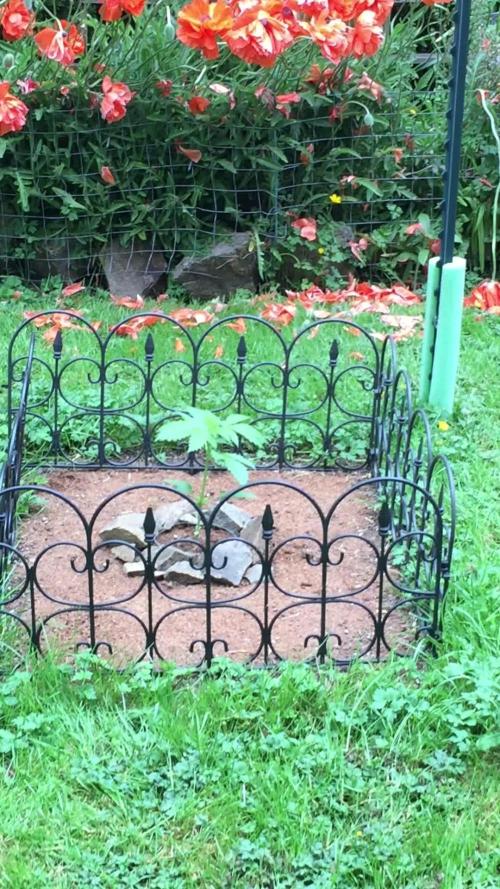
Day 22 Sunny
Day 23 Rain showers/cloudy
Day 24 Rain showers/cloudy
Day 25 Sunny
Day 26 Rain
Day 27 Rain
Day 28 Sunny
Week review: I did a topping on day 25. I also took off the first set of single bladed leaves and first nodes. What remains on the seedling is the second and third nodes with their sets of leaves. The weather was mild and all over the place. So far there has been no pest issues.
😍
Likes
3
Share

@MrIssa3x3
Follow
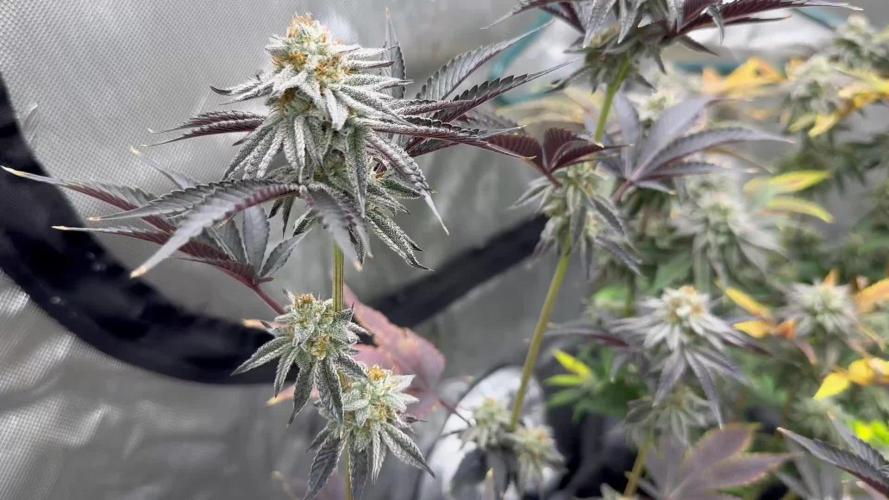
Day 42. Frost levels have turned up. Smells as well. Slowly swelling. Hit them with a small dose of bud booster and sticky bandit. Probably the last will be this week before I let them finish out. Hairs are turning orange but still some white hairs.
Day 46. They’re looking almost done. Would like them to swell a little more
Day 47- they’re rockinr

Likes
12
Share


@StickyHands
Follow
After 7-8 weeks of flower she is ready to harvest. I give an update when she is dry and trimmt. I hope you enjoyed my little grow report. stay healthy
Likes
4
Share


@I_Identify_As_A_Dan
Follow
Day 70..
So excited to harvest her next week!!
This pheno is completely different to my previous fastberry, this one is super super dense.
But her odour is identical, so im interested to see what shes like.
Likes
28
Share


@Vincent11
Follow
Hi fellow Organic growers.
Another week gone and we are into really early flowering. Will be starting Royal Queen Seeds Bloom tablets this week.
She stretched so nicely this week that she feeling up her 11 pod, I was also able to do LST every other day.
I used HST on 2 middle branches just to slow them down and be able to LST them to.
All looking great so far.
Day 25 from seed extensive LST with slight defoliation.
I am expecting another 2 weeks off stretching so will only LST slightly for better light penetration and air circulation I am happy how she has spread for me by now and with all the potential bud sites she looks stunning.
Midweek update day 29 from seed sprouting.
Last 4 pictures in diary. Think I have a happy plant. Started Bloom 2 days ago.
Hope you all have a great week and Happy Growing Buddy's.
Likes
7
Share

@Sadhus
Follow
Journal de Culture - Dognabis Cup - Variété : Permanent Marker zamnesia
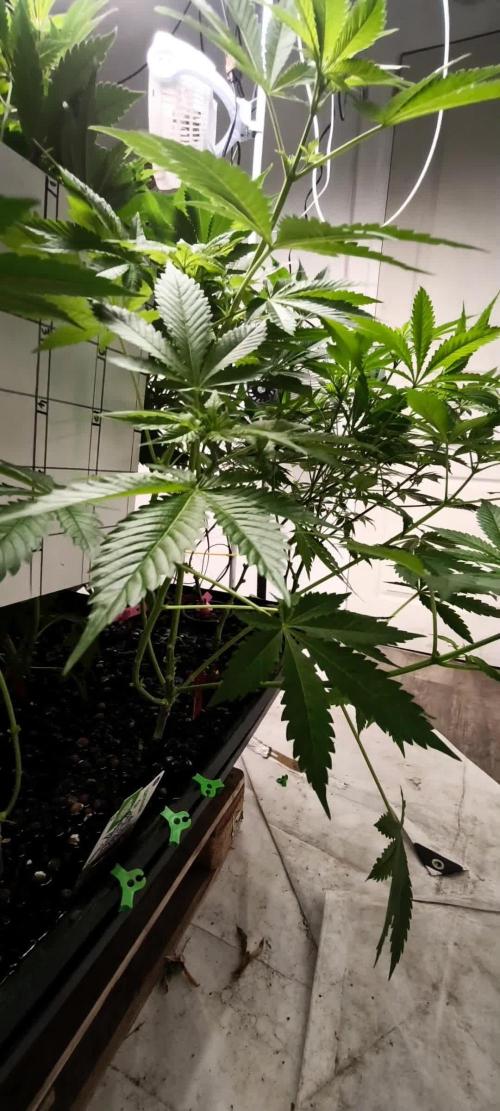
Semaine 5 - 2ème Semaine de Floraison
Date : 18 octobre 2025Observations :Les plantes ont largement doublé de taille grâce au stretch continu en phase de floraison.
État des plantes : saines et vigoureuses, aucun stress observé cette semaine.
Paramètres ajustés :PPFD maintenu à 800 (cible atteinte, valeurs mesurées : 748,7 PFD jour, 0,01 PFD nuit).
VPD réglé autour de 0,97-0,95 kPa (cible atteinte, valeurs mesurées : 0,97 kPa jour, 0,95 kPa nuit).
Température moyenne : 24,9 °C (jour), 22,5 °C (nuit) - cible stable.
Humidité moyenne : 69,0 % (jour), 65,14 % (nuit) - ajustée pour maintenir le VPD.
Solution : pH ajusté à 5,8, EC augmenté à 2,4 mS/cm, température 19,7 °C (basée sur données précédentes).
Notes :Les paramètres ont été optimisés avec un PPFD stable à 800 et un VPD bien contrôlé.
Augmentation de l’EC à 2,4 mS/cm et ajustement du pH à 5,8 pour soutenir la floraison.
defoliation et lollipop, j'ai retiré les petites branches secondaires peu intéressantes , les plantes continuent de bien répondre.
Tableau récapitulatif :Paramètre
Jour
Nuit
Température (°C)
24,9 (Moy)
22,5 (Moy)
Humidité (%)
69,0 (Moy)
65,14 (Moy)
PPFD
748,7
0,01
VPD (kPa)
0,97
0,95
pH
5,8
5,8
EC (mS/cm)
2,4
2,4
Objectif pour la semaine prochaine :Réduire le temps des marées et l’espace entre les marées de quelques minutes.
Diminuer l’apport en azote pour favoriser la floraison. Baissé le all in on et ajouter du p boost et changer di start booster au top booster aptus , out of stock regulator 😲😭

Likes
15
Share


@Plugged_Inn
Follow
This has got to be one of the best Plants i have ever grown. The Taste and Sweet smell is like A Starburst . Cherry , ice cream . Buzz is Smooth And very high but mellow . 10/10 👌
