


Likes
Comments
Share


@Scoobiedoo
Follow
Day 50
400 ml plain rain - just drank up her nutes
Day 51
400ml plain rain - prob need to thin her out for flower - instead going to lst the leading stems in the centre - try and get some 2dary growth and control that stretch and then see which other stems make it to the party by end of week
Day 52
400ml plain rain
Defoliated heavily for preflower stretch - took out all fans of strong established stems and fans of totally weak sites which I fimmed. Fimmed a few under branches. Pulled the leading mainlines out again - there is so much stretch so very soft, can't tie down so rolled them and the central stems that are leading - just to get them to toughen up. Exposed many who might be something - left their fans on if they wanna try.
Then I decided I wanted to try the scrog idea I had and would you adam and eve it? It fit!
Gentlefolks - may I present "disability_scrog". I had this left over from when I was real ill, and just thought with my cargo net from the car ... anyway I don't know what I'm thinking LOL. It fits - didn't take too long either but after the pruning and looking after my mite infested 24hr grow - I will save the tying in for tomorrow, yaaaaaay 😏
Day 53
Well yesterdays' defoliation has resulted in lots of stems going for it, going to hold off on tying in. Getting a good idea of the shape now - won't be long.
400ml of 2:1000ml grow big, tiger bloom 1:1000ml calmag in pH adjusted rain water
Day 54
3:1000ml Big Bloom in 400ml plain rain
OK - this is not a full scrog - the mainlining and intensive training were done thinking this was an auto 😏 so it leaves me doing this stinking job again - I swear one day I will do a proper scrog with proper ties from start and everything but in the meantime....
I intensively fimmed everything at bottom including their fans - leaving stronger stems to get more air & light.
Under leading meristems, I left a few nodes and their fans for the general wellbeing of plant.
The mainlines are still tied to get more light to the remaining branches I hope will stretch.
As per usual I have two sap sucker leading stems that are screwing everything up - these are tucked and hoping won't hold up the rest from stretching.
We'll see over next week if I need to lower the net or release her ties and unspring the plant and retie her in final position
Day 55
Plain Rain 400ml
Day 56
I reckon one more day and will tie her in 😊
She had 3:1000ml Big Bloom 2:1000ml Tiger Bloom Grow Big 1:1000ml Calmag in 500ml plain rain [she was thirsty] - last of the Grow Big for her now - Bloom all the way 👍👊
Great week 😎


Likes
78
Share


@AsNoriu
Follow
Day 78. I do nothing to them , just checking , applying slug pallets and forgetting till next come.
We will have heatwave and i work all those days, maybe i will water them next monday ....
No other plans ;)))
Night 81. Each girl got 10 liters of water, but in such heat wave they would eat all 30 i guess. 5 more days off +30 and then thunderstorms... hope i won't need to do it again, very tricky path and to bring two buckets 4x times and leave no trail - mission impossible !
Made night shoot, but they all look amazing !!!
Happy Growing !
Likes
2
Share
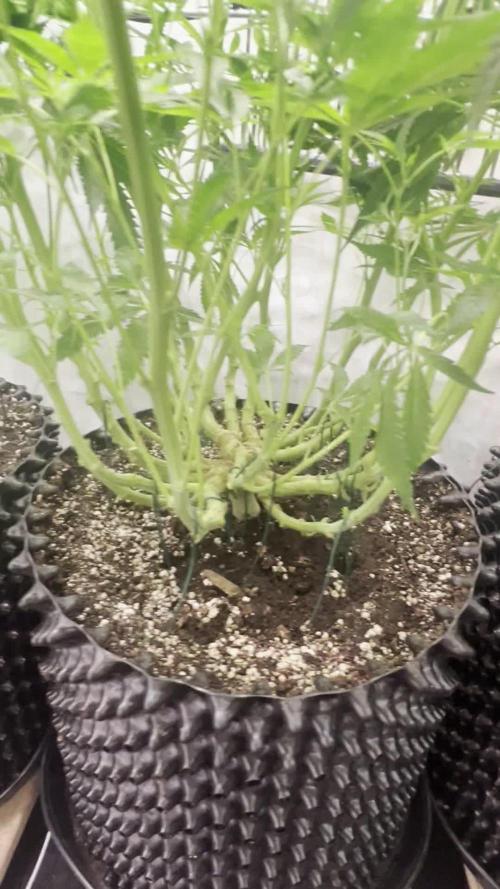

@LegacyGrow
Follow
Englisch version below
Tag 70 Grow:
Tag 15 Blüte:
Bis auf die RLF% läuft alles wie geplant. Nach dem Lollipopping schafft es der Entfeuchter nicht mehr unter 65% - entsprechend wurde die Umluft durch einen zusätzlichen Ventilator ergänzt.
Alle 2 Gießvorgänge bekommen die Ladies Composttea und jeden ersten Vorgang Wasser mit etwas angepasster Nährlösung.
Die Trauermücken breiten sich auch stark aus - Gestern wurden mit dem Tea auch Nemathoden gegossen - Zwar sind die Tierchen in der Blüte nicht mehr sooo schlimm (Vorallem für junge Pflanzen mit schwachen Wurzeln gefährlich) - aber Wer will schon Fliegen im Endprodukt.
Wie im Video zu sehen ist - habe ich die Stärksten Triebe der linken Pflanze ge-supercropped - der Strech hat gewonnen - das Zelt ist ausgereizt.
--------------------------------------------------------------------------------------------------------------------------------------------
Day 70 – Grow
Day 15 – Flowering Phase:
Except for relative humidity, everything is running as planned. After the lollipopping, the dehumidifier is no longer able to reduce RH below 65%, so air circulation was increased by adding another fan.
Every second watering the plants receive compost tea, while the first watering in the cycle is plain water with a slightly adjusted nutrient solution.
Fungus gnats have also been spreading significantly. Yesterday, nematodes were applied together with the tea. While these insects are not as problematic during the flowering stage (they are mainly dangerous for young plants with weak roots), no one wants flies in the final product.
As can be seen in the video, the strongest shoots of the left plant were supercropped. The stretch has won — the tent space has been fully utilized.


Likes
4
Share


Likes
5
Share


@Brickleberry
Follow
July 5 - other crops on the lateral branches, growing strong every day 💚🔥

Likes
73
Share


@PsiloNoid
Follow
Starting week 1 of flower on this Bruce Banner Auto from FastBuds! She has been a pleasure to grow so far! Had some minor issues dialing in her water amounts last week but she is starting to look better. Im sure last week put a hurting on growth rate but she will still produce nicely. More updates soon!
Day 45 she is starting to perk up more and finally stretching out some! Still monitoring her situation closely though as she does have some slight yellowing around the edges but it may of just been watering issues. She is also incredibly compact and bushy right now. In about a week or so after stretching I'm gonna have to defoliate and open her up some most likely.
Day 47 she is looking better yet! She is really showing signs of perking up fully and bouncing back! She definitely took a beating with these water issues but I think I got her figured out now. We increased airflow around her pot even more so she can dry out better. I suspect the bottom of her pot was staying too wet for daily watering causing issues. Now she seems to be drying out quicker and looking much happier.
Day 48 we removed some dead and dying leaves that she had on her lowers. Looking nice and perky today and starting to stretch out a lot more.

Likes
229
Share


@DadasGrow
Follow
So this is the start of the fourth week with me. I find this very engulfing. I like spending an hour with them a day and move the little ones out of the bigger fan leaves shadow by tucking the larger ones away giving the little ones a chance to get more light and flourish. I’m noticing more the strain my one girl went through compared to the others, her leaves being smaller than the other girls. I’ve tried to give them the best environment I can and realize I still play a huge role in their life. This is my first grow and I love it. I hope they grow up well and flourish. They were fed last week and had a bit of nutrient burn so this week I gave them just water. I’m not sure how much longer I should veg but I hear in the scrog game the longer you veg the better. Hoping for the best for everyone on GrowDiaries and their grows!


Likes
23
Share


@Dmon88
Follow
I was very surprised with the outcome i didnt expect much from an auto much less a first grow but my has she really impressed id suggest for a first time growing but im going to start searching for higher potency strain with better germ rates this was the only 1 of 5 who pulled threw. im working on my next run and will be catching it up later today0

Likes
6
Share


@ProfDoty
Follow
irs Day 84 right now probably gonna chop her down on day 90. I’ve learned a lot from this grow and so far satisfied (for now) the smoke from the black cream is smooth asf it’s still curing right now but it’s sure to be a delight. Great genetics by sweet seeds would definitely recommend and run them again stay tuned for final weigh


Likes
15
Share

@MaryJaneJo
Follow
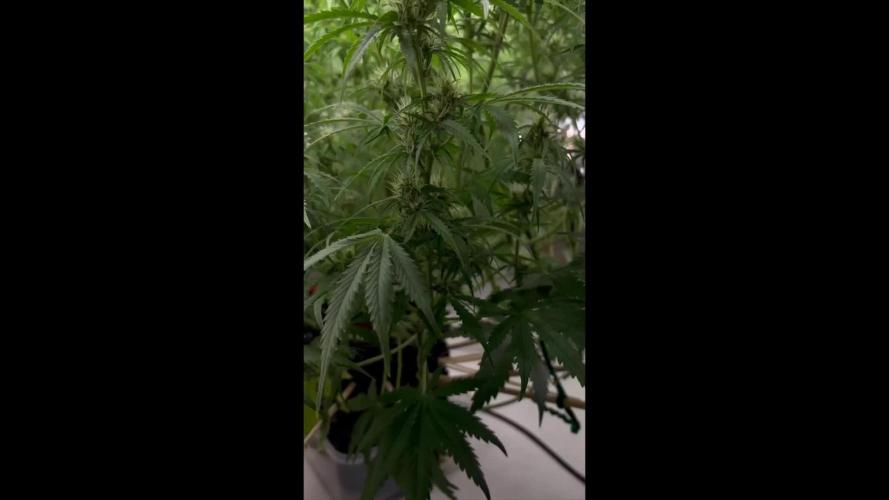
Apple Strudel week summary can be closed in one sentence__she loves to be fed.
I have her drip set to run every 8h, but when I am around I always give her a few extra minutes. It makes her happy. My human form is too small to deal with __this magnificent monster of a plant__ getting her in and out of the wardrobe gets harder every time. So I do all maintenance ASAP to avoid unnecessary mishaps: topped her up with coco coir, cleaned the pipe, sorted the fans & calibrated & cleaned the pH meter.
The second plant is parked under the drying space, under the far-red Sylvania lamp. It is only a temporary solution __when the arctic weather eases, she goes outside.
Peace.👽
P_S_ I just watched an Al Jazeera full programme on UFOs. They got so many things right. Scary.
Likes
49
Share


@masterofsmeagol
Follow
5/3 WATERED EVERYTHING WITH A SHOT GLASS. STUNTED PURPLE PUNCH THAT TOTALLY SRIED OUT GOT HALF A SHOT GLASS. Doesn't seem possible but the plants look bigger and better than
they did yesterday. Cups are really drying out fast. Takes a while for it to drink up that little shot glass of water. Sits right on top for a while. I know they'll tell me when they're ready to transplant but I'm planning about a week week and a half until transplant to the 3's. I'm moving my cage and getting supports setup ahead of time. Soil is properly stored. Need to sanitize grow bags and tools. I'm super excited for this year. At least this year I don't have to start out fixing others problems from clones.
5/4 Plants still continuing to grow at a rapid pace. Stunted purple punch is doing better. Plants seem like they are using more water. Soil seemed dry. Ill stop qnd ask my buddy but everything LOOKS awesome.
UPDATE: I stopped and showed my buddy some pictures and videos and after getting some advice I'm considering increasing water intake on the 10th planet and the blueberry cheese. He said I could go up to 1 1/2 shot glasses or even two and he didn't think I'd see problems. Just watch for run off. I figured I'd weigh the dry cup of soil and see what the other plants weigh before I make my decision. This dude has definitely helped in the past and hasn't been wrong. I think either way it would be fine. I got a QUICK peak at them around 3pm and they were all "praying to the sun" and their was company so I didn't weigh the plants considering in that glance they looked even better than before!
5/5 SOMEWHERE HERE I MESSED UP THE DATE AND I CANT SEEM TO FIND WHETE SO IM JUST CORRECTING IT HETE AND MOVING FORWARD. I weighed a dry cup of soil which weighed about 180-190 grams today. One of the 10th planet seedlings weighed in at like 190 so they definitely are getting a dry cycle and need more water. Same with the Blueberry cheese. They were light and are growing like crazy. Thing is they look so perfect I don't wanna change anything. I spoke to my commercial buddy and he said I could increase to two shot glasses without issue he thought. I decided on a shot glass and a half for the 10th planet and Blueberry Cheese Cake. I talked to another grower (my buddies mom whos very familiar with the strain) about Barney's purple punch and I guess they look good and take a while to really "take off". When I weighed some of the purple punch the weight of a small plant was in the 220's. I decided to try 'half a shot glass' instead of a full one for the purple punch.
UPDATE: I watered between 5am and 6am and went to check around 11. It's 11:11 right now! I wish for a successful harvest and healthy plants! This morning the plants seemed a little droopy. It could've been in my head but looking at them after watering and they look substantially better. Leaves up! Praying to the sun! It's not going to be long until the 10th planet and Blueberry Cheese will need to be transplanted. I just want to make sure I've got a solid rootball before I even think of transplanting.
5/6 WOW. Adjusting the water made the plants take off faster! I felt the cups and they want more room! Unfortunately I left my soil in the garage. I'm wondering how long it will take to warm up otherwise these girls would be on their new temporary 3 gallon homes. Purple punch REALLY took off. Might be good to give the soil a day or two to warm up. Tomorrow's my wife's birthday though....hope she likes transplanting cannabis....that was a joke.
UPDATE: I sanitized a tote and mixed 3 part soil fox farm ocean forest, happy frog and 707 in a bin. I then chose the blueberry cheese cake to test for transplant. I was afraid plants were dry but I stupidly went ahead anyhow. I tried the cut the solo cup method and it wouldn't cut down all the way. Anyway u thought i lost that first one but I didn't. Not yet anyway. 45 mins later and they looked great. Still I had put everything away and decided to give the others a few more days. Plus my wife's birthday is tomorrow. I did get some outdoor prep done.
5/7 NO TRANSPLANT SHOCK. All 5 blueberry cheese are in their new homes and loving it. It's my wife's birthday so I'm gonna have to wait until tomorrow to transplant the 10th planet and maybe a couple more for the purple punch. We'll see. Watered the plants in solos. Purple punch got half a shot glass. 10th planet got a full one. Soil should be nice and moist for the transplant. Oh and that ripping the solo cup tip sucks. It NEVER goes all tge way to the bottom and it's like thicker or something down there. Important to have slim scissors or something to snip that tiny bottom piece at the end where it tapers.
5/8 Blueberry Cheese Cake is doing great and doesn't seem like it has any stress. Didn't water. Successfully transplanted 10th planet. Nice white roots. Looks like it's going to be a good year. More wotlrk to do.
5/9 10th planet is looking GREAT! Transplants have gone great this year. Purple punch will be transplanted tonight or tomorrow. I watered the purple punch with less than a shot glass. I'd like to get them transplanted today. I have an idea this is going to be a good season.
UPDATE: Went to the house around 6 and brought in a couple more bags of soil so that I can finish my transplants tomorrow. Team #nowater lol seems to be doing great lol. I'll give then water tomorrow. As long as they aren't doing so good. With everything that's going on seeing these succeed feels great. Healthiest plants I've grown so far.


Likes
17
Share


@Naujas
Follow
This is my second growth in a suitcase, I got 30 grams of dry flowers from the first growth, but this growth together with FastBuds is obviously much better than the first one :) although the girl's leaves burn from the light, which is only 10-15 cm from the flowers, but the girl copes with it perfectly :) good luck to everyone.
Likes
2
Share

@ibbzy
Follow
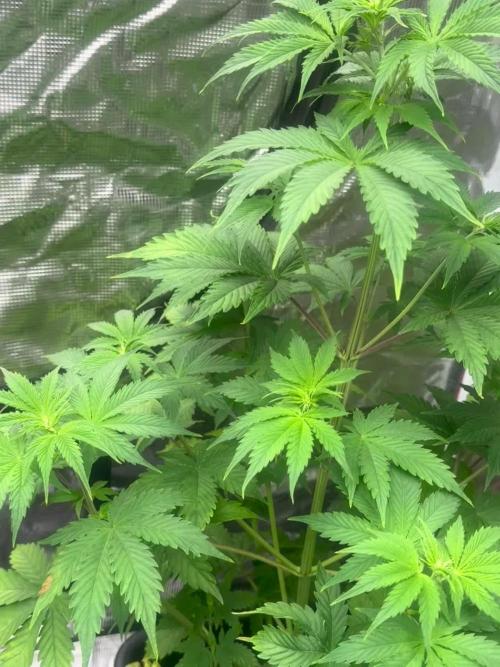
Tent has been heavily neglected....will pick up routine this week. Just been a busy week and hopefully settling in the next coming weeks.
Have to up nutrients and sort out these deficiency's or PH you inbalance is what I think the culprit is
She lives in the other tent now with some photos for a different diary in the making. In an autopot.
Likes
42
Share


@TheCannaProphet
Follow
~Humboldt Seed Co. AMHERST SOUR DIESEL~
???Secret origins???
The mystery of the unknown🧐
Amherst Sour Diesel is a cannabis seed whose origins are kept a secret. This wonderful vigorous marijuana plant will reward your work with large, elongated, compact buds complemented by a rich complex aroma. Indoors it performs best with a short growth and outdoors, in temperate, warm, dry and Mediterranean climates or in a greenhouse. A marijuana plant that boasts balanced properties.
-Top-notch flavor and effect
-Idyllic feelings to treat the senses
-The aroma of this cannabis hybrid is a pleasant combination of ripe fruit and oil. The flavor is rich and complex, with hints of tropical fruit, oil and exotic wood.
-The effect, typically Sativa, is euphoric, uplifting, powerful and long-lasting. A cannabis strain Sativa lovers will know how to appreciate.
________________________________________________________________________________________________________________________________________________________________________________________________________________________________________________________________________________________________________________________________________________________________________________________________________________________________________________________
Tech Specs:
~Amherst Sour Diesel~
Feminized
Genotype: 20% Indica / 80% Sativa
Cross: Chemdawg x Amherst Super Skunk
Suitable for: Indoors and outdoors
Indoor flowering: 65-70 days
Indoor yield: 400-600 g/m2
Outdoor harvest time: Late October
Outdoor yield: 2000-3000 g/plant
Outdoor height: 2-3 m
THC: 27%
CBD: 0.1%
________________________________________________________________________________________________________________________________________________________________________________________________________________________________________________________________________________________________________________________________________________________________________________________________________________________________________________________
THE SETUP:
~Planted into Jiffy Peat Pellets that were hydrated with de-chlorinated water with SuperThrive added then ph'd to 6.0 @ 80℉
~Grown 100% organic in 10g fabric pots with Mother Earth 70/30 Coco/Perlite medium amended with 2tbs/g of Down To Earth 4-4-4 / 2 cups/g of Earthworm Castings / 1tbs/g of Dr. Earth Flower Girl 3-9-4, 1tbs/g of Dr. Earth Bat Guano, 3/4 cup of Down To Earth Azomite and 1 tsp/g Down To Earth Fish Bone Meal.
~24hr light cycle during Germination / 19/5 light cycle for Vegetation and 12/12 for Flower
~Straight water ph'd @ 6.2-6.8 when needed and weekly Compost Tea's.
________________________________________________________________________________________________________________________________________________________________________________________________________________________________________________________________________________________________________________________________________________________________________________________________________________________________________________________
WEEKLY UPDATES:
9/13- With approx. 9 weeks of growth behind her now she's going into her 4th week of flower now and let me tell you the pictures don't do her justice... She has really come along well! 😍
She was given Compost Tea yesterday and today was still fairly heavy so I skipped watering and just removed a few leaves to maintain light penetration, turned her pot and sat and chatted with her awhile!
9/15- Well she really must have liked that last batch of Compost Tea as she looks exceptionally vibrant today!
She's continuing on her mission of stacking her flowers, which are developing beautifully and have a delicious sweet fruity aroma to them right now.
I did not water yesterday, so today I watered with 0.75g of straight de-chlorinated water that was ph'd to 6.5 @ 72℉ and rotated her pot... Damn she is looking great! 🤩💖
9/17- Yesterday I top dressed her with 1/4 cup of Down To Earth Bio-Fish then watered it in with 0.75g of straight de-chlorinated water that was ph'd to 6.5 @ 72℉.
Her flowering is continuing beautifully and she's smelling stronger every day it seems! I'm staying on top of tucking leaves blocking light and turning her pot daily as well.
9/19- Four weeks of flower on the books! We're almost halfway there now, she's stacking her flowers tightly going into Week Five and she's looking phenomenal! 🤩
When I watered her today I added 1 tbsp/g each of Kelp Extract and Fish Emulsion (both liquid) to the 0.75g of straight de-chlorinated water she received, which was ph'd to 6.2 @ 74℉.
~Thanks for stopping in! Things should be getting a lot more interesting in the coming weeks...Stay lifted and be Blessed! 😎🙏~

Likes
17
Share


@JuicyFruit
Follow
Day 69 - 15/11/19
Were finally here at harvest and im happy with the result :) i planned as much as i could and winged the rest :)
I collected lots of small, early harvest buds and left them to dry. kept a small bit for bongs and put all the really sticky trim in the freezer! gonna make cannabutter with it next week :)
I liked the strains i chose from RQS, they took every newbie mistake i threw at them :D ive learned so much and it shows in my other diaries :)
Il update this harvest a couple of times through this last week to show the effects of drying and curing, other than that thanks to all for helping and check out my other diaries to see how ive progressed :)
Update - 18/11/19
I dried the buds for a couple of days and wow they dry well :) smoked them in a bong and it got me over a rough few days.
I didnt see the point in curing this as i only got a couple grams. and to even get a couple of grams off a plant that had such a bad transplant just shows how resistant they are.
I loved this strain, the smell was funky and it was a joy to grow. Thank you RQS!

