


Likes
Comments
Share


@GirlGoneWeed
Follow
Here we begin, the germination method I use is: soak the seeds for 14h than paper towel, in the dark with a heat mat under it for around. 3-5 days.
After taproots come out, I’ll plant them into organic recycled live soil and under the humidity fome they go.
I keep temperatures around 24-26C humidity high at 70-80%, spray water every day in the am and at night, tap water nothing fancy.
Now we wait for them to take off.

Likes
2
Share


@Gardens_of_Of
Follow
She is still recovering after fixing the feeding regime and growing visually amazing flowers even though they are quite small. The smell is so unique…

Likes
42
Share


@Skunk_Life85
Follow
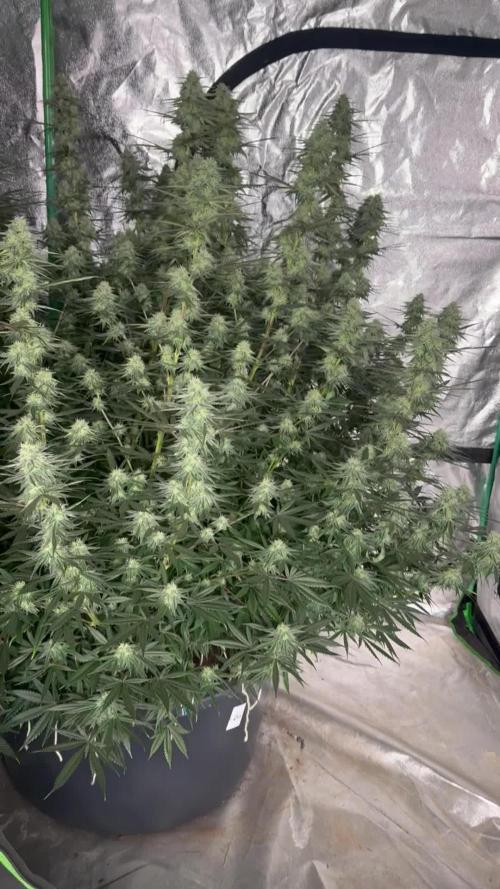
She was strechy for the first 4 weeks of flower then tapered off. Good fast veg cycle. Not my favorite to grow due to how slow she matured and final weight granted I got 40.1 grams and 8.3 grams of trim that will become cookies soon.

Likes
3
Share


Likes
4
Share


@PatriciaGant
Follow
Dane, We all should help one another.
Human beings are like that.
We should live by each other’s happiness - not by each other’s misery.
We don’t want to hate and despise one another, share the Joint.
And mother earth is rich and can provide for everyone.
We can Grow enough Happiness, In this paradise, there is room for everyone.
We only exist to bring joy into the world and The way of life can be free and beautiful,
but we have lost the way.
Grow High and Give the world A smile.
At the end we own nothing more then all our memories, lets make them amazing for everyone,
nothing to lose only everything to win.
for those who come after, right.
A last kiss goodby, a second one, softer and long as a sign, that you are woth it.
That Everyone worth, who loved and given.
Enought Hippie Talk, now have a nice day and an even better grow, thx for watching by.
((From Seed 🌱
week report:

Likes
17
Share


@Mroizo
Follow
Last Thursday was the start of the fourth week. I didn't update earlier because I was away on vacation. I asked a trusted friend to take care of the girl. As you can see, in the fourth week of the girl's life, it started to bloom.
I continue without giving any nutrients. I have biobloom and top max from biobizz at home.
Do you think I should use nutrients or should I let it go until the end without nutrients?

Likes
31
Share


@TheHighentist
Follow
I had a good harvest set up, in order to keep everything sterile.
The drying went good and steady with converting my grow tent to dry tent.
-Humidity through drying 53-58% RH
-Temp a bit high 18-23
10 days of drying
Very satisfied with this grow as my first grow. I said i would be more than happy with 100g (dry and trimmed) and i weighted in 95.9g PLUS about 5grams i plan to smoke now 😇 So very happy.
Currently in curing jars
Not harsh taste, even with no curing.
Nice and fruity and a deep high.
I will test the THC levels after curing and update my blog.
This will def not be my last grow. I had a lot of fun
Thanks to everyone on growdiaries that has been giving me pointers and tips 🙏
👉*Btw. I was growing with a "Viparspectra V300" LED through Veg and flower
Likes
14
Share


@CANNASIM
Follow
Girls are developing well, i have a minor issue but is making me uncomfortable, a bug for the third time something that by research seams to be a lace bug, basically is like little drops of black oil in the leafs this develops in to a little static larvae then it becomes black, is tiny. And apparently does nothing on the surface to the plant, but man this bastards are imortal, I’m in the point of dropping a nuke or using a flame tower in the grow room.
I’m deep in to flower...
Besides that fir the third time, all good...

Likes
Comments
Share


@Yiyis_Grow
Follow
Se hizo LST y quebré una por la mitad, pondré cinta con un palito de soporte a su alrededor para que solde..
- Luz: Bestva Pro 1000W / 18 h/d
-FloraNova Grow G.Hydroponics: 0.6ml/l
- Armour SI G. Hydroponics 0.4ml/
- Rhizotonic Canna : 4 ml/l
- Everest: 0.5 ml/l
Control biológico:
-Solution (bioinsecticida generalista: Beauveria, Metarhizium, Lecanicillium y
Cladosporium + esencia de ajo y chile).
-Acaridox (bioacaricida: Metarhizium e Hirsutella + esencia de canela)
- Scamin (control escama y cochinilla) Cladosporium Herbarum

Likes
17
Share


@Kirsten
Follow
26.12.24:
I have noticed light stress on my plants. I had moved the lights further away and increased the light intensity to 70%. Unfortunately that created some issues. Namely severe palour of the leaves.
To try and rectify the situation, I've dimmed the lights to about 30%, staying at the same distance, about 30 inches away. I measured the par levels, after I did this. They should a reading of anywhere between 40 and 150, at the canopy of the plants. They are all different sizes. This seems to have improved the colouring on all plants.
After this evenings watering, I will monitor recovery and increase lighting intensity again slowly. I am also using the light cycle of 21/3, so the plants have many hours more light to absorb, than for example 12/12 or 18/6.
I am pleased with the progress, considering all of my mistakes!
29.12.24:
So I finally gave LST a shot, it's probably a bit too late, however I really want to get the most of the triploid pheno, and I went a little crazy and LST'd all plants except 2, as they're too small.
I did that late last night, this afternoon I was amazed to see the plants turn their leaves back to the light source. I'm glad I overcame my fear of trying it. I'm very excited to see them adapt and progress! 😁 there are videos above with before and after of my LST process.
Thanks for checking out my diary 🍃 ✌️
Likes
57
Share

@Wastent91
Follow
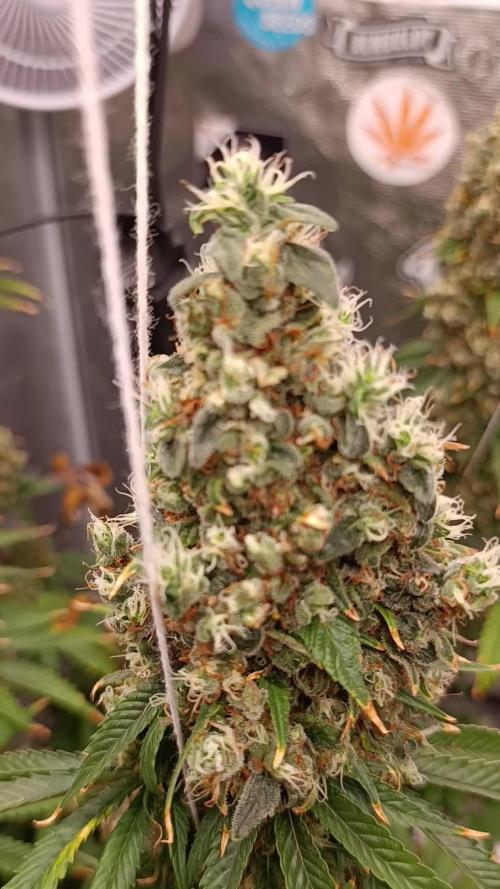
Eccoci qua, sono passate le due ultime settimane e domani provvederò a fare il diario della raccolta se no sono in ritardo, allora cosa posso dire, più che soddisfatto xke nella crescita complessiva le cime sono diventate delle pannocchie enormi, sono abbastanza dense e hanno un bel po' di resina, purtroppo le alte temperature hanno mandato la pianta in fox tail, infatti continua a buttare nuovi fiori e a diventare sempre più grande! L odore è un misto di pino e terra, si sente dall odore che è una genetica indica nel vero senso della parola! I nutrienti di Plagron hanno fatto la differenza sopratutto Green Sensation ha dato una botta sia come stimolatore a produrre più fiori e cresvita nel complessivo e ancora adesso continua a spingere! Ma sono costretto a tagliarla anche xke sono in ritardo con la storia del concorso! Di sicuro nn spero di vincere anche se cmq delle cime così grandi nn ho visto altri diari, magari sono più belle esteticamente le altre, ma così grandi nn ne ho viste! Grazie a tutti voi che mi avete seguito siete stati dei grandi vi voglio bene a tutti su questo grandioso social! Un abbraccio forte e un buon 420 a tutti tutti voi! 🙏💪😸🌿🌲❄️? 🌽 😽💨❤️

Likes
22
Share


@TheBloomer1
Follow
Nach dem Toppen zeigt die Pflanze nun erste Anzeichen der Vorblüte. Zwischen den Nodien sind kleine weiße Härchen sichtbar, und das Wachstum hat sich leicht in die Höhe verlagert.
Das Laub ist tiefgrün, stabil und ohne Verfärbungen.
🌿 Pflege & Maßnahmen
Weiterhin Orgatrex + Bactrex im Gießplan, um das Bodenleben stabil zu halten.
Leichte Lichtanpassung zur optimalen Ausleuchtung der Seitentriebe.
Luftfeuchtigkeit gesenkt auf ca. 50 – 55 %, um Schimmel vorzubeugen.

Likes
114
Share


@Tropicannibis_Todd
Follow
💩Alrighty Then Growmies We Are Back At it 💩
Well folks we just finished up the last run and so we are back to do it all over again 😁
So what do you say we have some fun 👈 We got some Gorilla Punch 👊 👊 👊 DAY 21
👉 Its been a really good week , lots of growth , shes just now decided to show her preflowers 👌 I believe the stretch is on 👈
So this week I've started her nutrients regiments 👌Just need to remind myself to take it easy 🤔
FC4800 from MarsHydro Lights being readjusted and chart updated .........👍👉Added an RU45 too the mix 👍
www.marshydro.ca
👉I used NutriNPK for nutrients for my grows and welcome anyone to give them a try .👈
👉 www.nutrinpk.com 👈
NutriNPK Cal MAG 14-0-14
NutriNPK Grow 28-14-14
NutriNPK Bloom 8-20-30
NutriNPK Bloom Booster 0-52-34
I GOT MULTIPLE DIARIES ON THE GO 😱 please check them out 😎
👉THANKS FOR TAKING THE TIME TO GO OVER MY DIARIES 👈

Likes
19
Share


@ItsGreenjamin
Follow
nice plant 💚💚 she is so unpretentious 🙏 next time definitely will try other spliff genetics ✌️✌️

Likes
14
Share


@GanjaReaper
Follow
Day 49:
Like is told you guys last week, I went on vacation for 3 weeks, so my friend took care of my plants.
Buds are starting to show up.
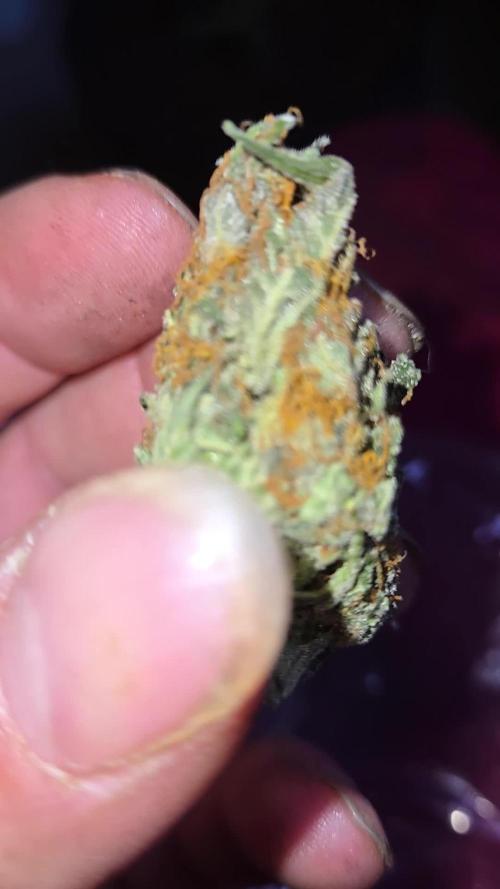
I do have one plant which is light greenish. Might be from overwatering or shortage of nutrients. I don't know the reasons since I have not been taking care of them.
The weather/climate still sucked. Alot of colds and rains.
Until next week.

Processing
Likes
43
Share


@Jack_Greenstalk
Follow
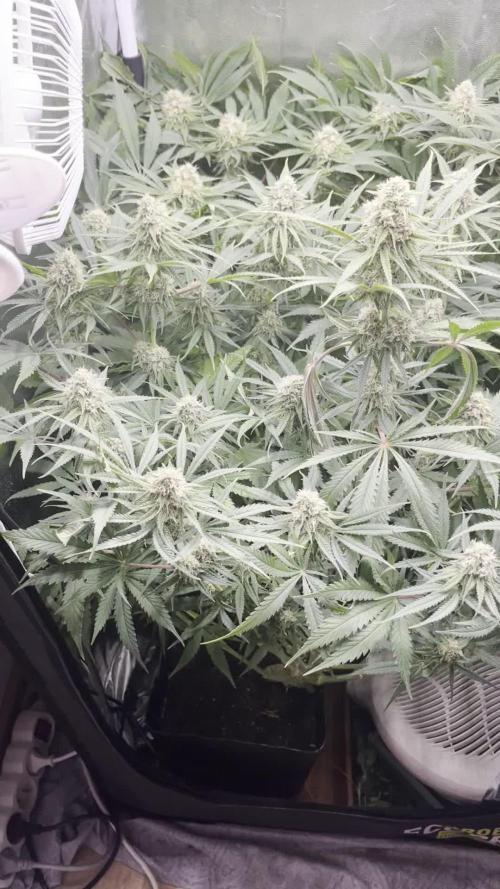
added trellis netting this week to start SCROG. two layers close to eachother so I don't have to wait for entire square of growth to tuck under higher growth to keep flat even canopy. also minimizes my need for zip tie and garden ties needinf adjustment. I'm happy with veg growth thus far, and once the screen fills up with more green in a week or two these two ladies will both be ready to flip to flower. waiting on lower nodes to develop a bit more and get best use I can from a big(ish) 315 w LEC light.
the girls are getting foliar every 3 or 4 days. using heavy 16 foliar only at the moment but will follow their foliar mix as grow progresses.
smell has gotten much heavier, especially in nemo, the more blueberry pheno of the two, looking at the fan leafs I think V is more haze pheno with super thin sativa leaf structure.




Likes
68
Share


@cRypto666
Follow
Freunde der Sonne :) KURZE INFO DER LETZTE EINTRAG HIER IST IMMER DER AKTUELLLSTE NACH DATUM NACH UNTEN SOLLTEN UNTEN SCROLLEN UM ZU VORHIERIGEN EINTR'GE ZU GELANGEN : <3 WEEED
wollte dir ein text drücken :) hab mich vertippt... aö ich bin heute eine Bewustseinsstufe beim Grown aufgestiegen ! Endlich kann man jetzt Täglich meine Real Talk oder Reaktion ViD/PIC anschauen. Absofort werde ich meinen GARTEN anderts wahr nehme wer rein schaut kann Exklusive Tipps für seinen Garten gebrauchen. Gerne bin ich für Fragen offen und ich helfe wenn ich kann fals nicht findet sich in der Gruppe immer jemand.
DER GRUND IST DAMIT ICH NACHVOLLZIEHEN KANN WAS ICH FALSCH GEMACHT HABE BZW UM WISSEN ZU MANIFESTIRE UND GEWISSE GEDANKENVERBINDUNGEN GESACHFFEN SIND. IM GRUNDE MEIN GROWTAGBUCH ICH TEILE MEINE GEDANKEN MIT EUCH GLEICHGESINNTEN UND WÜNSCHE ALLEN EINE ERFOLGREICHEN GROW brO
cRypto666
2 minutes ago
cRypto666
<LIEBE> BRUDER ICH LADE DIE VIDEOS UND BILDER NOCH HOCH UND ICH BIN MIR EIGENTLICH SICHER ES KÖNNTE DIR GEFALLEN VIEL SPAß
AUF QEEN SEED GIBTS WIRKLICH GUTE BLOGS MIT TOURTORIALS FÜR NEULINGE/ANFÄNGER .
Konnte mir so mein Verständnis und Grundlage die fürs grown wichtig ist gut lernen und Aneignen ! WIRKLICH VIELE UND GUTE INFOS !!
https://www.royalqueenseeds.de/blog-cannabis-anbau-c3
https://www.royalqueenseeds.de/blog-die-10-grossten-fehler-von-cannabiszuchtern-n86
es ist soweit heute beginnt Woche 1 ... BEVOR WIR STARTEN, WICHTIG WASCH DIR GRÜNDLICH DIE HÄNDE UND BENUTZE GUMMIHANDSCHUE BEIM ARBEITEN! SEHR WICHTIG!
Ich freue mich das ich heute wieder das Gärtnern begonnen habe und eine Hällfte der Samen in der Erde sind. Kennt ihr das Gefühl der Vollkomenheit wenn man sich im Garten beschäftigt ? Für mich ist das Therapie und für euch?
Ich spiele mit dem Gedanken anstatt Samen zu growen mir einfach eine Mutterpflanze Anschaffe um mir meine Stecklinge zu ziehen ! Dafür brauch ich aber noch ein anderes Zelt und eine Lampe. Die Mütterpflanze kann dann erst mal wachsen und ich kann nebenbei noch mal ein Durchgang mit Autos schaffen bevor die Steckis fertig sind. Wenn es soweit ist gebe ich euch bescheid wenn ich Samen und Setup bei mir stehen.
So jetzt aufs eigentliche zurück. Ich habe heute erst mal mein Setup geprüft und so gut wie möglich desinfiziert. Es ist verdammt wichtig das nach jedem Durchgang sauber gemacht wird also zb Zeltwände, Boden, Topfe, Boxen, Wasserbehälter. Habe ich gemacht und habe meine ersten Samen in Anzucht Erde gesetzt, befeuchtet, markieren und in die Box. Wände und Deckel mit zersteuber befeuchten und ab unter die Lampe. WICHTIG MACH DIE ERDE NICHT SO NASS ! DAS GEFÄLLT IHNEN NICHT SONDERN HALTE SIE AM BESTEN FEUCHT IN DEM DU ABEND / MORGEN EIN BISCHEN WÄSSERST!
ICH STELLE DIE LAMPE AUF CA 40 cm zum Boden ein bzw der Box. Ein gewisser abstand muss sein um die Fläche komplett zu Beleuchten. Da meine Lampe dimmbar ist muss sie nicht ganz oben hängeng sondern Kann näher an die Pflanzen ran und Stelle den Dimmer auf 20 %. Das reicht anfangs in dem Stadium völlig aus, muss aber dann später angepasst bzw hoch geschraubt werden!
Lüfter I läuft 24/7 und sorgt für optimale Bedinungen! WICHTIG
LAMPE 20/4 HELL/DUNKEL (REGLER STEHT AUF 20 % LICHTLEISTUNG)
DANN HABEN WIR ES EIGENTLICH SCHON GESCHAFFT UND ALLES RICHTIG GEMACHT!
Ich versuche schon so viel wie möglich von meiem Wissen an euch weiter zugeben bzw auf Papier zubringen, ist aber NICHT IMMER ZU 100% Möglich, da es einfach zu viele Informationen sind !
Bei fragen einfach fragen und die Comiunity hilft sicher !!!
KOMMT ZEIT KOMMT RAT ... ich hab 2 Monate Infos eingeholt und Produkte verglichen !
Auf Queen Royal Seeds gibt es gute Anfänger Tipps sogar teilweise mit Video. Mir hat das sehr geholfen mein Grundwissen aufzubauen.
BEVOR IHR DAS GÄRTNERN ANFANGEN KÖNNTE MACHT DIR GEDANKEN WO DEINEN GARTEN STEHEN KANN.
#1 AM BESTEN IHR HABT EIN GARTENZIMMER DER NUR ZUM GÄRTNERN BENUTZT WIRD IST DIE BESTE LÖSUNG DA DU DEINE UMGEBUNG VIEL LEICHTER SAUBERHALTEN KANNST
#2 DU KANNST DEIN GARTEN AUCH INS WOHN. BZW SCHLAFZIMMER STELLEN WENN DU KEINE MÖGLICHKEIT HAST EIN GARTENZIMMER ZU MACHEN. DAS IST NICHT DIE PERFEKTE UMGEBUNG ABER WENN DU ABLUFT RAUSLEITEN KANNST DANN MACH ES ! DU KANNST ES AUCH IN DEN RAUM STRÖMEN LASSEN MUSST DIR ABER BEWUST SEIN DAS ES EVTL DAS SCHIMMELN IM RAUM ANFÄNGT! IST MIR SCHON PASSIERT ! LEITE SIE WENN MÖGLICH AM BESTEN RAUS !
ACHTE DAS DARUF DAS DEINE LUFTFEUCHTIGKEIT UND TEMP KONSTANT BLEIBEN UND ES NICHT EINMAL ZU WARM UND EINEMAL ZU KALT... IHR WISST SCHON SORGE FÜR EINEN KONSTANTE UMGEBUNG IN DEINEM GARTEN. DIE WAHL DER SAMEN IST AUCH WICHTIG DA ES SORTEN GIBT DIE EINE WARME UMGEBUNG EINE KONSTANTE ODER EINE EHER KALTE UMGEBUNG. AM BESTEN IHR PASST EURE SAMEN EURER UMGEBUNG AN HEIST DU WOHNST IN EINEN LAND WO ES EHER WARM IST ALSO 25-30 ° C dann WÄHLE AUCH EINE PASSENDE SORTE AUS!
MEHR GIBTS ERST MAL NICHT ! BIS ZUM NÄCHSTEN MAL!
Likes
11
Share


@EnMa420
Follow
So it was realy fun growing this plant, i made a couple mistakes with LST and by choosing not filling up the pot all the way. This is why the branches where too close to eachother. I will edit this post with taste and high next week.