


Likes
Comments
Share


@MadeInGermany
Follow
Hey guys :-) .
Today the plant was sprayed again with neem oil.
There weren't any more trips to be seen after the second application, but to be on the safe side, you did it again today get a cure.
That's why the beautiful dark shimmer on the leaves :-).
She has developed very well this week.
I will give you 7-10 days before I switch to flowering.
This week it was poured 3 times with 1 l each (nutrients see table above)
Otherwise everything was cleaned and, as always, everything was checked.
Have fun with the update and stay healthy 🙏🏻
👇🏼👇🏼👇🏼👇🏼👇🏼👇🏼👇🏼👇🏼👇🏼👇🏼👇🏼👇🏼
You can buy this Nutrients at :
https://greenbuzzliquids.com/en/shop/
With the discount code: Made_in_Germany you get a discount of 15% on all products from an order value of 100 euros.
👇🏼👇🏼👇🏼👇🏼👇🏼👇🏼👇🏼👇🏼👇🏼👇🏼👇🏼👇🏼
You can buy this strain at :
https://www.exoticseed.eu/de/hanfsamen/lemon-candy
Water 💧 💧💧
Osmosis water mixed with normal water (24 hours stale that the chlorine evaporates) to 0.2 EC. Add Cal / Mag to 0.4 Ec Ph with Organic Ph - to 5.8 - 6.4
MadeInGermany

Likes
47
Share


@Ultraviolet
Follow
The cannabis strain Grape Guava can be a purple strain, depending on its specific phenotype and genetic makeup. While not all phenotypes of Grape Guava are purple, some variations, such as the Zatix Grape Guava, are noted for their striking purple appearance due to the genetic expression of anthocyanin pigments.
https://www.youtube.com/watch?v=cKdVmdoKJ5k
In a garden of green, Grape Guava gleams,
With its fruity aroma, enchanting dreams.
Clusters of grapes, guava's sweetness ignite,
A strain so divine, in purple and white.
Euphoria whispers, a lush fruity haze,
Grape Guava's embrace, a tranquil daze.
Off and away.@1400ppm. The increased CO2 allows plants to thrive at higher temperatures, which in turn necessitates higher humidity to maintain the ideal VPD for healthy growth and transpiration. 80F -5F = 75F LST with 70% RH = 0.72 kPa. Higher temperatures and humidity promote rapid growth, nutrient uptake, and photosynthesis while maintaining a lower stress level. Temperature influences the rate of enzymatic reactions involved in aerobic respiration. Enzymes, such as those involved in glycolysis, the Krebs cycle, and the electron transport chain, work most efficiently at an optimal temperature range. In low temperatures, enzymatic activity will slow down, thus reducing the rate of aerobic respiration. In high temperatures, enzymes can become denatured, thus impairing their function and stopping the process of aerobic respiration. Glucose is the primary fuel for aerobic respiration. The rate of aerobic respiration increases with the availability of glucose, as it is the starting point for glycolysis. If glucose levels are low, cells may rely on alternative energy sources such as fatty acids or amino acids , but these processes may yield less ATP or be less efficient. To determine this effect, carbon dioxide volume was measured (as carbon dioxide is an output of aerobic respiration)
18/6 with the 6 being IR. The near infrared (IR-a) borders around 700nm up to 1400nm @ photon par flux density of 1.8 instead of darkness, keeping temps overnight a neat 77F-80F.
Think of my tent as a lung. What goes in must come out. When the rate of air going out exceeds the amount of air coming in, it creates a negative pressure. Tent concaves (bends in). If set up correctly, your RH will begin to drop slowly to the desired level you set, and the extraction turns off when it reaches desired% RH. The plant, as it performs cellular respiration, will always be releasing more water into the air, so the RH% of the tent overnight will always increase, so long as oxidative phosphorylation is occurring. As soon as the RH% creeps back up to 55%, the extraction turns back on, over and over. This creates a strong pressure differential which will work wonders on your grow. Replicating high and low-pressure fronts in nature. Critical for oxygen diffusion at the critical time of peak cellular respiratory function..
Moisture will not transfer from a saturated atmosphere to another if that air is already at or above its saturation point, meaning the air can't hold any more water vapor. Once I understood that water is produced as a by product during cellular respiration, specifically at the very end of the electron transport chain (ETC) where electrons are finally transferred to molecular oxygen, the higher the RH of the air, the more resistance there is for more moisture to be added to that environment, and effects the ease with which it does so. But none of that water comes from the pot; it's pulled from the air. If you run high daytime RH, your medium/pot is 100% reliant on transpirational root pull to move water. ZERO evaporation happens across the atmosphere if the tent air has high RH%, the medium cannot release its water through evaporation. Once a canopy develops, light no longer slowly wicks and evaporates from the topsoil. The Soil-Plant-Atmosphere Continuum (SPAC) describes the continuous pathway and process of water movement, driven by a gradient in water potential, from the soil, through the plant's roots, stem, and leaves, and finally evaporating into the atmosphere through transpiration. There is evaporation, there is transpiration, and then there is evapotranspiration; Evapotranspiration (ET) is the combined total of two processes: evaporation (water lost directly from soil and surface water into the atmosphere) and transpiration (water released from plants to the atmosphere through their leaves). Evapotranspiration represents the total amount of water that moves from the medium into the air. There is no such thing as a medium with too much water, only a medium that retains too much for too long.
The water must always flow efficiently from one atmosphere(Medium) to another(Air) in a timely manner. Moisture is a critical factor for bacterial growth and decay. Dictating how long it's allowed to sit in any one location for any given period is a key preferred control. To ensure a net reduction in a bacterial population, the rate of removal (ET) must exceed the rate of bacterial growth (decay rate), which is often modeled as a growth rate for the specific bacterium under the given conditions. By optimizing daytime VPD, we also optimize conditions for bacterial growth to explode exponentially above 77°F.. If water is allowed to sit in a medium without an escape within a timeframe, nothing good will happen. IF High RH is maintained overnight as well as during the day, placing 100% of water movement at the behest of daytime transpiration, roots can only pull where they can reach, and if soil is compressed above a certain point, moisture will become trapped in a medium with no way of moving day or night. This will begin the countdown for decay to take hold. When water stagnates in a medium, it loses oxygen, creating anaerobic conditions that foster the growth of harmful microorganisms like bacteria and fungi, which can produce toxins and disease vectors.
Thigmomorphogenesis, the process by which plants respond to mechanical stimuli like touch by altering their growth and development, results in significant morphological changes to improve survival against mechanical perturbations. This complex response involves sensing touch and initiating physiological and genetic responses, leading to changes in form and structure over days or weeks. The process is triggered by physical forces such as wind, rain, or touch. Plants adapt to these stimuli by changing their shape and structure, which may include slower growth, thickened stems, or altered leaf development. Plants possess sophisticated mechanisms to detect even subtle mechanical stimuli and initiate responses. A variety of molecules, including calcium ions, jasmonates, ethylene, and nitric oxide, are involved in signaling these mechanical inputs. Touch can induce the expression of genes that encode proteins for calcium sensing, cell wall modification, and defense mechanisms. A plant exposed to constant wind may become shorter and sturdier. A plant that is touched frequently might grow more slowly to conserve energy and develop thicker cell walls. These changes increase a plant's resilience and ability to survive in harsh environments.
Let's get Thiggy with it.
Likes
8
Share


@4F1M6
Follow
This lady has been all flowers as she bolsters her colas. Stocky and bushy... I'm really liking the structre. Lots of branches and lots of bud sites. Of course I'm happy. Shes in great health just cruising along.
She got treated with Dr zhymes as a preventative. That will basically wrap up her treatments ...possibly once more with lost coast.
Upped the pk intake as she is blooming strong now. Gotta keep that engine well fuelled. Response was stellar. Happy happy happy lady.
Until next update. Happy growing and stay lit fam.

Likes
2
Share


@Luv2Grow
Follow
Day 50 - Starting week 8 and have been impressed with how this girl has been producing. Not as “thick” as she could be but still looking like pretty tight buds. Will be giving her a feeding of nutes tomorrow.
Day 51 - Thinking this girl might be getting kind of close to harvest. About two weeks or so maybe. Looks great for a mutant. Gave her a full feeding of the foxfarm trio today.
Day 52 - Gave the girl a pretty decent defoliation today to try and maximize the light to bud sites. Don’t know how much longer she’s got, 2 weeksish is what I’m thinking but not gonna harvest early. If she needs more than two weeks, then I’ll give her more time.

Likes
38
Share


@Ukfarmer420
Follow
Hi guys
So week 2 is here and there in there 3gal pots now, they will stay in there until week 6/7 of veg now until I can finish off the autos. So its going to be a long veg for these then I will be scrogging them.
I am starting these on fish shite today so they get some colour back.


Likes
7
Share


@starke
Follow
UPDATE - 24th of February 2020 - DRY WEIGHT & LOVE
32g total dry weight, after I gave them a very nice trim. They started curing in glass jars on 19/2/2020 and are currently only at 61%RH inside. I let them dry too long :( They felt really dry when I took them out, min. 2-3 earlier would've been better. Slowly bringing them back up in humidity. Adding Bovedas soon. Burping every day for couple of minutes.
Buds are small and dense, just like I remembered them. Also their smell is very familiar, hashy and strong. Getting better by the days. I dream of them becoming small hash balls, aaaaah 😍 Depending on how well they smoke (worried because of drying too long), I will make them into oils or press them into something.
I am happy with this grow and look forward growing her again, seeing an all new side to her. She has beautiful colors and hair, really surprised me with her beauty while trimming. I can't wait to try her properly cured and get to learn her whole taste spectrum with the low and slow dried buds. Some of them will be processed to oil and edibles. If I find time, I might document some more. Until then, happy growing everyone, peace 🙏
Tried 2 different drying methods:
1. Regular hang dry: For 10 days in small grow tent, darkness at 50% humidity & 20°C/68F - she was way too dry after all those days 😱
2. Low & Slow dry: after washing & hang-drying for 4 hours, she went into the fridge for 8 days in a paper bag, followed by several jar tests until she was at a steady 65% outside; She dried like this in the fridge for 8 days. I didn't trim her too much, since I want to preserve everything for oils.
Some details:
16. Nov. 2019 - 10. Feb. 2020 - 85 Days - Grown from Seed
Smell of Hash; Massive swolen calyxes; Lots of green leaves until the end.
Chop on 10. Feb 2020 - 266g (stem on)
Put in pot in Dry Tent Darkness for 48 hours.
(50% humidity & 20°C/68F)
Total wet - no trim - 266g
Total wet - slight trim - 244g
//Regular dry in tent - 50% humidity & 20°C/68F // 180g with little trim went in
Total dry - trim - 24g
//Low and slow dry in fridge // 46g went in paper bags in fridge (forgot one bud in the hang dry box)
Total dry - trim - 8g
Check 420magazine for “Low and Slow”-Dry. They are lovely.
Happy day to you all

Likes
12
Share


@Bud_vista
Follow
Welcome to week 13 of my white truffle grow ?
At the end of last week week I started a little defoliation of unnecessary or sunlig blocking leafs. No stress reaction at all, she continues to bulk up and the first trichomes turning into amber. Also some leafs are turning "purple" or "dark" at their corners. I think the autumn has begun :)
She still looks vivid and frosty af.
Likes
2
Share


@LoganatorDude
Follow
Day 44-
I need to back off on the water nutes, I am forgetting the soil is strong enough.
I will flush with plain water next time. Maybe I should do a plain water foliar feed? I’m still learning. But I think those B vitamins are keeping their metabolism high! Then I feel the need to spoon feed. After giving them much needed calcium, I start adding other things. Those Epsom Salts plus the amino acids on a plant with high metabolism receiving more B1, all while having lots of amended neem cake in the media, is going to be processing a sh*t load of nitrogen! Back to plain water.
Another idea, maybe I will flush a little bit, and feed just CalMag.
Day 48
I realized I haven’t gotten any pictures in for this week! Not that big of a mistake compared to the one I just corrected!
The video is taken when they are back inside for the night as it a cold windy night, and they could use more light. I am not talking because I am sick and can’t talk to well. But it’s just quickly showing how they look after the whole ordeal I am about to mention.
So I woke up this morning, and noticed all of the plants were showing subtle signs of a deficiency. Different deficiencies too! Some are going on the calcium deficiency, others potassium, some manganese even maybe a few others to be honest. Sometimes I could only see signs in the old leaves, and other times I would see signs in new leaves. Either way “most” of them were looking pretty good. But something about all this variability with different plants was oddly unsettling to me. I figured I had better stick the soil pH meter in there and make sure it’s not a pH issue. And to my horror, pH of barely 4.5!! More like 4.20! But honestly it was that low!!!! A miracle these plants haven’t locked out yet! But how did this happen?
Yes it is all coming together for me. Every water I have been giving feed-water. I have been watering with a little runoff, but not enough runoff to manage what I was putting in!
I’ve been “feed-watering” a lot more than usual because the pots are tiny and it’s super hot and mega dry during the days. Like 75-80 degrees (F) and 10-25% relative humidity lately. So no wonder they are drying out fast. All those salts left behind from last feed. So they built up, apparently pretty high. I didn’t think I was feeding too much, especially because I would get a descent amount to drain out the bottoms every time. Either way, I fed too heavy and flushed too little! So I brought out the foxfarm SLEDGEHAMMER!!!!! Did a quick flush, flushed with plain water to get the sledgehammer out, then a recheck on the soil pH meter. Comes out 6.8! So I gave feed-water at ph of 7 afterwords. They were dry enough before all of this, I conveniently avoided damping issues. Now they will dry out and receive plain pH 7 RO water on next watering.
I still have lots of doubt as if I have any clue what I am doing! But so far so good. I try to support the microbes as much as possible, i definitely could use their support. And it might be because of the microbes, CalMag and fulvic acid, that has prevented lockout. But yeah the fact the pH in the soil was corrected with a flush, gives me a peace of mind. The other three from “The Hondo Titan” diary had high levels of sulfur to lime, the flush did not fix, so I repotted them in new soil with pH 7. Also those hydroton expanded clay pebbles become rich with acidic salts, because the water leaves and all the nutes and minerals are captured and stored with the pebbles. Good in small levels. But if the pot dries out every day, those pebbles will eventually make the pH meter smack the end suggesting less than pH of 3.5!!!!!!!! But no pebbles were used on these girls thankfully!!


Likes
15
Share

@Scandic
Follow
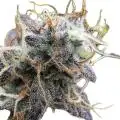
Cold week, not sunny weather and the damages from the spray I used is more visible. But we will see if not it will get back in good shape soon, that’s the hope atleast 😄


Likes
31
Share


@greenAF
Follow
Lights 40%
Feed Listed above then PH/EC adjusted
D7 So the girls looks healthy they should blow up after the next feeding. Should be able to shed it's travel scars soon.
D11 getting stronger and stronger 💪
Likes
1
Share


@TTerpz
Follow
Week 3 Day 1: 8/16/25
Fed with nutrients : 8/15/25
Flushed with sledgehammer: 8/18/25
Fed with nutrients 8/20 or 8/21
Likes
12
Share


@Ctbest2023
Follow
Week went smooth had to do some more defoliation doing one more next week and cleaning up all the bottoms and any fan leaves in middle that face inward to help light and air flow through em I been pushing these ppms I’m trying to get my ec uo to like a 6 rn it’s at like a 4 but it’s a work in progress


Likes
158
Share


@Ezzjaybruh
Follow
Put some extra puppy pics of duke there at the end i found. Glad I took like 20 pics a day of him since we got him in February 2020..
Couple cool videos of Dukie.. one of him jumping as a puppy in slow mo. One playing with a ball

Likes
13
Share


@RFarm21
Follow
Week 23 november - 29 november
23 november - D1 flower
She is beautiful😍
29 november - D7 flowering
Likes
15
Share


@crystal_garden_0
Follow
Great week. Nice dense frosty buds. Incredible smell. Great strain to grow. Really sticky. I went over board on the nutrients this run, buds are happy leaves showing signs. Careful with the nutrients, gonna taste great
Likes
Comments
Share


Likes
18
Share


@RadDad
Follow
This girl is going strong. No droopy leaves this time. I'm starting some LST this week as well as starting her on some Dutch Science Nutrients Grow Baby Grow. let's Groooooooooow


Processing
Likes
8
Share


@Order_66
Follow
Hay good week the flowers have started to bulk up a bit .I've stopped the take root and started a low dose of explode . I've been taking a few more leaves an I've tied down a couple of branches to let the light get in . Lots of tricomes some frosty leaves and getting sticky and smelly .
