


Likes
Comments
Share


@TheMadHasher
Follow
Whats up everybody cheers to another week of growth for everyone!
This week the ladies buds started showing signs of progress. You can see them produce more and more resin every day thanks to the cold weather its really easy to keep a pretty dry environment. Can’t wait to do my final defo next week! Until then stay green!


Likes
156
Share


@StarLorr
Follow
Helloing 👋🏻friends and visitors.
Welclone to my Clone diary🙃
Both clones are pumping some serious resins into the buds 😋
Feeding:
Wed 6Dec: 3L each with nuts pH'd 6.3
Sun10Dec: 2L each water only pH'd 6.5
______________________________
All is going smoothly and we should have a happy harvest in 3 weeks😁
Thanks for stopping by, likes and comments are welcome 👊🏻😎
Keep on growin!
Keep on tokin!!!
😙💨💨💨💨💨



Likes
25
Share


@rainman
Follow
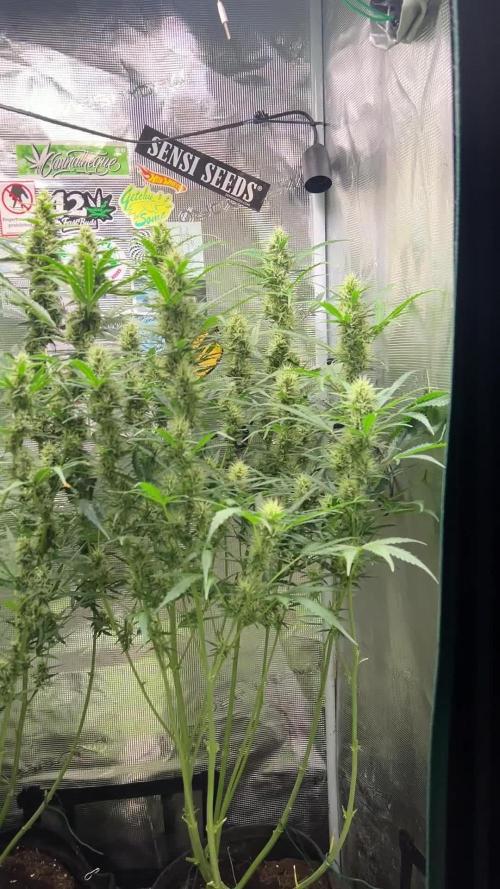
Plant grew very fast last week. Will give more nutrients from next watering. Has very nice sweety/skunky smell, and pretty strong for week 6. Very little purple color can be seen on buds.
Day 36 - 3,5L water.
Day 39 - Wanted to bend main cola stem a little bit more, ended up with broken stem. Luckily it broke for only 20-25% This day already sucks. Attached it to main stem., you can see it on a video. Hopefully it will end up with just a little stress. 3,5L with nutrients, started to give Big Bud.
Peace
Likes
7
Share


@Do_it_Dan
Follow
This week has been beautiful for this lady lots of growth, lots of green coming out, looking healthy so I topped the girl let her Bush out now in the coming weeks, hopefully will flip to flower in around 3 weeks, happy growing and stay green ✌️ 💚 👌
Likes
12
Share


@Mr_Haze_Chile
Follow
Se utilizó depper underground los primeros días de la semana para fortalecer la Ruiz de cada una de las plantas ya va en su día 5 por lo cual se utilizará top veg para estimular su crecimiento


Likes
15
Share


@BushDoctor740
Follow
These healthy girls are starting to flower now and looking beautiful.Im going to do a bit more training and some defoliation to get more light penetrating down below.Se7000 still set at 50 percent light intensity raised to the ceiling of the tent and they seem to be really happy with it.Just about 2 more weeks I’ll start adding the Plagron Green Sensation along with another top dressing of Gaia green power bloom.

Likes
6
Share


@GoldenWeedGrower
Follow
Legend
Timestamp: 📅
EC - pH: ⚗️
Temp - Hum: 🌡️
Water: 🌊
Food: 🍗
pH Correction: 💧
Actions: 💼
Thoughts: 🧠
Events: 🚀
Media: 🎬
D: DAY, G: GERMINATION, V: VEGETATIVE, B: BLOOMING, R: RIPENING, D: DRYING, C: CURING
______________
📅 D15/V11 - 30/04/24
⚗️ EC: 0.7 pH: 6.0
🌡️ T: 21 °C H: 50%
🌊
🍗
💧
💼
🧠
🚀
🎬 1 TL video
______________
📅 D16/V12 - 01/05/24
⚗️ EC: 0.7 pH: 6.0
🌡️ T: 21 °C H: 50%
🌊
🍗
💧
💼
🧠
🚀
🎬 1 TL video
______________
📅 D17/V13 - 02/05/24
⚗️ EC: 0.6 pH: 5.8
🌡️ T: 20 °C H: 50%
🌊
🍗
💧
💼
🧠
🚀
🎬 1 TL video
______________
📅 D18/V14 - 03/05/24
⚗️ EC: 0.8 pH: 5.6
🌡️ T: 22 °C H: 60%
🌊
🍗
💧
💼
🧠
🚀
🎬 1 TL video
______________
📅 D19/V15 - 04/05/24
⚗️ EC: 0.8 pH: 5.5
🌡️ T: 22 °C H: 60%
🌊
🍗
💧
💼
🧠
🚀
🎬 1 TL video
______________
📅 D20/V16 - 05/05/24
⚗️ EC: 0.7 pH: 5.5
🌡️ T: 22 °C H: 60%
🌊
🍗
💧
💼
🧠
🚀
🎬 1 TL video
______________
📅 D21/V17 - 06/05/24
⚗️ EC: 0.7 pH: 5.3
🌡️ T: 22 °C H: 50%
🌊
🍗 Calmag, Grow A-B
💧5L
💼
🧠
🚀
🎬 1 TL video

Likes
5
Share


@Newbe01
Follow
they both got into flowering in the middle of the week, switched to flower lights, no nutrients just pure water, they look happy flappy, cant wait to taste it.
Definetly see the benefits with LST now, gonna be some nice tops on that one

Likes
17
Share


@ArtisticGrown
Follow
This week has been a breeze! I've been giving light water with the sprayer keeping it moist not too dry! Allowing that top feed to soak in time! This plant is happening, and happy! I'm loving this living soil let me tell you! It's been so much easier on me!!
Much love and happy growing

Likes
80
Share


@Greenwolvesfarmer
Follow
40 días del cambio de fotoperiodo y luce así ! #lemonshiningsilverhaze por royal queen seeds ! Tremendooosss
Ellas están estimuladas y protegidas gracias al poderoso #quitosano de @trichomemania ! Libre de hongos y patógenos , sin stress...
Además reciben 12 horas de iluminación
💡🏆480w regulables 💯 #samsungquantumboards 3500k
#epistar UV / 660 nm / iR !
Tremendo mix de luces 💥🤘🏼 lo mejor del mercado ! ...gracias madre tierra y padre sol por privilegiarnos de vivir en este bello paraiso ...
.
.
.
.
.
#seguimientomkled #cannabisfamily
#greenwolvesfarmer #weedgrower #cultivoindoor #cultivointerior #indoorgarden #ledchile #cultivoledchile #chilecultivoled #cultivamedicina #medicinanatural #chilecultiva #nomaspresosporplantar #growdiaries #growdiary #cannabisgrowers #quantumboard #chileautocultivo #trichomemania
#480w #quantumboards #comunidadcannabica #cannabiscomunity #evaseeds #mkledchile #ledpanel #mkled
Likes
Comments
Share


@BaNanaGrow
Follow
Wurden umgetopft in 5,7 l Töpfe deshalb stehen die Blätter so tr


Likes
3
Share


@Nookandplant42o
Follow
It's drinking a lot of water, obviously because of its huge size, smaller doses of nutrients to go little by little, the shape of the tall buds, they're much more resinous with this update, I'm hoping for more time with this one due to its size and little light.

Likes
13
Share


@DaisyNabis
Follow
se comienzan a desarrollar algo mas rapido mis chicas, ya pronto les toca su primara aplicacion foliar con preventivo, parametros de temperatura y humedad controlados

Likes
44
Share


@ElRojo
Follow
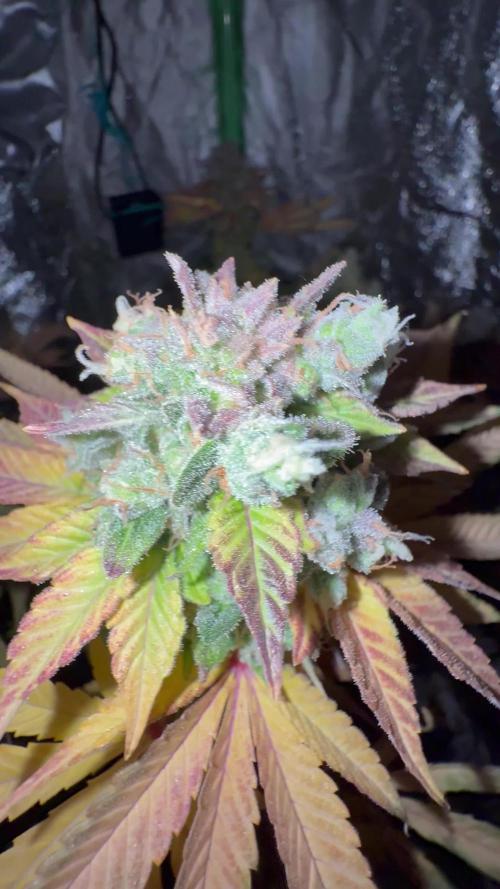
First Time grower, growing in a DIY growbox made from cardboard and taped mylar on the walls, some PC fans and an arraged carbon filter, a cheap led light bought on Amazon.
I'm curious to see what i can harvest.
Planning to do some lst on week 3 and start feeding 8-6-6 npk on week 2
Likes
26
Share


@GoodVibeGarden
Follow
Things are moving right along. She is loving life and starting to frost up. Stacking is nice, And she smells like pungent cheese.

Likes
8
Share


@Farmer1
Follow
Greetings growers,I took the two girls out of the greenhouse because it is getting very hot, they will finish flowering outside. Both are starting to produce beautiful compact flowers that are getting bigger every day. Starting to smell very good around here.😎

Likes
15
Share


@crystal_garden_0
Follow
Great week. Plants are ready to be harvested. Really nice plant . Great smell nice structure. Very frosty , really sticky very dense buds. Fast strain to grow, very enjoyable. Thanks everyone
Likes
1
Share


@I_Identify_As_A_Dan
Follow
Week 6 for AK Triple Haze by SSSC
She's definitely my shortest auto that's outside ATM but anyway her main cola is bulking up nicely. Aiming for her to be done by week 9... but lets see😇
Still no signs of her needing any extra nutrition @naturelivingsoiluk @naturelivingsoil is definitely keeping their word of water only feeding😍
Was watered once last week. No pest issue either with her! The leaf rub atm giving her some light hazy smells which is appealing.
Already looking forward to seeing how she's doing in a weeks time😍 BRING ON THE BULKING!
