


Likes
Comments
Share


@CordersGreen
Follow
👉DIA : 13/12/21👈
Metodo de germinacion: 👉<< VASO DE AGUA >>👈
seleccionamos las cantidades deseadas de semillas y en un pequeño vaso con agua opmotizada insertamos las semillas para nutrirlas durante 12H, situada en un lugar sin luz, apropiadamente tapada con un trapo.😉
__________________________________________________________________________________________________________________________________________________________________________________
👉DIA : 14/12/2021👈
👇👇👇👇👇👇👇👇👇👇👇👇
una vez pasada las 12 H de germinacion en vaso de agua , depositamos las semillas bien colocadas en un recipiente con papel de cocina humedecido con agua y 1ML de estimulador de raices (TOPCROP).
Esperamos de 1 a 2 días a que salga la raiz de la semilla y ser transportada a los Jiffy😉
___________________________________________________________________________________________________________________________________________________________________________________
👉DIA 17/12/2021👈
👇👇👇👇👇👇👇👇👇👇👇👇
Pues pasados los 3 dias de germinacion en el metodo de papel, vemos que ya salieron a luz las raices y con sorpresa😱 NUNCA habia visto una cosa asin!!
An salido GEMELAS, sii sii !!😵 de una misma semilla an salido dos raices una cosa impresinante!
y damos paso a colocarlas en los Jiffy.
👉Instrucciones:👈
- Colocación de los jiffy en un recipiente con 2L de agua y 2ML de enraizantes de top Crop.
- Dejamos actuar durantes varios minutos hasta que el jiffy se extienda.
- Abrimos un pequeño orificio en los Jiffy para introducir la semilla con el cáliz dejandolo hacia afuera.
- Colocamos en un pequeño invernadero para que tengan la suficiente humedad.
- Ayudandonos de unos foco de pocos waltios, le damos a luz necesaria para esta face de germinacion dejandolas 24 horas de luz.
________________________________________________________________________________________________________________________________________________________________
DIA 22/12/2021
Colocacion de Jiffy en Maceta de 3,25L
👇👇👇👇👇👇👇👇👇👇👇👇
👉Instrucciones👈
-Pasados varios dias vemos que el periantio(semilla) ya se rompió y empezo a salir los cotiledones con una hermosa raiz blanca por debajo del jiffy.
-rellenamos macetas de 3,25L con sustrato de top crop(anterior cultivo).
-introducimos los jiffy en las macetas dejando la plantula bien colocada.
-regamos con 3L agua opmotizada y 1ML/L enraizante Voodoo ADVANCED NUTRIENTS
- Permanecemos con las 24 horas de luz con foco led.
_________________________________________________________________________________________________________________________________________________
👉DIA 25/12/2021👈
👇👇👇👇👇👇👇👇👇👇👇👇👇👇👇
pasados 3 dias desde que se plantó en maceta. A dado unas respuestas increibles !!👍
las volvemos a regar y a cambiar las horas de luz que se pasarian a 18H

Likes
93
Share


@Natrona
Follow
FBA2502 Plants 1-6
Week 7 May 11– 17
FLOWER 3
Nutrients :
Micro 25 ml
Gro 10 ml
Bloom 30ml
CalMag 30 ml
Recharge 10ml
Green sensation 16.5ml
Power buds 7.5 ml
5/11 PH 6.56, PPM 1560, temp 69
2ltr each
5/12 PH 6.31, PPM 1120, temp 68
1 ltr each
5/14 PH 6.66, PPM 1280, temp 70 1 ltr each
5/15 PH 6.66, PPM 850, temp 72 1 ltr each
5/11 Defoliation, feed, pics & videos
I made 4 gallons, used 3 to water then poured the runoff back into the rest in the bucket. The next feeding, I added a gallon of tap water to residual and ph to 6,31 temp 69 & PPm 1120. Did the same on 5/14 and 15 using up the remainder of the feed solution.
I must monitor and control the tent environment manually. For the past month, the humidifier has been an issue putting out way too much humidity; often leaving water in the bottom of the tent. In addition, the temperatures are also out of control. I added an AC last week to keep the temperature below 80. I finally determined the exhaust vent is also broken and has been for some time.
I have been giving good reviews on the AC infinity system. However, during the time I’ve owned this tent (2 yrs), I had to replace the lights twice, fans, humidifier and now the vent twice also. Everything but the tent containment has been replaced. AC infinity does stand by their products, but they are in California, and it takes at least 2 weeks to receive the replacement. This is extremely frustrating at the critical transition to flower for my equipment to fail again. For the time being until a replacement arrives, I pulled the 4” exhaust vent from my 3x3 and hooked it up. I have the AC pushing air in and the exhaust pulling air out. This should create a neutral pressure tent environment-neither positive nor negative. I do have 3 circulating fans in the tent to move air around the plants.
It looks like growth spurts have slowed and plant height has been reached. Now is the time for buds to fatten and frost up. All of them (6) are short remaining less than 3 ft. They range from 15 to 31 inches. The tallest #4 &5 and #6 have very light leaves and appear nutrient deficient compared to the shorter phenotypes. Pictures taken later in the week show fading on a few the older leaves. All are receiving the same solution and are in the same soil blend. Moving the gals in and out of the tent for their glamor shots, I bent one limb and snapped another. The bent one I taped with a splint and the snapped one I medicated manuka honey and wired it back to the main stalk.
Leaves look like sativa leaning. I hope FBA2502-2 is a good daytime. I’m getting excited to see what develops in the next month or so. News Break: I’ve been informed that 2502 is FastBuds New Frostbanger and is indica for nighttime. I’m disappointed that I didn’t get a sativa to test because I really need a daytime strain. The 2 Blue Cheese plants I just grew are also nighttime.
Upon opening the tent, a faint odor was detected, and some stickiness was observed during the process of defoliation. Pictures of the puffy buds even show differences. #4 &5 buds hairs are different from the others being crinklier and the others are straighter. Some like #2 &5 are showing frost on the leaves. Wow at the beginning of flower to have that much frost. They are living up to the new strain’s name.
I’ve noticed that when I water, sometimes water shoots out of the side holes I the air pots. I will pack the soil firmly into the sides for future runs.
Measurements:
#1 15”
#2 20”
#3 17”
#4 30”
#5 31”
#6 24”
Your likes and comments are appreciated. Thanks for stopping by.
Growers love 💚🌿
💫Natrona💫
Likes
3
Share


@MrPipi
Follow
doing great. we can see, Lance is a little behind, but he´s the one who got some issues in the first 2 weeks.


Likes
33
Share

@DerFredlFesl
Follow
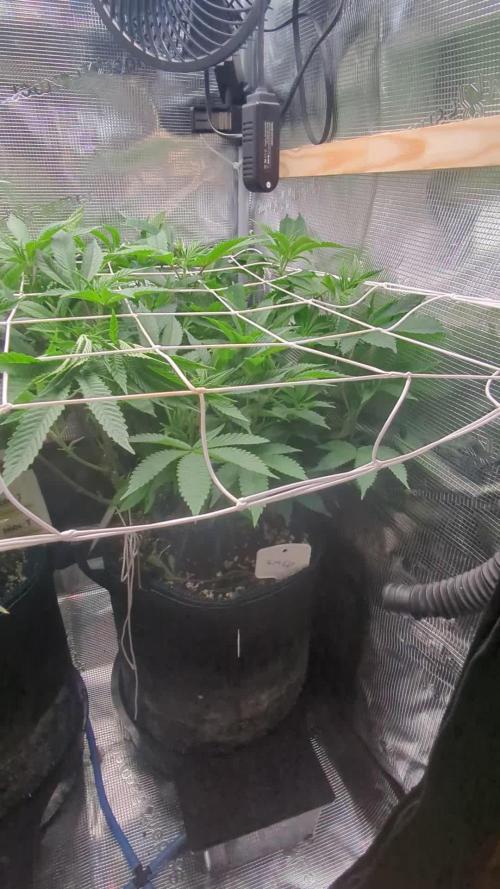
Die zwei gehen jetzt so richtig ab, lasse sie jetzt noch bis Sonntag in Ruhe und habe mir dann das erste richtige entlauben überlegt.
Die höheren Triebe habe ich jetzt schon mal unter dem Netz weiter gebogen.
So langsam bekomme ich einen richtigen Urwald, habe heute noch mal den ein oder anderen Trieb unter das netzt gebunden, denke am Mittwoch werde ich dann mal entlauben. Würde jetzt nur ungern das Wachstum Unterbrechen.

Likes
35
Share


@Pot_Portraits
Follow
Week 4, she is sitting under HPS for a few days till the new LED is ready for her.
So far everything goes well, did another big jump in growth, starts taking a lot of water in a few days, always a good sign.
Conditions are similar to before, slowly transitioning into flower, hopefully with a good bit of stretch soon.
Increased the feeding a bit again, trying to see how she reacts to it, autos in hydro are always a bit of an experiment but with time you find your formula.


Likes
127
Share


@DutchFarmer
Follow
Weekly Update on the Runtz 🌱
Hey everyone! Just wanted to share how the Runtz is coming along. She's thriving under the care of the Plagron nutrients 🌿, reacting beautifully to every feed. Since my last update, she’s sprouted several new nodes and is showing incredible growth!
https://plagron.com/en/tools/grow-schedule-calculator
She’s definitely growing like a sativa 🌳, with those long, stretchy branches. To manage that, I’m planning to enforce some solid training techniques to keep her short and wide, just the way I like it 💪✨.
I’m loving the whole experience so far, it’s been such a rewarding journey 💚. I’ve attached plenty of pictures for you all to check out 📸. Please drop a like, leave a comment, and share any feedback or tips you’ve got! 🌟🙌

Processing
Likes
15
Share


@Wicked_Stix
Follow
The grandaddy black is looking happy. Will be switching them to flower in a week or less. I gave them a flush and fresh nutrients. The humic acid really makes a huge difference in the uptake of nutrients. I am at about half dose on nutrients compared to what I would have to feed without it.
Winter is approaching and bringing the low humidity with it. All of the humidifiers I have tried either dont work or I have to constantly refill the tank. So I decided to use my redneck engineering skills to throw this humidifier together. It holds 4 gallons of water and she pumps like a freight train. I have dubbed her the Steam Queen. I got 2 cool mist foggers that put out about 400ml per hour each and used some things I had around to make them a little float. Added an old computer fan to force the mist out through a 2 inch pipe. She won't win any beauty contests but she pumps out plenty of cool moist air. I also upgraded my exhaust to a variable speed for more added environmental control. Just going to do a little more training over the next week then try to make some buds.

Likes
7
Share


@Zuppler
Follow
**Week 8 - Third Week of Flower**
Things are getting wild in the Donutz tent! After the insane stretch last week, the plants have turned the space into a full-on jungle. The start of Week 8 called for drastic measures, and the results are setting the stage for explosive bud production.
**Key Updates**:
- **Aggressive Defoliation**: On Day 1 of the third flower week, the plants underwent a *brutal* defoliation. Every bud site that had started to develop its own leaves was stripped of its fan leaves, allowing light to flood the canopy. Even the smallest sites now have excellent exposure, giving them the best chance to mature into chunky nugs in the coming weeks. Despite the intensity of the trim, the plants are resilient and primed to bounce back strong.
- **Boosted Nutrients**: To support the plants after the stress of defoliation, I added another 5-6g of Greenhouse Feeding Bloom per plant. This ensures the soil stays nutrient-rich and gives the plants the resources they need to recover and thrive.
- **Watering**: Still rocking reverse osmosis (RO) water, ensuring clean and efficient hydration without any surprises.
**Observations**:
- The canopy is significantly cleaner and more open, with light now reaching deeper into the lower sections.
- The plants are handling the defoliation well, with no immediate signs of stress or shock.
- Bud sites are already looking promising, with visible development and an even distribution across the canopy.
**Looking Ahead**:
The next few weeks will be all about letting the plants recover and watching the buds stack up. With improved light penetration and a fresh dose of nutrients, everything is lined up for some impressive development.
The Donutz are thriving, and the Florida Gang vibes are at an all-time high — the tent is set to deliver big!

Likes
11
Share


@Walligator
Follow
Everything is going great, I also think my plants have stopped stretching/growing, although really close to the lights.
I am not seeing lightburn, is this is something should be concerned about? The leaf temp is about 75 degree under the light.
Also just sticking with AN Bloom, Big Bud, Bud Candy.
Should I be using B52?
Also is overdrive worth it? it seems expensive for two weeks worth of work?
One more question? Is superThrive bad in flowering?
I read somewhere it could make bad things happen in flower because of the hormones it has. thus my question about B52.


Likes
36
Share


@Regenwurm
Follow
Die Bedingungen sind perfekt, ich bin mit der Entwicklung sehr zufrieden. Diese Woche ging es in die Blüte, Lichtleistung wurde erhöht und es wurde heftig entlaubt um den versteckten Trieben Licht zu geben.
Tage der Keimungsphase = 7 Tage.
Tage in Wachstum = 21 Tage
Tage in der Blüte = 7 Tage
Wachstum h Woche 1 Blüte = 10 cm
2 mal in dieser Woche mit Purolyt Mischung 1:25 besprüht
Lichtstärke: 90 %
PPFD: ca. 850 umol
Lichtabstand: 40 cm
Std Tag/Nacht: 18/12
Temperatur Tag: ca. 25 Grad
RLF Tag: 60%
Temperatur Nacht: 21 Grad
RLF Nacht: ca. 60 %
VPD Wert: ca. 0,9
PH Wert Wasser/Düngelösung: 6,3
EC Wert: nicht gemessen
Ventilator Oszillation: Stufe 1
Befeuchter: an
Entfeuchter: aus
Zusätzlicher Entfeuchter: 0 Stk. außerhalb vom Zelt im Raum
Bewässerung: 2* bewässert 1 l/Pflanze mit Dünger mit den o.g. Mengen
1 * pures Wasser mit 2 l/Pflanze
Purolyt Besprühung: 2 mal
Besprühung Fastplantspray : 1 mal
Controlling: Grow Control
Dünger: Greenbuzz Nutrients
Licht: Pro Emit Vollspektrum
Abluft: EC Carbon Active 750 m3
Danke an Zamnesia für die Seeds, den sonstigen Merch und natürlich das Vertrauen in die Kooperation
https://www.zamnesia.com/de/10681-zamnesia-seeds-pineapple-express-f1-automatic.html
Danke auch an Mia von GB:
https://greenbuzznutrients.com/de/
Ihr bekommt 25 % Rabatt bei der Nutzung des Codes auf der GB Homepage
https://greenbuzzliquids.com/de/shop/
Code: GD42025
(Mindestbestellwert 75€)


Likes
19
Share


@willertex
Follow
📅 D79 - 18/01
📜 Made the flush and then feed her again. Waiting signs of ripen to start the final flush
✍️ 1 EC
♒ 7 pH
🌊 10 L
📏 50 cm
📅 D82 - 21/01
📜 Final flush started
✍️ 0,2 EC
♒ 6 pH
🌊 10 L
📏 50 cm
Likes
74
Share


@Hou_Stone
Follow
❄️👋❄️
Depuis quelques temps je ne vois pas beaucoup ma culture car j'ai déménagé et qu'elle ne se trouve plus chez moi. Je passe la voir uniquement pour l'arroser, environ une fois par semaine. J'ajoute du Bioenhancer une fois sur 2.
Malgré mon absence les plantes m'ont l'air d'être en bonne forme. Pourvu que ça dure ! ❤️️🤞
Intensité de la FC3000: 90%
Ventilation : Extracteur mars hydro 6 pouces avec filtre à charbon puissance : 4/10 (24h/24h) + 3 ventilateurs à l'intérieur ( ON 8/24h). ils s'activent à un horaire différent.
🌟Venez me voir sur Instagram 🌠
https://www.instagram.com/hou_stone420/
👨🚀❄️❄️❄️👋❄️❄️❄️☄️❄️

Likes
17
Share


@Skinnytalls420
Follow
Day 38- 18/01/22 and we are now in flowering everything is looking good I’m still cutting down the plants from my last grow Afghan kush and once I’m done with that I’ll be moving everything that isn’t chemdawg into the HPS tent!!! Day 42- 22/01/22 all amnesia now under hps light!!!

Likes
18
Share


@emanresU
Follow
Edit from second day of the June. 10am in the morning.
600W @ 30C @ 55% RH Yes, sir o7
#Lady BanaN = 95cm tall
#Space Girl = 80cm tall
Its between 15-18C outside for few days now.
Lady BanaN starts "shinning" in the light with her precious trichomes, I have feeling that all that stress will coat the main cola with sugar :)
Space Girl have that Jamiroquai vibes all the time, no worries at all, pretty forgiving plant (Royal Critical / 14% THC / Indica dominant hybrid) it was a freebie. I plant it only to have variety from Fat Bananas (22%THC/Indica dominant). I'm mainly looking for Rosin extraction so Trichome production is the most important for me. Don't care about the yield, this is why I filled the tent with biggest pots.
Due to lack of place I can't stress these two plants just right before harvest (dark period etc). I was thinking about stressing whole tent with music. I have played Techno Rave already and they seems to like it... so... I don't think loud and aggressive music will stress them. Maybe sound of a city? Honking cars? Talking people? will stress her more? I'm gonna experiment. I just need to think of a way to make her thinking it's time to die and she needs to protect her self. I was thinking about temps and lights also, cuz she gonna coat her self with sugar if it's gonna be too hot/cold to protect/isolate herself from temperature changes. But how do I do that without fucking up? :)
Anyway, plan for now is to let them create big buds and then I want to stress-the-f*ck-out-off-them. Maybe I'm gonna lie to them and I'm gonna switch lights? I'm just gonna put 7W led above them so they gonna think its for real lol...
3rd June @ 8am
So normally I water these bitches in the morning so there is enough time to make the soil dry by night. Yesterday I did differently and I water them around 5-6pm. They seems to like it, idk. Too high to think about it.
27C @ 60% RH
Tent is fully open. I'm sitting with plants today. I'm a plant today...
3rd June @ 5pm
30C @ 55% RH (closed tent)
WE COOKIN' !
4th June @ 10am
26C @ 60% RH (open tent)
We still cookin'
Things getting frosty!!!
Rest of the plants show pistils coming out of calyx's. All of them. Non of them have any pollen sacks etc. So Lady BanaN turned into hermie at 34C (93,2F).
From the other hand, they liked 32C temps.
Today all of them get at least 1L of (cold) water. Some of them didn't care, one or two of them didn't like it at first but then they turns back to normal.
#Space Girl = Same height = around 80cm
#Lady BanaN = 98cm (3cm more then week ago 👍)
5th June @ 7am
Fungus Gnats sleeping on my leaves, wtf is going on? Or was it dead?
Space Girl's main cola is getting bigger then Lady BanaN's main cola. 😳
And Space G is younger by 5-6 days.
Temps later.
DAMN THAT FROST BUILDING UP EVERYWHERE!
28.5C @ 51% RH (morning) [bottom of the tent]
29C @ 52% RH (evening) [bottom of the tent]
30-32C(evening) in higher parts of the plants. Fan leafs and colas. (NOW I'm really glad I have this temp-pistol) 2C more and I'll have a problem.
I don't like that VPD. I hope cold water in the morning will regulate that stuff.
Just noticed yellow mushroom growing in west side, lol?
6th June @ morning
Shroomy growing big and nice. I decide to leave it alone. I was growing mushrooms before so I know that mycelium under the ground is just in the price of a gold for these plants. It's just natural symbiosis.
Somebody answered my question saying it's a damp soil not "humid nights" that cause this but... humid nights makes the soil rly damp. I hope that makes more sense.
I moved hydrometer under the canopy of a plant with shroomy. 👉[600W @ 27C @ 61%]👈 with open tent (full front door / little bit of east side) and left the lights on for 24/0.
Baby plants no water today. Only big girls drinking now.
Oh, I forget that I re-arrange the pots. So Critical and Banan are at the same place but the baby plants around switch their places. The tall one from North-West was moved to South-West etc. In North(back) of the tent is warmer + stronger light. South have colder temps and light is not so intense. You can see Critical have curly leafs but Fat Banana that is taller have not.
Temp check before night 👉[600W @ 29C @ 45%]👈
7th June. Morning routine.
👉[400W @ 26C @ 56%]👈
8th June. Late morning.
👉[600W @ 29C @ 49%]👈
I was 100% sure I'm on 400W now but I checked the knob and it was set at 600W? So... somewhere between today and few days ago I had to set it to "Super Lumens" that are above 600W. 660 I think to be precise so no big deal but I guess that's why Royal Critical got her leaves curly a little bit.
L A D Y B A N A N F R O S T Y 👽 M E L I K E F R O S T Y 👽 If that's how you increase Frost production then Im gonna do the Palm Tech to all future plants xD
Likes
7
Share


@Dreamhighersmokingmomma
Follow
For my first ever harvest to finish. I am proud got 59.85gs for an autoflower and no prior experience I am pleased. I learned alot and want a better finished yield for the future but pleased with this girl an her turn out.
Likes
6
Share

@Aeromatics
Follow
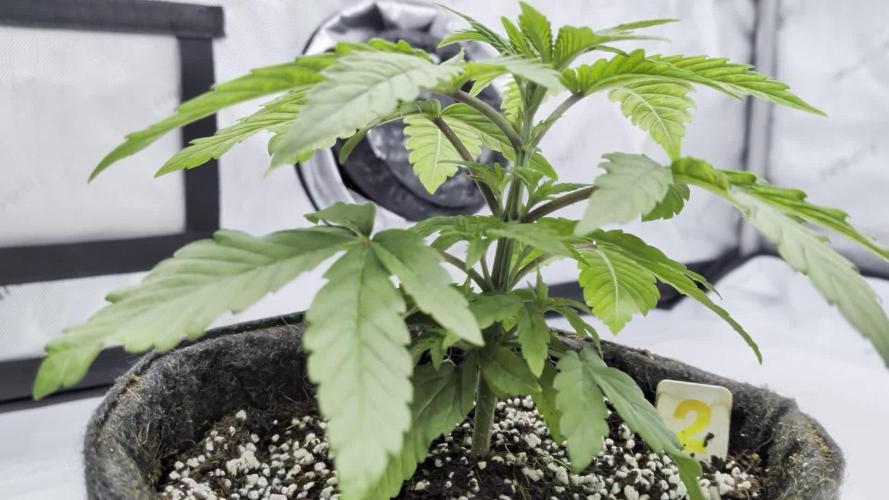
Clementine Slush #2: A bit lighter fan leaves this week, not sure why but also not too worried, as her nodes are looking beautiful. She got a top on day 27 (see video above) and is really developing a nice structure. As all 5 of Clementine Slush start to develop, I am increasingly happy that I had 5 empty autopots ready to take them all.
She took to the top wonderfully, and I hope the ease of this strain will continue through late veg.
Tent-wide update: This week was very relaxing in the tent, as we prepare for the major transplant into their final 5-gallon autopot home!
I did a major water to runoff, which they absolutely loved!
The recipe was, for 2 gallons of water:
2 Gallons RO Water
1 ml Ventana Plant Science Structure
4 ml Ventana Plant Science Grow
12 ml Ventana Plant Science Support
ec .89 ph 5.7
Additionally, on day 25, I moved to 300 PPFD since the plants looked ready for an increase in light. The responded great, and the rest of week 4 has been devoted to topping plants when ready, and preparing for that big transplant.
I also realized I've been a bit slack on my mixing order for Ventana Plant Science, which could be a reason for some of my cloudy reservoir issues when my autopots are on, so I will be very diligent about the proper and recommended order moving forward:
Liquid Line Mixing Order
Structure (first)
FlaVUH
Grow / Flower
Expand
Support (last)
It's going well thus far, though I think this may be my longest grow yet!

Likes
7
Share


@Learntogrow818
Follow
Autos transferred to 1gl pots.. Looking good so far.. Going into 4 weeks and soon ready for LST. 🌱🎋


Likes
2
Share

@GoodTimesOrganics
Follow
Welcome Back!💚
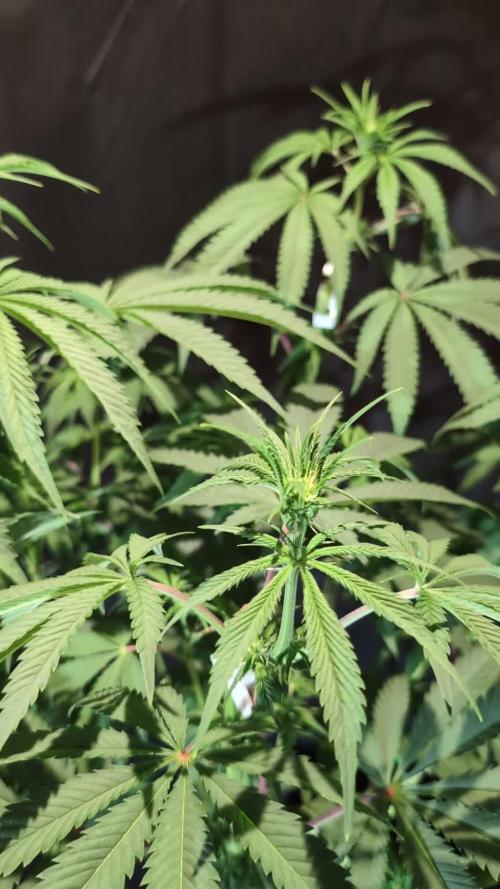
Die Pink Sunset schlägt auch nach der zweiten Blütewoche ordentlich in die Höhe. Ihr Stretch ist relativ Stark und sie hat nun innerhalb einer weiteren Woche nochmal 10 cm zugelegt.
Sie ist jetzt schön ausgeglichen und die Interniodentriebe bilden sich stark aus.
Es bilden sich allmählich überall Pistillen und man erkennt die Blütenansätze richtig gut.
Ich habe die Lampeneinstellung der Sanlight nun hochgefahren.
Die Umgebungsgegebenheiten sind auch im Blütezelt optimal:
—————
🌞 Temp: 24,3°C
🌚 Temp: 19°C bis 20°C
💨 RH: 56%
VPD: 0,97 kPa👍
😎 PPFD: 830 mqm
—————
