The Grow Awards 2026 🏆
Likes
Comments
Share
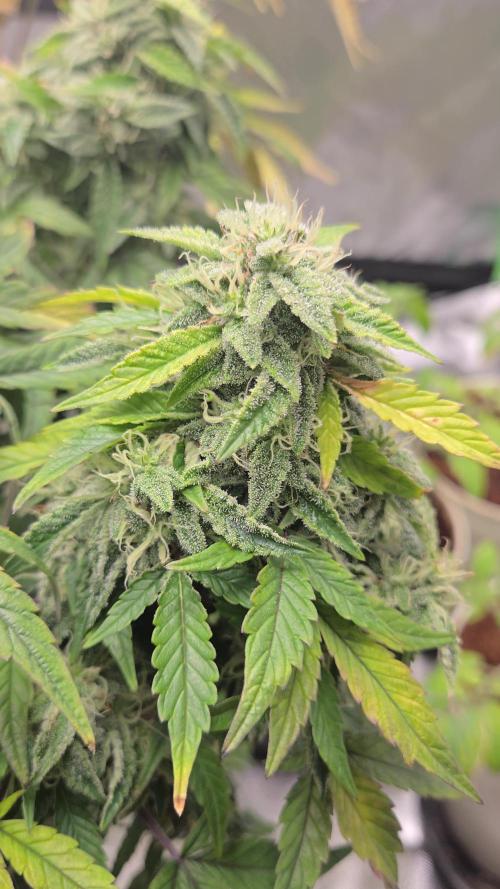
Hey hey everybody! I hope you all had a fantastic week and I am excited to be back for our latest update which marks the end of week 15 and the beginning of week 16! Now I don’t know if it’s just me or the beginning of the year can be explained off as Mercury being in retrograde (I’m not saying it is, that’s more my wife’s deal- I wouldn’t know either way) but things have been absolutely nuts over here and I needed a little something good to help level out the crazy… I have some awesome things in the mail (still rolling in from the spending spree I went on) but truth be told we were between deliveries, and I needed instant gratification- soo I may have accidentally brushed up against the timer and flipped to flower ( and by accidentally brushed up against, of course I mean I fully intentionally programmed the time to flip to flower in a moment of weakness…🤷‍♂️🏻) Am I sorry? No… will it slightly kill me from an aspect of my struggle with occasional OCD? Oh yes…. Ohhhh yesssss…. That little corner is/was driving me nuts but I figured it was time to just let it do it’s thing- honestly once I noticed I picked a pot that was too small for what I was trying to do, I should have just there in the towel, flipped and taken it as a learning lesson for next time…. Buuuuut alas, I am stubborn and that is NOT how that went down… I’m still excited for what’s to come, we should have some (hopefully) pretty impressive things developing soon so I am stoked! That being said however, I have also had some unimpressive things happen, for instance- yesterday, I go in to feed the girls and my light is off! I (obviously) must have screwed something up when I went to change the light schedule- specifically, due to the fact that there are 9 or 10 possible lighting schedules you can set, I think I had correctly set the on/off times BUUUUUT I think after I had switched to the next programmed on/off times which were incorrect- I noticed when I saw that the lights were off, they should have been on for another three hours (give or take) - so I immediately started messing with the timer and turned the lights back on and continued to tend to those lovely ladies. I then went and made dinner- after, I just had this feeling that I should check on the tent, just in case- and sure enough, an hour after the lights were supposed to be turned off, there they were, on like grey poupon (I apologize I haven’t heard that in like a decade or more, had to
Likes
31
Share
Week three of this (up till now) 100% pure organic grow is behind us... She is looking great, really speeded UP in the last few days...💪 She has had only water up till this point.. I'm thinking that will change in the upcoming week but i have not decided yet... Hope it all goes good... fingers crossed👍
Likes
1
Share
@TTerpz
Follow
Start of week two of flower Fed with nutrients 8/10 Fed with plain water 8/12
Likes
4
Share
@QixxGrows
Follow
Using 2 seeds in a luke warm water shotglass. Placing in cupboard to germinate. Day1: Nothing yet Day2: One of the seeds started to sprout. Showing it's sexy little tail. I'll monitor the growth in the next 24hrs and then decide whether she's ready for the sproutling pot or not. Day3: Tails were looking pretty good - forgot to take a photo :/ roughly 1cm for one of them, which is the one that I decided to plant. It really hurt when I chucked the other seed, but I really only need one plant. Soil mix for the sproutling: Coco Coir - 70%, Vermiculite - 15%, Perlite - 15%. I also added Greenhouse Feeding "BioGrow" and Mycorrhiza. The picture was taken from my RPi + Cam setup that will be taking 2 photos/min. I'll post the timelapse at the end of the day. Day4: Running the whole day in the tent with ventilation running minimally. Light only at 20%. No action, so I deleted all the pictures except for the last one taken before the lights went out. Day5: No activity above the soil level. Probably spent the whole day focusing on root growth. Day6: At around 09:20 I watered again and with this uncovered the first signs of life! The rest of the day was mostly uneventful - until the evening. Roughly 2hrs before lights-out she started to move. Day7: Things starting to look really good :)
Likes
25
Share
ANTHOCYANIN production is primarily controlled by the Cryptochrome (CR1) Photoreceptor ( !! UV and Blue Spectrums are primary drivers in the production of the pigment that replaces chlorophyll, isn't that awesome! 1. Diverse photoreceptors in plants Many civilizations, including the sun god of ancient Egypt, thought that the blessings of sunlight were the source of life. In fact, the survival of all life, including humans, is supported by the photosynthesis of plants that capture solar energy. Plants that perform photosynthesis have no means of transportation except for some algae. Therefore, it is necessary to monitor various changes in the external environment and respond appropriately to the place to survive. Among various environmental information, light is especially important information for plants that perform photosynthesis. In the process of evolution, plants acquired phytochrome, which mainly receives light in the red light region, and multiple blue light receptors, including his hytropin and phototropin, in order to sense the light environment. .. In addition to these, an ultraviolet light receptor named UVR8 was recently discovered. The latest image of the molecular structure and function of these various plant photoreceptors (Fig. 1), focusing on phytochrome and phototropin. Figure 1 Ultraviolet-visible absorption spectra of phytochrome, cryptochrome, phototropin, and UVR8. The dashed line represents each bioactive absorption spectrum. 2. Phytochrome; red-far red photoreversible molecular switch What is phytochrome? Phytochrome is a photochromic photoreceptor, and has two absorption types, a red light absorption type Pr (absorption maximum wavelength of about 665 nm) and a far-red light absorption type Pfr (730 nm). Reversible light conversion between the two by red light and far-red light, respectively(Fig. 1A, solid line and broken line). In general, Pfr is the active form that causes a physiological response. With some exceptions, phytochrome can be said to function as a photoreversible molecular switch. The background of the discovery is as follows. There are some types of plants that require light for germination (light seed germination). From that study, it was found that germination was induced by red light, the effect was inhibited by subsequent far-red light irradiation, and this could be repeated, and the existence of photoreceptors that reversibly photoconvert was predicted. In 1959, its existence was confirmed by the absorption spectrum measurement of the yellow sprout tissue, and it was named phytochrome. Why does the plant have a sensor to distinguish between such red light and far-red light? There is no big difference between the red and far-red light regions in the open-field spectrum of sunlight, but the proportion of red light is greatly reduced due to the absorption of chloroplasts in the shade of plants. Similar changes in light quality occur in the evening sunlight. Plants perceive this difference in light quality as the ratio of Pr and Pfr, recognize the light environment, and respond to it. Subsequent studies have revealed that it is responsible for various photomorphogenic reactions such as photoperiodic flowering induction, shade repellent, and deyellowing (greening). Furthermore, with the introduction of the model plant Arabidopsis thaliana (At) and the development of molecular biological analysis methods, research has progressed dramatically, and his five types of phytochromes (phyA-E) are present in Arabidopsis thaliana. all right. With the progress of the genome project, Fi’s tochrome-like photoreceptors were found in cyanobacteria, a photosynthetic prokaryotes other than plants. Furthermore, in non-photosynthetic bacteria, a homologue molecule called bacteriophytochrome photoreceptor (BphP) was found in Pseudomonas aeruginosa (Pa) and radiation-resistant bacteria (Deinococcus radiodurans, Dr). Domain structure of phytochrome molecule Phytochrome molecule can be roughly divided into N-terminal side and C-terminal side region. PAS (Per / Arndt / Sim: blue), GAF (cGMP phosphodiesterase / adenylyl cyclase / FhlA: green), PHY (phyto-chrome: purple) 3 in the N-terminal region of plant phytochrome (Fig. 2A) There are two domains and an N-terminal extension region (NTE: dark blue), and phytochromobilin (PΦB), which is one of the ring-opening tetrapyrroles, is thioether-bonded to the system stored in GAF as a chromophore. ing. PAS is a domain involved in the interaction between signal transduction-related proteins, and PHY is a phytochrome-specific domain. There are two PASs and her histidine kinase-related (HKR) domain (red) in the C-terminal region, but the histidine essential for kinase activity is not conserved. 3. Phototropin; photosynthetic efficiency optimized blue light receptor What is phototropin? Charles Darwin, who is famous for his theory of evolution, wrote in his book “The power of move-ment in plants” published in 1882 that plants bend toward blue light. Approximately 100 years later, the protein nph1 (nonphoto-tropic hypocotyl 1) encoded by one of the causative genes of Arabidopsis mutants causing phototropic abnormalities was identified as a blue photoreceptor. Later, another isotype npl1 was found and renamed phototropin 1 (phot1) and 2 (phot2), respectively. In addition to phototropism, phototropin is damaged by chloroplast photolocalization (chloroplasts move through the epidermal cells of the leaves and gather on the cell surface under appropriate light intensity for photosynthesis. As a photoreceptor for reactions such as escaping to the side of cells under dangerous strong light) and stomata (reactions that open stomata to optimize the uptake of carbon dioxide, which is the rate-determining process of photosynthetic reactions). It became clear that it worked. In this way, phototropin can be said to be a blue light receptor responsible for optimizing photosynthetic efficiency. Domain structure and LOV photoreaction of phototropin molecule Phototropin molecule has two photoreceptive domains (LOV1 and LOV2) called LOV (Light-Oxygen-Voltage sensing) on the N-terminal side, and serine / on the C-terminal side. It is a protein kinase that forms threonine kinase (STK) (Fig. 4Aa) and whose activity is regulated by light. LOV is one molecule as a chromophore, he binds FMN (flavin mononucleotide) non-covalently. The LOV forms an α/βfold, and the FMN is located on a β-sheet consisting of five antiparallel β-strands (Fig. 4B). The FMN in the ground state LOV shows the absorption spectrum of a typical oxidized flavin protein with a triplet oscillation structure and an absorption maximum wavelength of 450 nm, and is called D450 (Fig. 1C and Fig. 4E). After being excited to the singlet excited state by blue light, the FMN shifts to the triplet excited state (L660t *) due to intersystem crossing, and then the C4 (Fig. 4C) of the isoaroxazine ring of the FMN is conserved in the vicinity. It forms a transient accretionary prism with the tain (red part in Fig. 4B Eα) (S390I). When this cysteine is replaced with alanine (C / A substitution), the addition reaction does not occur. The effect of adduct formation propagates to the protein moiety, causing kinase activation (S390II). After that, the formed cysteine-flavin adduct spontaneously dissociates and returns to the original D450 (Fig. 4E, dark regression reaction). Phototropin kinase activity control mechanism by LOV2 Why does phototropin have two LOVs? Atphot1 was found as a protein that is rapidly autophosphorylated when irradiated with blue light. The effect of the above C / A substitution on this self-phosphorylation reaction and phototropism was investigated, and LOV2 is the main photomolecular switch in both self-phosphorylation and phototropism. It turns out that it functions as. After that, from experiments using artificial substrates, STK has a constitutive activity, LOV2 functions as an inhibitory domain of this activity, and the inhibition is eliminated by photoreaction, while LOV1 is kinase light. It was shown to modify the photosensitivity of the activation reaction. In addition to this, LOV1 was found to act as a dimerization site from the crystal structure and his SAXS. What kind of molecular mechanism does LOV2 use to photoregulate kinase activity? The following two modules play important roles in this intramolecular signal transduction. Figure 4 (A) Domain structure of LOV photoreceptors. a: Phototropin b: Neochrome c: FKF1 family protein d: Aureochrome (B) Crystal structure of auto barley phot1 LOV2. (C) Structure of FMN isoaroxazine ring. (D) Schematic diagram of the functional domain and module of Arabidopsis thaliana phot1. L, A’α, and Jα represent linker, A’α helix, and Jα helix, respectively. (E) LOV photoreaction. (F) Molecular structure model (mesh) of the LOV2-STK sample (black line) containing A’α of phot2 obtained based on SAXS under dark (top) and under bright (bottom). The yellow, red, and green space-filled models represent the crystal structures of LOV2-Jα, protein kinase A N-lobe, and C-robe, respectively, and black represents FMN. See the text for details. 1) Jα. LOV2 C of oat phot1-to α immediately after the terminus Rix (Jα) is present (Fig. 4D), which interacts with the β-sheet (Fig. 4B) that forms the FMN-bound scaffold of LOV2 in the dark, but unfolds and dissociates from the β-sheet with photoreaction. It was shown by NMR that it does. According to the crystal structure of LOV2-Jα, this Jα is located on the back surface of the β sheet and mainly has a hydrophobic interaction. The formation of S390II causes twisting of the isoaroxazine ring and protonation of N5 (Fig. 4C). As a result, the glutamine side chain present on his Iβ strand (Fig. 4B) in the β-sheet rotates to form a hydrogen bond with this protonated N5. Jα interacts with this his Iβ strand, and these changes are thought to cause the unfold-ing of Jα and dissociation from the β-sheet described above. Experiments such as amino acid substitution of Iβ strands revealed that kinases exhibit constitutive activity when this interaction is eliminated, and that Jα plays an important role in photoactivation of kinases. 2) A’α / Aβ gap. Recently, several results have been reported showing the involvement of amino acids near the A’α helix (Fig. 4D) located upstream of the N-terminal of LOV2 in kinase photoactivation. Therefore, he investigated the role of this A’α and its neighboring amino acids in kinase photoactivation, photoreaction, and Jα structural change for Atphot1. The LOV2-STK polypeptide (Fig. 4D, underlined in black) was used as a photocontrollable kinase for kinase activity analysis. As a result, it was found that the photoactivation of the kinase was abolished when amino acid substitution was introduced into the A’α / Aβ gap between A’α and Aβ of the LOV2 core. Interestingly, he had no effect on the structural changes in Jα examined on the peptide map due to the photoreaction of LOV2 or trypsin degradation. Therefore, the A’α / Aβ gap is considered to play an important role in intramolecular signal transduction after Jα. Structural changes detected by SAXS Structural changes of Jα have been detected by various biophysical methods other than NMR, but structural information on samples including up to STK is reported only by his results to his SAXS. Not. The SAXS measurement of the Atphot2 LOV2-STK polypeptide showed that the radius of inertia increased from 32.4 Å to 34.8 Å, and the molecular model (Fig. 4F) obtained by the ab initio modeling software GASBOR is that of LOV2 and STK. It was shown that the N lobes and C lobes lined up in tandem, and the relative position of LOV2 with respect to STK shifted by about 13 Å under light irradiation. The difference in the molecular model between the two is considered to reflect the structural changes that occur in the Jα and A’α / Aβ gaps mentioned above. Two phototropins with different photosensitivity In the phototropic reaction of Arabidopsis Arabidopsis, Arabidopsis responds to a very wide range of light intensities from 10–4 to 102 μmol photon / sec / m2. At that time, phot1 functions as an optical sensor in a wide range from low light to strong light, while phot2 reacts with light stronger than 1 μmol photon / sec / m2. What is the origin of these differences? As is well known, animal photoreceptors have a high photosensitivity due to the abundance of rhodopsin and the presence of biochemical amplification mechanisms. The exact abundance of phot1 and phot2 in vivo is unknown, but interesting results have been obtained in terms of amplification. The light intensity dependence of the photoactivation of the LOV2-STK polypeptide used in the above kinase analysis was investigated. It was found that phot1 was about 10 times more photosensitive than phot2. On the other hand, when the photochemical reactions of both were examined, it was found that the rate of the dark return reaction of phot1 was about 10 times slower than that of phot2. This result indicates that the longer the lifetime of S390II, which is in the kinase-activated state, the higher the photosensitivity of kinase activation. This correlation was further confirmed by extending the lifespan of her S390II with amino acid substitutions. This alone cannot explain the widespread differences in photosensitivity between phot1 and phot2, but it may explain some of them. Furthermore, it is necessary to investigate in detail protein modifications such as phosphorylation and the effects of phot interacting factors on photosensitivity. Other LOV photoreceptors Among fern plants and green algae, phytochrome ɾphotosensory module (PSM) on the N-terminal side and chimera photoreceptor with full-length phototropin on the C-terminal side, neochrome (Fig. There are types with 4Ab). It has been reported that some neochromes play a role in chloroplast photolocalization as a red light receiver. It is considered that fern plants have such a chimera photoreceptor in order to survive in a habitat such as undergrowth in a jungle where only red light reaches. In addition to this, plants have only one LOV domain, and three proteins involved in the degradation of photomorphogenesis-related proteins, FKF1 (Flavin-binding, Kelch repeat, F-box 1, ZTL (ZEITLUPE)), LKP2 ( There are LOV Kelch Protein2) (Fig. 4Ac) and aureochrome (Fig. 4Ad), which has a bZip domain on the N-terminal side of LOV and functions as a gene transcription factor. 4. Cryptochrome and UVR8 Cryptochrome is one of the blue photoreceptors and forms a superfamily with the DNA photoreceptor photolyase. It has FAD (flavin adenine dinucle-otide) as a chromophore and tetrahydrofolic acid, which is a condensing pigment. The ground state of FAD is considered to be the oxidized type, and the radical type (broken line in Fig. 1B) generated by blue light irradiation is considered to be the signaling state. The radical type also absorbs in the green to orange light region, and may widen the wavelength region of the plant morphogenesis reaction spectrum. Cryptochrome uses blue light to control physiological functions similar to phytochrome. It was identified as a photoreceptor from one of the causative genes of UVR8 Arabidopsis thaliana, and the chromophore is absorbed in the UVB region by a Trp triad consisting of three tryptophans (Fig. 1D). It is involved in the biosynthesis of flavonoids and anthocyanins that function as UV scavengers in plants. Conclusion It is thought that plants have acquired various photoreceptors necessary for their survival during a long evolutionary process. The photoreceptors that cover the existing far-red light to UVB mentioned here are considered to be some of them. More and more diverse photoreceptor genes are conserved in cyanobacteria and marine plankton. By examining these, it is thought that the understanding of plant photoreceptors will be further deepened.
Likes
67
Share
Octava semana de floracion, continua el engorde de los cogollos, me pase con los nutrientes a principios de la floracion, pero me di cuenta a tiempo y he salvado la cosecha. La proxima vez será mejor. 📅 Dia 50: Riego con nutrientes EC 450, necesito que se aclare un poco mas. 📅 Dia 51: Descanso 📅 Dia 52: Riego con nutrientes EC 950 📅 Dia 53: Descanso 📅 Dia 54: Riego con nutrientes EC 450, se va quedando limpia, lo noto en el color de las hojas. 📅 Dia 55: Descanso 📅 Dia 56: Riego con agua EC 450
Likes
11
Share
@DimJesus
Follow
Saludos 🙌 tercera semana completa, aumentando la dosis de los fertilizantes. Quité los primeros pares de hojas para darle paso a las ramificaciones que se puedes ver en las fotos, está brotando el quinto nudo pero me parece que aún está un poco pequeña para la LST y corte apical, que piensan? Donde vivo hay muchas variaciones de temperatura pero generalmente el grow se mantiene entre 23° y 29°, la humedad también varía bastante pero no baja de 50% ni sube de 78%. Ansioso para la floración 🙏 having a lot of fun 💪
Likes
39
Share
Time to clean up this 2309, she still is my fav hope she enjoys her haircut hihihi Man she love it , next day she was back on to her praying mode <3<3<3 Tester 2309 is by far my favorite from day one, not only because i like the number but because from a early age she spoke to me like non of the others did, and now, man i mean now she is by far the one showing bigger trichomes production and her smell, i mean is so strong for the time being, she is an herbal mix with flowers and some spicy notes, this for now she is evolving day by day, just amazing, she took the defoliation like a big girl and with the week coming to an end her resin production levels and it all i mean ... <3 <3 <3 added defoliation edited video , hope you guys have fun <3 <3 <3 As always thank you all for stopping by, for the love and time you guys spend on my stuff, i fell blessed and humble, many thanks to you all <3<3<3 Genetics - Fast Buds Tester 2309 Ligth - LUMATEK ZEUS 465 COMPACT PRO 
Food - APTUS HOLLAND #aptus #aptusplanttech #aptusgang #aptusfamily #aptustrueplantscience #inbalancewithnature #trueplantscience #fastbuds #dogdoctorofficial #growerslove With true love comes happiness <3 <3 <3 Always believe in your self and always do things expecting nothing and with an open heart , be a giver and the universe will give back to you in ways you could not even imagine so <3 <3 <3 
All info and full product details can be find in can find @ https://2fast4buds.com/ wen released 

https://aptus-holland.com/
 
https://autopot.co.uk/ 

https://lumatek-lighting.com/ Have a bunch more diaries going on, fell free to drop by and say hi dont be shy <3 <3 <3 <3 <3 <3 Growers love to you all <3 <3 <3
Likes
2
Share
Only 4 seeds survive from 10 Cant wait to try this one, because im a big fan of ak47 Kalashnikova could be one of my favorite !
Likes
14
Share
She throwing tons of bud sites and still stretching alittle. Really starting to smell.👃 i’ve never had a plant start to stink this early Day 38 another small defoi
Likes
25
Share
Humidity a bit hight??? Bud rot, been checking very closelym Water stressing, packing on the resin
Likes
27
Share
Did my last topping on a few branches that were left took most of the big fan leaves off to open them up more i forgot to do a week lol.
Likes
22
Share
8/25/23 - Day 73 - Another week down. We did a water change today. The buds are getting fatter and WAAAAAAY smellier. I have had a couple of times now where I lost a battle to the Skunk BOSS. I have had to reach in to move some buds around because they are too close to the light on some bud sites. You can see one of the buds up top, it has some white to it, I think that's due to being too close to the light. But once I move the buds around, I smell EXACTLY like a skunk. The smell is crazy strong. It's taking several full showers and it's still all over my fingers. Gloves will be an ABSOLUTE must when just reach in for a second. 8/28/23 - Day 76 - The buds are starting to grow even more, that the buds are growing buds out of them. That sounds weird but it's the only way to describe it. It looks like Romanesco. The buds are getting more dank, fatter, and more crystals are forming. 8/29/23 - Day 77 -I did some trimming today. I push some of the buds down and really got my arms in there today. All of the buds have gained so much mass to them when I squeeze them, they are really dense. I left a time laps video of me doing some late trimming, I was noticing some of the cannabis leaves were taking some of the light from the buds. 8/31/23 - Day 79 - The trichomes are still see-through and crystal clear. IM looking for a glossy-type look. My guess is still two/three weeks out. If you are looking for this experience, check out https://www.getleaf.co/
Likes
69
Share
@nonick123
Follow
Día 44 (15/07) Wow! No hay shock de trasplante! 😍💥😁 Todas las ramas se han estirado hacia arriba tras el ajuste de LST y se están formando nuevos nodos rápidamente Esta combinación de nutrientes de Lurpe + substrato de PRO-MIX HP es una maravilla 😍 Día 45 (16/07) Ayer tuvimos ola de calor (37 ºC) y han aguantado muy bien! A última hora de la tarde (cuando ya no había sol directo) les apliqué H2O en spray foliarmente para refrescar los estomas Hoy parece que vuelven las temperaturas estándar para esta época del año: 29 - 30 ºC en las horas centrales del día Riego con 1 litro de H20 pH 6,5 Día 46 (17/07) Pequeños ajustes de LST Hay algunas ramas inferiores que no se han formado / estirado mucho Lo más probable es que haga una buena limpieza este domingo, 7 días después del trasplante, para dejar solo los brotes por encima del 4º nudo Día 47 (18/07) Riego con 0,5 litro de H20 pH 6,5 Este domingo (día 50) haré limpieza de partes bajas y tal vez también de nuevo topping en las 4-6 ramas principales 😁 Día 48 (19/07) Día de muchísimo calor con 37 ºC. A ver como lo llevan! Riego con 0,5 litro de H20 pH 6,5 Día 49 (20/07) Para ayudarles a llevar mejor el calor de las horas centrales del día, coloca una malla de sombreo (70%) sobre el invernadero Lo cierto es que se nota que baja mucho la temperatura debajo de la malla! Van a estar más fresquitas! 😍 Riego con 0,5 litro de H20 pH 6,5 Día 50 (21/07) Training session! Hago limpieza del tercio inferior de la planta, de todas las ramas y nudos que no superan la línea del dosel marcada por el 4º nudo (1er topping) También hago topping (2º) a todas las ramas principales La idea es tener 12 ó 14 colas principales para que no se hagan muy altas De paso saco unos cuantos clones de las ramas inferiores eliminadas 😁💥 Para superar el estrés, hago las siguientes aplicaciones y riego: - Riego con 1 Litro de Té Vegetativo de Lurpe Solutions. Preparación: 24 horas con bomba de aire (oxigenación) con ingredientes: Green Sunrise 8 ml/L + Insect Frass 16 ml/L + Hummus Lombriz 8 ml/L + Melaza 1 ml/L + Kelp Hidrolizado 0,25 g/L - Aplicación foliar Kelp hidrolizado de Lurpe Solutions a 0,25 ml/l 💦Nutrients by Lurpe Solutions - www.lurpenaturalsolutions.com 🌱Substrate PRO-MIX HP BACILLUS + MYCORRHIZAE - www.pthorticulture.com/en/products/pro-mix-hp-biostimulant-plus-mycorrhizae
Likes
2
Share
This actually went way better than I expected. I'm going to slam the nutes this week and then do some LST daily as it grows. watered 2x with 2 gals, Floralicious Plus foliar spray 2ml/gal ro water ph6 1 day.
Likes
6
Share
@Ninjabuds
Follow
Beast of a plant awesome smell buds top to bottom