


Processing
Likes
Comments
Share


@Beans
Follow
This week I'd like to dedicate my growth to beans sister, who would've had a birthday if she was still with us. I day I caught him laughing his ass off for no apparent reason like he lost his damn mind. It turned out he was thinking about this time she was super sun burned and she dropped her ice cream and cried. So we are gonna watch some kids drop their ice cream and cry while listening to her favorite band, Guns n Rose's.
(Keep in mind she was 11 years older than beans and tormented him every chance she got. Also she was probably 19 at the time of her incident.)

Likes
16
Share

@GreenEldritchGardens
Follow
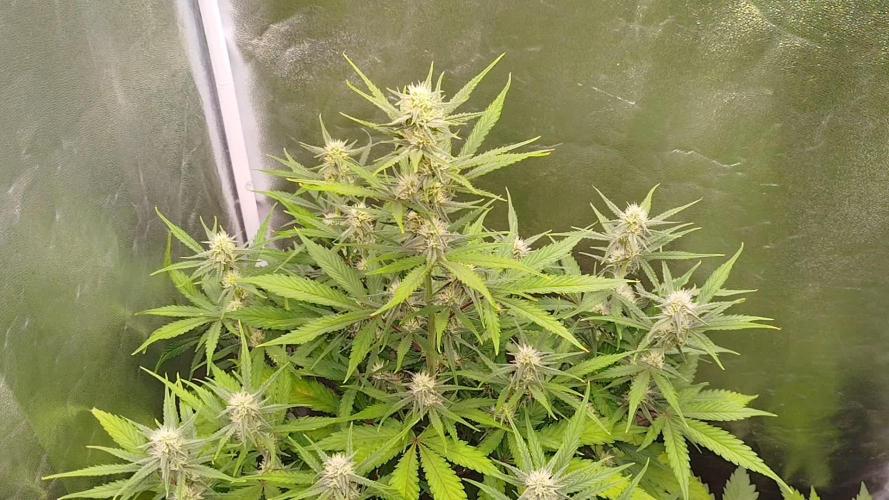
One of the best ever smelling plants I ever had, with an incredible citrus soda pop 🥤 smell!
Stretch is over and a lot of things changed like feeding to Greenhouse Bio and light cycle to 12/12.
Just after changing to 12/12 she started to respond in the next day with more trichomes that is now covering her out

Likes
6
Share


@Sup3rNov4
Follow
Think I may miss the end of the competition she just doesn’t want to ripen. The growth continues


Likes
18
Share


@Dunk_Junk
Follow
Stick a fork in her, she's done.
Look at the timelapse how she goes yellow very quickly!
Shortly after these pics she was harvested.
I note she is VERY sticky.

Likes
18
Share


@eldruida_lamota
Follow
Que pasa familia, vamos con la cosecha de estas Tropicana Cookies Fast Flowering, de FastBuds.
Por dónde empezar, las flores son bien compactas , y van repletas de resina, tienen tonos rosados por dentro muy bonitos, y tiene un aroma súper dulce aunque engañar engaña porque saber sabe más tropical y cítrica.
Es muy sencilla de cultivar, es de ciclo bastante corto aunque también si le dais una semana más no pasa nada agradecer se agradece al final.
Mars hydro:
Code discount: EL420
https://www.mars-hydro.com/
Agrobeta:
https://www.agrobeta.com/agrobetatiendaonline/36-abonos-canamo
Hasta aquí todo, Buenos humos 💨💨💨


Likes
31
Share


@Wicked_Stix
Follow
This girl is the smallest of the group but she is looking nice. Been on 12/12 for a week so hoping to see flowers soon.
Nutrients per gallon
.5 tsp maxigro
.25 tsp maxibloom
.25 tsp armor si
.5 tsp calimagic
.1 tsp 90/10 humic/fulvic acid
Ph to 6.0
Pumping nutrients 24 hours

Likes
Comments
Share

@Drtomb
Follow
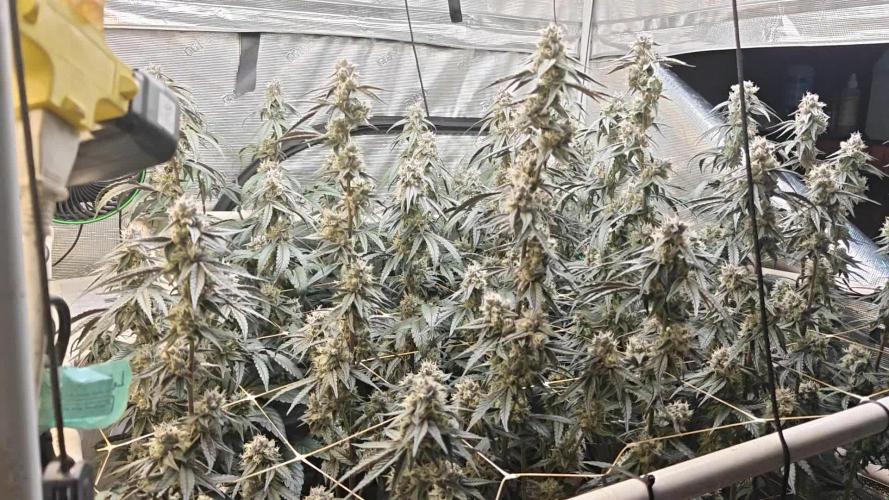
Watching these lava cakes grow is a nice privilege. Ill be pushing them 1 week longer do to a trip change. But I think things will end nicely. 2 more weeks until I start flushing.
Likes
23
Share


@Mr_McNasty408
Follow
Day 36 (1/11/21)
Nutes:
Veg A: 3.83 g/gal
Veg B: 2.58 g/gal
PPM: 1050
Water temp: 59°F
pH: 5.7
Day 37 (1/12/21)
Nutes:
Veg A: 4.6 g/gal
Veg B: 3.1 g/gal
PPM: 1150
Water temp: 59°F
pH: 5.7
Day 38 (1/13/21)
Nutes:
Veg A: 4.6 g/gal
Veg B: 3.1 g/gal
PPM: 1150
Water temp: 60°F
pH: 5.7
Day 39 (1/14/21)
Nutes:
Veg A: 4.6 g/gal
Veg B: 3.1 g/gal
PPM: 1150
Water temp: 62°F
pH: 5.7
Day 40 (1/15/21)
Nutes:
Veg A: 4.6 g/gal
Veg B: 3.1 g/gal
PPM: 1150
Water temp: 62°F
pH: 5.7
Day 41 (1/16/21)
Started running a RO:Tap water mix as recommended by Cropsalt FAQ instead of ph adjuster. PPM comes out about 20ppm higher but that’s no problem.
Nutes mix:
RO:TAP = 15:1 or 120oz:8oz
Veg A: 4.6 g/gal
Veg B: 3.1 g/gal
PPM: 1350
Water temp: 62°F
pH: 5.8
Day 42 (1/17/21)
Starting flower tonight, 12 hours of darkness tonight and for the rest of the grow.
Nutes mix:
RO:TAP = 15:1 or 120oz:8oz
Veg A: 4.6 g/gal
Veg B: 3.1 g/gal
PPM: 1350
Water temp: 60°F
pH: 5.8
Likes
4
Share


@Thibaut
Follow
The girls enjoyed the weather this week nice to see them lile this, we have like 3-4 weeks to go so stay blazin and wait
Likes
1
Share

@Ninjabuds
Follow
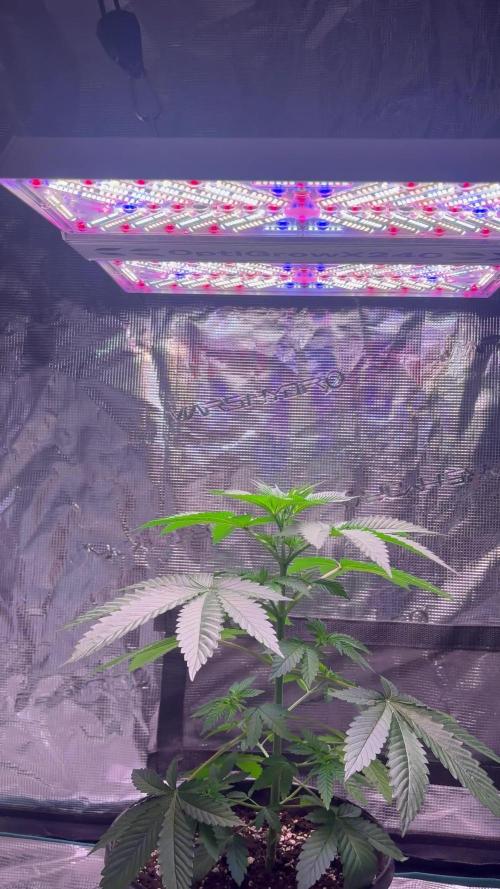
The OptiGrowX240 is doing great. I really can’t wait to see how it performs in flower. All is good so far I’m happy with the light. Definitely a good light for sure
Likes
49
Share


@masterofsmeagol
Follow
6/15. Glad I listened to my intuition and held off watering. IT Rained andctheb again last night. Plants seem to be doingvreal well. Slight burn on lower leaves where it was before from being in the garage and I found on spot that LOOKED like it could've been caused by a pillar but it's right on a burn. I sefoliated one leaf. This is minor stuff. Next watering I'll be adding silica. I'm not giving nutes until the plants tell the need them. The 3 gallon ones may receive nutes first as they'll run out. I'll update as I progress.
Went back over at 8:30. It's just overcast with showers. Plants seemed to like it. They all look good. Noticed a chunk out of a leaf and a POSSIBLE pillar spot. I'm going to have to get the BT out and and give the girls an application. I'm waiting until they settle in a bit more though. I need to start LST as well AND the light dep. Unfortunately "life" has made things difficult. I'll get back over there today though and I'll start the light dep. Kinda makes me wonder though. The 1pth planet I wanted to light deo is tge same size as the others in the much bigger containers. The thought came that maybe I should just hold on to them as extras in case something happens. I also am going to start silica next watering but it will be a few weeks before any nutes are given.
UPDATE: WENT BACK OVER AT FIVE AND TOOK ACSHOT TON OF PICTURES. IM TRYING TO UOLOAD NOW. THINGS ARE POPPING OFF AND IM GETTING A NICE SWEET SKUNKY ODOR. WHILE I WASCTHERE WE GOT A QUICK SHOWER. DIDNT LAST MORE THAN TEN MINUTES BUT IT RAINED HARD. I FOUND A TEMPORARY SPOT TO LIGHT DEP THE TWO PURPLE PUNCH AND THE ONE TENTH PLANET. I DONT SEE ANY LIGHT LEALS AND ITS SURE AS HELL DARKER THAN IT IS AT NIGHT. I'LL SEE HOW IT GOES LEQVING THE COVER ON ALL NIGHT. IF IT DOESNT WORK I MAY JEED TO ADD A FAN OR CHANCECTHE SPACE. I ALMOST DIDNT WANT TO DO THIS AS THE 10TH PLANET IS KEEPING PACE WITH ITS SISTERS, DESPITE THE SMALLER POT. OH WELL I WANT TO GIVE IT A SHOT AND I DONT WANT MY CAGE OVER CROWDED. I'M LOOKONG TO DO A 6:30 TO 6:30 SCHEDULE.
6/16 First night of light dep for the three little ones. I won't be able to call them that soon. I'm currently trying to upload a video. My grow buddy mentioned the droopiness of a couple of my plants in this video and how I hadn't been watering. This kinda scared me so I ran over and checked the too few inches on the two that had a little droop and came out dry. I had some water already phed ready to go (I'm hoping that the ph doesn't change if it's stored a day or two) and used the gallon to moisten the dry topsoil. Looking back over my diary we have had nothing but rain. I then tried the "lift the pot method" and came to the conclusion that these bags were indeed still holding moisture. I assumed they would be considering the thunderstorms we've had. I held off on fullt watering because the weather said the next dry day is going to be Monday. Today is Friday so thats two solid days of rain. Three if you count today through the night. I concentrated my watering of the one gallon on the couple plants that appeared to droop. If it doesn't rain like they say it will I will need to water. I need to set up a decent watering schedule but I need it to hold off raining long enough to do so.
UPDATE: I WENT BACK OVER AND PUT THE 3 GALS IN FOR BED AND CHECKED OUT THE REST OF THE GARDEN. I WATERED THE 3 GAL GIRLS A LITTLE MORE SINCE THEY WONT BE OUTSIDE. THE BIT OF WATER I GAVE SEEMED TO HELP LIFT SOME OF THE GIRLS. AT LEAST I THINK IT DID. THE RAIN SHOULDVE COME ALREADY. I WOULDVE WATERED MORE HAD THE BAGS NOT BEEN SO HEAVY.
6/17 Rained all night which is good. Brought the three transplants out but left them under the overhang so they. Dont get soaked. So far light depoing is going good. Well its only been two nights but we'll see. I'll update as I go. Not feeling well today. Went back over and checked on the plants and did a video. Probably won't get uploaded until tomorrow. I'm giving it a shot. It's raining in good shape. Plants looked fine when I was there. I need to get my supports and my trellis in place. Video won't upload. No suprise. I'll get it tomorrow.
6/18 Uploaded videos if they fuck up from me editing I'm gonna be pissed. Anyway it's still pouring with high winds. I added a couple supports where it looked like it needed it. I need to put my trellis up. I've been able to keep up with the light dep and those plants haven't been used and abused. They stay in the building facing the sun when the weather is this bad. I think they're looking great. I may start a new diary just for them. Sun came out around four. Trying to upload a couple videos but doesn't look like it's going to happen. Tucked the three little ones in at six. It had stopped raining and the wind died down some. If adverse conditions create good plants then I'm on the way to a great harvest. Minor bleaching and burns on a few lower fan leaves and some wrinkling on some from wind burn other than that plants seem to be acclimated. Did a video but will have to wait until tomorrow to upload
6/19 It's not raining! We got four inches this past storm lol. Having the bags raised on pollens I believe has greatly helped. As did the high winds that help dry the soil in the bag. Had to add a few temporary supports. Light dep is going good. Adjusted amd found a better spot. I'm considering getting "pool noodles" or some other thing like a Hulu hoops or pvc pipe and making either a frame on the roof for the entire cage or on top of each individual plants posts so I could roll clear plastic over it when it rains. I'm thinking about later on in the fall when this could really help. I found a roll of plastic. Also thought about putting that up on the back wall but I didn't. What I'm doing right now is working. I just need to keep up with it. I also need a solid watering schedule to stick too. It's hard when each plants needs are different. Oh well. I'm just happy to be growing again. I pray to the cannabis gods and the Lord above himself that I'm not plagued with the problems of last year.
6/20. I'm sick as fuck but I got the little girls out in the sun. Light dep is going good. Plants look great. I'll update when I feel better and if I do anything. Still feel like shit. Luckily I looked up just in time to get to the grow and put the little ones to bed. They were thirsty (especially the bushy 10th planet so I gave them about 3/4 of a gallon of water. Got lots of run off from 10th planet. Didn't notice as much from the others but I was hurrying. I'll upload later. Still sick.
6/21 Plants seem to be doing great. I removed some lower growth on a few just to see how they respond. I'm going to do some defoliation down low and I want to see how the plants respond. I'm planning my first full watering Thursday as we have a real good stretch of weather after that. Grow bags are still heavy as hell so they have sufficient water. I'll be adding silica nextcl watering. Not time for nutes but I think it would be okay to start the silica and in another week I might start small doses of nutes. The light dep on the little girls is go8ng great! It's cool I'll get to sample some of these strains before fall. I'll update after I do something. Tucked the girls in at 6. I might need to think about transplanting that 10th planet in the 3 gallon. I watered until runoff yesterday and it's light as hell today. Plus I fimked it and it's bushy as hell. I've Bern turning it si it gets all angles of the sun. I have a bag of 707 left and a 5 gallon bucket with holes drilled all over it like an air pot and a ten gallon grow bag. This will take some thought. Hot af today. I wad able to lift the grow bags so I decided tomorrow will be the girls first real watering. I think I'll be adding silica and possibly kelp me kelp you due to the heat stress I've been noticing. Nothing bad just a few tacoed leaves. I've had several people that have seen my grow in person tell me that this is by far the healthiest (not biggest I've had bigger) but by farcthe healthies5 crop I've grown. They believe I'll have my best year ever this year. I hope they are right. Vid won't be uploaded until tomorrow.
6/22 WATERED TODAY. I'm still a little gun shy with watering. That fusarium last year pretty much traumatized me. I left the container plants alone. I gave them a little water but not enough to do much. I used a pump sprayer on a mist setting and went one by one and back around gently watering the entire medium. This took forever and I'll be finding a different way to water. I hope this was enough water. I'll check later on and if they look like they want more I give it to them. I started LST on the light dep 10th planet and tucked some branches of a another under the tomato cage. I had missed that earlier. I also went around and cleaned up the bottoms on most. Getting rid of things that will amount to nothing. I noticed what looked like thrip damage on ONE leaf on ONE plant. I also saw a chunk missing from a grasshopper bite and a finger of a fan leaf petiol was broken so I'm going to need to get my ipm up and running. I'm unsure whether I'll be using chemicals or predators. Probably BT and spinosad. That's what I've had the best luck with. I also noticed bottom leaves dying off on the bottom of a couple plants. It was where the burns were though so I'm almost 100% its just related to the light burns they got when i first put them up. I'll be updating the diary as I do more stuff.


Likes
10
Share


@cjaygrows
Follow
Buds are super frosty and sticky, smell like sour dog shit I couldn't ask for anything more my best grow yet
Likes
4
Share


@TiRobotProds
Follow
Cette souche es en forme de sapin, pour l'instant c'est l'une de mes préférée que j'ai faite pousser. Dernier rempotage le 16/10/22 en contenu de 19L.
Likes
2
Share


@TTerpz
Follow
Fed with nutrients on 4/16/25
Watered with 6.8 ph plain water on 4/18/25
Day 5: fade began
4/20/25: fed with nutri

Processing
Likes
Comments
Share


@absolutgrow
Follow
Dear Grow community,
The three RG automatic have grown very well and have so far no complaints. They love the temperature and dont need much water. They have grown very fast and already have a light smell.
Likes
5
Share

@Greendream420felix
Follow
For everyone who like a exotic nice taste and good feeling excellent work from @bar

Likes
14
Share


@GoldenWeedGrower
Follow
D50/F06 - 20/05/23 - Nothing to report
D51/F07 - 21/05/23 - Added water and nutes EC=1.1 pH=5.7
D52/F08 - 22/05/23 - Nothing to report
D53/F09 - 23/05/23 - Added water. EC=1.1 pH=6.4
D54/F10 - 24/05/23 - Added water and nutes EC=1.0 pH=6.3
D55/F11 - 25/05/23 - Start the week out. I set up a system to feeding Nora during my stay out (I'll take some picture about...)
D56/F12 - 26/05/23 - I leave today, 1 week away


