Likes
Comments
Share
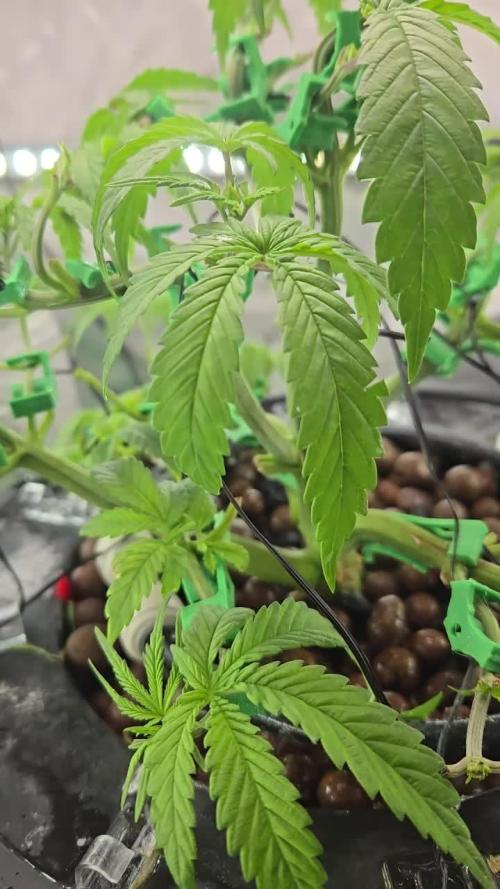
Mixed nutrients today. Last night I added 2 ml of oxy science h202 to 18L of Kamloops City water filtered through our homes water filter, no idea what it does exactly lol. I put an air stone over night and let the water bubble off any chlorine and the rest of the h202, I use microbial mass so I just wanted to sanitize the water but not kill my soil. Mixed in bases first into 21.7 C ph 8.1 Water in the morning. Important not to mix concentrated solutions, I used syringes that I rinsed well between products. I find that with this product you just follow the instructions and it’s pretty awesome results.
Likes
11
Share
@DonPeyote
Follow
Cepa muy golosa, he abonado en abundancia, reacciona vigorosamente pero comenzó a mostrar algunas carencias leves. De los inicios de floración más prometedores que he tenido.
Likes
34
Share
Yellow butterfly came to see me the other day; that was nice. Starting to show signs of stress on the odd leaf, localized isolated blips, blemishes, who said growing up was going to be easy! Smaller leaves have less surface area for stomata to occupy, so the stomata are packed more densely to maintain adequate gas exchange. Smaller leaves might have higher stomatal density to compensate for their smaller size, potentially maximizing carbon uptake and minimizing water loss. Environmental conditions like light intensity and water availability can influence stomatal density, and these factors can affect leaf size as well. Leaf development involves cell division and expansion, and stomatal differentiation is sensitive to these processes. In essence, the smaller leaf size can lead to a higher stomatal density due to the constraints of available space and the need to optimize gas exchange for photosynthesis and transpiration. In the long term, UV-B radiation can lead to more complex changes in stomatal morphology, including effects on both stomatal density and size, potentially impacting carbon sequestration and water use. In essence, UV-B can be a double-edged sword for stomata: It can induce stomatal closure and potentially reduce stomatal size, but it may also trigger an increase in stomatal density as a compensatory mechanism. It is generally more efficient for gas exchange to have smaller leaves with a higher stomatal density, rather than large leaves with lower stomatal density. This is because smaller stomata can facilitate faster gas exchange due to shorter diffusion pathways, even though they may have the same total pore area as fewer, larger stomata. Leaf size tends to decrease in colder climates to reduce heat loss, while larger leaves are more common in warmer, humid environments. Plants in arid regions often develop smaller leaves with a thicker cuticle and/or hairs to minimize water loss through transpiration. Conversely, plants in wet environments may have larger leaves and drip tips to facilitate water runoff. Leaf size and shape can vary based on light availability. For example, leaves in shaded areas may be larger and thinner to maximize light absorption. Leaf mass per area (LMA) can be higher in stressful environments with limited nutrients, indicating a greater investment in structural components for protection and critical resource conservation. Wind speed, humidity, and soil conditions can also influence leaf morphology, leading to variations in leaf shape, size, and surface characteristics. Small leaves: Reduce water loss in arid or cold climates. Environmental conditions significantly affect gene expression in plants. Plants are sessile organisms, meaning they cannot move to escape unfavorable conditions, so they rely on gene expression to adapt to their surroundings. Environmental factors like light, temperature, water, and nutrient availability can trigger changes in gene expression, allowing plants to respond to and survive in diverse environments. Depending on the environment a young seedling encounters, the developmental program following seed germination could be skotomorphogenesis in the dark or photomorphogenesis in the light. Light signals are interpreted by a repertoire of photoreceptors followed by sophisticated gene expression networks, eventually resulting in developmental changes. The expression and functions of photoreceptors and key signaling molecules are highly coordinated and regulated at multiple levels of the central dogma in molecular biology. Light activates gene expression through the actions of positive transcriptional regulators and the relaxation of chromatin by histone acetylation. Small regulatory RNAs help attenuate the expression of light-responsive genes. Alternative splicing, protein phosphorylation/dephosphorylation, the formation of diverse transcriptional complexes, and selective protein degradation all contribute to proteome diversity and change the functions of individual proteins. Photomorphogenesis, the light-driven developmental changes in plants, significantly impacts gene expression. It involves a cascade of events where light signals, perceived by photoreceptors, trigger changes in gene expression patterns, ultimately leading to the development of a plant in response to its light environment. Genes are expressed, not dictated! While having the potential to encode proteins, genes are not automatically and constantly active. Instead, their expression (the process of turning them into proteins) is carefully regulated by the cell, responding to internal and external signals. This means that genes can be "turned on" or "turned off," and the level of expression can be adjusted, depending on the cell's needs and the surrounding environment. In plants, genes are not simply "on" or "off" but rather their expression is carefully regulated based on various factors, including the cell type, developmental stage, and environmental conditions. This means that while all cells in a plant contain the same genetic information (the same genes), different cells will express different subsets of those genes at different times. This regulation is crucial for the proper functioning and development of the plant. When a green plant is exposed to red light, much of the red light is absorbed, but some is also reflected back. The reflected red light, along with any blue light reflected from other parts of the plant, can be perceived by our eyes as purple. Carotenoids absorb light in blue-green region of the visible spectrum, complementing chlorophyll's absorption in the red region. They safeguard the photosynthetic machinery from excessive light by activating singlet oxygen, an oxidant formed during photosynthesis. Carotenoids also quench triplet chlorophyll, which can negatively affect photosynthesis, and scavenge reactive oxygen species (ROS) that can damage cellular proteins. Additionally, carotenoid derivatives signal plant development and responses to environmental cues. They serve as precursors for the biosynthesis of phytohormones such as abscisic acid () and strigolactones (SLs). These pigments are responsible for the orange, red, and yellow hues of fruits and vegetables, while acting as free scavengers to protect plants during photosynthesis. Singlet oxygen (¹O₂) is an electronically excited state of molecular oxygen (O₂). Singlet oxygen is produced as a byproduct during photosynthesis, primarily within the photosystem II (PSII) reaction center and light-harvesting antenna complex. This occurs when excess energy from excited chlorophyll molecules is transferred to molecular oxygen. While singlet oxygen can cause oxidative damage, plants have mechanisms to manage its production and mitigate its harmful effects. Singlet oxygen (¹O₂) is considered a reactive oxygen species (ROS). It's a form of oxygen with higher energy and reactivity compared to the more common triplet oxygen found in its ground state. Singlet oxygen is generated both in biological systems, such as during photosynthesis in plants, and in cellular processes, and through chemical and photochemical reactions. While singlet oxygen is a ROS, it's important to note that it differs from other ROS like superoxide (O₂⁻), hydrogen peroxide (H₂O₂), and hydroxyl radicals (OH) in its formation, reactivity, and specific biological roles. Non-photochemical quenching (NPQ) protects plants from damage caused by reactive oxygen species (ROS) by dissipating excess light energy as heat. This process reduces the overexcitation of photosynthetic pigments, which can lead to the production of ROS, thus mitigating the potential for photodamage. Zeaxanthin, a carotenoid pigment, plays a crucial role in photoprotection in plants by both enhancing non-photochemical quenching (NPQ) and scavenging reactive oxygen species (ROS). In high-light conditions, zeaxanthin is synthesized from violaxanthin through the xanthophyll cycle, and this zeaxanthin then facilitates heat dissipation of excess light energy (NPQ) and quenches harmful ROS. The Issue of Singlet Oxygen!! ROS Formation: Blue light, with its higher energy photons, can promote the formation of reactive oxygen species (ROS), including singlet oxygen, within the plant. Potential Damage: High levels of ROS can damage cellular components, including proteins, lipids, and DNA, potentially impacting plant health and productivity. Balancing Act: A balanced spectrum of light, including both blue and red light, is crucial for mitigating the harmful effects of excessive blue light and promoting optimal plant growth and stress tolerance. The Importance of Red Light: Red light (especially far-red) can help to mitigate the negative effects of excessive blue light by: Balancing the Photoreceptor Response: Red light can influence the activity of photoreceptors like phytochrome, which are involved in regulating plant responses to different light wavelengths. Enhancing Antioxidant Production: Red and blue light can stimulate the production of antioxidants, which help to neutralize ROS and protect the plant from oxidative damage. Optimizing Photosynthesis: Red light is efficiently used in photosynthesis, and its combination with blue light can lead to increased photosynthetic efficiency and biomass production. In controlled environments like greenhouses and vertical farms, optimizing the ratio of blue and red light is a key strategy for promoting healthy plant growth and yield. Understanding the interplay between blue light signaling, ROS production, and antioxidant defense mechanisms can inform breeding programs and biotechnological interventions aimed at improving plant stress resistance. In summary, while blue light is essential for plant development and photosynthesis, it's crucial to balance it with other light wavelengths, particularly red light, to prevent excessive ROS formation and promote overall plant health. Oxidative damage in plants occurs when there's an imbalance between the production of reactive oxygen species (ROS) and the plant's ability to neutralize them, leading to cellular damage. This imbalance, known as oxidative stress, can result from various environmental stressors, affecting plant growth, development, and overall productivity. Causes of Oxidative Damage: Abiotic stresses: These include extreme temperatures (heat and cold), drought, salinity, heavy metal toxicity, and excessive light. Biotic stresses: Pathogen attacks and insect infestations can also trigger oxidative stress. Metabolic processes: Normal cellular activities, particularly in chloroplasts, mitochondria, and peroxisomes, can generate ROS as byproducts. Certain chlorophyll biosynthesis intermediates can produce singlet oxygen (1O2), a potent ROS, leading to oxidative damage. ROS can damage lipids (lipid peroxidation), proteins, carbohydrates, and nucleic acids (DNA). Oxidative stress can compromise the integrity of cell membranes, affecting their function and permeability. Oxidative damage can interfere with essential cellular functions, including photosynthesis, respiration, and signal transduction. In severe cases, oxidative stress can trigger programmed cell death (apoptosis). Oxidative damage can lead to stunted growth, reduced biomass, and lower crop yields. Plants have evolved intricate antioxidant defense systems to counteract oxidative stress. These include: Enzymes like superoxide dismutase (SOD), catalase (CAT), and various peroxidases scavenge ROS and neutralize their damaging effects. Antioxidant molecules like glutathione, ascorbic acid (vitamin C), C60 fullerene, and carotenoids directly neutralize ROS. Developing plant varieties with gene expression focused on enhanced antioxidant capacity and stress tolerance is crucial. Optimizing irrigation, fertilization, and other management practices can help minimize stress and oxidative damage. Applying antioxidant compounds or elicitors can help plants cope with oxidative stress. Introducing genes for enhanced antioxidant enzymes or stress-related proteins over generations. Phytohormones, also known as plant hormones, are a group of naturally occurring organic compounds that regulate plant growth, development, and various physiological processes. The five major classes of phytohormones are: auxins, gibberellins, cytokinins, ethylene, and abscisic acid. In addition to these, other phytohormones like brassinosteroids, jasmonates, and salicylates also play significant roles. Here's a breakdown of the key phytohormones: Auxins: Primarily involved in cell elongation, root initiation, and apical dominance. Gibberellins: Promote stem elongation, seed germination, and flowering. Cytokinins: Stimulate cell division and differentiation, and delay leaf senescence. Ethylene: Regulates fruit ripening, leaf abscission, and senescence. Abscisic acid (ABA): Plays a role in seed dormancy, stomatal closure, and stress responses. Brassinosteroids: Involved in cell elongation, division, and stress responses. Jasmonates: Regulate plant defense against pathogens and herbivores, as well as other processes. Salicylic acid: Plays a role in plant defense against pathogens. 1. Red and Far-Red Light (Phytochromes): Red light: Primarily activates the phytochrome system, converting it to its active form (Pfr), which promotes processes like stem elongation and flowering. Far-red light: Inhibits the phytochrome system by converting the active Pfr form back to the inactive Pr form. This can trigger shade avoidance responses and inhibit germination. Phytohormones: Red and far-red light regulate phytohormones like auxin and gibberellins, which are involved in stem elongation and other growth processes. 2. Blue Light (Cryptochromes and Phototropins): Blue light: Activates cryptochromes and phototropins, which are involved in various processes like stomatal opening, seedling de-etiolation, and phototropism (growth towards light). Phytohormones: Blue light affects auxin levels, influencing stem growth, and also impacts other phytohormones involved in these processes. Example: Blue light can promote vegetative growth and can interact with red light to promote flowering. 3. UV-B Light (UV-B Receptors): UV-B light: Perceived by UVR8 receptors, it can affect plant growth and development and has roles in stress responses, like UV protection. Phytohormones: UV-B light can influence phytohormones involved in stress responses, potentially affecting growth and development. 4. Other Colors: Green light: Plants are generally less sensitive to green light, as chlorophyll reflects it. Other wavelengths: While less studied, other wavelengths can also influence plant growth and development through interactions with different photoreceptors and phytohormones. Key Points: Cross-Signaling: Plants often experience a mix of light wavelengths, leading to complex interactions between different photoreceptors and phytohormones. Species Variability: The precise effects of light color on phytohormones can vary between different plant species. Hormonal Interactions: Phytohormones don't act in isolation; their interactions and interplay with other phytohormones and environmental signals are critical for plant responses. The spectral ratio of light (the composition of different colors of light) significantly influences a plant's hormonal balance. Different wavelengths of light are perceived by specific photoreceptors in plants, which in turn regulate the production and activity of various plant hormones (phytohormones). These hormones then control a wide range of developmental processes.
Likes
10
Share
Week is going super well, did notice trichomes are starting to develop more in the coming weeks. Still struggling with watering mainly because i have 3 different strains and i dont know the flow yet. Watering schedule is thrice a week, I nutrient feed on sundays, water on wednesday and compost tea on fridays 500ml each pot. Will be monitoring the trichomes hereafter, today is day 90 from germination, super happy with the results no stunted growth or slow growth. Will set my harvest day between day 120-150. I am targetting longer harvest time for the purple punch because they didnt fight for the light and bullied by 2 monstrous sativas. Since it is indica dominant, i am going to chop them once i see 70% amber
Likes
13
Share
@WeedM8
Follow
Hello m8 welcome to this journey with me in this diary will have very interesting strains hope u find something useful Persian Girl - [ ] 1st week Veg: germinated in substrate lighting very close so it jets medium high humidity after the 3rd day they started sprouting - [ ] 2nd week Veg: this week my ventilator broke down and as the temperature stayed very warm nothing developed much - [ ] 3rd week Veg:fortunately this week i had fixed the ventilation and the temperature has go down a bit allowing the little plants to develop and reinforce - [ ] 4th week:very good developments in this week I already started feeding a bit two times but i didn’t have to…once was enough - [ ] 5th week Veg:this week they were very strong green i only had to water them good and keep the ventilators going no stop .They have good hight already ,but as i have to strains together. I want to transplant them when the hight of the other one have stretched… I’m thinking to transplant next week if not the next one - [ ] 6th week Veg - [ ] 7th week Veg - [ ] 1st week Fl - [ ] 2nd week Fl - [ ] 3rd week Fl - [ ] 4th week Fl - [ ] 5th week Fl - [ ] 6th week Fl - [ ] 7th week Fl if this was useful please like and follow
Likes
Comments
Share
Vamos familia, actualizamos la octava semana de floración de estas Sagrada amnesia de Seedstockers, salieron las 5 de 5, 100% ratio éxito. Aplicamos varios productos de Agrobeta, que son increíbles para aportar una buena alimentación a las plantas.( Justo esta variedad 2 de 3 son bastante sensibles y marcan en las hojas exceso pero no están las puntas quemadas) Temperatura y humedad dentro de los rangos correctos dentro de la etapa de floración. La tierra utilizada es al mix top crop, por cambiar. De 5 ejemplares seleccioné los 3 mejores para completar el indoor y trasplanté directamente a macetas de 7 litros, el fotoperiodo a 12/12, también aplique una buena poda de bajos, se ven bien sanas las plantas, tienen un buen color, ya progresan las flores, llevan ya una tricomada…increíble. Agrobeta: https://www.agrobeta.com/agrobetatiendaonline/36-abonos-canamo Hasta aquí todo, Buenos humos 💨💨.
Likes
5
Share
@Kickdrum
Follow
She has left the Sunset Sherberts behind, and deciced to take advantage of the nice and toasty environment. Jedi (her name) has finally broken through. Steady at 21.5-24 C. RH at 65-75% with Spider Farmer Huimidifier and Dehumidifier, shooting for VPD. (day 1) Let's quickly review the key new components I've planned to integrate or have already: Circulation Pump - Adding this to the 14L Mars Hydro reservoir will ensure even fresh, circulated-for-a-miniute-every-hour, batch of water (and later nutes) to the auto-drip system, maintaining optimal feeding for my plants when I am away, next week. Biobizz & BioTabs Supplements - These organic nutrient and microbial products will provide a comprehensive and balanced feeding regimen for my plants. Auto-Drain Potted Plant Stands - The wheeled, auto-draining stands will simplify watering and prevent any spills or overflows. Inkbird Humidity Controller - Pairing this with the Spider Farmer humidifier and dehumidifier will allow me to precisely maintain the ideal VPD (Vapor Pressure Deficit) levels. LST Clips, Trellis Net & Shelves - These will help me maximize my grow space and optimize the plant canopy for optimal light exposure. Pest Control Strips - An important preventative measure to stay ahead of any potential pest issues. Smart Soil Sensors - The Zigbee-enabled sensors will provide vital data on soil moisture, temperature, and more, which I can monitor remotely. Air Purifier/Ion Generator - Ensuring my grow environment has clean, high-quality air circulation. With all of these elements in place, combined with my existing setup and the automated control via the iGrow app, I'm truly creating a "hands-off" grow operation. (theoretically, with a bro, coming to phiscally check too)....The ability to monitor and adjust key parameters remotely while I'm away in Italy. Running on Sunrise/set mode(18/6) over the "seedling" scene, in iGrow app, keeping track of DLI and later on, the Adlites will come into play. Temp at 23.5 and RH is at 60%.
Likes
14
Share
@BLAZED
Follow
W15 (8-5 to 14-5) 8-5 Temperature: 26.5 degrees (lights on) 20.1 degrees (lights off) Humidity: 58% (highest) 45% (lowest) Opened the reservoir for a couple of minutes. Set the light to 80% strength. 9-5 Temperature: 28 degrees (lights on) 21 degrees (lights off) Humidity: 61% (highest) 42% (lowest) No pictures. 10-5 Temperature: 28.6 degrees (lights on) 21.4 degrees (lights off) Humidity: 60% (highest) 40% (lowest) Added 10L to the reservoir. Dry weight: Gorilla Kush #1: 4.0 kg. Gorilla Kush #2: 4.5 kg. The temperature outside is getting hotter, so the tent is warming up quite a bit aswell. The 2 Gorilla Kush plants are not liking the high temperatures, not a good sign :( 11-5 Temperature: 29.8 degrees (lights on) 20.7 degrees (lights off) Humidity: 59% (highest) 31% (lowest) No pictures. Opened the reservoir for a couple of minutes. 12-5 Temperature: 30.1 degrees (lights on) 21.2 degrees (lights off) Humidity: 51% (highest) 36% (lowest) Opened the reservoir for a couple of minutes. 13-5 Temperature: 31 degrees (lights on) 21.8 degrees (lights off) Humidity: 53% (highest) 40% (lowest) No pictures. Opened the reservoir for a couple of minutes. 14-5 Temperature: 28.7 degrees (lights on) 20.6 degrees (lights off) Humidity: 60% (highest) 39% (lowest) Dry weight: Gorilla Kush #1: 5.6 kg. Gorilla Kush #2: 5.6 kg. Added 8L to the reservoir. Opened the reservoir for a couple of minutes.
Likes
10
Share
the girls looked like the second week of his life. Now they are a little older and already look like adult plants.
Likes
30
Share
@SAC87
Follow
Day 63 Flower Well we’re coming to the end of the grow cycle. These plants are looking great. They’re starting to get a bit of purpling on the leaves and trichomes are clouding up. I flushed with 7 gallons of plain water with typhoon cleanse. It’s stripped about 300 ppm per gallon, got my runoff down to 110, and probably do an RO flush if I need to push it longer. I am very happy with the stank, quality, density and trichome coverage on these buds. The smell is a ripe sweet lemon with and earthy hazy musk. Could use more lemon but I’m not going to complain. My house is rank and can be smelled outside even with the carbon filter going 24/7. I’m super excited to see how the effect is on this strain. It’s one of my all time favorites and I’m pumped that it has turned out to be quality!!! Happy Growing 🌱
Likes
8
Share
Likes
24
Share
@Kirsten
Follow
14.1.25: I've been readjusting the LST. I just took all the pegs out and reshaped her. I got some new LST equipment in the mail today, have been glad to have more pegs. I got some clips too, but they don't seem to stay on 😕 I'm currently only using the pegs, I have some thicker soft wire, but I forgot I don't have pliers to cut it! Also I'm running very low on Biobizz nutrients, so that could be bad 🤞 18.1.25: I have done another large defoliation on PPP1 and PPP2. Also, moderate defoliation on all other plants today. All LST ties and pegs are readjusted. I have turned up the light to 90%. Same distance of between 24-28 inches, depending on height of specific plant. I have increased the dosage of Biobizz Bio-Grow and Fish Mix to give an extra boost of Nitrogen as several plants were showing yellowing. They have responded very well to this. Unfortunately I ran out of my Biobizz nutrients and PH UP. I'm currently using Bicarbonate of Soda to increase the PH after the nutes PH comes out to about 4.1. Obviously, that uses a lot and I only had a 250ml bottle, which I used last run too. This run I have 9 plants. The only thing I'm worried about is the salt build up. Have you used it before? Or any other natural way to increase PH? Please let me know! I've also added Biobizz Fish Mix to help with the extra Nitrogen needed. Watering with 1ltr of dechlorinated water PH'd to 6.3 with the following nutrients;- ♡ 4ml Biobizz Fish Mix ♡ 4ml Biobizz Bio-Grow ♡ 2ml Biobizz Bloom ♡ 2ml Biobizz Top Max ♡ 2ml Cal-Mag ♡ 2ml Ecothrive Flourish. I water with this every 3 days. I did order some more Biobizz Bio-Grow and Bio Bloom. I found some at a reasonable price on Amazon. I still have about 800 ml of Biobizz Fish Mix left, too. It is fairly expensive this time as the plants are hungrier this run. I also got a new bag of Canna coco, which I may use to add a top dress with some dry amendments. Which hopefully will save some cash on the bottled nutrients and stretch out until the end of this run without having to buy anymore. I have purchased a funnel to pour the water. It is difficult, due to the shape of my LST, to water precisely. I have spilt it all over the tent several times 🙄 I've also ordered a 2 litre jug. Currently, I'm mixing water for 9 plants individually in a 1 litre jug. It's tideous. Hopefully, this will solve the issues. Cleaning the tent after watering every time isn't my idea of efficiency 😅 Thanks for checking out my diary 🍃 ✌️
Likes
8
Share
Likes
6
Share
Semana de transición entre el abono para el periodo vegetativo (Bio Vega) y el abono que utilizaremos durante el periodo de floración (Bio Flores). El primero más rico en nitrógeno y el segundo, en fósforo, magnesio y potasio. Mezclo Bio Rhizotonic + Bio Vega + Bio Flores y riego con 50 litros de agua, todo el cultivo... Alterno riegos cada tres días, unos con abono y otros con agua. La próxima semana, elimináremos Bio Vega.
Processing
Likes
12
Share
@Order_66
Follow
Good week loads of growth, its getting as tall as I can handle so hopefully not too much more height. I have started the bloom nutes and stopped feeding grow but ill keep the root stim for a week or 2 more. I've been taking leaves gradually as they block out light but trying to keep plenty. It's drinking loads and looks nice an healthy flowers are coming in nicely can't wait to see some frost and the buds start to fatten. Happy smoking 🚬
Likes
93
Share
@MrJones
Follow
Mr-Jones Shockwave F2 🔹🔹🔹🔹🔹🔹WEEKLY GOALS🔹🔹🔹🔹🔹🔹 🌞Environment - 75/80℉ and 45/50% Humidity 💧 Feeding - Using "Super Coco" amended soil. compost teas, Dechlorinated H20 PH/6.5 Fish Fertilizer, Started feeding the plants because they are only in 1-gallon pots. 🍃Training / towards the end of the week will be Schwazzing the plants, along with cleaning out the bottoms,. 🕷️ IPM - Will be using Green Cleaner" 1 OZ per Gallon, and CannControl from Mammoth alternating between product each month for Integrated Pest Management. 💡Mars Hydro FC 4800 / 480W Led Grow Light - "Instagram: MarsHydro_Aliexpress"💡 🔹🔹🔹🔹🔹🔹🔹🔹🔹🔹🔹🔹🔹🔹🔹🔹🔹🔹 📜- Rambling - These buds are just an odd shape, they look good, but just odd, they are smelling great and swelling up nicely! Looking like I will need to defoliate again later in the week. 🔹🔹🔹🔹🔹🔹🔹🔹🔹🔹🔹🔹🔹🔹🔹🔹🔹🔹 ▶️Sunday 12.13.20 / The are like clockwork, 1 quart of the feeding regiment daily ▶️Monday 12.14.20 / Fed with BipBiz Regiment ▶️Tuesday 12.15.20 / Fed with BipBiz Regiment, uploaded a few pictures, these girls are really growing well, and starting to get frosty! ▶️Wednesday 12.16.20 / Fed with BipBiz Regiment ▶️Thursday 12.17.20 / So I did the final round of Schwazzing, basically, heavy defoliation, fed the plants today with Recharge, they should do great, the light penetration and airflow are awesome! ▶️Friday 12.18.20 / Fed with Recharge / looking good and recovery appears to be favorable. ▶️Saturday 12.19.20 / Fed with BioBiz Regiment, the recovery from the final defoliation looks great the girls are looking great, the buds are just stacking heavy! 🔹🔹🔹🔹🔹🔹🔹🔹🔹🔹🔹🔹🔹🔹🔹🔹🔹🔹