The Grow Awards 2026 🏆 








Likes
Comments
Share
@MG2009
Follow
01/27/2021
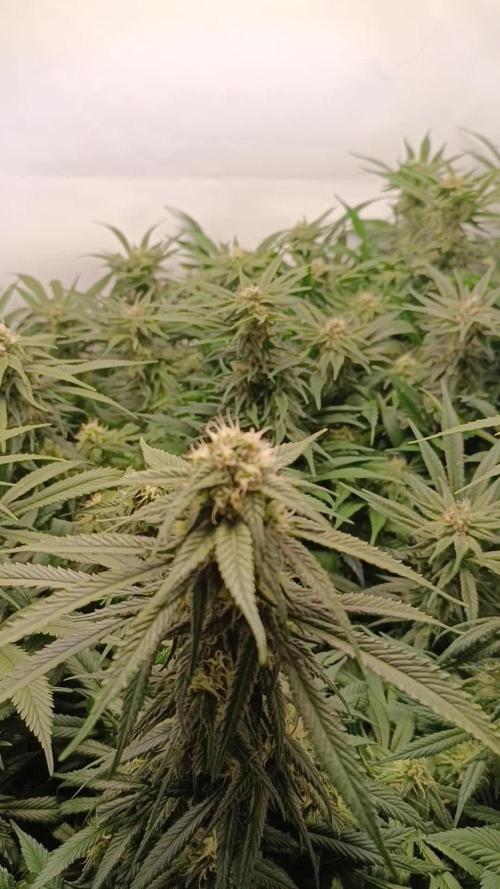
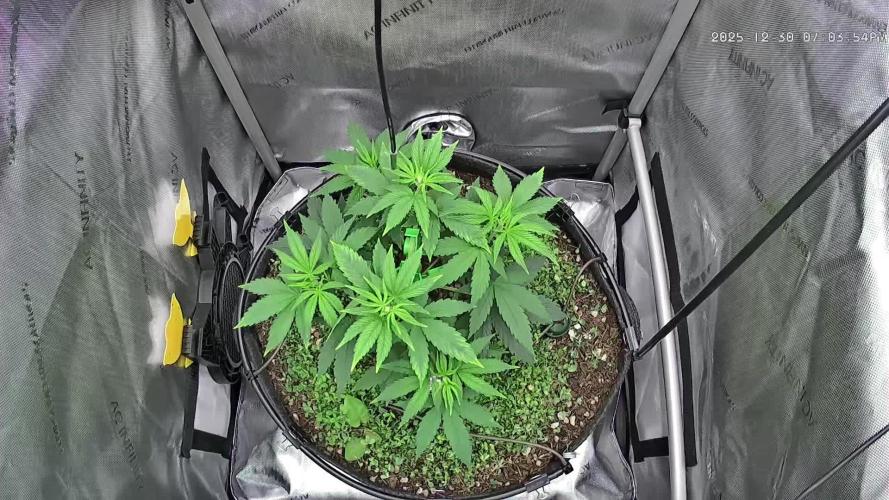
Flowering going well
Flowering #2,#3,#6 #6 is a week ahead of#2,#3 will put others in on week 4 for a staggered harvesting
01/30/2022
watered with fungal tea and some aloe mixed in for amino acids and other goodness. Well see how she progresses in 4 days
Also working on some banana peel tea to give a boost of potassium if I do next week it should be available for week 6-7.
Ps.
Fuzzy Mellon (bag seed male)
I will pollinate one lucky branch on #6 as she is my favorite. But number 3(tall and lanky one) will get pollination of one branch as well.
I can't wait to see how they recombine with fuzzy melon smell mixed with burnt rubber and model glue and pine.
#2 no pollination (smaller one) #5 (bonsai) and #8 are males. So 3 female out of 8 seeds. Going to make some feminized seeds next time,so I'll have plenty of female's for a staggard harvest.
Likes
46
Share
@LittleBigTrees
Follow
Pulling the top fan leaves to allow the side branches to catch up.

Likes
16
Share
@eldruida_lamota
Follow
Vamos familia, actualizamos la quinta semana de floración de estas Panty Punch de Seedstockers, salieron 3, que van creciendo a buen ritmo aunque marquen una pequeña deficiencia ya estoy solucionandola, veremos cómo progresan.
Empezamos añadiendo varios productos de la gama de Agrobeta para la
Floración.
Temperatura y humedad dentro de los rangos correctos.
Vamos viendo cómo avanzan estas próximas semanas.
Agrobeta:
https://www.agrobeta.com/agrobetatiendaonline/36-abonos-canamo
Hasta aquí todo, Buenos humos 💨💨💨

Likes
1
Share
@DrGreenbutterThumb
Follow
Pretty heavy yield for only 2 plants they smell and look astounding.
Harvested in 2 parts. To allow the lower buds to densen and mature.
Likes
Comments
Share
@Rhah420
Follow
Es sieht ganz gut aus bei den Ladys. Ich habe obenrum nochmal etwas entlaubt, große Schnitte mache ich jetzt nicht mehr. Ich gebe nun bereits seit 4 Tagen PK 13/14 und werde das die nächsten 4 Tage weiter tun. Ich bin nun beim Maximum der nährstoff dosis angekommen und senke sie nach dem PK 13/14 wieder etwas ab.

Likes
11
Share
@HegauHillsFarmers_M11
Follow
Tag 63 - Ende der 9. Woche.
Die Blüten entwickeln sicher super und duften extrem. Der Hauptstamm wird schwer, sodass ich die Pflanzen etwas stützen muss, damit sie nicht biegen. Das Harz an den Blüten hat diese Woche nochmal deutlich zugelegt.
In dieser Woche habe ich den Dünger angepasst und Big Bud durch Overdrive ausgetauscht um die Blüten zu härten.
Diesen Vorgang werde ich vermutlich nächste Woche nochmal wiederholen und dann langsam aber sicher mit dem spülen beginnen.
Wir beginnen nun mit der 7. Blütenwoche.
An Tag 57 wurde die Pflanze gedüngt.
Nährstofflösung:
2 ml/l - B-52 Advanced Nutrients.
4 ml/l - pH Perfect Sensi Bloom Part A
4 ml/l - pH Perfect Sensi Bloom Part B
2 ml/l - Bud Candy Advanced Nutrients.
2 ml/l - Overdrive Advanced Nutrients.
Davon hat die Pflanze 1l an Tag 57 erhalten.


Likes
17
Share
@Sativa_Juice_Grows
Follow
Shes coming along well
Branches are getting heavy
gonna have to prop some up soon
Saw like 3 or 4 amber trichomes.
Still looks like she has a little of
time left. Unfortunately I have to move
so im hoping theyre ready in the next 30-45 days.
Smells alot like mashed blueberries more than candy now.
Likes
8
Share
@Portnugs
Follow
Resin is increasing and looks like bud sites are ready to start putting on some bulk. Issue with low ph drift reaching 5.2 so I decreased 50ppm with distilled water without calmag to soften the water and counter the drift.
After decreasing ppm, ph drift continues, so I flushed for 2 days with distilled water and added back nutrients at half strength to increase to 800 ppm over time.
Likes
6
Share
@NANTANLUPAN
Follow
It is finishing its fifth week of flowering, every time I am convinced of its quality genetics👽, it is a very healthy variety🙏 it copes well with stress and bad weather⚡☁️☀️, it has a sweet orange smell🍊it is very sticky🍯, I hope it will show its colorful genetics 💜

Likes
165
Share
@Tropicannibis_Todd
Follow
💩Holy Crap Growmies We Are Back💩
So what do you say we have some fun 👈 We got some EXOTIC SEEDS 👉 👻👻👻MONSTERMASH👻👻👻 😛
Well my friends we are just at the 70 mark and as you can see shes doing great 👈
👉 So folks , she's been quite the little monster , and she's building some nice buds 👈 Shes the only one that hasn't had any real issues 😎
Lights being readjusted and chart updated .........👍
👉I used NutriNPK for nutrients for my grows and welcome anyone to give them a try .👈
👉 www.nutrinpk.com 👈
NutriNPK Cal MAG 14-0-14
NutriNPK Grow 28-14-14
NutriNPK Bloom 8-20-30
NutriNPK Bloom Booster 0-52-34
I GOT MULTIPLE DIARIES ON THE GO 😱 please check them out 😎
👉THANKS FOR TAKING THE TIME TO GO OVER MY DIARIES 👈

Likes
4
Share
@frenchylovegrow
Follow
✋Ding Dong le Cut a sonné pour les belles demoiselles la semaine dernière après une belle floraison
J'adore son feuillage qui à fait une belle sénescence et surtout c'est feuilles légèrement violet 😍 Remplit de trichomes 😍
Partis pour une petite semaine minimum de séchages et en bocaux 😎
Je vous dis à bientôt pour le résultat final 😉

Likes
24
Share
@DeepRootsGrowTrees
Follow
SWISS DREAM ROSE🌹 CBD AUTO
KANNABIA SEEDS
WEEK #5 Overall June 23rd-30th
Week #2 Flower
This week I had to adjust the feeding a little as she got a few burn spots on the leaves new organic soil and nutrients so learning what the plant wants and doesn't want.
Stay Growing!!
Kannabia.com
SWISS DREAM RIDE🌹 AUTO

Likes
2
Share

Likes
Comments
Share
@Chronickarl
Follow
Trichromes are starting to be produced and buds are starting to form and get sticky, each plant is developing a nice smell but the strawberry is out performing the rest by a mile definitely a vigorous strain that just wants to go go go! Inter node spacing is crazy and looks like the girls are setting up to make some fat buds hopefully

Likes
7
Share
@Alvareas
Follow
Die Pflanze wächst und gedeiht.
Am ersten Tag der Woche, konnte ich die nächsten Triebe, ein weiteres Mal, toppen.
Die letzten verbliebenen Triebe, wurden am 4 Tag der Woche, zum letzten Mal getoppt.
Somit sind wir bei 12 Trieben und mit diesen soll es auch in die Blüte gehen.
Damit die Triebe möglichst auf gleicher höhe bleiben, habe ich an Tag 5 damit begonnen, die Triebe in der nächsten Ebene, mit LST-Clips zu trainieren.
Was wieder sehr gut funktioniert hat, die Pflanze wird breiter und bleibt auf einer Höhe.
Die Luftfeuchtigkeit wurde wieder etwas gesenkt im laufe der Woche und die LED ab dem 4 Tag auf 30% erhöht.
Der Abstand der LED wurde so angepasst, dass ich auf ca. 500 PPFD und einen DLI 34 gekommen bin.
Der Abstand der LED wurde nicht an das Pflanzen Wachstum angepasst, so das am Ende der Woche ca. 550 PPFD und ein DLI von 36, bei der Pflanze angekommen ist.
Sollte nichts mehr Gravierendes dazwischenkommen, lasse ich die Pflanze jetzt noch ein wenig wachsen und stelle dann im laufe der nächsten Woche auf 12/12 und leite die Blüte ein.
Die Parameter in Woche 5:
Controller Einstellung Tag: Advanced AI Luftfeuchtigkeit 55% - 65%
Controller Einstellung Nacht: Advanced AI Luftfeuchtigkeit 50% - 60%
Durchschnittliche Tagestemperatur: 26,9 Grad
Durchschnittliche Nachttemperatur: 23,2 Grad
Durchschnittliche Luftfeuchtigkeit Tag: 60,3%
Durchschnittliche Luftfeuchtigkeit Nacht: 56,8%
Durchschnittlicher VPD Tag: 1,2
Durchschnittlicher VPD Nacht: 1,1
LED Leistung: 30% = 120 Watt
Beleuchtungsdauer: 18 Stunden
Umluft: Stufe 1 oszillierend


Likes
4
Share
@MichaelMan
Follow
Planted them into 20L hydroponic pots. Diy hydroponic system. Very easy to do and save money.
Topped them so the lower branches can keep up with higeher ones.
Defoliated lower ones. They didnt get any light.
Planning to keep them for two weeks in this water. Advanced nutrients recommend one week but lets see.
Likes
13
Share
@CalGonJim
Follow
11/6 Monday I gave them each a gallon of water today late bloom supplements, and the bloom tastic I’m gonna put the other ones in the flower soon so these I’m gonna keep going. The Tricom are all mostly clear so I like to go a little longer. We’ll see how much I can get out of these.
The other clones going are doing really well train those today. I have three more clones. I’ll be putting into flower today.
11/7 I turned the light on the light flowering ones from 1:20 to 111. I’m trying to get the temperatures a little lower than the extra light isn’t gonna help. I just have trouble keeping the room cool.
I’ll put the other three clones into flower this week and then I have three additional clones from those clones I’m going to put into flower next month, I love taking cuttings and doing that. I’m lucky that I did it because I killed all of my seeds early this year. It’s nice to have back up plants.
Afternoon. I ended up having to give them another gallon of water split between the two of them. I did very light supplements cause I just did it, but she was completely dry and they needed all that I was kind of surprised.
11/8 Wednesday she’s been pretty uneventful since watering yesterday. I’m just trying to get her colas nice and big I have three others that are ready to go into flower. I still haven’t taken care of space panda. I just can’t manage more than four or five plants at once so these two are going to nice I’ve already smoked some of it and it’s great and it’s not even cured the buds are really dense that new nutrient really made a big difference
I want to go at least as big as I can with the colas. I don’t grow for the trichome color I just do it as long as I can to see how much I can get
11/9 I did some unexpected trimming. I got an ounce and a half wet and there’s stems in there so it’ll probably I don’t know little less than a half. It’s pretty dense.
Turned a wattage on the light down from 118 to 103 about 100 is all she need from here on now since I did a lot of trimming today
11/10 trimming the leaves and some buds off and lowering the lights has helped a lot she’s starting to really thicken up on the top. They’re very dense and getting more dense. They seem to be taking up water really well so these last three weeks should see some pretty significant growth.
They’re looking great, I have three more to turn to flower and then three more in veg I’m gonna have blackjack growing for a long time. I started this plant back in March and I’ve been able to keep it going and get eight plants from it so from one plant made up for all the other plants and seeds that died that I lost .
11/10 pm I set the timer on the other three clones to 1212 so they will start flowering so I’ll have flowers from these in two months. I’m gonna trim up all the small branches on this one. Maybe I can fit more in there
11/11 I watered them two days in a row earlier in the week so they were still pretty dry today. Not a lot of water uptake the other clones. I just flipped to 1212 I’ll probably start a new diary just with those cause this one’s too hard to do with a different clones in different phases
11/12 Sunday she was very thirsty. I gave them each a gallon of water with all the nutrients and supplements. Keep the light at 100 W and she’s good.


Likes
89
Share
@Traduhh
Follow
Day 99: Today marks the start of the last week for this journal! I keep watering them with RO water (0ppm) every 3 days. The runoff is gradually diminishing as the plants are utilizing the remaining nutrients present in the growing medium.
The experience has been amazing so far, and I've definitely learned a lot.
I'll probably be chopping these plants in one week... Damn guys, so excited to taste these beautiful buds!
Tried to bring something different this time uploading a video instead of photos. But pictures are coming soon as well to best ilustrate whats going on.
Cheers!
Day 101: Took some new pictures today. Girls are looking good and smelling amazing. Cant wait to taste them.
Day 103: We're getting real close to the finish line. Slapped a mini microscope onto my phone and took some pics of the trichomes. The bottom buds are mostly cloudy, and the top ones have a bit of amber action. Thinking maybe I'll give it another week before I pull the trigger on harvesting.
