


Likes
Comments
Share


@Green_Tool
Follow
No se abona con Fertilizante de Veg ya que el super soil aún contiene los nutrientes necesarios para esta etapa, la próxima semana fertilizo con veg (green grow) , se aplicará poda de hojas y se pasarán a floración (4ta semana).
Se riega foliar y tierra con knactive cada 5 días, siempre a 0.4 con calmax.


Likes
41
Share


@TerpTurtle
Follow
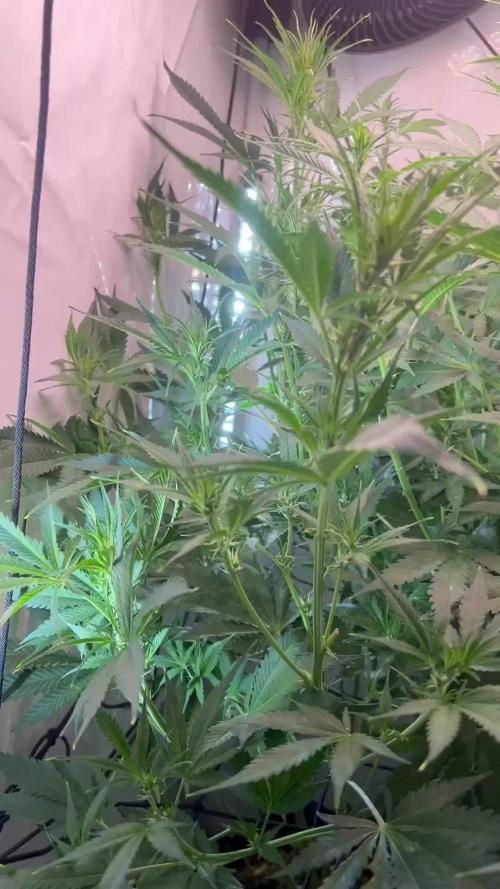
15 Day dry then trimmed using the Trim Bin.
Curing with Grove bags, first harvest filled 3, 1/4lb grove bags.
*Updating with clone pictures of this pheno in late flower labeled in diary as you look through, If I pop a new seed of this strain Ill start another diary

Likes
17
Share

@Wondrej
Follow
🚀 Week 8 Overall | Flower Week 3: Taming the Beast! 🌿
What’s up growmies! Hopefully you are enjoying your Christmas time 🎅
Today is December 29th, marking the first day of Week 8 overall and the start of Week 3 of Flowering.
The stretch has been absolutely relentless! Even after my last adjustments, the girls were still pushing too close to the light. Today, I had to do some final low-stress training (LST) and bending just to maintain at least a 20cm gap between the tops and the LED panel. I’ve got my fingers crossed that this is the final week of the stretch—I’m officially out of vertical space!
Recap of the recent "Rescue Mission":
• Heavy Lollipopping: I’ve cleared out the entire bottom section (the "skirt") to maximize airflow and focus energy where it matters.
• Canopy Management: Raised the AC Infinity net and thinned out the jungle. It was a massive defoliation, but necessary for the plants to breathe.
• Organic Strategy: I’m still seeing those yellow tips from my initial soil mix mistake, so I’ve started adding Organic Silica to help the plants handle the light stress and strengthen their structure.
The plants are looking much more manageable now, even with the minor nutrient burn. Now it's time to stop the vertical growth and start stacking those flowers! 🌸❄️
How's your end-of-year grow looking? Any advice for the Week 3 "stretch-ender"?
One Love & Happy New Year, growers! 🇯🇲💚
UPDATES- 31.12.25 I took another short video before leaving for for few days for New Year’s Eve
3.1.26 Sheesh, I came back home from New Year’s Eve holidays to these overgrown ladies.
I thought the stretch was already over, but they still have so much power.
Sadly, I don’t have enough space for them, so super cropping and more bending were necessary to avoid further light burn! In a hurry, like a newbie idiot, I snapped one whole future cola.
Lessons for me : never rush to your plants, while watching them nonstop even if im not in the lab.
4.1.26 There is no way! They grew right past my LST, and only the ones I supercropped are at a safe distance now. The others are back in the danger zone again, holy moly. Some of them get even light burned :(
I supercropped the rest of the plant today and went to the nigh shift of my main job.
Tomorrow I'll post another weekly update where we will look st it closely.
Likes
3
Share


@Alpengrower
Follow
great cultivar by Compound Genetics. strong candy / grape smell. VERY easy to trim.u

Likes
35
Share


@MadeInGermany
Follow
Info:
Unfortunately, I had to find out that my account is used for fake pages in social media.
I am only active here on growdiaries.
I am not on facebook instagram twitter etc All accounts except this one are fake.
Flowering day 15
since the time
change to 12/12 h.
Hey guys :-) .
The lady is developing beautifully, week after week :-).
The stretch has started.
This week I will clean everything down below so that the energy goes to the upper part.
This week it was poured 3 times with 1 l each time (for nutrients, see table above).
The entire tent was cleaned and everything checked for health.
Stay healthy 🙏🏻
You can buy this Nutrients at :
https://greenbuzzliquids.com/en/shop/
With the discount code: Made_in_Germany you get a discount of 15% on all products from an order value of 100 euros.
You can buy this Strain at :
https://greenhouseseeds.nl/
☝️🏼☝️🏼☝️🏼☝️🏼☝️🏼☝️🏼☝️🏼☝️🏼☝️🏼☝️🏼☝️🏼☝️🏼
Green House Seeds Company Cup Clone 🏆
Type:
Wonder Pie
☝️🏼
Genetics:
Wedding Cake x OG Kush
👍😍
Vega lamp: 2 x Todogrow Led
Quantum Board 100 W
💡
Flower Lamp : 2 x Todogrow Led
Cxb 3590 COB 3500 K 205 W
💡💡☝️🏼
Earth: Canna Coco Professional +
☝️🏼
Nutrients :
Green Buzz Liquids :
Organic Grow Liquid
Organic Bloom Liquid
Organic more PK
More Roots
Fast Buds
Humic Acid Plus
Growzyme Big Fruits
Clean Fruits
Cal / Mag
Organic Ph - Pulver
☝️🏼🌱
Water: Osmosis water mixed with normal water (24 hours stale that the chlorine evaporates) to 0.2 EC. Add Cal / Mag to 0.4 Ec Ph with Organic Ph - to 5.8

Processing
Likes
5
Share


Processing
Likes
1
Share


Likes
17
Share

@38PLAN
Follow
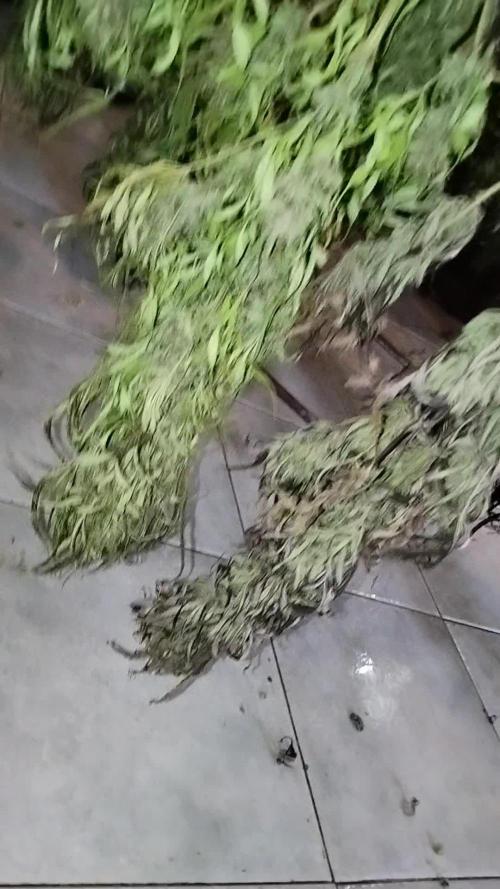
Quella che vedete nel video è una parte della zillion pesata,quella che rimane attaccata e che è diventata nera viola è l'altra metà della pianta che è rimasta attaccata,veramente longeva e produttiva,gli odori non sono il suo forte ma compensa con una potenza fuori dagli schemi,è stata la più resistente e quella che è fiorita prima,contando la pianta che è rimasta attaccata e quella che ho pesato supererà sicuramente i 1500g ma mi sono tenuto basso,vigorosa,dai colori sgargianti,menefreghista ed indistruttibile,se volete un erba che vi tocchi il cervello e basta con i suoi 32% di THC ragazzi miei questa è un ottima scelta


Likes
5
Share


@Mr_Puff_N_Stuff
Follow
Getting chubby! They are almost there. The buds are begging to fatten up and they are beginning to smell. They are just rolling alone…
Likes
4
Share


@DonEspas
Follow
Bonne récupération pour l'ensemble des plants que j'ai maltraité
Encore une semaine de récupération pour mon dernier plant fatigué et ensuite Floraison 🌈😎🤳
Un magnifique TCO pour raviver les bactéries bénéfiques. C'est les racines qui vont être contentes 🌈💅
Forbidden fruit : 2 phénotypes qui sont influencé par la génétique du parent "Tangie" mais sans l'orange. On retrouve l'expression skunk#1. Pour du forbidden fruit c'est bof, perte de temps et d'argent (3/10)
Zkittlez : 6/10
Gelato #33 : 5/10

Likes
38
Share


@B4niTa
Follow
Sorry i'm stoned, Tomorrow i'll add comment😎
She grow really crazy, and she need some defoliation. At next run for sure Topping for babies.
I expect that she will be taller than wider😃
Likes
Comments
Share

@deseed_uy
Follow
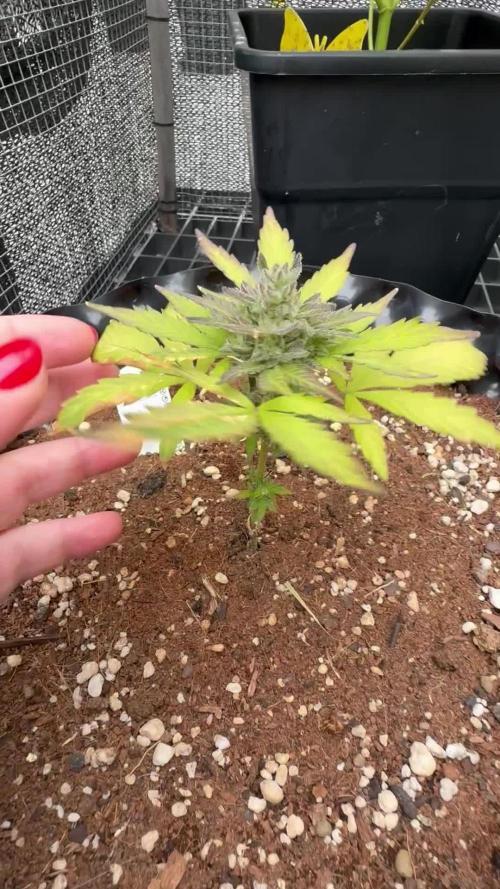
No ha mejorado el clima aun, estamos entre frios y lluvias hace un par de semanas pero ellas van igual. La think esta a unas 2 semanas de la cosecha, igual q la mini north😂
Moby critical y black todavia les queda un rato mas


Likes
24
Share


@TheGreenLeopard
Follow
holy sweet lord. these things are beasts. so i heard all about it.. and i thought .. has to be markleting.. no.. these 420fastbuds are true beasts. I put more into my unit to really test it.. will start that diary next week. also enjoy the overall summary


Likes
42
Share


@Ganjagrandaddy
Follow
DAY 7: Hi all. A nice steady week for the girls finding their feet in the pots and without their domes. I have the pota a good soaking to start them off on the right foot and get those roots busy too. The Girl scout cookies are both doing really good with their 3rd nodes happily springing to life. I managed to start l.s.t as soon as the 5th node is workable on them. Plan is to hold the 5th nodes horizontal while the other nodes reach an even canopy height. Then I will let the 5th node continue vertical to join the party as an equal to the others.
The Amnesia Haze are also very happy looking in their new homes and domeless. Not as developed as the Gsc but looking a nice shade of green. They are about 1.5 inches and on 3rd node growth too.
So far so good. Let's see what another 7 days can add.
Be well growmies.

Likes
11
Share


@Synkery
Follow
Porfin ya estan en su armario y en sus macetas finales de 11L. Comen 150 mo cada una cada 48h con top veg y deeper undergraund dos veces por semana! Cualquier comentario o opinion lo agradeceria para poder ir mejorando!

Likes
226
Share


@HighTV
Follow
| 📅 Week 0 |
| 🎪 4ft x 4ft |
| 🍃 201 CFM |
11/06: Soaked 6 blocks of rockwool and the hydroton in 5.8 PH water to stabilize before contact with seedlings,
11/07: The germination of the seeds were started directly inside the rockwool that's lightly damp with 5.8 PH
| 📅 Week 1 | Days 1 - 7
| 💡 450w 📏48' |
| 🌡️️🌞 77 - 86 |
| 🌡️️🌑 70 - 77 |
11/09: After 2-3 days of germination 4 seedlings have sprouted and the last 2 have cracked their shells and are making the climb to the light! Were going to let them stretch a little to better fit into their final netpots.
11/10: Plants placed in temporary net pot for more space under dome. Added water + air-stone to increase humidity from under the net pot.
11/11: Added water the the seedling with a dropper at 5.8 PH. Lowered the light to stop the stretching.
11/12: Added 5.8 water to the seedlings/rockwool with a dropper.
11/13: Adjusted Light some more. Added 5.6 PH water to seedlings with a dropper.
11/14: Added 5.6 PH water to rockwool through a dropper. Removed humidity dome for temperature.
11/15: Hydroton for final netpots soaking in 5.8 PH water. Added 5.8 PH water to seedlings.
This Diary will be a little bit different. While the comments will include the whole tent and all the tasks done in it, the timelapse and vast majority of the pictures will only be about the focus plant for a better lapse experience. 😎
Likes
62
Share


@Santica_Garden
Follow
This is how things are looking for the Cheese, going really well, just need to keep on top of things and everything should go smoothly! I have uploaded a video for you guys with all the information you need 👍🏾🌱💚
Likes
4
Share

@Smev1337
Follow
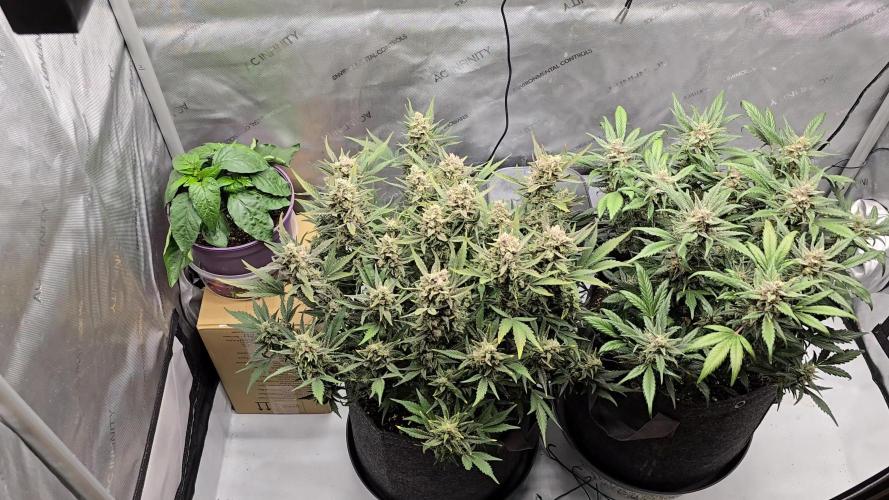
Hey all! this week both ladys are going good just the left plant started to yellow on the leaf tips so i don't know what that might be but we are in late flower anyways i guess! everytime i enter this room i smell these fruity terps and its really nice, the right plant also is producing lots of trichomes under the leafes hehe👽 happy growing all!💚✌️😎
Likes
6
Share

@Chucky324
Follow
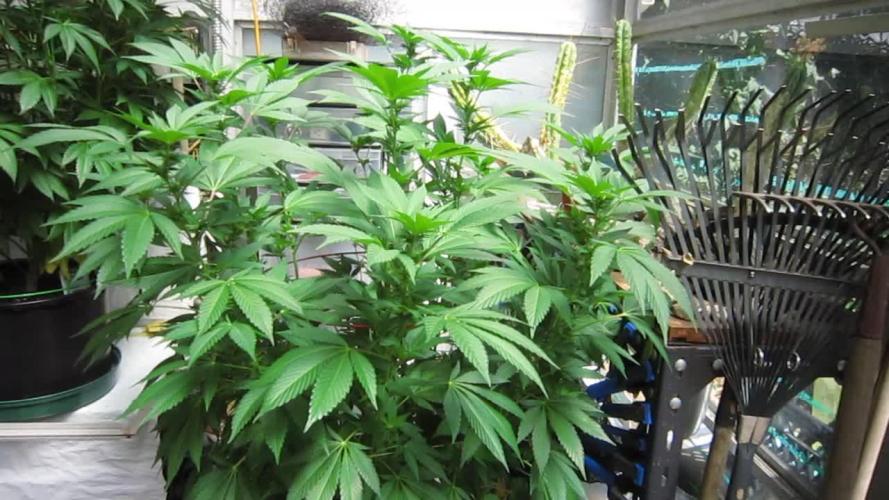
Hello. This is the end of week 2 and the beginning f week 3 of flowering.
The plants are doing good and growing well.
There is some thrips marks on this plant, but it's the closest to the door.
It gets put in the tent each night and brought out in the morning.
I can see some buds forming. Lot's of white pistils.
I've got Sister GG growing outside. It still has some leaf mutation going on, but it's growing.
OK. Be Cool
Chuck.

Processing
Likes
5
Share


@xxBudgetAutosxx
Follow
First grow on a budget to start but just order the 120x120x200 and a 3000w light so next week's update will be a bit better.
Thanks for watching.
