Likes
Comments
Share
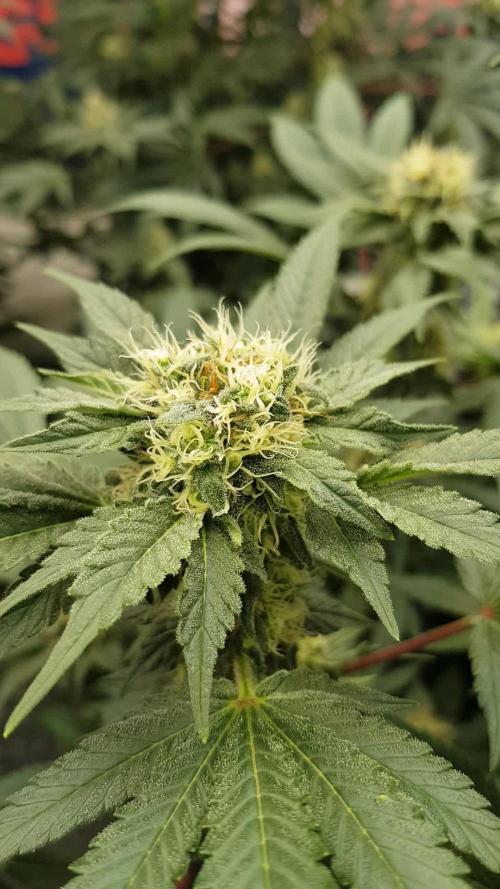
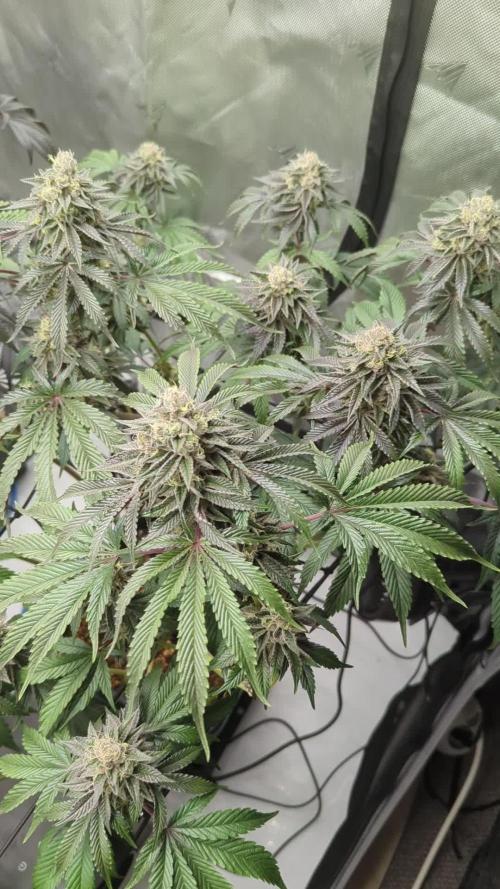
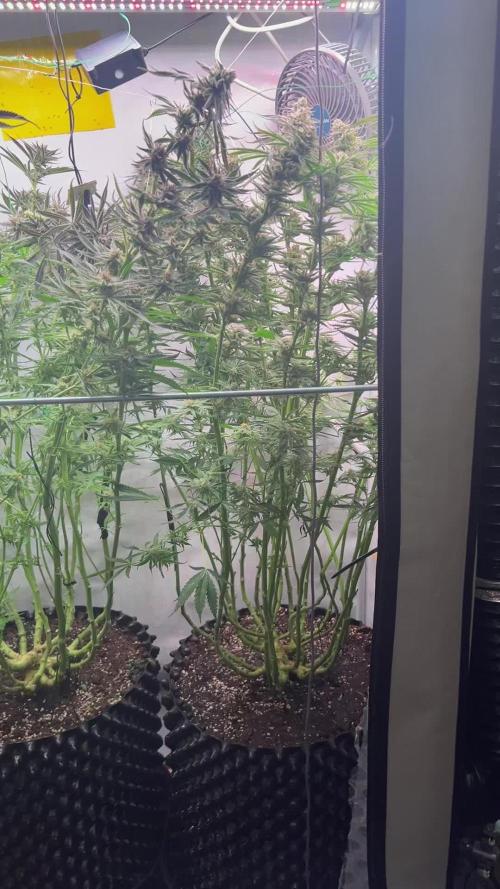
10.10.2021 DAY 160 On this beautiful date I harvested a plant Bruce Banner #3 Fast that had survived the tremendous winds of the last few days. I sheltered it from the wind and rain so that the resin didn't wash away. It was a great grow and I am very happy with the genetics and natural fertilizers from biocanna, having doubled the dosage the last few weeks. See you soon.
Likes
120
Share
Germination date 🌱 02/12/2021 Day 22 27/12/2021 Strain 🍁 Barneys Farm Biscotti Mintz (Biscotti x Mintz) THC% • 30% 🤤 💡 Mars Hydro FC-E6500 • Power draw 650W + 5% • Max coverage 5 x 5 • LED 3978 pcs high quality chips • Max Yield 2.5g / watt • Noise level 0 DB • Removable Driver & Light bars • Daisy chain • Fast cool system https://marshydroled.co.uk/ 🇬🇧 PROMO CODE • (organicnature420) DISCOUNT https://www.mars-hydro.com/ 🇺🇲 PROMO CODE • (ORG420) DISCOUNT 👍🏻 ⛺ Mars Hydro 150 x 150 x 200cm 📤📥 AC infinity 6inch 💧 10lt dehumidifier ❄️ 3.1kw air con system 💉 Nutrients GreenBuzzLiquids 🇩🇪 ⭐⭐⭐⭐⭐ Organic Grow Liquid • 1-4ml until 2wk flower Organic Bloom Liquid • 2-4ml flower stage Organic More PK • 2-4ml +wk3 of flower Organic Calmag • 1-2ml/lt whole grow Fast Plants Spray • first 2wks at night lights off More Roots • 2-5ml veg +2wks flower Fast Buds • 5ml 12days before flower until wk1 Humic Acid Plus • 2-5ml whole grow Growzyme • 2-5ml whole grow Big Fruits • 2-5ml flower stage Clean Fruits • 5ml flush 1wk Ph powder Root Gel Living Organics https://greenbuzzliquids.com/ PROMO CODE • organicnature420 15% off ✌️🏼 🥥 Growing Media • Coco Coir Notes 📝 Coming along nicely no problems. Onto a new week and the lot will get topped. Need to buy a net and I'm sorted. Deciding how long to veg for. Need to give them a proper flush this week as I've held off as of Christmas. Hope you all had a lovely holiday, I'm back to work but not really bothered. Happy holidays everyone 💚 Discount codes in bio for Mars and GreenBuzzLiquids 👍🏻
Likes
12
Share
Hi gromie's welcome to week 8. These girls are going great, started flushing on Monday 11/11/24 with plain ph'd water and Resin from Green Planet Nutrients at 2ml/ltr. I also reduced watering to just 2 times a day for 15 minutes on each time. Just trying something different as I usually do high fertigation . 15 minutes on watering cycle every 2 hours. From what I've read, I was hoping they would draw moisture from within themselves to help with drying but also some people believe it can increase THC?? It has worked at bringing out some more of that beautiful colour with in the buds but you can really notice the back plant has started canabilising itself! Starting to see some really nice fading of colours on the vegetation of the plant at the back, which is something I don't usually get with hydro because you usually feed them right to the end & Only need to flush for 2 to 3 days. Gave them a long flush this time. I've been waiting on a new microscope to arrive to check trichomes, but these girls are looking about done going off pistills turned orange/brown & curling in , Calyx closed & swelling up, looking really frosty!!! Will harvest this week! As I need to get veging plants into Flower Come on Grow diaries get your act together!!! I'm tired of updating my Diary only to see it's all wrong, things have been changed, put my day temp at 28°c save it & it shows -2°c & it's like that All through the diaries????
Likes
17
Share
Day 66 : Continue the juices on NL because her trichomes are 50-50 milky cloudy. She is flowering very well and is like breeders photo. Each bud is like sprouting. She creates seed pockets and these pockets explode with pistils. Its amazing. Breeder suggests to leave her flower for 45-50 days. Until now she flower for 38 days , so yeh 12 remains for sure. I added Calcium because she needs it. Edit Day 70 : I watered her with juices because she stills produces new trichomes. She also started to purple her buds. Her colas are so beautiful. We don't see buds like this every day.
Likes
17
Share
Fighting the humidity this girl is showing she will still have some smokable buds when she enters flower mode.
Likes
20
Share
This girl has shocked me so much for short stuff seeds this girl has grown an extra 7 inches with in 4 days an is showing a lot more bud sights, just need her to fatten up with a bit more frost, new nutrients this week and managed to get a co2 bag in there as well happy growing 💨 🌲
Likes
38
Share
👉Alrighty Then👈 👉 Punch F1👈 We had some real nice growth this , had to do a little leaf management👈 Started some Low Stress Training to pull the lower branches out .... Everything is looking good 👍 So ive up'd the nutrients to accommodate the growth ..... Soil by Promix Nutrients by Cronks Lights by MarsHydro.ca FC4800 X UR45 Tent 4x4x6.5 & Equipment by MarsHydro.ca High reflectivity inner mylar Thick Oxford fabric Smooth heavy duty zipper Sturdy metal frame Zipper blackout cloth Good anti light leakage performance The 6in Inline kicks ass moves alot of air Well this should be fun 🙃 Thanks to all my growmies out there for stopping by its much appreciated 👈 👉Happy Growing👈
Likes
9
Share
📆 Semana 9: La Epsilon F1 Auto avanza con fuerza en la floración. Los cogollos se desarrollan compactos y uniformes, cubriéndose de una capa cada vez más visible de tricomas. El aroma se vuelve más punzante, con toques especiados y cítricos que anticipan una cosecha de calidad. El ritmo de nutrición se mantiene estable, reforzando el aporte de PK y azúcares sin provocar excesos. ¡Seguimos creciendo fuerte! 💪
Likes
1
Share
Remember that, however you are played, or by whom, your soul is in your keeping alone. Even though those who presume to play you be kings or men of power, when you stand before God, you cannot say, 'But I was told by others to do thus,' or that virtue was not convenient at the time. This will not suffice. Remember that. Day:18 84°F and 65% RH (VPD) for the vegetative stage. Approximately 1.15kPa(assuming leaf temperature is about 2°F cooler than the air), which falls right into the ideal vegetative sweet spot (0.8kPa to 1.2kPa). At 1.15kPa, plants can draw water and nutrients efficiently without risking stress or wilting. It keeps the leaf pores (stomata) open, allowing for ideal carbon dioxide intake and maximizing vegetative growth. VPD is determined by the leaf's temperature, not just the ambient air. Because leaves usually run 1° to 3°F cooler than room air under bright grow lights, my actual VPD will be slightly lower, closer to the 1.0kPa mark. As she transitions from vegetative growth to flowering, one can gradually lower the humidity (to around 45–60%) and drop temperatures slightly to prevent disease from settling inside dense buds when they appear. Night:6 At 70°F and 60% relative humidity, Vapor Pressure Deficit (VPD) is 0.86 kPa. This is right on the cusp of whats optimal for the vegetative stage. During the nighttime, plants generally close their stomata and undergo cellular respiration rather than photosynthesis. Transpiration slows to a near stop, making VPD less critical at night than during the day. However, maintaining a nighttime VPD between 0.8 and 1.0 kPa is highly beneficial in that it ensures the air is dry enough to prevent powdery mildew or bud rot, but moist enough to keep the plant from undergoing unnecessary stress. This range keeps the environment comfortable for cellular processes and prevents large atmospheric swings. Keeping it all flowing. (Not pushing them yet, these are photoperiods) The optimal soil (root zone) temperature for cellular root respiration and nutrient uptake in cannabis is between 68F & 72F This narrow range balances biological energy production (cellular respiration) with the dissolved oxygen levels in the soil, maximizing plant growth and health. Warmer soils hold significantly less dissolved oxygen. When soil temperature exceeds 74F oxygen depletion occurs, inhibiting cellular respiration almost entirely, At 68-72F root cells generate optimal adenosine triphosphate (ATP) via respiration to power root-tip elongation and the active transport of water and nutrients. Too Hot (Above 78F) Root respiration increases, demanding more oxygen, while the water's oxygen-carrying capacity drops. This creates a prime environment for anaerobic pathogens and Pythium (root rot). Too Cold (Below 60F) Root metabolism and cellular respiration slow to a crawl. This severely impairs nutrient and water absorption, leading to yellowing, wilting, and phosphorus deficiencies. A lot depends on whether it's automatic or photoperiod; with photoperiod, there is not as much of a need to push "hard" as the real countdown only begins once the flower is initiated. Automatics, on the other hand, the chronological "clock" begins ticking the moment the seed germinates. It is of critical importance that the seedling growth gets off to the races, understanding that early growth is like compound interest, which will pay off come harvest. This reality is why getting autoflowers "off to the races" early on yields such exponential benefits. The "compound interest" is directly related to the surface area of the leaves. Larger, faster-growing seedlings process more light and build bigger root networks early on, which translates into an explosion of vertical and lateral growth during their short vegetative window. The margins for error are so thin with autoflowers; this early-stage momentum depends on several critical practices. Seedlings exposed to increased atmospheric CO2 levels early in life will develop at an increased rate. To effectively "extend" or optimize the capacity of Photosystem II (PSII) for increased photosynthetic efficiency. In standard oxygenic photosynthesis, Photosystem II (PSII) is naturally limited to the red-light spectrum, peaking at 680nm. Extending its light-harvesting capacity past 700nm into the far-red region requires bypassing the natural limits of standard chlorophyll a. Adding 730 nm (far-red) LEDs alongside standard red/blue lights has been shown to increase canopy photosynthesis by 20–30% in several crops by acting synergistically with shorter wavelengths. However, the limitation is that excessive, pure IR/Far-red light (without accompanying red light) can trigger the "shade avoidance response," causing plants to grow tall, weak, and spindly rather than robust. Utilizing infrared light (specifically the 700-750 nm far-red range) is a viable method to boost photosynthetic efficiency. It acts as a bridge to allow PSII to utilize a broader spectrum of light, breaking the traditional 700 nm barrier. UVR8-mediated signaling (often in conjunction with CRY proteins) triggers protective mechanisms that maintain the stability of the photosynthetic apparatus (including LHCII and reaction center proteins), thus ensuring that the efficiency of Photosystem II remains higher in UV-B-exposed plants compared to plants lacking this receptor. ΦPSII indictates the rate of electron transfer from water to plastoquinone, which drives the production of ATP and NADPH. There is a close link between ΦPSII and the true rate of CO2 fixation (Φ*co2). ETR stands for Electron Transport Rate. It measures the speed at which electrons are moved through the thylakoid membranes in a plant's chloroplasts during the light-dependent reactions of photosynthesis. Infrared light (particularly Near-Infrared or NIR) improves cellular energy by interacting directly with the electron transport chain (ETC) in mitochondria. This process boosts adenosine triphosphate production, which acts as a metabolic coefficient multiplier by accelerating enzyme activity dramatically. Extend then multiply. Far-Red photons interact with plant photoreceptors to accelerate the plant’s biological "clock" or trigger a shade-avoidance response. Autoflowers don't use the plant's biological clock, although the IR will initiate a shade avoidance and make them stretchy. You can just add equal measures of 660nm-680nm to negate the shade avoidance effect. Replacing nights' "darkness" with a combination of IR+ and 660nm. Because autoflowers don't require a dark period to flower, many growers just blast them with light. 18/6 24/0. However, this ignores the plant's metabolic rhythms, where daytime photosynthesis (light reactions) must be perfectly balanced with nighttime carbon fixation and assimilation (Calvin cycle) to avoid bottlenecking plant development. Cellular respiration is a 24/7 process, but it can only function while the plant has the free oxidative capacity to do so. A 100% photosynthetically active leaf cannot perform cellular respiration. The viral trend of defoliation of every leaf that isn't "getting enough light" is of great detriment overall, putting 100% of the cellular respiratory "workload" and responsibility on the 0/4/6 hours of darkness in sub-optimal conditions for enzymatic activity. Photosynthesis captures nearly 100% of the initial energy as carbon, while cellular respiration is the process that unlocks 90% of that captured energy into usable ATP so the plant can use it. Respiration is considered roughly 30% to 40% efficient. It captures enough of the potential energy in glucose to synthesize around 30 to 38 ATP molecules per glucose molecule. The remaining 60% to 70% of the energy in the sugar is not captured in ATP; instead, it naturally escapes into the environment as heat, which helps regulate plant temperature. In plants, the primary enzymes of the Electron Transport Chain (ETC) and the ATP synthase complexes are typically adapted to function optimally in warmer temperatures (roughly 25°C to 35°C depending on the specific plant strain). As temperatures rise within this physiological range, molecular collisions increase, speeding up respiration and ATP production. The cannabis plant has a branched respiratory pathway. During heat or cold stress, plants activate Alternative Oxidase (AOX). AOX burns sugars to dissipate energy as heat rather than coupling it to ATP production. This pathway actually functions optimally at elevated temperatures to help protect the cell from the damaging build-up of Reactive Oxygen Species (ROS) during heat stress. Enzyme activity generally scales with heat; there is a strict biological limit. If canopy temperatures in a grow room exceed 40°C, the enzymes and their supporting lipid membranes lose stability. Not saying you need to go crazy, just optimize nights the same as we optimize days. Phosphorus is the driving force behind early seedling development. It acts as the "energy hub" of the plant, directly driving cell division, robust root growth, and the creation of DNA. Without an adequate, easily accessible supply early on, the plant's overall growth potential and final yield can suffer permanently. E=MC2 looks like a simple multiplication problem; it describes a fundamental physical truth: mass and energy are the same thing. The equation doesn't just calculate a value; it reveals that mass is effectively "congealed" energy. Energy is just numbers. Energy isn't a physical "substance" you can hold or touch. It is essentially an abstract, calculated number that we assign to a system to predict how it will change, interact, or move. A numerical label we attach to matter to track how it behaves. Because the universe runs on laws of symmetry (specifically, that the laws of physics don't change over time), a single global number must be conserved. We call that number "energy". We don't grow; we facilitate energy conversion. How well a seedling grows is essentially down to how much knowledge one can acquire to increase the level of conversion to occur. Applying knowledge effectively requires intuition, which comes from hands-on experience. A seasoned stoner learns to read subtle signs—like a slight change in leaf turgor (stiffness), subtle color shifts, or the specific texture of the soil—before a textbook diagnosis can be made. Ultimately, growing is the application of botanical science blended with active observation. Knowledge dictates your potential, but adaptability and attentiveness to the plant's immediate environment determine your results. 1.618 nature mathematically optimizes quantum energy transfer and light absorption efficiency within the photosynthetic machinery, as it naturally dictates energy scaling hierarchies and resonance dynamics. External vibration or electromagnetic wave that perfectly matches a plant's natural frequency directly influences plant growth. Low-frequency sound waves and targeted electromagnetic fields stimulate cellular processes and boost photosynthetic efficiency Does it produce better yields? How long is a piece of string? As long as you cut it. But isssss the juice worth the squeeze? The quantum framework of the IVM seems to think so. Good enough for the quantum firmware, good enough for the DNA software. Genetics are not dictated; they are expressed; the rate of that expression is dictated by the environment in which growth occurs. Quantum Coherence in Photosynthesis occurs When a photon of sunlight strikes a leaf, the energy it carries must travel to a reaction center to be converted into chemical energy. This process operates at nearly 100% efficiency. If the energy moved in a traditional "bunching" or random hopping manner, a large portion of it would be lost as heat. Instead, plants utilize quantum superposition. The energy particle (exciton) doesn't just take one path; it exists in a wave state and explores multiple pathways simultaneously. It essentially "chooses" the most efficient route to the reaction center simultaneously. Research shows that molecular vibrations and the specific network arrangements of chlorophyll molecules (like the naturally evolved Chlorophyll A & B ratios) actively protect against energy overflow, optimizing light capture across different light intensities. Enzymes are the biological catalysts that speed up chemical reactions within a plant's cells, allowing them to grow, metabolize, and repair. Rather than relying solely on the classical kinetic energy of molecules colliding, plants use quantum tunneling. Subatomic particles like electrons and protons (hydrogen ions) can literally "teleport" through energy barriers that they normally wouldn’t have the energy to climb over. This makes vital metabolic reactions happen far faster than classical physics could ever explain. Chloryphyll b has peak absorption at 460nm (Blue) and at 647nm(Red). If we take the blue peak wavelength 460nm and a UV-B, UVR8 peak absorption wavelength 285nm, Tryptophan-285 (W285) Sensing protein. 460/285=1.618 Φ If we take chlorypyhll b's Red absorption peak 647nm and a UV-A of 400nm, we get 647/400=1.618 Φ. "Structure of light". The cryptochrome photoreceptor (CRY) is a UV-A/blue light receptor that shares this dual sensitivity with several other biological structures and functions, including significant sequence similarity and a common evolutionary ancestor with DNA photolyase enzymes. These are light-activated enzymes that use blue/UV-A light to repair DNA damage caused by UV-B radiation in plants. Synergistic. But Shhh, it's a secret. Effective quantum efficiency of photosystem II, often denoted as ΦPSII, represents the proportion of light absorbed by Photosystem II (ΦPSII) that is actually used in photosynthetic electron transport. It is a key indicator of how efficiently a plant is using light for photosynthesis, as opposed to losing it as heat or fluorescence. ΦPSII (effective quantum yield of photosystem II) functions primarily as a "multiplier" (a coefficient of efficiency) rather than an additive factor when estimating the overall photosynthetic electron transport rate (ETR). Multipliers are considered far more beneficial than additions because they generate exponential growth, leverage existing resources to their full potential, and create sustainable, self-multiplying capacity, rather than just incremental, linear increases. This fascinating observation is rooted in the intersection of subatomic geometry, fractal scaling, and quantum dynamics. In specific molecular arrangements—such as in conjugated polymer networks or biomolecular architectures—the Golden Ratio (PHI) naturally dictates energy scaling hierarchies and resonance dynamics. Mathematically tied to the fine-structure constant, which defines the strength of the electromagnetic interaction. The Golden Ratio can be mapped geometrically as the Golden Angle (137.5 degrees) in atomic structures, linking the charge of the electron to fundamental quantum constants like Planck's constant. Electromagnetic. The Golden Angle (137.5): This angle is derived from the Golden Ratio (1.618). It is the smaller of two angles created when a circle is divided such that the ratio of the arcs equals the Golden Ratio.
Likes
6
Share
📆 Semana 6 Tras la transición de la semana anterior, la planta entra ya en engorde activo. Los cogollos comienzan a hinchar con más claridad, apilando cálices y ganando densidad en todas las puntas, mientras la resina se vuelve abundante y cada vez más visible. La absorción continúa estable, con riegos ajustados a la demanda y un metabolismo funcionando limpio. El aroma se intensifica y gana profundidad, confirmando que la carga floral está en pleno desarrollo. Semana donde volumen, resina y peso empiezan a marcar la diferencia. Seguimos creciendo fuerte 💪!
Likes
23
Share
Hanno iniziato la quinta settimana di vegetativa...penso che ancora poco e la passerò in fioritura 😂💪💪💪
Processing
Likes
9
Share
@YD_59
Follow
One of the plants is budding nicely, I think the seeds were mixed as one is small and theres still two plants that aren't budding yet, other than that plants seem to be growing well, the plant that's budding smells Diesely/Sour with a bit of citrus [Not classing the growdiary as flowering yet as only one of the plants is flowering at the moment] I've also added some rope to some of the branches to pull them towards the ground and further into the light, will update with pictures when I next go water them The training seems to be having an effect already and some of the trained branches are growing upwards now
Likes
13
Share
Incredible experience!🍃🇯🇲 Today no AI text, just pure euphoria. My first indoor grow, and I am pretty sure i will never forget it😃 Nearly 200g od pure happiness, the smell of fruits in the buds is unmatchable. Looking forward to try it in unc.
Likes
14
Share
Week 17 Day 113 (04/12/2020)💧: Nice start to the week with a watering. Just as last week, I will be giving them the increased nutrients until the flush. So today I gave them 1.5ml of BioGrow, 6ml of BioBloom, and 6ml of TopMax. Day 114 (05/12/2020): The trichomes were looking beautiful today! (really hard to take close of pictures of them though). You can see in the pictures that some are getting more amber now which is a great sign that the girls are almost ready 🌸 Day 115 (06/12/2020): Took a quick pic of the tent but didn’t have much time to check the girls properly. I’m sure they are great as always 👌 Day 116 (07/12/2020)💧: I watered the girls today with the same nutrients: 1.5ml of BioGrow, 6ml of BioBloom, and 6ml of TopMax. The buds on this girl are looking super dense and even the ones at the bottom are getting bigger! I hope that this 6ml of TopMax will fatten them up even more in the next few weeks before harvest 😄 Day 117 (08/12/2020): Didn’t have time to take pictures today actually Day 118 (09/12/2020): I’ve gotta say that their smell is definitely evolving in a more “mature” direction and they are starting to smell less like citrus and a bit more earthy and spicy. Really incredible! Day 119 (10/12/2020)💧: Watered the girls today with the same nutrients as last time giving them 1.5ml of BioGrow, 6ml of BioBloom, and 6ml of TopMax. They are both doing well but again some of the leaves and stems at the bottom were definitely a bit sad and wilting. But nevertheless, I took some videos and close-up pictures and they look incredible. Their red tint is definitely developing more and more, which is especially noticeable when I take close ups. Also looking from their trichomes, there are some amber ones already so I am thinking to even start the 2 weeks flush from next watering onwards and prepare for harvest! Will assess the trichomes in a few days and decide.
Likes
48
Share
@Igrowneil
Follow
Hey ZAMNESIA has sent some more seeds to rock under the new lights X2 Vipraspectra lights 200watt total 400 watts These new lights (LEDS) where sent by Vipraspectra to upgrade me to newer LED lights with the sunlike full spectrum lights , the room is brighter no doubt and the spectrum of light outperformed the HPS running at 400watt the same running power as both LEDs . As you can see I'm already a fan of this light and I haven't even been running it under plants yet I've just had it on to see what the running temps where of the room and at 19oc does a pretty good job at keeping stable temps . I do plan on adding another P2000 in for flower The leds themselves run with 3000k 5000k warm white and cool white IR AND DEEP RED giving of a full spectrum of light , running there pretty bright and a recommended hanging height of 20inch , I've hung the lights at 5foot with the hps also and will not move my hanging height instead I'll start from 100% light and increase towards flower the amount of leds. These lights arent over expensive considering there dimmable with a great functioning dimmer switch, also I notice there built quality is superior in this category of lights and price, there solid heat sink is amazing giving the light a solid build finish the driver is mounted on the top but raised away from the board to maintain better heat dissipation from the driver and board . Approx 6 foot cable hanging rope also include with a very well thought out hanging kit .the only thing I think was a downside is having no stickers I'd love to see these light come with logos corresponding to the size of the light , 2x2 = 2foot sticker would be amazing 😉 If your interested USE CODE : IGROWNEIL at checkout an get 5% off and also help this channel There's also the link to join and become an affiliate https://partners.viparspectra.com/create-account?ref=jursrsaof8 Back to the seeds these girls where the frist to pop above ground on my last . I didn't get out of the frist week and the timer failed so ZAMNESIA quite happily sent the same batch of seeds to start again with which is pretty class of them , big thank you These genicitis are top class 👏 I'm glad to be running them again as I do love gorilla glue they also have sent Runtz and GSC which in themselves are another couple of great strains with amazing genetic potential locked up in there seeds 😀 Started on 14-11-21 , I was planning on using hps along with this run but instead I'm gonna aquire a xs4000 from viparspectra 480watt and have the two p2000 hung at either end leaving us with 880watt LED grow ( will be insane) The seeds are all off to a great start but I'll always have great exceptions for this strains. The last time all 3 gorilla glue where frist above the soil , nows there a wide selection of strains growing and will be multiple plants also I ended up dropping 20 seeds I total 3 of them being the GLUE
Likes
12
Share
@TgOgFaRms
Follow
Hey there, fellow growers! 👋🌱 I hope you're all doing fantastic as we embark on week 4. 🌿✨ Once again, I'm working with Mephisto seeds, and just like before, they've begun flowering right on schedule. 🌼🕰️ It's truly mesmerizing how consistently they kickstart their blooming phase on week 4, precisely on day 22. ⏳🌸 My plants are thriving and looking absolutely splendid at the moment. 🌿😄 As I continue my journey with autos, I'm still fine-tuning their feeding regimen, steadily making progress. 💪🍃 The growth rate of these plants never ceases to amaze me. One strain that's capturing my attention is the magnificent Forgotten Cookies x Strawberry Nuggets. 🌱🌟 It has grown into an impressively huge specimen. And guess what? I still have three reserved seeds of this remarkable strain, patiently waiting for their turn in my next grow. 🌱🔒 Let's keep the spirit of the green thumb alive and vibrant as we share our experiences. 🌿🌱✨ I'm eagerly looking forward to hearing updates from each and every one of you! Happy growing, my fellow enthusiasts! 🌿🌱🌞 On day 26, I had a bit of a scare as I nearly lost three of my plants due to underwatering. 🌧️💦 However, I swiftly took action and adjusted my watering routine. Now, I'm giving each plant 1 liter of water, ensuring they receive the perfect amount of hydration. It's all about striking that delicate balance. 💧💚 Moving on to day 27, I'm happy to report that the plants are showing signs of improvement. I decided to raise the lights by 5cm, bringing them to a hanging height of 55cm from the plants. Additionally, I've increased the LED power to 100%. Notably, the Forum Stomper x Pink Panama and one of the Toof Decay x Walter White plants appear to be on the shorter side. Each plant has its own unique characteristics, adding an intriguing diversity to the garden. 🌿✨ Stay tuned for further updates. Happy growing, everyone 😎
Likes
4
Share
She seems to responding well to the net, and defoliating. I have taken quite a few leaves from both this week. Hopefully it won’t stress her out too much, it was much needed. The leaves were shading nodes, and crowding each other. We will see how the week progresses. She has been very petite throughout, but this last week I have notice she is starting to have a growth spurt. I wasn’t convinced it would happen with this one, but she’s on it! She had a rough start, so how ever it goes I’m curious to see how she ends. No deficiencies to note (touch wood) she has been quite resilient in that sense, where as her neighbour s/b has been battling potassium deficiency. Fed the same, but they really are worlds apart. Thank you for taking an interest 💚 Happy growing everyone 💚🌱
Likes
18
Share