


Likes
Comments
Share


@JBoBz
Follow
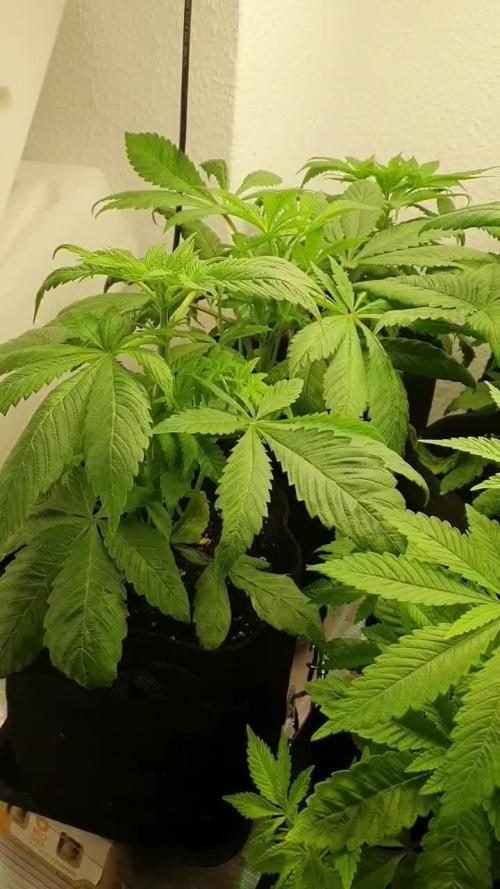
Hello to everyone stoners, here ends our adventure with our Orange Barb, there was some problem at the beginning due to a poor germination, but in the end it recovered well and I was rewarded with 30g of one of the best weed ever smoked!👽





Likes
10
Share


Likes
6
Share


@sabalero420
Follow
Bueno con las smoothie tuve un problema con el ph. Y por eso se pusieron mas amarillas de lo normal. Hay una que quedó con los cogollos muy chicos y ya no creo que vayan a engordar. Las blue dream vienen muy bien sin problemas. Con un lindo verde.


Likes
23
Share


@Kakui
Follow
F5, se empezó a regar con fertilizante de floración, EC 2.2 y pH 6.3, están estirando bastante, han alcanzado los 50cm.

Likes
28
Share


@gottagrowsometime
Follow
Welcome to my sponsored Green House Seed Diary. Thanks for dropping by, drop a like if you'd like me to drop by your diaries, either way thanks for dropping by.
Equipment.
At the moment, my FC 3000 is hard working but she'll be free in 7 days and will be added to these grows. For the moment I'm using a viparspectra at 45cm at 65% intensity. Using Green House Feeding for nutrients, biobizz light mix & all mix. For the moment they only on light mix but on the uppot in 7 or so days I'll add some All Mix. Every 2 weeks I'll add 1g/1L of Bioenhancer, and that's it. Real easy, will give me more time to work on the girls as they grow and not worry about what needs what, just water and go, depending I get the mixes right.
Week 1, seedling day 3. All the girls done in Rock Wool showed roots down the end of the wool, all but 2, I could see in the hole that she was strangling herself, I carefully cut the wool in half, still no roots, so, I went in, and I'm glad I did. As you can see, she literally cut her own roots, it was dangling and came off with ease. Using gloves I held the stem over the 3/4 full wet pot of substrate. Made a small hole in the middle and placed the roots in it and held the stem and folded the dry soil around the stem making it secure. Now, there's no need to wet the top, (as the roots were in the base I made that was wet, so there is no wet soil around the stem. (I'm only thinking of it now, I have clonex gel that would of rapidly increased root growth and helped take some risk out of her not been able to make it)
After a few days when I know she's out of danger I'll spray the top of the substrate to activate the nutrients and hopefully get some good mycelium/fungus going. I had a feeling this would happen, it happens a lot in soil but we don't notice it, and if I was using synthetic nutrients she more then likely would of grown out of the rock wool but as the roots need to be touching the soil as that's where the nutrients are it would of struggled. So needed to be done. Next few days will be do or die for this gal. She was stressed a lot and lost half of her tap. Let's see.(update below)
Seedling D 3 was when she was uprooted from Rock wool and transplanted with cut roots, D5 you can see her, 1 of her cotyledons has turned pale, so she did struggle to find her footing, but she is doing well. The other WatermZXVelvet moon that was was done with rockwool is in much better shape, have a look.
The nutrients are mixed into the soil and you just water every time she needs it, the bioenhacer needs to be given once every 2 weeks. I mixed 3g/1L of substrate. As she gets older when I uppot her I'll add extra powder per/L of sub and I'll also be introducing some biobizz all mix. I just want to get going on some good fungus action and if I added some all mix I wouldn't of been able to add enough powder to get mycelium/fungus going, this is healthy and good. You'll see it when you use root stims, it'll make stuff fuzzy, mycelium. Good fungus that will decay with organic matter and make for a good bacteria ground for your gals.
Seedling Day 5 We have fungus lift off, she out of the woods after Harsh transplant if you haven't read about above.
Seedling Day 5-7 Okay steady normal growth. I can just see the next set of nodes to up come. So she's on track for normal growth. Her sister though, is miles ahead. 2moro is a new week, so now that the RH/TEMPERATURE is dialed in I'm hoping I'll see explosive growth.
Thanks to my sponsor at Green House Seeds who I death with, great guy. And to everyone there that makes these great strains.
And to my sponsor who sought me out from marshydro, she's a pleasure deal with, love this brand.
COUPON FOR MARSHYDRO
Use code GGS at any marshydro site for a discount.
Thanks for reading
gottagrowsometime

Processing
Likes
11
Share


@Silverback_Guerilla
Follow
6/8:
I had one of these seeds left and decided to see how it would do outdoors.
She popped right up and has remained the fastest growing and largest plant in the garden!
7/2:
I moved her outdoors after almost a month under 24/0 and sprayed her with Boom Boom spray.
7/4 - 7/9:
Been dealing with a horde of ravenous grasshoppers all week, but only a little damage on this girl. I sprayed with pyrethrins, Bt-k, Spinosad, pyrethrins, dusted with diatomaceous earth and sevin dust...
She's flowering now, so after a few days of that, I sprayed with microlife maximum blooms.
Processing
Likes
7
Share


@Kushma666
Follow
Day 1 beginning of wk 3 flower fed the girls up this morning 4.5 ltr phostrogen to all but bubblegum #1 she gets fed 10ltrs of bud burst they are starting to smell so good 3 strains iv never grown before or even smoked lol exciting stuff 5-6 more weeks to go

Likes
10
Share


@Dthebudguy
Follow
Bud development is going well smell is just starting to be noticeable happy with the grow great structure

Likes
229
Share


@Crashoverite
Follow
Hi everyone 😁
Welcome back in another week update!
Have to say girls are looking stunning 😍 frost it's almost everywhere. Trichomes on some buds up to 30% amber and progressing by hour. They are gaming weight on buds nicely as well. Aroma OMG I am sensing ripe sweet fruits, a bit woody and gasy. Planning to turn the lights off on Thursday at midnight and harvest by Sunday 😅
Wishing everyone a great week
Stay tuned for daily updates
Peace and love brothers and sisters ✌️💚
02/10 Day 71
Watered again approx. 2.5l of water and fish shit at 0.4 ml per 1 ltr. Runoff approx. 50-100ml.
04/10 Day 73
Everything going great. More amber trichomes, almost all pistils hairs are brown. These girls are almost ready. The Day it's just around the corner.
05/10 Day 74
Last watering, in the morning approx. 1.5l per pot. At midnight lights out for good.
06/10 Day 75
Uploaded 2 clips from last night.
Trichomes are on point. Some buds 50-70% amber and they did gained some weight overnight. Just one more night of darkness and will harvest! 😎
07/10 Day 76
It's done!!! Harvested and trimmed.
Soon will return with final update - Harvest 😁
Thank you all for such a great support, likes comments and pm's
Peace and love brothers and sisters ✌️💚
Likes
4
Share

@NSABND
Follow
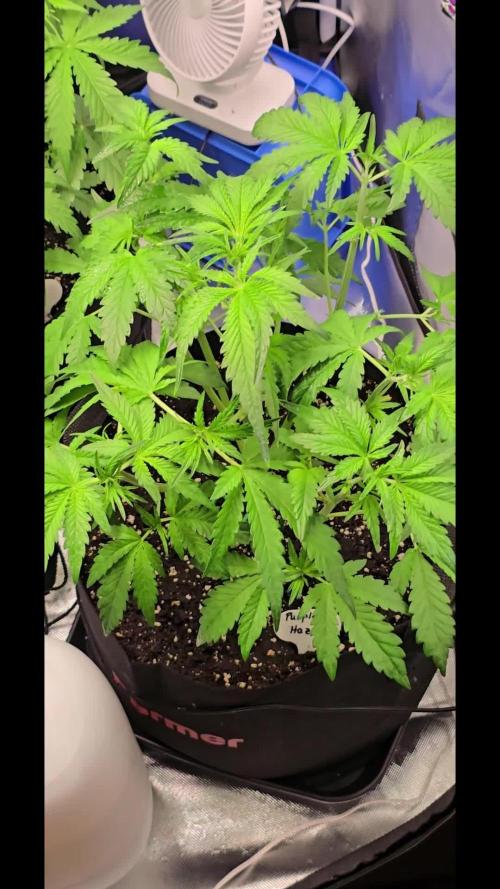
Day 29 massive leave cutting in the morning... but the queens seems to be ok 😃🙏👌👍the Z-Up strain has 5cm more then the others
Day 30 all queens are a little bit shocked from cutting 😩 ok chill today but tomorrow back to work bitches 😂😂😆😃🙏👍
Day 31 everything seems to be allright 😃🙏👌
Likes
7
Share


@Hempcules
Follow
WEEK 6 (Day 36-42)
My Runtz have now nicely adjusted to the flowering phase. The stretch is beginning, and the plants are slowly gaining height. However, I’m trying to keep them as small as possible since my space is somewhat limited at the moment.
The two plants are in a dimly lit corner of my tent but currently receive 24-hour light because I still have other plants inside. I’ve already fertilized them a bit with everything.
They’re still thriving beautifully.

Likes
2
Share

@hassehujasse
Follow
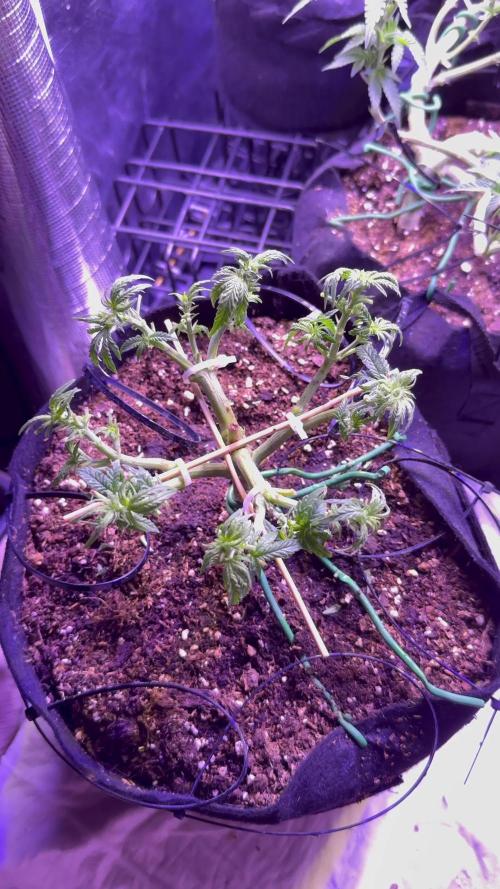
Have you ever been exceptional? 24/7/52/365/48??!!
With every new plant in my box bringing something new in my techniques
Processing
Likes
28
Share


@Bud_E_grows
Follow
Slowly stretching, doubled in height and width. At end of week going to start feeding foxfarm trio at half dosage following feeding schedule. Growing steadily. Still slightly tucking leaves. Trying to give least amount of stress as possible.
Likes
33
Share


@Weird_Jimmy
Follow
✋Wk 5: Growing like a weed, and max power.
👉2-8 Day 38 for the 3 gallon plant. The plant continues to show noticable growth every time I open the tent. The 1 gallon is 4 days behind total age wise, yet is physically one week ahead of the 3gallon. The pistols appeared 3 days ago on the 1 gallon 4 days ago. I haven't seen any on the 3 gallon yet, I anticipate them in the next 3-4 days. The 3 gallon trunk is getting stout and if the plant stays short I wont be doing much lolly popping and grow a nice little Christmas tree shaped plant. The 1 gallon has a very thick trunk and is actually two inches taller than the 3 gallon plant. Both plants are looking like they are more busy building branches than reaching for the lights, which is preferred, because I'm sure at least one of these plants will eventually challenge the height limits of the tent. I say that because I try to be prepared for the hard situations. What I hope for is they are 35-45" plants max.
👉The diary stats for nutrients on this page will be for the 3 gallon. I included a page from my fertigation log to see the difference in nutrient levels of EC.The 3 gallon plant has remained on the week 3 mix for the nutrients on the General Hydroponics drain to waste nutrient mix chart (late growth). The 1 gallon plant is on the week 4 mix (transition). I will switch 3 gallon to week 4 as soon as the first pistols appear. The 1 gallon will switch to week 5 in the next 2-3 days. The 3 gallon plant gets the EC of the upper end of the recommended nutrient strength. The 1 gallon gets the lowest (or just below) the low end of the recommended EC. THe week neither plant had EC run-off above 30+ of the inflow. Infact the run-off EC of the 3 gallon plant and the 1 gallon plant has been very stable and shows that the plants are really drinking it in! I use enough inflow volume to get 30% of the inflow (minimum), but sometimes I up it just a bit.
👉I have started the grow with the lights dimmed to 75%. 6 days ago I turned both lamps up to 100%. I try to maintain approximately 17" distance from lamp to plants. Both plants are the same height right now (the 1 gallon is in a shorter pot so its 2" taller). The lights have to be raised every 3-4 days now. The heat increased a little bit, but the outdoor temps have been in the low 30s so the overall temp in the tent is the same.

Likes
36
Share


@MadeInGermany
Follow
Info:
Unfortunately, I had to find out that my account is used for fake pages in social media.
I am only active here on growdiaries.
I am not on facebook instagram twitter etc All accounts except this one are fake.
Have fun with the update.
Hey everyone ☺️.
The lady is developing very well and beautifully 😍.
I give her about 3 more days until I take a cuttings and the lady then comes into the flower tent 👍.
The tent was cleaned every day of the week and the humidifier was refilled.
I wish you all the best 👍
You can buy this Strain at :
https://originalsensible.com/original-sensible-seeds-zkittlez~20503
Type:
Zkittlez
☝️🏼
Genetics:
Afghan Kush Indica x Grandaddy Purple x Grapefruit hybrid
👍
Vega lamp:
2 x Todogrow Led
Quantum Board 100 W
💡
Bloom Lamp :
2 x Todogrow Led
Cxb 3590 COB 3500 K 205W
💡💡☝️🏼
Soil :
Canna Coco Professional +
☝️🏼
Fertilizer:
Green House Powder Feeding
☝️🏼🌱
Water:
Osmosis water mixed with normal water (24 hours stale that the chlorine evaporates) to 0.2 EC. Add Cal / Mag to 0.4 Ec Ph with Organic Ph - to 5.5 - 5.8 .


