


Likes
Comments
Share


@GrowmieDeLaStreet
Follow
Hard to grow in my case, but the results are worth it.
Nice trichome production, on the buds as well as on the sugar leaves.
I didn't expect much quality with all the problem she had but she turned out beautifully.
227g total from 1 plant
tested at 24% THC and <2% CBD
3.02g of kief from the trim

Likes
7
Share

@CanJey_Vec
Follow
Moin Community.
Tag 63–75 🌱✨
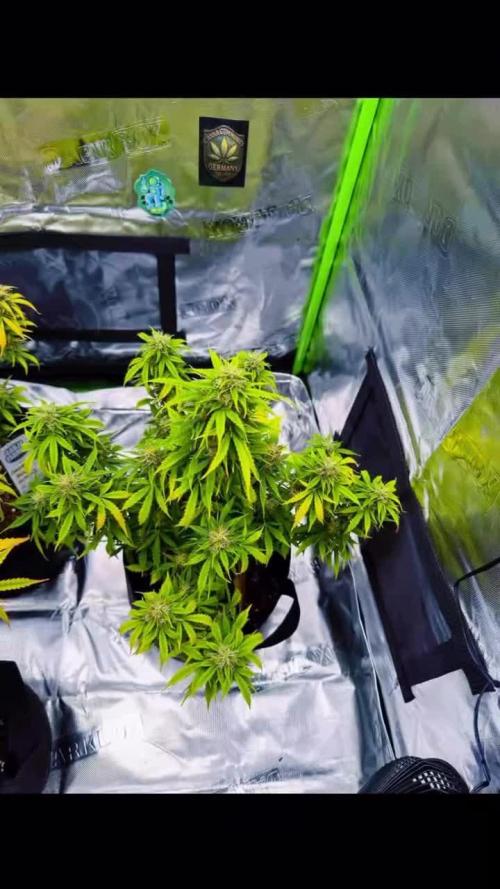
Die Ladys sind voll in der Blüte, die Harzbildung ist jetzt deutlich zu sehen.
Sie wurden noch einmal entlaubt und wir gehen in die letzte Phase – kurz vor der Ernte.
Das ist das letzte Video vor dem Cut.
Wir melden uns wieder, sobald die Ernte ansteht.
Meine @ganjafarmer.seed Ladys stehen weiterhin im Living Soil von @white_ash_botanic
bereitgestellt von @growandstyle
beleuchtet unter meiner Horti Spectra Plus X2 von @hortispectra
Canna Community Germany – We Grow Together




Likes
27
Share


@Bluemels
Follow
Noch immer habe ich und die Pflanzen den Schock über den ungewollten high Stress nicht über Wunden 😪
Leider war die Wachstum Phase zu diese Zeitpunkt fast vorüber. Zum Großteil hat es ausgerechnet die stärkste Pflanze erwischt. Diese ist nun die kleinste und schmächtigste geworden 😭
Meine Lampe bekomme ich nicht mehr höher, dieses Mal habe ich sie mit Hilfestellung ein letztes Mal höher gestellt.
Ich war kurz davor diese Grow abzubrechen, doch dann packte mich wieder der Ehrgeiz. Da dieser Grow auch schon sehr Zeit und Energie aufwändig war.
Meine größte Befürchtung ist jedoch ein unbemerktes zwittern und nachher alles voll mit Samen ist 😱
Am 75 Tag musste ich den unteren Bereich entlauben, dieser bestand nur aus Fusselärmchen und die ersten Blätter waren auch schon sehr hell.

Likes
20
Share


@FlavoursUk
Follow
Day 74 (28/05/18) - 2 of the Girl scout cookies are looking very close to being finished and seeing all cloudy trichomes with a couple amber. I look for 80/20% ratio of cloudy/milky to amber trichomes for harvest as this gives the best medicinal effects from my experiences. Flushing the GSC and will be waiting for her to use up the remainder of her nutrients in the leaves before I chop, hopefully get a nice fade. One of the Stardawg girls isn't so far behind but being more sativa dominant, I expected that. May upload one picture of her and how she is getting on. The smell coming from the GSC is so potent and sweet. Hoping the smoke quality lives up to the smell. Not long to go now.

Likes
43
Share


@GrowerGaz
Follow
Will update soon once dry, smell tropical pineapple with kushy background


Likes
39
Share


@Theia
Follow
Well what can i say about this lady. Perfect girl. Super tall structure with great space for light penertration and airflow. Numerous budsites and good things hoped for.
No drama to report apart from her height being a bit of a concern.. But a bit of adjusting in the flower room and all is well.
Thanks for stopping by.
Please take care and grow well..💪👍

Likes
33
Share


@TeknoRanger
Follow
🌱 Sour Apple⠀⠀⠀
🌸 flowering 9 weeks⠀⠀⠀⠀⠀⠀
💚 70% Indica, 30% Sativa⠀⠀⠀⠀⠀
💣up to 27% THC⠀⠀⠀⠀
👅Apple, lemon⠀⠀⠀
⚖️ 550g/m²⠀
Sour Apple was created by an intersection of the original Sour Diesel and a Pure Kush. It is an indica dominant hybrid with a combination of both indica and sativa effects. It has an delicious intense taste of sour apples and lemon and a gigantic potency.
The rockhard buds are covered in a thick layer of milky white trichomes and are packed with sweet resin. Users describe the high of the sour Apple as a strong mental shift, a uplifting head high that leaves you motivated and focused with a sense of overwhelming euphoria and social tendencies. This is followed by a slow fade into an intensely overwhelming couch-lock. Sour Apple sends her 27% of THC stright to your mind to kick you in other psychedelic spheres. We proudly present this unique goddess to all the growers in the world.
GROWING SOUR APPLE
When growing indoors it is a good idea using screen of green or sea of green methods. You can expect big yields of 500g or more per squae meter indoors, 700g per plant outdoors. The flowering time is 9-11 weeks. Indoors, Sour Apple is a vigorous grower with many side stems which can be trimmed to keep the plant in bounds. Indoors, the plants grow between 1,00-1,50 m depending on the introduction of the flowering phase, outdoors Sour Apple can reach four metres of hight.
MEDICAL USE
Because of its strong effects Sour Apple is an ideal strain for treating patients who suffer from conditions such as chronic stress or anxiety, chronic pain due to injury or illness, and sleep disorders (insomnia and sleep apnea). In low doses it is daytime suitable for medical applications, at higher doses, it is the ideal weed for medication at the evening.


Likes
4
Share


@Drtomb
Follow
Just started the flush for the final week. The plant should start finishing with in the next week and I'll pull it down and replace it with the next crop.


Likes
35
Share


@madlangs
Follow
All is going ok and growing fast. Was underfeeding a bit and was a bit close to the lights and giving a bit of light stress and turning leaves pale green near the top half of the plants.
EDIT I think plants was going pale because they was underfed and not to close to the light?
3.10.21
Dg 4L
Wc. 3.5L
Gb 3.5L
Gave all 4L week 1 flower. Silica and calmag 0.3mlL ph
5.10.21
Dg. 3L
Wc 3L
Gb 3L
Chem 3.3L
Hubba3L
Cream.3.5L
Gave all half strength week one flower apart from dg and gb they got same but full strength grow and bloom. Silica 1mlL. Recharge and mammoth p calmag 0.3mlL ph6.3 apart from dg and gb ph6.1
5.10.21.
Light 110cm and 60cm
6.10.21 moved lumatek light up to 78cm and turned down to 60% gb xl leaves was taco-in and burning a bit. Was getting the crossover light from both lights
6.10.21 sprayed boom boom spray on all.
7.10.21
Dg 3L
Wc 2.5L
Gb 2.5L
Chem 2.5
Cream. 2.5
Gave all week 1 flower full strength with fish mix instead off grow. recharge calmag 0.3mlL silica 1mlL
Orange. 1 2.0
0range 2 2.5
Hubba 1.5
Gave all full strength veg calmag 0.3mlL no recharge silica 1mlL ph6.3
7.10.21 light height spectrum king 130cm. Lumatek 106cm
9.10.21
Dg 3L
Wc 3L
Gb 3.5L
Chem
3L
Cream. 3.5L
Hubba 3L
Gave all full strength week 2 fish mix instead off grow flower. Silica 1mlL
calmag 0.3ml l/L
9.10.21
Dg 57.5cm
Wc 49cm
Gb 47cm
Chem
51cm
Cream. 45cm
Hubba 33.5cm
Orange. 1 22cm
0range 2 31cm


Likes
71
Share


@TOTEM
Follow
Day 29: She’s growing fast now. I’m trying to keep her short with continuous LST. I think I saw the first pre-flower on day 28.
Day 30: There were too many leaves, so I did a huge defoliation to free up lower branches.
Day 31: She reacted in the best way possible to the defoliation. Look at the amazing growth from 4:30AM to 11AM. 😜 Later that day I did a SUPER CROPPING (hyper would be better) on EVERY branch I could see. I know, that’s a crazy, fool, move, but if I don’t do stuff like this I’m not happy. Many hearts for you, lovely Stress Killer. I know you hate me now, but it’s for your best interests!
Day 32: Recovering from super cropping.
Day 33: Almost totally recovered, creating new branches, strengthening existing ones and showing new pre-flowers. Veery nice!
Likes
13
Share

@HydroLab-Germany
Follow
*english version below*
HydroLab – Woche „0“: Der Startschuss zur Blütephase
„Bitte anschnallen – die Versuchspflanzen betreten jetzt die reproduktive Phase.“
Willkommen zurück im HydroLab, wo Photosynthese auf Wissenschaft trifft und die Pflanzen mittlerweile besser trainiert sind als mein Rücken.
Diese Woche war ein echter System-Meilenstein: Letzte Vegi-Woche, Lichtwechsel, Wasserrevolution, Myko-Spa und Stretchvorbereitungen.
🌞 Licht: Die Blaulichter gehen, die Rotlicht-Ära beginnt
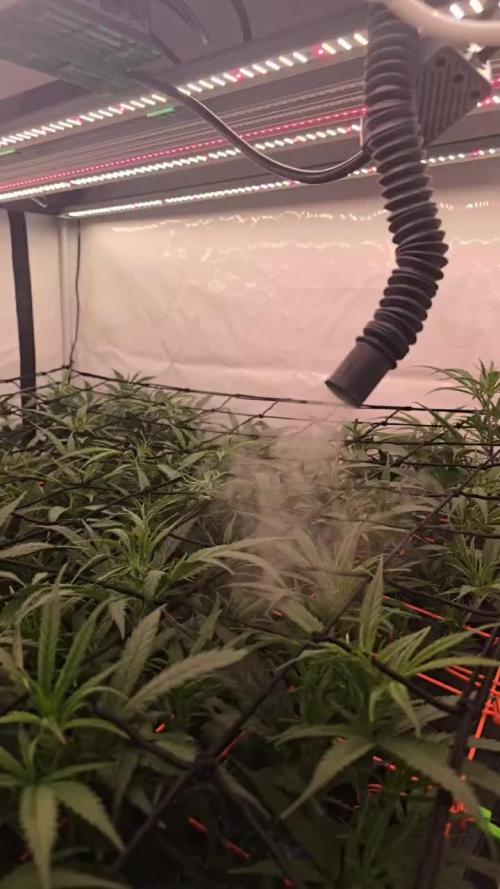
Seit Donnerstag herrscht im Zelt 12/12 – offiziell Blütezeit.
Die blauen Add-Lites wurden verfahrenstechnisch termininiert und durch rote ersetzt.
Die neuen IR-AddLites haben außerdem eine Schlüsselfunktion:
Sie laufen in den letzten 15 Minuten wie ein botanisches Sonnenuntergangs-Erlebnis für fortgeschrittene Pflanzenpsychologie.
Kurz gesagt:
👉 Die Mädels werden jetzt schlafen geschickt wie Royalität.
💧 Wasserchemie: Die Vollentsalzungsanlage ist online
Mission abgeschlossen: Die VE-Anlage wurde installiert, kalibriert und erfolgreich mit Triumphmusik eingeschaltet.
Seitdem fließt durch das System:
➡️ EC-neutrales Laborwasser
➡️ pH-Perfect arbeitet wie befreit
➡️ Keine Ca/Mg-Überschüsse, keine Schwankungen
Das HydroLab ist nun offiziell ISO-zertifiziert für Wasserreinheit, die selbst Kaffee-Nerds neidisch machen würde.
Nährstoffversorgung aufgestockt – die Blüte beginnt ernst zu werden
Der EC wurde moderat auf 1,5 angehoben, passend zum Stretch-Start.
Zusätzlich zu Micro/Grow/Bloom, B52, Bud Candy und Great White gab es diese Woche:🔥 Bud Blood von Advanced Nutrients
Ein kaliumreicher Booster, der laut Hersteller „die Blüte früh zündet“.
Im Labor beschreiben wir es anders:
👉 „Molekulare Überzeugungsarbeit, damit die Pflanzen endlich tun, was wir wollen.“
Und es funktioniert.
Die ersten Vorblüten sind bereits in der Planungsschleife.
🌱 Wurzelstatus – Mykos am Werk
Die Wurzeln sehen aus wie:
wuschelig
cremig
üppig
voller Mykorrhiza
Ein gesundes Myko-Netz ist immer ein gutes Zeichen – gerade beim Living-RDWC, wo die symbiotischen Organismen jetzt richtig Gas geben.
🕸️ Training: Zweites Netz installiert
Das zweite Scrog-Netz wurde feierlich eingezogen.
Da wir es hier mit einem fast rein sativischen Stretch-Monster zu tun haben, wird das Netz bald nicht nur genutzt,
sondern ausgereizt.
Die Spitzen schießen bereits motiviert durch das Gitter.
Man könnte sagen:
👉 „Das botanische Volleyballfeld ist eröffnet.“
🎬 Fazit der Woche
Vegi erfolgreich beendet
Blüte eingeleitet
Licht optimiert
Wasser perfektioniert
Nährstoffe erweitert
Wurzeln traumhaft
Stretch: „Hold my beer…“
Das HydroLab ist startklar für eine der spannendsten Phasen überhaupt.
Wenn diese SLH so weiter macht, wird das Netz in wenigen Tagen aussehen wie ein explodierter Kräuterteppich.
-----------------------------------------------
HydroLab – Week 0: Initiating Bloom Protocol
“Please fasten your lab coats — the test subjects have entered reproductive mode.”
Welcome back to the HydroLab, where plants are trained with more precision than Olympic athletes and the line between botany and madness gets thinner by the day.
This week marks a major milestone: the final veg week, the light flip, a water revolution, microbial spa treatments, and preparations for the incoming stretch.
🌞 Lighting Update: Goodbye Blue, Hello Bloom Mode
As of Thursday, the system is officially running 12/12 — bloom phase initiated.
The blue add-on lights have been politely removed from service, replaced with red spectrum units.
Also new: IR AddLites, running during the final 15 minutes of the day to simulate a luxurious sunset for plants that take their circadian rhythm very seriously.
In short:
👉 The ladies are now being tucked in like royalty.
💧 Water Chemistry Upgrade: The Deionization Unit Is Online
This week, the HydroLab achieved a new level of hydration enlightenment:
The deionized water system is fully installed and operational.
It now feeds the entire RDWC with:
EC-neutral lab-grade water
perfectly predictable pH behavior
zero unwanted minerals
zero drift chaos
The HydroLab is now officially certified for water purity that would make a barista weep.
Nutrient Program Enhanced — Bloom Mode Engaged
The EC was raised moderately to 1.5, just enough to fuel the stretch without cooking the roots.
On top of the standard AN trio (Micro / Grow / Bloom) plus B52, Bud Candy, and Great White, the lineup now includes:
🔥 Advanced Nutrients – Bud Blood
A bloom initiator designed to say:
“Stop messing around and start flowering.”
Laboratory interpretation:
👉 “Early-phase hormonal persuasion via potassium-rich diplomacy.”
Early pistils are already in preflight mode.
🌱 Root Status Report – Mykos Doing Myko Things
The roots look glorious:
fluffy
creamy
vigorous
thoroughly colonized by mycorrhiza
Living RDWC in full effect — the symbiotic crew is thriving.
🕸️ Training Update: Second Scrog Net Installed
The second screen is now in place.
Given how sativa-dominant this strain is, the stretch is expected to fill the remaining space very quickly.
The tops are already pushing upward with purpose.
It looks less like a canopy and more like we’re preparing a botanical trampoline.
🎬 Weekly Conclusion
Veg phase complete
Bloom officially initiated
Lighting optimized
Water chemistry perfected
Nutrients upgraded
Roots looking elite
Stretch incoming
The HydroLab is entering one of the most exciting phases of the run.
If this Super Lemon Haze keeps going like this, the scrog will look like an exploding herbal carpet within days.

Likes
17
Share

@Miketama
Follow
Fast & Chunky: 460g Wet for the Heat-Resistant Colombian Sativa
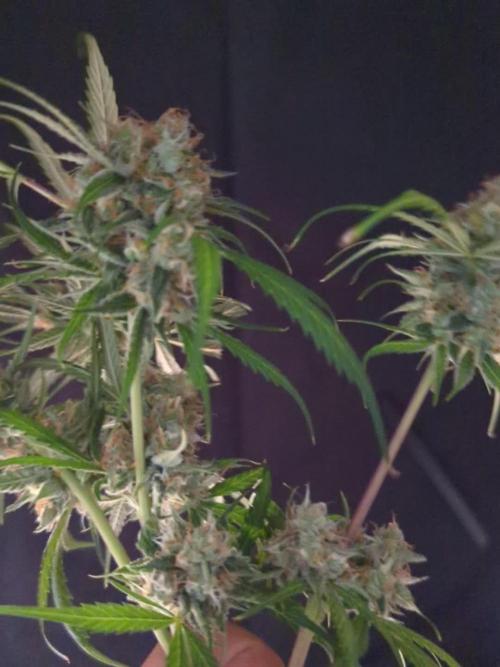
She reached full maturity in just 70 days (10 weeks) instead of the breeder's estimated 15 weeks. When the intense late-summer heatwave hit the tent, her tropical Colombian Sativa heritage allowed her to handle it like a total champ. Instead of panicking or losing density, her metabolism went into overdrive and accelerated the trichome ripening.
Structurally, she threw a massive curveball: while she kept her native Sativa leaves, her flowers completely leaned into the "touch of Afghan" in her lineage, packing on incredibly dense, chunky Indica-style bud spheres.
Paradoxically, because she resisted the heat, she ended up looking way more compact and uniform than her Indica-dominant tent mate (which completely stretched out due to the thermal stress). You can see that comparison and the weight difference in my Purple Opium Auto Diary.
Key Lesson: Sativa-dominant strains are definitely my ultimate choice for summer runs. Getting a clear-headed Colombian daytime buzz from buds this chunky, fast, and heat-resistant is a massive win! 🚀


Likes
45
Share


@Dingle
Follow
Not much to report this week.
Really impressed with the results so far from the Mars hydro TS600 the bud development seems to be pretty good. This strain is producing a lot of trichomes and the smell is starting to pick up at good bit now going into week 6. Lowered the amount of Canna A an B feed to 2.4ml/L and PK13/14 to 1.0ml/L. Some light defoliation to help get more light coverage to the lower buds.
Likes
50
Share


@DogDoctorOfficial
Follow
Week 8 Vegetation Report – Eternity Grow Cup
Welcome back, everyone! We’re diving into another exciting update for our Eternity Grow Cup journey. This week marks week 8 of vegetation, and our girls are thriving! Let’s break it down:
Growth & Structure
All five phenos continue to impress, with strong, bushy growth and uniform structure across the board. They’re praying to the ThinGrowLED Model Ones, which have been running on channel one only, and they’re absolutely loving it. The leaf development is lush and vibrant, a sign that they’re thriving under the current conditions.
Environmental Conditions
We’re keeping things dialed in with stable environmental parameters:
Temperature: 20.7°C
Humidity: 57.2%
CO2 Levels: 1569 PPM (a bit high but manageable)
VPD: 1.05 kPa
PPFD: 355 µmol/m²/s
Each of these factors plays a crucial role in maximizing plant efficiency, and we’ll go deeper into why these values are set as they are.
Featured Grow Gear – WCS2 Substrate Sensor
This week, we’re also highlighting part of the grow gear in use—specifically, the WCS2 substrate sensor. This sensor measures:
Soil temperature
EC levels
Water moisture
It's currently placed in the Autopots, which are not yet connected. For now, we’re still top-feeding to encourage root expansion. By allowing the roots to reach the bottom of the pots before activating the Autopot system, we ensure they establish a strong foundation for optimal nutrient uptake. We’ll go deeper into this method and why it’s an essential step in the process.
The Bigger Picture
As always, this journey wouldn’t be possible without the support of some incredible people and brands. Big shoutout to:
Zamnesia, Plagron, and GrowDiaries for making this competition a reality.
Aptus Holland, TrolMaster, CannaKan, Grove Bags, and Ziggi Papers for their continued support.
The entire community—supporters, followers, lovers, and haters alike—because everyone plays a role in making this grow series truly special!
Stay Tuned & Get Involved!
Don’t forget to follow along on YouTube and Instagram for exclusive content, behind-the-scenes insights, and in-depth discussions. Like, comment, and subscribe so you don’t miss the next updates—it’s only getting better from here!
Let’s keep pushing forward, and best of luck to all the competitors—we’re all growing something incredible together. Until next time!
Genetics - Runtz https://www.zamnesia.com/6000-zamnesia-seeds-runtz-feminized.html
Nutrients - Plagron https://plagron.com/en/hobby
- Aptus Holland https://aptus-holland.com/
Controls - Trol MAster https://www.trolmaster.eu/
LED - https://www.futureofgrow.com/en
LED - https://www.thinkgrowled.com
Soil - https://www.promixgardening.com/en
Germination - Cannakan https://cannakan.com/?srsltid=AfmBOopXr-inLXajXu3QFgKXCXXos4F1oEvScjMKIB5MR5dk8-GJ-F49
DOGDOCTOR 15% off
Smoking Papers - https://ziggioriginal.com/
Terpene saver - https://grovebags.com/
As always thank you all for stopping by, for the love and for it all , this journey of mine wold just not be the same without you guys, the love and support is very much appreciloved and i fell honored with you all in my life
With true love comes happiness Always believe in your self and always do things expecting nothing and with an open heart , be a giver and the universe will give back to you in ways you could not even imagine so
As always, this is shared for educational purposes, aiming to spread understanding and appreciation for this plant. The journey with nature is one of discovery, creativity, and respect. Let’s celebrate it responsibly and continue to learn and grow together!
Growers Love To you All 💚
#EternityGrowCup #RuntzHunt #GrowersLove #CannabisCommunity #AptusHolland #ProMixSoil #TrolMaster #Zamnesia #Plagron #ZiggiPapers #Grovebags
Episode 10 week 8 veg UPDATED

Likes
25
Share


@JeyGanesha
Follow
Più ci avviciniamo al raccolto e più sento che ne è valsa la pene investire tempo in questa piantina
Likes
21
Share


@Lazuli
Follow
Was fun to grow and looks beautifull in any garden 💜 u can really taste the blueberry crossed in this strain
